Rich Girls began as the solo recording project of Luisa Black with an EP and video release on Tricycle Records in 2013. “The One I Want” was a pop confessional of love and addiction, pieced together after the breakup of her SF garage rock band The Blacks, Black decamped to London looking for a new start and the result was Fiver, a collection of dark pop songs that cemented the Rich Girls high-low sound.
“A joyously dark example of noise-pop with vague undercurrents of early New Order’s enthralling brand of atmospheric doompop.”
Rich Girls combines the polish of British art rock with the primitive energy of American garage. The live band debuted at Noise Pop 2014 and were quickly tapped as a band to watch. Fiver was released on Break UpRecords with a video for the single ‘Worse.’ The band has since found a small following in unexpected outposts across the UK and Europe. A new album–Love is the Dealer–is set for release in spring 2016. Rich Girls is based in NYC.
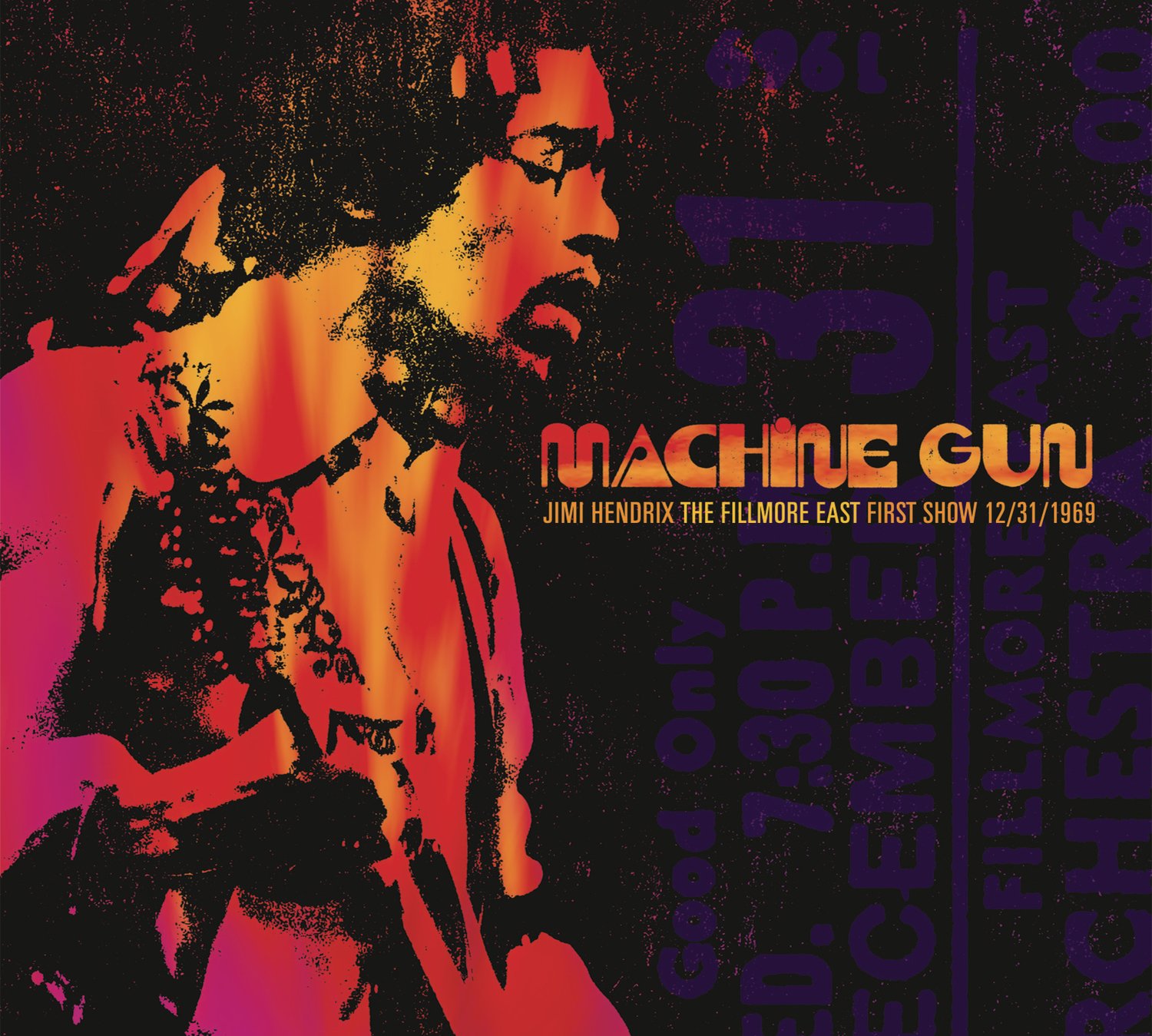
As the ’60s came to a close, Jimi Hendrix began to push the boundaries of funk, rock and R&B with a brand new group of musicians, Band of Gypsys. Together with bassist Billy Cox and drummer Buddy Miles, Hendrix unveiled stunning, newly written material across four shows at the legendary Fillmore East in New York City. “Machine Gun: The Fillmore East First Show 31/12/69” marks the first time Band of Gypsys‘ first show has ever been released in its entirety, newly mixed by Eddie Kramer from the original 1″ eight-track masters.
Well, this is something serious Hendrix collectors have been waiting for. Band of Gypsys famously played a total of four shows 12/31/69 and 1/1/70 at the Fillmore East (two shows each night). This is the complete first set from the first night; their debut live show. Although the original Band of Gypsy’s album was compiled from the second night, it wasn’t because there weren’t amazing performances to choose from on the first night. The first couple songs are a bit rough around the edges, but when Jimi goes deep blues with “Hear My Train a Comin’,” he really starts feeling it and turns in an absolutely amazing version (that’s why it was previously released on Band of Gypsys 2 and Live at the Fillmore East). “Machine Gun” is another stunner.
There are significant differences to the lyrics, and the structure of the song is different as well (Billy Cox says both Jimi and Buddy Miles were doing things that weren’t done in rehearsals). “Bleeding Heart” is another amazing blues performance leading into two songs that were almost never performed live: “Earth Blues” and “Burning Desire.” Throughout the set, the band is absolutely locked in. They aren’t just playing; they’re clearly listening to each other and Hendrix turns in some scorching guitar. The most interesting thing might be the realization of how much of these sets and songs was improvised by the band, as shown by the differences in “Machine Gun” from night to night. Eddie Kramer deserves credit for a truly excellent mix (and probably some judicious editing on “Changes”).
It’s not really fair to compare Machine Gun to Band of Gypsy’s since one is a largely unedited complete performance and the other is the best cuts selected from a couple shows. That said, there are performances here that rival those of the original Band of Gypsy’s album, and hearing Jimi on his game with great sound will always be welcomed.
The New York trio have made quite a splash this year with their effervescent mix of 90s indie (grunge rock and something more ethereal) and 60s psychedelia. As songs from their debut album, Human Ceremony, veer off into cosmic jams, they sound like an unlikely mix of celestial 90s indie kids Lush and summer of love-era Jefferson Airplane.
Much of the former comes from lead vocalist/bassist Julia Cumming, whose ferocious performance contrasts with the pastoral sweetness of her singing. Guitarist Nick Kivlen – all curly moptop and patterned shirts could have stepped straight from a 60s .
With drummer Jacob Faber thrashing away behind, this threesome make a spectacle as Cumming prowls around her bandmate, grins at the crowd and often leaps into the throng while playing. “This is such fun,” she yells as their set flits from the beautiful guitar shapes of Human Ceremony . Check out their Limited Edition 12″ of covers now only available at their gig I’m afraid.
From The Basement is a 4 song EP featuring cover versions of songs originally by The Modern Lovers, Neil Young, Spiritualized and T-Rex. Pressed on clear green vinyl, it’s limited to 500 copies worldwide.
Queens, NY-based trio Raccoon Fighter has shared a second single, Adderall, marking the release of their new EP “Hover Craft”.
A blend of polished punk, psychedelia and lo-fi, fuzzy, garage bliss, it is a follow up to the excellent LVLR .
Queens NYC based Raccoon Fighter shoot laser beams out of their eyes, smoke fuzz boxes and swim in the sky with Alex Chilton. Back stroking with him in time to gritty 1970’s east village NYC, where they shoot pool/sniff glue with the New York Dolls and Television at CBGB’s. Their latest release Spiral Flag in the words of Alibi “comes off like a brawl between The Beatles White Album and T Rex’ The Slider” all the while putting their own modern twist on things, creating “a sound that’s both timeless and feels particularly of-the-moment” frequently compared to bands like the Growlers, Ty Segall, Tame Impala and Black Lips.
Since forming in 2009 they’ve shared the stage with Ex Cops, Joywave, Das Racist, Sunflower Bean, Spirit Family Reunion, Ski Beatz and The London Souls. The end of 2014 and beginning of 2015 brought the band good fortune as they landed a few TV placements, including two songs on the Showtime series Shameless, beginning with the season premiere and multiple MTV spots. Their upcoming EP ‘Hover Craft’ is due out on Papercup Music summer 2016.
Limited Copies come with a bonus 4 track CDEP the ‘Japan’ EP. Public Access TV finally unleash their debut album and it’s wall to wall hits central. It’s a modern new wave album that’s not afraid to take bits of the Strokes, Costello, Joe Jackson and Tom Petty and come up with something that is instant and joyous. The band had a buzz going ever since their first-ever Soundcloud upload and that din is only going to get bigger with the release of album ‘Never Enough’. Public Access TV are the kings of the chorus and this album will get stuck on your turntable.
Public Access T.V. are a band firmly planted in downtown New York City. Before they released their first song, played their first show, or even had a name, Public Access T.V. were a band. Best friends out every night together, sharing clothes, cigarettes, pocket change, and most importantly living together in a dilapidated East Village loft where they could stay up all night playing music… loudly.
“It wasn’t like ‘let’s start a band,'” 24-year-old singer and main songwriter John Eatherly says of the formation. “We already were playing music and hanging out together all the time. We were all doing different things, playing as hired guns for anybody just to pay the rent, and then one day I came in with these songs I wrote and we all just knew this was something we wanted to do for real.”
What followed was a whirlwind of activity; singles “Monaco” and “In the Mirror” along with last years PublicAccess EP, lead to critical acclaim, and tours in the US and UK supporting acts like Weezer and Gang of Four. Everything was moving on the correct trajectory when in April 2015, while PATV were on tour in California, they flicked on the TV to see live pictures of their Manhattan loft on every single news channel. It was on fire from a gas explosion and then collapsed into rubble.
“We wrote there, rehearsed, recorded, lived, everything,” says John. “It was home…and then it was completely gone.”
Demoralised and thousands of miles from NYC, PATV did the only thing they could think of. As John says: “We told our agent to book as many gigs as possible – because we didn’t want to deal with the reality of the situation. We actually had nowhere to go.”
But, as things happened, that chain of events was to set PATV on an entirely new and fruitful path. Among those frantic gig bookings were a bunch of festivals in Europe, as well as dates with The Strokes, Fidlar and Palma Violets.
The group released their double A-side single “In Love and Alone” / “Patti Peru” last autumn to critical acclaim. “In Love and Alone” was debuted by Zane Lowe on Apple’s Beats 1 with him exclaiming, “We Love Public AccessT.V.” and giving the track his signature stamp of approval by playing it twice in a row. This single as well as their follow up track “On Location” led to Public Access TV being one of the buzziest bands at SXSW this year… with both Entertainment Weekly and NME listing the group as one of the “Top 10 Best Artists” at the festival.
Also check out there Live in NYC session for Spotify
Found Tapes is a new weekly show that highlights some of the rarest, weirdest, and sometimes just really cool videos that people send to us. This week, blast into NYC’s glamorously grimy past and deep into the lipstick-smeared world of the New York Dolls.
Directed by Nadya Beck and Bob Gruen, All Dolled Up: A New York Dolls Story is a feature-length documentary that was filmed in 1972, and sees the then-married pair follow the band from their early performances in New York at Kenny’s Castaways and Max’s Kansas City to their infamous West Coast tour. Expect to see raucous, debaucherous backstage antics, illuminating interviews, footage from the Whisky A Go Go, the Real Don Steele Show, Rodney Bingenheimer’s E Club, and much more. The documentary features the entire original lineup—David Johansen (vocals), Johnny Thunders (guitar), Sylvain Sylvain (guitar), Arthur Kane (bass), and Billy Murcia (drums)—and captures an image of the band before death, alcohol, and heroin tore it asunder. It’s an intimate look at rock’n’roll’s greatest underdogs that took in too much, too soon,
In May/June of 1981, The Clash were booked to play at the curiously named “Bond International Casino”—a discotheque that was previously a swanky supper club in the 1940s, and then a low-rent clothing store called Bonds until 1977 and they just kept the sign—in New York City in support of the sprawling three record set “Sandinista!” album. They were meant to play just eight gigs in the smallish Times Square space—capacity 1800 people—but the performances were dangerously oversold by the greedy promoters. Fire marshals and the NYC Building Department closed down both of the May 30th concerts, but the band vowed to honor each and every last ticket and so the number of shows was extended to seventeen, with matinee and evening performances added.
The Clash’s Bond Casino shows became an integral part of the rebel band’s legend and featured hand-picked opening acts like The Fall, Dead Kennedys, Lee “Scratch” Perry, Grandmaster Flash and the Furious Five, The Treacherous Three, KRAUT, Funkapolitan , The Slits, ESG, Bad Brains, The Bloods, The Sugarhill Gang, their pal from Texas Joe Ely and others. Many of the groups were openly booed by the rowdy crowds.
One of the shows, on June 9th, was professionally recorded for an FM radio broadcast and widely bootlegged. You can easily find it and every other of the Clash’s Bond shows—all of them were bootlegged—on audio blogs. But not a lot of footage has been seen from the Clash’s Bond residency. There were some tantalizing clips that were seen in Don Letts’ excellent Grammy-winning Westway To The World rock doc (released in 2000), as well as in the abandoned short “The Clash on Broadway” , but sadly the docs didn’t give you an entire song. However, Letts’ Bond footage was apparently shot on the same day as the FM recording was made and an enterprising Clash fan has restriped the stereo audio from that source and synced up some other angles found in various other places (mostly Letts’ docs). The results are probably the best glimpse we have at what went on at these shows.
Dozens of personal accounts of the shows can be found in several places, just Google it. One of the things that comes up is from a camera operator who claims that most, if not all of the Bonds shows were documented.
Don Letts and The Clash were to produce and shoot a documentary of Bonds and beyond that is the Clash on Broadway film featured at the end of Westway to the World. What started out as a one week shoot to get six songs live in the can became a year of our lives. The video for “This Is Radio Clash” was a lift from the 10 minute trailer for the unfinished film that we shot on 16mm and went all the way to a 35mm blowup to show potential distributors. Needless to say – the project was never completed as the band disassembled after Combat Rock. Clashon Broadway is the rough cut we had finished by the time to project was wrapped and went back to the UK.”
“We shot one complete show with multiple cameras and a 24 track mobile recorder. We also shot most of every show with one camera and in house 8 track recording. The band wore the same gear every night and Topper was such a consistent drummer – and the band well rehearsed – that we were able to build edits from different nights with no trouble at all.”
“Sadly – we never shot the opening acts. We started the gig with the intention of doing a six song DVD EP – not a full scale documentary. Shooting expanded as the story expanded and the shows stretched on.”
Additionally, over 50 reels of Letts’ NYC Clash footage, including their day as extras on the set of Martin Scorsese’s King of Comedy and a shitton of live Bond Casino footage was found in a South London basement in 2007 when Julien Temple was making his Joe Strummer doc and nearly ALL of it was in good shape. Hopefully we’ll see more from these shows in the future. Based on what you can see here, it must have been a blistering show !
First up, “Safe European Home.” I love how “the only band that matters” walk onstage like a street gang to the spaghetti-western sounds of Ennio Morricone’s “6 Seconds To Watch” (from the soundtrack to For A Few Dollars More). What band today could pull off swagger like that.
The most reliable thing about New York City’s music scene is that you can’t rely on it at all. The members of Sunflower Bean, brought up on all-ages DIY shows and waterfront warehouse parties, have already seen their share of changes—and they’re only 20. Trends have come and gone, venues have closed, and rock music has drifted further from the mainstream than ever. But guitar music will never not have a place in the city, and Sunflower Bean’s tripped-out songs and wild live shows are proof of that.
For a new video, the trio spent some time in Brooklyn, and then later in Lower Manhattan, where they played a landmark sold-out show at Bowery Ballroom. Hit play for a glimpse into their version of the city: a place where rock & roll never went away. Sunflower Bean performs “This Kind of Feeling” for a World Cafe Session with host, David Dye. Recorded at WXPN Studios in Philadelphia on 3/7/16.
Born and raised in New York City, the original members of The Ramones, Joey, Johnny, Dee Dee and Tommy, burst onto the scene in 1974, becoming the quintessential punk band of the decade. On February. 4th, 1976, they released their debut single “Blitzkrieg Bop,” which had a profound influence on the punk movement in both the U.S. and U.K. Then a few weeks later the First real punk album ever? dangerous discussion. I don’t know and to be honest I don’t care. For me it’s one of the most memorable LP’s ever and that’s what counts . 14 bubblegum pop punk blitzkrieg tracks in 29 explosive minutes generated by 4 bored looking dudes with lousy haircuts, leather jackets (probably stolen) and dirty jeans.
No useless guitar solos. No expensive special production effects.
The instruments were recorded in three days, the vocal parts were in four days.
Producer Craig Leon admitted that they recorded the LP quickly due to budget restrictions,
but also that it was all the time they needed. The final result was just smashing. Loud. Fast. Primitive. And an unforgettable motto: 1-2-3-4! The songs were stripped to the bone with wicked, nihilistic lyrics like never before. The unfamiliar tumult was confrontational .
But its all good old rock ‘n roll. Back to the dangerous alleys in dark suburbs of great cities.
Original drummer (and later producer) Tommy once said that the band was just an idea. I believe him. I can imagine that the choice was quite simple for these four no future teenagers: music or jail. GABBA GABBA HEY!.
let’s have some dazzling fun at high-speed…
On April 23rd, 1976, punk decided it was here to stay. It was on that day that The Ramones released their self titled LP “The Ramones”. After Hit Parader editor Lisa Robinson saw the band at a gig in New York City, she wrote about them in an article and contacted Danny Fields, insisting he be their manager. Fields agreed and convinced Craig Leon to produce Ramones, and the band recorded a demo for prospective record labels. Leon then persuaded Sire president Seymour Stein to listen to the band perform, and he later offered the band a recording contract. The Ramones began recording in January 1976, needing only seven days and $6,400 to record the album. They used similar sound-output techniques to those of the Beatles, and used advanced production methods by Leon.
The album cover, photographed by Punk magazine’s Roberta Bayley, features the four members leaning against a brick wall in New York City. The record company paid only $125 for the front photo, which has since become one of the most imitated album covers of all time.
So Forty years ago this month, this was the album that created punk rock’s template, recorded in New York. The budget was minimal (about $6,500), the session was brief (a week), the songs were flowing (14 were recorded; many more would have to wait), and the sound was fast and fresh (stripped-down, with buzzsaw guitars set against melodic pop vocals).
The band was the Ramones, and while their self-titled debut didn’t sell many copies at the time, it is now considered one of the most influential albums ever recorded. It’s even part of the Library of Congress’ NationalRecording Registry, added in 2012 and thus preserved for future generations to contemplate. Ten years prior to that, the band was inducted into the Rock and Roll Hall of Fame. Gabba Gabby Hey!
I recall that first Ramones album getting home and playing it loudly at home, much to my father and mother’s dismay. One song in particular, the tongue-in-cheek “The KKK Took My Baby Away”, caught her ear. “Who writes songs about the KKK?” she protested. “And I’m like, ‘The Ramones! That’s who!’ ”
The Ramones formed in 1974 in Queens, New York Production cost of the album: $6400 with producer: Craig Leon – also famous for his work with Blondie , later on he focused more on classic music and worked with Luciano Pavarotti, Andreas Scholl, Sir James Galway and The London Chamber Orchestra among others
The Front cover of the LP was a photo of the band in front of a brick wall in NYC – the record company paid only $125 for the now legendary picture taken by Roberta Bayley… released by the Record label: Sire Records with the Speed of: most tracks averaged more than 160 beats per minute
The album was certified as gold by the Recording Industry of America – 38 years after first release date – on 30th April 2014 , having sold more than 500,000 copies by then..
thanks to JL for some facts and words
Beginnings matter and, in many cases, serve to affirm an energy or ethos that ties together an artist’s career. For punk bands, whose ethos and worldview are often stronger currency than artistic talent or output, these initial moments are used to trace back to a band’s authenticity. This question can be reversed as well, with listeners, writers and people who generally think about music too often sizing up artists to see if their output still stands up to their original goals and points of view. And while we get the occasional Ian MacKayes, Kathleen Hannas and Steve Albinis—visionary artists who’ve stuck pretty close to the goals they set up as rather young people.
New York City post-hardcore quartet Big Ups’ journey began in a pretty mundane way: The band’s members met five years ago as music technology students at NYU. And while, somewhere along the line, they began crafting music that has a tendency to get pretty intense, they never completely let go of that mundanity—that everyday-ness. That’s not to say any of the music they create—on debut Eighteen Hours of Static or follow-up Before a Million Universes—is boring or uninspired. In fact, the band’s technical training allows them to do interesting things within a genre that’s getting up there in years. But the way vocalist Joe Galarraga attacks his subject matter, which puts capitalism and social injustice in its crosshairs, is often lyrically nonchalant.
It’s that calloused, understated sort of reaction in lines like “Tell me what you’re worth/ salary, two weeks of work” that serves as a gateway into Big Ups’ ethos. These are four millennials, recent college students, who’ve begun to see cycles repeat themselves already in their relatively short lives. But on Before a Million Universes, their reaction seems less anger-fueled than their work on Eighteen Hours of Static; the scales of injustice serve less as infuriating surprises and more like calls to arms. Big Ups know the score; they’re just hoping to change it.
Big Ups have allowed their musicianship to evolve with them. The overall arch of louds and softs, of interchanges between mumbled, subdued sections and furious peaks of noise—that all is still intact. But the quartet clearly pumped even more work into their songwriting this time around, and the effort has really paid off. Galarraga’s words aren’t just given a vehicle to travel upon; his voice becomes one with its surroundings, allowing for a more effective attack than if the individual elements remained isolated. And perhaps that’s the point the band is trying to make: The only way we get through this is together.






 The Fat Angel Sings