


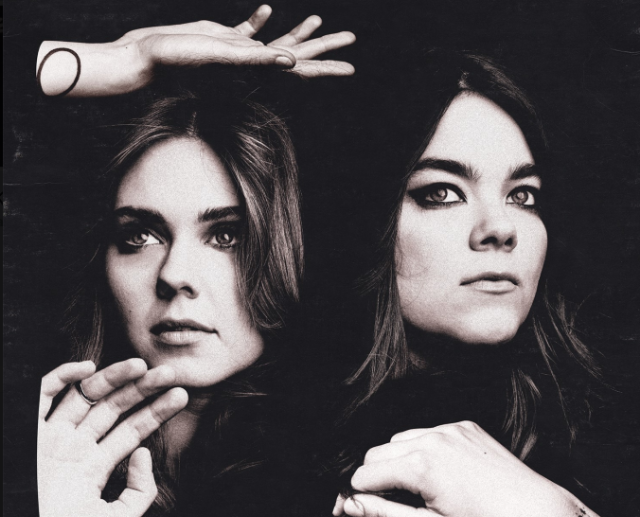
It’s been almost four years since Stay Gold, the critically acclaimed album full of Cosmic American Music-tinged folk, put Swedish sisters Johanna and Klara Söderberg on the map. As fans eagerly awaited a follow-up, the sisters slowly broke down. Subjected to the draining tedium of a never-ending tour, they found themselves going through the motions as the ground beneath their feet never stopped moving. Written largely in Joshua Tree, where they hunkered down after the dissolution of Klara’s engagement, Ruins is a mature record.
Compared to their previous work, Ruins feels subtle, a little more grown up. While it is missing some of the energy of earlier singles like “Stay Gold” and “Silver Lining,” this album expands upon their mastery of the American songbook. Never feeling like outsiders, the Söderbergs are consistent and confident in their execution. Working with producer Tucker Martine and Peter Buck or R.E.M. fame, Ruins has the requisite twang that has charmed listeners since their debut EP Drunken Trees (2008). The perfect combination of the sisters’ voices remains the heart of their music. Their harmonizing is organically crystal clear in a time of over-synthesized production; the purity is shocking.
Ruins may not recapture the intensity of Stay Gold, but its strength lays in the duo’s swooning vocals and lyrical romance. Where it misses the loud, creative production of past albums, folk vocals with a little extra (those harmonies!) pick up the slack. Ruins is a charismatic, concise send-up of a style unclaimed by many young American musicians in 2018, but exquisitely executed by these special Swedish talents.”
Not that it’s darker, per se; their gorgeous, blood-close harmonies and the sunny streaks of pedal steel guitar keep it from ever feeling too morose. Instead, there’s a gentle weight of experience that permeates the album’s lyrics, a freshly sharpened edge of cynicism explored across several different sounds. There’s the classic country of the easy-riding “Postcard,” the ‘50s doo-wop vibe of “Fireworks” and a return to their folk roots with “To Live a Life.”


 The Fat Angel Sings