Posts Tagged ‘Keith Richards’

Image may contain: 1 person, text and closeup

Last week, the Rolling Stones announced plans for a super-deluxe edition of their 1973 LP Goats Head Soup. It features a remastered version of the original album along with alternate mixes, rarities, instrumental tracks, a complete 1973 show taped in Brussels, and three previously unreleased songs from the era.

The original Goats Head Soup tour was confined entirely to Europe and lasted just seven weeks. Four songs from the album (“Coming Down Again,” “Hide Your Love,” ‘Winter,” and “Can You Hear the Music”) were never played at any point, while “100 Years Ago” and “Silver Train” were dropped after just one week into the run. By the time the tour wrapped, the only Goats Head Soup songs still in rotation were “Angie,” “Star Star,” ‘Dancing With Mr. D,” and “Doo Doo Doo Doo Doo (Heartbreaker).”

As the years went on, only “Angie,” “Star Star,” and “Doo Doo Doo Doo Doo” stayed in their live repertoire. It wasn’t until 2014 that they decided to resurrect some of the lesser-known tunes. Here’s video of “Silver Train” from a November 18th, 2014, show at the Brisbane Entertainment Centre in Brisbane, Australia. They’re joined by Mick Taylor, who plays on the original. As you can hear, the song is about a man’s encounter with a prostitute. “And I did not know her name,” Jagger sings. “But I sure love the way/That she laughed and took my money.” They haven’t done the song since that night, but in 2017 they brought back “Dancing With Mr. D” and played it at five shows. We’re still waiting to hear “Coming Down Again,” “Hide Your Love,” ‘Winter,” and “Can You Hear the Music.

Another prized jewel gets a special release in the Rolling Stones‘ unmatched catalogue, restored to its full glory and more, multi-format release of their 1973 classic Goats Head Soup”. The album will be available in multiple configurations, including four-disc cd and vinyl box set editions, with a treasure trove of unreleased studio and live material. The reissue follows the huge success and acclaim for the Stones latest track “Living In a Ghost Town” single and their universally-admired recent lockdown performance of “You Can’t Always Get What You Want” in a global citizen’s april special One World: Together at Home.

The box set and deluxe cd and vinyl editions of “Goats Head Soup” will all feature ten bonus tracks, which include alternate versions, outtakes and no fewer than three previously unheard tracks. the first of these to be unveiled, “Criss Cross”, Stones devotees worldwide will be thrilled by the inclusion, on the box set and deluxe editions, of the previously unheard “Scarlet”, featuring guitar by Jimmy Page, and a third newly unveiled song, “All The Rage”. The layered guitar textures of “scarlet” make for a track that’s as infectious and raunchy as anything the band cut in this hallowed era. as well as jimmy Page guesting alongside Mick & Keith on the track it also features on bass Rick Grech of Blind Faith fame.

“all the rage” has a wild, post – “brown sugar” strut and the percussive “criss cross” rocks and swaggers as only the stones can. the bonus disc of unreleased material also sheds new light on tracks such as “100 years ago” and “hide your love”, with further unissued mixes by stones insider and acclaimed producer glyn johns.

Box set editions of Goats Head Soup will also include the infamous Brussels Affair, the 15-track live album recorded in a memorable show in Belgium, on the autumn 1973 tour that followed the album’s late august release. this much-sought-after disc, mixed by Bob Clearmountain, was previously available only in the Rolling Stones’ “Official Bootleg” series of live recordings in 2012.

The Brussels show features the already-classic “Tumbling Dice”, “Midnight Rambler”, “Jumping Jack Flash” and many others, and includes a sequence of tracks from the then-new album. “Star Star” is followed by “Dancing With Mr. D”, “Doo doo doo doo doo (Heartbreaker)” and “Angie”. Additionally, the cd and vinyl box sets offer the original ten-track album in 5.1 surround sound, dolby atmos and hi-res mixes, along with the videos for “Dancing with Mr. D”, “Silver Train” and “Angie”. an exclusive 100-page book will feature a remarkable array of photographs, essays by writers Ian Mccann, Nick Kent and Daryl Easlea and faithful reproductions of three tour posters from 1973.

As Mccann writes: “Goats Head Soup” was released with plenty of fanfare. despite what you may read today, the kids weren’t entirely absorbed by glam rock, metal, prog and philly soul back in 1973, and they bought the album in their thousands, sending it to no. 1 in the USA and in the Uk, their fifth consecutive british chart-topper.”

It was The Rolling Stones 11th studio album, recorded in Jamaica, Los Angeles and London as their last collaboration with producer Jimmy Miller, Goats Head Soup came in the wake of the Stones’ landmark 1972 double album Exile On Main St. the new set was introduced by the single that became one of their most exalted ballads, the endlessly elegant single “Angie”, completed by Mick Jagger and Keith Richards during a song-writing sojourn in Switzerland. The timeless love song, showcasing Jagger’s yearning lead vocal and Nicky Hopkins‘ beautiful piano motif, topped the charts in the us, where it was certified platinum, and went to no. 1 across europe, australia and beyond. “we decided to do something different, and it worked,” said Richards of “Angie”. “maybe a lot of people bought it that would never buy a Stones album.” interestingly in a recent interview with the New York Times, Bob Dylan chose “Angie” as one of three Rolling Stones songs he wished he had written.

Goats Head Soup, with its famous photographer David Bailey shot sleeve, featured the Rolling Stones’ vintage 1969-1974 line-up of Jagger, Richards, Mick Taylor, Bill Wyman and Charlie Watts, with the addition of some essential collaborators. on an album on which their trademark rocking sound was often augmented by more low-key, reflective material, there were no fewer than four featured keyboard players: Hopkins, Billy Preston, Ian ‘Stu’ Stewart and Jagger himself.

“Angie” was the only single to be released from the lp in the uk, where it spent two weeks at no. 5 in September. in the us, the exhilaratingly funky, horn-filled “Doo doo doo doo doo (Heartbreaker)”, featuring Mick Taylor’s wah-wah lead guitar, followed it into the top 20 in february 1974.

Many other highlights of the album included the majestically brooding opener “Dancing with Mr. D”, the lithely strutting “100 Years Ago” and “Star Star” and the graceful “Winter”. Richards’ rueful lead vocal on “Coming Down Again” featured another Stones stalwart, saxophonist Bobby Keys. “Silver Train”, the b-side of “Angie”, would be revived after a gap of some 40 years, during the Rolling Stones’ 14 On Fire tour of 2014, when Mick Taylor reprised his original guitar part in shows in Tokyo and Brisbane.

When the album was first released, reviewers lined up to sing its praises. “this is music which could only come from good musicians who know each other really well,” ruled the late and esteemed writer-broadcaster Charlie Gillett in let it rock. “the Stones succeed because they rarely forget their purpose — the creation of rock & roll drama,” said Bud Scoppa in Rolling Stone magazine. “it’s deepening and unfolding over the coming months will no doubt rate as one of the year’s richest musical experiences.”

The 4 Lp Set Deluxe clothbound expected release: 4th September 2020

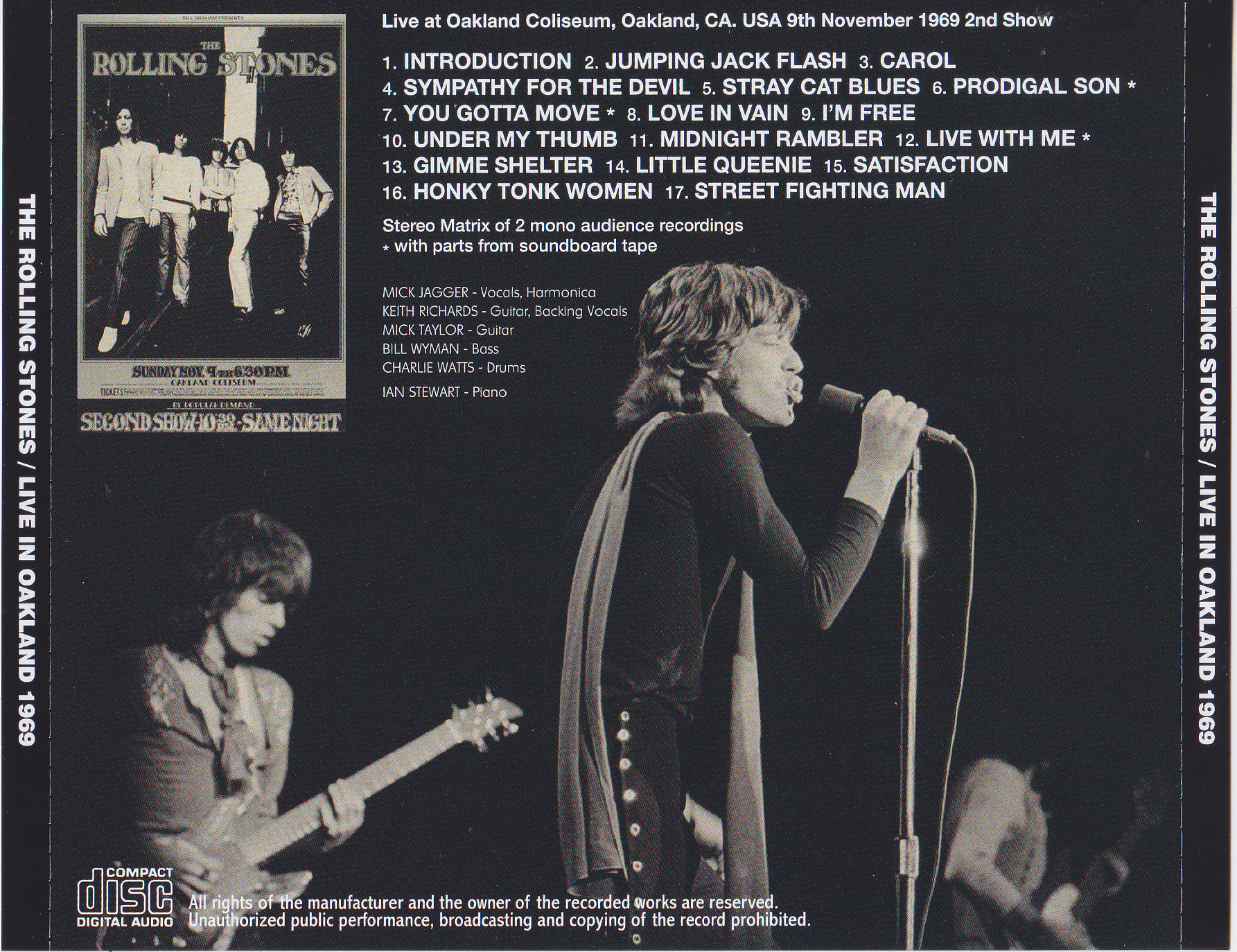
Live At The Oakland Coliseum 1969 (2020 reissue)

This LP contains soundboard recordings of the Rolling Stones’ live performance at the Oakland Colisuem in Oakland, California at the start of their ground breaking November 1969 trek across North America.

Subsequently broadcast on Radio KSAN at the behest of Bill Graham, these nine tracks demonstrate why on this tour the Stones were introduced as “the greatest rock’n’roll band in the world.” Four of these songs – Prodigal Son, You Gotta Move, Gimme Shelter and Satisfaction – were not included on the Get Yer Ya-Ya’s Out! LP, recorded later on the tour in New York and Baltimore.

These LP is made by the person who operated the label which later calls the TMOQ. Ken and Dub are two people who have felt quite recognized among maniacs in the 2010s. It was that they released Bob Dylan’s “GREAT WHITE WONDER” famous for their first bootleg in the history of rock. This sound source boasts a different quality as the audience of 1969. Dub succeeded in capturing the performance on by using the shotgun microphone instead of the surrounding sound.

It is well known that it became the opportunity to release anecdotes about the album and official release ‘Get Yer Ya – Ya’s Out’. What is surprising than anything is that the value of the item and the sound source did not fade at all even after the appearance of the official. On the contrary, the sound source that Dub recorded, even in recent years, has been released in various forms. It is a testimony of how excellent it was that recording. This recording is referred to as Dub recording below.

What makes these parts mix SBD and succeeded in raising the balance of Mick’s vocal which was a distant subject in various audience recordings because of quiet performance. That surprisingly natural finish is another masterpiece. He showed outstanding sense, such as diverting SBD even in “Live With Me”. A masterpiece of audience recording comes out this week from the 1969 American tour, which pairs well with the soundboard masterpiece “GET YER YA – YA’S OUT! COMPLETE EDITION”!

See the source image

This earliest known footage of The Rolling Stones as they perform their landmark hit, ‘(I Can’t Get no) Satisfaction’ for a riotous crowd back in 1965. Mick Jagger, Keith Richards, Brian Jones, Charlie Watts and Bill Wyman give an electric performance of their iconic song. What’s more, unlike other footage from this time, you can actually hear them too.

Far too often on the vintage video of our favourite acts from the sixties scene, it can be awfully hard to actually hear the band, such is the ferocity of screams emanating from the girls in the audience. The high-pitched wail of teenage fandom is a permanent fixture on much of The Rolling Stones’ early footage.

In the clip below, provided by Reelin’ In The Years, we are treated to a real vintage performance. In ’65, audiences were expected to sit quietly when artists performed on stage and in the clip you can see a few people bouncing up and down in excitement. Somehow though, unlike most of their audiences at this time, the crowd stick to the rules. Only a few years later and all gigs were encouraged to have standing tickets when presenting rock and roll acts. While it may make for odd viewing in 2020, it does allow us a more accurate feeling of the Stones’ performing power. Lest we forget, unlike The Beatles who largely gave up touring because of fears for their safety, the Stones have always taken a fiery live set on the road. In 1965, they were honing their talent.

Yet they still possess all the power and commanding energy that would see them sit at the top of the pile of live acts for decades. Jagger is a potent force on stage, with a gigantic retro mic, the singer prowls the stage connecting with his audience and garnering screams and faux-fainting whichever corner he visited.

This clip is from one of the earliest known filmed live concert performances of the Stones. This is unique from the standpoint that there aren’t the typical throngs of screaming girls in the audience and so you can actually hear what they’re playing. The best bit about the video is the clear image of the future that lay before them. On reflection, the song is so far ahead of its time. It may hark back to the Delta blues that permeated all the Stones’ record collections, but the track is pure seventies glamour, wrapped up in a revolutionary guise. It’s bolshy and unabashed. It’s everything the Stones were about to become.

See the source image

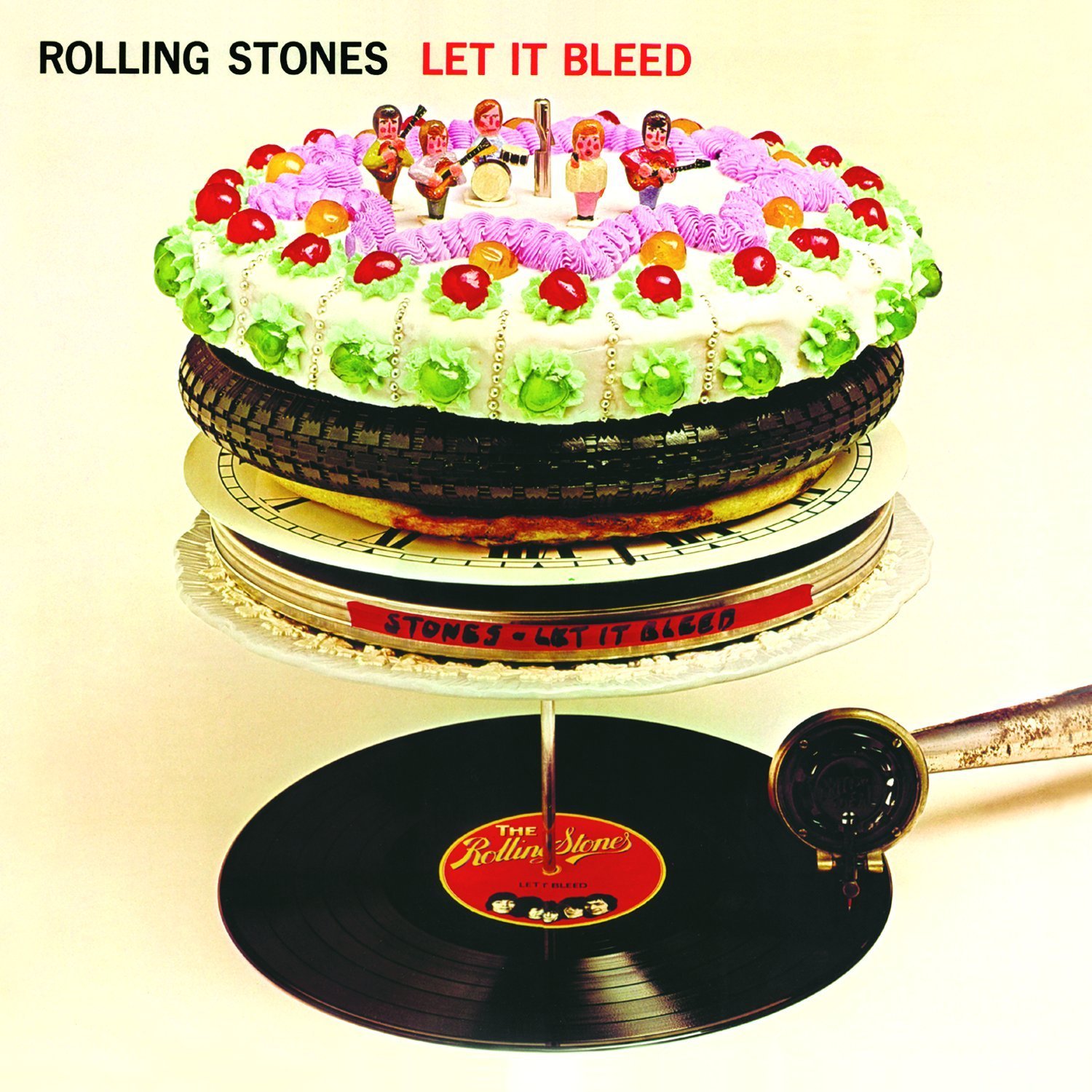
The Rolling Stones’ groundbreaking multi-platinum selling album “Let It Bleed” was released in late 1969, charting at No#1 in the UK and No#3 in the US. The Rolling Stones, at this point already a critically and commercially dominant force, composed and recorded their eighth long player (tenth for the U.S.) amidst both geopolitical and personal turmoil. The second of four Rolling Stones albums made with producer Jimmy Miller (Traffic, Blind Faith), “Let It Bleed” perfectly captures the ominous spirit of the times with “Gimme Shelter,” the opening track. The 2019 remaster has been engineered by eleven-time Grammy®-winning mastering engineer Bob Ludwig.

A landmark moment of the 1960s, that still resonates profoundly today. Originally released in 1969, Let It Bleed is regarded by critics and music fans as one of the best and most important rock albums of all time.

“Let It Bleed” features three of the band’s greatest songs – “Gimmie Shelter,” “Midnight Rambler” & the anthemic “You Can’t Always Get What You Want” Brian Jones performs on only two tracks: playing the autoharp on You Got the Silver, and percussion on Midnight Rambler – he was replaced by Mick Taylor during the recording, who plays guitar on two tracks – “Country Honk” and “Live with Me”, as well as on “Honky Tonk Women” (recorded during the Let It Bleed sessions).

Let It Bleed (50th Anniversary Limited Deluxe Edition) includes the remastered album in Stereo and Mono on both vinyl and Hybrid SACD, and a reproduction of the 1969 7” mono single of “Honky Tonk Women”/ ”You Can’t Always Get What You Want,” in a picture sleeve. The box set also comes with three 12” x 12” hand-numbered replica-signed lithographs printed on embossed archival paper, a full-color 23” x 23” poster with restored art from the original 1969 Decca Records package, and an 80 page hardcover book with never-before-seen photos by the band’s tour photographer Ethan Russell and an essay by journalist David Fricke.

The album includes the classic dark song about a serial murderer, ‘Midnight Rambler’ was written while The Rolling Stones were on holiday in a beautiful town in Italy. The beautiful Italian town of Positano was a place of inspiration for author John Steinbeck, who wrote: “Positano bites deep. It is a dream place that isn’t quite real when you are there and becomes beckoningly real after you have gone.” That Amalfi Coast town also played a part in the history of the Rolling Stones, when Keith and Mick Jagger went on holiday there in 1968. Somehow, being in picturesque, sunny Positano gave them the creative spark to write a dark song about a serial murderer, the “midnight rambler… pouncing like a proud black panther.”

“‘Midnight Rambler’ is a song Keith and I really wrote together,” Jagger recalled in 1995. “We were on a holiday in Italy. In this very beautiful hill town, Positano, for a few nights. Why we should write such a dark song in this beautiful, sunny place, I really don’t know. We wrote everything there – the tempo changes, everything. And I’m playing the harmonica in these little cafes, and there’s Keith with his guitar.”

The song, which finally appeared on the 1969 album “Let It Bleed” was loosely based on the life of the real Boston Strangler, Albert DeSalvo, who murdered 13 women in that American city from 1962 to 1964. “Midnight Rambler” was a headline that the papers used to describe the killer at the time, and in the song Jagger takes on the persona of a manipulative murderer. Richards called the seven-minute song “a blues opera” and insisted that his unique collaboration with Jagger was such that “nobody else could have written that song.”

James Miller’s production helps “Midnight Rambler” blend the sinister overtones of “Sympathy For The Devil” with the Chicago blues style of some of the band’s songs from earlier in the 60s. Jagger plays some powerful harmonica licks and Richards’ guitar work is supported by some excellent drumming from Charlie Watts. Bill Wyman played bass on a song that neatly shifts tempos.

“Midnight Rambler” is also the last song that Brian Jones recorded with the Stones, contributing congas to the track. Jones, who had helped start the band in the early 60s, had been suffering from drug addiction problems at the time of the song’s recording. He announced he was leaving the band in June 1969 and was found dead a month later, at the age of 27.

“Midnight Rambler” was originally recorded as part of the prolific sessions for “Beggars Banquet” in the spring of 1968, but was held over for “Let It Bleed“, which was released by Decca Records on December 5th, 1969. The cover for Let It Bleed was created by the graphic designer Robert Brownjohn. It features a cake that was made for the photo shoot by a young cookery writer called Delia Smith, who had been told the Stones wanted a “really gaudy” cake. Jagger sent her a framed, signed copy of the album as a thank you.

“Midnight Rambler” became a favourite at Rolling Stones gigs, where Richards would let loose with thrashing guitar solos. “I dig to play it,” he said. “It’s when the audience decides to join, that’s when it really knocks you out.”

The 50th-anniversary deluxe edition of “Let It Bleed” is out now.

Like Beggars Banquet the year before, the dominant influence was American roots music – drawing heavily from gospel (apparent in Gimmie Shelter and You Can’t Always Get What You Want), country music of Hank Williams and Jimmie Rodgers (Country Honk), Chicago blues (Midnight Rambler) and country rock on the title track. Recording for “Let It Bleed” began in earnest in February 1969, recorded mainly at Olympic Studios in London and was originally scheduled for release in July 1969. Although “Honky Tonk Women” was released as a single that month, the album itself suffered numerous delays and was eventually released in December 1969, after the band’s US tour. The lyricism found on Let It Bleed is often noted for its violent and cynical undercurrents. Jann S. Wenner, in a 1995 Rolling Stone interview with Jagger, described the album’s songs as “disturbing” the scenery as “ugly” and asked Jagger if the Vietnam War played a role in the album’s worldview. Jagger said: “I think so. Even though I was living in America only part time, I was influenced. All those images were on television. Plus, the spill out onto campuses”.

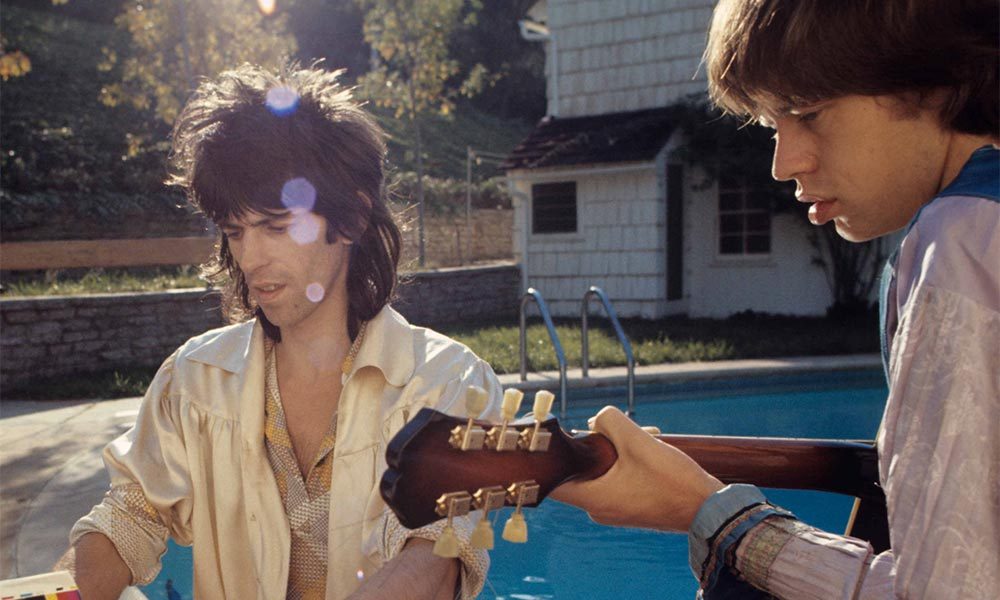
Rolling Stones Let It Bleed press shot CREDIT Ethan Russell
Stones_Buenos.jpg

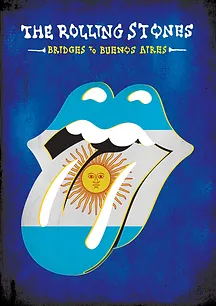
“Bridges To Buenos Aires” is the latest concert film release from The Rolling Stones’ archive. The full-length show from their five night sell-out residency at the River Plate Stadium in Argentina’s capital city has been restored in full, and features a very special guest appearance from Bob Dylan.

Filmed on April 5th 1998, by this point, the band had played to over two million people on the first two legs of the tour in North America and Japan. Amongst many highlights in this show, special guest Bob Dylan joins the band onstage at River Plate for a unique performance of his classic ‘Like A Rolling Stone’. The band only played a further two dates in South America on the triumphant, year long Bridges To Babylon tour, before they headed back to North America, and Europe.

Filmed on April 5th 1998, by this point, the band had played to over two million people on the first two legs of the tour in North America and Japan. Amongst many highlights in this show, special guest Bob Dylan joins the band onstage at River Plate for a unique performance of his classic ‘Like A Rolling Stone’. The band only played a further two dates in South America on the triumphant, year long Bridges To Babylon tour, before they headed back to North America, and Europe.

A new trailer for Bridges to Buenos Aires features a few snippets of Dylan’s appearance, while it also teases renditions of “Jumpin’ Jack Flash,” “Flip the Switch” and “You Can’t Always Get What You Want.”

Bridges to Buenos Aires is to be released as a two CD set with either a DVD or Blu-ray. It will also be issued on digital video, digital audio and a limited edition translucent blue, 180 gram triple vinyl LP. The concert film was restored from the original master tapes, while the audio was remixed and remastered from the live multitrack recordings.

The band only played a further two dates in South America on the triumphant, year long Bridges To Babylon tour, before they headed back to North America, and Europe.

Watch: The Rolling Stones Perform “Mercy, Mercy” for First Time in 50 Years

The Rolling Stones kicked off their rescheduled North American No Filter tour dates last Wednesday evening at FedEx Field in Landover, MD, outside Washington, DC, and the legendary UK rockers reached back in their extensive catalog to unearth a cover they hadn’t played live in just under 50 years.

In a set that featured classics and staples like opener “Jumpin’ Jack Flash,” “Tumbling Dice,” “You Can’t Always Get What You Want,” “Sympathy for the Devil,” “Paint It Black,” “Start Me Up” and “Brown Sugar,” the Stones threw it back to their early days by offering their rendition of “Mercy, Mercy,” a tune originally by Don Covay that was included on the Stones’ 1965 album Out of Our Heads. Last night was the first appearance of the song in a Stones set since they played it at London’s Hyde Park on July 5th, 1969. Before playing the cover, frontman Mick Jagger dedicated the performance to former Stones guitarist Brian Jones, who passed away 50 years ago to the day on July 3rd, 1969.

Below, watch fan-shot video of last night’s “Mercy, Mercy”

The song “Mercy Mercy” (1st time live since 1969) & Rocks Off (Fan Voting Choice) & You Cant Always Get What You Want, Rolling Stones, FedEx Field, Washington DC 7/3/19; No Filter North American Tour, Night 4 of the tour

No photo description available.

The Rolling Stones release a special, limited edition of “She’ s A Rainbow” (Live) at U Arena, Paris 25/10/17.

She’s a Rainbow is a song by the Rolling Stones and was featured on their 1967 album Their Satanic Majesties Request. It has been called “the prettiest and most uncharacteristic song that Mick Jagger and Keith Richards wrote for the Stones, although somewhat ambiguous in it’s intention.

The original song includes rich lyricism, vibrant piano by Nicky Hopkins and Brian Jones‘ use of the Mellotron. John Paul Jones, later of Led Zeppelin, arranged the strings of this song during his session days.

Backing vocals were provided by the entire band except for Charlie Watts. Notably, all of the vocals sound like soft background singing with the music overshadowing them to the point of the lyrics being difficult to hear. The lyrics in the chorus share the phrase “she comes in colours” with the song of that title by Love, released in December 1966.

The song begins with the piano playing an ascending scale, which returns throughout the song as a recurring motif. This motif is developed by the celesta and strings in the middle 8. Humorous and ambiguous devices are used, such as when the strings play out-of-tune and off-key towards the end of the song,

In 1986, relations between Keith Richards and Mick Jagger were at an all-time low. The Rolling Stones were on hold while Jagger toured as a solo act behind his 1987 album Primitive Cool, and the two traded endless insults in the press.

So Keith Richards decided to do something he’d always held off on: form his own solo band. The X-Pensive Winos featured an eclectic crew including Waddy Wachtel (Warren Zevon, the Everly Brothers), drummer Steve Jordan (who played with Richards in the Chuck Berry tribute concert film Hail! Hail! Rock & Roll),  bassist-drummer Charley Drayton and keyboardist Ivan Neville.

Recording outside Quebec, the chemistry was clear when they laid down the swaggering opener “Take it So Hard.” “I went back to the house going, ‘we’ve conquered Everest already?’ Wachtel said later. In his autobiography Life, Richards agreed. “There’s no way you can stand in front of the Winos without getting off. It’s a surefire high. It was so hot you could hardly believe it.”

The result was Talk is Cheap, an endearingly ragged classic considered by many fans the best Rolling Stones-related release of the last three decades. From the stomping open-G anthem “Take it So Hard” to the Memphis soul ballad “Make No Mistake,” it captures Richards nailing everything he’s good at – hear the throwback Sun-style in the rocker “I Could Have Stood You Up.”

To celebrate its 30th anniversary on March 29th, the album will finally be reissued as a huge box set that includes the album on CD and vinyl, six unreleased tracks from the sessions and an 80-page book featuring a new interview with Richards. There an even more extravagant “super deluxe” box set that comes in a case that replaces Richards’ guitar case made by the Fender Custom Shop.

“This album holds up,“ Richards said. “I’ve been listening to it and not through the mists of nostalgia either because it doesn’t affect me that way. This is more than the sum of its parts. I really admire it. We were having fun and you can hear it.”


Image may contain: one or more people

Some will naturally think that this is simply a reaction to 2016’s Rolling Stones’ Blue and Lonesome where the English band covered many of their favorite Chicago blues songs. Yet, this project, Chicago Plays the Stones, was envisioned before that album was released. It was inspired by the Chicago residency of the Rolling Stones’ 54-year-spanning, world-touring exhibit Exhibitionism.

The new, multi-artist Rolling Stones tribute album Chicago Plays The Stoneswas released yesterday . Among its delights are contributions by Keith Richards — who shares guitar features with Jimmy Burns on the latter’s update of ‘Beast Of Burden’ — and Mick Jagger, who you can hear on harmonica and call-and-response vocals with the Stones’ old friend Buddy Guy, as he remakes ‘Doo Doo Doo Doo Doo (Heartbreaker)’ from 1973’s Goats Head Soup album.

Track – 03 from “Chicago Plays The Stones” 12 all-new recordings of iconic Rolling Stones songs, re-imagined in the Chicago blues style and played by today’s greatest Chicago blues artists.

The Stones first met Buddy Guy in 1964 when the American bluesman was recording ‘My Time After Awhile’ at Chess Studios in Chicago. As Guy is quoted by Rolling Stone: “Muddy Waters and Willie Dixon walked straight in my studio while I was singing with a bunch of white guys, who lined up against the wall, I got pissed off: ‘Who in the hell are these  guys?’ I had never seen a white man with hair that long and high-heeled boots before.”

That inauspicious start prefaced a notable friendship, confirmed when the Stones invited Guy to open for them as they toured Europe in 1970, just as they had championed his fellow blues giant B.B. King. Further live guest appearances followed for Guy, who duetted with Jagger on the 2006 version of ‘Champagne & Reefer’ featured in Martin Scorsese’s concert film Shine A Lightand the accompanying album in 2008. ‘Doo Doo Doo Doo Doo (Heartbreaker)’ marks the pair’s first studio pairing.

Billy Branch “Sympathy For The Devil” (2017) [Rolling Stones Cover] – From the 2017 Raisin’Music Records release “Chicago Plays The Stones.” Twelve all-new recordings of iconic Rolling Stones songs, re-imagined in the Chicago blues style and played by today’s greatest Chicago blues artists.

Among other local blues musicians featured on Chicago Plays The Bluesare Ronnie Baker Brooks, who covers ‘(I Can’t Get No) Satisfaction’; Billy Branch, who reads ‘Sympathy For The Devil’; and Carlos Johnson, who tackles the more recent Stones song ‘Out Of Control.’

The album is a collaboration between Grammy-nominated producer Larry Skoller’s Raisin’ Music Records and Chicago Blues Experience, which is due to open in the city in 2019. Artists featured on the album will play selected US dates in October and November.

Image result for The ROLLING STONES - " Ruby Tuesday " images

On September. 30th, 2016, ABKCO Records released a massive box set including all of the studio albums released in mono by The Rolling Stones in the 1960s. The Rolling Stones in Mono, available in both 15-CD and 16-LP vinyl configurations, as well as Standard Digital, Mastered for iTunes and True HD (96k/24 bit, 192k/24 bit and DSD), contains a total of 186 tracks, 56 of which had never before been heard in mono since the advent of the digital age, according to the original announcement from ABKCO, which retains the rights to the Stones’ early recordings.

The Rolling Stones in Mono covers the formative years of 1963-69 featuring hits like “(I Can’t Get No) Satisfaction,” “Get Off Of My Cloud,” “19th Nervous Breakdown” and “Paint it Black,” to name a few. The idea behind releasing the collection, the 2016 press release explained, is that, “Most rock and pop recordings were originally recorded in mono, with stereo often an afterthought, dealt with only following the completion of the original (mono) version of a given track.”

Recording engineer Dave Hassinger, who worked with the Stones from 1964-66, explained how he mixed the Stones in mono: “They always played together at the same time,” he is quoted as saying. “They would run the parts down, work out the changes here and there, nail it down, then start recording.”

Fast forward to May 22nd, 2018, and ABKCO has released an official lyric video for the group’s 1967 smash hit, “Ruby Tuesday,” to coincide with The Rolling Stones’ 2018 #NoFilter tour of the U.K. and Europe.

From the announcement: “For this hauntingly beautiful ballad the goal was to create a romantic and evocative visual inspired by 60s design and an independent, free-spirited woman. To enhance the wistful, baroque feel of the verses, densely decorative floral and paisley patterns which form throughout each scene create a rich tapestry of detail. The choruses cut to kaleidoscopic patterns set against a bright ruby red backdrop, ensuring a big hit of colour in contrast to the verses.”

More on “Ruby Tuesday” from the announcement: “The song was written, for the most part, by Stones guitarist Keith Richards in 1966, inspired by Linda Keith, his girlfriend at the time, who had recently left him for a poet named Bill Chenail; soon thereafter she began dating rising star Jimi Hendrix.” “That’s the first time I felt the deep cut,” Richards recollected in his 2010 autobiography Life. “The thing about being a songwriter is, even if you’ve been fucked over, you can find consolation in writing about it, and pour it out . . . It becomes an experience, a feeling, or a conglomeration of experiences. Basically Linda is ‘Ruby Tuesday.’”

The recording features Brian Jones on recorder, Bill Wyman fretting a double bass (with Keith Richards bowing it) and outside help from arranger/composer Jack Nitzsche who played piano on the track. Initially released in January 1967 as a B-side to “Let’s Spend the Night Together,”

“Ruby Tuesday” was featured on the American release of the 1967 album, Between The Buttons. This version features Mick Jagger on vocals, Keith Richards on guitar, Charlie Watts on drums, Ronnie Wood on guitar, Bill Wyman on bass, Matt Clifford on keyboards and French horn, Bobby Keys on saxophone, Chuck Leavell on keyboards, Bernard Fowler on backing vocals, Lisa Fischer on backing vocals, Cindy Mizelle on backing vocals, and the Uptown Horns.