Posts Tagged ‘Jimmy Page’

Led Zeppelin were enduring a period meant to be spent celebrating their mid-’70s successes that instead had turned into a maze of tax issues, injury and drug use.

The band pushed forward, writing and recording an emotion-packed seventh album that returned the group to its hard-blues roots. This focus on urgency ran counter to the sense of experimentalism that drove their more recent albums, but there didn’t seem to be any other way. In some ways, nothing was going right. They wrote in Malibu and recorded in Germany, since the group had become tax exiles from their native U.K. Robert Plant arrived for the sessions in a wheelchair, while still recovering from a scary automobile crash in Greece. When time grew short, Jimmy Page was forced into a marathon of dubbing and mixing.

“Nobody else really came up with song ideas,” the guitarist said in “Light & Shade: Conversations With Jimmy Page”. “It was really up to me to come up with all the riffs, which is probably why [the songs were] guitar-heavy. But I don’t blame anybody. We were all kind of down.”

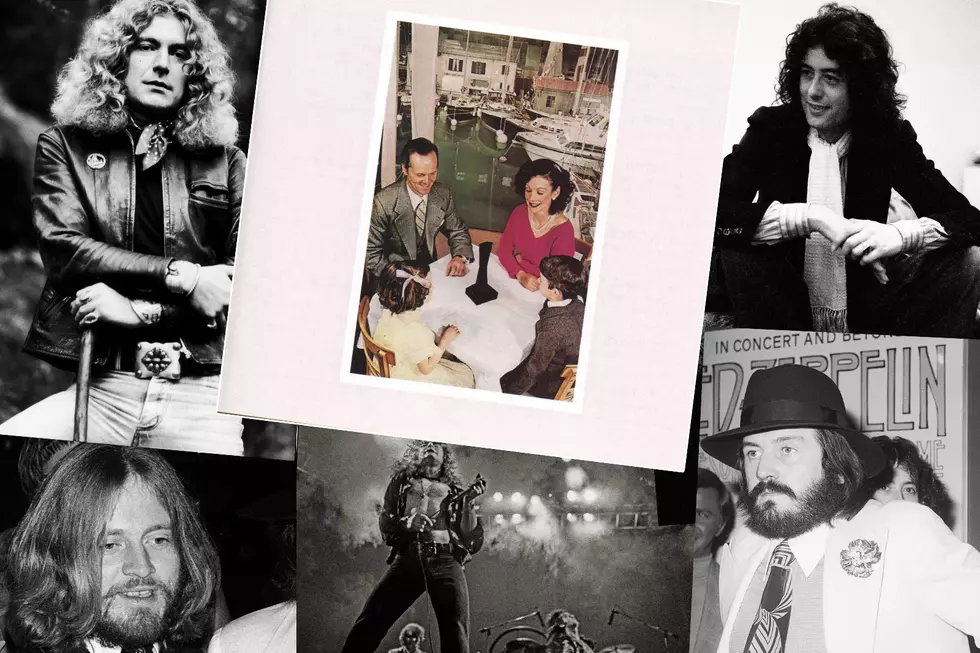
“Presence” was the seventh studio album by the English rock band Led Zeppelin , released by Swan Song Records on 31st March 1976. The album was a commercial success, reaching the top of both the British and American album charts, and achieving a triple-platinum certification in the United States, despite receiving mixed reviews from critics and being the slowest-selling studio album by the band

“It was taken from the balls, you know,” Plant said of Presence. “It was a cry from the depths, the only thing that we could do.” It’s Led Zeppelin’s most tightly focused record: seven tracks, no acoustic songs, no keyboards, just jewel-hard power – from the frantically charging “Achilles Last Stand” to “Nobody’s Fault but Mine,” a variation on a Blind Willie Johnson song where the band turns its firepower on itself.

Presence was pure anxiety and emotion,” said Page in 2006. “We didn’t know if we’d ever be able to play in the same way again. It might have been a very dramatic change, if the worst had happened to Robert. Presence is our best in terms of uninterrupted emotion. Along the way, however, John Paul Jones receded into the musical background. He was moving toward a breakthrough on the Yamaha GX-1 synth, something that would define the next Zeppelin album, 1979’s In Through the Out Door. But in the meantime, his quieter demeanor served to hardened the album’s edges.

They had reason to be frustrated. After the August 1975 car accident that confined Plant to a wheelchair for months, Led Zeppelin had to cancel an American tour. Unable to return to England for tax reasons, they developed the core of the album “Presence” in rehearsals at Los Angeles’ SIR Studio in October, then headed to chilly Munich, Germany, to record in the hotel-basement studio Musicland. From the start, the group knew they wouldn’t have long (the Rolling Stones had already reserved Musicland to add overdubs to their forthcoming Black and Blue album in early December). So they blasted through the recording process in 18 days, with Plant often singing from his wheelchair.

Page asked the Stones if he could have a little more time to finish guitar overdubs; he reportedly stayed up around the clock for two days to get them done, with “Achilles Last Stand” occupying the first day and everything else the next. Though it didn’t come with any major hits, Page called it Zeppelin’s “most important album”: bleak, bruised and crackling with electric fury.

Like In Through The Out Door, Presence was recorded during a period of time when Robert Plant was recovering from a car accident, with the normally charismatic frontman recording his vocals from the confines of a wheelchair. Despite this, the record still sounds like classic Led Zeppelin, though its sales ended up being some of the worst the group had seen during their career.

Due to the strong presence of Jimmy Page throughout the recording of the record, the record sounds less like a group effort, and more of a bluesy solo record from the guitarist. With John Bonham throwing down some stunning rhythmic answers to Page’s blistering guitar-work on tracks like ‘Achilles’ Last Stand’ and ‘Nobody’s Fault But Mine’, Presence still shows Led Zeppelin as the dominant force they always were.

Here’s a deeper dive into those tracks, as well as the five additional songs that make up “Presence”.

“Achilles Last Stand”

Plant alluded to Zeppelin’s tax-exile status in the song’s opening line, the first hint at how autobiographical Presence would become: “It was an April morning when they told us we should go, and as I turned to you, you smiled at me, how could we say no.”

He and Page had traveled to Morocco in the summer of 1975, drinking in exotic local settings and music that inspired the guitar parts – and some of Plant’s more esoteric musings on this track. But Plant’s working name for it (“The Wheelchair Song”) served as a sad admission. He also ultimately chose a title that winked at his car accident, which severely injured his ankle: Achilles, a hero of the Trojan War, was brought down by an arrow to the heel.

A one-of-a-kind Led Zeppelin studio project was underway. “There won’t be another album like it, put it like that,” Plant told Circus magazine at the time. “It was a cry from the depths, the only thing that we could do.”

Part of Page’s brisk post-production work included piling up no less than six guitars on “Achilles Last Stand.” “It was so focused,” Page said of the sessions in a 2015 talk with the Toronto Sun. “And it was defiant, if you like, to the set of circumstances.”

Jones, in a rare spotlight moment, added a distinctive alembic eight-string bass line. But they were no match for John Bonham, whose eruptive drum work serves as the lead instrument for roughly the first half of “Achilles Last Stand.” It’s a crowning musical achievement that opened the door for the kind of shifting time signatures that would dominate the next wave of British heavy metal.

“For Your Life”

Bonham was still front and center, unleashing monstrous but surprisingly limber polyrhythms on this heavy studio improv. With little unused material in hand, the narrative also dealt in the here and now. In fact, “For Your Life” was mostly arranged at Musicland, though it remained a furious attack on the now-empty excesses of the Los Angeles-era setting where Plant and Page composed the bulk of Presence. Plant darkly references plasticine relationships and rampant drug use that were so widespread in the “city of the damned.” He later described “For Your Life” as “a bitter treaty with rock ‘n’ roll.” Page matches Plant’s venomous attitude strum for angry strum.

“Royal Orleans”

Six of the seven songs on Presence were composed by Plant and Page, while the rumbling stop-start “Royal Orleans” is credited to all four members. In Led Zeppelin: The ‘Tight but Loose’ Files, Page said moments like this “proved to us once and for all that there was no reason for us to split up. I can’t think of many groups who have been going as long as we have, [and] who still have that spontaneity about them.”

Lyrically, Plant returns to raucous times out on the concert trail, with a title that references a signature French Quarter inn and a narrative that recounts a particularly salacious road story. “We rolled a joint or two, and I fell asleep and set fire to the hotel room, as you do,” Jones told Mojo in 2007, with a laugh. “And when I woke up, it was full of firemen!” Still, there’s something almost wistful in the retelling by a hobbled and homebound Plant.

“Nobody’s Fault but Mine”

In the 1928 original, Blind Willie Johnson worried that his sightlessness would draw the wrath of God, since he’d been rendered unable to read the Bible. Plant and Page transformed “Nobody’s Fault but Mine” into the stammering retelling of their own fall from grace.

If all of this sounds rather nostalgic, too, there’s no indication in the music: Plant’s positively vitriolic harmonica solo is anything but introspective. “‘Nobody’s Fault but Mine,'” he admitted in Jon Bream’s Whole Lotta Led Zeppelin, “was very spiky – a lot of clinched teeth.”

Meanwhile, Page seemed to have based this new arrangement on an acoustic version released in the late-’60s by the late John Renbourn. But he took things up a notch – actually several notches – by triple-tracking the intro, using a phaser while playing one guitar an octave higher. A song that can came off at times like a loose jam was actually a carefully constructed bit of choreography.

“Candy Store Rock”

Led Zeppelin had been carrying around the seeds of this song since their Houses of the Holy dates. Back then, they’d dabble in an improvisation during “Over the Hills and Far Away” that now found a home as the middle section of the ’50s-influenced “Candy Store Rock.”

Plant’s echo-heavy rockabilly approach is in tribute to Ral Donner, an unabashed Elvis Presley clone, and a needed moment of levity on such a serrated, brutally honest album. For Plant, it represented another kind of push back against the fates.

“Against the odds, sitting in a fucking chair, pushed everywhere for months and months, we were still able to look the devil in the eye and say: ‘We’re as strong as you and stronger, and we should not only write, we should record,'” Plant told Creem at the time. “I took a very good, close scrutiny of myself and transcended the death vibe – and now I’m here again.”

Though clearly an odd man out, “Candy Store Rock” ultimately points to the throwback sensibility that powered succeeding post-Zeppelin projects like 1984’s The Honeydrippers: Volume One and 2002’s Dreamland.

“Hots On for Nowhere”

One of the most hooky Led Zeppelin moments ever, “Hots On for Nowhere” also developed from an earlier scrap of an idea. Page’s riff appeared on the then-unreleased “Walter’s Walk,” but otherwise the track was the product – both literally and figuratively – of time spent in Malibu.

Plant clearly felt abandoned during his time of convalescence, mentioning friends who “give me their shoulder” or (worse) “who will give me fuck all.” No surprise that he’d subsequently describe Presence as “really like a cry of survival.”

Page then quickly crafted a tough, if customary, solo – that is, until he unleashed an eye-popping twang in the middle, courtesy of the tremolo arm on a Lake Placid Stratocaster that was reportedly borrowed from Gene Parsons of the Byrds. The song’s odd time signature was later refashioned for “Pride and Joy,” from 1993’s Coverdale/Page collaboration. Page also returned to “Hots On for Nowhere” during U.S. tour dates with the Black Crowes in 2000.

“Tea for One”

Led Zeppelin’s self-titled debut found Page in firm control, as the band rekindled the purpose and fire of blues without resorting to the genre’s basic structures. Same here, as Led Zeppelin end a hard-charging album in the only way they could: with a harrowing exploration into the depths of alienation while separated from family.

“I was just sitting in that wheelchair and getting morose,” Plant later admitted. “‘Tea for One’ was very personal. I couldn’t get back to the woman and children I loved. It was like, Is this rock ’n’ roll thing really anything at all?”

Loose early tries found Plant quoting Willie Dixon and Cab Calloway, before the band leveled it up into a menacing blues. That meant a return to brutally honest autobiographical themes, while a double-tracked Page amplified every anguished cry.

“All our pent-up energy and passion went into making it,” Page said of Presence in Led Zeppelin: The ‘Tight but Loose’ Files. “That’s why there was no acoustic material there. The mechanism was perfectly oiled. We started screaming in rehearsals and never stopped.”
The Band: 

'Led Zeppelin'

48 years ago today, on January. 12th, 1969, music changed for many people. It was on this day that Led Zeppelin released their debut LP . Of course, critics panned the record, but to the record buying public, well they never listened to critics anyway. It only takes the first two seconds of the first song on their first record for Led Zeppelin to make crystal clear exactly what they intend to do – and exactly what they intend to do to you. In the opening to “Good Times Bad Times,” the band drops a two-note attack that falls like a cartoon safe, clearing the air for John Bonham’s syncopated groove, Jimmy Page’s swift-sword guitar and Robert Plant’s high-end howling about sex so loud it gets the neighbors talking. “It really wasn’t a pretty thing,” Plant later said. “It wasn’t supposed to be a pretty thing. It was just an unleashing of energy.”

just a few weeks before their album’s release — opening for Vanilla Fudge and Spirit. Although booking agent Ron Terry had to beg promoter Barry Fey to add Led Zeppelin to the already-sold out show, the band did not disappoint. “You didn’t have to be a genius to know that Zeppelin was going to be a smash,” he later said. “Oh, my God. People were going crazy!” Rock station KLZ was so jammed with calls the next day that Fey had to run a copy of the unreleased self titled album to them, where it played for an entire day.

We could go on for days on the impact that this record had at the time and still has to this day, but you all know that. Just 3 of the songs “Your Time is Gonna Come”, “Good Times Bad Times” and “Communication Breakdown” were Led Zeppelin originals. When Led Zeppelin debut album was released in January 1969, it went to the Top 10 in the U.S. and the U.K. charts, despite lukewarm reviews. The enormity of Zeppelin’s innovation wasn’t entirely easy to recognize. In an era of spiritual transcendence and tales of brave Ulysses, they’d flipped teenage rock & roll’s sex-zonked mania into something huge and seething and mythic- bestial. Eastern mysticism and Mordor and prom-ruling radio gold would all come later.

Page’s vision for the album was so clear that they recorded the entire thing in just 30 hours. “I financed and completely recorded the first album before going to Atlantic,” he later said . “It wasn’t your typical story where you get an advance to make an album: We arrived at Atlantic with tapes in hand.” The result was a new, uncompromising sound and unabashed rock star lifestyle, paving the way for everything from prog-rock to heavy metal.

https://www.youtube.com/watch?v=XP6KbVoalAE

Led Zeppelin was born from the ashes of the Yardbirds. They had disintegrated in the summer of 1968, leaving guitarist Jimmy Page with the rights to the name — and a series of shows in Scandinavia he was contractually obligated to complete .So he recruited Robert Plant, John Paul Jones and John Bonham, and the four toured as the New Yardbirds. But by the time they entered Olympic Studios in London in late september 1968 , they had moved their sound away from English folk-rock, into the blues-influenced band Page had always wanted, and soon had a new name, Led Zeppelin, as well.

As with so many great records, when it first came out the critics didn’t care for it. Therefore many people knew it would be good.

On January. 12th, 1969, Led Zeppelin released their self-titled debut LP “Led Zeppelin” in the US. It wouldn’t be released in the UK until March 31st. The LP combined Blues and Rock and was very well received by music fans. A number of the songs were ‘borrowed’ from older Blues musicians who at first were not given any credit.

It was an incredible record that changed the way many looked at Rock music.

Robert Plant (vocals/production); Jimmy Page (guitar); John Paul Jones (bass); John Bonham (drums)

The Album Jimmy Page, Robert Plant, John Paul Jones and John Bonham Recorded Before 'Led Zeppelin'

all four members of Led ZeppelinJimmy Page, Robert Plant, John Paul Jones and John Bonham were recording together before there even was a Led Zeppelin. While still in  mode, the four pre-Zeps took part in the August 1968 recording sessions for P.J. Proby’s 1969 album, “Three Week Hero”.

Page and Jones were successful session musicians at this point, and when Jones got the Proby gig, he invited his fellow New Yardbirds along. Jones recollects “I was committed to doing all the arrangements for the album. As we were talking about rehearsing at the time, I thought it would be a handy source of income. I had to book a band anyway, so I thought I’d book everybody I knew.” The sessions started August 25th, 1968, and led to an album that didn’t cause much of a stir when it was released the following April.

“The boys told me they were going over to play in San Francisco and all that, and I said, ‘Look, from what I’ve heard and the way you boys played tonight, not only are you not going to be my backing band, I’m going to say goodbye right now, because I don’t think I’m ever going to see you again’,” Proby has said .

“‘That’s how successful you’re going to be. You’re exactly what they want, you play all that psychedelic stuff and everything.’ I said, ‘You’re going to go over there and go down so great I don’t think you’re ever going to come home.’ They didn’t ever come back until they changed their name to Led Zeppelin and stayed over there and came back huge huge stars. … I said goodbye that day when I cut that album, and I haven’t seen one of them since.”

Is there any doubt this is Led Zeppelin? This is part of the eight-minute medley that closed the album.

Here’s track two “The Day That Lorraine Came Down” from the PJ Proby album, which was released on CD in 1994. It’s easy to imagine Robert Plant on vocals—not that there’s anything wrong with Proby’s voice.


Image result for jimmy page and robert plant

Jimmy Page dug up several unheard gems for the recent batch Led Zeppelin reissues. But there’s one song that still remains unreleased “Swan Song”.

The fertile sessions for Led Zeppelin’s Physical Graffiti album produced a number of landmark songs, including In My Time Of Dying and Kashmir. And among them was another track that had the potential to be a Led Zeppelin classic. An ambitious, virtuoso instrumental titled Swan Song, it was sketched out and partially recorded during the album sessions but, frustratingly, never completed – even though, like many of his ideas, Jimmy Page would not quite let it rest.

The seeds of Swan Song were sown in early 1974 when Zeppelin reconvened to begin work on Physical Graffiti at Headley Grange, the 18th-century workhouse in Hampshire where they’d recorded their fourth album.

The band had endured a crisis the previous autumn when John Paul Jones announced that he was fed up with the relentless touring and was planning to quit the band. He even suggested, albeit with his tongue firmly in his cheek, that he was considering becoming choirmaster at Winchester Cathedral. It took all the efforts of manager Peter Grant to talk him out of it.

But by the time the four band members got back together they were once again firing on all cylinders. Reunited, they began pooling ideas. “Some of the tracks we assembled in our old-fashioned way of running through a track and realising before we knew it that we had stumbled on something completely different,” recalled Robert Plant.

By contrast, Page had grand plans for a lengthy new track he was calling Swan Song. The guitarist had already plotted out the instrumental piece at his home studio in Plumpton Place, East Sussex. Even at that early stage, his vision was clear. According to Page, it featured “a number of sections and orchestrated overdubs”.

The track was broken up into sections, two of which were recorded in late February 1974 (and which can be heard on various Zeppelin bootlegs and on YouTube). The first part opens with Page’s drifting acoustic guitar, before the John Paul Jones/John Bonham rhythm section kicks in with the sure-footed syncopation that characterised their greatest work. The second segment commences with Page again leading off, his descending riff hinting at the song’s majestic potential. Tantalisingly, he would later reveal that this epic-in-waiting would not necessarily have remained a purely instrumental track – there were plans to add other sections and even lyrics.

So why did they leave the piece unfinished? The simple truth is that Zeppelin’s creativity was at an all-time high during the Physical Graffiti sessions. At the same time, they had also been working on Ten Years Gone, another lengthy track that incorporated similar guitar orchestration. Faced with an abundance of quality material, they could afford to leave Swan Song for another time. Consequently, it was Ten Years Gone that ended up on Physical Graffiti.

But the Swan Song story didn’t end there. Zeppelin were planning to launch their own label and rumours abounded that it would be called Shag or Slut Records – a lewd reference to their notorious on-the-road antics. Instead, at a press reception in New York on May 7, 1974, it was announced that the new label would be called Swan Song, after their unfinished song. “I’d been recording this long instrumental and somebody shouted: ‘What’s the title?’” revealed Page. “I shouted back: ‘Swan Song’. And everybody stopped and said what a good name that would be for the album. From there it got carried over to being the name for our label.”

https://www.youtube.com/watch?v=q1qQAuIZ-lc

Never one to let go of a good idea, Page talked about returning to the incomplete song to finish it off. “I’ve spoken before about a long piece I’d written,” he said in 1976. “I wanted to orchestrate the guitar and put it through various treatments. The original idea was to have four sections coming back to the same theme each time. There would be four separate melody lines dealing with the seasons. Robert will do the lyrics. I know I can work the whole thing out from the trial runs I’ve laid down. It’s a really exciting prospect.”

Page continued to incorporate elements of Swan Song into his live improvisational piece White Summer/Black Mountain Side during Zeppelin’s 1977 tour. It would reappear again during the band’s Knebworth shows in 1979, and even as late as their final European tour, in 1980. Had Led Zeppelin not disbanded following the death of John Bonham on September 25,1980, there’s every chance that Page would have gone back to work on the song in the studio.

But even that wasn’t the end of his great lost opus. Page’s first major live appearance following the dissolution of Zeppelin was as part of an all-star nine-date US tour in 1983 in aid of the ARMS charity to help multiple sclerosis-stricken ex-Small Faces bassist Ronnie Lane. With Paul Rodgers on vocals, Page performed a lengthy song called Bird On A Wing, which featured some chord structures that clearly dated back to Swan Song.

By the time Page and Rodgers formed their blues-rock supergroup The Firm, it had been revisited once again. “It was reworked with Paul Rodgers, who supplied some inspired lyrics, and it became Midnight Moonlight,” said Page, referring to the song which closed The Firm’s self-titled album in 85.

Today, Swan Song has passed into Zep legend as one of the band’s great lost masterpieces – albeit one that has, tantalisingly, filtered into the ether in various incarnations. As with other unfinished Zep treasures such as Sugar Mama and Fire, it’s difficult not to wonder how significant Swan Song would have become had they actually finished it.

No photo description available.

On July 7th, 1980, the original members of Led Zeppelin performed together for the final time at Eissporthalle in Berlin, Germany. This is the latest in the Casino Records series of Led Zeppelin vinyl presentations. Previous releases have included This follows their excellent Berkeley Days Second Night package in a limited run of 400, “I Told You Baby Long Time Ago” Scandinavia March 1969 limited edition of 450 on clear splatter vinyl and “The Night Stalker” LA Forum 1975 issued last October in a run of 400 -1 to 200 on gold vinyl – 201 to 00 on clear vinyl. The first two had excellent content and packaging “the Night Stalker” was a little bit underwhelming in the presentation.

The concert was the last scheduled stop on a 14-date European tour in support of the group’s most recent (and ultimately final) studio album, 1979′s “In Through the Out Door”. Trouble had been circling the band in previous years, with John Bonham and Jimmy Page both struggling with alcohol and drug addictions.

Two weeks before the Berlin show, on June 27th in Nuremburg, Germany, Led Zeppelin were forced to stop their show after just three songs when John Bonham was rushed to the hospital after suffering what was reported as food poisoning but rumoured to be the result of a blackout.

On Monday July 7th 1980, Led Zeppelin took the stage for the final night of the tour and what would ultimately be the last ever Led Zeppelin performance with John Bonham.

The sound quality is excellent being the soundboard source used for the CD versions. Very pleasingly  and unlike the Night Stalker release, virtually all the in between chat is present and correct. I noticed a slight edit in the intro to “Trampled Underfoot”. To have lost the in between chat would have been a real shame as Plant’s very upbeat and humorous comments say a lot for the general atmosphere of this last night of the tour. He seems genuinely pleased at to how it has all gone – a fact Peter Grant noticed as on the flight back because he got the nod from Robert that a US tour was now viable. Sadly that was not to be. Aside from Jimmy’s usual intro to “Black Dog”, he also has a words to say as he tunes up for White Summer this spiel is also left intact. So it’s full marks for the actual presentation of the concert across these six sides.

Overall, it’s an upbeat and interesting swan song performance. Robert Plant is on excellent form and in a jovial mood. At times they do seem to rush proceedings and there are moments of sloppiness – there is also a bit too much reliance on the vocal harmoniser effect which sometimes clouds the clarity of Plant’s voice. However, there is much to enjoy about this final performance because when it’s good, it’s very good indeed.

Highlights here include the opening burst of Train Kept a Rollin and Nobody’s Fault But Mine, the stand alone Rain Song and All My Love with that gorgeous extended outro.

Despite Achilles Last Stand being strangely dropped from the set, this was still the longest performance of the tour notably due to some lengthy extended work outs – Trampled Underfoot is a prime example as Page, Jones and Bonham lock into an incessant groove.

Listening now to what would be there last moments together as a band is a moving experience, not least because of the striking content of the final performances of Stairway To Heaven and Whole Lotta Love -both of which are worth the price of admission alone –  because both are delivered in unique arrangements.

Stairway clocks in at over fourteen minutes, half of which is given over to a rambling and totally mesmerising Page solo. It was easily the longest on the tour. Similarly unusual is the version of Whole Lotta Love, somewhat appropriately the last ever song the original Led Zeppelin quartet performed live as a band.


A North American tour, which, like the European jaunt, was to see the band trimming some of the excess soloing and pageantry of previous expeditions, was scheduled to begin in October. But on Sept. 24th, after reportedly drinking 40 measures of vodka during a 12-hour period on a rehearsal day, Bonham went to bed at Page’s house and was found dead the following morning.

A few months later, on December. 4th, 1980, the group issued a statement declaring they would be breaking up as a result of Bonham’s passing. The surviving members have reunited only a few times since then, including short sets at Live Aid in 1985 and the 40th anniversary concert for Atlantic Records in 1988. Most recently, they performed a full-scale show on Dec. 10th, 2007, in London that was captured on the Celebration Day concert film that was released in 2012.

Although the photo above is taken from a show a few days prior, you can see photographs, the complete set list, ticket stubs and other memorabilia from Led Zeppein’s final show at their official website.


Robert Plant first came to the public eye in the late ’60s as a member of one of the biggest bands ever, Led Zeppelin. But long before the spotlight was on him, he was a member of The Crawling King Snakes which would prove to be pivotal as it put him in touch with John Bonham. Plant, like most aspiring musicians from England, was influenced by blues artists from America. In 1968 Jimmy Page was searching for a lead singer for the Yardbirds and after meeting Plant, he offered the gig to him on the spot. Collaborations between Page and Plant gave us some of the most memorable moments in rock history. With John Bonham on drums and session player John Paul Jones on bass, the band conquered the world with a mix of blues, folk and straight-ahead rock. Throughout the ’70s, the band released some of the most prominent records of all time. As a live act, they would often jam out songs 10 to 15 minutes beyond the originals as Plant would riff off Page and vice-versa. Robert Plant, like Roger Daltrey, had a golden mane, devastating good looks and incredible stage presence. Often performing in shirts that would show off his chest and arms, he became a rock god, and the band’s hotel stays while touring are legendary. In 1980, Bonham died after a night of hard partying, leaving the rest of the members no choice but to retire. Despite retirement, Plant has had an amazing solo career releasing ten studio albums. In 1984, he joined Jimmy Page and Jeff Beck in the super group the Honeydrippers who found success with such singles as “Sea of Love” and “Rockin’ at Midnight.” Plant would reunite with Page again on the 1994 project Unleaded which sparked a tour. Seemingly joined at the hip, the duo would release another album. No Quarter featured reworked versions of Zeppelin classics. To date, Jimmy, Jones and Plant received the Grammy Lifetime Achievement Award, and in 1995 Led Zeppelin was finally inducted into the Rock and Roll Hall of Fame.

Led Zeppelin released their 5th album titled “Houses of the Holy” on 28th March 1973. It is their first album composed of entirely original material, and represents a musical turning point for the band, who had begun to record songs with more layering and production techniques.

Containing some of the band’s most famous songs, including “The Song Remains the Same”, “The Rain Song” and “No Quarter”, Houses of the Holy became a huge success.

One interesting fact about this LP is that the title track was recorded for the album, but was delayed until the band’s next release, Physical Graffiti, two years later. Recorded between January–August 1972, Stargroves and Headley Grange with the Rolling Stones Mobile Studio, and Island Studios, London; Mixed at Olympic Studios, London and Electric Lady Studios, New York 

“The Rain Song” is one of Zep’s finest moments, featuring a soaring string arrangement and a gentle, aching melody. “The Ocean” is just as good, starting with a heavy, funky guitar groove before slamming into an a cappella section and ending with a swinging, doo wop-flavored rave-up. With the exception of the rampaging opening number, “The Song Remains the Same,” the rest of Houses of the Holy is fairly straightforward, ranging from the foreboding “No Quarter” and the strutting hard rock of “Dancing Days” to the epic folk/metal fusion “Over the Hills and Far Away.” Throughout the record, the band’s playing is excellent, making the eclecticism of Page and Robert Plant’s songwriting sound coherent and natural.”

Upon its release, the album received some mixed reviews, with much criticism from the music press being directed at the off-beat nature of tracks such as “The Crunge” and “D’yer Mak’er”. However, the album was very successful commercially, entering the UK chart at number one, while in America its 39-week run (2 of them spent at number one) on the Billboard Top 40 was their longest since their third album.

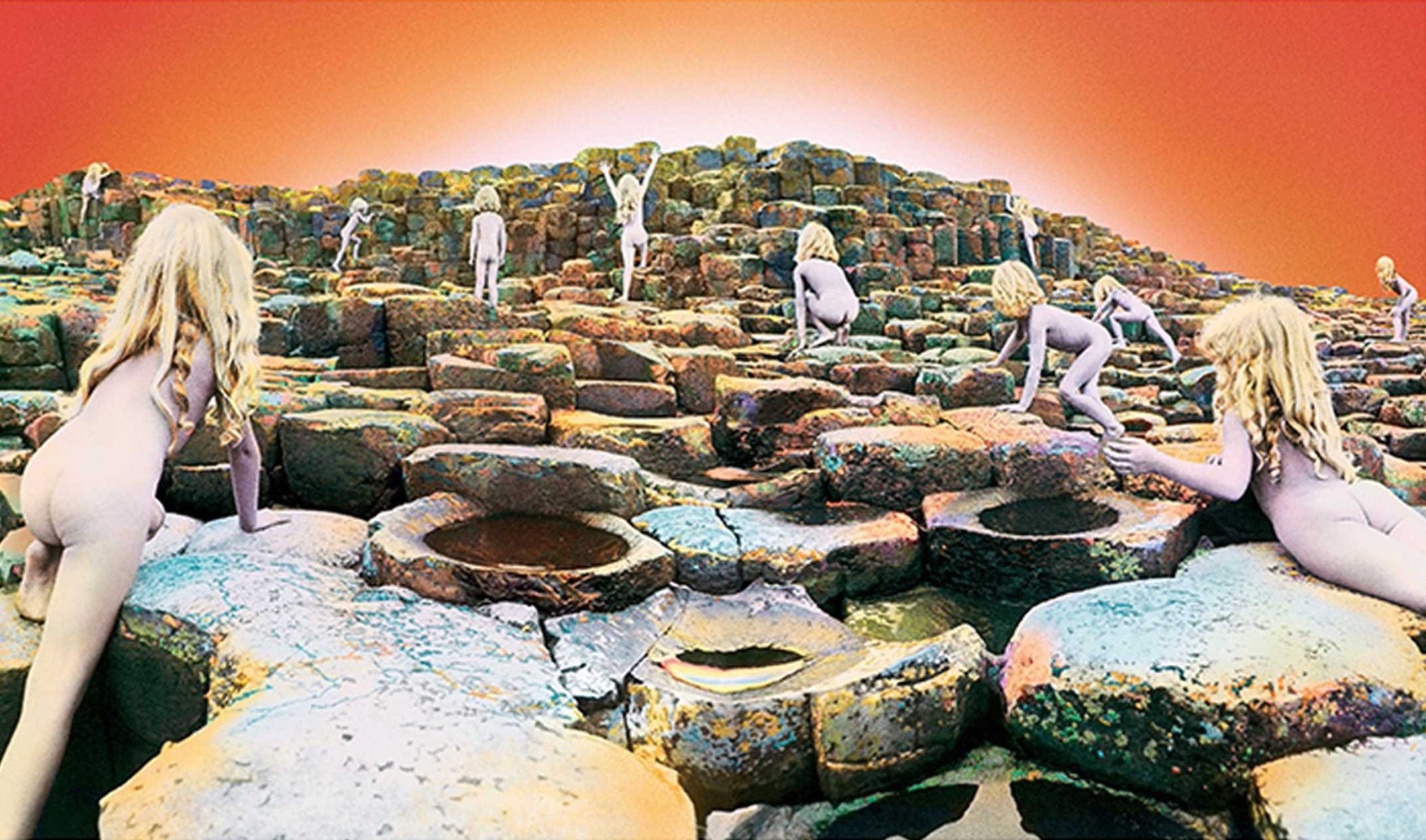
For 1973’s Houses of the Holy, the band and their management turned to the accomplished English design studio, Hipgnosis, for inspiration. Co-founder Aubrey Powell, inspired by Arthur C. Clarke’s 1953 science fiction novel, Childhood’s End, selected the remote area in Northern Ireland called Giant’s Causeway, a natural series of rock and columns which attracts over one million visitors each year, for the location of a photo shoot.

Siblings Stefan Gates—just five at the time—and his slightly older sister, Samantha, were selected for what proved to be a treacherous assignment. The children were pictured on the cover as they ascended the rocky terrain. Both are unclothed.

Houses of the Holy was released on March 28th, 1973. The album, featuring such Led Zeppelin favourites as “Over the Hills and Far Away,” “Dy’er Maker” and “The Song Remains the Same”—but not, ironically, the song “Houses of the Holy”—was another enormous success, reaching #1 in both the U.K. and U.S.

yardbirds

This is the first of the 3 clips (in HD) from the “Bouton Rouge” French TV show hosted by Pierre Lattès on 9th March 1968.

https://www.youtube.com/watch?v=0y078n95ApA

This is the second of the three clips (in HD) from the “Bouton Rouge” French TV show hosted by Pierre Lattès on 9th March 1968.

https://www.youtube.com/watch?v=3ffBRhtWjEQ

This is the last of the three clips from the “Bouton Rouge” French TV show hosted by Pierre Lattès on 9th March 1968.

https://www.youtube.com/watch?v=PO9s__cmwfM

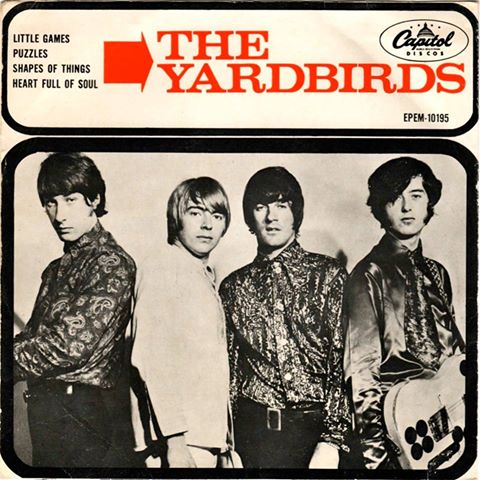
The Yardbirds were an English rock band that had a string of hits in the mid-1960s, including “For Your Love”, “Over Under Sideways Down” and “Heart Full of Soul”. The group is notable for having started the careers of three of rock’s most famous guitarists: Eric Clapton, Jeff Beck and Jimmy Page, all of whom are in the top five of Rolling Stone’s 100 Top Guitarists list. They are a blues-based band that broadened its range into pop and rock, the Yardbirds had a hand in many electric guitar innovations of the mid-1960s, such as feedback, “fuzztone” distortion and improved amplification. Pat Pemberton, writing for Spinner, holds that the Yardbirds were “the most impressive guitar band in rock music”.After the Yardbirds broke up in 1968, their lead guitarist Jimmy Page founded what would become Led Zeppelin.

The bulk of the band’s most successful self-written songs came from bassist/producer Paul Samwell-Smith who, with singer/harmonica player Keith Relf, drummer Jim McCarty and rhythm guitarist/bassist Chris Dreja, constituted the core of the group. The band reformed in the 1990s, featuring McCarty, Dreja and new members. The Yardbirds were inducted into the Rock and Roll Hall of Fame in 1992.

Available in just under three weeks time the Remastered editions in a few different formats, with one unreleased studio track and some outtakes,

ledzepphoto

small clips of the new Zeppelin re-issues Jimmy Page found the outtakes in a climate controlled super secret vault in a West London studio alongside other cinematic and sound artifacts.The first series of deluxe re-issues are due on the 3rd June. Page has listenend to every outtake, demo and live recordings with rarities and alternative versions Live cuts like the 1969 Paris show that was broadcast live on radio to alternative takes of the “Immigrant Song” through to covers like the blues classic “Keys to the Highway” . Page now 70 years old wanted to do it all alone he had scoured the planet for the original Live tapes to that Paris show this will be the bonus edition on the first album Led Zeppelin1.


janglepophubhome.wordpress.com/

Dedicated to all jangly indie/guitar/jangle-pop

Stray Bullet

Show a little faith there's magic in the night

blackwings666

Horror, Science Fiction, Comic Books and More

hotfox63

IN MEMORY EVERYTHING SEEMS TO HAPPEN TO MUSIC - Tennessee Williams

All Things Thriller

A Celebration of Thrillers, Noire and Black Comedy by Pamela Lowe Saldana

The UK Number Ones Blog

Join me as I listen to every single #1 single!

Mike and Paul's Music Blog

Two Guys In Search of Great Music

A Unique Title For Me

Hoping to make the world more beautiful

A Sound Day

hear ye, hear ye!

Christian's Music Musings

Celebrating music craftsmanship

ECLECTIC MUSIC LOVER

Favorite song lists, reviews, featured indie artists, and music commentary.

Every record tells a story

A Blog About Music, Vinyl, More Music and (Sometimes) Music...

Make Your Own Taste

Eclectic reviews of ambient, psychedelic, post-rock, folk and progressive rock ... etc.!

Martin Crookall - Author For Sale

A transparent attempt to promote a writing career

Music Aficionado

Quality articles about the golden age of music

J. ERIC SMITH

Slow molasses drip under a tipped-up crescent moon.

THE PRESS | Music Reviews

Click Header to Return Home

Born To Listen

to Rock, Country, Blues & Jazz

Blabber 'n' Smoke

A Glasgow view of Americana and related music and writings.

The Music Files

Rewind the Review

If My Records Could Talk

A stroll down memory lane through my music collection

The Fat Angel Sings

the best music of yesterday today and the tomorrow, every era every genre