Posts Tagged ‘Eno’

Roxy-Music-For-Your-Pleasure-Half-Speed-Vinyl-Reissues

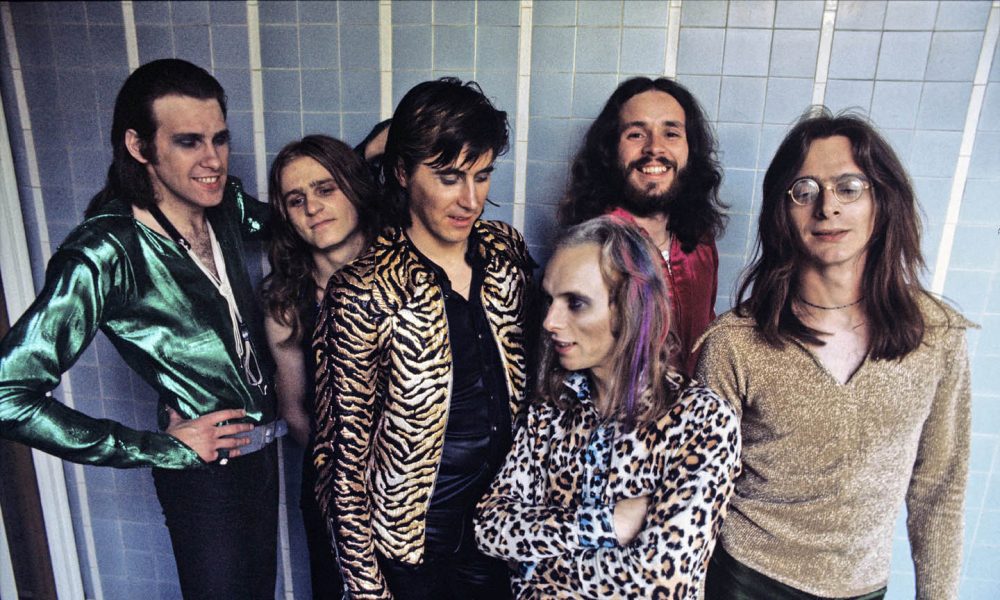
Roxy Music are set to release newly-remastered half-speed editions of their legendary self-titled debut album and its acclaimed follow-up, For Your Pleasure. Both titles have been afforded a fresh Half-Speed cut by Miles Showell at Abbey Road Studios in London. To reflect the audio, the albums have had their artwork revised and with a gloss laminated finish so that each album is not just a record it’s a piece of art.

Roxy Music by Roxy Music

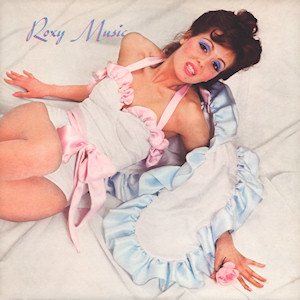
Roxy Music’s self-titled seminal classic debut, first released in 1972, firmly put Bryan Ferry and Eno at the forefront of the art-rock movement, their penchant for glamour was showcased in the lyrics and immortalized in the 1950s-style album cover. Roxy Music’s game-changing eponymous debut from 1972 has been given the fancy reissue treatment. With a sound as poppy as it is strange, ‘Roxy Music’ put the band at the forefront of both the glam rock and art rock scenes, effectively launching the careers of Brian Eno and Bryan Ferry in the process. Debuting in the UK Top 10 the album would go on to become one of the pioneering art rock albums of all time.

Roxy Music’s 1972 debut album was an instant classic, heralding in an extraordinary manifesto which pulled in influences as diverse as pop-art, vintage Hollywood glamour, progressive rock, R&B and campy science fiction. In the process of plundering the past this revolutionary album single-handedly kicked off the 1970s.

Roxy Music has continually been praised by successive generations of critics. In 2003, Rolling Stone included the album at number 62 in its list of the best debut albums of all time and stated: “In England in the early Seventies, there was nerdy art-rock and sexy glam-rock and rarely did the twain meet. Until this record, that is.”

For Your Pleasure by Roxy Music

In 1973 Roxy Music followed up their debut album with “For Your Pleasure“. This time the band were able to spend more time in the studio, resulting in the production values being more elaborate and experimental, Brian Eno’s blend of tape loop effects abundantly apparent on “The Bogus Man” and “Do the Strand” has been called the archetypal Roxy Music anthem. Roxy Music delivered the sucker punch that was ‘For Your Pleasure’. A kaleidoscopic art-pop explosion that boasted the archetypal Roxy songs ‘Do The Strand’ and ‘In Every Dream Home A Heartache’, it was the result of a much longer period in the studio, during which Brian Eno’s tape loops came to the fore and interwove beautifully with Bryan Ferry’s arch song-writing.

For Your Pleasure” is the second and final album Roxy Music performed with Brian Eno, who left the British band over what seemed to be creative differences. After their excellent self-titled debut, these guys could have played it safe, but they instead pick up where they left off and venture into uncharted territory. Brilliant glimpses of bold avant-garde rock highlight key tracks such as the brash and confident opener “Do The Strand”, the elegant “Beauty Queen“, and the signature cut “Editions Of You”. as any great band would, Roxy Music isn’t afraid to get a little weird on us and test our patience; case in point is “Bogus Man”, an instrumental that takes its sweet time during its 9 minute running time.

Ascending the charts “For Your Pleasure” would earn the band a UK No 4 position. The cover photo, taken by Karl Stoecker, featured Bryan Ferry’s girlfriend at the time, singer and model Amanda Lear, who later became Salvador Dalí’s muse.

As with “Roxy Music”, “For Your Pleasure” has been widely acclaimed. In 2000, Q placed “For Your Pleasure” at number 33 on its list of the “100 Greatest British Albums Ever”.

Roxy Music” and “For Your Pleasure” will make their reappearance on April 1st, 2022 via Virgin/UMe. They were mastered in half-speed mastering at Abbey Road Studios by Miles Showell.
Roxy Music-Roxy Music.jpg

Looks can be deceiving. And with Roxy Music, that was the entire point.

Bred mostly in the working-class backgrounds from the industrial outskirts of mid-century London, the core personnel who founded Roxy Music did so as much out of artistic vocation as they did self-image reformation.

The otherworldly personae, the cobbled genre-mutations, the elegantly forged retro-futurism—the look and sound of Roxy Music are the visual and aural reflections of an inflated sense of grandeur cycling between fantastical and romantic. And while it was the unorthodox of art-school training that the band—especially vocalist Bryan Ferry, saxophonist-oboist Andy Mackay and noise architect Brian Eno wore on their sleeve, no environment could inspire such appetites for extravagance as the bleakness of rural England.

Brian Ferry, was the son of a County Durham coal miner, sought escape in the far-off glamour of Old Hollywood and Tin Pan Alley standards while Eno, brought up in Essex, was transfixed with the sonic control of tape manipulation; Mackay’s activities were decidedly avant-garde, partaking in experimental sound performances and the radical Fluxus art movement. Guitarist Phil Manzanera, a virtuoso with particular hankerings for complex prog-rock and psychedelia, was the sole well-heeled Roxy youth, while drummer Paul Thompson the only whose blue-collar origins remained resolutely well-preserved in taste.

It’s not uncommon to hear 1972’s Roxy Music framed as the natural result of Ferry’s elaborate aesthetic vision compounded by Eno’s technical wizardry. Other less prominent, but equally wastebin-bound, interpretations attribute the LP’s glow to either Eno or Ferry alone. Each of these theories, however, offer indefensibly lacking accounts of the gorgeous, alien glamour captured on Roxy Music’s self-titled debut. There’s hardly a more compact tutorial on the world of Roxy than the album’s track-one, side-one. The band’s penchant for glamour was showcased both in the lyrics and in the 1950s-style album cover. The photographer Karl Stoecker shot the cover, featuring model Kari-Ann Muller, who later married Mick’s brother Chris Jagger (a stylised portrait of Kari-Ann Muller also graces the cover of Mott The Hooples album “The Hoople” . The album was dedicated to Susie, a drummer who auditioned for Roxy Music in the early days

EG Management financed the recording of the tracks for their first album, “Roxy Music” , recorded in March–April 1972 and produced by King Crimson lyricist Pete Sinfield Both the album and its famous cover artwork were apparently completed before the group signed with Island Records. A&R staffer Tim Clark records that although he argued strongly that Island should contract them, company boss Chris Blackwell at first seemed unimpressed and Clark assumed he was not interested. A few days later however, Clark and Enthoven were standing in the hallway of the Island offices examining cover images for the album when Blackwell walked past, glanced at the artwork and said “Looks great! Have we got them signed yet?” The band signed with Island Records a few days later. The LP was released in June to good reviews and became a major success,

The introduction to Roxy Music“Re-Make/Re-Model,” stirs gently before it rumbles. Entering with a musique concrète sound collage abruptly supplanted by a lone Ferry suggestively moving between a pair of two-note piano chords, the song then erupts with the band firing a volley of competing fragments that swell into a formidable art-rock clash. “I tried but I could not find a way,” Ferry bellows through Manzanera’s maniacal noodling and Thompson’s percussive thunder; Mackay’s tenor sax trades blows with Ferry’s vocal intervals as Eno paints a squealing sonic backdrop. Building toward the song’s close, the band repeats a series of breaks, granting a brief solo moment to each member—exploiting the prog-rock bravado of the era to assert their avant-garde idiosyncracies.

“Virginia Plain,” the band’s first single was, consequently, also their first big hit, reaching no. 4 on the U.K. charts. A daring choice for a single, the song spurns the mandatory inclusion of a chorus, coasting instead on a continuous verse, offering only seldom breaks in the dominant melodic motif.

Roxy music-virginia plain.jpg

“Looking back, all I did was look away,” Ferry continues on “Re-Make/Re-Model.” But in terms of Roxy Music’s essence, nothing could be further from the truth. Ferry’s longing admiration for the stilted glitz of Golden Age cinema is transparent all throughout the album, even amid the futuristic imagery and cacophonous experimental penchants.

The track “2HB” is the most glaring example. Discreetly abbreviated from “To Humphrey Bogart,” the song is an unabashed tribute to Humphrey Bogart and his role in the celluloid classic Casablanca in particular. Lyrically, “2HB” incorporates dialogue from the film while the sax melody provided by Mackay is lifted from “As Time Goes By,” a central musical piece in the film.

The band’s appreciation for motion-picture memorabilia is felt where it isn’t outrightly declared. “Chance Meeting” plays like a despairing solo scene following act one of a Depression-era musical, before Eno’s sonic trickery intensifies the lament and drags it into the realm of feverish nightmare. The gang-vocal harmonizing and whimsical ratchet-and-clapper percussion on “Bitters End,” which closes out the record, vaguely evoke a pre-war barbershop setting. The medley “The Bob” inspires a variety-show mood, with each section separated into differing segments, structured in the manner of an orchestral suite.

Roxy Music outlasted the fleeting mania of ’70s glam rock by revising it to fit their image, rather than vice versa. And accordingly, their debut album is a triumph not just for how it shines amid the fad, but also in how it could just as easily be argued with that it belongs nowhere near such a thing.

https://www.youtube.com/watch?v=hyxdwE2tv6s

Telegram

Telegrams brand of psychotic artrock has turned them into one of London’s finest live acts, capable of seething and writhing their way around the capital’s seedy venue circuit with no small hint of glamour.

New single ‘Aeons’  is due to be released on July 10th via the band’s own Gram Gram Records imprint. A fine return, it finds Telegram somehow managing to bottle the lightning – to get their vital, virile live show down on record. On the flip, fans can find Telegram’s re-working of ‘Needles In The Camel’s Eye’. A piece of oddball glam snot from Brian Eno in his ‘Here Come The Warm Jets’ phase, it’s a faithful but raucous rendering which salutes the artful strut of the original while adding their own preening gaze.

Frontman Matt says: “Eno once described ‘Needles In The Camel’s Eye’ as “an instrumental with singing on it” and you can’t argue with that! Nor can we deny this be a favorite of ours. we played it so much from the record that I think we inevitably got bored of hearing it like that, so we started playing it live instead”.

http://