Deep Purple’s “Fireball” was the second album recorded with the Mark II line-up. It was another No.1 hit in the UK, but despite its success there was a nagging feeling within the band that the best was yet to come. As 1971 drew to a close, it was time for a change of scene.
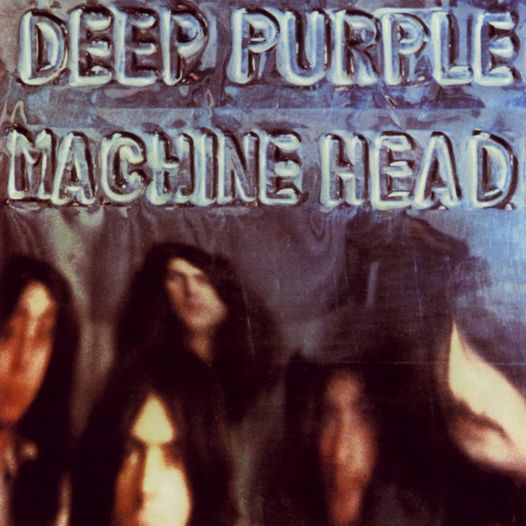
After four years, five albums and some line-up changes, Deep Purple finally hit their stride on ‘Machine Head.’ “Smoke on the Water” instantly made the Guitar Riff Hall of Fame, and the remainder of the record – especially the opening “Highway Star” – made the band one of the biggest on the planet. More records and more line-up changes over the years haven’t dulled the impact of ‘Machine Head.’
Roger Glover (bassist): We needed to make another record, and we’d become pretty successful, and accountants and lawyers and management said: “You know, if you record outside of England you pay a different tax rate.” And that’s the reason we were in Switzerland. It could have been Germany or France, anywhere as long as it was out of England.
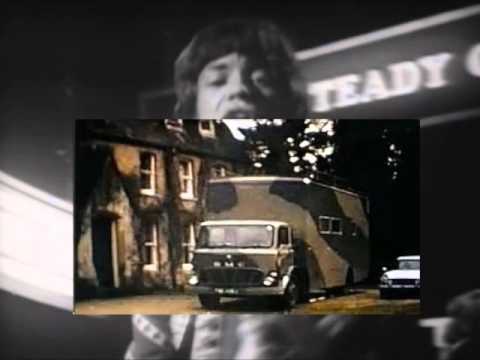
Jon Lord (keyboard player): We’d heard the Rolling Stones had a wonderful mobile studio, so we contacted them and we were able to get hold of that. And the reason we went to Montreux was because we were going to be in America at the end of 1971, but Ian Gillan got ill. It was hepatitis, I think – which was the disease to have at the time.
“…Machine Head is a stroke of genius…Even if the Purple hadn’t recorded a note and “Machine Head” had been released as a 12” empty cardboard sleeve with that title on it, then that would have been enough”
Glover: “Highway Star” is the opening track on the album. Ritchie is the driving force behind this. He plays with such precision – that driving, machine-gun effect. I came up with the title and a couple of lines. Most of he song is Gillan’s, and everyone joined in on the arrangement. The thing that really impressed me when I first heard it again after so many years was Paicey is swinging – and we’re all playing straight. And that’s the essence of rock’n’roll.
Bach goes heavy rock on the opening track from the classic album “Machine Head” by Deep Purple, released this month in 1972. Both Jon Lord’s organ solo and Richie Blackmore’s guitar solo borrow heavily from the arpeggiated baroque styling of the classical composer.
Blackmore: “I wrote that out note for note about a week before we recorded it. And that is one of the only times I have ever done that. I wanted it to sound like someone driving in a fast car, for it to be one of those songs you would listen to while speeding. And I wanted a very definite Bach sound, which is why I wrote it out—and why I played those very rigid arpeggios across that very familiar Bach progression—Dm, Gm, Cmaj, Amaj.
Ian Gillan (vocalist): “Fireball” gave us a chance to actually bring out what I always call the funk in the band, instead of just pure English rock. However, when we got to doing “Machine Head”, there was a lot of pressure to do what most people saw as a follow-up to “In Rock”. We’d got to get back to doing that rock stuff, and that was pretty much how we approached it.
Jon Lord worked his part out to mine. The keyboard solo is quite a bit more difficult than mine because of all those 16th notes.
Blackmore: We did “Smoke On The Water” there, and the riff I made up in the spur of the moment. I just threw it together with Ian Paice. Roger Glover joined in. We went outside to the mobile unit and were listening back to one of the takes, and there was some hammering on the door. It was the local police, and they were trying to stop the whole thing because it was so loud. We knew that they were coming to close everything down. We said to Martin Birch, our engineer: “Let’s see if we have a take.” So they were outside hammering and taking out their guns… It was getting pretty hostile.
Blackmore: With “Space Truckin”’, I remember in the early sixties there was a TV series called Batman. And I had this riff that was similar to the theme tune, and I saw how simple that was. I came up with this riff and took it to Ian Gillan and said: “I have this idea and it’s so simple and so silly.” I went over into the corner and played it to him very quietly – I was very shy – and he grasped it immediately, and said: “I think we can use it.” And that turned into “Space Truckin’.
Paice: My favourite track rhythmically on “Machine Head” is “Space Truckin’, because of its solidity and simplicity – it’s about the only time Ritchie played block Chuck Berry chords, four to the bar.
Over the years, I’ve always played that solo note for note—again, one of the few where I’ve done that—but it just got faster and faster onstage because we would drink more and more whiskey. Jon would have to play his already difficult part faster and faster and he would get very annoyed about it.”
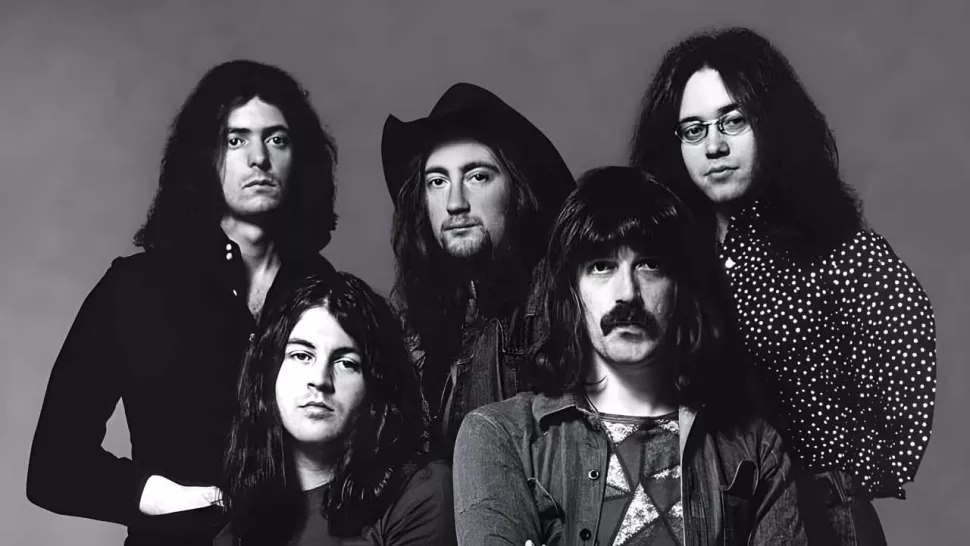
Ritchie Blackmore – guitar, Ian Gillan – vocals, Roger Glover – bass, Jon Lord – keyboards, Hammond organ, Ian Paice – drums, percussion
There were three British rock bands, Black Sabbath, a bunch of greasy herberts from Aston, Birmingham, had somehow stumbled into a recording contract, and were laying down some anvil-heavy sounds. By combining a primitive grind with comedy-horror lyrics, the band featuring Ozzy Osbourne and Tony Iommi were on their way to helping to define heavy metal. Also a band called Led Zeppelin had knocked out two albums in quick succession at the tail-end of the 60s, gaining a reputation for effortlessly handling folk and blues influences while adding doses of guitar heroics and histrionic screaming. Although people were calling Zeppelin heavy metal, in truth the mere mention of the phrase was enough to send the band members into a rage.
Then the third in this unholy trinity of British rock bands, and the one that really opened the gates for a new era of loud music, was Deep Purple – guitarist Ritchie Blackmore, singer Ian Gillan, bassist Roger Glover, organist Jon Lord and drummer Ian Paice (they became known now as the Mk II line-up).
An earlier line-up of Purple (with singer Rod Evans and bassist Nick Simper, before a radical change in personnel saw the arrival of Gillan and Glover from the pop band Episode Six) had released three albums in the late 60s. The first recorded work from the new-look Purple – the single Hallelujah, followed by the Jon Lord-spearheaded album Concerto For Group & Orchestra – gave little hint of what was about to become. Everybody knows what ‘rock’ means. But it wasn’t always so.
“After satisfying all of their classical music kinks with keyboard player Jon Lord’s overblown Concerto for Group and Orchestra, Deep Purple’s soon to be classic Mark II version made its proper debut and established the sonic blueprint that would immortalize this line up of the band on 1970’s awesome “In Rock”. The cacophony of sound (with Ritchie Blackmore’s blistering guitar solo) introducing opener “Speed King” made it immediately obvious that the band was no longer fooling around, but the slightly less intense “Bloodsucker” did afford stunned listeners a chance to catch their breaths before the band launched into the album’s epic, ten-minute tour de force, “Child in Time.” In what still stands as arguably his single greatest performance, singer Ian Gillan led his bandmates on a series of hypnotizing crescendos, from the song’s gentle beginning through to its ear-shattering climax and then back again for an even more intense encore… one of heavy metal’s defining albums.
British band Deep Purple started out as classically influenced progressive rockers before finding their true calling in 1970 with Deep Purple“In Rock”. The cover art gives the quintet the Mount Rushmore treatment, and this set certainly qualifies as a national monument of heavy metal. Newly arrived singer Ian Gillan and bassist Roger Glover were experienced songwriters, inspiring the group to come up with seven originals (including opener “Speed King” and the epic “Child in Time”) to showcase the blazing riffs of guitarist Ritchie Blackmore and organist Jon Lord as never before. The first studio album from the classic “Mark II” lineup of the group, Deep Purple“In Rock” was released 50 years ago today and will still have you pumping your fist from start to finish.
When the first real fruits of the ‘new’ band – the Deep Purple In Rock album – emerged, it was the start of a whole new ball game in terms of guitar music. In comparison, where Purple were deft and nimble-fingered, Sabbath seemed heavy and harsh, and Zep’s juggling of traditional and roots music on their own 1970 album III was somewhat diffuse compared to the widescreen game of riffs and rests that was In Rock.
A vast army of rock fans agreed, and bought Deep Purple’s record in droves. The scene was set for a whole new type of heavy music, epitomised by Blackmore’s gutsy, controlled riffs and fluid soloing, Lord’s keyboard counterpoint, and the piercing wails of Gillan. If you’ve ever enjoyed the guitar/vocal interplay of Iron Maiden, Uriah Heep, Dream Theater, Kiss, Rainbow, Metallica and many more, you owe In Rock a huge debt of gratitude.
In 1970, popular (as opposed to pop) music was finding its feet – and its balls. “A whole lot of people were thinking the same way at the same time,” says Ian Gillan with a nostalgic cackle. “You look back at seminal moments and influences, and you’ll notice that things were getting heavier and harder, because of Jimi Hendrix and Bob Dylan. As for Deep Purple, the times were indeed a-changing. “All of a sudden the music came together,” Gillan recalls. “It was the transition from our semi-pro years, and it seemed as if the music was coming from within the band instead of outside the band.”
Simper had remained in London and formed a band called Warhorse; he later became a painter and decorator. The latter in particular has been vocal about the way he was ousted from Purple. But all this strife had a positive side. The feelings of jealousy, betrayal and anger that surrounded the coming together of the Mk II line-up of Purple were also the catalysts that spurred them on creatively. Add to that the eagerness of all the band members to achieve recognition for their own work, and the new band was primed for take-off.
“We’d all been recording artists before “In Rock”, but none of us had done something like this before,” Gillan offers. “Purple were more known in the States for cover songs like Hush [by Joe South], Kentucky Woman [by Neil Diamond], River Deep Mountain High [previously made famous by Ike & Tina Turner] and so on, where they were hit records.”. Deep Purple’s three previous studio albums – Shades Of Deep Purple (68), The Book Of Taliesyn (69) and Deep Purple (69) – “had been much admired by aficionados such as myself, but the self-penned material largely went unnoticed by the media . So there was a desire in Ritchie and Jon and Ian to explore that area of their music a bit more. This was the reason for the band changing and Roger and I being invited in.”
Gillan and Glover had become dissatisfied with their roles in Episode Six, just as Lord, Blackmore and Paice had in Purple. “Roger and I had started writing,” Gillan explains, “and we had been lucky enough to gain some understanding of rhyme and meter. We understood that a lyric was different to a poem, generally speaking, and that there were some vowel sounds you had to avoid when you were hitting a high note, and we learned about some of the percussive values of the words. All this unfulfilled angst meant that when the revitalised Purple line-up finally began playing together, the creative spark between the members was very powerful. When rehearsals began, the band immediately noticed something strange: a kind of drive that transcended the music they were striving to create. “It was a kind of joy,” Gillan smiles. “I have absolutely fond memories of that time. All the rehearsals I’d been to before were about learning songs; these [for In Rock] were all about writing songs, from the perspective of being totally inside them and jamming them.” Attempting to define this intangible factor, he says that there’s “a joy in writing something as five people, rather than just one. That’s the great thing about a band. When you find yourself in that place, when you’re all singing off the same hymn sheet, then it’s very natural to play that music, because it comes from a rhythm and you just join in and build it up as it goes along.”
Each member of the Deep Purple line-up that recorded In Rock had an indefinable but crucial contribution to make to the songs. As bassist Roger Glover remembered: “Ritchie wasn’t just the guitar player, he was a brilliant innovator. Things he wrote defy description. Ritchie was phenomenal in what he was doing in the late 60s and early 70s. He did things that you wouldn’t even think of. He was a magnetic, dynamic writer. I don’t think he could have done it in a vacuum by himself, it did require the rest of us. But I’ll certainly give him his due. He was the motivating character in the band.”
Gillan himself, a laid-back character in person, still possesses the necessary frontman skills in abundance – which, according to Blackmore in a 1996 interview, stem from an unfortunate backstage incident: “I often blame myself. We were in a club, the Rock’n’Roll Circus, a big, pretentious place in France in 1970. Songs for possible inclusion on In Rock came thick and fast, and often without any obvious effort on the band’s behalf. It has become a cliché for songwriters to claim that they don’t actually create music, it’s simply channelled through them from some unidentified, perhaps unearthly, source. But in the case of Deep Purple and In Rock, the cliché appears to be the truth.
Asked how the band conceived the album’s classic opening track, Gillan shrugs: “I don’t know how we came up with Speed King, any more than I know how Ian Paice started playing it, or how Ritchie Blackmore started playing it. I see a lot of young stars on chat shows these days denying any knowledge of having any formative years or any influences in their early life, but I think we all did in Purple.
So what were the main influences on In Rock? After all, Gillan and Glover’s lightweight pop past was something of a contrast to the other musicians’ adventurous, less orthodox but more unfocused experience. “It’s an accumulation,” Gillan says. “Jon Lord had his classical and Jimmy Smith background. Ian was Buddy Rich personified. In my case it was Elvis Presley, Little Richard, Chuck Berry, Fats Domino, Ella Fitzgerald and Jerry Lee Lewis. In later times Roger’s Bob Dylan influence came in. When you bring all that together, you’re gonna come up with something unique. If you took one of us away it wouldn’t be the same. “All this analysis is very difficult,” he continues, reflectively. “You’re never aware of these things at the time. It’s always an objective look back at the past, by which time you’ve forgotten half of what happened anyway.”
In any case, he says, In Rock wasn’t actually developed in the studio, it was created and honed by endless days and nights on the road, when the songs were put through their paces; their finished form took shape after months of being pulled and bent in all directions. “If you’re going to write about “In Rock,” Gillan admonishes, “you’ve got to combine the making of the album with the live performances. They were so much more important than the actual making of the record. The importance of the songs’ development in the live arena cannot be overstated. As Ian Paice told the late Tommy Vance: “There’s a lot of good physical quality in the songs we made. More so than there ever was on record. The songs on record were okay, [but] on stage they were brilliant – and it’s still that way. They’re much better to play live than they ever were on record. And when you put them in front of an audience, especially a big audience, they’re that much better again.”
“We had developed the songs in our rehearsal rooms in Hanwell [West London],” Gillan remembers, “and one by one they started creeping into the stage show. You could see the look on everyone’s face in the band – this was something which we were all excited about.” In case you’re thinking that they had developed an inflated idea of their own importance, it wasn’t just they who thought Purple were on to something special at this point in their career. “The underground knew all about Deep Purple by this stage,” Gillan says. “All the other acts knew about this incredible band. So when we took ourselves into the studio for In Rock it was a very special thing for us. we had a dynamic engineer in Martin Birch,” Gillan affirms, “and we were working in a studio that everyone was familiar with. We were much more on our own terms – we didn’t have a producer falling asleep over the console – so we just went in and treated it like a rehearsal room. More than anything else, we had the feeling that we were actually playing on a record.”
The fact that Purple – all in their early to mid-20s at this time – had been allocated an engineer of their own age, rather than some lab-coated authority figure, was crucial. “Everyone was of the same generation; we were all thinking along the same lines. It was just the band and Martin in the studio. He wanted to mic it up properly, so he found the brightest [in sound terms] part of the room for Ian Paice and just somehow got it sounding right. He recorded it loud, and to hell with the meters – they were going into the red all over the place.”
When he’s asked whether the band got the sound they were looking for, Gillan laughs: “Well, I didn’t know what I wanted it to sound like! But it was hugely exciting. So much so that my uncle, who was a jazz pianist, ran screaming from the room when he heard what he described as ‘a cacophony of sound’. The songs needed a bit of touching up. I think Speed King was originally called Kneel & Pray or something, and lyrically they needed tightening up. But that didn’t even matter, it was the attitude that counted. For me, the energy was the thing that came through.”
Gillan also reveals, surprisingly, that beneath all the swagger was a band with a certain lack of confidence: “We could deliver a good show live, there was no problem there, but psychologically it was a different story. We all had our areas of fragility,” he confides. But it was the very essence of Purple’s music – a preening, don’t- give-a-damn pretence of invulnerability – that carried them through. Deep Purple In Rock, released on the Harvest label in June 1970, was a revelation. Critics warmed to the confident song writing, the expansive, Birch-engineered production, and the iconic sleeve art that depicted the five DeepPurple members’ faces carved into the surface of Mount Rushmore in place of the faces of US presidents.
The delicious insolence of the image drew buyers in their thousands; the album stayed on the UK album chart for a thumping 68 weeks, peaking at No.4. After “In Rock” came the most successful period in Purple’s history, with a run of what became classic albums (Fireball, Machine Head, Made In Japan, Who Do We Think We Are!, Burn and Stormbringer) released over the next four years and making them into one of the most revered and respected rock bands in the world. By the end of that run, the band’s line-up had fractured again, and for the latter two records David Coverdale and Glenn Hughes had replaced Gillan and Glover (who both returned for 1984’s ‘reunion’ album, Perfect Strangers).
During an interview in 1971, Jon Lord, for years a quiet but significant force within Deep Purple, looked back perceptively on In Rock, pondering: “The first three [studio] albums were pleasant, but directionless. Nobody knew quite what on earth the group was doing. Then we made a conscious effort to stop and think about writing material we all understood. And the result was In Rock, which was really our stage act. That was the turning point. And the point is, we believe in what we’re doing together. We aren’t too much interested in educating our audiences, we’re more interested in entertaining. That’s what it’s all about.” He added: “We learned a terrific amount with In Rock. It took six months to make that album, and we think it paid off, really. I can honestly say that it’s the first album we’ve been 100 per cent satisfied with. It gave us a hell of a lot of confidence. During that long time we learned a lot about ourselves and our music, and our sense of direction. I suppose it’s our basis now for our whole sound and our whole way of working. We’re very extrovert, really. We like to excite an audience, get involved with them.” Some reviewers had expected the new album to be classically influenced, probably because of Lord’s interest in classical music, and also because of some song structures that had appeared on earlier albums, climaxing with Concerto For Group & Orchestra.
However, Lord made it clear that this wasn’t going to be the case, explaining: “I feel we’re moving away from [classical music] now, because it was never intended to be part of the direction of the group; it was merely an experiment. As you know, we did experiment with classical themes in the beginning, and with classical chord structures in the music, but it all got a bit soulless. We don’t normally use any form of classical music now – except maybe in our solos.”As for Purple’s great stage act – responsible more than anything else for the epic songs on In Rock – Lord added: “I feel that British groups at least make an effort somehow that is more concerned with projection, with putting themselves across. Sometimes it can get a bit soulless, but on the whole I think it’s preferable to the American alternative. The actual group now is trying to develop into being good at what we’re best at – which is what we call rock’n’roll.”
Unlike earlier albums, every song on “In Rock” is credited to the five Deep Purple band members. Gillan recalled the songs were initially rehearsed at Hanwell, then introduced to the live show to see how they would work. Lord said the purpose of the album was to make “a conscious effort to stop and think about writing material we all understood”.
Side one “Speed King” developed from a bass riff written by Glover at Hanwell, in an attempt to emulate Jimi Hendrix’s “Fire”. Gillan wrote the lyrics by taking phrases of old rock ‘n’ roll songs by Little Richard. It was originally known as “Kneel and Pray” and developed as a live piece for several months before recording. The first studio take of the song featured Lord playing piano instead of organ, which was later released as a B-side in Holland. The final take used on the album was recorded in January 1970; it opens with an untitled instrumental known as “Woffle”, recorded in November 1969.
“Bloodsucker” was recorded at De Lane Lea Studios and finished at Abbey Road Studios. Paice enjoyed playing on the track. The song would be re-recorded 28 years later, with Steve Morse on guitar, and retitled “Bludsucker” for Deep Purple’s 1998 album Abandon.
“Child in Time” was written early during the Hanwell rehearsals, after Lord began playing the introduction to “Bombay Calling” by It’s a Beautiful Day. The group decided to play the song’s main theme at a slower tempo, with Gillan writing new words inspired by the Vietnam War. He later said he came up with the song’s title spontaneously. The song was regularly played live, and was well-rehearsed by the time it was recorded at IBC in November 1969. It subsequently became a de facto anthem for anti-Communist resistance groups in Eastern Europe during the period of the Iron Curtain.
Side two “Flight of the Rat” was the last song recorded for the album, at De Lane Lea on 11 March. It evolved during rehearsals from a humorous re-arrangement by Glover of “Flight of the Bumblebee”.
“Into the Fire” was written by Glover as a warning against drugs. The main riff developed after discussing chromatic scales with Blackmore.
“Living Wreck” was recorded at the early IBC sessions in October 1969. It was almost left off the album as the group felt it was not good enough, but they listened to it again towards the end of the sessions and decided they liked it. Blackmore played the guitar solo through an octave pedal.
“Hard Lovin’ Man” was derived from a Glover bass riff and developed as a jam session by the rest of the band. It was the first track for the album recorded at De Lane Lea in January 1970 with engineer Martin Birch. The group were impressed with Birch’s skills, and he was retained as engineer for the rest of the group’s albums up to 1976. He was credited as a “catalyst” on the original LP.
Other songs
After completing the album, the group’s management were worried there was no obvious hit single, and booked De Lane Lea in early May 1970 so the band could write and record one. After struggling to come up with a commercial-sounding song, Blackmore started playing the riff to Ricky Nelson’s arrangement of “Summertime”, while the group improvised the rest of the structure. Gillan later said he tried to write “the most banal lyrics we could think of”. The result was the single “Black Night”, which became the group’s first UK hit.
“Cry Free” was recorded at IBC in January 1970. Although the group recorded over 30 takes, it did not make the final track listing, and was later released on a compilation album.
An instrumental, “Jam Stew” was recorded in late November 1969 at IBC. A version with improvised lyrics had been recorded as “John Stew” for a BBC session, while the main riff was featured on the track “Bullfrog” on the session album Green Bullfrog, released the following year.
The Band:
Ian Gillan (vocals), Jon Lord (keyboards), Roger Glover (bass), Ian Paice (drums), Ritchie Blackmore (guitar)
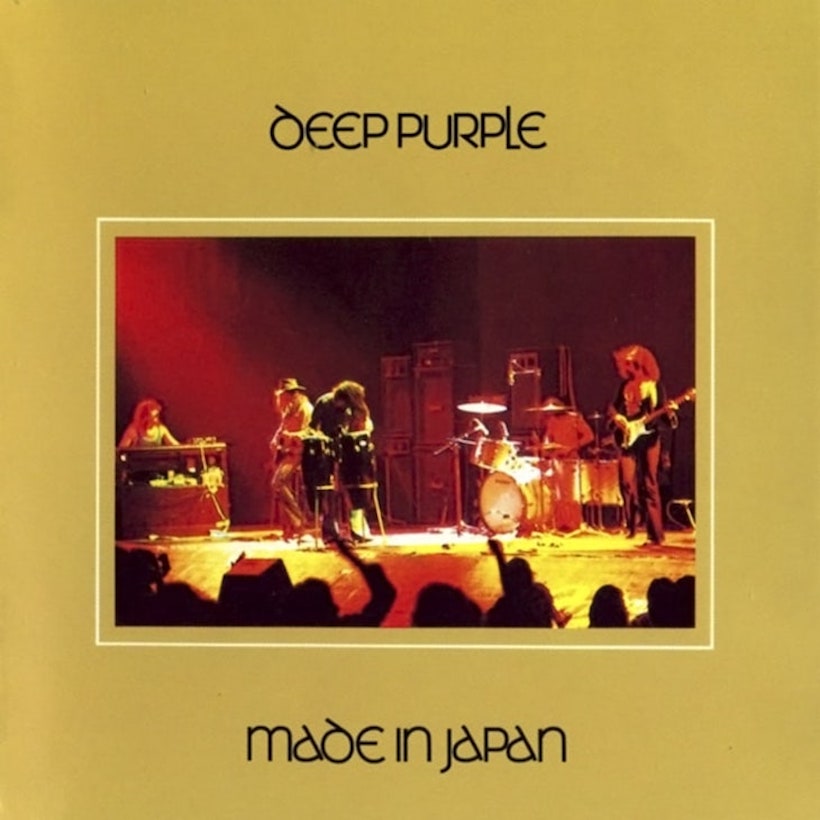
One of the most celebrated live rock albums in history made its big entrance on 6th January 1973. “Made In Japan”, the double live album recorded in the summer of 1972 during the first tour of Japan by Deep Purple, debuted on the UK chart. Its US debut followed on 21st April. The band were well known for their strong stage act, and had privately recorded several shows, or broadcast them on radio, but were unenthusiastic about recording a live album until their Japanese record company decided it would be good for publicity. They insisted on supervising the live production, including using Martin Birch, who had previously collaborated with the band, as engineer, and were not particularly interested in the album’s release, even after recording, the band’s musical skill and structure meant there was sufficient improvisation within the songs to keep things fresh. The tour was successful, with strong media interest and a positive response from fans. there was a demand for bootleg recordings of the band. The most notorious of these was an LP entitled H Bomb, recorded at Achen on 11th July 1970. This success, along with albums from other artists such as the Who’s Live at Leeds and the Rolling Stones’ Get Yer Ya-Ya’s Out convinced the band that an official live album would be commercially successful. At the time, Glover told Sounds magazine that “there are so many bootlegs of us going around, if we put out our own live set, it should kill their market.
The album featured only seven tracks across the four sides of the original vinyl release, four of them taped at their show at the Festival Hall in Osaka on 16th August; one at the same venue the night before; and the other two at probably the best-known venue in those early days of Western bands exploring that market, Tokyo’s Budokan.
In just the seven cuts, Deep Purple deliver four sides of excitement and indulgence. From Ian Paice’s dizzying drum solo during “The Mule” to Jon Lord’s winking organ vamp at the start of “Lazy,” from the trick ending of the 20-minute “Space Truckin'” to Ian Gillan and Ritchie Blackmore’s voice-and-guitar duel during “Strange Kind of Women,” the metal progenitors plunder (and arguably establish) a near-complete arsenal of onstage tricks and tropes. Cheaply made, wildly popular and frequently reissued, Made in Japan was captured during the three nights in Osaka and Tokyo. The set feels ever casual, as if the band is performing less for the crowd or the tape machine and more for the sheer enjoyment of stretching these tunes out like playdates. “We were all so unconcerned about the whole thing that nobody was actually aware of being recorded,” Lord later confirmed in Dave Thompson’s book Smoke on the Water. “There was no diminution of the interplay, spontaneity and feeling that we usually got onstage.
This was already Purple’s second live album, but a very different animal to their first, the 1969 recording of Jon Lord’s Concerto For Group and Orchestra. This time, chiefly at the request of their Japanese label, the idea was to create a record of the band’s powerful live show. It was also a chance to present an in concert version of the band’s anthem-in-the-making from the Machine Head album of only a few months earlier, ‘Smoke On The Water.’
Included on Made in Japan in live form are three more songs from Machine Head, which had been on the UK charts for 24 weeks after its April 1972 debut. The live set’s opening ‘Highway Star’ was another new Purple favourite, while ‘Lazy,’ a seven-minute track on Machine Head, extended to nearly 11 tracks on the live record. The closer, taking up the whole of side four of the vinyl release, was ‘Space Truckin,’’ which expanded from a four-minute original to an epic of nearly 20 minutes on Made In Japan.
The band considered the gig at Tokyo on 17th August to be the best of the tour. Glover remembered “twelve or thirteen thousand Japanese kids were singing along to ‘Child in Time'” and considered it a career highlight, as did Gillan. Lord listed it as his favourite Deep Purple album, saying, “The band was at the height of its powers. That album was the epitome of what we stood for in those days. At the venue, a row of bodyguards manned the front of the stage. When Blackmore smashed his guitar during the end of “Space Truckin'” and threw it into the audience, several of them clambered past fans to try and retrieve it. Blackmore was annoyed, but the rest of the band found the incident amusing. The gig was not as well recorded as the Osaka shows, though “The Mule” and “Lazy” were considered of sufficient quality to make the final release.
Deep Purple were on a hot streak in which both Machine Head and its predecessor Fireball had topped the British chart, but as often with live albums, there was less chart glory to be had this time. The album debuted in the UK that first week of 1973. “Made in Japan is Deep Purple’s definitive metal monster, a spark-filled execution,” wrote Rolling Stone. “Deep Purple can still cut the mustard in concert.
The 8-track tapes of the three shows were carefully put in storage by Warner Bros. Japan for future use. For the album’s 21st anniversary in 1993, Deep Purple author and archivist Simon Robinson decided to enquire via the band’s management if the tapes could be located. He discovered the entire show had been recorded well, including all the encores. In July, Robinson and Darron Goodwin remixed the tapes at Abbey Road Studios for an expanded edition, that was then mastered by Peter Mew in September. To compromise between including as much of the shows as possible and setting a realistic price that most fans would accept, they decided to release a 3-CD box set, titled “Live in Japan”. This included all of the three main shows except for two tracks already available on the original album. In their place were two previously unreleased encores.
Robinson subsequently oversaw a new reissue of the original album in 1998 on CD, The colour scheme of the cover was reversed to show gold text on a black background. The remastered Made in Japan has further edits to make a contiguous performance, making it shorter than the original release. At the same time, a limited edition of 4,000 double LPs was released on purple vinyl, while in Spain,
In 2014,Universal Music announced that the album would be reissued in a number of formats in May. The deluxe option is a set of four CDs or 9 LPs containing a new remix of the three concerts in full, a DVD containing previously unseen video footage, a hardback book and other memorabilia. The original LP was reissued in 180g vinyl as per the original release with the original 1972.
Deep Purple
Ritchie Blackmore – lead guitar
Ian Gillan – vocals, harmonica (uncredited), percussion (uncredited)
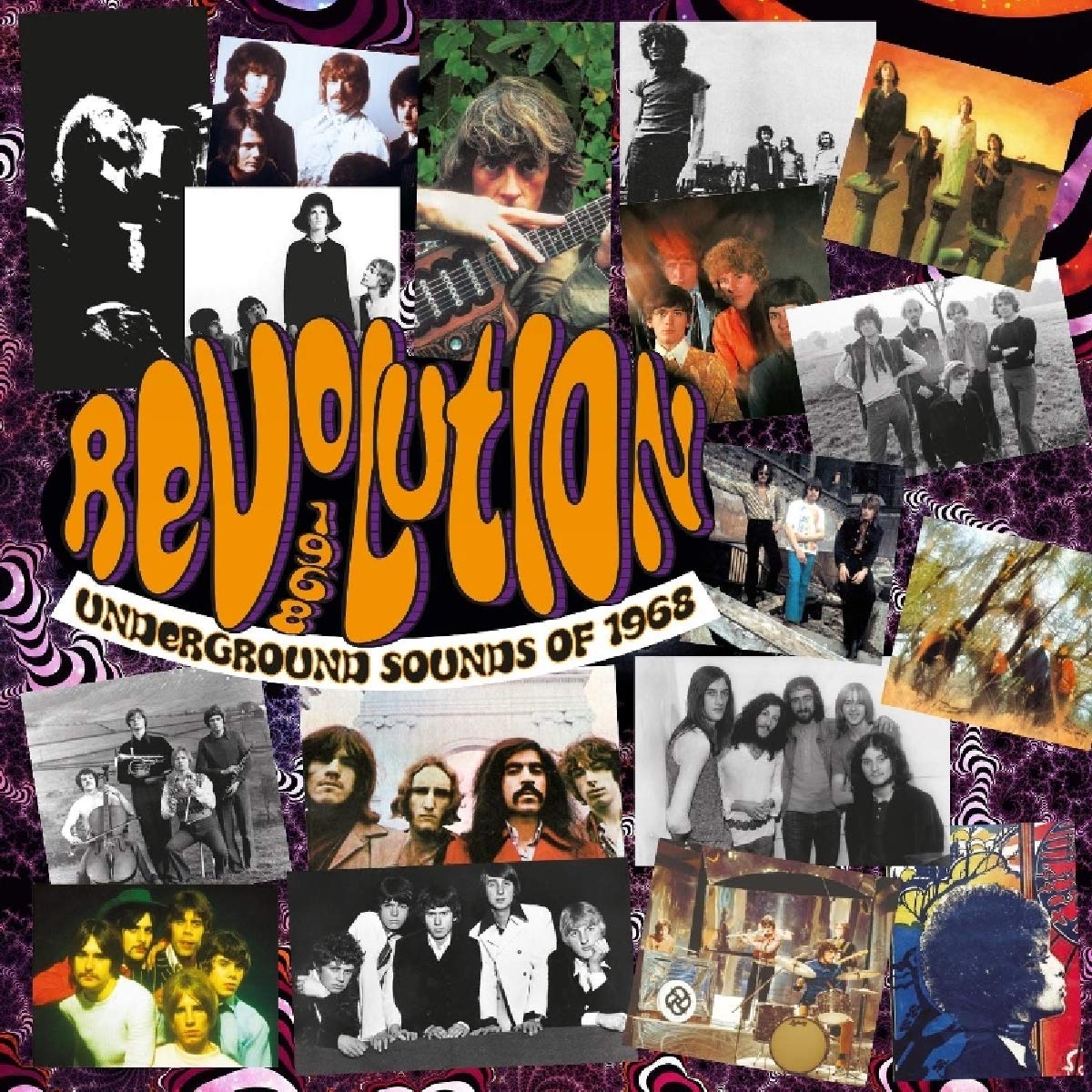
This new 3 CD Re-Mastered Box Set Celebrating The Musical sounds of the so called British “UNDERGROUND” Rock Music Of 1968. featuring tracks by Deep Purple, Jethro Tull, Barclay James Harvest, Julie Driscoll, Brain Auger & The Trinity, Spooky Tooth, Traffic, The Move, Crazy World Of Arthur Brown, Van Der Graaf Generator, Procul Harum, Genesis, Caravan, Jeff Beck, Pretty Things, The Incredible String Band, Tomorrow.
Esoteric Recordings are pleased to announce the release of “Revolution – Underground Sounds of 1968”, a 3CD clamshell boxed set celebrating the so-called “underground” rock music 1968, a year that saw huge changes, both musical and social. 1968 was a pivotal year for creativity in British rock, beginning with some influences of psychedelia still present in work by ground-breaking artists such as Pretty Things, Tomorrow, Incredible String Band, Idle Race, Traffic and The Move, but gradually giving way to styles influenced by jazz, blues, folk and more that would eventually become termed as “progressive”, “folk-rock” and “hard” rock, all of which championed by “underground” figures of the day such as DJ John Peel on his BBC Radio One show Top Gear and by publications such as International Times and Oz.The common thread among all of these artists was an emphasis on experimentation and a desire to push the perceived boundaries of popular music. It was also a year that would see the very first record releases by bands that would go on to achieve success and influence in the 1970s such as Deep Purple, Jethro Tull, Barclay James Harvest, Genesis, Status Quo, Van Der Graaf Generator and Caravan. Aside from featuring better known acts such as Crazy World of Arthur Brown, Procol Harum and Pentangle, this compilation also features lesser known acts.
The common thread among all of these artists was an emphasis on experimentation and a desire to push the perceived boundaries of popular music. It was also a year that would see the very first record releases by bands that would go on to achieve success and influence in the 1970s such as Deep Purple, Jethro Tull, Barclay James Harvest,Genesis, Status Quo, Van Der Graaf Generator and Caravan. Aside from featuring better known acts such as Crazy World of Arthur Brown, Procol Harum and Pentangle, this compilation also features lesser known acts that produced work of a wide breadth such as Eyes of Blue, Love Sculpture, The Action, Dantalian’s Chariot,Elmer Gantry’s Velvet Opera, Gun, Second Hand, The Moles and Blonde on Blonde.
This collection celebrates a creative period when rock music was evolving into something altogether more serious, moving away from the single as medium to give way to the dominance of the album. Feed your head with Revolution – Underground Sounds of 1968.
Mobile recording studios have a longer history than you might think. As early as the 1920s, record companies in both the U.K. and the U.S. were experimenting with location recording, albeit with incredibly primitive equipment. This was the pre-magnetic tape era, after all.
In the U.K., the pioneer was EMI, closely followed by its chief rival, Decca. The purpose, for the most part, was to record live concerts of classical music, and while the equipment changed out of recognition during the following 30 years or so, that purpose remained: to capture live performances.
By the time rock music arrived around the mid ’60s, a new generation of mobile studios appeared that would capture some of the most important recordings of the era. And curiously, most of them were not recordings of live gigs. That was because the mobile studio soon became used as much for the freedom it offered artists to record in domestic locations as for capturing their stage performances.
Digital technology has helped bring about the demise of the mobile truck since the turn of the millennium. Now, artists can of course record on devices as small as an iPad (to name but one famous example, Damon Albarn recorded the Gorillaz album The Fall in just that way). Even if you don’t want to be quite as stripped-down as Albarn, a laptop armed with plugins and a small digital mixer can offer almost as much as a fully fledged mobile studio at far less cost.
However, before the mobile trucks rumbled off into the distance, the freedom they provided in that short period produced some remarkable recordings. Here are six of them.
The Who, Live at Leeds (1970)
This album, still regarded by many critics as the finest live rock LP ever, was originally designed to be Live at Hull and Leeds. It was recorded by the Pye Records mobile on eight-track analogue tape machines installed beneath the auditorium in a cloakroom. At this stage, mobile trucks were used simply to carry recording equipment to a gig. That equipment then had to be removed, assembled, and used in whatever space could be found.
With nothing more than split cables from the vocal, speaker, and drum microphones, the two recordings were plagued with technical problems. Some of the bass track from Hull was lost, and the Leeds concert suffered from crackles, which have caused controversy ever since. Years later, when the crackles were erased using digital wizardry, some fans objected that they removed the authenticity of the recordings.
Originally released as a single six-track vinyl LP, Live At Leeds has since appeared in many incarnations, some with and some without the infamous crackles. The Hull gig recorded the night before (February 13th) has been released, too, with John Entwistle’s missing bass parts replaced with carefully synced recordings from Leeds. There are those who claim that Live At Hull 1970 is even better than the raw and powerful Live At Leeds. They can both be heard on the 40th Anniversary collectors’ edition.
Led Zeppelin, IV (1971)
You could toss a coin over whether Led Zeppelin’s III or IV was the more significant album, but it doesn’t really matter for our purposes—both made very extensive use of the Rolling Stones Mobile (RSM) and were released before two other other landmark RSM recordings, the Stones’ Exile On Main St. and Deep Purple’s Machine Head.
A former 18th-century poorhouse, Headley Grange in Hampshire was the chosen venue, as it had been for much of Zeppelin III. The majestic sound of John Bonham’s drums—sampled a thousand times and still used today—was created in wood-paneled Headley Grange with a pair of distant Neumann condenser mics. It has probably never been equalled.
The Rolling Stones, Exile On Main St. (1972)
Just as The Who’s Live At Leeds is regarded by some as their finest hour, so the Stones’ Exile On Main St. stands as a testament to the band at its peak—even if a wobbly one at times.
In 1970, Mick Jagger bought Stargroves, a country house in Hampshire. The band’s pianist and tour manager, Ian Stewart, suggested that in order to make full use of it, they needed their own mobile studio. This saw the birth of the most famous truck of them all, the Rolling Stones Mobile. It is one of the few things you can use the word legendary about without risk of exaggeration.
Unlike earlier trucks, the Stones Mobile had a control room inside the vehicle, so it really could go anywhere and do almost anything. The band used it to record most of the Sticky Fingers album, and a year later, beset with taxation problems, they decamped to the Villa Nellcôte in the South of France, with the RSM following.
The sessions that followed have become the stuff of rock legend and lore. Beside the technical problems imposed by an unsuitable recording environment—a cramped, damp basement—and compounded by an erratic power supply, the band’s “personal issues” should have made the resulting album a shambles. Indeed, engineer Andy Johns described them as “the worst band in the world” for much of the time. But somehow, in true Stones fashion, what emerged from the chaos was one of rock’s most memorable and charismatic albums. It just reeks of authenticity thanks, at least in part, to the location and the way in which most of it was recorded.
Deep Purple, Machine Head 1972
If Exile On Main St. really put the Stones Mobile on the map, it was Deep Purple who immortalized it in “Smoke On The Water.” The song recalls the night in 1971 when the Casino in Montreux, Switzerland burned down following a gig by Frank Zappa and The Mothers Of Invention.
The plan had been to record the next Deep Purple album in the Casino, but the fire put paid to that. A couple of other venues in the town were hastily found for the recording sessions, which produced, among others, “Smoke On The Water,” the lyrics of which refer to the RSM as “the Rolling truck Stones thing.”
The Who, Quadrophenia 1973
On the face of it, this seems an unlikely album to have emerged from a mobile studio, and in fact it was made at an unlikely location, too. Ronnie Lane’s Mobile (known as the LMS) was parked in Battersea, south-west London for much of the recording of Quadrophenia, in an urban jungle outside a still uncompleted Ramport Studios, which The Who were in the process of building.
Ronnie Lane, the ex-Faces bass player, had chosen an American Airstream trailer for his mobile studio, and Bad Company, Led Zeppelin (notably on Physical Graffiti), Rick Wakeman, and Eric Clapton were just some of the musicians who would make excellent use of it. Of all the British golden-era mobiles, Lane’s was one of the most successful.
Radiohead, OK Computer 1997
There were many impressive albums recorded using mobile studios between The Who’s Live At Leeds in 1970 and Radiohead’s OK Computer in 1997, and there were more mobiles than we have space to include here, among them Jethro Tull’s Maison Rouge, Virgin’s Manor Mobile, and Mickie Most’s RAK.
By the late ’90s, however, the era of the truck was coming to an end—and OK Computer provides fitting mood music. Relatively inexpensive and highly portable digital equipment and computers meant that the need for a large studio on wheels was passing.
In fact, OK Computer wasn’t recorded using a truck at all, but it epitomizes why mobile trucks had been so popular: location recording enabled a band to work at their own pace, in their own way, in an environment completely unlike an essentially sterile fixed-site studio.
For this album, which Rolling Stone described as “the last masterpiece of the alt-rock movement,” Radiohead were given a reputed £100,000 by their record company. Their producer Nigel Goodrich used it to buy recording equipment for use in St Catherine’s Court, a spectacular manor house near Bath in Somerset, owned at the time by actress Jane Seymour. In the same way that the natural acoustics of Headley Grange helped Led Zeppelin achieve astonishing looseness, vitality, and depth, so St Catherine’s Court added its brooding presence to a haunted, dark, and troubled album.
One thing binds together the albums featured here: none of them could have been made in a traditional fixed-location recording studio. In the case of recordings of gigs, it’s obvious why that should be. But a common quality shared by the albums featured here is the live ambience of an environment that wasn’t carefully designed to sound neutral. In the age of Pro Tools sameness, that is definitely something to be cherished.
There is another angle, too. Musicians often complain that “clocking in” to record every day is too much like going to work, especially in a traditional city-center studio. In a residential location, they can not only experiment with different sounds but also socialize and make music in a freer and more creative way. You may not be able to quantify that.
Pumping Drums, Supercharged Organ and Raw Guitars….Influenced By the Blues, Psychedelica, Steaming Rock’n’Roll, Garage Rock this trio will take you back to how bands used to be pulling from bands like the MC5, The Doors, Deep Purple and the Floyd,
with a drummer from the Keith Moon school of Drumming….An Organist that play like the Demonic Characters you see in the movies,and the vocalist Guitarist thats has echoes of Hendix,Gallagher and any other guitar hero you can mention plus the charisma of Morrison as a frontman If you are a musician of any standard this band will amaze you.










 The Fat Angel Sings