Posts Tagged ‘Crazy horse’

SongsForJudyArt.jpg

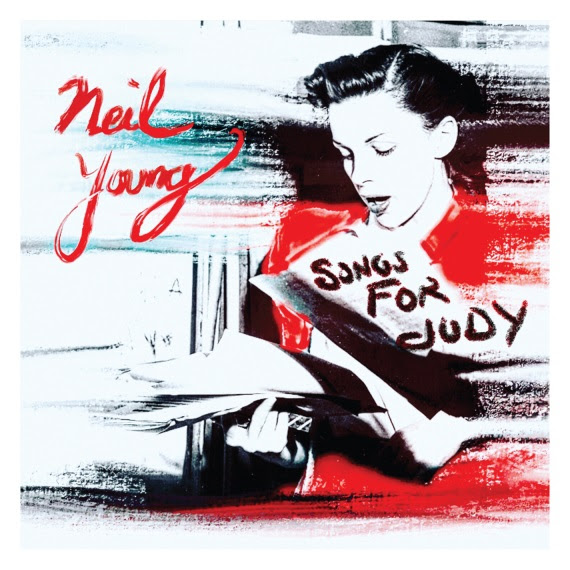
Neil Young announced his plan to release “Songs for Judy”, a live album drawn from his November 1976 U.S. tour. The 22-song LP includes solo acoustic performances of all-time classics like “Heart of Gold,” “After the Gold Rush” and “The Needle and the Damage Done” along with a number of rarer selections, including one song, “No One Seems to Know,” that has not appeared on any previous official release.

Neil Young spent the majority of 1976 on the road with Crazy Horse or on the ill-fated Stills-Young Band tour, which he famously dropped out of midway through that summer. He also found time to make “Hitchhiker”, the lost solo acoustic studio album that he recorded in the August 1976 — three months before the shows documented on Songs for Judy but kept in the vault until last fall. At the November 1976 shows featured on “Songs for Judy”, Young performed a solo acoustic opening set before returning to the stage for a harder-rocking performance with Crazy Horse. These shows have been widely praised and discussed by Young fans for years, but this is their first official release.

Young released “Campaigner,” the first single from the album, Recorded at his November 22nd, 1976 show at Boston’s Music Hall, it’s a pristine performance of the politically puzzling ballad (“Even Richard Nixon has got soul”), which would see its first release the following year on his three-LP greatest hits set Decade.

“The tour had been so satisfying, and so different from all that rock would become in the ensuing years, something indelible was captured in our humble collection,” explains Cameron Crowe, who curated the compilation together with Joel Bernstein. “Listening to it today is a little like discovering postcards from home. It was a precious time in Neil Young’s journey, a breath of oxygen in between some of his biggest adventures.”

https://www.youtube.com/watch?v=02wCZ5yGPAA

Songs for Judy is out November 30th on CD and digital platforms, and December 14th on vinyl.

Songs for Judy Track List (all dates are from 1976)

“Songs For Judy Intro” – Atlanta, GA – Nov 24 (late show)
“Too Far Gone” – Boulder, Colorado – Nov 06
“No One Seems To Know” – Boulder, Colorado – Nov 07
“Heart Of Gold” – Fort Worth, Texas – Nov 10
“White Line” – Fort Worth, Texas – Nov 10
“Love Is A Rose” – Houston – Nov 11
“After The Gold Rush” – Houston – Nov 11
“Human Highway” – Madison, Wisconsin – Nov 14
“Tell Me Why” – Chicago – Nov 15 (late show)
“Mr. Soul” – New York – Nov 20 (early show)
“Mellow My Mind” – New York – Nov 20 (early show)
“Give Me Strength” – New York – Nov 20 (late show)
“A Man Needs A Maid” – New York – Nov 20 (late show)
“Roll Another Number” – Boston – Nov 22 (late show)
“Journey Through The Past” – Boston – Nov 22 (late show)
“Harvest” – Boston – Nov 22 (late show)
“Campaigner” – Boston – Nov 22 (late show)
“Old Laughing Lady” – Atlanta – Nov 24 (early show)
“The Losing End” – Atlanta – Nov 24 (late show)
“Here We Are In The Years” – Atlanta – Nov 24 (late show)
“The Needle And The Damage Done” – Atlanta – Nov 24 (early show)
“Pocahontas” – Atlanta – Nov 24 (late show)
“Sugar Mountain” – Atlanta – Nov 24 (late show)

Image result for neil young

Neil Young: “Don’t Be Denied”.…BBC documentary charting Neil’s career from his first experiences in Canada through his trip south and his time with Buffalo Springfield, CSNY and Crazy Horse. Whilst he is claiming it is just about the music, the film shows Neil as a man of great integrity both musically and politically. Fascinating stuff.

Neil Young grants rare and unprecedented access to the BBC for a documentary in which he traces his musical journey in his own words.

The film was made from three hours of interview shot in New York and California, and uses previously unseen performance footage from the star’s own extensive archives. It also features cohorts Stephen Stills, Graham Nash, David Crosby, Nils Lofgren and James Taylor.

From his early transcontinental American quest for recognition, through the first flush of success with Buffalo Springfield, to the bi-polar opposites of mega-stardom with Crosby, Stills and Nash and the soulful rock of Crazy Horse, Young’s career has enjoyed many guises.

Perhaps his most famous period was as a 1970s solo artist making albums that became benchmarks. “After The Goldrush”, recorded in his Topanga Canyon home, and “Harvest”, part-recorded on his northern Californian ranch, saw Young explore the confessional side of song-writing. But never one to rest on his laurels, he would continually change direction.

In the mid-seventies, two of Young’s closest friends died as a result of heroin abuse. What followed was music’s answer to cinema verite, with Tonight’s The Night a spine-chilling wake for his dead friends.

As New Wave arrived, Young was keen to explore new ideas. A collaboration with Devo on what became his art-house epic, Human Highway, saw the genesis of Rust Never Sleeps, a requiem for the seventies. In the eighties, Young explored different genres, from electronica to country, and in recent times he has returned to Crazy Horse and Crosby, Stills and Nash, but only when it has suited him. The film ends with Young still refusing to be denied, on tour in the USA with CSNY, playing anti-Bush songs to a Republican audience in the South.

https://www.youtube.com/watch?v=q1qH8z_qCbo

Don’t Be Denied – “a documentary film about the life and times of Neil Young” – makes a sometimes brilliant attempt at telling Neil’s story in the aforementioned hour and is full of fascinating moments and boasts some great archive footage of Buffalo Springfield, Crazy Horse and solo performances. The film was made from three hours of interview shot in New York and California, and uses previously unseen performance footage from the star’s own extensive archives. It also features cohorts Stephen Stills, Graham Nash, David Crosby, Nils Lofgren and James Taylor. There’s also terrific interview content with the legendary contrarian, filmed over nine months in New York and California, Neil living up entirely to his reputation as someone you would be ill-advised to mess with, on any level you might care to consider. The film ends with Young still refusing to be denied, on tour in the USA with CSNY.

98247

Recorded live at the Superdome in New Orleans for Farm Aid 7 in September of 1994, this is classic grunge-era Neil Young and Crazy Horse. Though the set list consists of only 5 tunes, the show’s running time is nearly an hour as Neil and the band give epic performances of all-time favorites like “Down By The River”, and Dylan’s “All Along The Watchtower”, as well as newer arrivals like “Country Home” (from 1990’s Ragged Glory) and “Change Your Mind” (from 1994’s Sleeps With Angels). An essential Neil live set available now in unprecedented sound quality.LP and coloured vinyl.

Neil Young and Crazy Horse perform “Down By the River” live at the Farm Aid concert in New Orleans, Louisiana on September 18th, 1994. Farm Aid was started by Willie Nelson, Neil Young and John Mellencamp in 1985 to keep family farmers on the land and has worked since then to make sure everyone has access to good food from family farmers. Dave Matthews joined Farm Aid’s board of directors in 2001

Weld - neil young and crazy horse.jpg

In the late ’80s, Neil Young re-embraced distortion. He cut “Rockin’ in the Free World.” He teamed up with Crazy Horse for 1990’s album Ragged Glory  And then he and his Crazy friends hit the road in the winter of 1991, for what Young termed the “Smell the Horse” tour, which was documented on the Arc-Weld album.

These were loud, noisy shows, a commitment that ran even to the support acts, Sonic Youth and Social Distortion, both of whom Neil had hand picked for that purpose. Extended, tangled performances were akin to the electric music captured on the “Live Rust” album more than a decade earlier. But Young with Crazy Horse  bassist Billy Talbot, drummer Ralph Molina plus guitarist/keyboardist Frank “Poncho” Sampedro weren’t trying to relive the past so much as they were inspired to the present. Apparently, the band watched CNN reports from the first Gulf War every night before taking the stage.

“It blew my head off during that tour,” Young said about the war in Iraq in Johnny Rogen’s Zero to Sixty: A Critical Biography. “When we were playing that stuff, it was intense. It was real. I could see people dying in my mind. I could see bombs falling, buildings collapsing on families.”

https://www.youtube.com/watch?v=CtZCk0rcAcg

The nasty images and violent news spurned the singer-guitarist to play some of his roughest material from the new record along with enshrined tunes about death and genocide such as “Powderfinger” and “Cortez the Killer.” He and Crazy Horse also debuted a version of Dylan’s “Blowin’ in the Wind,” accompanied by the sound of a blaring air raid sirens  and gunfire. Weld consists of rock and roll songs by Young and Crazy Horse, duplicating seven songs that had appeared on either “Rust Never Sleeps” Or “Live Rust” from twelve years earlier. It also echoes those albums as Young, in both cases having spent most of a previous decade pursuing different musical avenues, returned to straightforward rock and roll via the acclaimed Ragged Glory album with Crazy Horse, then celebrating that return with an accompanying multi-disc live document and concert film.

After coming off the road, Neil Young assembled recordings from the shows to document the four-month tour in the form of a double-live album. The concerts had been loud enough, but Young did further damage to his hearing while mixing the live record, which he would give the appropriately metallic title of Weld.

“I made Harvest Moon[after Weld] because I didn’t want to hear any loud sounds,” he said in 1995. “I still have a little bit of tinnitus but fortunately now I’m not as sensitive to loud sounds as I was for a year after the mixing of Weld.”

But Weld wasn’t the only thing Young was putting together in the summer of 1991. In addition to the live album, he began playing with fragments of concert sounds, weaving together layers of guitar distortion, drums, crowd noise, lyric fragments and stage chatter into an abrasive collage.

The experimental record, to be titled Arc, evolved in a 1987 film project called Muddy Track, for which Young recorded beginnings and endings of live performances and edited them together. He showed the piece to Sonic Youth’s Thurston Moore, who encouraged the rock legend to attempt a similar treatment with the professional recordings from the current tour.

https://www.youtube.com/watch?v=7xm-JRsYQdE

Young came away with a one-track, 35-minute album that featured snippets of him singing “Like a Hurricane” and “Love and Only Love” (which repeat, almost like a refrain), as well as squealing feedback and low-end rumbling that was a ringer for constant explosions. Many would compare it to Lou Reeds Metal Machine Music.

“It’s new-age metal,” Young said in April 1992. “That’s what I would call it because you can listen to it really quiet. It’s soothing… It’s a generic rock ’n’ roll sound; it has no identity. It’s the tone, the metal tone. It’s like being inside a giant milkshake blender. It’s another dimension. Most bands’ beat defines who they are. There is no beat on Arc.”

In a limited release, Young packaged his conventional live album with Arc, which he called “more art and expression than anything I’ve done in a long time.” Via Reprise, he released 25,000 of the three-disc set, Arc-Weld, on October. 22nd, 1991. He ended up putting out the records separately, as well. (A VHS concert video was released too, although it has gone out of print.) Fans and critics reacted positively to the intensity of the performances on Weld while regarding Arc as, at best, something of a curiosity.

Although Neil Young would take a short hiatus from loud music following the release of Arc-Weld, he wouldn’t stay away for long. As the “godfather of grunge,” he’d soon team up with Grunge rockers Pearl Jam and reconvene with Crazy Horse multiple times throughout the ’90s.

1. “Hey Hey, My My (Into the Black)” – 0:00
2. “Crime in the City” – 5:42
3. “Blowin’ in the Wind” (Bob Dylan) – 12:14
4. “Welfare Mothers” – 19:04
5. “Love to Burn” – 26:08
6. “Cinnamon Girl” – 36:06
7. “Mansion on the Hill” – 40:54
8. “F*!#in‘ Up” – 47:08

Of course the second cd is mandatory listen after the first one

1. “Cortez the Killer” – 0:00
2. “Powderfinger” – 9:46
3. “Love and Only Love” – 15:42
4. “Rockin’ in the Free World” – 25:03
5. “Like a Hurricane” – 34:23
6. “Farmer John” (Don Harris, Dewey Terry) – 48:25
7. “Tonight’s the Night” – 53:24
8. “Roll Another Number” – 1:02:05


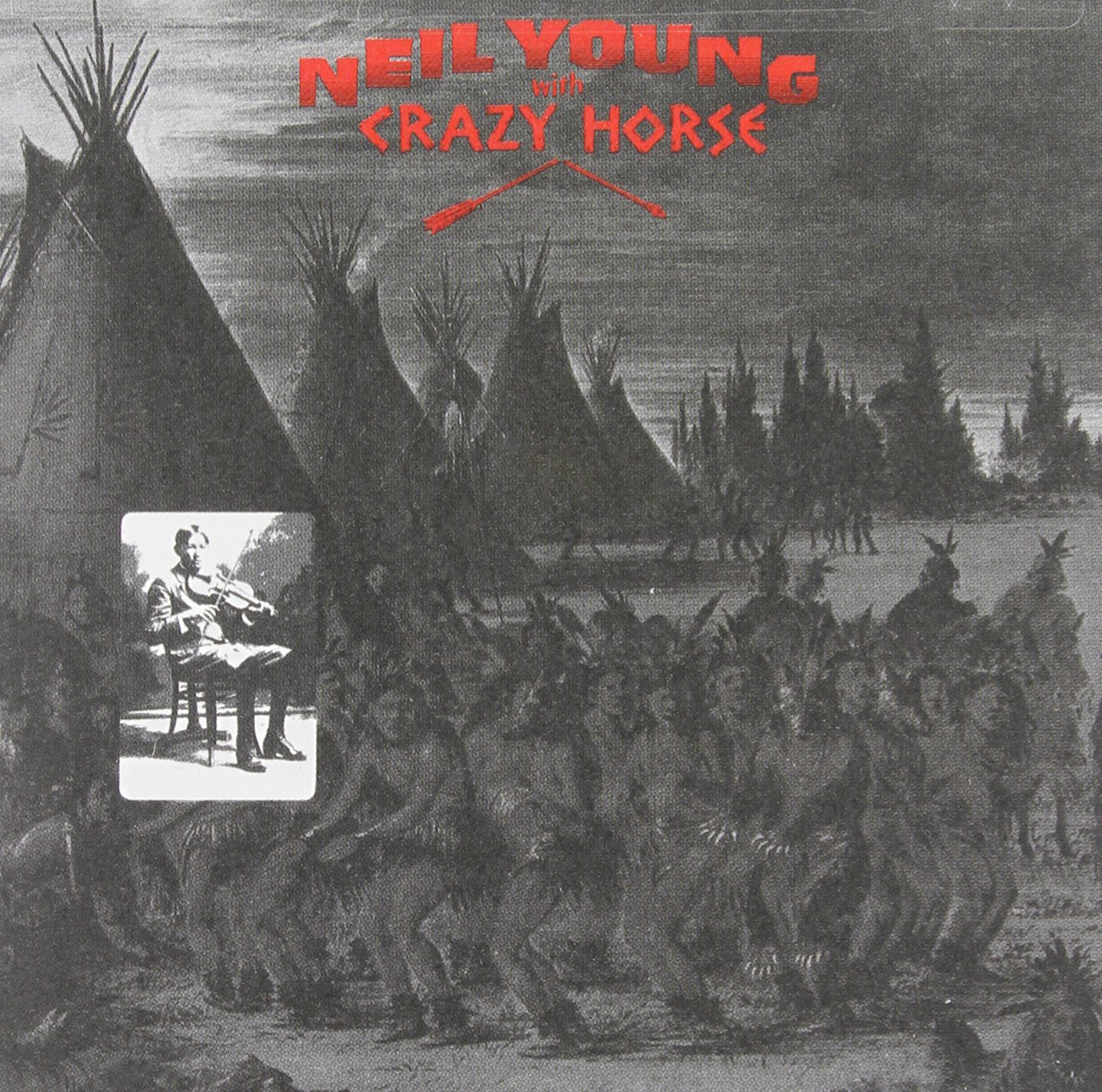
Like ‘Ragged Glory’ and ‘Sleeps With Angels,’ two other ’90s collaborations with Crazy Horse, ‘Broken Arrow’ is loose, free-form and muscular at times. But it’s not as fully formed as those other two records, instead juggling long jams with shorter, more structured songs. Still, it would be a decade before he made another album this interesting. Broken Arrow is the twenty-third studio album by Neil Young, and his eighth with Crazy Horse. The first three songs are in the form of long, structured jams. The final track is a live version of a Jimmy Reed song that was recorded on an audience microphone at a small “secret” gig in California, giving it a bootleg feel. A bonus track, “Interstate,” was included on the vinyl record release of the album and the CD single of “Big Time”, and is an outtake from the 1990’s RaggedGlory sessions. This record would be the last studio album by Neil Young for four years, and the last in a long string of rock albums broken only by Harvest Moon.

https://www.youtube.com/watch?v=pLBCjjvhM1Q

Unmoored creatively by the death of his long-time producer, Neil Young‘s ’90s-era career resurgence suddenly came apart. He turned to his old friends in Crazy Horse for Broken Arrow, released on July 2nd, 1996, and to a title that recalled his days in Buffalo Springfield. But something had changed, despite his recent recognition as a forefather for grunge and appearances on package tours where the average fan’s age was in the early 20s.
Young clearly didn’t know how to move forward without the late David Briggs. (In a telling moment, he sings “I’m a little bit here; I’m a little bit there,” during the song “Scattered.”) So, he looked back. The idea, Young said back then, was to follow advice he’d gotten from Briggs, just before his death on November. 26th, 1995.
“He told me to keep it simple and focused, have as much of my playing and singing as possible – and not to hide it with other things,” Young later said of Briggs, who died after producing 18 of his albums dating back to 1968. “Don’t embellish it with other people I don’t need or hide it in any way. Simple and focused. That’s what I took away. He didn’t exactly say that, but I got that message.”
And so the dark intensity that surrounds Broken Arrow is blanketed by this sloppy, sloggy spontaneity, a free-form lack of focus rekindled during a series of low-key gigs held before official sessions began – including a two-week stand at the 150-seat Old Princeton Landing near Young’s northern California ranch.

The albums starts like a jam session, with three extended pieces, before finally relenting with a few more structured pieces on side two. It’s clear, on one level, that Young had his heart in it. (“I’m still living in the dream we had,” Young sings in “Big Time,” seeming to reference Briggs directly. “For me, it’s not over.”) But, in the end, Broken Arrow can’t advance Young’s considerable legend. As loud as it is disjointed, this is the sound of his wheels spinning – and, at least to some degree, Young knew it.

“They’ll s— on this one,” Young confided to Jimmy McDonough, author of the biography Shakey. “I’ve given them a moving target. There’s enough weaknesses in this one for them to go for it. … It’s purposefully vulnerable and unfinished. I wanted to get one under my belt without David.”
He was right to worry. Critics, even those who’d recently all but sanctified Young, pounced. Spin magazine, for instance, had named Young its artist of the year just three years before. They said Broken Arrow “makes you wonder whether Young has grown so confident in his complacency that he could play out his career as solidly and unceremoniously as, say, Muddy Waters – never dismissed, but taken for granted.”
Neil Young pushed back, insisting that he was simply trying to find his way, and that the Buffalo Springfield-influenced title reflected that quest. “For years and years I tried to make records sounding unfinished, with the result of watering down the authentic and raw,” he said back then. “This time I left the songs as they are, but I couldn’t find a title. I asked myself: What does this album mean to me? To me it represents the fun, the frankness and the liberty of people who played together, like we did 30 years ago.”
Still seemingly at loose ends, Young then went largely quiet. He ended the ’90s ensconced once more with his old pals in Crosby Stills Nash and Young. Young’s next solo project didn’t arrive until 2000. He didn’t record another full length album with Crazy Horse until 2003’s Greendale.

“Some shine, some don’t, but the ones that don’t shine are just as cool,” Young mused in a 1998 interview with USA today . “As you go through life, you’ve got to see the valleys as well as the peaks. You appreciate your good stuff because of the other stuff.”

A lot of misinformation has been spread over the years about Danny Whitten. How he lived & how he died & most of this was third hand knowledge & hearsay. The most widespread untruth was that after Danny was fired by Neil Young, who gave him a plane ticket home & $50, Danny bought heroin with it & died that same night from an overdose. Not true. The coroners report stated that he died as a result of “acute diazepam and ethanol intoxication” an overdose of alcohol (vodka) and valium. There was no trace of heroin in his system.

Danny Left us on this day (Nov. 18) in 1972: guitarist & songwriter Danny Whitten (variously reported as a fatal combination of Valium & alcohol, or a heroin overdose, age 29), best remembered for his work with Neil Young & Crazy Horse – another of those tragic losses to drugs of a young life & talent, so prevalent at the time; as a songwriter, Danny’s heartfelt, signature ballad “I Don’t Want to Talk About It” was a  huge hit for Rod Stewart, Rita Coolidge & Everything But The Girl; Neil’s “The Needle and the Damage Done” was written about…well, you know the story; Danny Whitten previously recorded as The Rockets with future Crazy Horse-mates Billy Talbot & Ralph Molina for a 1968 self-titled album; his influential contributions can best be heard on such landmark Neil Young albums as ‘Everybody Knows This Is Nowhere’ (Danny sang opening track “Cinnamon Girl” with Neil, & the two dueled guitars on the epic tracks, “Down by the River” & “Cowgirl in the Sand”), ‘After The Goldrush’, ‘Tonight’s The Night’ & Crazy Horse’s self-titled 1971 debut (which included five songs penned by Danny Whitten)…

billy talbot

Billy Talbot guitarist with Crazy Horse as one of the most well famous backing bands in the world throughout his touring and support to Neil Young he has always made his own music a new solo album “On The Road To Spearfish” full of great guitar breaks, the CD also comes with the EP “Unkindness of Ravens”


http://

live version with Neil and the band Crazy horse


http://

Orchestral version with a 92 piece  orchestra


http://

and Neil with his acoustic

neilyoung

Everybody Knows This Is Nowhere, released this day 45 years ago, The second studio album from Canadian singer songwriter Neil Young and the first with his constant backing band over his career one of Rocks finest Crazy Horse, featuring the band members Ralph Molina, Billy Talbot, Danny Whitten and includes the some songs that have become standard in Young’s live performances “Cowgirl In the Sand”,”Down By The River” and “Cinnamon Girl”, many of the songs are long guitar led with Neil Young’s perpetual strangely moving Mournful vocal