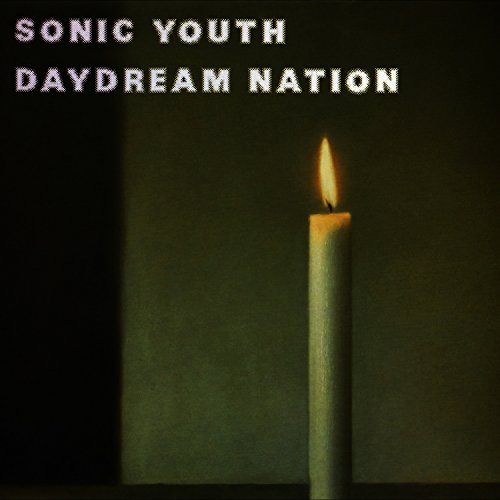
The Alternative-Rock band’s fifth album was recorded in New York and released by Enigma Records. It was their last recording before they signed to a major label and received huge praise from critics. Considered to be the pinnacle of the band’s career: it fulfilled the band’s fullbore aesthetic and indulged their variegated and broad emotional palette. Few albums of the 1980s were as spectacular, influential and profound. The song’s compositions were varied and textured whilst the lyrics switched between mature reflectiveness and emotionally-charged. Several friends of the band, including Henry Rollins, had long praised the band’s long live improvisations and told the group that its records never captured them. With Moore on a writing spree, the album ultimately had to be expanded to a double album. Sonic Youth were,
It’s radical, political edge stunned critics at the time. It is hard to say how important the album is and how many bands were compelled to record music because of Daydream Nation – but Sonic Youth laid down an astonishing album. Many would have liked it stretched to a triple album but that might have been excessive. It only has twelve tracks but longer numbers The Sprawl and Total Trash both exceed seven minutes whilst the finale, Trilogy, is nearly fifteen minutes in length. An essential album for those who appreciate genius music – not just reserved for Sonic Youth fans.
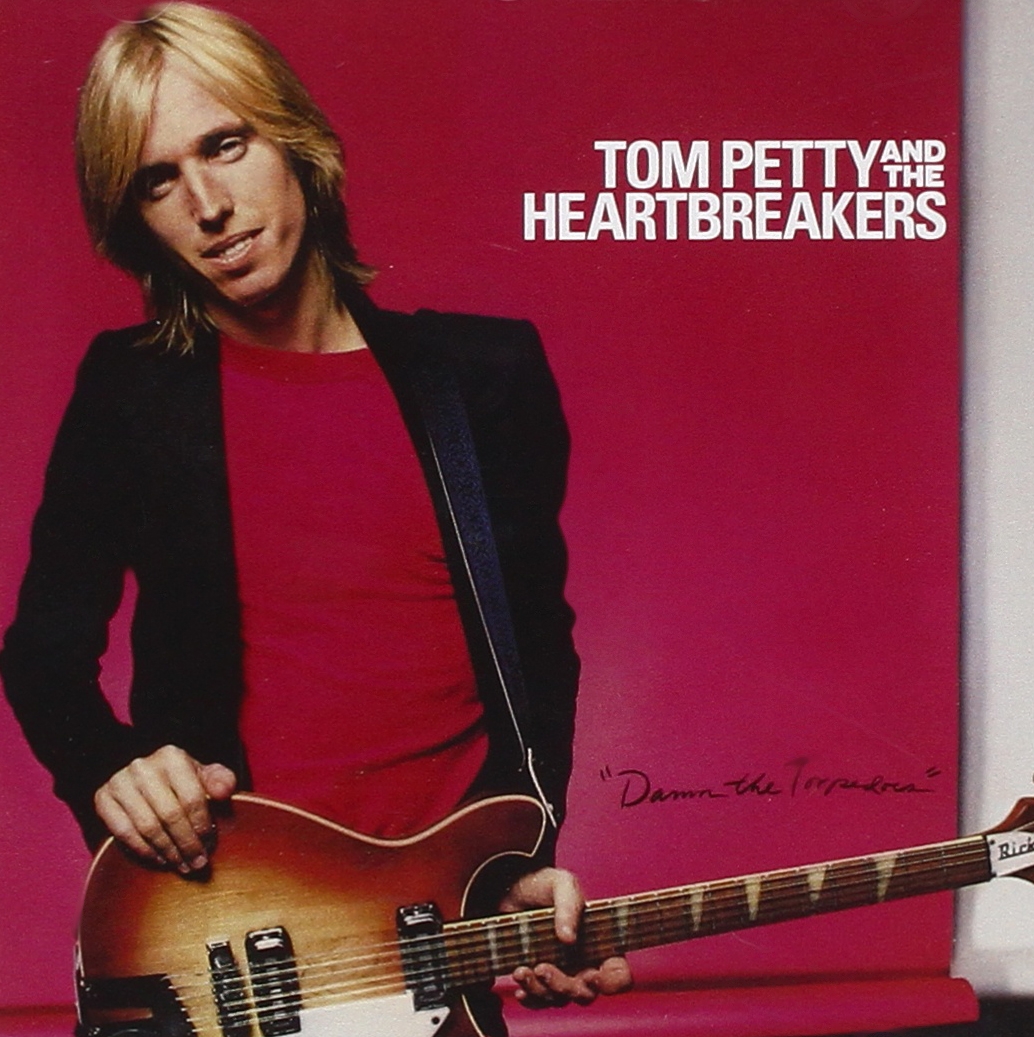
Petty’s breakthrough album plays like his most genuine slice of rock ‘n’ roll – probably because his two earlier albums didn’t do much, and that hunger drips through nearly every single groove. ‘Damn the Torpedoes’ heads straight into a world where Byrds-ian folk-rock collides with heartland-sized riffs. Tom Petty and the Heartbreakers never hit the brakes.
Not long after You’re Gonna Get It, Tom Petty & the Heartbreakers’ label, Shelter Records, was sold to MCA Records. Petty struggled to free himself from the major label, eventually sending himself into bankruptcy. He settled with MCA and set to work on his third album, digging out some old Mudcrutch numbers and quickly writing new songs. Amazingly, through all the frustration and anguish, Petty & the Heartbreakers delivered their breakthrough and arguably their masterpiece with the album Damn the Torpedoes.
Musically, it follows through on the promise of their first two albums, offering a tough, streamlined fusion of the Stones and Byrds that, thanks to Jimmy Iovine’s clean production, sounded utterly modern yet timeless. It helped that the Heartbreakers had turned into a tighter, muscular outfit, reminiscent of, well, the Stones in their prime — all of the parts combine into a powerful, distinctive sound capable of all sorts of subtle variations. Their musical suppleness helps bring out the soul in Petty’s impressive set of songs. He had written a few classics before like “American Girl,”“Listen to Her Heart” — but here his songwriting truly blossoms. Most of the songs have a deep melancholy undercurrent — the tough “Here Comes My Girl” and “Even the Losers” have tender hearts; the infectious “Don’t Do Me Like That” masks a painful relationship; “Refugee” is a scornful, blistering rocker; “Louisiana Rain” is a tear-jerking ballad. Yet there are purpose and passion behind the performances that makes Damn the Torpedoes an invigorating listen all the same. Few mainstream rock albums of the late ’70s and early ’80s were quite as strong as this, and it still stands as one of the great records of the album rock era.
“Close to the Edge” is the fifth studio album by progressive rock band Yes, released on 13th September 1972 by Atlantic Records . Following a tour in support of their previous album, “Fragile” Yes returned to the studios in London to record their next album. Produced by the band and audio engineer Eddy Offord , the album consists of three tracks: “Cloase to The Edge” on side one; “And You And I” and “Siberian Khatru” on side two. When recording for the album finished, drummer Bill Bruford who was frustrated by the band’s style and laborious recording in the studio, left to join Robert Fripp’s King Crimson . His replacement was Alan White of the Plastic Ono Band and part of Terry Reid’s group.
Close to the Edge became the band’s greatest commercial success at the time of its release, reaching number a chart position of 3 in the United States and number 4 on the UK Albums Charts .
The combination of Anderson’s psychedelic, wide-eyed lyrics and anthemic vocal melodies fit perfectly with some of the fiercest, most intricately layered instrumental passages in the history of rock music. Those passages came courtesy of Bruford’s jazz-fusion finesse, Wakeman’s classical-tinged elegance, Howe’s spidery eclecticism, and Squire’s surging, muscular thud.
Another reason this album remains a touchstone is that it never lapses into the noodling or show-offy antics that plagued so many prog-rock albums during the genre’s peak. Instead, Close to the Edge (particularly the four-part, 18-minute title suite) is incredibly nuanced, composed with such masterful flow and economy that every solo or lyric or riff feels connected in a cosmic, over-arching fashion. Even at its most complex (the deceptively tricky “Total Mass Retain” section), the simplest ideas shine through. Howe’s sublime guitar theme (which runs throughout the entirety of the title-track) is one of the most elegant in the prog cannon.
But while “Close to the Edge” may be the album’s inevitable stand-out, two other excellent tracks round out the disc:. “And You And I” is a mini-epic, utilizing Howe’s most melodic and emotional 12-string work and a spine-chilling Anderson lead vocal, while “Siberian Khatru” closes the festivities with an instrumental workout that blends funky full-band riffing with jazz-fusion-styled interplay, pitting Wakeman’s bubbling organ against Howe’s soaring leads (co-arranged by Bruford, in a classic example of the band writing for each other’s instruments).
“We were on top of the world when we made “Close To The Edge” says singer-songwriter Jon Anderson, recalling the early months of 1972 when he and his Yes band mates (guitarist Steve Howe, bassist Chris Squire, keyboardist Rick Wakeman and drummer Bill Bruford) holed up inside London’s Advision Studios to record the follow-up to their breakout hit, Fragile, which was released a year earlier.
Comprised of just three songs – the title track along with And You And I, both four-movement epics, plus the relatively short (at eight minutes, 55 seconds) Siberian Khatru – Close To The Edge was the result of the progressive rock band’s musical impulses running on full, a broad canvas of dizzying instrumental exchanges supporting Anderson’s sublime, mystical poetic vistas.
“It’s very representative of what I think is the Yes style,” Anderson says. “We experimented a lot, but we also had the talent to back it up – it wasn’t just solo after solo. We told stories and created moods. It was all very daring and wonderful.”
The group eschewed making demos, preferring to work on rough ideas while co-producer Eddy Offord rolled tape. After several weeks, concepts were sewn together into elaborate song structures. “We’d get the basic sketch of something, and then it was a matter of refinement,” says Anderson. “A piece would start to feel complete, but then I’d look to Steve and say, ‘We need a very poignant 12-string guitar introduction.’ He’d come up with it, it would be great, and we’d be off.”
Anderson looks back at the writing and recording of Close To The Edge, offering his insights into the record track-by-track (and, more specifically, movement-by-movement). “It was the beginning of my musical journey in terms of really understanding structure,” he says.
CLOSE TO THE EDGE – THE SOLID TIME OF CHANGE
“The idea of the chant was key to the song. [Sings] ‘A seasoned witch could call you from the depths of your disgrace/ And rearrange-da-dada-dada-dada-da-da-daa.’ It’s a rhythmic thing. I worked that out with Steve.
“The band started playing, and I said, ‘Guys, maybe you should be doing something more syncopated instead of a straight-on beat.’ So while Bill and Chris worked on a drum and bass thing, I looked at Rick and said, ‘OK, how fast can you play?’ And, of course, he could play very fast. The whole idea was to make it musically entertaining even before we put the voices on.
“For lyrics, I did a rough sketch of the whole piece, but as the sections came together, that’s when I rewrote the words. It took about three or four revisions till everything was there. It’s all metaphors. Simply put, ‘A seasoned witch could call you from the depths of your disgrace’ – that means your higher self will eventually bring you out of your dark world.”
CLOSE TO THE EDGE – TOTAL MASS RETAIN
“We’ve laid the foundation of where we’re going to go, and now we’re into the second part. This is about the relaxation of life and being close to the edge of the realization of our universal experiences. That’s what the song is starting to explain.
“This part flows. It shows you that you have to let music guide you. It’s best to open up and not force the situation. Everything will come to you.
[Sings] “’Sudden cause shouldn’t take away the startled memory/ all in all, the journey takes you all the way.’ The idea is that life is an ongoing journey, and you have to enjoy it, you know?”
CLOSE TO THE EDGE – I GET UP, I GET DOWN
“We have the ‘the I get up, I get down’ part before it goes into a beautiful ocean of energy. You’ve gone through nearly 10 minutes of music that’s very well put-together, but then you want to let go of it. You relax a little bit.
“The song came about because Steve was playing these chords one day, and I started singing, ‘Two million people barely satisfy.’ It’s about the incredible imbalance of the human experience on the planet.
“The vocals came together nicely. I’m a big fan of The Beach Boys and The Association – such great voices. Steve and I were working on this, and at one point he said, ‘I have this other song…’ And I said, ‘Well, start singing it.’ And he went [sings], ‘In her white lace, you could clearly see the lady sadly looking/ saying that she’d take the blame for the crucifixion of her own domain… ’
“When I heard that, I said, ‘Wait. That’s going to be perfect! You start singing that with Chris, and then I’ll sing my part.’ We have an answer-back thing.
“I heard a record with a church organ. I can’t remember what the album was, but I remember that it really woke things up. Going into the end, we needed something really big. Sonically, it changes all the textures.”
CLOSE TO THE EDGE – SEASONS OF MAN
“The arrangement had gone to where Rick was doing a solo. We’d always tried to give Steve a solo, then Rick a solo… Chris and Bill were working out the drum and bass parts. I said, ‘There’s got to come a time where I can get back in with [sings] The time between the notes relates the color to the scenes.’ Because the band is just cookin’ away, so I knew we needed a crescendo, and that’s where I came back in singing. They rehearsed it a few time, and this phrase then came out of the keyboard-organ solo.
“The line that goes, ‘Then according to the man who showed his outstretched arm to space/ he turned around and pointed, revealing all the human race’ – I’d had this dream where I was up on a mountain. This man was holding me around the shoulders, and he was pointing and saying, ‘That’s the human experience.’ And I smiled because I realized that it was true.”
AND YOU AND I – CORD OF LIFE
“And You And I” was written in maybe five different sections, and then we put them all together. The idea was very straightforward at first. It was going to be a very pretty folk song that I wrote with Steve. Soon we decided that it was to be surrounded by very big themes.
“’A man conceived a moment’s answers to the dream/ staying the flowers daily, sensing all the themes’ – I love singing this song on tour. In fact, I still sing it.
“When we were writing in those days, it was ‘Here’s the verse, here’s the verse, we’ve gotta get from the verse to the bridge.’ We had to make the bridge very, very different. ‘And you and I climb over the sea to the valley, and you and I reached out for reasons to call’ – and then we’re going to hold that note, and the theme is going to come back in.
“I would always record Rick when he was writing music. He was working on something at the time, and I said, ‘Let’s develop this theme.’ It felt really good.”
AND YOU AND I – ECLIPSE
“You work on a solo section, and it gets to the point where you feel it’s finished, and maybe it’s time to get back to that part that we sang at the end of the second verse – and just double up on it. That’s how we brought this section back in.”
AND YOU AND I – THE PREACHER THE TEACHER
“It goes to a totally different song and feel. Steve is a magical guitar player, and he could switch to a new style so easily. I said to him, ‘It’s got to be have a real country feel to it.’ He knew just what to do, and then Chris, one of the greatest melodic bassists ever, came in, and right there the song sat together so sweet.
“We wrote this section in one afternoon, but it probably took about a week to put the whole piece of music for And You And I together.”
AND YOU AND I – APOCALYPSE
“Nearly all of the music we ever made had one thought behind it: what will it sound like on stage? We liked to make records, but our main reason for doing what we did was to perform live, surrounded by a sound system and under the lights.
“I remember when we did And You And I at the Spectrum in Philadelphia for the first time. The whole room was so alive with the music we were making – it was really overwhelming – and when we were finished, the audience cheered and clapped for 15 minutes. I’m not kidding.
“That’s what I think of when I remember the end moments of And You And I. It was one of those times in your life that you never forget.”
SIBERIAN KHATRU
“I was playing this on acoustic guitar the other day. ‘Khatru’ means ‘as you wish’ in Yemeni. When we were working on it, I kept singing the word over and over again, even though I had no idea what it meant. I asked somebody to look it up for me, and when they told me the meaning, it worked for the song.
“I had already written most of it, but I needed help with some of the sections. I started playing it on guitar for the band, and then I realized that it needed a strong riff. Steve really helped out with some of the parts and, of course, the riff. The song could work with the riff and the vocals alone.
[Sings] “’Even Siberia goes through the motions… ‘” The idea is that Siberia is so far away. The Iron Curtain still existed, and Siberia was like this no man’s land. Russia is such a huge country, and the thought was that life still happens there as it does here.
“The verses have a different rhythmic feel. We had a lots influences and elements going on. Before Yes, I was in a band in the ‘60s, and we did all the R&B songs that were on the charts. I loved singing those songs, but I didn’t want to write about the same things subject-wise. ‘My babe don’t love me no more, what am I gonna do?’ – why should I compete with people who were writing those songs so damn well?
“Steve’s guitar playing is brilliant. I’ve always been amazed at his incredible talent. Even on the last tour I did with him, I’d come off stage and say to him, ‘How do you do that?’ But the great thing about his playing here is that he’s always aware of the structure. He’s not just playing to play.
“The song builds and builds and builds and builds – you’re taking the audience on an epic adventure. People think it can’t get bigger, but it does. The vocalization I was doing – ‘Bluetail, tailfly, Luther, in time, suntower, asking, cover, lover’ – it builds and builds, too, and then it goes into the solo, and everybody goes crazy. A very cool song.”
Yes supported the album, with its release three months into the band’s with their 1972-73 World Tour their biggest since their formation. Recordings from the tour, both film and audio, were included on the band’s 1973 live album, “Yessongs” The filmed performance was recorded at the December 1972 shows at the Rainbow Theatre in London
It was reissued in 1994, 2003, and 2013, the latter included unreleased tracks and a new stereo and 5.1 Surround sound mix on the reissues remastered by Steven Wilson . Critical reception was mixed on release, though the album is retrospectively regarded as one of the band’s best works, and a landmark recording in progressive rock.
It doesn’t get more prog than this: Three songs, none less than nine minutes. Plus, two of those tracks are split into four movements each. Pretentious? Oh yeah. But when the songs are this good – “Close to the Edge,” “And You and I” and “Siberian Khatru,” .
Following up a hit record is no mean feat for any band, and even under the best of circumstances, Pink Floyd might have found it all but impossible to come back from the massive success of Dark Side of the Moon.
Unfortunately, when the band returned to the studio in January 1975, conditions were far from favorable in the band for a variety of reasons — not the least of which was the fact that, as they adjusted to life after a worldwide smash record, the members of the band found themselves more disoriented than fulfilled. Compounding the problem was a growing disconnection between bassist Roger Waters and the rest of Pink Floyd, particularly guitarist David Gilmour.
“We were all having to assess what we were in this business for,” Gilmour said in the 2012 documentary The Story of Wish You Were Here. “Whether we were artists or businessmen. Having achieved the sort of success and money out of it all, it could fulfill anyone’s wildest teenage dreams, why we would still continue to want to do it? Roger has said he thinks we may have been finished at that point, and he may have been right.”
It also didn’t help that, as drummer Nick Mason said in a separate interview filmed for the movie, the band didn’t exactly have a ton of material stored up for their next album. After spending years rotating through the industry’s tour-and-record cycle, they hunkered down on their Dark Side follow-up basically bereft of material — and some of the songs they had written ended up being thrown out of the running order.
The songs in question, “Raving and Drooling” and “You Gotta Be Crazy,” were excised from the album after a fight between Waters and Gilmour, prompted because Waters felt the songs they had didn’t hold together as a cohesive whole. In his view, it was better to expand one particular track — titled “Shine On You Crazy Diamond” — into a bookend that essentially enveloped the rest of the record. As Waters later revealed, the piece was largely inspired by his heartbreak over the self-imposed exile of the band’s founding guitarist and first leader, Syd Barrett.
“I’ve never read an intelligent piece on Syd Barrett in any magazine, never,” Waters is quoted as saying in Mark Blake’s book Comfortably Numb: The Inside Story of Pink Floyd. “I wrote and rewrote and rewrote and rewrote that lyric because I wanted it to be as close as possible to what I felt. There’s a truthful feeling in that piece. That sort of indefinable, inevitable melancholy about the disappearance of Syd. He’s withdrawn so far away that he’s no longer there.”
Waters’ feelings regarding Barrett’s absence could have been applied, to some degree, to the rest of Pink Floyd. “No one was really looking anyone in the eye,” he complained. “It was all very mechanical.”
“It was disengagement,” concurred Gilmour. “It was not being willing to apply yourself sufficiently. Lots of moments when any one of us might have been much more interested in thinking about what we were doing that weekend […] The concentrated activity was rather diluted, and I’m sure for a very pushing, driving sort of person like Roger, it was more frustrating than it was for anyone else — although it was very frustrating for all of us, I suspect.”
Thus preoccupied by feelings of alienation and disillusionment, the members of the group — primarily pulled along by Waters — cobbled together a set of songs built around absence, starting with the withdrawal of their friend Barrett and spilling over into the creeping disappointment they’d found with one another and in the industry they’d enriched with Dark Side of the Moon. In the midst of the recording, Barrett himself made an unannounced appearance in the studio, looking so different that the members of the band initially failed to recognize him.
Drummer Nick Mason, for one, later remembered Barrett looking like a “large, fat bloke with a shaven head, wearing a decrepit old tan mac and carrying a plastic shopping bag,” while keyboard player Rick Wright recalled a sad denouement to their former leader’s surprise visit: “Syd stood up and said, ‘Right, when do I put the guitar on?’ And, of course, he didn’t have a guitar with him. We said, ‘Sorry, Syd, the guitar’s all done.’”
Such was the band’s disconnect that one song on the album, titled “Have a Cigar,” ultimately ended up being sung by someone outside the lineup. After Waters and Gilmour tried and failed to lend the requisite degree of vocal snark to their sarcastic ode to music business cynicism, they ended up turning to singer songwriter Roy Harper, who was sharing the studio with them and happened to be in the room one day while they struggled to find a solution.
“Roger can write songs but he’s never going to be in the top one hundred as a rock singer,” observed Harper. “He tries hard, he’s a good lad. Anyway, neither of them could get up there. I just stood at the back, leaning against a machine and laughing. I said, ‘I’ll sing it for you,’ and someone said, ‘OK,’ and I said, ‘For a price.
Recording finally wrapped in the summer of 1975, and after settling on a typically evocative cover design from legendary artist Storm Thorgerson, the members of Pink Floyd sent their ninth studio LP — titled Wish You Were Here, after a particularly disaffected Gilmour-Waters cowrite — to their label. Scheduled for release on September. 12th, it immediately became one of the most highly anticipated albums of 1975.
Not that Pink Floyd necessarily acted like a band delivering a major piece of product. In fact, their only concession to the promotion machine was a single syndicated live show, recorded at the Los Angeles Sports Arena in the spring of 1975, which was broadcast in an array of major markets ahead of the tour booked to support Wish You Were Here. The sold-out set, which still included “Raving and Drooling” and “You Gotta Be Crazy,” also featured an extended “Shine On You Crazy Diamond” as well as “Have a Cigar,” “Echoes,” and “Dark Side of the Moon” — as well as an expanding roster of special effects that now included expensive and unpredictable pyrotechnics.
In spite of inevitably mixed reviews, Wish You Were Here went on to top the charts on both sides of the Atlantic, and although it couldn’t hope to match the gargantuan sales of Dark Side of the Moon, it enjoyed substantial success in its own right, selling more than six million copies in the U.S. alone. And while the Floyd machine would continue to churn out product on a regular basis in the near future — starting with 1977′s Animals, which included the jettisoned Wish tracks “”Raving and Drooling” and “You Gotta Be Crazy” the writing was already on the wall for Waters’ eventual departure from the band. As he pointed out in The Inside Story of Pink Floyd, even the biggest sales figures can’t balance out creative dysfunction.
“The dream,” shrugged Waters, “is that when you are successful, when you’re a star, you’ll be fine, everything will go wonderfully well. That’s the dream — and everybody knows it’s an empty one.”
In August of 1985 The Cure released their 6th studio album “The Head On The Door”, and album that takes its title from the single Close to Me. this day in 1985
This record marks the return of bassist Simon Gallup who had departed after touring for the band’s 4th album Pornography . The album also saw Porl Thompson officially rejoin the band, as he had played guitar during the Malice and Easy Cure days. Also added to the lineup was drummer Boris Williams who had previously worked with the Thompson Twins, The album also included The hit singles “Close To Me” and “In Between Days” With its variety of styles, it allowed the group to reach a wider audience in both Europe and North America. In the United Kingdom, it quickly became their most successful album to date.
The album was the first to to be released by singer/songwriter/guitarist Robert Smith after he had left Siouxsie and the Banshees in May of 1984. Smith has stated that the Banshees album “Kaleidoscope” was a strong influence of the wide variety of tracks on The Head On the Door: be it Kyoto Song’s Japanese flavor or The Blood’s Spanish style played in a Flamenco style. The piano tune in the track Six Different Ways was evolved from from the single Swimming Horses. The last song of the album, “Sinking”, was reminiscent of the band’s Faith era, while Close To Me was described as a disco type thing”
The Head on the Door is the first Cure album where all the songs were composed solely by singer and guitarist Robert Smith.
Following the ill informed controversy between The Cure’s The Walk, and New Order’sBlue Monday, is the even stronger similarity between The Cure’s single from this record “In Between Days to New order’s “Dreams Never End” . Regardless of what you believe from the rivalry above, the video only single A Night Like This admittedly reuses previous material by reworking the original melody from the early Easy Cure track Plastic Passion.
‘A Night Like This’ “I’m coming to find you, if it takes me all night / A witch hunt for another girl / For always and ever is always for you / Your trust, the most gorgeously stupid thing I ever cut in the world.”
One of Robert Smith’s greatest breakup songs, ‘A Night Like This’ (from 1985’s ‘The Head on the Door’) is filled with regret, sadness and a looming hopelessness that’s bound to repeat itself over and over again. The sax solo drives it home.
Here included is the full “Les Enfants du Rock” program from 1985 where The Cure are promoting “The Head On The Door”. Note that at 6 minutes and 45 seconds, Robert half jokingly derides founding member and keyboardist Lol Tolhurst for his alcoholism a subject that is addressed at length in Lol’s book “Cured The Story Of Two Imaginary Boys.
In 2006, the album was re-released by Fiction Records/Polydor Records labels, digitally remastered with various demos and live tracks from the era. Included were demos of the four B-Sides from the era (“The Exploding Boy”, “A Few Hours After This”, “A Man Inside My Mouth” and “Stop Dead”) and four previously unreleased songs. The remaining tracks included demos or live versions of all 10 songs from the first disc. One of the four new songs, “Mansolidgone”, is similar both musically and lyrically to another demo, “A Hand Inside My Mouth” (not to be confused with “A Man Inside My Mouth”) which appeared on “The Top”Deluxe Edition. Both songs, and the uncovered demo “Lime Time”, contain lyrics which would be later used in the songs “In Between Days” and “Six Different Ways.”
Tracklist:
1. In Between Days
2. Kyoto Song
3. The Blood
4. Six Different Ways
6. The Baby Screams
7. Close to Me
8. A Night Like This
9. Screw
10. Sinking
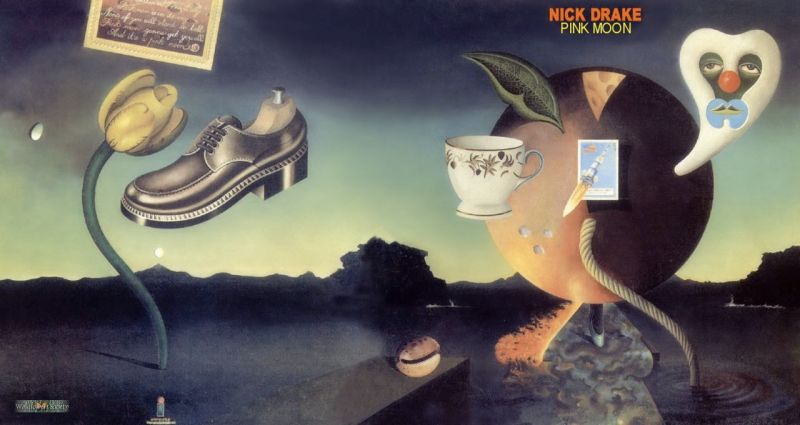
Nick Drake was planning to shear back his songs’ surplus of detail before recording his third and final album—if you could call strings and light electric guitar excessive, that is. Pink Moon was recorded in two successive nights with just Drake and producer John Wood in the room, and nothing but Drake’s acoustic guitar and a couple isolated piano runs behind his unmistakable voice. Pink Moon echoed Drake’s gradual withdrawal from civilization. It’s always been hard to ignore the crawling fragility in Drake’s performances, but on Pink Moon he’s almost aggressively alone. The slight motion of “Know” is undercut by its solitude: The beat moves him, but it’s a tough haul. The title cut, “Road” and “Parasite” are all melodically beautiful, but emotionally impossible to bear. The exhaustion ofPink Moon foretells Drake’s passing almost too well, but its trim power can’t be questioned. Released two years before Nick Drake’s death in November 1974, at the age of twenty-six,
Nick Drake has been saddled with the kind of (death) “cult” reputation that lends itself to fervent fan-kid obsession (I know, I’ve been there) by some, much to the annoyance of others. Unfortunately for the poor bloke, like Jeff Buckley, and more recently Elliott Smith, his premature passing led marketing men and music journalists to focus on his sensitive, dark, quiet “ethereal” side.
Nick Drake delivered the master tapes of Pink Moon to Chris Blackwell at Island Records, In an interview Island’s press officer David Sandison recalled that Drake’s arrival at the record company had certainly not gone unnoticed, although there had been no indication that he was delivering them a new album:
“I saw him in reception after I came back from lunch and I was talking to somebody and I saw a figure in the corner on the bench, and I suddenly realized it was Nick. He had this big, 15 ips [inches per second] master tape box under his arm, and I said ‘Have you had a cup of tea?’ and he said ‘Erm, yes’, and I said ‘Do you want to come upstairs?’ and he said ‘Yes, okay’. So we went upstairs into my office, which was on top of the landing, it was a landing that went into the big office with a huge round table where Chris and everybody else worked and there was a big Revox and sound system there, and he just sat in my office area for about half an hour … After about half an hour he said ‘I’d better be going’, and I said ‘Okay, nice to see you’, and he left. Now, he went down the stairs and he still had the tapes under his arm, and about an hour later the girl who worked behind the front desk called up and said ‘Nick’s left his tapes behind’. So I went down and it was the big sixteen-track master tape and it said NICK DRAKE PINK MOON, and I thought ‘that’s not an album I know’. The first thing to do was get it in the studio to make a seven and a half inch safety copy, because that was the master. So we ran off a safety copy to actually play, and I think twenty four hours later or so, it was put on the Revox in the main room and we heard Pink Moon.”
Pink Moon was recorded over a few days with producer John Wood prior to its February 1972 release date. It’s a brief record (twenty eight minutes), mainly focusing on a mal-tuned acoustic guitar and vocals. With a more lo-fi nature than its older siblings and his continued relative obscurity. Pink Moon does feature the occasional sparse message, (“Know” features only the lines: “Know that I love you / Know I don’t care / Know that I see you / Know I’m not there“), but the album offers so much more than that.
The album’s opening title track is lyrically simplistic and instrumentally nocturnal, but more in a relaxed, family bonfires and pumpkins with funny faces style. The piano almost sends mist through the stereo. It’s an atmosphere that permeates the next two songs before “Which Will” changes tack. The lyrics are so simplistic one can’t possibly quote them in context. It could be about breakups, breakdowns, hope or ambivalence.
“Horn” is a really beautiful, poignant instrumental. “Things Behind the Sun” bends from the franticly sinister to the carefree. The aforementioned “Know” feature’s the four lines above, but over a surreal background juxtaposing Drake’s sighs with an off-kilter guitar line more reminiscent of The Fall’s Rough Trade years than Damien Rice. In all fairness to the publicists, “Parasite” is a rather bleak song. It’s also one of my favorite songs of all time. Whether Drake is “changing a rope for a size too small“, or “lifting the mask from a local clown” and “feeling down like him,” I’m smiling all the way. There’s a touch of surreal cynicism on “Free Ride,” seeing through “all of the pictures that you keep on the wall…all of the people that will come to the ball.” However it seems more indicative of somebody at the back of the room laughing at the people who can’t quite tell why they’re dancing than someone who deserves a carefully written biography. “Harvest Breed” is a fantastic hangover tune, particularly when backed by a color-free sky. “From The Morning” closes things with some renewed vigor, as people “rise from the ground.” I hadn’t listened to Pink Moon in a long time. It’s still my favorite NickDrake album, and one of the best of its era.
Once upon a time, before The Notorious R.B.G. and even before The Notorious B.I.G., there were TheNotorious Byrd Brothers, released early to mid-Jan., 1968. By the end of that month, the end of the 60s had begun because the successful Tet Offensive started, changing the course of history.
The Byrds were formed in 1964. By just 1967 they released their Greatest Hits. The sky was the limit for The Byrds. So what could possibly go wrong?
As it turns out, almost nothing in the short run, despite The Byrds firing the great David Crosby the year before. Gary Usher had the horse sense to keep three Crosby co-compositions and much of his rhythm guitar and superb vocals. Producer, Gary Usher, would die of lung cancer at age 51. By using almost 20 session musicians, he played to win on this album, and won big, but avoided any sin of growing old.
The fifth album from the grandfathers of American jangle guitar doesn’t have the notoriety or hits of Mr. Tambourine Man or Turn! Turn! Turn! Still, it may be the light heavyweight champion of their catalog, pound for pound the strongest punch of the bunch. That’s an especially impressive claim if you know the band’s chaos of the day. Notorious, indeed: Founding guitarist David Crosby was fired over their recording of Carole King’s “Goin’ Back” (ironically, this album’s only single), and Michael Clarke and Gene Clark eventually ping-ponged their way out the door too. Roger McGuinn and Chris Hillman managed to expertly fill in the gaps with session musicians and production wizardry, outfitting their folk rock with trappings of the baroque and psychedelia—found and generated noises, poppy saxophone, the occasional sludgy riff, even early adoption of the Moog synthesizer.
The Notorious Byrd Brothers saw the band and producer Gary Usher making extensive use of a number of studio effects and production techniques, including Phasing, flanging and the introduction the sound of the pedal steel guitar into their music for the first time on the album, making it alsoone of the first album releases on which the Moog appears.
The Notorious Byrd Brothers rings out like a glorious chiming bell and remains one of the band’s most loved albums. Its consistency is amazing, with one song after another bending one’s mind and inducing a smile. “Artificial Energy” kicks things off in fine style. Co-written by McGuinn, Hillman and Clarke, it’s a perfect album opener. The last song recorded for the album, it bursts forth with punchy horns and driving drums. Yes, it’s about speed, and it’s safe to say the lyrics probably wouldn’t fly today: “I’m coming down off amphetamine, and I’m in jail cause I killed a queen.”
The band’s take on Carole King and Gerry Goffin’s “Goin’ Back” is perhaps the definitive version of the song. Elsewhere, “Natural Harmony” and “Draft Morning” bask in pure beauty. (Chris Hillman’s role as composer really began to expand on Notorious, as he co-wrote eight of this LP’s 11 tracks.) Another Goffin/King song, “Wasn’t Born To Follow” offered here in all of its countrified glory – would later feature in the movie Easy Rider.
“Get to You” and “Old John Robertson” are both country-tinged numbers that glow of the era they sprang from, while “Change Is Now” is one of the band’s most beautiful songs without question, and its jingle-jangle guitars resonate for the ages.
“Tribal Gathering” has David Crosby written all over it. He and Hillman worked up this two-minute gem in homage to the “Gathering of the Tribes” festival held earlier that year in San Francisco. “Dolphin’s Smile” conjures up its own psychedelic aquatic adventure over just two minutes, before the album ends on an eerie note with “Space Odyssey.” A otherworldly drone set to a sea shanty waltz, the track is driven by a swirling wash of keyboards and guitars.
David Crosby was fired by McGuinn and Hillman in October 1967, as a result of friction arising from, among other things, Crosby’s displeasure at the band’s wish to record the song “Goin’ Back”. David Crosby felt that recording the song was a step backwards artistically, especially when the band contained three active songwriters. Another factor that contributed to Crosby’s dismissal was his controversial song “Triad”, a risqué composition about a menage a trois , The song was in direct competition with “Goin’ Back” for a place on the album. Crosby eventually gave the tune to the Jefferson Airplane , who included a version of the song on “Crown Of Creation” Although the Byrds did record “Triad”, the song’s daring subject matter compelled McGuinn and Hillman to prevent it from being released at the time.
The results feel particularly transfused into the body of R.E.M.’s Document, and suggest multiple points in the soundtracks of Wes Anderson’s filmography.
All the elements of a psychedelic classic are here: 1) McGuinn’s distorted lead guitar; 2) Moog synthesizers by McGuinn and Usher; 3) a classic featured in the iconic counter-culture film Easy Rider – “Wasn’t Born to Follow”; 4) angelic and even literally spinetingling vocals by all; 5) hypnotic drumming; 6) references to bright, sunny days; 7) references to drugs – “Artificial Energy”; cautious optimism – we need only a little courage; 9) references to harmony with nature, and sound effects of shots fired “NaturalHarmony”; 10) socially aware lyrics – “Draft Morning.” The lyrics of “Ticket to Ride” and “Magic Carpet Ride” are tell-tale, placing the album somewhere between The Beatles and Steppenwolf. No wonder PaulMcCartney said on tour, as David Crosby hid in the background at an LA press conference, that The Bryds were the Beatles’ favourite American band.
Typically, Rolling Stone didn’t get it, refusing to give the album 5 stars. My Grade, however, is an ‘A’. If you want — or these days need — to time travel to the 60s, take this album lasting only 28:28 as your ticket to ride.
Released in 1993, Dinosaur Jr.’s fifth studio album roars as loudly as any of its grunge-era contemporaries, but without their occasional bombast. “Where You Been” features ten terrific songs, kicking off with the yearning “OutThere” and a Top 10 Modern Rock hit “Start Choppin,” and never lets up from there. While J Mascis plays a dominant role – in addition to writing and production credits, his just-woke-up vocals and epic guitar solos thread through every song – this is Dinosaur Jr.’s sole Sire set with a real band behind him, as bassist Mike Johnson and drummer Murph provide the insistent rhythmic drive. While flirting with mainstream success (the collection reached the Billboard album chart), Where You Been frames a gentle outlook with alt-rock thunder, and remains a firm fan favourite.
The Word was a 1990’s Channel 4 television programme in the United Kingdom. Dinosaur Jr. performing “Start Choppin'” live at The Word 1994
With stints in Throwing Muses and The Breeders behind her, Tanya Donelly was more than ready to front her own alternative rock band, and Belly captured the spotlight even more firmly than those previous groups. Filled out by three musical cohorts from Donelly’s Rhode Island home base, Belly made an impressive debut with “STAR” the 1993 Sire set included a Modern Rock chart-topper in “Feed The Tree,” another MTV favorite in “Gepetto,” and brought the quartet two Grammy nominations. These 15 originals give indie dream pop plenty of appealing hooks – even if the album’s sweet-sounding vocals sometimes sing about rather strange stuff. Today we’ll wish upon a Star in honor of Tanya Donelly’s birthday.
Star was borne out of artistic restlessness, Donelly having blossomed as a songwriter in her first band, ThrowingMuses, by the sessions for their fourth album The Real Ramona, becoming an equal to the band’s heretofore leader, and Donelly’s stepsister, Kristin Hersh. Donelly came to the sessions with more than her requisite pair of songs, quickly realising elsewhere would be a better fit for the bulk of them rather than the latest Muses’ album. Initially, that home was ostensibly The Breeders’ sophomore release:
“The songs I brought to The Real Ramona were the two that ended up on there (“Not Too Soon” and “Honeychain”), “Full Moon, Empty Heart,” “Slow Dog,” and “Gepetto” (all songs that would appear on Star). This was around the time [the early quartet lineup of Throwing Muses] had started to dissolve so I thought, I’ll have the two on there and save the rest for The Breeders. They had several home options for about six months there.”
In the time off between Throwing Muses albums at the turn of the 1990s, Donelly and Pixies guitarist Kim Deal collaborated on a new project, The Breeders, who released their debut Pod in 1990 largely consisting of Deal’s songs with the plan of the follow up featuring largely Donelly’s songs. As luck would have it, that second Breeders album would become Belly’s first.
“Everything that is on Star was intended for the next Breeders album. All the old reels I have in my basement of the demos are labeled The Breeders. The Pixies had announced a year long, worldwide tour and Kim signed on for that. I sort of got antsy, had already left the Muses and so I thought, I’m taking my songs and making my own band!”
In retrospect, with such a flurry of activity occurring in such a compact timeframe, the aesthetic groundwork for Star appears to have been laid in Donelly’s final pair of Muses tracks; the off-kilter, chipper pop of “Not To Soon” and the harrowing dreamlike beauty of “Honeychain” portending the two ends of Star’s spectrum. Indeed, Donelly views the latter as forming “the bridge between my Muses and my Belly life.”
Star’s appeal is clear; its tone is impeccably balanced between oblique jangle-pop and moody dream-pop, tracks that individually would appear at odds with each other benefitting by this balance to achieve an unwitting congruity.
That said, with the exception of REM’s Automatic For The People, the upper echelon of the UK albums chart in and around February 1993 was continuously peppered with compilations of legacy pop acts with nary a blink at rising alternative acts until Suede’s debut would chart a couple months later, so how and why Star? .
Indeed, few albums can as deftly move from the Eastern European flavours of “Angel” to “Gepetto”s jangly bounce, veering over to “White Belly”s gorgeous murk and back around to the countrified folk of “Untogether”.
While truthfully a rather sprawling album at 15 tracks over 51 minutes, Star plays small owing to its constant shift in tone reinvigorating the listener track to track. “Dusted”s razor wire riff belongs chiseled on a Rushmore of indie rock hooks while there is nary a chorus as exuberant in the annals of indie rock as “Slow Dog”.
It’s Donelly’s unsuspecting vocal prowess that threads Star together as an album rather than a collection of songs. Wafting vaporously into view on opener, “Someone To Die For”, she proceeds, throughout the album, to emit just enough grit and force to stay atop her band’s thunderous patches while reining back at precisely the opportune respite points.
Heart’s second album began to define their sound. The Zeppelin drive is in full force here, on songs like “Barracuda” and “Kick It Out.” But they also prepped for their ’80s pop career by showing a sensitive side on some of the LP’s deeper cuts. It was released in May 1977 on Portrait Records, and re-released in 2004 with two extra bonus tracks. 1977’s Little Queen was Heart’s second ‘official’ album and features the line-up that had toured their debut classic ‘Dreamboat Annie’. Little Queen is a more adventurous album with a mix of rock and folk that, for the most part, works extremely well. The flute and mandolins play a large part in the overall sound of the album. Nancy Wilson’s acoustic guitar is certainly up in the mix for this remastered version. It’s not the most amazing remastering, after hearing the Fleetwood Mac reissues, but there is still vast improvement. ‘Barracuda’ delivers the sonic attack the music deserves. Roger Fisher still amazes on lead guitar.
“…Beauty Take Us…” they etched into the run-out groove of Portrait JC 34799 – their second album in early May 1977. And Heart’s sophisticated Seattle Rock has been doing just that for decades ever since.
After a blistering debut in the shape of “Dreamboat Annie” on Mushroom Records the year prior (Arista in the UK) – the dynamic songwriting duo of Nancy and Ann Wilson at the core of the band (the caped sisters on the front cover with their band of intrepid gypsies behind them) stumped up yet another radio-friendly tennis-racket wielding winner in “Little Queen” – housing as it does huge fan-faves to this day like “Barracuda” and “LoveAlive”. And this superbly remastered Legacy ‘Expanded Edition’ CD even adds on a cover of Led Zeppelin’s “Stairway To Heaven” as one of two bonus tracks – a near ten-minute live version from 1976 that might have its Jimmy Page & Robert Plant originators nodding in tearful appreciation.
This year marks the 40th anniversary of Heart’s second album, Little Queen, which arrived during a legal scuffle with Mushroom Records. Newly signed to Portrait, the band worked at breakneck speed when it was on the road to complete the record and get it out before Mushroom could interfere and halt the recording of the album and possibly jeopardize the future of the new songs that they were working on.
As Wilson points out, it was a prolific time. It helped they were young. “I think you would have had to have been 26 or 27 years old to do that,” she laughs. The album that they emerged with, Little Queen, remains one of their best, and features songs like “Barracuda,” “Kick It Out” and the title track that remain fan favorites.
“We were still figuring out how to write songs, record them and tour at the same time. I think that year, we did something like 250 shows,” she recalls. “Our health suffered, but we were so young that we just kept on doing it. I remember it being a complete immersion in songwriting, recording and touring, all at once. It was a real big thing. It was like when they shoot a rocket off from a planet — the first stage of the rocket has to be the most powerful to get it off through the gravitational pull, and that’s what that year was like for us.”








 The Fat Angel Sings