Posts Tagged ‘CLASSIC ALBUMS’

“Rain Dogs”, the eighth album by singer songwriter Tom Waits was released September 30th, in 1985. .

“A guy goes to the bathroom on the tire of a car, then a $70,000 car pulls up alongside and a woman with $150 stocking and a $700 shoe steps in a pool of blood, piss, and beer left by a guy who died a half hour before and is now lying cold somewhere on a slab.” Life in New York City according to Tom Waits.

Tom Waits had moved to New York from sunny California early in 1984, after releasing the album “swordfishtrombones”, a record that marked a drastic shift in his musical direction. Of the relocation to the Big Apple Waits said: “We moved here for the peace and quiet, you know. Somehow I was misinformed.” Perhaps not a tranquil city, but New York gave Tom Waits plenty of opportunities to observe the human condition, with a keen eye for people who live outside the mainstream. With his self-confessed tendency to ’gravitate towards abnormal behavior when I’m out on the street’, his songwriting after arriving in the city was a portrait of the down and outs, losers, out of luck drunkards and outcasts of society. The result was the milestone album “Rain Dogs”, a collection of songs with a loose thematic about life in the streets, or in particular, the gutters.

As a New York Times article from October 1985 observed, “Rain Dogs” is a haunting album, because it reminds us of the existence we would rather squeeze out of our vision. But given catastrophic bad luck, almost anybody could wind up there.”

The mood of the album settles upon you even before the needle drops on the record. The front cover, shot by Swedish photographer Anders Petersen, came from a collection of photos he took at the Café Lehmitz in Hamburg. The establishment was frequented by cab drivers, prostitutes and sailors who patronized it on shore leave. Petersen said about his photographs: “The people at the Café Lehmitz had a presence and a sincerity that I myself lacked. It was OK to be desperate, to be tender, to sit all alone or share the company of others. There was a great warmth and tolerance in this destitute setting.” Waits described the photograph as “Me and Liza Minnelli right after she got out of the Betty Ford Center.”

Waits unleashed his dark humour about the city of New York many times in interviews he gave in the mid-1980s. These are funny reads, but they give a glimpse into how he builds character stories by observing the world around him: “There is something interesting about Manhattan. Someone could stand out in the middle of Fourteenth Street stark naked, playing a trumpet with a dead pigeon on their head and no one would flinch. In fact, tomorrow there will probably be two guys like that. They’d be lease-letting, trying to get more subscribers.”

New York proved to be a fertile environment for Tom Waits, increasing his songwriting output. “Rain Dogs” contains 19 songs, many of them written in parallel to the songs that he planned for “Frank’s Wild Years” theatre show that premiered in 1986. Waits talked about how the city inspired him to write: “You can get in a taxi and just have him drive and start writing down words you see, information that is in your normal view: dry cleaners, custom tailors, alterations, electrical installations, Dunlop safety centre, lease, broker, sale…just start making a list of words that you see. And then you just kind of give yourself an assignment. You say, ‘I’m going to write a song and I’m going to use all these words in that song.’”

Another reason driving this outpour of songs had to do with a more earthly motive: royalties. After firing his manager Herb Cohen, he now owned his songs: “Maybe that’s why I write so many songs now, the songs I write now belong to me, not someone in the Bronx.”

Looking for a spot in New York to write and rehearse, Waits found a place on Washington Street which he described as ‘a little basement boiler room, a place where I can go at night and work and dream’. Sharing the space were non others than the Lounge Lizards, led by actor and sax player John Lurie.

That acquaintance led to future musical and acting collaborations between the two. Even more critical to the “Rain Dogs” album was Tom Waits reconnecting with Marc Ribot, a new recruit to the Lounge Lizards. Ribot, a guitar player with a knack for unusual sounds, first met Waits a few years earlier when the singer stayed in New York and Ribot was playing with Brenda and the Realtones. Waits quickly realized the potential of his unique guitar style and asked him to play on “Rain Dogs”. His contributions to the album were profound. Tom Waits on how Marc Ribot gets his sound: “He’s big on the devices. Appliances, guitar appliances. He has this whole apparatus made out of tinfoil and transistors that he kinda sticks on the guitar. Or he wraps the strings with gum, all kinds of things, just to get it to sound real industrial. It’s like he would take a blender, part of a blender, take the whole thing out and put it on the side of his guitar and it looks like a medical show.”

The album was recorded at the historic RCA studios, where 30 years earlier Elvis Presley recorded his first hit songs Hound Dog, Don’t Be Cruel and Blue Suede Shoes. Marc Ribot remembers the experience: “That was recorded in a big, old studio that doesn’t exist anymore – the old RCA Studio A on 6th Avenue in New York, Midtown. We just set up in the middle of this huge room and played like a garage band.”

One of “Rain Dogs’ most lasting achievements is its sonic experimentation. Tom Waits surrounded himself with like-minded musicians from the underground, avant-garde music scene in New York. They were after creating music that fell within the conventions of rock/pop music, but sounded nothing like typical rock/pop songs. Waits talked about that aspect of the album: “If I want a sound, I usually feel better if I’ve chased it and killed it, skinned it and cooked it. Most things you can get with a button nowadays. So if I was trying for a certain drum sound, my engineer would say: ‘Oh, for Christ’s sake, why are we wasting our time? Let’s just hit this little cup with a stick here, sample something, take a drum sound from another record and make it bigger in the mix, don’t worry about it.’ I’d say, ‘No, I would rather go in the bathroom and hit the door with a piece of two-by-four very hard.’”

Drummer Stephen Hodges, who plays on about half the songs on the album, recalls how Tom Waits asked him to play the drum set in a non-traditional way, avoiding cymbals and going for the tribal rhythms on the tom toms: “I can count on one hand and have a couple of fingers left over the number of single notes like ding, ding, ding I played on a cymbal with Tom Waits. He not only did not want a jazz trio, he did not want to hear a drum playing in that sibilance. He let marimba take over the 8th notes which was a really cool move.” Percussionist Michael Blair also mentioned the intentional lack of using cymbals on the album: “I am always very deliberate with my own use of cymbals, as the frequencies often distract from or obstruct the best parts of the guitar and voice sounds. So, I tend to stay out of the way. Stephen did, too.”

Lets get to the music, shall we? The album opens with the song “Singapore”. Tom Waits described a technique he used to come up with the idea of that song: “Sometimes I close my eyes real hard and I see a picture of what I want.” What materialized in his active mind was “Richard Burton with a bottle of festival brandy preparing to go on board a ship. I tried to make my voice like his.”

Waits recalled in an interview one of the lines in the song: “’In the kingdom of the blind the one-eyed man is king’ – I took that from Orwell I think.” He narrowly missed the mark by 400 years. The quote was coined by Dutch philosopher Desiderius Erasmus in the 16th century.

The new sonic adventures that Tom Waits took on this album hit you all at once from the first moment of that song. Most recognizable are his raspy voice and the jagged guitar lines by Ribot. Waits said about the guitarist that he “can sound like a mental institution and a car accident too”.

A sonic thread that goes through most of the songs on the album is the unique use of drums and percussion, the reason why Tom Waits described the instrumentation on his mid-1980s albums as a ‘junkyard orchestra’. Anything you can bang on was fair game on the album, and on “Singapore” the victim was a chest of drawers. Waits recalls: “On the last bar of the song the whole piece of furniture collapsed and there was nothing left of it. That’s what I think of when I hear the song. I see the pile of wood.” Michael Blair concurs: “One could say we showed a flagrant disrespect for home furnishings on that track.”

Blair came to work with Tom Waits through a recommendation from the album’s sound engineer Robert Musso. He talks about how his background appealed to the singer: “I was a trained percussionist with experience in avant-garde music and composers including Harry Partch, John Cage, and others. This combined with my ‘Ringo-esque’ drumming could be a good fit for the new songs.”

In 1983, after the release of “swordfishtrombones”, Tom Waits described the use of percussion instruments on his albums: “I’ve always been afraid of percussion for some reason. I was afraid of things sounding like a train wreck, like Buddy Rich having a seizure. I’ve made some strides; the bass marimbas, the boobams, metal long longs, African talking drums and so on.” Taking it to the next step, he could chose no better musician than Michael Blair, who came to the studio with a cavalry of percussion instruments in tow, and then some: “I brought in cases and cases of instruments to choose from. Tack drums from China, temple bowls from Japan, wood blocks from Thailand, 40 cymbals (many broken). Car parts, kitchen appliances. Zillions of shakers, tambourines, bells and gongs from all over the world. Three proper drum kits.”

You also heard a marimba on “Singapore”, and speaking of that wonderful instrument, listen to the next song where it takes a front seat. The combination of gongs, drums and the interlocking marimba rhythms on “Clap Hands” is fantastic. Interestingly the marimba parts were recorded on two separate recording sessions, first by Bobby Previte and then overdubbed by Michael Blair.

The lyrics of the song use the same rhyming rhythm used in The Clapping Song, a hit by Shirley Ellis in 1965.

Tom Waits’ family members get a mention in the next song, “Cemetery Polka“. Recalling snippets from family reunions, Waits recites the peculiarities of uncles Vernon, Biltmore, Violet Bill and Phil, and lest we forget auntie Maime.

In an interview Waits expressed regret over the name dropping of family members on that song: “Cemetery Polka” is a family album, a lot of my relatives are farmers, they’re eccentric, aren’t everyone’s relatives? Maybe it was stupid to put them on the album because now I get irate calls saying, Tom how can you talk about your Aunt Maime and your Uncle Biltmore like that?”

Here is a live version of the song from 1985, an opportunity to witness that magnificent junkyard orchestra. Transported 60 years back in time, this footage would have looked quite natural in a sweaty Berlin night club in the 1920s.

The next song was released as the first single from the album and is one of my favourites on it. “Jockey Full of Bourbon” has great imagery ala Damon Runyon’s classic short stories of the 1930s:

Shortly after his move to New York Waits met Jim Jarmusch at a party filled to the brim with celebrities. The grey-haired director recalls: “I’m kind of shy, and Tom seemed to be sort of in a corner also. He was sort of shy and guarded, yet he had an incredible sense of humour.” The two became good friends and Jarmusch invited Waits to play a role in his next film, a story of three down and out convicts who escape from a New Orleans jailhouse. The role had so much of Waits’ persona in it he hardly had to act.

We are talking, of course, about the classic independent cult movie “Down by Law”. It features one of the best opening sequences I know in cinema history, featuring the song “Jockey Full of Bourbon”. Starting with a shot of a stationary hearse in a cemetery, the camera travels thorough run-down urban and rural scenery, the song a perfect match to the visual.

The next song, “Tango Till They’re Sore“, is unique on this album for featuring Tom Waits playing a piano. This is an odd statement to make, given the singer’s stellar performances in the 1970s, usually in a piano trio setting. Waits talked about how the sound of a piano did not fit in with most of the songs on “Rain Dogs”: “I had a good band. I didn’t really feel compelled to sit down at the piano at all. The piano always brings me indoors, ya know? I was trying to explore some different ideas and some different places in the music and so the piano always feels like you know where you are. You can’t imagine a piano out in the yard unless it’s got some plastic over it, ya know?”

Excellent trombone part here by Bob Funk, member of Uptown Horns, a horn section group that toured with the Rolling Stones (“Steel Wheels”) and Robert Plant (“Honeydrippers”), and later played on The B52s’ hit Love Shack.

Speaking of the Rolling Stones, the next song features none other than Keith Richards, not a frequent guest musician on other artists’ albums. Waits on how they met: “We’re relatives, I didn’t realize it. We met in a women’s lingerie shop, we were buying brassieres for our wives.” Ok, scratch that, this is Tom Waits being Tom Waits. Seriously, asking the rock n’ roll legend to play on the album started as a joke: “Somebody said, ‘Who do you want to play on the record?’ And I said, ‘Ah, Keith Richards …’ They said, ‘Call him right now.’ I was like, ‘Jesus, please don’t do that, I was just kiddin’ around.’” But the man of a thousand guitar licks was amiable and sent back a note “Let’s get the dance started.”

Richards plays on three songs on the album, one of them “Big Black Mariah”, where he expertly applies his trademark guitar style. Keith appeared on three tracks: Big Black Mariah”, “Union Square” and “Blind Love” Waits tells this anecdote about how he got Richards to find the right part for the song: “I was trying to explain “Big Black Mariah” and finally I started to move in a certain way and he said, ‘Oh, why didn’t you do that to begin with? Now I know what you’re talking about.’”

Side one of the album ends with the song “Time“, in the best tradition of Tom Waits’ beautiful ballads you find in each of his albums. The imagery is again fantastic here, and you sometimes wonder what inspires him to come up with lines like these:

Well things are pretty lousy for a calendar girl, The boys just dive right off the cars and splash into the street. And when they’re on a roll she pulls a razor from her boot And a thousand pigeons fall around her feet.

Time to introduce another excellent musician who plays on most of the tracks on the album, bassist Larry Taylor. The veteran musician, best known as a member of the band Canned Heat with whom he performed at the Monterey International Pop Festival and Woodstock, met Tom Waits back in LA and played on his two previous albums “Heartattack and Vine” and “Swordfishtrombones”.  Waits came to rely on Larry Taylor as the first musician to introduce a new song to: “Larry often served as the bed and the rock and the scout of a song’s destination. We fought. I can’t tell you how many times he threw the bass down in disgust, proclaiming, ‘I am not feeling it. I can’t play this shit,’ only to be coaxed back into the song and not only playing it, but helping to define it.”

The song took a whole new meaning when the dust settled after the 9/11 attacks in 2001. A week later the David Letterman Show resumed after the forced break, and featured a performance of the song by Tori Amos. The mood of the song and its lyrics had a memorable, healing effect on listeners.

The song features an accordion, a favourite instrument of Tom Waits at the time. It gets a featured solo spot at the opening of the next song, the title track that opens the second side of the album. Another great instrumentalist on the album is accordionist Bill Schimmel, a musician who helped putting the instrument back on the map and played it on the famous tango scene in the movie Scent of a Woman. Schimmel said of Tom Waits’ quest for new sounds: “Tom told me he wanted to use instruments nobody liked anymore. Somebody once said that every high-tech era is followed by a high-touch era, and nothing was more high-touch than the accordion. Tom was a proud Luddite.”

We are deep into the article and the album, so it is time to explain the meaning of its title. The original plan was to call the album Evening Train Wrecks, before deciding on the more apt “Rain Dogs”. What are Rain Dogs? One explanation by Waits: “You can get ’em in Coney Island. They’re little; they come in a bun. It’s just water in a bun, that’s all. It’s a bun that’s been . . . it’s a bun without a hot dog in it. It’s just . . . it’s been left out in the rain and they’re called a rain dog and they’re less expensive than a standard hot dog.” Another one: “A rain dog is anybody who eh . . . people who sleep in doorways; people who don’t have credit cards; people who don’t go to church; people who don’t have, ya know, a mortgage, ya know? Who fly in this whole plane by the seat of their pants. People who are going down the road . . . ya know?” Have your pick. I like one more explanation, taking dog for what it is – a dog: “You know dogs in the rain lose their way back home. They even seem to look up at you and ask if you can help them get back home. ‘Cause after it rains every place they peed on has been washed out. It’s like Mission Impossible. They go to sleep thinking the world is one way and they wake up and somebody moved the furniture.”

Talking about “Rain Dogs”, what about their brides? The short instrumental “Bride of Rain Dog” gives an opportunity for another musician to shine, this time reed player Ralph Carney who plays saxophones and clarinet on five tunes on the album.

Carney, who first met Waits when he was asked to play on a couple of tracks the singer wrote for the soundtrack of the documentary Streetwise (an excellent doc about homeless teenagers in 1984 Seattle), is featured even more prominently on the tour that followed “Rain Dogs”. Interviewed before starting that tour in London, Tom Waits referenced Ralph Carney’s odd sense of fashion: “I’ve told the band to smarten up. I will have to talk to my sax player, Ralph Carney, about his white socks, the white socks and the navy uniform, I’m not sure about that.” When Carney passed away in 2017, Waits posted this eulogy about him: “Ralph came from the land of strange and whimsical. He could be exploding like popping corn or stretched out like taffy, capable of circular breathing and punctuating and drawing shapes that dangled from your ears.”

Tom Waits created a tradition on his albums, many of them featuring a spoken word piece, a stream of conscience monologue set to background music. “Shore Leave” from “Swordfishtrombines” is a fine example. On “Rain Dogs” that honour goes to the song “9th & Hennepin“, named after a real intersection in Minneapolis. Waits, in one of his usual interview answers where the line between real life and fiction quickly blurs: “I was on 9th and Hennepin years ago in the middle of a pimp war, and 9th and Hennepin always stuck in my mind. To this day I’m sure there continues to be trouble at 9th and Hennepin. At this donut shop. They were playing ‘Our Day Will Come’ by Dinah Washington when these three 12-year-old pumps came in chinchilla coats armed with knives and, uh, forks and spoons and ladies and they started throwing them out in the street. Which was answered by live ammunition over their heads into our booth.”

We reach the last song in this article and also the best-known track from the album. It became a big hit for Rod Stewart when he covered it four years later. “Downtown Train” is as close as Waits got to a pop song on this album, and for that he needed a group of musicians outside the New York art and avant-garde community. Into the studio rolled guitarist G.E. Smith (Saturday Night Live, Hall and Oates), bassist Tony Levin (Peter Gabriel, King Crimson), drummer Mickey Curry (Hall and Oates, Bryan Adams), amassing hundreds of album credits between them. Tom Waits: “They were all well paid. All real nice guys. I tried that song with the other band and then . . . it just didn’t make it. So you can’t get the guys to play like this on some of the stuff. I just couldn’t find the right guys.”

The song was also the feature of a promo video directed by Jean Baptiste Mondino, an excellent choice if your goal was to produce a great looking black and white video clip for a pop song. A year earlier he swept the MTV awards with his clip for Don Henley’s The Boys of Summer, and in 1985 he filmed Sting’s sunning clip for the song Russians.

The clip gave visual to Tom Waits’ inhabitants of his inner world, which he summarized in an interview: “I’m still drawn to the ugly, I don’t know if it’s a flaw in my personality or something that happened when I was a child.”

Time to finish this review. I covered about half of the songs on the album, apologies if I skipped one of your favorites. If you are not familiar with the album, these songs should give you a pretty good idea what you are getting yourself into should you chose to buy the album (which you should).



Formed by singer Jon Anderson, bassist Chris Squire, keyboardist Tony Kaye, guitarist Peter Banks and drummer Bill Bruford in 1968, they released two LPs on Atlantic Records before Banks was out and Steve Howe in for “The Yes Album”, their breakthrough disc, in early 1971. Yes intended to produce their follow-up with the same musicians, but Kaye reportedly balked at expanding the keyboard sound beyond his comfort zone (Hammond B-3 organ and piano), and the more adventurous Rick Wakeman was recruited after they’d already started work on the album that became their second big hit, “Fragile”.

Wakeman had done stellar work as a member of the folk-rock group Strawbs, and was a go-to session man who had to turn down an offer to join David Bowie’s band in order to throw in with Yes. Classically trained, Wakeman was excited by the Moog and ARP synthesizers, Mellotron and electric piano he’d added to his keyboard arsenal.

For the 45th anniversary of the remarkably durable breakthrough album by the progressive rockers YES which has turned out to be anything but “Fragile”. I’m not sure why the memory of walking home in the snow from the record store the first week of 1972  with the new Yes album  under my arm.

Indeed, the original idea of producing a double-LP combining live and studio tracks was ditched, and recording with Atlantic’s Tom Dowd in Miami didn’t pan out either. Instead, Yes hunkered down in London during the summer of 1971, using Advision Studios and their familiar engineer Eddie Offord as co-producer.

For their follow up, Yes had chosen to augment their line up of Jon Anderson on vocals, the late Chris Squire bass/harmony vocals, Steve Howe guitar/harmony vocals, and the incomparable Bill Bruford on drums with ex-Strawbs electronic keyboard wizard Rick Wakeman for such rock classics as “Roundabout”, ”Long Distance Runaround”, ”Heart of the Sunrise”, and “South Side of the Sky”. Both Anderson and Wakeman join us “In The Studio” for  this first of several interviews ramping up to April’s Rock Hall induction

“Fragile” eventually included a number of “solo” pieces, with each member responsible for helming a short contribution. Even after the LP—released in November 1971 in the U.K. was a hit, Squire told journalist David Hughes, “I’d agree with people who knocked us for the solo pieces, but in a way you’ve got to appreciate the circumstances. We had to get another album out quickly from a purely financial point of view. We have a lot of mouths to feed, Rick had to buy a vast amount of new equipment when he joined, and it all costs much more money than people seem to imagine.”

Particularly as we had already spent so much time and effort on [11-minute track] ‘Heart of the Sunrise’. So we opted for the solos, which were easier to rehearse and record.”

Swapping out the fully competent Tony Kaye for keyboard virtuoso Rick Wakeman put Yes on an completely new level; by the time they recorded “Fragile” the group had a veritable genius on each instrument. More indulgent than “The Yes Album“, as each member gets their own solo showcase (with mixed results), the high points on this one are among the best things Yes ever did. While “Roundabout” functions as a seminal prog-rock touchstone, it’s the other extended tracks that make “Fragile” far greater than the sum of its parts. “South Side of the Sky” provides ample evidence for why the Wakeman upgrade was obligatory, and “Heart of the Sunrise” remains the most purely distilled product of this band’s considerable powers.

Fragile” begins with the phantasmagoric “Roundabout,” which became one of Yes’ signature tunes. The full 8:30 is a travelogue of intriguing musical ideas, so expansive it seems impossible only five musicians perform it all. Based on Howe’s original instrumental “guitar suite,” Anderson worked it into a real song, with joyous lyrics that tantalize with trippy imagery: “In and around the lake/Mountains come out of the sky and they stand there/One mile over we’ll be there and we’ll see you/Ten true summers we’ll be there and laughing too.”

The dramatic intro features two pianos played backwards and Howe’s expert flamenco stylings. (He’s one of the few great electric guitarists who don’t lose anything switching to acoustic.) Squire plays what amounts to a propulsive “lead bass,” and Wakeman colours with a rushing swirl of keyboards, background and foreground in the deeply layered mix. Time signatures change, Bruford never falters on basic kit or expanded percussion, and complex multi-tracked vocals are captured expertly by Offord. The slow interlude at five minutes is magical, and yields to an aggressive Hammond B-3 workout from Wakeman, and another series of snaking electric guitar parts that somehow combine Wes Montgomery and Jimi Hendrix. Howe favored hollow-bodied electric guitars like the Gibson ES-175 and ES-5 Switchmaster, giving him a jazzier sonic signature.

Each member contributes at the top of their virtuosity, from Bruford’s ever-surprising offbeats, Wakeman’s authoritative grand piano, and the stacked Anderson-Squire-Howe vocals. At 5:30, a muscular, pounding section with Howe’s electric juxtaposed with Anderson’s high keen is a Led Zep-level cruncher. Howe’s concluding solo is one of his best. It fades into the sound of (synth) wind that began the track, ending side one.

Side two of the original LP begins with a very quick Bruford-penned intro titled “Five Per Cent for Nothing” before another Yes classic, “Long Distance Runaround,” kicks in. Although it might not be obvious, Anderson told a journalist he wrote the lyrics as both a critique of religion and a commentary on the shooting of students at Kent State: “I still remember the dream there/I still remember the time you said goodbye/Did we really tell lies/Letting in the sunshine” and “Cold summer listening/Hot colour melting the anger to stone” are perhaps the lines that gesture in that direction.

“Long Distance Runaround” is quintessential Yes, combining delicate effects with powerful counter-streams. Howe’s jazzy dual-guitar figures open the track, quickly joined by Squire’s dominating bass. Listen to how masterfully Bruford takes his punctuation cues from both of them, finding a middle ground of support. The tempo and atmosphere change with Anderson’s entry at forty-five seconds in, as the track becomes positively poppy, and Wakeman’s piano provides a deceptively simple doo-wop accompaniment. 

Howe’s concluding Echoplex effect leads into Squire’s piece “The Fish (Schindleria Praematurus),” an Afro-funky one-man jam with a dazzling array of interlocking effects, with (as the album credits note) “each riff, rhythm and melody” produced by Squire on sonically manipulated basses. 

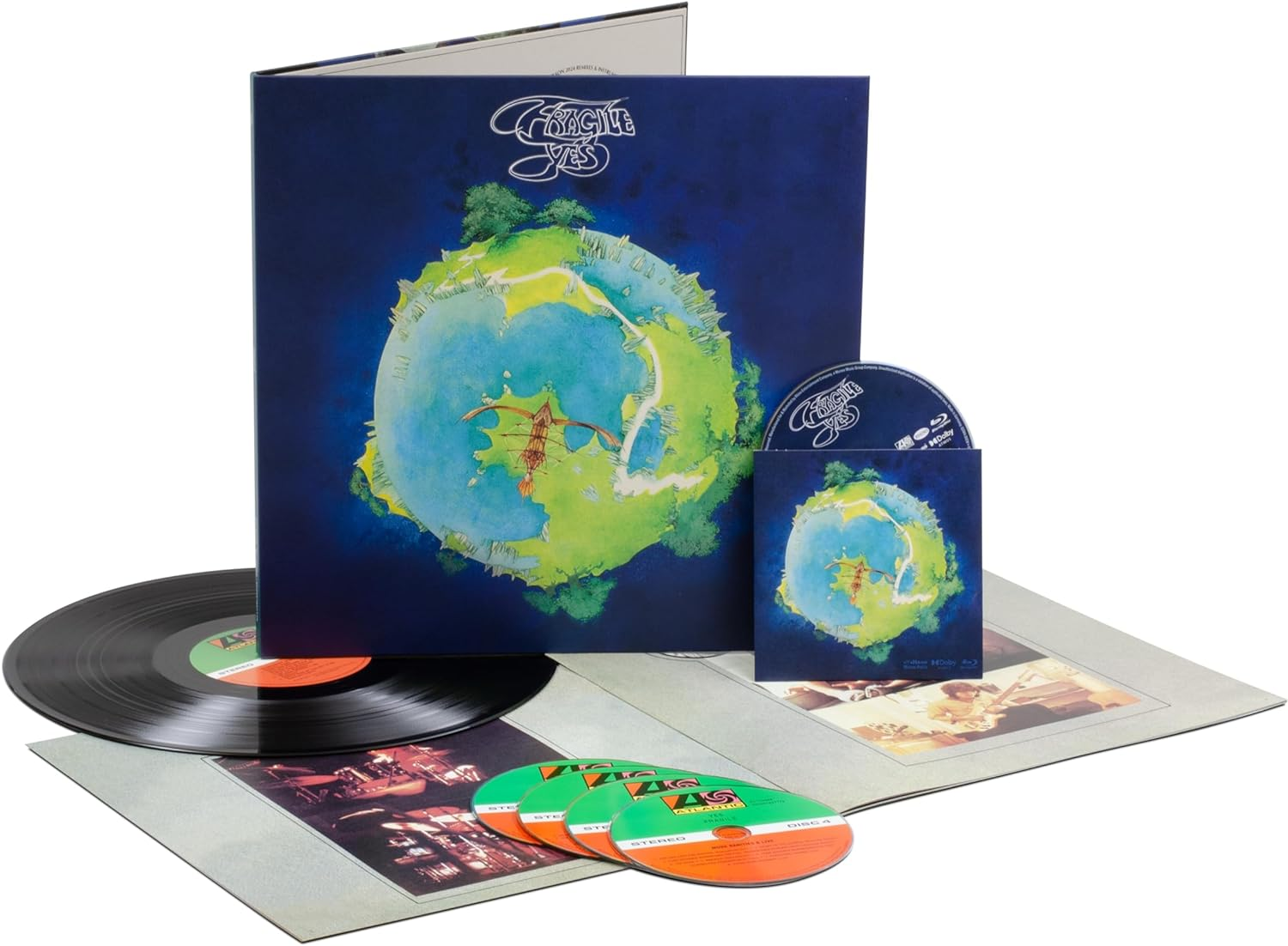
The album cover was the first produced for Yes by Roger Dean, who would design their logo, stage sets and posters for decades. 

Fragile” is the definitive versions of Classic Yes Albums, joining “Close To The Edge”, “The Yes Album” & “Relayer” Remixed by Steven Wilson in 5.1 & Stereo

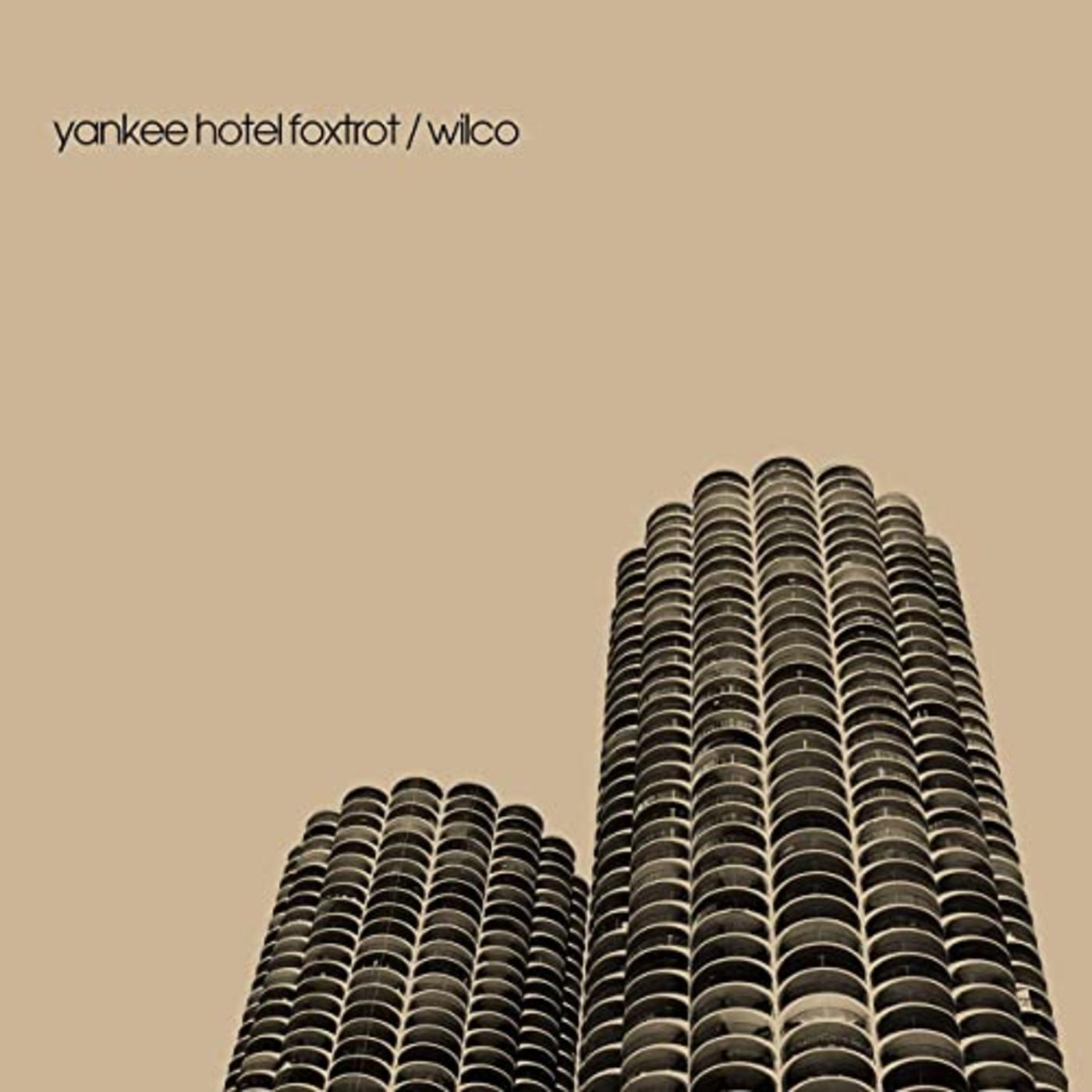
Yankee Hotel Foxtrot

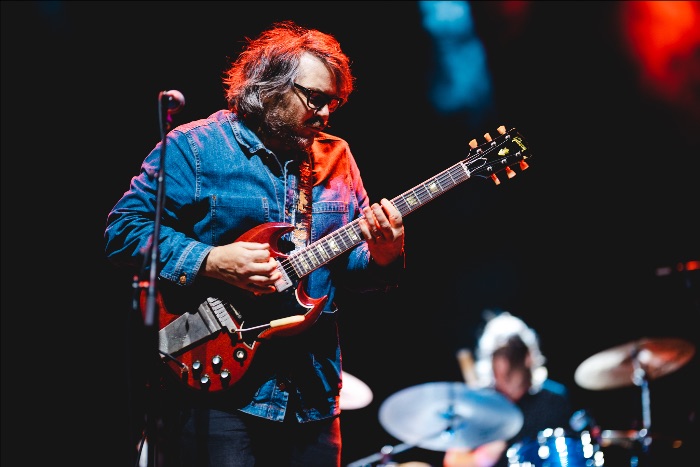
Nonesuch Releases Special Editions of Wilco’s Iconic “Yankee Hotel Foxtrot” on September 16th in Celebration of Album’s 20th Anniversary, Wilco’s fourth studio set saw the departure of guitarist Jay Bennett and drummer Ken Coomer – and famously prompted a break with the group’s record label – yet somehow triumph emerged from adversity. Picked up by Nonesuch, “Yankee Hotel Foxtrot” would become the Chicago-based alternative rock band’s most successful album. From opener “I Am Trying to Break Your Heart” onward, the collection’s ambition is undeniable, with Sonic Youth stalwart Jim O’Rourke’s multi-layered mix applied to some of Wilco founder Jeff Tweedy’s most varied and distinctive songs. With its No1 ranking in the year’s on best-of-the-decade lists in Rolling Stone, Pitchfork and Paste, critical acclaim for the gold-certified “Yankee Hotel Foxtrot” So please give the set another spin to wish Jeff Tweedy a happy birthday.

Named in honour of the three-word codes used by short-wave radio operators, Wilco’s fourth album sounds like a late-night broadcast of some weirdly wonderful pop station punctuated by static and the sonic bleed of competing signals. Songs that begin with simple, elegiac grace—“Ashes of American Flags” and “Poor Places”—end in a cathartic squall of distortion. The results can be initially jarring, but it’s these tracks more than the sturdy jangle pop of “Kamera” or “Heavy Metal Drummer” that demand, and reward, repeated listens. Mixed by studio experimentalist Jim O’Rourke and produced by the band, “Yankee Hotel Foxtrot” harkens back to a time when the words “pop” and “sonic adventurism” weren’t mutually exclusive.

Great records don’t necessarily always have interesting stories behind them. There’s probably a compelling argument to say that Wilco’sYankee Hotel Foxtrot” doesn’t need one – that regardless of context, it’s simply just an outstanding piece of work. In this instance, however, it’s difficult to separate the album from all of the noise surrounding it. These eleven songs on the original album represent so much more than just the sum of their parts. They stand for the existence (and complete vindication) of integrity and artistic freedom, in a world so often dominated by corporate structures and commercial pressures. Because if something can simultaneously feel like both an instant classic and a slow-burner, then surely this is it.

The backstory is something I’m sure a lot of readers will be aware of, so here goes a brief summary; having recorded the album, and with frontman Jeff Tweedy correctly believing it to be their best work to date, the band submit to their label Reprise records (a subsidiary of Warner) who following an internal shakeup refuse to release it on the grounds that it has no commercial potential. The band negotiate a costly split from Reprise, retaining the rights to the record which they then streamed on their website for free, a ground breaking move (and pretty unheard of at the time). Bizarrely, the band end up signing with Nonesuch records, another subsidiary of the same major label – a move that many critics believe exemplifies just how messed up the music industry is in modern times. The album goes on to amass a huge amount of critical acclaim, and just so happened to shift hundreds of thousands of copies, becoming a gold-selling LP in the process.

Nonesuch release seven special editions of Wilco’s landmark 2002 album “Yankee Hotel Foxtrot”. The now-classic record has been remastered and will be available as part of each set. “Yankee Hotel Foxtrot” was the first Wilco release on Nonesuch Records following the band’s infamous split with Reprise (both labels are part of Warner Music Group). It was also the first release featuring the line-up of drummer Glenn Kotche and multi-instrumentalist Leroy Bach joining founding members Jeff Tweedy and John Stirratt. The 2002 Sam Jones film “I Am Trying to Break Your Heart” documented the fraught recording and mixing process, personnel changes, and label issues.

Given the legend that surrounds it, the remarkable part is probably that in the fifteen years since its release, the most enduring thing is the music itself. For me, there’s pretty much the whole spectrum of human emotion explored within a microcosm; at times, Tweedy’s abstractly poetic lyrics serve to cryptically mask what is actually quite a personal record while at other points, relationships and communicative failures lie at its heart. It’s the sending of signals in the hope that someone, somewhere will receive – audibly characterised in the broken static and shortwave radio samples that regularly weave in and out. There’s the playful denouncement of love in the opener ‘I Am Trying To Break Your Heart’, but also the hopeful celebration of it by the time the album draws to a heart wrenching close, with Tweedy declaring: “I’ve got reservations about so many things / But not about you”, a chaotic and confused yet beautiful love letter for the modern era.

There’s a penetrating weight to it all, a sincerity which somehow never falls into over-earnestness. It is in many ways a record of constant tension – mostly between the beautiful and destructive – but also mirroring the ongoing conflicts outside the music; between bandmates (guitarist and co-writer Jay Bennett left the band shortly after the album’s completion), and between band and label, the tension between artistic freedom and commercial potential. At once both pretty and dissonant, conventional yet weird, both instant and challenging, it’s a record that rewards the listener with each spin, a phrase which always sounded to me like a useless cliché until I found it to be true. I think the thing I love most about “Yankee Hotel Foxtrot is that ultimately there’s just classic song writing and melody at its core, with Tweedy’s voice broken and exposed at the centre of everything, but with complete chaos ensuing all around it.

For me, Jay Bennett perfectly summarizes it with this quote from the documentary “I Am Trying To Break Your Heart” – “If the overall song feels good to you, you’re going to fall in love with the little parts of it that are fucked up”. There are swirling organs, crashing drums, distant voices, and dissonant pianos, and in ‘Ashes Of American Flags’ and ‘Poor Places, anthemic moments that descend into walls of white noise and feedback. It comes to me as no surprise whatsoever that over time this is an album that has been repeatedly referenced as being “Americana’s Kid A”.

Wilco marked the anniversary of “Yankee Hotel Foxtrot” which was released commercially on April 23rd, 2002, after a circuitous and storied gestation, including a period of streaming for free on the band’s website—with a performance of the album’s “Poor Places” on last night’s Late Show with Stephen Colbert, which may be seen below. The band is currently performing “Yankee Hotel Foxtrot” in its entirety (plus a mix of concert favorites and rarities) in two limited runs at New York City’s United Palace and Chicago’s Auditorium Theatre. 

Among Yankee’s inspirations was a recording Tweedy bought at Tower Records in the late 1990s, The Conet Project: Recordings of Shortwave Numbers Stations. As Bob Mehr points out in his new album note, the record got “deep under Tweedy’s skin.” Tweedy said in his 2017 memoir, Let’s Go (So We Can Get Back), “It was as fascinating to me as anything being made by actual musicians using actual instruments … I wanted to know why it was so hypnotic to me. Why could I listen to hours of this stuff, even though I had no clue what any of them were saying. That question became the foundation for “Yankee Hotel Foxtrot” … the way people communicated or ultimately failed to communicate.” The album takes its title from a haunting recording of a woman repeating those words that is included in The Conet Project; that recording is sampled in the penultimate song on “Yankee Hotel Foxtrot”, “Poor Places.”

The film gives a great insight into the recording process. Tweedy notes they “generally go for a pretty straight definitive version of what the song sounds like it should be…and then deconstruct it a little bit and see if there’s some more exciting way to approach it”. I adore this as a concept – the fact that what is theirs to have created is also theirs to destroy, and that a song can take any number of routes before it becomes the one that people hear. Ultimately, I think what probably sets the results apart is the combination of the band’s willingness to experimentally rip up the Americana rulebook, but crucially also the mixing work of Jim O’Rourke (Sonic Youth), whose mixes lift them far beyond the Alt-Country genre they had practically created in the first place. At the heart these are gorgeously simple songs, reimagined in an exciting, experimental vision.

Retrospectively, quite how many people these songs have resonated with may have come as some surprise to Wilco’s former label bosses, but not to me. For a record that very nearly didn’t see the light of day, that it exists at all is truly wonderful, and that it exists without compromise is nothing short of remarkable. Maybe some things are worth waiting for.

Wilco was Jeff Tweedy, John Stirratt, Leroy Bach, Glenn Kotche, and Jay Bennett with Craig Christiansen, Ken Coomer, Jessy Greene, Fred Lonberg-Holm, and Jim O’Rourke.

11LP – The Super Deluxe version comprises eleven vinyl LPs and one CD – including demos, drafts, and instrumentals, charting the making of “Yankee Hotel Foxtrot” – plus a live 2002 concert recording and a September 2001 radio performance and interview. That box set includes eighty-two previously unreleased music tracks as well as a new book featuring an interview with singer/songwriter/guitarist Jeff Tweedy, drummer Glenn Kotche, and Jim O’Rourke, who mixed the acclaimed 2002 album; an in-depth essay by journalist/author Bob Mehr; and previously unseen photos of the band making the album in their Chicago studio, The Loft.

7LP – Deluxe edition comes in a sturdy box with soft cover book. The set includes the original album, remastered, plus 39 previously unreleased tracks—“The Unified Theory of Everything” alternate album versions plus bonus tracks, a live 2002 concert recording, and a September 2001 radio performance. The set also includes a booklet with an in-depth essay by journalist / author Bob Mehr.

2CD – Expanded Edition includes the original album, remastered, plus 18 previously unreleased tracks—“The Unified Theory of Everything” alternate album versions plus bonus tracks.

8CD – Super Deluxe Edition comprises the original album, remastered for its 20th anniversary in 2022, plus 82 previously unreleased tracks. Includes demos, drafts, and instrumentals, charting the making of the album; a live 2002 concert recording; and a September 2001 radio performance and interview. The set also includes a new book featuring an interview with Jeff Tweedy, Glenn Kotche, and Jim O’Rourke; an in-depth essay by journalist/author Bob Mehr; and previously unseen photos of the band making the album in their Chicago studio.

A live version of “Reservations” from a legendary concert contained on Snoozin’ at The Pageant – Live 7/23/02 at The Pageant, St. Louis, MO—a recording that is part of the Super Deluxe LP and CD sets as well as the Deluxe LP and digital sets—is available now. Full details of each of the seven versions is below; album pre-orders are available here. A limited-edition vinyl 7” with versions of “I’m the Man Who Loves You” and “War on War,” from the Super Deluxe box set, is available now from wilcostore.com.

“After half a year living with a bootleg copy, the music remains revelatory. Complex and dangerously catchy, lyrically sophisticated and provocative, noisy and somehow serene, Wilco’s aging new album is simply a masterpiece; it is equally magnificent in headphones, cars and parties… Beneath the great story of “Yankee Hotel Foxtrot“, there are all the tropes and symbols and coincidences of a little mythology; but under that is a fantastic rock record. And why tell you? You all already knew this.”

thanks to DIS,

Joy Division - Unknown Pleasures

The cover to Joy Division’s Unknown Pleasures is both immediately familiar and entirely mysterious — much like the music within. The only album from the band to be released during frontman Ian Curtis’ lifetime, he undeniably drives their debut, whether with an aggressive isolation or a hand reaching out hopefully. But that’s not to say this is a one-man show. The rest of Joy Division do their fair share of heavy lifting, producing cavernous, eerie sets to surround his tortured mental explorations. A touchstone for post-punk, new wave, electronic music, and indie as a whole, Unknown Pleasures feels like listening to the deep breaths and mumbled self-analysis of an astronaut as he drifts out into space.

There’s a reason 1979’s ‘Unknown Pleasures’ is the altar at which so many worship. This is the calling card of the gesamtkunstwerk that is/was Joy Division, those four spindly young dudes studiously engaged in pushing the post-punk envelope further than it had gone before. 

‘Unknown Pleasures’ is known for being gloomy or even depressing. While you can definitely make the case for this, the words that more readily spring to mind are “elegance” or “grandeur”. The rhythms here are propulsive but never excessive; guitars and bass wind tightly around the song structures; the vocals are too dynamic to venture into true melancholy as they do with an Elliott Smith or Grouper. 

You have to remember that Joy Division were forged in punk. Famously, the band’s members were among the crowd at the The Sex Pistols’ Lesser Free Trade Hall gig – Morrissey, Mark E Smith, Factory Records’ head honcho Tony Wilson and Buzzcocks were also there. Joy Division’s scratchy punk energy, best captured on the ‘Ideal For Living’ EP, was tempered by Martin Hannett’s experimental recording and production techniques to create something completely distinctive-sounding for this debut LP. From the indie-disco pump and thrust of opener ‘Disorder’ to the stentorian ‘Day Of The Lords’, the energetic ‘She’s Lost Control’ to the faded elegance of closer ‘I Remember Nothing’ – if ‘Unknown Pleasures’ isn’t iconic, then nothing is.

If one album summed up the mood of 1971 in 45 minutes, it was Sly & the Family Stone‘s There’s a Riot Goin’ On. Dark, druggy and depressing as hell, the fifth album by the San Francisco group led by multi-instrumentalist Sly Stone was the recorded equivalent of a gut punch to a nation already knocked senseless by war overseas and social unrest at home.
Almost exactly a year before “There’s a Riot Goin’ On‘s” release in November 1971, Sly & the Family Stone put out their massively popular “Greatest Hits” record, which collected singles and deep cuts from 1968 and 1969. The dozen tracks wrapped up the brief history of one of R&B’s best crossover bands, chronicling a dizzying couple of years that yielded some of the era’s most enduring songs.
But anyone expecting a second sunshine-kissed greatest-hits volume in a few years was most likely side-lined by the despairing tones crawling throughout “There’s a Riot Goin’ On“. Originally titled “Africa Talks to You“, and recorded partly in response to Marvin Gaye‘s sociopolitical “What’s Going On” (another era-defining album released in 1971), the album was a moody, murky indictment of the United States at the turn of the decade.

There’s a Riot Goin’ On” is a striking example of a pathfinder taking a road, both musically and personally, that tests every relationship to the brink and beyond to a place and time where tumult is inevitable and damage is dealt harshest of all to the protagonist at the centre of it.

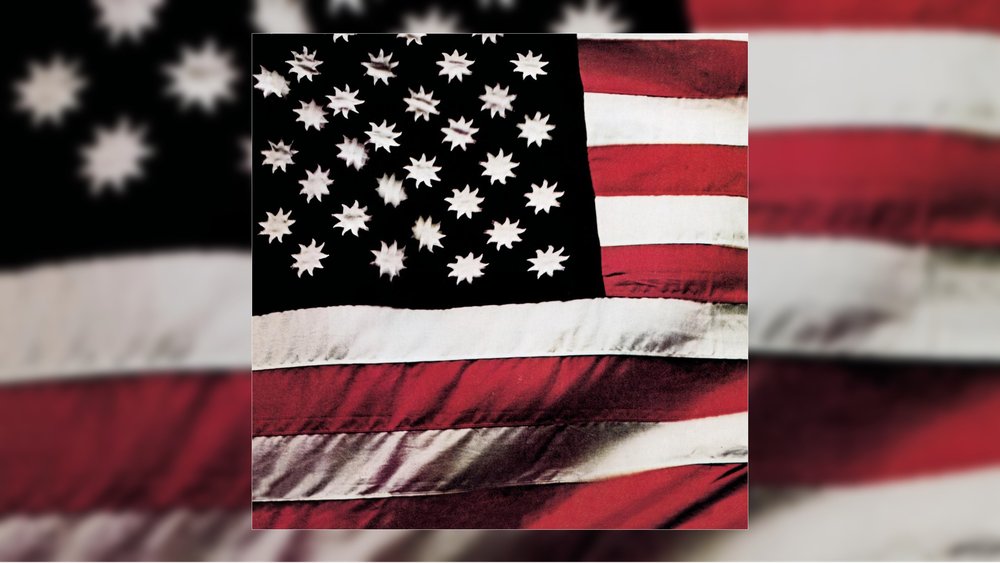
The cover art, featuring an American flag with suns replacing the familiar stars, says it all: Blood-red stripes offset the remaining black and white.
It wasn’t an easy record to listen to then, and it’s still tough to get through at times now. But Sly & the Family Stone never made a more significant album. It’s their masterpiece, but it’s also one of music’s most harrowing and desolate works, and one that reflected the turmoil going on within Sly Stone.
After Sly & the Family Stone’s rousing Woodstock performance, their leader became unreliable. He missed shows. He missed album deadlines (prompting the release of “Greatest Hits“). He became more and more paranoid. He moved to Los Angeles. He joined the Black Panthers, who urged him to drop the white members of his multi-racial group. And he started to take more and more drugs, which clouded his mind and, to an extent, his creativity.
When he was able to get it together, he didn’t like what he saw, particularly the end of civil-rights activism and the dark pall cast on the final years of the ’60s. So he made an album about it, replacing his band’s usual psychedelic pop and funk with a deeper, sleepier version muddled with gut-churning bass rumbles, mumbled lyrics and a sense that there was a violent revolution brewing, but only if its leader didn’t nod off first.

But the groundwork for this new blueprint of soul and funk lies in its predecessor “Stand” and, more importantly perhaps, the success it brought with it. Released in 1969 after three solid, if unspectacularly performing albums, it reached #12 Top 200, whereas none of the previous three albums had broken the top 100. Part of its success can be attributed to a moment that goes down as one of the most important in 20th Century musical history: the Woodstock Festival

When Sly and the Family Stone took the stage at 3.30am on Sunday August 17th, 1969, their lives and careers changed forever. Almost knee deep in mud and worn low by the ravages of a weekend of intoxicating substances and little sleep, the crowd was revitalized by the surging, infectious performance the band gave—a lengthy, exultant “I Want To Take You Higher” lit the touch paper and the band never looked back. In fact, it was a palpable moment of realization for those involved, as well as those in the crowd. Larry Graham, the slap bass innovator, recounted in later years the fact that the band fully grasped their potential and realized what the awesome power of the fully operational group could attain.

But the savage irony of that realization is that the seeds were sown at that moment for the gradual dissolution of the group. For with success, came money and, somewhat inevitably, distractions. It may be a tale oft-told but it remains true—no one prepares you for success and all the trappings it brings. The distractions that afflicted Sly Stone in particular are well documented—for him it was cocaine and PCP that were his escape. Scanning through the interviews he gave to journalists in the early 1970s (which were few and far between), each and every single one of them makes mention of his cocaine habit.

Sly Stone missed 26 of the 80 planned shows, but things may not have been quite so straightforward. For all that the drugs would inevitably contribute to the problem, there was the idea that some form of scam was being run by those around the group. If Stone was waylaid by someone, resulting in a missed show, it was alleged that that person got a split of the resulting financial payoff Stone was obliged to produce. When he was interviewed by David Letterman in 1983, he addressed the issue head on: “There’s no way to make three gigs in one night, if you only know about one.”

Stone used The Plant Studios in Sausalito and the loft of his Bel-Air mansion but with one added curiosity. Sly also owned a Winnebago that was fitted out (somewhat chaotically) with recording equipment that added to the places Stone could hide himself away and create what would become Riot. It was a solitary endeavor for the most part though, something that was made possible by the advent of the most basic of drum machines. 

The Maestro Rhythm King MRK2 had preset patterns that he would use in a new, exciting way as Greg Errico (a real human drummer!) grudgingly testifies in Kaliss’ book:  “The machine. . . was a lounge instrument that the guy at the bar at the Holiday Inn might have used.


Stone worked on the album, mostly by himself, throughout 1970 and 1971. Many of his vocals were recorded in his bedroom, with a drum machine driving the beat. The other members of the group later overdubbed their parts. And Stone himself overdubbed even more on top of that. The result was a mix so thick and muddy that it perfectly suited the album’s themes of disillusionment and despair.

There were the internal band tensions that had been present since almost day one. Larry Graham and Sly tussled numerous times as the former challenged Stone’s authority. There were also rumours of Graham having affairs with Rose (Sly’s sister) and Sharon (Sly’s brother Freddie’s wife)—hardly a cocktail for healthy relationships and dynamic musical brotherhood. The upshot of all that was that Graham barely appeared on “There’s a Riot Goin’ On“, instead bass parts were played by either Stone himself or Rustee Alan who was more in line with James Jamerson’s luxuriously smooth bass playing than Graham’s newly minted slap bass techniques that had contributed so memorably to “Stand’s” success.
From the opening “Luv n’ Haight” — one of the few songs here that doesn’t sound like a 45 played at 33 1/3 — to the closing “Thank You for Talkin’ to Me Africa,” a gloomy, seven-minute reworking of Sly & the Family Stone’s 1969 No. 1 hit “Thank You (Falettinme Be Mice Elf Agin),” There’s a Riot Goin’ On plays out like a drug-induced nightmare that’s a simultaneous end to the ’60s and the start of an equally tumultuous decade. The title track, which closes out Side One, runs 0:00, erasing all time and space from the record.

It’s a fitting summation of the album, because nothing else sounded like it at the time. All these years later, it remains one of the most distinctive records ever made. It confused a lot of people then, and it still does. But the success of the single “Family Affair,” which hit No. 1, drove the LP to the top of the album chart.
It would be the group’s last No. 1s, though they did manage to make one more great album, 1973’s Fresh, before Stone couldn’t keep it together anymore. There’s a Riot Goin’ On touched just about everyone who heard it. Jazz got darker and funkier, funk got darker and deeper, R&B got weirder and druggier and rock ‘n’ roll got more adventurous and complicated (the Rolling Stones, for one, were influenced by the murky production enough to bury Exile on Main St. in a similar mix).

It seems almost beyond comprehension that the group’s biggest song would come from this album, but “Family Affair” hit #1 on the charts and stayed there for three weeks. Recorded with Billy Preston on electric piano and Bobby Womack on rhythm guitar, it buried Sly’s guitar in the mix and featured his singing in an entirely different register. Gone were the urgent gospel-like vocals of previous years and in its place came a guttural, underplayed vocal that mirrored the gloomy approach to recording and the overall feel of the album.

The other singles released from the album were “Runnin’ Away” and “(You Caught Me) Smilin’” both of which did pretty well

The music on “Riot” is funky, very funky, but it is of a totally different ilk to the funk others offered. Take James Brown’s work of the time with his new line-up that included Bootsy and Catfish Collins. Their brand of funk was expansive, punchy and dancing to it meant the chance to use huge movements—spins, pirouettes and leaping splits; arms and legs flung as extensively as possible. But it is hard to imagine those same movements in response to the deep, gloopy funk of “Riot“. Here the funk is wearing a strait jacket—the movements it provokes are limited in scope and scale, instead the neck bears the brunt of the groove.

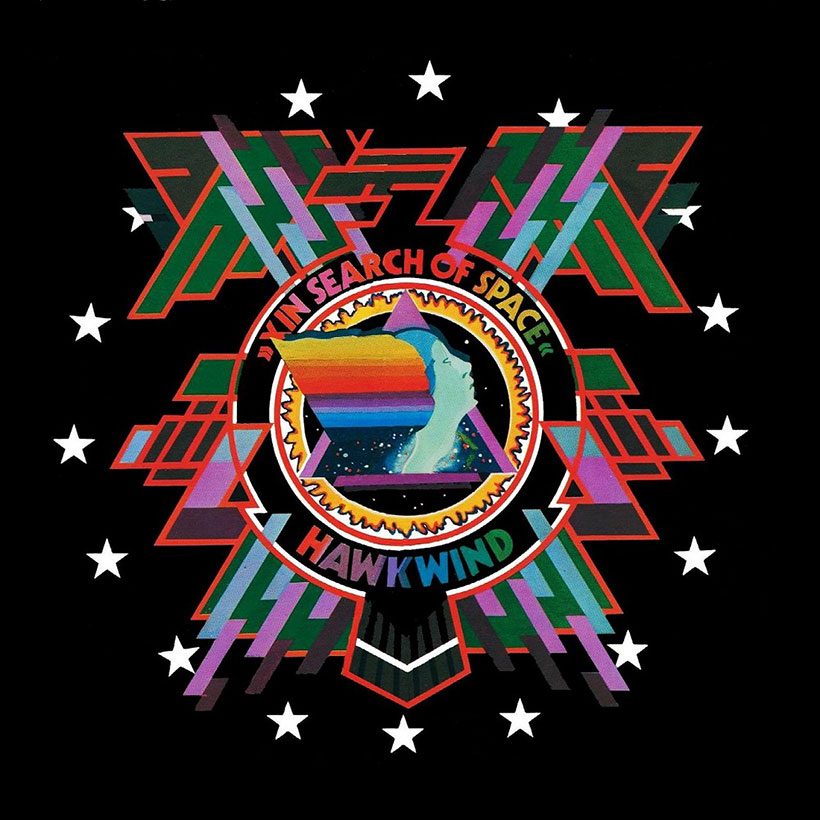
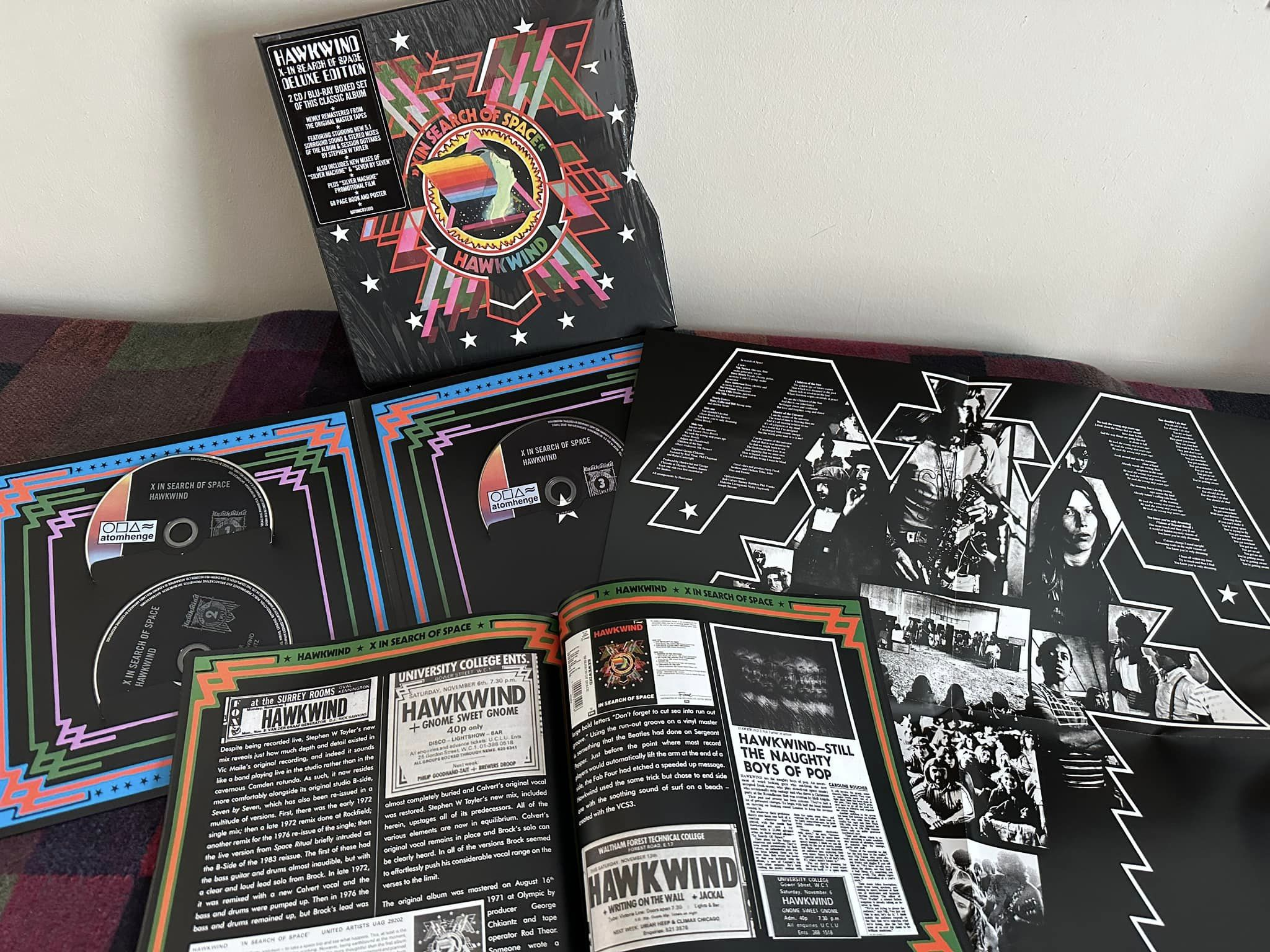
Hawkwind In Search Of Space album cover web optimised 820

Happy 50th anniversary to “In Search of Space”, the first masterpiece of Hawkwind originally released on 8th October 1971. Hawkwind’s debut album is one of the first full length “Space Rock” albums, but they mastered that art by the time of this sophomore album. The band went on to release the classics like Doremi Fasol Latido (1972), Space Ritual (1973), Hall of the Mountain Grill (1974)

A bold step forward for Hawkwind, their second album, ‘In Search Of Space” laid the groundwork for the landmark track ‘Silver Machine.’ It’s hard to imagine the world of rock’n’roll without Hawkwind’s presence. The pioneering London space-rockers have now endured for five decades, and have a string of classic albums under their belt, among them “In Search Of Space” and “Warrior On The Edge Of Time“. While guitarist/vocalist Dave Brock has remained the only constant, legendary figures such as Ginger Baker, sci-fi/fantasy writer Michael Moorcock and Motörhead founder Lemmy have all passed through its ranks.

Even now, the band’s detractors still dismiss them as merely a “hippie” aberration, but while this seemingly invincible outfit will forever be associated with the UK’s free-festival circuit, in reality their music has embraced everything from prog-rock to psychedelia and heavy metal. Later LPs, such as 1992’s Electric Teepee, even flirted with genres as disparate as ambient and techno.

To date, Hawkwind has recorded almost 30 studio LPs for both major labels (Charisma, Bronze, Active/RCA) and independent imprints (Flicknife, EBS). Yet while the band remains a going concern, most long-term supporters would argue that their career-defining discs emerged from their fruitful tenure with their initial sponsors, Liberty/United Artists, between 1970 and 1975.

Released in August 1970 and co-produced by former Pretty Things guitarist Dick Taylor, Hawkwind’s eponymous debut was book-ended by two folk-flavoured tracks, “Hurry On Sundown” and “Hall Of Mirrors,” but it was dominated by a lengthy free-form, psych-prog jam which was edited down, in Can-like fashion, into shorter individual selections.

Hawkwind was a volatile outfit at the best of times and their initial line-up disintegrated soon after their debut. The original nucleus of Brock, sax/flute maestro Nik Turner, drummer Terry Ollis and synth player Dik Mik remained, but guitarist Hugh Lloyd Langton quit; ex-Amon Düül II bassist Dave Anderson replaced Thomas Crimble, and the band’s soundman, Del Dettmar, stepped in as an additional synth/electronics manipulator.

This line-up recorded the band’s celebrated sophomore release, In Search Of Space. First issued in October ’71 and compiled from sessions overseen by former Jimi Hendrix/Small Faces engineer George Chkiantz at London’s Olympic Studios, the album was a bold step forward from Hawkwind’s debut. Arguably,  The album opens with the mind-numbing galactic haze of “You Shouldn’t Do That,” a spooky little 15-minute excursion that warps, throbs, and swirls with Dik Mik’s “audio generator” and the steady drum pace of Terry Ollis. Then comes the ominous whispering of the title, set to the pulsating waves of Dave Brock’s guitar and Turner’s alto sax, with Dettmar’s synth work laying the foundation. Wonderfully setting the tone, “You Shouldn’t Do That” improvisational looseness and rhythmic fusion smoothly open up the album into the realm of Hawkwind. The peculiarity never ceases, as but Brock and Co. also excelled on the intergalactic blues-rock of “You Know You’re Only Dreaming” and “We Took the Wrong Steps Years Ago” delves even deeper into obscurity, sometimes emanating with the familiar jangle of the guitar which then has its acquaintance overshadowed by the waft of the keyboard. Just as laced the succinct, acid-addled “Master Of The Universe’ with Nuggets-esque proto-punk energy, chugs and rolls with a foreboding rhythm, “Adjust Me” retaliates with its moaning verse and tonal fluctuations fading into oblivion. The ground breaking sound which Hawkwind achieved on “In Search of Space” helped to open up a whole new avenue of progressive rock. The track “You Shouldn’t Do That,” wherein the band locked into a super-hypnotic motorik groove.

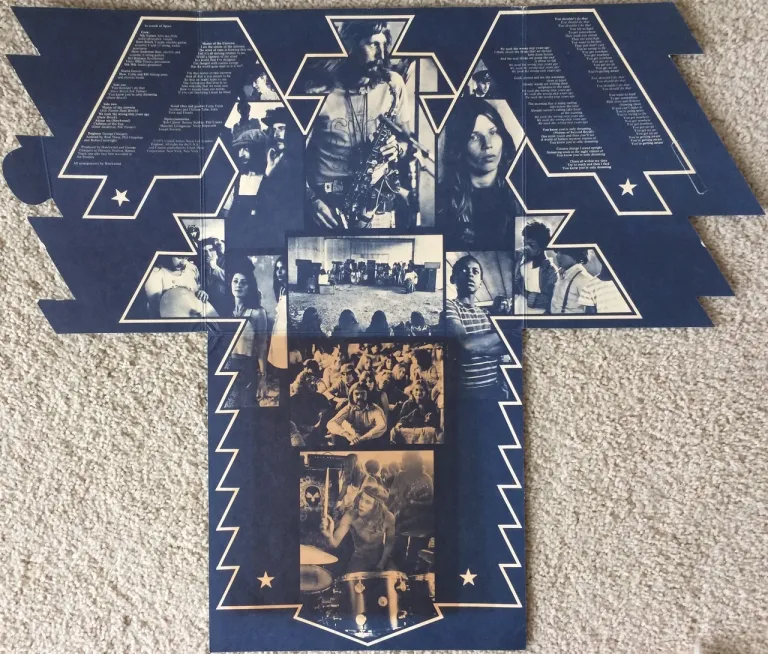
Designed by future Stiff Records/Elvis Costello artist Barney Bubbles, “In Search Of Space” came housed in a spectacular interlocking die-cut sleeve which unfolded into the shape of a hawk, and came accompanied by a 24-page book, the sci-fi-flavored The Hawkwind Log, conceived by the band’s long-term associate, poet Robert Calvert. Successfully feeding the era’s discerning heads, the LP climbed to No.18 in the UK, it won Hawkwind a gold disc, and laid the groundwork for their UK Top 10 hit, June ’72’s “Silver Machine,” which featured a commanding vocal from new recruit Lemmy.

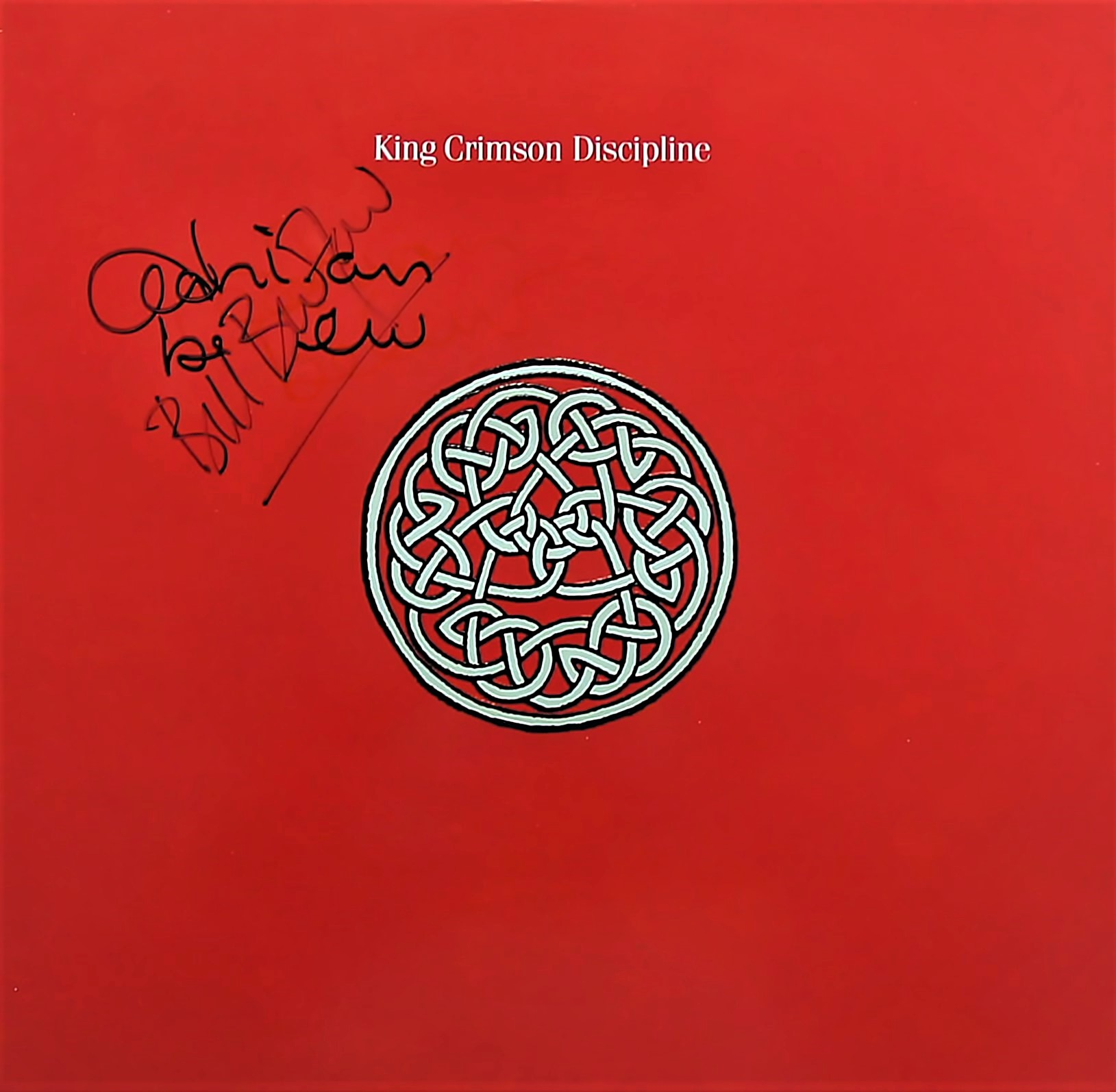
King Crimson’s “Discipline” is an adventurous, experimental and ground-breaking collection from one of rock’s truly singular bands, By the dawn of the 80s, punk had rock music to its foundations. So much so that even one-time prog rockers were streamlining their sound/approach. King Crimson were one such band, as evidenced by 1981’s exceptional “Discipline”. 

When leader/guitarist Robert Fripp decided to form a ‘new Crimson’ band, overindulgences were trimmed and replaced with a sound heavy on rhythm and experimentation. A chance meeting would shape the rest of the line-up. 

“I met Robert Fripp one night in New York, at a club called the Bottom Line,” remembers singer/ guitarist Adrian Belew. “I was playing with David Bowie at the time [1979/1980] and [we] went to see Steve Reich. When the lights came up, Robert was at the table next to us. So I went over, and he wrote his hotel number on my arm. We had coffee, and got to know each other. 

“In nineteen-eighty I started with the Talking Heads, and when they arrived in England I got a call from Robert saying: ‘I’m starting a new band with [drummer] Bill Bruford and myself. Would you like to be a part of it?’ I jumped at the chance.” 

After an extended hiatus and just as prog’s first decade ended, Fripp got behind the wheel for another series of remarkable efforts. Retaining Bruford and recruiting agile bassist Tony Levin, it was the audacious decision to employ a second guitarist (Adrian Belew, who also handled vocal duties) that gives this collective its characteristic sound. Fripp’s exposure to new wave, complemented by an increasingly globe-ranging palette, alongside Belew’s supple support, results in material that is challenging yet concise. On songs like “The Sheltering Sky” Fripp incorporates virtually every trick in his arsenal, creating something that integrates multiple source-points (African, Indian, and Western). The title track is like a business card for the new decade: Fripp asked a lot of his audience, but he’s always asked more of himself.

“I don’t think any of us knew we were creating something so unusual,” Belew says. “But now that I look back, it’s easy to see – every one of us had new technology. I was the first to have a guitar synthesiser, and Robert was probably the second. Tony had the Chapman Stick, which no one had used before, and Bill was fooling with electronic drums. So you had these four monkeys in a cage together with new toys. Something was bound to happen.”  Something did indeed happen. With funky workout “Elephant Talk”, ambient soundscapes (Sheltering Sky), tranquil moments (Matte Kudasai) and controlled freak-outs (Thela Hun Ginjeet, Indiscipline), 1981’s Discipline sounded like nothing before it. 

An interesting occurrence developed during sessions for Thela Hun Ginjeet. Belew remembers it vividly: “John Lennon had been killed, and he was my hero. So I tried to write a lyric about being molested with a gun on the streets of a city. I tried to think of phrases, as though it was an interview on the street after the occurrence. 

“We were in a part of London that was a dangerous area, but I didn’t know that. I had a tape recorder, and Robert said: ‘If you want to get realistic sounds, why don’t you walk around on the street and say your lines?’

“I walked down one of the streets, and there was illegal gambling going on by a group of Rastafarian guys – pretty tough-looking. And they’d gathered around me. They thought I was an undercover policeman. They were about to kill me! At one point the ‘leader’ grabbed my tape recorder and played back what I had just been saying: ‘He had a gun!’ [laughs] The guy freaked out. ‘What gun?!’ They finally let me go, I’m not sure why. 

“I went back to the studio. I was so shook up, and I ran into the control room and was telling Robert the story. Meanwhile, he had whispered to the engineer to record it, and that’s what you hear on the record.” 

Although Discipline wasn’t a big hit, it re-established King Crimson, and touched a legion of young musicians. Says Belew: “It certainly wasn’t a record that your average person would know, but it had an affect on Primus, Tool, Trent Reznor and so many people. That record affected the way they saw music. And for me, that’s even better than saying we had a big hit record.”

The album released (September 22nd) in 1981: UK progressive rock band King Crimson released their 8th studio album, ‘Discipline’, on E.G. Records (UK)/Warner Bros. (US) – their first following a 7-year hiatus; only founder Robert Fripp & later addition Bill Bruford remained from previous incarnations, joined by Adrian Belew (guitar, lead vocals) & Tony Levin (bass guitar, Chapman Stick, backing vocals); displaying a more updated ’80s new wave-oriented sound, the album reached #41 on the UK charts; Pitchfork later ranked it #56 on their list of ‘The Top 100 Albums of the 1980s’.

Albumism_Blondie_ParallelLines_MainImage.jpg

Blondie didn’t just leap with 1978’s “Parallel Lines”; they went into hyperdrive. As one of the early progenitors of the highly influential NYC punk scene, singer Debbie Harry and guitarist Chris Stein ditched the grime and grit and embraced what would become their own signature brand of glossy power pop and disco-tinged new wave — you know, the stuff that wound up shaping the next decade. “Heart of Glass”, the album’s state-of-the-art third single, was a total game-changer for the outfit, welding European electronica with Harry’s natural falsetto.

When Blondie went into New York’s famed Record Plant studios in June 1978 they were allocated 6 months to record their third studio album. Six weeks later, producer Mike Chapman deemed the job done and Parallel Lines was born.

Following on from their punk-meets-new-wave sound, Parallel Lines was a more focused and deliberate effort than their previous two albums, despite the band’s best efforts to achieve otherwise. With the central focus of Chapman behind the boards, he led the band to push themselves musically and at times beyond their own musical abilities. The result was an album that came to define pure post-punk pop. And Blondie’s days as a charmed underground group out of New York were numbered, as a larger world would open up to them on the heels of its release.

When Blondie started work on their third album, Parallel Lines, in the summer of 1978, they were an under-the-radar New Wave band with a nostalgic bent toward the girl-group sounds of the ’60s. They were in an entirely different position when they began recording their next album, “Eat to the Beat, less than a year later.  Kicking off with the rocking stalking anthem of “Hanging on the Telephone” (a Jack Lee cover) Debbie Harry delivers her strongest vocals to date, inhabiting the song with a sweet yet dangerous delivery.

Harry’s persona grows with the uber catchy “One Way or Another” with its signature guitar hook and sweet boppy beat that underscores the threat and menace on display in the lyrics. the obsessed jilted lover, Harry was taunting and preening with jealousy like a pro. With every line, Harry grows in strength and showcases the power needed to front an all-male band in the late ‘70s (and be taken seriously). Completing the opening trio of pop perfection, the band shifts gears with the lovelorn promise of “Picture This.” Amidst swirling guitar riffs and a classic backbeat by drummer Clem Burke, the song mixes early rock nostalgia with a burning sexuality and does so while still remaining sugary sweet.

After its release in fall 1978, Parallel Lines shot up the charts, reaching No. 1 in the U.K. and the Top 10 in the U.S. thanks to the powerhouse appeal of the single “Heart of Glass,” which went to No. 1 across the planet, including the U.S. The song added another influence to the band’s range of musical styles. So, when the six-member Blondie, led by singer Debbie Harry, entered the studio in their hometown of New York City as spring turned to summer in 1979, they pretty much followed the template of the record that rocketed them to stardom the previous year. That meant some New Wave, a little pop, a throwback or two to their punk roots and, of course, more disco. And then they took it even further.

Harry, who co-wrote eight of the new album’s songs, was thrust into the spotlight following “Parallel Lines” success. She became the focal point of the group and was often characterized by unknowing Top 40 fans as a solo artist named Blondie. Even though their publicity department stressed the issue — going as far as declaring “Blondie is a band” in press releases — getting casual music fans who knew them from only “Heart of Glass” to acknowledge there were five other people making the music was often an uphill battle.

This musical growth is evident on the modern torch song of “Fade Away and Radiate,” the pulsing driven beat of “I Know But I Don’t Know” with its borderline psychedelic melody, and the urgent rock swing of “11:59.”

Even the album’s filler songs such as “Just Go Away” and “Will Anything Happen” rival the hits on other band’s albums of the era. And then there’s the bouncy pop of “I’m Gonna Love You Too” and “Sunday Girl” that present a softer, more playful side to Blondie’s sound, But the game changer of the album, and for the band, was the soon to be disco anthem “Heart of Glass.” To a bubbling drum machine and strutting open hi-hat beat, the production on “Heart of Glass” is flawless. From the soft and subtle (at first) blipping synth line and slow sweeps, Blondie boldly stepped from the grimy stages of New York’s clubs to the dance floors of thriving discos.

Loved, and also hated, for producing a “disco” song, Blondie held fast to their belief of writing a great song befitting of the pop and r&b influences that appeared—perhaps less obviously—in their earlier recordings. Parallel Lines is the album of a band (somewhat reluctantly) finding its sound. It became the album that sprang them forward and launched them onto the world stage, and would form the blueprint for their subsequent efforts. It remains a perfect encapsulation of Blondie in their prime, focused on superior songcraft and musicianship. Whilst producer Chapman may have pushed them to beyond their creative breaking point, the result ensured an album that stands the test of time.

When they reconvened in the studio to make Eat to the Beat, Blondie were still working hard on that band dynamic. All six members contributed songs to the album in one form or another and, along with returning producer Mike Chapman, were determined to not rest on Parallel Lines’ laurels. Eat to the Beat sounds like a follow-up, but not a sequel. And that’s no small achievement.

From the start, Blondie didn’t quite fit in with the punk groups they were often associated with. They were poppier and more melodic. And they didn’t seem like they wanted to save the world — or burn it down, for that matter. So the disco explosion that was “Heart of Glass” sounded natural, an effortless offshoot from their downtown art-punk roots. A small step, but an integral part of Blondie’s story. As producer Chapman noted in the album’s 2001 reissue, tensions were high during the recording, stemming from increased drug use among various members. But Harry also began to assume more control, outlining a vision for the album that included the usual mix of pop, punk, disco, New Wave and even R&B-inflected songs.

beachboys

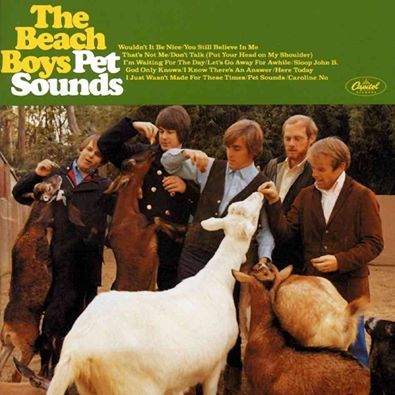
Some time in the spring of 1966, Al Kooper, a musician who’d recently supplied the signature organ riff to Bob Dylan’s ground breaking track “Like a Rolling Stone,” was invited to Brian Wilson’s home to hear some new Beach Boys music, an album called “Pet Sounds”, still a few weeks away from release. “He played it for me,” remembers Kooper, “and then he played it again, which did not bother me. Little did I know that it would receive more plays than anything else in my house for the rest of my life. It’s still my favourite album. Brian was in a world of music that no one else dwelled in.”

Al Kooper is not alone in his assessment. Mojo magazine has named Pet Sounds, the Beach Boys’ 11th album, the greatest LP of all time and Rolling Stone placed it at number two in its original top 500 list, just behind Sgt. Pepper’s Lonely Hearts Club Band. Conceived, written, produced and arranged by Wilson, with lyrics primarily by advertising copywriter Tony Asher – with whom Wilson had never previously collaborated – Pet Sounds was released by Capitol Records on May 16th, 1966, more than a half-century ago. Its impact has only swelled over the years and it was celebrated in 2016 by Capitol via Pet Sounds (50th Anniversary Collectors Edition), a box set housing four CDs and a Blu-ray audio disc. The package, which both reprises and expands upon The Pet Sounds Sessions, released 20+ years ago, includes the original album in stereo and mono, various other mixes, session outtakes and previously unreleased live recordings. It provides deep insight into the making of a landmark recording.

While much of the box set’ may appeal only to diehard fans and audiophiles, the original 13-track album, which features such Beach Boys classics as “Wouldn’t It Be Nice,” “God Only Knows” and “Caroline, No,” continues to find new fans. A key recurring plot point in 2015’s Brian Wilson biopic,Love & Mercy, revolved around the heady, intense Los Angeles sessions for the album, the creative genius directing the ace studio musicians known as the Wrecking Crew while butting up against the other group members, who, the film alleges, felt that his new compositions were not representative of their trademark, best-selling sound. Those oft-repeated qualms, say Beach Boys Mike Love and Al Jardine, never existed.

Adds Love, “One thing I’ve been quoted as saying was, ‘Don’t fuck with the formula.’ But I never said that! It’s the most famous thing I said that I never said. First of all, I named the album. Second, all of us – Carl [Wilson], Al, Bruce, myself – all worked really hard on the harmonies. Pet Sounds is awesome for so many reasons. It was a big leap from where we were,” says Jardine. “We’d been out on tour for a long time [minus Brian, who’d stopped traveling with the band in 1964 to concentrate on writing and recording, his place in the road band taken by new recruit Bruce Johnston]. There was a lot of adjustment. But it wasn’t that we didn’t want to do it.”

Not all Beach Boys fans did initially fall for it though. On its release, Pet Sounds, despite garnering raves from the nascent rock press, It was a lesser performance than most of their previous albums, among them 1965’s Beach Boys Party! and Summer Days (And Summer Nights). Whether or not Brian Wilson and the other Beach Boys felt they’d created a defining work, Capitol Records balked, its executives complaining that the new music – much of it lush, soft, ambitious and introspective, Brian’s response to the Beatles’ new, more sophisticated direction on Rubber Soul – was too far removed from the music the public had come to expect from them.

“We played the album for Karl Engemann, the A&R [artists and repertoire] guy at Capitol responsible for the Beach Boys,” says Love, “and he listened and said, ‘Gee, guys, that’s great, but couldn’t we get something more like “California Girls” or “I Get Around” or “Fun, Fun, Fun”?’” The label’s solution was to tack on to the end of the album’s first side the group’s most recent hit single,  “Sloop John B.” Stylistically, it seemed at odds with Wilson and Asher’s more reflective compositions, among them “That’s Not Me,” “I’m Waiting for the Day,” “Here Today,” “I Just Wasn’t Made for These Times,” “You Still Believe In Me” and the achingly beautiful, Carl Wilson-sung “God Only Knows,” a romantic gem that Paul McCartney has cited as one of his favourite ever songs. The album also included two instrumentals, a head-scratcher to the company brass who’d only seen the Beach Boys as a vocal group.

https://www.youtube.com/watch?v=AOMyS78o5YI

“It didn’t meet their expectations so they took Pet Sounds off the market and quickly put out a best-of album that took the wind out of our sails,” says Jardine. “We really didn’t have a chance to exploit it or perform it.

Brian raised the bar with Pet Sounds,” says Jardine. “People play off that ingeniousness that he has. He hears things and phrases things in a way that you wouldn’t expect.”

For Brian Wilson, who turned 78 on June 20th, 2020, the album represents part of a continuum, the latest development in his evolution as an artist. By the time Pet Sounds was released he was deeply involved in perfecting his next masterpiece, the single “Good Vibrations,” which he’d hoped to include on the album but continued to fine-tune for months. “I decided to experiment with a new kind of music,” Wilson said. “I was young and creative and we really did good. I’m glad that people still like the album.

Albumism_SteelyDan_Aja_MainImage.jpg

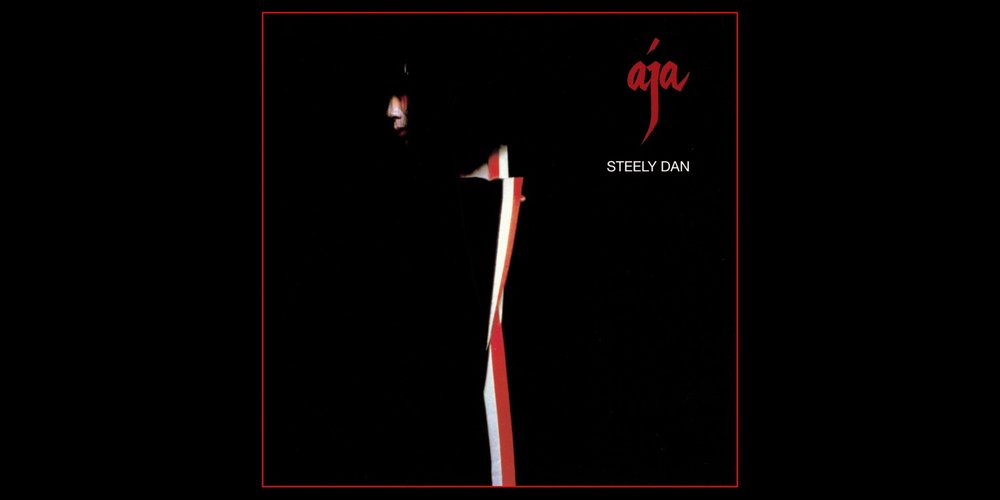
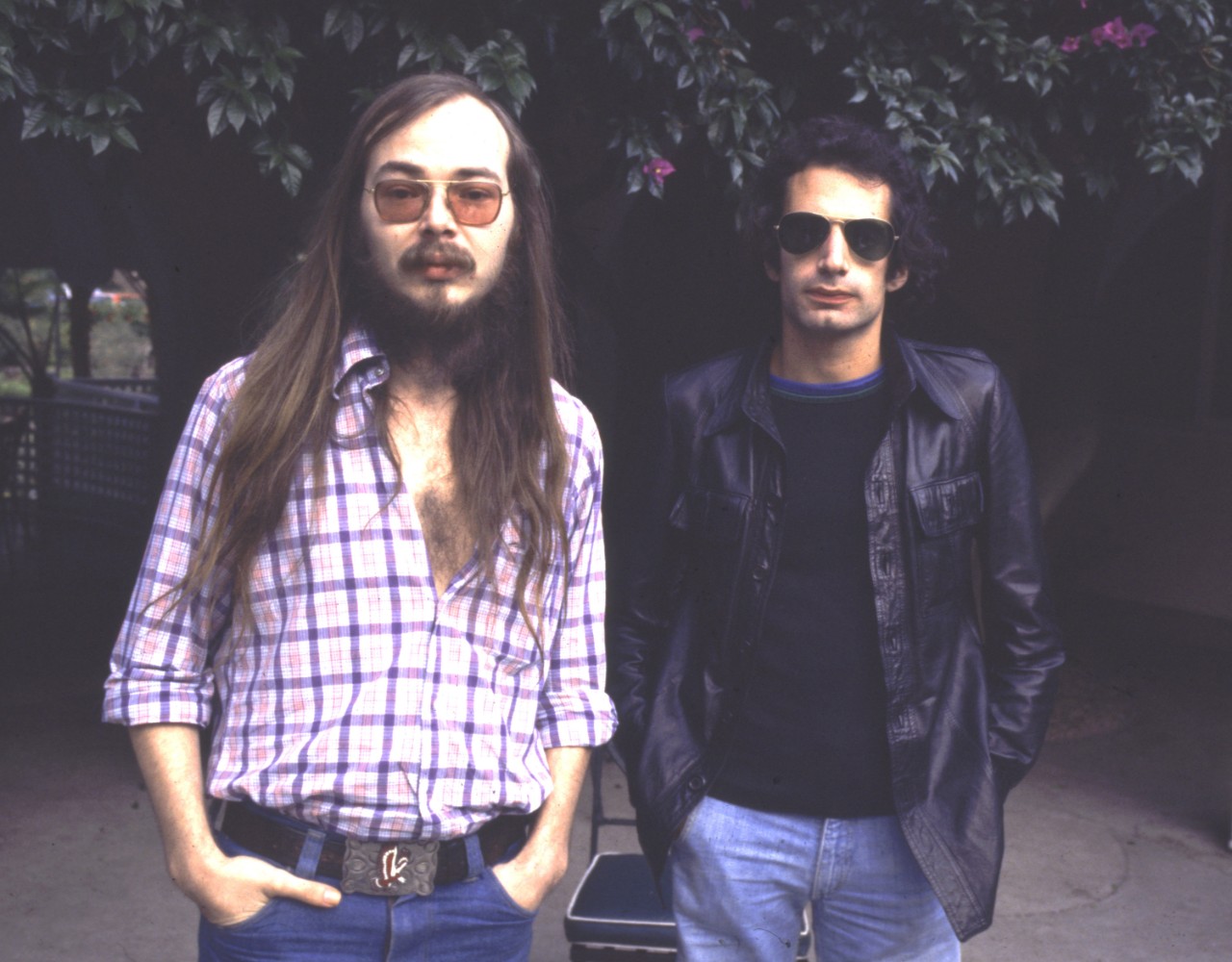
Steely Dan’s records were pristine to the point where you could eat off their glistening surfaces. They were never as sharp or as focused as they are on ‘Aja,’ their 1977 hit that balances cool jazz with timeless pop appeal. Band leaders Donald Fagen and Walter Becker have been criticized for their coldness. But on ‘Aja,’ they reveal a warm, beating heart beneath that steely exterior.

One of the many signature qualities of this album is that it is impeccably produced, a fact that has garnered both praise and condemnation. Admittedly, I’ve always found it silly to criticize a band for being too proficient at their job. Becker, Fagen and crew ease you into Aja with “Black Cow,” a song about a man who grows fed up with his lover’s pill addiction and continuous infidelity. You have to appreciate that the beauty of Steely Dan’s music is found in  its sonic flawlessness enveloping sharp and intelligent lyrics.

Ian Dury once said of this album, “Well, Aja’s got a sound that lifts your heart up… and it’s the most consistent up-full, heart-warming…even though, it is a classic L.A. kinda sound. You wouldn’t think it was recorded anywhere else in the world.

The title track is the antithesis of what should be on a rock album. Then again, is this a rock album? The nearly eight-minute opus has been described by Donald Fagen as being about “tranquility that can come of a quiet relationship with a beautiful woman.”

These people are too fancy, they’re too sophisticated,” William S. Burroughs said of Steely Dan in 1977. “They’re doing too many things at once in a song.” Burroughs, who had no personal connection to the band, had been asked to comment on Aja, Steely Dan’s new record, because co-founder Walter Becker and Donald Fagen had named themselves after “Steely Dan III from Yokohama,” the surreal dildo featured in Burroughs’ most notorious novel Naked Lunch. His comment embodied a common-man criticism made about Steely Dan by their detractors: The unit, who stated their claim in the pop sphere with clean, blues-steeped singles like 1972’s “Reelin’ in the Years” and “Do It Again,” had gradually but consistently ceased to resemble a meat-and-potatoes rock band, instead spiraling off into groovier, jazz-inspired pop experimentalism.

‘Aja’ (1977): “Aja”

The eight-minute title song to Steely Dan’s best-selling album brilliantly combines jazz and rock. But even the fiery interplay between drummer Steve Gadd and saxophonist Wayne Shorter was more the product of studio wizardry than in-studio camaraderie. Gadd recorded his titanic drum fills live — and, he’s said, in one surprising take no less — with the rest of the legendarily picky members of Steely Dan. Shorter was brought in later and taped his answering solo over their already completed parts. At this point, that had become the norm, rather than the exception. Aja ended up taking a year and half to record, with studio expenses piling up into the hundreds of thousands of dollars. “We overdubbed a lot of the overdubs over,” Becker joked with Cameron Crowe in 1977, and he wasn’t really kidding. Still, the extended sessions allowed Fagen and Becker to explore entirely new corners of the their self-taught musical minds. The result is a moment like “I run to you” on “Aja,” where the song seems to come totally unmoored.

The effect heightened as Fagen and Becker systematically fired all of their band’s other members, and replaced them with industry-standard jazz, soul, and blues musicians. They stopped touring; the songs’ narratives and jokes became more acidic and obscure. Rolling Stone’s review of 1976’s sprawling, sinister The Royal Scam summarized the feelings of the band’s skeptics and newfound admirers alike, that they would “eventually produce the Finnegan’s Wake of rock.” On the day Aja came out, Walter Becker told Cameron Crowe that he was empathetic toward the concerns, but also uninterested in compromise: “These days most pop critics, you know, are mainly interested in the amount of energy that is…obvious on the record. People who are mainly Rolling Stones fans and people who like punk rock, stuff like that… a lot of them aren’t interested at all in what we have to do.”

Instead of the Rolling Stones or punk rock, Aja was deliberately intellectualist pop music that appealed easily to music-school types and jazz fans–chops-y rock music that helped “legitimize” the genre. Becker and Fagen’s songs, charted out across six or seven sheets normally, prized and necessitated technical musicianship. They used horns as expressive, exalted instruments in rock songs, not just padding or blunt, skronking deus ex machinas. But the record’s appeal extended well beyond the ranks of any subgenre of snobs. Standard-issue rock listeners, after all, indulged in elaborate, preciously-conceived, and strange things in the 1970s, a decade which yielded four Top 10 albums for Emerson, Lake, and Palmer.

Years later, Aja is still Steely Dan’s commercial triumph. It was their only record to sell over a million copies, spawned three Top 40 singles—”Peg” hit No. 11—and stayed on the charts for well over a year, peaking at No. 3. In 1977, the music industry was at the apex of LP sales and mammoth recording budgets. In the year-and-a-half Fagen and Becker spent making Aja, the Dan would push their studio expenses into the hundreds of thousands, all while not playing live. On its 20th anniversary, Becker would chalk Aja’s success over past Steely Dan ventures up to the right-place-right-time factor: “That was a particular time when people were just selling lots of records.” They assumed, he said, that “‘we’re gonna sell three times as many records as we would have two years before.’”

To just chalk it up to a general market uptick, though, would be to sell the unique, subversive appeal of the re-minted Dan of Aja way short. Today, Aja still stands as the crucial microcosm of Becker and Fagen’s artistry, and as one of the most inventive blockbuster rock albums of its decade.

‘Peg’

“Peg,” which is the most well-known track on the album, is in a class by itself. It’s also the song that took forever to complete. The band went through seven studio guitarists to find the right sound on the guitar solo before settling on Jay Graydon’s version. Detractors will point to this fact as not letting a moment happen organically, but I would argue that it made a good song great. Having Fagen’s lead vocal mix with Michael McDonald singing background made it even better. “Peg” is the middle point of Aja and ensures that the album has already exceeded expectations before you even listen to the latter half. The interesting thing about this song is that Becker did not play bass on it. Those duties were handed to veteran session player Chuck Rainey.

‘Home at Last’

From: ‘Aja’ (1977)Donald Fagen once called this Steely Dan drinking song a “blues for Odysseus.” As such, it’s only appropriate that the hero in ‘Home at Last’ would be served “smooth retsina,” a Greek resinated wine, during his stay in paradise. Contrary to the track’s title, he can’t stay – “it’s just the calm before the storm.” Maybe he can take a bottle to go.

‘Black Cow’

From: ‘Aja’ (1977)Could it be that there’s a drink referenced in a Steely Dan song that doesn’t contain alcohol? Nothing’s for certain, but ‘Black Cow’’s titular beverage could be a simple coke float or a more adult version of the beverage. I guess it depends on what one finds most comforting during a break-up: “It’s over now / drink your big black cow / and get out of here.”

‘Deacon Blues’

This ‘Aja’ classic romances the idea of being a jazz musician toiling in obscurity – something that might have seemed appealing as Becker and Fagen became more famous throughout the ’70s. ‘Deacon Blues’ concocts the appropriate cocktail for this: get a cool name, learn to play an instrument, refuse to compromise, “Drink Scotch whisky all night long and die behind the wheel.” Wow. Sounds great, doesn’t it? (Kids, really, don’t try this at home.)“They got a name for the winners in the world / I want a name when I lose / They call Alabama the Crimson Tide / Call me Deacon Blues.” There are song lyrics that make you scream, “Damn, I wish I wrote that.” A prime example are the lyrics to “Deacon Blues,” one of those songs that’s easily quotable and just stays with you forever. The name “Deacon” was influenced by Hall of Fame football player Deacon Jones. Fagen and Becker’s ode to underdogs clocks in at 7:36, but feels like a four-minute song that you wished lasted longer. Fagen’s inspiration came from his thought that “if a college football team like the University of Alabama could have a grandiose name like the ‘Crimson Tide,’ the nerds and losers should be entitled to a grandiose name as well.” It may the coolest nod to geeks that I know of.

During the making of Aja, the Dan were well-settled into retirement from live performance. Fans had gotten used to the band’s new, faceless new image. Over the months they spent fashioning the album, a suite of 7 songs about lust, wanderlust, delusions, and the destructive effects of American Dream, Donald Fagen and Walter Becker methodically reimagined the sound of their studio-assembled ensemble. It was not a dramatic repositioning. Steely Dan had been mostly made up of session musicians since 1974’s Katy Lied, and their songs had already featured plenty of weird chords and prodigious horn solos. But there was nothing like a big, rollicking rock’n’roll single on Ajano “Kid Charlemagne,” no “My Old School,” and certainly no fucking “Reelin’ in the Years.” Guitars provided auxiliary punctuation and effects-less solos rather than the brunt of the song; a stew of acoustic piano and electric keyboards, reminiscent of Miles Davis’ In a Silent Way, were at the warm center of the mix. Aja’s sound was a direct offshoot from jazz and fusion, steeped in its harmonic language, as well as that of turn-of-the-century modernist classical music (Debussy and Stravinsky, especially).

The particular musical syntax on Aja was in many ways uniquely Dan’s, however, the misbegotten result of Becker and Fagen’s own self-taught musical education. Their chordal sense was central to the issue: The complex changes left the average rock listeners’ ear out in the cold, pointing toward whole new keys for choruses and away from easy resolution. Moments like “I run to you” on Aja’s title track leave one totally adrift for clues as to where the song will move; elsewhere, there are deceptive instrumental flourishes, like the mystical Rhodes-and-guitar fanfare that introduces “Deacon Blues.” Fagen and Becker voiced chords so unusually that theory-heads refer to a specific “Steely Dan chord” (or “mu major chord”): a substitution for the typical primary (or tonic) chord featuring an added 9th rubbing up against the major 3rd. Harmonies like these pop up everywhere on Aja, imbuing its songs with sophisticated, decidedly un-rock’n’roll atmosphere.

Steely Dan’s <i>Aja</i>: Remembering the Band’s Trailblazing Moment 40 Years Later

But Becker and Fagen also borrowed plenty from contemporary pop music, despite their general dismissiveness of it. Plenty of why Aja was so successful–and spawned actual hit singles–came from its emulation of the backbone of American R&B and soul of the time. They hired players that had defined the sound of records by James Brown, Aretha Franklin, and Quincy Jones, as well as virtuoso jazz soloists (Larry Carlton, Victor Feldman, saxophone luminary and Miles/Weather Report alum Wayne Shorter). The most time-consuming sessions would be devoted to the lock-groove-based tunes, the ones that wouldn’t be too out-of-place next to disco on a playlist: “Peg,” the warped blues of “Josie,” the lascivious “I Got the News.” Fagen and Becker’s obsession with precision backbeats would become a more empirically insane compulsion during the more troubled sessions for 1980’s Gaucho, with some interference from a custom-designed drum machine called “Wendel.”

Decades later, Becker admitted just how much of this had to do with disco. “They had all these records that were just whack-whack, so perfect, the beat never fluctuated, and we didn’t see why we couldn’t have that too, except playing this incredibly complicated music, and the drummer would go and play a great fill or something and come exactly back at the perfect beat at the same tempo, you know?” he told GQ UK in 2014. “It seemed like a good idea.”

Much gets made of how obsessively Fagen and Becker would plot parts for musicians, but many of Aja’s best and most famous were defined by their players’ independent innovations. As bass player Chuck Rainey recalled in the Steely Dan biography Reelin’ in the Years, Fagen and Becker had specifically told him not to slap his bass during the sessions for “Peg.” Rainey responded by turning his back to the control room and slapping away. Fagen and Becker liked the sound, despite their prejudices, and Rainey went on to slap again on “Josie.”

Then there was Bernard Purdie, one of soul music’s most inimitable drum stylists, whotold the story of taking control of the direction of the recording of “Home at Last” himself in the Classic Albums episode on Aja. “They already told me that they didn’t want a shuffle. They didn’t want the Motown, they didn’t want the Chicago,” Purdie explained. “But they weren’t sure how and what they wanted, but they did want halftime. And I said ‘Fine, let me do the Purdie Shuffle.’” It was precisely what Fagen and Becker hadn’t asked for, until they heard it. Purdie would go on to use the same beat on one of the Dan’s greatest singles, Gaucho’s “Babylon Sisters.”

Meanwhile, drum prodigy Steve Gadd foiled the duo’s plans for the day by running down the intricate title track of Aja in just one take. For the most muso-focused listener, his epic, virtuosic solo in the instrumental middle of the song is the beating heart of the album, layered over with chunky horn charts from arranger Tom Scott and alien synthesizer atmosphere (an anomaly for a Becker/Fagen recording at the time.)

Like their hero Duke Ellington, Fagen and Becker needed the identity of individual soloists to create their finished canvas, but within quite specific and refined structural limits. The duo was not as good with people as Ellington, but they didn’t have to be. From the safety of the studio booth, they could just say “try it again” as much as they needed, and scrap the solos they didn’t like after the fact. According to Reelin’ in the Years, the band’s career-long producer Gary Katz would break the disappointment to the players by talking to them about baseball, before dropping the news that their solo—which the person had spent hours trying to hammer out—would not make the record. When it came to the prospect planning a live tour behind Aja, they got as far as rehearsals, but ultimately backed down.

“We had 4,000 dollars worth of musicians in the room, guys who wouldn’t go out on the road for Miles Davis, literally, and they were committed to doing this,” Fagen explained. “And we both left the room together and said, ‘What do you say, you wanna can it?’ And we both said ‘Yeah’ without thinking twice.”

Once you get to “Home at Last” and “Josie,” you realize that something truly special happened during the recording of Aja. A rock band named Steely Dan made a jazz album that masqueraded as a rock album, and the results are glorious. A smartly crafted, well-produced album does not equate to selling out or being soft. Their sound may not be for everybody, but it works for me.

Aja, despite its detractors, is one hell of an album that demands not just one play, but multiple spins. Aja makes you think. It compels you to listen again and again, as you continually uncover new elements and flourishes you hadn’t heard before. Great albums make you want to come back for more. And Aja is a great album.

Aja was one of the only records Becker and Fagen ever made that they would speak about with real pride. (Less than a year after Gaucho’s release, they would characterize it as a “sideways” move; Fagen admitted, “It’s possible that we took a few steps backward with this album.”) Today, Aja remains the extreme of their modernistic progress, a place they could not effectively move forward from or visit again, except when running down its songs on reunion tours two decades later.