There’s no getting away from the campy cartoonish image of The B-52s and, frankly, they wouldn’t want you to. The band emerged in the late seventies as the kitschy cousin of punk-rock but as their sound progressed and began to involve more elements of surf-rock, rock-a-billy and so much more, their moniker soon changed. Its dark and moody sound often characterises post-punk, but the B-52s do a good job of brightening the place up. While the band’s contemporaries were keen to use post-punk to rally against the day’s political factions, the B-52s were far happier shaking their rumps and getting down on the dancefloor.
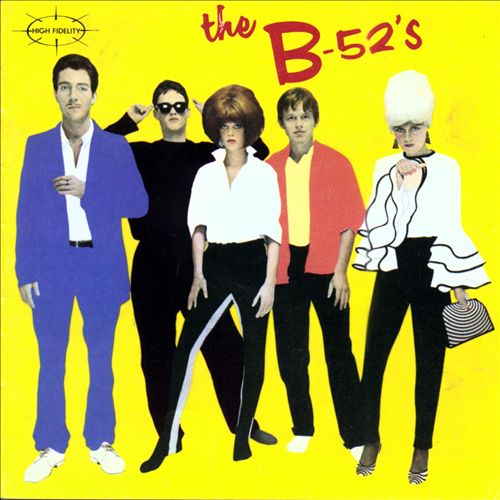
The B-52’s Released Their Eponymous debut LP was over 40 Years Ago, on 6th July 1979 a totally weird looking combo out of Athens, Georgia called THE B-52’s released their amazing self-titled debut long player. A wacky mix of retro dance-pop and surfy funk twisted upside down and wrapped up brilliantly as the new chic back then and still sounding damn hip today! A solid gold masterpiece, a bona fide classic.
Rolling Stone wrote: “The debut by the B-52’s sounds like a bunch of high school friends cramming all their running jokes, goofy sounds and private nicknames into a New Wave record. It turned out nobody could resist the band’s campy, arty funk, or the eccentric squeals and bouffant hairdos of Kate Pierson and Cindy Wilson…
Even in the weird, quirky world of new wave and post-punk in the late ’70s, the B-52’s’ eponymous debut stood out as an original. Unabashed kitsch mavens at a time when their peers were either vulgar or stylish, the Athens quintet celebrated all the silliest aspects of pre-Beatles pop culture — bad hairdos, sci-fi nightmares, dance crazes, pastels, and anything else that sprung into their minds — to a skewed fusion of pop, surf, avant-garde, amateurish punk, and white funk. On paper, it sounds like a cerebral exercise, but it played like a party.
The jerky, angular funk was irresistibly danceable, winning over listeners dubious of Kate Pierson and Cindy Wilson’s high-pitched, shrill close harmonies and Fred Schneider’s campy, flamboyant vocalizing, pitched halfway between singing and speaking. It’s all great fun, but it wouldn’t have resonated throughout the years if the group hadn’t written such incredibly infectious, memorable tunes as “Planet Claire,” “Dance This Mess Around,” and, of course, their signature tune, “Rock Lobster.” These songs illustrated that the B-52’s’ adoration of camp culture wasn’t simply affectation — it was a world view capable of turning out brilliant pop singles and, in turn, influencing mainstream pop culture. It’s difficult to imagine the endless kitschy retro fads of the ’80s and ’90s without the B-52’s pointing the way, but The B-52’s isn’t simply an historic artifact — it’s a hell of a good time.
The B-52’s distinctive sound can be attributed to the talk-singing of Fred Schneider, the complimentary highs and lows of Kate Pierson’s and Cindy Wilson’s vocals and the unique tuning of Ricky Wilson’s riffs all of which are on display in “Dance This Mess Around.” You can’t talk about these trailblazers without mentioning “Hero Worship,” where Cindy’s raspy wails created what could be considered the very first riot grrrl song ever. Then you have the infamous “Rock Lobster” with Ricky’s funky and famous riff, a biting organ and a cacophony of animal sounds laced through a song about a rock that “wasn’t a rock.” It’s stupid fun, and its absurdity launched The B-52’s to the moon (in the sky.)
Fred Schneider (vocalist) “No one likes to throw a party more than we do, but after almost a half-century on the road, it’s time for one last blow-out with our friends and family… our fans.”
Kate Pierson“Who knew what started as a way to have some fun and play music for our friends’ at house parties in Athens in 1977 would evolve into over 45 years of making music and touring the world. It’s been cosmic.”
Cindy Wilson: “It has been a wild ride, that’s for sure,” said Cindy Wilson. “We feel truly blessed to have had an amazing career encouraging folks to dance, sing along with us and feel they can be whomever they are with our music.”
If there is one thing I can say about this The B-52’s, it’s a party from start to finish. Opening with the morse-code beeps and a heist-movie-esque riff on “Planet Claire” cemented the space-age flair of these art punks.
Even in the melting pot of the American new wave scene, The B-52s’ debut single stood out. Equal parts funny, weird and artfully avant-garde, “Rock Lobster” is still the greatest nonsensical six-and-a-half-minute psychedelic surf-rock song about marine life. “Well, there’s not any songs like it,” laughs vocalist Fred Schneider. The quintet bonded over a flaming volcano cocktail in a Chinese restaurant in Athens, Georgia, in late 1976, and quickly pieced together the song that helped secure them an audience on New York’s alternative scene.
“Nothing with the band was ever thought out or calculated,” says drummer Keith Strickland . “Even the way we dressed was just how we dressed when we went to parties before the band started. I think that’s what made it work, ’cos it was just who we were.”
Formed from an open-tuned riff written by the group’s late guitarist Ricky Wilson and wry sprechgesang poetry from Schneider, all topped off with raucous fish impressions from Kate Pierson and Cindy Wilson, “RockLobster” even has the honour of having sparked John Lennon’s return to the studio in the late ’70s. Recognising Yoko Ono’s influence on Cindy’s wild screams, Lennon became convinced the music world was now ready for him and his wife, and swiftly began work on Double Fantasy. “We started out as a party band,” says Schneider, “and we all had a good sense of humour. But we don’t do our songs in a funny way, we want to kick ass. We want to rock.”
_________________________________
KEITH STRICKLAND (drums): I’d been friends with Ricky since we were 16 in high school. I would play his guitar sometimes, but I would often break a string, and instead of replacing it I’d just retune the guitar to some open tuning. This was much to Ricky’s annoyance… I said, “Try playing it like this.” And he finally tried it. The next day I walked in, and he’s playing the guitar and laughing. I go, “What’s so funny?” and he says, “I’ve just written the most stupid guitar riff ever.” And he plays the “Rock Lobster” riff. He knew it was good, but he also thought it was funny – that was Ricky’s sense of humour.
FRED SCHNEIDER (vocals, songwriting): I first heard the riff when we started jamming. I’d had the idea for the title – I was at this disco in Atlanta, called 2001 Disco, and instead of a light show they had a really cheap, cheesy slideshow. They’d show slides of puppies, lobsters on the grill, hamburgers, children… I mean, it wasn’t a pervy place [laughs], but it definitely wasn’t an expensive, deluxe place. And I just thought “rock this, rock that… rock lobster”. So we went into our studio, which was an unheated bloodletting room in the African-American part of town, in a funeral parlour.
STRICKLAND: I would just jam along with Ricky. Kate wasn’t playing bass on the keyboard yet, so it was just drums and guitar; very White Stripes!
SCHNEIDER: The way we worked was to jam for a long time. If we thought we had something, Ricky and Keith would take it back on their tape recorder, and then they’d come back and play it for us, and show us parts and we’d see if it worked for us. I just thought, “Okay, so this is the title, imagine something and then just start singing about it…” Sometimes pot would help, too [laughs]. It just gradually grew and then it wound up at six and a half minutes long…
STRICKLAND: When Cindy goes into the scream, that was sort of a tip of the hat to Yoko Ono. We were all big fans of her music. I think the fish sounds and Fred going “there goes a narwhal” and “here comes a bikini whale” and all that stuff, that was just from the jams, and piecing it all together.
SCHNEIDER: “Pass the tanning butter…” That was probably a ’60s reference, ’cos I lived near the shore, and there were constant ads for suntan lotion and all that stuff – I just threw everything into the mix.
STRICKLAND: The humour came out very naturally for us. That is Fred’s genius in a way. He would just yell the stuff out… very sort of punk, you know? It was how he delivered it that made it work.
KEVIN DUNN (production): I first heard about the Bs when they were playing around at parties and they were the talk of the town, basically. I saw them when my band The Fans played with them in Atlanta – it was something to see. It was a singular sound, nothing like it, Ricky especially. He was one of a kind, a perfect, naïve genius. Honestly, I don’t think I’ve ever seen anything like that in my life.
It was like mass kinesis in the audience.
SCHNEIDER: We played New York before we ever played Athens. We’d done parties in Athens but there was no place for us to play, ’cos we were the only punk band in town. Somebody said, “You sound as good as a lot of the bands at Max’s”, so we got a gig there on December 12th, 1977.
DUNN: The Fans were playing CBGB’s a lot in ’77 and we basically introduced the band to Hilly Kristal: “Here’s a cute little band from Athens, perhaps you might like to book them sometime.”
SCHNEIDER: And eventually we were one of the only bands they would allow to play both Max’s and CBGB’s, because we said, “Look, we can’t be driving 800 miles on alternate weekends.” We started just totally selling out, and record labels came to see us, we were thrilled. We met Blondie, the Talking Heads…
STRICKLAND: I remember playing Max’s the second time and The Cramps were there, and I was talking to Lux and Ivy after our set. In those days, everybody was putting out an independent single and we hadn’t recorded ours yet. I remember Lux and Ivy asking, “What’s your single gonna be?” And we were like, “Well, we haven’t decided yet.” They said, “It’s gotta be ‘Rock Lobster’!” I wasn’t really sure, but it was always the last song at closing time.
SCHNEIDER: I guess it was the strongest, and got the most response. By that time, we had “Killer Bees”, “Planet Claire”, “52 Girls”, maybe “Dance This Mess Around”.
STRICKLAND: We went to Stone Mountain Studios, and basically set up live. Maybe we all played it live, so Kate played keyboards and keyboard bass at the same time.
DUNN: I came to produce the first version of “Rock Lobster” through Danny Beard [of DB Records]. He was sort of dating Kate, and was into the band a lot, and he decided that I knew something about recording. In a lot of ways I would always say I was the production chauffeur. I didn’t add very much to the operation, which was pretty bare-boned. It was just like, here’s the sound recorded. The engineer, Bruce Baxter, was a genius in that way, so uh… I directed traffic. That was basically it. I think it took the better part of two days.
SCHNEIDER: I don’t think we added any reverb to the whole recording at all – we didn’t think about it!
DUNN: The aesthetic back then was for dry drums. It was like, do as little to the core of the rhythm section as possible.
STRICKLAND: There wasn’t a lot of production. There were no overdubs. Um, I think we may have overdubbed the gong, though, and kind of pitched it down.
DUNN: I tried, in the “down, down” section, to get a ring modulator effect to be introduced to sound like bubbles. And they were
like, “No.” That notion was not accepted!
SCHNEIDER: We released it in the summer of ’78, and it made its way to Australia and all these different places, and eventually it was one of the best-selling independent singles of that time.
STRICKLAND: A lot of people were very interested in producing us, including Frank Zappa. I love him but I just felt, it’s going to go in that territory, you know – that sort of obvious, very sarcastic humour.
SCHNEIDER: I like British humour, you just come up with something that’s intelligent and ridiculous, and keep a straight face. People were saying, ‘They’re camp’ and shit like that. It’s like, hello, camp means you don’t know what you’re doing, but you’re funny ’cos you’re ridiculous. All our stuff, we knew what we were doing. We were a band with a sense of humour, and a lot of uptight, probably straight, white guys didn’t get it.
STRICKLAND: We liked that our music was more ambiguous, it wasn’t tongue in cheek, because we performed as passionately as someone doing a very heartfelt, gut-wrenching song. It wasn’t like, ‘Here comes the punch line…’
SCHNEIDER: We signed with Warners in 1978. All these different labels kept courting us, ’cos we all figured like, hey, free meals! ’Cos we all had jobs that didn’t pay well – 25 cent tips… Imagine, I’m washing pots and pans one week and flying down to the Bahamas to record our debut album the next. Keith and Ricky were working at the bus station. So it was exciting.
STRICKLAND: We didn’t spend too long recording the first album at Compass Point, maybe a couple of weeks. We recorded pretty quickly once we found a deal ’cos we just wanted to get the album out that summer. So I think we were down there for maybe two weeks. Things went pretty quickly, most of it was recorded live as well.
SCHNEIDER:Chris Blackwell wasn’t really hands-on at all. Robert Ash basically produced the record and I think Chris just listened to it, and made some suggestions.
STRICKLAND: I remember after we finished the album, we listened back to it and I just thought, ‘This sounds horrible.’ I just thought it was dreadful, the whole thing, the whole album… it was terrible. Because I just thought, you know, you go into a studio and you think you’ll sound bigger and better or whatever, you know? And Chris really wanted to keep it stripped down and just sound the way we did it. I mean to me, to my ears, we never sounded that way. In the club, it’s reverby, the acoustics are horrible and so there’s a lot of splashing around with sounds, it always sounded much bigger to me when we played live. And it was louder and bigger, but in the recording it doesn’t sound that way, it sounds very stripped down and very minimal.
SCHNEIDER: I thought it sounded a little ‘rinky dink’, to be honest. I mean, I guess that’s what we sounded like live, I don’t know.
DUNN: The sound got a little sharp on the album version. I think the somewhat primitive nature of the equipment involved in the original session made it warmer, more guttural.
STRICKLAND: Now, I get it and I like it, it’s a document. John Lennon said a few times that he liked the song. Of course, this is something we didn’t know until after he had been killed; so it was quite bittersweet to hear it. It blew my mind because The Beatles were the reason why I wanted to be an artist at all. I was just blown away that he had heard it and he’d heard Yoko through Cindy, and thought, ‘Now they’re ready for us.’
SCHNEIDER: We’d always been fans of The Beatles, John, Yoko… people still don’t get Yoko, she’s brilliant. So to hear they liked it… oh God, yeah. Yoko sang on “Rock Lobster” when we did our 25th anniversary show. Unfortunately I didn’t have her in my ears, but c’est la vie [laughs].
STRICKLAND: It was just amazing. Yoko’s just going; she’s wailing, she was way into it. I remember thinking, ‘Let’s just keep it going, let’s just jam out on this.’ But I couldn’t really get everyone on board in time, and the song seemed to end so quickly. But we could’ve just gone all night doing that! She and I sat down for a moment backstage and we talked about John and Ricky, and it was just blowing my mind that she knew all about Ricky and his guitar playing and everything [Wilson passed away in 1985], so it was a really sweet moment to have that with her.
SCHNEIDER: I would always say that we were good for all theatres, ’cos if we played, they could tell if they were structurally sound. The balconies would have a bit of give… and boy, did they start giving!
STRICKLAND: Yeah, “Rock Lobster” was the dangerous one, we had to stop a show in Minnesota in 1990 because plaster was falling from the ceiling, on to the people down below. That was probably one of the only times we didn’t play “Rock Lobster”.
SCHNEIDER: For some reason, I don’t get bored with it, I don’t know why.
STRICKLAND: It sounds like a children’s record, if you think about it. It’s like those children toys where you learn, like; ‘This is the sound a pig makes…’ I mean, we were aware of that, we were like, ‘This is ridiculous’, but it just made us laugh. So we just went for it!
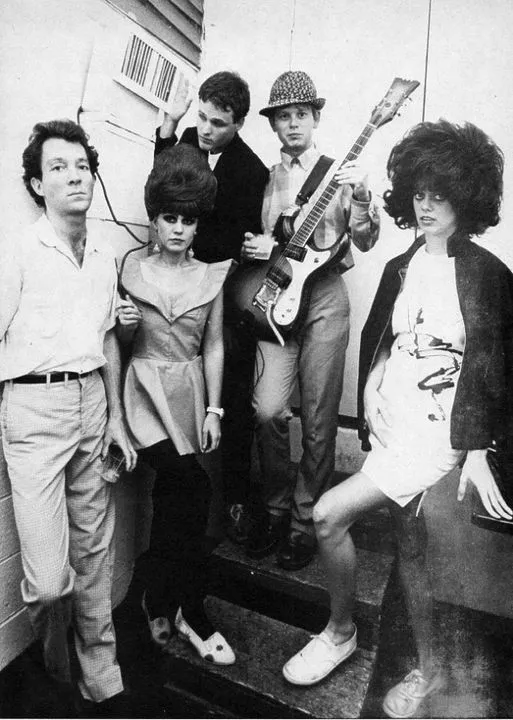
Hailing from Athens, Ga., the quintet comprised of Fred Schneider, Kate Pierson, Cindy Wilson, her brother Ricky Wilson and Keith Strickland first gained fame in the late ”70s as a living, breathing creature that embodied the kitsch of ’50s sci-fi, ’60’s fashion and mid-60s rock and roll, all filtered through some bizarre LSD glazed lens, via a John Waters sensibility. Their image alone, including those beehive/b-52 hair-do’s, was attention grabbing, but the sonic blast that came with it was what kept them on the charts. Equal parts garage, surf, soul and rock and roll with feet firmly planted in the current times of the day, they were able to adopt a retro-futuristic motif that was, at the time, all their own.
Songs like “Rock Lobster,” “Strobe Light,” and “Private Idaho” got the initial party headed out of bounds, but one-trick ponies they were not. After Ricky died from complications related to AIDS in 1985, they bounced back with Cosmic Thing. Hits like “Roam” and “Love Shack” proved there was more to this lot than day-glo hijinks, as well as being further proof that their sound was, a decade into their career, still fresh. They withstood the temporary departure of Cindy, and 2008’s Funplex, showed the old kids still had lava in their lamps and new kinds of kicks to be hatched. A true American original, we give you the B-52’s albums .
When the B52’s moved from Athens, Ga., to New York City in the late ’70s, one of the first bands that befriended the new wave quintet was David Byrne and Talking Heads. Although the groups had distinct approaches to their music, an alliance made sense, given their shared love of dance music and off-kilter humor. They also shared a manager in Gary Kurfirst (who also worked with the Ramones and Blondie).
The B-52s’ first two albums – 1979’s self-titled debut and 1980’s Wild Planet – used up all of the band’s pre-existing songs. Kurfirst knew the group needed an infusion of new material, although he didn’t expect much to change in regard to the B-52’s nervy, retro-go-go, surf-rock sound.
“I really do feel trapped,” guitarist Ricky Wilson near the end of 1980. “Gary was talking about our next album, and I mentioned that it might not be a dance record, and he was so shocked by that idea. It’s shocking to me that people really do expect that of us now.”
Perhaps seeing a way to soothe Ricky and the band’s frustrations while simultaneously pairing two of his clients together, Kurfirst advocated for Talking Heads frontman David Byrne to produce the next B-52’s album. He wanted Byrne and the B-52’s to begin the project right away, in 1981.
“Actually, we wanted to write more songs,” singer/multi-instrumentalist Kate Pierson recalled . “We weren’t really ready to put out this album, and Gary had suggested working with David Byrne, but we hadn’t written all the songs out. He said, ‘You gotta put another record out!’ He was one of those managers who was, ‘Ya gotta do this! Ya gotta do that!’ So he kind of forced us.”
Although the band – who were looking to do something new – and Byrne – who had become interested in production via Talking Heads’ work with Brian Eno were excited to work together, the situation in ’81 was far from ideal. As Pierson said, the B-52’s barely had enough material to record while the Talking Heads’ singer was working on his soundtrack for Twyla Tharp’s dance project The Catherine Wheel .
Bowing to pressure, each side made compromises. The band hastily readied the new songs and Byrne worked simultaneously on the projects – devoting time to The Catherine Wheel during the day and producing the B-52’s by night (and getting little sleep in the process). The match between these musicians seemed ideal, but the situation was far from it.
“‘Cake’ wasn’t really finished,” Pierson said. “‘Deep Sleep,’ I just kind of stuck that lyric on in the studio in one take. It was just not finished.”
Mesopotamia was the name given to the project, which found Byrne helping the B-52’s to broaden their sound by using a lot of elements familiar to the recent Talking Heads LPs: worldbeat, horn sections and densely layered synthesizers. Whether it was lack of sleep, material or artistic cohesion, the collaboration soon broke down. The sessions stopped, leaving Kurfirst in a difficult spot.
The manager had promised this new release with a high-profile partnership to the B-52’s record labels (Warner Bros. in the U.S., Island in the U.K.) and now might have nothing to show for it. Kurfirst arranged to put out a remix EP – Party Mix – to buy the band some time to assemble something from the Mesopotamia studio sessions.
Eventually, the band agreed that there was enough good material to deliver a 25-minute EP with six songs. Ironically, “Throw That Trash in the Garbage Can” made the final tracklist. Other songs were junked and some were refashioned/re-recorded for 1983’s Whammy.
Mesopotamia came out on January. 27th, 1982, followed by the B-52’s “Meso-American” tour to promote the record, including a guest spot on the daytime soap opera Guiding Light. But the difficulties didn’t end with the EP’s release.
In Island’s haste to get Mesopotamia printed and in stores, the label accidentally included longer rough mixes of “Cake,” “Loveland” and “Throw That Beat” upping the EP’s running time by more than seven minutes. The error was found and corrected, but the fans who got their hands on an initial version quickly dubbed the demo versions “David Byrne’s original mixes,” due to some funkier touches and denser sounds. Some listeners still prefer the rougher takes to the versions on the approved EP, which earned mostly mixed reviews from fans and critics.
Because of the project’s rushed nature, fizzled collaboration and (partially) botched release, Mesopotamia remains a controversial entry in the B-52’s catalog. Over the decades there have been rumors, and even some blunt talk from singer Fred Schneider, about expanding the EP into a fully realized album.
“We sometimes think, ‘Wow, if only we could go back and finish Mesopotamia’,” Pierson said.
On April 21st, RhinoRecords will release “Live! 8-24-1979“, a previously unreleased 1979 live performance by the B-52’s. It features the band performing a bunch of songs from their first two albums (The B-52’s and Wild Planet). The concert, which was recorded at the Berklee Center in Boston, was found in Warner Bros. Records’ vaults. hear these two tracks here
The band says:
We opened up for the Talking Heads just six weeks after our first record was released. We were a little scared of the audience so we kept our heads down and focused – and we danced like mad when there was a break! Ricky [Wilson] was so fierce on the guitar – so intense – it was all so raw and live and we loved it.




:format(jpeg):mode_rgb():quality(90)/discogs-images/R-470362-1262264550.jpeg.jpg)


 The Fat Angel Sings