Over the last 15 years, The War On Drugs have steadily emerged as one of this century’s great rock and roll synthesists, removing the gaps between the underground and the mainstream, between the obtuse and the anthemic, making records that wrestle a fractured past into a unified and engrossing present.
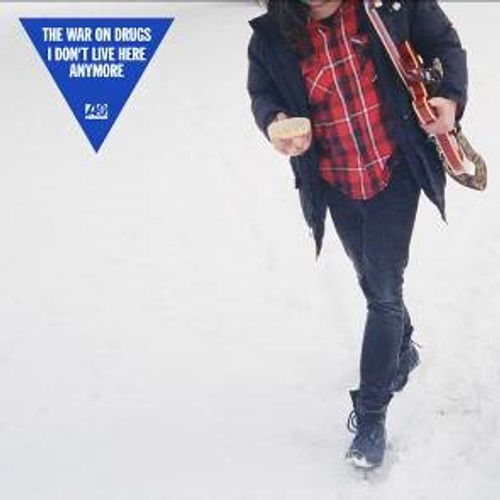
The War On Drugs have never done that as well as they do with their fifth studio album, ‘I Don’t Live Here Anymore’, an uncommon rock album about one of our most common but daunting processes—resilience in the face of despair. just a month after The War On Drugs ‘A Deeper Understanding’ received the 2018 grammy for best rock album, the core of Granduciel, bassist Dave Hartley, and multi-instrumentalist Anthony Lamarca retreated to upstate New York to jam and cut new demos, working outside of the predetermined roles each member plays in the live setting. these sessions proved highly productive, turning out early versions of some of the most immediate songs on ‘I Don’t Live Here Anymore’. It was the start of a dozen-plus session odyssey that spanned three years and seven studios, including some of rock’s greatest sonic workshops like Electric Lady in New York and Los Angeles’ Sound City.
Band leader Adam Granduciel and trusted co-producer/engineer Shawn Everett spent untold hours peeling back every piece of these songs and rebuilding them. one of the most memorable sessions occurred in may 2019 at electro-vox, in which the band’s entire line-up — rounded out by keyboardist Robbie Bennett, drummer Charlie Hall, and saxophonist Jon Natchez — convened to record the affecting album opener “Living Proof.” typically, Granduciel assembles The War On Drugs records from reams of overdubs, like a kind of rock ‘n’ roll jigsaw puzzle.
We know the album has some big, lush, synth-drenched tracks in store for us. But that’s not what “Living Proof” is. “Living Proof” is a curious lead single and opening track for the Drugs, unlike most songs they’ve used in either capacity and, in some ways, unlike many of their past songs in general. In the context of I Don’t Live Here Anymore, it’s not quite a feint — but it is a curtain rise that is deeply patient and restrained.
But for “Living Proof,” the track came together in real time, as the musicians drew on their chemistry as a live unit to summon some extemporaneous magic. the immediacy of the performance was appropriate for one of the most personal songs Granduciel has ever written. The War On Drugs particular combination of intricacy and imagination animates the 10 songs of ‘i don’t live here anymore’, buttressing the feelings of Granduciel’s personal odyssey. It’s an expression of rock ’n’ roll’s power to translate our own experience into songs we can share and words that direct our gaze toward the possibility of what is to come.
“Disappearing” plays out like Low’s entire career in gorgeously framed time-lapse photography. Alan Sparhawk and Mimi Parker sing together in close harmony, their voices stark and awestruck, until digital decay comes along and swallows them up. It’s like the bare and hymn-like slowcore of Secret Name giving way ecstatically to the decaying drones of Double Negative — a file gorgeously corrupted.
Even as the waves of fuzz and glitch overtake them, Sparhawk and Parker offer up a prayer to mystery itself: “That disappearing horizon, it brings cold comfort to my soul/ An ever-present reminder/ The constant face of the unknown.” On “Disappearing,” as on so many other things that they’ve done together over the years, Low rush out to greet that unknown. They revel in it. This is astonishing, really beautiful, cannot wait for the new album.
“Disappearing” from Low’s album “Hey What” (Out September 10th, 2021)
“Hold U” starts out so simply, with just a tinny drumbeat and some basic keyboard chords. Indigo De Souza takes it somewhere special from there, steering it directly toward the joyous sensation of love among friends. As De Souza expresses her affection and an impeccably noodly guitar takes control of the arrangement, a misty pop ballad on the Cyndi Lauper-Shura continuum blooms into warm, florid R&B and then a euphoric indie rock climax.
The vocal melodies are resplendent and intuitive, the lyrics tender and empathetic: “You are a good thing, I’ve noticed, I’ve seen it/ And I want the best things for you.” It feels like a bear hug, and by the time she’s cutting loose with those wordless howls near the end, a dance party like the one in the music video might have broken out wherever you’re listening.
from “Any Shape You Take” out August 27th on Saddle Creek Records
It’s hard to believe, but the Black Crowes’ first single, ‘Jealous Again,’ was released in 1990. Frontman Chris Robinson was 23 years old and his younger brother, guitarist Rich, was only 20 years old. Many years later, the Black Crowes may not be releasing new albums anymore but the impact of their career is still resonating in the world of music.
While it would be totally acceptable to simply list the 10 tracks from ‘Shake Your Money Maker’ as the band’s best songs, we dive into the BlackCrowes’ deep and dynamic back catalogue the fans are as passionate about the music as the band is.
There are few frontmen in the history of rock and roll who can combine an animated on-stage presence with a killer vocal range. As the leader of the Black Crowes and the Chris Robinson Brotherhood, Chris Robinson has definitely earned his place among the rock greats. Only 23 years old when the Crowes’ debut album, ‘Shake Your Money Maker,’ was released, Robinson’s skills as a frontman are complemented by his enthusiastic passion for the music he creates.
Since the band broke through with their 1990 debut, “Shake Your Money Maker”, it’s been a twisting and tumultuous path through a few hiatuses and constant line-up changes with members coming and going and returning, the kind of narrative most of us probably don’t have the time or interest to know inside and out. As much as the Black Crowes had recently come to sound like aged rock ‘n’ roll survivors, theirs was an existence that seemed on the precipice of collapsing at any given point.
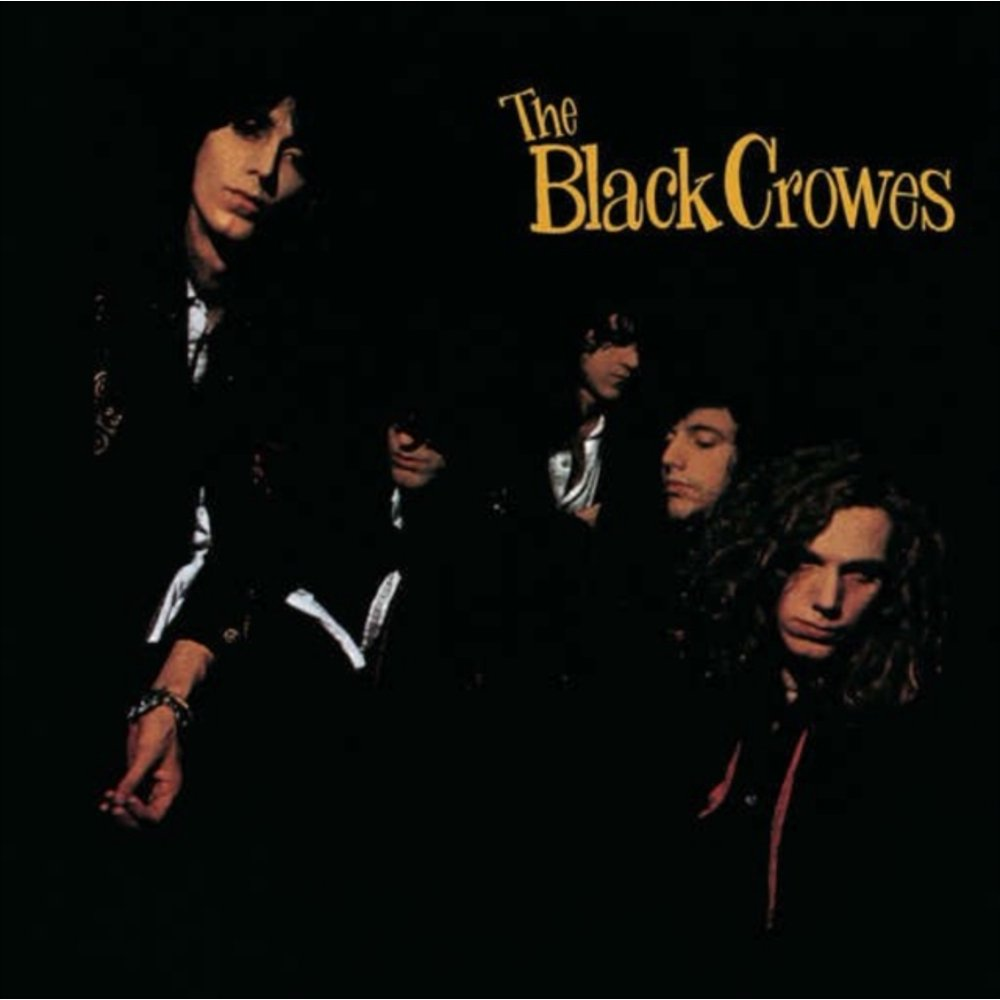
‘Shake Your Money Maker’ (1990)
The highest-proof distillation of the Black Crowes’ history-facing sound arrived on their concise multi-platinum debut. “Shake Your Money Maker” was important not because of what it said, so much as what it did. This was a like a biting, badly needed shot of brown liquor in an era dominated by umbrella drinks. Then the Black Crowes arrived, piloting a way-back machine from a home base at Keith Richards’ Villa Nellcôte. Maybe most of this had been done before – certainly “Hard to Handle” – but the familiarity of a swift kick in the ass doesn’t make it any less needed sometimes.
Possibly one of the most recognizable Crowes tunes out there, ‘She Talks to Angels’ is a beautiful song that focuses on a woman battling addiction. Written by both Robinson brothers, what makes the song even more extraordinary is the fact that Rich wrote the music for it when he was just 15 years old. Even though the song will forever be associated with the music of the early-’90s, as with most of the Crowes’ music, ‘She Talks to Angels’ will hold up for many years to come.
Originally written and recorded by Otis Redding during his final recording sessions before his death, the Black Crowes’ cover of ‘Hard to Handle’ reached top spot on Billboard’s Rock Charts in 1990. More than two decades later, the song still stands out as a significant contribution to the world of rock and roll. An honest rendition of Redding’s tune, the radio promo remix of ‘Hard to Handle’ takes the cover even further by including a brass section throughout the song.
Black Crowes best songs would not be complete without ‘Jealous Again,’ the second track – and lead single – on the band’s debut album, ‘Shake Your Money Maker.’ A purely blues-based rock and roll song, ‘Jealous Again’ is arguably one of the catchiest Crowes songs ever released. Elevating the song to a new level, the band covered the tune on their 2010 acoustic greatest hits album, ‘Croweology,’ opening fans up to a different interpretation of a true classic.
Both “Twice As Hard” and “Jealous Again” are huge songs. They’re the powerful one-two at the beginning of the band’s debut, and though they might not have been as big as “Hard To Handle” or “She Talks To Angels,” they haven’t lost their charm in the same way as those songs have for me, to some extent. if you’re in the business of reducing the Black Crowes to the sum of their influences, this was them dressing up really well as two of the primary ones. “Twice As Hard” is their Zeppelin-indebted one, with the way Rich Robinson unspools this heavy, sliding, Jimmy Page-esque riff over a heavily stomping drumbeat. Influences aside, the point here is that “Twice As Hard” is remarkably adept at what it’s doing considering they were such a young band. Meaning: now that we’re well past those early days and the context of the ’90s and notions of derivativeness holding as much weight, what we’re left with is “Twice AsHard,” which is simply an awesome rock song that could tussle with all the ’70s music the BlackCrowes loved so much.
So if “Twice As Hard” was the Zeppelin-ized opening salvo of “Shake Your Money Maker”, “Jealous Again” was Stones-y barroom track that immediately followed. (You could make a fair argument it’s where the Faces influence strongly rears its head.) And because I like the Stones more than I like Zeppelin, “Jealous Again” places ahead of “Twice As Hard,” the songs function as a unit when I think about them in my head. It turns out that the songs achieve more or less similar ends in the grand scheme of the Crowes’ catalog as well: These are two of the best, catchiest, most anthemic of the band’s material that falls under their “’70s hard rock classicism” phase, before we got to the more “roots rock classicism” they’d eventually favour. “Jealous Again” was also one of the earliest songs that made the most sense when brought out at those ’00s Crowes shows. It doesn’t take too much to make this comfortably ragged enough to sit alongside the material from “Warpaint” or “Before The Frost…” One other odd thing about “Jealous Again”: The Robinson brothers were apparently influenced by R.E.M. in the earliest days of their musical partnership and, well, that’s obviously an influence that died down. But you can hear just a bit of it in the bluesier-jangle of “Jealous Again,” especially in Rich Robinson’s guitar part when all the other instruments drop out around 2:40.
The Southern Harmony and Musical Companion (1992)
The Black Crowes stretched out on their sophomore release, adding guitarist Marc Ford to what could have been a tried-and-true Rolling Stones-meets-Faces-meets-Humble Pie sound beside Rich Robinson. Instead, they began hinting at musical choices that weren’t so clearly delineated the hits dried up. (“Thorn in My Pride,” the Black Crowes’ last charting song, This was really just a sign to come. “SouthernHarmony and Musical Companion” can now be seen as a bridge between their more song-oriented first record and the longer-form jams that followed.
“The Southern Harmony and Musical Companion” was the perfect follow-up to the band’s debut album. With even more rock and musical depth, the record showcased the band’s quick growth in just a couple of years. One of the shining examples of that growth is ‘My Morning Song,’ a tune with so much soul it’s become a regular fan-favourite at live shows. Besides the energy Robinson and company exude during the song, it also has a powerful breakdown that comes around the 3:30 mark when Robinson belts out, ‘If your rhythm ever falls out of time / You can bring it to me and I will make it alright.’ ‘My Morning Song’ proves to be a track that has a lasting effect on its listener.
One of the tamer songs on ‘Southern Harmony,’ ‘Thorn in My Pride’ perfectly captures the soulful edge of the Black Crowes. As opposed to ‘Lickin,” the band is obviously comfortable with performing the song live as they’ve played it nearly 1,000 times since the early-’90s. With emotional lyrics that have become definitive for the Crowes‘ career, ‘Thorn in My Pride’ is a must on anyone’s Top 10 Black Crowes Songs.
Two years after ‘Hard to Handle’ hit No. 1, ‘Remedy’ did the exact same thing for 11 weeks. Like all of the Black Crowes’ music, ‘Remedy’ stands the test of time and even 20 years later, it sounds better than ever. Taking a cue from an old Parliament song, ‘Remedy’ is most memorable thanks to the catchy guitar riff that not only opens the song, but is also a major part of its foundation. With such a vast catalogue.
The thing about a big rock band like the Black Crowes is that it’s the anthemic guitar jams that are usually the most iconic of their iconic songs, obviously the ones that get a big reaction when they’re played live, etc., etc. And while I’d probably lean toward wanting to hear a bunch of rockers in a concert setting, I’ve often found that the secret power of the Black Crowes is rooted in their ballads. They can range from meditative stuff to material more like “Thorn In My Pride,” the kind of stuff that swells and swells to the reward of its cathartic outro. Out of the early examples of mellower Crowes material, I’ll take “Thorn In My Pride” over “She Talks To Angels” part of that is it feels a little less over-exposed with over two decades’ distance, but that’s also because I love the build and fuller instrumentation here.
Even more so than “Amorica“, you can’t go wrong with anything off of “Southern Harmony”. It’s the band’s masterpiece. You could argue “Bad Luck Blue Eyes Goodbye” into this spot, and it’d make sense to me, because that song also has a stunning and satisfying conclusion.
Whenever I heard “Remedy,” it was the kind of song I turned up loud right away. It’s the best, most memorable, most interesting of all the band’s big rock songs. That intro, that descending guitar part, they almost sound like an early Pearl Jam song to me. And to me, that’s a good thing. It lets “Remedy” stand out not just as a famous and great song by a band that happened to exist in the early ’90s, but as one of the absolute classic songs from the decade.
“My Morning Song.” is a titan of a song. It just immediately crashes in with that loopy yet visceral slide-guitar lead, and the strange form of that guitar line just keeps wrapping itself around you, pulling you further into this song’s weird, strong current. “My Morning Song” is straight-up relentless for the first three minutes of its running time, and then it quiets down for two minutes, but not in the sort of way where you, for any moment, develop the illusion that this song is going to have a long, slow final chapter. Those two minutes push and push upwards, all the while letting you know you’re really just in a calm moment of the storm before everything comes crashing in once more, that much more overwhelming on the second round. Six minutes and sixteen seconds isn’t really that long of a song at all, but, man, the ride here feels epic. I used to think it was insane that this didn’t close “Southern Harmony“, But the overwhelming cascades and the revery of “Time Will Tell” is actually a perfect way to end an album.
Three Snakes and One Charm (1996)
“Three Snakes and One Charm”, which the Black Crowes recorded during a period of intense internal acrimony, particularly between brothers Chris and Rich Robinson.
“There was a lot of emotional baggage” in the aftermath of the “Amorica” tour, and everyone got on each other’s nerves,” said Rich . “We almost broke up a few times, but finally we all let go and moved on.” Chris, for his part, had told Guitar World a few months earlier that eventually “you just realize, ‘Oh, shit, I’m lucky and I’m happy ’cause I’m making a living being a musician, which is the thing I love more than anything.'”
A little distance also seemed to do the trick, as Chris was living in Los Angeles and Rich in Atlanta when they started swapping song ideas long distance. They slowly knocked their demos into shape before calling their band mates and producer Jack Joseph Puig to record basic tracks in an Atlanta home they soon baptized as Chateau de la Crowe. Prolific as usual, the band wound up capturing over two dozen songs, out of which they picked 12 that showcased both familiar Black Crowes hallmarks and novel experiments, all of them later finished at Los Angeles’ Ocean Way Studios.
Among Three Snakes’ many highlights, “Under a Mountain” was a cryptic Southern rocker (sample lyrics: “Lay down with number 13”) that was written in five minutes, according to Rich; “Nebakanezer” was a psychedelic strut laced with serpentine guitars and “(Only) Halfway to Everywhere” an irrepressible singalong; the Indian-flavoured “How Much for Your Wings” made for a beguiling detour and “Blackberry” was a funky rhythm & blues penned in the spirit of the band’s earlier, breakthrough hit with Otis Redding’s “Hard to Handle”.
And while some songs, including “Good Friday,” “One Mirror Too Many” and “Better When You’re NotAlone,” generally slacked off or dragged on like they had no place to go, the similarly slow but in every way sublime country soul of “Girl from a Pawnshop” became a peak moment in the Black Crowes’ career, as it gradually built up with delicate tension, finally released via Marc Ford’s stinging, cathartic lead breaks.
Three years later, with 1999’s next studio album, “By Your Side”, Chris, Rich, Marc, drummer Steve Gorman, keyboardist Eddie Harsch, and new bass player Sven Pipien (who replaced the popular Johnny Colt) were generally praised for reviving the safer, Rolling Stones- and Faces-inspired style of their debut. With the benefit of hindsight, the risk-taking freedom of “Three Snakes and One Charm” appears to have been vindicated in the broad scope of the Black Crowes’ career – polarized opinions, occasional imperfections, and all.
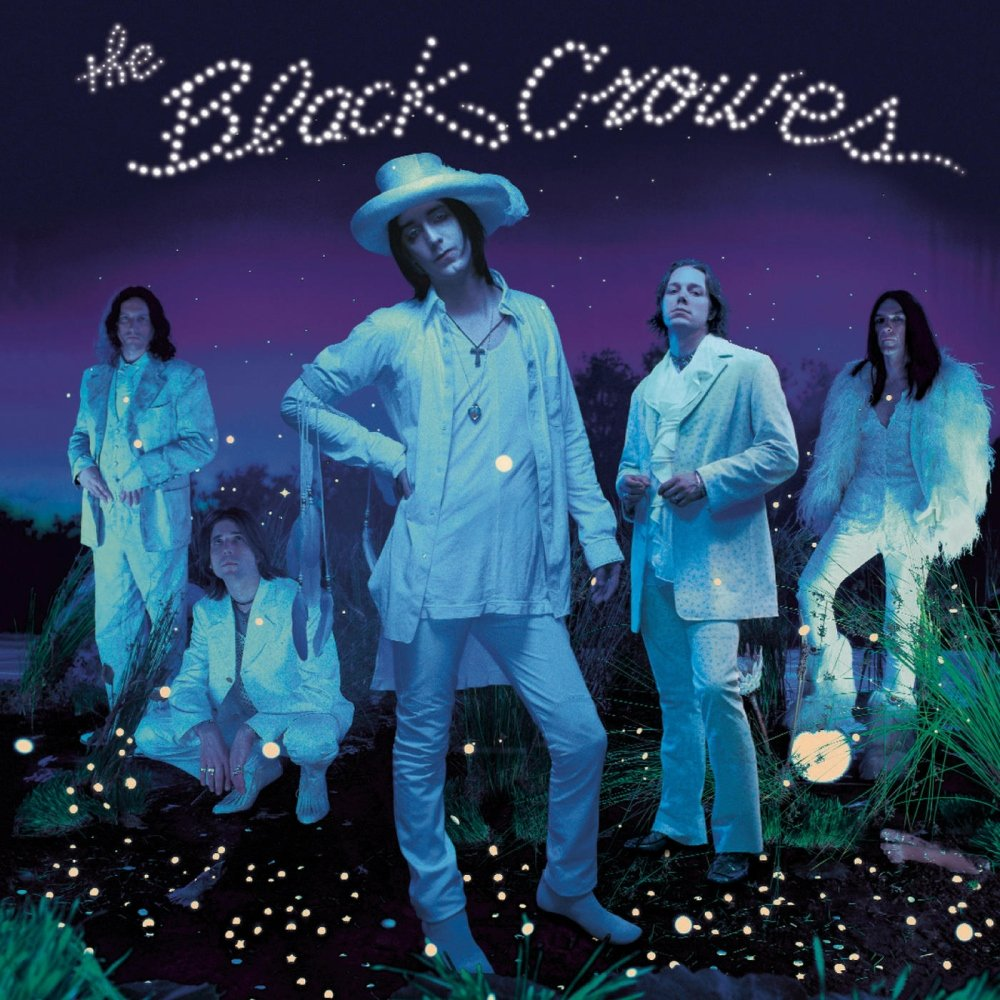
By Your Side (1999)
Starting things off with a raucous slide up the guitar neck, ‘Kickin’ My Heart Around’ never slows down for three minutes and 41 seconds. The song is soaked in overdriven guitars and a non-stop toe-tapping rhythm that culminates with an ear-piercing harmonica-laden bridge. With lyrics like, ‘Well I told you so now it’s time to go / Got to get this show on the road / Just stop kickin’ my heart around,’ it’s easy to get this song stuck in your head.
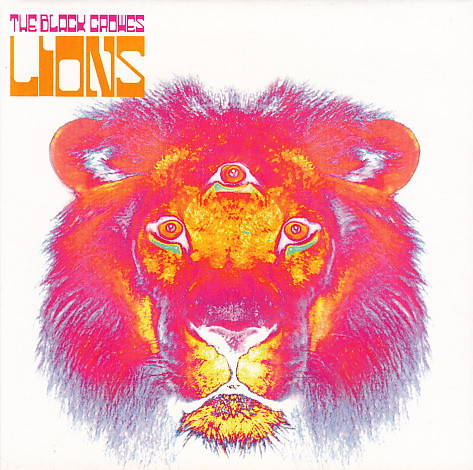
Lions (2001)
On an album full of blues-, soul- and classic rock-tinged tracks, ‘Lickin” stands out as the most memorable. Built on a wicked guitar riff manned by Rich Robinson, the song is filled with gritty vocals and lyrics as well. While ‘Lions’ may have caused some mixed reviews from critics, it’s hard not to argue that “Lickin” rocks from start to finish. Adding to its appeal, it is a rarity for the band to perform the song live, having done so less than 100 times since its concert debut in 2001.
Honestly, I’d rather have more “Before The Frost” or “Warpaint” than “Lions“. The former options sum up that awesomely worn sound of latter-day Black Crowes, and “Lions” is the last and the worst chunk of their career. There are some good songs there, and there are some ridiculously awkward and awful ones, but they’re unified in being lost in some greasy sludge of a production sound.
There’s no denying that bright spot of “Soul Singing” hidden in the middle, though. One thing about the Black Crowes is they can do gospel more convincingly than a lot of blues-rock bands. Those drums and guitars in the verses tumble forward relentlessly, in wanderlust, until it all peals out into the chorus that feels like the moment where you’re driving in some new place and reaching the crest of the hill, totally unaware what you might find on the other side. “Soul Singing” was a mainstay in the Black Crowes’ later tour setlists, and for good reason: It’s an unquestionable highlight in an era of the band otherwise defined by diminishing returns.
Warpaint (2008)
While the blues have always played a role in the Black Crowes’ music, ‘Evergreen’ is a shining example of just how far they can push their talents. ‘Warpaint’ is the first studio album with Luther Dickinson on guitar, and his Southern rock and blues influence is obvious on ‘Evergreen.’ Dickinson’s chops shine around 2:20 as he takes front-stage for a lively and one-of-a-kind solo that bleeds perfectly into the final chorus.
The Crowes’ first hiatus ended in 2005, but it wasn’t until 2008 that “Warpaint“, their first record since 2001’s “Lions“, would see the light of day. Given the lackluster nature of“Lions” and its predecessor “ByYour Side”, and the general nature of a band coming back after a prolonged break, “Warpaint” is way better than it has any business being, than anyone would’ve likely expected.
The Crowes wound up aging really, reallywell, arriving at an earthier classic rock vibe that suited them well and would’ve continued to suit them well. There are all sorts of moments from “Warpaint” that came to my mind for this list: the heavy bass thrum in the chorus of “Walk Believer Walk,” the beautiful lament of “Locust Street,” the Beatlesque psychedelia in the chorus of “Wounded Bird,” or the blues-raga refrains of closer “Whoa Mule.”.
“Goodbye Daughters Of The Revolution.” has all the trademark characteristics of that late Crowes music more band than Zeppelin but with a melodic punch comparable to the more amped-up singles of their past. It might not hit you over the head the same way the chorus of “Twice As Hard” did back in the day, but it’s the most infectious song on“Warpaint”without sacrificing that album’s earned grit and character. Chris Robinson’s voice, in particular, had aged so well after some of the unfortunate squawking on“Lions”: grainier, seen-some-more-things, like you can hear the fact he was now sporting a big old shaman beard. On setlists, the song sat perfectly alongside the classics from the earliest albums.
Before the Frost…Until the Freeze (2009)
The most recent Crowes’ studio album featured several psychedelic tunes, but one song stands out amongst the 20 offered, and that’s the Dylan-esque, ‘I Ain’t Hiding.’ With a funky bass beat and wicked guitars, the song’s vibe is amplified with Robinson’s lyrics and vocals. Opening with, ‘Rust on my pickups and blood on the stage / Seeds in the ashtray and coke on the blade,’ the Chris Robinson-penned song is flawless in its old-school rock and roll style.
In the Black Crowes recent years, the thing that does disappoint me about their breakup is that I really loved where they’d started to go as they aged. More country and bluegrass being woven in, more weathered and whiskey-soaked guitars and vocals, more of the Band than Zeppelin. All of which is an appropriate direction for a band that had turned into ragged survivors approaching fifty. “Before TheFrost…Until The Freeze”, the album that for the moment is their last, and the album they recorded live in front of an audience in Levon Helm’s barn, is really the sort of thing that works as a whole; anymore. “Before The Freeze”… is a warm, lived-in kind of sound where all the material sits together. “Good Morning Captain,” a ruggedly chilled-out opener that shows just how good these guys sounded toward the end. Whatever line-up they’d arrived at (I, like you probably did 20 years ago, stopped trying to keep up with the band’s personnel changes) has just the right vibe for the road-worn, sun-burnt sounds of “Good Morning Captain.”
It’s the paradox of that corner of classic rock artists where you can tell these guys are a great unit and play incredibly tight together, but that skill is put toward crafting a sound that’s natural and shambling, so that every time Chris Robinson gets around to belting out that chorus, it sounds like he’s in swamp bar out of a Southern myth.
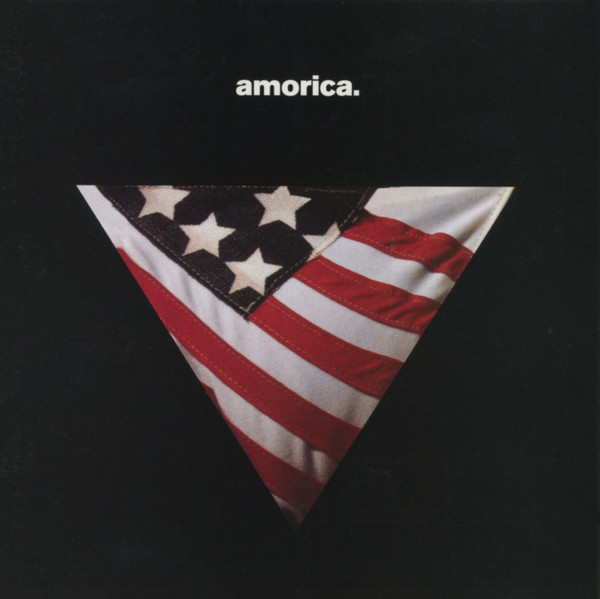
Amorica
It’s possible the Black Crowes could have found a slightly more tasteful way to show their patriotism than by using this picture of a not-entirely big enough bikini from the cover of the July 1976 issues of ‘Hustler’ magazine.
You can’t go wrong with anything off of “Amorica”. Having always had a soft spot for the weird “Lowrider”-isms of “High Head Blues” or the unnerving angles of “Gone,” both vied for the spot of the “rock song from “Amorica” on this list. But what I like about “A Conspiracy” is, in a song, it kind of sums up the general knottiness of the Black Crowes’ third record, the one that was, more or less, experimental by their standards.
The big flare-out intro of “A Conspiracy” and its heavy, wah-assisted riff collectively represent one of the rare moments in the Crowes early discography where they sounded, yes, still classicist but also like they actually lived in the ’90s. And then after it rides this rigidly dirty and funky groove for a bit, it opens up into a pretty, introspective chorus. There’s all these weird little sounds and structural decisions in the songs on “Amorica”, but also gives it this drugged-up sprawl that can be hard to connect with compared to “Southern Harmony” or “Shake Your Money Maker”. “A Conspiracy” works well as a kind of skeleton key to the album.
The strength of the Black Crowes’ ballads, there’s “Wiser Time,” one of the most beautiful songs in the band’s catalogue. “Wiser Time” is forever linked to the song that precedes it, “Ballad Of Urgency.” After some of the scorched rock songs that begin “Amorica”, “Ballad Of Urgency” and “Wiser Time” form a little gorgeous unit that holds down the album’s mellower second half. It’s when the last strains of guitar and last dwindling flashes of cymbals flow seamlessly into the beat for “Wiser Time” that I feel like we’ve arrived where we wanted to go. On the more overtly Southern rock end of the Black Crowes spectrum, this is their “Midnight Rider,” a song that seems born from and built for aimless drives down desolate American highways, probably alone and, yeah, probably at night. Out of any of the traditions in classic rock or American music, the searching and wandering song that sounds good in a car while summer air flows in through an open window.
The Black Crowes became overnight sensations with 1990’s “Shake Your Money Maker”. By the time they released 1992’s “The Southern Harmony and Musical Companion” critics had jumped on their bandwagon – and they stuck around when mainstream audiences started losing interest in 1994’s “Amorica”.
But neither fans nor pundits could entirely agree on 1996’s eclectic and polarizing album “Three Snakes and One Charm“, which the Black Crowes recorded during a period of intense internal acrimony, particularly between the brothers Chris and Rich Robinson.
“There was a lot of emotional baggage” in the aftermath of the Amorica tour, and everyone got on each other’s nerves,” said Rich in September 1996. “We almost broke up a few times, but finally we all let go and moved on.” Chris, for his part that eventually “you just realize, ‘Oh, shit, I’m lucky and I’m happy ’cause I’m making a living being a musician, which is the thing I love more than anything.'”
A little distance also seemed to do the trick, as Chris was living in Los Angeles and Rich in Atlanta when they started swapping song ideas long distance. They slowly knocked their demos into shape before calling their band mates and producer Jack Joseph Puig to record basic tracks in an Atlanta home they soon baptized as Chateau de la Crowe. Prolific as usual, the band wound up capturing over two dozen songs, out of which they picked 12 that showcased both familiar Black Crowes hallmarks and novel experiments, all of them later finished at Los Angeles’ Ocean Way Studios.
Among Three Snakes’ many highlights, “Under a Mountain” was a cryptic Southern rocker (sample lyrics: “Lay down with number 13”) that was written in five minutes, according to Rich; “Nebakanezer” was a psychedelic strut laced with serpentine guitars and “(Only) Halfway to Everywhere” an irrepressible singalong; the Indian-flavored “How Much for Your Wings” made for a beguiling detour and “Blackberry” was a funky rhythm & blues penned in the spirit of the band’s earlier, breakthrough hit with Otis Redding’s “Hard to Handle.”
And while some songs, including “Good Friday,” “One Mirror Too Many” and “Better When You’re Not Alone,” generally slacked off or dragged on like they had no place to go, the similarly slow but in every way sublime country soul of “Girl from a Pawnshop” became a peak moment in the Black Crowes‘ career, as it gradually built up with delicate tension, finally released via Marc Ford’s stinging, cathartic lead breaks.
Sales were sluggish compared to prior efforts, stalling well short of “Amorica” gold and the previous LPs multi-platinum figures. The No. 15 chart peak slightly disappointing, but it’s hard to find more flaws than triumphs among these songs. Instead, the Black Crowes remained fairly untouchable when it came to reviving classic-rock sounds and re-imagining them in original new ways, making them sound as fresh and timeless as you please.
Three years later, with 1999’s next studio album, “By Your Side”, Chris, Rich, Marc, drummer Steve Gorman, keyboardist Eddie Harsch, and new bass player Sven Pipien (who replaced the popular Johnny Colt) were generally praised for reviving the safer Stones and Faces inspired style of their debut. With the benefit of hindsight, the risk-taking freedom of Three Snakes and One Charm appears to have been vindicated in the broad scope of the Black Crowes’ career – polarized opinions, occasional imperfections, and all.
With the recording of The Black Crowes fourth album, Three Snakes and One Charm, released 25 years ago, the band remained untouchable when it came to reviving classic-rock sounds and re-imagining them in original new ways.
For the 25th anniversary of the album, we wanted to create something as unique as the record, and asked illustrator Nathaniel Deas to take viewers on a visual exploration of the album: Creating a print for The Black Crowes is an absolute dream come true, and not a responsibility that I took lightly. Previous artwork for the band, created by some of my personal heroes, has established an iconic legacy that I tried to honour while putting it into my own words. To celebrate the 25th Anniversary of “Three Snakes and One Charm,” I tried to incorporate as many references to the album as I could squeeze in, scattering hidden nuggets throughout the design. My hope is that the viewer has as much fun exploring Mr. Crowe’s garden as I had while creating it.
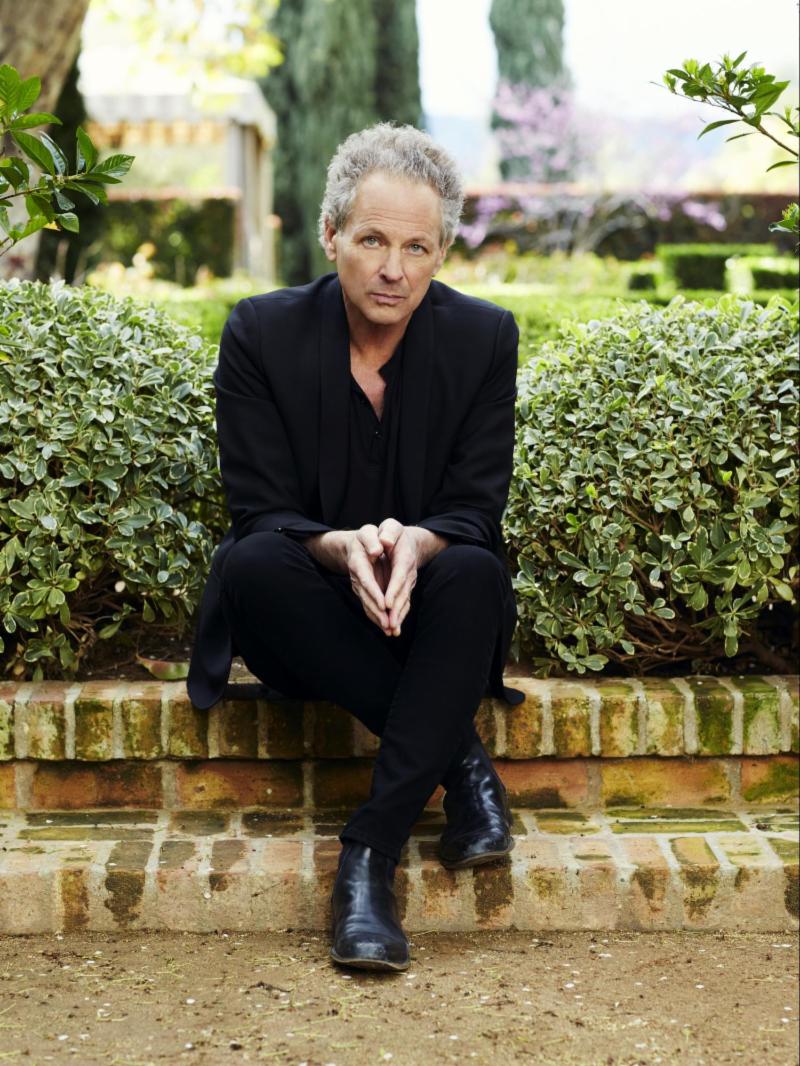
Lindsey Buckingham has released a second track from his forthcoming self-titled album, due out September 17th, 2021, on RepriseRecords. He says “On the Wrong Side” is about the peaks and valleys of life on the road with Fleetwood Mac.
The song follows the first single, “I Don’t Mind.” Lindsey Buckingham is his first solo release since 2011’s “Seeds We Sow” and follows his departure from Fleetwood Mac. As with the seven studio and three live albums he has released as a solo artist, beginning with 1981’s Law and Order, the new project, says a press release, “showcases Buckingham’s instinct for melody and his singular fingerpicking guitar style, reaffirming his status as one of the most inventive and electrifying musicians of his generation.”
“On the Wrong Side” sports one of the album’s most thought-provoking lyrics: “We were young, now we’re old / Who can tell me which is worse?” Buckingham says the song evokes “Go Your Own Way,” in that it’s “not a happy song, subject-matter wise, but it was an ebullient song musically. This was sort of the same idea.”
Buckingham will be returning to the stage with a 30-city 2021 U.S. tour, marking his first in-person shows since a life-saving open heart surgey in 2019. He’ll kick off the extensive run of shows on September 1st.
Written, produced and recorded by Buckingham at his home studio in Los Angeles, the album will be released via vinyl, CD and on all digital services. A limited-edition blue vinyl version is also available for pre-order via http://www.lindseybuckingham.com.
Says Buckingham of the meaning of the single, “‘I Don’t Mind,’ like many of the songs on my new album, is about the challenges couples face in long-term relationships.” He continues, in the June 8 announcement, “Over time, two people inevitably find the need to augment their initial dynamic with one of flexibility, an acceptance of each other’s flaws and a willingness to continually work on issues; it is the essence of a good long term relationship. This song celebrates that spirit and discipline.”
[The same day as the announcement of the new album and tour, it has also been reported that Buckingham and his wife of 21 years, Kristen Messner, are heading for a divorce. The couple have three children.]
The new album, the release continues, “is a welcome display of Buckingham’s instantly recognizable guitar work and vocal layering, particularly on songs such as ‘Power Down,’ ‘Scream’ and ‘Swan Song.’” Elsewhere, Buckingham pays homage to ’60s folk group the Pozo-Seco Singers’ hit single “Time,” a song he’s admired since he was as a teenager and has long intended to cover. “I wanted to make a pop album, but I also wanted to make stops along the way with songs that resemble art more than pop,” he says. “As you age, hopefully you keep getting a little more grounded in the craft of what you’re doing. For me, getting older has probably helped to reinforce the innocence and the idealism that hopefully was always there.”
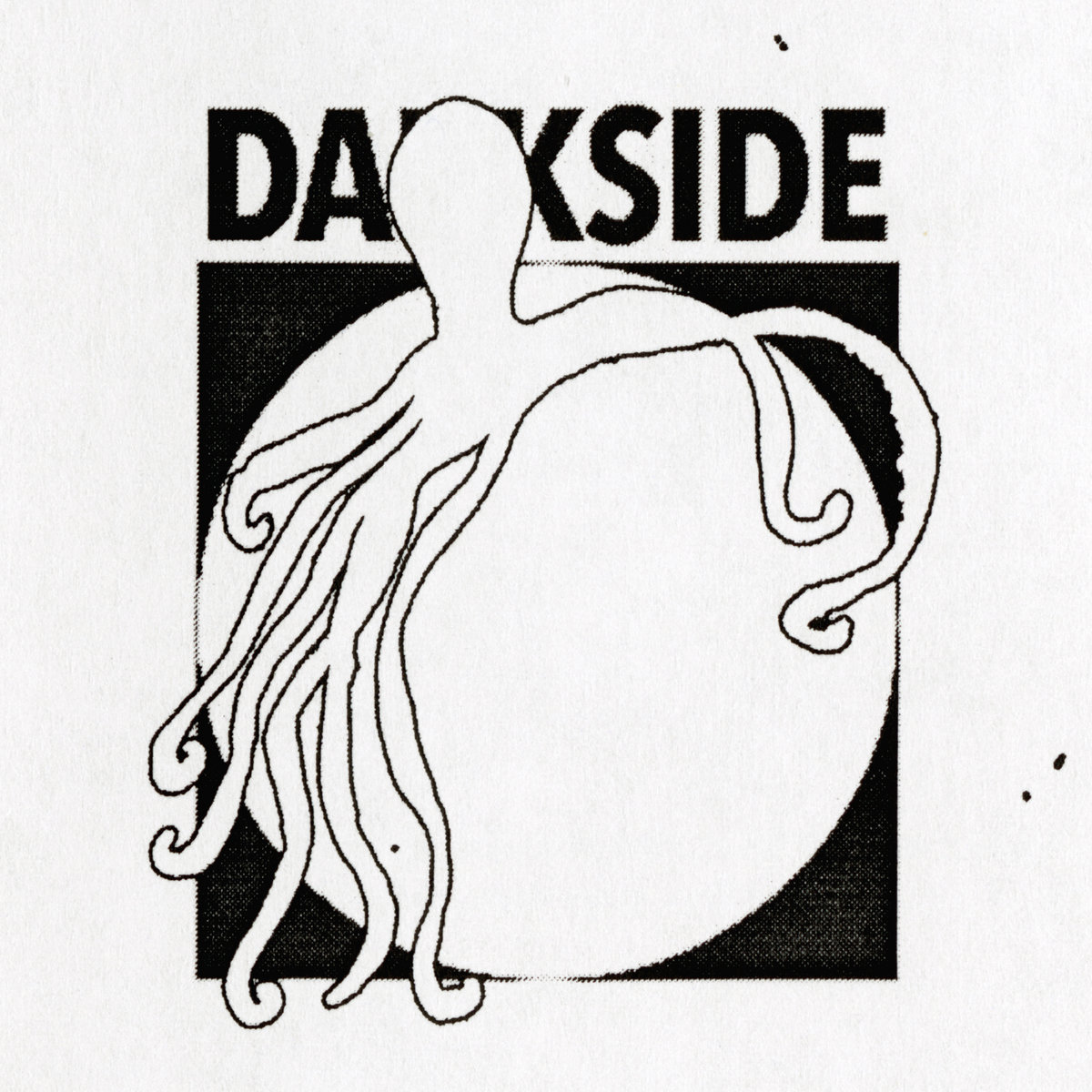
Darkside is an American rock band formed in Providence, Rhode Island in 2011. The group consists of Chilean electronic musician & vocalist Nicolás Jaar and American multi-instrumentalist Dave Harrington. Jaar and Harrington first met while studying in Providence through their com- mon friend and saxophonist Will Epstein. In the summer of 2011, they toured Europe and Australia in support of Jaar’s breakthrough debut album “Space Is Only Noise”.
Upon returning to Providence, they continued to write together, releasing their self-titled EP in 2012 and their critically acclaimed debut album “Psychic” on Matador Records in October 2013. The album was met with glowing reviews, including a 9.0 from Pitchfork and The New York Times calling it “the soundtrack to a lost David Lynch sci-fi movie.”
In the summer of 2018, Harrington and Jaar rented a small house on Lenni-Lenape territory, which is present-day Flemington, New Jersey. The group spent a week there, making a song a day. While it would take another year and a half to complete their second album, six songs from the band’s new record “Spiral” were written and recorded during this initial session.
“From the beginning, Darkside has been our jam band. Something we did on days off. When we reconvened, it was because we really couldn’t wait to jam together again,” says Jaar. Harrington echoes this, “It felt like it was time again,” he said. “We do things in this band that we would never do on our own. Darkside is the third being in the room that just kind of occurs when we make music together.”
Released July 23rd, 2021
2021, DARKSIDE under exclusive license to Matador Records
The second episode of Jim Beam’s Welcome Sessions see’s Grammy-nominated Irish act Fontaines D.C. return to, beloved North London independent music venue, The Lexington.
The Lexington was home to some of Fontaines D.C.’s first shows outside their native Ireland. Within its walls, the band cut their teeth amongst London’s live music fans, earning their reputation as a tour-de-force live act and drawing in sell-out crowds.
Working in collaboration with photographer Nick Helderman and music production team La Blogotheque, the band tore through a re-recording of their A Hero’s Deathtrack, “I Was Not Born”
“So often it’s a singularly unique experience you can’t replicate or imitate playing live and is so often magnified or diluted by the space you are in. As opposed to the overly controlled feeling you get in larger venues, there’s a more natural, authentic feel offered to you by the smaller independent gigs,” Fontaines D.C.’s Conor Curley says.
“It’s refreshing to be back at The Lexington, which has a particular romance that reminds us of when we started out. Memories of this place are all about the people within it. The moment when crowds fill the space and surround the stage. That feeling of belonging and never being alone that music gives us as performers and audience members.”
Carlos O’Connell ads, “We have been incredibly lucky that there’s always been ‘a buzz’ and energy around our live gigs. The experience of being a live performer is a heightened one in which emotions are amplified and having that sense that you are welcome within a space among an audience who share your love for the music you are making is a vitally important thing.
“In its very essence, a live performance is a conversation between the band, their instruments, and the crowd in front of them. You can’t manufacture that buzz. It can never be as fulfilling as creating communion with an audience that is both feeding off and providing you with the energy you need in the moment.”
“You’ve Got It Wrong” is the second in a series of singles leading up to an album release on 24th September 2021 titled All Our Born Days. This song is the polar opposite of the positive vibes from Ocean & the Moon. Written several years ago after The Daydream Club experienced front line displays of toxic human behaviour and it left them feeling vulnerable and enraged. Being level headed people they decided to move past it and shelved the song but over the years to follow it seemed relevant to so many events occurring around the world and so it was time to release it. The music features an air of restrained power and tension with bursts of mass harmonies, trembling high tones and a steady electric guitar laying down the anchor.
During the recent trying times for everyone around the world, one positive that comes out of the chaos is the spotlight it shines on the people you care about and who you couldn’t imagine living without. The duo wrote the heartwarming song ‘Ocean & the Moon’ as an open love letter to each other, “You were meant to be my home, Like a force that can’t be known, Like the ocean & the moon, I’m connected to you.” The sound blends dream-like ambient atmospherics with a summery groove and lush harmonies throughout.
All Our Born Days is the seventh album release from The Daydream Club in 11 years. Made a decade after forming, All Our Born Days draws upon the lifespan of the band to date. Having formed in 2010 a lot has happened in global and personal events. Lyrically Adam & Paula explore what they have witnessed and experienced, the good and the bad. Musically it’s a culmination of all of the duos sounds over the years coming together in one album, combining influences from alternative, ambient, electronic, folk, classical crossover, soul, dub and trip-hop.
As with all of The Daydream Club’s releases they have personally created every aspect of the album from writing, recording, producing, mixing and mastering to the artwork, photos and music videos… there’s no big team between audience and artist, just two people creating art.
Released July 23rd, 2021
All songs written & performed by The Daydream Club, Adam Pickering – Vocals, Rhodes, Electric Guitar, Synth, Bass Guitar, Programming, Drums Paula Pickering – Vocals
THE CLASH – “ENOUGH ROPE?” 10-INCH DOUBLE ALBUM ON TRI-COLOURED CLEAR VINYL IN GATEFOLD SLEEVE
LIMITED EDITION JUST 2000 NUMBERED COPIES
“Enough Rope?” is the legendary broadcast from The Palladium NYC on 21st September 1979. This powerful recording captures The Clash at the peak of their form performing material from “Give ‘Em Enough Rope”, “The Clash” and their soon to be released third album, “London Calling”.
This may be the most famous concert in the history of The Clash, the night of the “ultimate rock photo” when Paul smashed his bass and it became the cover of “London Calling”. This is also the source of probably the most widely circulated Clash bootleg from the FM radio broadcast.