Thumbnail

The Specials have pushed back the release of their forthcoming protest song covers album by a week. The Specials who enjoyed a triumphant 2019 with the release of the critically acclaimed “Encore”, their first ever number 1 album, coming 40 years after they exploded onto the music scene and launched the 2 Tone movement, make a very timely return with the release of their brand new album Protest Songs – 1924 -2012. Standing up for your rights has always been paramount for The Specials. The very epitome of sharply-dressed cool when they first emerged in the late 70s, the Coventry group spearheaded the UK’s multi-racial 2-Tone movement, and their classic hits such as “Rat Race,” “Stereotypes,” and “Ghost Town” railed against socio-political problems ranging from racism to police harassment and mass unemployment.

Released through their new label Island Records, the album features twelve singular takes on specially chosen protest songs across an almost 100-year span and shows The Specials still care, are still protesting and are still pissed off! ‘Protest Songs – 1924 -2012’, which was originally due to hit shelves on September 24th, will now be released on October 1st to allow for the vinyl format to reach fans on the same day.

Protest Songs 1924-2012 allows The Specials the freedom to do exactly that. In the very broadest sense, it is a “covers” album, but as the titular dates suggest, it’s been drawn from the most diverse source material imaginable – and it’s offered the band the chance to broaden their own sonic palette.

As the recording process started, 50 songs were in contention, which The Specials then reduced to 30 and finally to the 12 cuts that made the record. After the lockdowns, Horace says that finally getting back in the studio “is what keeps us going – it’s our soul food,” so now he’s suitably nourished, the bassist is ready to give an exclusive track-by-track guide to Protest Songs 1924-2012.

The band confirmed the move in a statement posted to their Twitter: “In order to get everyone their vinyl on [the] release date we’ve had to move the release of ‘Protest Songs 1924-2012’ back a week to October 1st.”

Earlier this month the group shared the first track “Freedom Highway” a track written by the Staple Singers for the famous civil rights marches from Selma to Montgomery in 1965.

Across the album’s 12 songs, The Specials also take on versions of tracks by Talking Heads, Bob Marley, Leonard Cohen and more. Meanwhile, the band kick off a new UK tour today (August 31st) at Bristol’s O2 Academy before wrapping things up at London’s Troxy on September 25th. They also play Dublin’s Trinity College next year on July 2nd.

1: Freedom Highway (The Staples Singers) (1965)

This makes for a suitably anthemic way to start the album as it’s all about unity and it captures the spontaneity of the recording. With a lot of these songs, we didn’t have a set arrangement before we went into the studio and with “Freedom Highway,” what we ended up with came from us trying to perform the song in different ways.

We’d started to break a few rules of what The Specials’ “sound” supposedly constitutes on our last album, Encore, and we wanted to continue that with this record. We weren’t exactly throwing the rule book out, but the overriding attitude was”‘f__k it, let’s just play what we want to play,” so being constrained by what we’d done on our previous records went out of the window. “Liberation” is a word I use a lot and I think a sense of that runs through “Protest Songs“.

2: Everybody Knows (Leonard Cohen) (1988)

Terry [Hall, The Specials’ vocalist] chose this one. He’s a big fan of Leonard Cohen’s, though I’ve since discovered this song has been covered several times, including for one of the Marvel movies and (in 2008) for an anti-smoking campaign in Australia, of all things. We changed the song’s original arrangement quite considerably. The original version features an oud, it’s brilliant but insane. We’ve given it a Sly and Robbie or Grace Jones kind of vibe, which I really like. It’s got a quintessential Specials-style groove, but we haven’t detracted from the laconic way Leonard Cohen delivered his original recording.

3: I Don’t Mind Failing (Malvina Reynolds) (1967)

One of the joys of making Protest Songs was discovering Malvina Reynolds’ catalog. Most people only know her for the songs “Little Boxes” and (anti-nuclear anthem) “What Have They Done To The Rain?” – but there’s so much more to her. She was from a Jewish immigrant background and her people were opposed to the Second World War. She studied music theory at the University of California in Berkeley and she was a contemporary of Pete Seeger’s.

There were actually five Malvina Reynolds songs up for selection at one time, though we ended up picking this one and “I Live In A City” for Protest Songs. I particularly like “I Don’t Mind Failing,” because it’s saying you absolutely don’t have to be perfect as a person, but it doesn’t point its finger about it. It’s not saying “you mustn’t succeed”’ either, but it’s saying “so what if you don’t.” Just do your best, but if you fail that’s fine – you’re human. The message is ideal for The Specials, because we like to put things out there and give our audience the space to make up their own minds rather than trying to ram things down their throats.

4: Black, Brown & White (Big Bill Broonzy) (1938)

This is sung by Lynval [Golding, vocals, and guitar]. Big Bill Broonzy was a great influence on a lot of the English guys who became famous during Britain’s 1960s blues boom, like John Mayall and Jeff Beck. People mostly remember him for the song “Key To The Highway,” but he wrote loads of songs, he copyrighted over 300 during his lifetime. The version of this song that inspired us was recorded in 1947, but he recorded “Black Brown And White” quite a few times. In those days, the situation would be, “Hey, I’ll give you $15 if you go in the studio and record that song,” to which Broonzy would say “But I’ve already recorded it,” but the reply would be “Doesn’t matter, go and do it again.”

5: Ain’t Going To Let Nobody Turn Us Around (The Dixie Jubilee Singers) (1924)

This is the oldest song on the record. The version that inspired us was by the Dixie Jubilee Singers and theirs was a capella take. But I’m pretty sure the song was around much longer than that. It could well have been around since the American Civil War and I would imagine it originally came straight out of the church as it has that gospel thing going on.

It’s been covered any number of times. I remember we heard another jazzy version of it by a woman singer whose name escapes me, but Steve Miller also cut a version of it for an album called “Your Saving Grace” in 1969 (as “Don’t Let Nobody Turn You Around”) which I also remembered from my youth. That’s why our version of it starts with the a capella part and then the band comes in full tilt. It was a blast to record and the organ solo on it is just amazing. It captures the joy of us actually being in a room together and being able to play music together – that’s what being in The Specials is all about, after all.

6: F__k All The Perfect People (Chip Taylor & The New Ukrainians) (2012)

By comparison, this is the newest song on Protest Songs and it might surprise you to learn this was written and performed by Chip Taylor, who – to most people – is best known for writing “Wild Thing” (The Troggs, Jimi Hendrix) and Juice Newton’s “Angel Of The Morning.” But he’s had quite a career. He’s something of an Americana cult figure (he’s also actor Jon Voight’s brother) and he recorded this with his recent band, The New Ukrainians.

Apparently, he was in Norway and he visited a prison, so he wrote this with the prisoners in mind. It’s more about perspective than anything and it goes back to the same kind of sentiments that Malvina Reynolds expresses on “I Don’t Mind Failing.” It’s a great song and it was made for Terry [Hall] to sing. Chip Taylor’s version is good – it’s pretty laconic – but I think Terry certainly equals it, if not betters it.

7: My Next Door Neighbor (Jerry McCain & His Upstarts) (1957)

We originally found this on an American Library Of Congress compilation as I recall, but mostly I remember hearing this for the first time and thinking”‘this is insane – we have to do this song!’” Jerry McCain was apparently a contemporary of [another harmonica wizard] Little Walter and yes, effectively the song’s a jump blues, so it’s the sound of The Specials playing jump blues, but why not?

We’re really lucky to work with some fantastic musicians to be able to pull this off. Kenrick [Rowe] is a fantastic drummer, who also works with Jazz Jamaica and Aswad and he also previously worked with PJ Harvey. He’s world-class and so is Steve [Cradock] who everyone knows from his work with Paul Weller and Ocean Colour Scene. And Nikolaj [Torp Larsen] is a consummate musician. His arranging skills are great as well as his keyboard playing.”

It all meant we could tackle a song like this and it was great fun. As for the song itself – well, obviously it’s important to talk about the big issues like civil rights, but what about the guy next door who won’t give you your vacuum cleaner back? That’s something to protest about too!”

8: Trouble Every Day (The Mothers Of Invention) (1966)

Freak Out! was the first album I ever bought and I didn’t like it. I remember thinking “What is this?” The second side, especially, was unplayable to me, but the first side was OK. But back then I couldn’t tell anybody that I didn’t like it because I was only 15 and trying to be hip!

But this particular song stuck with me and it seemed to fit as we were doing an album called Protest Songs as it’s about the Watts Riots of 1965. Listening to it again, I thought it could have been written last week. I like the fact it doesn’t condone violence. It’s more about the stupidity of human nature. It’s about the man who burns down the shop during the riot, but doesn’t think about where he’s going to get his milk from the next day now he’s burnt the shop down.”

It was great fun to record. We’re were trying to goad Steve [Cradock] into freaking out on guitar and we succeeded as he goes crazy on it. Once again, we’ve never recorded anything like it with The Specials. It’s got that driving, motorik beat and it sounds German. It could be Amon Düül or something.”

9: Listening Wind (Talking Heads) (1980)

This is sung by Hannah Hu, a young and very talented singer from Bradford, Yorkshire, who also features on “Freedom Highway.” Terry [Hall] brought this one to the table because he’s a big Talking Heads fan, but he also said “I love this song, but I can’t sing it convincingly,” which is why Hannah was brought in.

We didn’t want to do it like Talking Heads did, which was like a sparse, proto-electro song. I suggested we do it in an indigenous Rasta way, so Kenrick [Rowe] brought up two guys he knew from Brixton, Bammy and Tony. The latter’s 92 years old, but he did this amazing drumming and it just sounded fantastic when added to the Count Rastafarian horns.

To have all these guys work with us and also this terrific 23-year old from Bradford singing was just something else. It’s that inter-generational thing about working together and making music sound astonishing.

10: I Live In A City (Malvina Reynolds) (1960)

This song has a really childlike quality about it. I was surfing around on the internet looking at videos when we were researching this song and there was one of Malvina [Reynolds] looking like a school teacher-y mom with a big acoustic guitar playing this song. You can hear why, because it’s almost like a nursery rhyme, like “The Wheels On The Bus” or something – it has that innocence about it. It’s just lovely and that was its innate charm. But it’s also an important song because it’s about equality. It’s saying, “well, everybody here helped to make this world we live in, so we need to look after it – and each other while we’re at it.”

11: Soldiers Who Want To Be Heroes (Rod McKuen) (1963)

Rod McKuen was an American singer-songwriter and a poet, too, but he fell between stools. He was derided by a lot of the hippies for being some sort of whimsical, Kingston Trio-type folky, but he spent a lot of time in Europe. He’s well known for having discovered Jacques Brel and for translating his work into English – and of course, a lot of Brel’s stuff was later popularized by Scott Walker. McKuen also had one of the biggest record collections in the world at the time of his death, which I didn’t know either.

But this one is a strange song. It was first recorded in 1963, before America’s wide-scale involvement in Vietnam. It’s got an almost whimsical quality, as if it could have been written at the time of the American Civil War. But then, when it was re-released in 1971, it immediately struck a chord and became this anti-war anthem, because of the draft. It’s got those lines about “Come and take my eldest son/Show him how to shoot a gun” – about the idealism and promise of youth being destroyed by war, so every generation can relate to it.

12: Get Up, Stand Up (Bob Marley & The Wailers) (1973)

It’s really difficult to do a Bob Marley cover because…well, how can you do anything with something that’s perfect to begin with? Besides, everyone knows it as a full band song and you can’t top The Wailers’ performance. So we tried to deconstruct it to get down to what the words really mean. The music’s great, but sometimes the words get lost as a result. Lynval [Golding] did a really good job on it, he got right inside the song.

With help from Peter Tosh, Bob Marley originally wrote the song after he’d toured in Haiti, where he experienced the poverty that people were going through first-hand and the regime the people were forced to live under at the time. He was deeply moved by it and “Get Up, Stand Up” was the result. Sadly, the message is just as relevant now and the song resonates as strongly as it ever did.

 Protest Songs 1924-2012, out now.
RACHEL ANGEL – ” Highway Songs “

Posted: August 31, 2021 in MUSIC
Best Songwriter

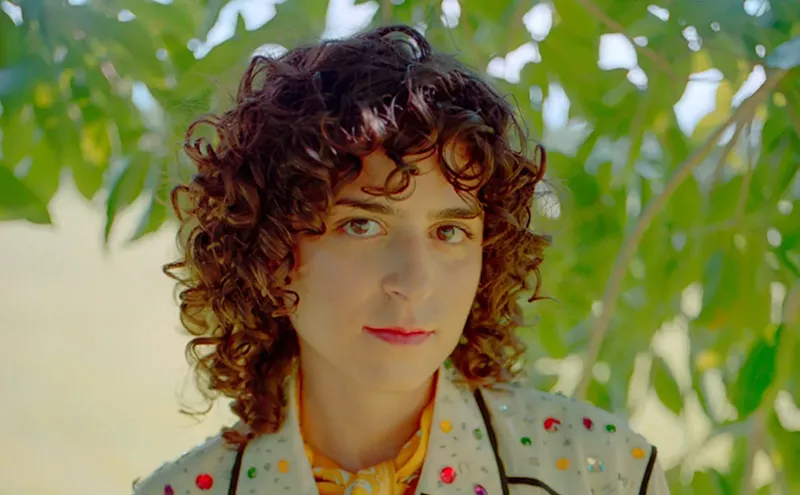
Since Rachel Angel returned to her hometown last year after a sojourn in Brooklyn and a tour of the U.S. and U.K., the alt-country songwriter has released an EP and played shows around town. Now she’s hitting the road again. “I just got back from recording a nine-track album at Miner Street Recordings,” she tells New Times. With support of fellow Miami musician Rick Moon, the album was recorded at the well-known Philadelphia recording studio, which has hosted the likes of Kurt Vile, Sufjan Stevens, Sharon Van Etten, the War on Drugs, and more. Release details are still being firmed up for Angel’s first full-length album, but she’s already off to New York and thence to Valencia, Spain (to explore higher education, she explains). Her roots, though, remain in Miami.

When Rachel Angel sings “I wanna be a renegade,” she is speaking to the experience of personal transformation and resilience, like putting on a protective coat of armour to meet the world with grace and courage. While the songs on the EP were inspired by the spirit of outlaw country, her sense of the outlaw is metaphorical rather than literal. These songs are about taking the unconventional artists path, and staring in the face of danger, fear, and pain. In her latest EP “Highway Songs,” the country-folk troubadour takes the listener on a wild journey— physical, emotional, spiritual, and everywhere in between.

These songs were written in the midst of a harrowing time for Angel— she was physically sick with an auto-immune disease, self-quarantined in her Brooklyn apartment, writing at a feverish pace. She reflected on her recent travels, both as a touring musician, and time spent in Mexico during a 7.1 earthquake with her family.

“Highway Songs” was recorded live in two days with an all star line-up at Figure 8 Studios in Brooklyn, NY.

Released August 21st, 2020

Rachel Angel – Vocals/Guitar
Brian Betancourt – Bass
Sam Owens – Lead Guitar/Keys
Noah Hecht – Drums
Dan Iead – Pedal Steel Guitar
Clyde Daley – Trumpet on “Mexico”

All songs written by Rachel Angel (BMI)

The Byrds: Sweetheart of the Rodeo - Legacy Edition Vinyl 4LP (Record Store Day)

By the time “Sweetheart Of The Rodeo” was released in 1968, The Byrds had already changed the sound of rock music twice; from jangling folk-rock to experimental acid-rock, they constantly sought to push the boundaries of what rock music could be. The 1967 departure of David Crosby left a creative void filled quickly by country music-loving Gram Parsons, whose addition led Roger McGuinn, Chris Hillman and company to record an album comprised mostly of authentic country material in Nashville, with the aid of local session aces (including future Byrd Clarence White).

For the first time on vinyl—and on the heels of a 50th anniversary tour of the album by original members McGuinn and Hillman—this Legacy Edition of Sweetheart Of The Rodeo showcases this country-rock masterpiece alongside 28 bonus tracks, including demos, outtakes, rehearsal versions and tracks by Parsons’ pre-Byrds outfit, The International Submarine Band.

Fifty years after its creation, Sweetheart of the Rodeo looms as a cornerstone of country-rock and point source for alt-country and Americana, The Byrds’ most consequential stylistic stroke since the band’s pioneering folk-rock debut three years earlier. Yet when planning for the album began during the first months of 1968, the group was struggling against commercial headwinds and crippled by personnel changes, reduced to co-founder and lead guitarist Roger McGuinn and bassist Chris Hillman.

The duo was licking its wounds at the disappointing reception to the band’s fifth and most ambitious album, The Notorious Byrd Brothers, which found them stretching to meet the high bar set by Sgt. Pepper. With its aggressive electronic edge and topical material reflecting political and cultural unrest, Notorious had earned them some of the best reviews of their career. By the time of its completion, however, internal dysfunction had boiled over, with McGuinn and Hillman firing David Crosby and drummer Michael Clarke. That album’s lead-in single, a wistful version of Gerry Goffin and Carole King’s “Goin’ Back,” had stalled after its October ’67 release.

By February, the two surviving members had drafted Hillman’s cousin, Kevin Kelley, as drummer and embarked on a trio tour that exposed their lack of firepower. With McGuinn and Hillman as the only signatories to a new Columbia Records contract, the plan was to proceed with hired sidemen. McGuinn, meanwhile, envisioned an even more ambitious full-length that would double down on Notorious’ scale by attempting a pan-generic survey of 20th century music.

Enter Gram Parsons. The Florida-born, Georgia-raised Parsons was a new kid in town seeking success with the International Submarine Band, whose debut album was weeks from release. Invited by Hillman to audition for the Byrds on piano, Parsons’ voice, guitar and original songs quickly established him as more versatile—and ambitious. Not content to be a mere hired hand, the charismatic Parsons lobbied for a shift away from McGuinn’s grand concept. Instead, Parsons pushed for a narrower focus highlighting the country elements he was already exploring with the ISB.

Not that the Byrds were strangers to country, especially Chris Hillman. As a teenager, he’d established himself as a mandolin player with Southern California bluegrass bands. As a Byrd, he had persuaded his bandmates to cover Porter Wagoner’s 1955 hit, “A Satisfied Mind,” and his Byrds debut as lead singer and songwriter came with “Time Between,” a brisk country shuffle on 1967’s Younger Than Yesterday. In Hillman, Parsons gained a crucial ally and future collaborator, and together they closed ranks with McGuinn around Sweetheart’s focal concept. With producer Gary Usher, they headed for Nashville and a week of March sessions reinforced by seasoned country session musicians. Subsequent Los Angeles sessions would follow in April and May.

Sweetheart’s opening track underlined the Byrds’ pivot from Hollywood to Music Row vividly. “You Ain’t Goin’ Nowhere” found them turning yet again to Bob Dylan for material, this time tapping into the bucolic spirit of the as-yet-unreleased Basement Tapes. In place of McGuinn’s signature Rickenbacker 12-string, the arrangement spotlighted Lloyd Green’s giddy pedal steel filigree, dancing between the vocals above a loping country beat. The album would close with another Basement Tapes gem, “Nothing Was Delivered,” but the set list otherwise leaned on country and folk material, plus a recent R&B ballad, William Bell’s “You Don’t Miss Your Water.”

Bell’s soulful weeper was tied to Parsons’ no-longer-hidden agenda in his Sweetheart input, a second draft for what he deemed “cosmic American music”—a junction of Southern idioms that prized both white country and black rhythm ’n’ blues. Vocal harmonies, pedal steel (by Jay Dee Maness) and honky-tonk piano (by Earl P. Ball) were anchored in Nashville, while Bell’s lyrics were pure Memphis, but Parsons’ original vocal ran afoul of protest from Lee Hazlewood and LHI Records, to which the International Submarine Band was signed. McGuinn tracked a new vocal lead in a compromise intended to quell the dispute.

The same fate befell several other Sweetheart tracks, most notably “The Christian Life,” an Ira and Charlie Louvin classic celebrating faith despite the loss of less devout friends. Parsons may have been a wealthy trust-fund kid and practicing libertine, but his reverent vocal featured here honoured the Louvins’ sincerity, nodding toward the axis of sin and soul shared by country and R&B. As heard on the finished album, McGuinn’s sarcastic drawl betrays his ambivalence, if not contempt, for the Louvins’ fervour.

The legal détente with Hazlewood and LHI over Parsons’ ISB obligations didn’t entirely erase him from the tracks. Most crucially, Parsons landed two original songs on the album. “Hickory Wind,” written with former ISB member Bob Buchanan, was a homesick reverie, a country waltz set against sighing fiddles and graced with gorgeous vocal harmonies. Parsons’ aching lead vocal projected weary vulnerability, alluding to worldly “riches and pleasures” that prove powerless against loneliness.

Parsons was less fortunate, however, with his second Sweetheart original, “One Hundred Years From Now,” another concession to LHI. Once more, McGuinn was pressed into service for the lead vocal, providing one of the set’s two mid-tempo rockers alongside “Nothing Was Delivered.”

Parsons’ lead vocals were retained for covers of Merle Haggard’s penitent “Life in Prison” and Luke McDaniels’ barroom lament, “You’re Still on My Mind,” clinching the newest Byrd’s prominence on Sweetheart.

Elsewhere on the album, McGuinn turned to Woody Guthrie for “Pretty Boy Floyd,” which cast the ’30s gangster as a Depression-era Robin Hood. Hillman, meanwhile, contributed the album’s other nod to country gospel, “I Am a Pilgrim,” and took the lead vocal on Cindy Walker’s “Blue Canadian Rockies.”

By the time “Sweetheart of the Rodeo” was released on August 30th, 1968, Parsons had left the group after refusing to play dates in South Africa. Hillman would soon follow him to join forces in the Flying Burrito Brothers, building on the “cosmic American” blueprint that would be further refined with Parsons’ solo albums with protégé Emmylou Harris.

Although other bands, including the Beatles, Lovin’ Spoonful, Buffalo Springfield and Monkees had nodded affectionately toward country, the Byrds had leaned into country too far, too soon, for Sweetheart, notching the lowest sales of any Byrds album to date: however, the project’s legacy would slowly reveal itself in a rising tide of country-rock full-lengths from the Burritos, Poco, ex-Byrd Gene Clark and, yes, the Byrds themselves, in a line-up now featuring Clarence White, whose nimble country guitar leads had been featured on the band’s studio albums since 1967.

Fth420lp 3000x3000pix cover 2

Out on September 24th – Spencer Cullum’s Coin Collection, limited edition green LP, CD and Rough Trade Exclusive clear LP in hand-numbered sleeve. If you’re yet to hear this wonderful, eclectic record, please give the tracks a spin – there’s something for everyone; acid folk, nashville americana, kosmiche…the list goes on.

With an arm’s length list of credits stretching from the likes of Kesha, Dolly Parton and Deer Tick, to Miranda Lambert and Little Big Town, pedal steel savant Spencer Cullum is one of Nashville’s most in-demand session cats. That’s in addition to making up half of acclaimed, primarily instrumental space-country duo “Steelism.” Clearly he’s had little trouble fitting in since moving from his native London to Music City by way of Detroit eight years ago, even if it’s mostly meant blending into the background. “I guess I’ve always hidden behind [the instrument],” he deadpans. “I’m always the guy who looks like he’s studying for a test in the background.”

Now, with a debut solo album, Spencer Cullum’s Coin Collection, paying homage to the ’60s and ‘70s psych-pop, folk and proto prog heroes of his homeland, this Nashville sideman’s stepping out from the shadows into the spotlight. Along with a supporting cast of fellow Music City stage and studio aces like guitarist Sean Thompson and multi-instrumentalist Luke Reynolds, as well as singing and writing partners like Caitlin Rose, Andrew Combs, Erin Rae, Annie Williams and James “Skyway Man” Wallace — he’s bringing a bit of Britain to Tennessee.

“I wanted to write a very quintessential English folk record, but with really good Nashville players.” Cullum says of Canterbury Scene conjuring Coin Collection. Cuts like glass-lake-placid album opener “Jack of Fools”, “Seaside” and the dreamlike “The Dusty Floor,” recall the prime work of the influences he name-checks: Kevin Ayers, Robert Wyatt, Fairport Convention and Sandy Denny. Beyond that, the album manifests his love for psych-prog ground-breakers the Soft Machine (“Tombre En Morceaux”), digs deep into cerebral ambient inspirations like Robert Fripp and Brian Eno (“My Protector”) and krautrock icons NEU! (“Dietrich Buxtehude”) – references he’d previously explored with Steelism. “I’ve always wanted to mix krautrock music into folk and psychedelic,” he explains.

Let us know what you think…

May be a cartoon of text

It was 10 years ago today that Ry Cooder’s album ‘Pull Up Some Dust and Sit Down’ was released on Nonesuch Records. Uncut magazine called it “one of his best albums ever … an impassioned portrait of 21st century America and its injustices” in which Cooder is “remade as a modern-day Woody Guthrie, fearless and funny, for like Guthrie he nails his targets with droll humour while empathising with society’s underdogs.” The BBC calls it “essential listening.”

When Ry Cooder recorded his first two albums, collections of songs by the likes of Lead Belly and Woody Guthrie that evoked the desperate times of the Great Depression, he could scarcely have imagined that 40 years later he’d be singing of the same old problems, but relating them to modern times.

In the intervening years since that eponymous 1970 debut and the following year’s Into the Purple Valley, Cooder has learned to trust his own song writing rather than relying on his encyclopaedic folk and blues knowledge, and few of his nearly 30 albums and soundtracks have been as strong as this.

His last album, I, Flathead was in 2008, He told the story of beatnik salt flats racer Kash Buk, and although one theme similarly emerges from “Pull Up Some Dust” here Cooder delivers numerous desperate, broken, bloodied and disenfranchised folk left to rot by those who put greed before humanity. Individually they are studies in blues, country, dustbowl folk and boogie, but collectively they add up to a powerful state of the nation address.

After completing his epic California Trilogy, with its stories of life in his home state in the 40s and 50s, Ry Cooder returns with a solo project that is as refreshing, brave and original as his early recordings in the 70s. This time round there are no elaborate narratives, but there is a common theme: these are songs of a broken, divided society and the gap between rich and poor, but with the anger matched against humour. He’s a master at setting bleak or thoughtful lyrics against jaunty melodies. 

Bleak humour streaks most of “Pull Up Some Dust”, whether it’s the hard-done-by financiers dragging up the ladders on No Banker Left Behind, maimed soldiers returning home in the anti-war polka Christmas Time This Year, or his hilarious impersonation on John Lee Hooker for President, which imagines The Hook’s manifesto for the White House (“Everyone gets one bourbon, one scotch, one beer / Three times a day if they stay cool / And little chill’uns get milk, cream and alcohol / Two times a day if they stay involved in school”).

Elsewhere, Jesse James contemplates returning from Heaven to visit some Old West justice on Wall Street in the Tennessee waltzing El Corrido de Jesse James, the pleasures of an uncomplicated life are extolled in Tex-Mex ballad Simple Tools and The Almighty is lambasted for His negligence in If There’s a God. In the end, however, on parting shot No Hard Feelings Cooder dismisses the rich and powerful as ripples in history welcome to go their way if they let him travel his own path.

Good luck with that, Ry, but this is about as good and sustained a riposte to the grubby, grabbing times we live in as any artist has mustered, which makes it essential listening.

See the source image

Kristian Matsson, aka The Tallest Man On Earth, is a Dylan successor if there ever was one. In fact, some music writers and fans may even feel his voice is a little too reminiscent of Dylan’s. His tendency to write music that’s more raw and stripped-down paired with his strained, gruff vocals make the comparison almost too obvious. But, then again, Matsson’s music is still something singular. Across five LPs and three EPs, the Swedish singer/songwriter and fingerpicker extraordinaire has charmed his way through folk circles and indie rock strongholds alike, positioning himself as one of the finest roots musicians working. Last year, he veered away from the strictly rustic style of his first four LPs in exchange for a more elaborate setup on I Love You. It’s A Fever Dream.: horn sections, electronic blips, atmospheric effects. But at the core of all his music is Matsson’s introspective song-writing sensibilities and his banjo (or guitar, depending on the song). In honour of one of the best artists in the world of indie folk, Matsson has a broad fanbase, but The Wild Hunt in particular has steadily acquired new fans and has aged especially gracefully over the last decade. Here are 10 of our favourite songs from his catalogue.

“Sagres”

While 2015’s Dark Bird Is Home is by and large a bit of a dark spot on Matsson’s otherwise untarnished discography, there are a few moments of reprieve within it. One of those is “Sagres,” a jangly folk-pop number that pays respect to Cape Sagres, a headland in the southwest of Portugal that’s nicknamed the “end of the road.” In the song, however, Matsson toils in the end of a relationship and starts to question everything, lamenting “It’s just all this fucking doubt,” at one exasperated point in the song.

“It Will Follow The Rain”

Matsson leans fully into his folklorist side on this cut from his self-titled debut EP. Mentioning mountains, valleys and lightning strikes, this song was just the tip of iceberg when it comes to The Tallest Man On Earth’s obsession with the natural world. Some of his best work references our Mother Earth, and this song in particular contains a hopeful, pastoral energy as Matsson compares life to the fleeting nature of a rainstorm.

“Little River”

His 2010 EP Sometimes The Blues Is Just A Passing Bird contains some of Matsson’s best work, not least among it being “Little River.” If it weren’t for a rolling, quickened under-beat and a rather morose conclusion (“You just sing about your own death in your closet / You stumble out into the pitch-black hallway,” he sings at one point), it’d make the perfect lullaby.

“1904”

“1904” is undoubtedly one of the jammier songs across Matsson’s eight projects, benefitting greatly from an electric guitar groove. Apparently the song references a devastating earthquake that rocked Sweden and Norway in the titular year, but you needn’t have any knowledge of natural disasters to make sense of this pleasant folk-rock tune.

“Shallow Grave”

In all honesty, there isn’t much dispute among fans about which of the Tallest Man On Earth’s albums are best: 2008’s Shallow Grave and the proceeding The Wild Hunt (2010) are almost always going to come out on top. The title track from the former contains all the elements that make this pair of albums so interesting and listenable: a relentless banjo lick, existential ramblings and Matsson’s inimitable scratchy-throated cry. The narrator here is down-on-his-luck, and Matsson finds the most lyrically beautiful ways to convey this unrest: “I found the darkness in my neighbour / I found the fire in the frost / I found the season once claimed healthy / Oh, I need the guidance of the lost.” Following his debut album Shallow Grave in 2008, Matsson was invited to tour with indie-folk lord Bon Iver.

“Troubles Will Be Gone”

The human condition is one of constant searching and exhaustion. We have no assurance that things will be “OK,” as friends and family so often try to convince us. But, at the same time, their dedication to helping us believe everything will turn out alright is in itself proof that no matter what happens, life goes on, because we have loved ones around to see us through it. Matsson infuses a near-perfect banjo melody with this promise on “Troubles Will Be Gone”: “Well the day is never done / But there’s a light on where you’re sleeping / So I hope somewhere that troubles will be gone.” The Wild Hunt, his sophomore LP released on April 13th, 2010, Matsson makes the acoustic guitar sound like an orchestra on “You’re Going Back” and the banjo like a full-throttled band on “Troubles Will Be Gone,” a song about goodwill written in the verbal style of Robert Frost. The entire album is full of these tiny orchestras and miniature choirs—a sound few of Matsson’s contemporaries were able to recreate. But many folk artists who’ve arrived in years after The Wild Hunt have seemingly been taking notes. The like-minded Joan Shelley treats her acoustic guitar with a similar reverence, instrumental artist and former Silver Jews musician William Tyler probably learned a thing or two about pacing and rhythm from Matsson and Hiss Golden Messenger’s M.C. Taylor carries on the legacy of curving his sultry, lilting vocals into a style resembling Dylan, as do Kevin Morby and Waxahatchee, who share that same distinct vocal formula. The Wild Hunt gave proceeding indie-folk artists something to aspire to in terms of both authenticity and craft.

“I Won’t Be Found”

This is, technically speaking, a lovely display of Matsson’s talents. The cascade of banjo is enough to convince anyone to be on his side. But the lyrics, too, help you root for Matsson, as he projects plans for the future before realizing that, if he’s not focusing on the present, he might as well be asleep. “Well if I ever get that slumber / I’ll be that mole deep in the ground,” he sings. “And I won’t be found.”

“Burden of Tomorrow”

Who among us hasn’t fretted over what tomorrow will bring? Here, Matsson promises a partner he’ll be one less thing to worry about, while also acknowledging that while we can think about the future all we want, we truly have no clue what it will bring. We just have to meet it when it comes: “Oh but hell I’m just a blind man on the plains,” he sings over pristine guitar. “I drink my water when it rains / And live by chance among the lightning strikes.” Stylistically, The Wild Hunt isn’t all that different from the mystical, lean and perhaps even more lyrically forthright Shallow Grave. The Wild Hunt is only four minutes longer than Shallow Grave’s half-hour runtime, and like its predecessor, it only features a handful of instruments—never drums—and little to no production effects. Where Bon Iver may flirt with the occasional droning feedback and Marcus Mumford a thundering electric guitar solo, Matsson was strictly acoustic and, usually, strictly analogue. While he has a knack for layered wordplay in the vein of Dylan, rusticity was—and remains—his greatest strength. Kristian Matsson injected light and love into a form of music-making that was half-a-century old at this point, and he made it into something new, singular and sustainable. The Wild Hunt remains an aspirational album in that regard—few roots artists have managed to finesse such an act since.

“Love Is All”

“Love Is All” is The Tallest Man On Earth’s “hit”—and for good reason. It’s the perfect entry point into his catalogue and a damn good folk song in its own right. He recounts the dreadful end of a relationship, and, from the point of the listener, it sounds like he’s brusied beyond repair (“Love is all, from what I’ve heard, but my heart’s learned to kill”). But instead of dwelling on the lost “future” of this couplehood, he releases his regret: “Here come the tears / But like always, I let them go / Just let them go.” Further perfecting his tilted, Dylan-esque vocal delivery, Matsson (who, miraculously, learned English as his second language) spends the bulk of The Wild Hunt spitting out sturdy metaphors and basking in a pastoral wonderland. The album’s high points—including the back-to-back pair “King of Spain” and “Love is All,” easily two of his most popular singles to date—are the closest things you’ll ever hear to pop songs in The Tallest Man On Earth’s catalogue. The former expresses desire to pack up and start life over at a lover’s side on Spanish shores, while the latter is a kind of all-encompassing epic poem about the beauties and dangers of love. That may sound like a grandiose description, but Matsson has a way of making even the shortest folk song into something almost biblical. “Like a house made from spider webs and the clouds rolling in / I bet this mighty river’s both my saviour and my sin,” he sings on the spritely “Love is All.”

“The Gardener”

The Tallest Man on Earth’s “The Gardener” is a metaphorical story of hiding one’s ugliness to better be the apple of a lover’s eye. The verses are patterned a certain way, each a distinct scene recounting a figurative body buried, with the sort of subtle variations that keep you grasping always for the next lyric, imagining the garden you have made.

Woods

Woods have released a new collection called “Reflections Volume 1” (Bumble Bee Crown King). It includes rare and unreleased tracks from 2009-2013. The band plans to release some vinyl editions of the collection next year. Find selections below and buy “Reflections Volume 1” at Bandcamp.

“With no touring this year, and possibly next, we decided to take a deep dive into our archives and put together the first volume of our much discussed archival series, Reflections,” Woods said in a statement. “Our hope is that it plays like a ‘lost record’ from an extremely strange and fruitful period in Woods history.”

Featuring rare and unreleased recordings from 2009 – 2013, Including a ghost town desert jam off the side of the highway, our first live performance in Big Sur, the first recorded version of Bend Beyond and some shelved diamonds in the rough that were finished up during quarantine. Our hope is that it plays like a “lost record” from an extremely strange and fruitful period in Woods history. 

Track notes:

1. Bumble Bee Crown King – Recorded to cassette tape just off the highway in Arizona, on tour in 2009 after we passed a sign that read “Bumble Bee Crown King.” As a bunch of native New Yorkers, we were surprised to find nothing but endless desert when we pulled off of i17. Unaware of Bumblebee’s ghost town history we set up drums and a battery powered amp and began to bang away. Driving in the desert for so long can have a crazy affect on you. It’s both inspiring and anxiety producing. This session was our way of exercising the demons and getting that crazy energy out. Overdubs added in August of 2020 when it was finally mixed.

2. Midnight Moment – Recorded April 16th, 2013 at Buttermilk Falls in Warwick, NY during the writing of With Light and With Love. Bass and piano added during quarantine 2020.

3. Be Kind My Love – Recorded April 11th, 2013 at Buttermilk Falls in Warwick, NY during the writing of With Light and With Love. We spent a good amount of time working on a version in the studio, but we couldn’t recapture the magic of the demo. It was our first time in a proper recording studio and a couple of good songs got shelved because we didn’t know how to translate that feeling from our home recordings into the studio yet. Bass, wurlitzer and organ added during quarantine 2020 when it was finally finished and mixed.

4. Skull – Recorded at Buttermilk Falls, Warwick NY. with additional recording & mixing at Rear House June, 2011. This has, what might be the best drum take ever featured on a Woods recording. Is it just one long fill?!  Remixed August, 2020.  Originally appeared on a split 7″ with Kurt Vile for our 2011 tour together.

5. Party In The Pines – Recorded live August 29, 2009 in Big Sur, CA during Mexican Summer’s Party In The Pines Festival. Though we were mostly playing for Redwood trees the title stuck and felt inappropriate to change. I remember that, being one of the only non Mexican Summer bands on the bill, we had to play first. It was probably around noon and there were just a few people in lawn chairs watching. It was Jeremy’s idea to cut a few songs and open with an improv just to stretch out and set the mood. This was our first time playing in Big Sur at the Henry MIller Library and was the impetus for our future Woodsist Festivals. A day that forever changed our lives. 

6. Space and Time – Recorded February 7, 2012 at Buttermilk Falls in Warwick, NY. Bass added during quarantine 2020 when it was finally finished and mixed.

7. Ballad Of Jim Jones – Written by The Brian Jonestown Massacre. Recorded August 2, 2010 at Buttermilk Falls in Warwick, NY after watching a Jonestown documentary. Bass and Organs added in 2020.

8. Bend Beyond (First Version) – Recorded March 1st, 2011 at Buttermilk Falls in Warwick, NY. This was our first attempt at recording it and has a more laid back approach with acoustic guitar and hand percussion. After working on it, we started playing it live and over the course of a year of touring, it had turned into a loud, duelling electric guitar, epic set closer. When we revisited this version of it, we realized we had to honour what the song had turned into live. Which was a big turning point for us, turning from a recording project that then does live interpretations of these weird home recordings to a band that actually tested out songs on tour before committing to a final version. 

Released October 2nd, 2020

The Band:

Jeremy Earl – vocals, guitars, drums, percussion, Mellotron
Jarvis Taveniere – bass, guitar, organ
G Lucas Crane – percussion (track 1), tapes/ percussion (track 5)
Kevin Morby – percussion (track 1), Bass (track 5)
Kyle Forester – piano (track 2), organ (track 7)

Recorded by Jeremy Earl and jarvis Taveniere. Mixed by Jarvis Taveniere

This past May, Woods released their new album “Strange To Explain”.

HOLY WAVE – ” Interloper “

Posted: August 31, 2021 in MUSIC

Generating thick layers of sound that twist and turn through a complex labyrinth of reverb and echo, Holy Wave is an experimental dream-pop band originally from El Paso, Texas who upholds the Lone Star State’s long-standing reputation for top-notch lysergic sounds.

Since making the move to Austin in 2008, they have cemented themselves as a staple force in the international psychedelic rock scene receiving critical acclaim from Pitchfork, Consequence of Sound, Paste Magazine and giving performances at Levitation, Desert Daze, and Levitation France. They toured the world, shared festival stages with acts such as Slowdive, Spiritualized, Froth, Kevin Morby and in 2020 they are prepared to release their latest body of work.

‘Interloper’ [in-ter-lop-er] noun – “a person who becomes involved in a place or situation where they are not wanted or are considered not to belong.” What happens when the world beneath your feet changes so much that you feel like a stranger in your own shoes? This is the premise for the latest full-length record from Holy Wave. “Interloper” sees the band adding new layers to their lush and mesmerizing song writing style. Written about the duality between life at home and life on the road, it sees the band expanding on their most esoteric and thought-provoking themes.

“I’m Not Living in the Past Anymore” is a self-assuring mantra that intends to break the cycle of the mundane. “Escapism” is a dream-like meditation that serves a reminder of how to stay grounded and “Interloper” serves as the center-piece for this self-expanding record. It carries the ominous uncertainty of helplessly watching your environment become less and less like the place you used to know. With “Interloper” Holy Wave weaves together a contemplative psychedelic tapestry that serves as a guidebook for the diffident.

This is the white vinyl version.

May be an image of 1 person

Kevin Morby has announced a new demo album titled “A Night At The Little Los Angeles“, the album is comprised of 4-track demo recordings that led to his 2020 release “Sundowner”. The tracks were recorded in the back shed of Morby’s home which he calls “Little Los Angeles.” The album is set to release October 8th.

“When I later went into a proper studio to make what would become Sundowner, my goal was to capture the essence of these initial recordings, and here you will now have access to the very essence I was chasing.” Morby said in a press release. “Many of my favourite recordings have been made inside of an artist’s home with little to no regard of the outside world, but instead deep in their own that they are building in real time,” Morby continued. “And with that – I’d like to invite you into my own little world here and now and ask you to please step inside and spend A Night At The Little Los Angeles.”

In addition to the annoucement of A Night At The Little Los Angeles, Morby has also released a single off the album titled “Campfire (4-Track Demo).” Morby will also be going on tour this fall from September 10th through November. 23rd.

“Campfire (4-Track Demo)” by Kevin Morby taken from ‘A Night At The Little Los Angeles (Sundowner 4-Track Demos)’, out October 1st on Dead Oceans Records.

A Night At The Little Los Angeles Tracklist:
1. Campfire (4-Track Demo)
2. Sundowner (4-Track Demo)
3. A Night At The Little Los Angeles (4-Track Demo)
4. Wander (4-Track Demo)
5. Velvet Highway (4-Track Demo)
6. Valley (4-Track Demo)
7. Brother, Sister (4-Track Demo)
8. Don’t Underestimate Midwest American Sun (4-Track Demo)
9. Provisions (4-Track Demo)
10. U.S. Mail (4-Track Demo)

Video Premiere: Jesse Malin Explores A Historic Mansion in “State of the Art”

Jesse Malin will release a new double album, “Sad and Beautiful World”, on September 24th via Wicked Cool Records. “This one is for the survivors, the dreamers, the leavers and the believers,” says Jesse. “My music has always been about rebirth and redemption. Sad and Beautiful World is for those who pick up the pieces and find beauty in the madness.”

The album is divided into two themed discs: “Root Rock” is mostly “sad eyed ballads” while “Radicals” is a little louder, but the whole thing was influenced by the last year. “The sirens, the protests, riots and the darkness outside my doorstep definitely made its way in these songs,” adds Malin. “Everything rose to a boiling point, and we found a way to get through it.

The album includes “The Way We Used To Roll” and his cover of Tom Petty’s “Crawling Back To You” and the new single is “State of the Art.”

According to Malin, the album was written and recorded in his native New York City, between 2020 and 2021 and it takes its title from the Jim Jarmusch movie, Down by Law.

Discussing the “State of the Art” video, Malin says, “The band and I reunited for the first time outside of New York City at a historic mansion in Staten Island. It was fun to go somewhere I didn’t even think existed. We went for the Kubrick, Barry Lyndon, Wes Anderson look… This is a statement about how isolated we’ve been, and getting lost in all the distractions that can be filtered into our homes while we’re overselling ourselves.”

Having already played a few shows recently since NYC opened up, Jesse Malin will be on tour this summer and fall with UK and European shows. 

Jesse Malin Under Exclusive License To Wicked Cool Records Released on: 2021-07-12