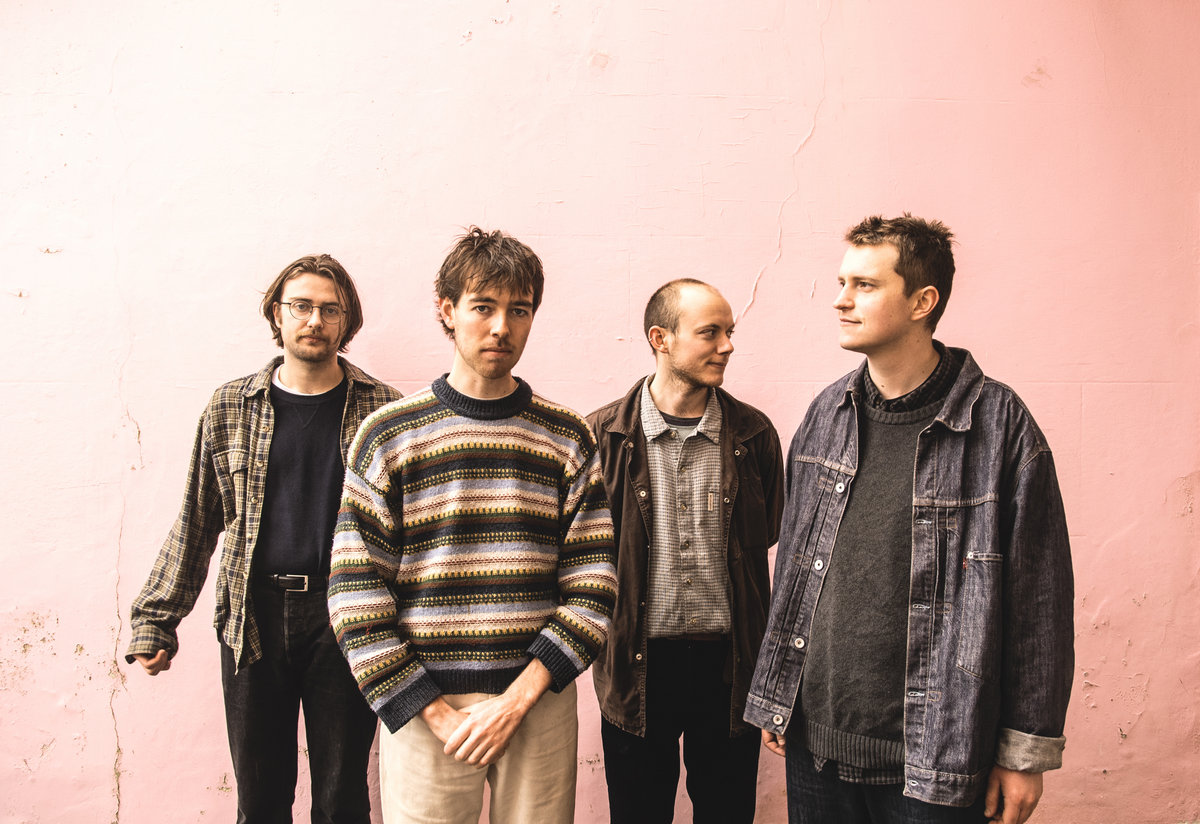
I was introduced to the band Fehlt in 2020 with the release of their debut single “Closure.” Their sinister hues, knotty riffs and throbbing rhythms resonated pretty quickly—their music struck me as pensive, but also heartfelt. Now returning with a debut EP titled “Figure Two”, this Leeds art-rock band takes another crack at sombre, monochrome tones and guitar labyrinths, and they execute convincingly. Singer/songwriter Ewan Barr’s sparing lyrics are difficult to decipher due to his muffled vocals, but the band’s moods still come across. Their songs are largely austere, but occasionally playful—the pummelling guitars and downcast vocals of “Withdrawal” represent the former, while the twisty riffs of “Shared Pleasantries” help puncture that darker tension. The most propulsive of the bunch is “Kopfkino,” a German word that roughly translates to “head cinema,” and it might be their best track yet. Barrelling around tight corners with might, it captures a certain type of escapism that flickers between torment and relief. They expel pent-up energy, but at the same time, their bleak sounds express anguish, which replenishes that tank, circulating it endlessly like a fountain. In a surprise to no one, they’re fans of Joy Division, and they close the EP with a cover of “No Love Lost.” It’s much more dense and atmospheric than the original, but their nimble krautrock-meets-post-punk chops are more than up to the task. If their next project is as stimulating as the cold, cinematic sounds of Figure Two, consider me very excited for the future releases.
Order the new EP ‘Figure Two’ featuring previous single ‘Light Porcelain’, and available on both clear & black vinyl. Limited to 50 each:
“No Love Lost” · Fehlt released on Clue Records 2021-09-03
A few years ago, I fell in love with Our Girl, a band fronted by The Big Moon’s Soph Nathan. I’m still struck by their compassionate song writing and majestic guitar work. Shortly after getting into them, I learned that their bassist Josh Tyler also plays lead guitar in a band called Breathe Panel, Split between London and Brighton, Breathe Panel come together to create a sound that is the sum of their four parts. Playing together half unplugged in a living room and swapping drums for cushions is where they would often hit their natural rhythm, capturing a shared feeling in songs in a quick and simple way.
With no agenda other than enjoying making music together, the resulting album Lets It In is ultimately positive in outlook. Themes include falling in love, moments in places, light, breathing, walking, urban living and finding beauty in a sometimes heavy environment. Living together in a shared house in East London, frontman Nick Green and lead guitarist Josh Tyler would start writing songs together as an escape from the restlessness of the city. “A sort of meditation from the mess”, says Nick.
With the arrival of the lockdown, their immediate surroundings became even more vivid and influential as spring turned to summer last year. “I’ve been reading about Psychogeography and the weird link between where you are and how you feel and how sometimes those two things can align to make you feel like you’re in a sweet spot just for a split second or an afternoon,” explains Josh. Their second and latest LP “Lets It In”, their songs feel carefully constructed—their vocal inflections peak at all the right moments and their guitar interplay is clever, but never overbearing. They’re cognizant of sonic space and the range of emotional tones brought to life by their sounds, and despite their attention to detail, their music still has a looseness to it. Nick Green’s good-natured coos are a welcome through line in their songs,
Those fleeting moments are preserved on the album in beautiful detail. “Tomatoes” was born out of the simple joy of growing plants on Nick’s windowsill. “My Preferred Memory Was The Opposite” emerged from a lyrical writing block that was overcome in a dream and finished the next day. However nowhere is the essence of the album found more precisely than on the album’s title track which documents a relationship blossoming at the first signs of the summer.
Alongside bassist Alex Turner and drummer Benjamin Reeves, the band set out to capture the core of the songs in an immediate and unaffected recording. They met their match in Bristol with producer Ali Chant (Katy J Pearson, Aldous Harding, PJ Harvey) where they recorded eleven songs over five days, live to tape. “Ali is brilliant in that sense as he was always about the group performance rather than getting too mechanical with the detail”, says Josh. They focused on the feeling rather than hitting every note perfectly, allowed space and clean tones. Even a short cough is left woven between vocal lines in “Sometimes Brighter”. “It was cool to just lay our cards out and make everything as pure as possible” adds Nick.
The result is a second album that sounds real and present in the moment, evoking the moments in time in which it was made.
It’s been bittersweet time watching Tropical Fuck Storm grow out of their blues-guitar roots into a sound that could maybe best be described as a tin hat nebula, progressing while at the same time leaving behind a part of the band on their recordings which proves so vital to their raucous live set. As if to apologize for the continued experimentation on Deep States, Gareth Liddiard almost immediately followed that record up with news of a new collaboration with a pair of avant-garde jazz figureheads who, ironically, seem to keep Liddiard’s out-there ideas in check. “Will to Power” is a hell of a way to kick off the campaign for the trio’s new record, blending a moody guitar familiarly descendent from The Drones with steady piano and percussion that ultimately warps into a TFS-sanctioned whirlwind of guitar and vocals equally out of whack. Can’t wait to hear this song stretched to 15 minutes if and when they tour.
Hello – I love this shit. It’s as monstrously ravishing as it is clumsy in its elegance.
Words run into each other with little regard for one another’s injuries. There are sounds who come out of nothingness to wallop and brutalize their fellow sounds.
This Springtime record is so full of strange wanderings that are broken and piled up on themselves that the heads have no idea where their tails are.
The live recording of Will Oldham’s West Palm Beach is treated with love and respect and would certainly be met with open arms by its author. “Jeanie In A Bottle” and “The Viaduct Love Suicide” are magnificent songs originally penned by Gareth Liddiard’s Irish uncle, Ian Duhig. The latter piece is a true story of a woman in the UK who had an abusive husband and a disabled child. She jumped off a bridge with her son in her arms. The press were saying she was fucked for doing such a thing, so Ian wrote the poem showing she was not. “The Island” is a noisy improvisation that’s wicked and wild with a slinky Hammond organ sneaking its way through the clatter. Irish composer Herbert Hughes wrote the tragic and haunting She Moved Through The Fair which exists in a number of versions and has been recorded by several artists (this one is best). “The Killing Of The Village Idiot is about the Australian Special Forces who went around slaughtering civilians in Afghanistan and recently got investigated and busted for it.
The single most important component in collaborative art is the chemistry between the collaborators. JimWhite has long been one of my favourite drummers: He reminds me of no one. His ability to keep perfect time while deviating from convention and tossing tambourines and broken cymbals on his kit is as marvelous to watch as it is to listen to. Gareth Liddiard’s guitar playing feels out of control, but he knows exactly what he’s doing. He throws nuanced accents like darts among the filthy din of distortion. And the ferocity his voice reaches is tremendous. Maestro Chris Abrahams’ playing is in a class by itself, ranging from the charm of Erik Satie to the nastiness of a truck-mounted excavator. These three gentlemen work, play and improvise together in an emotionally volatile universe. You could call it “jazz”, but that word is way too jazzy for what Springtime creates. There is no pompous audacity. No terrible flagrancy. Their music is heartfelt. It’s important.
Springtime is Gareth Liddiard, Jim White and Chris Abrahams
“Will To Power” by Springtime off their self-titled album ‘Springtime’ out on TFS Records & Joyful Noise Recordings.
Tame Impala will revisit their 2020’s album “The Slow Rush” with a new deluxe edition, featuring new remixes and b-sides. To give fans a taste of the new release, Tame Impala braintrust has re-released “Breathe Deeper” with a feature by rapper Lil Yachty. “It was so amazing to work with Kevin as I’ve been a big fan since high school, so it was a pleasant surprise and honour to be a part of such an incredible song,” Yachty said in a statement about his remix.
Initially released in February 2020, ‘The Slow Rush’ served as the follow-up to the Kevin Parker-led band’s 2015 LP ‘Currents’.
The new release will feature B-sides and remixes of tracks from the record, with the physical version being pressed on two transparent red LPs and featuring alternate artwork – including a 40-page booklet and The Slow Rush2050 calendar.
Both the physical and digital versions of the deluxe box set will feature two never-before-heard B-sides, the pre-album single ‘Patience’ (both the original and the remix) and additional extended versions and remixes from the likes of Blood Orange and Four Tet.
The Slow Rush Deluxe Box Includes:
• THE SLOW RUSH ON NEW TRANSPARENT RED 2LP FEATURING UNIQUE ARTWORK ELEMENTS TO THE ORIGINAL PRESS • 2 X 12″ VINYL REMIXES • B-SIDES 7” VINYL • DELUXE BOOKLET INCLUDING IMAGERY FROM THE SLOW RUSH PHOTOSHOOT & OPENING NOTE • THE SLOW RUSH 2050 CALENDAR • LIMITED EDITION COLLECTORS BOX
A deluxe box set of ‘The Slow Rush’ is now set to be released via Fiction Records on February 18th, 2022.
Big Thief have announced that following their tour across Europe between January and March of 2022 they’ll be heading to North America to continue to share their sound through May. The North American tour is widespread–the band will hit cities all around the U.S. and Canada including Brooklyn, N.Y., Montreal, Los Angeles, Portland Ore., Toronto, Salt Lake City.
The announcement comes with the release of their latest single titled “Change.” The track marks the fourth single the band has recently shared following “Little Things,” “Sparrow” and “Certainty.” Big Thief also shared with Mojo that they’ll be releasing a double album next year.
Another new song – it’s called “Change.” This one is really special to us. Engineered and Mixed by Dom Monks – thank you for all the love you put into this track, it can be heard.
Feb. 24 Manchester, England – Manchester Academy Feb. 25 Glasgow, Scotland – Barrowland Ballroom, Feb. 26 Dublin, Ireland – The National Stadium, Feb. 27 Bristol, England – O2 Academy Bristol, March 2 London, England – 02 Shepherd’s Bush Empire, March 3 London, England – 02 Shepherd’s Bush Empire, March 4 London, England – 02 Shepherd’s Bush Empire
Composer and multi-instrumentalist Erland Cooper explores the natural world of his homeland through an evocative mix of music, words and imagery. Cooper, formerly of The Magnetic North and Erland & The Carnival, is joined by the London Contemporary Orchestra for a journey across a trilogy of albums inspired by his childhood home of Orkney – its air, sea, land, community and dialect. Solan Goose is a record of symphonic pastoral scenes peppered with birdsong, written to escape the stifling reality of city life. We also visit the roaring seascapes of Sule Skerry and hear new pieces from his upcoming album, the last part of the triptych, delving into Orkney’s myth and mythology.
The concert also features spoken word from author Amy Liptrot, whose story echoes Cooper’s own. Leaving Orkney to pursue writing in London, she became overwhelmed by the difficulties and addictions of her urban life.
“… carves out a moment of audacious tranquility” The Guardian
“… at once calming and euphoric, with a beauty that’s its own justification” Uncut
“A special thing to experience the resolve of a perfectly formed trilogy … a vast, lush, mass of movement, colour and life.” NARC 5/5
Join me and my nest of musicians as we take our last ferry to Orkney in these special venues, performing my album trilogy show on its final trip north. We’ll play music from across Solan Goose, Sule Skerry and Hether Blether bidding farewell to this ships voyage.
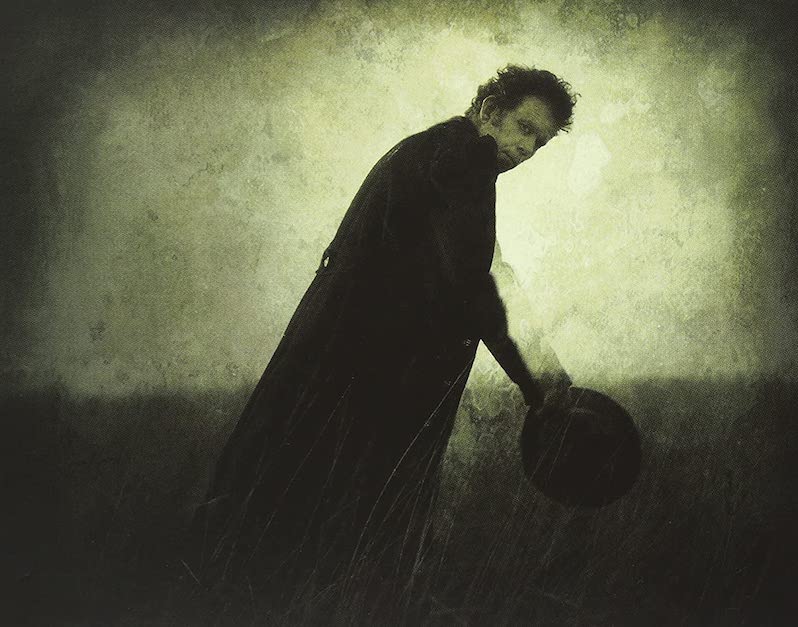
Tom Waits is a great storyteller. As a songwriter, it’s one of his greatest talents, the world of his extensive catalogue is filled with rogues and miscreants, oddballs and outcasts, people you may or may not relate to, but you damn sure want to know what happens to them, where they came from and how they ended up in a lonely room full of junk, or on a boat, or perhaps through the looking glass. It’s easy to think of Waits himself as one of the characters in his own songs, in part because of his gruff bark and fascination with the absurd, and in part because, well, he’s a notorious liar. Not for diabolical reasons mind you, it’s just part and parcel of his uncanny skill for spinning a yarn. “My father was a knife thrower,” he said in a interview. “And my mother was a trapeze artist. So we were a showbiz family.”
It’s important to remember that when going into “What’s He Building?”, the deeply unsettling spoken-word centrepiece of Waits’ 1999 album “Mule Variations”. It’s not a true story not exactly. There are truths within it, and Waits has certainly written songs that are based in real (sometimes tragic) circumstances, but he’s not a biographer or a journalist.
We actually don’t know much about the central figure in “What’s He Building?” He’s a composite of his neighbours’ observations and speculation, the subject of busybodies’ gossip and unearned prejudices. The glow of a television screen emanates from his dark windows, there may or may not be poison under his sink. Nobody really knows for sure, but there’s just something not right about what’s happening down the street, in this house, where this unnamed loner, perpetrator of unseen deeds, lives.
The track, inspired by the “word jazz” of Ken Nordine, isn’t so much a song as a miniature radio play, crafted not with melody but static-laden drones and sound effects beneath Waits’ grumbled, one-sided narration. Squeaks, clinks, honks, crashes and rustles erupt beneath Waits’ ominous, darkly humorous reading of the neighbours’ fears and suspicions: “He’s hiding something from the rest of us“; “I heard he has an ex-wife someplace. “I swear to god I heard someone moaning low…” At one point Waits even declares, “You won’t believe what Mr. Stitches saw.” And I’d like to just take a moment to say: Mr. Stitches?!
The entirety of the track’s three minutes is filled with an eerie sense of foreboding. And there’s definitely something fucked up happening here. The He that we hear so much about in this song—without learning a single thing about him is building something. A reanimated corpse? A murder room? Some other kind of sinister mechanism for spreading mayhem among his neighbours, perhaps. But it’s not until the end of the song that Waits reveals the true menace of the song, growling, “We have a right to know.”
The song strangely took on a second life more recently as an ironic backing for videos. Though that doesn’t necessarily remove the sense of morbid curiosity and menace that the track harbours. It’s really just a question of which person on either side of that property line is the truly dangerous one. This isn’t really about what he’s building, but why it seems to bother us so much.
“What’s He Building?” by Tom Waits from the album ‘Mule Variations’, 1999
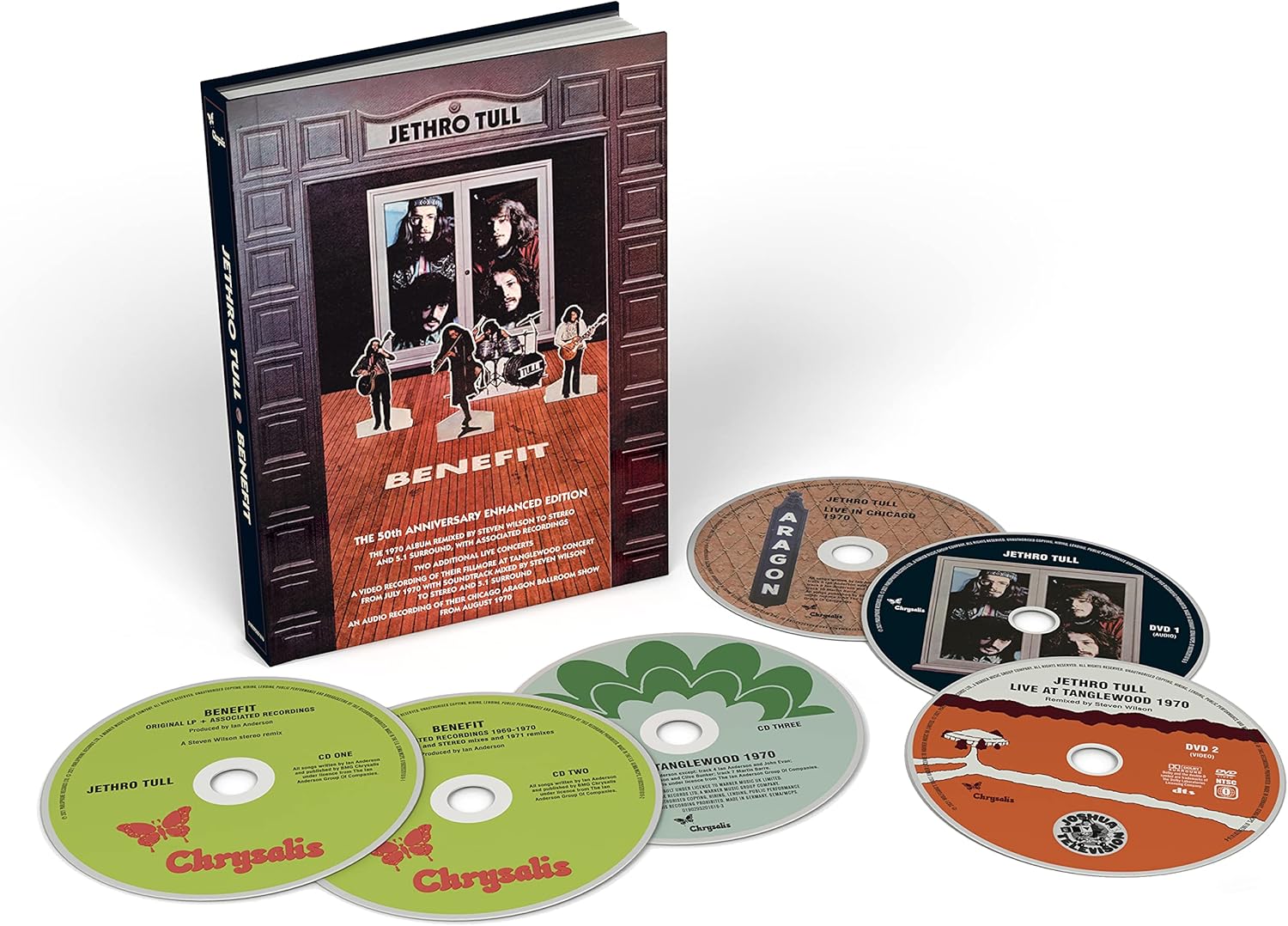
Jethro Tull’s 1970 classic “Benefit” will be celebrated with a 4-CD/2-DVD set, featuring remixes by StevenWilson, and an abundance of previously unreleased material. After pandemic-enforced delays, Benefit (The 50th Anniversary Enhanced Edition) will be released on November 5th, 2021, via Rhino.
[Note: The title was announced on Sept. 28 but didn’t appear on Amazon until Oct. 5. Best Classic Bands is an authorized affiliate of Amazon.]
The set is packaged within a deluxe hardback book, containing 100 pages of commentary from numerous contributors alongside images of memorabilia from the era, and of the band creating and performing their first million-selling album.
From the announcement: Following the successes of This Was (1968) and Stand Up (1969), Jethro Tull returned in 1970 with their third studio album in as many years. For Benefit, Ian Anderson (flute, guitars, vocals), Martin Barre (guitars), Glenn Cornick (bass), and Clive Bunker (drums) were joined by John Evan on piano and organ, who would go on to play on all of Jethro Tull’s albums throughout the 70s. The album featured more advanced studio techniques, such as a backward-recorded flute on “With You There To Help Me” and a sped-up guitar on “Play in Time.”
Compared to Stand Up, although containing a similar mix of bluesy hard-rockers and melodic acoustic numbers, Benefit had, as Anderson put it, a “harder, slightly darker feel” compared to previous material. Peaking at #4 in the U.K. Singles Chart, “The Witch’s Promise” continued Tull’s success in the charts, with the album faring equally as well. Benefit charted in the top 10 across six countries, including U.K. (#3), Australia (#4), and Germany (#5), while peaking at #11 on the Billboard 200 in the U.S., where it was certified Gold.
The new edition contains a previously unreleased Steven Wilson remix of Jethro Tull performing at Tanglewood in 1970, as well as previously unavailable film footage of that show.
During the summer of 1970, Bill Graham presented an extraordinary series of concerts at Tanglewood, the renowned classical music venue located in the scenic Berkshire Hills of western Massachusetts. Much like his approach at the Fillmores, Graham’s “The Fillmore at Tanglewood” series presented diverse handpicked triple bills, but with the added advantage of a beautiful open-air venue and plenty of informal lawn seating. With the Fillmore East crew providing technical support, these concerts would be hailed as a technical and artistic triumph and would entertain the largest Tanglewood audiences to date.
The July 7th presentation at Tanglewood, featuring the Who as headliners, Also on the bill that night were San Francisco’s It’s A Beautiful Day and an up and coming English group Jethro Tull, then in the midst of their first tour of America as headliners.
1970 was a pivotal year for Jethro Tull, when their relentless roadwork and perseverance began paying off. The group’s third album, “Benefit” was their most ambitious and original work to date. In terms of the band’s profile in America, 1970 was the year Jethro Tull had truly arrived. The previous album, “Stand Up” introduced guitarist Martin Barre to the fold and found the band stretching well beyond the parameters of the blues-based debut. Both albums conveyed Anderson’s growing confidence as a songwriter and with Barre on board, the group’s originality and style had come into sharper focus.
The 1970 American tour would find the group expanding to a quintet, with Anderson’s longtime cohort John Evan joining the group on keyboards, further expanding the sonic palette. With Evan on board, the group’s sound became more compelling. Classical elements now entered the already heady brew of blues, jazz, traditional English folk, and hard rock that defined the band’s sound. Extended soloing, often featuring an extraordinary amount of spontaneous improvisation, became a major ingredient on stage. This tour would primarily focus on choice material from the group’s first three albums. The one notable exception was the introduction of a new song, more scathing than anything Anderson had written before, titled “My God.” Destined for the centrer position on “Aqualung” the most popular album of Tull’s career, this new number wouldn’t see a release until the following year, and then in considerably shorter form.
Jethro Tull’s performance from that legendary summer night at Tanglewood opening for the Who, freshly mixed multitrack masters for the first time ever. Although occasionally self-indulgent, this recording clearly captures an inspired moment in Jethro Tull’s career, when their creativity was soaring. Anderson’s song writing was becoming distinctly original and the musical chemistry of the group on stage had become more seductive than ever. Yet as powerful as this performance is, for the Tanglewood audience it was only the middle of an extraordinary night of live music, as the Who would soon follow Jethro Tull onstage.
There’s also a newly remastered mono version of a previously unreleased concert at Chicago’s Aragon Ballroom in 1970. The 100-page book, enclosed within the elegant, hardback book packaging, contains an essay from Martin Webb, who expands upon the 2013 “A Collector’s Edition” booklet notes. Following that are comments on each of the album’s tracks from Anderson, Barre, Cornick, and Bunker, as well as interviews with Robin Black (studio engineer of Benefit and many other Jethro Tull albums), Chrysalis’ Terry Ellis (executive producer of Benefit), Joshua White who directed the 1970 Tanglewood Festival which features on DVD2, and Wilson explaining the mixing of Benefit in 2013.
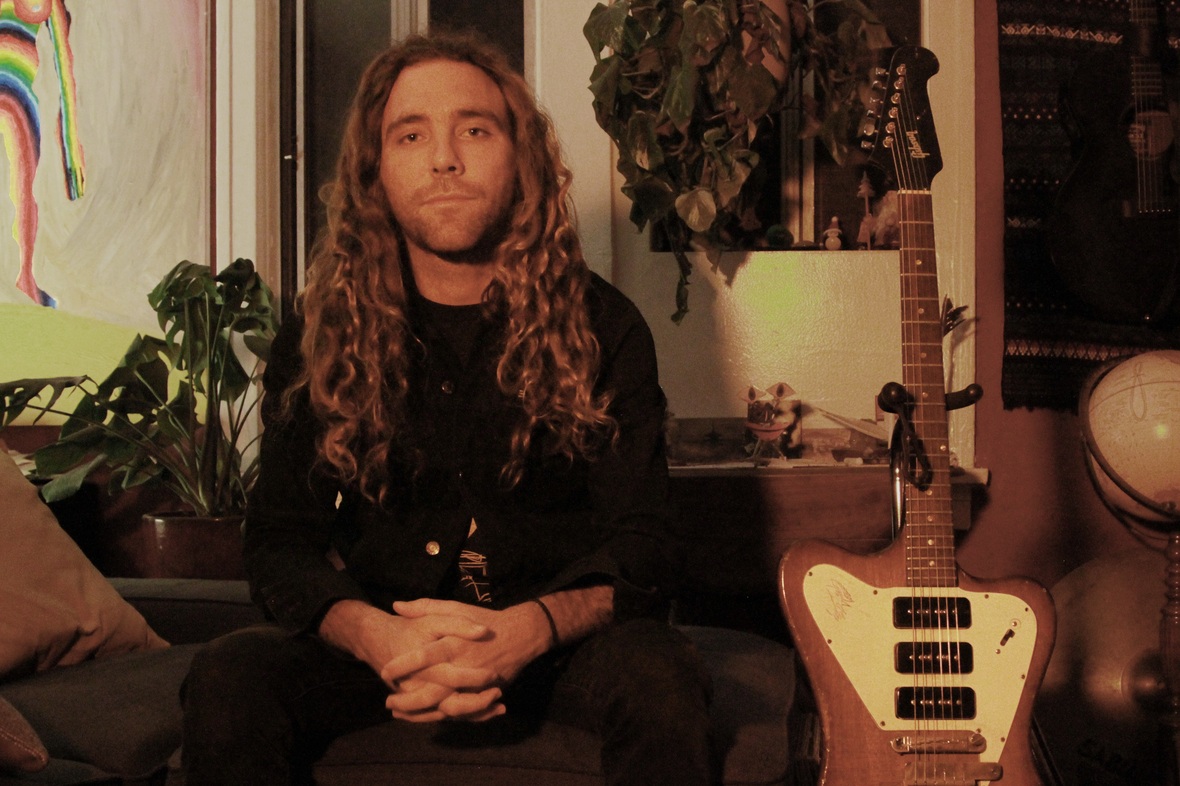
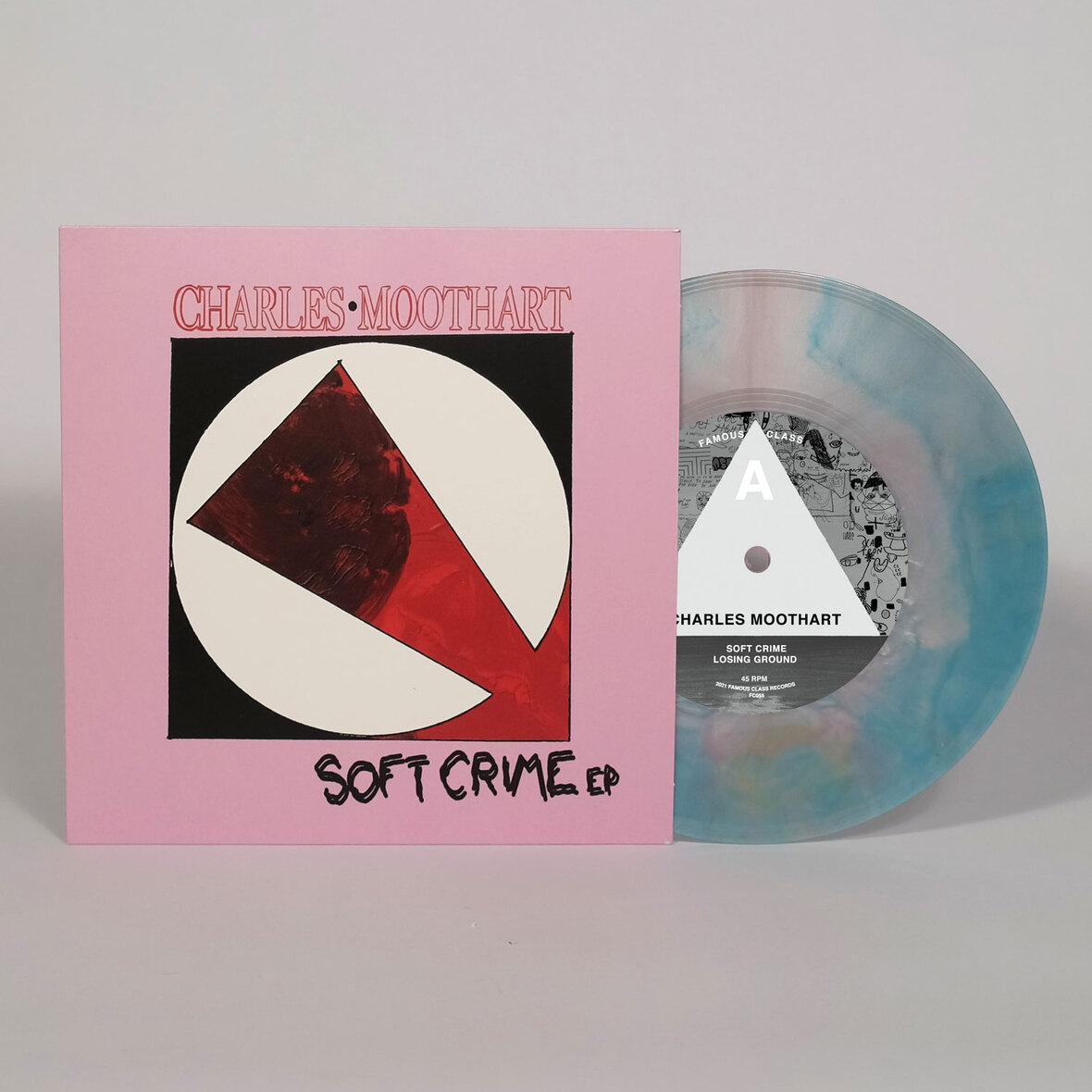
A new album EP from our upcoming Charles Moothart (Ty Segall Freedom Band, Fuzz, CFM, GØGGS) The EP is out today! Head over to the bandcamp to listen to “Losing Ground”, the excellent new single that finds Charles experimenting with electronic instruments and delving into Numan-esk territory.
Charles Moothart on “Losing Ground:” “Losing Ground is the mutated bridge that connects Soft Crime and Blood Machine. It is the piece that fastens the three songs together and outlines them as new visions. Originally, I thought of the riff for Losing Ground as a bridge in the song structure sense, but when I took a step back I realized it had the potential to be a structure of its own. It is one of the more vulnerable tracks I have made with the vocals pretty far out front. I wanted it to feel hopefully battered. Looking up from the floor with feelings of intention and understanding.”
Pre-order start shipping this week and we’re nearly sold out of the limited starburst vinyl, if you haven’t gotten your copy yet then don’t wait another second!
“This EP was a personal feat in light of the existential malaise we have been wading through. The songs are surreal and honest. My take on current reality inevitably takes a bit of a nose dive in to spiraling repetition. This isn’t new to me as I am by nature an over thinker. I would take the instrumentals on hikes to sort out the lyrics. A blend of physical and mental exhaustion ultimately let me lower the guard. I found the concept of Soft Crime could be the slight of hand that takes place in front of our eyes … or the small things we let ourselves get away with; either way Soft Crime goes down every day. The Blood Machine turns, and we sacrifice ground to take steps. It’s important to remember that by the burning light of the dumpster fire, we can still find the true beauty of our neighbours. We’re in it together until the very end. Whether that is tomorrow or was yesterday.” – Charles Moothart
Where most Tonstartssbandht albums come together slowly over years, recorded on the fly whenever the Whites have a few spare moments on the road, “Petunia” was largely written and recorded in their home city of Orlando in 2020. Many of the tracks had been played live, but in extremely rough form (“skeletons of songs,” as Andy puts it), and hadn’t yet developed into any kind of mature stage. With plenty of time on their hands thanks to the lockdown, and no shows to play, Andy and Edwin decided to pack some flesh onto those skeletons and bring them to life on their own. Petunia is the first Tonstartssbandht album to be created in a sustained manner and in a consistent environment, written and recorded in a single place over a focused period of time.
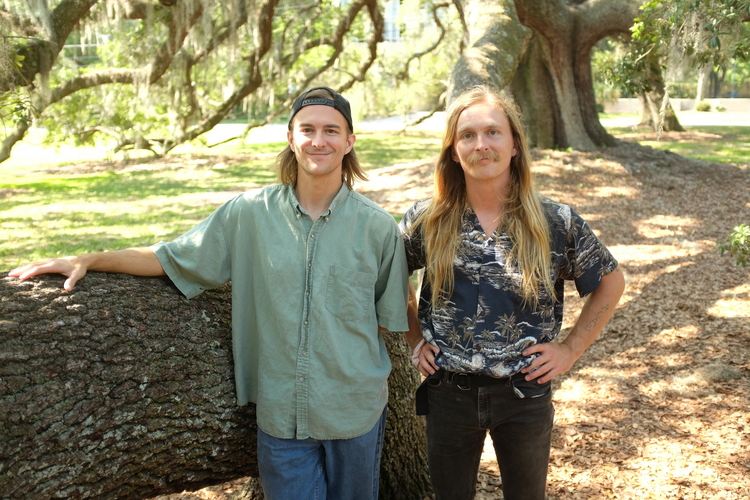
Tonstartssbandht – are the brother duo of Edwin and Andy White – have returned today to share new single “Pass Away”. The album opener expands upwards on the back of Edwin’s maracas and tapped percussion, as the brothers’ falsetto-feathered singing blends seamlessly together. The self-directed video, edited by Adrian Randall, is a live studio performance of “Pass Away.” The second single from the band’s forthcoming record Petunia, out October 22nd.
“Tonstartssbandht sounds like it’s discovering folk music beamed in from another galaxy — and ready to follow wherever it leads.” – NPR Music “The brother duo of Edwin and Andy White has traversed genres with rugged, psychedelic style and impressive consistency.” – The FADER
“Petunia” is their first since 2017, and it feels like a potential breakthrough, with the excellent new single ‘What Has Happened’ sounding like a jammier Radiohead.” – Uproxx
Tonstartssbandht – “Pass Away” (Official Video) – from the upcoming album “Petunia” out October 22nd, on Mexican Summer.