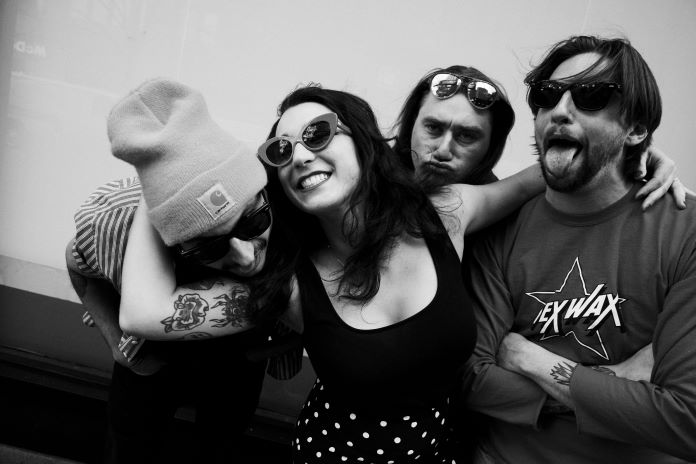
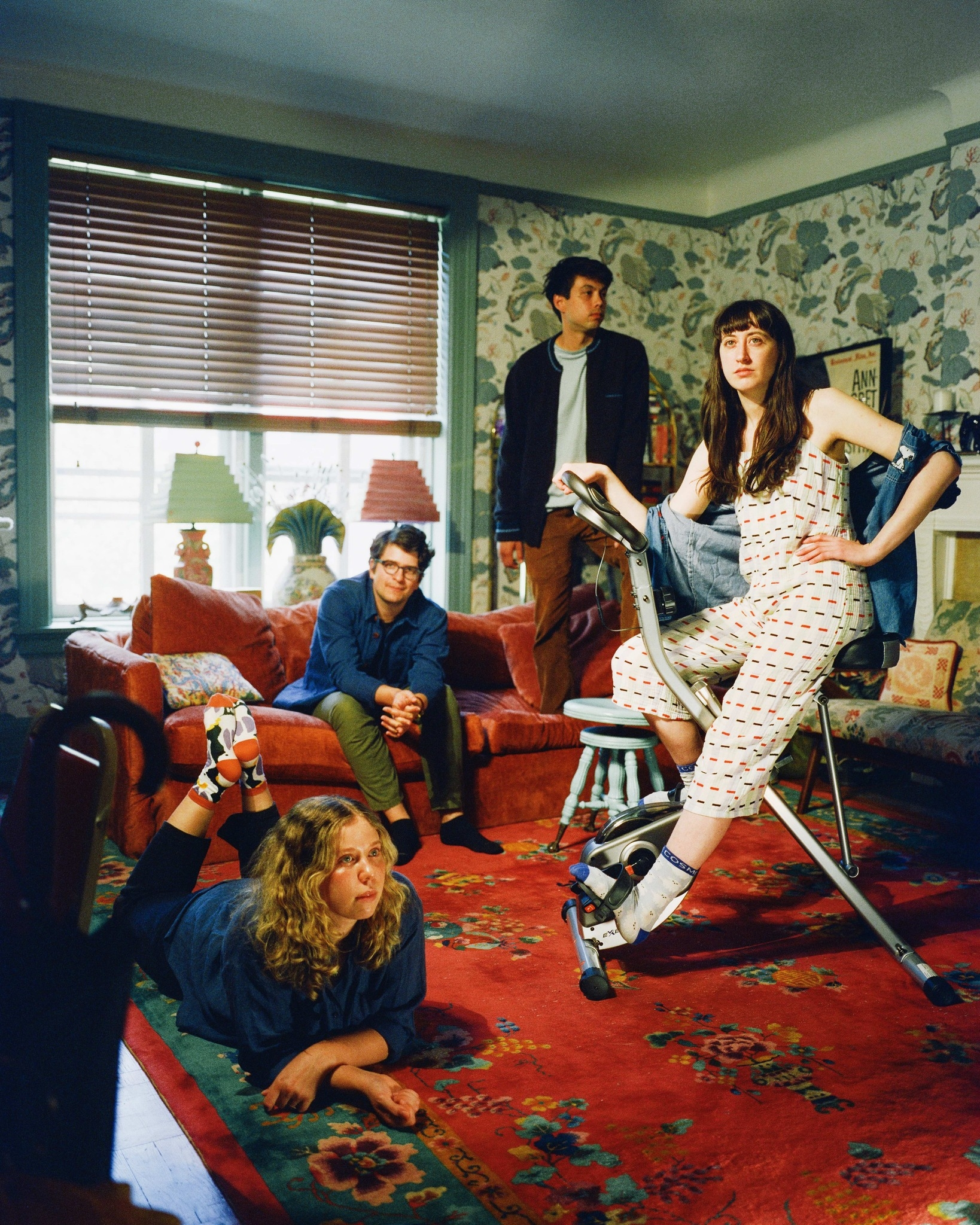
Long Island rock band Family Dinner made an explosive debut last year with their new EP, “You’re So Cool”. The record hits all the right notes for a DIY rock outfit, with reference points in the worlds of hazy ‘90s alt rock and barrelling basement punk, bringing them together with a solid dose of melodic heights and bombastic style. This year, they’re keeping the party going with some upcoming tour dates with fellow indie punk outfit Pollyanna and today they’re back with a video for one of the EP’s highlights, “Eyes,” .
“Eyes” is not only one of the more upbeat cuts on the record, but it also makes good use of that energy by offering up one of the band’s best hooks. The track’s chorus is a pure cathartic release, coupling singer Natalie Simonelli’s vocals with towering guitars and jackhammering drum fills. When the band locks in together, they deliver melodic powerhouses with pounding instrumental presence, but they also show a surprisingly sweet undercurrent on “Eyes,” with Simonelli giving a heartfelt tribute to her cats: “No matter what I do / I’m always coming back for you / No matter where I go / You’re the only one I want to know.”
The band says of the song and video, “While the song itself is a love letter to my cats (Iommi and Leatherface) and how I can’t wait to get back home to see them, the video has kinda given it a new meaning for me. Watching the video with this song about the cats has made me realize how much I miss being on the road and being in the van every day with these 4 maniacs. Playing gigs every night with my best friends and meeting new ones. When we were on tour this summer I missed those cats everyday and thought about them every night when I sang this song but hearing it with the visuals of us on the road has made me hungry to get back out there and play in places I’ve never been, in front of new faces. We spent 10 days playing every night on our own so I’m really excited to do these few dates in December with Pollyanna, they fucking rock and I can’t wait to rock and hang out with everyone.”
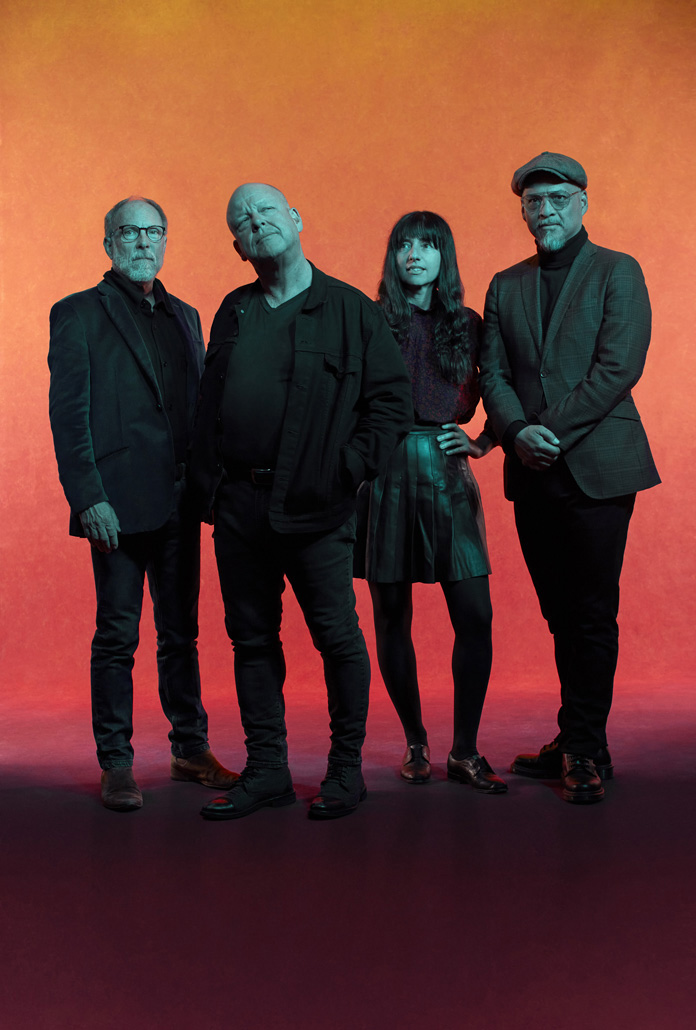
Alt-rock guitar shredder Joey Santiago of the Pixies are about to embark on a gruelling southern hemisphere, Japanese, and European tour to promote their new album “Doggerel”. Donning a cap of course, framed by some very striking artwork from his LA home, Santiago spoke to discuss the new album and some burning Pixies’ myths. The LP is a mix of classic Pixies and a more mature, mellower feel.
Producer Tom Dalgety once again takes the reins on “Doggerel”, his third project with the band. Singer Black Francis came loaded with new songs to the initial sessions before completing the album with the full band during mid-winter at Guilford Sound, Vermont in early 2022.
Pixies members features drummer DavidLovering and bassist Paz Lenchantin. “Doggerel”is the band’s eighth studio album and their fourth since reforming in 2004, following 2014’s “Indie Cindy“, 2016’s “Head Carrier“, and 2019’s “Beneath the Eyrie”.
Joey Santiago: this is the first co-write you have ever done with the Pixies? Yeah, it is, but let me preface that by saying, I do my own guitar parts. Well, you know, when the band went to Wales after the BBC 6 Festival in April [2022], we went to Rockfield Studios and recorded three of my ideas on there. I never bothered because Charles [Black Francis] wants to be the principal songwriter.
That was very true and previously I held to that. Nothing was broken, and nothing is still broken, so I never did it. I also had this fear that was once everyone starts getting on the board of co-writes, that sounds like the end of the band, doesn’t it?
we have recorded so far about seven or eight demos for the next album. There will be a ninth album, we’re planning that already. After a good amount of a break, we will start recording again some time next year. We’re already kicking around what part of the world to work and record in next time.
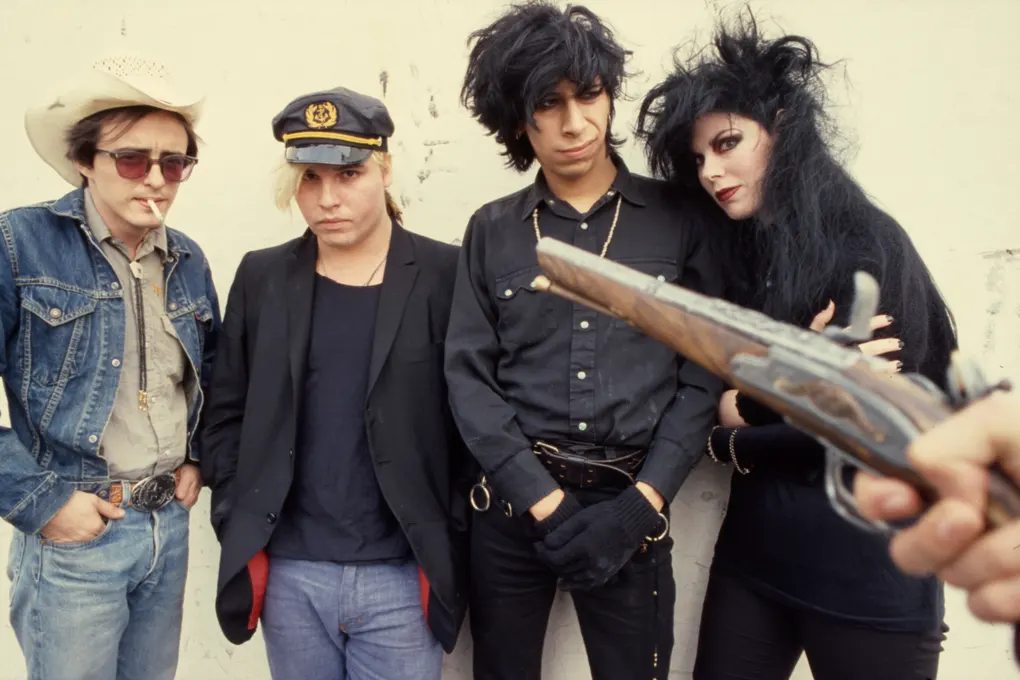
“We set out to destroy music as much as create it,” says Kid Congo Powers talking about the Gun Club, a riotous punk-blues band he co-founded with Jeffrey Lee Pierce in 1979.
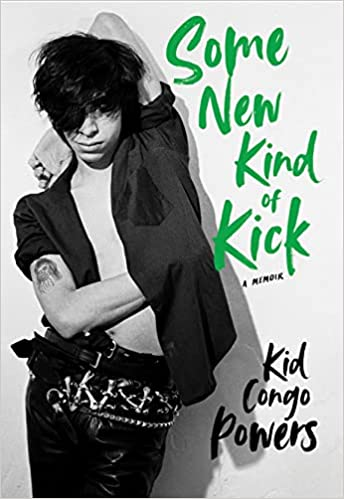
Powers also went on to be a guitarist for the Cramps and Nick Cave and the Bad Seeds, a journey he documents in his new memoir, Some New Kind of Kick: a juicy and humble account of a joyful yet traumatic life spent in three of the most beloved alternative bands of the 1980s. As well as a nod to a Cramps track, it’s an apt title for a man who spent much of his life in perpetual search of endorphin-spiking kicks. “Finding excitement was my holy grail,” he says. “The crazier and more fun, the better.”
Powers never set out to be a musician. First he was just a zealous fan. Growing up in a Mexican-American family in La Puente, California, he would take the bus into Hollywood at age 15 to go Rodney Bingenheimer’s English Disco, a mecca for glam rock. As a young gay man who wore customised platform boots with rhinestone lightning bolts on, it was a haven. “Bowie and glam rock was my rebellion,” he says. “It was also a window into my budding sexuality. It gave me freedom. Being something that parents and mainstream America thought was so outrageous – androgyny, bisexuality, aliens from outer space – it was perfect for me.”
However, it was during this formative period that he also experienced a life-changing tragedy. In 1976 his cousin Theresa, along with her friend, were murdered: shot in the head and found in an alley with no clear motive. The case remains unsolved. “It was a major turning point,” he says. “She was my confidant and one of my best friends. It changed my entire family. It made me think life is not worth much, and I have to take matters into my own hands and experience everything.”
Music, partying, drugs and sex were intertwined in his quest to extract all life had to offer. Living with members of the electro-punk outfit the Screamers, he paints a picture of an inclusive and experimental scene. “Sex was great. Love was dumb. Sleaze was paramount,” he says. “There was no shame involved. We were very open-minded about our otherness, and each other’s otherness.”
His rabid fandom, which he writes about with endearing charm and adolescent zest, led him to become president of the Ramones fan club. Then he took off for New York. He lived with Lydia Lunch of the new wave band Teenage Jesus and the Jerks, and was so broke he ate out of dumpsters and would scour the floor for change at CBGB’s. When New York finally defeated him he returned to LA. There he met Jeffrey Lee Pierce – another superfan, who ran the Blondie fanclub – who invited him to join a band. “I had no excuse not to, except that I couldn’t play,” says Powers. “If someone believed in me that I could do it, I was going to give it a try.”
He describes their act as a mix of “entertainment and punishment”, with Pierce a wild and antagonistic frontman. Powers’ unique style of playing – which he describes as “bulky” and “like blocks of sound rather than smooth transitions between chords” – caught the attention of the Cramps, one of his favourite bands. When their guitarist Poison Ivy asked what he would sacrifice in order to join the band, Powers, ever the teenage fan, offered to cut off a finger. He got the gig without having to amputate. Would he actually have done it if asked? “I certainly would,” he says without hesitation. “I played slide guitar, so I thought, well, I could just put a slide over it.”
It was a perfect fit. “The moment I saw the Cramps, I saw my tribe,” he says. “They let themselves be free. There was no limit to sexuality, no judgment, just encouragement.” Despite being a gifted and versatile player, Powers is modest and credits others as being his inspired tutors. “Ivy told me I should play the guitar like it’s a horn,” he says. “Squawking, honking and punctuating. Then every once in a while you get let go and wail. I thought that was genius.”
During the making of the band’s second album, “Psychedelic Jungle”, they forced sleep deprivation upon themselves “so our animal minds would drive our creative impulses”, he says. Pushing himself as far as he could go became both a personal and creative mantra: “The more chaos, the more magic.”
But when they became locked in a bitter royalties battle with their record label, the Cramps refused to write new songs. With tensions mounting Powers grew frustrated and returned to the Gun Club in 1983. Drink and drugs had always played a role in that band but things began to escalate. “We were very likeminded about drugs,” Powers says of him and Pierce. “They were a part of our relationship. Alcohol was a big part too. Getting as drunk as possible to let the spirits takeover. That was very important.”
Today, with decades of sobriety now behind him, Powers feels he was masking the pain of Theresa’s murder. “It was trauma,” he says. “So part of my ‘I’m going to experience everything’ attitude turned into things like alcoholism and drug addiction. Adventure and wanderlust was just self-medicating. Drugs, especially heroin, at the beginning, were freeing for me. I was a shy kid. I was a traumatised kid. I was in and out of the closet at any whim, so there was confusion, and drugs calmed everything down.”
Seemingly a magnet for chaos, pulverising noise and unpredictable drug addicts, Powers soon found himself in the Bad Seeds. It was at the peak of Nick Cave’s heroin addiction, when he was living in Berlin and could often be found strutting around with a handgun. Powers played on the albums “Tender Prey” and “The Good Son“, with the former an especially torrid time. “Professionally I was on the up but everyone was in a downward spiral and crashing,” he says. “When I started writing about this period I was like, ‘Wow, that was fucking awful.’” He writes about an afterparty that ended up in his hotel room where “people were fucking and shooting up”; the police raided the hotel after Alexander Hacke from Einstürzende Neubauten started throwing glasses into the swimming pool.
Soon Powers’ spiritual home, the Gun Club, was calling again. “I was caught between the devil and the deep blue sea,” Powers writes. “Between Nick Cave and Jeffrey Lee Pierce. Both immeasurably brilliant and tortured artists, both extremely fucked-up, high-maintenance individuals.” When Cave’s then girlfriend Bunny OD’d and died, it proved a moment of clarity for Powers. He entered Narcotics Anonymous. Bunny’s death, he says, “brought back all the feelings of senselessness, frustration, and anger that had overwhelmed me when Theresa was murdered”.
The Gun Club finally petered out in 1995 and a year later Pierce died of a brain haemorrhage, age 37. Powers ends his book in tribute to Pierce, even skipping over the band he’s fronted since 2009, the excellent garage-rock groove outfit the Pink Monkey Birds.
“The main thrust of everything was my relationship with Jeffrey,” he says. “There are many ways people look at Jeffrey: drug addict, own worst enemy, talented, tortured, all somewhat true, but he was also an incredible friend, teacher, dreamer and amazing visionary. I felt privileged to be in his company while he was on earth. I owe everything to him. I miss him. Just from our fandom, we created magic.”
The songs below epitmise everything Kid Congo Powers Some New Kind of Kick is a memoir about my experiences growing up as a queer, Mexican-American kid in Los Angeles in the ‘70s, and how I found freedom and community through music. Many of these songs have deep personal significance for me, and I hope you’ll be able to find some significance in them too.
“Declarate Inocente” – Lucha Villa
My sense of the dramatic was forged early by hearing the music my parents listened to, especially the rancheras songs of Lucha Villa. I didn’t know Spanish at the time but from the emotion in her voice I could have guessed the lyrics:
“Light me on fire if you want me to forget you, Put three bullets in my forehead, Do with my heart what you want, And then for love’s sake, declare yourself innocent”
“Moonage Daydream” – David Bowie
David Bowie gave license to be free with my secrets of being a queer teenager. His alien like androgyny made so much sense in puberty, growing awkwardly into my body, experimenting with drugs and sex. A bisexual rockstar from Mars was a perfect analogy for my conflicted queer teen years.
“Piss Factory” – Patti Smith
I mailed away for this 45 from the back pages of LA fanzine Back Door Man. My first peek into what was to become the punk beatnik literary mashup of Patti Smith. Attitude and dreams of escaping small dead end factory job for the bright lights of the city and becoming something or someone else really spoke to me. Just piano, guitar, voice and guts.
“53rd & 3rd” – The Ramones
The Ramones shocked me out of a deep depression after a murder in my family rendered me dead inside. The Ramones replaced it with hope, humour and a leather jacketed buzzsaw noise. What I needed at the exact right time. Started a fan club. My life was saved by rock and roll.
“Christmas Weather” – Student Teachers
In 1978, I took a Greyhound Bus from LA to NYC and was befriended by the teen members of Student Teachers and The Blessed. Wild nights at Max’s and CBGB ensued. I crashed in their crash pad. 45 years later, I am still a family with these ones.
“Metal Postcard (Mittageisen)” – Siouxsie and the Banshees
In 1978, while on an acid trip, me and my friend Pleasant heard this song and decided the atomic bomb was going to drop so the only recourse was to dig an underground tunnel to a liquor store and wait it out, wearing bright clothes from Fiorucci naturally. What could go wrong?
“Gun Slinger” – Bo Diddley
In 1979, a weird kid named Jeffrey Lee Pierce asked me to be in a band with him as the guitarist. I told him I didn’t play guitar. Not to be deterred, he loaned me a guitar and gave me a cassette tape with this song on it, exclaiming “It’s only one chord and it’s great!” I played along for hours every day. The Gun Club was formed. I was now a guitar player!
“New Kind of Kick” – The Cramps
This 1981 release was only the second time I had been in a recording studio. I was now named Kid Congo Powers and a member of The Cramps. I love the wild guitar solo and the lyrics by Lux Interior, “life is short, filled with stuff, don’t know what for, I ain’t had enough, I want some new kind of kick” summed me up!
“The Las Vegas Story / Walkin’ with the Beast” – The Gun Club
By late 1983 I was back in The Gun Club with my friend Jeffrey Lee Pierce. We recorded the album, “The Las Vegas Story”. The sessions were done at Ocean Sway studios at the same time Stevie Nicks was in recording something, and Ry Cooder was recording the soundtrack to Wim Wenders’ Paris,Texas soundtrack. We borrowed Ry’s whirly whirlies.
“Paralyzed” – The Legendary Stardust Cowboy
Not even working with the intense ones, Lux Interior or Jeffrey Lee Pierce could prepare me for the anarchy that was playing guitar for The Legendary Stardust Cowboy, whose real name is Norman. It was like chasing a wild feral cat! Almost impossible, but could be so cute and cuddly, if only you could catch him!
“From Her to Eternity” – Nick Cave & The Bad Seeds
In 1987, I moved to Berlin Germany to play with Nick Cave and the Bad Seeds. My first recording with them was recreating a “live” version of this song for the Wim Wenders’ film “Wings of Desire“. Had recording with Ry Cooder’s gear on my last album put the good juju on me to be in this wonderful company of Wim Wenders? We are even in the film. What an honour!
“The Weeping Song” – Nick Cave & The Bad Seeds
From my last recordings with The Bad Seeds in Sao Palo, Brazil in 1989.
“Lullabye” – Congo Norvell
By 1992, I had left both The Gun Club and Bad Seeds and moved to Los Angeles. I started a band with singer Sally Norvell called Congo Norvell whose mission was to pay tribute, in song and sound, to those touched by the AIDS epidemic. An epidemic so cruelly ignored by the United States government. Sally had also played Nurse Bibs in the Wim Wenders’ film , “Paris, Texas”. This Wim Wenders thing is getting spooky! Or more to the point, Wim has excellent taste in music—on that we can agree!
Many years after the death of Jeffrey Lee Pierce, he still visits me in my dreams.
Some New Kind of Kick: A Memoir by Kid Congo Powers is a guitarist and singer-songwriter best known for his work with The Gun Club, the Cramps, and Nick Cave and the Bad Seeds. He is currently the frontman for Kid Congo & The Pink Monkey Birds. He lives in Tucson, AZ.
The new Frankie Cosmos tune and its title certainly at first feel like a shrug of the shoulders, but the song quickly reveals itself to be saturated with empathy. Frontwoman Greta Kline sings in a way where you can’t quite tell if she’s reached a languorous peace or just returned from a really good cry. She reassures the listener that, “It’s okay not to sing a song / About everything / All the time.” The track as a whole, as it lurches between quiet sections filled with piano and gently reaffirming bass, and up-tempo parts perfect to wiggle around to, provides this space for a big deep breath. It asks you to allow yourself to take a break from this relentless drive for productivity built into us; making your blood levels jump with the changes in tempo and feel, it still manages to calm the activity in your veins for at least a bit. The piano lends an easily drifting, sweetly dreamy quality to the arrangement, and the instrumentals of the track make it feel like a heavy kind of floating.
The lyrics are so simple, with such purpose and hope for just the smallest reprieve from stress that it sort of breaks your heart, as Kline sings, “I’m always bursting at the seams / I’ll tell you all about my dreams / I wish that I could quiet it / Accept a little silence.” The song feels like an enthusiastic drawing done by a child: simple, but full of emotion, intent and message.
Frankie Cosmos’ fifth album “Inner World Peace” – which features “One Year Stand” and additional standouts “F.O.O.F.”, “Aftershook”, and “Empty Head”, – was co-produced with Nate Mendelsohn and Katie Von Schleicher at Figure 8 Recording in Brooklyn, New York.
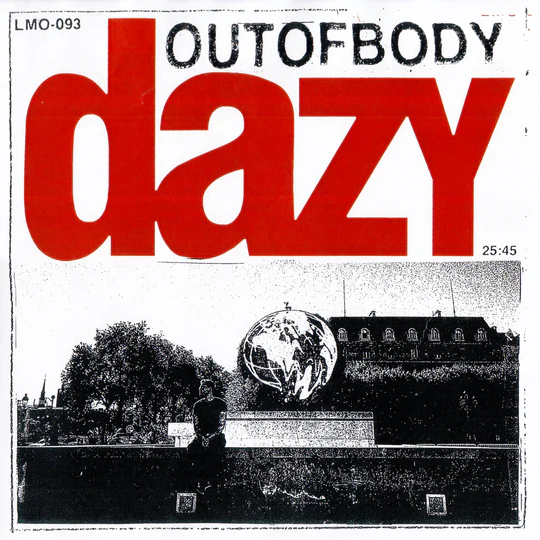
Richmond, Virginia’s James Goodson project Dazy, is back with another new single ahead of “Out of Body” due out October 28th, on Lame-O Records. the music video, “On My Way” is the third single off Dazy’s debut album after “Split” and “Rollercoaster Ride.” Dazy is for the people. People who know the words to every Punk-O-Rama compilation. People with an emergency Oasis reunion fund. People who will talk your ear off about Dookie. People who worship at the altar of the Jesus And Mary Chain’s proto-shoegaze. People who love ’60s pop (and can tolerate full-throttle guitar distortion). People who dig the current wave of independent power pop, led by the likes of Mo Troper and Young Guv.
Dazy goes with “On My Way,” staying true to his vision of combining “big room, widescreen hooks with homemade, bedroom production,” as press notes put it. Goodson shrugs off existential dread (“Comet won’t miss, but I’ll just be on my way / Spreading that stress, but I’ll just be on my way”) over a drum machine beat and blown-out guitar and bass, eventually whammy-ing his way into a pocket of spacey psych-rock.
A catchy record packed with quick, fuzzy songs, Dazy’s official debut LP “OUTOFBODY”builds on the success of last year’s compilation “MAXIMUMBLASTSSUPERLOAD”. pointing out his influences as “uncomplicated music that you can return to endlessly.” That’s a great way to describe “OUTOFBODY”. It’s got a thick, 1990s power pop sound, and would sound perfect in a coming-of-age movie or on a ‘90s radio station. Goodson is a one-man band, recording every vocal and instrumental on the album by himself, but the album still sounds huge. “OUTOFBODY” is meant to be turned all the way up on your car stereo so you can let your mind swim into the distorted guitars.
Feedback and guitar fuzz hang in the air alongside Goodson’s vocal harmonies, a rare unmoored moment that he follows with one last crashing, power-pop shout along.
Dazy from the album ‘Out Of Body’, out October 28th 2022 on Lame-O Records
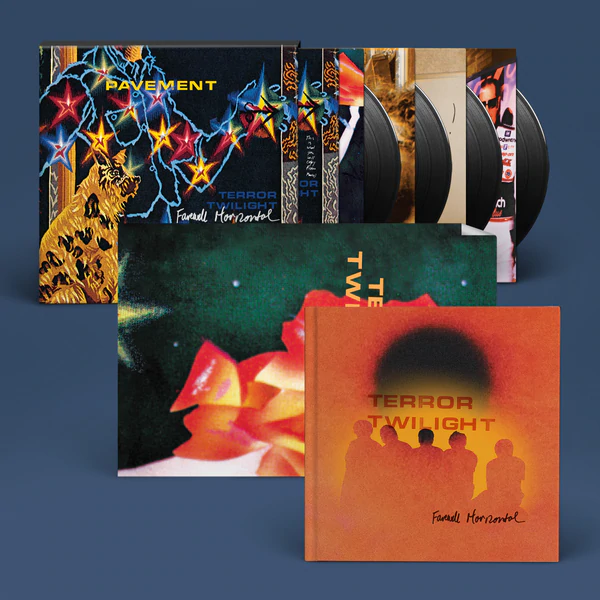
On April 8th, Matador Records will release “Terror Twilight: Farewell Horizontal”, an exhaustive 45-track reissue of the band’s much-loved fifth and final album. The new special edition compiles the remastered original album, B-sides, home demos, rehearsal tapes, era-appropriate live recordings, and even the rough tracks from Pavement’s scrapped session at Sonic Youth’s Echo Canyon studio. Altogether, it features 28 unreleased tracks.
Originally released in 1999, “Terror Twilight” marked a departure from Pavement’s established operating methods. Which is to say that it was recorded with a big-time producer in an expensive studio. However, for all the talk of “polish” and “precision” it’s still very much a Pavement record. And a great one. Like every Pavement album that preceded it, “Terror Twilight” thrills and confounds. Often at the same time. Twenty-two years on, the songs remain moody, strange, and eminently deserving of re-celebration.
The 4xLP and 2xCD editions will include a book with never-before-seen photos and commentary/context from band members Mark Ibold, Stephen Malkmus, Bob Nastanovich, Spiral Stairs, and Steve West as well as producer Nigel Godrich (Radiohead, Beck).
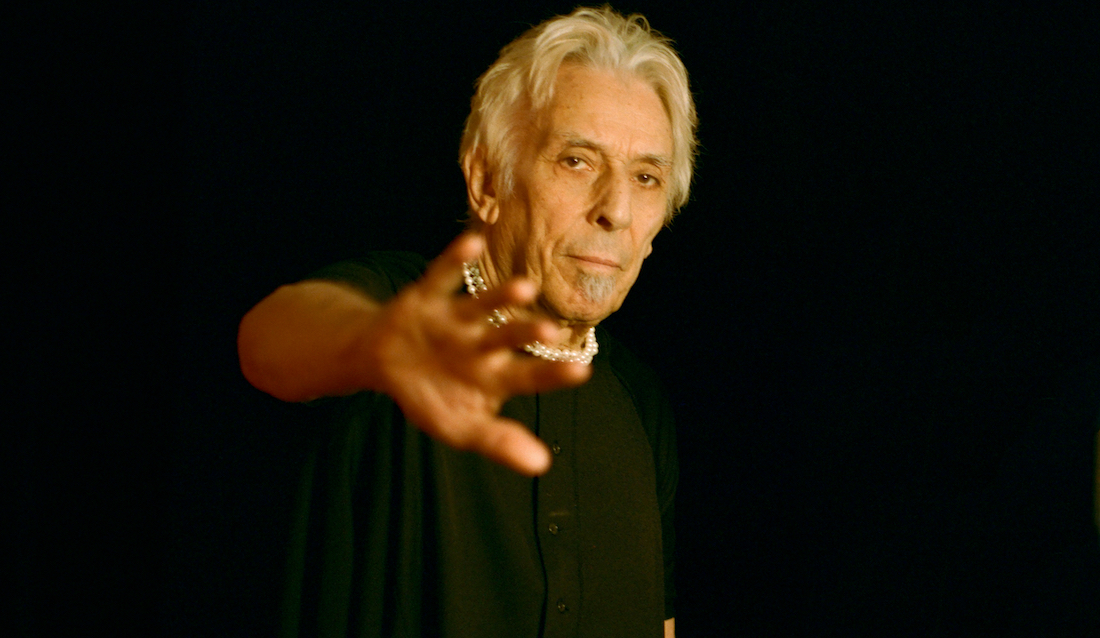
Classical-musician-turned-rockstar-turned-cult-icon John Cale is releasing his first album in a decade early next year. The new batch of original songs from the former Velvet Underground member is called “Mercy”and it will arrive January 20th via Double Six and Domino. He’s collaborated with Animal Collective, Sylvan Esso, Laurel Halo, Tei Shi, and Actress across the 12-track project, with the Weyes Blood–featuring lead single “Story of Blood” .
“I’d been listening to Weyes Blood’s latest record and remembered Natalie’s puritanical vocals,” Cale said. “I thought if I could get her to come and sing with me on the ‘Swing your Soul’ section, and a few other harmonies, it would be beautiful. What I got from her was something else! Once I understood the versatility in her voice, it was as if I’d written the song with her in mind all along. Her range and fearless approach to tonality was an unexpected surprise. There’s even a little passage in there where she’s a dead-ringer for Nico.”
The single comes with a video directed by Jethro Waters. It depicts Cale and Weyes Blood’s Natalie Mering engaging in ritualistic activities with pigments, pearls, and silk ribbons.
John Cale – “Story Of Blood” feat. Weyes Blood from the forthcoming album ‘Mercy’ out 20th January 2023 on Double Six / DominoRecordings.
A few months into the pandemic, Courtney Marie Andrews released her staggeringly vulnerable album “Old Flowers“, which was both a predecessor to the countless pandemic-spawned confessionals artists would begin to churn out soon after and a somber shift in mood from the more reverently Laurel-Canyon-descended themes and tones of “May Your Kindness Remain“. Turns out it was also a stepping stone toward even more personal and unique music, as proven with the newly released “Loose Future“.
Arriving today via Fat Possum, Andrews’ sixth LP leans further into intimate autobiography and experimental sounds with the help of co-producer Sam Evian and additional contributions from the likes of Grizzly Bear’s Chris Bear and Bonny Light Horseman’s Josh Kaufman. The result is often unexpected within Andrews’ thick back catalogue of songs, though rarely does the music wander outside the parameters of freewheeling, heartfelt, densely wooded folk-rock established on the opening title track. Andrews took the time to walk us track by track through the new LP, detailing the lyrical and instrumental impetus for each song in the collection.
1. “Loose Future”
These words slipped out of my mouth one evening while speaking playfully with a lover, and we both agreed they needed to be a song about the unknowns of bracing for any romantic endeavor. We always want to play it cool with love, but deep down our inner children are always afraid. In the studio, Sam Evian and I wanted to create the hopeful and free feeling of that sentiment.
2. “Older Now”
I went on a disastrous date, which ended sweetly despite the awkwardness of it. When I got to my room, this song poured out. It’s about that pivotal point in life where you’re ready for something different, but you still have these old patterns you can’t let go of. This was the first song I took to Sam. I declared the recording needed lots of percussion, lots of harmonies, and lots of summer feelings. Recording this song was the beginning of the whole record.
3. “On the Line”
A wake-up call, when you realize you give to no avail. A song for those who know all about the perils of avoidant attachment. Sam and I went into the deep when recording this one. We had one memorable night where we smoked a lot of grass and drank too much whiskey. In the morning I tried to run it off and landed on the studio couch where I laid down a hauntingly unexpected whistle that became the sonic marker of the song.
4. “Satellite”
A love song without caveats. I wanted to look forward, and fall in love with the mystery of someone. Let love in, without questioning or instigating how it might hurt me. Sonically, I wanted to go to space. This kind of love isn’t earthbound.
5. “These Are the Good Old Days”
This is a saying my uncle always says to try and remind us of the beauty of the now. I tend to always live in a constant state of hindsight being 20/20, and I wanted to write this as a sort of mantra to honour my family’s sentiment. I also genuinely wanted to write a feel-good song after such a dark few years. Even in the saddest of times, there are little moments you’ll always look back on with a fondness that don’t seem so sad after all—they seem perfectly placed.
6. “Thinkin’ on You”
When you tell someone you miss them, it implies something is missing from your life. I was ready for the level up from missing. When you’re thinking on someone, you’re also allowing love for yourself, within the context of a relationship. You’re saying, “I’m here too, and I can hold space for both of us.”
7. “You Do What You Want”
We all have that friend that gets us into trouble and pushes our personal boundaries. I was reminiscing on a person like that in my own life, and how many times I bent for this person—in the end, I still loved them despite this.
8. “Let Her Go”
This is a love song for someone whose freedom you don’t want to change or narrow. It’s about accepting this person exactly as they are, and choosing to love them for those very things you cannot contain. We used the first take I sang of this song because it felt raw and unencumbered. Josh Kauffman surprised us on this one with so many beautiful and unexpected textures.
9. “Change My Mind”
I’d been listening to many Tin Pan Alley writers in 2020, and those memory-space melodies were swirling around my brain. One day, I was hanging out and writing with my friend Kate York. When I came around, I told her I wanted to write a song about not trusting healthy love, and she knew exactly how I felt. We wrote this in 20 minutes at her house, and both felt like crying after.
10. “Me & Jerry”
This is a song about having sex with someone you love—how it transcends your headspace and is purely the physical heart space. Sam and I had so much fun creating this one. I recorded the choir at the end in his unfinished barn in upstate New York. I stood in the sun with the doors wide open and sang my heart out.
‘Loose Future’, out on Fat Possum Records on October 7th
To anybody wondering about my journey and the ups & downs that came with it, I’m thrilled to announce my forthcoming memoir Don’t Tell Anybody The Secrets I Told You, coming 25th April 23.
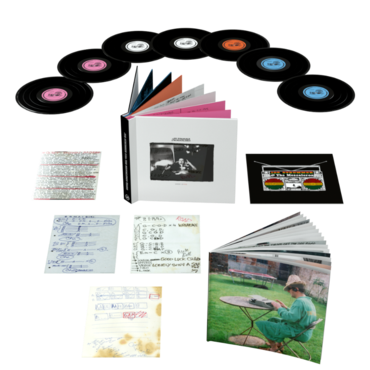
If the first volume of post-Clash Strummer solo work that was “001″ was a cluttered bummer, “002”—with his radical Latin-inspired rock ensemble The Mescaleros—was still cluttered and crowded, but a hummer filled with soul, poetry, funk, sloganeering, punk, folk, Conjunto, and miraculously original ideas all told through the lens of Joe’s cigarette-and-bourbon stained/strained vocals. And while having Strummer die at all is sorrowful, that he passed away while working on yet another Mescaleros record feels downright cruel. 2022 marks 20 years since the passing of the legendary Joe Strummer. While best known as the frontman for The Clash, between 1999-2002 Strummer produced some of his most exciting work alongside The Mescaleros.
Strummer’s solo career, too, has often gotten lost in the haze of various indie labels—a mixed-bag, ethno-musicality that existed from the time following the final Clash album (1985’s genuinely awful “Cut the Crap”) to his passing in 2002. From 1999 on, his second great band, The Mescaleros guitarist Antony Genn, bassist Scott Shields, percussionist Pablo Cook, and other assorted Brit instrumentalists—became Strummer’s primary means of interpreting his often free-associative, occasionally hyper-Guthrie-like lyricism with their own drunky brand of Pogues-meets-Bad-Seeds intensity and theatricality.
“Joe Strummer 002: The Mescaleros Years” is the first comprehensive collection highlighting this intense period of creativity and brings together the albums “Rock Art and the X-Ray Style” (1999), “Global A Go-Go” (2001), the posthumous “Streetcore” (2003), and “Vibes Compass“, a brand-new compilation of 15 B-sides and rarities, including never before heard tracks like ‘Ocean of Dreams’ (featuring Steve Jones of the Sex Pistols on guitar) and early demos of some of the Mescaleros best-loved tracks (“The Road To Rock ‘N’ Roll,” “X-Ray Style” and more), through to some of the original recordings from Joe’s last ever sessions (“Coma Girl (Outtake),” “Fantastic” and “Get Down Moses (Outtake)”), all in one complete boxset.
By the time of that third Mescaleros album, Strummer and company had finally settled into a unique groove roughed up by Strummer’s punk-folkish roots. While “Rock Art” finds the still-new team making worldly rhythmic rock below Strummer’s dense refrigerator-magnet poetry (“Global” is similar, if not for some acoustic folk thrown into its West Indian/Latin percussion-driven mix), “Streetcore” is where they caught fire. Driven more directly by rocksteady Jamaican rhythms than they were on their first two albums, and with The Clash’s old friend Tymon Dogg as part of the ensemble, the group head loudly into a mix of fired-up garage-punk with deep reggae accents.
All albums are remastered by Grammy Award winner Paul Hicks (The Beatles / The Rolling Stones / John Lennon / David Bowie) and are packaged in a richly curated boxset, featuring extensive new liner notes and interviews with Joe’s friends, collaborators and The Mescaleros band members, plus never-before-seen handwritten notes, lyrics, and drawings by Joe taken from the Joe Strummer Archive.
Both the 4CD and 7LP boxes include four reproduction lyric sheets and chord charts, and the LP box includes an exclusive 12”x12” art print. Joe Strummer 002 serves as a loving tribute to Strummer’s final musical output, released in celebration of what would have been his 70th birthday year.