“Your Girl” is a wistful folk-pop song in the tradition of Natalie Merchant and 10,000 Maniacs – crisp and clean in structure, but earthy and wholesome in aesthetics. Basia Bulat’s perspective is somewhat ambiguous in this song, shifting between a first-person testimonial about how she’s become hesitant to fall in love after some difficult experiences and choruses in which she’s addressing someone else about how they’ve let down their girl. It could just be that she’s talking to the one who wronged her, but there’s a suggestion of elapsed time. It could be advice to a friend, a warning to an ex that they’re keeping up the same mistakes, or maybe it’s just her reliving the same old traumas. But it’s notably that the song isn’t bitter or angry, just resigned to the seemingly inevitable catastrophes of people getting close to each other.
I wrote “Your Girl” during one of those classic Montreal snowstorms (mon pays c’est l’hiver!) and recorded it under the warmest desert sun in Joshua Tree. Then we added some beautiful harmonies in the springtime. So of course it only made sense to film a video for the song in the autumn rain. The song is about getting free from a painful situation, when there’s joy but there’s also heartbreak – and trying to understand why those storms came through your life the way they did feels impossible. So you to the wind and dance with the memory instead.
Basia Bulat’s new album Are You In Love? is due out March 27th via Secret City, and she’s shared another early taste of it, “Already Forgiven.” Speaking about recording in Joshua Tree, Basia says, “one day Andrew recorded the wildest wind outside and sent the signal through a path of electronics and the swirling feeling of those floating melodies that drift through the song are as important as the lyrics to me. The harmonies are there even if you can’t hear them at first listen. It can take years to say it, but you’re already forgiven.”
“Foolish Loving Spaces” is the follow up to the band’s 2018, top 5 album Cool Like You and features recent single Your Girlfriend. Foolish Loving Spaces was produced by the band’s consistent and talented team of James Skelly and Rich Turvey at Parr Street Studios in Liverpool. Tom Ogden’s increasingly direct lyrical range turns album three into a romantic page-turner of light and shade, while its divergent moods are supplied by Myles Kellock’s piano and keyboard lines, careering from urgent stabs of TV game show-theme synth to more classic, rolling notes.
The record’s multi-instrumental colour and widescreen sound is provided by pedal steel / lead guitarist Josh Dewhurst, while Joe Donovan on drums and Charlie Salt on bass bring fluidly danceable grooves throughout, complemented on occasion, by a wall of gospel harmony.
Blossoms – If You Think This Is Real Life – Produced by James Skelly and Rich Turvey at Parr St Studios, Liverpool.
Lightning Dust (Amber Webber and Josh Wells) are releasing a new album, “Spectre”, via Western Vinyl. they shared another song from the album, “Run Away.”
The band collectively had this to say about the song in a press release: “‘Run Away’ explores the hardships of change-when our minds resist it. It’s the battle between logic and emotion. A tense and sonically deranged one in which a backward pulse blips into an electric piano solo and builds to a cosmic eruption of dark disco rain.”
Previously Lightning Dust shared Spectre’s first single, album opener “Devoted To”,Then they shared another song from the album, “Led Astray,” via a video for the track “Spectre” features Stephen Malkmus and Destroyer’sDan Bejar .
Lightning Dust was previously a side-project for the Vancouver, BC-based duo of Amber Webber and Josh Wells, back when they were in Black Mountain. But in 2017 they both left the mother ship to focus solely on Lightning Dust and this is their first album since then. In 2018 Webber went back to school and tried out a new career, before music came calling again.
“It made me realize that art and music are still my light,” Webber explained in a previous press release. “Spectre” is my journey. It’s for all the women warriors that have been battling throughout life looking for a place to express themselves that feels inclusive and inspiring. It’s about finding yourself when no one is paying attention and inventing a new way of creating that feels honest and sincere. I truly feel that women, especially as we age, are underrepresented. That was truly the driving force to creating this album.”
Stephen Malkmus plays guitar on “A Pretty Picture” and Dan Bejar contributes guest vocals “Competitive Depression.” From the album Spectre released October 4th, 2019 on Western Vinyl.
Anna Calvihas recruited Courtney Barnett for a new version of “Don’t Beat The Girl Out Of My Boy”, which will feature on “Hunted” – a reworked version of Calvi’s 2018 album Hunter.
Hunted will also see Calvi team up with Joe Talbot of IDLES, Charlotte Gainsbourg, and Julia Holter for new versions of Calvi’s Hunter tracks.
Speaking about Hunted and working with Barnett, Calvi explains, “During a break from touring I went back and listened to the first recordings I ever made of Hunter. These recordings capture the very moment I first wrote these songs, and recorded them on my own, in my attic studio. I find something especially intimate about sharing these most private recordings with my favourite singers and asking them to lend their voices and artistic sensibility. Courtney Barnett is an amazing artist. Her voice and guitar playing together are mind blowing. Her ability to connect the profound to the smallest moments of human experience is the unique talent of a true artist.”
Barnett adds of the collaboration, “Anna is a completely awe-inspiring performer, it’s impossible to take your eyes off her onstage. I love her songwriting for its beautiful and perfect balance between aggression and tenderness.”
The first single to be released from Hunted is Calvi’s new version of “Don’t Beat The Girl Out Of My Boy”, featuring Courtney Barnett.
Dublin art-punks Silverbacks stomp back into action in 2018 with the release of their new single “Dunkirk” on June 15th through their own PK Miami Records.
Underpinned by an insistent, nagging bassline and creepy crawly guitar lines, it provides the ideal vehicle for frontman Daniel O’Kelly’s stream of consciousness ramblings about martial strife, the perfect sandcastle and spotting a con artist when he sees one.Produced by Girl Band’s Daniel Fox, the track lurches forth, pressure building from the undulating backbeat and layers of skronking guitars accenting Daniel’s increasingly frazzled yelps before finally collapsing into a sugar sweet coda. Indie kids no more, Silverbacks mean business and ‘Dunkirk’ is a powerful first move.
Terry Reid (November 13, 1949) is 75 years old today.
Already playing with a band called The Redbeats, he left school at 15 and joined the band Peter Jay’s Jaywalkers. Landing a spot as opening act for The Rolling Stones at a Royal Albert Hall show in 1966, Reid became friends with Graham Nash (then a nember of The Hollies) who suggested The Jayhawks sign with Columbia Records’ U.K. division.A minor hit single came out in 1967, but the group had disbanded. Producer Mickie Most took on the job as Reid’s (now a solo artist) manager. Reid garnered good notices as opening act on tours with the Stones and Cream, but album sales weren’t spectacular.
In 1968, as all thiis was happening, The Yardbirds were in diisarray, having lost their vocalist and drummer, and needing to put an ad hoc band together to fulfill set Yardbirds European tour dates, that group’s Jimmy Page asked Reid to be frontman for the “New Yardbirds”. Already committed to the Stones and Cream tours, Reid suggested a young vocalist named Robert Plant, as well as Plant’s boyhood friend, a drummer named John Bonham, the New Yardbirds to soon becone Led Zeppelin. Reid was also offered the vocalist position vacated by Rod Evans in Deep Purple, but turned it down due to contractual agreements (Ian Gillan got the job).
He concentrated on live shows while engaged in legal matters with Most after a falling out, releasing three albums on different labels during the 1970s (one, 1976’s Seed of Memory, produced by Nash), and frustrated by his lack of major success, retired his solo career to do session work with artists like Jackson Browne, Bonnie Raitt, and Don Henley (he returned to the studio to record the 1991 album The Driver), and his songs have been covered by artists rangiing from Cheap Trick to REO Speedwagon, and he has collaborated with other musicians in recent years. An unauthorized documentary filn, Superlungs, was released in 2016.
In the waning days of the nineteen-sixties, Terry Reid was England’s most wanted man. Jimmy Page wanted him as the front man of the band that would become Led Zeppelin. Deep Purple wanted him to fill the singing slot that wound up going to Ian Gillan. And both the Rolling Stones and Cream had enough respect for his talents to offer him the coveted role as opening act on several of their most storied tours. Back then, Reid’s stock rose so high, it inspired Aretha Franklin to comment, “there are only three things happening in England: The Rolling Stones, The Beatles and Terry Reid.”.
A frustrating clutch of factors came into play. Reid’s legal commitment to a rigorous solo touring schedule prevented him from forming a band with Page at that time, and the anxious guitarist didn’t want to wait. The offer from Purple held far less appeal for Reid. In an interview years later, he told me he didn’t want to be straight-jacketed into their brand of “cock rock,” as he called it. As for his solo career, a bad contract, a crumbling record company and his own resistance to musical formulas, conspired to make Reid the kind of singer who would end up being greatly admired by his fellow musicians but obscure to the wide swath of listeners who would love him if they could only hear him.
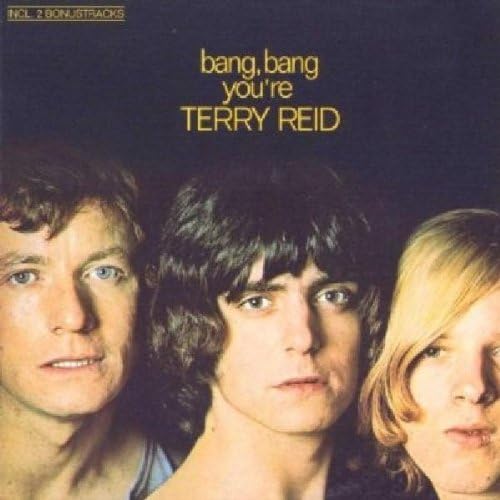
Terry Reid’s first two albums, ‘Bang Bang,You’re Terry Reid” and ‘Move Over for Terry Reid”. Released in 1968 and ’69 respectively, showcased one of the most ferocious, and distinct, soul shouts of the classic-rock era. In both power and emotion, Reid paralleled singers like Janis Joplin and Joe Cocker, while mirroring their go-for-broke brand of blues rock. At the same time, Reid’s early albums featured subtler pieces, something he explored further on albums like ‘River”,‘Seed of Memory’, and ‘The Driver”.
Over the course of a long career, Reid has walked a labyrinthine path, snaking from the golden era of British blues to the peak of the Laurel Canyon scene, with stops in Brazil, Nashville and Puerto Rico along the way. He has played with artists from Graham Nash and David Lindley to Gilberto Gil and Willie Bobo, while his songs have been covered by The Hollies, Marianne Faithfull, John Mellencamp, Jack White and more. At the center of it all sits a voice commanding and singular enough to have earned him the nickname, “Super Lungs.”.
Born 70 years ago in Huntingdon, England, Reid began his career at age 15 when he dropped out of school to join a band called The Jaywalkers. Led by their drummer, Peter Jay, the group generated enough buzz to open for the Stones at the Royal Albert Hall in 1966. There, Reid met Graham Nash, then with The Hollies, who helped get the band a contract with Columbia Records. The Jaywalkers‘ first single “The Hand Don’t Fit the Glove” (backed with “This Time” became a minor British hit in 1967. “Glove” sounded like a lost single by the Shirelles, while “This Time” had a whiff of the New York Latin-soul you’d hear songs written by Bert Berns or Doc Pomus. The teen Reid delivered both songs with the oomph of maximum R&B. Despite the single’s promise, the Jaywalkers quickly imploded, leaving an opportunity for top UK manager/producer Mickie Most to swoop in and ink Reid to a solo contract.
The first single he released on his own, “Better by Far” sounded like something Dusty Springfield might have belted. At that time, Mickie Most had a working relationship with Peter Grant, manager of Jimmy Page, then the heir to the Yardbirds‘ name. Reid’s potency as a singer inspired Page’s offer for him to front a “New Yardbirds.” When Reid’s commitments to his solo career scotched that, the singer recommended two obscure blokes he knew from up north, Robert Plant and John Bonham. Given what happened next, one hopes Plant wrote Reid the most profound thank you note in history. Yet, at the time, the solo Reid seemed an equally strong bet. His 1968 debut, released on Epic Records, featured a daring range of material, a hot and scrappy band (including Peter Solley’s surging organ and Keith Webb’s wild drums) and, of course, Reid’s show-stopping voice. Recorded mainly live in the studio, ‘Bang Bang, You’re Terry Reid’ was an album of extremes, marked by fidgety arrangements, lengthy songs, and vocals that ranged from the sensitive to the primal. The track list featured four well-selected covers, along with seven equally distinct Reid originals. The singer offered a direct comparison between a classic and an original in a nine-minute suite that linked his hard rock ode “Writing on the Wall” to a chunky take on Eddie Cochran’s “Summertime Blues.”
The Sonny Bono-penned title track had already been recorded twice, by Cher and Vanilla Fudge on their 1967 debut. But Reid’s take outshined both, with an arrangement fired by a chilling organ, stabbing horns, and a keening vocal that built to a series of acapella crescendos. Reid’s run at a song previously cut by Gene Pitney, “Something’s Gotten Hold of My Heart” gave it a haunted quality that suggested what he might have done with an early Zeppelin ballad. Not that all the covers clicked. A ten-minute meander through Donovan’s “Season of the Witch” took the spooky theme a-tad-too-literally. Luckily, Reid more than made up for that with original pieces like “Tinker Tailor” goosed by an irresistible riff, and “Loving Time” whose soaring organ sounded like something from early Traffic. Some songs showed Reid’s eclectic bent towards, including the Latin-laced “Sweater” and “Erica” whose jazzy lilts could have been penned by Burt Bacharach.
But the most enduring track turned out to be “Without Expression” which Reid had written when he was just 14. The song so impressed Graham Nash, he cut it with The Hollies and again with Crosby and Stills in 1969, though the latter version didn’t come out until years later. Despite the album’s many charms, Most decided to hold back its UK release, initially issuing it only in the U.S., where it drew just a cult.
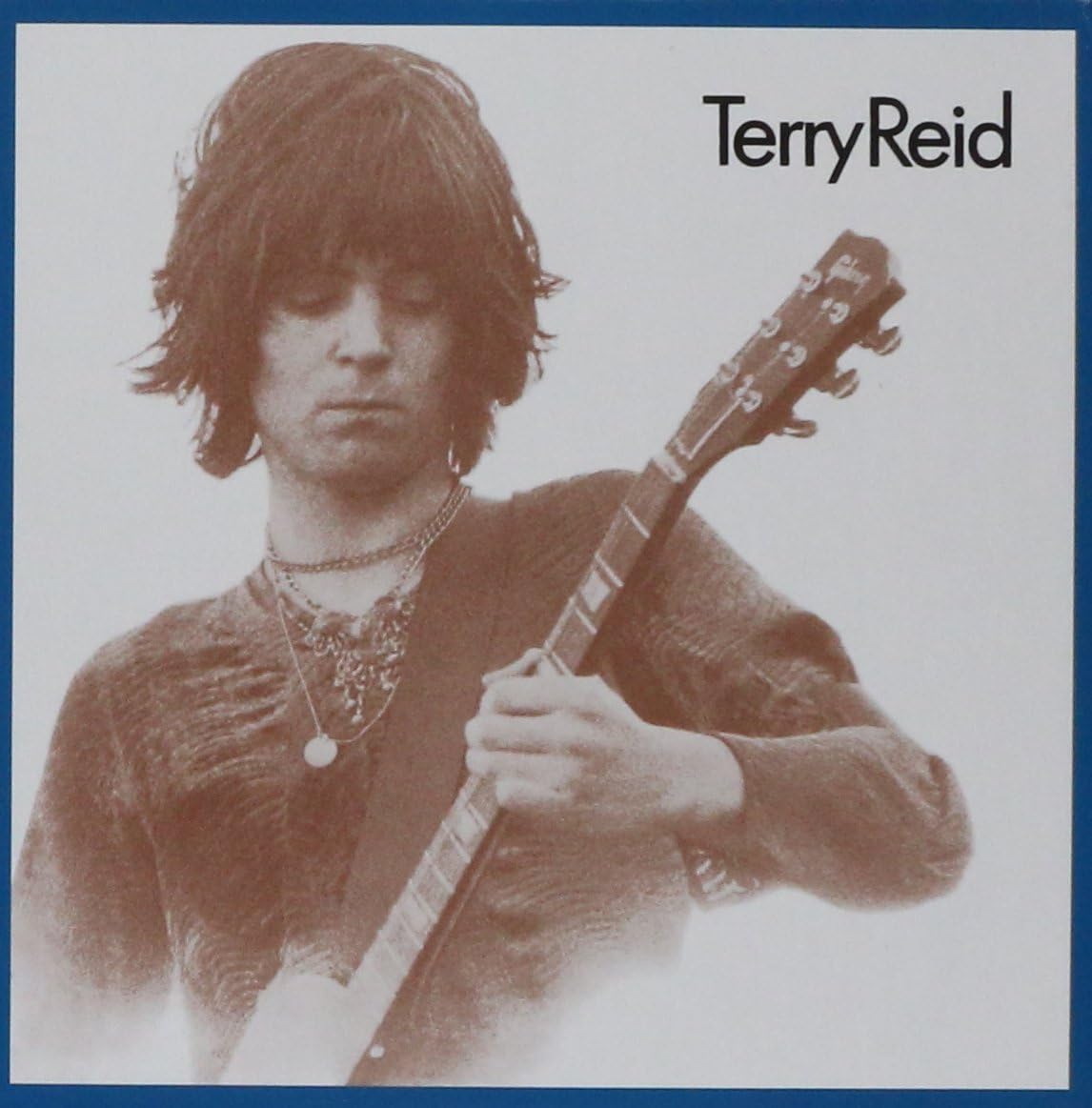
Terry Reid – Terry Reid
Reid received somewhat wider exposure for his 1969 follow-up, ‘Move Over for Terry Reid’, aided by a gig opening for the Stones‘ on one of their most significant American tours. It didn’t hurt that everything about ‘Move Over’ represented an upgrade over its predecessor, from the material to the vocals to the band’s rapport. Again, they cut it largely live, and, again, it featured some great covers, including the opener, “Superlungs My Supergirl”
Though penned, and previously recorded by Donovan, only Reid had the pipes to turn its title line into a personal tag, as well as the rocking power to shoot its psychedelic guitar riff through the roof. Solly’s organ in “Silver White Light” gave the song a bold glow, while “Speak Now or Forever Hold Your Peace” had a melody worthy of an anthem. Ballads like “July” and “May Fly” proved Reid could make as strong an impact singing sensitively as shouting, while his talents as a writer showed in ‘Rich Kid Blues” a power ballad later cut by artists like Marianne Faithfull and Jack White. Still, the bulk of the radio play centered on his cover of the soulful classic “Stay with Me Baby” Lorraine Ellison first cut the song in 1966. and it’s best known as Bette Midler’s 11-o’clock number in The Rose.
But those blow-outs were whispers compared to Reid’s to-the-rafters reading. In escalating waves, his voice moved from murmurs to screams violent enough to make you think this may be the last song he’ll ever sing. It’s a catharsis worthy of Greek tragedy, an expression of both emotional desperation and physical prowess that never fails to devastate.
Terry Reid – River
Reid could have stuck with that brilliant mix of hard rock blues and soul forever, but for his follow-up album, ‘River’, he charted a very different course. He also made a switch in his management, firing Mickie Most who, in turn, launched a law suit that kept Reid from releasing an album for four long years. In the meantime, he tried out a host of musicians, and recorded in both London and L.A. Finally, in 1973, he cemented a new deal with Ahmet Ertegun, who paired him with Atlantic staff producer Tom Dowd. ‘River’ presented a newly cohesive, and expansive sound for Reid.
It also introduced a striking new band, highlighted by the silvery lilts of slide guitarist David Lindley. Despite the herky-jerky backstory of ‘River’, it had a clear and strong flow, running through American folk and country music. Though somewhat mellower than his previous albums, ‘River’ had its own intensity, amplified by Reid’s vocal belts. The airier parts of the music reminded some of Tim Buckley’s recordings, particularly the quavering “Dream” and the album’s diaphanous finale “Milestones” but if ‘River’ impressed the critics, it baffled radio programmers, stifling its sales. It was another three years lapsed before Reid got another shot in the studio, aided by his old friend Graham Nash.
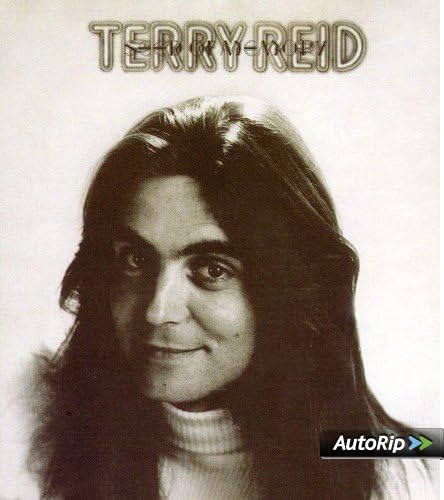
Terry Reid – Seed Of Memory
The CSNY mainstay produced his 1976 set ‘Seed of Memory’, which explains the country-folk vibe of its first half. The highlight came in the probing melody and caring vocal of “Faith to Arise.” Oddly, the album’s second side, which offered a variation on his old hard soul sound, seemed less convincing.
Either way, ‘Seed’ never had a commercial shot, given the weakness of his label, ABC Records, at the time. Three years later, the company folded.
Terry Reid – Rogue Waves
That same year, Reid resurfaced on Capitol with the album ‘Rogue Waves” Given the trends, and technology of the day, it’s no surprise the production and arrangements showed the slick signs of new wave. Still, the core of the album referred back to earlier pop trends. Reid covered two Brill Building touchstones, “Baby I Love You” and “Then I Kissed Her” by The Ronettes and The Crystals, respectively. Countering the girl groups’ versions, Reid’s had the heavy intensity he earlier brought to his cover of “Bang Bang.” Again, he savored the long arc of the melodies and connected the core of the songs to deeper soul. He adopted the same m.o. in his rendition of The Left Banke’s ‘Walk Away Renée” By contrast, the original pieces on ‘Rogue Waves’ leaned towards rock but, unfortunately, the airy production softened their impact.
Terry Reid – The Driver
The same hesitancy affected parts of Reid’s final full studio work, ‘The Driver’, released in 1991. The production by Trevor Horn employed the gauzy tricks of the day, though that wasn’t always a bad thing. The lushness enhanced Reid’s cover of The Waterboys’ wonderful song “The Whole of the Moon” but most of the album’s highlights could be found in its least fussy sections, including the acoustic “Hand of Dimes” and the title track which each underscored Reid’s talents as a balladeer and melodist.
Terry Reid – Silver White Light: Live At The Isle of Wight 1970
Anyone eager to reconnect to Reid’s rawer side should look to a pair of live albums that surfaced over the last few years. ‘Silver White Light” captured the singer’s full performance at the 1970 Isle of Wight Festival, a fascinating period of transition for Reid. He had just split with his first band, working instead with some of the musicians who would cut ‘River’, including David Lindley. For a drummer, Reid made a one-time-only connection with Michael Giles, who had just left King Crimson. The audio quality of the set may be brittle, but Reid’s vocal power comes through. Another concert set, ‘Live in London” from 2013, is rough too but, again, Reid’s voice sounded strong. An even more potent historical document surfaced in 2016, titled ‘The Other Side of the River’. It gathered eleven lost, or alternative, recordings from the ‘River’ sessions, in the process documenting that album’s evolution.
These versions presented freer takes on songs that, even in their final form, felt loose. Some fascinating guest musicians turned up for the sessions, including The Ikettes, who sang backup on a version of “Avenue,” Gilberto Gil, who played on “Country Brazilian Folk,” and the Latin percussionist Willie Bobo who appeared on a live-in-the-studio take on the title track and a worthy, never-before-released song, “Listen with Eyes.” Altogether, it provided generous evidence of Reid’s fearless commitment to exploration, a creative advantage but a commercial hurdle that only contributed to his role as one of music’s most under-appreciated stars.