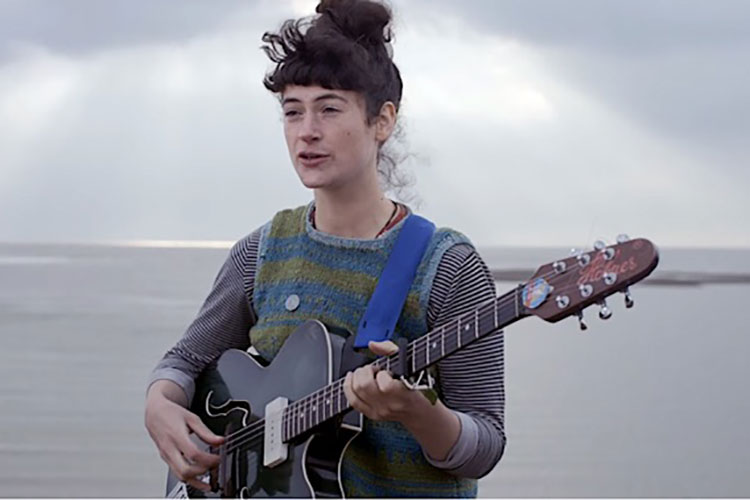
This Is The Kit is the musical project of Kate Stables and whoever joins her. You thought you didn’t like the banjo but you were wrong pal. Listen as Kate rips forward with her hypnotic twang pattern and a voice of rare, unaffected beauty.
I feel very lucky indeed to have made this record in such good company and also that the wonderful Rough Trade Records are up for bunging it out there for all to hear. I hope that you enjoy giving it a listen. Also hoping that everyone is well and staying positive and looking forward to gigs again as much as Ii am. go well everybody you’re all wonderful kate x
A triumph of Covid-era remote working, with Orcutt improvising guitar lines over drum recordings that Corsano emailed to him. Their previous in-person collaborations have been combustibly high-energy – here the mood softens and cools, but still has their impetuous jazz and blues rhythms, and the air-saturating climaxes are astoundingly beautiful.
Sadly, many will hear Chris Corsano & Bill Orcutt’s latest LP, Made Out of Sound, as “not-jazz,” though it would be more aptly described as “not-not-jazz.” In a better world, it would warrant above-the-fold reviews in Downbeat, or an appearance on David Sanborn’s late-night show (if someone would only give it back to him). More likely, we can hope for a haiku review on Byron Coley’s Twitter timeline to sufficiently connect the various improvised terrains trodden by this long-time duo — but if you’ve been able to listen past the overmodulated icepick fidelity of Harry Pussy, it should surprise you not an iota that Orcutt’s style is rooted as much in the fractal melodies of Trane and Taylor as it is in Delta syrup or Tin Pan Alley glitz.
As for Corsano, well, it may seem daft to call this particular record “jazz” (because duh, it has a drummer), but to me Corsano is beyond jazz, almost beyond music, his ambidextrous, octopoid technique grappling many stylistic levers and spraying a torrent of light from every direction. Corsano’s ferocity has elevated many “mere” improv records to transcendence, but here he’s crafted his polyrhythms within more narrative channels, bringing to mind his “mannered” playing in the lamented Flower- Corsano duo. It’s not “groove” playing precisely, but it follows many grooves simultaneously, much like Orcutt’s own melodic musings — which is why they’re so naturally lock-in-key here.
Which maybe makes it all the more surprising that “Made Out of Sound” was in fact recorded in different rooms on different coasts at different times, and stitched together by Orcutt on his desktop. Corsano recorded the drums in Ithaca, NY, and (as Orcutt states), “I didn’t edit them at all. I overdubbed two guitar tracks, panned left/right. I’d listen to the drums a couple times, pick a tuning, then improvise a part, thinking of the first track as backing and the second as the ‘lead’, though those are pretty fluid terms. I was watching the waveforms as I was recording, so I could see when a crescendo was coming or when to bring it down.”
Fluidity ties the tracks together. With a little more groove and a little less around-the-beat maneuvering, one could almost hear the boiling harmonic layers as Miles-oid in “Man Carrying Thing,” but with new-found Sharrockian modalities, Corsano accentuating the tumbling nature of the falling notes. The Sharrock vein continues with “How toCook a Wolf,” its Blind Willie-esque melodic simplicity and repetition extrapolated 360-style in a repetitive descending riff that falls into Cippolina-isms (by way of Verlaine) until the end crashes upon the shore.
Much like Orcutt’s last solo album, Odds Against Tomorrow, there’s a gentler, almost pastoral flow to some tracks (“Some Tennessee Jar,” “A Port in Air,” “Thirteen Ways of Looking”) that calls to mind the mixolydian swamplands of Lonnie Liston Smith — but unlike Odds, other tracks (“The Thing Itself”) smash that same lyricism into overdriven, multi-dimensional melodic clumps that push several vector envelopes at once in an Interstellar Space vein.
With the help of Corsano, Orcutt has managed to slither even further out of the noise/improv pigeonhole lazy listeners/writers keep trying to shove him into. Looking at the back cover of Made Out of Sound, we should not see Orcutt hurling a guitar into the air with post-punk bravado, Corsano toiling behind him in the engine room — we should witness an instrument levitating from his hands, rising on invisible major-key tendrils of melody, fired by percussion, spiralling into an invisible event horizon.
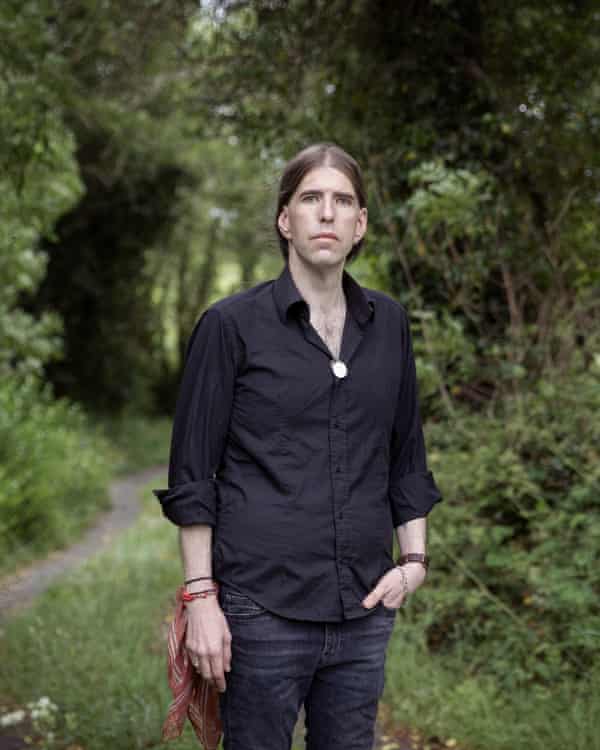
‘Look how beautiful the world is’ … John Murry in County Longford, Ireland. Photograph: Johnny Savage/The Guardian
If you’re after cheery crowd pleasers, John Murry is not your man. Murry is 41, barely known, and has never come close to denting the charts. Yet he has been compared to the great existential pop poets Nick Cave, Leonard Cohen and Scott Walker. And with good reason – he has a rich baritone, writes gorgeous ballads and is half in love with death. The titles of his first two albums, The Graceless Age and A Short History of Decay, reflect the melancholy at the heart of his work. The title of his third, The Stars Are God’s Bullet Holes, is equally bleak. Yet, it turns out that Murry has a surprise in store.
The singer-songwriter is related to the Nobel-prize winning American novelist William Faulkner. Like Faulkner, he paddles along his stream of consciousness – sometimes ferociously. You get a sense of what his songs are about, but seldom know for sure. Take the new album’s opener, Oscar Wilde (Came Here to Make Fun of You). We get the references to terrorist attacks and the images of foreboding, but the meaning is left to us.
He shares many of Faulkner’s obsessions: dysfunctional families in the American south, slavery and its consequences, fallen aristocracy, addiction, violence and, of course, death. Faulkner’s most famous novel is “The Sound And The Fury”, a story of family tragedy told four times from different perspectives with no linear sense of time. Murry often refers to Faulkner’s work, and particularly this book. He says his parents tried to turn him into one of its characters, while he relates closely to another
Murry was adopted by his parents before he even came into the world. He believes an agreement was struck between his Cherokee schoolgirl biological mother and his parents, who thought they couldn’t have children. (As it happened, his adoptive mother gave birth to his brother a year later.) He grew up in Tupelo, Mississippi. His relationship with his parents was troubled, and he was raised by his grandmother, the first cousin of Faulkner but more like a sister to him. His grandparents were related to the Faulkners on both sides. Mississippi is that kind of place, he says.
Despite having lived in Ireland for the past eight years,, Murry still has a strong southern accent. Slurred words bleed into each other. If he is ever stopped by a police officer, he says, they assume he is drunk. Murry was fascinated by Faulkner, who died 15 years before he was born. His grandmother and Faulkner had been inseparable, and his grandfather was a pallbearer at his funeral. When Murry was growing up, his beloved grandmother told him that, despite the lack of blood lineage, he was “obnoxious” and “more like Bill than any of us”. Obnoxious was the ultimate compliment, he says – it meant he challenged authority and called out cant. Meanwhile, he is convinced that his parents wanted him to be like Quentin Compson, a character in The Sound and The Fury who went to Harvard University. According to Murry, they gave little thought to the fact that Quentin takes his own life.
The character he really relates to is Quentin’s brother Benjy, labelled an “idiot” in the novel though today he might be diagnosed as autistic, like Murry was at the age of 32. Murry is phenomenally well read: rarely does he make a point without quoting an authority. At times, he is in control of all the stuff going on in his head; at others, paralysed by it. His stories frequently get kicked into touch by competing thoughts “I have an eidetic memory,” he tells me. “I can remember conversations verbatim. I can hear multiple conversations at once too.” He’s not boasting. Many of these memories torture him. “I don’t want to remember these things,” he says.
Murry says his childhood was violent, but he is thankful for one thing: the shelf-full of books his lawyer father gave him. “I was 10 years old, and he puts books out there for me to read like The Communist Manifesto and the Autobiography of Malcolm X – books he didn’t agree with.”
Although his parents were set on him going to Harvard, he had other ideas. “I saw a Tom Petty gig when I’d just turned 16, and got a guitar. It was that simple.” That same year, his parents discovered he had smoked a few spliffs and drunk a little alcohol. They sent him to a fundamentalist Christian rehabilitation centre in a different state (he grew up Protestant and converted to Catholicism). The centre, which has since closed, used to place the boys with “host families” – the families of other children attending the centre. Not surprisingly, many were dysfunctional. Murry says he spent three weeks in one home where he was repeatedly raped by three older boys. He says they discussed killing Murry in front of him. There was a time I was certain I wouldn’t make it. I still feel that way sometimes
“There was this pretence it wasn’t happening, even though I know the boys’ mother could hear the screaming. I fought them every night till I realised fighting wasn’t going to stop them doing what they were doing. They would hold me down and rape me.” Later on, the boys were told to apologise to Murry for what his family was told had been “horseplay”.
It took Murry many years to get to the stage where he could even admit what happened to him, let alone begin to recover from it. “I want people to know if something like that happens to you, that violence is not something you bring upon yourself, just as I didn’t bring it upon myself. I was the victim of it.” He stops. “It was my first sexual experience.” It’s not a sexual experience, I say. “No,” he says quietly. “Gang-rape is not much of a sexual experience.” He pauses: “I’ve dealt with the experience. I think Nietzsche was right when he said that which doesn’t kill us makes us stronger. It’s given me a lot of compassion, for the people who did it as well.”
‘I
After 18 months at the centre, he met a girl and walked away – from the centre and from his parents. He did any number of jobs (short-order cook, bouncer, stained-glass frame maker, antiques hustler and caseworker for children with severe emotional difficulties) played in bands, married, and had a daughter Evie who is now 17 and hopes to be the next Stevie Nicks. He adores her and can’t stop telling me stories about her. “When she was seven she insisted on calling me Ike and would only respond to Tina. That’s not comfortable when you’re in a convenience store. Then she’d just shout: ‘What’s love got to do with it, Ike?’ That got uproarious laughter from everyone.”
He might not have had an addiction when he was sent to rehab, but he developed one. In his mid-20s, after he and his wife separated, Murry discovered heroin. He lost the second half of his 20s – and very nearly his life. His best-known song, the wonderful Little Coloured Balloons, is a nine-minute meditation on the time he overdosed and almost died. It’s as full of yearning as it is anguish, capturing both the woozy serenity of fading away and his desperate fight for life.
Ultimately, he puts his addiction down to the time he spent in rehab as a youngster. “I think the thing that led to heroin was having to repeat again and again, ‘I am powerless over drugs and alcohol, and only Jesus Christ can save me from that.’” He says he knew so many young people who entered clean, became junkies and went on to kill themselves. Did he think he would? “There was a time I was certain I wouldn’t make it. I still feel that way sometimes.”
But, fired by music and his studies, he pulled through. He went to university and did a degree in continental philosophy and psychoanalytic theory. He then did a masters, with the intention of doing a PhD. By now he’d released the 2006 album of murder ballads, World Without End, with Bob Frank, the singer-songwriter who died in 2019. His professor came to the album’s release show and afterwards asked him, bewildered and slightly frustrated, why he was still at school. Murry says that felt as if he finally had permission to dedicate himself to music.
As is his way, Murry did everything in his own good time. Six years later, his first solo album was released, produced by American Music Club’s Tim Mooney.The Graceless Age chronicled his struggle with drugs. In No Te Da Ganas de Reir, Senor Malverde?, he sings: “What keeps me alive is going to kill me in the end.” Today Murry maintains that, without heroin, he would have killed himself. The album was described in Uncut magazine as a masterpiece and named one of the 10 best albums of 2012, while Michael Hann in the Guardian said he didn’t “expect to hear a better album this year”.
But Murry’s path was never going to be smooth. Soon after its release, his mentor Mooney died suddenly. It was another five years before his follow-up, A Short History of Decay, was released, produced by Michael Timmins of the Cowboy Junkies. This album examined the breakup of his marriage, and again received rave reviews. No subject was too bleak for Murry.
Now he’s picking up the pace. We’ve only had to wait four years for The Stars Are God’s Bullet Holes, produced by John Parish, best known for his collaborations with PJ Harvey. As well as an extraordinarily tender cover of Duran Duran’s Ordinary World, there are the familiar themes of decay, literature, guns and death. But there is one change: this album – and his fuzzy guitar – really rocks. There are even nods to ZZ Top on the title track. In its own desolate way, this is Murry’s feelgood album.
In Ireland, he has felt as close as possible to optimistic. His current home is in County Longford and he takes his phone outside to show me a gorgeous stretch of fields and mountains. “Look how beautiful the world is,” he says. Sure, he doesn’t always feel like this, but when he does nothing can beat it.
Giving up drugs and leaving America changed everything for Murry. “Camus said the first thing a person has to do in life is to decide whether or not to take their own life and once they’ve done that they can choose to live. I don’t want to die – I know that now. I slowly realised my perspective on things has changed. I’ve changed.”
All the bad stuff has just made him appreciate what he has now. “Without those things, what would I have to feel grateful for?” Last December, he met his girlfriend, Sarah Leahy, a project coordinator for a medical humanitarian organisation in Afghanistan. Sarah, Evie, and his music are reasons for hope.
“There’s one thing I really want you to do for me,” he says. “I want you to help me with a marriage proposal.” “In this article?” I ask, my voice squeaking with surprise. He nods. Has he asked her himself? “I basically have, but I can do it properly here. I just want to know if Sarah Leahy will marry me. Her father’s name is Desmond. He used to be a boxer and is still boxing a bit. I just want to say, ‘Can I marry your daughter? I love her and will take care of her.’” His face and tone are unchanged post-proposal, but he seems relieved. Happy almost.
Murry’s answers can be tortuous, but they can also be beautifully succinct. I ask him if he thinks music has been his salvation and for once a single word suffices. “Yes!” he says ecstatically.
Y2K style is unavoidably resurgent, and while you might prefer that low-rise jeans, flip-phone fetishism and pop-punk remained in the past, Portuguese-born, Denmark-raised producer Erika de Casier’s affinity for the era’s Timbaland/Darkchild nexus of R&B is a welcome throwback. Her second album (and first for 4AD Records) echoes its uncanny glimmer of sophistication, a fitting contrast to the trash men she excoriates with poise and sly humour.
The album runs like pleasure on silk. De Casier’s voice is reminiscent of honey, blessing each track with its transparent yet crucial presence. The album avoids overtly borrowing from the 90s / 00s R&B playbook and plays its own rules. It’s sensual, subtle, but most importantly, confident.
They sound almost nothing like each other, but the second album by Erika de Casier – that rarest of musical phenomena, an R&B artist from Ribe, a small town in southern Denmark – feels like a spiritual counterpart of another recent acclaimed album. Like Rina Sawayama’s 2020 debut, Sensational has its roots in childhood hours spent watching early-00s MTV. But while Sawayama reflected the channel’s scattershot bombardment – a world where nu-metal, Britney Spears, hip-hop and Evanescence all jostled for your attention – Sensational is more intensively focused.
An understated, overlooked delight, Will Stratton’s sixth album is beautifully written, beautifully played, and beautifully arranged, its gorgeous, cosseting sound – deft fingerpicked guitar bearing the influence of Nick Drake – masking a series of deeply uneasy songs in which even the most personal moments feel tainted by paranoia brought on by global events. Bella Union are thrilled to announce the return of Will Stratton whose new album The Changing Wildernesswill be released 7th May and is available to pre-order here. Stratton has shared the first track titled “Tokens” along with an animated lyric video.
Of the track Stratton says: “Tokens is a song addressed to the fraternal twins, the most frequent subjects of songs since songs were created: time and love. The afternoon that I was writing it, the weird weather we were having that summer was on my mind. I was thinking about how my perception of time is so tied to my perception of the changing seasons, and consequently, how my perception of time hasn’t been quite as sharp as it once was. I was also thinking about the ending of one of my favourite movies, the 2014 Paul Thomas Anderson film Inherent Vice.
The way time shimmers and shifts in that movie is fascinating to me, verging on hypnotic, and I was trying to evoke a little of that feeling in this song.”Tokens’ is taken from the album ‘The Changing Wilderness’ by Will Stratton, released by Bella Union in 2021
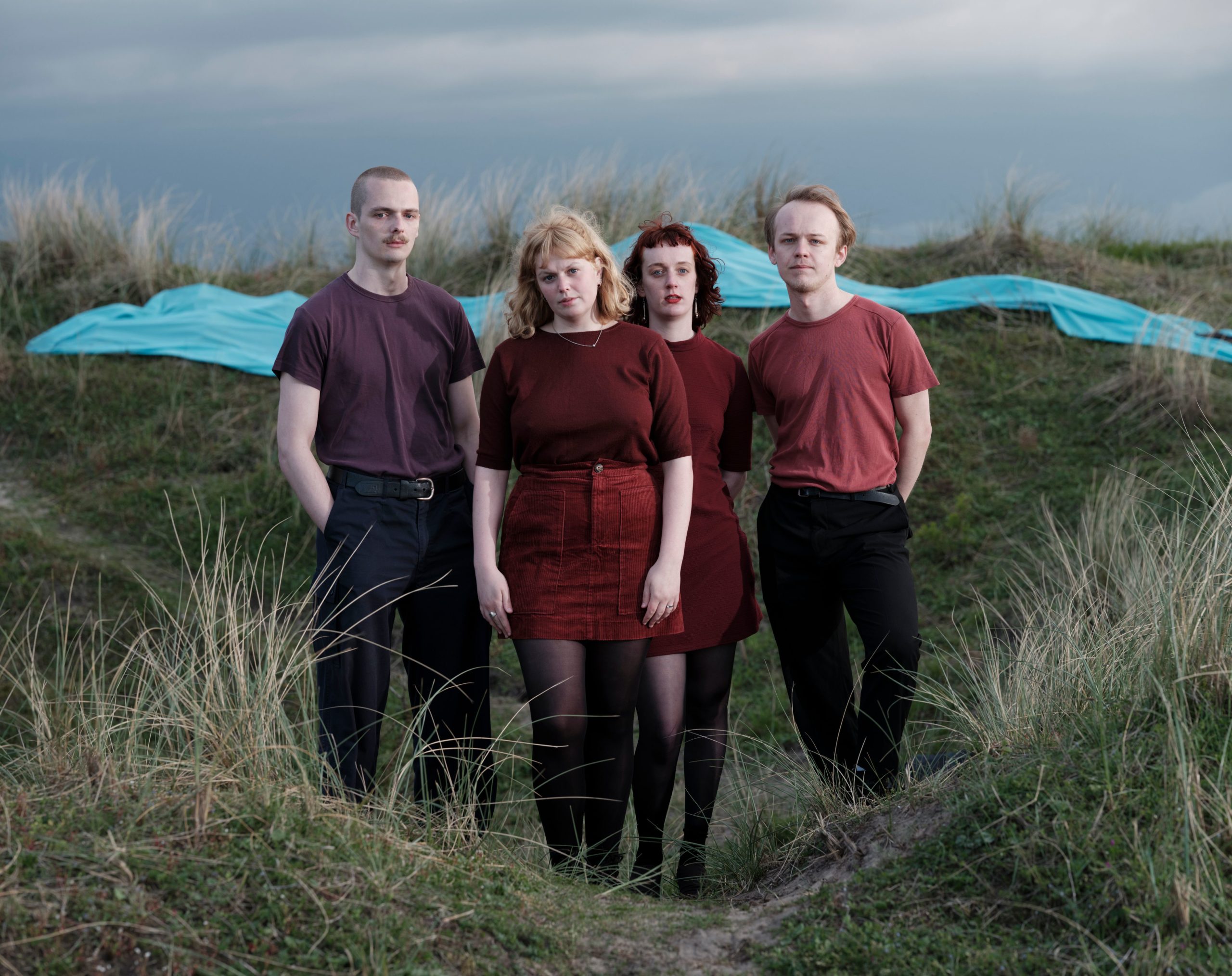
Womb are a trio from Pōneke (Wellington), consisting of Gemini twins CharlotteForrester (they/them; vocals & guitar) and HazForrester (he/him; synth), and their Leo sister Georgette Brown (she/they; drums). Moving between spaces from shoegaze to dream pop, Womb’s ethereal, genre-transcending sound is a vortex of divergent influences enchanted by a supernatural sibling synergy — felt in the screams of melancholia, swells of tenderly caressed guitar, delay-drenched synthscapes, and off-kilter percussion.
“Holding a Flame” is a collection of songs written by the Pōneke-based trio over the last couple of years. Originally anticipated to be a part of an album, the songs felt complete when placed together, as something of their own. “We recorded them on and off, while collectively listening to a whole lot of Cocteau Twins (as always), Blood Orange, and The Cure. As with most of our songs, these were written as a form of transmutation; turning discordant feelings into a unified sound as a means of getting through/past various states of being.”
Holding a Flame was recorded and produced by both the band and BevanSmith, with Smith also taking on the mixing and mastering duties. The beautiful artwork and design is courtesy of the band’s synth whiz HazForrester.
Aldous Harding has made her return with her new standalone single “Old Peel” which was recorded with producer John Parish and has been a favourite at her recent live shows, serving as the set-closer.
The track has a playful feel to it with a bit of an upbeat sunny deposition, with some of her now trademark songwriting elements that is every bit as good as you expected, doing the live version more than justice.
You can find the music video for it available to watch below, which was directed by her long-time visual collaborator Martin Sagadin. We’ve also included her new tour dates which take place in 2022.
New Zealand national song-writing treasure Aldous Harding has returned today with her latest song and recent “set-closer” ‘Old Peel’. This single arrives with an acoustic version of the track as the B-side, too (check it out over on Spotify). The music video was co-directed by Aldous Harding and long time collaborator Martin Sagadin — and stars Martin at the helm too, while Aldous sits in the wings on piano.
‘Old Peel’ by Aldous Harding, out now on 4AD/Flying Nun
LONDON, GB, Barbican March 31 – LONDON, GB, Barbican April 1 – NORWICH, GB, The Waterfront April 3 – GLASGOW, GB, City Halls April 5 – DUBLIN, IE, National Concert Hall April 7 – MANCHESTER, GB, Albert Hall April 8 – BRIGHTON, GB, The Dome April 10 – CARDIFF, GB, The Tramshed April 11 – BRISTOL, GB, Trinity April 12 – BRISTOL, GB, Trinity June 3
“Keep It Together” is out now! Very happy to finally share the first track of our new album “Welcome Break” with you guys! We had so much fun recording this video.
Amsterdam’s Pip Blom will return with their sophomore album Welcome Break, which will be released on October 8th via Heavenly Recordings.
The announcement comes paired with the release of the albums first single, the triumphant “Keep It Together.” It’s yet another perfect combination of their garage rock sound combined with an infectious catchy pair of hooks that are buried alongside the fuzz. The band have a knack for crafting songs that are way catchier than you notice the first time around, revealing themselves even more with every new listen.
Where Boat reckoned as a fresh-faced, yet gloriously fearless game- changer, Welcome Break is the self-assured older sibling who, with an additional year or two behind themselves, isn’t afraid to speak out, take lead, and instigate a liberated revolution-come-bliss-out.
Yet another master-class in effortless song-writing and feel-good-chorus’, as Pip explains, the secret behind the continuing run of form on Welcome Break is fairly simple – “I just really like catchy songs and I feel like that’s something we do well. It’s not sugar-coated-happy Pop…they’re more like ‘Titanic’ pop songs…”
The single comes with a music video that features the band and other dancers doing some 80s inspired dance choreography and workout rountines. It was directed by Danny and Isabelle Griffioen and can be found below, along with the album artwork and tracklist.
Talking about the track, Pip said:
“A very important thing of all the tracks is the dynamic between Tender’s and my vocals. I feel like we really compliment each other’s tones. Maybe it’s because we’re siblings, but whatever it is, I love it. In the chorus of Keep It Together we sing two completely different bits, but it works really well. Tender did a lot of singing for this record, mainly for the choruses and bridges. I really like how with this bridge you’ve got this whole choir of the two of us singing in different keys. It gives it a very dreamy vibe that is nice after the powerful chorus.”
“Keep It Together” by Pip Blom Heavenly Records, 2021
British alternative rock’n’roll band – loud guitars, melodic bass & heavy drums, or acoustic guitars & spoken word poetry in equal measure. Formed in Swansea, Wales and continued along the M4 to London. Independent’s Top 10 album Swansea to Hornsey. Indie trio Trampolene have announced details of their third album, ‘Love No Less Than A Queen’.
The record, which has been previewed over recent months via a series of singles, will come out on July 16th via Pete Doherty’s Strap Originals label. The band have also shared a new single called ‘Gotta Do More Gotta Be More’.
Speaking of the new album, Trampolene frontman Jack Jones, who also serves as the touring poet for The Libertines said: “The album was a way of me summing up my life so far. It made me search into myself and understand that life really is a gift after all and that being at peace isn’t wrong or something you don’t deserve and it actually makes things better that way.”
Of new single ‘Gotta Do More Gotta Be More’, Jones added: “We’re all told we can be better, we can do more. It’s not always true. Repeat it so often it becomes hypnotic and surreal and loses any sense or meaning. Then you’re free to relax and be yourself.”
The new single, a mind-bending maniacal mantra ‘Gotta Do More Gotta Be More’ is the fourth track to be lifted from ‘Love No Less Than A Queen’ along with ‘Oh Lover,’ ‘Come Join Me In Life’ and ‘Uncle Brian’s Abattoir.’
The album features 12 new Trampolene original songs and was produced by Mike Moore and Richard Jackson) & Jason Stafford and mixed by Dave Emery.
Trampolene’s new album is set to be showcased at three UK tour dates in August. See details of the shows below. August 2021Wednesday 18th – Manchester, Deaf InstituteThursday 19th – Cardiff, The GlobeFriday 20th – London, Moth Club
With a mere WEEK to go until Rose City Band release their radiant new album “Earth Trip”, the group offer up one of the albums more wistful and introspective moments, the beautifully melancholic “In The Rain”. Many of you preordered this record and know this jam already! Thanks to you early birds for your support and patience!!
Drawing deep on country music’s heart-on-your-sleeve emoting, “In The Rain” finds beauty in the melancholy and solace in the natural world. Guitarist and vocalist Ripley Johnson puts it best in his own words:
“My general operating outlook is optimistic, but what a tough year. This song is highlighting the beauty in the darkness and also leaning on love to make it through. To me this song is saying in part, “Things are tough, its dark and it’s raining, but isn’t the rain also beautiful? It’s cold but your love is keeping me warm.”
Only a handful of copies of the limited-edition Hot Box pack on our webstore, and mail order colored LP stocks are running low – make sure you grip this future classic before it goes.
Rose City Band is celebrated guitarist Ripley Johnson. A prolific songwriter, Johnson started Rose City Band as an outlet nimble enough to match the pace of his writing as well as to explore songwriting styles apart from Wooden Shjips and Moon Duo. Rose City Band allows him to follow his musical muses as they greet him and not be bound by the schedules of bandmates and demands of a touring group. On Earth Trip, Johnson colours songs with a country-rock twang and a melancholic, wistful undertone. Themes recur such as pining for summers spent in the company of friends to newer meditations on space, stillness and the splendour of the natural world. Johnson’s laid-back and classically West Coast songs communicate emotions entirely of the moment with both his lyrics, intimate vocal style as well as his elegant elongated guitar lines and astute use of counter-melodies on the pedal steel.
Earth Trip was written during the period of sudden shocks and drastic lifestyle changes of 2020, quite literally “called down off the road” as he sings in elegiac album opener “Silver Roses”. Home for an extended period for the first time in years, he was able to reconnect with simple pleasures of home life: hikes in nature, bathing outside and waking with the dawn. Johnson found hope and healing in forming a more mindful relationship with the natural world, from the simple pleasures of tending a garden to sleeping out under the stars. “Lonely Places” in particular captures the sheer joy and freedom of losing oneself in nature, an ode to the wealth of natural beauty the west coast provides, as well as the importance of appreciating wild, open spaces. “In the Rain” seeks beauty and hope in life’s darker moments, while “Dawn Patrol” finds solace in the earth’s natural rhythms.
Recorded primarily at his home in Portland and mixed by Cooper Crain (Bitchin’ Bajas, Cave), the songs on Earth Trip make deft use of space through their lean arrangements, guest Barry Walker’s shimmering pedal steel, open and elongated guitar melodies, and upfront and intimate vocals. Johnson describes the arrangements this way; “I was trying to capture that feeling when you take psychedelics and they just start coming on – maybe objects start buzzing in the edges of your vision, you start seeing slight trails, maybe the characteristics of sound change subtly. But you’re not fully tripping yet. Cooper got the idea right away and his mix really captures that feeling.” Johnson’s lithe guitar playing treads an equally fine line between country and cosmic, melodies blooming into long reverb trails and solos evocative of radiant summer warmth.
Earth Trip’s message of interconnectedness with the environment expands on a long country music tradition that draws a symbiotic relationship between storyteller and the land, celebrating the beauty of the natural world without forgetting our responsibility to preserve it for future generations. It cements Johnson’s place as a musician and songwriter of inimitable skill.







 The Fat Angel Sings