“The Path of the Clouds”, Marissa Nadler’s ninth solo album, is the most stylistically adventurous, lyrically transfixing, and melodically sophisticated collection of songs in her already rich discography. Gripped by wanderlust while suddenly housebound at the start of the pandemic in 2020, Nadler escaped into writing, and came back with a stunning set of songs about metamorphosis, love, mysticism, and murder. Blurring the line between reality and fantasy and moving freely between past and present, these 11 deeply personal, self-produced songs find Nadler exploring new landscapes, both sonic and emotional.
One of Nadler’s distractions during the 2020 quarantine was binging reruns of Unsolved Mysteries. As she watched, she began to notice parallels between many of its stories and her own life. What began as a writing exercise became the bedrock of her song writing process, as she came to inhabit the narratives that had so fascinated her. In “Bessie, Did You Make It?,” Nadler inverts the canon of the murder ballad, crafting a narrative of female empowerment and survival. “The Path of the Clouds” tells the story of the infamous hijacker D.B. Cooper, but the song isn’t just about jumping out of an airplane, faking your death, and making a grand exit. It’s a meditation on perseverance and transformation, a salute to mastering one’s fate. “Well, Sometimes You Just Can’t Stay” details the ingenious plans of the only successful escapees from Alcatraz, as well as the lingering enigma that surrounds their history. The lyrical twist on the chorus turns a tale about a prison break into a humorous, shoegazing country song.
While she’s always been a brilliant guitarist, Nadler challenged herself to expand her palette for The Path of the Clouds, experimenting with synthetic textures that make the album feel untethered from time and space. A majestic grandeur sweeps through songs such as “Elegy,” shooting the listener into the stratosphere as synths swirl and entwine with Nadler’s celestial mezzo-soprano. Nadler also learned to play piano during the pandemic’s isolation, and she composed many of the songs on the album on keys rather than guitar, which further contributed to their exploratory feel. These songs are unmistakably Marissa Nadler’s, but they sound free to go places she’s never gone before.
Nadler tracked the skeletons of the songs at home and then sent them to some choice collaborators, including experimental harpist Mary Lattimore and Simon Raymonde, the Cocteau Twins bassist and her Lost Horizons collaborator. Multi-instrumentalist Milky Burgess, having recently worked on the soundtrack to the film “Mandy“, adds intricate melodic power throughout the album. Jesse Chandler, Nadler’s piano teacher (as well as a member of Mercury Rev and Midlake), plays winding woodwinds and plaintive piano to luminous effect. Fellow singer-songwriter Emma Ruth Rundle contributes a slinky guitar solo on “Turned Into Air,” while Black Mountain’s Amber Webber steps in as a vocal foil to Nadler, a ghostly apparition in the distance of “Elegy.” Seth Manchester, known for his work with Lingua Ignota, Battles, and Lightning Bolt, mixed the album at Machines with Magnets in Pawtucket, Rhode Island. Manchester added dimension to the songs’ atmospheric beauty with screeching feedback and distorted guitars. Stripped of the ethereal reverb that often swaddles her resonant vocals, Nadler’s delivery now stings and pierces with newfound immediacy and confidence.
As a songwriter, Nadler is as direct and urgent as she has ever been. There’s no coded language amid the bleak lows and exalted highs of songs like “Elegy,” “Lemon Queen,” “Storm,” and “Tried Not to Look Back.” Memories are painted with highly detailed imagery, and Nadler, also a visual artist, uses that eye not only to tell a story but to transport the listener there.
The Path of the Clouds showcases the power of an artist at the peak of her powers nearly 20 years into an acclaimed career as a songwriter and singer. Coming a long way from the spare dream folk of her earlier work, she has remained inspired and continues to evolve, open to new ideas and directions. The proof is right here, in Nadler’s most ambitious and complex album yet
“What would you want with someone who’s only in love with the idea of you?”
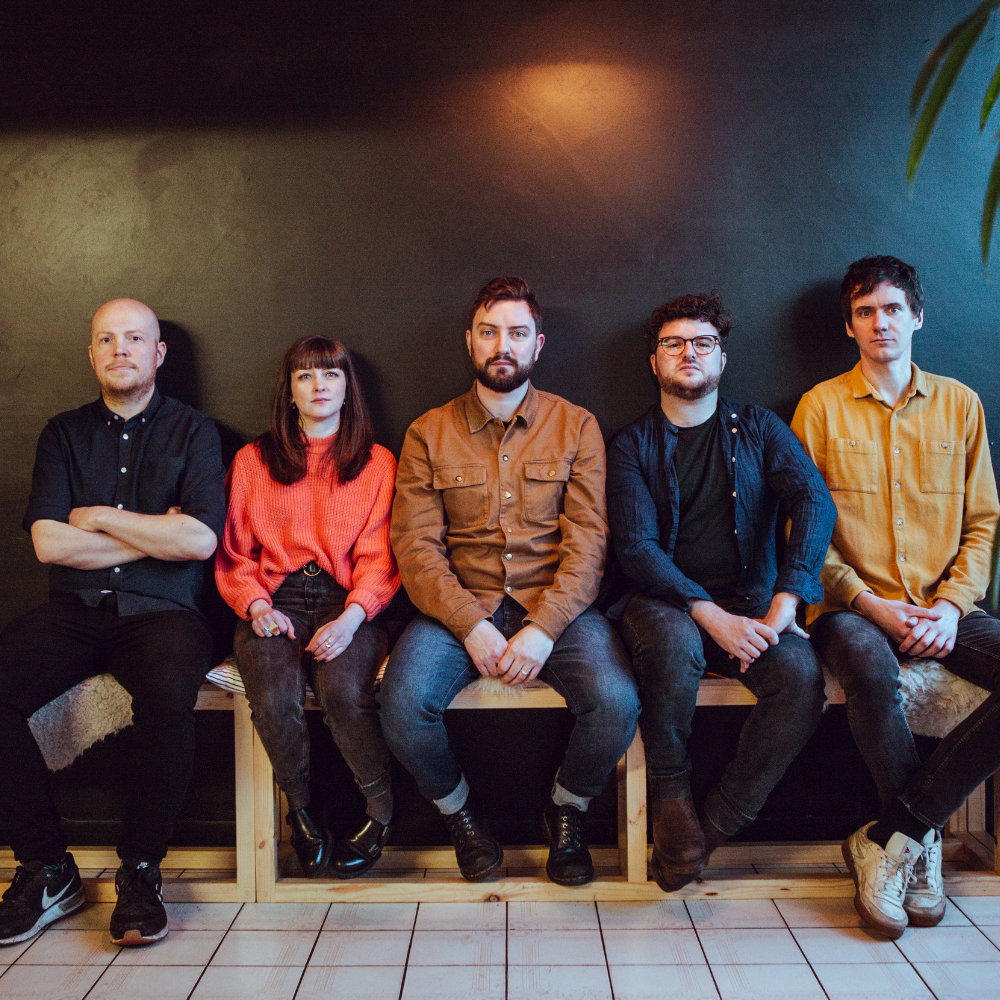
Chemikal Underground is delighted to announce a brand-new single from Glasgow band Admiral Fallow; their first new recording in six years. The single, “Sleepwalking”, is taken from their forthcoming new album to be announced later this year.
Tender, deftly arranged and richly detailed, “Sleepwalking” is a sublime and succinct hymn to new friendship.
Eloquent and melodically irresistible, the song finds Louis Abbott’s sleepy vocal riding above a humid flow of fingerpicked acoustic guitar and tumbling layers of vocals by Sarah Hayes leading to a climactic sunburned synth solo. Shortly before the three-minute mark the group choose to dismantle and rebuild the chorus … and then it’s over.
Sleepwalking is as accomplished as it is economical. The single sees the continuation of Admiral Fallow’s relationship with producer Paul Savage, who worked on the group’s three albums – Boots Met My Face (2010), Tree Bursts In Snow (2012) and Tiny Rewards (2015) – and marks the first chapter in their new alliance with Chemikal Underground, the Glasgow label affiliated with Chem19, the studio in which Sleepwalking was recorded in 2019.
Sleepwalking finds Admiral Fallow’s line-up unchanged from their debut album: Louis Abbott (guitar, vocals), Kevin Brolly (keys, synths, clarinet), Phil Hague (drums), Sarah Hayes (keys, vocals, flute) and Joe Rattray (bass).
“Spread The Feeling” is the sixth or seventh studio LP by The Pernice Brothers. I’m honestly not sure. I don’t keep track. All I know is that if I play one song off each album at a gig, it’s a long show. Joe Pernice formed Pernice Brothers in Massachusetts with his brother Bob in 1997 when Joe was playing with his band theScud Mountain Boys. The Scuds disbanded later that year, and Pernice Brothers became Joe’s main musical focus. Their debut release was the ’97 Monkey Suit 7” on Sub PopRecords, followed by the LP “Overcome by Happiness” in ’98. Pernice & Linehan launched their Ashmont Records in ’99
I recorded a full length Pernice Brothers record a few years back, but ditched it after it was mixed. Scrapping it had everything to do with me not liking the songs. The playing, the recording and mixing were fantastic to my ears. After letting the mixes sit for a while . But there were a couple songs that were really good and deserved to be saved, unlike my soul. I holed up with engineer/musician extraordinaire Liam Jaeger in Toronto, and we reworked/mixed the songs worth the time. Then we kept recording new songs until “Spread The Feeling” was done. (I am toying with releasing all my rejected recording on a double CD called SHITTY SONGS.
Eric Menck came up with the title. I think it was a peanut butter ad campaign slogan.
I don’t know if “Spread The Feeling” is a return to some kind of form. That’s for other people to decide. To be honest, I write all kinds of songs all the time. It might come down to my mood at the time as to which songs make a record. This record definitely has the most “muscle” of all my records. (That’s not saying much if you compare it to say, PINE BOX by the Scud Mountain Boys.) The playing is pretty nuts. Liam Jaeger and James Walbourne are two of the finest guitarists out there. Peyton Pinkerton is a true genius. It should be no surprise to learn that he’s an exceptional painter. All three players wowed me at every turn. Both Patrick Berkery and Ric Menck played drums. They are as good as it gets in my opinion. Neko Case and Pete Yorn were extremely generous with their voices. I’m grateful to both for elevating the songs. Oh, and my brother Bob is on there too, as always.
The record was recorded and mixed in Boston, Toronto and Washington State.
What’s the single? Probably “The Devil And The Jinn” or “Mint Condition” or “Lullaby.” I have my favourite songs, but they are almost never the ones most people like. For instance, this song didn’t make the cut, but the chorus is pretty badass:
The cover photo was snapped in the early 1970s by late great BMX team owner Rick Twomey. Team member Mel Stoutsenberger launches out of the concrete flood channel into the Simi Valley heat. Rick’s Bike Shop team members and local talent look on in with admiration, chomping at the bit for their turn. Just a bunch of kids hanging out, getting rad, spreading the feeling. Joe Pernice
Obey Cobra their debut album “Oblong” is an exceedingly potent blend of ethereal psychedelica, doom and punk with adept flourishes of noise rock, electronics and improv. Obey Cobra are experimental, ethereal psychedelia, post-punk with electronic and heavy flourishes.
Cardiff, the Earth home to Dr Who (sometimes), James from The Panicked Meat Streakers, the real Captain Morgan who that rum is named after, and Obey Cobra of Oblong fame. “Oblong?”, What the is that?” Well, it’s an album, obviously. The record in question opens in a pretty epic fashion with the slow, synthy and staggering ‘OK Ultra’. . ‘Capita’ is a bouncier rocker, based around a nice ‘n’ simple riff, with some excellent shouting and chanting thrown into the mix, and a slight undercurrent of Mr Bungle nightmare big-top music. ‘Sunflowers’ lurches in a darker fashion, perhaps with Lydia Lunch or Come in mind. Other tracks have a greater kosmische feel, and the mood really gets heavy around the track six or seven mark. They even manage to round things off with a pounding electro casserole that sounds as if JG Thirlwell is trying to fuck shizzle up by remixing the track through a broken fax machine’s sense of ennui.
This lot have a great many strings to their proverbial psych-rock bow. ‘Oblong’ on vinyl released by Box Records and remastered for vinyl by Sam Grant.
Obey Cobra features Kate Wood, Steve O Jones, Rory Coughlan-Allen, Gareth Day, Ian Coote and Rosemary Swan.
“Cardiff’s own breakout alternative stars of the near future” – Echoes & Dust
Over the past three years the band’s reputation as a formidable live force has grown following gigs with the likes of Pigs Pigs Pigs Pigs Pigs Pigs Pigs, Bob Log III, Hey Colossus and Acid Mothers Temple amongst many more.
Multi-instrumentalist/songwriter Dan Friel remains unrivalled at creating ferocious pop songs out of blistering noise. A mainstay of the Brooklyn underground as co-founder of noise-punk band Parts & Labor and the alchemist behind a slew of fuzz-baked solo releases, Friel has played alongside the likes of Lightning Bolt and Black Dice and collaborated with acclaimed string quartet ETHEL. His rock trio Upper Wilds runs Friel’s ebullient spirit through mountainous art-punk, culling a rush of melody that drips with molten distortion. On their third album, “Venus”, the band naturally moves closer to the sun, expanding in both bombast and precision. Venus synthesizes the experimentation of debut Guitar Module 2017 and the thunder of 2018’s Mars into ten lean cosmic love songs.
On Venus, Upper Wilds orbit the planet named for the Roman goddess of love at full tilt. The rhythm section of bassist Jason Binnick (who also mixed the album) and drummer Jeff Ottenbacher (Black Black Black, Golden Error) tear through off-kilter rhythms that land with meteoric impact. Friel’s guitar sputters and froths before soaring into frenetic leads that pack every moment with powerful melody. Alien croons and glitching sparks spill out of Friel’s wild, filtered humming amplified into oblivion. “Venus’ few moments of respite lay bare the raw efficiency and beauty of Friel’s song writing, like crackling space transmissions to loved ones thousands of miles away.
Friel interlocks allegories, strange true stories and deeply personal sentiments into raucous jolts. “Love Song #2” invokes the turbulence of Friel’s cousin long-distance trucking in the midst of a pandemic — and love’s tenacity to stay connected against all odds. The ensemble embodies the acceleration of life’s momentum, the tempo ratcheting each time Friel intones “It’s all speeding up now, It’s all flying by”. The swing and swagger of “Love Song #7” uncovers the glee and absurdity of real life NASA astronauts Jan Davis and Mark Lee, who united in a secret marriage before a joint mission. “Love Song #6” examines alienation through the lens of a couple left behind by the Heaven’s Gate cult. On the boisterous “Love Song #3”, Friel sees constellations in his son’s freckles and finds comfort in how familiar the vast expanses of starlight appear.
Upper Wilds traverses the havoc, mystery, and joy of humanity’s countless follies in both space and love. “Venus” is a raucous and joyous celebration of the wonders of what is beyond comprehension internally and externally. Join them on this exhilarating odyssey.
Released July 23rd, 2021
Personnel: Dan Friel Jason Binnick Jeff Ottenbacher
“Fire of Love” the debut album of the Gun Club, released on this day August 31st in 1981.
London punk turned pub rock into protest music; New York punk reframed noise as art. But compared to those more celebrated first-wave scenes, L.A. punk was both more traditionalist and transgressive, the sound of faded glamour degenerating into fuck-it-all nihilism. The natural response to living in a desperate, dangerous town is to make desperate, dangerous music. While the Germs and Black Flag pulverized punk into hardcore, bands like X and the Blasters approached punk as a rescue mission, by forging a spiritual connection with the primal hoots and howls of ’50s-jukebox oldies.
And then there was the Gun Club, whose ringleader, Jeffrey Lee Pierce, looked so far back into the past—to the emotional bloodletting of Depression-era blues that he wound up seeing the future, opening up a trail that indie rockers and roots artists would travel for years to come. But what makes the Gun Club’s 1981 debut, “Fire of Love”, so timeless. It’s an eternally captivating portrait of a young artist in their purest state—hungry, drunk on attitude, and committed to their vision to the point of seeming supernaturally possessed.
Jeffrey Lee Pierce, wasn’t the most obvious candidate for punk sainthood; at heart, he was more of a studious fanboy than a natural frontman. Born to an American father and Mexican mother, Pierce was raised in the working-class east L.A. community of El Monte before relocating to the Valley suburb of Granada Hills—“the Los Angeles that nobody ever bothers with,” as he called it. A voracious reader and record collector, Pierce became the teenage president of the Blondie fan club and worked the counter at Bomp Records, before making vagabond journeys to New York, New Orleans, and Jamaica. (His time in Jamaica dovetailed with a reggae obsession that saw him review records for L.A. scene bible Slash under the pen name Ranking Jeffrey Lea.) His own musical pursuits were equally impulsive: Upon dissolving his short-lived art-pop outfit Red Lights, Pierce formed a new band with fellow Chicano Brian Tristan after the two attended a Pere Ubu show at the Whiskey A Go-Go in 1979, initially using it as a vehicle to indulge their mutual love of soul and reggae.
That band was initially known as the Creeping Ritual, before Black Flag/Circle Jerks singer Keith Morris suggested a switch to the Gun Club. (In return, Pierce gifted Morris the lyrics to the title track for the Jerks’ 1980 debut, Group Sex.) But the name wasn’t the only thing that had changed. Through friendships with local record-collecting zine-maker Phast Phreddie Patterson and ex-Canned Heat singer Bob Hite, Pierce immersed himself in the blues, embracing it as both the original outsider’s music and as a strategic device to distinguish the Gun Club from his punk peers more clearly beholden to a ’60s-garage/Stooges lineage. “Anything before the ’60s can be fascinating, because so much time has passed,” he explained in a 1982 interview. “The ’60s just completely demolished everybody’s minds, and so people aren’t really aware of most of the musical forms before then … there’s more fresh and wild ideas going on there.”
Today, the concept of punks playing the blues may not seem so radical in a world where Jack White oversees his Third Man Records empire and the Black Keys now play arenas, but in 1980, no self-respecting aesthete would touch the stuff. But in his essay that accompanies Blixa Sound’s 40th-anniversary reissue of the album, drummer Terry Graham observes: “My half-drunk opinion was that Jeffery loved and hated the blues.
Key to this transformation was Tristan’s slide guitar, which yields some of “Fire of Love’s” bedrock riffs. But the guitarist didn’t stick around to see it through. With the Gun Club still playing to mostly empty rooms in L.A., Tristan accepted an offer to replace Bryan Gregory in the far more emerging and popular band The Cramps (where he became forever known as Kid Congo Powers). The loss of his co-founding partner presented an early indication that the Gun Club wasn’t going to be some tight-knit gang, but a fluid entity that would regularly reinvent itself in response to Pierce’s ever-changing whims. ( In the 2006 documentary “Ghost On The Highway”: “[Pierce] was just simply going to stuff his head with knowledge, express that knowledge somehow, and it just didn’t make any difference who was behind him, who was with him doing it, or who was in front of him watching him do it.”)
Tristan’s defection to the Cramps also provided a useful yardstick for measuring what made the Gun Club so singular. Pierce didn’t fit into any established punk archetypes: He wasn’t your typical leather-clad tough guy, he wasn’t a goth, he wasn’t some greasy coiffed, rockabilly revivalist. He didn’t have the lithe physique or cool stage-stalking presence of a Lux Interior. With his bottle-blonde hair and surplus-store assemblage of army coats, jackboots, and sabertooth necklaces.
But Pierce had a big mouth and possessed a disarming, mercurial singing voice that was feral and fearful in equal measure. Most crucially, unlike the Cramps, Pierce channelled rock’n’roll. Gun Club songs didn’t exist inside some imaginary B-movie, but in the darkest chapters of American history that sense of psychological torment defines “Fire of Love” as much as any slide-guitar riff or desert-storming backbeat.
By 1981, Pierce had locked in the line-up featuring Graham and bassist Rob Ritter (both of L.A. punk mainstays theBags) and rockabilly enthusiast Ward Dotson on guitar. Culled from two quickie sessions done on the cheap, “Fire of Love” is a masterpiece of thriftiness and expediency. On their smash-and-grab reclamation of Robert Johnson’s “Preaching the Blues”—the band isn’t so much upgrading the genre for the hardcore era as trying to bash through their repertoire before getting the boot from the studio. The rhythm section pounds the ground so furiously, they practically start to glide across it.
Fire of Love’s crackling live-in-the-studio energy (complete with Pierce’s audible bandleader direction) and natural reverb create a late-night atmosphere. Pierce crafts his lyrics with a painterly touch, constructing a netherworld that channels westerns and old-time religion one moment, porno mags and dive-bar bathroom graffiti the next.
Pierce doesn’t so much sing the blues as mainline them, pushing his nervous energy into more outrageous—and, at times, troubling—displays of bravado. He delivers his signature rave-ups “Sex Beat” and “She’s Like Heroin to Me” like someone who’d pick a fight with the biggest guy in the room even though he knows he’ll get his ass kicked. And while “Jack on Fire” is a comparatively laid-back walking blues, its breathless lyrical procession of Southern Gothic imagery, voodoo mysticism, and snuff-film depravity goads Pierce into one of his most gripping, magnetic performances.
Then, of course, there’s the searing centerpiece “For the Love of Ivy.” The song not only showcases the Gun Club at peak blues-punk fury, but also displays a command of silence, space, and tension that evokes L.A.’s original prophets of doom, the Doors. Part hat-tip to the 1968 Sidney Poitier film For Love of Ivy, part love letter to the Cramps’ cool looking guitar player, “For the Love of Ivy” teeters on the precipice where sexual desire descends into murderous bloodlust, with Pierce unleashing some of the most unsettling screams, If it were the only song Pierce had ever released, “For the Love of Ivy” would still make him a legend. After all these years, each lyric-capping cry of “Hell!” still feels like a fresh jump-scare.
In plumbing the depths of evil, “For the Love of Ivy” also betrays Pierce’s tendency to lose himself in his characters which, in this case, means uttering a particularly ugly line about his deranged protagonist “hunting for n*****s down in the dark.” (A similarly disturbing phrase turns up in the cowpunk odyssey “Black Train.”) Still, its appearance in “Ivy” was and remains especially jarring coming from an artist who devoted so much of his life to studying and celebrating Black music.
“On “Sex Beat,” a razor-sharp country one-two shuffle becomes a howling wind as Pierce’s wasted, half-sung half-howled vocals relate a tale of voodoo, sex, dope, and death. The song choogles like a freight train coming undone in a twister. Here Black Flag, the Sex Pistols, Son House, and the coughing, hacking rambling ghost of Hank Williams all converge in a reckless mass of seething energy and nearly evil intent.
Pierce didn’t need to use racial slurs to alienate people. The same maniacal zeal that attracted musicians into his orbit was also the very thing that drove them away. Though Fire of Love made the Gun Club a hot property in post-punk circles—particularly in New York and Europe—its line-up didn’t even survive the making of the band’s second record, “Miami”. Ritter walked out of the sessions and Dotson followed suit after they wrapped. (Dotson was so traumatized by his experience working with Pierce, From there, the Gun Club’s music would turn more artful and cinematic—even acquiring a dream-pop shimmer on 1987’s Robin Guthrie-produced “Mother Juno” but their internal dysfunction only intensified, as Pierce’s control-freak tendencies and worsening substance abuse problems would see him cycle through a procession of players before he died of a brain hemorrhage in 1996 at just 37 years of age.
While Pierce never stopped expanding his vision for the Gun Club over the course of his career, it was never more focused than on “Fire of Love“. And nowhere is his maniacal self-belief more deeply felt than on “Fire Spirit,” a snarling rocker that functions as his own personal—and eerily prophetic—theme song. “I can see clearly/From my diamond eyes,” he declares off the top, “I’m going to the mountain with the fire spirit/No one will accept all of me/So the fire… will stop.” Personal demons may have extinguished Pierce’s flame far too soon, but each time a needle drops on “Fire of Love“, it burns anew.
Craft Recordings proudly celebrates the 25th Anniversary of R.E.M.’s tenth studio album, “New Adventures in Hi-Fi”, with a special reissue set for release on October 29th.
The bonus-filled 2-CD/1-Blu-ray Deluxe Edition offers a trove of audio-visual content, including the newly remastered album, 13 B-sides and rarities, a never-before-released 64-minute outdoor projection film (shown on buildings across five cities in 1996 to promote the album’s original release), and a previously unreleased 30-minute EPK.
Additionally, the Blu-ray features New Adventures in Hi-Fi in stunning Hi-Res and 5.1 Surround Sound audio, plus five HD-restored music videos including “Bittersweet Me,” “Electrolite,” and “E-Bow the Letter.” Housed in a 52-page hardcover book, the collection includes archival photographs—many of which have never been published—plus new liner notes from journalist Mark Blackwell and reflections from all four original band members, as well as from Patti Smith, Thom Yorke, and producer Scott Litt.
An Expanded Edition is also available as a 2-CD or digital collection, including the remastered album along with B-sides and rarities. The 2-CD offers an exclusive 24” x 24” poster and four collectible postcards, as well as a booklet featuring new liner notes and archival photos. Additionally, the newly remastered album will be available as a 2-LP set, pressed on 180-gram vinyl, with lacquers cut by Kevin Gray at Cohearent Audio.
Available via digital platforms today, ahead of the album, is the advance single “Leave – Alternate Version.” Originally recorded for the “A Life Less Ordinary” soundtrack, the single offers a haunting sparse sire-less version of New Adventures album track “Leave,” for which Michael Stipe re-recorded the vocals. Reflects Stipe, “I actually might prefer this version to the one that’s on the record… Well, I wouldn’t say I prefer it, it just tells a different story with the lyric.”
First released in September 1996, “New Adventures in Hi-Fi” endures among one of R.E.M.’s acclaimed albums. It stands as a favourite among the band members. The album was a global success, achieving platinum certification in the US and peaking at No.2 on the Billboard 200. Elsewhere, the album went to No.1 in more than a dozen countries, including Australia, the UK, and Canada. Critically, New Adventures in Hi-Fi received wide praise and was named as one of the best albums of the year by such outlets as Rolling Stone, Spin, Mojo, Entertainment Weekly, and the NME. Over the decades, the title has achieved cult status, with several press retrospectives ranking it among the top albums in R.E.M.’s rich catalogue of releases.
Recorded at the height of their fame, New Adventures in Hi-Fi also marks R.E.M.’s final album with drummer and founding member Bill Berry, who left the group amicably the following year. Perhaps most remarkable, however, is that the album found the band taking a unique creative approach: writing and recording much of the LP on the road, during their 1995 ‘Monster’ tour.
While writing new material on the road wasn’t an unusual feat for R.E.M., “New Adventures in Hi-Fi” was unlike anything they had done before. As they embarked on tour, the band sought to create an abstract travelogue documenting every emotion and experience as it happened. “We wanted to make a record about being on the road without singing about being on the road,” bassist Mike Mills explains in the liner notes. “The idea was that the feeling of being on the road would come through in the sound and feel of the record itself.”
The band traveled with a mobile recording truck, capturing new songs on an 8-track during soundchecks (as well as in various backstage areas and on the tour bus). “The idea was, ‘Let’s challenge ourselves,’” guitarist Peter Buck tells Blackwell. “My feeling was, it’ll show exactly where we’re at right now in a way that maybe some of the records don’t at all. This record was just an attempt to be who we were at that minute.”
The year-long outing, which began in January 1995, marked R.E.M.’s first tour in six years. As one of the biggest bands in the world, the quartet played to packed arenas across North America, Europe, Australia, and Japan, with support from acts like Sonic Youth and Radiohead. But along the way, the tour was marred by medical emergencies. In March, Berry collapsed on stage from an aneurism and spent the next month recuperating. Mills, meanwhile, underwent intestinal surgery in June. A month later, Stipe had emergency surgery for a hernia (which, he asserts, occurred while performing the song, “Undertow”).
After the band returned from the eventful—yet highly successful—run of dates, they entered the studio with their longtime producer, Scott Litt, to record a few final tracks and put finishing touches on others. Among them was the epic, seven-minute-long “Leave;” “E-Bow the Letter,” featuring backing vocals from the legendary singer-songwriter Patti Smith; “New Test Leper,” which Buck proclaims is his favourite R.E.M. song; and “How the West Was Won and Where It Got Us,” one of several songs on the album inspired by Stipe’s experiences living in Los Angeles.
Upon its release, New Adventures in Hi-Fi marked R.E.M.’s longest studio album, with a total run-time of 65 minutes. Filled with cinematic storytelling, haunting effects, and dissonant notes, New Adventures in Hi-Fi found R.E.M. exploring diverse sonic territories—particularly in songs like “Low Desert,” which, Berry describes, is “just dusty and kind of slow and it’s swampy…I feel isolated when I listen to that song, but it’s a good thing.” Stipe adds that the song offers such questions as, “‘What are we doing in the desert? What are we doing in the American West? What are we doing in this unlivable, uninhabitable place?’” Other tracks, like “Departure” and “The Wake-Up Bomb” deliver classic R.E.M. rock vibes.
The band looks back on New Adventures in Hi-Fi with great pride. Buck, perhaps, sums it up best. “Most records, you go in the studio and you just do ’em. And years later all you really remember is vaguely where you stayed, and the songs and the recording process. But this one I remember every bit of it. It was an experience. It was f**king tough, but we made a record. And it was as challenging as anything I’ve ever done.”
The long-running Neil Young Archives Series has featured a number of lines: an Official Release Series, a Performance Series, and a Special Release Series among them. Shakey Pictures Records and Reprise Records recently announced a new addition to the Archives: the Neil Young Official Bootleg Series. It will launch on Friday, October 1st with “Carnegie Hall 1970“, featuring Young’s debut performance at the venerable venue on December 4th, 1970 (the early show). “Carnegie Hall 1970” will arrive on double vinyl,
Neil Young has announced an Official Bootleg Series that will feature recordings of storied concerts from throughout his musical career. The first of these albums is the “Carnegie Hall 1970″, which will be out October 1st via WarnerBrothers.
Specifically, this was Neil’s first-ever show at Carnegie Hall, on December 4th, 1970, and the first of two back-to-back shows he played there that night (a second followed immediately after at midnight). Neil’s set included “Everybody Knows This Is Nowhere,” “Down By the River,” “Helpless,” and “Sugar Mountain,” plus “After the Goldrush,” as well as some songs he hadn’t released yet, like “Bad Fog of Loneliness,” “Old Man,” and “See the Sky About toRain.”
‘Carnegie Hall 1970’, which was recorded on original analogue multitrack and mixed by The Volume Dealers: Neil Young and Niko Bolas, was made from the early show on December 4th, 1970, and it was the first time Young ever performed at the New York venue.
Young performed two shows at Carnegie Hall, one on the 4th and another at midnight the next morning. Bootleggers were unable to capture this first show, which according to Young was “by far, a much superior show”.
The last couple of years have seen Young share a number of unreleased projects from his extensive vault, including 1975’s ‘Homegrown’ and a number of live recordings like 1990’s ‘Way Down In The Rust Bucket’.
Now, the Crazy Horse band leader – alongside Shakey Pictures Records and Reprise Records – has revealed that the first release in ‘The Neil Young Official Bootleg Series’ will arrive on October 1st.
You can listen to “Cowgirl in the Sand” from the album now,
In other news, Neil is apparently making a new album with his band Crazy Horse, and just cancelled his performance at Farm Aid, citing Covid concerns, and saying, “My soul tells me it would be wrong to risk having anyone die because they wanted to hear music and be with friends.”
Neil Young Official Bootleg Series track listing: OBS 1: Carnegie Hall 1970 (NYC: December 4th, 1970 – Early show)
Down by the River Cinnamon Girl I Am a Child Expecting to Fly The Loner Wonderin’ Helpless Southern Man Nowadays Clancy Can’t Even Sing Sugar Mountain On the Way Home Tell Me Why Only Love Can Break Your Heart Old Man After the Gold Rush Flying on the Ground Is Wrong Cowgirl in the Sand Don’t Let It Bring You Down Birds Bad Fog of Loneliness Ohio See the Sky About to Rain Dance Dance Dance
Chubby and the Gang were one of a few bands lucky enough to perform their 2020 debut album in the flesh before the pandemic hit. After releasing their breakneck LP “Speed Kills” via independent punk label Static Shock, they embarked on a brief U.S. tour, showcasing their saucy punk-pop to rooms of faithful punks of all breeds willing to fling themselves around. Their bluesy guitars romped like Chuck Berry on a sugar high, and their recklessly delivered lines were filtered through the lens of a ham-fisted, fun-loving, working-class Londoner. The album quickly became one of the favourites of the year, and we later gave them a best New Artist from many music blog’s, simply put, we couldn’t get enough of Chubby or his gang in 2020, but thankfully there’s more to come from these U.K. hardcore regulars. Late last year, they announced their signing to Partisan Records and confirmed their new album would bve released this year. If you like punk, hardcore or just good old fashioned rock ‘n’ roll, Chubby and the Gang will satisfy your cravings and then some, and their live show is not to be missed.
“West London five-piece Chubby and the Gang are balanced by two energies — a casual “fuck it” on one side, an active “fuck off” on the other. For every moment of punk imperfection, there’s an intricate flurry of detail. For every enraged statement about modern life as war, there’s a lyric like “Hello heartbreak, my old friend” that catches you off-guard.
Made up of musicians from across the consistently thriving and criminally overlooked U.K. hardcore scene, Chubby and the Gang marinate their characteristic speed and sick-of-it-all energy in a mixture of ’50s pop. The result is a prickly take on the older, more melodic genres that punk derives from, chewing them up and spitting them out into something mangled but revitalised.”
“Coming Up Tough” taken from the forthcoming album ‘The Mutt’s Nuts.’
“Aaron Dessner has consistently sought an emotional outlet and human connection through music — be it as a primary songwriter in The National, a founder and architect of music festivals, or collaborator on albums by Taylor Swift, among many other projects. This generous spirit and desire to push music forward has never been more deeply felt than on Big Red Machine’s “How Long Do You Think It’s Gonna Last?“, the second album from Dessner’s ever morphing project with Bon Iver’sJustin Vernon. Songs feature guest vocals and writing contributions from artist friends including Fleet Foxes’ Robin Pecknold, Ben Howard and This Is The Kit, Naeem, Sharon Van Etten, Lisa Hannigan and My Brightest Diamond’s Shara Nova, and Swift herself.
Says Dessner: “This is all music I initially generated and feel emotionally connected to, but it has been very interesting to hear how different people relate to it and how different voices collide with it,” says Dessner, who for the first time also handles lead vocals on three tracks. “That’s what makes it special. With everyone that’s on this record, there’s an openness, a creative generosity and an emotional quality that connects it all together.”



:format(jpeg):mode_rgb():quality(90)/discogs-images/R-14161383-1571942437-3924.jpeg.jpg)


:format(jpeg):mode_rgb():quality(90)/discogs-images/R-1202976-1409855227-7873.jpeg.jpg)



 The Fat Angel Sings