Archive for the ‘MUSIC’ Category

TAYLOR McCALL – ” Black Powder Soul “

Posted: September 29, 2021 in MUSIC
May be a black-and-white image of one or more people, people sitting and indoor

Before Taylor McCall left his home state of South Carolina to enroll at Montana State University, he hustled all summer to trade in his flat-bottom fishing boat for a drifter he would haul out west. As an avid outdoorsman, a fishing guide seemed like a logical next step. While waist-deep in crystal clear fly fishing waters—a dream for many—another calling was tugging at his sleeve.

Accompanied by his father on the 28-hour drive back home to South Carolina, McCall remembers his father asking “What’s next?” His parents knew he played guitar, as it had been gifted to him by his grandfather when he was only seven years old. “I was like, ‘Well, I’m gonna make an album,’” McCall says “And that’s not the answer anybody would want to hear—he thought I was crazy.”

In a symbolic exchange, McCall sold his drifter boat to fund what would become his first album: “Summer Heat “(2017). His parents had never heard him play outside of his bedroom and were surprised by the poised artist who performed for the first time in January 2018. By September of that year, the young artist signed a publishing deal with BMG Records. “It’s been very fast,” he shares. “I guess my first stab at it landed at a good mark.”

Humbly understated, the 24-year-old artist’s Music City story is more like a fairytale when contrasted with the often harsh reality of chasing musical dreams in Nashville. Yet, his confidence carried him well into the scene. “Even a gambling man wouldn’t say the right thing to do here—leaving school to pursue a music career having never sung in front of anyone before in my life, not even a cover song set,” he laughs. “I had to write all the material, everything was so new and fascinating because until then, I had never even thought of doing this.”

Moving to Nashville as a performance novice took some warming up. Even now, upon the release of his sophomore full-length, “Black Powder Soul”, McCall admits that part hasn’t gotten easier. He has established a few meditative guidelines to ease his anxiety as he approaches the stage, but when he’s up there it feels like another world. “It took a lot for a shy bashful guy like me who didn’t even want to read aloud in class back in the day to go ‘Hey, I’m gonna go be in the center of the room,” says McCall. “It’s a wild dynamic.”

McCall credits his astonishing breakthrough to the supporters who propped him up along the way. One of those is the sought-after producer Sean McConnell whom McCall calls “a complete Godsend.” He adds, “I don’t take that lightly, meeting a soul like his.”

After signing with BMG, he wrote consistently on his own, and sometimes with a small circle of trusted collaborators. His manager recommended he get in the room with McConnell. “As clueless as I am, I had no idea who he was,” McCall laughs. The first time they sat down together, they wrote “So Damn Lucky,” which would become the second-to-last track on the 14-song McConnell-produced collection. After two long years of meeting talented people with varying approaches, McConnell’s demo of that track confirmed McCall had finally landed in the right place. “When I heard the demo, I knew that’s exactly where my sonic landscape was in my head,” he shares. 

For McCall, “Black Powder Soul feels like a fully-realized arrival point. Previous EPs including his self-titled 2019 release were a step in the right direction but failed to satisfy his artistic appetite. Though this LP is not his first, the artist considers it his debut. “The other two projects felt like getting a quick fast food meal, and this is like a steak dinner,” he laughs. “If you’re gonna go out once, you want to eat the maximum.”

Black Powder Soul is not necessarily a concept record. But the intentionally crafted project pieces together hidden heirlooms that paint a fuller picture of the artist and the legacy that led him here. 

The album begins at the same place as his artistry—with his grandfather, who gifted him his first guitar. McCall remembers him as a “good ole country man who wore overalls and chewed tobacco.” Not long after he sent the guitar, the Vietnam vet was diagnosed with terminal cancer, likely from the agent orange that was absorbed into his brain and lungs while overseas. 

While at a family funeral, an old Slave Gospel song came on and McCall’s ears perked up. “I never knew those recordings of my grandfather existed,” he says. He tracked down a family history who presented a 12-song collection. Only one song featured his grandfather singing. Halfway through making this record, McCall played it for McConnell who began to cry upon first listen. “Then of course I started crying,” he says. “ I was like, ‘Do you think this is the right option?’ It took me two years before I could even listen to this sound bite and show it to him. And he was like ‘Dude, this has to be on a record.’”

Because his grandfather passed away while McCall was still young, there is no way he would have known that his grandson would go on to become a musician. “Old Ship Of Zion” is both a thematic tone-setter and a touching tribute to McCall’s earliest musical influence. “I felt his presence in there one day and thought ‘If the world is going to hear this first project, then my grandfather is gonna be the first person they hear.”

The clip of his grandfather singing “Old Ship Of Zion” became the opening prelude for Black Powder Soul. Vintage-styled, the gravelled vocals haunt the listener as they begin their journey through the album. “I’m proud to have turned it into like a piece of folk art,” says McCall. “The art itself represents the sonic landscape. That’s the frame and the bow around it. But the middle part of this record is not my grandfather.”

Conceptually, McCall placed the track listing as a Biblical chronology. “It’s almost like being born, getting thrown into hell, and then going on to heaven,” he explains. “Then this in-between music is like all the shifts you’ve got to deal with to get the ride on the boat, as they say.”

The slow-burning rock ballad “Hell’s Half Acre” is the beginning of that descent. Checking in from the depths, “South of Broadway” showcases the upside of McCall’s lack of classically trained instrumentalism. Blending banjo with screeching eclectic guitar may be considered off-kilter. Yet, it evokes the chaos of McCall’s intended “crazy circus vibe.”

From the depths of hell, McCall’s brooding “Highway Will” exhibits expressive vocal breadth and wisdom well beyond his years. Bless my heart, I can’t stand still / Devil don’t kill me, then the highway will, he sings.

To have this record in my hand shows me and hopefully to the world one day that in three years time —it doesn’t matter if it’s 11,12 years—but you can go from not knowing anything about anything to releasing an album you’re really proud of,” says McCall. “If you really give yourself to something and really are obsessed and passionate just for the love of something, it can happen.  But it’s also if you’re lucky, first and foremost, because I look at making music these days as a discipline, and an amazing privilege.”

From wading in a creek to recording original music in an air-conditioned studio, McCall’s winding journey is just as unlikely as it is serendipitous. With equal parts reverence for inherited musical traditions and a pioneering spirit, McCall created a uniquely Southern, yet transcendent soundscape.

“I’m just blessed that when I’m dead and gone someone will have my piece of projects sitting on their record collection on their mantle one day,” says McCall. “You can’t take me away.”

May be an image of 2 people, guitar and text

They’re two old friends enjoying “Wasted Days” during a late summer sunset.

The video for the new John Mellencamp and Bruce Springsteen song “Wasted Days” debuted on Wednesday, September 29th, hours after the song itself was unveiled. Mellencamp and Springsteen play a game of cards in a kitchen, then they go out the front of a garage to trade verses and join on the chorus in the vid.

“We watch our lives just fade away to more wasted days,” the duo sings on the track. It’s an engaging Americana song with a warm patina and easy melody.

The video was directed by long-time Springsteen collaborator Thom Zimny and filmed in New Jersey earlier this month. Springsteen and Mellencamp were spotted on Bay Avenue in Bay Head together on, although they were not being filmed at the time.

Springsteen, who lives in Colts Neck, visited Mellencamp in Indiana earlier this year to record material for the upcoming Mellencamp record.

“Wasted Days,” the first recorded collaboration for Mellencamp and Springsteen, is the first single from Mellencamp’s upcoming album, due in 2022.

Music video by John Mellencamp & Bruce Springsteen performing the track “Wasted Days”. under exclusive license to Republic Records, a division of UMG Recordings, Inc.

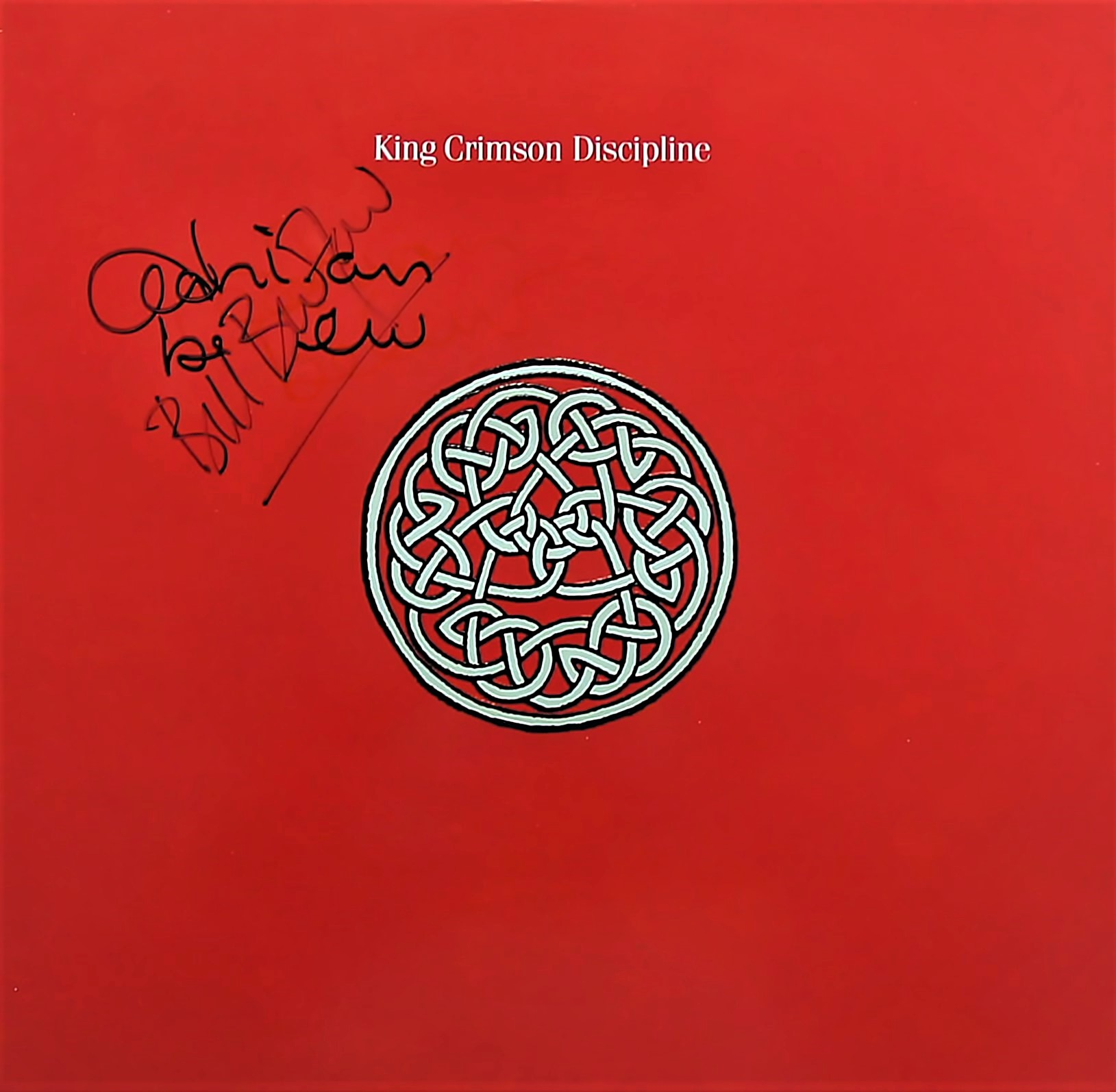
King Crimson’s “Discipline” is an adventurous, experimental and ground-breaking collection from one of rock’s truly singular bands, By the dawn of the 80s, punk had rock music to its foundations. So much so that even one-time prog rockers were streamlining their sound/approach. King Crimson were one such band, as evidenced by 1981’s exceptional “Discipline”. 

When leader/guitarist Robert Fripp decided to form a ‘new Crimson’ band, overindulgences were trimmed and replaced with a sound heavy on rhythm and experimentation. A chance meeting would shape the rest of the line-up. 

“I met Robert Fripp one night in New York, at a club called the Bottom Line,” remembers singer/ guitarist Adrian Belew. “I was playing with David Bowie at the time [1979/1980] and [we] went to see Steve Reich. When the lights came up, Robert was at the table next to us. So I went over, and he wrote his hotel number on my arm. We had coffee, and got to know each other. 

“In nineteen-eighty I started with the Talking Heads, and when they arrived in England I got a call from Robert saying: ‘I’m starting a new band with [drummer] Bill Bruford and myself. Would you like to be a part of it?’ I jumped at the chance.” 

After an extended hiatus and just as prog’s first decade ended, Fripp got behind the wheel for another series of remarkable efforts. Retaining Bruford and recruiting agile bassist Tony Levin, it was the audacious decision to employ a second guitarist (Adrian Belew, who also handled vocal duties) that gives this collective its characteristic sound. Fripp’s exposure to new wave, complemented by an increasingly globe-ranging palette, alongside Belew’s supple support, results in material that is challenging yet concise. On songs like “The Sheltering Sky” Fripp incorporates virtually every trick in his arsenal, creating something that integrates multiple source-points (African, Indian, and Western). The title track is like a business card for the new decade: Fripp asked a lot of his audience, but he’s always asked more of himself.

“I don’t think any of us knew we were creating something so unusual,” Belew says. “But now that I look back, it’s easy to see – every one of us had new technology. I was the first to have a guitar synthesiser, and Robert was probably the second. Tony had the Chapman Stick, which no one had used before, and Bill was fooling with electronic drums. So you had these four monkeys in a cage together with new toys. Something was bound to happen.”  Something did indeed happen. With funky workout “Elephant Talk”, ambient soundscapes (Sheltering Sky), tranquil moments (Matte Kudasai) and controlled freak-outs (Thela Hun Ginjeet, Indiscipline), 1981’s Discipline sounded like nothing before it. 

An interesting occurrence developed during sessions for Thela Hun Ginjeet. Belew remembers it vividly: “John Lennon had been killed, and he was my hero. So I tried to write a lyric about being molested with a gun on the streets of a city. I tried to think of phrases, as though it was an interview on the street after the occurrence. 

“We were in a part of London that was a dangerous area, but I didn’t know that. I had a tape recorder, and Robert said: ‘If you want to get realistic sounds, why don’t you walk around on the street and say your lines?’

“I walked down one of the streets, and there was illegal gambling going on by a group of Rastafarian guys – pretty tough-looking. And they’d gathered around me. They thought I was an undercover policeman. They were about to kill me! At one point the ‘leader’ grabbed my tape recorder and played back what I had just been saying: ‘He had a gun!’ [laughs] The guy freaked out. ‘What gun?!’ They finally let me go, I’m not sure why. 

“I went back to the studio. I was so shook up, and I ran into the control room and was telling Robert the story. Meanwhile, he had whispered to the engineer to record it, and that’s what you hear on the record.” 

Although Discipline wasn’t a big hit, it re-established King Crimson, and touched a legion of young musicians. Says Belew: “It certainly wasn’t a record that your average person would know, but it had an affect on Primus, Tool, Trent Reznor and so many people. That record affected the way they saw music. And for me, that’s even better than saying we had a big hit record.”

The album released (September 22nd) in 1981: UK progressive rock band King Crimson released their 8th studio album, ‘Discipline’, on E.G. Records (UK)/Warner Bros. (US) – their first following a 7-year hiatus; only founder Robert Fripp & later addition Bill Bruford remained from previous incarnations, joined by Adrian Belew (guitar, lead vocals) & Tony Levin (bass guitar, Chapman Stick, backing vocals); displaying a more updated ’80s new wave-oriented sound, the album reached #41 on the UK charts; Pitchfork later ranked it #56 on their list of ‘The Top 100 Albums of the 1980s’.

ba_pack_order_now_1080sq.jpg

The latest in an award-winning and critically acclaimed series of box sets Brilliant Adventure (1992 – 2001) is a box set that includes newly remastered versions of some of Bowie’s most underrated and experimental material: “Black Tie White Noise, The Buddha of Suburbia, 1.Outside, Earthling” and ‘hours…’ along with the expanded live album “BBC Radio Theatre London, June 27, 2000“, the non-album / alternative version / B-sides and soundtrack music compilation “Re:Call 5” and the legendary previously unreleased album “Toy”.

The collection is named after the Koto led instrumental penultimate track from the ‘hours…’ album. The box sets include newly remastered versions, with input from the original producers and collaborators, of some of Bowie’s most underrated and experimental material:

Toy” was recorded following David’s triumphant Glastonbury 2000 performance. Bowie entered the studio with his band to record new interpretations of songs he’d first recorded from 1964-1971. Unfortunately, in 2001 the concept of the ‘surprise drop’ album release and the technology to support it were still quite a few years off, making it impossible to release.

Bowie entered the studio with his band, Mark Plati, Sterling Campbell, Gail Ann Dorsey, Earl Slick, Mike Garson, Holly Palmer and Emm Gryner, to record new interpretations of songs he’d first recorded from 1964-1971. David planned to record the album ‘old school’ with the band playing live, choose the best takes and then release it as soon as humanly possible in a remarkably prescient manner. Unfortunately, in 2001 the concept of the ‘surprise drop’ album release and the technology to support it were still quite a few years off, making it impossible to release TOY, as the album was now named, out to fans as instantly as David wanted. In the interim, David did what he did best; he moved on to something new, which began with a handful of new songs from the same sessions and ultimately became the album HEATHEN, released in 2002 and now acknowledged as one of his finest moments.

Now twenty years after its originally planned release, David’s co-producer Mark Plati says, “Toy is like a moment in time captured in an amber of joy, fire and energy. It’s the sound of people happy to be playing music. David revisited and re-examined his work from decades prior through prisms of experience and fresh perspective – a parallel not lost on me as I now revisit it twenty years later. From time to time, he used to say ‘Mark, this is our album’ – I think because he knew I was so deeply in the trenches with him on that journey. I’m happy to finally be able to say it now belongs to all of us”.

The seeds of “TOY” were first sown in 1999 during the making of an episode of VH-1 Storytellers. David wanted to perform something from his pre-‘Space Oddity’ career, so he reached back to 1966 and dusted off ‘Can’t Help Thinking About Me’ for the first time in thirty years. The song remained in the setlist for the short promotional tour for the ‘hours…’ album, and in early 2000 David and producer Mark Plati compiled a list of some of Bowie’s earliest songs to re-record.

TOY” finishes with a new song from which the album takes its title, ‘Toy (Your Turn To Drive)’ was constructed from a jam at the end of one of the live takes of ‘I Dig Everything’. The track is based around rearranged sections of Sterling Campbell’s drums, Gail Ann Dorsey’s bass and sections of Mike Garson’s piano were looped along with a guitar line of Earl Slick’s that was sampled, time stretched and used as a repeating figure. Lastly, some of Holly and Emm’s backing vocals from the body of ‘Dig Everything’ were cut up and reassembled. Producer Mark Plati “As it was culled from ‘I Dig Everything’ it makes sense to bookend the album with this track – it’s also a fitting postscript to the TOY era”.

Included in TOY:BOX is a second CD/set of 10”s of alternative mixes and versions including proposed B-Sides (versions of David’s debut single ‘Liza Jane’ and 1967’s ‘In The Heat Of The Morning’), later mixes by Tony Visconti and the ‘Tibet Version’ of ‘Silly Boy Blue’ recorded at The Looking Glass Studio time at the of the 2001 Tibet House show in New York featuring Philip Glass on piano and Moby on guitar.

Exclusive to the box set are “BBC Radio Theatre London, June 27, 2000” and “Re:Call 5”. The former was recorded two days after the famous Glastonbury performance in front of 500 lucky fans at the BBC’s art deco theatre in central London. “RE:CALL 5” features 39 non-album / alternative version / b-sides and soundtrack songs.

The accompanying books will feature rarely seen and previously unpublished photos by photographers including Frank W. Ockenfels 3, Nick Knight, John Scarisbrick and Nina Schultz Terner and others, as well as memorabilia, technical notes about the albums from producers/engineers Brian Eno, Nile Rodgers, Reeves Gabrels and Mark Plati as well as a new an interview with The Buddha of Suburbia collaborator Erdal Kizilçay.

LP Box Set:
84 Page hardback book
Black Tie White Noise (remastered) (2LP)
The Buddha Of Suburbia (a very limited release on vinyl previously, remastered) (2LP)
1.Outside (remastered) (2LP)
Earthling (remastered) (3 sided – 2LP)
‘hours…’ (remastered) (1LP)
BBC Radio Theatre, London, June 27, 2000 (remastered and expanded 20 track version, previously unreleased on vinyl) (3LP)*
Toy (previously unreleased) (3 sided – 2LP)
Re:Call 5 (non-album singles, edits, single versions, b-sides and soundtrack music) (remastered) (4LP)*

* Exclusive to Brilliant Adventure LP box

The CD box set will include faithfully reproduced mini-vinyl versions of the original albums where applicable, and the CDs will be gold coloured rather than the usual silver.

Parlophone Record’s release the 5th box set in the brilliant adventures series featuring tracks from the 90’s era of David Bowie’s career. available on vinyl or CD.

GOAT GIRL – ” On All Fours “

Posted: September 29, 2021 in MUSIC

South London band Goat Girl made waves when their idiosyncratic politically charged self-titled debut album landed in 2018. The band—who consist of Lottie Cream (aka Lottie Pendlebury, vocals/guitar), L.E.D (aka Ellie Rose Davies, guitar/vocals), Rosy Bones (aka Rosy Jones, drums), and new bassist Hollie Hole (aka Holly Mullineaux)—have now released their second album “On All Fours”, which demonstrates a fresh, more experimental approach to creating music.

On All Fours” gives off an air of effortless progression rather than a “difficult” second album. However, Davies says it took them a while to hit their stride. “As we’d been touring so intensively it did take us a while to get back into the swing of writing again,” she explains. “We had some half-written songs which all had some nice elements, but a lot of them ended up being scrapped or re-imagined.”

The band again enlisted producer Dan Carey (black midi, Fontaines D.C., Bat For Lashes) and there’s certainly a more synth-led sound than on the previous album. However, Davies explains that they had been experimenting long before going into the studio. “Holly introduced us to her synthesizer which is a Korg Minilogue and we had great fun exploring the possibilities it offered.”

Jones says they did their best to fight against complacency. “We all wanted to try something different so we did switch instruments a lot,” they explain. “I was a bit bored with just drumming so the synth was heavily involved from the start.”

In the wake of a critically acclaimed debut album there’s often a new weight of expectation and Pendlebury admits she was aware of this. “Initially it felt quite daunting as we wanted to challenge people’s perspectives of who we are,” she says. “It was also exciting and an opportunity for us to address those perceptions. I felt throughout the promotion of the first album we were put in a box, and not allowed to break out of that via our music. And the second album has been a chance to tackle that.”

On All Fours” may not ostensibly appear to be as overtly political as their debut album but Pendlebury is comfortable with the band’s reputation for taking on ruling parties in their lyrics. “I didn’t have a problem with being seen as political, we all are,” she explains. “I was probably more concerned that people would be expecting us to retread the same ground. I couldn’t write something that simply replicated the first album.

This new record sees the band veer away from the confrontational lyricism of their debut and indicates Goat Girl’s maturing perspectives in discussing the world’s injustices and social prejudices, using the music to explore global, humanitarian, environmental and mindful well being. Goat Girl’s frequent use of sci-fi synthesisers, off-beat chord progressions, analogue drum machines, diverse vocal styles and distinct, gritty guitars fuse a musical language that expresses both former characteristics and newer developments of the band’s sound and vision On All Fours.

That was a certain time in my life and my reaction to those frustrations. I don’t think I’ve ever written in a way which tells people what to think or feel, it’s always been more drawing attention to what’s going on and the exasperation that exists within that. Goat Girl is about creating a safe space to express our opinions and allow people to join us, to feel they can be part of that collective and also express their feelings.”

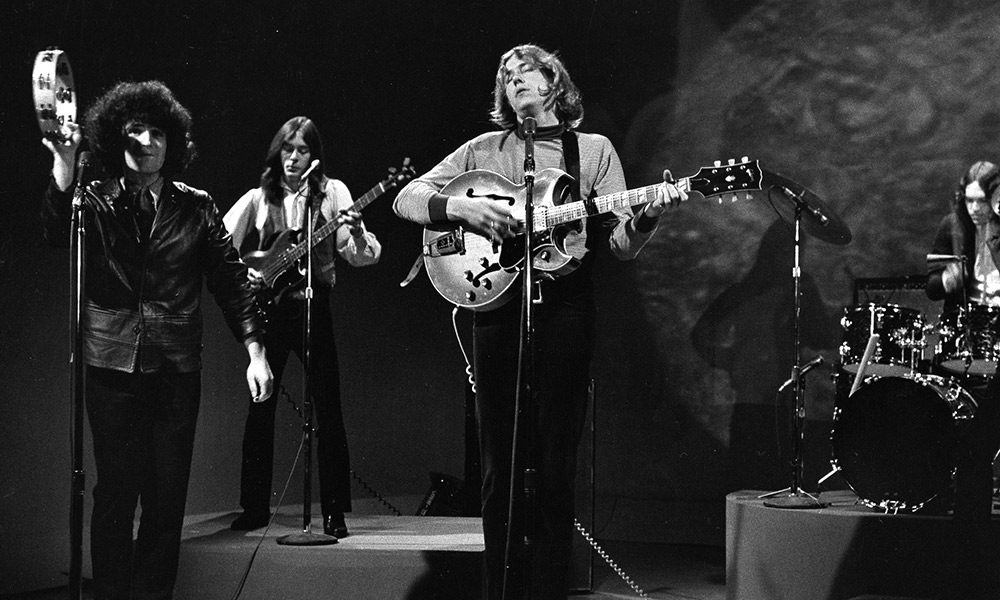
Quicksilver Messenger Service photo by Michael Ochs Archives/Getty Images

One of the most revered psychedelic bands from the 1960s and 1970s the great Quicksilver Messenger Service bossed the Bay Area as a live act in the hazy daze of acid rock. Alongside their friends and rivals the Grateful Dead, Quicksilver epitomised the free form sound of a heady era with the twin guitar attack of Gary Duncan and John Cippolina mixing up vibrato, reverb, fingerpicking and some of the most influential experimental passages in Californian rock – both men being West Coasters through and through. Co-founding member Dino Valenti (from Connecticut) brought in his own unique folk bag style, learnt in the coffee houses of Berkeley and New York City, and he introduced a blend of gothic traditional and beatnik poetry that made the group unique. With the added bonus of a dynamic rhythm section – David Freiberg’s sonorous bass welded to Greg Elmore’s metronomic punchy tom backbeat, this bunch of sharp-looking hombres became regulars in Bill Graham’s Fillmore Scene as well as the Carousel and Avalon and slew crowds at every major club and ballroom and outdoor festival they graced. They also left behind a quite splendid body of recorded work and also used the studio to mix live and pieces into their sound – especially on the classic “Happy Trails” – which gave them a wraparound sonic groove that has never dated.

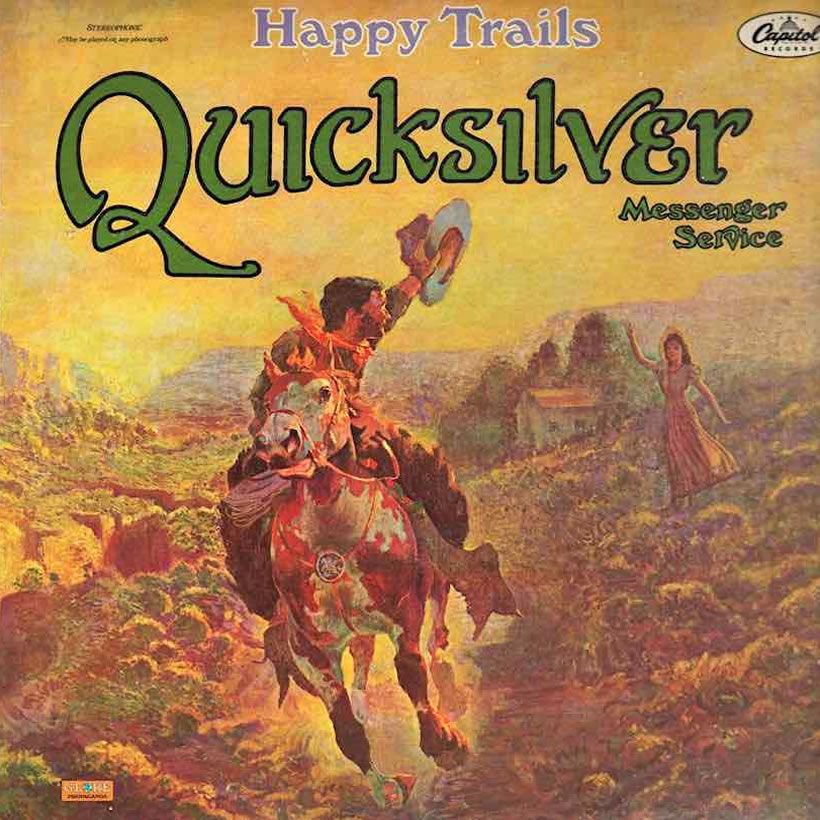
Released on March 17th, 1969, The San Francisco rock band Quicksilver Messenger Service unveiled their finest hour, at least in commercial terms. That day marked the release of “Happy Trails”, their second album for Capitol Records, which became their one LP to win gold certification in America.

Quite unusually for a sophomore record, “Happy Trails” was a live album, taken from performances by the band at the famed Fillmore East and Fillmore West venues.

Happy Trails Quicksilver Messenger Service

Always an outfit for the West Coast aficionado, they have never really received the appropriate accolades, bells, gongs and whistles of others but that doesn’t matter because their music reigns supreme.

The original Quicksilver Messenger Service was a project dreamt up by Dino Valenti (aka Chester Powers among many alter egos). He wanted them to perform with then-revolutionary wireless guitars and all manner of gizmos and female backing singers. Unfortunately, Dino was busted in 1965 and the other members kicked their heels and rehearsed awaiting his release from Uncle Sam’s clutches. The original band included guitarist Jim Murray who can be heard on various unofficial and posthumously released live discs but our story should start with the self-titled debut (1968) Quicksilver Messenger Service which follows hard on the heels of their contributions to the movie soundtrack for Revolution. Boasting the classic quartet line-up Quicksilver Messenger Service consists of some gorgeously elegiac acoustic and electric pieces like the opener ‘Pride of Man’ (penned by London born Buddhist folkie Hamilton Camp) and ‘Light Your Windows’ as well as brilliantly conceived jam workouts, ‘Gold and Silver’ and ‘The Fool’ where the Duncan/Cippolina axis swap and trade lead lines with a jazzy fluidity.

Firmly entrenched in the San Francisco counter culture – they rarely strayed over the State line in fact –  Quicksilver won a reputation as hard-living rascals with a penchant for firing off rifles at their nearby neighbours the Dead’s ranch squat. This rough image readily translates to the amazing Happy Trails (1969) and its deliciously kitsch cowboy artwork for Globe Propaganda by George Hunter (a member of The Charlatans he) which references Dale Evans out on the range tune penned for Roy Rogers TV show. Side one of Trails consists of Bo Diddley’s ‘Who Do You Love?’ taken down so many avenues that it threatens to explode. The first and last of these were versions of the song itself, with notable roles for the band’s guitarists John Cipollina and Gary Duncan. The first even nudged into the Billboard Hot 100, reaching No.91. But the middle passages were all written by the members of QMS themselves, Divided in to ‘Who’,  ‘When’ Where’  ‘How’ and ‘Which Do You Love’ with a mind-boggling return to the main theme, the band involve walking bass lines, Fillmore West audience participation and avant-garde passages that are expertly cut up and edited to Dada effect – not to mention lung-busting guitar lines like nothing else on earth. “Quicksilver goes into it at full speed,” wrote Greil Marcus in his Rolling Stone review at the time. “John Cipollina’s guitar alternately harsh and sweet, clashing with Gary Duncan’s rhythm, Greg Elmore’s drumming simple and solid, never an iota of sloppiness, not a note missed.”

Side 2 is more measured but equally inventive. Diddley’s ‘Mona’ kicks things off now and white boy blues don’t come any sharper.  Duncan’s ‘Maiden of the Cancer Moon’ and ‘Calvary’ are atmospherically charged and comparable to Ennio Morricone. All manner of percussive devices are employed and the vocals are damn fine to boot. Long considered a must-have classic of the era we see or hear nothing wrong with that judgement.

“The Fool” This 12-minute acid rock song is the last track on Quicksilver Messenger Service’s debut album, released in 1968 before Dino Valenti joined the band. The song was written by the band’s guitarist, Gary Duncan, and bass player, David Freiberg, and features the innovative stylings of their lead guitarist, John Cipollina, who came up with a distinctive finger-picking technique heard here. Cipollina would pulling on the vibrato bar to manipulate the sound and run it through a custom amplifier he set up.

The vocals don’t appear until about 7 minutes into the song. When they do, we hear a psychedelic lyric about the golden sun moving ever onward, spiralling high, never down. It sounds like it was written on LSD because it was. “I did write the words,” David Freiberg said in a interview. “They were in my typewriter when I came down from an LSD trip.”

This was a concert favourite for Quicksilver Messenger Service, which built a reputation as a phenomenal live band. One memorable performance can be heard on their album Live At the Fillmore June 7th, 1968, recorded the day after Robert F. Kennedy was assassinated.

Shady Grove” finds Britain’s very own keyboards legend Nicky Hopkins involved in proceedings while “Just For Love” heralds the overdue return of Dino Valenti. There is also the fine reunion period of “Solid Silver” to consider. We can offer a brace of terrific compilations. The introductory “Classic Masters” is a 24-bit remastered 12-track set that will have you hankering for the period of the Human Be-In and the lysergic fresh air of those sizzling sixties. “Masters of Rock: Quicksilver Messenger Service” (2003) is another fine way to discover these fleet-footed acid rock pioneers with well-known gems fixed next to epics like ‘California State Correctional Facility Blues’ and the hipster head anthem ‘Joseph’s Coat’.

As the 1970s signalled changes in personnel and a new mood in the air Quicksilver took stock and branched out with both Duncan and Cippolina embracing solo projects like the magnificent Copperhead and Freiberg throwing in his lot with his old pals in Jefferson Airplane and then Jefferson Starship, although they all continued to play impromptu shows with their kindred soul brothers in the Dead. Often described as hippies with rifles this lot knew about image but their music flowed organically. They still sound like Messengers from the gods. Happy Trails all ye who enter here.

Twenty-three years after its release, in 1992, Happy Trails finally went gold. It was testament to the lasting contribution of Quicksilver Messenger Service – as was the fact that it landed at No.189 on Rolling Stone’s all-time top 500 album list of 2003.

Thanks UDiscover

May be an image of 4 people

Many many things to announce but most importantly and also most insanely we will be releasing our debut album (initially sarcastically but eventually seriously) named ‘Backhand Deals’ to be released in February next year it features our latest single ‘You’ which is also available to stream everywhere now, along with an amazing new video directed by the incredible Will Clark.

The Welsh Wizards Buzzard Buzzard Buzzard have today announced their debut LP “Backhand Deals” and release new single ‘You’ with a video to accompany it. They will also follow their triumphant Cardiff Castle gig, support slots with The Blinders

Speaking about the album, main man Tom Rees says “Backhand Deals” is a practise in subverting the ideology of rock music as something that needs to be ‘brought back from the dead’. Rock should be about enjoying yourself honestly, whether that’s washing the dishes, sweeping the yard, or complaining about whoever got elected. Rock is a sweeping power, and is attributed to anyone who performs art honestly, from Lizzo feeling good as hell to AC/DC riding down a highway to hell. The honesty is the same, and the honesty prevails”.

Preorder is available now so give me your money! Of course in line with indie-band-trying-to-chart-in-an-impossible-fashion there are loads of bundles available that can give u tix to a show, a hot t shirt designed by Liam Barrett or even a cassette???

The video is ode to Orange Juice, but we’re not talking the 80’s Edwin Collins fronted Scottish band, we’re talking the liquid squeezed from the fruit.

The triple buzzards are wonderfully unashamed glam rock’n’roll aficionados, three part harmonies, crunchy SG guitar, dance to you drop drums and understated bass and Backhand Deals promises to be a glorious mix of social consciousness and huge riffs.

Without getting overly emotional online (a sentiment I perceive the be the end of society as we know it), releasing a debut album is a huge deal for any musician, and I don’t think we could be luckier releasing it right now, on the label we’re with, and with the team we have looking after us, to none other but you. Love u all xxx

The album will be out on 25th February 2022 on Communion Records.

May be an image of 3 people

Nation of Language just released “Wounds of Love”, “Happy to bring you Wounds of Love – the second single from our next album, “A Way Forward”, due out November 5th 2021. Nation of Language are an American indie pop band formed in Brooklyn in 2016. The group consists of Ian Richard Devaney (vocals, guitar, percussion), Aidan Noell (synth, vocals) and Michael Sue-Poi (bass).

Since 2018, Devaney has also been the lead vocalist for Machinegum, a side project created by The Strokes drummer, Fabrizio Moretti. Moretti provided the drumming on the Nation of Language tracks “Indignities” and “Sacred Tongue”.

Devaney and Sue-Poi were both members of The Static Jacks, but the band became inactive after the release of their second album. Devaney was inspired to start a new project after hearing “Electricity” by Orchestral Manoeuvres in the Dark in his father’s car, a track he listened to in his childhood. What started out as Devaney “fooling around” on a keyboard later evolved into Nation of Language, with the addition of Devaney’s partner Noell and former Static Jacks bandmate Sue-Poi.

The band released a number of singles from 2016 through to 2019, before releasing their debut album Introduction, Presence in May, 2020

Released July 8th, 2021
Written by Nation of Language

A Way Forward“, their second full-length album, will be released November 5th, 2021.

dinosaur jr, dinosaur jr documentary, freakscene the story of dinosaur jr, dinosuar jr movie, freakscene, j mascis, lou barlo, Kim Gordon, Henry Rollins, Bob Mould, Thurston Moore, murph

The saga of alt icons Dinosaur Jr. will be told in the forthcoming rockumentary, “Freakscene – The Story Of Dinosaur Jr”. A trailer for the film, set to arrive in North America this fall, is available now on YouTube.

Frontman J Mascis immediately sets the tone for the film as he opens the trailer by saying, “I don’t know where people got this idea that it’s supposed to be fun or something to play music. It never occurred to us that it’s supposed to be fun. Music was really important and we wanted to do it.”

Directed by Philipp Reichenheim, the trailer for Freakscene immediately dispels any perception of a fawning documentary. It appears to go beyond “warts and all” to a state of “Dinosaur Jr.: just warts.” Mascis along with his bandmates Lou Barlow and Murph candidly open up about their internal struggles as a band as they navigated unlikely success in the 90s through line-up changes, breakups, reunions, and more. The film features behind-the-scenes footage from archival performances as well as new interviews with the band and Kim GordonHenry RollinsBob MouldThurston Moore, and more.

Freakscene – The Story Of Dinosaur Jr. made its debut earlier this summer at the band’s Camp Fuzz and is currently making the rounds in Europe. Watch the trailer and follow the band’s social media accounts for screening information. Dinosaur Jr. postponed the first leg of its North American tour due to COVID, meanwhile, Barlow is set to begin his Septober tour. It’s an emotional, tragically funny and sometimes noisy rollercoaster ride by a dysfunctional family, Dinosaur Jr. Featuring J Mascis, Lou Barlow, Murph, Kim Gordon, Henry Rollins, Bob Mould, Thurston Moore.

IDLES – ” Crawler “

Posted: September 29, 2021 in MUSIC
Tags:

IDLES have announced their new album, “Crawler“, which will be out November 12th via Partisan Records. The band made the record at Peter Gabriel’s Real World Studios in Bath, England, during the pandemic, and it was coproduced by Kenny Beats (Vince Staples, Freddie Gibbs) and IDLES guitarist Mark Bowen.

The first single from the album is “The Beachland Ballroom,” a soulful number featuring a powerhouse vocal from Joe Talbot. “It’s the most important song on the album, really,” says Joe. “There’s so many bands that go through the small rooms and dream of making it into the big rooms. Being able to write a soul tune like this made me go, fuck — we’re at a place where we’re actually allowed to go to these big rooms and be creative and not just go through the motions and really appreciate what we’ve got. The song is sort of an allegory of feeling lost and getting through it. It’s one that I really love singing.” Adds Bowen, ““I didn’t know Joe could sing like that. He’s been trying to write ‘Be My Baby’ since the very beginning, but he didn’t want to be the punk guy wearing the Motown clothes. He wanted it to feel natural, and this song is.”

You can watch the video for “The Beachland Ballroom,” which was directed by Loose and stays tight on Joe’s face for four minutes.

You can pre-order “Crawler”  in two different editions: a Deluxe Edition that comes as a half-speed mastered, 45RPM double LP pressed on black vinyl, with a gatefold sleeve, and single LP edition on unique coloured eco-mix vinyl. You can also pick up pick up Joy As an Act of Resistance, as well as the DC Dark Nights soundtrack that features IDLES and more.

Arriving just over a year after they reached the summit of the UK Albums Chart in 2020 with ‘Ultra Mono’, modern punk icons Idles present their fourth studio album ‘Crawler’. With guitarist Mark Bowen behind the production desk alongside Freddie Gibbs and Vince Staples producer Kenny Beats, this hard-hitting collection is thematically bound up with the mental and physical travails of the pandemic.

“The Beachland Ballroom” from our new album “Crawler” out 12th November 2021 on Partisan Records.

May be an image of text