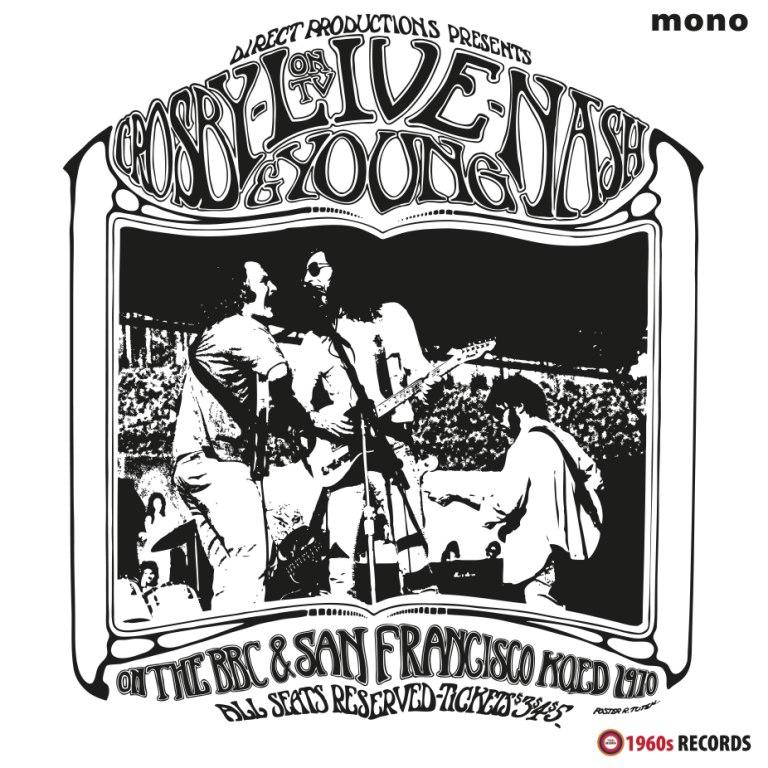
Three of the hottest properties in rock’n’roll as the 70s dawned were David Crosby, Graham Nash and Neil Young and this LP compiles high quality versions of their various 1970 television appearances.
Eight tracks are included from Crosby and Nash’s “BBC In Concert” programme, a combination of well-known songs and then-unreleased material. An acoustic Neil Young plays a similar mix of well-known and obscure tracks in a fine seven song set recorded for TV in San Francisco. Live in Concert at BBC. 1970 footage of the duo performing soon after the demise of the supergroup Crosby, Stills, Nash and Young. Featuring beautiful harmonies, they perform CSNY and solo songs such as “Marrakesh Express” and “Guinnevere”. The Neil Young set is from KQED, February 19th 1970
Full sleeve notes included
Crosby and Nash have harmonies that work. This session shows they can hold up a super performance that has beautiful, full, sound. Their voices and their confidence were at a peak space in time. 1970, the togetherness of Laurel Canyon
Following on from their new album ‘El Refugio’ which was released last month, Mexican post-punk/krautrock group Sei Still are back already with an incoming Fuzz Club Session LP which is due out January 21st 2022
Having upped sticks from Mexico City to Berlin, the session was recorded live at Berlin’s Monoton Studio (which is also where they recorded the new album) back in October 2020 and is comprised of five tracks from the newly-released ‘El Refugio’ LP.
Alongside the video for ‘Me Persigue’ which was released last week, the session also features such album tracks as ‘Soldados Caidos’, ‘Hombre Animal’, ‘Las Puertas De La Noche’ and ‘Solsticiol’
The session is released on 180g black and white vinyl – the latter is exclusive to the Fuzz Club store.
Mexican post-punk/krautrock band Sei Still perform ‘Me Perisgue’ as part of their incoming Fuzz Club Session LP, due out January 21st 2022.
Since 2019, L.A. native Eva Gardner has been stepping out of the shadow of her complementary roles — most recently as the bass player for P!NK to create some solo music.
Gardner’s second EP, “Darkmatter,” arrives Friday, and like its predecessor, 2019’s “Chasing Ghosts,” it was written and recorded in between her duties as a touring player. She has introduced the new EP with the single “London Nights,” a propulsive, New Wave-influenced rocker inspired by her experiences as the daughter of British musician who often visited her father’s homeland and her passion for stargazing.
“London is one of my favorite cities because my dad was from there,” Gardner explains. “Although I grew up in L.A., I spent a lot of time in London and felt connected to it as my home away from home. It was exciting to be in the city lights, infatuated with the British boys, running around town. The pub culture is such a specific way of life.”
Gardner, the daughter of bassist Kim Gardner, knows something about pub culture, too. Her parents founded the Cat & Fiddle in 1982. Eva started playing music as a teenager, was an early member of the Mars Volta and went on to back artists such as Moby, Cher and Gwen Stefani.
The EP was made with Josh Berwanger (The Anniversary) and Jarods Evans at Blackwatch Studios in Norman, Okla.
As for the title of the EP, Gardner says, “Before I had dreams of becoming a musician, I wanted to be an astronomer. Staring up into the night sky has always been a source of enchantment and wonder for me. What is really going on in the space between the stars in the sky? In astronomical terms, dark matter is material that cannot be seen directly, but it’s believed to account for the unexplained motions of stars within galaxies — just because you can’t see it doesn’t mean it’s not there. Creating music is a deep dive within the dark matter of our own psyches.”
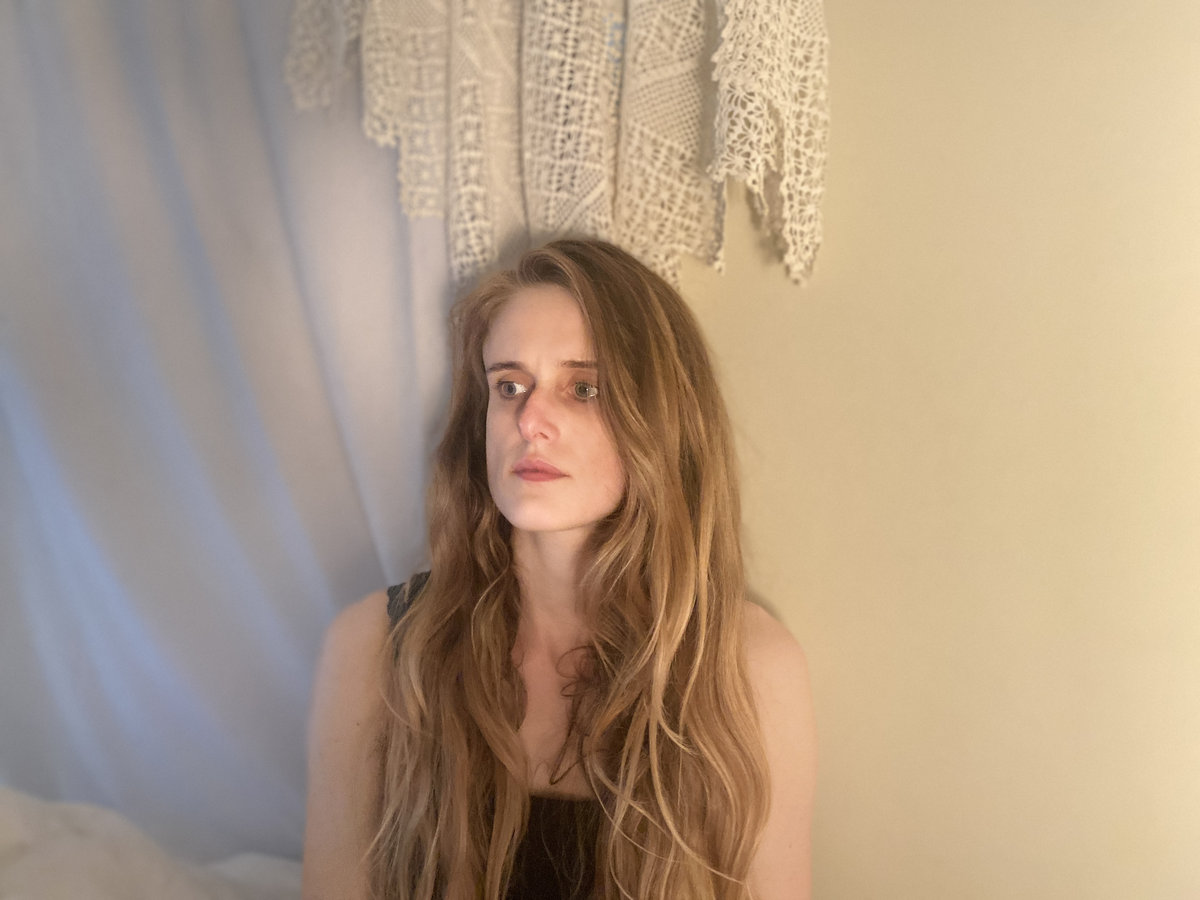
Los-Angeles-based singer/songwriter Claire Cronin is back with her latest album, “Bloodless”. The record follows after her 2019 record of spectral indie folk, Big Dread Moon, and her 2020 “horror memoir” “Blue Light of the Screen“. Once again pulling from supernatural themes, eerie mysticism, and atmospheric Americana, Cronin’s latest record was written and recorded under lockdown home with Ezra Buchla (Cronin’s husband and violist). Cronin also went to Deerhoof’s John Dieterich for mixing, collaborating again after her 2016 album “Came Down a Storm”.
Cronin has already shared “Bloodless” and “No Forcefield,” the first singles from the record, and today she’s back with “Feel This,” .
“Feel This” is another piece of stripped-back folk, with Buchla’s synths and viola offering the only accompaniment to Cronin’s guitar and ethereal vocals. Buchla gently builds a swirling layered atmosphere while Cronin is the song’s haunting focal point. Together they create a hypnotic reverie, a dense atmosphere that Cronin winds through as a spectral presence. Lyrically, Cronin dreams of inhabiting a similarly transcendent form, singing “I don’t want to be in my body / What I want is to be beyond me / Floating like God.”
Claire Cronin: vocals & guitar on all songs, claps (6)
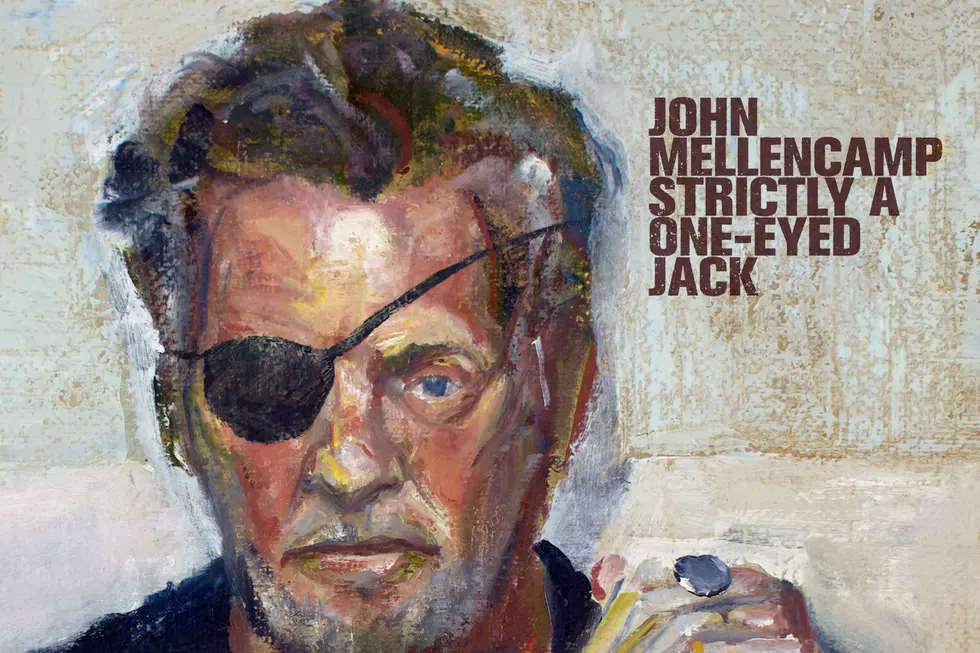
John Mellencamp has announced a new album, “Strictly a One-Eyed Jack”, which will hit shelves on January. 2022. The heartland rocker previewed the LP with a new single titled “Chasing Rainbows,” released last week. Mellencamp has kept busy in recent months, releasing a collaborative song with Bruce Springsteen titled “Wasted Days” in September. It’s one of three songs on Mellencamp’s new LP to feature the Boss, along with “Did You Say Such a Thing” and “A Life Full of Rain.”
“I would consider Bruce now, one of my better friends in the music business. Bruce and I talk quite a bit,” Mellencamp told SiriusXM’s E Street Radio. “I think he and I relate to each other because we’ve had similar experiences of growing up in a small town. Starting out, big band leaders. … He’s like my big brother now.”
Mellencamp debuted another “One-Eyed Jack” song, “I Always Lie to Strangers,” at Farm Aid in September. The performance presaged an anticipated return to the road in 2022, where Mellencamp wishes to play theatres as opposed to arenas and amphitheaters.
“I don’t like playing outside and I don’t like playing in arenas,” he told the Indianapolis Monthly. “That means it’s more work and I make less money, but I’d rather have people see something that could turn into magic rather than something that’s a drunken brawl. In arenas, there’s always people drinking and fighting and all that bullshit.”
This summer, Mellencamp also released The Good Samaritan Tour 2000 live album and documentary, chronicling the trek that saw him playing free shows in public parks and common spaces across the U.S.
“Strictly a One-Eyed Jack” due for release January 21st, 2022
Typhoon is a band built out of contradictions. The eleven-piece Portland, Oregon, supergroup is both wild and tightly structured, punk and symphonic. Frontman Kyle Morton’s lyrics are concerned primarily with death, but Typhoon’s songs are resoundingly triumphant. The truth is that the band, formed by high school friends who somewhat miraculously overcame the interpersonal challenges and logistical nightmares of keeping a project of this scale intact to full maturity, was just built that way. It starts with Morton, whose significant battles with illness have left him at times struggling with meaning. “You can consider it one very bewildered man’s attempt to explain the universe, to himself, in the language of bewilderment,” he says of Typhoon’s music.
Typhoon’s debut Tender Loving Empire full-length, Hunger and Thirst, is a jaw-dropping concept album that fuses folk forms with classical elements and occasional outbursts of metal. It doesn’t work on paper, but on vinyl it is monumental. Follow-up EP A New Kind Of House features the hit song “The Honest Truth,” which placed third on Paste’s list of the 50 Best Songs of 2011. Sophomore full-length White Lighter, the band’s most cohesive and stunning release to date, was released in 2013 on Roll Call Records. “When we started working on White Lighter, I had reason to believe that it would be the last thing I ever did,” Morton said after the album’s completion. “I’m still here and there’s still work to be done.”
“Never Be Your Lover” is a bonus track included on the 11th anniversary reissue of Typhoon’s breakout debut album Hunger and Thirst, remixed by Kyle Morton and Paul Laxer and remastered by Adam Gonsalves.
With “Love on My Mind” – the six song mini-album, mixed by Claudius Mittendorfer (Tennis, Parquet Courts, Johnny Marr) – Bambara condense all the energy and darkness that have made them so compelling and rearrange it into something defiantly new. Opening track, “Slither in the Rain“, all hissing high-hat and spectral synthlines, is a true statement of intent. It’s minimal and atmospheric, foregrounding Bateh’s raw vocals as he introduces one of “Love On My Mind’s” main characters years after the events of the album are over, a lonely man who throws bottles at airplanes and dances a two-step in the pattern of a figure-8. While Bateh has always been adept at character sketches, tracks lke Slither introduce a newfound vulnerability that runs true through the entire album and cause the songs to hit on a more human level.
Similarly, “Point And Shoot “– in which each stanza describes the louche, lawless scenes of “rooftop girls / standing shoulder-to-shoulder, naked figures with their hips / cocked,” busted up jaws, and couches full of burn-holes captured by the snapshots of “Love on My Mind’s” female lead – displays an autobiographical intimacy that is not as apparent in Bambara’s previous releases.
This tenderness is echoed on “Birds“, a rare love song (from which the EP’s title is derived), and album closer “Little Wars“, a gripping finale of loneliness and isolation. But while these songs may display a softer side of Bambara, it’s important to note that they haven’t lost the thrill of what attracted so many people to them in the first place. “Mythic Love” (featuring vocalsfrom Bria Salmena), with its driving bassline and ricocheting guitar lines, brings to mind past rave-ups like Serafina and SunbleachedSkulls but obliterates them in the process, while “Feelin’ Like A Funeral” – a dangerously oscillating tale of a city knifing – is probably the most thrillingly anthemic song the band have ever recorded.
Taken together, “Love on My Mind” amounts to another massive step forward for Bambara – the boldest thing they’ve ever done – and the sound of yet another breakthrough.
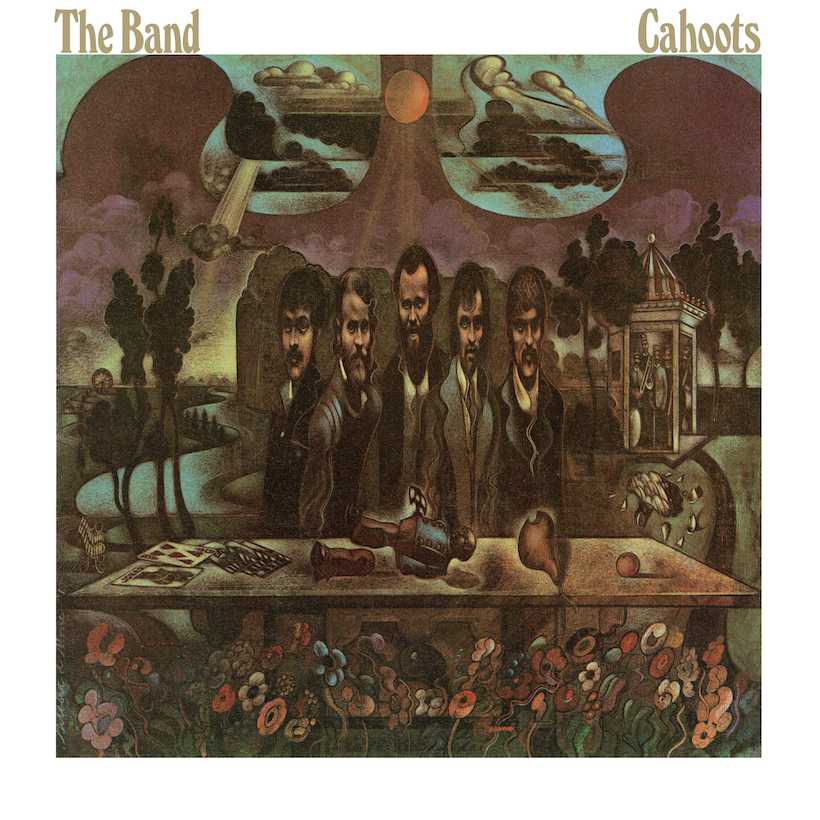
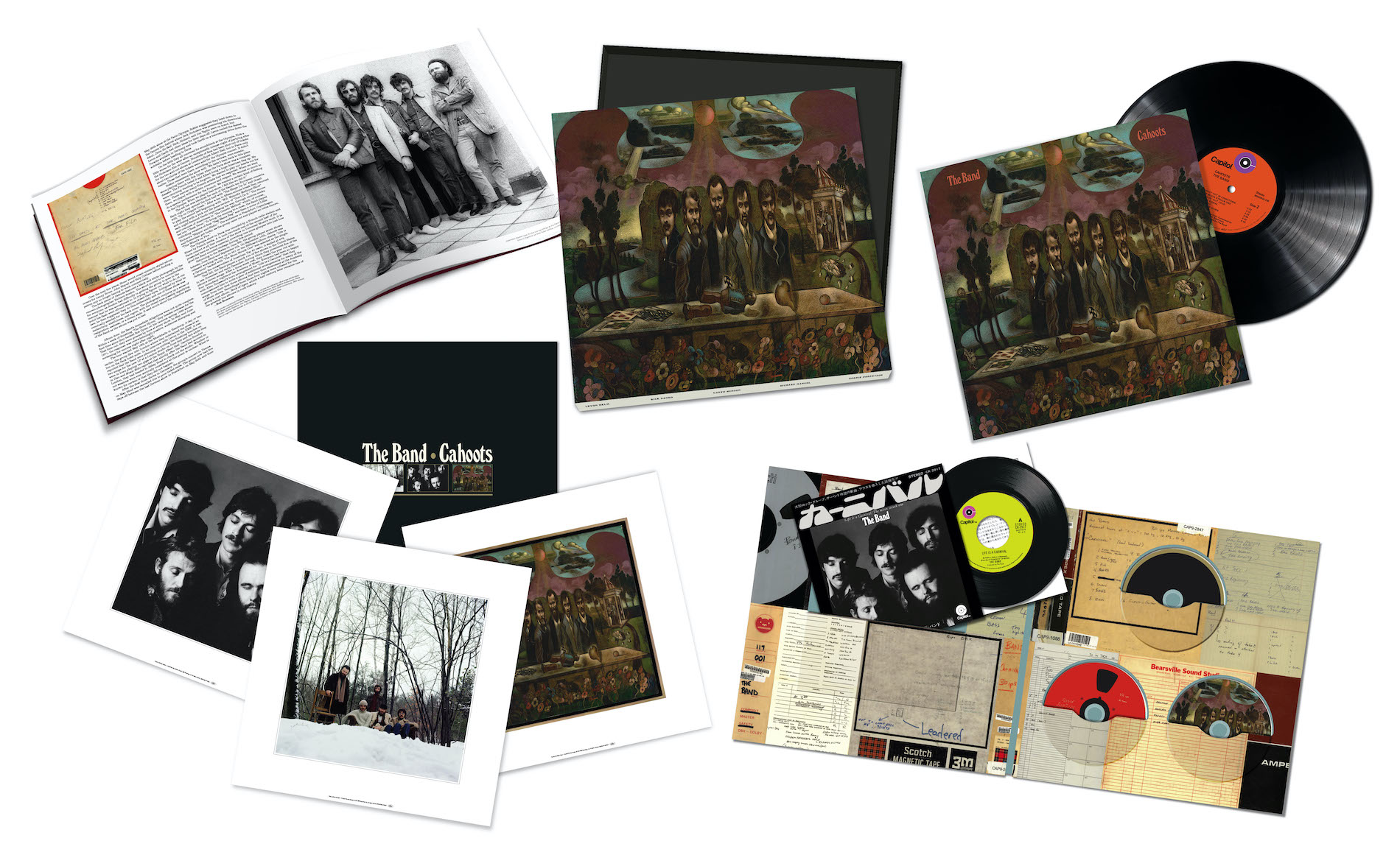
For the 50th anniversary of Cahoots, The Band has revisited the classic 1971 album with an expanded anniversary edition. Available now across streaming services and in a fully-loaded box set, the remastered album features all-new mixes overseen by guitarist/songwriter Robbie Robertson as well as a partial bootleg concert from Paris, France in 1971.
Coming on the heels of 50th-anniversary reissues of “Music From Big Pink”, “The Band”, and “Stage Fright“, the expanded Cahootssees Robertson and engineer Bob Clearmountain taking a fresh look at the classic LP. As with the previous reissues, Clearmountain—under Robertson’s supervision and with his full blessing—completely reimagined the original recordings.
Their fortunes finally took a turn with album number four, though the extent of the turn is subject to debate. It’s hard to argue that 1971’s “Cahoots” is not a step down from its former releases, but those records set a very high standard. And it’s probably that standard that caused many critics to pounce on this LP.
Every member of the group continues to perform beautifully on “Cahoots“, The atmospheric organ from Garth Hudson its first appearance here; and “4% Pantomime,” a Robbie Robertson/Van Morrison co-write that finds the latter guesting to share lead vocals. But the rest of the material falls short by varying degrees: numbers like “Smoke Signal” and “Shoot Out in Chinatown” are enjoyable, albeit insubstantial, while songs such as “The Moon Struck One” and “Volcano” seem like mere filler, though Hudson’s potent sax work partly redeems the latter.
“Robbie told me, ‘Just think of the original mixes as rough mixes. Pretty much don’t pay attention to the mixes themselves,’” Clearmountain notes in the box set’s liner notes.
Also included in the “Cahoots” reissue is “Live at the Olympia Theatre, Paris, May 1971“. Recorded on The Band’s momentous 1971 European tour, the partial recording captures 11 tracks from the May 25th, 1971 show in The City of Light. The Band’s 1971 return to Europe came five years after their infamous tour of the continent with Bob Dylan as his electric backing band where they were booed every night. Fast forward five years, and The Band returned to Europe at the top of their game and the top of the charts. Live at the Olympia Theatre hosts lively takes on such classics as “The Night They Drove Old DixieDown”, “Don’t Do It”, “We Can Talk”, “Chest Fever”, “Rag Mama Rag”, and more.
“Cahoots” was the fourth studio album, and last album of original material for four years. The front cover painted by New York artist / illustrator Gilbert Stone Back cover features a photograph portrait of the group by Richard Avedon. Features guest vocals from Van Morrison (on “4% Pantomime”)
The surround-sound audio Blu-ray that makes it all sound much better. Listening to these, you may conclude that the strength of the performances outweighs the relative weakness of some of the material. Though The Band’s rustic recording techniques are part of what gives them a unique charm to this day, Robertson elected to bring Cahootsinto the 21st century. Clearmountain created new Dolby Atmos and 5.1 stereo surround-sound mixes for each song on the album and the four bonus tracks presented in high resolution on Blu-ray, alongside the new stereo mix.
The anniversary edition adds other goodies, among them a seven-inch vinyl single; a 180-gram vinyl LP; and eight studio bonus tracks, including alternate takes of “When I Paint My Masterpiece” and “4% Pantomime” and a previously unreleased instrumental version of “Life Is a Carnival.” Other carrots include three frameable photo lithographs and a 20-page booklet with liner notes by Robertson and York University professor and musicologist Rob Bowman, who has long been associated with the group.
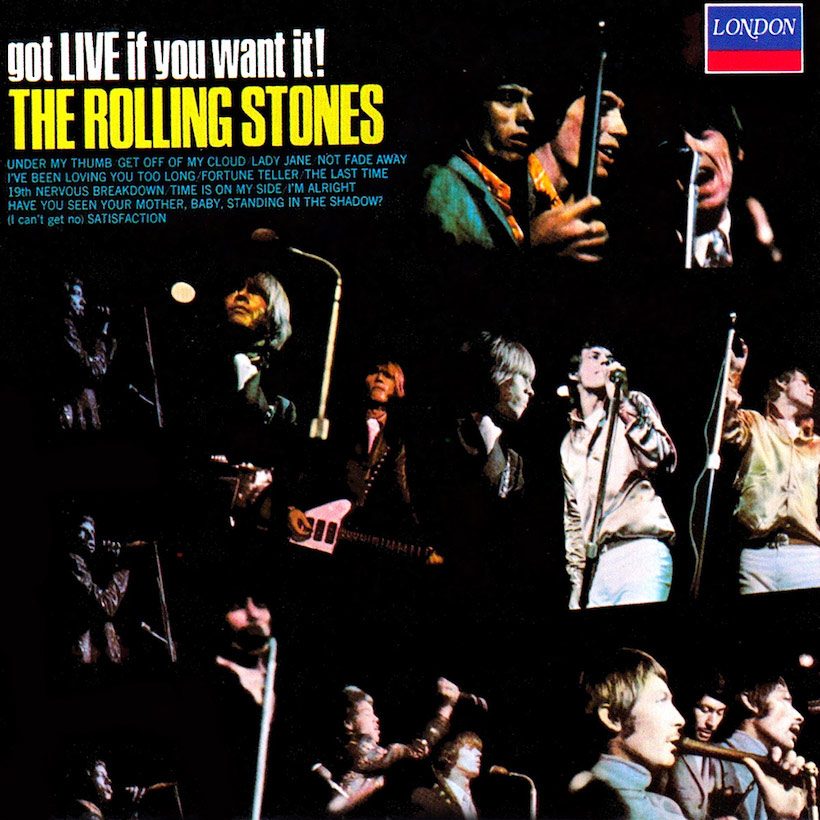
The tale behind the first Rolling Stones’ live album, “Got Live If You Want It!”, released by LondonRecords in the US on December 10th, 1966, is neither simple nor straightforward. It’s a story that has its origins in an EP of the same name released in the UK nearly 18 months earlier.
You can barely hear the band over the audience’s screams, and the sound is the lowest of fidelity. But if there was ever any doubt that the Rolling Stones rivalled the Beatles in popularity in the ’60s, this early live album, the group’s first, proves it. ‘Got Live’ includes a frenzied mix of originals (“Under My Thumb”) and covers (“I’ve Been Loving You Too Long”). A perfect concert document, .
The band sounds hurried, even a bit terrified (there’s a film clip from around then of the band bolting offstage after frenzied fans rushed them), but it leads to frantic tempos that go to the edge of control, and sometimes beyond. Mick Jagger sounds alternately charged and bemused, even as in such more subdued moments as the largely acoustic “Lady Jane”, the screams overwhelm the music entirely. Yeah, Get Yer Ya-Ya’s Out! is the standard favourite Stones live album, but they were already transitioning into a too-controlled arena act by then. This is the one, even if the Stones themselves largely disowned it.
The band was inspired to name this somewhat strange-titled release after a song from one of their favourite bluesmen, Slim Harpo, who recorded “I’ve Got Love If You Want It” back in 1957. The release was recorded in London, Liverpool, and Manchester over three nights in March 1965 by engineer GlynJohns.
According to the press release that accompanied the record, “The EP, captures on wax the unadulterated in-person excitement of a Stones stage show.” And no better than on “Route 66” which rocks and rolls as it’s driven along by Bill & Charlie. By the time it was released in the US as an LP, rather than an EP, “Route66” had been dropped and other tracks had been substituted making “Got Live If You Want It!” a 12-track album in total.
On the original Got Live If You Want It! album liner notes it said that it was recorded at the Royal Albert Hall on the Stones’ Autumn tour of England with Ike and Tina Turner and the Yardbirds. In truth, the recording was mainly done in Newcastle and Bristol, not the Royal Albert Hall in London, with a couple of tracks either having been recorded in Liverpool and Manchester. Just to add to the confusion, some tracks were not even live at all. “I’ve Been Loving You Too Long” was recorded in Los Angeles in 1965 and then overdubbed at IBC Studios in London, which was also where “Fortune Teller” was also cut.
Before the first number, “Under My Thumb,” the voice of singer Long John Baldry can be heard introducing the band. On the CD version, it is a different intro and recording of “Under My Thumb” that appears on the original vinyl pressing.
As Keith said at the time, “We all knew that the sound that we were getting live and in the studio was not what we were getting on record – the difference was light years apart.” There is some indication of the difference on this record, but the limitations of the recording techniques are also there to be heard. Nevertheless, “Got Live If You Want It!” is a fascinating glimpse of mid 60s Stones playing live – even so, the band remained unhappy that it was released as an album and always referred to 1969’s “Get Yer Ya-Ya’s Out” as their first live album.
Must-hear: “Have You Seen Your Mother Baby ,Standing In The Shadows” races along in a mad dash, with Bill Wyman’s elastic bass lines sounding like they’re being stretched to the breaking point. And the tease of the “Satisfaction” riff before “The Last Time” is devilish.
The cheat: Yeah, well…. see… the versions of Otis Redding’s “I’ve Been Loving You Too Long” and Allen Toussaint’s “Fortune Teller” aren’t live at all, but studio recordings with crowd screams layered on. Oh, and though the cover claims it was recorded at Royal Albert Hall, it was in fact from two concerts at other England locales.
R.I.P. On December 10th, 2021 US musician, songwriter, actor, producer, novelist, businessman & philanthropist Michael Nesmith (natural causes, age 78), who came to greatest prominence as a member of The Monkees & co-star of the TV series of the same name (1967 UK & US #1 single “I’m A Believer” plus 10 US & 8 UK Top 40 singles); he was known as the Monkee in the green wool hat with the thick Texas drawl & the writer of enduring songs like “Mary, Mary,” “Circle Sky,” “Listen to the Band” & “The Girl I Knew Somewhere”; Mike’s 1970-’71 trio of solo albums with The First National Band was an important influence on the development of country rock; as a songwriter, he was also notable for “Different Drum”, a hit for Linda Ronstadt with The Stone Poneys; Mike served as executive producer of the cult film ‘Repo Man’; in 1981, he won the first Grammy Award given for ‘Video of the Year’ for his hour-long ‘Elephant Parts’; The Monkees received a star on the Hollywood Walk of Fame in 1989, with all four members present; they reunited in 1995 to record their last studio album, ‘Justus’; between 2012-14 Mike reunited with Mickey Dolenz & Peter Tork to perform concerts throughout the US; 2014 live album ‘Movies of the Mind’ documents Mike’s solo tour from 2013; what was already intended to be The Monkees ‘final farewell’ tour was completed mere weeks before his passing by Mike & now only remaining bandmate Micky Dolenz…
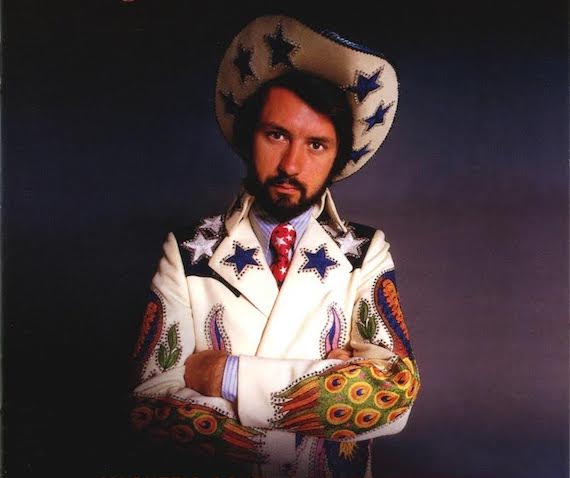
This week Michael Nesmith passed away, here we revive the spirit of the First National Band, the pioneering country-rock outfit he fronted from 1970 to 1971, for a series of shows in Southern California. Though best known for the knit wool beanie he donned during his two-season stint as a member of NBC’s The Monkees, Nesmith has worn many hats in his storied career in the arts, including label head, movie producer, author, VR impresario, and, arguably, inventor of the modern music video. This compilation focuses on the polymathic Nesmith’s Stetson years of 1970 to 1975. During this prolific period “Papa Nez” produced a series of albums for RCA and his own Pacific Arts label that set challenging meditations on subjects such as freedom, acceptance, and the nature of subject-object relationships to a backing track of rollicking country rock.
After departing The Monkees at the start of the decade Nesmith joined forces with Orville “Red” Rhodes, the pedal steel ace, electronics wizard, and LA session journeyman who headed up the house band at the San Fernando Valley’s premiere honky tonk, The Palomino. Their partnership, which stretched across seven albums in various band and duo configurations, took Nesmith back to his Texas roots at the same time as it propelled the emerging genre of country rock to new heights. In Rhodes Nesmith found his perfect musical foil. In addition to being a virtuoso on his instrument the 40-something Rhodes was a legendary stoner who kept a jar of kif-infused peanut butter handy to keep the mood dialled in.
Nesmith, on the other hand, was old before his time, a serious young man predisposed to serious thoughts and weighty topics. Together, Rhodes’ levity and Nesmith’s gravity struck an improbable balance, creating in the process some of the smartest songs ever penned about cows, break-ups, and broken-down Chevys.
Unlike many of his contemporaries in the 70s country rock scene, Nesmith was neither a traditionalist nor a dilettante. Rather, he found in the country music of his youth forms and themes that allowed him to give a more immediate, visceral voice to the heady abstractions he was exploring in his own ongoing studies of religion and philosophy. His recordings from this period made a compelling case that homesickness, whiskey-soaked heartache, and the loneliness one sometimes feels in a crowded bar are really just banal expressions of existential angst. As filtered through Rhodes’ swirling tone, the sounds and imagery of country became a form of vernacular philosophy. As he sings in “Hollywood” (MagneticSouth, 1970), for Nesmith the appeal of the idiom was first and foremost intellectual:
It’s not the countryside that appealed to my heart It’s the spirit and it captured my mind
This compilation collects more than twenty album cuts and live performances from Nesmith’s First and Second National Bands and his stripped-down collaborations with Rhodes. They range from a cosmic cover of Patsy Cline’s classic “I Fall To Pieces” to the koan-like “The Grand Ennui” to the uncharacteristically sentimental “Propinquity (I’ve Just Begun To Care).” Taken together, they put on full display the breadth of Nesmith’s catholic musical interests, the depth of his personal philosophy, and the exaggerated height of his archly raised eyebrow.





 The Fat Angel Sings