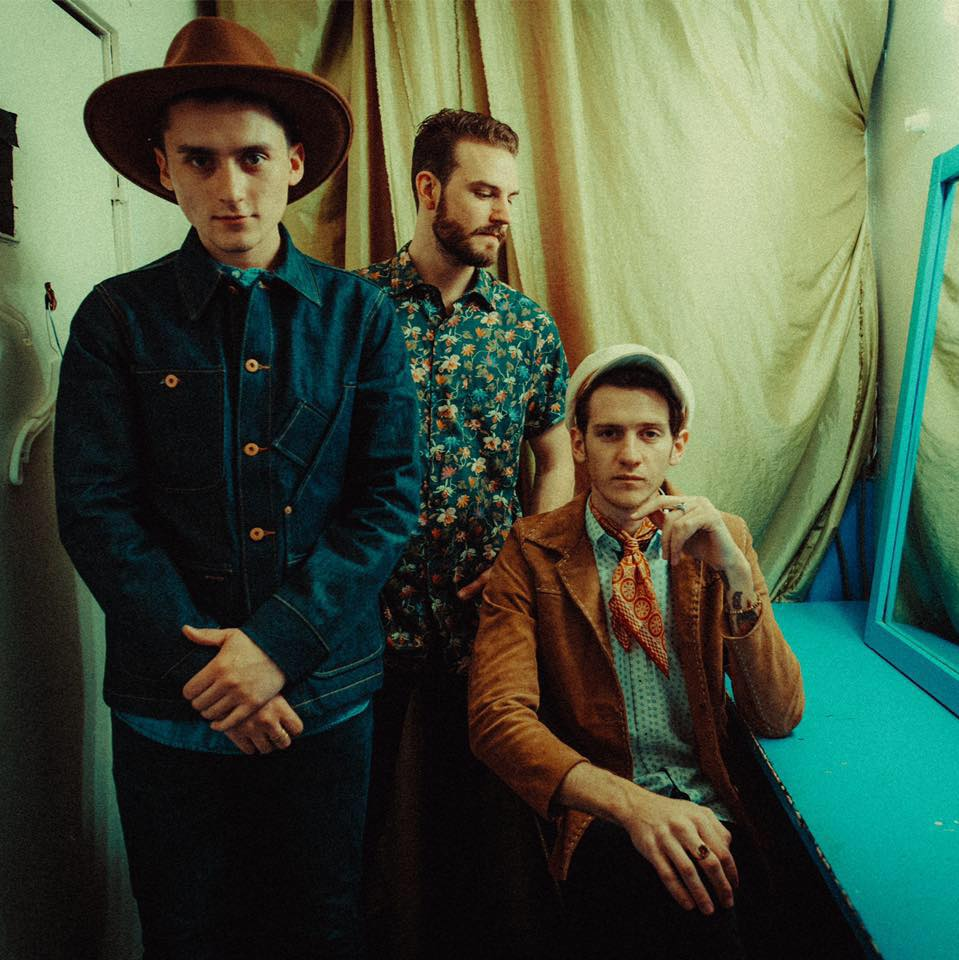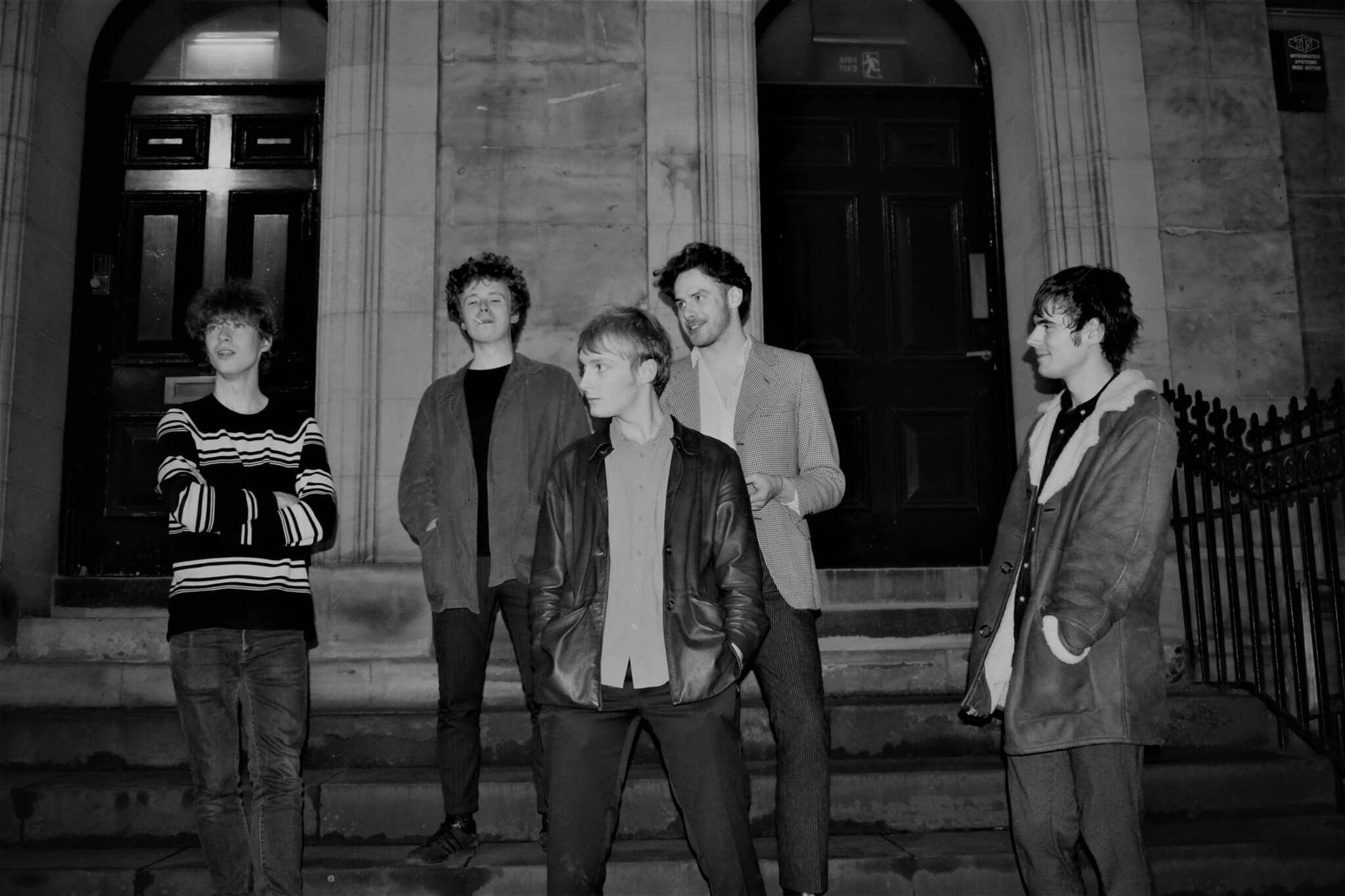
Los Angeles band Local Natives have released two new songs: ‘Desert Snow’ and ‘Hourglass’. They mark the band’s first original material since 2020’s “Sour Lemon” EP. The double-A single arrives alongside the announcement of their first tour in 3 years, which kicks off late July at Osheaga Music & Arts Festival. “After the heartbreak and insanity of the past few years, when we finally got together to make music again, these songs reconnected and reignited us,” Local Natives commented in a statement.
“Desert Snow” was inspired by a Joshua Tree trip, this song is about the duality of vulnerability and strength and contains some of our favourite Local Natives lyrics:
This music got us through some really difficult times and reminded us how much joy we get out of playing music together. We couldn’t be more excited to share these songs and play them live on our first tour in two years!, The song “Hourglass” explores the difficulty of feeling divided and isolated from the people we love while knowing the time we have with them is finite. This music got us through some really difficult times and reminded us how much joy we get out of playing music together. We couldn’t be more excited to share these songs and play them live on our first tour in nearly 3 years!
Last year, Local Natives shared a covers EP featuring their take on songs by Roxy Music, Gerry Rafferty, Michael McDonald, and 10cc.
Our double A-side single, ‘Desert Snow’ & ‘Hourglass’ are out now!
I’ve sung this song so many goddamn times and you would think I’d be another cliche guy-in-band that wants to tell you how the thrill is gone and I don’t wanna sing it anymore. But I’ve always felt the audience made it feel like the first time every time. Might sound corny but I mean it. Every time a room lights up w the final chorus I feel a deep gratitude I don’t get from anything else in quite the same way…but all that made it tricky to sing this song to no one on a roof. But I think it was the memory of all the shows we had under our belt, all the memories of this song and all the future times that felt threatened all the sudden that made this feel supercharged. I hope you can hear it somewhere in there.
Dawes is: Taylor Goldsmith – guitar, primary vocal Wylie Gelber – handmade bass Griffin Goldsmith – drums, percussion, vocals Lee Pardini – piano, organ, guitar, vocals Trevor Menear – guitar
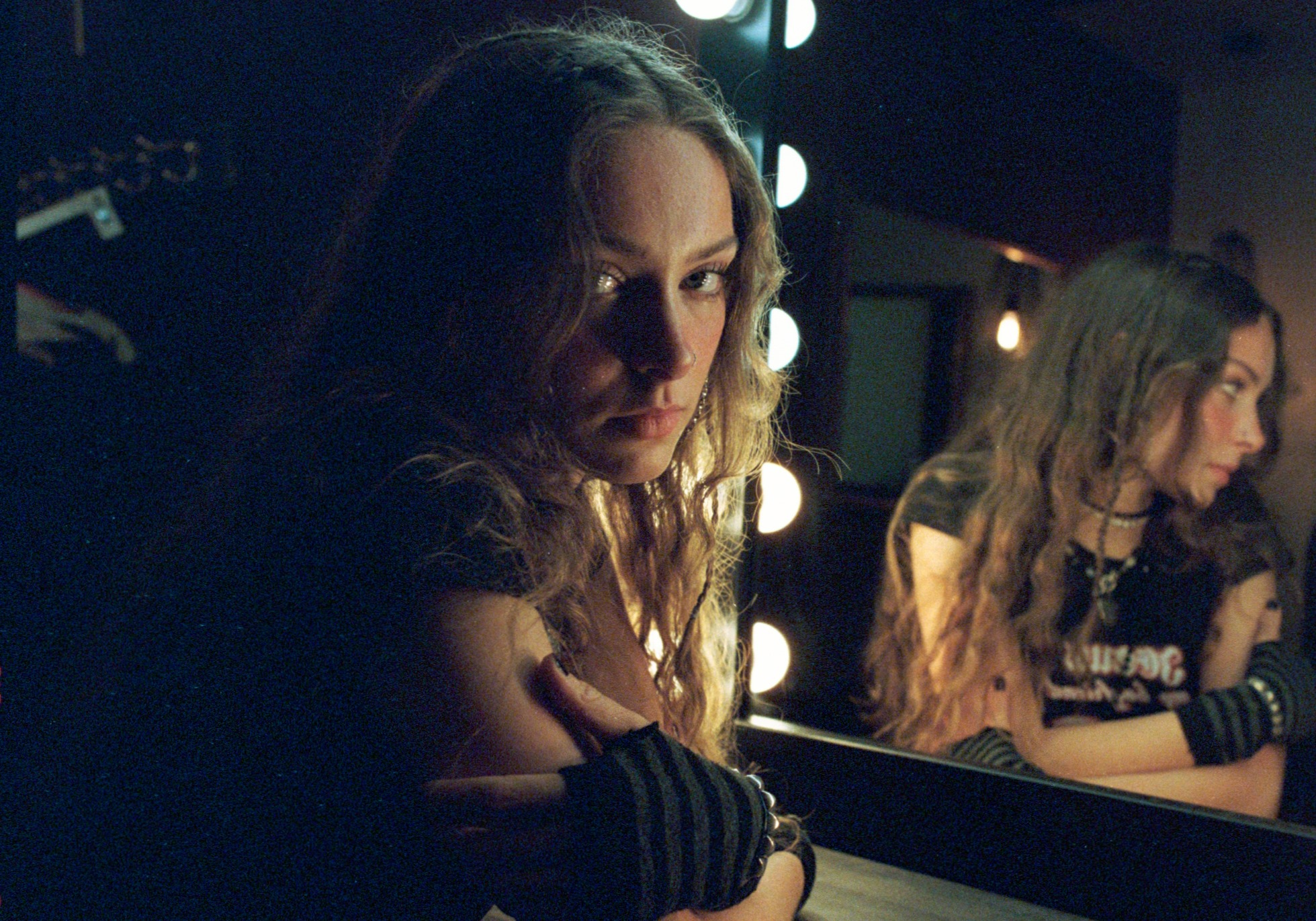
Starcrawler have shared their roaring new single “Stranded,” the third track to be lifted from their upcoming major label debut album, “She Said“. The perfect package of infectious hooks and 90s riffs, the new track distinguishes the band as authentic artists with an unfiltered intensity. “Stranded on the side of a one-way street/The stars in her eyes won’t shine on me,” frontwoman Arrow de Wilde sings on “Stranded.” “Whisper in the night hoping someone sees/Shine on me, shine on me.”
The single comes accompanied by a music video directed by Gilbert Trejo that first finds de Wilde and guitarist Henri Cash working in a gas station convenience store before the band take to the stage decked out in pink outfits.
At the beginning of Covid, I was missing the adrenaline of having a show and driving out to play it, so I would just be driving my car around with nowhere to go and trying to write something and being so uninspired,” Cash explained of the song.
“And then one day I got hit by another car on Figueroa and Highland Park – and it turned out to be Phoebe Bridgers’ guitar player. The song came from that rock’n’roll car crash and became a joke song about Tim’s [Franco, bassist] weird crush on Phoebe Bridgers – and then it became about something totally different.”
“She Said” will be released on September 16th and will be Starcrawler’s first record since signing to Big Machine Label Group. The album will also feature the previous singles “Roadkill” and the title track, while the full record will see them fully lean into their own epic vision of a contemporary Hollywood Babylon and morph into a modern-day take on LA legends X, with a sprinkle of The Go-Go’s, a smattering of The Distillers, and some Rolling Stones sleaze thrown in for good measure.
The band will be heading over to the UK to open for Nick Cave And The Bad Seeds at All Point East in London on August 28th.
Neil Young re-issues two rarities as standalone physical releases next month, with the elusive “Time FadesAway” live album from 1973 back on CD and 1989’s “Eldorado” EP available on vinyl and CD.
“Time Fades Away” was recorded on tour with the Stray Gators, following the success of the 1972 album “Harvest”. It consists of what was unreleased material at the time and was issued on vinyl in October ’73. It more or less disappeared from Young’s catalogue for decades due to his general dissatisfaction with the rather erratic tour. Much bootlegged, but not officially reissued until the “Official Release Series, Discs 5-8″ vinyl box set in Record Store Day in 2014, it eventually took 43 years for it to come out on CD when the same box set was issued as a 4CD set back in 2017.
However, that CD box set is already out-of-print meaning that once again “Time Fades Away” is a tricky album to pick up on CD! Undoubtedly, this will be the reason behind this standalone CD release, which uses the same mastering as the 2017 CD.
The five-track “Eldorado” EP was originally only issued in Japan and Australia, and sees Neil Young this time backed by The Restless, which consisted of Chad Cromwell and Rick Rosas.
It contains different mixes of three songs that subsequently appeared on Young’s 1989 album “Freedom”: ‘Don’t Cry’, ‘On Broadway’ and ‘Eldorado’ and two tracks not available on any other recording, ‘Cocaine Eyes’ and ‘Heavy Love’. The ‘Don’t Cry’ track on “Eldorado” is longer than the later version published on “Freedom“, for which some of the more free-form guitar work was edited out (at the insistence of co-producers Niko Bolas and Frank Sampedro).
“Eldorado” was included in the “Official Release Series Vol 4″ box set that was released in April this year, but you can now buy it on its own.
Both “Eldorado” and “Time Fades Away” are reissued on 12th August 2022, via Reprise Records.
Singer-songwriter and virtuoso violinist Amanda Shires has pushed the reset button, releasing an album that is so unlike anything she has ever recorded before that you would be tempted to think it’s her debut album instead of her seventh. “Take It Like A Man” is a fearless confessional, showing the world what turning 40 looks like in 10 emotionally raw tracks, and as the title track intimates, not only can she “take it like a man,” but more importantly she can “Take it like Amanda,” as the last line proclaims — the clue to the entire album, and perhaps Shires herself. “I wrote that last line, ‘take it like a man,’” says Shires from her barn/studio located about 30 minutes outside of Nashville. “Then I changed it. I realized you can try and do what they say and take it like a man and show that you can withstand anything. But truly you can only take it like yourself.”
The result is a song cycle of ruthlessly candid tunes written as a document about her life as a woman, a wife (to husband Jason Isbell) and a mother during a tumultuous time. “Everything on the record is autobiographical. I didn’t hold anything back. Then, if the details were boring I infused other stories,” she laughs. “Like my granddad said, if your story’s not good enough just make it better.”
Four Complete Shows On Vinyl For The First Time Ever “Lyceum Theatre”, (5/23/72)Lyceum Theatre, (5/24/72)Lyceum Theatre, (5/25/72)Lyceum Theatre, (5/26/72 )New artwork by Brian Blomerth and classic designs from EUROPE ’72: The Complete Recording by Scott McDougall a52-page book featuring an essay by noted Dead scholar Nicholas Meriwether. Sourced from recordings by Betty Cantor, Janet Furman, Bob Matthews, Rosie, and WizardMixed by Jeffrey Norman and Mastered for vinyl by Award winning engineer David Glasser all Individually Numbered, Limited Edition of 4,000
“What fans heard in these four {Lyceum} shows was both a history of the Dead and a survey of their unique vision of American music, from folk to rock, with blues and R&B and country-and-western and Bakersfield all included, all melded together by the improvisational spirit of American jazz in a small-group format that owed much to European classical music.
The repertoire made a statement: this is who we are. And while that honored their roots and surveyed their history and evolution, the overwhelming focus was on the present. At the Lyceum, show goers heard a tapestry of music that knit together the disparate strands of the ’60s psychedelic baroque of “Aoxomoxoa” and “Live/Dead” with the Americana turn epitomized by “Workingman’s Dead” and “American Beauty”, which in many ways both continued and culminated in “Skull and Roses“.
English fans were especially delighted to hear the new songs — for fans accustomed to bands using concerts to promote their records, that kind of generosity was striking. Those songs showed a band that was consolidating and deepening its distinctive approach to American vernacular music while still expanding the range of what that could include. Pigpen’s two originals added a distinctive flourish, but the new tunes also made it clear that Weir had emerged in his own right as a singer and songwriter, as well as showing that the wellsprings that fed Garcia and Hunter’s music were drawing on ever deeper aquifers.”
Imagine, if you will, being amongst the first to witness the merry band of misfits that had taken over the good ol’ U.S. of A. conquer foreign lands. When the Grateful Dead first unleashed their magic on the cautiously optimistic patrons of Wembley on 4/7/72 and 4/8/72, it was with the idea they would have just these two nights to impress a traditionally reserved London crowd. It turned out to be a smashing success, and they set about locking in four dates at one of London’s most storied venues, the Lyceum Theatre, to wrap up what some consider one of the greatest tours in rock history.
On these four nights, we find the band hell-bent on telling ’em “how it’s gonna be,” and boy, did they ever. Powered by what Jerry called “peak optimism,” they delivered a steady dose of “primal Dead,” – sometimes searing, sometimes soulful, sometimes serious, but always unwavering in focus. This willfull determination moved them through transitive takes on “Dark Star,” to majestic heights with “The Other One,” through marathon runs of “Playing,” another minute, another mile. It found Phil, philosophizing on how to “put our music into a place,” Bob and Jerry masterfully duelling as two of the top songwriters of their time, Bill elegantly ferrying songs to new lengths, and new members Keith and Donna JeanGodchaux adding organic warmth. And Pigpen? Well, he dotted his beloved classics – “Good Lovin’,” “Mr. Charlie,” “Lovelight,” “Two Souls In Communion” – through set after set, conjuring up more clarity and charisma than anyone would have expected for his final few shows.
The July 29th, “LYCEUM 1972: The Complete Recordings” marks the Dead’s largest vinyl boxed set of all time, a 24-LP collection featuring these storied final four nights in their entirety on 180-gram vinyl for the first time ever. Limited to just 4,000 copies, the individually-numbered set comes in a colourful slipcase with new artwork by Brian Blomerth. The four shows are organized in individual clamshell boxes, each one featuring the cover art that Scott McDougall created for each concert in “EUROPE ’72: The Complete Recordings“. The accompanying book includes a new in-depth look at the Lyceum shows by noted Dead scholar Nicholas Meriwether. And that all-important question of sound? Jeffrey Norman’s luscious mixes are finally being heard in their full analogue beauty.
“50 years ago, when Europe ‘72 was released, the third LP of the set included some of the finest music theDead had ever played, and thankfully, recorded. “Truckin’,” “Epilogue,” “Prelude,” and “Morning Dew” knocked everyone’s socks off. Decades later, when tape traders were able to hear the entirety of this final show, not only were they greeted with this spectacular 40+ minutes of music, but what is widely considered one of the best complete shows the Dead ever performed. With “Playing In The Band” clocking in at more than 17 minutes, by far the longest version of this improvisational masterpiece by this point, and ending their first set with the traditional second set closing “Not Fade” the Dead signalled that they wanted to leave everything on the stage.
They clearly weren’t out of gas and wanted this tour to keep rolling. If there is one show that encapsulates the entirety of the excellence of the Europe ’72 tour, it’s this one. Pigpen would sing a few songs, the final show at which he sang, as he left the band a few weeks later.
No other popular rock band of their era, let alone the San Francisco scene, boasted five singer-songwriters in their ranks. But “multi-faceted” isn’t synonymous with “good” — and, luckily, Moby Grape had the melodies, arrangements and overall sonic vision to maximize that breadth of skill. The band released four albums in the ’60s before burning out early in the next decade (and being revived later on) — but they could easily stopped after their self-titled 1967 debut, which expertly wove folk, blues, psych-rock and country into a heavily harmonized swirl.
Arguably the most talented San Francisco band from the golden era, Moby Grape was a beloved group whose debut album was released with great fanfare on Columbia Records in June 1967 amid the Summer of Love. It climbed to No24 on album charts with an unprecedented five singles dropped from it.
Each member of the group: Jerry Miller (guitar, vocals, Peter Lewis (guitar, vocals), Skip Spence (guitar, vocals), Bob Mosley (bass, vocals) and Don Stevenson (drums) all contributed to the singing and song writing, each could sing lead, and the versatility of the band was demonstrated in its fusing of folk music, blues, jazz, and rock. So, what went wrong? Why didn’t the group rise to the level of other San Francisco bands such as the Jefferson Airplane, the Grateful Dead, Quicksilver Messenger Service or Big Brother & the Holding Company?
As it happened the band was entangled in legal disputes with their former manager, Matthew Katz, for many years. As described by Jeff Tamarkin “The Grape’s saga is one of squandered potential, absurdly misguided decisions, bad luck, blunders and excruciating heartbreak, all set to the tune of some of the greatest rock ever to emerge from San Francisco. Moby Grape could have had it all, but they ended up with nothing and less.” Anyone who saw the Grape perform at the Avalon in January, February or August 1967 or at Winterland with the Byrds in March and April 1967 knows what a singular band it was. The musicianship was extraordinary. Just a few of the band’s gems: “8:05,” “Someday,” “Sitting by the Window,” and “Hey Grandma.” Moby Grape recorded five albums from 1967-1971 but after the second disc “Wow,” (the band’s highest charting album), the next three releases were poor sellers.
Three of the four surviving members (Skip Spence died in Santa Cruz in 1999) still are active in the music business. It is sad that the band never fully realized its true potential, but it is remembered fondly by those fans that were present at its creation.
Just over fifty years ago, the debut album by the San Francisco band Moby Grape was released on Columbia Records. Generally hailed as one of the finest recordings from the ’60s San Francisco scene—and often as one of the great debuts of all time, period—its June 6th, 1967, release presaged a series of missteps, legal sagas and tragedies that have since become legend.
In this edited excerpt from Best Classic Bands editor Jeff Tamarkin’s 2003 biography, Got a Revolution! The Turbulent Flight of Jefferson Airplane, he recounts the tale of Moby Grape and the band’s enigmatic co-founder Skip Spence.
In the summer of 1965, the recently formed Jefferson Airplane decided to dismiss their first drummer, Jerry Peloquin. That’s when a golden boy named Alexander “Skip” Spence came waltzing into [San Francisco’s] Matrix club and was immediately signed up by Marty Balin, the band’s co-founder.
Spence had little experience as a drummer but Balin just knew he’d be right for the group. He sent Spence home with a pair of drumsticks and he soon debuted with the band, playing on their first album, Jefferson Airplane Takes Off. Spence wasn’t one for staying in the same place very long though, and he took off to Mexico one day with a girlfriend or two, neglecting to tell the band he was leaving. They decided he wasn’t going to work out and Spence was soon replaced by Spencer Dryden, who remained the Airplane’s drummer throughout their key years of 1966-70.
In the summer of ’66, Skip returned to the Bay Area from Mexico and resurfaced with a new band, Moby Grape, this time playing guitar, his first instrument. They woodshedded in Marin County for months and played their first gig at the city’s California Hall on November 4; everyone who heard them agreed that this was an astounding band.
One of the great rock debuts of all time. The album cover was reprinted after early pressings, with Don Stevenson’s offending middle finger statement airbrushed out. The album cover, featuring a photo of the band in front of a junk shop, caused controversy because of drummer Stevenson’s middle finger on a washboard (later airbrushed out) and an appearance of an American flag behind Spence. When veterans groups complained about these “longhairs” representing the United States, Columbia made alterations.
“They chickened out and took that off and put on an orange flag,” Miller recalled. “And that wasn’t good enough, because they could still see through that, that it was originally an American flag. So then, they made it black. And we were insulted, and still insulted … because we’re Americans too.”
The Airplane—who’d been working in Los Angeles on their sophomore album, “Surrealistic Pillow”, and playing gigs out of town—missed the chance to catch their former drummer’s new band right away. What really confused the Airplane, however, was learning that the Grape was managed by Matthew Katz. Katz had also been the Airplane’s first manager, and he’d given them nothing but grief. Subsequent lawsuits involving Katz would tie up the court system for a whopping 21 years. Why Skip Spence would choose to continue working with Katz was just one of the many unfortunate mysteries in which his life became entangled during the three-plus decades following his Airplane tenure.
The Grape’s saga is one of squandered potential, absurdly misguided decisions, bad luck, blunders and excruciating heartbreak, all set to the tune of some of the greatest rock and roll ever to emerge from San Francisco. Moby Grape could have had it all, but they ended up with nothing, or less.
Katz had helped engineer the Grape’s formation. In addition to Spence, the quintet included two other guitarists: Peter Lewis (the son of actress Loretta Young), who used to play with Spencer Dryden down in L.A. and was most recently working with a band called Peter and the Wolves; and Jerry Miller. Miller and drummer Don Stevenson had played together in a bar band in the Pacific Northwest called the Frantics, and Miller had earlier worked with Bobby Fuller, the Texan rocker who died under mysterious circumstances in the summer of ’66 just months after scoring a Top 10 hit with the Sonny Curtis-penned “I Fought The Law.”
The Frantics had relocated to San Francisco in 1965, where bassist Bob Mosley worked with them briefly. Mosley recommended Miller and Stevenson to fill out the line-up of the proposed new group, which took its moniker from the punch line of a dumb joke: “What’s purple and swims in the ocean?” At first, the rest of the Grape-to-be wasn’t sure about working with Spence.
Jerry Miller: He was a little bit too crazy, even then. When we first met him, he looked a little bit crazed. He was one of the first guys I’d seen with ratted hair. And he’d laugh hysterically when he’d get the feeling. But he played excellent rhythm guitar. He did these things where he would muffle the strings. And he did that better than anybody, ever. And when the five of us played together, there was something happening that was undeniable.
Moby Grape was a record company’s dream band when they debuted. Their complementary three-guitar lineup produced a thunderous noise, not unlike what Buffalo Springfield was doing down in L.A., and each member of the band could sing. Their songs were expertly composed and had both commercial possibilities and the integrity demanded by San Francisco audiences. They looked great onstage—they had a real presence, and real moves, unlike some of the other local bands—and put on a dazzling performance. Many felt that they were the most accomplished band on the scene musically from the moment they showed up. They were tight, and worked within structures that were anathema to some of their peers in the city.
Said keyboardist and singer Al Kooper, then working in New York with the Blues Project, “The only San Francisco band that did anything for me was Moby Grape. They adhered to more of a three- minute mentality.
.
But the Grape was doomed. For starters, they allowed Matthew Katz to retain ownership of their name, precipitating legal battles that continued to tie up the court system clear to the end of the 20th century and kept the musicians from exploiting their own legacy. And in 1967, upon the release of their first album for Columbia Records, hailed by many critics as one of few perfect debuts in rock history, the Grape was the victim of one of the most misguided marketing efforts in the annals of the music industry: the simultaneous release of nearly all of the songs on the album as A-sides or B-sides of singles. By pitting the five records against one another, Columbia effectively cancelled out the possibility of any one of them gaining enough momentum to become a hit. The disaster was compounded by a press party at San Francisco’s Avalon Ballroom so overblown in its hype quotient (purple flowers everywhere) that Moby Grape never really recovered.
Things got worse. There were busts and a second album, Wow/Grape Jam, generally considered inferior to the first. And then, in 1968, began the downfall of Skippy Spence. Spence had taken to gobbling tabs of LSD like Pez, and taking harder drugs, becoming increasingly unreliable and unpredictable. While the band was staying in New York, at the Albert Hotel, Spence chopped away at Stevenson and Miller’s hotel room door with a fire axe, and when he failed to find them there, continued on to the studio where the group had been recording. Katz’s management style proved consistent with the way he’d managed the Airplane. Jerry Miller says that he remembers the Grape missing a photo session for the high-circulation Look magazine because Katz had gotten the time of the shoot wrong. Producer David Rubinson managed to get the weapon away, but Spence was taken by police, first to the Tombs jail and finally to Bellevue Hospital, where he spent six months undergoing psychiatric care. He was never the same after that—the old Skip Spence, described by everyone as a happy-go-lucky, good-time fellow, falling into a dope-induced psychosis.
Jerry Miller:Skippy changed radically when we were in New York. There were some people there that were into harder drugs and a harder lifestyle, and some very weird shit. And so he kind of flew off with those people. They were really strange, almost Nazi-ish. Skippy kind of disappeared for a little while. Next time we saw him he had cut off his beard, and he had a black leather jacket on, with his chest hanging out, with some chains and just sweating like a son of a gun. I don’t know what the hell he got a hold of, man, but it just whacked him. And the next thing I know, he axed my door down in the Albert Hotel. They said at the reception area that this crazy guy had held an axe to the doorman’s head.
At the end of 1968, Spence was released, and hopped a Triumph motorcycle pointed toward Nashville, where he recorded the idiosyncratic solo album “Oar” for Columbia. Although largely ignored in its time, “Oar” grew in stature as a cult favourite album over the years, culminating in the simultaneous 1999 re-release of the album, with bonus tracks appended to it, and a tribute album called “More Oar”, consisting of new interpretations of the album’s songs by contemporary artists such as Robert Plant of Led Zeppelin and Tom Waits.
But by then, it was too late for Skip Spence. After a near-lifetime as a diagnosed paranoid schizophrenic, living much of the time in institutions as a ward of the state, only occasionally venturing out to make new music with the former members of Moby Grape, Alexander “Skip” Spence died on April 16th, 1999, in Santa Cruz, California. He was two days shy of his 53rd birthday. Although the official cause of death was lung cancer, Spence had entered the hospital on April 5th with numerous ailments, including pneumonia, hepatitis and congestive heart failure. His lifestyle and years of poverty and neglect had finally caught up with him. Unlike many other casualties of the ’60s, Spence neither died young nor had a chance to find his way out. Unlike the advice in the Neil Young song, he both burned out and faded away.
Yet he touched so many.
Sam Andrew (of Big Brother and the Holding Company): I went to see the Airplane at the Matrix when they were starting out, and what knocked me out was Skip Spence. He was all I could see the night I went. He was the drummer but he had so much charisma. He was really a great player. He was really driving the band. It was just so complete, such a good sound.
Listen to “Omaha” from their debut
Paul Kantner (of Jefferson Airplane): He wasn’t the preeminent guitar player in Moby Grape, but he probably was responsible for a good 30 to 40 percent of the exuberance of Moby Grape, just him alone. On stage at his height, he was a force to be reckoned with, in terms of joy and participation and passion with what you’re doing and connecting it to people out there. He was a really bright star. He came up with beautiful chord changes and the melodies going through them. He had a real knack for that. He was one of the casualties. That didn’t happen until he left the Airplane. And then he had troubles with Matthew and Moby Grape and acid and heroin and girlfriends; those things all conspired against him to blow him over the hill.
Miller says that the Grape, when they first formed, was unaware of the problems that the Airplane had had with Katz.
Jerry Miller: Neither Skippy nor Matthew told us that he fell out of favour with them. So it took a while before we found that out that they definitely didn’t like the Matthew guy. He had a talent, but he abused the hell out of it. I’m not real pro-Matthew at all. I wouldn’t piss in his face if his eyebrows were on fire.
The Grape held on until 1969, recording and performing without Spence and Mosley, who, disgusted with the turn of events, joined the Marines in an effort to get far away from the rock ’n’ roll world. Mosley was discharged after nine months, but the MobyGrape saga continued to grow more bizarre and frustrating for the members in subsequent years. In 1970, Katz, who owned the band’s name, put together a new Moby Grape consisting of none of the original members. Eventually a court decision sided with Katz on the ownership of both the name and the Grape’s recorded catalogue, making it virtually impossible at times for the original members to capitalize on the music they had created in the ’60s. Even Columbia Records was unable to reissue the Grape’s albums, which came out instead on a label set up by Katz.
There would be other Moby Grape recordings and reunions, both under that name and others—the Legendary Grape, the Melvilles—concocted in an effort to circumvent Katz’s claims on the group, but for the most part, despite the occasional resurfacing, Moby Grape was sunk almost from the start. Katz spent the better part of the years after the band’s original demise in courts fighting appeals and initiating new suits, not just against the Grape but another prominent San Francisco band he managed, It’s a Beautiful Day. (Ed. note: Katz is still alive as of this posting, now over 90 years old. In 2010 he ran unsuccessfully for the Malibu, California, city council.)
Meanwhile, after spending several years in and out of the Grape and other bands, Mosley’s life took a downward spiral, and he spent considerable time homeless before coming around again in the late ’90s. By that time, not only had Miller, Mosley, Lewis and Stevenson reunited as Moby Grape, they had done so legally, the courts finally deciding in their favour on the name ownership issue. Miller, Lewis and Mosley still perform today on occasion as Moby Grape, augmented by Skip’s son, Omar Spence, and Joseph Miller, Jerry’s son. Jerry Miller also performs with his own band.
Without a brutal evaluation of their own becoming, TV Priest might have never made their second album. Heralded as the next big thing in post-punk, they were established as a bolshy, sharp-witted outfit, the kind that starts movements with their political ire. There was of course truth in that, but it was a suit that quickly felt heavy on its wearer’s shoulders, leaving little room for true vulnerability.
“A lot of it did feel like I was being really careful and a bit at arm’s length,” says vocalist CharlieDrinkwater. “If I’m honest, I think maybe I was not fully aware of the role I was taking, how I would be perceived. I had to take a step back and realise that what we were presenting was quite far away from the opinion of myself that I had. Some of the ways people would interpret the music and my performance isn’t really me, and I didn’t know why I was trying to wear that coat of the meat-and-two-veg rock guy. Now, I just want to be honest.”
Having made music together since their teenage years, the London four-piece piqued press attention in late 2019 with their first gig as a newly solidified group, Debut single “House of York” followed with a blistering critique of monarchist patriotism, and they were signed to Sub Pop Records for their debut album.
TV Priest will release “My Other People”, the group’s follow-up to “Uppers“, their acclaimed debut, worldwide on June 17th, 2022 from Sub PopRecords. The album features the highlights “One Easy Thing” and new single, “Bury Me In My Shoes,” which you can hear now. “My Other People” was produced by band member/multi-instrumentalist Nic Bueth at Studio East in London.
Frontman Charlie Drinkwater says of the album, “My Other People” is a more “open” set of songs, both musically and in our themes; in the process of writing we found ourselves talking about things other than anger or aggression. We wanted to discuss love, loss, and joy too. It’s a record about personal disintegration and destruction but also rebuilding again after this. It’s also heavily rooted in place, the music being a very direct response to Britain and England in 2021, but in a more abstract and textural sense. A muddy field viewed from a train window between cities, a patch of wildflowers growing next to a motorway, sticky carpets in a suburban flat roof pub, pissing rain on an August bank holiday, and the smell of diesel in an out of town supermarket car park. An angry, hopeful, shitty, beautiful island.”
As for “My Other People” new single, he adds, “‘Bury Me In My Shoes’ is a hangover of a song. Last year was about reminding ourselves to hang on to good things; to remember you can love and hate in equal measure. That the answers are rarely found by looking backwards. “Bury Me” was written as a response to that general feeling of unease and creeping dread. A feeling you get from bad news on no breakfast.”
“My Other People” is now available to pre-order from Sub Pop. The band — Drinkwater, guitarist Alex Sprogis, producer, bass and keys player Nic Bueth and drummer Ed Kelland
Naima Bock knows how to sneak up on you. The London-based artist mines from folk traditions around the world (including Brazil, the homeland of her father where she was raised as a child) to create something revelatory that, at first glance, can seem understated. It’s to her credit that every element of her debut album “Giant Palm” feels justified despite employing around 30 musicians; these are songs with big emotions weaved into their inviting, latticed texture.
On “Working,” the album’s fourth song, Naima Bock bears witness to desolation. “I heard you were / Something special” she sings, her feathery voice dropping each syllable like a perfect marble over a tell tale heart-rhythm guitar. The subsequent description – of a house in some anonymous nowhere, infested with bloodthirsty bugs – is so vivid, and Bock’s recurring sigh of “It’s all been a waste of time” so defeated, you get the sense that the object of her scorn is internal.
The song gets progressively more lively, with jazz saxophone and jangly percussion adding colour to Bock’s malaise. And yet at the end, after sending us into a free fall, Naima Bock pulls a parachute: “Try and function / Do it for us all.” Whether sincere or an ironic skewering of platitudes, it’s another surprise from an artist so adept at them.
Smash cut to Kiwi Jr.’s third album, “Chopper”, overseen by trusted pilot Dan Boeckner (Wolf Parade, Handsome Furs) on storied Sub Pop Records. Turning nocturnal with necks mock turtle, our Local Kiwi Jr. takes neon flight off the digital cliff – like The Monkees starring in Blade Runner; like Michael Mann directs Encino Man. Ten songs with synth shimmer, zen gongs with yard strimmer. The signs along the highway read “LESS BAR, MORE NOIR AHEAD.” Ah, those late summer, Joe Strummer, Home on the Range Rover Blues.
There’s a melancholy to all forms of flight, and the view out the “Chopper” is as hazy as it gets: mission-oriented, both stealth and self-realized. This album is decidedly (yet almost secretly) anti-patio-sunscreen-Beach Boys bachelor cruise sing-a-long. Sure, these songs let a little light through the blinds, but they sting insomnia, corrupt mayors, Kennedy Curses, sex tapes, and deer rifles. “Chopper” is the bird’s eye view of the big event – a real night time character of oil stain, film grain, search light, night flight. It is muscular and fragile; loud yet quiet: both an observer and somehow the observed spectacle itself.
What was slack in the slacker phase, got tauter, with lacquer glaze. Slick gloss, rightened wrongs; murdered boss, promoted pawns. With Boeckner transmitting high-voltage shocks upon every reach for a familiar instrument, Kiwi Jr. expands the palette with string machine song, synthesizered oblong, and Dentyne Classic Menthol vocals from area soprano Dorothea Paas (US Girls, Badge Epoch Ensemble) like the missing piece all along.
Kiwi Jr. brings the “Chopper” to a new space, demilitarizing the technology just like flasks, aviators, and cargo shorts. Graceful in the air above, but when the “Chopper” lands, there’s chaos on the ground. KiwiJr. shout, “Look Out!” When it gets close, it’ll blow the hat right off of your head.
Kiwi Jr. play ping-pong in the new lyric video for “The Extra Sees The Film,” a new track from “Chopper“, the group’s forthcoming new album out August 12th.
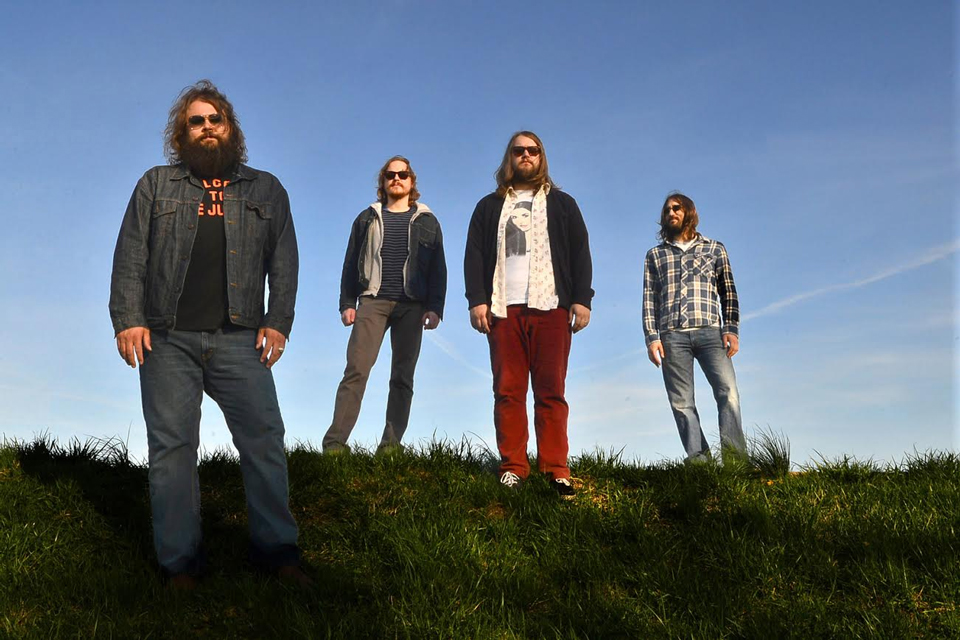
KIWI JR. is Jeremy Gaudet vocals and guitar, Brian Murphy guitar, Mike Walker bass, Brohan Moore drums, and everybody played a little bit of keyboard.