Archive for the ‘CLASSIC ALBUMS’ Category

In 1969, The Stooges were a truth serum, forcing hippiedom to belch up the reality that flowers and hope had become just another guise for hucksters and snake-oil salesmen to take advantage of the naïve. By 1973, however, The Stooges were no longer the mirror to an era’s hypocrisy. They were the representatives par excellence of desiccated overindulgence and self-destruction. Too many bad shows, too many blatantly underage groupies, too much booze, too high — way too high. While The Stooges’ noise-rotted nihilism, originality, and underrated musicianship have ensured their longevity, the final six months of the band, as captured on Cherry Red’s new box-set, “You Think You’re Bad Man: The Road Tapes ’73 – ’74” were a squalid and chemically-warped stagger toward total collapse.

The five live shows captured are all previously released, originally licensed by Tony DeFries’ MainMan management company to record labels like Revenge, Bomp!, and Jungle during the 1980s and 1990s. However, this box-set is a very welcome tidying up exercise with good packaging and liner notes, all at a fair price. For decades, delving into the vast quantity of Stooges deep-cuts meant investing in a chaotic mishmash of compilations, so the 21st century has been wonderful in terms of labels (Easy Action in particular) bringing professional curation to the Stooges output. This Cherry Red Records compilation is a part of that positive trend, and one can only hope they get a similar grip on the many studio demos still out there.

Going on tour with the defeated, newly label-less StoogesLos Angeles to Baltimore to New York, battered and defeated to their home, Detroit—via this Cherry Red box is akin to living through the hell of the worst tour ever, driving on Highway 1 with a cheap 1965 Chevy, low on gas, with its tires on fire and an incessant burning oil smell on your clothes. The car radio? Its speakers are blown, the perfect shredded tone for repeated, wired versions of “Search and Destroy,” the gothic “Gimme Danger,” and the stammering “I Got Nothin’.” The Cherry Red collection is the sound of brain-numbing, aggressive anger and disgust at a thousand nights of self-inflicted road food, drugs, and fucks tucked into a clamshell box.

It didn’t take long for The Stooges to acquire an afterlife. They played their final show in February 1974. In May 1975, Nick Kent wrote a multi-page feature for NME on the ups and downs of Iggy Pop and Co. In September 1975, Sounds reviewed a new album by the defunct band titled “Metallic KO”. One side of it was recorded at that final show.

“I’m a tasteless little bastard and I really enjoy it,” wrote Giovanni Dadomo of the wreckage captured on the vinyl. “It’s no great rock ‘n’ roll record per se. What I do believe is that it’s an astonishing piece of documentary work, revealing as it does the face of rock ‘n’ roll that few singers/musicians would ever be rude, angry, wrecked or impolite to reveal. Sure, it’s crass, conceited and unjustifiably vulgar plus a hell of a lot of other singularly ‘unpleasant things’, but still I like it. A record that quite literally has to be heard to be believed.”

“Metallic KO” began an apparently never-ending series of post-split Stooges releases. Few are essential – like the wonderful “Live at Goose Lake” August 8th, 1970, released earlier this year. Most are for the committed or completists. An intermittently great and handy one-stop collection collating various previously issued live releases, the new “You Think You’re Bad, Man? The Road Tapes 1973-74″ is in the latter camp.

A five-CD clamshell box with a booklet (its band pics and the cover shot are from 1972, not the period of what’s heard), You Think You’re Bad, Man? includes these shows: The Whisky a Go Go, L.A., 16th September 1973; Michigan Palace, Detroit, 10th October 1973; The Latin Casino, Baltimore (despite the credit it’s probably Cherry Hill, New Jersey), November 1973, The Academy of Music, New York (supporting Blue Öyster Cult. Kiss were also on the bill), 31st December 1973; Michigan Palace, Detroit 9th February 1974. The two Michigan Palace were filleted for Metallic KO.

It’s a bumpy ride, not just because of the spotty sound quality which ranges from a bootlegger’s “B” to “A-“. The Whisky gig is pretty tight, and its “Search and Destroy” and “Open Up and Bleed” are great; the best versions in the box. The New York show is a disorderly mess. The two Michigan Palace shows are well known, have been round the block many times and, of them, the final outing of the band is worse than a mess. The sound quality of the relatively disciplined Baltimore show is the poorest of them all, but it does have the box’s top run-through of “I Need Somebody”.

The Stooges of this period were in choppy waters. The Raw Power album had been released in February 1973 and guitarist James Williamson left in June. After a spell as a porn cinema projectionist, he returned to the band late that month with the proviso that a piano player came on board. First, that role was filled by Bob Scheff. Then, from late July, Scott Thurston joined. He appears throughout, with plinkity-plonk or barrelhouse playing which distracts. It is no fit with the band. The Stooges did not need Mrs Mills, or any piano player. Other wobbles came when the band’s management ditched them in August. Their label Columbia had already done so.

Nonetheless, there were snatches of the positive. In Raw Power’s wake the band had new songs and were clearly thinking of their future. A lot are heard on You Think You’re Bad, Man? “Open Up And Bleed” and “Head On” are the best. “Heavy Liquid” was good. “Cock in my Pocket”, “I Got Nothin’”, which prefigures The Stones’s “Fool to Cry”, and the puerile boogie rocker “Wet My Bed” are OK. The infantile, silly “Rich Bitch” is not alright. A new album could have been made. There was label interest too. In October 1973, Elton John wanted The Stooges for his Rocket Records imprint. But it all fell apart in February 1974. You Think You’re Bad, Man? is a series of bullet points in the narrative of the band’s collapse.

These are not the only post-Raw Power shows which have been released ). The 2010 Raw Power box included a scrappy October 1973 Atlanta gig with loads of the annoying piano – it was recorded off the sound desk though, so sounded fine. The 2005 Heavy Liquid set had one from Max’s in NYC from 30th July 1973 and another played in San Francisco in January 1974, as well the Whisky show.

This endless afterlife is further confirmed by another new release. Titled From K.O. To Chaos, it’s an 8-disc box set of random Iggy sniff-snaff. It includes Metallic KO on one disc, and its source shows on another two other discs – each of which is also collected on You Think You’re Bad, Man?

Although You Think You’re Bad, Man? The Road Tapes 1973-74 says nothing new, it neatly chronicles The Stooges in the wake of Raw Power’s release. The album was recorded in September and October 1972 and a year and more later, without a label and management, they had not given up. They could be dreadful. But they could also be impressive. It’s a disparity coursing through these five discs – five discs of shows which were originally never meant to be recorded and released, or even listened to.


Image may contain: 3 people, text that says 'FRIENDS LOVE INGSTEEN& & UNDERSTANDING 2003 VOLUME THREE PEACE BRUCE SPRINGSTEEN UNDERSTANDING & FRIENDS PEACE LOVE & CONCERT 2003 VOLUME ONE BRUCE SPRINGSTEEN & FRIENDS PEACE LOVE & UNDERSTANDING THE NEW JERSEY CHRISTMAS CONCERT 2003 VOLUME TWO'

The longest, at three and a half hours, and arguably the hottest of the three holiday shows. As Bruce told the crowd at the beginning, “This is our Saturday Night Special even though it’s Monday night.” There was little variation in the set, but as practice tends to make perfect, a tight night three had MVP Sam Moore in peak form. No DeVito or JBJ, though all of the other guests returned — and we got a little more Sam and a little more holiday spirit as the Soul Man joined in for the only “Merry Christmas Baby” of the run. We also got “96 Tears” in Garland’s set and a real highlight in Southside’s set, with the Bruce-penned “Talk to Me.” The blazing “What’s So Funny…” was again sent out to our troops in Iraq as a prayer for peace. Happy holidays and to all a good night! 

Songs listed below have the most prominent guest-artist listed in parentheses, but many performers were on and off stage over the course of the night.

Setlist: Hold Out Hold Out (Victorious Gospel Choir)
I’ve Got a Feeling [Everything’s Gonna Be All Right] (Victorious Gospel Choir)
Christmas Day (MW7)
So Young and In Love
None But the Brave (Alliance Singers, Soozie & Lisa)
Queen of the Underworld (Jesse Malin)
Wendy (Jesse Malin)
R.O.C.K. Rock (Garland Jeffreys)
96 Tears (Garland Jeffreys)
Merry Christmas [I Don’t Wanna Fight Tonight] (Little Steven)
This Time It’s for Real (Southside Johnny, Little Steven)
Talk to Me (Southside Johnny, Little Steven)
It’s Been a Long Time (Southside Johnny, Little Steven)
Seaside Bar Song
Thundercrack
The Wish (Bruce on piano)
Hold On, I’m Comin’ (Sam Moore, the Alliance Singers)
When Something is Wrong with My Baby (Sam Moore)
Fa Fa Fa Fa Fa [Sad Song] / I Thank You (Sam Moore)
Soul Man (Sam Moore)
Shine Silently (Nils Lofgren)
Because the Night (Nils Lofgren)
Kitty’s Back
Christmas [Baby, Please Come Home] (all)
Encore: Merry Christmas Baby
I Don’t Want to Go Home (Southside, Little Steven)
My City of Ruins (Sam Moore)
What’s So Funny about Peace, Love and Understanding
Santa Claus is Comin’ to Town (all)

See the source image

Anna B Savage is a London singer-songwriter and musician. Her songs are stark, skeletal paintings of moods and reflection, using a palette of mainly voice and guitar. They are candid if not entirely confessional, feeling like a window into an eloquent yet unflinchingly written diary – snapshots of experience suffused with a raw, unresolved nerve. Most prominent is her voice – strong and sonorous, yet with a vulnerability that feels as if it is in the same room with you.

Corncrakes is part of Anna B Savage’s debut Album “A Common Turn”, out the 29th January 2021 on City Slang Records .

See the source image

Pete Yorn was born in New Jersey. He has put out 8 records under his own name and some more albums with other people too. His most recent recording “Caretakers” came out in August of 2019. It features the singles “Calm Down” and “I Wanna Be The One”. Pete has toured all over the world with his band and also solo acoustic. He enjoys backgammon, Curb Your Enthusiasm and drawing Barney. 

Last night, Pete Yorn revealed that he’d uploaded a full album’s worth of covers to his Bandcamp page as an exclusive purchase on the site. Ten covers—ranging from a Roxy Music single to Audrey Hepburn’s “Moon River” comprise “Pete Yorn Sings the Classics”, a project seemingly instigated by Yorn’s love for the songs and the joy of recording with his friend Marc “Doc” Dauer (apparently Liz Phair also contributed vocals on a track). 

http://

“As you know, I’ve never been shy about celebrating my musical influences,” Yorn wrote on the record’s Bandcamp page. “I honour them and appreciate the fact that they have helped to inspire the style of music I create as my own. I have chosen to interpret and record this particular collection of songs for various reasons. Whether it was The Pixies “Here Comes Your Man” or The Stone Roses “Ten Storey Love Song,” these songs all have one thing in common…they all stopped me in my tracks upon first discovery, simply because I loved the way they made me feel. They compelled me to listen repetitively…almost compulsively over and over again.”

“Here Comes Your Man”
Although the Pixies’ classic fits Yorn like a glove, he says it was mostly a spontaneous decision to take it on for the record: 

“I just started strumming one day. And that’s how it starts sometimes. Out of nowhere I’m singing a song and I think, ‘Maybe I can do this.’ That’s probably why that happened. I’m really happy with the way that one evolved and turned out. And I loved Liz (Phair) singing backing vocals on that, she does a little Kim Deal. I love the energy of it. It’s different from theirs. I try to pay respect to the originals but I try to make them my own.”

“Lay Lady Lay”
Yorn used some surprising horn arrangements, suggested by his co-producer and musical collaborator on the album Doc Dauer, to spruce up this Bob Dylan country smash: 

“The way that all of a sudden evolved into this mariachi horns production was a surprise to me. That came later when Doc had the idea. He said, ‘I got this guy who’s a horn player. Let me send it to him and see what he does with it.’ He put down this beautiful Herb Albert-style, mariachi, crazy composition on top of it. These songs, when I go into record them, they can go in a million different directions, depending on the day I hit the studio and how I’m feeling. It’s just whatever in the moment feels good. And we go for it.”

“Theme From Mahogany (Do You Know Where You’re Going To)”
The Diana Ross original might seem far from Yorn’s style, but when he dug into it, he found something almost on the eerie side which inspired his recording:

“Although I was so familiar with those songs and loved them since my parents introduced me to them as a kid, that and ‘Moon River’ were ones I had to study, in terms of the composition and the chording of them. I had to really lean in and study how to find all the chords for those two. The theme from Mahogany version, to me, it’s spooky. I played drums and bass on it, and, to me, the drums have that kind of spooky Zeppelin feel to it. I’m trying to do some John Paul Jones sort of things on the bass.”

“They Don’t Know”
American audiences might know the version of this Kirsty MacColl track that was a sleeper 80s hit in the U.S. for Tracey Ullman, as Yorn got the chance to tackle the iconic “Baby” exclamation that leads off the final verse. (“I knew that I had to,” Yorn laughs. “I just said, ‘Let’s hit it!’”) He ended up getting some meaningful feedback:

“We were able to get Tracey a copy of the record, and she hit back and she said she loves the version so much and she said she thinks that Kirsty would have loved this version too. She said some other fun stuff. I really liked the feel of the song. When we put the record together and the sequence, that was my favourite for a while. It’s kind of this forgotten song that everyone loves.”

“More Than This”
When finding the feel for this Roxy Music number, Yorn took inspiration from an album he loved in his younger days:

“I remember after we finished it, I was driving in the desert and I cranked it, and it had all the pedal steel on it and the mountains are in the background and I just thought, wow, this is such a desert drive song. And it hit hard. I was really into a record called Teenage Symphonies To God by a band called Velvet Crush in the ’90s. They had all these beautiful songs. They had Greg Leisz, the great steel guitar player, all over that record. And I really wanted to get that kind of feeling on this song. That’s why there’s that long, ‘Layla’-like outro at the end with the pedal steel. I think that thing went on for 15 minutes, just going over and over again, staying in that emotional space. But we trimmed it down and had a nice fade-out. I appreciate a nice fade on a song like that.”

“Surfer Girl”
Yorn found some separation from the well-known Beach Boys ballad by taking on the vocals without any harmonies:

“That song and ‘Don’t Worry Baby’ and ‘God Only Knows’ were like my ultimate Beach Boys song. I know that Brian Wilson spoke of it as he wanted to write a song like ‘When You Wish Upon A Star.’ I always heard it as this sad, more emotional song. I did a slightly darker version of it. I was really happy with the way it turned out. To me it has a bit of a dark undercurrent to it that I put into it. I didn’t want it to be flowery.”

“Ten Storey Love Song”
Yorn’s love of the Stone Roses lead to this track, which highlights the album’s versatility:

“That one I just had so much fun with. I said, ‘I’m just going to do my super-Stone Roses thing and just jam and play, let it rip.’ That’s what we did. It’s important that the record gets presented as a whole. It’s not just about one song. It’s a whole picture. A lot of people have messaged me when they see this song on there and the Roses fans are like, ‘Dude, ‘Ten Storey Love Song!’ The ones who know, know. I love that everyone is going to have a favourite and something they are most attached to. That’s the fun thing about it.”

“I Am A Rock”
Yorn identified loneliness of Paul Simon’s lyrics, helping him to capture this track’s desolate vibe:

“That’s the one on the record where I’ve been that guy. When I read the lyrics, it was like, ‘Holy shit, I’ve got to sing this song because I’ve been here.’ In adult life, in some ways, I’ve shaken it off. But for a while, from 30 to 35, I was in a very dark place. A lot of people go through this, but in hindsight, I think I was so scared to commit to something because I was afraid of pain. That song spoke to me in such a brilliant way, that I was like, ‘I just gotta sing this song.’ It’s one of the greatest songs written about fear and cutting yourself off. I’ve lived those emotions, so the song hit really hard for me.”

“New Age”
Doing a Velvet Underground track may not have been surprising, but Yorn went off the beaten path for this song, which once ended up bleeding into his original work:

“I was obsessed with Loaded for a while. I will reveal this now: If you go back to Nightcrawler and listen to ‘Broken Bottle,’ you will hear ‘New Age’ and you will hear how heavily that song influenced me. I don’t even hide it that well, to be honest. That song opened me up lyrically. Obviously, Lou Reed opened us all up into a way of talking about stuff in song and describing things that were very influential to a lot of artists. The song, if you follow it all the way through, it goes to this whole other triumphant place. It’s just a special song.”

“Moon River”
You won’t often hear this standard adorned with backwards guitar, but Yorn found a way to add specific touches like that while still tapping into the melancholy beauty of the original to close out the record: 

“The version of it that really got me, and still any time I hear it will bring tears to my eyes, is when Audrey Hepburn sings it on the fire escape with her little nylon-string guitar in Breakfast At Tiffany’s. I’ve always been a fan of that sparse French feeling, like a Claudine Longet-type of thing, which heavily influenced my song ‘The Party.’ That version of it just crushes me. My grandpa, who lived to 104, would say he loved a sad song, that you could hear in the singer a cry in their voice. I got that from him. It just resonates. There are certain types of songs that make you feel sad but in that good way. The healthy release of emotion or whatever. There are certain lines that are just like hyper-nostalgic lines, like ‘we’re after the same rainbow’s end’ or ‘my huckleberry friend.’ Just flash some family photos in front of me and I’ll be on the floor weeping. And I’m proud of that. It’s a hyper-slow version of it, but we really tried to pull out the feeling, put it in overdrive.”

Performed by Pete Yorn & Marc “Doc” Dauer.

Released January 15th, 2021

The lucky thirteenth record by Hey Colossus is the work of six musicians in tune with the dualities of life as a loud rock band, fit to channel both the dances of aspiration and the curses of reality into a record that transcends all limitations in a blinding volley of incandescence.

When the band first began work their innate chemistry apparently took care of itself, and whatever sparks were spontaneously flying gave rise to enough material to make “Dances/Curses” a double record, running the gamut from the rhythmically-driven and infectious ‘Donkey Jaw’ and ‘Medal’ to the mightily motorik-powered and cinematic 15 minute travelogue that is ‘A Trembling Rose’,

Longterm Hey Colossus fan Mark Lanegan makes an appearance amidst the languid and sun-soaked denouement of ‘The Mirror’, the existential gravitas of his tones entirely at home in these revelatory surroundings. Fittingly Dances/Curses is released on bassist Joe Thompson’s own Wrong Speed Records, his latest such venture in a lifetime of steadfast belief in the DIY maxim, “It’s 100% time for all bands to take control of their shit” he notes. All the tools are there to do it yourself. Back your own horse. It’s practical. It’s positive”

This serendipitous album marks something even these six musicians never necessarily intended – a work in the tradition of the double album that somehow changes itself every time it returns to the shelf. Somewhere on the great continuum between Unwound’s Leaves Turn Inside You and Stevie Wonder’s Journey Through “The Secret Life Of Plants”, Hey Colossus have created their finest alchemical achievement to date. 

http://

The Band:

Robert Davis,
Rhys Llewellyn,
Will Pearce,
Chris Summerlin,
Paul Sykes,
Joe Thompson

Vocals on The Mirror by Mark Lanegan

Released November 6th, 2020

It’s now over fifty years since Trees’ formation, a band who helped define ‘Acid Folk’, creating a sub-category in the lexicon of record dealers and music critics alike. “When we are talking about psych folk or acid folk, we are really talking about music like this by Trees” Stuart Maconie, BBC6 Music

Trees first album, ‘The Garden of Jane Delawney’ (1970) snuggles nicely into contemporary nu-folkies’ idea of the genre, and shares some of the pastoral-whimsy that characterised The Incredible String Band or Donovan, offset by some stunning interpretations of traditional material and Bias’ own songs. The record includes readings of ‘Lady Margaret’, ‘Glasgerion’, the old standard ‘She Moved Thro’ The Fair’, and the extended fade of the group’s own ‘Road’, presage the explosive instrumental duelling that would come to characterise the follow up album, ‘On The Shore’.

http://

Following the recently released and highly praised Trees 50th Anniversary box set on Earth Recordings, Trees reissue their debut album ‘The Garden of Jane Delawney’as a standalone release.

releases February 1st, 2021

It’s now over fifty years since Trees’ formation, a band who helped define ‘Acid Folk’, creating a sub-category in the lexicon of record dealers and music critics alike.

“A beautiful hybrid, Trees found a unique space between intimate folk and freewheeling psychedelia. Musically ambitious yet brilliantly balanced, they have left an enduring legacy for those lucky enough to be in on the secret” Edd Gibson, Friendly Fires

Released just months after their debut second album, ‘On The Shore’ sees a shift from the first record into something darker and more ambivalent with an arcane Englishness. The product of an era characterised by clunky polemic, arcadian sentimentality or English fuzzy-felt surrealism, the album, like all classic records, is so much greater than the sum of its parts. Opening with ‘Soldiers Three’, learned from Dave Swarbrick, the album includes another traditional tune and one of the definitive moments in English folk rock ‘Polly On The Shore’ alongside ’Sally Free and Easy’ and ‘Streets of Derry’.

http://

Following the recently released and highly praised Trees 50th Anniversary box set on Earth Recordings, Trees reissue their second album as a standalone release.

“When we are talking about psych folk or acid folk, we are really talking about music like this by Trees” Stuart Maconie, BBC6 Music

Releases February 1st, 2021

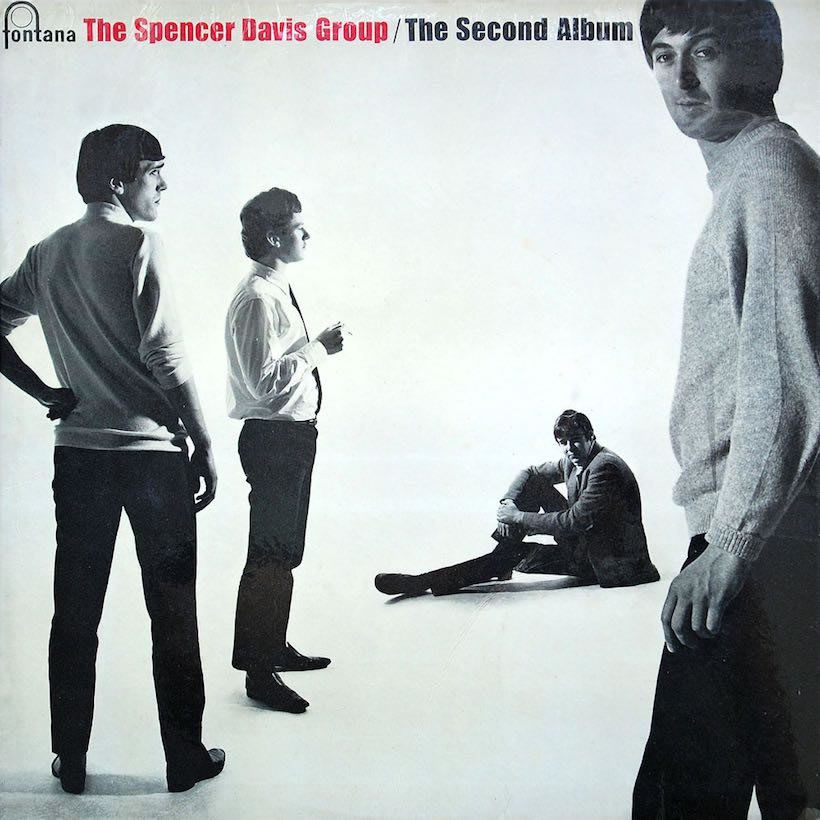
Spencer Davis Group Second Album

In the week your new album comes out, it’s no bad thing if the lead single from it is in contention for the No. 1 spot. That’s why January 20th, 1966 was a very good date for the Spencer Davis Group. On the UK charts for that week, “Keep On Running” became Britain’s favourite single, helping “The Second Album”, as it was called, to debut at No.14. To make things even sweeter, they also climbed into the Top 10 with its predecessor, the equally imaginatively titled Their First LP, which had made a belated chart debut two weeks earlier, thanks to the group’s new-found popularity.

The Spencer Davis Group. had had three chart singles in 1965 and 1966, but not one of them had made the Top 40. “Keep On Running,” written by Jamaican artist Jackie Edwards, changed all that, and hit No.1 half a century ago exactly, during a four-week run in the Top 2. With that track on it, The Second Album sold steadily and, in the last chart of February, as The Beatles’ Revolver did battle for the top spot with the soundtrack of The Sound Of Music, Spencer and co peaked at No.3.

The album was a mixture of originals and R&B/blues covers. Steve Winwood contributed “Stevie’s Blues” as well as a co-write with Davis, “Hey Darling,” and “This Hammer,” which credited the whole group, also including Muff Winwood and Pete York. The remakes included Don Covay’s “Please Do Something,” Ivory Joe Hunter’s “Since I Met You Baby,” Curtis Mayfield’s “You Must Believe Me,” Bobby Parker’s “Watch Your Step” and Hoagy Carmichael and Stuart Gorrell’s endlessly-covered “Georgia On My Mind.”

Spencer, Steve, Muff and Pete had much to thank Jackie Edwards for. After “Keep On Running,” they released a second cover of one of his songs, this time “Somebody Help Me,” which wasn’t on The Second Album. The result was the same, giving the group their second UK No.1 in less than three months.

Told Slant is the songwriting project of Felix Walworth , Brooklyn based lyricist, producer, and founding member of The Epoch arts collective. Walworth started the project in 2011 as a means of marking a stylistic shift in their song writing, specifically a shift toward understated, ambling arrangements and simple, illustrative lyrics.

Told Slant’s debut LP, Still Water, was self-released in 2012, then re-released and pressed to vinyl by Broken World Media in 2014. The band released their follow full-length record, “Going By”, with Double Double Whammy Records in the summer of 2016.

Though Told Slant functions more like a “solo project” in its recorded state, its live incarnation is arranged and performed by Walworth and Epoch co-collaborators Emily Sprague of Florist , Oliver Kalb of Bellows (He/Him), and Gabrielle Smith of Eskimeaux (She/Her). Sprague, Kalb, and Smith bring their particular sets of influences and intuitions to the band’s live sets in a way that draws out more energetic and dynamic arrangements from the songs.

Told Slant’s members live in Brooklyn, NY,

Told Slant has released the new single “Run Around the School” from their first new album in 4 years, “Point the Flashlight and Walk“. Of the song Walworth says: “Run Around The School’ is about the allure of loving another regardless of reciprocity or the promise of being loved. It explores the beauty and delusion of pining, and of love’s power to satiate us even with its table scraps.”

Album Released November 13th, 2020

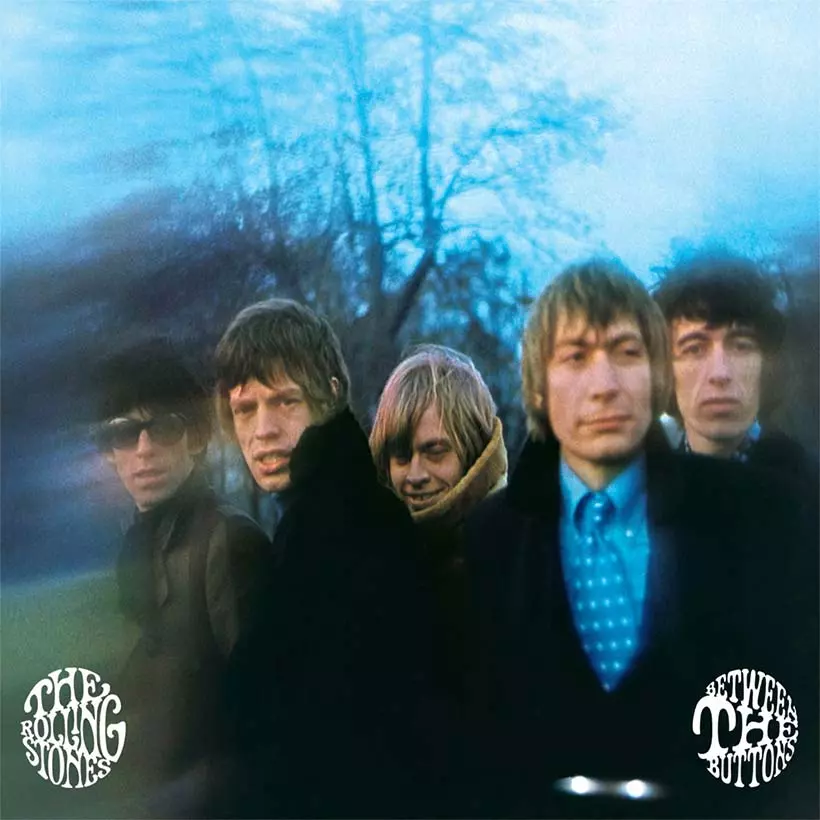
The Rolling Stones Between The Buttons album cover 820

1967 was a highly successful year for The Rolling Stones. It started with the release of “Between The Buttons” and ended with the stylistic about-turn of “Their Satanic Majesties Request”. Released on Decca RecordsBetween The Buttons came out first in the UK, on 20th January 1967, with a revised US edition following on 11th February.

Between The Buttons’ title came about by chance, following an off-the-cuff remark made by producer Andrew Loog Oldham to drummer Charlie Watts, who was doing some sketches for the artwork. Watts asked what they were going to call the album and Oldham used a euphemism for “undecided”. “Andrew told me to do the drawings for the LP and he told me the title was ‘between the buttons’,” Watts told Melody Maker “I thought he meant the title was Between The Buttons, so it stayed with it.”

Some of the album was recorded in August 1966 with Dave Hassinger at RCA Studios in Hollywood – the last session to be recorded in what had been the band’s “hit factory” – before being completed in London at the newly-opened Olympic Sound Studios in November that year. Some of the tracks were started in America and finished in England’s capitol. The Stones were fresher by the time they were recording back home, having taken a break from touring. “Between The Buttons” was the first time we took a breath and distanced ourselves a little from the madness of touring and all,” recalled guitarist Keith Richards. “So in a way, to us it felt like a bit of a new beginning… plus, everyone was stoned out of their brains.”

“Between the Buttons” was The Rolling Stones’ first album since April 1966’s Aftermath and it became their fifth UK studio album. It remains one of the Stones’ less well-known records, however, which is a pity as it contains some strong songs.

Besides the five band members – Mick Jagger, who took lead vocals on all tracks and also played the tambourine and harmonica, was joined by RichardsBrian Jones, Bill Wyman and Watts – there were several guest musicians. Ian Stewart plays piano and organ, and Nicky Hopkins plays piano, as does Jack Nitzsche. The track ‘Connection’ was performed live at the London Palladium the week after the album came out and was featured in the Martin Scorsese documentary Shine A Light, in 2008.

By late 1966, recording technology was allowing for greater experimentation, and though every track on Between The Buttons is credited to Jagger and Richards, there are certainly very different styles of music and song writing to be heard on the album. ‘Yesterday’s Papers’ has the distinction of being the first song to be written solely by Jagger and features Nitzsche on harpsichord. On ‘Something Happened to Me Yesterday’, the multi-talented Jones plays saxophone, trombone and clarinet.

Two tracks were exclusive to the UK album version. The first was the gentle waltz ‘Back Street Girl’, written by Richards and Jagger. In an interview with Jagger in Rolling Stone magazine, in 1968, the singer said it was his favourite song on the album. Jones showed some of his jazz leanings on this track: the musician, who was such an admirer of the jazz saxophonist Julian “Cannonball” Adderley that he named his son after him, demonstrated that he had imbued some of the influences of Milt Jackson in his vibraphone playing. The accordion playing was by Nick De Caro.

The second UK-only song on the album was ‘Please Go Home’, which was based on a Bo Diddley-style beat. It was later released in America on the compilation album Flowers.

“Trouble In Mind (Brian Jones)” A fun outtake from the “Between the Buttons” sessions (November 8th – 26th 1966: London, Olympic Sound Studios.). Great piano work from Ian Stewart and a multi-instrument player Brian Jones playing the kazoo’s.

The US version of “Between The Buttons” was the band’s seventh studio release stateside, and it stamped its own individuality with the choice of a new opening song. The album started with ‘Let’s Spend the Night Together’, a song co-written by Jagger and Richards, and which became a favourite of David Bowie’s. It had been released as a double-A-side single in the UK in January 1967, paired with ‘Ruby Tuesday’, which was also added to the US track list.

The UK and US versions of “Between The Buttons” shared the songs ‘Yesterday’s Papers’, ‘Connection’, ‘She Smiled Sweetly’, ‘Cool, Calm And Collected’, ‘My Obsession’, ‘All Sold Out’, ‘Who’s Been Sleeping Here’, ‘Complicated’, ‘Miss Amanda Jones’ and ‘Something Happened To Me Yesterday’.

Billboard reviewed the US album favourably in February 1967. “Every LP by the Stones has been a hot chart item, and this latest collection will be no exception,” they wrote. “Their hard-driving beat is evident throughout, and their singles hits ‘Ruby Tuesday’ and ‘Let’s Spend the Night Together’ are included adding immediate sales appeal. ‘Miss Amanda Jones’ and ‘Cool, Calm And Collected’ are outstanding in this winning package.” Between The Buttons reached No.2 in the album charts in the US, one place higher than in the UK.

The album artwork features cartoons and drawings by Charlie Watts, and the cover features a photograph taken by Gered Mankowitz in mid-November 1966, following an all-night recording session at Olympic Sound Studios. The band went to Primrose Hill park, in north London, just after dawn, arriving in a Rolls Royce. Mankowitz said the photograph, which he made deliberately bleary by spreading Vaseline on his lens, captured “the ethereal, druggy feel of the time”, adding, “There was this well-known London character called Maxie – a sort of prototype hippie – just standing on his own playing the flute. Mick walked up to him and offered him a joint and his only response was, ‘Ah, breakfast!’”