Archive for the ‘CLASSIC ALBUMS’ Category

Image may contain: 5 people, people smiling, guitar

Richie Furay’s, Rock history career is a smorgasbord of tales of the lost and forgotten, of things that went awry and never quite were. But Richie Furay’s long and winding story jumps out.

Furay, now 72, stood at the epicenter of musical and cultural change from the 1960s into the 1970s. Onstage, he literally stood at the center of the Buffalo Springfield, the short-lived quintet that foreshadowed and implemented so many of the rapid, diverse musical changes then unfolding. Offstage, Furay played the talented buffer between the explosive egos of Neil Young and Stephen Stills. They were bigger, flashier artists who would keep driving the music’s evolution in then-undreamt-of directions—and in the process overshadow Furay’s own pioneering artistry.

What happened to Furay with Poco. The Springfield’s ashes were still warm in 1968 when he founded that band, with fellow Springfield refugee guitarist-producer Jim Messina. The quintet forged a model for the country-rock hybrid that would dominate airwaves and sales for decades, scored a few moderate hits and critical raves, and wowed crowds with their showmanship. But Gram Parsons, the Grievous Angel, aiming in his own ways at that target with the Byrds and the Flying Burrito Brothers, soon loomed larger: for starters, Furay wasn’t getting blasted with Keith Richards, and the Stones weren’t covering his songs. Messina left Poco to team up with Kenny Loggins, and others followed, including Furay in 1973.

In that era of “supergroups,” Furay joined forces with old pal Chris Hillman (Byrds, Burritos) and singer-songwriter J.D. Souther in the Souther-Hillman-Furay Band for two uneven albums. The first went gold; the second tanked. To many, Furay, like the tired concept of supergroups, was starting to seem like a historical footnote.

That’s when pedal steel genius Al Perkins (Burritos, Manassas) started talking with him about Christianity. Worn out by record-biz bullshit, frustrated and disappointed by his career, his marriage on the rocks, Furay left L.A. for Colorado and became a believer. In 1976, he cut an early Christian rock album, ‘I’ve Got A Reason’; hardly anybody cared. In 1983, he quit music to become the culturally conservative pastor of Calvary Chapel, halfway between Denver and Boulder. Until 2007, he rarely performed. Then he formed a band, released a fine live two-CD set, toured briefly, and lapsed back into silence. Two years ago, he put out another solid album, and has been touring pretty steadily ever since.

Richie Furay wasn’t some sort of Zelig, luckily standing in the right places as the right times. His talents made him crucial to how events unfolded. He has a great, underrated voice and a high-energy, exuberant presence (two talents as important to a preacher as to a musician); has written a couple dozen classic tunes that clearly evince his complex musical craft and deft, surprising word play; and plays one helluva rhythm guitar. He deserves to be more than a footnote in the bands history he helped shape.

Our story begins in early 1960s New York City, where two young singers, Furay from Ohio and Stills from Texas, met in the folk-revival scene. Soon they worked together in a short-lived hootenanny group called Au Go Go Singers. On their album, against a pallid period-piece backdrop, Furay sings a Tom Paxton tune, “Where I’m Bound”

After the Au Go Go Singers fell apart on the road, Stills lit out for L.A., and discovered a fascinating scene in flux. Almost immediately, he was pushing Furay to follow him; the Monkees’ producer told Stills he’d find work once he assembled a band, so he went at that goal hard. Next came the fabled accidental meet-up with Neil Young and Bruce Palmer. Unable to locate Stills and Furay in L.A., the duo was heading to San Francisco in the 1953 Pontiac hearse they’d driven down from Canada, but got stuck in a traffic jam on Sunset Boulevard. Somebody spotted somebody else—who did what when in this oft-told origin story depends, as in Rashomon, almost entirely on who’s talking—and the foursome managed to get together. It was the birth of the Herd, soon to become the Buffalo Springfield—a name they all agree was copped from a sign on a steam roller.

Following their incredible sold-out six-week run at the Whisky A Go Go and record company offers and counteroffers, Atlantic Records founder Ahmet Ertegun, looking for a handhold in this bustling L.A. scene, flew in from New York and signed the band for $12,000.

Initially, Furay was the Springfield’s front man. Young wrote the eccentric “Nowadays Clancy Can’t Even Sing” their first single, but Furay, who’d learned it from Young months earlier back in New York, sang it. He also did the vocals for Young’s “Do I Have to Come Right Out and Say It?” and “Flying On The Ground Is Wrong”
Young likes to say the producers didn’t like his odd voice and he was paranoid about singing, and no doubt that’s true. After all, these particular producers’ chief claim to fame was discovering Caesar and Cleo, later known as Sonny and Cher; the Springfield unanimously hated the way their first album sounded, and afterwards basically produced themselves. But Furay delivered Young’s lyrics with characteristic nuance and conviction. “Clancy,” the band’s debut single in July 1966, became a regional hit and set them up for stardom.

Their stint in the Au Go Go Singers allowed Stills and Furay to work together more naturally. They easily shared and traded off vocals on early Stills tunes like “Sit Down I Think I Love You” and “Go and Say Goodbye” . That kept up through later Buffalo Springfield classics, like the raw, powerful “Hung Upside Down” from Buffalo Springfield Again.

In a telling musical and psychological touch, their contrasting vocals here personify two sides of the narrator’s mental anguish. A Child’s Claim To Fame Furay put his own pen to work too, on tasty tunes like “Sad Memory Can’t Keep Me Down, Words I Must Say My Kind of Love” and “Nobody’s Fool”.

Image may contain: 4 people, text

But what every Buffalo Springfield fan surely remembers are the brilliant, wistful country-rock “A Child’s Claim to Fame” and the immortal country-soul ballad “Kind Woman” If he’d only written and sung these two songs, Furay would probably have earned his 1997 induction into the Rock and Roll Hall of Fame.

In mid-1968, Young left the band for the last time. Furay and Messina, who’d barely just joined the group when it disintegrated for good, pretty much pieced together the last Springfield album, compiled the excellent Retrospective and then launched Poco.

Now, of course, the whole idea of country-rock seems stupifyingly obvious, what with everyone from the Eagles to Waylon Jennings and 40 years’ worth of descendants working the vein everywhere from New York to Nashville to L.A.. So you have to go back to grasp how strange it seemed, in the context of the multiplying cultural rifts across America.

Image may contain: 2 people

Poco, reflecting Furay’s personality, set out to establish country-rock as a neutral zone for story-telling and musical experimentation. Furay outlined these themes in “Pickin’ Up The Pieces” the classic title track from their 1969 debut which, despite its seminal brilliance, wasn’t reissued on CD until 1995. The task brought out the best in Furay’s songwriting and confirmed his talents as one of rock’s most compelling front men; he wrote and sang almost all the songs on the band’s first two albums. Poco turned out to be ridiculously agile stylistically, a true child of the Springfield; it could rove easily from shit kicking twang to lovely ballads to heavy grunge. Messina dropped in tasty guitar licks from the books of James Burton, Albert King, and Steve Cropper. George Grantham’s drums could rock out and country-shuffle with the best, and his harmonies gave Poco’s vocals the Everly Brothers sound their material craved. Randy Meisner (who defected to the Eagles, to be replaced by Timothy B. Schmit, who’d do the same) contributed in-the-pocket, hard-driving bass and harmonies. Last but far from least was musical maniac Rusty Young on dobro, banjo, and pedal steel, which he often fed through add-ons like his organ pedal to yield spectacular sonic effects; as for showmanship, well, he set his axe on fire during their sole 1971 Carnegie Hall show. Yee-hah! with Furay’s carefully crafted songs unleashed Poco’s musical range to maximum advantage. The best Poco tunes bristle with interwoven parts: deceptively sly and sophisticated lyrics with textured vocal arrangements, endless hooks and catchy riffs, all layered so richly even a casual listen is likely to drop your jaw.

“What A Day” recycled and re-energized from its Buffalo Springfield days, kicks off their debut album with deliberate optimism and joy—and insistent rhythmic shape-shifting to get blood and feet moving. “Nobody’s Fool” a gorgeous bit of white boy soul; First Love and Tomorrow typically touching Furay ballads; and Short Changed a raunchy rocker—all showcase the band’s ability to genre-shift with the best.

But for unexpected twists are “Make Me Smile” and “Consequently So Long”. Then came the Souther-Hillman-Furay band with a Furay-penned hit, Fallin’ in Love the flight to Colorado and Christianity and bouts of silence until “Alive” in 2007. That double-album serves up a surprisingly good retrospective of many of Furay’s best songs, including Child’s Claim to Fame

In 2009, Furay’s past and his old-time fans started catching up with him when he rejoined Poco for scattered dates. In 2010, thirty years of on-then-off Springfield rumoured reunions were capped when Furay, Young, and Stills (minus the deceased Bruce Palmer and Dewey Martin) actually came together at Young’s annual benefit for the Bridge School, which serves children with severe physical and communication issues. The following year, they managed a few shows in Oakland, L.A., and Santa Barbara. Furay apparently had high hopes for an ongoing run. But Young—seriously, what’d you expect?!—bailed. After that, Furay performed only sporadically again.

Last year’s album, “Hand in Hand” seems to have reinvigorated the rock and roller in him. Maybe he worked through some demons via this song about the Springfield and/or Poco. Or maybe doing this Neil Young medley with a few choice comments is cathartic. Maybe it’s that he’d hit the big 70. Whatever the reasons, he reissued ‘Alive’ in a deluxe edition and is on the road again. Good news: his touring band has serious chops, and his voice—unlike Stills’ sadly husk, can still deliver on greatest hits like “Good Feelin’ To Know”.

Over a year ago on November 16th, 2018 the Poco “DeLIVErin’” album was recreated, recorded and filmed at the legendary Troubadour in West Hollywood. There is a forthcoming audio & concert film release of this show in early 2020 including 10 additional songs, totaling 23 in all.

There are so many ironies turning in Furay’s career that following them can make you feel like a skydiver caught in a whirlwind. But I can’t resist closing with this one: a YouTube video of the Buffalo Springfield at Monterey Pop. The credits list Neil Young, who wasn’t there, and David Crosby, who filled in for Young, and the Monkees’ Peter Tork, who introduced the band. But you won’t see the name Richie Furay, although you can’t miss him even in these blurry shots, standing center stage just like he did in Buffalo Springfield shows.

Thin Lizzy have been eligible for induction into the Roll Hall of Fame since 1996 – by which time iconic leader Phil Lynott had already been dead for a decade. Thin Lizzy’s best record was a double live album

They’ve finally been nominated for the honor as part of the Should they receive the nod, Lynott will be inducted along with Scott Gorham, Brian Downey, Brian Robertson and Eric Bell.

Although Thin Lizzy’s moment in the spotlight didn’t last long, that doesn’t mean they’re not worthy of induction. If anything, their achievements during a relatively short run of success should be an argument in their favour. Here are five more reasons they should be honored.

It wasn’t just the fact that as an Irish group working through the period known as The Troubles,” when people in parts of the island lived under the watchful eyes of armed cops and soldiers and waited for the next terrorist atrocity. For Thin Lizzy to feature both Catholics and Protestants, thus crossing the religious divide at the center of the dispute, was remarkable in any part of the world touched by terrorism.

Inspired by Irish folk tales and the kind of gallows humor to be expected from those who grow up against a background of disorder, Lynott became a significant working-class poet, expressing in a few verses the kinds of meanings and feelings that commentators could (and did) take thousands of words to explore. While Thin Lizzy were predominantly known for fast hard rock songs, those lyrics helped introduce the concept of ballads – that is, songs that tell stories about people – to an audience not always open to the idea. “I still hear the wind whistling through the wild wood, whispering goodbye” (from “Philomena”)… “Valentino’s in a cold sweat, but he lost all his money on that last bet / Against all the odds he smokes another cigarette” (from “Waiting For an Alibi”) … “She’s got the pleasure, comes from all the cornerstones of the world / She’s so fantastic, she’s everybody’s favorite little record girl” (from “Rosalie).

As if his lyrics weren’t musical enough on their own, the construction of Thin Lizzy’s music was also remarkable. While they didn’t invent the twin-guitar approach to rock, they most certainly developed and refined it and took it to a new audience. With the words and music providing such a strong structure, it’s no surprise that the band were at their best on stage, transmitting emotions in sound and movement. So it’s also no surprise that Thin-Lizzy “Live and Dangerous”, while far from being the first successful live album in rock history, remains regarded as one of the best.

‘Are You Ready?’ is a song so taut and single-minded, so devastatingly exciting, that if a band can follow it, then they deserve to be on the stage. ‘Are You Ready?’ doesn’t appear on any of Thin Lizzy’s studio albums. It was released on the 1978 album Live And Dangerous, “recorded” (the inverted commas are important) in London in 1976 and Toronto in 1977. Live And Dangerous might not be the best live album ever made, but it’s the best album Thin Lizzy ever made, a double album that’s pretty much a pleasure from start to finish, and a live album without any of the manifold vices that traditionally afflicted such records: no 20-minute solo spots, little in the way extended interaction with the crowd, no radically inferior reworkings of beloved songs in order to keep the band mildly interested in their 3,923rd performance of it.

He seemed to see further than most, with the poet’s eye and the musician’s hands; and yet he struggled with his own demons and died aged just 36 as a result of drug addiction. While the tragedy remains raw to many, it’s one that reflects so many of the fairy-story tragedies that inspired him. If he’d been able to write a song about his own rise and fall, it would doubtlessly have been one of his best; and maybe some people hear parts of that unwritten song when they listen to the words he left behind today. That’s why he remains admired at the level of John Lennon Lemmy Kilmister and others of that ilk – he lived and died as the type of folk hero he wrote about.

Where did he get his Lynottness from? It’s worth noting that Celtic mythology and society often operated within a matriarchal structure and strong women were no rare thing in his world. Most notable was his mom, Philomena Lynott, who died aged 88 in 2019, and led a life ever larger, probably, than Phil did himself.

No photo description available.

Fighting off the apparent disgrace of giving birth to a mixed-race child out of wedlock, Philomena fought and fought and never gave up. And although she wasn’t able to save her son in the end, many of the musicians who passed through the Thin Lizzy family, or indeed stayed in the hotel she once ran (including the Sex Pistols, whom she called “nice-mannered”) had cause to look up to her as a mother figure.

Right up until her passing she continued to battle to keep Phil in the spotlight. It’s enough of a shame that he didn’t live long enough to see his band nominated for the Hall of Fame; it’s an almost poetic tragedy that Philomena didn’t either. Still, better late than never.

No photo description available.

Toy’s new record, “Songs of Consumption”, is an eight song collection of unique interpretations of songs that have directly inspired the band, and had some influence on their most recent record, the critically acclaimed Happy in the Hollow. Impressively, all eight songs were self-produced and recorded in home studios.

The idea was originally birthed when the band recorded four covers for the bonus 7″s that came with the Dinked and Rough Trade versions of the last album. 3 of those songs feature here alongside 5 new recordings completed last month, which comprise tracks by Stooges, Amanda Lear, Nico, The Troggs, Serge Gainsborough, Soft Cell, John Barry and Pet Shop Boys / Elvis / Willy Nelson (depending on how you know the song).

Another psych-rock gem of an album from Toy, one of the few remaining genre acts that haven’t faded into obscurity since the revival almost a decade ago? Well, not quite. What they warned us about with “Happy In The Hollow” – the track that preceded this long form – is now inescapable.

A band that have discovered a sharper, less forgiving edge wield this powerful, streamlined pop sword and do some real damage. The fact “Songs Of Consumption” is a covers album only makes the stylistic direction more pronounced. If you’ve heard the originals of tracks like the Stooges’ “Down On The Street” or the almost-unknown Nico bomb “Sixty/Forty” you appreciate what’s been done here even more. Respectively dancefloor electronica and exotic, dreamy soundscapes in those two cases. Reinventions by the reinvented.

Image may contain: 1 person, child and closeup

Nilüfer Yanya dwells in life’s absurdities and anxieties. The English singer-songwriter’s ambitious debut album, “Miss Universe”, is based around a loose concept, a faux self-care hotline that promises to cure the pains of existence. Her voice flickers with controlled chaos, a glimmering falsetto in one breath and a rich rumble in the next. Shining synths give way to buoyant guitar fuzz, a la the Strokes. On a few tracks, Yanya interjects with the soothing monotone of a call specialist, emphasizing her striking power upon returning to the regularly scheduled programming.

London singer-songwriter Nilufer Yanya released her debut single Small Crimes back in 2016. Inspired by the actions of a petty thief, it is a haunting but simple tale that showcases Yanya’s lyrical talents, influenced by the likes of Nina Simone and Jeff Buckley as well as Connan Mockasin. Keep On Calling is similar in style to Small Crimes, Yanya’s vocals accompanied only by carefully picked guitar. Soon though, she adds another string to her bow, as the song transforms itself into a quasi-R&B number with only a few handclaps and a slight tonal shift. It’s still minimalist, but Yanya shows that you can do a lot with a little.

“Keep On Calling” by Nilüfer Yanya released on Blue Flowers Music

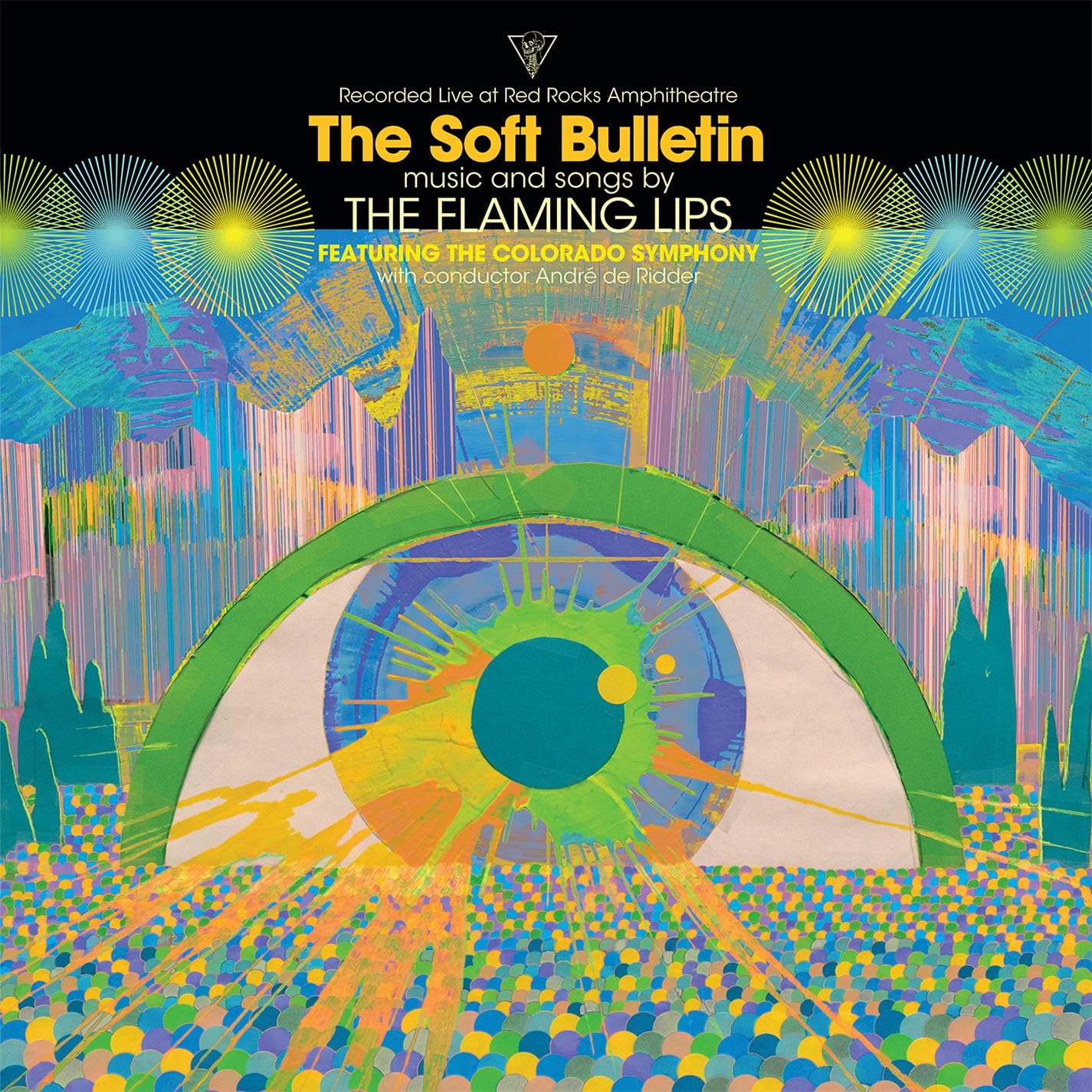
The Flaming Lips will release their first-ever live album, “The Soft Bulletin Recorded Live at Red Rocks with the Colorado Symphony Orchestra”, November 29th via Warner Records. The album features the band’s 2016 live performance of the band’s seminal 1999 effort “The Soft Bulletin”, which celebrates its 20th anniversary this year.

The concert was produced by the Flaming Lips, Scott Booker and their long-time collaborator Dave Fridmann, and recorded with the Colorado Symphony Orchestra at Red Rocks in Morrison, Colorado. The concert features a 68-piece orchestra and a 57-person choir conducted by Andre De Ridder.

The Spark That Bled from the new album ‘The Soft Bulletin: Music and Songs by The Flaming Lips featuring the Colorado Symphony with conductor André de Ridder’.

The album will be released in all formats as a double vinyl album, CD and digital. It is available for preorder now, with all preorders including an instant download of album cut “Race for the Prize” (which is also available via the band’s YouTube channel).

Available November 29th.

No photo description available.

Specializing in the live dissemination and recording of sitarified and psychedelified musical compositions.
Debuting a decade ago, the psych-pop creation of Rishi Dhir along with long-time collaborators Miles Dupire (drums) and Robbie MacArthur (guitar), and touring member Jason Kent (keys/guitar), have released five critically-acclaimed albums, toured extensively throughout North America and Europe, been nominated for the prestigious Polaris Music Prize and picked up praise from the likes of NPR, Brooklyn Vegan, Consequence of Sound, Rolling Stone, Clash Magazine and more. As a highly-regarded sitar player, Dhir has also collaborated with indie-rock icons (Beck) and legendary cult bands (The Brian Jonestown Massacre).

Part 2: Darker Time, Darker Space We can’t believe what is happening. We don’t know what to do. Scientists reveal they have built a spaceship that can take the top candidates for continuing humanity to New Earth. We’ve never been there, but we have heard transmissions that suggest life exists like ours. Who are the lucky ones that get to board starship Harmonia for planet B?

Band Members
Rishi Dhir,
Miles Dupire,
Jason Kent,
Robbie MacArthur,

new album ‘Hollow’ (out 02/14/2020)

Following the premature death of Little Feat’s chief architect Lowell George from a cocaine-charged heart attack, Paul Barrere stepped into the role of the band’s primary guitar slinger.

Indeed, it was no small challenge considering that George’s formidable presence as singer, songwriter and lead guitarist had imbued such an indelible mark on the band’s overall identity. Yet even at the outset, Barrere managed to accomplish that ,feat which enabled the band to continue and not only survive, but actually thrive in the aftermath of George’s passing.

Not that Little Feat always got their due, while certain albums are rightfully now remembered as genuine American classics “Sailin’ Shoes, Dixie Chicken, Time Loves a Hero”, and “Feats Don’t Fail Me Now” in particular — other efforts are inexplicably overlooked.

With Paul Barrere’s recent passing, it was an apt time to shine the light back on those Little Feat recordings that are well worthy of more recognition, All add emphasis to a powerful legacy, one that belongs to Barrere as much as it does to the other band members overall.

Little Feat(1971)

Offering the first hints of Little Feat’s trademark sound — a combination of greasy funk, sturdy R&B, primal rock, and a crisp country croon, Little Feat is often overlooked whenever pundits retrace the band’s trajectory. Yet it was a stirring first step, one that demonstrated all the verve and versatility that they would become known for a short time later. Several songs stand out — the spunky “Strawberry Flats,” the tender “Truck Stop Girl” and the gutbucket read of the blues standards “Forty-Four Blues” and “How Many More Years” in particular —  but no one track in the whole of their canon is as enduring Lowell George’s classic “Willin’,” a definitive road song that would become one of the most covered offerings of their classic catalog. With George’s shimmering bottleneck guitar at the fore, it’s a sparse read, but one that defines the group as much as any other.

The Last Record Album(1975)

Although given a somewhat curious title that the unsuspecting might have misinterpreted as a death knell, The Last Record Album showed the band was nevertheless in fine form. Here again, the band’s songwriting prowess was well represented by the supple and seductive “All That You Dream,” a co-composition from Barrere and keyboardist Bill Payne, George’s sobering and sensitive “Long Distance Love” and the various examples of Feat’s solid pacing and assertive rhythms — “Down Below the Borderline,” “One Love Stand” and “Day or Night.” Although  it’s only eight songs long, it’s as definitive an album as any in their classic catalog.

Hoy Hoy (1981)

An odds and sods collection released two years after the band’s initial break-up in 1979, “Hoy Hoy” isn’t so much an encapsulation as it is a reminder of the band’s extraordinary diversity. Although Little Feat has had ample live albums released throughout their lengthy tenure, Hoy Hoy is far more than a concert collection given the fact that it also includes outtakes, demos and various quirky covers. A handful of songs come from earlier albums, but this is hardly a true anthology given its array of otherwise obscure offerings. Nevertheless, it deserves inclusion in any true Feat fan’s collection, simply by virtue of the fact it boasts so many interesting and otherwise unavailable selections.

Let It Roll (1988)

The first studio album issued in the aftermath of Lowell George’s untimely passing, this was the first to feature Craig Fuller, George’s tentative replacement, and guitarist Fred Tackett, who would remain a mainstay in the years to come.  Fuller–a veteran of Pure Prairie League and a handful of ad hoc collaborations–wrote eight of the album’s ten tracks, not only a bold move by a new member attempting to fill such massive shoes, but also a clear sign of the confidence given him by his new compadres. They were all well rewarded; indeed, the music retains the upbeat, effusive sound that characterized the classic Feat albums early on. George Massenburg and Bill Payne’s co-production efforts substitute a bit of polish for the down home designs that marked their earlier efforts, but it’s never a deterrent. In fact, it serves to remind the fan faithful that even despite the loss of the seemingly irreplaceable Lowell George, Feats were still clearly capable of moving forward without fear of faltering .

Under the Radar (1998)

Marking the tenth anniversary of Little Feat’s reconvening in 1988, the then-current line up that included Barrere, Tackett, Payne, percussionist Sam Clayton, bassist Kenny Gradney, drummer Richie Hayward, and recent arrival and dominant force, vocalist Shaun Murphy, proved themselves to be as formidable as ever. Although their profile had diminished considerably in later years, it was clear that the band were as determined as ever to retain their potent presence. While several songs boasted Feat’s signature spunk and spirit, other offerings — “Eden’s Wall,” “Under the Radar,” “Vale of Tears,” and “A Distant Thunder” in particular — demonstrated a marked maturity in their delivery, one that promised, for better or worse, to bring them closer to the mainstream. Although it can’t exactly be called an extraordinary album, Under the Radar is a credible effort regardless and a sign that even in their new incarnation, Little Feat was worthy being called an American classic.

thanks https://rockandrollglobe.com/

Image may contain: 1 person, closeup and text

At 18, Nilüfer – who is of Turkish – Irish – Bajan heritage – uploaded a few demo’s to SoundCloud. Though she’s preternaturally shy, her music – which uniquely blends elements of soul and jazz into intimate pop songs with electronic flourishes and a newly expressed grungy guitar sound – isn’t. And it didn’t take long for it to catch people’s attention. She signed with independent New York label ATO Records, following three EPs on esteemed london indie label Blue Flowers, and earned a place on the BBC Sound of 2018 longlist.

She has also supported the likes of The xx, Interpol, Broken Social Scene and Mitski on tour. Now, Nilüfer releases her debut album, “Miss Universe”. Though she recorded much of it in the same remote Cornwall studio she used to jam in as a much younger person, it is bigger and more ambitious than anything she has done before. Angels, with its muted, harmonic riffs, channels ideas “of paranoid thoughts and anxiety” – a theme that runs through the album, not least in its conceptual spoken word interludes which emanate from a fictional health management company WWAY HEALT H TM. “You sign up, and you pay a fee,” explains Nilüfer of the automated messages, which are littered through the album and are narrated by the titular Miss Universe. “They sort out all of your dietary requirements, and then they move onto medication, and then maybe you can get a better organ or something… and then suddenly it starts to get a bit weird. You’re giving them more of you and to what end?

Nilüfer Yanya performs “In Your Head” on Later… with Jools Holland, BBC Two

Produced and recorded by Ripley Johnson (Wooden Shjips, Moon Duo), and mixed by Chris Cohen (Captured Tracks, Deerhoof), the album finds its niche in the hazy sonic landscape of private press country and psych records, and alongside artists like Relatively Clean Rivers, Jim Sullivan, Kenny Knight, and countless other explorers of the pastoral underground.

The band was aiming to capture a timeless, natural sound, not quite of the present, past, or future, but phasing in between the consciousness of now and the stoned dream-state of the eternal. Sort of a back porch jam just as the shrooms are starting to kick in. Handmade and human, but also cosmic and transcendental. The goal is to let the music speak for itself and hopefully find a weird and wonderful audience somewhere out there.

Rose City Band cling to the notion that they’re trying to find peace, perhaps even salvation through their songs, all delivered with a beautiful sense of melancholy and endless euphoria.

Folk rock with a Moon Duo infusion creating a dreamy soundscape that grips the listener and carries them away.

Traveling down the same mellow cosmic path as Wooden Shjips, yet with a bit more structure and the feel of rambling 70’s stoner rock, Rose City Band amble on in with a brilliant new offering of intoxicating slow-motion songs that drip like golden amber in the morning sun, warm and comfortable, never straying from their simple melodies of pastoral delight.

Image may contain: night and text

New outing from Manc faves, Icecapades and it’s a corker. a trio of talented folks who I don’t know smash out a brilliantly wry, cleverly placed set of off-kilter snarling college rock and Blue Album era melodies with skill and grace.

The first album from Manchester band Hot Shorts in two years. ‘I Understand And I Wish To Continue’ is a peppy sophomore album which ably follows on from where the band’s excellent 2017 self-titled debut album left us. It’s twenty nine minutes of cascading hook-laden pop precision from one of the city’s finest breakout bands of recent times. An assured and engaging affair, the record is ten tracks of 90’s tinged slacker anthems and the occasional luxury indie lament, deftly arranged and crafted by the band over the last two years.

Unsurprisingly for a band featuring two published authors the lyrics on this album take centre stage. Songs like Lostprophets Tattoo, Don’t Stop Me If You’ve Heard This One Before, and I Found You on Myspace are keenly observed vignettes which blend knowing pop cult humour, keen social observations and the occasional dollop of self introspection. It’s a wonderful, lyrically savvy album, designed to leave the listener feeling
amused, discerning and invited firmly in on the joke.

Chris says of the writing on the record, “Pretty much all of the songs are either about feeling really old and embarrassing and/or music from my past…the songs are mostly.. about being slightly too old and British to still be into 90s alt rock as much as we are, but there is also one about being afraid to go to space on there and also one about a cat”.

http://

Fans of their previous release will not be disappointed. New listeners will find a new favourite to cling to over the months ahead.

Released October 25th, 2019
The Band:
Chris Killen – Guitar & Vocals
Peet Earnshaw – Bass & Vocals
Joel Nicholson – Guitar & Vocals
Lara Williams – Drums