Posts Tagged ‘The Who’

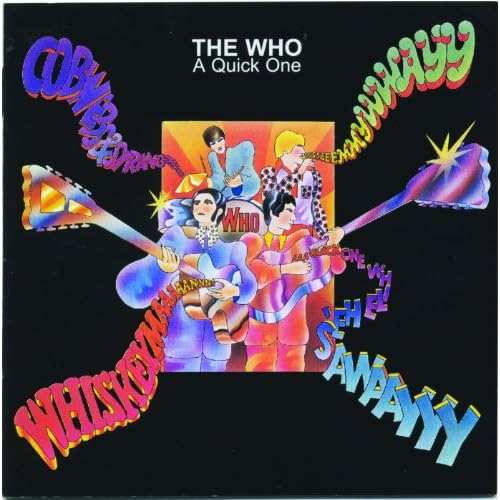
A Quick One (Remastered)

Not long after The Who’s debut album was released, Pete Townshend was already moving on. “My Generation”, which had arrived at the tail end of 1965, was mostly made up of R&B covers, garage-rock rave-ups and guitar-powered pop that pretty much sounded like every other above-average British rock LP of the period, but louder. Their second record, “A Quick One”, showed a glimpse of Pete Townshend’s ambition, wit and skewed sense of what rock music should sound like in the mid-’60s when it was released on December 9th, 1966.

So when the group assembled in IBC Studios and Pye Studios in London late in the year to lay down tracks for its second album, Townshend  with the other band members dutifully along for the ride by contributing their own material . A Quick One is the Who’s most delightfully unfocused album,  weaving through the band’s most democratic period. Bassist John Entwistle contributed two songs (including “Boris the Spider,” probably his most well known composition); drummer Keith Moon did (the instrumental “Cobwebs and Strange” encapsulates his boozy, woozy charm in two and a half minutes). Vocalist Roger Daltrey wrote one song, plus there’s a cover of the Martha & the Vandellas hit “Heat Wave.”

That left the remaining four tracks to Townshend, who, by comparison to most of his bandmates’ contributions, sounds rather conventional on three songs, although “So Sad About Us” is one of his most underrated. But it’s his final number, and the album’s closer and de facto title track, that dominates the LP and sets up the Who’s future and legacy. Clocking in at more than nine minutes, “A Quick One, While He’s Away” distills six separate songs into one cohesive track. It was Townshend’s first attempt at a rock opera, prefiguring future classic Who albums like Tommy and Quadrophenia. And it’s a masterpiece of tension and release, the story of a woman who has an affair after her boyfriend goes missing, told through various song movements that shift through moods and tempos.

Today, the album is viewed as the link between the band’s more traditional early years and the start of the ambitious period that followed with 1967’s The Who Sell Out .

Recorded at IBC Studios, Pye Studios and Regent Sound, London in the autumn of 1966. Pete’s first rock opera contains six separate songs, ‘Her Man’s Gone’, ‘Crying Town’, ‘We Have A Remedy’, ‘Ivor The Engine Driver’, ‘Soon Be Home’, and ‘You Are Forgiven’. Along the way the unnamed heroine pines for her absent lover, selects Ivor as a substitute, regrets her folly when her man returns, confesses her indiscretion and is ultimately forgiven. John:”We wanted to put ‘cellos on the track but Kit Lambert said we couldn’t afford it. That’s why we sing ‘cello, cello, cello, cello,’…where we thought they should be.”

The Who announce that 5 UK dates scheduled for April 2017 will include a performance of classic album Tommy in full.
The Who have confirmed they will play 1969 album Tommy in full on their 2017 UK tour.
After postponing five UK dates this year, The Who rescheduled them for April and have now revealed they’ll perform Tommy live in its entirety for the first time since 1989.

They say: “The Who are incredibly excited about performing Tommy and more in April 2017! Marking the first time that the band will play Tommy in full since 1989, it will be a truly unforgettable tour.”

The Tommy element of the shows will include a new video segment produced specially for these gigs.
As well as Tommy, Pete Townshend and Roger Daltrey’s band will play a set of their greatest hits and some lesser known tracks. The Tommy & More dates follow two shows at London’s Royal Albert Hall on March 30th and April 1st, at which they will also play Tommy in full.

Frontman Daltrey recently said he felt rock had “reached a dead end.” The tour has been especially reinvigorating for Pete Townshend, who has for years found playing live increasingly dull. But in the last few weeks of the run – originally dubbed “The Who Hits 50!” and later revised to “Back to the Who Tour 51!” Townshend is looking forward to getting back on the road and, for at least two shows, changing up the set list. On March 30th and April 1st, the Who will present the rock opera Tommy live in its entirety for the first time since 1989 at a benefit gala for Teenage Cancer Trust. The band’s website claims it will be acoustic but, as Townshend says below, that may not be the case.

He said: “The sadness for me is that rock has reached a dead end. The only people saying things that matter are the rappers and most pop is meaningless and forgettable.


Who at Fillmore East 10/20-25/69 by David Byrd

This recording captures much of the third night of a weeklong engagement The Who performing their rock opera Tommy at the Fillmore East, with Bay Area band AUM opening, followed by fellow Brits King Crimson.

Following the band intro, they kick the show off with John Entwistle’s “Heaven and Hell,” their standard opener at the time. “I Can’t Explain” and “Fortune Teller” hark back to older times, as does “Young Man Blues,” but all three are played with a renewed ferocity, not apparent on the studio recordings.

Thundering bass and drumming that’s on the verge of being out of control combine with Townshend’s power chords to create a sound that is unmistakably The Who. It’s remarkable that only three musicians can create such a powerful sound, particularly on the latter song. Following a monologue by Townshend, preparing the audience for the long haul of their new rock opera, Tommy, they launch into a condensed version of the “Overture.” Although shorter than usual, the anchoring musical themes of the piece are introduced before the storyline begins with “It’s A Boy.”

The highlight of what exists here from the opera is probably “Sparks,” where the band really cuts loose into a pulverizing jam. Townshend’s guitar howls through the unique powerhouse rhythms created by Entwistle and Moon. The opera continues with the bluesy “Eyesight To The Blind” which segues into “Christmas” as the first tape runs out. Unfortunately, the recording misses most of the rest of Tommy, resuming as they are reaching the end of “See Me Feel Me” coda’s finale sequence.

The band ends the show with the double whammy of “Summertime Blues” followed by an unusually slow-paced “Shakin’ All Over” that features themes from several other songs drifting in and out, including “Smokestack Lightning.”

Pete Townshend – guitar, vocals; Roger Daltrey – vocals; John Entwistle – bass; Keith Moon – drums

The Who, My Generation: Super Deluxe Edition
This 5-CD, 79-track box set celebrating The Who’s debut includes the original mono album (newly remastered), a disc of mono bonus tracks (newly remastered) and a disc of stereo bonus tracks. It also includes a new stereo remix of the album originally released on iTunes in 2014 featuring new overdubs by Pete Townshend and Roger Daltrey using the same guitars and amps and the same type of microphones used on the original album. (Generation was first mixed to stereo for the 2002 reissue, but dropped many of the overdubs from the mono album – this new stereo mix recreates them). Finally, a disc of demos is included – which features three previously unheard songs: “The Girls I Could Have Had,” “As Children We Grew” and “My Own Love.” An 80-page book and six inserts top off this lavish set! The U.S. release for this box is set for December 9. It is available today in the U.K.

R.E.M., Out of Time: 25th Anniversary Edition
R.E.M.’s 1991 classic is revisited as a 3 CD/1 Blu-ray set, a 2-CD set, a 3-LP set, a single LP of the original album and as a digital download as part of the band’s new deal with Concord Bicycle Music. The box includes the original album on Disc 1 followed by nineteen demo tracks on Disc 2. The third disc contains a concert from Capitol Plaza Theater in Charleston, West Virginia performed on April 28, 1991 and aired on NPR as an installment of their Mountain Stage program. The Blu-ray has the original album both in Hi-Resolution Stereo and Hi-Resolution 5.1 Surround. It also contains 8 music videos and an 18-minute EPK which contains studio and performance footage. The new liner notes by music journalist Annie Zaleski features interviews with the band members and producers of the album. The 2-CD edition contains the first two discs of the deluxe edition and the 3-LP edition replicates those two discs as well.

Jethro Tull, Stand Up: The Elevated Edition
For the past several years, Jethro Tull has been releasing expanded editions of their albums featuring new remixes by Steven Wilson. Just under a year after the release of the last reissue in the series of 1976’s Too Old to Rock ‘n’ Roll: Too Young to Die!, here is a 2CD/1DVD version of 1969’sStand Up, entitled Stand Up: The Elevated Edition. Housed in a deluxe hardcover book-style package complete with a pop-up in the style of the original release,

Soundgarden, Badmotorfinger
This seven disc set – four CDs, two DVDs and a Blu-ray – expanded the rockers’ third album to staggering proportions. Astoundingly, much of Badmotorfinger’s deluxe content has never been released before. You get the remastered album, a disc of studio outtakes (with just one released track, a version of “New Damage” with Queen guitarist Brian May), a 1992 live set at Seattle’s Paramount Theatre on two CDs and a DVD, an additional DVD of live footage and music videos (including the DVD premiere of the Motorvision VHS) and the entire album newly remixed in 5.1 surround for Blu-ray. The battery-operated (!) box set edition also comes with a 52-page book, a 12″ x 12″ lenticular print, four 8″ x 10″ band member photo cards, stickers and an iron-on patch. More frugal fans can opt for a 2CD deluxe edition, 2LP 180-gram vinyl or just the original album remastered on CD.

Tori Amos, Boys For Pele: 20th Anniversary Edition

This expanded edition of Tori Amos’ third album, Boys for Pelewill feature new liner notes penned by Amos and a 21-track bonus disc of demos, B-sides and alternate versions, four of which (“To the Fair Motormaids of Japan,” “Sucker,” a remix of “Talula” and an alternate take of “In the Springtime of His Voodoo”) are previously unreleased. A double vinyl reissue of the original album will also be available.

DUNGEN - Haxan

Dungen – Haxan
Long before psych fests were springing up all across the globe populated by bands operating aesthetically in ever decreasing circles, Sweden’s Dungen were blazing a trail through the consciousness with psychic transmissions that connected the pastoral spirit of the late ’60s with the 21st century. Haxan however marks something of a departure for the band, having been put together to soundtrack Lotte Reiniger’s 1926 classic silent film – taking the demonic and haunting imagery as inspiration, the result is a standalone piece replete with wild freakout, eerie soundscapes and panoramic ambience, reflecting new horizons and underlining this visionary troupe’s enduring power.

wholiveatleeds

The forthcoming The Who “Live at Leeds” vinyl reissue will be a three-LP package that features the FULL setlist, as played on the night.  The Who booked two shows, one at the University of Leeds for February. 14th and a second in Hull the next day, and would choose the songs from there. Unfortunately, there were technical problems with the Hull recording — John Entwistle’s bass was inaudible on the first six songs — and they were forced to use just the one concert.

They couldn’t be bothered to trawl through the recordings from the US tour so they decided to record the Leeds and Hull gigs and release the best. The Hull recording was unusable, because the cable connecting the bass guitar to the tape recorder didn’t work. That left Leeds. The three-hour concert took place on Valentine’s day 1970. Students queued for hours to get a ticket and many who failed took to the roof of the building that evening to hear and feel the music.

Townshend joked: “We decided before that we were going to put it out whatever. It was lucky it was good”.

As it turned out the recording was more than good: it was phenomenal and would become one of the most successful live albums of all time.  the tapes caught the Who at their absolute best. The original release clocked in at just under 38 minutes and featured only seven songs. This will be a half-speed mastered 33RPM pressing and unlike the two-CD deluxe edition issued in 2001, this new vinyl release will feature the 33-song set in the order that the songs were performed on the night (Valentine’s Day 1970!)

This is packaged as a six-panel gatefold with three inner bags. SDE ran a deal alert for this last week (now finished), but even the non-deal price of £25 in the UK is pretty good for a triple vinyl, half-speed mastered set that celebrates this landmark live album.

This will be released on 25th November 2016

The second night of The Who’s first run ever playing at the Fillmore East is an unbelievably great document of the band in its early prime, still full of the punk attitude that they would initially define while beginning to venture off into more artistic and experimental territory. Every minute of this performance is fascinating and much of this material cannot be found, in better quality or at all, on any other Who recordings. This set captures the entire band fully engaged in their music. Although many songs were still short and concise during this stage of their career, the intensity level is undeniable. Opening the show with Eddie Cochran’s “Summertime Blues,” they immediately set a bar that most other bands could never even approach.

The previous year, two members of The Rolling Stones were arrested on drug charges under questionable circumstances, and were victimized by the U.K. courts. They were harshly sentenced in an attempt to make an example out of them, which immediately caused an uproar that shook London to the core. Following Jagger and Richards’ ridiculous sentencing, The Who quickly recorded two of their more popular songs in support and vowed to record nothing but Stones songs until the two were released. Their second song of this set is the Stones’ cover of the Allen Toussaint penned “Fortune Teller,” which they had just performed for the first time ever the previous night.

They continue with “I Can’t Explain,” one of the few songs American audiences were familiar with at the time, but with a new level of aggression that wasn’t apparent on that early single. Next up is their current single at the time, “Happy Jack,” a tune that found them exploring new directions and beginning to experiment with dynamic changes. Extremely rare live performances of “Relax” and “My Way” follow and continue to explore and expand on the boundaries within the band’s music. “Relax” surprisingly turns out to be one of the heavier numbers on this set and the band takes flight into some inspired jamming following the verses. Unfortunately, the jam fades out and is incomplete.

John Entwistle then steps up for his defining song, “Boris The Spider,” lending his dark sense of humor to the proceedings. At this point, the band launches into “My Generation” and this version is amazing. The improvisational section following the verses is a great early example of the band letting the music propel itself. Although at times it seems like they are on the verge of being out of control, they never are, and early signs of Townshend developing themes within a jam are also surfacing. The approach to their instruments and the sound they create as a unit is utterly unique and unlike any other band at that time. The reels were changed during this jam, so a small part of it is missing on this recording.

This surely must have left the audience breathless, so while they were recovering, the band embarks on their most experimental composition yet, “A Quick One While He’s Away,” which is incomplete and begins in the middle of the song. This adventurous suite of songs, loosely tied together, is a hint at Townshend’s future aspirations that would eventually be realized in his first full-blown rock opera, Tommy. This is a fascinating performance for its entire eight minutes.

Who at Fillmore East 4/5-6/68 by Helen Hersh

They close their set this night with another propulsive jam on “Shakin’ All Over,” again letting the music propel the band through several pulverizing jams, including spontaneous flailing of riffs familiar from other songs. Again, the raw energy is astounding. This and the previous night’s performance must have gone a long way towards cementing their reputation in New York City. This should be required listening for anyone interested in that era of rock music and especially for anyone interested in The Who

The lead guitar Pete Townshend plays on “Can’t Explain” is ridiculously on point. Phenomenal guitar playing

Pete Townshend – guitar, vocals; Roger Daltrey – vocals; John Entwistle – bass; Keith Moon – drums

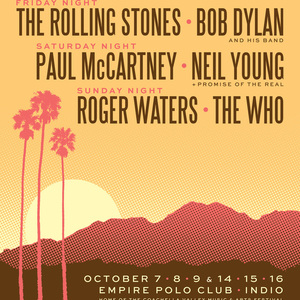
THE WHO live at the Desert Trip Festival at Empire Polo Field in Indio, California – October 16th, 2016

Desert Trip rock superstars put considerable sweat into performances in Indio over the last two weekends, and some even inspired tears from fans. But only one appeared to literally draw blood That was the Who’s lead guitarist and chief songwriter Pete Townshend, who managed to cut his forehead to bring forth a trickle of blood over his right eye during the band’s set on Sunday, which he noted also was the final date of their extended 2015-2016 world tour.

The injury became apparent during the mini-set of “Tommy” numbers, as singer Roger Daltrey belted out “See Me, Feel Me” and the show’s high-resolution video cameras made Townshend’s wound visible to all 75,000 festival-goers as his face was magnified on screens around the grounds.

The Who didn’t exactly slow down in a set that emphasized the muscular rockers of their first two decades. “I Can See for Miles” was tuneful hard rock, with Townshend’s riffs of increasing tension and a beat always pushing forward, shattering eardrums for 50 years. The guitarist crouched as he slammed the downstroke attack on “My Generation.” During the Who’s set earlier in the evening, Pete Townshend alluded cryptically to the presidential election, and the day before, Neil Young sang of threats to environment. Waters was more aggressive in messaging as he weaved politics as an essential element of his performance of Pink Floyd classics. He read a poem of rage and protest called “Why Cannot the Good Prevail”

“A thing like this … I don’t know if this is a good thing or bad thing,” said Pete Townshend after roaring through about half the Who’s Sunday evening set, which had already covered a slew of hits including “Can’t Explain,” “Who Are You” and “My Generation.” He concluded, “But I think, as McCartney said, we’ve all been in the business for over 50 years – there’s no competition and it’s all love, peace and harmony.”

In a nutshell, the 71-year-old guitarist acknowledged that, yes, Desert Trip is a big corporate money-maker, but at the crux of it, it’s an important celebration of an era of musicians who are dwindling quickly.

In the case of the Who this night, it was that overarching, last-ditch nostalgia that gave the show its emotional and historical weight. They have seven more gigs scheduled for spring of 2017, but this show marked the band’s final North American date on their farewell tour. Of course, they’ve said their goodbyes several times before, but based on Townshend’s remark “tonight … we’re gonna cry,” it felt like this really could be their last Stateside stand.

Yet the band turned that lament on its head time and time again throughout the 2-hour set, transforming distant memories into youthful vigor. The only noticeable hitch in Roger Daltrey’s higher wails came during “Behind Blue Eyes,” but his voice otherwise soared over the desert winds, which couldn’t stop his carefully choreographed mic whips either. Townshend likewise set out to defy Father Time during “I’m One,” quipping “This song is a song to be sung by a very young snotty little fucker … and I don’t know if I can remember what that’s like, but I’ll [try].”

At some point between that Quadrophenia cut and a mini-set of Tommy tunes, Townshend managed to cut himself – either by his wild guitar swings or some other frenetic antic – above his right eyebrow, which became visible to the 75,000-strong audience via camera close-up during “See Me, Feel Me.” True to his punk-anticipating roots, it didn’t slow him down one bit for set closers “Baba O’Riley” and “Won’t Get Fooled Again.” In a way, the injury was an apt metaphor to conclude this show: just like Townshend in those final moments, the Who’s catalogue – some of the greatest rock music ever written – will endure far beyond their touring days.

5:15 – The Who Final US Show of 50th Anniversary tour Live at Desert Trip

The Who / My Generation super deluxe edition

The Who’s debut album My Generation will be reissued as a five-disc super deluxe edition box set in November and will feature a wealth of material, including unreleased songs, recently discovered album demos and new stereo mixes…

The set comprises five CDs, with the first disc featuring 2016 remastering of the original mono mix of the 1965 album. The second CD delivers a stereo remix which was created using new overdubs from Roger Daltrey and Pete Townshend. To ensure this was done sympathetically, Pete used exactly the same guitars and amps as the original album and Roger used same type of microphone. Until now, these mixes have only been available via iTunes, so this box set is the physical debut of these mixes (which were created in 2014).

CDs three and four contain 44 bonus tracks in mono and stereo and between them include 27 previously unreleased alternate mixes and a further four that have only been available digitally. Five-CD box delivers demos, mono mixes, new stereo mixes & more

thewho_mgfc

The final fifth disc contains the demo recordings. Pete apparently discovered these demos in 2015 during a break in touring. These include three totally unreleased songs that The Who have never revisited: The Girls I Could Have Had, As Children We Grew and My Own Love.

Of these demos, Pete commented “Gathering these demos for this collection has been enjoyable; it’s wonderful for me to have these tapes made fifty-two years ago to listen to. I hope you enjoy them. They have a naiveté and innocence, a simplicity and directness, and an ingenuousness that reveals me as a young man struggling to keep up with the more mature and developed men around me. What an incredible group of strong, talented, young and engaging men they were!”

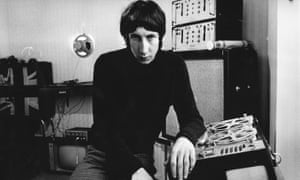
Pete Townshend … Leaning on the tape recorder he used for his demos, we are told.

The Who super deluxe editions always deliver excellent books and the 80-page tome that comes with this set looks to be no exception. It features the usual ‘rare’ photos and new notes from Pete Townshend and images of period memorabilia. Have a listen to a teenage Pete Townshend on ‘The Girls I Could’ve Had’, one of the My Generation demos discovered in Pete’s tape archives in 2015. It’s included on the My Generation – Super Deluxe, out on 18th November.

and here’s what Townshend has to say about the song.

I have often said about my early songs that I tried hard to appeal to Roger’s sense of late teenage machismo. Either that, or I attempted to sound like Jan & Dean so that Keith Moon – who was a surf music fan – would get behind the song. Here, a rather machismo and bragging song slipped away because it was more about me than Roger Daltrey, and certainly not a surf number. It’s about my lack of success with girls when I lived at Chesham Place, partly because I spent all my time in my studio. Roger did very well with girls; it would never have worked for him to sing this lyric. The lyric is also fantastical. I make it sound as though I was turning down girls every day. In real life I was probably piqued that rarely happened. My tape machine was my mistress.

This 79-track super deluxe edition of My Generation will be released on 18th November 2016.

The Who performed a more upbeat set. “Well, here the fuck we are,” Pete Townshend announced with biting good cheer as the band stepped onstage Sunday, also the birthday of their late bassist John Entwistle, who died in 2002. With a long history of career-defining moments at events from the Monterey Pop Festival and Woodstock to the Concert for New York after the attacks of 9/11, he expressed special affection for the young fans in front of him in the Southern California desert venue.

“You young ones, we love you for coming to see us,” he said. “It must be pretty tough out there for the old ones. Why don’t you make a little chair for them, and they can sit down and rest.”

The Who didn’t exactly slow down in a set that emphasized the muscular rockers of their first two decades. “I Can See for Miles” was tuneful hard rock, with Townshend’s riffs of increasing tension and a beat always pushing forward, shattering eardrums for 50 years. The guitarist crouched as he slammed the downstroke attack on “My Generation.”

The Who were always an exceptionally physical band, with Roger Daltrey wailing up front and Pete Townshend leaping with windmill guitar strokes. Few performers in their 70s can maintain that physical presence, but the Who remain a vibrant musical force for other reasons. Like all the acts at Desert Trip, the Who were always as much about ideas and attitude as youthful spectacle.

Daltrey reshaped some vocal parts from the superhuman originals to fit his range, more improvising bluesman than young shouter. And at 71, Townshend often just seemed like a more experienced version of the literary, snot-nosed hooligan from the 1960s.

“Good luck with the election, folks,” Townshend teased his American listeners, without further comment.

Desert Trip 2016

Daltrey and Townshend were supported by a backing band of seven players, including drummer Zak Starkey, who was born the year “My Generation” was released in 1965, and guitarist Simon Townshend, brother of Pete. Midway into the show, Pete told of how his younger brother was at a premiere of Tommy at the Royal Albert Hall in 1968 and was looked after that night by an unknown David Bowie.

The band performed a suite of songs from the rock opera Quadrophenia, beginning with “I’m One,” with lead vocals by Townshend, who closed with the defiant plea, “Why should I care? Why should I care?” the song’s character Jimmy pissed off and thinking hard. They followed with the album’s instrumental of sweeping guitar, piano and an anxious beat called “The Rock,” introduced by Daltrey: “This is as good as any classical piece ever written.”

From the Eighties was “Eminence Front,” mingling a dynamic funk riff with cascading electronics, but it was as much of a guitar epic as anything else in their catalog, sending Townshend into spasms of slicing leads.

The Who set ended as they have traditionally for years, with the career-defining songs “Baba O’Riley” and “Won’t Get Fooled Again” (both from 1971’s Who’s Next), euphoric anthems of rebellion, escape and history repeated. In these final moments, Townshend was moved to emphasize the pent-up rage, frustration and the “teenage wasteland” of his lyrics by sliding across the stage floor on his knees. It wasn’t as graceful as the band’s old movie footage, but Daltrey looked pleased.

The Who set list

“I Can’t Explain”
“The Seeker”
“Who Are You”
“The Kids Are Alright”
“I Can See for Miles”
“My Generation”
“Behind Blue Eyes”
“Bargain”
“Join Together”
“You Better You Bet”
“5:15”
“I’m One”
“The Rock”
“Love, Reign O’er Me”
“Eminence Front”
“Amazing Journey”
“Sparks”
“The Acid Queen”
“Pinball Wizard”
“See Me, Feel Me”
“Baba O’Riley”
“Won’t Get Fooled Again”

The Who - Whos-Next

“Who’s Next” is the fifth studio album by English rock band The Who, released in August 1971. The album has origins in a rock opera conceived by Pete Townshend called Lifehouse. The ambitious, complex project did not come to fruition at the time and instead, many of the songs written for the project were compiled onto Who’s Next as a collection of unrelated songs. Who’s Next was a critical and commercial success when it was released,

Much of “Who’s Next derives from Lifehouse, an ambitious sci-fi rock opera Pete Townshend abandoned after suffering a nervous breakdown, caused in part from working on the sequel to Tommy. There’s no discernable theme behind these songs, yet this album is stronger than Tommy, falling just behind Who Sell Out as the finest record The Who ever cut. Townshend developed an infatuation with synthesizers during the recording of the album, and they’re all over this album, adding texture where needed and amplifying the force, which is already at a fever pitch. Apart fromLive at Leeds“, the Who have never sounded as LOUD and unhinged as they do here, yet that’s balanced by ballads, both lovely (“The Song Is Over”) and scathing (“Behind Blue Eyes”). That’s the key to Who’s Next  there’s anger and sorrow, humor and regret, passion and tumult, all wrapped up in a blistering package where the rage is as affecting as the heartbreak. This is a retreat from the ’60s, as Townshend declares the “Song Is Over,” scorns the teenage wasteland, and bitterly declares that we “Won’t Get Fooled Again.” For all the sorrow and heartbreak that runs beneath the surface, this is an invigorating record, not just because Keith Moon runs rampant or because Roger Daltrey has never sung better or because John Entwistle spins out manic basslines that are as captivating as his “My Wife” is funny. This is invigorating because it has all of that, plus Townshend laying his soul bare in ways that are funny, painful, and utterly life-affirming. That is what the Who was about, not the rock operas, and that’s why Who’s Next is truer than Tommy or the abandoned Lifehouse project. 

Track listing:

Side one
1. “Baba O’Riley” 5:08
2. “Bargain” 5:34
3. “Love Ain’t for Keeping” 2:10
4. “My Wife” (John Entwistle) 3:41
5. “The Song Is Over” 6:14
Side two
6. “Getting in Tune” 4:50
7. “Going Mobile” 3:42
8. “Behind Blue Eyes” 3:42
9. “Won’t Get Fooled Again”

All songs written and composed by Pete Townshend, except where noted.

Personnel:

The Who
  • Roger Daltrey – lead vocals, backing vocals, harmonica on “I Don’t Even Know Myself”
  • Pete Townshend – guitars, organ, VCS3 and ARP synthesiser, backing vocals, piano on “Baba O’Riley”, lead vocals on “Going Mobile” and the original version of “Love Ain’t for Keeping”, co-lead vocals on “Baba O’Riley”, “Bargain” and “The Song Is Over”
  • John Entwistle – bass guitar, backing vocals, brass, lead vocals and piano on “My Wife”
  • Keith Moon – drums, percussion
Additional musicians
  • Nicky Hopkins – piano on “The Song Is Over” and “Getting in Tune”
  • Dave Arbus – violin on “Baba O’Riley”
  • Al Kooper – organ on alternate version of “Behind Blue Eyes”
  • Leslie West – lead guitar on “Baby, Don’t You Do It”
Production
  • Kit Lambert, Chris Stamp, & Pete Kameron – executive production
  • The Who & Glyn Johns – production
  • Glyn Johns – engineering, mixing
  • Ethan A. Russell – photography
  • John Kosh – album design

With its acoustic guitars and drumless bits, this triumph of hard rock is no more a pure hard rock album than Tommy. … And… it uses the synthesizer to vary the power trio format, not to art things up.

Check out this live cut of the song “Bargain”  with Pete’s  Dialogue – Long Beach, California December 10, 1971.

“Bargain” – San Francisco Civic Auditorium December 12, 1971. (This is an edited version of the performance)

On Who’s Next, the band crossed that line with power and grace. The album spawned the concert classics “Baba O’Riley” and “Won’t Get Fooled Again”; the great Daltrey vocal vehicles “Bargain” and “Song Is Over”; Entwistle’s scorching, anxiety-ridden “My Wife”; and Townshend’s most delicate song on record, “Behind Blue Eyes.” On Who’s Next, Townshend unleashed the power of the synthesizer as a rock & roll instrument, to be used like guitar or bass rather than as a special-effects novelty.
Recorded March May 1971 at Olympic Studios  in London

This is Track 09 of the Who’s album – Who’s Next. First recorded (then rejected) in New York on March 16th, 1971, this became the first song to be worked on with Glyn Johns during a trial session at Stargroves with The Rolling Stones Mobile studio in April, 1971. This version (unlike the New York original) used the synthesizer track from Pete’s demo and was edited down for the single which reached #9 in the UK and #15 in the USA. Played onstage at the Young Vic ( see Other Post ) and retained at every Who concert thereafter.