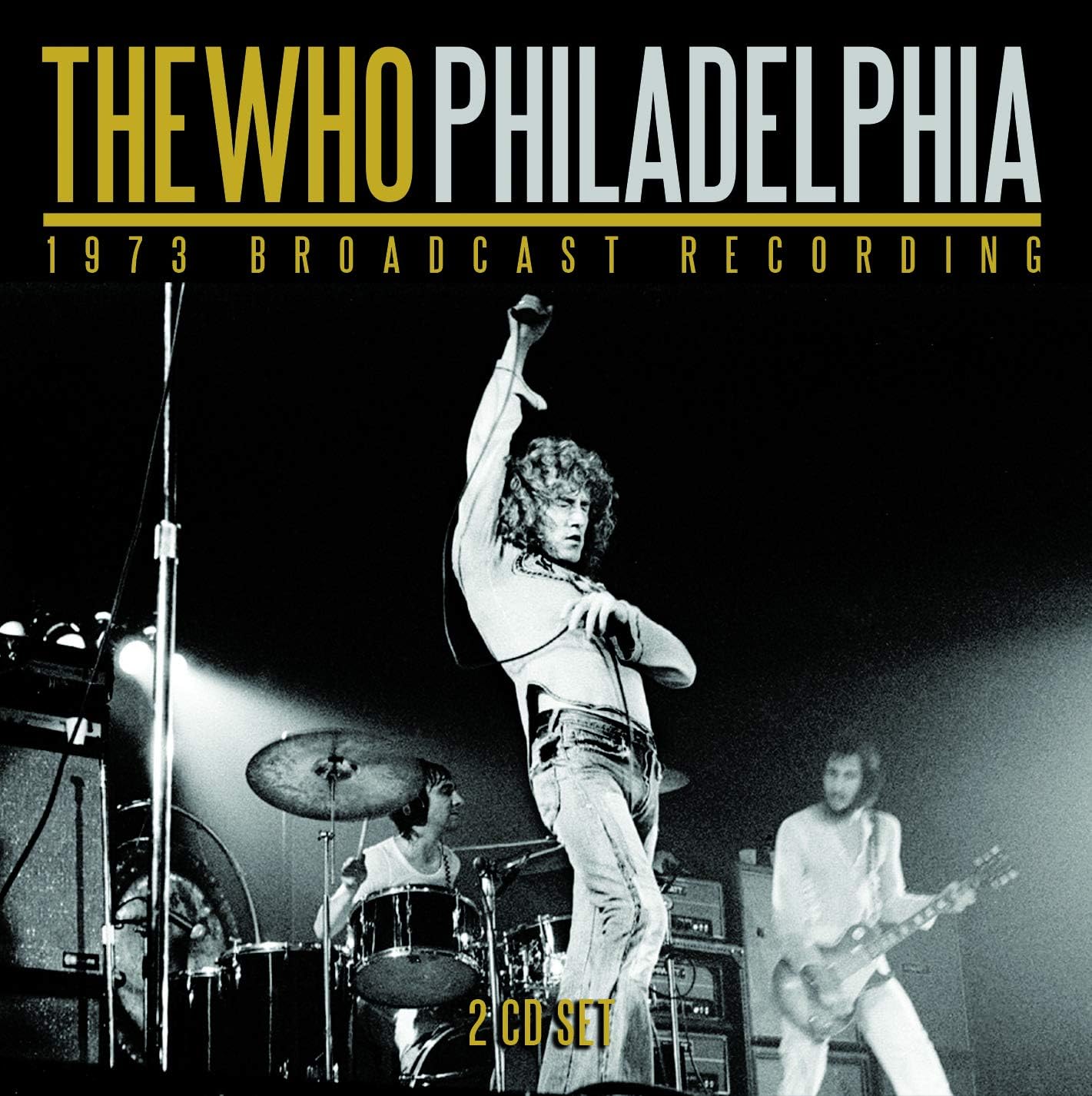
Of all the shows on The Who’s legendary “Quardrophenia” tour in 1973, none stands out more than the penultimate show in Philadelphia on December 4th. Parts of this show were broadcast on the King Biscuit Flower Hour and titles surfaced almost immediately taped directly from the radio broadcast.
The first is the famous “Tales From The Who” (TMOQ) which featured one of William Stout’s most well known covers featuring the band in cages a la a box of animal crackers cookies. Over half of this two-record set is devoted to selections from the then-new Quadrophenia, and there’s an amusing story about this recording. Normally when the King Biscuit producers put out live concerts for commercial broadcasts, they carefully bleeped out any obscenities, but in this case they overlooked some. The New Orleans radio station that aired this program was unaware, like the show’s producers, that “Dr. Jimmy” contained a four-letter word, and it was duly broadcast. However, whichever station provided the broadcast that served as the source material for this bootleg had a station manager or program director familiar with the song, so they duly dubbed the KBFH disc to reel-to-reel tape and spliced out the offending word prior to airing the program (producing the bizarre line “Her fella’s gonna kill me/Aww, f-ill he”), but even they missed another one slipped into “My Generation.” The bootleg label’s claim that this is a quadraphonic release was a bit laughable, because it couldn’t been taped off the radio in quadraphonic, and trying to convert it after the fact would have had all the success of the pseudo-stereo records of the 1960s. According to William Stout, who designed the colorful cover that was a knockoff of classic horror comic book covers, only 120 copies of this two-record set were released, as the operators of TMOQ knew that the FBI was on their trail and, in a fit of panic, they destroyed all other copies of the release (as quoted in Bootleg: The Secret History of the Other Recording Industry by Clinton Heylin).
Like most King Biscuit broadcasts, the sound isn’t quite as good as typical commercial live rock records, but this collectable is far better-sounding than any other bootlegs featuring the Who, and its extreme rarity makes it a very valuable recording to own, superseded only by the original King Biscuit Flower Hour LPs distributed to the network radio stations for the broadcast.
This release was copied on “Who Are You” (Ruthless Rhymes), copy of the TMQ release with five songs from a 1971 audience recording. The Ruthless Rhymes release was copied on the German release “Mods & Rockers”(Ruthless Rhymes) and on another German title called Mods & Rockers (Slipped Disc) in 1974.
The final vinyl release was Decidedly Belated Response (TAKRL). This new release contains the recently surfaced, more complete version of the Spectrum show for the first time ever. “Substitute,” “The Punk And The Godfather,” “5:15,” “Drowned,” “Naked Eye” are new to on this release with only “Love, Reign O’er Me” being the only song missing from the setlist.
The sound quality on this release is nothing short of phenomenal. Given the phenomenal performance, this is simply a fantastic release. The set begins with a few older numbers to warm up the audience. After a moment of audience buzz the band launch into “Substitute” and “I Can’t Explain.”
The Band:
Roger Daltrey: Vocals, Harmonica John Entwistle: Vocals, Bass Keith Moon: Vocals, Drums Pete Townshend: Guitar, Vocals
Following Keith Moon’s death in September 1978, The Who decided to continue as band, recruiting former Small Faces drummer Kenney Jones; keyboardist John “Rabbit” Bundrick was also added to the line-up for live performances, adding another element to the band’s sound. A horn section was introduced to the band’s act for the first time around this time. It would be retained through 1980. The horn section also allowed numbers like “5:15” and “Drowned” (now sung by Townshend) to be reintroduced to the act. Meanwhile, 1979 shows are known among Who fans for new material that Townshend introduced on some nights during jams, The tour supported their 1978 album “Who Are You”,
The Who performed at the Chicago Amphitheater in Chicago, Illinois on December. 8th, 1979,
The version of “How Can You Do It Alone” from the Face Dances reissue also comes from the Chicago show. “5:15”, “My Wife”, “Music Must Change”, and “Pinball Wizard” from the Thirty Years of Maximum R&B Live video and DVD come from the same Chicago show.
The concert was broadcast live to several local movie theaters. The general consensus was that this show was the
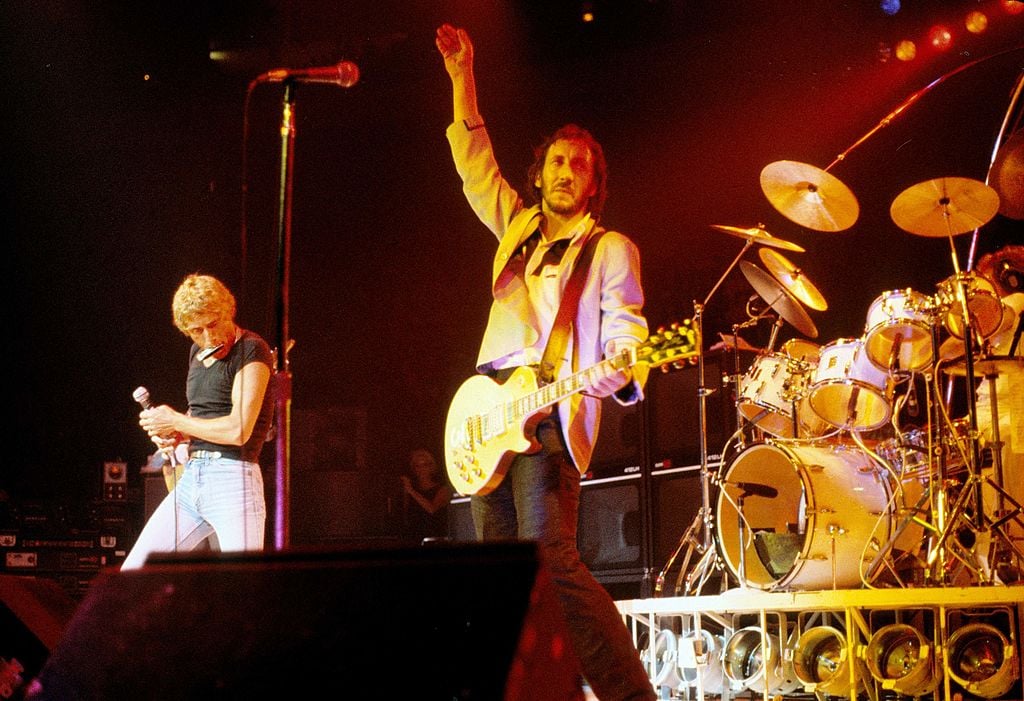
best on the 1979 tour. The show was visually stunning. Many times Pete Townshend or Roger Daltrey would move to the front of the stage and direct the cameraman to focus in close, then unleash a mic twirl or scissors kick for the hungry crowd.
Backstage Roger asks us if we liked the show with a devious smile, knowing full well how great it was for the band
and crowd alike”. ~ The Who Concert File book/Joe McMichaels;Jack Lyons.
The Chicago Tribune wrote: “… it is the spirit The Who brings to its performance that makes it so special. Like the title of its current movie, “The Kids Are Alright,” The Who is alright and more; and though no longer “kids” in terms of the calendar, Daltrey and Townshend in particular reflect a genuine love for rock and roll, with a kid like enthusiasm which has nothing to do with age. Twirling the microphone on its cord, running in place to the beat, Daltrey throws himself into the proceedings with a joy that’s not only convincing, but catching; Townshend, meanwhile, lopes and lur-ches around the stage, his windmilIng arm crashing out heavy rock chords. The Who’s own energy output is just as devastating on a more human level.
Daltrey and Townshend come across like cheerleaders for rock and roll. If the act is, when It comes to the seeming affection for the music and the transcendent moments that rock at its best can offer, just that – an act- really doesn’t matter”.
The three-disc version of The Who biographical film “Amazing Journey: The Story of The Who” includes the majority of the band’s show of 8th December at the International Amphitheatre in Chicago.
Roger Daltrey: Harmonica, Vocals, John Entwistle: Vocals, Bass, Kenney Jones: Drums, Pete Townshend: Vocals, Guitar
John Bundrick: Keyboards,Reg Brooks: Trombone, Howie Casey: Saxofone, Dave Caswell: Brass Section
Setlist:
Substitute,I Can’t Explain,Baba O’Riley,The Punk And The Godfather,My Wife,Sister Disco,Behind Blue Eyes,Music Must Change,Drowned,Who Are You,5.15,Pinball Wizard,See Me Feel Me,Long Live Rock,My Generation,I Can See For Miles,Sparks,Won’t Get Fooled Again
Encore:
The Real Me, Dancing In The Streets, Dance It Away, Young Man Blues, Roadrunner, Big Boss Man, How Can You Do It Alone
On the 50th anniversary of a legendary gig by The Who, people who were there have been recalling how the band “threw everything into it.” The rock group played at the packed University of Leeds refectory on 14th February 1970 and recorded the gig. The record it spawned, Live at Leeds.
It was 50 years ago today that the Who walked into the University of Leeds Refectory in Leeds, and played what many rock fans consider to be the greatest concert of all time. At the very least, the album they recorded that night “Live at Leeds” is one of the most celebrated live albums in the genre’s history, up there with the Allman Brothers’ At Fillmore East, Nirvana’s Unplugged in New York, the Band’s The Last Waltz, Bob Seger and the Silver Bullet Band’s Live Bullet, and Cheap Trick’s Live at Budokan.
To commemorate the 50th anniversary of Live at Leeds, the Who’s longtime sound engineer Bob Pridden to chat about the momentous gig. He joined their ranks in 1966 and, amazingly, stayed on the road with the Who until 2016 when he decided that half a century traveling around with a rock band was enough. “It was getting hard,” says the 74-year-old. “I wasn’t getting any younger. The pressure each night was getting hard for me.”
Pridden witnessed well over 1,000 gigs during his life with the Who, but he says they reached their peak in the late Sixties and early Seventies. “That’s when they were on fire,” he says. “The were working all the time and just on top of their game. As a unit of just four people, a band couldn’t be any better.”
It was his job to mix the sound every night for the room, but actually recording the shows for posterity wasn’t even a thought for the band in their earliest years. Tragically, that means that the hundreds of gigs they did between 1963 and 1968 have been completely lost to history beyond little bits here and there.
“About two years before Live at Leeds, I thought I’d try recording them with a couple of microphones plugged into a tape recorder,” Pridden says. “I brought an Akai seven-and-a-half–inch reel-to-reel and started taping shows on it. We went from that to a Vortexion where you can take a D.I. [direct input] into it and then put two mics into it and mix them in together.”
The enormous success of 1969’s Tommy forced the band to think more seriously about recording their shows. The rock opera gave them a huge new audience, but it was largely a studio creation that didn’t capture their explosive onstage sound. When they headed to America in the fall, Pridden was instructed to tape 30 shows for a live album that was envisioned as the perfect follow-up to Tommy. (Bootlegs were also becoming big business at this point, and the band wanted to beat the pirates at their own game.)
In Pete Townshend’s memoir “Who I Am”, he recalls speaking to Pridden after the tour and realizing he hadn’t taken any notes about the relative quality of each show. “There wasn’t enough time for us to wade through 30 shows again,” he wrote. “Plus we now had an additional eight that Bob had recorded in England — including the most recent show at the London Coliseum. For me to listen to 38 shows would take five days in a studio. Even with notes I would lose track. The live album was never going to happen if we didn’t do something, and fast.”
This was early in February 1970, and the band had only two gigs coming up before a long break, at Leeds University on February 14th and Hull’s City Hall the following day. “‘Hire an eight-track rig, record the shows, I’ll mix them both at home on my new eight-track machine, and the best of the two nights will have to do,’” Townshend instructed Pridden. “Bob was looking anxious again. ‘What do I do with the live tapes from the tour?’”
In a move he’d later label “one of the stupidest decisions of my life,” Townshend told Pridden to burn the tapes so that they’d never wind up in the hands of bootleggers. Pridden remembers the moment well all these years later. “I burned them in a dustbin in the back of a cottage I had,” he says. “I put them in the bin, dropped a match and that was it. I felt weird, but we were already planning on playing another show. I didn’t think that 20 years on people would be crying out for these things. But it couldn’t have been everything because some of them did eventually surface and they got used.”
Pridden’s bonfire put immense pressure on the Who as they headed to Leeds and Hull. They had just two nights to capture a perfect concert after thinking they could simply pick the best out of 30 in America. Making matters worse, the mobile recording kit that Townshend envisioned the label sending over wound up being “a bunch of bits and pieces in military-grade boxes” that arrived in a van. This equipment was set up in the cafeteria one floor below the general assembly hall where the Who were performing.
“They played in the room where students would get together and the headmaster or the teachers would talk from the stage,” says Pridden. “There were no seats at all and it was really packed. People were hanging off the side of the wall and onto things. It was packed to the gills. I don’t think these days that amount of people would even be let in.”
The set featured the vast majority of Tommy along with earlier hits like “I Can’t Explain,” “Happy Jack,” and “Substitute,” along with covers like “Fortune Teller” and “Summertime Blues,” and a nearly 16-minute version of “My Generation.”
“I played more carefully than usual and tried to avoid the careless bum notes that often occurred because I was trying to play and jump around at the same time,” Townshend wrote. “The next day we played a similar set in City Hall in Hull. This was another venue with good acoustics for loud rock, but it felt less intense than the previous night.”
When Pridden listened to the tapes, he was horrified to discover that John Entwistle’s bass parts somehow weren’t recorded at Hull. “Forget about Hull then,” Pridden recalls Townshend telling him. “Concentrate on Leeds.”
That show had its own problems though. In addition to intermittent clicks, the backing vocals weren’t recorded properly. “I arranged a session at Pye studios,” Townshend wrote, “played the show back, and John and I simply sang along. We covered the backing vocals in one take, preserving the immediacy of the live concert.”
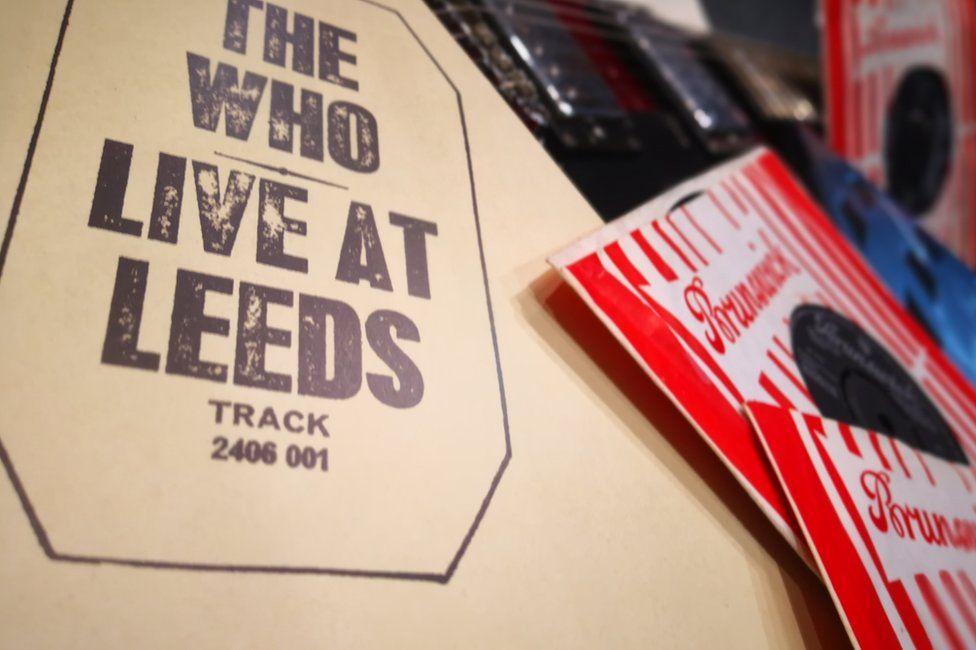
Townshend tried slicing out the clicks with a razor blade and quickly realized it would be impossible to get all of them. But subpar-sounding bootlegs were flooding the market at this time, so the band just added a note to the label saying the clicks were intentional. The cover was a faded stamp reading “The Who: Live at Leeds” on brown paper, mirroring the look of illegal vinyl bootlegs of the era.
The original Live at Leeds, released May 23rd, 1970, featured just six of the 33 songs played at the show, and not a single one of them was from Tommy. It wasn’t until 1995 when a CD version arrived containing 14 of the songs, and the complete gig wouldn’t see the light of day until the release of a deluxe edition in 2001.
All this time, the master tapes for Hull sat in storage. They were presumed to be worthless because of the issues with Entwistle’s bass parts, but when prepping a 40th anniversary of Live at Leeds a decade ago, Pridden listened to the full Hull show for the first time. “That bass wasn’t there for the first five or six numbers,” he says. “Then all of a sudden it kicked in and stayed.”
He went to Townshend with his discovery. “Let’s get someone to overdub a bass on it,” Townshend said. “We can use it.” Horrified at the idea of someone else attempting to replicate John’s bass parts, Pridden came up with a better solution. “I thought to myself, ‘They did exactly the same set both nights,’” says Pridden. “‘Maybe we can lift the bass from the first few numbers on Leeds and drop it in.’ This is when Pro Tools was on the go.”
He tasked an audio engineer, Matt Hay, with the delicate task of lining up the Leeds bass parts to the Hull recordings. “We went in and set up an eight-track machine, which Hull was recorded on, and lifted the bass from Leeds and dropped it onto the track with Pro Tools,” says Pridden. “Poor Matt was running for two days and nights marrying the bass from Live at Leeds. But when we did, it was fantastic.” (Live at Hull was released on the 40th-anniversary edition of Live at Leeds in 2010 and as a standalone disc two years later.)
After the Leeds and Hull shows, the Who slowed down the pace of their touring considerably so they could focus on the creation of complex studio releases like Who’s Next and Quadrophenia. Their tours after 1971 were shorter affairs marked by private planes, drug binges, and sloppier sets, especially when it came to the work of Keith Moon. These were still incredible gigs by the standard of most any other band, but the magic of Live at Leeds — the culmination of seven years of relentless road work was never quite achieved again.
After Moon died in 1978, the group never again played as a four-piece band, despite coming close in 1999 and 2000 when Daltrey, Townshend, and Entwistle were joined only by drummer Zak Starkey and keyboardist John “Rabbit” Bundrick
“They are still fantastic, though,” says Pridden. “I went to the concert at Wembley last year. It was certainly different with the orchestra, but it was magical. Maybe the next thing they’ll do is go back to a four-piece, but I don’t think there’s a chance in hell it’ll happen. It would be amazing, though.”
And looking back at Live at Leeds five decades later, Pridden says he and the band were moving so quickly they didn’t realize what an amazing legacy they were leaving for future generations to discover. It was just another show.
“We were making history,” he says. “But we weren’t history. We never thought about making history. We were just wandering minstrels out there having fun.”
The Who Roger Daltrey – lead vocals, harmonica, tambourine Pete Townshend – guitar, vocals John Entwistle – bass guitar, vocals Keith Moon – drums
“Live In Amsterdam 1969”. The Who’s performance at Amsterdam’sOpera House in September 1969 was remarkable in a number of ways. It was the first of a series of gigs in more formal surroundings and one of the longest live gigs the Who ever performed.
The recording was made by a Dutch radio/tv broadcast. It’s not 100% certain who did it, but it was probably done by the VPRO, who also did the Pink Floyd recording the same year at the same venue. And just like that Pink Floyd recording, this one was also bootlegged a million times from various very good to very poor sources. Alll of these sources were originated from radio broadcast/s. Back then, and today still, The Concertgebouw was not a place for rock bands but for opera’s and other classic music.
Mixed directly to 2-tracks, this may been one of the reasons why the mixing engineer had a hard time finding the right balance. The mix changes often, and sometimes the drums or the guitar just disappear or get buried for a while. It also must have been hard for the band to hear each other, because of the extremely reverbrating acoustics. Remember, this was 1969 and sound monitoring on stage was still a thing for the future.
When comparing this one to other Who shows from this period, this one probably isn’t the best. Roger Daltrey has once said that he didn’t think he sang very well this night. And playing the “Tommy” album on stage was obviously not a routine for the band yet. But, there is more than enough to enjoy here. It is the only complete soundboard recording from this year. It is also the only one with complete lineage, and it has the best sound. Beside that, all other Who ’69 board tapes are far from complete and don’t have most of Tommy.
Somewhere around 2000, a Pre-FM source of this show was unearthed. Funny enough, the same thing happended with the aforementioned Pink Floyd recording . They may have come from the same person though.
The recent boot “Amsterdam Journey” on the Hiwatt label is the one taken off his copy.
The Who, live at Concertgebouw, Amsterdam, Netherlands 29th September, 1969
Following the release of Tommy in May 1969, the Who embarked on a series of epic concerts, soon earning themselves a reputation as the finest live band in the world. This amazing set was broadcast on AVRO-FM, in Amsterdam’s most prestigious concert hall on 29th September 1969. The only complete soundboard recording of them made that year, it boasts astounding fidelity and captures them at the peak of their powers, playing not only most of Tommy but also numerous other classics from the length of their career to date. It’s presented here together with background notes and images.
The Who – The Complete Amsterdam 1969
Venue: Het Concertgebouw, Amsterdam, Netherlands
Date: 29th September 1969
The Who has one of the greatest rock legacies in music history, they’re one of the all-time great live bands, have sold over 100 million records world including 9 US and 10 UK top ten albums and 14 UK top ten singles in a career spanning six decades. Now Fifty-five years after they made their first recordings, The Who is back with their first new album in thirteen years simply entitled Who.
The eleven-track album was mostly recorded in London and Los Angeles during Spring and Summer 2019 and was co-produced by Pete Townshend and D. Sardy (who has worked with Noel Gallagher, Oasis, LCD Soundsystem, Gorillaz) with vocal production by Dave Eringa (Manic Street Preachers, Roger Daltrey, Wilko Johnson). Singer Roger Daltrey and guitarist and songwriter Pete Townshend are joined on the album by long-time Who drummer Zak Starkey, bassist Pino Palladino along with contributions from Simon Townshend, Benmont Tench, Carla Azar, Joey Waronker and Gordon Giltrap.
I’ve never bought a brand new Who album on – or near to on the day of release, which is a strange thing to consider. 2006’s Endless Wire passed me by – the hideous artwork not exactly helping – but this new record ticks every box, including the evocative Peter Blake cover. The simplicity of the title tells you everything you need to know. It’s short, direct and elemental, like the songs on the album. If this was a perfume it would be called Essence of Who. Opener ‘All This Music Must Fade’ sounds like what you’d get if you asked a computer create a new Who song based on analysis of their previous output, and I mean that in a good way. The lyrics are all thoughtful (Grenfell, #metoo, getting old, Guantanamo Bay) but never get in the way of a good tune, including ‘Detour’, ‘Street Song’ and ‘Break The News’. A massive and very pleasant surprise.
“A powerful, relevant album that does what good art should do: it expresses something about what it means to be alive” The Times, *****
The brand new album from The Who, “WHO” is out everywhere now!
Their first studio album in 13 years, and proclaimed by Roger as their best work since ‘Quadrophenia’
The Who has one of the greatest rock legacies in music history, they’re one of the all-time great live bands, have sold over 100 million records world including 9 US and 10 UK top ten albums and 14 UK top ten singles in a career spanning six decades. Now Fifty-five years after they made their first recordings, The Who is back with their first new album in thirteen years entitled Who.
Not in a million, trillion years would I have expected to love a new Who record as much as I love “WHO.” Is it “The Who Sell Out?” Of course not. Nothing is, damnit! NOTHING IS! Is it “Who’s Next?” No, not even close. But it is truly wonderful, because of what it isn’t and that is trying too hard. This is a collection of solid Pete Townshend songs, played with mature restraint, and sung by one of the greatest voices in rock and roll, Roger Daltrey. There are just enough elements of The Who you’ve grown to love scattered throughout, and when you notice them, the record gets even better. I am both thrilled and relieved by “WHO.”
The eleven-track album was mostly recorded in London and Los Angeles during Spring and Summer 2019 and was co-produced by Pete Townshend and D. Sardy (who has worked with Noel Gallagher, Oasis, LCD Soundsystem, Gorillaz) with vocal production by Dave Eringa (Manic Street Preachers, Roger Daltrey, Wilko Johnson). Singer RogerDaltrey and guitarist and songwriter Pete Townshend are joined on the album by long-time Who drummer Zak Starkey, bassist Pino Palladino along with contributions from Simon Townshend, Benmont Tench, Carla Azar, Joey Waronker and Gordon Giltrap.
All This Music Must Fade‘ from The Who’s new studio album WHO, released on 6th December 2019.
The Who has shared another new original single to appear on the veteran rock band’s forthcoming studio album, simply titled Who, which is set to arrive on November 22nd via Polydor Records. Titled “All This Music Must Fade”, the new recording follows the previously-shared “Ball & Chain” as the second single which will appear on the band’s first studio effort since 2006’s Endless Wire.
The recording starts out hot with a burst of sonic energy which is followed by singer Roger Daltrey‘s cheeky and honest opening lyrics of, “I don’t care, I know you’re gonna hate this song/And that’s it, We never really got along/It’s not new, not diverse/It won’t light up your parade, It’s just simple verse.”
While many older artists of the “Classic Rock” era take pleasure in the shower of praise which critics and fans offer in regards to their hit singles of the past, The Who share more of a realistic, selfless point of view on their new music, as Daltrey is also heard belting out the repeated chorus lines of, “All this music will fade/Just like the edge of a blade.”
According to a statement shared by The Who guitarist Pete Townshend, “All This Music Must Fade” is “Dedicated to every artist who has ever been accused of ripping off someone else’s song. Seriously? Our musical palette is limited enough in the 21st century without some dork claiming to have invented a common chord scheme.”
‘All This Music Must Fade’ from The Who’s new studio album WHO, released on 6th December 2019.
Roger Daltrey did not mince words when sharing his excitement for the Who’s upcoming LP. “I think we’ve made our best album since Quadrophenia,” the legendary singer proclaimed during a recent Q&A with fans. The Who will release ‘WHO’ their first studio album in thirteen years, this November.
Mentioning the new material in the same breath as the band’s vaunted 1973 concept album is high praise, indeed. The comment also represents an about-face for the Who frontman. The eleven-track album features the talents of long established Who musical stalwarts Zak Starkey (drums) and Pino Palladino (bass) along with Simon Townshend, Benmont Tench, Carla Azar, Joey Waronker and Gordon Giltrap. The record was co-produced by Pete Townshend & D. Sardy with ‘vocal production’ by Dave Eringa (best known perhaps for his work with Manic Street Preachers).
Earlier this year, guitarist and cofounder Pete Townshend revealed that he didn’t even get a response from Daltrey after sending the singer 15 demos. “Just silence from Roger,” Townshend said. “I had to bully him to respond, and then it wasn’t the response I wanted. He just blathered for a while and in the end I really stamped my foot and said, ‘Roger, I don’t care if you really like this stuff. You have to sing it. You’ll like it in 10 years time.'”
Even after giving the new music his attention, Daltrey only felt a connection with a handful of tracks. “When I first heard the songs I was very skeptical as I didn’t think I could do it,” the singer explained. “I thought Pete had written a really great solo album and I said to him, ‘Pete, what do you need to do this for? Release it as a solo album, it’s great.’ But he said he wanted it to be a Who album.
The artwork is of course immediately recognisable as the work of Sir Peter Blake,The Who’s relationship with Blake actually pre-dates that period; they met him in 1964 at a taping of the legendary TV show Ready Steady Go. Sir Peter also designed and contributed a painting to the sleeve of The Who’s album Face Dances in 1981.
Pete Townshend is refreshingly candid about the new work and his and Roger’s place in the world in 2019. He says:
“This album is almost all new songs written last year, with just two exceptions. There is no theme, no concept, no story, just a set of songs that I (and my brother Simon) wrote to give Roger Daltrey some inspiration, challenges and scope for his newly revived singing voice. Roger and I are both old men now, by any measure, so I’ve tried to stay away from romance, but also from nostalgia if I can. I didn’t want to make anyone feel uncomfortable. Memories are OK, and some of the songs refer to the explosive state of things today. I made new home studio demos of all these songs in the summer of 2018 using a wide collection of instruments old and new. We started recording as The Who in March 2019, and have finished now in late August just in time to make some vinyl………maybe even some cassettes……ready for release in November”.
“So I took the songs away and I listened to them, and listened to them some more, and I had some ideas. [Pete] let me have a bit of freedom with changing a few things, changing the tenses of songs and other little things. And he gave me complete melodic freedom. And I gotta tell you that after being very skeptical I’m now incredibly optimistic.” “I think we’ve made our best album since Quadrophenia,” he continued. “Pete hasn’t lost it, he’s still a fabulous songwriter and he’s still got that cutting edge, man.”
The band is in the midst of their orchestral ‘Moving On’ North American tour. Townshend only agreed to the trek, which keeps the group on the road through October, on the condition that the Who release a new album. The as-yet untitled LP will be the band’s first new studio material since 2006.
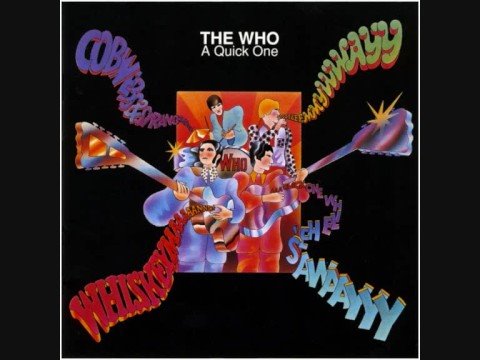
The inarguable beating heart of The Who’s discography is the run from “The Who Sell Out” (1967) through The Who By Numbers (1975). Across five albums—including “Tommy” (1969), “Who’s Next” (1971), and “Quadrophenia” (1973)—the group built an inimitable sound while pushing rock & roll to its aesthetic and conceptual limits. The album that comes just before that incredible run – the album that we’re celebrating today —is pretty often forgotten. It isn’t their barnstorming debut, it isn’t part of their iconic period, and it’s not part of their tragic decline. It’s just… there. “A Quick One” (1966) both foreshadows the band’s illustrious career and represents an alternate universe where they fizzle out on novelties and competent but not world-changing music.
When I first saw The Who perform on “The Kids Are Alright” movie soundtrack. The performance was electric. I liked the studio version but the live versions they push the song a little harder. The song didn’t chart being so long. The album “A Quick One” peaked at Number 4 in the UK charts. The hit song of that album was “Happy Jack”. “A Quick One” finds the song writing burden distributed throughout the band. This experiment might be the reason that this is not the band’s strongest record; some of the non-PeteTownshend tracks (particularly Keith Moon’s “I Need You” and John Entwistle’s two songs) could carry some more heft. “Boris the Spider” is fun, but Entwistle did much better later on. Still, stretching the band’s sound away from Maximum R&B through this song writing experiment helped set the stage for later work.
Speaking of experiments: “A Quick One While He’s Away” is a monster. It’s the one standout from “AQuick One”, the song that we can definitively say had a meaningful influence on The Who’s direction. A nine-minute track comprised of several shorter songs, the narrative experimentations that defined the band got a trial run here. Townshend found rock music capable of delivering something narrative and cerebral. You can also sense Townshend’s talents for combining seemingly disparate movements together, which would be perfected on “Quadrophenia”, in the abrupt-yet-satisfying transitions of “A Quick One While He’s Away.”
Of course, the definitive version of the song is not the recording on “A Quick One”, but rather the unhinged reading from “The Kids Are Alright” (1979), recorded in 1968 at the Rolling Stones Rock and RollCircus. Still, the studio version represents a massive leap forward for Townshend and a stepping stone toward the band’s career-defining experiments.
The Who had 10 minutes left to fill on the album. Kit Lambert, The Who’s manager, suggested to Pete Townshend that he write “something linear… perhaps a 10-minute song.” Townshend responded by saying that rock songs are “2:50 by tradition!” Lambert then told Townshend that he should write a 10-minute story comprised of 2:50 songs.
The song was a “mini-opera,” paving the way for the other mini-opera “Rael” and eventually full-length rock operas Tommy and Quadrophenia.
The plot of the story is simple. A girl is sad that her boyfriend is away. Her friends suggest that she take a substitute lover, Ivor The Engine Driver. When the boyfriend returns, she confesses her infidelity and is forgiven.
The Who performed this on the Rolling Stones Rock And Roll Circus, which was going to be a TV special. It never aired on television but it was released on VHS in 1996 and DVD in 2004. The Who’s performance of this was included in The Kids Are Alright, a 1979 film about The Who.
According to legend, Rock And Roll Circus didn’t air because the Rolling Stones felt that they were showed up by The Who. Jethro Tull, Taj Mahal, Marianne Faithful, John Lennon, Eric Clapton, and Mitch Mitchell all appeared on Rock And Roll Circus.
A live version of this song appears on Live At Leeds and the soundtrack for The Kids Are Alright.
The Who wanted to put Cellos on the track but Kit Lambert said they couldn’t afford it. So they sang “cello, cello, cello, cello,” where the Who thought they should go. >>
There are two other shining lights on “A Quick One”The first is “So Sad About Us,” a rollicking song that doesn’t sag momentum-wise like a lot of tracks elsewhere on the album. Here, The Who lean into that “Maximum R&B” sound that made them distinct from other blue-eyed soul acts like The Rolling Stones.
The song’s peak is a daring key change in the final seconds of the bridge, which creates massive tension right before a resolution in a final, joyous chorus. There’s not a lot of joy in The Who’s catalogue and finding it on a song called “So Sad About Us” makes it unpredictable and exhilarating. Criminally underrated, this track deserves to be thought of as one of the group’s early masterpieces, along with “I Can’t Explain” and “I Can See For Miles.”
The other crowning achievement is Keith Moon. We know that Moon is a standout drummer.
Happy 55th Anniversary to The Who’s second studio album “A Quick One”, originally released December 9th, 1966
The Who have announced a symphonic show at London’s Wembley Stadium on Saturday 6th July 2019.
Part of the band’s Moving On! tour, which also includes shows in North America in the summer and autumn, Roger Daltrey, Pete Townshend and co. will be joined by an orchestra at the special concert.
Alongside Daltrey and Townshend, The Who line-up will also feature guitarist/backup singer Simon Townshend, keyboardist Loren Gold, bassist Jon Button and drummer Zak Starkey. Together with celebrating The Who’s legendary back catalogue, the show supports their first new studio album in 13 years, which is due to land at some point in 2019.
The very special guest at the show will be Pearl Jam’s Eddie Vedder, along with Kaiser Chiefs and more acts to be announced.
Pete Townshend says: “The Who are touring again in 2019. Roger christened this tour Moving On! I love it. It is what both of us want to do. Move on, with new music, classic Who music, all performed in new and exciting ways. Taking risks, nothing to lose. Looking forward to seeing you all. Are you ready?” . Roger Daltrey adds: “Be aware Who fans! Just because it’s The Who with an orchestra, in no way will it compromise the way Pete and I deliver our music. This will be full throttle Who with horns and bells on.”
Tickets to The Who at Wembley Stadium go on sale from 10am on Friday 1st February. JULY 2019 London Wembley Stadium – Sat 6th







 The Fat Angel Sings