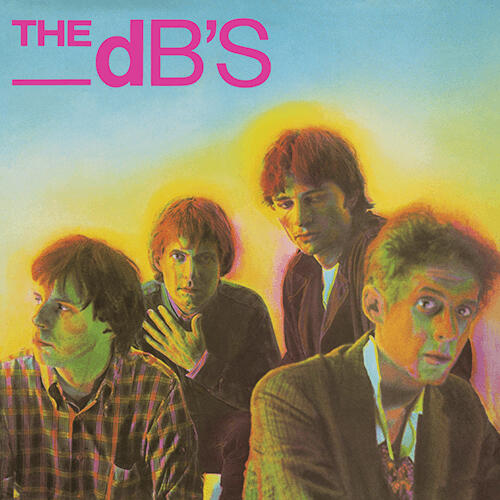
New Wave and power-pop greats The dB’s are releasing a double album of early demos, titled “I Thought You Wanted to Know”, that will be out October 15th via newly launched Propeller Sound Recordings. “What we have here are home and field recordings of the dB’s,” says the band’s Peter Holsapple. “Most of these tracks predate the release of “Stands for deciBels” by two to three years, and were the basis of the signing of the band to Albion Records UK in 1980.”
Many of The dB’s early classics are here in rawer form, with a few of them seeing the light for the first time ever; it’s also the first time most of them have ever been made available on vinyl. You can listen to the “NY Rocker Sessions” demo of “Bad Reputation” (which ended up on their 1981 debut)
dB’s member Chris Stamey just reissued The Robust Beauty of Improper Linear Models in Decision Making Vol 1 & 2 and is part of the upcoming live tribute to Big Star in NYC.
23 Tracks of Remastered Early Singles, Demos, and Live Recordings with insert or booklet.
“What we have here are home and field recordings of The dB’s. Most of these tracks predate the release of “Stands For Decibels” by two to three years and were the basis of the signing of the band to Albion Records (UK) in 1980. Some songs are being released to the public for the first time in this package. Now, almost thirty years after a number of these tracks first saw the light of day on Rhino Records, we find ourselves in the position of releasing the earliest of these selections from our archives to a whole new audience. It’s the first time most have been on vinyl. The live recordings were found after months of Chris sifting through a trove of ancient cassettes, and we are glad to be able to include these key songs from those early years.” – Peter Holsapple, The dB’s – Durham, NC – 2021
Bad Reputation (New York Rocker Sessions) · The dB’s Bad Reputation Holsapple Music / Lovolar Music BMI, admin. by Concord Music Publishing Released on: 2021-08-17
Really sad, heartbreaking news to report. Bobby Sutcliff of The Windbreakers has passed away tonight as Tim Lee posted. This breaks my heart. Not only was Bobby an amazing guy, but The Windbreakers (and his solo recordings) were cornerstones to my musical library. RIP Bobby – we love you and will never forget you!
Our heroes, The dB’S, are always lumped in with R.E.M. etc. in my truly humble opinion, R.E.M. can not even hold a candle to the shear brilliant songwriting of Chris Stamey and Peter Holsapple ! Their entire catalog can’t even stack to say Black and white or From a window. I am so pro Sneakers/dB’S/solo stuff it’s not even funny.
What we have here are home and field recordings of The dB’s. Most of these tracks predate the release of Stands For deciBels by two to three years and were the basis of the signing of the band to Albion Records (UK) in 1980. Some songs are being released to the public for the first time in this package. Now, almost thirty years after a number of these tracks first saw the light of day on Rhino Records, we find ourselves in the position of releasing the earliest of these selections from our archives to a whole new audience. It’s the first time most have been on vinyl. The live recordings were found after months of Chris sifting through a trove of ancient cassettes, and we are glad to be able to include these key songs from those early years. – Peter Holsapple, The dB’s – Durham, NC – 2021.
In the halcyon days of New York punk club CBGBs, there was a pinball machine located in the furthest corner away from the stage. In his memoir Spy In The House Of Loud: New York Songs And Stories, dB’s co-leader Chris Stamey remembers being drawn to that part of the room on the (frequent) occasions when the band on stage wasn’t quite as thrilling as legend would have you believe.
He wrote: “When a skilled player like Dee Dee Ramone nudged it just the right way, making all the lights go off at once, I would see that old pinball machine as a metaphor for what great rock records should do: trigger some kind of instant deep-brain response, bypassing the critical facilities, beyond analysis. Just neurons flashing all over the place… We wanted to shove the machinery. To make the lights flash off and on.”
In their initial burst of creativity, The dB’s managed to do that spectacularly well, two indie singles and a pair of UK-released 1981 LPs – “Stands For deciBels” and “Repercussion” – representing a dizzying synthesis of Television, fellow Southerners Big Star and their British Invasion heroes The Move. However, beyond the most fanatical outposts of the worldwide record shop archipelago, the guitar-and-vocals duo of Stamey and Peter Holsapple, bassist Gene Holder and drummer Will Rigby never gained much purchase, their lasting influence confined to fingerprints faintly discernible on the next generation of jangly US underground bands – REM, The Replacements, et al.
This new collection of low-budget recordings and rediscovered live material (parts of which were previously available on 1993’s Ride The Wild Tom-Tom set) captures The dB’s’ sketchy formative years, with their first low-budget A-sides – 1978’s (I Thought) You Wanted To Know, recorded with wayward Television guitarist Richard Lloyd, and the 1980 version of Holsapple’s breakneck Black And White steered by future REM co-producer Don Dixon – receiving their first official reissue. It captures a fleeting moment when The dB’s should have become power-pop contenders, and highlights the cubist twists and baroque underpinning that would condemn them to become one of the archetypal cult bands.
While they made their name in New York, all four dB’s came from Winston-Salem, South Carolina, where they had been playing in bands since the turn of the 1970s. Still teenagers, Stamey and Holsapple played alongside future Let’s Active kingpin Mitch Easter on a $1,000-valued home-released LP as Rittenhouse Square in 1972. An impatient jumble of The Kinks, Yes and Mountain, it’s not a record Holsapple plans to reissue. “It’s considered a collector’s item by people who have obviously never heard it,” he tells Uncut with a sigh. “Save yourself several hundred dollars and listen to it on YouTube.” Informed by Television, The Flamin’ Groovies and the (very local) success of Alex Chilton’s Big Star, Stamey and Rigby then came together to form Sneakers, who put out a quirky 1976 EP on Stamey’s own Carnivorous label (later renamed Car, and perhaps most famous for releasing Chris Bell’s I Am The Cosmos – the only solo record the ill-starred Big Star man put out in his lifetime).
All those years of gigging on the margins ensured that, by the time they started to rematerialise in New York in 1977, The dB’s had a command of musical dynamics that few of their DIY contemporaries could match. Their live version of The Beatles’ Tomorrow Never Knows on this new collection is a case in point, the foursome taking perverse delight in delivering a perfectly hand-whittled take of a song that owed its existence to tape manipulation and studio trickery.
Such old-school skills helped Stamey link up with Lloyd, who went uncredited on the glorious (I Thought) You Wanted To Know – recorded with Stamey, Holder and Rigby – because he was still under contract with Elektra. However, The dB’s were not quite a functioning outfit until Holsapple arrived – fresh from an unhappy spell in Memphis. Taking courage from the taut sound of Elvis Costello & The Attractions’This Year’s Model, the four-piece dB’s came on like a Ramones-paced ? And The Mysterians with occasional Van Der Graaf Generator time signatures.
(I Thought) You Wanted To Know shows that they cannibalised the odd song from members’ past lives (The Sneakers’ Let’s Live For The Day, and Death Garage”– the B-side of a solo Holsapple single, Big Black Truck, released on Car in 1978), but generally started afresh. Adopted by Alan Betrock, founder of New York Rocker, they recorded on four-track after hours in the magazine’s offices, but despite an abundance of killer choruses, never had much faith that the straight record industry would give them their due.
Stamey’s sardonic My Sire Wristwatch – never recorded in a studio but salvaged from a live tape – mocks a ‘new wave’ promotional item supposedly given away at a time when Seymour Stein’s label were trying to scrub the word “punk” from the musical lexicon, pointedly quoting their “new wave” slogan: “You better get behind it before it gets past you.”
However, their disdain for the dumbed-down music business conformity was married to a profound faith in what pop music could do. The dB’s were unashamed of their pre-revolutionary influences, performing loving covers of The Chambers Brothers’ Time Has Come Today and a Byrds-y take on Bob Dylan’s My Back Pages here, but they arguably had better songs of their own. The rough early versions of Holsapple’sBad Reputation and the Sister Lovers-style Nothing Is Wrong are glorious, while Stamey’s mastery of lopsided writing is underscored by the fact that he had enough A-material to abandon Everytime Anytime and Tell Me Two Times before The dB’s got to record a proper album.
With Betrock as nominal producer, The dB’s started recording Stands For deciBels in 1980, but were unable to find the funds to finish it off, management company-turned-UK label Albion ultimately picking the band up and making a quixotic attempt to break them in Britain. The label resorted to spectacular gimmicks to try and draw attention to Stands For deciBels (cassette copies came in a ludicrous tin can) and Repercussion (each copy came with a cassette sellotaped to the front), but good reviews never translated into sales.
Stamey quit, leaving Holsapple to lead the band through two further albums (Like This and The Sound Of Music) before he became better known as the unofficial fifth member of REM on Green and Out Of Time. The dB’s continue to kind of exist; the original lineup made Falling Off The Sky in 2012, while Goin’ To The Club from this record comes with a new Stamey vocal, and he says he would have prodded his bandmates into re-recording a few more of the tracks here were it not for the pandemic.
However, if that would have been interesting, the joy of the eavesdropped recordings on (I Thought) You Wanted To Know comes in the unvarnished edges. Listen carefully and you can hear the shape of the back rooms and half-empty venues where The dB’s spun gold. Both Holsapple and Stamey have mixed feelings about their singing on these recordings, but if the high harmonies on this version of Dynamite and the glorious What’s The Matter With Me? are not perfect, they encapsulate The dB’s’ delight in creating this spectacular music for the pure joy of it; all those flippers flapping, bumpers bumping, everything flashing at once.
The dB’s – “I Thought You Wanted to Know: 1978-1981” 23 Tracks of Remastered Early Singles, Demos, and Live Recordings
“To me, euphoria lives inside an electric guitar,”says Chris Stamey of his new Yep Roc release. “That’s a place I find freedom, passion, exhilaration: in the spaces between the notes, in the distance between the frets.”
“Euphoria” is a distinctly compelling entry in a body of work that already contains a startling amount of acknowledged classics and underappreciated gems. As solo artist and founding co-frontman of the seminal indie combo The dB’s, the North Carolina-bred singer-songwriter-guitarist has built a beloved and influential catalogue that’s earned him a devoted international fan base and established him as a godfather to the Southern alternative pop community.
Arriving on the heels of his widely acclaimed 2013 chamber-pop excursion Lovesick Blues and 2012’s long-awaited dB’s reunion album Falling Off the Sky, Euphoria finds Chris Stamey embracing his electric roots with an emotionally resonant set of rocking, melodically infectious, sonically bracing new tunes, with expansive arrangements incorporating horns and other unexpected sonic textures, and a supporting cast that includes Norman Blake of Teenage Fanclub, Pat Sansone of Wilco, Django Haskins of the Old Ceremony and longtime cohort Mitch Easter.
“I found these songs inside the same dilapidated old Silvertone lipstick guitar that I’d written my first records on,” Stamey asserts. “Maybe that’s why it sounds a bit like those records in some ways.”
While Euphoria‘s songs carry echoes of Stamey’s earliest work, they also explore some unfamiliar sonic and compositional territory. “The songs sound simple, but I’ve been listening to Gershwin and Cole Porter, and trying to use chord changes in places where, on other records, I might have used echo or mixing tricks,” he says. “On songs like ‘Where Does the Time Go?’ and ‘Make Up Your Mind,’ it seems like the parts repeat, but actually they’re shifting around all the time, with little modulations and variations. I’m finding new places to go.”
In addition to Stamey’s own memorable compositions, Euphoria‘s highlights include the rousing opening track “Universe-sized Arms,” a previously unreleased Ryan Adams composition that Adams suggested he record.
While the heartfelt “You Are Beautiful” ranks with Stamey’s finest ballads and “When the Fever Breaks” is one of his punchiest rockers, the propulsive “Rocketship” offers a tip of the hat to legendary punk progenitors the MC5, whose 1971 visit to Stamey’s hometown of Winston-Salem was a seminal event in the lives of those who witnessed it.
“I’ve grown very fond of the last several Wes Anderson movies,” Stamey notes. “I love how handmade and ‘auteur’ they look, and I wanted to make a record that sounded a bit like that. At the same time, my teenage daughter got a turntable and regularly spun some of the Beatles’ records, including Rubber Soul and Revolver, albums that I’d not paid much attention to when I was growing up but that now drew me in.
“That sound—of a few musicians working up a song and playing it together, leaving a little room for George Martin-isms to fill in the gaps—was very appealing to me,” he continues. “I liked how funky and natural it all sounded. A lot of modern records sound like they’re made by people wearing new, shiny clothes who are scripting in car crashes and Marvel superheroes and the Perfect Snare. But I wanted a T-shirt sound.”
To that end, Stamey assembled some longtime friends from Chapel Hill’s fertile musical community—Tony Stiglitz, F.J. Ventre, Wes Lachot, Matt McMichaels and producer Jeff Crawford—and did some literal woodshedding.
“We started rehearsing in a tiny old shack out in the woods, and I wrote some new songs so we’d have something to play together,” Stamey recalls. “Then we ran down the road to Mitch Easter’s Fidelitorium studio to cut tracks together as a band, with Mitch on guitar as well.”
Having already explored the possibilities of string and woodwind arrangements on Lovesick Blues, Stamey, using the Beatles’ Revolver as his inspiration, incorporates a horn section—including members of New York’s legendary Uptown Horns—throughout Euphoria, along with some “Tomorrow Never Knows”-style loops on the album’s title track. The latter element was drawn partially from a woodwind piece that Stamey wrote in his youth. That composition, like several other early classical pieces he’d written, was long thought to have been accidentally destroyed, but a recording of it resurfaced last year at the tail end of the master tape of the dB’s’ 1978 debut single “If and When.”
Euphoria‘s birth cycle also found Stamey reacquainting himself with another early source of inspiration. “I was joyfully reunited with my old family piano, a Steinway baby grand that I’d first played when I was six,” he explains. “‘Make Up Your Mind’ and ‘Where Does the Time Go?’ both came from this beloved instrument.”
For the wistful, bittersweet “Invisible,” Stamey, seeking to capture a classic Winston-Salem sound, reunited Easter and Let’s Active drummer Eric Marshall, with Stamey playing bass.
The sense of discovery and adventure that energizes Euphoria is a consistent thread that runs through Stamey’s expansive catalog, which he began assembling while making avant-garde home-recording experiments in his teens. Those early efforts set the stage for obscure, but ultimately influential, independent releases with his early outfits Rittenhouse Square (with his future dB’s bandmate Peter Holsapple) and Sneakers (including dB Will Rigby and future Let’s Active leader Mitch Easter).
Moving to New York at the dawn of the ’80s, Stamey launched his own pioneering indie label, Car Records, and he played bass in Alex Chilton’s band, before making a pair of now-classic albums, 1981’s Stands for deciBels and 1982’s Repercussion, with The dB’s. He then began turning out a series of personally charged, musically adventurous gems including It’s A Wonderful Life, Instant Excitement, It’s Alright, Fireworks, his 2004 Yep Roc debut Travels in the South and the holiday-themed Christmas Time.
The Stamey oeuvre also includes a pair of duo albums with Peter Holsapple, Mavericks and Here and Now, and A Question of Temperature, on which he was backed by Yo La Tengo. He’s also worked as a sideman with the likes of Bob Mould and the Golden Palominos.
Stamey has also produced and recorded a wide variety of artists at Modern Recording, the Chapel Hill studio that he’s operated for the past two decades, including recordings by the likes of Whiskeytown, Alejandro Escovedo, Flat Duo Jets, Le Tigre and Tift Merritt.
Since 2010, Stamey has also been the musical director and orchestrator for a series of all-star international concert performances of Big Star’s classic album Sister Lovers aka Third, with a rotating musical cast that includes BigStar’s Jody Stephens as well as members of the Posies, R.E.M., Teenage Fanclub, Wilco and Yo La Tengo.
Prestigious as Stamey’s resume is, Euphoria makes it clear that the veteran artist is presently making some of the most vital and expressive music of his career.
“A lot of people who’ve heard this album have expressed the opinion that it’s very much a Winston-Salem album, and I can definitely hear that,” Stamey says, adding, “To me, these songs really lend themselves to be played live, and I’m really looking forward to doing that.”
Ork Records: New York, New York without the Velvets it’s clear that Ork Records, a label began by TerryOrk and guided into temporary sustainability by Charles Ball, would never have been. Numero Group drops Ork’s entire run onto 4LPs or 2CDs, opening with Television’s majestic debut “Little Johnny Jewel” and offering Richard Hell, Alex Chilton, dB’s, Lester Bangs, Cheetah Chrome, and more. The aborted Feelies 45 is an utter gem, “Fa Cé La” seeming birthed from VU’s “I Heard Her Call My Name.”
In the beginning there were three record labels putting out music from America’s burgeoning punk scenes. There was Bomp Records In Los Angeles, Titan in the midwest, and, in New York City, Ork Records.
Ork was founded by Terry Ork (born William Terry Collins) in 1975. Described by Patti Smith Band member Lenny Kaye as a “cherubic individual”, Ork had moved from California to New York as part of Andy Warhol entourage at the Factory , helping out on Warhol’s films, He hung around the Factory until he was escorted out of the building under a cloud of suspicion of selling black market copies of Warhol’s screenprints.
In need of a job, Ork went to work at the Cinemabilia bookstore, where he met punk pioneer Richard Hell. Despite having no experience, soon afterwards Ork started managing Hell’s band, Television . “He didn’t come from the rock’n’roll world, but he was definitely enjoying his entrance into it,” says Kaye.
“Terry definitely had a tremendous amount of charisma,” says Jane Fire, whose band The Erasers is featured on a recently-released Ork records retrospective box set. “He had kind of a worldliness about him. He just was cultured. I mean, he could talk to you about Jean Genet and the Ramones . He was just as versed in both things.”
Before launching his record label, Ork was already a regular at CBGBs, well known on the scene – enough to feature in the 2013 film CBGB , where he was played by The Big Bang Theory’s Johnny Galecki.
“I began hanging out at CBGBs with Patti Smith on Easter of 1974,” says Kaye. “That was the first time that we saw Televsion. I met their manager Terry Ork.”
Kaye noticed that Ork wasn’t a stereotypical band manager, but was more interested in helping the band achieve their purpose more than profits. It’s an ideology he carried over into his record label, Ork records, which was eventually buttressed by his partner, Charles Ball, and two Hasidic men known as “the Hats” who helped finance the record label by, it was rumoured, dealing drugs.
“Ork records began as a way to present some of the local bands that CBGBs featured,” said Kaye. “Looking at the box set, it surprises me how deep their musical sensibilities went.” CBGBs was the crucible for a lot of mould-breaking bands the Ramones, Blondie, Talking Heads – but while Ork released tracks by more well-known acts like Television, Richard Hell, the Feelies and Big Star frontman Alex Chilton, the bulk of their catalogue was made up of scratchy, trebly, energy-infused bands that never quite made it to that level of fame.
The likes of Cheetah Chrome, the Erasers, Marbles, Idols and Chris Stamey and the dBs were the more obscure bands of an already underground scene. “The scene was so much bigger than Blondie and Television and the Ramones,” says Fire. “A lot of these bands, I mean, I guess we fit in that category too, were so important to the scene, but never got their due. If Terry hadn’t been around, they may have been forgotten.”
The Numero Group, known for re-releasing back catalogues and out of print albums, stumbled on the story of Ork records when one of the owners, Rob Sevier , bought a few of the 45s released on the label and decided to collect the lot. His partner Ken Shipley soon caught the fever, too, and they decided to assemble Ork’s first full retrospective. Some of the songs hadn’t even been released, thanks to Ork’s flakiness about paying the studio bills. “This was like the first punk label in the world,” said Shipley. “Their sole mission was to document an emerging scene.”
And what a scene it was. “I don’t think we ever realized how amazing it was,” says Fire. “We had this loft and there were always these big parties whereAllen Ginsberg and Iggy Pop would come by and Johnny Rotten would stay at our house. But you don’t really realize what you’re in when you’re in the middle of it.”
Ork records sputtered to a halt in 1980, Ork fleeing to Europe and then Los Angeles. He spent time in prison for fraud, adopted a new pseudonym and edited a film magazine, finally dying of colon cancer in 2004. The NumeroGroup leapt at the chance to allow his label to reclaim its place in history. However, as excited as they were to unleash Ork’s musical vision on the world (again), Shipley and Sevier had their work cut out.
“Terry Ork is dead, and he didn’t marry, he didn’t have any children, how are we going to do this?” said Shipley. “There’s no paperwork here, there’s no contracts. This isn’t what they did.” Without any other option, Numero set out to contact every artist who had released music on Ork to find out what it would take to re-release the songs.
“We felt like Richard Hell, Television and the Feelies were going to be the biggest stumbling blocks, and it was a good thing that we approached them first because the Feelies took the longest to coming around,” said Shipley. Hell told them he would participate, but only if they got every other act on board. ”We kind of gambled, and said OK, we have to get everybody,” said Shipley. “And if we have to get everybody, let’s get everybody. We started finding people who were just tertiarily involved with the scene.”
Because of the type of reissues that they do, Numero Group is used to doing a fair amount of detective work. “We use the same computer systems that they use to find deadbeat dads and credit card debtors,” says Shipley.
They hit the motherlode when they got in touch with the owners of an Ithaca, New York, record store called AngryMom Records. “He had bought the contents of a storage space that belonged to Terry Ork’s partner Charles Ball, and in there came lots of records, but more importantly, all the paper,” said Shipley.
As the project’s scope became apparent, the partners threw themselves into it, sometimes at a risk to their own business relationship. “We fought about the sequence. We fought about the art, we fought about everything. Just because when you really love something, you want it to be perfect,” said Shipley.
It took Shipley a year to write the book that accompanies the box set. “It’s 190 pages, and it’s close to 70,000 words,” he says. The book and the musical retrospective offer a portrait of a man, Ork, while shining a new light on New York’s punk scene. “The story has never been told,” said Shipley. “All these people are only getting older, some of them are dead. If you don’t tell it right now, there’s never going to be an opportunity to tell it.
“It’s not about the Ramones and it’s not about Blondie and it’s not about Talking Heads. They already have their own legacy sealed up,” said Shipley. “This is like there’s this world that existed after dark and, it was gone like that [snaps]. And the story that’s inside of them – this is the account. It will be here forever. We set it down.”
“I really believe that they helped document a very important scene and made it real,” said Kaye.
CBGBs may be a clothing store now; the Bowery has some of the most expensive real estate in Manhattan; and the Ramones may be on T-shirts sold at Urban Outfitters, but thanks to Numero, Ork records won’t be forgotten, which is good news for those who knew and loved Terry Ork. “He deserves that,” said Fire. “At least that.”
Ork Records Box Set is out now on Numero Group.
Patti Smith’s independent debut “Piss Factory” came out in 1974; the following November, manager Terry Ork put out Television’s first single, “Little Johnny Jewel”, on his own label. They were the first flowerings of the New York renaissance.
By 1976, big labels had carved up the CBGBs underground; Television went to Elektra, Patti Smith to Arista, Talking Heads joined the Ramones on Sire, Blondie went to Private Stock and then Chrysalis. It was a feeding frenzy that drew aspiring oddballs to the Bowery in droves.
For a few months between 1976 and mid-1977, Ork – the scene’s only active independent – had their pick of the new arrivals, snaring Richard Hell & The Voidoids, Alex Chilton, a pre-dBs Chris Stamey and The Feelies among others. This lovingly assembled, 49-track collection pieces together the projects – completed, abandoned and otherwise – that Ork helped to instigate, as the hustler-cum-superfan and sometime business partner Charles Ball seized their moment.
He completed the wiring of Television by introducing Cinemabilia employee Hell and Tom Verlaine to his leechy flatmate, guitarist Richard Lloyd (“There was a great love between us,” Lloyd remembered of Ork. “For him it was romantic, for me it was platonic”). Ork managed Television until their ascent demanded a more astute approach, but he kept busy, releasing the American version of Hell’s “Blank Generation” EP, before finding one member of bowl-cutted power-poppers the Marbles working at Cinemabilia, and making 1976’s gloriously feeble “Red Lights” his third release.
Excited by some audio verité demoes recorded in Memphis by journalist-turned-producer Jon Tiven, Ball and Ork hauled Alex Chilton up to their studio of choice ¬ Trod Nossel in Connecticut – to put down the five tracks that make up 1977’s surly “Singer Not The Song” EP. Chilton’s stag-horned “Free Again” and the excitable “TakeMe Home And Make Me Like It” are deliriously grubby, though his excitable whoop of “call me a slut in front of your family” on the latter seemed a little far-fetched; so poor during his couch-surfing year in New York that for a while he did not even own shoes, AlexChilton was in no state to be introduced to anyone’s parents.
Almost as an afterthought, Ork simultaneously put out “Girl” by Tiven’s band Prix – a delicious analogue to Chris Bell’s Big Star contributions. Tiven was not destined to be Chilton’s new musical foil, though, his time as a sideman ending when the singer tried to stub a cigarette out in his face. Stamey had a much more successful dalliance with the ex-Box Top, Chilton helping piece together the North Carolina moptop’s skinny-tie thunderbolt “The Summer Sun” – the final Ork release of 1977.
With the label momentarily buoyant, a major-label distribution deal was sought, but Ork and Ball’s failure to snare one meant a raft of projects were mothballed. A Rolling Stones tribute LP vanished without trace, and tapes of The H-Bombs – featuring Stamey’s future dBs foil Peter Holsapple – and Lester Bangs were farmed out to other labels. A first release from New Jersey’s splendidly uptight Feelies also went begging, the frenetic version of “FaCe La” here canned at the band’s request, though the song resurfaced as their Rough Trade debut two years later.
Ork, meanwhile, enlisted new financial backers – Hassidic Jews with decidedly unorthodox heroin habits. “LittleJohnny Jewel” was repressed as a 12”, but the reactivated label evidently found the CBGBs waters of 1979 much over-fished. Ork’s final releases featured uninspiring cock-rock from the Idols – featuring ex-New York DollsArthur Kane and Jerry Nolan – and unremarkable one-offs from the Revelons and the Student Teachers. The last Ork release – former Dead Boy Cheetah Chrome’s “Still Wanna Die” – was an Iggy Stardust glam-punk classic, much undermined by an incongruous flower-power sleeve.
“I like Terry,” Verlaine said in 1979, showing uncommon generosity as he summed up Ork. “He has no business sense, but he’s a great guy.” At the bottom of the rear sleeve of Television’s era-defining Marquee Moon is a note reading: “This album is dedicated to William Terry Ork.” Like this collection, a small credit where it was due.
EXTRAS 8/10: A pleasantly bitchy book gives all Ork acts their due, a raft of rare tracks completing the picture. Prix offcuts are essential listening for Big Star fetishists, while unreleased Ork singles by Patti Smith-worshippers the Erasers, and angry loner Kenneth Higney feature, along with both sides of Link Cromwell’s“Crazy Like A Fox” – the 1966 Brit-invasion knock-off voiced by Patti Smith Group guitarist Lenny Kaye, which was re-circulated by Ork. Another discovery is the first version of Richard Lloyd’s sparkly “I Thought YouWanted To Know”, later re-voiced and released by Chris Stamey on his Car label when it emerged that the object of Ork’s affections was still under contract at Elektra.
Ork Records: New York, New York Track List:
1. Television – “Little Johnny Jewel”
2. Feelies – “Fa Ce La”
3. Richard Hell – “(I Belong to the) Blank Generation”
4. The Revelons – “The Way (You Tough My Hand)”
5. Erasers – “I Won’t Give Up”
6. Alex Chilton – “All of the Time”
7. Chris Stamey and the dBs – “(I Thought) You Wanted to Know”
8. Prix – “Zero”
9. Marbles – “Red Lights”
10. Alex Chilton – “Take Me Home & Make Me Like It”
11. Prix – “Girl”
12. The Idols – “Girl That I Love”
13. Mick Farren and the New Wave – “Lost Johnny”
14. Cheetah Chrome – “Still Wanna Die”
15. The Idols – “You”
16. The Student Teachers – “Christmas Weather”
17. Erasers – “It Was So Funny (The Song That They Sung)”
18. Richard Hell – “(I Could Live With You) (In) Another World”
19. Chris Stamey – “The Summer Sun”
20. Alex Chilton – “Free Again”
21. Richard Lloyd – “(I Thought) You Wanted to Know”
22. The Student Teachers – “Channel 13”
23. Chris Stamey – “Where the Fun Is”
24. Prix – “Everytime I Close My Eyes”
25. Feelies – “Forces at Work”
26. Marbles – “Fire and Smoke”
27. The Revelons – “97 Tears”
28. Cheetah Chrome – “Take Me Home”
29. Richard Hell – “You Gotta Lose”
30. Chris Stamey and the dBs – “If and When”
31. Mick Farren and the New Wave – “Play With Fire”
32. Richard Lloyd – “Get Off My Cloud”
33. Alex Chilton – “The Singer Not the Song”
34. Richard Lloyd – “Connection”
35. Alex Chilton – “Summertime Blues”
36. Mick Farren and the New Wave – “To Know Him Is to Love Him”
37. Link Cromwell – “Crazy Like a Fox”
38. Link Cromwell – “Shock Me”
39. Kenneth Higney – “I Wanna Be the King”
40. Lester Bangs – “Let It Blurt”
41. Alex Chilton – “Bangkok”
42. Peter Holsapple – “Big Black Truck”
43. Prix – “She Might Look My Way”
44. Alex Chilton – “Can’t Seem to Make You Mine”
45. Prix “Love You All Day Long”
46. Alex Chilton – “Shakin’ The World”
47. Prix – “Love You Tonight”
48. Lester Bangs – “Live”
49. Kenneth Higney – “Funky Kinky”






 The Fat Angel Sings