Posts Tagged ‘SST Records’

Hüsker Dü

If there’s one word that describes Hüsker Dü it’s speed, whether that’s found in the ferocity of their earliest songs, the amphetamines charging through their veins, or the fact that their whole body of work including seven albums from the live freakout Land Speed Record through to their swansong Warehouse: Songs and Stories – was released between 1981 and 1987.

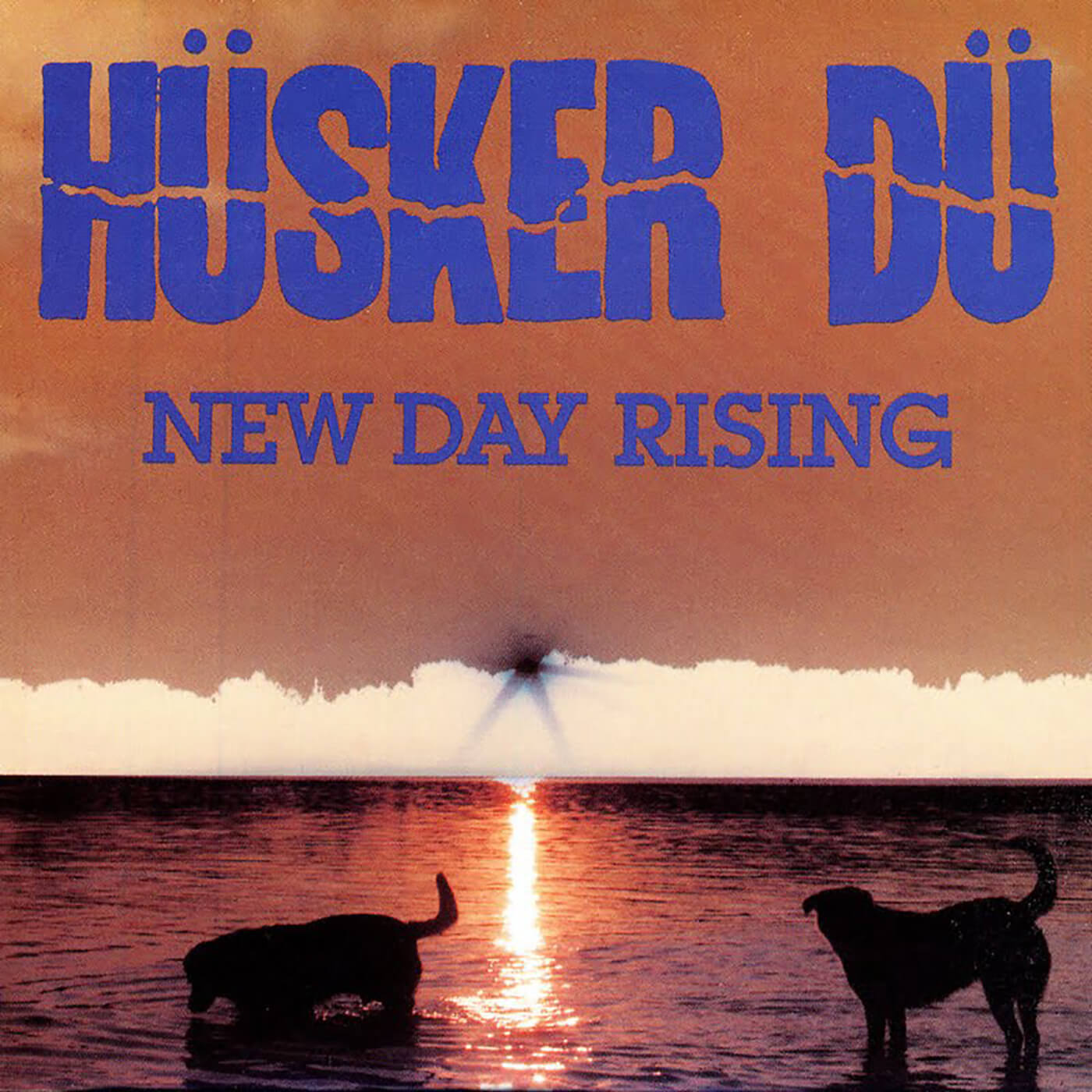
But amid this breakneck charge, one flex perhaps best sums up their power as a group: “New Day Rising” emerging blinking into the light in January 1985, only six months after Zen Arcade had blown hardcore up from the inside.

Zen Arcade was an album with a sense of scope that bled beyond its borders, a blockbuster nightmarescape that pushed Bob Mould, Grant Hart and Greg Norton as artists—not just punk kids out of the Twin Cities across four sides of vinyl. Shifting perspective again, New Day Rising was about refinement, and drilling down into the melodic smarts that allow us to view Hüsker Dü as a cornerstone of modern indie-rock. “I’m really glad New Day Rising was done and dusted before Zen Arcade really started to resonate,” guitarist-vocalist Mould wrote in his autobiography. “Can you imagine if we hadn’t had another record ready? We’d have been sitting around with the earth shaking underneath us, trying to get settled and centred enough to make another strong album but instead we struck while the iron is hot.”

Hüsker Dü’s music was always driven by tension – between Mould and drummer-vocalist Hart as songwriters, between the band and their label, SST Records, between the band and their hardcore purist fans, who were always one step away from crying sellout – and New Day Rising was no different.

With a power struggle ongoing between the trio, who sought to self-produce the LP, and SST’s in-house engineer Spot, who was forced upon them by the cash-conscious label, that tension is welded to the presentation of the songs. They’re scratchy and raw, washed out at times. They’re imperfect, just as Mould and Hart began to reach for pop-punk perfection with cast-iron classics such as “I Apologize” and “The Girl Who Lives on Heaven Hill”.

“They were kind of working from within a classic pop structure,” Spot told Michael Azerrad in Our Band Could Be Your Life. “And doing something else with it. Kind of like they broke into it with a coat hanger and got the keys out and went on a joy ride. And then wore the tires out.”

It’s entirely thrilling to see Mould, in particular, figure out what he’s capable of almost in real time. Celebrated Summer, from its coruscating, infinitely catchy riff through to its runaway train of a hook and pensive acoustic break, is close to a perfect encapsulation of the elements that would sustain a 40-year career. But Hart’sTerms of Psychic Warfare” – a wonderfully wonky, quasi-Stones styled pop-rocker – is just around the bend and shows him in lockstep with his bandmate.

The garbled jangle of Perfect Example is Mould finding the willingness to take his foot off the pedal, and also a snapshot of the drinking habit he carried throughout recording. “I was coming to the end of my drinking time and was realising I wasn’t the easiest person to be around at times,” . “I could be a fully functioning yet contrary alcoholic at 23 or 24. So songs like “I Apologize” are clearly me feeling like a bad young man, like I should apologise globally for something I probably did but was not fully aware of because I was drunk a lot.”

At this point Mould was playing Ibanez Flying Vs, with his graduation to Fender Strats still a few years down the road at the start of his solo career. A relic from this era also turned up on his searing 13th solo record Blue Hearts: a reissue ‘65 silverface Fender Deluxe. “That adds a lot of the constant, upper-mid saturation that you’re hearing on the record,” he told us last autumn.

New Day Rising was another outsider hit, and a line in the sand for Hüsker Dü. They’d put out three more records in their last two years together, with the (finally) self-produced Flip Your Wig released in September ’85. An almost faultless missive from the nascent indie-rock scene, it pushed the melodic envelope even further and set the table for their divisive decision to jump to a major for 1986’s Candy Apple Grey.

https://www.youtube.com/watch?v=utyjfINKbSM

Eventually, addiction and infighting swallowed Hüsker Dü whole and they folded with more acrimony than ceremony in 1987. Mould got into acoustic writing with Workbook and ignited a power-pop renaissance with his band Sugar as the 80s ticked over into the 90s.  In 1994, he came out as gay in a article. “The army’s credo was ‘don’t ask, don’t tell,’” he told the Guardian last year. “In hardcore, it was ‘don’t advertise, don’t worry.’ I had a handful of casual encounters with guys on the road. But it was a community of misfits, and mostly no one cared what you did behind closed doors. 

Grant Hart and Norton also pursued their own careers, with Hart’s 1988 2541 EP tracing its roots back to writing sessions for New Day Rising. He’d later play with the underrated Nova Mob and release a run of solo records. After years of animosity and backbiting, Hüsker Dü’s three members patched things up long enough to work on the exceptional early years archive release Savage Young Dü, which was released only weeks after Hart’s death from liver cancer in September 2017.

The Band:

  • Bob Mould – vocals, guitar
  • Grant Hart – vocals, drums
  • Greg Norton – bass
Hüsker Dü - New Day Rising

To quote the Bandcamp description, “The slow-burn sounds of Sonic Youth’s 1986 rehearsals to score Ken Friedman’s spooky highway film Made In USA are yet another mile marker in the band’s long and varied existence, now being issued as “Spinhead Sessions” (named for the North Hollywood studio used by SST label acts like Black Flag and Painted Willie). These jams were later built upon for a full-on (and quite different) soundtrack production, but the rough sketches here find the band taking time with truly new and introspective sound worlds.

It was basically a brand new way of working for Sonic Youth, albeit a challenging one, under the auspices of major Hollywood film production overlords, routing their way into the world of soundtrack scoring. And it all comes at a key time and place.”

http://

Recorded at Spinhead Studios, North Hollywood, CA 1986 during soundtrack rehearsals for the film “Made In USA” are yet another mile marker in the band’s long and varied existence, now being issued as the Spinhead Sessions  These jams were later built upon for a full-on (and quite different) soundtrack production, but the rough sketches here find the band taking time with truly new and introspective sound worlds. It was basically a brand new way of working for Sonic Youth, albeit a challenging one, under the auspices of major Hollywood film production overlords, routing their way into the world of soundtrack scoring. And it all comes at a key time and place.
1986 was a transformative year for the band in many ways. The gravitation to the beloved SST stable, in addition to Steve Shelley, now drumming, certainly gave Sonic Youth a renewed vigour and vocabulary. They were already an international touring machine, and gaining considerable steam with critics (even spinning the heads of detractors who had dismissed their arty downtown boho  sensibilities prior to ’86’s Evol). Their cultdom with fans had concrete roots by this point, and the influences that were swarming in the band’s orbit marked an exciting time, where almost any trajectory seemed possible, and they were going for it.
Friedman’s film worked on a relatively darker frame for a mainstream Hollywood flick; characters played by stars Chris Penn and Adrian Pasdar made a cross-country journey that started out in Centralia, Pennsylvania, a real-life, anthracite coal producing town that had to relocate all its residents due to a decades-long, inextinguishable underground fire. The Sonics passed through this haunted-looking locale on their next tour after the sessions, and are pictured on the sleeve standing amidst smouldering embers. For the sounds they made at Spinhead, this image seems a fitting mental picture. Guitar harmonics billow like smoke, heavily reverbed drumming and shimmering cymbals echo from what sounds like the bottom of a deep mine.

This newly born Spinhead Sessions release once again defines Sonic Youth in a raw and engaging state of discovery at a terrific time. Is it a missing link between the complex, crafted cavernosity of Evol and the frayed-electric powerline sizzle of Sister? Yes and no. It’s an entirely unique animal, a meditative album where you can soak in the template of tapping overtones, sedate explorations of new chords, even sounding at times like AMM trying to play the VU’s Sweet Sister Ray bootleg or something similar.
It’s trademark Sonic Youth at the core, and in an unfettered, dreamy state and time, there and gone like smoke.

The story was a dark, somewhat politically pointed road movie. We watched the film a few times and set up a rehearsal/demo situation at the now legendary (and defunct) Spinhead Studios in the San Fernando Valley. This studio was the home to a lot of music generated by the SST record label (Black Flag, Painted Willie, etc.). We found ourselves constructing spindly, twisting rhythms and quiet rushes of noise and melody. We also blasted out some straight-ahead Mac-truck rock riffs. Anything to fit the film’s “mood.”
Thurston Moore

Originally released June 17th, 2016

Among his best-loved (and best) solo statement was “2541,” a ballad from 1989. Grant Hart chronicles the gritty details of moving apartments after a breakup – picking up the keys, putting the names on the mailbox, hoping this time will be different. The end is devastating in a casually quotidian way: “I’d say the situation’s reversed/And it’s probably not the last time I’ll have to be out by the first.” It’s a song that sums up everything that made Grant Hart one of a kind – and a song that sums up why he is mourned and celebrated today. Rest in peace, Grant Hart.

From the Intolerance CD-SST Records 1989.

One of the best moments for any music fan is the discovery of a band or artist with a long, rich body of work. In addition to obviously offering tons of music, massive discographies are often stylistically compelling and offer the fodder of debate among friends and fellow music nerds.

However, which record should a new fan start with? Does an artist’s often uncorrupted debut offer the purest example of their sound? Are oft-cited classics the best first step, or do they offer a difficult path for newcomers to tread?

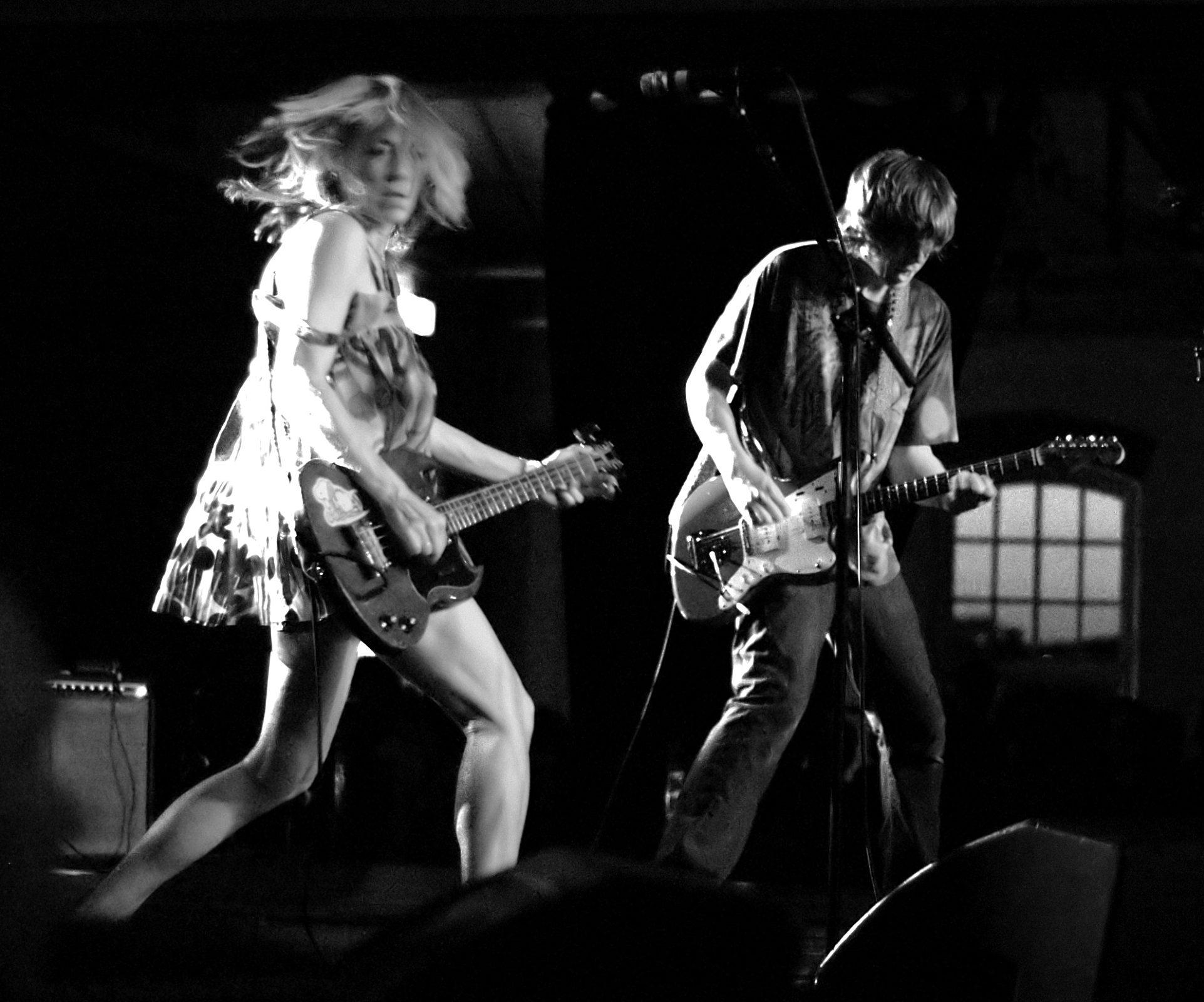
This influential noise rock band is on hold due to the marital separation of frontman Thurston Moore and bassist Kim Gordon. Other than being alt-rock icons, this extremely talented four piece released several fantastic albums of beautiful guitar clanging clamor over their 30-plus career together. Sonic Youth constantly toed the line between accessibility and ambition, which is why starting with 1987’s pre-fame Sister is perhaps the best for newcomers. Sister, released on iconic punk label SST Records, captured the band’s developing knack for melting pop melodies between slabs of abrasive noise rock. Further, Moore’s fascination with hardcore resulted in a full speed ahead energy on several cuts, like punk ravers “I Got A Catholic Block” and “Stereo Sanctity.” Elsewhere, the slow burning punk power ballad “Kotton Krown” remains one of Sonic Youth’s finest recorded moment.

One of the best moments for any music fan is the discovery of a band or artist with a long, rich body of work. In addition to obviously offering tons of music, massive discographies are often stylistically compelling and offer the fodder of debate among friends and fellow music nerds.

However, which record should a new fan start with? Does an artist’s often uncorrupted debut offer the purest example of their sound? Are oft-cited classics the best first step, or do they offer a difficult path for newcomers to tread?

With these questions in mind, we’ve selected one album from eights artists who boast towering, intimidating discographies of at least 13 albums or more. These eight acts are not only enormously prolific, but also fairly consistent, with no single album serving as “the” career definer (sorry Ryan Adams fans). Check out these entry point albums below.