Posts Tagged ‘Omnivore Recordings’

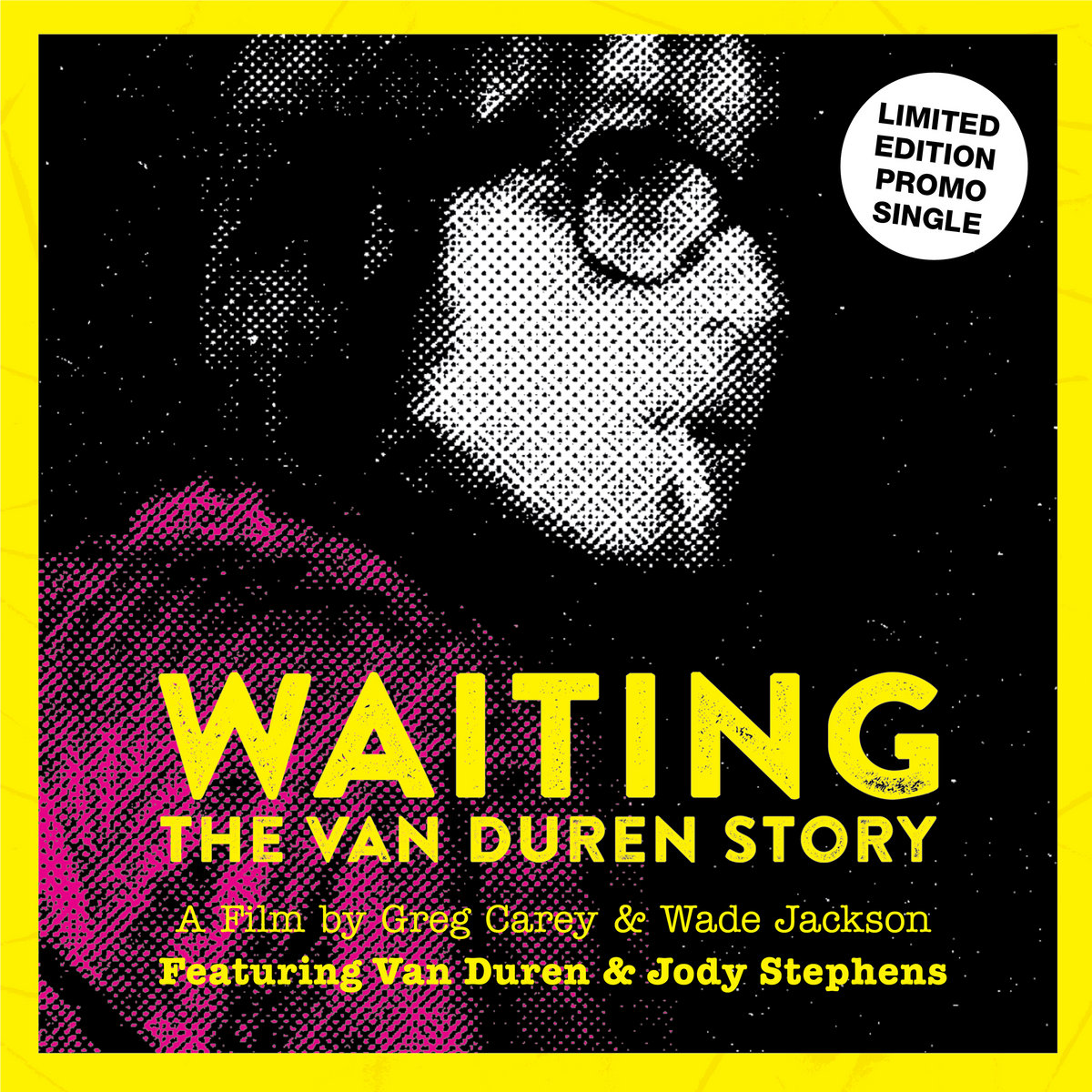
Memphis power pop cult hero and Big Star contemporary Van Duren is the subject of the new documentary “Waiting”, and Omnivore has the companion CD soundtrack!  Featuring Van Duren favorites and previously unreleased tracks (including one recorded live at Ardent Studios in 1981 and one with Big Star’s Jody Stephens from 1975), the soundtrack boasts new liner notes from the artist.  All tracks are original masters (no re-recordings).  Look for Waiting – The Van Duren Story is out today on vinyl

“I’m not one of those people who dwells on the past very much” isn’t the first thing you expect to hear from a man whose 1978 debut album is at the center of a new documentary. “That was the strange part to me, to celebrate something that happened 40 years ago,” says Van Duren about Are You Serious?, the record that commands the undying affection of ’70s power pop obsessives, but has otherwise slipped between history’s cracks. Wade Jackson and Greg Carey’s film Waiting: The Van Duren Storyand its soundtrack album, however, aim to right that wrong.

In the first half of the ’70s, Duren was one of the most promising talents on the Memphis rock scene, along with power pop compatriots Big Star. He was even invited by Big Star drummer Jody Stephens to audition for the band after singer/guitarist Chris Bell’s departure, though the match was somewhat star-crossed. “It was a disaster,” Duren rather less diplomatically recalls. “I wasn’t a lead guitar player. Jody thought my vocal abilities and songwriting would really help the band in the direction he wanted to go. Meanwhile, they were cutting [dark, offbeat album] 3rd, which obviously had nothing to do with anything that I’d ever jump in on.”

Nevertheless, Duren seemingly never left Stephens’s mind. “When Big Star was kind of crumbling, he reached out to me and asked me if I wanted to do something,” remembers Duren. At Memphis’ legendary Ardent Studios, the pair cut demos of several Duren tunes. With famous admirers like Rolling Stones manager Andrew Loog Oldham in his corner, Duren eventually cut a deal with a tiny label out of Connecticut and released his debut, Are You Serious?, in 1978.

The record introduced a man with a plaintive voice and an unerring knack for the almighty hook. The stomping riffs of “Chemical Fire,” the yearning piano balladry of “Waiting,” and the McCartney/Rundgren vibe of the pumping pop-rocker “Grow Yourself Up” reveal an artist already fully matured in his mid-20s, bouncing off the same basic musical touchstones as his Big Star buddies but processing his influences in an utterly personal way. Though it earned some great reviews, it pretty much sank into obscurity, and when the follow-up album was scuttled in 1980 due to acrimonious label relations, Duren’s promising career seemed to flame out.

“It was a very dark situation and it was very tough to get through that,” says Duren. At that point, he pretty much dropped below the radar of the wider world. Some three and a half decades later, Sydney singer/songwriter Wade Jackson and his friend Greg Carey discovered Are You Serious? by accident. “It was everything I love about music,” says Jackson. “I was completely hooked; within a week, that was all I was listening to. I heard Big Star in there, I heard Todd Rundgren, and McCartney of course, I also heard that Emitt Rhodes thing, and I just felt like it was exactly what I was looking for. And the delivery of the vocal, I think, is so genuine. There’s something about the desperate delivery that I love. It’s very real, in my opinion.”

Jackson and Carey were so flabbergasted they decided they had to tell Duren’s story in a documentary despite having zero film experience, learning as they went. “Being so naïve about how it all works is probably what got me through it,” Jackson says.

But Duren’s been burned enough to operate from a place of caution when people approach him about his music. “Every now and then people reach out to me on social media,” he says, “and I’m pretty wary of it because many times it doesn’t go well, for whatever reason.” Consequently, he remained guarded when first-time filmmakers Jackson and Carey first emailed him from Australia. “It took a couple of months for Van to want to chat with us on the phone,” confirms Jackson. Over time, though, the well-intentioned Aussies earned Duren’s trust, and came to Memphis to meet him.

They eventually learned that while Duren never earned national attention, he never quit recording and performing. In the ’80s he formed Good Question, earning regional renown. “We started in August of ’82 and the band ran for 17 years,” Duren says. They released two albums and had a local hit with “Jane.” “Good Question almost immediately became one of the most popular live bands around here,” Duren remembers. “We worked all the time. It was the first time in my entire career I worked enough to actually go in the black.”

http://

After the band’s breakup in 1999, Duren kept working, releasing duo albums with fellow Memphian power pop hero Tommy Hoehn, as well as subsequent solo records and collaborations with others. “It was a real shock, to be honest,” says Jackson about learning of Duren’s post-’70s output. “It was great to hear that he’d never given up on writing tracks and releasing albums. We like to call it the music disease—once you’re struck with it, it’s there to stay.”

Hidden in plain sight, Duren paradoxically wasn’t even well-known enough to really be considered a cult hero. “In my experience,” he explains, “if you can rise to the level of what they call ‘obscure,’ then that’s some level of success. You do it because you feel compelled to do it, and it’s not because you’re trying to please anybody else.”

Jackson and Carey’s film is a compassionate portrait of Duren’s rocky road through the music business, and even the buzz over its first few festival appearances has already brought Duren more attention than he’s had in decades. Equally important is the release of the soundtrack album, containing early Duren gems, Good Question material, and even one of those Duren/Stephens demos.

Boutique reissue label Omnivore, renowned for its Big Star-related releases, turned out to be the perfect home for Duren’s music. “They did such a wonderful job,” Duren enthuses. “The mastering on that soundtrack album is phenomenal. Never in my wildest dreams would I think that those recordings would sound like that.”

Jackson and Carey helped facilitate not only the soundtrack’s release, but a publishing deal for Duren with Australia’s Native Tongue Publishing, as well. “It’s excellent for Greg and I,” says Jackson, “because we were so heads-down in this project we’d sometimes go, ‘Is the music as good as we think, or are we going crazy?’ Having a great label like Omnivore and a great publishing company like Native Tongue get behind it [we feel like], ‘Yeah, we’ve done the right thing.’”

The film’s sold-out premiere at the Indie Memphis Film Festival on November 3rd, 2018—complete with a five-minute standing ovation at the end—was a full-circle moment for Duren. “It was really heartwarming and very surprising to me,” he says. “After the showing we walked across to a different theater where we had set up for a live performance, and we did about a 45-minute set of songs from the film with a band, including my son on drums.”

Full theatrical releases for both Australia and the U.S. are in the works for the film. Duren’s future plans include recording new songs and taking his live show to audiences beyond his hometown. “I’m very grateful to Wade and Greg for finding me,” admits the once-wary songsmith, “because I wasn’t looking for this, I didn’t seek it out. That made it very pure to me, very honest. I’m grateful for that more than anything. Meanwhile, forward. There’s more to come, absolutely.”

Van Duren

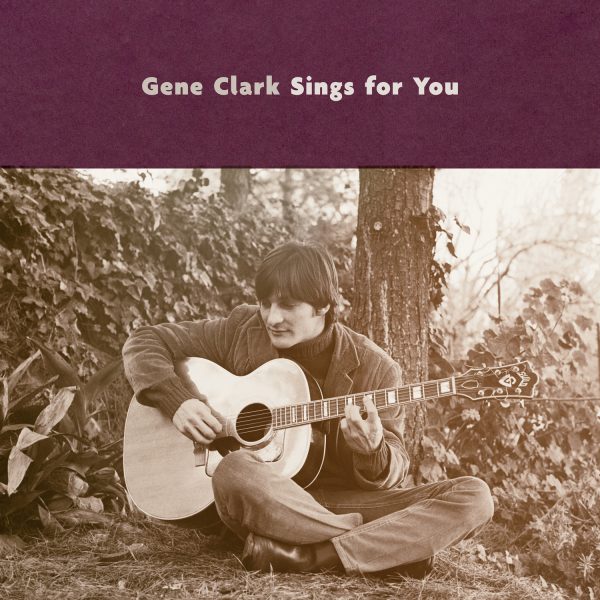
Gene Clark Sings For You

Though he’s been and continues to be the subject of numerous reissues and releases, Gene Clark still remains somewhat of an enigma.  The founding member of The Byrds (1944-1991) only released six solo studio albums within his too-short lifetime, bolstering a discography also containing group and collaborative efforts.  But he left behind what seems like scores of unreleased tracks, much of which has been mined in the years since his death.  In 2013, the Omnivore label issued his demos for the A&M album White Light, and now the label has tackled the holy grail of Clark’s demos – a 1967 acetate entitled Gene Clark Sings for You.  An expanded edition of the original acetate has been joined on CD by A Trip Through the Garden from The Rose Garden, a group which enjoyed Clark’s support and patronage.

The eight recordings on the original Gene Clark Sings for You were recorded near the end of 1967 at West Hollywood’s Larrabee Studios and the venerable Gold Star StudiosClark, accompanying himself on guitar, was joined by simple instrumentation including calliope, Chamberlin strings (a keyboard device similar to the mellotron) and electric piano.  Alex del Zoppo of Sweetwater played the piano, though the other musicians’ identities remain a mystery.  One track boasts strings, leading to speculation that it may have come from an earlier session led by Leon Russell as arranger-conductor.  All of the songs reveal a young, talented singer-songwriter at the crossroads, with plenty of talent and ambition but perhaps lacking a clear vision as to how to best deploy those gifts.  The result is a set of original songs in the best sense of the word, even if they may not have been commercial enough to attract an interested label.  It’s also worth noting that Clark never released any of these songs, a testament to his prolific nature as a songwriter.

The Dylan influence so evident in The Byrds’ recordings is also clear on “Past Tense,” though Clark’s own evocative poetic sensibility comes into its own with “Past My Door.”  Eschewing the expected, Clark also employed a tempo shift midway through.  Violins – perhaps arranged by Leon Russell – appear on “That’s Alright by Me,” adding a note of elegance to the folk-rock track.

Clark conjured San Francisco on many of these demos including “On Her Own,” about a beguiling girl he found there, and the mournful “Down on the Pier” (featuring atmospheric, ironic calliope).  The similarly doleful “Yesterday, Am I Right” (previously recorded for Hugh Masekela’s Chisa label but unissued) features Clark’s drawl at its most vulnerable.  Clark’s well-documented country leanings come to the fore on one track alone: the twangy, laconic “7:30 Mode,” on which he adds harmonica and is accompanied by an unknown guitarist.

This first-time commercial release of Gene Clark Sings for You is bolstered with an additional six tracks intended for The Rose Garden – a five-song acetate and one more demo.  The troubadour first encountered the band at the Ash Grove, joining them onstage for a set of Byrds tunes.  The awestruck band were thrilled to work with, and receive songs from, their hero.  The acoustic tracks on the acetate (which has never been heard outside of band circles) include the Dylan-ish “On Tenth Street,” the upbeat love song “Understand Me Too,” and the moving “A Long Time,” which The Rose Garden opted to cover on the band’s sole album.  Two full-band performances were also presented to The Rose Garden: the blues-rocking “Big City Girl” (complete with wailing harmonica) and “Doctor, Doctor,” the most produced and Byrds-esque track on the acetate with double-tracked vocals and harmonies.  “Till Today,” also recorded by The Rose Garden, is included here in a Clark demo.

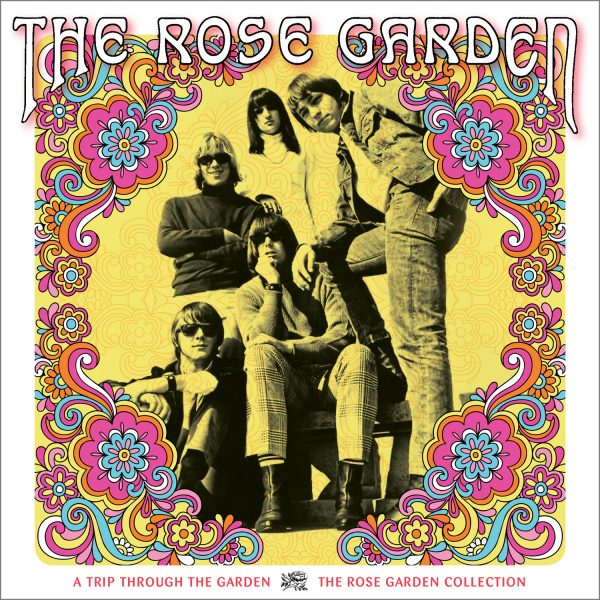
The Rose Garden is the subject of A Trip Through the Garden, the first-ever anthology dedicated to the band.  And what an anthology it is, appending 16 tracks (14 previously unreleased) to the group’s lone 1968 album.  The band is, of course, best remembered today for the opening track of that LP, “Next Plane to London.”  The top 20 hit still gets airplay today, and earned The Rose Garden the “one-hit wonder” tag.  But as with most artists given that moniker, there was more to the group than just that one tune.
The Los Angeles-area band (John Noreen, Jim Groshong, Bruce Bowdin, and Bill Fleming) was enamored with The Byrds, which made it all the more fortuitous when Clark dropped into their set the Ash Grove.  (They went by The Blokes at that time.)  With the addition of singer Diana De Rose, The Blokes gained a gal and rechristened themselves The Rose Garden (a play on their newest addition’s surname.)  A showcase at hot spot Gazzarri’s on the Sunset Strip landed the still-underage band a deal with Buffalo Springfield managers Charles Greene and Brian Stone.  They got The Rose Garden signed with the Springfield’s label, Atco, and set about producing their first album.

The Rose Garden - A Trip Through The Garden

The Rose Garden is an amiable folk-rock effort with heavy pop leanings and a solid dose of Byrds-esque chime (courtesy of Noreen’s Rickenbacker) and sparkling harmonies.  Notably, while emphasizing vocals over instrumentation in Greene and Stone’s production, the band played on the record as a self-contained unit, without any intervention from the Wrecking Crew or other studio aces.  The liner notes reveal that the album’s repertoire was selected from songs picked by Greene and Stone as well as the band members.  (Only one track is credited to the band: “Flower Town,” a flower-power adaptation of the folk ballad “Portland Town.”)

In addition to Kenny O’Dell’s obviously catchy “Next Plane to London,” featuring Diana’s enjoyably burnished vocals, The Rose Garden offered a trio of songs by future Redbone founder Pat Vegas: the slow “I’m Only Second” (which somewhat recalls “You’ve Got to Hide Your Love Away”), the bright Byrds-meets-Mamas-and-the-Papas confection “February Sunshine,” and the jangly “Coins of Fun” with strong duet vocals from Diana and Jim.  (The latter isn’t as trippy as its title would indicate, though.)  The group’s lustrous harmonies were also in evidence on the folk adaptation “Rider.”  An attractive cover of the Bob Dylan ballad “She Belongs to Me” led by Groshong joined Clark’s “Till Today” (slightly evoking The Fortunes’ “You’ve Got Your Troubles” in the band arrangement) and “Long Time,” which gained a Motown-style bassline.  Bob Johnston and Wes Farrell penned the exquisite, soft ballad “Look What You’ve Done.”

Omnivore’s expanded edition now has a running time of nearly 80 minutes, with an impressive array of bonus tracks.  Kenny O’Dell’s gorgeous “If My World Falls Through” was backed with the uptempo “Here’s Today,” co-written by John Noreen for a follow-up, non-LP single.  The B-side is a surprisingly commercial track that could have held its own as a A-side.  These are heard in both mono and stereo versions.  They’re joined by tracks for a proposed second album that was never completed, including a take of Neil Young’s “Down to the Wire” performed by Young, Stephen Stills, and Mac (Dr. John) Rebennack.  The crunchy backing track was presented to the band by Greene and Stone due to their Buffalo Springfield connection.  The illustrious triumvirate of Bob Crewe, Al Kooper, and Irwin Levine supplied “The World Is a Great Big Playground,” which is charming but falls short of the team’s other accomplishments.

Of interest to Gene Clark fans will be two additional appearances of “Till Today”: a rehearsal with Clark himself, and an acetate alternate.  Five live songs captured onstage at West Hills, California’s Chaminade High School round out the set: “Next Plane to London” and an array of covers not recorded in the studio by The Rose Garden including The Byrds’ “So You Want to Be a Rock ‘n’ Roll Star” and Clark-penned “She Don’t Care About Time,” Sonny and Cher’s “It’s the Little Things,” and Bo Diddley’s “You Don’t Love Me,” also by way of Sonny and Cher.  The sound is better on these tracks than might be expected, and they offer a taste of what the band’s strong live sound.

John Einarson, author of Mr. Tambourine Man: The Life and Legacy of The Byrds’ Gene Clark, has penned the erudite liner notes for both releases, with the story of The Rose Garden proving particularly fascinating.  Gene Clark Sings for You and A Trip Through the Garden are essential snapshots of the unparalleled creativity of the L.A. music scene in the late 1960s.

Both titles are available now:

Gene ClarkSings for You

The Rose GardenA Trip Through the Garden: The Rose Garden Collection

Last February, Omnivore Recordings released singer-songwriter JD Souther’s three efforts for Asylum Records on CD, remastered with extra bonus tracks and new liner notes informed by interviews with SoutherNo Depressioncalled them: “A worthy upgrade and a good introduction for those who haven’t yet dug into JD Souther.” Relixpredicted the reissues would “bring belated appreciation” to the albums. “Kudos to Omnivore for re-introducing Souther and his work to a brand new audience.”
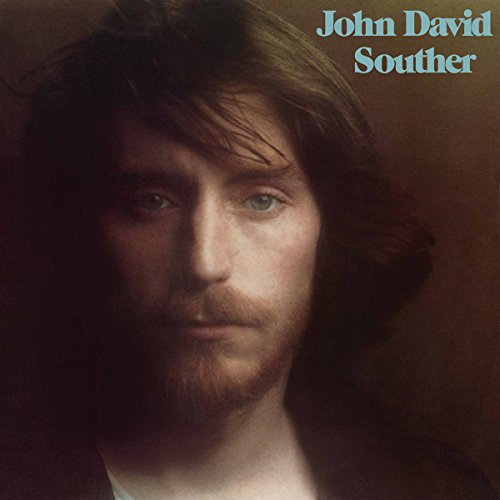
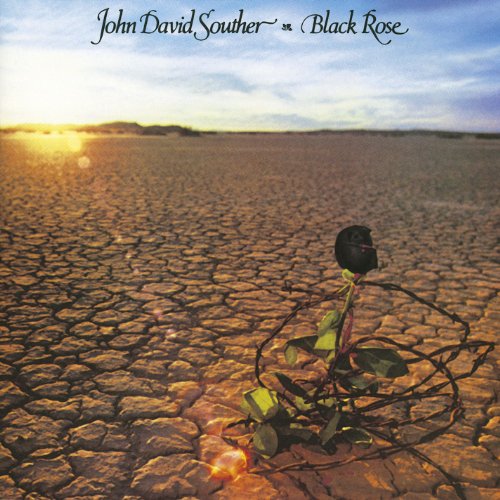
On September 21st, 2018, Omnivore Recordings will release the trio of classic albums  John David Souther, Black Rose and Home by Dawn on high-quality vinyl. All three have been cut from the original analog masters by Kevin Gray at Cohearent, overseen by Souther himself and Omnivore’s Cheryl Pawelski and pressed atRTI on 180-gram vinyl. These new reissues also feature a little bit of updated art on the Black Rosealbum — no longer featuring the artist name and title, as was originally intended. In every other way, they are presented as they were originally released.
Before he was co-writing Eagles hits like “Best of My Love,” “New Kid in Town,” and “Heartache Tonight with Glenn Frey and Don Henley, Souther formed Longbranch/Pennywhistle with Frey when they were roommates. Their downstairs neighbour was a fellow by the name of Jackson Browne, who took Souther to audition for his boss, David Geffen, who’d recently formed the Asylum Records label. After hearing two songs, Geffen told Souther to “go make a record.” And, that’s exactly what he did. 
John David Souther (Expanded Edition)
John David Souther released in 1971, and was immediately a critical success and established Souther as a, if not the songwriter to watch. (He would be inducted into the Songwriters Hall of Fame 42 years later.) 
Co-produced by Souther and Fred Catero (who had recently finished Santana’s Abraxas), John David Southerfeatured 10 originals — all stunning, and many of which would be covered by artists like Bonnie Raitt (“Run Like a Thief”) and Souther’s old friends The Eagles, who released “How Long” as the first single from their 2007 comeback and multi-platinum smash, Long Road Out of Eden.
John David Souther was, and is, the perfect introduction to the singer and performer behind the songs. Still relevant over four decades later, the recording shows the emergence of one of music’s most influential artists. 
After his impressive debut, Souther worked with Chris Hillman (Byrds, Flying Burrito Brothers) and Richie Furay (Buffalo Springfield, Poco) in the short-lived Souther/Hillman/Furay Band. But, at that same time, his songwriting reputation grew, as friends and colleagues took his material to commercial heights. 
Black Rose

Five years after John David Souther, Black Rose appeared. Beautifully helmed by Peter Asher, the album was not only full of incredible songs, but a who’s who of musicians including Lowell George (Little Feat), Joe Walsh, Waddy Wachtel, Jim Keltner, Andrew Gold, Russ Kunkel, Donald Byrd, and Stanley Clarke — with David Crosby, Art Garfunkel, Don Henley and Glenn Frey adding their voices. In addition to the lush production and instrumentation, Souther’s ten songs were again exceptional. Linda Ronstadt had previously recorded “Faithless Love” on her breakthrough Heart Like a Wheel album, and would tackle “Simple Man, Simple Dream” in 1977 — even basing that year’s album title on the song. (For the record, Ronstadt has recorded 10 Souther tracks, a relationship that began with his production on her 1973 album Don’t Cry Now, also named for a Souther composition.)

Black Rose” was an ambitious undertaking, and it took a long time,” Souther states in the liners. “I wanted to use all the musical influences I had, and I really had to dig deep. But when we were finished, I was almost as pleased with it as if it had sold a million copies. Almost.” 
After hitting the Top 10 twice with “You’re Only Lonely” and his duet with James Taylor, “Her Town Too,” 
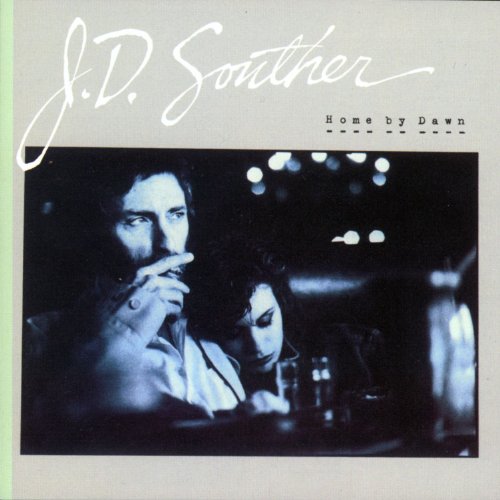
Home By Dawn

Souther released his only 1980s album  Home by Dawn, produced by David Malloy (Eddie Rabbit, Kenny Rogers, Reba McEntire).Souther took distinctive creative turns with each release, Home by Dawn emerged at the beginning of the new wave of country music. In fact, legendary producer/engineer, and David’s father,Jim Malloy (Townes Van Zandt, Eddy Arnold, Sammi Smith), told Souther, “You were about 15 minutes ahead of your time!” That timing was confirmed when Dixie Chicks covered “I’ll Take Care of You” on their platinum album Wide Open Spaces

The album has steadily earned a reputation as the groundbreaking and influential statement it was, and continues to be. From rock to roots-rock to rockabilly, Home by Dawn took Souther in a direction reflecting his Texas upbringing. Now is the perfect time to discover — or rediscover the songs of John David Souther. 

GeneClarkOmnivoreRecordings

Omnivore Recordings will be releasing never-before-heard music from music legend Gene Clark (The Byrds) on June 15th as the expanded album Gene Clark Sings for You. The record reveals a heretofore unknown collection of Clark’s post-Byrds career.

Clark’s musical legacy includes his work as a singer, songwriter, founding member of The Byrds, and collaborator in bands such as Dillard & ClarkGene Clark & the Gosdin Brothers, and McGuinn, Clark & Hillman and later as the duet partner of *Carla Olson (The Textones).

Clark is also a Rock and Roll Hall of Fame inductee whose songs have been covered by Tom Petty & the Heartbreakers, Iain Matthews, Robert Plant & Alison Krauss, the Rose Garden, and Chris and Rich Robinson of the Black Crowes, among many others.

According to annotator John Einarson, author of Mr. Tambourine Man: The Life and Legacy of the Byrds’ Gene Clark (Backbeat Books), “For longtime Gene Clark fans and aficionados, the tracks on this remarkable archival CD are the stuff of legend. Since word first spread in the 1980s about the discovery of these 1967 recordings on a rare acetate in Liberty Records’ vaults, fans have come to regard Gene Clark Sings for You as nothing less than the Holy Grail of the singer/songwriter’s extraordinary body of work. Shrouded in mystery and the subject of much speculation and conjecture, few have ever had the opportunity to hear these forgotten gems from one of Gene Clark’s most prolifically creative periods. Until now.”

In addition to the eight tracks from the Gene Clark Sings for You acetate, recorded in 1967 after he famously left the Byrds, there are an additional five previously unknown tracks from another 1967 acetate given to the band The Rose Garden for recording consideration. The Rose Garden were big fans of the Byrds. “We wanted to sound like [them],” notes band member John Noreen.

http://

Beautiful harmonies from Clark flow and float through this strummed guitar-driven release. It’s pure singer-songwriter perfection with a burnished patina that, during its few minutes, showcases the melodic heights that Clark is celebrated for.

Big Star, the Great Forgotten American Band, Is Bigger Than Ever

Big Star—one of the great and greatly underappreciated American bands of the 20th century, once merely a cult loved band, but now their fame has grown into something closer to a full-blown religion . Interest in the work of the Memphis group has rippled steadily outward since the relatively quiet days when their two studio albums—1972’s No#1 Record and 1974’s Radio City both hailed by critics

281

The albums led to a combined release in 1978 by a U.K. imprint to the desires of hungry music fans overseas. In the decades since, word of the band’s genius has filtered its way through bands like R.E.M., Teenage Fanclub and The Replacements, who loudly trumpeted the group.

100000x100000 999

A growing reissue market also embraced the band and its unique blend of British psych, Southern rock and radio pop, leading founding members Alex Chilton and Jody Stephens to reunite under the Big Star name in 1993. Two decades later, the Big Star reissue market is something of a cottage industry, and it’s never had a better year than 2017. Fueled by the vinyl revival, the complexities of licensing deals and some buzz stirred up by the 2010 deaths of Alex Chilton and founding member Andy Hummel, record store shelves are now groaning under the weight of fresh reissues.

A1r692tn84l. sl1500

We’ve seen the release of the second and third volumes of the Omnivore Recordings’ comprehensive Complete Third series, which gathers all existing work surrounding the group’s aborted 1975 album, Third; a cassette boxed set of the group’s first three albums, issued by Burger Records; “Thank You Friends: Big Star’s Third…Live”, a three-CD set featuring a live recording of Big Star’s Third, Chris Stamey’s all-star tribute to the band, and a documentary about the project; Big Star’s Third Live at the Alex Theatre, Glendale, CA, a limited-edition vinyl release of the live material from that aforementioned set; The Best of Big Star, a single-disc compilation culled from their studio work; an expanded reissue of Chilton’s 1995 album A Man Called Destruction; Take Me Home and Make Me Like It, a vinyl release from Spanish label Munster Records pulling together solo sessions Chilton recorded in 1975; Looking Forward, a CD compilation of Chris Bell’s pre-Big Star work; a deluxe reissue of Bell’s abandoned solo album I Am the Cosmos; The Complete Chris Bell, a vinyl boxed set featuring Looking Forward and the expanded Cosmos material as well as a rare interview with the artist from 1975.

For a long time, there wasn’t any Big Star at all, and now there is, Cheryl Pawelski of Omnivore Recordings. “I believe strongly that the way you preserve music is to get it back out into the culture. Isn’ that good? Do you want it to be over?”

Incredibly, there’s more. On the docket for 2018 is a vinyl release of the 1973 live recording previously only available as part of the 2009 boxed set Keep Your Eye on the Sky, and there are rumors of a reissue of Alex Chilton’s 1979 album, Like Flies on Sherbert.

It’s a head-spinning amount of music to keep up with, especially for fans who were only recently introduced to the band. It can feel like sticking your mouth underneath the never-ending flow of a chocolate fountain, where the delights can give way to bloat. Naturally, the folks behind many of the above releases beg to disagree, to the point that Cheryl Pawelski, co-founder of Omnivore Recordings, the label behind Complete Third, Destruction and all the Bell releases out in 2017, sounds downright incredulous at the suggestion that it’s too much of a good thing.

As a fan, I most certainly don’t. All of the above releases are the kind of deep dives that I adore amid the current reissue craze. It’s opening doors into Big Star’s working relationship and creativity that I could never get when I was a budding music obsessive poring over my copy of “Third/Sister Lovers” that Rykodisc first issued on CD in 1992.

Screen shot 2017 03 23 at 23.10.21

Take, for example, “I Am the Cosmos”. While the material on this album was recorded in the ‘70s, it wasn’t pulled together for commercial release until Rykodisc got the rights to do so in 1992. The album was brought out by Rhino Records again in 2009 with a bonus disc of material, but issued in limited numbers through their mail-order only imprint,

Five years later, the label put out a mass-market version of the same two-CD set. Three years later, after leaving Rhino, Pawelski brought the album to Omnivore to once again re-release it on CD and now in the boxed set.

So how did the release dates for all of this music happen to land in one 12-month stretch? The process actually began about a decade ago, when Rhino started looking for the material that would make up Keep Your Eye on the Sky, much of it stored in the archives of the Memphis recording studio Ardent.

Big Star literally had the keys to the studio,” says Bob Mehr, music critic for the Commercial Appeal in Memphis. “For them, the studio was a laboratory and a playground and a place to experiment. Relative to their output, there’s actually a lot more material than meets the eye. So all the stuff that ended up on [Keep Your Eye on the Sky], all the unreleased material and alternate takes of Third and live recordings, that was what kicked things off. Now you’re seeing the results of that, but it’s been in the making for a long time.”

Another factor is that Pawelski, who helped shepherd Keep Your Eye on the Sky and the 2009 Bell reissue into existence, did all that work before leaving her post as Senior VP at Rhino. So when she started up Omnivore, she was able to strike new licensing deals with Ardent and its owners Jody Stephens and producer John Fry. The wrinkle here is that those agreements didn’t include the material found on #1 Record and Radio City. The rights to those songs originally belonged to Stax Records, which helped release the first two Big Star albums, and were purchased—along with the catalog of famed R&B stars like King Curtis and Shirley Thomas—by Concord Music Group. That’s the label behind this year’s Best of Big Star compilation and the Big Star’s Third live set.

Big star

There will always be a supply of new listeners ready to swoon over the band’s dark poetry, gritty guitar work and the winsome vocals of Chilton, Bell, Hummel and Stephens.

Every year, there’s more record buyers who get into Big Star because it has a certain level of hipness. This band isn’t a nostalgia act. While there’s a big romantic myth attached to it, the music doesn’t age. It stays hip and it stays valid for new audiences.”

There might be plenty going wrong in this crazy old world we’re currently existing in, but the fact that a label like Omnivore Records is releasing a record like Conrad in 2016 should be a cause for some sort of celebration. Some are calling this a power pop record, but it seems to be a tad too sophisticated for that limiting tag and besides, we’re not exactly dealing with an Iggy and the Stooges type of instrumental attack here. No, this is more pretty pop than power pop – Andy Reed, Keith Klingensmith, and Chris Richards write songs that are gently pleasing and they harmonize like choirboys throughout.“Short Term Memory.”  Mixing big guitars with big harmonies, their recorded output has one foot in the classic pop era of the 60’s and 70’s (Beatles, Beach Boys, Nilsson, Big Star) and one foot with the current era of classic pop (Nada Surf, The Autumn Defense.) The “Intro To” E.P. features a new song, “Anything”, from the upcoming Omnivore Recordings release “Conrad”,

The best songs of the batch seem to be tucked in the middle of the disc: the deceptively cheery-sounding “She Called Me to Say,” the self-deprecating “The Cool Kid” and – especially  Klingensmith’s lone songwriting credit, the sublime, Teenage Fanclub-influenced “Pull My String.”

Big Star

Big Star’s classic record Third wasn’t released until 1978, four years after it was recorded and four years after Big Star had broken up. The chaotic recording sessions will be released as part of a huge 69-track reissue called “Complete Third”, charting the album’s genesis from demos to completed LP. The reissue is due October 14th on Omnivore Recordings.

‘Volume One’ includes Chilton’s demos alongside vocals and rough mixes. ‘Volume Two: Roughs to Mixes’ boasts producers Jim Dickinson and John Fry’s early mixes for the Third tracks, including unreleased takes of Lesa Aldredge, Chilton’s girlfriend at the time and background singer on Third, covering Velvet Underground’s “After Hours.” ‘Volume Three: Final Masters,’ contains the 20 completed tracks.
Regardless of track order, the album was named to Rolling Stone’s 500 Greatest Albums of All Time despite its tumultuous journey. “Ask any of the original participants who made the record, and none of them would say they expected this album to even see a real release, much less end up on Rolling Stone’s list,” Ardent Studios’ Adam Hill writes of the album in the reissue’s liner notes.
“It’s a great testament to Third that an album that almost nobody was interested in at the time of its pressing, is now loved and sought out by an ever growing legion of fans. I guess that’s called ‘ahead of its time,'” he said.
The reissue also features unseen photos and essays penned by a diverse group of people either involved in the making of or influenced by Third, such as R.E.M.’s Mike Mills, Wilco’s John Stirratt and Pat Sansone, the Jayhawks’ Gary Louris, the Bangles’ Susanna Hoffs and Debbi Peterson, post-reunion Big Star member Ken Stringfellow and the band’s drummer Jody Stephens.

“At the time of the recording, everyone’s emotions were forefront … is uncertainty an emotion? We were responding to Alex’s mood both in song and conversation,” Stephens writes. “All my time spent in the studio for Third was in the company of John (Fry) and Jim (Dickinson) as well as Alex. I heard stories of maudlin scenes that happened after hours but never really witnessed them. But I did witness Alex, Jim, and John, and the sometimes easy and sometimes uneasy interaction among us all. Through it all, Jim and John were brilliant and reassuring.”
Complete Third will initially be released as a 3-CD set, with a vinyl pressing of all three volumes as standalone 2-LPs also planned.
Complete Third Track List
Volume 1: Demos to Sessions to Roughs
1. “Like St. Joan (Kanga Roo)” * (Demo)
2. “Lovely Day” (Demo)
3. “Downs” (Demo)
4. “Femme Fatale” (Demo)
5. “Thank You Friends” (Demo)
6. “Holocaust” (Demo)
7. “Jesus Christ” (Demo)
8. “Blue Moon” (Demo)
9. “Nightime” (Demo)
10. “Take Care” (Demo)
11. “Big Black Car” (Demo #2/Acoustic Take 1)
12. “Don’t Worry Baby”
13. “I’m In Love With A Girl” *
14. “Big Black Car” (Demo #3/Acoustic Take 2)
15. “I’m So Tired” * – Alex & Lesa
16. “That’s All It Took” * – Alex & Lesa
17. “Pre-Downs” *
18. “Baby Strange” *
19. “Big Black Car” (Demo #1/Band)
20. “Kizza Me” * (Dickinson Rough Mix/Alex Guide Vocal)
21. “Till the End Of the Day” * (Dickinson Rough Mix/Alex Guide Vocal, Kept As Final Vocal)
22. “Thank You Friends” * (Dickinson Rough Mix/Alex Guide Vocal)
23. “O, Dana” * (Dickinson Rough Mix)
24. “Dream Lover” * (Dickinson Rough Mix)
Vol. 2: Roughs to Mixes
1. “Big Black Car” * (Dickinson Rough Mix/Alex Guide Vocal)
2. “Whole Lotta Shakin’ Goin’ On” * (Dickinson Rough Mix)
3. “Take Care” * (Dickinson Rough Mix)
4. “Holocaust” * (Dickinson Rough Mix)
5. “Nightime” * (Dickinson Rough Mix)
6. “Thank You Friends” * (Dickinson Rough Mix)
7. “Nature Boy” * (Dickinson Rough Mix)
8. “After Hours” * – Lesa
9. “Stroke It Noel” (Backwards Intro)
10. “Lovely Day” * (Fry Rough Mix)
11. “Nightime” * (Fry Rough Mix)
12. “Blue Moon” * (Fry Rough Mix)
13. “Till The End Of The Day” (Alternate Mix #1)
14. “Big Black Car” (Fry Rough Mix)
15. “Holocaust” (Fry Alternate/Rough Mix)
16. “Downs” * (Fry Rough Mix)
17. “Kanga Roo” (Fry Rough Mix)
18. “Femme Fatale” * (Fry Rough Mix)
19. “For You” * (Alternate Version/Alex Vocal)
20. “Thank You Friends” * (Fry Rough Mix)
21. “Take Care” * (Alternate Version/Alex Vocal)
22. “Kizza Me” * (Fry Rough Mix)
23. “Till the End Of the Day” (FRY Rough Mix #2) – Lesa
24. “Nature Boy” (Fry Rough Mix)
25. “Mañana”
Vol. 3: Final Masters
1. “Stroke It Noel”
2. “Downs”
3. “Femme Fatale”
4. “Thank You Friends”
5. “Holocaust”
6. “Jesus Christ”
7. “Blue Moon”
8. “Kizza Me”
9. “For You”
10. “O, Dana”
11. “Nightime”
12. “Whole Lotta Shakin’ Goin’ On”
13. “Kanga Roo”
14. “Take Care”
15. “Big Black Car”
16. “Dream Lover”
17. “You Can’t Have Me”
18. “Till the End Of the Day”
19. “Lovely Day”
20. “Nature Boy”
* previously unreleased