Posts Tagged ‘Neil Young’

Neil Young, Neil Young Crazy Horse, Neil young Shut It Down, Shut it down, Neil Young Shut It down 2020, Neil young Crazy Horse Shut It Down, Neil Young Crazy Horse Colorado, Colorado

With sometime on his hands ever since he recognized the riskiness of scheduling a tour with Crazy Horse in the current climate, Neil Young has used that time to create an updated version of his song “Shut it Down,”  from their 2019 album,” Colorado” On April 9th, he released a video for “Shut it Down 2020.” In announcing the video, Young wrote: “These are uncertain times. I wish you all the best as you care for our sick, the young and old who we love so much.

“Sending the best wishes to all the health care and government workers all over the world, to all the scientists who will learn and share with us the best ways to ensure survival in our world challenged. Let’s all work together and stay positive that we will find a way. With love to all, in all walks of life, all political persuasions, all colors. We will succeed working together for the good of our world as we are here together, hanging in the balance of nature.”

In early March, just two weeks after indicating that he was considering a 2020 tour with Crazy Horse, the classic rock legend indicated that the “barn tour,” as he described it, was on hold, due to these “uncertain times.” Young was referring to the Coronavirus outbreak.

According to a March 7th post on his website https://neilyoungarchives.com Neil Young Archives site, the veteran singer-songwriter-musician noted, “We are looking at this uncertain world with our fully booked Crazy Horse Barn Tour, ready to announce the first stage.

“The last thing we want is to put people at risk, especially our older audience. Nobody wants to get sick in this pandemic.”
Young closed the post by writing, “Sending best wishes to all of the health care and government workers in all of the world, to all the scientists who will learn and share with us the best ways to ensure survival in our world challenged.”. From Young’s late February description, the shows would take place not in actual barns but in “old arenas.” The news of the possible tour came only days after announcing that he would not be touring at all in 2020.

Young’s full statement in late Feb. was as follows: “We have been looking at booking the Crazy Horse BARN Tour,” Neil wrote. “Many of the old places we used to play are gone now, replaced by new coliseums we have to book (sp) year in advance and we don’t want to go to anyway. That’s not the way we like to play. It sounds way to much like a real job if you have to book it and wait a year, so we have decided to play old arenas – not the new sports facilities put up by corporations for their sports teams. Largely soulless, these new buildings cost a fortune to play in.”

“We wanted to play in a couple of months because we feel like it,” Young added. “To us it’s not a regular job. We don’t like the new rules.”  Young then listed a number of arenas in which he used to perform but have since been demolished, and then listed arenas still in existence. “If you are looking for us on our Crazy Horse Barn Tour, we will hopefully be in one of the existing arenas,” he said at the end of his statement.

Hi, this is Neil. Link to the NYA info-card for this song with press, documents, manuscripts, photos, videos. Look around NYA for fun and listening! ALL my music in high resolution at https://neilyoungarchives.com/info-ca.

Image may contain: 1 person, outdoor and closeup

Yesterday (January 9th), The Tonight Show Starring Jimmy Fallon welcomed both actor Will and music guest Patti Smith. After Will Smith and Fallon rapped a history of Will Smith, Patti Smith showed up to discuss her new book Year of the Monkey, she read a poem, discuss being a jerk to Bob Dylan, and performed a cover Neil Young’s “After the Gold Rush.” 

Music guest Patti Smith performs a cover of Neil Young’s “After the Gold Rush” for the Tonight Show audience.

Image may contain: 4 people, people on stage and people playing musical instruments

Graham Nash was on a helicopter with drummer Dallas Taylor flying into Bethel, N.Y., where their band was scheduled to perform at a festival. As they neared their destination, Taylor asked what lake they were flying over. It wasn’t water, the pilot replied. It was the audience.

The gig was Woodstock. The band was Crosby, Stills, Nash & Young. The gathering on Max Yasgur’s farm would be only their second-ever live performance, after recently solidifying a touring lineup with Neil Young, Taylor and bassist Greg Reeves. The weekend would prove to be a high point for the counterculture that Woodstock quickly came to represent—and for Crosby, Stills, Nash & (sometimes) Young, the ensemble that was in some ways the house band for the Woodstock generation.

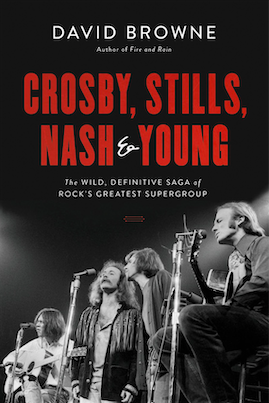
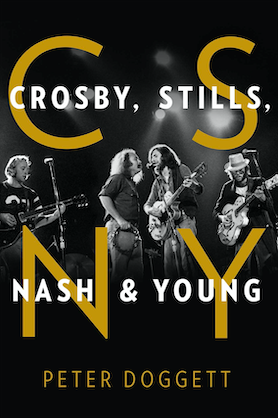
“Their music and their image became indissolubly linked with the fate of the baby-boomer era,” music historian Peter Doggett writes in CSNY, one of two engaging biographies released tracing the band’s fractious history. The other is Crosby, Stills, Nash & Young by David Browne, a senior writer for Rolling Stone magazine.

crosby stills book cover.png

Browne covers the full arc of the band’s career, from its members’ musical origins in other groups in the ‘60s to the present. Doggett focuses on the musicians’ early lives and careers through 1974, when David Crosby, Stephen Stills, Graham Nash and Neil Young toured together for the last time. Though both books cover some of the same ground, Doggett’s is far more detailed about the beginnings of the band and the musicians’ upbringings. Browne takes on the monumental task of summarizing a half-century’s worth of conflict, self-sabotage and, when the musicians managed to get out of their own way, music.

Crosby, Stills & Nash wasn’t intended to be a “band” at all, at least not in the late-‘60s sense of the word, which implied a specific identity, expectations and business commitments. Those things amounted to limitations, in the minds of Crosby, Stills and Nash, who had each dealt with all that in the Byrds, Buffalo Springfield and the Hollies, respectively. They started singing together for the thrill of it, and they quickly realized that they harmonized with an uncommon purity that astonished their friends. That feeling of amazement carried over to the listening public when the trio released Crosby, Stills & Nash at the end of May 1969, thanks to songs including “Suite: Judy Blue Eyes,” “Long Time Gone” and “Helplessly Hoping.”

The singers intended CSN to be a sort of “mothership” situation that would, between group efforts, permit solo projects, outside collaborations and plenty of musical experimentation. Yet converting their “party trick” harmonies (Browne and Doggett both use the term) into something that certainly looked like a band, with a record deal and all the attendant obligations, quickly subsumed the idea of singing together for its own sake. If bringing in Young to help flesh out the songs onstage made sense from a musical standpoint, each book illustrates how adding a fourth massive ego also hastened the band’s descent into creative disputes and power struggles.

csny book cover.png

Though both authors admire the group and its songs, the musicians come off as intensely dislikable, especially as money and fame transform them. Stills is a taskmaster perfectionist with control issues. Crosby is a blowhard, a drug-addled hedonist with an attitude toward women that is startlingly chauvinistic, even for the era. Young, who had been part of Buffalo Springfield with Stills, is a cynical opportunist who sees joining CSN as a way to jumpstart his own then-lackluster career. Only Nash sometimes seems sympathetic; the most level-headed, he tries to act as a go-between among warring factions with limited success.

Together (and, just as often, separately), they cut a path through popular music in the late ‘60s and early ‘70s. Doggett writes vividly about the L.A. scene that produced Crosby, Stills & Nash, chronicling their interactions with Cass Elliot of the Mamas and the Papas, Peter Tork of the Monkees, Joni Mitchell (who was romantically involved with Crosby, then Nash), Judy Collins (whose relationship with Stills inspired “Suite: Judy Blue Eyes”), Jimi Hendrix, Atlantic Records impresario Ahmet Ertegun, David Geffen and more. Doggett does his best to tame the mythology of CSN, sorting through various stories and inconsistent recollections about when and where they first sang together (Was it at Elliot’s house, or Mitchell’s? The night the Hollies played the Whisky in February 1968, or sometime afterward?) and when various songs were written and recorded.

Browne in many ways has the harder task, as the band’s earlier years were its most thrilling and creatively rewarding. Surprisingly little of the music they made together still resonates; after their first two studio LPs, CSN and 1970’s Déjà Vu with Young, and the 1971 live album 4 Way Street, the Crosby, Stills, Nash (and Young) catalog is a study in diminishing returns. In the latter half of Browne’s book, there’s almost a numb inevitability to the musicians’ fumbling attempts in the ‘80s to contemporize their sound, Crosby’s ever-deeper descent into drug addiction that led to a stint in prison, and Young’s inability to stop dangling the possibility of a full-scale reunion in front of his bandmates, only to flake out nearly every time for inscrutable reasons of his own.

Taken together, CSNY and Crosby, Stills, Nash & Young present as full a picture of the group as is ever likely to emerge. It’s not a triumphant story. Beneath the promise of those early songs—and that initial camaraderie—lurks a mostly unwritten, certainly unanswerable question that poses itself again and again: What if?

Much like the dream of the Woodstock generation, the tale of Crosby, Stills, Nash & Young is awash in senseless vanity, squandered chances and potential left tragically unfulfilled. Yet it’s often hard to look away—just like with any car wreck.

Image may contain: 1 person

Neil Young has announced that his previously shelved 1975 album, “Homegrown”, will finally be released in early 2020 following its restoration from the master tapes.

“Homegrown will be our first release in 2020, sounding great in vinyl – as it was meant to be,” Young wrote on Neil Young Archives. “Made in the mid-nineteen seventies! …A record full of love lost and explorations. A record that has been hidden for decades. Too personal and revealing to expose in the freshness of those times. The unheard bridge between the albums Harvest and Comes A Time, Homegrown is coming to NYA first in 2020!”

The Neil Young Archives homepage also shows a video of Young’s longtime engineer John Hanlon mastering Homegrown in an analogue chain. “This is the way records were made when we started out. This is the way we made them sound great. We were told that this was impossible now, the Homegrown tapes were too damaged to use; we had to use digital. We didn’t agree. We did not accept. We painstakingly restored the analogue masters of Homegrown.”

Image result for neil young homegrown"

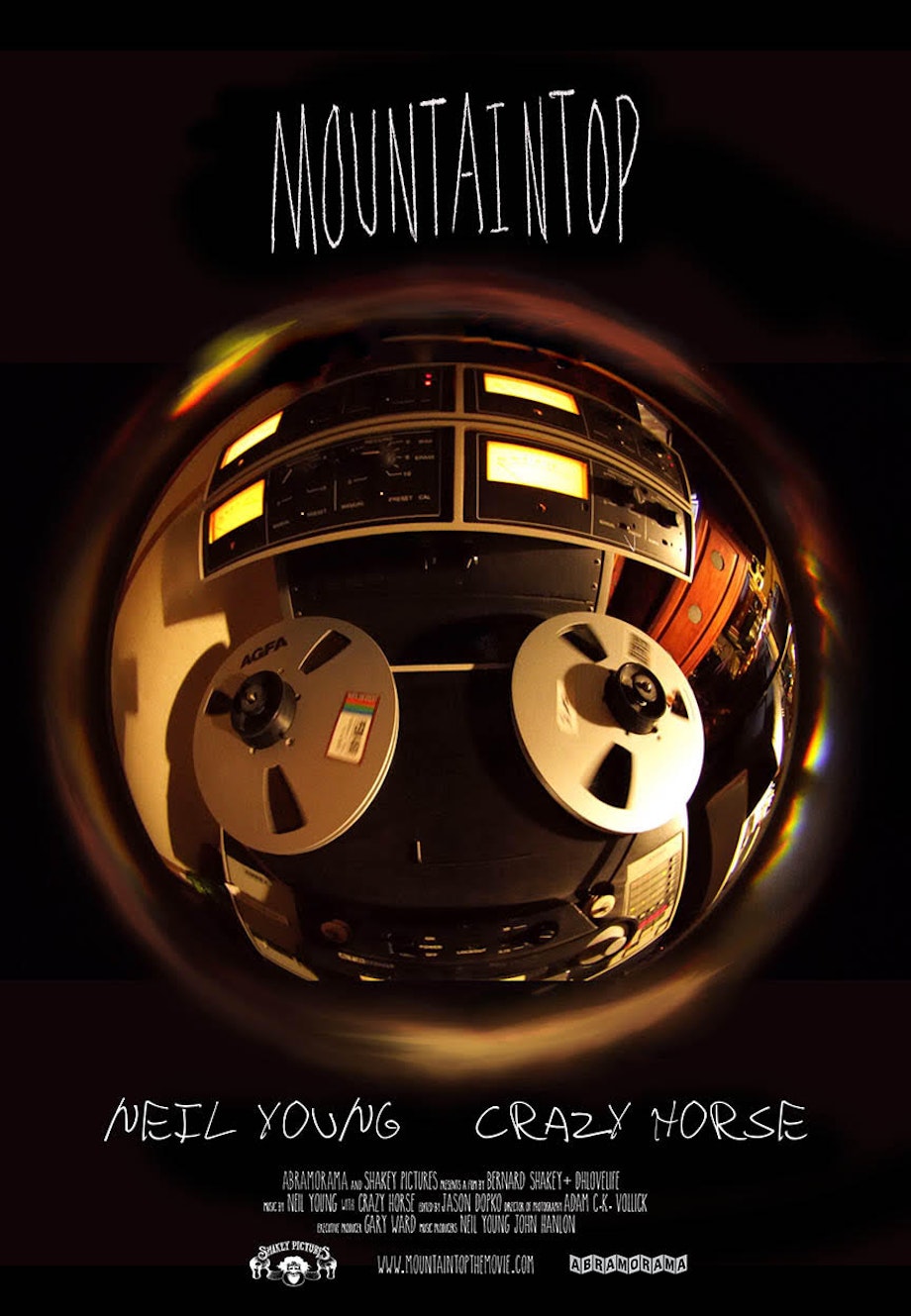
Official Movie Trailer for the new Neil Young Film – ‘Mountaintop’ IN THEATERS ACROSS NORTH AMERICA ON OCTOBER 22, 2019 AND IN EUROPE AND SOUTH AMERICA ON NOVEMBER 18TH.

The documentary goes behind the scenes of the making of ‘Colarado’, Young’s first album in seven years with Crazy Horse. Earlier this year, the singer-songwriter announced that he would be postponing the rest of his 2019 tour plans to focus on completing 15 unfinished film projects.

One of those films was a ‘making of’ documentary that was filmed to tie into the release of ‘Colarado’, which will be Crazy Horse’s first new album since 2012’s ‘Psychedelic Pill’, and according to Young, the record will stand up to some of his previous classics albums.

“We believe we have a great Crazy Horse record and one to stand alongside ‘Everybody Knows This is Nowhere’, ‘Rust Never Sleeps’, ‘Psychedelic Pill’ and all the others,” he said back in April.

Neil Young first revealed Crazy Horse’s return to the studio in April. He announced ‘Colorado’ would arrive in October, and feature “10 new songs ranging from around 3 minutes to over 13 minutes.” Besides CD and digital versions of the record, there will also be a double vinyl release comprising three sides of music and a 7” exclusive single not on the album.

Following songs ‘Rainbow of Colors’ and ‘Milky Way’, Neil Young and Crazy Horse released a short instrumental called ‘A letter from us’ last month.

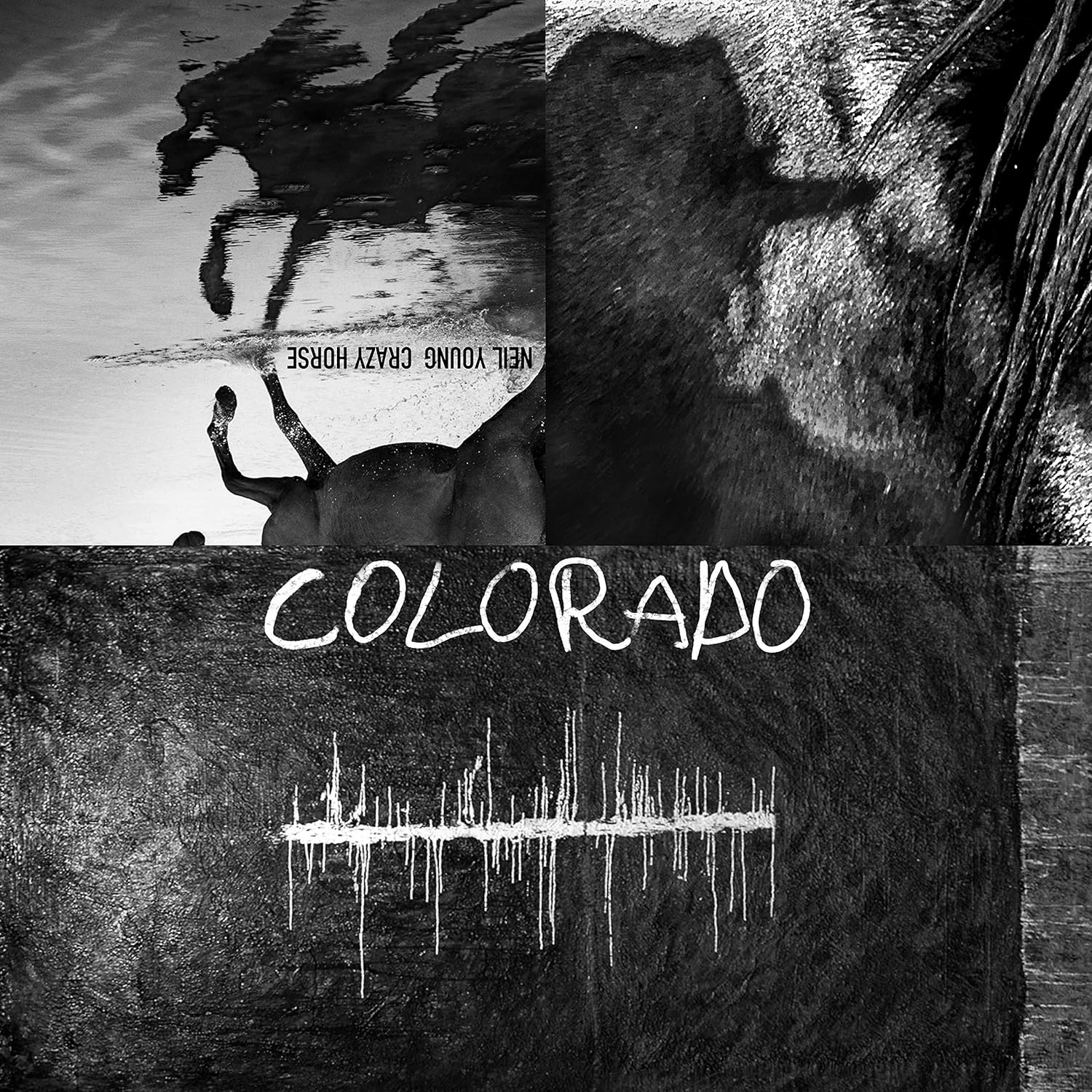
With Neil Young and Crazy Horse’s new album “Colorado” arriving on October 25th, the reunited rockers have shared “Rainbow of Colors,” the second preview from the upcoming LP. It’s a bright, optimistic tune calling for unity in the age of Trump. Much like the previous Colorado single “Milky Way,” it is quite mellow by the usually loud standards of Crazy Horse.

“The idea of the song is that we all belong together,” Young wrote on his Neil Young Archives website. “Separating us into races and colors is an idea whose time has passed. With the Earth under the direct influence of Climate Chance, we are in crisis together needing to realize we are all one. Our leaders continually fail to make this point. Preoccupied with their own agendas, they don’t see the forest for the trees.”

Colorado is the first Neil Young and Crazy Horse album since 2012’s Psychedelic Pill, and the first since guitarist Frank “Poncho” Sampedro retired from the group. He has been replaced by Nils Lofgren, who has played with Young going all the way back to After The Gold Rush in 1970. This new lineup of the band first played together on a California theater tour in 2018 and they cut Colorado at Studio in the Clouds near Telluride, Colorado earlier this year.

An arena tour was originally booked for later this year, but Young said he was pushing it back so he could focus on a series of archival concert films and documentaries. And in a recent note, Young hinted that he’s already looking ahead to Crazy Horse’s next record. “Another one is coming,” he wrote. “I can feel it. It’s a new generation for the Horse. Long live the Horse!”

Official Audio for “Rainbow of Colors” from ‘Colorado’ the new album from Neil Young with Crazy Horse available on October 25th.

Yes, Neil Young has returned with his legendary backing band Crazy Horse, for their first album together since 2012’s well-received Psychedelic Pill. “We believe we have a great Crazy Horse album,” Young wrote recently on his Archives website back in April. “One to stand alongside the albums Everybody Knows This Is Nowhere, Rust Never Sleeps, Sleeps With Angels, Psychedelic Pill and all the others.” Big talk, but based on first taste “Milky Way” — almost as haunted and vulnerable as Young’s unnerving recent New York Times profile — it’s at least got a shot at living up to it.

Official audio for Milky Way from Neil Young with Crazy Horse from their upcoming new album ‘Colorado’ Available on October 25th.

After The Gold Rush

By the end of the 1960s Neil Young was catching the ear of many influential figures – not least his old band mate Stephen Stills, who was now part of the Grammy-winning folk-rock super group Crosby, Stills & Nash. The band were keen to have him onboard as a sideman, but Young was insistent that he be given a full title credit as a condition for his contributions. Stills frequently found himself fighting with Young for control over the band’s songwriting, and has famously said that the latter “wanted to play folk music in a rock band.”

Young’s dogged self-determination, despite its interpersonal downfalls, was a major artistic virtue that fed directly into what was perhaps his first true masterpiece. After The Gold Rush had its beginnings in an unlikely place. Dean Stockwell, a former child star of the ‘40s and ‘50s, had been encouraged by his friend Dennis Hopper to write a screenplay whilst the pair were in the jungles of Peru producing a film entitled The Last Movie. Hopper assured Stockwell that he had the relevant connections to help get the film made, and once back in the US the latter retreated to his home at Topanga Canyon in the Los Angeles Mountains to commence the writing process.

A fellow resident of the canyon and a close friend of Stockwell’s, Young was suffering through a prolonged period of writer’s block and was under growing pressure from his label to record an album of new material. After learning of the writer’s creative endeavour he was intrigued to learn more and asked Stockwell if he could read a draft of the story. The script, which has since been lost, was an unconventional, non-linear narrative with religious and psychedelic undertones. It loosely detailed an end-of-the-world scenario centred on the local Californian environment, in which a biblical flood threatened to pull the state into the ocean. Captivated by this messy but intriguing tale, Young recalls: “I was writing a lot of songs at the time, and some of them seemed like they would fit right in with the story.”

Ironically Hopper’s proximity to the project scared off any interested executives, and before long the film seemed destined to remain in limbo. Nonetheless, Young was fired up and undeterred, commencing work immediately on what he imagined to be the soundtrack of this deeply counter-cultural Hollywood film. Finding time to write and record was difficult, as large swathes of 1970 were blocked out by Crosby, Stills, Nash & Young’s huge US Tour and further live obligations with Crazy Horse. In the precious gaps between shows, Young made initial recordings at Hollywood’s Sunset Studios, yielding “I Believe In You” and “Oh Lonesome Me” but quickly realised he preferred the atmosphere of the Canyon, continuing the process at the home studio set up in his lead-lined basement. It was here that his ensemble of bassist Greg Reeves, drummer Ralph Molina, and guitarist Nils Lofgren assembled.

The studio was a small and sweaty space, adjoined to a side control room from which producer David Briggs kept an eye on proceedings. The youngest of the ensemble, eighteen year-old Lofgren was brought in to play keyboards despite being a relative novice at the time of recording, highlighting Young’s unconventional laid back approach. Accordingly the musician recalls that “Neil didn’t mind rehearsing a bit” but they “didn’t belabour stuff.” It’s often considered that Young was attempting to merge musicians from both Crosby, Stills & Nash and Crazy Horse on this album, and Stephen Stills even appears on “Only Love Can Break Your Heart” to provide backing vocals.

The basement’s make-shift setup influenced the stark and plaintive sound of After The Gold Rush. Young featured solo on piano throughout the album, most notably on the title track which is often praised as the centrepiece of the album. Charting a surreal and fantastical course through three verses, the song starts in a medieval era of knights and peasants and ends in outer space with the remnants of humanity, after the world has descended into apocalypse.

The song was designed to directly mirror the plot of the proposed film, and Young invited Stockwell to sit in on some of the album’s sessions. The writer was impressed: “If you could calculate the amount of human energy that goes into the making of one of his songs, you would have a really fucking high number, man.”
Explaining his thoughts behind the environmentally conscious song Young recalls: “I recognise in it now this thread that goes through a lotta my songs that’s this time-travel thing… When I look out the window, the first thing that comes to my mind is the way this place looked a hundred years ago.”

But stepping out of the failed film’s shadow, After The Gold Rush as a whole fits neatly into Young’s continued development as one of the finest songwriters of the North American tradition. Young’s ability to convey nuanced emotion through potently simple chord sequences and unvarnished yet poetic lyrics is exemplified on songs such as “Birds” and “Only Love…”, which highlight the often overlooked yet effortless sonic beauty of his music. The fact that the album allows such space for this aspect of Young’s work to blossom reveals why it remains one of the most beloved in his expansive catalogue.

Despite producing no major hits and suffering a ferociously critical review from Rolling Stone, the album truly kicked off Young’s celebrated solo career, preceding game-changing albums, such as 1972’s Harvest, and was quickly re-considered as one of the finest albums of the 1970s by the very publications who had tore it to pieces just a few years prior. It’s a testament to how swiftly Young’s career was ascending – from folk-rock’s resilient underdog to one of the standard-bearers of the great American songbook.

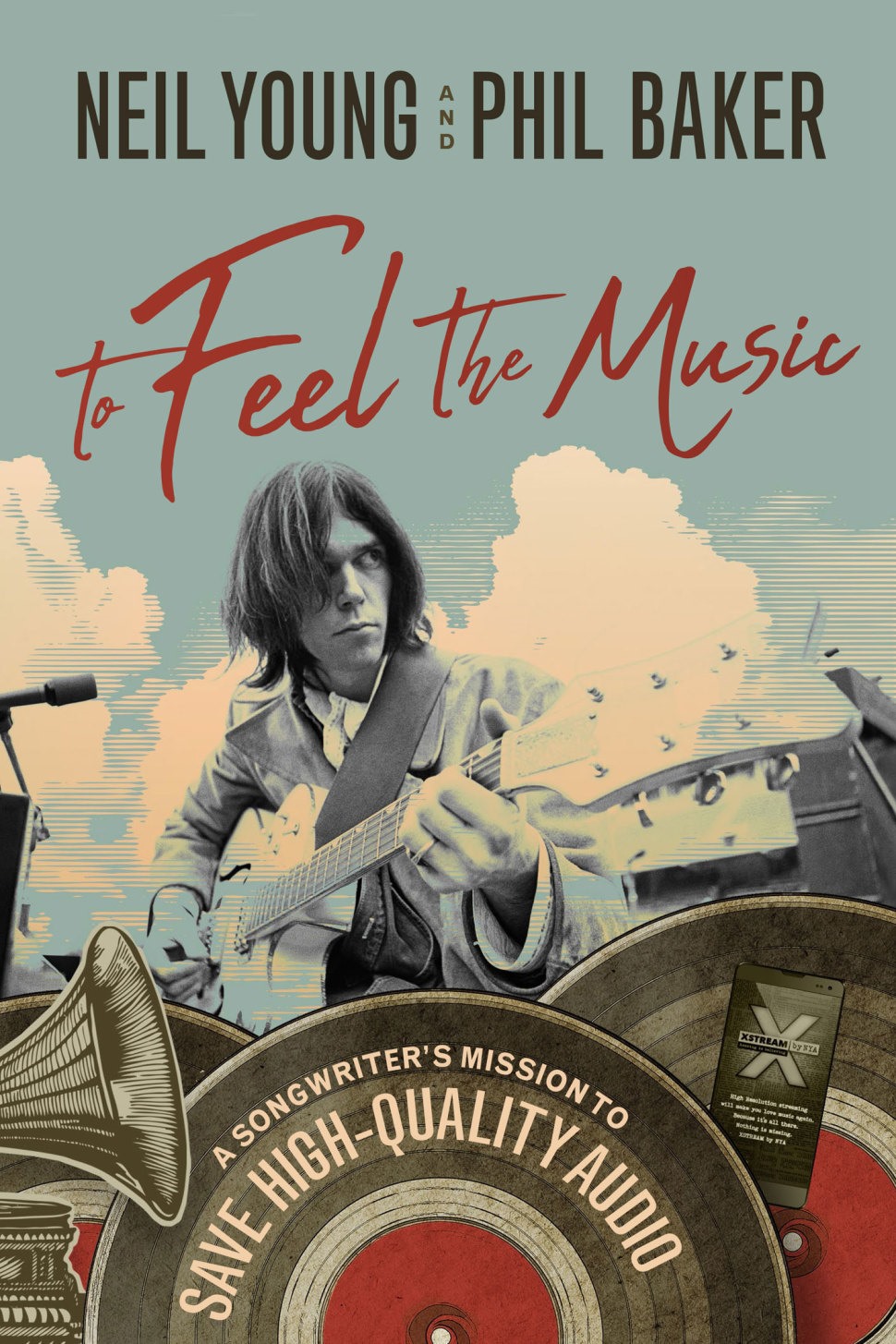
Neil Young To Feel The Music Book

Neil Young‘s latest book To Feel The Music is due out September 9th via Benbella Books. Young co-wrote the tome with Phil Baker about his efforts to provide high-quality music to listeners.

To Feel The Music is Neil’s third book. The Rock & Roll Hall Of Famer wrote Waging Heavy Peace: A Hippie Dream in 2012 and Special Deluxe: A Memoir Of Life & Cars in 2014. Young posted a note about the forthcoming volume on his Neil Young Archives website:
My new book, To Feel The Music, co-written with Phil Baker, has been announced and is now available for pre-order on numerous book sites.

To Feel The Music is the story of my efforts to improve the quality of audio that you hear. It takes you through how the sound was and is compromised by the tech and record companies, and instead of improving over time like other technologies, it has become worse. Our book also tells the business and development story behind Pono, and then, when people wanted the convenience of streaming, how we developed Xstream high resolution streaming, the highest quality streaming in the world, as you hear it on NYA.

The issue of improving audio quality has been one of the most important things we’ve been doing for decacdes, and something I focus on every day. We spent a year writing this and I think you’ll find it interesting and informative.

The book will be released on September 9th

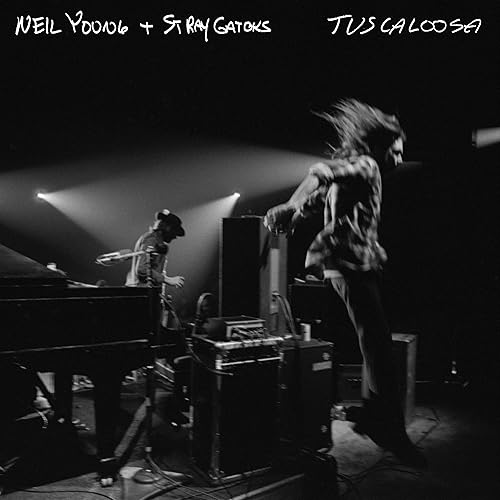
Tuscaloosa (Live)

Neil Young culled highlights from his February 5th, 1973 concert at the University Of Alabama in Tuscaloosa with The Stray Gators for a new live album entitled “Tuscaloosa”, which is due out on June 7th via Warner Bros Records. The first single from the seven-track LP is a slow and beautiful version of “Don’t Be Denied.”

This is the next installment of Neil Young’s ongoing archival series, a concert he played with the Stray Gators simply titles “Tuscaloosa”, it will come out on a single CD and a three-sided vinyl album with etched artwork on side four.

“It’s from the period right around Harvest and Tonight’s the Night,” said Young,  “For me, it’s edgy. It’s like those mellow songs with an edge. It’s really trippy to be down in Tuscaloosa, Alabama, and singing those songs from Harvest and the songs that we were doing for Time Fades Away before it came out. I found this thing and it had such a great attitude to it. I just loved the whole night, so I put that together with [engineer] John Hanlon.

Neil Young + Stray Gators “Don’t Be Denied” from the upcoming album ‘Tuscaloosa” Available on June 7th.