During the Rolling Stones’ 1973 tour of Europe, the band would usually end the show with their 1968 single (and Beggars Banquet album track), “Street Fighting Man.” On occasion, the Stones’ performance of the tune on the ‘73 jaunt could be magical. One such version was professionally recorded—and bootlegged—eventually seeing official release in 2011, before fading back into obscurity.
“Street Fighting Man,” like most of the Rolling Stones’ best stuff from the late ‘60s and early ‘70s, is not only a fucking great song, but the studio version sounds cool.
Believe it or not, what you’re hearing during the opening moments of is Keith Richards’ acoustic guitar, which was recorded using a cheap cassette deck, giving it an overloaded, electric character. Charlie Watts used a 1930s practice drum kit on the intro, also captured with the tape recorder, the thin tone of the kit adding to the lo-fi effect. As the song progresses, Indian instruments are heard, giving the track a psychedelic quality. One of those instruments, the shehnai (essentially an Indian oboe) produces the wailing sound heard towards the end of the song. Mick Jagger’s lyrics—is he calling for revolution?—are open to interpretation. Jagger’s words, and the fact that his vocals are partially buried in the mix, contribute to the mysterious nature of “Street Fighting Man.”
In support of their new record, Goat’s Head Soup, the Stones launched the 1973 European trek on September 1st in Vienna. Though significantly less dramatic than their infamous 1972 U.S. tour, the outing still had its moments. Take this one, in which saxophonist Bobby Keys quits the band right before the first of two scheduled performances that were to take place in Brussels, Belgium, on October 17th. In his autobiography, Life, Richards describes the scene:
No sign of Bobby at the band assembly that day, and finally I was asked if I knew where my buddy was—there had been no reply from his hotel room. So I went to his room and said, Bob, we gotta go, we gotta go right now. He’s got a cigar, bathtub full of champagne and this French chick in [the tub] with him. And he said, fuck off. So be it.
The Rolling Stones had booked the shows in Brussels due to its proximity to France, as they were banned from entering the country after behaving badly while recording Exile on Main St. in Villefranche-sur-Mer. The Brussels gigs took place at the Forest National Arena.
With a live album in mind, the Rolling Stones recorded both Brussels performances. Though the live LP idea was eventually scrapped, the public did eventually get to hear portions of the Belgian recordings via the syndicated radio program, The King Biscuit Flower Hour in both stereo and FM quadraphonic 4-track. Naturally, the KBFH broadcast was subsequently bootlegged.
On the Brussels recordings, the Stones—augmented by keyboardist Billy Preston, as well a horn section—are in fine form, for sure, but the absolute highlight of the tapes is the version of “Street Fighting Man,” the final song played during each of their sets that day. From the get-go, the energy of the band is palpable. Keith, especially, stands out, as he doesn’t seem to be playing his guitar as much as stabbing the thing, but it’s when Mick Taylor steps on his wah-wah pedal (in place of the shehnai) that this rendition starts to become spectacular. As the number continues, Bill Wyman’s bass swoops, the horns squeak and squawk, and the tempo increases and increases until the music ceases to be just that, morphing into a riotous, stunning wave of sound.
In 2011, after decades of praise from fans who heard the Brussels tapes, the Stones finally granted the release of a selection of the recordings. Nicking the title from one of the bootlegs of the Belgium gigs,Brussels Affair (Live 1973)was made available as a download via Google Play and the Rolling Stones’ website, as well as a limited edition box Set .But the box is now out-of-print, and, for some reason, you can’t even buy the download anymore. Currently, the only way you can pick up the release (through official channels, that is) is if you splurge for the japanese set. I bought the download when it came out, and can say that the recordings, given a fresh remix by BobClearmountain, sound stellar (much better than what’s heard above, which is from the bootleg version).
The live footage of “Street Fighting Man” is from the second of two shows the Stones played in Frankfurt on September 30th, 1973. Per usual, it was the closing song of their set.
If the process of recording blues classics with the Rolling Stones for their upcoming Blue & Lonesome LP felt familiar for Mick Jagger, it wasn’t just because he knew all the songs by heart — he’d also done this kind of thing before. Jagger’s previous attempt with an album of blues standards took place in 1992, while he was working with producer Rick Rubin on a solo LP that ultimately morphed into Wandering Spirit the following year. Rubin was also working with a Los Angeles band called the Red Devils, who he’d signed to his Def American imprint .
Tipped off to the band, Jagger turned up at the King King in May 1992 and sat in for a performance that included Bo Diddley’s “Who Do You Love?” and Little Walter’s take on “Blues With a Feeling.”
For Jagger, who’d been toying with the idea of a blues record since the Stones had finished their Steel Wheels tour, the show was just the spark he needed to actually get down to work. Using Rick Rubin as a middleman, he bought the band to Hollywood’s Ocean Way Recording studios in June, A day of running through some of the singer’s favorite numbers. the RedDevils were paid a flat fee of $750 for the session, which Jagger called to order by plunking down a pile of records.
What they got was a 13-hour blues marathon that produced more than a dozen songs — most of which were tracked in a few takes. Rubin publicly predicted the Red Devils sessions would be released “someday” — though in the meantime, the Devils were left without any real assurances, or even a copy of the tapes.
Even though the Red Devils sessions remain officially unreleased with the exception of the track “Checkin’ Up on My Baby,” which worked its way onto 2007’s The Very Best of Mick Jagger compilation — tapes eventually found their way into circulation.
1) 00:00 Blues With A Feeling
2) 03:17 I Got My Eyes On You
3) 06:24 Still A Fool
4) 10:02 Checkin’ Up On My Baby
5) 13:22 One Way Out
6) 15:34 Talk To Me Baby
7) 18:12 Evil
8) 21:03 Ain’t Your Business
9) 23:14 Shake ‘m On Down
10) 28:46 Somebody Loves Me
11) 31:37 Dream Girl Blues
12) 37:18 40 Days, 40 Nights
Vocals: Mick Jagger
Harp: Lester Butler
Guitar: Paul Size
Bass: Jonny Ray Bartel
Drums: Bill Bateman
The Rolling Stones are working on a blues-themed studio album, and we know for sure that Eric Clapton will be making a guest appearance on the disc.
Clapton “dropped by for a couple of numbers,” Richards told BBC 6 Music, adding that the recording sessions were lke “like old times down in Richmond.”No, he’s not talking about Richmond, Virginia; he means the CrawdaddyClub in Richmond, Surrey, England, where the Stones and Clapton’s old band, the Yardbirds, used to perform in the early to mid-Sixties.
The Rolling Stones confirmed that they were working on a new album at the launch of Exhibitionism, a career retrospective at London’s Saatchi Gallery, earlier this year. The sessions have included new material and several blues covers, including tunes by Howlin’ Wolf and Little Walter. Richards said the album would include “lots of Chicago blues” and would be released sometime “in the autumn.”
The Stones have circled back to the blues, with “Blue & Lonesome”, a (mostly) live-in-the-studio collection of 12 songs originally performed by the likes of Little Walter, Jimmy Reed and, again, Howlin’ Wolf. It’s the first Rolling Stones album to have zero Jagger-Richards originals; even their debut had a couple of attempts at songwriting. Recording Blue & Lonesome was easy – it took all of three days. “It made itself,” says Richards. As Ronnie Wood points out, however, it’s also the product of “a lifetime’s research, really.”
The freakiest thing about “Blue & Lonesome” is the extent to which Jagger and Richards agree on it. both are genuinely excited about the roots revival. The project might, from the outside, seem more like a Richards thing, the kind of retro move he’d favor, while Jagger The frontman says the stereotype isn’t all wrong, but that in this case, “we were all equally into it. I was as into it as anyone.”
“This is the best record Mick Jagger has ever made,” says Richards, always a fan of Jagger’s emotive harmonica playing, which flourishes on the new LP. “It was just watching the guy enjoying doing what he really can do better than anybody else.” He pauses. “And also, the band ain’t too shabby.”
Even after their early flurry of covers subsided, the Stones have never stopped playing old blues tunes, both onstage and, especially, in rehearsals. The 200 hours of Exile on Main Street sessions, for instance, were punctuated by repeated attempts at covers, meant to clear the air between the midwifing of new songs. Two of them Slim Harpo’s “Shake Your Hips” and Robert Johnson’s “Stop Breakin’ Down Blues” – made the 1972 album.
Jagger is finally ready to concede that the Rolling Stones have something to add to this music. “The thing about the blues,” he says, “is it changes in very small increments. People reinterpret what they know – Elmore James reinterpreted Robert Johnson licks, as did Muddy Waters. So I’m not saying we’re making the jumps that they made, but we can’t help but reinterpret these songs.
This past December, the Rolling Stones gathered in Mark Knopfler’s British Grove Studios in West London to begin work on a batch of original songs. Jagger is deliberately vague on the nature of those tunes. “I hope it’s gonna be a very eclectic album,” he says. “I hope some of it’s gonna be recognizable Stones and some of it’s gonna be some Stones you never heard before, maybe.”
Knopfler’s studio is gorgeous, equipped with an ideal mix of vintage and modern equipment, with high ceilings and gleaming blond-wood floors. It was also a totally alien environment for the Stones. says Richards. “I know that recording new music in a room they’re not familiar with, there’s sometimes going to be weeks before the room breaks in.” So Richards told fellow Stones guitarist Ronnie Wood to learn Little Walter’s apocalyptically mournful 1965 B side “Blue and Lonesome” as a potential icebreaker (Wood remembers this suggestion coming in by fax, well before the sessions).
By the second day at British Grove, Richards felt his prediction coming true. “The room is fighting me,” he recalls thinking. “It’s fighting the band. The sound is not coming.” He suggested “Blue and Lonesome,” Jagger dug up a harmonica in the right key, and the band barreled through two quick takes. “Suddenly,” says Richards, “the room is obeying and there’s something happening – a sound is happening and it was so good.”
One of those two takes ended up on the album, and it’s extraordinary, with Wood playing frantic lead; Richards hitting huge, doom-y chords; Watts nailing the original track’s regally restrained drum part; and Jagger digging deep on his harp when he’s not delivering one of the least-mannered vocals of his career. “Baby, please, come back to me,” he pleads. Afterwards, Jagger – who says he had already been pondering a Stones blues album – surprised everyone by calling for more covers. That night, he went to his MP3 collection, returning the next day with more song ideas.
And in keeping with the serendipity of the endeavor, a special guest showed up. On the first day, Eric Clapton happened to be mixing an album of his own at British Grove when he poked his head into the Stones‘ live room. The guitarist, who had seen the RollingStones playing blues gigs when he was still in his teens, was taken aback. “Eric walked in, and he had the same reaction that any fan would have,” says Was. “He was just gobsmacked at being that close to something that iconic and powerful. There was this great look on his face.” They asked Clapton to jam on two songs, and he ended up picking up one of Richards‘ guitars, a semihollow Gibson, instead of the Strats he’s mostly played post-1970 – which helped him reclaim the fat tone of his Bluesbreakers days: You can hear the band applauding him at the end of “I Can’t Quit You Baby.”
It all happened so quickly and naturally that the band never really discussed what it was doing, or even acknowledged it was making an album. “I didn’t even have time to change my guitar,” says Wood. “They were coming so thick and fast. It was like, ‘OK, let’s do it – this one, that one.’ Some of the harder riffs were making my fingers bleed, and Mick was going, ‘Come, let’s do it again, then!’ And we’ll go, ‘Hang on! My fingers!’ It was real hard work, but I love it.”
For Jagger, it was a chance to indulge his blues-harp habit, a subject that arouses an incongruously geeky enthusiasm in him. “If I had known I was gonna have to do this,” he says, “I would have spent a few days practicing, because sometimes I do that, sit at home and play. It’s quite easy, really; I mean, you just put on whatever, a whole bunch of Muddy Waters records.” (Muddy “Mississippi” Waters – Live, a 1979 LP featuring Johnny Winter, is one of Jagger’s favorites for this purpose.)
Jagger’s vocals are also striking in their authority. The camp he once brought to the genre is gone, replaced by something darker and deeper, perhaps reflecting the weight of real-life losses. “You can put yourselves inside the songs as a 70-year-old,” says Was, “in a way that you couldn’t when you were 21, because you hadn’t experienced the stuff.”
“On some of these, I sound quite old,” Jagger counters, “and on some of them, I don’t. Some of it sounds like when I was in my twenties doing this stuff. I didn’t really mean it to sound like that. I was supposed to be more mature!”
In October, as the Stones stepped onto the Desert Trip stage in Indio, California, some thoughts crossed MickJagger’s mind. “It was 30 meters wider than our normal stage,” says Jagger, “which is quite wide, by the way, which I usually run. And I heard that nobody else went out there, apart from me.
Though Jagger blames the dusty field for a recent bout of laryngitis – and he originally questioned the idea of a festival of “old, over-70 white English people playing all the same music” – the band had a good time at Desert Trip, treating it as a sort of boomer-rock class reunion.
The Stones are discussing more shows next year, and they really do intend to work on that album of originals. “There’s about 10 or 12 new songs that Mick actually has been cooking up,” says Wood, “and Keith’s got the odd one, too.” Richards suggests that at least some of the songs might be unfinished compositions that date back 15 years or more. Keith Richards is trying to persuade them to do some recording, which may be a stretch. Jagger is positive they’ll finish that album, “but I don’t know when, because you want it to be really good and everything.”
At 75, Watts is the oldest band member, and also happens to have the most physically demanding job. Understandably, he struggles with back pain, according to Wood. It’s unclear what the Rolling Stones would do without him, and that’s a prospect Richards refuses to contemplate. “Charlie Watts will never die or retire,” Richards says. “I forbid him to.” Richards knows exactly how he’d like to go, and he’s sure that doctors will want to have “a good look at the liver” when he does. “I’d like to croak magnificently,” he says, savoring the prospect. “Onstage.”
Blue & Lonesome sees the Rolling Stones tipping their hats to their early days as a blues band when they played the music of Jimmy Reed, Willie Dixon, Eddie Taylor, Little Walter and Howlin’ Wolf – artists whose songs are featured on this album.
The tracks are – ‘Just Your Fool’, ‘Commit A Crime’, ‘Blue And Lonesome’, ‘All Of Your Love’, ‘I Gotta Go’, ‘Everybody Knows About My Good Thing’, ‘Ride ‘Em On Down’, ‘Hate To See You Go’, ‘Hoo Doo Blues’, ‘Little Rain’, ‘Just Like I Treat You’, ‘I Can’t Quit You Baby’.
Written by Keef as he brooded over Anita’s dalliance with Mick, “Gimme Shelter” represented something darker and more universal: rape, murder and the death of the 1960s spirit.
“You get lucky sometimes,” Keith Richards says of “Gimme Shelter”, the greatest song he ever wrote. “It was a shitty day. I had nothing better to do.”
The tone is lightweight, almost laughable. Yet the song was wrought from the heaviest of materials. The Rolling Stones were still trying to climb out of the career-grave that their critically derided 1967 album Their SatanicMajesties Request had left them in, their plans persistently thwarted by the rapidly disintegrating physical and emotional state of their other founder-member guitarist, Brian Jones.
Their 1968 follow-up, Beggars Banquet, recorded largely with just Keith on guitar, had been a classic, but their final hit with Jones, Jumpin’ Jack Flash, had been their only chart single in the UK for 18 months. Now with Keith’s old lady – Anita Pallenberg, stolen from Jones the year before – filming sex scenes with Mick Jagger for his movie debut in Performance, Keith’s mind was all doom and gloom as he sat snorting coke and heroin at gallery owner Robert Fraser’s Mayfair apartment one stormy day that autumn.
Lounging with his guitar in a room decorated with Tibetan skulls, tantric art and Moroccan tapestries, chain-smoking and depressed at the thought of Anita being with Mick, Keith began to strum as lightning flashed across the London sky.
“It was just a terrible fucking day,” he recalls in his memoir, Life, “this incredible storm over London. So I got into that mode – looking at all these people… running like hell.”
Leaning on the same open chords that had become his signature, he crooned, ‘Oh, a storm is threatening, my very life today.’ Sounded good. He continued to strum, added another line: ‘If I don’t get some shelter, oh yeah, I’m gonna fade away…’
Six months later, when the Stones reconvened to begin work on their next album, Let It Bleed, the song of ultimate doom Keith had begun that stormy day, now titled Gimme Shelter, was among the first he and Jagger began working on with producer Jimmy Miller.
There were other monumental moments on the album to come, not least Jagger’s You Can’t Always Get What YouWant. But everything the Stones would become, everything they would be glorified as – the greatest, most legendary, most daring and sophisticated and dark and evil and sexy and cool rock’n’roll band in the world – would be summed up by the apocalyptic Gimme Shelter, the album’s opening track.
It would be another six months, though, before they’d finished with it. In the meantime the Rolling Stones went through the most turbulent period – artistically, personally, commercially – of their career.
After Jones, who had officially been ousted from the group in June ’69, was found dead in his swimming pool just three weeks later, the Stones went ahead with their planned free concert in Hyde Park, with new guitarist Mick Taylor.
They also announced their first US tour for three years, due to start in November. First though, they had to complete the album. Miller argued there was something missing from Gimme Shelter, something that would turn good into great. They found what they were looking for in 20-year-old Merry Clayton. Suggested by producer and long-time Stones acolyte Jack Nitzsche, Clayton had made her name through duets and backing vocals for Ray Charles, Burt Bacharach and Elvis Presley, among many others.
She laughingly recalls how she was about to go to bed when she got Nitzsche’s call: “It was almost midnight. I was pregnant at the time and I thought, there’s no way in the world I’m getting out of bed to go down to some studio in the middle of the night.”
But her husband, jazz saxophonist Curtis Amy, talked her into it.
“I’m wearing these beautiful pink pyjamas, my hair was up in rollers. But I took this Chanel scarf, wrapped it round the rollers so it looked really cute, went to the bathroom and put on a little lip blush – ’cos there’s no way I’m going to the studio other than beautiful!” Throwing a fur coat around her shoulders, she turned up at the studio “ready to work”. She admits to being somewhat nonplussed when she read the lyrics Jagger handed to her.
“I’m like, ‘Rape, murder…’? You sure that’s what you want me to sing, honey? He’s just laughing. Him and Keith.”
They began the session, and the effect was instant. “You listen to the original tape you can hear Mick whooping and hollering in the background,” Merry says.
Of course, there would be a grim postscript to the story of Gimme Shelter. While it became the most praised album-only track in the Stones canon – “The cleverest amalgam of powerful sounds the Stones have yet created,” reckoned International Times; “Ecstatic, ironic, all-powerful, an erotic exorcism for a doomed decade,” claimed Newsweek – it also became the emblem of the moment when the 60s dream flared into the 70s nightmare.
Released on the same day in December 1969 as the Stones’ ill-starred, bad-acid-and-cheap-wine appearance at Altamont Speedway in northern California, at which teenager Meredith Hunter was stabbed to death by Hells Angels, Gimme Shelter would also become the all-too appropriate title of the Maysles brothers’ documentary film of that debacle: the moment when the Stones’ music seemed to become a mythic force unto itself. Or as AlbertGoldman put it: “An obsessively lovely specimen of tribal rock… rainmaking music [repeating] over an endless drone until it has soaked its way through your soul.”
“They hand me the lyrics, and I’m looking, thinking, ‘Rape? Murder? I’m working with a bunch of fools!’”
Less a backing singer on Gimme Shelter, she was virtually a co-singer with Jagger.
“I remember saying to the boys [Jagger and Richards]: ‘I hope this don’t take all night, ’cos I gotta get my beauty sleep,’” she chuckles now. “But that song became the start of a whole new thing for me.”
Indeed, the 70s found Merry supplying vocals for Lynyrd Skynyrd (Sweet Home Alabama), The Who (as the Acid Queen in the original 1972 stage production of Tommy), Neil Young and countless others. But Gimme Shelter became Merry’s signature tune and the title of her 1970 debut solo album.
Currently, Merry Clayton can be seen telling – and singing – her story in the documentary movie 20 Feet From Stardom, in which she and several other noted backing singers reveal the stories behind a lifetime of classic songs. “Honey, we saw it all,” she purrs. “Only we were never supposed to tell about it – until now!”
Release Date,December 6th, 1969, on the album Let It Bleed
On the 29th May 1971, The Rolling Stones started a two week run at No.1 on the singles chart with ‘Brown Sugar’, from the album Sticky Fingers. It was also the first single released on Rolling Stones Records, it was the bands sixth US No.1, and a No.2 hit in the UK. The songs lyrics, which are essentially a pastiche of a number of taboo subjects, include: interracial sex, cunnilingus, slave rape, and less distinctly, sadomasochism, lost virginity, and heroin.
Though credited, like most of their compositions, to the singer/guitarist pair of Jagger/Richards, the song was primarily the work of Jagger, who wrote it sometime during the filming of the movie Ned Kelly in 1969. Originally recorded over a three-day period atMuscle Shoals Sound Studio in Muscle Shoals Alabama from 2nd–4th December 1969, the song was not released until over a year later due to legal wranglings with the band’s former label, though at the request of guitarist Mick Taylor , they debuted the number live during the infamous concert at Altamont on 6th December.
The song was written by Jagger with Marsha Hunt in mind; Hunt was Jagger’s secret girlfriend and mother of his first child Karis. It is also claimed it was written with Claudia Lennear in mind. Lennear saying that it was written with her in mind because at the time when it was written, Mick Jagger used to hang around with her. The Rolling Stones performing “Brown Sugar” live in Texas, 1972.
Ahead of the highly anticipated reissue of the 1971′s album “Sticky Fingers”, The Rolling Stoneshave released a previously unheard acoustic version of the song “Wild Horses.”
The song is one of the most beloved in the Rolling Stones’ canon, and an indispensable document of classic rock and roll. The new remaster and arrangement puts it in a whole new context: Now it’s even more tender, emotionally bare and Mick’s vocals are given a new clarity and intimacy.
More poignantly, the song takes on an even more haunted feeling, given that it comes in the wake of the deaths of both Jagger’s girlfriend L’Wren Scott and the band’s longtime saxophonist Bobby Keys.
“For three days in December 1969, the Rolling Stones stopped into Muscle Shoals studios in Alabama and managed to lay down three songs, one of which was ‘Wild Horses,’” writes Jim Beviglia in our Behind The Song feature. “The composition of this plaintive ballad was begun by Keith Richards, whose first child was born in August 1969, causing Keith regret about going out on the road and leaving the boy behind.”
“It was one of those magical moments when things come together,” Richards wrote in his 2010 autobiography Life about the song’s genesis. “It’s like ‘Satisfaction.’ You just dream it, and suddenly it’s all in your hands. Once you’ve got the vision in your mind of wild horses, I mean, what’s the next phrase you’re going to use? It’s got to be couldn’t drag me away.” The album is out May 26th.
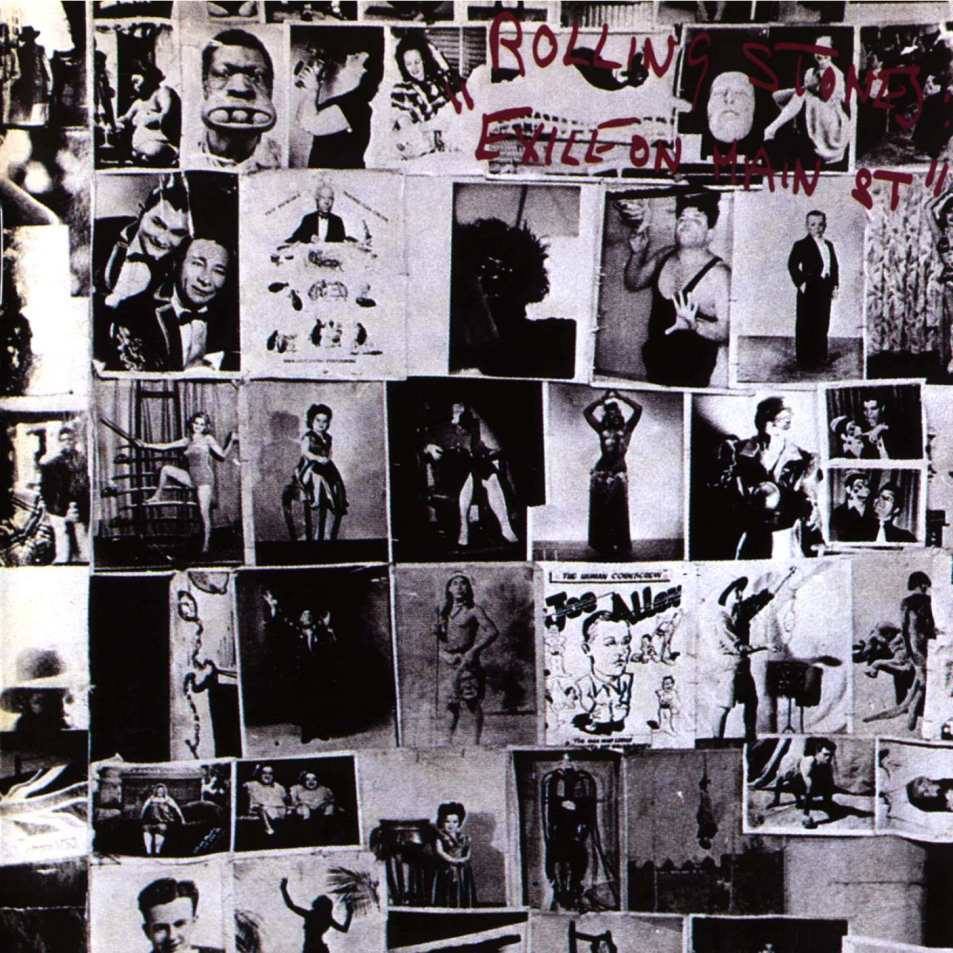
EXILE ON MAIN STREET the Rolling Stones released as a Double Album mostly recorded between 1968-1972 in Nellcote France, Stargroves Jagger’s country Home, Olympic Studios and Sunset Sound Studios in Los Angeles this was the Stone’s returning to a more rawer sound with lots of their influences on show in many different styles. Gripping on first listen it rocks with power and reveal’s something new with every listen changing your mind on what the best tracks were each time you hear it. Certainly one of the great double albums of Rock music, Rock stemmed from the Blues and spread across four sides are Rock’n’roll, Blues, Soul and Gospel gems. The singles released were “Tumbling Dice”, “Happy” with Keith on vocals and “All Down the Line” the album was a huge success reaching No.1 slot worldwide, Its an album with great feeling and since has been cited as one of the classic rock albums certainlly of the 1970’s. Nearly all the songs written by Jagger Richards.


 . But the box is now out-of-print, and, for some reason, you can’t even buy the download anymore. Currently, the only way you can pick up the release (through official channels, that is) is if you splurge for the japanese set. I bought the download when it came out, and can say that the recordings, given a fresh remix by Bob Clearmountain, sound stellar (much better than what’s heard above, which is from the bootleg version).


 The Fat Angel Sings