Posts Tagged ‘Joe Strummer’

On January. 1st, 1977, Joe Strummer took center stage at London’s burgeoning punk rock refuge, the Roxy. As if presciently ordaining himself the harbinger of what was in store for the pivotal year, “1977” was scrawled boldly across the frontman’s tattered white collared shirt as he and his fellow band members The Clash stormed through two back-to-back sets, officiating both the launch of the Roxy as a cultural touchstone and the explosion of the U.K. punk movement as a whole. The Roxy was a fashionable nightclub located at 41-43 Neal Street in London Covent Garden known for hosting the flowering British Punk Music scene in its infancy. The premises had formerly been used as a warehouse to serve the Covent Garden wholesale fruit and vegetable market.

After an unsuccessful run as an “alternative” nightclub called Chaguaramas, situated in the Covent Garden neighborhood of London, Andrew Czezowski, who was then manager of the Damned and the bands ChelseaGeneration X, took ownership of the building. Initially intended as a place for his client acts to rehearse, he along with partners Barry Jones and Susan Carrington pawned a number of their personal possessions, furnished the venue, and stocked the bar, reviving the haunt as the Roxy, hoping to do for London’s punk scene what CBGB did for New York. By the time the club opened Chelsea had split with members Idol and James and Towe forming Generation X and it was they who played on closely followed by the Heartbreakers fresh off the aborted Anarchy Tour.

Don Letts was the resident DJ at the club and he was instrumental in encouraging punk rockers to embrace reggae.

The music scene within which the Clash had been slowly ingratiating themselves had begun years before the fabled New Year’s gig, but it had been trammeled by censorship, and poor luck. 1976’s Anarchy Tour, wherein the band, accompanied by Johnny Thunders’ Heartbreakers, supported the Sex Pistols on a string of ill-fated dates, the majority of booked appearances had been canceled due the pressure of local political interests or the volume of protest demonstrators. By the time the tour had dissolved in scandal on Christmas Eve, as retold in Nick Crossley’s Networks of Sound, Style and Subversion: The Punk and Post-Punk Worlds of Manchester, London, Liverpool and Sheffield, 1975-80, almost two-thirds of the 20-odd scheduled dates were cancelled before a note had been played.

The ill-repute earned by the failed Anarchy Tour mostly plagued the Sex Pistols, however, as they headlined the bill while the Clash occupied the most modest slot, below that of the Heartbreakers. With hardly a reputation visible enough to damage, they were best positioned to recover. Sex Pistols documentarian Julian Temple, whose forgotten footage of the Roxy evening was finally unearthed for the 2015 BBC Four documentary, The Clash: New Year’s Day ’77, told the network at the time of the release, “The Clash weren’t known at all outside a very small circle, but I thought they were an incredible band in the making.”

Armed with a sharpened assortment of politically militant punk anthems-in-waiting, most of which would eventually appear on their eponymous debut three months following the Roxy gala, Temple recorded subterranean Clash rehearsals, capturing now-familiar numbers in their embryonic form. Where the Sex Pistols expressed their subversive proclivities with sneering confrontation and a manic public image (and in a sense, establishing the “punker” archetype), the Clash honed more melodic and informed song structures and envisaged a more focused and clear-cut ideological vision.

Image result for the clash roxy new year

But it wasn’t the Clash’s brand of more organized and presentable subversion that was originally slated to break in the newly rebranded Roxy. As Marcus Gray put it, in his book The Clash: Return of the Last Gang in Town, “The Clash agreed to headline the 1st January 1977 Roxy opening night, thus beginning the new year with a highly symbolic act.

It was the Pistols manager Malcolm McLaren, in his characteristically mercurial fashion, who pulled his clients out of the gig at the last minute as a result of the fallout following the Pistols infamous TV appearance on the Today show. Still, the symbolism of the turn of events is not exaggerated. The memorably turbulent, not to mention capacity-defying, performance was the first of a series of overtures that would propel the Clash past the perpetually embattled Sex Pistols as the U.K. punk rock hierarchy.


The Roxy’s reign, on the other hand, would be tragically short-lived: it shuttered its doors in April 1978, little over a year after its grand opening. But not before cementing its legacy by cycling through the gambit of prominent English punk acts of the era, from street-punk squatters like Crass and Slaughter and the Dogs to art-school post-punks Wire and Siouxsie and the Banshees . Despite the brevity of the Roxy’s run, the bands it hosted and movement it helped launch proved bigger and more lastingly influential than the Clash and their contemporaries could have ever predicted.

thanks to the diffusser

The Roxy Club London WC2

The Clash’s first album came out in 1977, the same year the Sex Pistols historic album “Never Mind The Bollocks”  debuted — though the Clash self-titled LP was delayed two years in the U.S., where it was given a revised track listing and a release after their second album came out in the States.

It was an exciting time for rock ‘n’ roll. The politically potent and emotionally charged songs on The Clash represented a new era. “No Elvis Beatles or the Rolling Stones” as one of their songs memorably declared.

On this day (April. 8th) in 1977: The Clash released their debut, self-titled LP on CBS Records in the UK (& a thousand new punk bands were born!); it reached number 12 on the UK albums chart, but would not be released in the US until 1979 (with a modified track listing); the album’s front cover photo, shot by Kate Simon, was taken in the alleyway directly opposite the front door of the band’s ‘Rehearsal Rehearsals’ building in Camden Market; drummer Terry Chimes did not appear in the picture as he had already decided to leave the group – he was credited as ‘Tory Crimes’ on the sleeve…Recorded between three weekend sessions 10th-27th February at the CBS studios 3 in London and the National Film School studios in Beaconsfield, By the third of these sessions the album was recorded and mixed to completion, with the tapes being delivered to CBS at the start of March. It cost £4000 to produce.

The subject of the opening track, Janie Jones, was a famous brothel owner in London during the 1970s. Remote Control was written by Mick Jones  after the Anarchy Tour and contains pointed observations about the civic hall bureaucrats who had cancelled concerts, the police, big business and especially record companies. CBS decided to release the song as a single without consulting the band. I’m So Bored with the USA, developed from a Mick Jones song, entitled “I’m So Bored with You”, condemns the Americanization of the UK. White Riot was The Clash debut single. The song is short and intense, punk style of two chords played very fast (5 chords in total song). Lyrically, it is about class economics and race. Career Opportunities, the opening track of the second side of the album, attacks the political and economic situation in England at the time, citing the lack of jobs available, and the dreariness and lack of appeal of those that were available.

“Protex Blue”, sung by Mick Jones, is about a 1970s brand of condom. It was inspired by the contraceptive vending machine found in Windsor Castle toilets. The song ends with the shouted phrase “Johnny Johnny!”, “johnny” being a British slang term for a condom.


The version of “White Riot” featured on here was not recorded for the album. Instead, they used the original demo version, recorded at Beaconsfield Studios before the band signed to CBS.

Junior Murvin’s Police & Thieves was added to the album when the group realised that the track listing was too short. Another cover the band played at these sessions was Bob Marley’s “Dancing Shoes”. Garageland was written in response to NME writer Charles Shaar Murray’s damning review of a Clash early appearance at the Sex Pistols Screen on the Green concert – “The Clash are the kind of garage band who should be returned to the garage immediately, preferably with the engine running”It was the final track recorded for the album.

Tracklist

Janie Jones
Remote Control
I’m So Bored with the U.S.A.
White Riot
Hate & War
What’s My Name
Deny
London’s Burning
Career Opportunities
Cheat
Protex Blue
Police & Thieves
48 hours
Garageland

Here is an amazing documentary, which tells the story of Joe Strummer, former Clash frontman and defining figure of British popular music.
As a Celebration of his life and his music, with exclusive interviews from band members, close friends, roadies and fans, this film gives an insight into the artist whose sudden death in 2002 came as a shock to the music world.
Interviewees include Mick Jones, Topper Headon, Jonny Green, Glen Matlock, Pennie Smith and more. Also featured is music from Joe Strummer,The Clash and The Mescaleros. You can see footage of performances of Tommy Gun, Graceland, London Calling, White Riot and many many more.

Narrated by Robert Elms

Documentary Chapters:
Chapter 1. First Impression
Chapter 2. Early Days
Chapter 3. Punk… So What Was That All About?
Chapter 4. Leader of the Pack
Chapter 5. The Fans
Chapter 6. We Gotta Move On
Chapter 7. Backlash
Chapter 8. Amerika
Chapter 9. The Man Behind the Mask
Chapter 10. Words and Music
Chapter 11. “I Am Not Che Guevara”
Chapter 12. That Split
Chapter 13. The Wilderness Years
Chapter 14. The Mescaleros
Chapter 15. Joe At 50
Chapter 16. Deja Vu
Chapter 17. Joe R.I.P
Chapter 18. Legacy
Chapter 19. Strummerville
Chapter 20. Memories


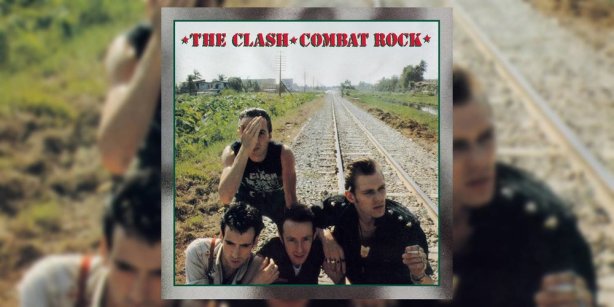
Released in May 1982, “Combat Rock” is The Clash’s fifth studio album, their best selling album and the last to include guitarist/vocalist Mick Jones and drummer Topper Headon. It was indeed their most polarizing work to date, within the band and among their fan base. I remember hearing hardcore Clash devotees refer to “Combat Rock” as their sell out album. They could not have been more wrong.

The album displayed The Clash as a band that made impassioned statements about the times we were living in and how we got there. With this album, they somehow managed to limit the amount of anarchy and chaos pouring out of your speakers without compromising their message. The Clash toned down the excesses of their previous release Sandinista (1980), a three album opus that vacillated between brilliance and a muddled mess. They hired veteran producer Glyn Johns to produce the album, his steady hand and experience leading them to cut “Combat Rock” down from a double album called Rat Patrol from Fort Bragg to a single album.

After two albums of increasing ambition (the two-LP ‘London Calling‘ was followed by the triple ‘Sandinista!’), and a two-year recording break, the Clash’s classic line-up returned with their final album, a lean, song-centered effort. ‘Combat Rock’ which made them MTV stars, thanks to the hit singles “Rock the Casbah” and “Should I Stay or Should I Go.” But the album goes deeper than that, finding inspiration in some new corners, despite the increasing tensions among band members during recording. This was the last hurrah for guitarist Mick Jones and drummer Topper Headon … and the Clash. 

It was the fifth studio album from the Clash and the penultimate album, Released on CBS records in May 1972 and spent 61 weeks in the charts, recorded at Ear Studios in London between September 1971 and january 1972 and Electric Lady studios in New York, originally planned as a double album with a working title of “Rat Patrol from Fort Bragg” with mixing done by Mick Jones the band were dissatisfied with the result and internal wrangling within the band bought in Glyn Johns and reduced the running order to a single album major tracks were Should I Stay , Should I Go, Straight To Hell and Rock the Casbah, during promotion for the album Joe Strummer sported a Travis Bickle Mohican haircut.

The Clash were never shy about making political statements and “Rock the Casbah” is no exception. It was intended to be a song about the banning of rock music by Muslim fundamentalists in Iran, but like all really cool things, it got co-opted by people who completely missed the message. “You know the U.S. military played this song in the first Gulf War to the troops and now are using it again as they prepare for war,” Strummer shared “this is just typical and despicable.” Also, in 2006, “Rock the Casbah” was named one of the 50 Greatest Conservative Rock Songs by the National Review.

The biggest triumph of Combat Rock was that The Clash were able to sell tons of records with an album that was complex and more different than anything else on the charts at the time.

Combat Rock is so much more than just “Should I Stay or Should I Go” and “Rock the Casbah.” The band were big fans of the movie Apocalypse Now and they had a great fascination with the Vietnam War. As a result, several of the album’s songs are meditations on the war and its impact on society. “Straight to Hell” tells the story of Vietnamese women and their children whose fathers were American soldiers who eventually abandoned them. “Sean Flynn” is another Vietnam-themed tale about the son of actor Errol Flynn who was a photojournalist who disappeared in 1970 while in Vietnam.

The Clash spent much of 1981 and some of 1982 in New York and many of the songs on Combat Rock have a very distinct New York influence and feel to them. One of these songs is “Red Angel Dragnet,” a tune that was inspired by the shooting death of Frank Melvin, a member of the Guardian Angels. The song incorporates quotes from Martin Scorcese’s Taxi Driver with The Clash’s longtime associate and sometimes manager Kosmo Vinyl imitating the voice of the movie’s main character, Travis Bickle.

“Overpowered By Funk” is a song that illustrates the heavy influence that hip-hop (then referred to as rap) had on the band. Joe Strummer recalled in 2002, “When we came to the U.S., Mick stumbled upon a music shop in Brooklyn that carried the music of Grand Master Flash and the Furious Five, the Sugar Hill Gang…these groups were radically changing music and they changed everything for us.” The song features a rap vocal by legendary graffiti artist Futura 2000. It captured the mood and feel of New York City in 1982 and it gave us a glimpse into Jones’ musical future with his band Big Audio Dynamite. The dark side of New York is on display in “Ghetto Defendant,” a reggae dub track featuring Beat poet Allen Ginsberg. It’s an ominous tale about heroin addiction and despair. Ironically, it was heroin addiction that forced the band to fire drummer Topper Headon after the album’s release.

The various styles of music on Combat Rock were emblematic of the drifting apart of Strummer and Jones. “Know Your Rights” is Joe Strummer personified and one hell of a way to kick off an album. The song exemplified the direction he wanted the band to go. Strummer thought they needed to get back closer to their punk roots. The stylistic tug of war on Combat Rock works with the heavy subject matter. Unbeknownst to us at the time, it was the last great statement from The Clash as we knew them. When the Combat Rock tour ended, Strummer and the band’s manager Bernie Rhodes forced Jones out of the band. Strummer confided in 2002, “I committed one of the greatest mistakes of my life with the sacking of Mick.”

Combat Rock’s legacy lives on years after its initial release, with the most notable example being “Straight to Hell”, which was sampled in M.I.A’s 2007 song “Paper Planes.” Combat Rock may be one of the most misunderstood albums of all time. The band’s hardcore fans wanted more of what “London Calling” was and The Clash wanted to grow and explore. In the long run, I think we were the better for it.

The Band were Joe Strummer, Mick Jones, Topper Headon and Paul Simonon,