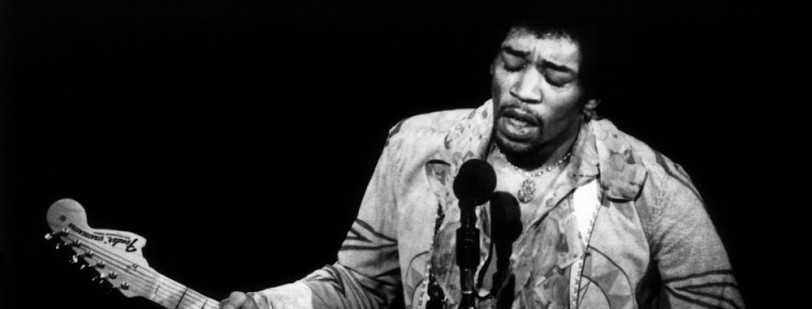
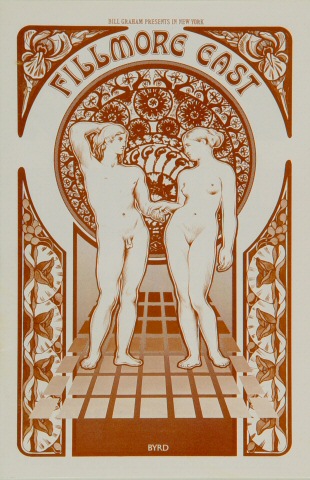
The four shows that the Band Of Gypsys played at Fillmore East to bring in the New Year have rightly gone down as some of the best shows of all time, especially those on New Year’s Day itself. There were moments on New Year’s Eve where the band seemed to be lacking energy for whatever reason but on the whole every show was fantastic, as stated by the lucky devils I interviewed who were there to witness the shows for themselves. The music was funkier than that of the Hendrix Experience and while the drums may seem simple at times especially compared to Mitch Mitchell, the drums are a pivotal piece to the music that Hendrix was playing at this particular time. The Band Of Gypsys wouldn’t last for much longer with their final show coming less then a month later at Madison Square Garden in New York (Hendrix would leave the stage after just two songs and Miles would be fired backstage) but the music the band played at these four shows was and continues to be nothing short of exceptional.
There are certain artists who played certain shows with certain performances that will always be remembered, and that is certainly the case with the Band Of Gypsys at Fillmore East.
Second Show setlist:
- Stone Free
- Them Changes
- Power Of Soul
- Message To Love
- Earth Blues
- Machine Gun
- Voodoo Child (Slight Return)
- We Gotta Live Together
- Wild Thing
- Hey Joe
- Purple Haze
Bill Graham himself has been quoted as saying the fourth and final show the Band Of Gyspys played at Fillmore East was something else entirely:
Bill Graham
“I will never again see a performance by a guitarist-vocalist with that intensity, with that total emotional impact. It was like an adagio dance. The guitar was the snake, and he was the snake charmer.”
Graham introduced the Gyspys himself with the band beginning to ramp things up as he brings the short but effective introduction to a close. Stone Free is the opening number and if you thought the band couldn’t be any tighter after an exciting early show, you couldn’t be more wrong. The band sounded powerful before but during this performance there are moments of delicacy and calmness that when paired with the overall power of the three members playing together, produces music on a magical scale. Them Changes and Power Of Soul follow suit in the exact same order that worked so well during the early show. Two funky numbers this good back to back will guarantee a happy audience and that was certainly the case at this show. Miles then introduces the next song, “Jimi’s going to do a thing he wrote called Message To Love” before the band build up to the main riff. It’s a fine moment from this late show with Miles supplying backing vocals behind Hendrix on lead. This rendition is a full two minutes longer than the version that was played the previous night which really highlights the difference in focus from Hendrix during this final show at Fillmore East, and the same can be said for Earth Blues which follows.
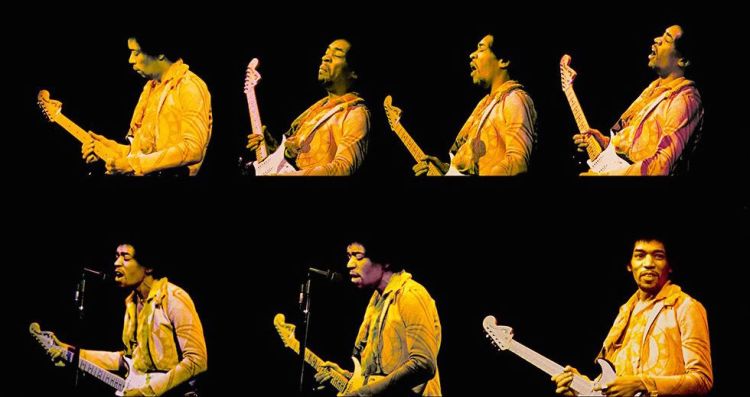
The next song is Machine Gun which clocks in at twenty minutes and packs the same kind of wallop as the performance at the early show, although the tempo is a little slower. Hendrix takes off yet again on this track before the band turn to Voodoo Chile (Slight Return), with Hendrix saying “we’re trying to figure out something to play but we only know about six songs now,” which is no doubt referencing the lack of original material the Band Of Gypsys had at the time. But that’s ok because four of the final five songs the band played at this show were Hendrix Experience songs starting with Voodoo Chile (Slight Return), resulting in the energy level inside Fillmore East to rise above the high level it was already at. The Gypsys then go straight into We Gotta Live Together, a song penned by Buddy Miles and the only time this song was played during the Fillmore East run. The song appears to be more about getting the audience involved with Miles asking them to clap along to the track. It’s a fun, uncomplicated song designed for one thing and one thing only, to get the audience moving. And it worked! The Gypsys then turn to something more recognisable in Wild Thing with Hendrix’s fuzz ringing through the air. The power of the fuzz alone when the song begins is outstanding. Hey Joe and Purple Haze are the final two songs which is fitting considering they were the first two singles that Hendrix released with the Experience and remain to this day as two of the most recognisable Jimi Hendrix songs. Hey Joe does lose a bit of excitement in the drum department due to the lack of Mitch Mitchell behind the kit but Miles does his own thing and stamps his own feel on to the track. Purple Haze is the perfect show closer with the fuzz all the way up once more, that thick tone probing ever corner of the venue with the crowd then going wild when Hendrix and the Gypsys walk off the stage after finishing.
But even at the Fillmore East with the Band of Gypsys he sometimes found old habits hard to break. Graham says that Hendrix’s first set on the second night was in fact a disappointing reversion to his showbiz stunts. When Hendrix asked him during intermission what he thought of the set, Graham was brutally frank.
“I said, ‘You’re Jimi Hendrix, and anything you do is taken as gospel because of who you are,'” says Graham. “‘In the first show, you humped the guitar, you played it with your teeth, you stuck it behind your back. You just forgot to play.'” Stunned, Hendrix went back out onstage for the second show and played. The incandescent version of “Machine Gun” on the 1970 live LP Band of Gypsys was recorded during that show.
“The solo on ‘Machine Gun’ was absolutely astonishing,” declares Alan Douglas, who saw both sets. “In the first show, he was playing to the audience, having a good time, jumping around. In the second show, he dug right into the music.”
After the second show, Graham raced backstage to congratulate Hendrix. “He came over, totally drained, full of sweat from top to bottom, right up to my face, and said, ‘All right, motherfucker? That good enough for you? You gonna let me go now?'” Hendrix then wheeled around back on to the stage for his encore and did, in Graham’s words, “fifteen minutes of the greatest shtick you’d ever want to see” – grinding up against his Strat, picking it with his teeth, the works. Having proved to Graham and the Fillmore crowd the true depth of his musical gift, Hendrix returned to the stage to show ’em all, one more time, that he was still one of rock’s greatest showmen.
“At one point, he looked to the side of the stage and stuck his tongue out at me,” Graham laughs. “It was very, very funny.”
Read more: http://www.rollingstone.com/music/news/concerts-that-changed-rock-jimi-hendrix-and-the-band-of-gypsies-at-the-fillmore-east-new-york-19870604#ixzz3ynrz7Nd6
Follow us: @rollingstone on Twitter | RollingStone on Facebook

The following is one of the finest recollections of the final show the Band Of Gypsys played at Fillmore East:
Ian Lowell (Audience Member)
“On January 1st, 1970, Jeff Mayer and I celebrated the New Year with a major bang. We bought two first-rate tickets in the orchestra for a late show at the Fillmore East to see Jimi Hendrix and the Band of Gypsys. The group was introduced as they hit the stage at about 1:45 am by none other than Bill Graham. Hendrix was no longer performing with the Experience, who had now been replaced by drummer Buddy Miles and bass player Billy Cox. We did not know quite what to expect in the way of a set list or the manner in which the songs would be performed. Although I asked a number of other friends to go with us, there was a decided lack of interest. This apathy had inexplicably carried over to the general public as the show was nowhere near a sellout; about 25% of the tickets remained unsold. On a given night in New York City, in a city of eight million people, only about 2,000 people actually saw fit to pay $5 to $7 to see the greatest guitar player who ever lived in an intimate setting. To the best of my knowledge, this was the only time Graham had raised the ticket prices for a specific show. It was clearly their loss and not ours.
The show began with Jimi’s own “Stone Free” which was played at an uncharacteristically frantic pace. Precisely two minutes into the number, as the collective jaws of the audience began to drop, seemingly in unison, Jimi began a solo that lasted nearly eight minutes, during which he managed to coax sounds out of his instrument at various times with a wha-wha and feedback from outer space and at other times with no aid whatsoever. The solo was so astounding it took on a life of its own as it went off in countless directions. During the solo, Buddy Miles went into a sort of scat singing that added to the unique nature of what we were witnessing. Even by the standards set forth by Jimi Hendrix, the solo was something totally unmatched. The song had been reworked so radically that it was a totally different number greatly enhanced by the funky, soulful and skillful playing of Buddy Miles and Billy Cox. Band of Gypsys brought us funk, rock, soul and blues from a place somewhere between the planets Neptune and Saturn. Unlike his shows with the Experience, Jimi shared the spotlight and did so on the following number, one that Miles was best known for; “Them Changes.” This version was above reproach with Hendrix and the hard-edged funk of Cox’s simple but powerful bass playing adding a new dimension to an already great song.
“Power of Soul” was a song that best typified the new sound of Band of Gypsys and presented a powerfully compelling “funkified” groove. It was too infectious to resist. The refrain told us in deceptively simple but irresistible fashion that, with the “power of soul,” all things were possible and so it was with Jimi’s music. Jimi and Buddy led us into an eerie, faraway place with their harmonies. Even for Hendrix, the music ventured deep into unknown territory and it was tremendously unique and creative. “Message to Love,” the next number, broke new ground and also managed to find another irresistible groove. A few songs later, Hendrix played the relentlessly intense and affecting “Machine Gun,” Jimi’s tribute to our men who continued to risk paying the ultimate sacrifice in Vietnam. In terrifyingly realistic fashion, the song somehow managed the impossible, recreating the sounds of the horrors of war with a guitar. It was one of those accomplishments from Hendrix that could not possibly have been done by anyone else. Several songs later, Hendrix performed a positively scathing version of one of his better known songs “Voodoo Child” followed by a loose, ragged and fun version of Miles’ “We Gotta Live Together.” The show concluded with powerful versions of “Wild Thing,” “Hey Joe” and “Purple Haze.” Band of Gypsys concluded a brilliantly conceived and performed show just shy of two hours long.”
Bobby London (Audience Member)
“The music was great but his physical presence was restrained. Much later I read that Bill Graham was taunting him just before he went on and I sort of figured it out. He seemed very withdrawn. I went to the show alone, I think, I felt kind of bad for him but I was grateful to be a kid in his presence. I don’t mean to infer he was out of it. His playing was masterful, he was in control, he was just holding back. It was kind of insane. I loved him and was happy to finally see him but it was a sad and perplexing evening. It was the 60’s, man! All I remember was being transfixed. It was Hendrix!”
thanks to Tom Caswell for this article




 The Fat Angel Sings