Virtual band Gorillaz have shared a new song, “Aries,” that features Peter Hook (Peter Hook and the Light, Joy Division, New Order) and Georgia, via a video for the track. It’s the third episode of their Song Machine video series. Gorillaz’s Jamie Hewlett directed the video, which features the virtual band driving around a city. Stick around for a COVID-19 PSA at the end. Check out the song/video below.
The band’s virtual guitarist Noodle had this to say about the song in a press release: “Highly impatient and competitive, many Aries have the fighting spirit of your mythological ruler.”
Previously Gorillaz shared episode one of Song Machine, which showcased a video for the new song “Momentary Bliss” that features slowthai and Slaves. Then they shared episode two of Song Machine, which was the new song “Désolé,” that featured Malian musician Fatoumata Diawara, via a video for the track.
Washed Out is Ernest Greene, a young guy from Georgia (via South Carolina) who makes bedroom synthpop that sounds blurred and woozily evocative, like someone smeared Vaseline all over an early OMD demo tape, then stayed up all night trying to recreate what they heard. Washed Out is the artist we all need right now; I think you just made this pandemic a bit more tolerable.
Washed Out’s Ernest Greene was one of many artists who found themselves in a state of limbo last month after the widespread cancellations of live performances and unexpected travel restrictions. In Greene’s case, the first effect was canceling a long-planned music video shoot in Italy, where he was set to collaborate with an international team of filmmakers.
In response, Greene took the opportunity to engage his fans, launching a collaborative creative project for the new Washed Out song “Too Late.” The result is a beautiful music video touching every corner of the globe that couldn’t have existed a month ago.
Greene writes: I’d spent months planning a music video for a new song called “Too Late.” My inspiration was a Mediterranean sunset I saw late last year, and the plan was to shoot on the coast of Italy with a team of UK and European collaborators. As we got closer to the shoot date, word about the severity and the speed of the virus started becoming daily news, and it became clear it wasn’t going to happen the way we’d planned. We tried to move the shoot several times (to Malta, Croatia, Spain, and eventually the UK), and one after another, countries shut their borders. Seeing Italy hit so hard was especially difficult to see.
I put up an IG post asking for fans to help me come up with the raw footage I had in mind – those first few days, as I was going through photos of my trips and tours, the memories of traveling and experiences I’d had took on a new significance. I wanted the video to capture those same moments for other people in their lives, and give us all an excuse to remember what it’ll look like again when it passes.
I went in thinking if I got 100 clips, I’d have enough to make the video I wanted to make. 30 minutes in, I had the 100 clips, and a few days in, I had over 1,200 clips – from London, Bali, Okinawa, Ann Arbor, Dubrovnik and a few hundred other places around the world. It was pretty amazing for me to see the vids and pics flood in like they did.
I was blown away by the response, and I’m excited to share the project with everyone now. For me, it’s turned out to be a much needed reminder of how connected we can all be when we’ve never been more physically distanced from each other. I hope everyone that contributed and everyone that watches the video gets the joy from it I do.
I don’t know what the immediate future holds for Washed Out... I have a lot of new music in various states, and other projects I was looking forward to working on this summer. I don’t know when I’ll be able to tour again, or when any of the other new music will come out, but I’m staying optimistic about both…. Ernest Greene
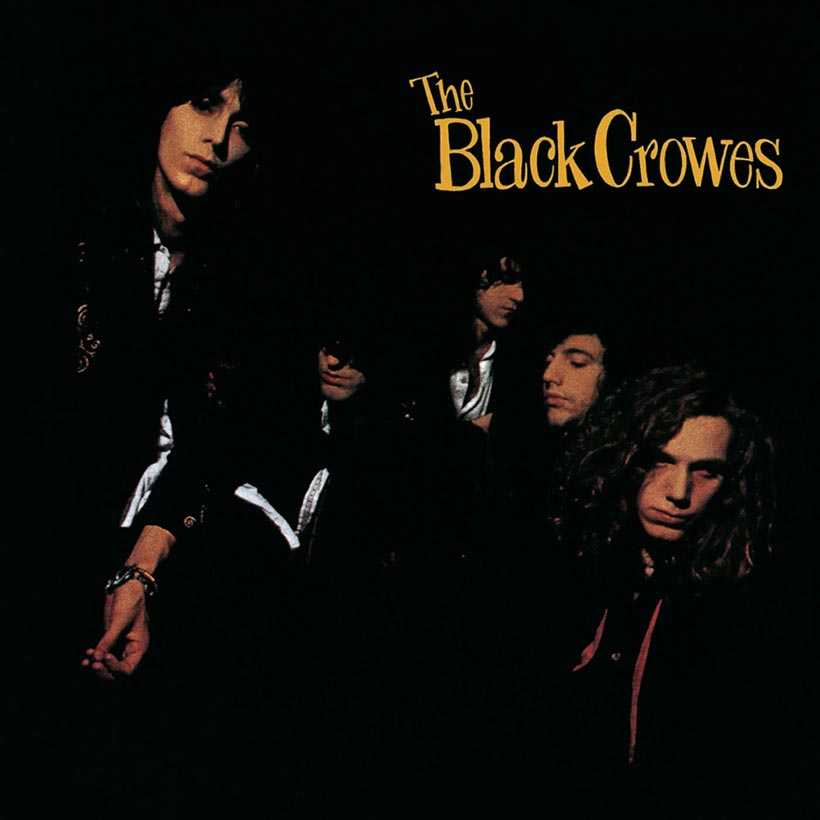
Chris Robinson. Hailing from Georgia,Chris Robinson grew up with the Faces and the Rolling Stones as mentors. With the swagger of Rod Stewart, his band, The Black Crowes, burst onto the scene in 1989 with their debut, “Shake Your Money Maker”. The record was a breath of fresh air as grunge was taking over the airwaves. The stripped down music on the record yielded such classics as “Twice As Hard,” “She Talks to Angels,” “Jealous Again” and the Otis Redding classic, “Hard to Handle.” Robinson’s stage presence was quickly compared to Mick Jagger as he strutted like a rooster. With brother Rich on guitar, the band had a bluesy feel which also drew comparisons to the Stones.
As they emerged on the scene in their paisley-printed tunics and born-again hippie attire, people didn’t know what to make of them at first – as they defiantly claimed to save rock’n’roll. Shake Your Money Maker went on to sell more than 5 million copies, reaching triple platinum status and earning the group the Best New American Band distinction by Rolling Stone readers.
While it seemed like they came out of left field, the success of the Crowes was anything but instant. Chris and Rich Robinson initially formed the band in 1984 while in high school in Marietta, Georgia and went by the unfortunately named Mr Crowe’s Garden.
The brothers went through three drummers and half a dozen bass players between their ’84 debut as Mr Crowe’s and the summer ’89 sessions for Shake Your Money Maker. While they initially dabbled in 60’s psychedelic pop and classic southern rock, they gradually turned to the 70s-era blues-rock that would define the group’s eight studio albums.
Cut to the summer of ’89. With a new sound and new lineup in lead guitarist Jeff Cease, bassist Johnny Colt and drummer Steve Gorman, the band headed into the studio to start sessions on Money Maker. George Drakoulias, a former A&R rep for A&M Records turned producer for Def Jam, not only produced the record but also was responsible for scouting them in the first place and securing the record deal. Having studied at the Mick Jagger school of strutting, Robinson made for quite an charismatic frontman and Drakoulias saw potential.
The Crowes were always conspicuous crate diggers and ardent students of music history. They even named Shake Your Money Maker after a song by legendary blues guitarist Elmore James. One doesn’t have to listen hard to pick up the breadcrumb trail of influences ranging from 60s and 70s groups like Aerosmith, The Rolling Stones, the Allman Brothers, to Faces . In fact, they even recruited Allman Brothers keyboardist Chuck Leavell to play piano and organ on most of Shake Your Money Maker‘s tracks.
Picking up where their predecessors left off, the Crowes were equally adept at blending rock, soul, country and gospel into something that felt new and electric. With swagger to spare, the very first track opens the album as a declaration and a promise to rock ‘Twice As Hard’.
From the screeching sounds of a car crash on ‘Thick N’ Thin’ to Rich Robinson’s wondrous dexterity on ‘Struttin Blues’, the whole album has that lighting in a bottle feeling and the raw energy of a live band who can’t be contained. But the real success of the album relied upon a pair of No.1 mainstream rock singles, ‘She Talks to Angels’ and ‘Hard To Handle’, which reached number one on the Billboard Album Rock Tracks chart and No.26 on the Billboard Hot 100.
The album isn’t all boogie rock and hard rock riffs, there are some quieter moments with the weary and wistful ‘Sister Luck’ and ‘Seeing Things’ which both show off the brothers’ lyricism and Chris Robinson’s whiskey worn vocals. Several of the songs on the album, including ‘Could I’ve Been So Blind’ and the surprisingly affecting ballad ‘She Talks to Angels’, come from the band’s original incarnation when they were just teens.
Unaffected by the critics, Robinson forged on as the band released their sophomore effort, “The Southern Harmony” and Musical Companion, which hit the number one spot on the American charts and spawned the hits “Sting Me” and “Remedy.” The band’s next release, Amorica, was quick to please critics, but with the grunge movement in full swing, the record only sold 500,000 copies. While the group would release three more records, their popularity was in question, and they disbanded in 2002 only to reform in 2005, having released three albums. Now considered classic rock, they have been unable to capture the spark of their earlier work. Whether with the Crowes or as a solo act, Robinson continues to perform to the delight of fans.
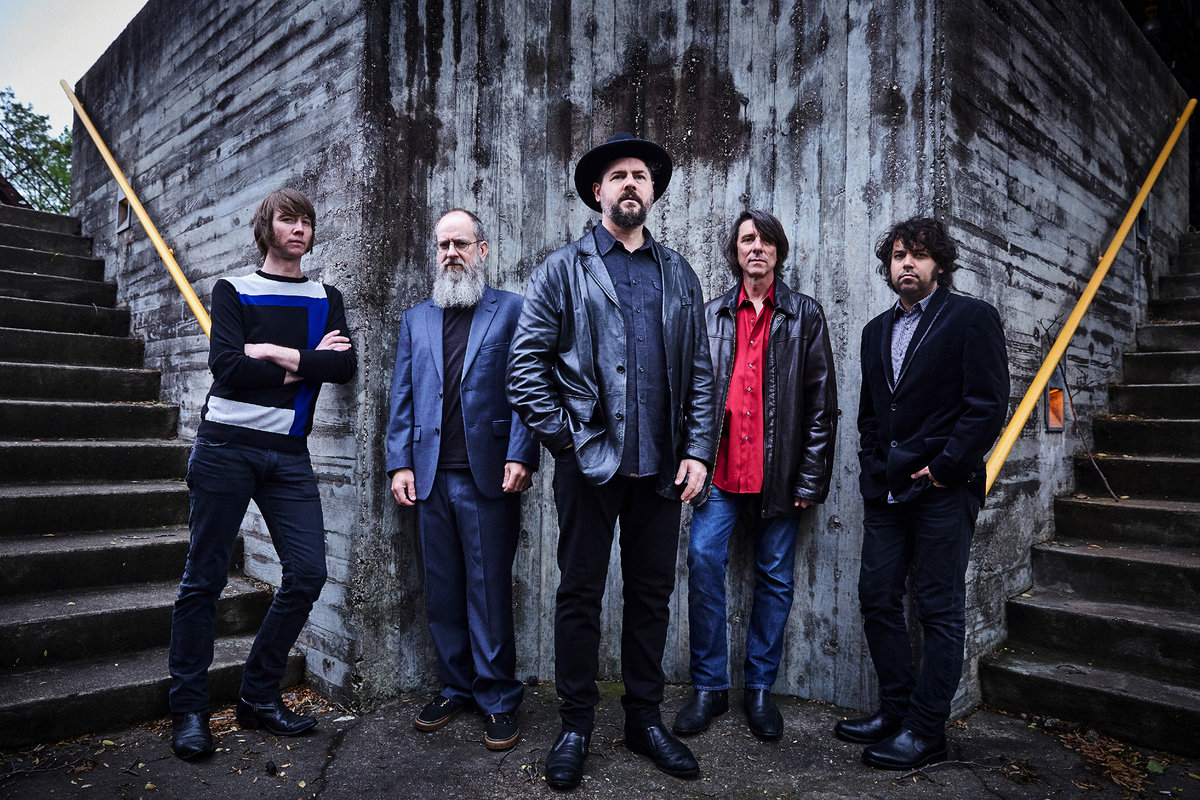
Drive-By Truckers’ 12th studio album and first new LP in more than three years – the longest gap between new Drive by Truckers albums – “The Unraveling” was recorded at the legendary Sam Phillips Recording Service in Memphis, TN by Grammy® Award-winning engineer Matt Ross-Spang (Jason Isbell, Margo Price) and longtime DBT producer David Barbe. Co-founding singer / songwriter / guitarists Mike Cooley and Patterson Hood both spent much of the time prior doing battle with deep pools of writer’s block.
The songs that eventually emerged are among Drive-By Truckers’ most direct and pointedly provocative, tackling the myriad horrors of our new normal through sincere emotion and unbridled heart. Indeed, Armageddon’s Back in Town takes a whirlwind joyride through the whiplash of events we collectively deal with each day while the concluding Awaiting Resurrection dives headfirst into the despair and pain roiled up by these troubled times.
The remarkable songcraft found on The Unraveling receives much of its musical muscle from the sheer strength of the current Drive-By Truckers line-up, with Hood and Cooley joined by bassist Matt Patton, keyboardist / multi-instrumentalist Jay Gonzalez, and drummer Brad Morgan – together, the longest-lasting iteration in the band’s almost 25-year history. The LP also features a number of special guests, including The Shins’ Patti King, violinist/string arranger Kyleen King (Brandi Carlile), and North Mississippi All-Stars’ Cody Dickinson, who contributes electric washboard to the strikingly direct Babies In Cages.
Athens, Ga., has long been a hotbed for great rock music (and music of all types) for the better part of the last 50 years, and it doesn’t look like that’s going to change . Raspy roots-rockers Futurebirds are four albums deep a decade into their career, but the arrival of their fifth is still a cause worth commemorating. Their earnest brand of country-tinged, sultry singsong fits right in alongside all your favorite indie-folk and Americana records. But Futurebirds are doing something different from many of those bands: Their three-part harmonies range from heartbreaking to chill-inducing, yet most of their songs possess a laid-back summery feel.
The songs on album number 5, “Teamwork”, find Futurebirds leaning into the psychedelic side of things, yet they’re as twangy as ever. “Trippin” takes delight in human error, “All Damn Night” is an escapist mountain holler tune and “Dream, Fam!” is a suspicious jam. This record could take Futurebirds to the next level—bigger venues, heftier touring schedules—but for those of us who’ve been around with this band since the beginning, Teamwork is just another chapter in this century’s great southern rock story.
Band Members
CARTEZZ, TOJO, WOMZ, B MAH, JOHNNY COLORADO
Futurebirds’ new song from the new album Teamwork, out January 15th.
Prolific Athens-based experimentalists Je Suis France are releasing their most ambitious record to date today, following the band’s sharing its first fizzling, thrashy-trashy cut, “House Style,” . Unlike the band’s latter records, Back to the Basics of Love wasn’t written in a constant flux or hashed out between slow internet connections. The record was the product of all of the members of the band coming together from their half-dozen separate cities and communities, and letting their creativity sync up in unison for the first time since 2003’s Fantastic Area.
Je Suis France doesn’t have an off switch. Back to the Basics of Love, which comes out this November from the Ernest Jenning Record Co., will be their seventh official full-length album, but they’ve also released dozens of digital releases and CD-Rs stretching back to the early ‘00s. The band, which first came together in Athens, Georgia, in the ‘90s, has prepared a new release for almost every show they’ve played since 2004. Despite that long history of experimentation, Back to the Basics of Love has all the energy and urgency of a debut from a band that’s 20 years younger. It’s a record that sounds like it could’ve come out in the 1990s, the 2000s, or the 2010s, but that couldn’t have existed at any point other than now.
Je Suis France – House Style – from the album Back To The Basics Of Love
Atlanta misfits, The Black Lips join forces with independent record label Fire Records revealing first track ‘Odelia’ from new album coming early 2020.
Twenty years into their career the exuberant quintet are currently touring across the US and head over to Europe for an extensive tour this November.
A powerhouse of angst wrapped in traditional melodies, it’s a wild rumble fusing their musical journey from garage rock, punk and psychedelia into a mind-blowing hybrid of cosmic broken country, fragmented Paisley Pop and heart-on-the-sleeve back porch reportage, all delivered with vengeance in their eyes.
Returning to their roots, Black Lips headed into Laurel Canyon’s newly reopened legendary Valentine Recording Studios recording studio, and with the help of engineer and co-producer, Nicolas Jodoin, they recorded direct to 2″ tape. New single ‘Odelia’ will be available digitally from 17th October with news of their ninth studio album to be revealed imminently.
Iconic alternative rock band R.E.M. has shared a previously unreleased song, “Fascinating,” an unreleased song from R.E.M. out with all proceeds going benefit global organization Mercy Corps’ Hurricane Dorian relief and recovery efforts in the Bahamas. Band members Peter Buck, Mike Mills and Michael Stipe recorded “Fascinating” in 2004 at Nassau’s Compass Point Studios
“Fascinating” was originally recorded for the 2001 album “Reveal”, but “it made the record too long… and something had to go,” Mike Mills says. This 2004 version — an ornate ballad with twinkly electronics, an oboe and flute arrangement and a psychedelic climax — was made at Compass Point Studios in Nassau, Bahamas.
In fact, was singer Michael Stipe’s favorite song from the Reveal sessions (according to guitarist Peter Buck’s recollection, as chronicled in David Buckley’s R.E.M. biography, Fiction). The song was produced by Pat McCarthy and engineered by Jamie Candiloro. “It’s really beautiful,” bassist/keyboardist Mike Mills told Buckley. “It has a flute, oboe arrangement, but it made the record too long… and something had to go.” R.E.M. rerecorded the track in Nassau for 2004’s Around the Sun, but the lush ballad ultimately didn’t jibe with that spare, atmospheric album. Now this poignant outtake finally finds its fitting moment, as a means to aid the country where R.E.M. enjoyed over two months of creative retreat.
“We first became aware of Mercy Corps around the time of Hurricane Katrina, and we supported their efforts to help in that situation,” says Mills . “I spend a lot of time every year in the Abaco Islands, which was literally ground zero for this disaster. I know a lot of people who lost everything — their homes, their businesses, literally everything they own is gone.”
“I have been fortunate to spend many weeks working and playing in the Bahamas, making friends and lots of music there,” Mills continues. “It breaks my heart to see the damage wrought by Hurricane Dorian. Please help us and Mercy Corps do what we can to alleviate the suffering caused by this catastrophe.”
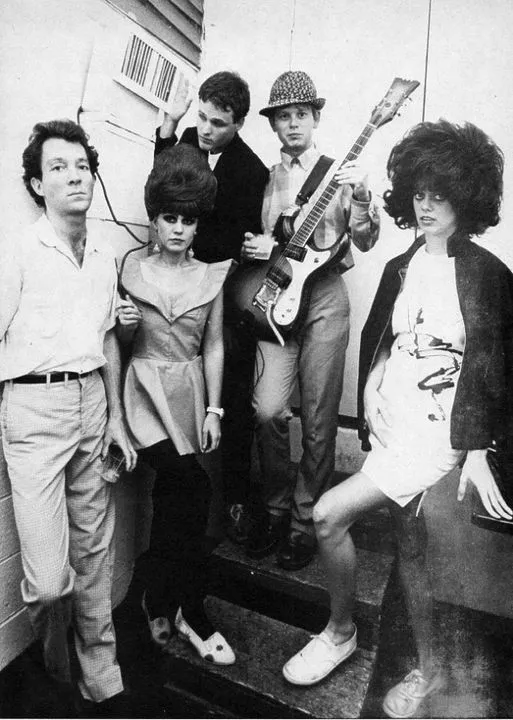
The B-52’s were ’70s punks molded not from the syringes and leather of New York City, but from the campy detritus you might have found in the thrift stores and garage sales of their home of Athens, Ga.: bright clothes, toy pianos, old issues of Vogue, tall wigs and discarded vinyl. They channeled spy soundtracks, exotica, surf music, long-abandoned dance crazes and garage rock — music that was gathering dust by their 1979 self-titled debut LP. Much of it (alongside their obsessions with Yoko Ono and the Velvet Underground) would reveal itself as bedrock of alternative culture years later.
The B-52’s were a clash of sounds that help bring punk to the suburban kids more likely to watch “Saturday Night Live” than visit CBGB: Fred Schneider’s sing-shout poetry, Cindy Wilson and Kate Pierson’s alien girl-group harmonies, Ricky Wilson’s tricky guitar riffs and Keith Strickland’s art-funky drums. Even demographically they were nothing like the new world of new wave being built by Talking Heads and Devo: 40 percent female, 60 percent Southern, and 100 percent fun.
“We didn’t have a goal of what we wanted to sound like when we started out,” says Keith Strickland, the multi-instrumentalist behind some of the B-52’s’ biggest hits. “We just knew we wanted it to be fun.”
Since springing out of Athens, Georgia, in the mid-Seventies, the group has always been the quintessential party band. Songs like “Rock Lobster,” “Dance This Mess Around” and “Love Shack” are indeed fun, thanks to singer Fred Schneider’s hilarious recitatives, fellow vocalists Kate Pierson and Cindy Wilson’s heaven-reaching harmonies, and the fusion of beach rock, Motown, girl groups, and ebulliently experimental jamming that Strickland and founding guitarist Ricky Wilson whipped up. They were improbable hit-makers, scoring Top Five singles and gold and platinum plaques while waving a flag for gay pride and singing the silliest lyrics possible. “Why don’t you dance with me? I’m not no limburger,” goes “Dance This Mess Around,” while “Rock Lobster” finds Pierson and Cindy going full Yoko Ono while making up sounds for jellyfish, narwhal, sea robins and bikini whales.
This summer, the B-52’s have been celebrating their history on tour, both solo and as part of a package with Culture Club and the Thompson Twins. Although the lineup has changed over the years – Ricky Wilson died of AIDS in 1985, shaking the band to its core, and Strickland retired from the road in 2012 – they’ve never lost the party spirit that defined the group when it was straddling punk and New Wave in the early Eighties. They haven’t put out an album since 2008’s Funplex(and likely won’t do another) but they know what their fans want from a B-52’s concert.
“We just have to play ‘Rock Lobster’ and ‘Love Shack,’ ‘Planet Claire’ and ‘Roam,’” the perennially redheaded Pierson says. “For our own benefit, we’ve added [Bouncing Off the Satellites‘] ‘Wig’ to the lineup, and we’ve never had so much fun playing that. Sometimes that’s a song people don’t know as well, but people seem to really enjoy it.”
The four surviving B-52’s took some time to reflect on the wild times that fueled their early success. Here’s an oral history of how the band, which formed after a night of drinking “flaming volcanos” at an Athens Chinese joint in 1976, took off.
Keith Strickland: Ricky and I had known each other since high school. When I met him, he had a 4-track tape recorder and had already recorded some songs just on guitar. They were amazing. He’d learned folk guitar. Then he and I started playing together. When we got more serious, I moved to drums.
Kate Pierson: Fred and Keith used to get stoned and do poetry and play. And I had been in a band in high school, and Cindy was singing with Ricky. So we all had sort of played with each other. One night we just started jamming after going out and drinking these flaming-volcano drinks, and that became the template of the band. Most of our songs came from jamming together.
Fred Schneider: We liked all music: James Brown, Motown, the Velvet Underground, Yoko Ono, the Beatles, Perez Prado mambo – we played everything, especially anything to dance to. Our goal, I guess, was to be a dance band, so we didn’t really have ballads in the beginning.
Strickland: We were listening to really campy sci-fi soundtracks. Fred is a vinyl collector. He’d find these great, old records. Ricky and I were really into Captain Beefheart. We also loved Joni Mitchell. You wouldn’t hear it, but she was a big influence on us, at least in terms of open tunings and the harmonies and chords she’d use. Our feeling was if it sounds good, it is good. So we put that freedom into writing. We felt like we could do anything.
Pierson: The inspiration for our vocal harmonies was sort of Appalachian. It’s sort of at weird intervals and it almost has an Appalachian kind of feel to it. The harmonies were really spontaneous. And the way we jammed, we would just get into a trance. Almost like automatic writing, this collective unconscious would take over and sometimes we’d be singing all at once. We’d listen back to the tape and seek out the best parts and patch them together in a collage. I might be doing the high part and Cindy does the low part, but then we would switch. On “Roam,” we crossed over in the highs and lows
Cindy Wilson: Ricky and I were living together at one point after he came back from hitchhiking all around Europe. We were working at a luncheonette counter [laughs]. I came to work one day, and Ricky was playing music on his guitar, just snickering. He played me the riff that turned out to be “Rock Lobster,” and it was hilarious. He was just trying to be funny. His guitar style made it moodier and it really is a driving song, but it does have that funny humor to it.
Schneider: I went to this disco in Atlanta called the 2001 Disco. Instead of a light show, they had pictures of puppies, babies, hamburgers and lobsters on a grill. And I thought, “Rock Lobster,” that’s a good idea for a song and probably no one else would.” I told everyone I had the idea, and we started jamming on it. The lyrics got weirder and weirder. I used to live on the Jersey shore, because I’m from New Jersey, so you would constantly hear “Pass the butter, please” on the radio, which was tanning butter [laughs]. I would do that and the gals came up with those wild fish noises. Cindy let loose with her tribute to Yoko.
The B-52’s’ debut single would remain their biggest hit until they invited everyone to the “Love Shack” a decade later. The ’79 smash is an unlikely blend of twangy Mosrite guitar, blooping Farfisa, beach-party-on-acid lyrics and an aquarium’s worth of creature noises. Cindy Wilson said that she remembered her brother snickering and saying, “I just wrote the stupidest riff.”
Wilson: We tried to have these song paintings. It took a lot of work and a lot of rehearsal, because we weren’t reading music. It was very intricate. There were a lot of stops and starts and changes and weird harmonies that we came up with. When we do the shows, it sounds like we’re just having fun, but it really is labor intensive.
Strickland: We’d listen back and pick out different vocal parts for Kate and Cindy, and the lyrics they were singing. Ricky and I would write the music, and then Fred, Kate and Cindy would jam on top if it and we would record it. Then we’d piece it together.
Schneider: We would jam for hours. It would sometimes take a month or two to come up with a song. We’d record everything on reel, and Kate and Ricky would take them home and go through it and pick out parts. That’s why “Rock Lobster” was originally six minutes and 47 seconds long.
Pierson: I remember being in the house me and Cindy had rented in Athens and working on that song and “Planet Claire” and just jamming on fish sounds. Little did we know that the song would have the life and spark it had. That’s one of my favorite songs to perform, because we can still experiment. We can still jam on it live. It’s very spontaneous.
Strickland: Fred told his friend, Julia, that we had a band – and we didn’t really have a band yet – but she was having a Valentine’s Day party, and she said we could play at her party.
Pierson: There weren’t really places to play in Athens, so we had to play a party. There was a folk club, and it was kind of hippie music. The clubs were just emerging. We were just sort of an aloof group of artistically oriented friends, and we would crash parties together and drink beer and dance really crazy. We’d usually drive people off the dance floor .
Strickland: When we played the Valentine’s party, we were doing a different kind of music from the stuff everyone listened to – R&B like James Brown; Junior Walker and the All Stars; Earth, Wind & Fire – but it still had a backbeat. So we played this party and our friends loved it. We had so few songs that when we were done, they said, “Well, play them again.” We just repeated it all the way through and everybody kept dancing. We thought it’s pretty good if our friends liked it, because they’d be the first to say, “You suck.”
Pierson: We had to borrow the sound system. We placed it on a bookshelf. It was in this little house, and it shook. We wore these fake fur wigs that I found; it was this crazy pocket book made of fake fur and we turned them upside down. They were white, and made white Afros. Cindy and I wore those and we wore black and had some Barbie dolls on the ceiling. Keith wore this little red wig he dyed. We had five or six songs. I know we did “Planet Claire, “Devil inMy Car,” “52 Girls,” “Rock Lobster,” “Lava” and maybe “Strobe Light.” Our friends loved it so much. They just danced so hard. The speakers were just rocking.
Strickland: So the tape had some conga, maybe some bass tones from the Farfisa organ and some second guitar; that we could play guitar with it and I played the congas. I wasn’t even playing drums.
Schneider: We all had jobs we didn’t like in the beginning. At the time, I was the mail delivery coordinator. Ricky worked at the bus station. Cindy worked at the Whirly-Q luncheonette. Kate worked at a local rag [the Athens Banner Herald]. So it was a hobby. We had to save up money to play anywhere.
Strickland: We started the band just to entertain ourselves.
Strickland: We had some friends in Atlanta who played in a band. They started playing New York at CBGBs and said, “You guys should play New York.”
Pierson: We sent a tape up there and CBGBs said no, but Max’s Kansas City said sure. So we drove up from Georgia, and it was like a 20-hour drive. We had this car we called Croydon, Cindy and Ricky’s parents’ station wagon. We’d stopped playing along with the tape by then.
Schneider: We were paralyzed with fear, because we had never played before anybody except our friends. I think only 17 people showed up. It was a Monday night in December, and I think two of the Cramps were there, Lux and Ivy. The curtain didn’t open, so I had to throw it open and all the other bands were dressed in black and we were like a rainbow congregation. We forgot to even ask if they wanted us back.
The B-52’s and the New York psychobilly brooders the Cramps both self-released their debut 7-inches in 1978 — the original recording of this beach blanket boogie served as the B-side to “Rock Lobster.” Together, the two bands were among the first to mix surf into the world of punk rock.
Pierson: On the first night, we didn’t have many songs. We didn’t realize it was kind of an audition night, and there were a lot of other bands on the bill. They asked us to cut the set short. We drove all the way from Georgia, and they said, “Can you play a couple of songs?” We played like 20 minutes or something and immediately left the stage. We put our stuff in the station wagon and drove straight back. But they called us and said they wanted us back.
Strickland: We were listening to the Talking Heads, Patti Smith, the Ramones and, of course, the Sex Pistols at the time. We didn’t really consider ourselves punk, but we knew that we were going to be a part of that. We didn’t really call ourselves “New Wave.” I remember we got called that when we started playing the clubs in New York for bands like us and the Cramps, because people were moving a little bit away from the punk thing and were just making songs [laughs].
Pierson: We blazed the path between Athens and New York for months. Each time we’d come back, we’d write more songs, rehearse like crazy and go back up. At one point, CBGBs said, “You can’t play both here and Max’s.” Then we started playing the Mudd Club and the Loft. I remember at the Loft, there was a huge line outside and Ricky looked out the window and said, “What’s that line out there?” We didn’t have any idea that the line around the block was for us. The place was so jammed and crowded. Ricky drank a lot because he was very nervous and shy. He was not gonna be able to play but [after he drank] he was on fire. He played great.
Strickland: So this thing was happening in New York and we were in the right place at the right time. A friend of ours, Danny Beard, created a label called DB Recs and we recorded our first single for him – “Rock Lobster” and the B side was “52 Girls” – and that sold really well, like 20,000 copies. So the labels got interested in us.
Pierson: We’d had a friend, who was our first manager, and she started getting offers from Red Star Records, and Virgin and Warner Bros. were interested. And she said, “Y’all, I don’t know what to do.” So we met our manager, Gary Kurfirst, through Tina [Weymouth] and Chris [Frantz] from the Talking Heads. He brokered the deal for us with Warner Bros. and Island Records.
Strickland: Our manager used to play that we were shy and he would do all the talking. We were rather quiet then. We’re all introverts except for Kate; Fred sometimes can be very shy. But when we get up onstage, we just go for it.
Wilson: I was shy, but Ricky was even shyer, until he got to know you. I think the music helps you get out of yourself.
Schneider: In the beginning Ricky would turn around onstage a lot. The band sort of looked at me to be the frontman, so I would tell bad jokes or I started a thing where I would get the audience to do a call-and-response thing. We became more outgoing over time. Plus, we smoked pot . That might have made us a little paranoid.
Pierson: We probably kept our mouths shut because we didn’t really know the music business. We thought, “It’s better to just not say much.” I don’t think we were shy so much as we were terrified. Especially when we did Saturday Night Live on live TV. We looked really animatronic because we were scared, but it came off as being this alien sort of attitude, which served us well, because people were like, “Whoa, this is so weird.” But we were just shy and terrified.
Schneider: Saturday Night Livewas nerve-racking. I was so sick to my stomach, but it went really well, and it put our record back on the charts. Eventually, it went platinum. Finding the Love Shack – “When You Opened the Door, It Was a Wild Band Playing”
Wilson: When Ricky passed [in 1985], it was just a horrible time. It was like an atom bomb going off. I think Keith dealt with the shock by doing music every day.
Strickland: After about two years, I told Cindy and Kate I had some music I had been working on and played it for them and then we started discussing the potential of working together again. And then we called Fred and said, “Do you want to do it?” He said, “Sure.”
Wilson: We got a rehearsal space in Manhattan in the Wall Street area. We were very serious about it. We would work for four days a week, and it came together pretty quickly. It was all about nostalgia. It was looking back at the good times we used to have in Athens, so it was a wonderful, healing record.
Schneider: The music became a little more funk, I guess. We wrote much faster.
Pierson: Keith would write the instrumentation and we would jam on that. We’d all get together and pick out parts and paste them together, then we would learn the parts. Sometimes we’d just play acoustic guitar and try out the parts and make a library. We’d use a double cassette player and make little edits.
Strickland: It took about a year to write Cosmic Thing. We spent a lot of time just talking, and we needed that. We were our own support group after Ricky’s passing, which was a very traumatic thing for all of us and, in particular, for Cindy.
Schneider: I had the idea for “Love Shack.” There was a place outside of Athens called the Hawaiian Ha-Le. It was an African-American club that had a lot of good shows. It looked like a shack, you wouldn’t expect it to be what it was, and when you opened the door, it was a wild band playing.
Wilson: It used to be this funky building with a tin roof that was old and rusty. They would have Soul Train lines. They just put a condemned sign on it, so it’s closed down.
Strickland: The funny thing about “Love Shack” is that we had decided what songs we wanted to do when we were meeting producers. We had already decided we were going to work with Nile Rodgers and Don Was. We played Don Was our demos, and he said, “Do you have anything else?” I said, “Well, we have this one other song, but it’s not finished.”
Pierson: We actually had a whole different version of it, and I remember Keith saying, “It’s not ready to put on the record.” Fred and I were like, “No, it’s gonna be a hit. We love it.”
Strickland: We almost didn’t play it for him, but we did and it was still rambling. Don said, “This is great. Just repeat this one part.” The part was, “The love shack is a little old place where we can get together … love shack, baby.” That had occurred only once in the original structure. So as soon as he picked that out, we thought, “That’s the chorus.” It’s like, “Voila.” It almost didn’t happen.
Pierson: That Motown feel really made it a party anthem, a regular hit at all your weddings and bar mitzvahs. It’s just got his infectious beat and you can’t help but dance to it.
Strickland: Another funny thing is we were recording the song at Bearsville Studios in Woodstock, and there was a big electrical storm outside, and all the electricity went out. We were like, “No, no, no.” When we listened back, we had an awesome take, but it was only halfway done but it got cut off in the breakdown, kind of over a dropout. So we just picked it up right there and took the rest from a second tape. That song is all live except for one splice. We didn’t know if it was a hit when we finished it, but we felt there was something special about it.
Pierson: The radio [programmers] weren’t really enthusiastic about the song. Fred worked a lot of the indie stations promoting it, Loretta Lynn–style, like “My record is in the garbage can.” Then college radio really embraced it. Thank God for college radio.
Strickland: There was something magical about that album, how it all came together. We sequenced it in a way that we felt told a story. I don’t know if anybody’s ever noticed it, but one song leads into the other in a nice way. It tells a story from beginning to end.
There’s no getting away from the campy cartoonish image of The B-52s and, frankly, they wouldn’t want you to. The band emerged in the late seventies as the kitschy cousin of punk-rock but as their sound progressed and began to involve more elements of surf-rock, rock-a-billy and so much more, their moniker soon changed. Its dark and moody sound often characterises post-punk, but the B-52s do a good job of brightening the place up. While the band’s contemporaries were keen to use post-punk to rally against the day’s political factions, the B-52s were far happier shaking their rumps and getting down on the dancefloor.
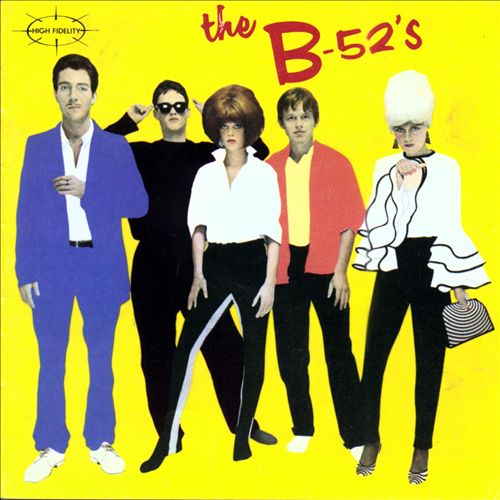
The B-52’s Released Their Eponymous debut LP was over 40 Years Ago, on 6th July 1979 a totally weird looking combo out of Athens, Georgia called THE B-52’s released their amazing self-titled debut long player. A wacky mix of retro dance-pop and surfy funk twisted upside down and wrapped up brilliantly as the new chic back then and still sounding damn hip today! A solid gold masterpiece, a bona fide classic.
Rolling Stone wrote: “The debut by the B-52’s sounds like a bunch of high school friends cramming all their running jokes, goofy sounds and private nicknames into a New Wave record. It turned out nobody could resist the band’s campy, arty funk, or the eccentric squeals and bouffant hairdos of Kate Pierson and Cindy Wilson…
Even in the weird, quirky world of new wave and post-punk in the late ’70s, the B-52’s’ eponymous debut stood out as an original. Unabashed kitsch mavens at a time when their peers were either vulgar or stylish, the Athens quintet celebrated all the silliest aspects of pre-Beatles pop culture — bad hairdos, sci-fi nightmares, dance crazes, pastels, and anything else that sprung into their minds — to a skewed fusion of pop, surf, avant-garde, amateurish punk, and white funk. On paper, it sounds like a cerebral exercise, but it played like a party.
The jerky, angular funk was irresistibly danceable, winning over listeners dubious of Kate Pierson and Cindy Wilson’s high-pitched, shrill close harmonies and Fred Schneider’s campy, flamboyant vocalizing, pitched halfway between singing and speaking. It’s all great fun, but it wouldn’t have resonated throughout the years if the group hadn’t written such incredibly infectious, memorable tunes as “Planet Claire,” “Dance This Mess Around,” and, of course, their signature tune, “Rock Lobster.” These songs illustrated that the B-52’s’ adoration of camp culture wasn’t simply affectation — it was a world view capable of turning out brilliant pop singles and, in turn, influencing mainstream pop culture. It’s difficult to imagine the endless kitschy retro fads of the ’80s and ’90s without the B-52’s pointing the way, but The B-52’s isn’t simply an historic artifact — it’s a hell of a good time.
The B-52’s distinctive sound can be attributed to the talk-singing of Fred Schneider, the complimentary highs and lows of Kate Pierson’s and Cindy Wilson’s vocals and the unique tuning of Ricky Wilson’s riffs all of which are on display in “Dance This Mess Around.” You can’t talk about these trailblazers without mentioning “Hero Worship,” where Cindy’s raspy wails created what could be considered the very first riot grrrl song ever. Then you have the infamous “Rock Lobster” with Ricky’s funky and famous riff, a biting organ and a cacophony of animal sounds laced through a song about a rock that “wasn’t a rock.” It’s stupid fun, and its absurdity launched The B-52’s to the moon (in the sky.)
Fred Schneider (vocalist) “No one likes to throw a party more than we do, but after almost a half-century on the road, it’s time for one last blow-out with our friends and family… our fans.”
Kate Pierson“Who knew what started as a way to have some fun and play music for our friends’ at house parties in Athens in 1977 would evolve into over 45 years of making music and touring the world. It’s been cosmic.”
Cindy Wilson: “It has been a wild ride, that’s for sure,” said Cindy Wilson. “We feel truly blessed to have had an amazing career encouraging folks to dance, sing along with us and feel they can be whomever they are with our music.”
If there is one thing I can say about this The B-52’s, it’s a party from start to finish. Opening with the morse-code beeps and a heist-movie-esque riff on “Planet Claire” cemented the space-age flair of these art punks.




 The Fat Angel Sings