Posts Tagged ‘Fillmore East’

jimi-hendrix-performing-fillmore-east copy 2

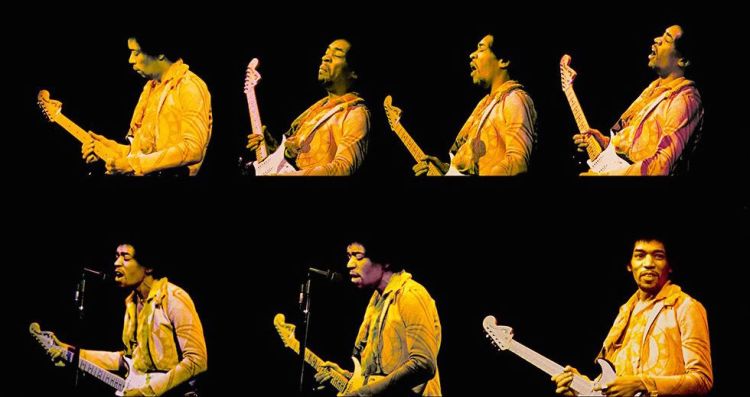
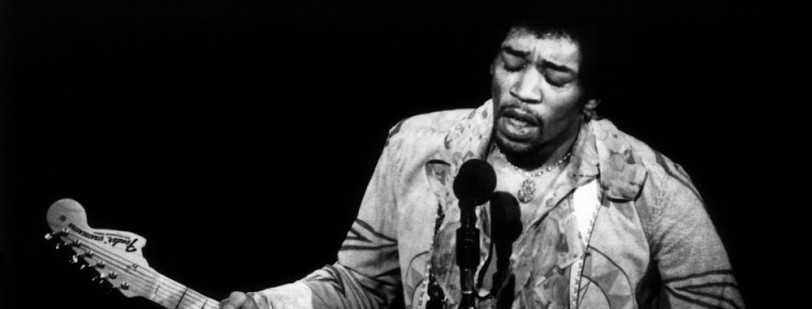
The four shows that Band Of Gypsys played at Fillmore East to bring in the New Year have rightly gone down as some of the best shows of all time, especially those on New Year’s Day itself. There were moments on New Year’s Eve where the band seemed to be lacking energy for whatever reason but on the whole every show was fantastic, as stated by the lucky devils I interviewed who were there to witness the shows for themselves. The music was funkier than that of the Hendrix Experience and while the drums may seem simple at times especially compared to Mitch Mitchell, the drums are a pivotal piece to the music that Hendrix was playing at this particular time. The Band Of Gypsys wouldn’t last for much longer with their final show coming less then a month later at Madison Square Garden in New York (Hendrix would leave the stage after just two songs and Miles would be fired backstage) but the music the band played at these four shows was and continues to be nothing short of exceptional.

There are certain artists who played certain shows with certain performances that will always be remembered, and that is certainly the case with the Band Of Gypsys at Fillmore East.

BAND OF GYPSYS AT FILLMORE EAST: NEW YEAR’S 1970
SECOND SHOW Setlist:

Auld Lang Syne
Who Knows
Stepping Stone
Burning Desire
Fire
Ezy Rider
Machine Gun
Power Of Soul
Stone Free/Sunshine Of Your Love
Them Changes
Message To Love
Stop
Foxy Lady
Voodoo Child (Slight Return)
Purple Haze


The second show was considerably longer in length than the first, as was standard at Fillmore East during this time. Before the band start playing, concert music is played through the speakers to bring in the New Year before the band run through Auld Lang Syne. The ending of this song is simply sublime as Hendrix creates a musical landscape consisting of nothing but feedback before launching into the next track, Who Knows. This is without a doubt one of the best performances from all four shows as the fuzz feedback from Auld Lang Syne goes straight into Who Knows. The riff from this song is exceptional. Funky, bluesy, perfect. Essentially a jam song based around the initial riff that opened the song, it’s one of the most enjoyable moments from the second set. Stepping Stone follows in what would be the first of only two live performances, the second being during the early show the following day. It’s a great song but after an electric performance of Who Knows it sounds a little sounded, almost as if the band members are holding back a little. This could have been because it hadn’t been played live before but Machine Gun hadn’t either until the previous show and that sounded fantastic. Buddy Miles on drums wears a little thin at times with the exact same beat with no changes going on for the entirety of the song. Mercifully, the Band Of Gypsys move on to Burning Desire. The opening jazz like rhythm hypnotises you a little before the main riff explodes in your face, however, at two and a half minutes long this version dwarfs in comparison to the near ten minute version which ended the previous set. “Ok, we’re going to play something else,” says Hendrix as the band bring the song to a halt.

Fire comes next and you can instantly hear how drastically different the energy level is on this song compared to the previous two, especially when Hendrix plays the famous Sunshine Of Your Love riff midway through the song. Even though Cream had broken up over a year earlier (26th November 1968), their influence on him remained. Ezy Rider follows before the band launch into Machine Gun once again which ignites the venue. The band play this for nearly fourteen minutes and you can only imagine what those seated right in front of the stage are going through in their paralysed states. It’s more of a laid back version compared to the early show but that doesn’t mean any of the explosiveness if taken away, it’s just being projected in a different way. Hendrix’s wah-wah blows the cobwebs away and before you know it, it’s all over. Power Of Soul opened the early show but finds itself deep in the mix here with that funky riff sounding oh so good. Out of all the songs the band played at Fillmore East during these two days, the funky songs definitely sounded the best due to Buddy Miles and his funk abilities.

11011034_10153397202112369_7591171807529885638_n.jpg

Stone Free is a classic example of Buddy Miles just not sounding as good as Mitch Mitchell. If you listen to any version of Stone Free with Mitch Mitchell on drums he sounds effortless, but Buddy Miles sounds too plodding here, too heavy footed. This is evident at the seven minute mark where Miles embarks on a drum solo you wish would end sooner rather than later but four minutes later it finally does with Hendrix and Cox returning for a full Sunshine Of Your Love segment which sounds fantastic. But one of the finest moments of the New Year residency is Them Changes, a Buddy Miles song which continues one of the funkiest riffs you’ll ever hear. Miles sounds great on lead vocals which lets Hendrix sit back and do his thing with the wah-wah which only adds to the funk magic being produced. Message To Love continues the funk theme with Buddy Miles and Billy Cox on backing vocals being a particularly enjoyable highlight. Stop follows

FME691231X-PG.jpg

Bob Feldman (Fillmore East Usher)

“I was working as an usher in the first balcony, a great vantage point for sight and sound. We had special t-shirts that said something like Happy Fillmore New Year. This was the first and only time I had heard Hendrix. I remember his version of “Auld Lang Syne” which was given the “Star Spangled Banner” treatment ala Woodstock. I also remember Buddy Miles bombastic (not in a good way) drumming which was very loud and busy. I remember the Cold Duck that was on the stage after the show. It was not for the ushers but we were able to score a few bottles. Most of what happened after the Cold Duck was a blur.”

Roy Forest (Audience Member)

“At that time I was 22. Jimi was a god and I had Row M center! I remember the six Marshall amps he played through and the unbelievable power they produced. He had me pinned against the back of my seat for the entire show. In regards to that show, Jimi was Jimi: a genius at work! I left in silence due to the raw power that that show produced and I didn’t want to speak.”

Jerry Wilder (Audience Member)

“The shows were all sold out. An artist relative of mine forged me a ticket to a nonexistent seat number, so I had no seat. I stayed in the balcony and managed to not get thrown out!”

One of Hendrix’s finest ever moment on guitar was when he played Foxy Lady at the Monterey Pop Festival in 1967, and he dusts it off here for by far the best performance of the second set. The song is one of three classic Hendrix Experience songs that they would play to end the show and as soon as that riff takes off after the fretboard feedback Hendrix creates, mayhem ensues. It’s nothing but classic Hendrix without any restrictions and this one performances makes everything that came before it seem irrelevant in terms of any lack of energy the band may have been feeling. When the song ends the band leaves the stage before shouts of “more” can be heard from the extremely excited audience. When the Gypsys return, a second Hendrix Experience song awaits the eager crowd in the form of Voodoo Child (Slight Return). To my ear it sounds like Hendrix is using a lot more fuzz on the Hendrix Experience songs than he had been doing in every other song during this late show. It couldn’t be anyone else but Hendrix playing the guitar at this very moment. Even when you listen to a recording of this performance you can feel the power coming at you through the speakers. If that wasn’t enough, the band go straight into Purple Haze which is the final song of this set. None of the energy of Voodoo Child (Slight Return) is lost and if anything they pick up more energy along the way. An exceptional end to the show.

Yes, there were moments during this show (from the recording at least) where the band seemed to be lacking in energy and the Buddy Miles solo during Stone Free wasn’t his finest moment, but the set ends with members of the crowd shouting “oh my God” and “he left us totally destroyed.
FME691231-PG.jpg


jimi-hendrix-performing-fillmore-east copy 2

The four shows that Band Of Gypsys played at Fillmore East to bring in the New Year have rightly gone down as some of the best shows of all time, especially those on New Year’s Day itself. There were moments on New Year’s Eve where the band seemed to be lacking energy for whatever reason but on the whole every show was fantastic, as stated by the lucky devils I interviewed who were there to witness the shows for themselves. The music was funkier than that of the Hendrix Experience and while the drums may seem simple at times especially compared to Mitch Mitchell, the drums are a pivotal piece to the music that Hendrix was playing at this particular time. The Band Of Gypsys wouldn’t last for much longer with their final show coming less then a month later at Madison Square Garden in New York (Hendrix would leave the stage after just two songs and Miles would be fired backstage) but the music the band played at these four shows was and continues to be nothing short of exceptional.

There are certain artists who played certain shows with certain performances that will always be remembered, and that is certainly the case with the Band Of Gypsys at Fillmore East.

JANUARY 1ST 1970: SECOND NIGHT (THURSDAY)

FIRST SHOW: Setlist:

Who Knows
Machine Gun
Them Changes
Power Of Soul
Stepping Stone
Foxy Lady
Stop
Earth Blues
Burning Desire
The two shows from New Year’s Day 1970 are considered to be the finest shows the Band Of Gypsys ever played together. The band open the early show with the funky Who Knows which was debuted the night before at the late show. This version would end up on the self titled live album released later in 1970 with a call and response from Hendrix and Miles. The riff from Who Knows is definitely one of the most infectious Hendrix riffs of all time and it’s one hell of a way to open a show. Not a bad introduction. Machine Gun follows and this exact performance is what people today consider one of the finest moments in rock history and you can’t help but share that view when you listen for yourself. What Hendrix managed to do with the guitar in his lifetime was exceptional and in a live setting he was even more on his game than he was in the studio, and that’s saying something. But this performance of Machine Gun is musical perfection in every sense of the term. You can only imagine how incredible it was to witness this performance in person and thankfully we have a recording to re-live it as best as we can over and over again. Buddy Miles returns on lead vocals for Them Changes with Hendrix playing that funky riff whilst being able to take a back seat and focus on his playing. The solo that he plays is gorgeous with splashes of wah-wah once again to create that Band Of Gypsys tone that so many guitarists long for even today. Halfway through the song things slow down as Miles takes over on lead vocals. Hendrix and Cox remain composed in the background waiting for the moment where the song will take off once again. Before that happens, Miles begins to quick things on drums before everyone else comes in on that funky riff once again.

1934896_10208717300436885_8877177797296801879_n.jpg

Power Of Soul makes it’s third appeared in three shows and any of the energy present the previous evening hasn’t diminished one bit. Hendrix is in fine form and brings in the wah-wah once again for a second solo near the end of the song, having playing a solo without it to begin with. It’s a great mixture of tone to say the least. Stepping Stone during this early show is the complete opposite to how it was played the day before where it appeared to lack energy, at least if the recording has anything to go by. But this performance is fantastic with Buddy Miles driving the song forward and coming across as far more laid back and relaxed than he had the previous night. Hendrix on vocals comes across as confident and in control and the guitar playing is as you’d expect it would be. Incredible. It’s followed by Foxy Lady which, once more, would prove to be one of the finest moments from not only this particular show but the entire Fillmore East run.

FME691231X-PG.jpg

Mark Waldrop (Fillmore East Usher – Present At All Four Shows)

“The thing I remember most was that he didn’t look stoned like he often did and he was clearly enjoying himself more than I’d ever seen. His hair was shorter and it seemed like a different Jimi in a good way. I do recall that the 1st show was unspectacular, but that’s well documented. The other three shows were outstanding.”

Tony Fradkin (Audience Member)

“I’m pretty sure I wasn’t there on the 31st. I do recall that we were really disappointed that he was just standing there and not moving much, but when the LP came out later, we realized that he was playing his ass off. I think he did do Foxy Lady and moved around a bit on that one. I’m always amazed at folks that remember all of these details, I certainly don’t!”

Stop is a song which, as you can hear from the New Year’s Day early show, sounded so much better than it did the previous night. The band appear to be on top of things and Miles really impresses on lead vocal duties with Hendrix supplying some tasteful backing vocals when needed. Hendrix goes on to take a short solo before Miles takes control of the song once more with another vocal verse. It’s quickly followed by Earth Blues although sadly the start of this song is cut from the recording, but what you’re able to hear is Hendrix (yet again) at the top of his game. Something he’s always been known and admired for was his ability to have the music flow from his fingertips and this performance is a really good example of that. Paired with the incredible tone he produces, you feel like you’ve been hit by a freight train once the song ends. Burning Desire then returns to close the set just like it did at the early show the previous evening.

When you listen to a recording of this show from start to finish you’ll realise at the end how fast it went by. There were only nine songs played but with the first two clocking in at twenty two minutes combined, it was anything but short. The fact that it goes by so fast is a testament to how great these three guys played, after all, time flies when you’re enjoying yourself.

FME691231-PG.jpg

thanks to Tom Caswell for this article

jimi-hendrix-performing-fillmore-east copy 2

The four shows that the Band Of Gypsys played at Fillmore East to bring in the New Year have rightly gone down as some of the best shows of all time, especially those on New Year’s Day itself. There were moments on New Year’s Eve where the band seemed to be lacking energy for whatever reason but on the whole every show was fantastic, as stated by the lucky devils I interviewed who were there to witness the shows for themselves. The music was funkier than that of the Hendrix Experience and while the drums may seem simple at times especially compared to Mitch Mitchell, the drums are a pivotal piece to the music that Hendrix was playing at this particular time. The Band Of Gypsys wouldn’t last for much longer with their final show coming less then a month later at Madison Square Garden in New York (Hendrix would leave the stage after just two songs and Miles would be fired backstage) but the music the band played at these four shows was and continues to be nothing short of exceptional.

There are certain artists who played certain shows with certain performances that will always be remembered, and that is certainly the case with the Band Of Gypsys at Fillmore East.

 Second Show setlist:

  1. Stone Free
  2. Them Changes
  3. Power Of Soul
  4. Message To Love
  5. Earth Blues
  6. Machine Gun
  7. Voodoo Child (Slight Return)
  8. We Gotta Live Together
  9. Wild Thing
  10. Hey Joe
  11. Purple Haze

Bill Graham himself has been quoted as saying the fourth and final show the Band Of Gyspys played at Fillmore East was something else entirely:

Bill Graham

“I will never again see a performance by a guitarist-vocalist with that intensity, with that total emotional impact. It was like an adagio dance. The guitar was the snake, and he was the snake charmer.”

Graham introduced the Gyspys himself with the band beginning to ramp things up as he brings the short but effective introduction to a close. Stone Free is the opening number and if you thought the band couldn’t be any tighter after an exciting early show, you couldn’t be more wrong. The band sounded powerful before but during this performance there are moments of delicacy and calmness that when paired with the overall power of the three members playing together, produces music on a magical scale. Them Changes and Power Of Soul follow suit in the exact same order that worked so well during the early show. Two funky numbers this good back to back will guarantee a happy audience and that was certainly the case at this show. Miles then introduces the next song, “Jimi’s going to do a thing he wrote called Message To Love” before the band build up to the main riff. It’s a fine moment from this late show with Miles supplying backing vocals behind Hendrix on lead. This rendition is a full two minutes longer than the version that was played the previous night which really highlights the difference in focus from Hendrix during this final show at Fillmore East, and the same can be said for Earth Blues which follows.

Amalie_Rothschild-Jimi_Hendrix_Multiple.jpg

The next song is Machine Gun which clocks in at twenty minutes and packs the same kind of wallop as the performance at the early show, although the tempo is a little slower. Hendrix takes off yet again on this track before the band turn to Voodoo Chile (Slight Return), with Hendrix saying “we’re trying to figure out something to play but we only know about six songs now,” which is no doubt referencing the lack of original material the Band Of Gypsys had at the time. But that’s ok because four of the final five songs the band played at this show were Hendrix Experience songs starting with Voodoo Chile (Slight Return), resulting in the energy level inside Fillmore East to rise above the high level it was already at. The Gypsys then go straight into We Gotta Live Together, a song penned by Buddy Miles and the only time this song was played during the Fillmore East run. The song appears to be more about getting the audience involved with Miles asking them to clap along to the track. It’s a fun, uncomplicated song designed for one thing and one thing only, to get the audience moving. And it worked! The Gypsys then turn to something more recognisable in Wild Thing with Hendrix’s fuzz ringing through the air. The power of the fuzz alone when the song begins is outstanding. Hey Joe and Purple Haze are the final two songs which is fitting considering they were the first two singles that Hendrix released with the Experience and remain to this day as two of the most recognisable Jimi Hendrix songs. Hey Joe does lose a bit of excitement in the drum department due to the lack of Mitch Mitchell behind the kit but Miles does his own thing and stamps his own feel on to the track. Purple Haze is the perfect show closer with the fuzz all the way up once more, that thick tone probing ever corner of the venue with the crowd then going wild when Hendrix and the Gypsys walk off the stage after finishing.

But even at the Fillmore East with the Band of Gypsys he sometimes found old habits hard to break. Graham says that Hendrix’s first set on the second night was in fact a disappointing reversion to his showbiz stunts. When Hendrix asked him during intermission what he thought of the set, Graham was brutally frank.

“I said, ‘You’re Jimi Hendrix, and anything you do is taken as gospel because of who you are,'” says Graham. “‘In the first show, you humped the guitar, you played it with your teeth, you stuck it behind your back. You just forgot to play.'” Stunned, Hendrix went back out onstage for the second show and played. The incandescent version of “Machine Gun” on the 1970 live LP Band of Gypsys was recorded during that show.

“The solo on ‘Machine Gun’ was absolutely astonishing,” declares Alan Douglas, who saw both sets. “In the first show, he was playing to the audience, having a good time, jumping around. In the second show, he dug right into the music.”

After the second show, Graham raced backstage to congratulate Hendrix. “He came over, totally drained, full of sweat from top to bottom, right up to my face, and said, ‘All right, motherfucker? That good enough for you? You gonna let me go now?'” Hendrix then wheeled around back on to the stage for his encore and did, in Graham’s words, “fifteen minutes of the greatest shtick you’d ever want to see” – grinding up against his Strat, picking it with his teeth, the works. Having proved to Graham and the Fillmore crowd the true depth of his musical gift, Hendrix returned to the stage to show ’em all, one more time, that he was still one of rock’s greatest showmen.

“At one point, he looked to the side of the stage and stuck his tongue out at me,” Graham laughs. “It was very, very funny.”

Read more: http://www.rollingstone.com/music/news/concerts-that-changed-rock-jimi-hendrix-and-the-band-of-gypsies-at-the-fillmore-east-new-york-19870604#ixzz3ynrz7Nd6
Follow us: @rollingstone on Twitter | RollingStone on Facebook

FME691231X-PG.jpg

The following is one of the finest recollections of the final show the Band Of Gypsys played at Fillmore East:

Ian Lowell (Audience Member)

“On January 1st, 1970, Jeff Mayer and I celebrated the New Year with a major bang. We bought two first-rate tickets in the orchestra for a late show at the Fillmore East to see Jimi Hendrix and the Band of Gypsys. The group was introduced as they hit the stage at about 1:45 am by none other than Bill Graham. Hendrix was no longer performing with the Experience, who had now been replaced by drummer Buddy Miles and bass player Billy Cox. We did not know quite what to expect in the way of a set list or the manner in which the songs would be performed. Although I asked a number of other friends to go with us, there was a decided lack of interest. This apathy had inexplicably carried over to the general public as the show was nowhere near a sellout; about 25% of the tickets remained unsold. On a given night in New York City, in a city of eight million people, only about 2,000 people actually saw fit to pay $5 to $7 to see the greatest guitar player who ever lived in an intimate setting. To the best of my knowledge, this was the only time Graham had raised the ticket prices for a specific show. It was clearly their loss and not ours.

The show began with Jimi’s own “Stone Free” which was played at an uncharacteristically frantic pace. Precisely two minutes into the number, as the collective jaws of the audience began to drop, seemingly in unison, Jimi began a solo that lasted nearly eight minutes, during which he managed to coax sounds out of his instrument at various times with a wha-wha and feedback from outer space and at other times with no aid whatsoever. The solo was so astounding it took on a life of its own as it went off in countless directions. During the solo, Buddy Miles went into a sort of scat singing that added to the unique nature of what we were witnessing. Even by the standards set forth by Jimi Hendrix, the solo was something totally unmatched. The song had been reworked so radically that it was a totally different number greatly enhanced by the funky, soulful and skillful playing of Buddy Miles and Billy Cox. Band of Gypsys brought us funk, rock, soul and blues from a place somewhere between the planets Neptune and Saturn. Unlike his shows with the Experience, Jimi shared the spotlight and did so on the following number, one that Miles was best known for; “Them Changes.” This version was above reproach with Hendrix and the hard-edged funk of Cox’s simple but powerful bass playing adding a new dimension to an already great song.

“Power of Soul” was a song that best typified the new sound of Band of Gypsys and presented a powerfully compelling “funkified” groove. It was too infectious to resist. The refrain told us in deceptively simple but irresistible fashion that, with the “power of soul,” all things were possible and so it was with Jimi’s music. Jimi and Buddy led us into an eerie, faraway place with their harmonies. Even for Hendrix, the music ventured deep into unknown territory and it was tremendously unique and creative. “Message to Love,” the next number, broke new ground and also managed to find another irresistible groove. A few songs later, Hendrix played the relentlessly intense and affecting “Machine Gun,” Jimi’s tribute to our men who continued to risk paying the ultimate sacrifice in Vietnam. In terrifyingly realistic fashion, the song somehow managed the impossible, recreating the sounds of the horrors of war with a guitar. It was one of those accomplishments from Hendrix that could not possibly have been done by anyone else. Several songs later, Hendrix performed a positively scathing version of one of his better known songs “Voodoo Child” followed by a loose, ragged and fun version of Miles’ “We Gotta Live Together.” The show concluded with powerful versions of “Wild Thing,” “Hey Joe” and “Purple Haze.” Band of Gypsys concluded a brilliantly conceived and performed show just shy of two hours long.”

Bobby London (Audience Member)

“The music was great but his physical presence was restrained. Much later I read that Bill Graham was taunting him just before he went on and I sort of figured it out. He seemed very withdrawn. I went to the show alone, I think, I felt kind of bad for him but I was grateful to be a kid in his presence. I don’t mean to infer he was out of it. His playing was masterful, he was in control, he was just holding back. It was kind of insane. I loved him and was happy to finally see him but it was a sad and perplexing evening. It was the 60’s, man! All I remember was being transfixed. It was Hendrix!”

FME691231-PG.jpg

thanks to Tom Caswell for this article

jimi-hendrix-performing-fillmore-east copy 2

On the 31st December 1969, a new Hendrix group would take to the stage for the first time at the legendary Fillmore East venue in New York City. Often referred to as Band Of Gypsys, the band consisted of Billy Cox on bass, Buddy Miles on drums and Jimi Hendrix on guitar. It had been over six months since the end of The Jimi Hendrix Experience and the Band Of Gypsys took Hendrix’s music in a new direction, mainly down to the different musical techniques of his two new band mates. The songs were funky and contained grooves that roamed around the auditorium. New songs were debuted with one in particular leaving a lasting impression that remains to this day. It could only happen at Fillmore East and it could only have been Hendrix.

“ON BASS, MR BILLY COX. ON DRUMS, MR BUDDY MILES. ON LEAD GUITAR, MR JIMI HENDRIX. THE FILLMORE IS PROUD TO WELCOME BACK SOME VERY OLD FRIENDS WITH A BRAND NEW NAME. JIMI HENDRIX AND A BAND OF GYPSYS!”

DECEMBER 31ST 1969: FIRST NIGHT (WEDNESDAY)

FIRST SHOW Setlist:

  1. Power Of Soul
  2. Lover Man
  3. Hear My Train A Comin’
  4. Them Changes
  5. Izabella
  6. Machine Gun
  7. Stop
  8. Ezy Rider
  9. Bleeding Heart
  10. Earth Blues
  11. Burning Desire

After the band is introduced to the audience they launch into Power Of Soul which gives those listening the first taste of the new direction that Hendrix was heading in at this point. The drums are effortlessly simple yet it’s the bass and guitar which really drive the song forward and the same can be said for the second song, Lover Man. Both opening songs are fast paced and you can only imagine what it would have been like in the venue when these two were performed live. Very much a “hold on to your hats” experience. The Gypsys then slow things down with a fantastic rendition of Hear My Train A Comin but if you think slow means laid back then you are mistaken because Hendrix really takes off in the solo sections with enough feedback and power to last any music fan a lifetime. Next up is the Buddy Miles song, Them Changes, which is often considered one of the highlights from the Fillmore East shows. Miles takes charge of lead vocal duties which enables Hendrix to sit back into the groove and supply some tasty wah-wah licks from start to finish. Absolutely divine!

Izabella is the fifth song and ended up being the shortest song performed during this early set at Fillmore East. The song opens with that beautiful and now famous riff before drums and then the bass come in for the main riff. Exquisite playing by Hendrix on this particular number with the band as tight as a ducks arse from the very start. Definitely a highlight from the entire set although it pales in comparison to what would come next, Machine Gun, which is arguably one of Hendrix’s most famous live songs. The version that featured on the live album is taken from the third Fillmore East show (New Years Day, early show) but it was played at each show during the New Year run. Machine Gun itself debuted in September 1969 when Hendrix, along with Mitch Mitchell and Billy Cox, played it on The Dick Cavett Show. This version is available to view online although it contains none of the explosiveness of the live performance played at Fillmore East and even though this version played during the early set on New Year’s Eve isn’t the definitive version everyone knows, it still packs one hell of a punch. The feedback that Hendrix creates while he roams the fretboard is astronomical as if he’s deliberately trying to reach into outer space. Fantastic, plus, it’s the first time the song was performed in concert.

Stop follows (or at least tries to) and features Buddy Miles on lead vocals, while Hendrix is allowed to do his thing with a tasty solo midway through the performance. Sadly the solo is probably the most notable moment of an otherwise forgettable song, not that it wasn’t enjoyable to listen to. But any song immediately after Machine Gun is going to struggle to gain attention unless it’s equally as fantastic, which sadly it isn’t. Thankfully the band then turn to Ezy Rider which is a song Hendrix debuted earlier in the year at Olympic Studios but this performance, like Machine Gun, is the first time he ever played it live. The energy level returns to what you’d expect a Hendrix concert to be after Stop, with all three guys on fine form. There are certain songs you listen to and know instantly the band had fun playing them and this is certainly one example of that, without a doubt. The song builds and builds until it cuts out with the audience roaring their appreciation from the rocking auditorium.


FME691231X-PG.jpg

Steven Newman (Audience Member)

“What I remember was that at the time Jimi was catching a lot of flack for being a flashy guitarist with no substance. This truly drove him nuts at the time and what I remember the most about that show was Jimi standing in one place the entire concert. Not moving a muscle except to play the guitar. He was getting sounds out of that guitar that were mind boggling. And the entire show he just stood there and played the guitar. He only played new stuff at the early show and didn’t play one song anyone heard at the time. The late show he did some old tunes. I remember leaving the theatre with my jaw agape.”

John Koons (Audience Member)

“Beside my personal recollection which is somewhat unique it was an amazing show. The only other unique thing I can remember is that Buddy Miles’ drumsticks resembled those souvenir bats they used to give kids at Shea.”

Martin Kahn (Audience Member)

“To be honest I (as were many others) was under the influence of hallucinogens. I do not recall which night I went. I can hear the music and I can feel the bass. I am a musician and I was concentrated on the music and between listening intently and being impaired (or ENLIGHTENED) I do not recall the visual portion.”

Bleeding Heart, an Elmore James cover, lights up the auditorium but in a different way. The slow blues radiates from Hendrix’s Stratocaster, drawing the audience in from the very reaches of the venue. From a personal point of view this is probably my favourite song of the set, you cannot beat a slow blues performed by Jimi Hendrix and this one is no exception. It’s quickly followed by Earth Blues which continues in the same vein as the majority of songs before it, fantastic guitar playing and wonderful musicianship between the three guys gracing the stage at Fillmore East. The next, and sadly final song, is Burning Desire. As far as bringing an end to a set goes this is pretty incredible and loose, encapsulating everything great about each song that came before it. Loose playing, roaring solo sections, groovy riffs, tempo changes. Jimi Hendrix at his finest and an excellent end to what would be the first of four incredible shows at Fillmore East.

FME691231-PG.jpg

The Allman Brothers Band’s classic 1971 live album “At Fillmore East” will be expanded into a six-disc box set, The 1971 Fillmore East Recordings, to include 15 previously unreleased performances. The group originally compiled the album from four sets recorded over a weekend in March 1971, and the new box set also includes a complete performance recorded at the venue that June. For that performance, promoter Bill Graham handpicked them to headline the Fillmore East’s final night. The new box set features liner notes by “Allmanologist” John Lynskey .

allmanfillmore

“That weekend in March of ’71, when we recorded At Fillmore East, most of the time it clicked,” drummer Butch Trucks said in a statement. “We were finally starting to catch up with what we were listening to. We had lived together. . . we got in trouble together; we all just moved as a unit. And then, when we got onstage to play, that’s what it was all about – and it just happened to all come together that weekend.”

The four March sets were recorded by Tom Dowd, who produced the Allman Brothers’ second album, “Idlewild South”, and the Derek and the Dominos album Layla (the latter of which paired Duane Allman with Eric Clapton). With so much going on around the band at the time, Dowd and Atlantic Records decided to put out the live album to show what the Allman Brothers  were capable of outside of the studio.

One of the best live albums of all time  The Allman Brothers Band’s cornerstone LP, At Fillmore East, compiled from the four sets recorded on the weekend of March 12-13, 1971, has been expanded, stretching over six CDs with fifteen unreleased tracks. Additionally, The 1971 Fillmore East Recordings contains the complete June 27 performance during the iconic venue-s final weekend, after the band was handpicked by impresario Bill Graham to headline closing night. The 1971 Fillmore East Recordings captures the most inspired improvisational rock unit ever at the peak of their prodigious powers, blazing their way through extended instrumental elaborations, so taut and virtuosic, that the crowds that packed the Fillmore East on those memorable nights were utterly transfixed. When it came to live performance, no other band could touch the Allmans.

‘The 1971 Fillmore East Recordings’ includes 37 tracks, 15 previously unreleased and a 36 page booklet with extended liner notes and never-before-seen images of the Fillmore concerts.

Recorded at the Fillmore East concert hall, the storied rock venue in New York City, on Friday and Saturday March 12th, 1971–March 13th, 1971, the album showcased the band’s mixture of blues, southern rock, and jazz. “The true brilliance of this live recording is in the shorter pieces. The longer pieces (“Whipping Post,” “You Don’t Love Me,” and “Mountain Jam”) have their moments, but those moments are diluted in the self indulgent noodling typical of many 1970’s live performances. If The Allman Brothers Band: The Fillmore Concerts contained only “Statesboro Blues,” “Stormy Monday” and “One Way Out,” it would still have a place as one of the finest live recordings ever released.

“Statesboro Blues” and “One Way Out” have Duane Allman’s dense and precise slide guitar pitted against Richard Betts’ round lead guitar, with “One Way Out” providing Betts with his finest recorded guitar solo. “Stormy Monday” juxtaposes Allman and Bett’s distinct lead styles in an orgy of perfect blues phrasing. Gregg Allman’s jazzy organ interlude is an added delight.”

The history of the Allman Brothers in a pop up video with the song “Statesboro Blues” check out the new book/box set of the conclusive release of the historic Fillmore East Recordings from 1971, now to be reissued as a six disc set

allmanbros1971-Fillmore-East-Recordings

Live At Fillmore East the double live album by The Allman Brothers Band. The band’s breakthrough success, At Fillmore East was released in July 1971. It ranks Number 49 among Rolling Stone magazine’s 500 Greatest Albums of All Time and remains among the top-selling albums in the band’s catalogue. The original album was released in both conventional two-channel stereo and four-channel quadraphonic mixes. This album has been certified as platinum by the RIAA as of August 25, 1992.

allman-bros-macon-ga