Posts Tagged ‘Deluxe Reissue’

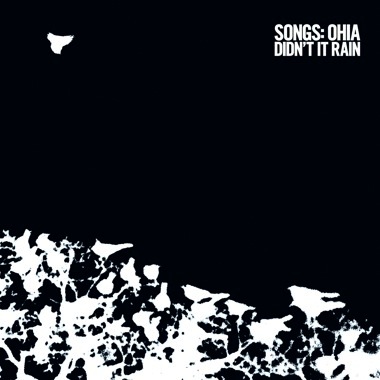
Didn’t It Rain” is Jason Molina’s first perfect record. Recorded live in a single room, with no overdubs and musicians creating their parts on the fly, the overall approach to the recording was nothing new for Molina. But something in the air and execution of “Didn’t It Rain” clearly sets it apart from his existing body of work. His albums had always been full of space, but never had Molina sculpted the space as masterfully as he does on “Didn’t It Rain“.

We expected to hear hardcore. Instead, there were the faint strums of an acoustic guitar, followed by plaintive singing. Songs: Ohia’s Jason Molina doesn’t sing until 25 seconds into “Didn’t It Rain”, and if you’re fidgeting like we were, you could mistake his voice for the record’s first sound.

“This isn’t our record.” “Yeah, no shit.” “It sounds like Neil Young or something.”

Didn’t It Rain” balances the most soulful songs in Molina’s early catalog with an extraordinarily lonely and spacious atmosphere. The album may have been recorded in Philadelphia, but since it’s laden with references to industry, the Midwest, and the Great Lakes, it’s a Chicago record through and through; the songs feel made to echo down the city’s lonely, beige corridors. It’s an ominous album, and its tension comes from the way it quietly delivers heaviness. The second song, “Steve Albini’s Blues,” is an incantation, heavy metal dripping from a water tower, and it opens with the lyrics, “On the bridge out of Hammond/ See them brake lights burning.”

Molina liked to work fast, recording songs in just a couple of takes and refusing overdubs. This spontaneity turns “Didn’t It Rain” into a shifting, living thing as Molina’s collaborators learn the music on their feet. Jim Krewson’s high lonesome wail streaks to the surface of “Steve Albini’s Blues,” Jennie Benford’s mandolin adds a sad side-to-side swing, and Mike Brenner’s homemade, cello-esque “lap bass” gives highlights “Ring The Bell” and “Cross The Road, Molina” a sweeping undertow. Carrying it all is Molina’s voice, in its best form yet, plainspoken and mournful, desperate and resigned.

While the follow-up to “Didn’t It Rain”, Jason Molina’s 2003 masterpiece “The Magnolia Electric Co”., bears the Songs: Ohia name, Molina insisted that “Rain” was the last Ohia album, and it’s easy to hear why. “Didn’t It Rain” marks the beginning of a transition, where Molina started using American roots music to focus his previously oblique songs, pushing the blues, country, and old-school rhythm and blues that had always flowed through them to the front. With a big, rotating cast of players, “The Magnolia Electric Co”. is a full-band record in the mould of Crazy Horse or the Band, and it positioned Molina within the growing indie Americana scene that he had presaged. To go with this transition, he changed the band name to the Magnolia Electric Co.

After spending the whole album warily assessing his surroundings, “Blue Chicago Moon” is a final ascent, closing the book with the sense that something new and better is on the horizon.

“It’s kinda good, though.”

Jason Molina was born in Lorain, Ohio in 1973 and grew up in a trailer near Lake Erie. Starting in the mid-1990s, Molina and his guitar were Songs: Ohia, a project that blended gothic Americana with High Fidelity-ready indie subgenres like slowcore and post-rock. Later, he was solo artist Jason Molina and the leader of the sprawling roots-rock ensemble Magnolia Electric Co., making music that followed his own mythology until his death in 2013. “Didn’t It Rain“, released 20 years is the culmination of his early career, the era when his songs slotted perfectly between Will Oldham and Karate on a mix CD from that corduroy-wearing older dude at your coffee shop job.

The two CD ‘Deluxe Edition’ of the Allman Brothers Band’s Idlewild South achieves what so very few such archive titles accomplish: placing the original work in a context that illuminates the artist’s evolution. Arguably the finest studio recordings this iconic Southern band ever completed are further  refined  in this package by remastering that also benefits the concert that’s appended to them, Live at Ludlow Garage.

Presented in its entirety for the first time, with the inclusion of a fifteen-minute plus version of “In Memory of Elizabeth Reed,” the concert documents a phase of  the Allman Brothers Band career similar to the rough and tumble sound of the debut album, one from which they were beginning to emerge as they worked in the studio under the tutelage of producer Tom Dowd. This very esteemed of producers (who was supposed to oversee that first studio work and would retain the role on the landmark live record, Live At Fillmore East), captured much of the spontaneity of the group’s well-honed musicianship even as he added both polish and depth in working at both Capricorn and Criteria studios: his restrained touch is evident even in the spare approach he takes to Gregg Allman’s soul balladry  “Please Call Home,” but even more so in the multi-layered arrangement of “Revival.”

 It’s significant that this song of Dickey Betts’ is the opening cut on the record. The emergence of the guitarist as a composer aided in no small part to turn this, Allman Brothers second studio album, into a milestone work for the  band. Such numbers brought country elements into greater prominence within the rough and tumble blues-rock style on the Allmans’ debut, and such contributions (foreshadowing the widely-popular “Ramblin’ Man” of 1973) also had an influence on Gregg Allman, who had been to that point the main writer in the group: the vividly descriptive images of “Midnight Rider” find reflection in a layered arrangement with acoustic guitars that renders the twirling electric break more compelling.

https://www.youtube.com/watch?v=Tifw_2RetAY

This 45th Anniversary reissue includes studio outtakes,which although two have been released before on the massive Dreams box of 1989,  perhaps that it hearkens too clearly to the sound of the debut album, this take of what was becoming the Allmans’ signature song, “Statesboro Blues.” A Gregg Allman/Dickey Betts collaboration, “One More Ride” is obviously redundant as an instrumental but sounds like perfect fodder for more refinement, while this alternate “Midnight Rider”  doesn’t quite capture the haunting quality of the chosen take simply because, with percussion and dobro.

Effectively rendering obsolete the 1990 edition of Live At Ludlow Garage this expanded  setlist further distinguishes this show from other archival releases of the original Allman Brothers lineup. It includes the one solo vocal from Duane Allman, on the cover of John Lee Hooker’s “Dimples,” as well as a blues number, “I’m Gonna Move to the Outskirts of Town,” subsequently dropped from regular rotation as the Allman Brothers continued to hone their collective musicianship into the juggernaut as document on their landmark live album. Most important of all however, on this soaring opening version of “Dreams,”  the slightly improved audio quality, shorn of excessive high end, allows the intricacy of Butch Trucks’ and Jaimoe’s double drumming to become more readily apparent, particularly as it fuses with Berry Oakley’s aggressive basswork

And while that bottom register isn’t that much more prominent, or graced with real presence in the mix either, the  harmonies Allman and Betts coax from their fretboards alternately sing and sting, never more clearly in contrast than on the restored ”’Liz Reed” or the near-three quarters of an hour devoted to “Mountain Jam;” hearkening directly to their roots in the blues.

Finishing touches on this deluxe  (named after a bucolic Southern retreat rented by the Brothers in their early days) include period photos and detailed credits, the sum of which  more than makes up for the slightly kitschy color scheme of the booklet and the somewhat bland overall graphics  that prevent this package from looking and sounding like a true collectors item. But then the Allman Brothers Band never traded much in cosmetic appearances, so this double disc set, on its own terms, constitutes an ever-so-accurate accurate representation of a band passing through a creative crossroads and, as such, is  essential entry into their discography.