Posts Tagged ‘Arthur Lee’

See the source image

From the release of Love’s March 1966 debut single, “My Little Red Book” b/w “A Message to Pretty,” it was clear the Los Angeles Group was a breed apart from its contemporaries. The group, led by Arthur Lee, built much of its music upon a snarling, sneering proto-punk aesthetic not completely removed from the style of bands like the Seeds. But just under the surface, there lurked a deeper complexity and nuance.

There had been multi-racial bands before Love: though they never achieved any kind of commercial success, the short-lived Rising Sons were led by Taj Mahal and Ry Cooder. But Love had a black man as its primary writer and front man, and enjoyed the higher profile and accompanying marketing boost that came with having signed to Elektra, home of (among others) the Doors.

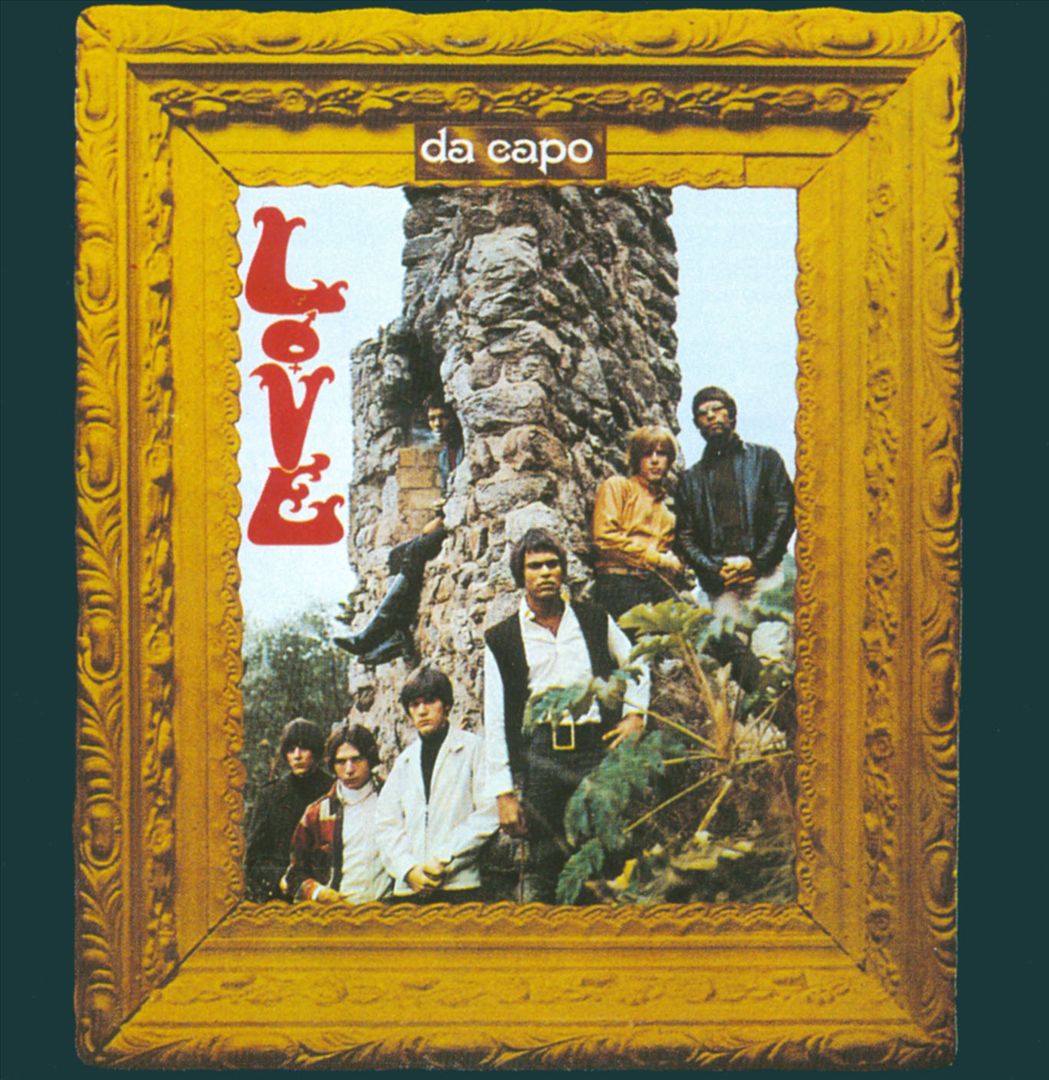
Still, Love would manage only one Top 40 single in its time together, 1966’s “7 and & 7 Is,” a track off of the band’s second album, “Da Capo”. That album also displayed Love and Lee’s musical ambitions: a side-long track, “Revelation,” ran nearly 19 minutes. This was a full 18 months before Iron Butterfly released its own opus, “In-a-Gadda-Da-Vida.”

A House is Not a Motel” continues with the use of acoustic guitar as a central instrument. An insistent drum pattern and a subtle yet busy bass line part support Lee, who once again begins singing in a lilting manner. But as the song progresses, he builds in intensity, eventually reaching a rock ’n’ roll roar. Against an emphatic series of chords, Echols takes a pair of lean, sinewy electric guitar solos. For most of its first two minutes, the overall feel of “A House is Not A Motel” is one of restraint. But after a propulsive drum fill from Michael Stuart, multiple overdubbed distorted lead guitars explode into the mix; amid whoops and hollers from the band, those solos take the song to its fadeout.

The melancholy “Andmoreagain” plays up the album’s baroque character. Strings and acoustic guitars are the central instruments, and Lee’s vocal channels Mathis more overtly than anywhere else on the record. “The Daily Planet” is built around a vigorously strummed acoustic guitar, with deft stabs of chiming guitar and a beefy bass line. The mid-tempo rocker has a feel closer to the Byrds; though he’s not credited on the album, Buffalo Springfield guitarist Neil Young oversaw the track’s arrangement.

But on both “Andmoreagain” and “The Daily Planet,” it’s not really Love; instead Lee is backed by session musicians. Co-producer Bruce Botnick brought in the Wrecking Crew players when he found the band unable to play what was required. Apparently, the shock of being sidelined would eventually lead the band members to get their collective act together; the remaining tracks on Forever Changes would feature the band (plus the string and brass players as needed).

That said, the band members take a back seat on the subtle “Old Man.” Cellos and violins are at the centre of the fragile arrangement, based upon an idiosyncratic melody from Lee. Brass and tinkling piano are added to the mix in the song’s second half. And “The Red Telephone” is almost a continuation “Old Man.” With a similar arrangement and a (different) odd melody, it features a stronger beat and an insistent harpsichord part. The seamless interplay between acoustic guitar leads and the string players underscores the fact that the fiddles and cellos were part of Lee’s arrangement ideas from the beginning of the project. Lee’s spoken lines at the song’s end give “The Red Telephone” a vaguely psychedelic feel, but that is punctured by Lee’s “All o’ god’s chillen gots to have their freedom,” delivered in a kind of self-parody of black American dialect.

Near unanimous in their praise for Forever Changes, critics often point to MacLean’s “Alone Again Or” as the strongest track on the record. But a strong case can be made that Arthur Lee’s “Maybe the People Would Be the Times or Between Clark and Hilldale” deserves consideration as well. The brass arrangement in particular fits the song perfectly, helping provide an air of mystery and suspense. It helps, too, that for this track Lee had written a more straightforward melody. The instrumental break features a series of musical dialogues, first between acoustic guitar and the brass, then between electric guitar and the horns, and finally between Lee’s vocalizing and the auxiliary players.

The baroque arrangement that opens “Live and Let Live” is jarring when set against Lee’s lyrics about snot on his pants and threatening a bluebird with a gun. The song soon segues into a harder, rock-flavored feel; throughout its five-plus minutes, “Live and Let Live” shifts between the two styles; the bridges rock even harder, and toward the song’s end, stinging lead electric guitar makes one of its rare appearances on Forever Changes. By the hard-charging final moment of the tune, its bears no resemblance to the manner in which it began.

As effective as those rocking moments may be, it’s on the album’s gentler tracks where Love truly shines. “The Good Humour Man He Sees Everything Like This” is a case in point. The tune sports another odd melody from Lee; his vocals twist and turn amid an intricate pizzicato string and brass arrangement that rivals “Alone Again Or” in its understated brilliance.

“Bummer in the Summer” is Forever Changes’ outlier track; Lee adopts a sneering, spitting vocal demeanor that’s closer in style and character to “7 and 7 Is” and “My Little Red Book” than it is to anything else on the album. The arrangement is similar to the Leaves’ reading of “Hey Joe” mixed with a bit of Buddy Holly’s “Not Fade Away.” Other than session player Don Randi’s piano, the track doesn’t feature any auxiliary musicians.

Forever Changes was inducted into the Grammy Hall of Fame in 2008

Forever Changes concludes with “You Set the Scene,” a track built upon crystalline acoustic guitar picking, an insistent bass line and some sawing cellos. Lee’s double-tracked harmony lead vocal is among his best work on the record. In the place customarily occupied by a guitar solo, a soaring string ensemble arrangement, punctuated by brass, provides a stirring conclusion to the album. As the song winds toward its end, the majestic brass and string parts build to a crescendo, and then fade to silence.

Notably, outside of music critics, few recognized the specialness of Forever Changes upon its November 1967 release. The album reached a lowly #154 on the Billboard album chart, and the single “Alone Again Or” b/w “A House is Not A Motel” made it only as far as #123. But as had been the case with fellow Los Angelinos the Beach Boys’ Pet Sounds, Forever Changes fared far better in Great Britain.

The lineup that made Forever Changes soon fractured, though Love would go on to make four more albums in the decade to follow. Each of those has its high points, but all are flawed, and none succeeds in doing more than hinting at the once-in-a-lifetime brilliance of Forever Changes.

As a happier postscript, in the later years of his life—as previously-overlooked albums began to earn their due—Arthur Lee, who died in 2006 at age 61, was able to capitalize on the belated recognition of the record’s importance. With members of L.A.’s Baby Lemonade, he would tour, presenting the complete Forever Changes in concert. Those shows would often feature auxiliary musicians playing the album’s brass and string arrangements, resulting in a live reading that successfully captured the nuance and excitement of the 1967 studio recording.

See the source image

Image may contain: 1 person, night


Arthur Lee (1945-2006) – 1960s – Born on March 7th, 1945, Arthur Lee would have celebrated his 75th birthday this week… Lee was the lead singer and front man of Los Angeles Rock band Love. He formed the band in 1965 with old classmate Johnny Echols, along with Bryan Maclean (guitar, vocals), Ken Forssi (bass), and Alban Pfisterer (on the first album). Building up a sizable following at Hollywood area clubs, the band came to the attention of Elektra Records at the Whisky-a-Go-Go and was offered a recording contract. Love’s first hit was a cover of the Manfred Mann’s “My Little Red Book,” a Burt Bacharach/Hal David composition, culled from Love’s self-titled first album released in 1966. The follow-up, “De Capo,” 1967 was released a month before “The Doors,” debut album which was also issued on Elektra Records with both engineered by Bruce Botnick. While the Doors debut climbed to #2 nationally on the strength of the chart-topping single, “Light My Fire,” “De Capo,” managed to reach only #80, but contained the band’s biggest selling single “7 and 7 Is.” Whether the Doors’ success impacted Love is debatable but the band’s third album “Forever Changes,” was its masterpiece, and is rightly considered one of the finest albums of the ’60s – and arguably one of the best rock albums ever.

It contained a song for the ages “Alone Again Or,” with its glorious guitar intro and the sublime horn solo at the bridge. The album was Lee’s crowning achievement ranking #40 on Rolling Stone magazine’s list of the 500 Greatest Albums of All Time. It was to be the last album with the original group. There would be three more albums with different personnel, and Lee would carry off and on with a reconstituted Love up until his passing in 2006. If you want to understand Lee’s genius as a songwriter and musician, listen to these three albums to hear other brilliant songs such as “Orange Skies,” “She Comes in Colors,” Signed D.C. and “Red Telephone.” Lee never got his due owing to many issues, but make no mistake, he was one of the seminal Rock musicians from the ‘60s.

Arthur Lee & Love– 2003 – “Alone Again Or,” Originally on one of the singular albums of the 1960s “Forever Changes,” this sublimely beautiful song of heartbreak will yet tear your heart apart. Demonstrating that he had lost none of his prodigious talent, Lee leads Love in a powerfully touching rendition of one of his signature songs made all the more poignant because Lee would pass from this world just three years later from complications surrounding Leukemia treatments in his hometown of Memphis, Tennessee on August 3, 2006. he was 61. If you can make it through the trumpet solo without shedding a tear…To truly feel this song, turn it up…This is a truly epic performance.

First of 3 songs performed by Arthur Lee and Love in 2003. This song and “You Set The Scene” are from a US presentation of “Later.. with Jools Holland” on the Ovation Network.

Arthur Lee’s 1981 solo album is re-pressed by Friday Music on CD.  The late Love frontman provided the liner notes for this album, on which he revisited “7 and 7 Is” and paid tribute to his band with “I Do Wonder.”

As a visionary and leader of the 60s iconic band Love, Arthur Lee’s prolific words and music continue with this second solo release. Out of print for over three decades, Friday Music is proud to offer another installment of the Love & Arthur Lee Remaster Series . Includes the fan favorite One, a new take on 7 & 7 Is and a nod to Love with I Do Wonder. Featured players include the late seventies Love and the late great guitarist Velvert Turner. Original liner notes by Lee as well as definitive remastering by Love archivist Joe Reagoso.

Image may contain: 3 people

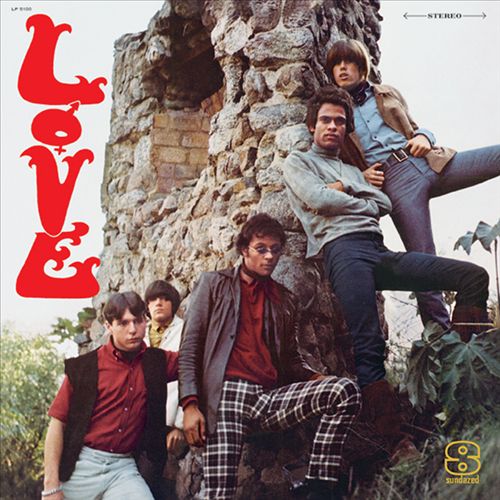
“Love” is the debut LP by Love, released in March 1966 on Elektra Records. . After gigging around the Los Angeles scene for three years, Arthur Lee was ready for something different. Lee had been recording since 1963 with his bands, the LAG’s and Lee’s American Four. He had written and also produced the single “My Diary” for Rosa Lee Brooks in 1964 which featured Jimi Hendrix on guitar. A garage outfit, The Sons Of Adam, which included future Love drummer Michael Stuart, also recorded a Lee composition, “Feathered Fish”.

Inspired by seeing The Byrds live, he decided to merge their folk-rock sound with the driving r&b he had been playing to create a new group, dubbed Love.recruiting guitarists Johnny Echols and ex-Byrds roadie Bryan Maclean, bassist Ken Forssi and drummer Alban “Snoopy” Pfisterer, Love began recording their eponymous debut LP in January 1966. Their first single, Bacharach/David composition “My Little Red Book,” spotlights an insistent, menacing riff that sounds nothing like what their contemporaries were committing to vinyl. Other cuts highlight the writing talents of Lee and the band members.

Nothing like what their contemporaries Who were committing to vinyl. Other cuts highlight the writing talents of Lee and the band members, notably on Lee’s anti-drug essay “Signed, D.C.” and Maclean’s “Softly to Me.” Also included is their version of the rock standard “Hey Joe,” rivaling The Leaves’ hit version for power and sporting some lyric alterations. The group, which lived communally at the time in a house formerly owned by Boris Karloff (they are pictured in the house’s garden on the LP cover), quickly coalesced into one of the West Coast’s most influential and exciting groups; here is where it all began. This was their hardest-rocking early album and their most Byrds-influenced.” Arthur Lee’s songwriting muse hadn’t fully developed at this stage, and in comparison with their second and third efforts, this is the least striking of the LPs featuring their classic line-up, with some similar-sounding folk-rock compositions and stock riffs.

https://www.youtube.com/watch?v=JYINIxCD2rg

Twelve of the album’s fourteen tracks were recorded at Sunset Sound Recorders in Hollywood on January 24th–27th, 1966. The remaining two tracks (“A Message To Pretty” and “My Flash On You“) come from another session.

Love
  • Arthur Lee – lead vocals, percussion, harmonica. Also drums on “Can’t Explain”, “No Matter What You Do”, “Gazing”, and “And More”.
  • Johnny Echols – lead guitar
  • Bryan MacLean – rhythm guitar, vocals. Lead vocals on “Softly to Me” and “Hey Joe”.
  • Ken Forssi – bass guitar
  • Alban “Snoopy” Pfisterer – drums

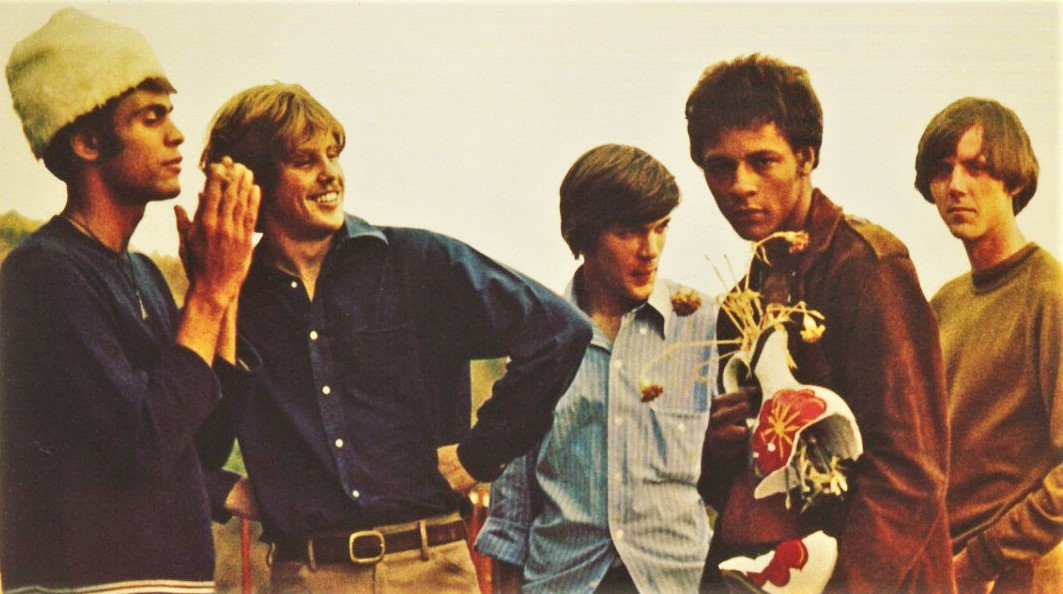
Image result for images of the band love

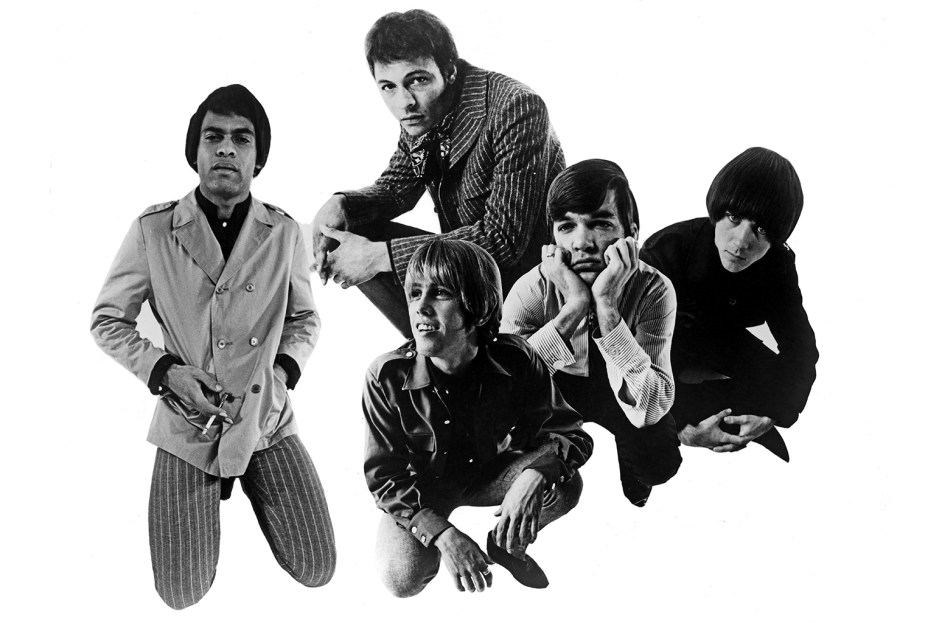
One of the best West Coast folk-rock/psychedelic bands, Love may have also been the first widely acclaimed cult/underground group. During their brief heyday only lasting all of three albums. They were also one of the first integrated rock groups, led by genius singer/songwriter Arthur Lee, one of the most idiosyncratic and enigmatic talents of the ’60s. They were stars in their native Los Angeles and an early inspiration to the Doors, they perversely refused to tour.

Love was formed by Lee in the mid-’60s in Los Angeles. Although only 20 at the time, Lee had already scuffled around the fringes of the rock and soul business for a couple of years. In addition to recording some flop singles with various bands, he wrote and produced a single for Rosa Lee Brooks that Jimi Hendrix played on as session guitarist. Originally calling his outfit the Grass Roots, Lee changed the name to Love after another Los Angeles group called the Grass Roots began recording for Dunhill. Love’s repertoire would be largely penned by Lee, with a few contributions by guitarist Bryan MacLean.

Inspired by British Invasion bands and local peers the Byrds, Love built up a strong following in hip L.A. clubs. Soon they were signed by Elektra Records, the noted folk label that was just starting to get its feet in rock (it had recorded material by early versions of the Byrds and the Lovin’ Spoonful, and had just released the first LP by Paul Butterfield). Love released three albums with core members Lee, Echols (lead guitar, vocals), Bryan MacLean (guitar, vocals), and Ken Forssi (bass). The drum chair revolved between Alban “Snoopy” Pfisterer (Love, “7 and 7 Is”) and Michael Stuart (all tracks on Da Capo except “7 and 7 Is”, Forever Changes). Pfisterer reportedly found the demanding drum parts on “7 and 7 Is” so exhausting that he and Arthur Lee alternated takes on the first recorded outtakes, but on the final take used for the record, Pfisterer performed the entire track Da Capo also included Tjay Cantrelli, who was added on saxophone and flute while Pfisterer moved to organ and harpsichord. Both were out of the group by the time Forever Changes was recorded

Love  –  Love (1966)

Love’s debut is both their hardest-rocking early album and their most Byrds-influenced. Arthur Lee’s songwriting muse hadn’t fully developed at this stage, and in comparison with their second and third efforts, this is the least striking of the LPs featuring their classic lineup, with some similar-sounding folk-rock compositions and stock riffs.

A few of the tracks are great, though: their punky rendition of Bacharach/David’s “My Little Red Book” was a minor hit, “Signed D.C.” and “Mushroom Clouds” were superbly moody ballads, and Bryan Maclean’s “Softly to Me” proved that Lee wasn’t the only songwriter of note in the band.

Love   –   Da Capo  (1967)

Love broadened their scope into psychedelia on their second effort, Arthur Lee’s achingly melodic songwriting gifts reaching full flower. The six songs that comprised the first side of this album when it was first issued are a truly classic body of work, highlighted by the atomic blast of pre-punk rock “Seven & Seven Is” (their only hit single), the manic jazz tempos of “Stephanie Knows Who,” and the enchanting “She Comes in Colors,” perhaps Lee’s best composition (and reportedly the inspiration for the Rolling Stones’ “She’s a Rainbow”).

It’s only half a great album, though; the seventh and final track, “Revelation,” is a tedious 19-minute jam that keeps Da Capo from attaining truly classic status.

Love  –  Forever Changes (1967)

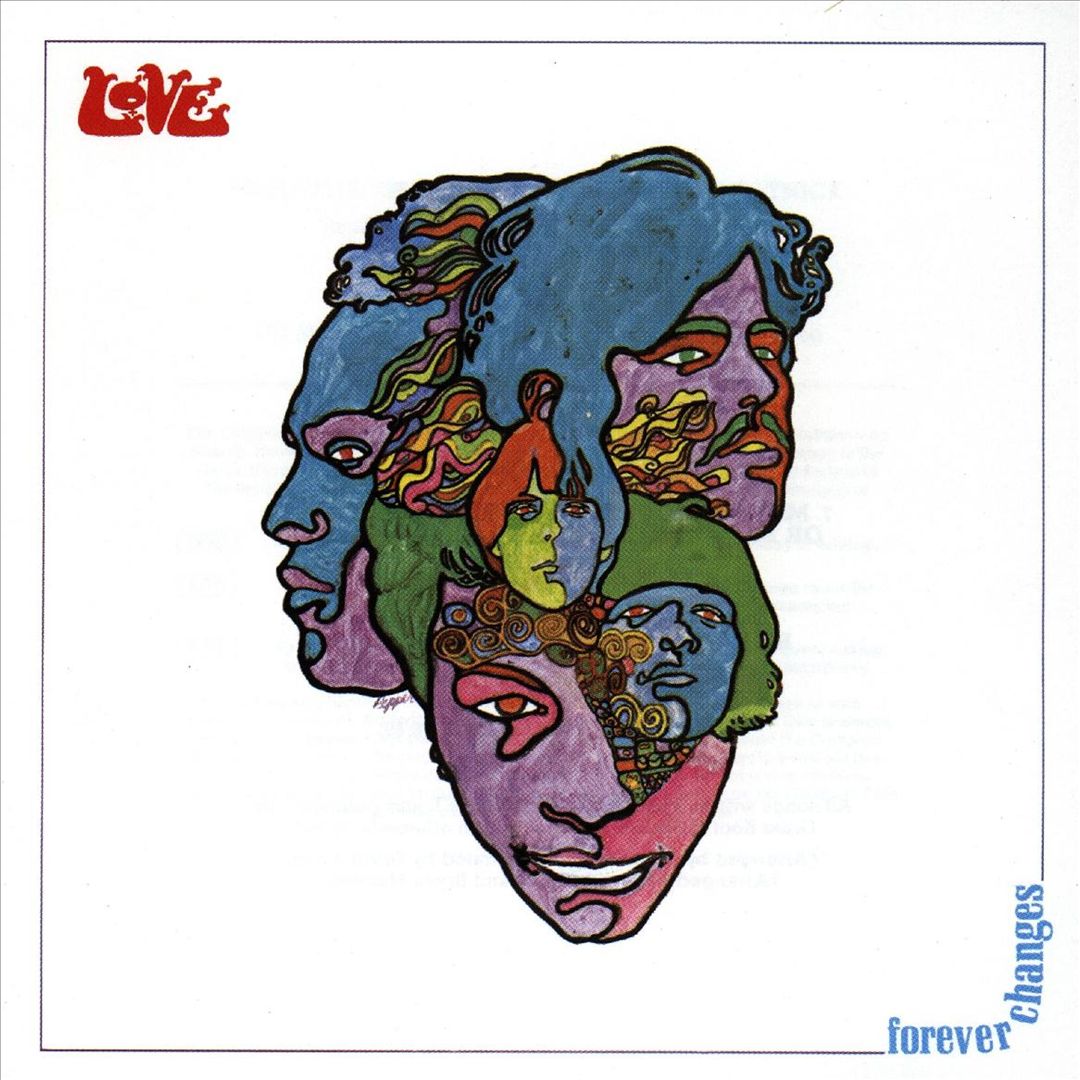
Love’s “Forever Changes” made only a minor dent on the charts when it was first released in 1967, but years later it became recognized as one of the finest and most haunting albums to come out of the Summer of Love, which doubtless has as much to do with the disc’s themes and tone as the music, beautiful as it is. Sharp electric guitars dominated most of Love’s first two albums, and they make occasional appearances here on tunes like “A House Is Not a Motel” and “Live and Let Live,” but most of Forever Changes is built around interwoven acoustic guitar textures and subtle orchestrations, with strings and horns both reinforcing and punctuating the melodies.

https://www.youtube.com/watch?v=_X3HKEC68EM

The punky edge of Love’s early work gave way to a more gentle, contemplative, and organic sound on Forever Changes, but while Arthur Lee and Bryan MacLean wrote some of their most enduring songs for the album, with the lovely melodies and inspired arrangements. A certain amount of this reflects the angst of a group undergoing some severe internal strife, but Forever Changes is also an album that heralds the last days of a golden age and anticipates the growing ugliness that would dominate the counterculture in 1968 and 1969; images of violence and war haunt “A House Is Not a Motel,” the street scenes of “Maybe the People Would Be the Times or Between Clark and Hillsdale” reflects a jaded mindset that flower power could not ease, the twin specters of race and international strife rise to the surface of “The Red Telephone,” romance becomes cynicism in “Bummer in the Summer,” the promise of the psychedelic experience decays into hard drug abuse in “Live and Let Live,” and even gentle numbers like “Andmoreagain” and “Old Man” sound elegiac, as if the ghosts of Chicago and Altamont were visible over the horizon as Love looked back to brief moments of warmth. Forever Changes is inarguably Love’s masterpiece and an album of classic enduring beauty.

Image result for images of the band love

Arthur Lee and LoveArthur Lee was a famously mercurial bandleader. He turned down the Monterey Pop Festival, Woodstock and the Ed Sullivan Show, believing his music should have top billing or none at all. His hardline go-it-alone policy ensured Love’s cult status for all time. But he was as chaotic as he was dogmatic: he once sacked a Love guitarist (Jay Donnellan) for suggesting the band should aim to arrive at gigs more promptly – or at least on the day they were scheduled to take place .

This set is a collection of rare live recordings, from a variety of venues, that originated between 1970 and 2004 . Produced by renowned archivist David Skye, with the blessing and participation of Diane Lee, Arthur Lee’s widow. This is the first time a large collection of Arthur Lee & Love career spanning live recordings are being made available to the public. Eight of the 14 songs on the first disc have been released before – either on Studio/Live (1982) or The Blue Thumb Recordings (2007) – but six from Copenhagen and the Fillmore West, while known to bootleggers, are previously unissued. None would score high on subtlety. Sensitive listeners may quail at a turbo-charged “Bummer In The Summer” (at Waltham Forest Technical College), but that’s got to be better, surely, than Lee’s off-key caterwauling on “Good Times” in Denmark a fortnight later.

We next encounter him at the BBC in 1992, promoting a comeback album (Arthur Lee & Love – Five String Serenade) with an acoustic session for Radio 1’s Richard Skinner. Feted by a new generation, Lee would see his fortunes improve. Disc Two follows him on the promo trail to Amsterdam (for a shaky “Alone Again Or” and a half-remembered “Hey Joe”) and to 1993 and 1996 gigs in Massachusetts and Odense. Close-up microphones intrude on every faltering guitar chord (“Signed D.C.”), but they also bear witness to Lee’s rediscovery of his golden voice. That majestic, heavenly warble! This, we sense, is a vision of the old Arthur. When a young flautist is brought onstage for “She Comes In Colors” – the 48-year-old Lee was happy to revisit Da Capo by 1993, much to the audience’s delight – her songbird trills seem to sing of a musical renaissance. “7 & 7 Is”, tackled at thrilling speed in Odense, is further evidence of a prodigal return. Within months, however, Lee was in a California prison, gaoled for illegally discharging a firearm.

This vinyl package contains a 16 page booklet and cover artwork was designed by illustrator William Stout, internationally renowned as one of the first rock n roll bootleg cover artists. Stout also designed legitimate album covers for The Who, The Beach Boys, The Ramones, and The Smithereens and the original Rocky Rhino mascot.

DISC ONE, SIDE ONE: 1. August, 2. My Little Red Book, 3. Love Is More Than Words or Better Late Than Ever, 4. Doggone, 5. Good Times DISC ONE, SIDE TWO: 1. La Caloca, 2. That’s the Way It Goes, 3. She Comes In Colors, 4. Signed DC, 5. Orange Skies DISC TWO, SIDE ONE: 1. 7 & & Is, 2. Your Mind And We Belong Together, 3. Alone Again Or, 4. Maybe the People Would Be The Times Between Clark and Hilldale, 5. The Red Telephone DISC TWO, SIDE TWO: 1. Andmoreagain, 2. The Daily Planet, 3. Old Man, 4. The Good Humor Man, He Sees Everything Like This, 5. Everybody’s Gotta Live – Instant Karma

Released just months after the so-called 1968 Summer of Love, Forever Changes was the third studio album by the group simply and boldly called Love.  But more than just that four-letter word was on the mind of bandleader/songwriter Arthur Lee, who saw beyond sunshine and flowers that summer.  Love traded in the punchy electric guitar sound of the group’s first two albums (and successful singles like “7 and 7 Is” and a cover of Burt Bacharach and Hal David’s “My Little Red Book”) for a denser, more orchestrated style that incorporated strings and horns alongside acoustic guitars.  Despite the often beautiful sound, though, Forever Changes was a song suite that referenced war, violence, drug abuse, failed romance and racial tension in songs like “A House is Not a Motel” (playing off another Bacharach/David song, “A House is Not a Home”), “The Red Telephone” and “Live and Let Live.”  Bryan MacLean contributed the album’s single “Alone Again Or” which kicked off the album in a collision of AM-meets-FM styles.  Now, the seminal masterwork originally released in November 1967 will be getting the deluxe 50th anniversary treatment from Rhino on April 6th.

Forever Changes has always been better-regarded in the United Kingdom than in its United States birthplace; it went Top 30 in Britain but only reached No. 154 in America.  But that hasn’t stopped the album’s cachet from growing every year, and it’s been a CD mainstay since its very first release in the format in 1987.  For this super-sized outing, Forever Changes will arrive in a 12 x 12 hardbound book-style format, containing 4 CDs, 1 DVD, and 1 LP.  The original stereo album will be featured on Disc One in a new remaster by original engineer Bruce Botnick, while the original mono mix makes its official CD premiere on Disc Two.  The third disc has the alternate mix of the entire album that premiered on the 40th anniversary reissue in 2008 plus outtake “Wonder People (I Do Wonder)” in the mix first issued in 2001.  The fourth CD, Singles and Outtakes, has the unique 45 RPM versions as well as the original mix of “Wonder People (I Do Wonder),” demos, backing tracks, and more.  The contents of the 40th anniversary bonus disc are reprised here, alongside two previously unissued tracks: the backing tracks of “Wonder People” and “Live and Let Live.”  The DVD has Botnick’s stereo remaster in 96/24 high resolution, plus the rare 1968 promotional film Your Mind and We Belong Together.  Finally, the LP has the stereo remaster cut from high-res digital audio by Bernie Grundman.

The final album by the original Love line-up of Lee, MacLean, John Echols, Ken Forssi, and Michael Stuart, Forever Changes remains a benchmark of pop and rock.   Music historian Ted Olsen has provided new track-by-track liner notes and an essay for Forever Changes: 50th Anniversary Edition.  Look for it on April 6th from Elektra and Rhino.

Love. Forever Changes: 50th Anniversary Edition (Elektra/Rhino, 2018)

No photo description available.

Love

Love have unearthed four previously unheard Arthur Lee songs for a remastered deluxe reissue of their final LP, 1974’s ‘Reel to Real’ . Pioneering psychedelic band Love are reissuing their final LP, 1974’s Reel to Real, in remastered deluxe format with 12 bonus tracks (including four newly discovered Arthur Lee originals). High Moon Records – the same label responsible for last year’s limited-edition reissue of the band’s lost-then-found 1973 LP, Black Beauty – will release the first-ever CD/digital versions of Reel to Real on November 27th; vinyl editions, available for the first time in over four decades, will be available February 19th, 2016.
The CD version will be packaged in a deluxe custom Digipak with the full-color, 32-page booklet. The LP edition, pressed on “high-quality RTI vinyl,” features a 28-page booklet and download card for all tracks. The digital version comes with a 26-page PDF booklet.

The deluxe Reel to Real will include a booklet featuring an essay from Rolling Stone contributor David Fricke and unpublished photos. The set will also feature 12 bonus tracks, 11 of which are previously unreleased; these include alternate takes and mixes, live-in-the-studio rehearsal versions and four newly discovered Lee songs (“Do It Yourself,” “I Gotta Remember,” “Somebody” and “You Gotta Feel It”). A statement describes the tracks as “three fully-produced rockers and a spare, Imagine-era John Lennon-by-way-of Sly Stone studio sketch.”
The CD version will be packaged in a deluxe custom Digipak with the full-color, 32-page booklet. The LP edition, pressed on “high-quality RTI vinyl,” features a 28-page booklet and download card for all tracks. The digital version comes with a 26-page PDF booklet.

High Moon Records, the label behind the recent releases of Love’s Black Beauty and Gene Clark’s Two Sides to Every Story, has announced its next title. On November 27th, High Moon will reissue Love’s 1974 album “Reel to Real” as a newly-expanded Deluxe Edition in the following formats:

Expanded CD packaged in a deluxe custom digipak with a full-color, 32-page booklet;
LP pressed on high-quality RTI vinyl with full-color, 28-page LP-sized booklet;
LP includes download card for high-quality album plus bonus tracks; and
Digital Download includes full-color, 26-page PDF booklet.
Reel to Real was the first album from Arthur Lee’s groundbreaking rock band since 1970’s Blue Thumb album False Start. Originally released on Robert Stigwood’s RSO label and produced by Skip Taylor, it featured Lee alongside his Black Beauty band (drummer Joe Blocker, guitarist Melvan Whittington, and bassist Robert Rozelle) and presented a more soulful side of the frontman. He wrote or co-wrote every track on the album other than a cover of William DeVaughn’s “Be Thankful for What You Got.” Long the rarest item in the Love catalogue, Reel to Real has never previously been available on CD. Sweetening the pot, High Moon’s upcoming deluxe edition will feature 12 bonus tracks, 11 of which are previously unreleased.

These bonus cuts encompass alternate takes and mixes, live-in-studio rehearsals, and four newly-discovered Arthur Lee originals: “Do It Yourself,” “I Gotta Remember,” “Somebody” and “You Gotta Feel It.” Other bonus track highlights include an extended, alternate mix of “Busted Feet,” the single mix of “You Said You Would,” and an impromptu studio rehearsal of Forever Changes outtake “Wonder People (I Do Wonder).”

The album has been remastered from the original tapes, and the CD features a 32-page booklet with a new essay by David Fricke of Rolling Stone as well as a number of candid, previously unpublished photos. The CD edition is due on November 27, while the LP is scheduled for release on February 19, 2016. Both editions are currently available for pre-order at the links below!

Love, Reel to Real (RSO SO 4804, 1974 – reissued High Moon Records, 2015)

CD: Amazon U.S. / Amazon U.K. TBD
LP: Amazon U.S. / Amazon U.K. TBD

Time Is Like A River
Stop The Music
Who Are You?
Good Old Fashion Dream
Which Witch Is Which
With A Little Energy
Singing Cowboy
Be Thankful For What You Got
You Said You Would
Busted Feet
Everybody’s Gotta Live
Do It Yourself [Outtake]
I Gotta Remember [Outtake]
Somebody [Outtake]
You Gotta Feel It [Outtake]
With A Little Energy [Alternate Mix]
Busted Feet [Alternate Mix]
You Said You Would [Single Mix] (RSO single SO-506, 1974)
Stop The Music [Alternate Take]
Graveyard Hop [Studio Rehearsal]
Singing Cowboy [Alternate Take]
Everybody’s Gotta Live [Electric Version]
Wonder People (I Do Wonder) [Studio Rehearsal]
Tracks 12-23 are previously unreleased except Track 18 as indicated above

The late, great, self-proclaimed “first black hippie” gets a deluxe reissue. “Black Beauty”, the never-before-released masterpiece by Arthur Lee’s legendary band Love is making its first-ever official release in any format, anywhere! Chosen as one of Time Magazine’s most anticipated releases, critics are hailing the album as an instant classic. ‘Black Beauty’ is that rarest of rock artifacts: an unreleased, full-length studio album, from an undisputed musical genius. It represents the missing link in a catalog that also includes ‘Forever Changes’, the seminal 1967 Love album the New York Times called “one of the most affecting and beguiling albums of all time. With ‘Black Beauty’, Arthur Lee manages to combine searing ’70’s rock with gorgeous melodies and stellar songwriting – topped off by his most distinctive, snarling, soulful vocals ever. With unparalleled sound, and a wonderfully eclectic collection of songs, the album offers Love fans a rare glimpse into a previously undocumented phase of Arthur Lee’s career, while shining a light for new fans to discover the unique genius that is the music of Arthur Lee and Love. David Fricke wrote about the album in Rolling Stone: “Black Beauty” might have been received as a strong comeback for Lee, a turn to steamy R&B, with heavy-guitar punch – if it had come out.” High Moon Records is honored to finally grant Arthur Lee’s wish for ‘Black Beauty’ to be available to music fans worldwide.

Before his untimely death in 2006, Arthur Lee claimed that without him, there’d be no Jimi Hendrix or Sly Stone. Sure enough, the extended Black Beauty rocks loud and funks hard. By 1973, Love was a vacuum-tight all-black band. Vestiges of their early psychedelic sophistication surface in “Lonely Pigs.”

https://www.youtube.com/watch?v=z6Eb1zEMlAY

Jimi Hendrix and Arthur Lee met in 1964 or 1965 at the Gold Star Studios in Los Angeles, where singer Rosa Lee Brooks was recording Lee’s song “My Diary”
the session was Jimi Hendrix’s first time in a recording studio, though it seems likely Hendrix had already cut “Testify” with the Isley Brothers.

The two men remained friends, and on St. Patrick’s Day 1970, after Love had finished a European tour, Hendrix had joined the band at London’s Olympic Studios. There, Lee says Jimi and the band all ate mescaline (or “Huxley’s hooch,” as we used to call it in the San Fernando Valley).

Lee’s recollections of the Olympic session: Boy, did we have fun at the Olympic recording studio. The band and Jimi all took mescaline. Although they didn’t know it, I was as straight as Cochise’s arrow. Somebody had to steer the ship One of the ways I got Jimi to do the session in the first place—or how I got his attention, anyway—happened one night at the Speakeasy. He and I arrived together. The guy at the front door told me I could come in but Jimi couldn’t. When I asked him why, he said that Jimi had been fighting in the club on an earlier occasion and they didn’t want that happening again. So I told him that Jimi was cool, the entourage that was with us was cool, and I didn’t think any fighting would be going on that night. He finally agreed. I said to Jimi, “Look, man, neither one of us is going to be around much longer, anyway; so while we’re here, we might as well do something together.” When I said that, whatever we were talking about, or he was thinking about, just seemed to stop and I had his full attention. He really went into some deep thought as he looked at me from across the table. He was looking into my eyes and I knew he could only be thinking about our early deaths.

The session went completely differently from the way I was used to recording. I thought it was to be a private session. I don’t remember telling anyone to come, except the band; but, to my surprise, there were people all over the place. There were girls I’d never seen before and faces popping out from where you would least expect a person to be. I was in a state of shock, but Jimi said, “It’s OK, let them stay.” More than once, Jimi thought we were done and went to pack everything up. Then he would come back into the studio while we were playing and say, “What key?” Once, when we were learning a song I wrote, called “Ride That Vibration,” Jimi came walking back in during the middle of it. He asked me, “What did you just say in that song?” I said, “Ride the vibration down like a six foot grave / Don’t let it get you down.” Then he said, “I gotta go; it’s getting too heavy.” He called a cab, took [drummer George Suranovich’s] girlfriend, and was out the door. George just looked at me as if to say, “That’s Jimi.” After a while, Jimi came back and suggested that everyone jam, and were my band members ever happy!

On that session in London, we managed to lay down a few tracks, among them “E-Z Rider,” “The Everlasting First,” and a jam that I would later add lyrics to. Jimi sang on “E-Z Rider.” I gave the master reel to [Blue Thumb Records president] Bob Krasnow. He never gave it back. At the time, I wondered if someone was filming us, although I never saw a camera. I found out, in the early 90s, they had been.

Back in the studio, it was almost daylight, so I signaled to H to start wrapping it up. I don’t think Jimi was ready to quit, but it had been a long night for me. The tour we were doing was over with; I just wanted to get back to Studio City in California. As we were walking out of the building, Jimi asked, “Where are you going?” I said, “Man, I gotta get back to LA; to my woman, dogs, and pigeons.” Jimi said, “Come here, I want to show you something.” We walked back inside the studio. He pointed to his guitar case on the floor. Then he opened it up. I thought he had a stash in there, but as he stood up, he pointed to it again and said, “This is all I have.” I couldn’t figure it out at first, but then it hit me. He was telling me that the white Stratocaster guitar in the case were his only possessions. I felt kind of sad for him.
Of the three songs Hendrix cut with Love at Olympic, only “The Everlasting First”—the single from Love’s False Start

https://www.youtube.com/watch?v=QvqDs6lIUrY