Austin-born Justin Toland (guitar/vocals) found his own musical food early through his father, a classic-rock aficionado who turned Justin on to the Stones, Creedence, soul music and the Stax sound. At 17 Toland moved to Memphis and met Thomas Storz (bass), a native of the city, through mutual friends; the pair found common musical ground and began playing groove-grounded rock with a series of temporary drummers. Andrew Denham (drums), a Shreveport-born drummer and British hard-rock fan, joined up with Storz and Toland in 2007.
The trio began demoing using a basic setup: a single cassette recorder, no tracks, no real separation, just mics on the bass/drums and guitar and vocals live in the room. Without the option to isolate, tweak, or sweeten after the fact, Dirty Streets became accustomed to running through a take 40 or 50 times as they worked to get it right, all the way through. By the time they began gigging live, that level of discipline had honed Dirty Streets into an instinctual, responsive outfit. Bootleg recordings of their shows in and around Memphis helped to generate buzz, and established Dirty Streets’ rep as a band whose timing was as sharp as their sound was ragged.
Albums followed—Portrait of a Man (2009), Movements (2011), Blades of Grass (2013), White Horse (2015), Distractions (2018), and the live Rough and Tumble (2020), drawn from an in-house performance for the DittyTV streaming music service—all steeped in the raw rock-soul groove that serves as the band’s taproot, the musical core from which all of its explorations still proceed. And within that core, too, is the element that gives their music, the music they love and play, its unique character.
“Soul and blues music is about testifying,” says Toland. “To me, that’s great songwriting. When it’s good, it’s good because it’s true, because it’s authentic.”
If rock is the watchword here, it’s an alchemical one : alchemy of the guitars, flying (far) away, lost in space and time, melting over the sustained or relaxed – even dreamy – pace of the drums. The skeleton-bass gives a cohesive substance to the whole. This is a liquid chemistry, after all, made out of fluid streams of light.
Founded in 2019, Swear I Love You as a musical project, could be seen as a text where different writings are being superimposed : sounds reminiscent of previous bands (three of its members also played in the mighty Forks and the trippy MK-Ultra), but somehow distant from that past. Rewriting here should be understood as reinvention. Novelty comes hand in hand with a renewed collective enthusiasm channelled through the music composition and performance of their hypnotic and captivating tunes.
Lulled by influences found on the psych rock scene of bands such as Brian Jonestown Massacre and early Black Angels, their sound is expansive, equal parts heavy and ethereal, stained with an alpine kind of psychedelia, inspired by forests, mountains and (magic) mushrooms, flying clouds and a golden transluscent low-angled light glowing through the dark foliage and prairie wildflowers. In this neverending chiaroscuro game of the reassuring and the eerie, the poignant neo-romanticism of Echo and the Bunnymen and the enlightened ghost of Joy Division appear sometimes, haunting in the shady background (Smoke and Mirror, Sound of Seashells)
Catchy mélodies filed with nostalgia of Post-punk and Brit-pop, thats the promesses of Swear I Love You. From the wild beauty of Swiss mountains to the none less real disillusion of modern life, this band bring back the ghost of 80’s romanticism with a pinch of enjoyable kitch.
New Maxi 12inch from single ‘Down The Stream’ taken from self titled album.
This record includes remixes by Anton Newcombe, Amson feat. Claire Dromelet, Die Wilde Jagd.
Available on EXAG Records. releases June 11th, 2021
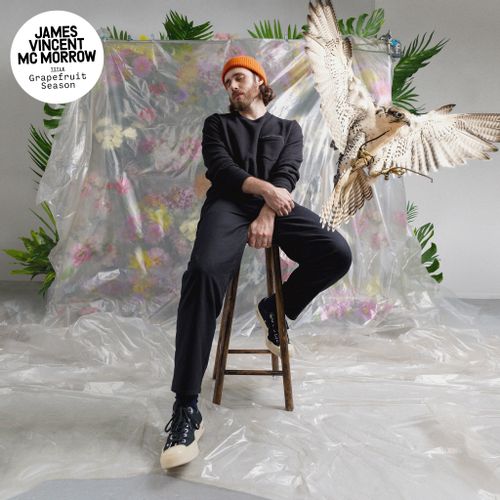
‘Grapefruit Season’ is the long awaited 5th studio album from James Vincent McMorrow.
produced by James alongside fellow genre disruptors Paul Epworth, Kenny Beats, Lil Silva and Patrick Wimberly (chairlift), the album was recorded in London, Los Angeles and Dublin largely before the pandemic struck. it embraces the fact that life is chaos, and the idea of growing up but feeling none the wiser.
My new album Grapefruit Season will be out on the 16th of July, and new song Waiting is out today. Pre order the album . I am so excited to finally be sharing this, the last year has been like holding my breath waiting to talk about it!! All European tour dates have also been rescheduled and are on sale now!!
Beyond overjoyed to say that the next single from the album is called Paradise and is out next Tuesday 18th! Honestly, I’ve never been as excited about a release as I am about this one. it captures everything that I’ve been trying to get to for the entirety of my musical life. I’m such a chaotic fucker, for so long I saw that as weakness, like I needed to control my chaos and refine it into something functional. Before I started this album, I swore I’d see the chaos as my greatest asset. I am a chaotic fucker, and I do not control a single thing. I can’t control what people think of me, so why give so much of myself to the pursuit of acceptance. I can’t control the outcome, so make only what I want to make.
Beyond overjoyed to say that Paradise, the next single from the album, is out now! Honestly, I’ve never been as excited about a release as I am about this one. It captures everything that I’ve been trying to get to for the entirety of my musical life. I’m such a chaotic fucker, for so long I saw that as weakness, like I needed to control my chaos and refine it into something functional. Before I started this album, I swore I’d see the chaos as my greatest asset. Like I said, I am a chaotic fucker, and I do not control a single thing. I can’t control what people think of me, so why give so much of myself to the pursuit of acceptance? I can’t control the outcome, so I committed to make only what I want to make. I went in and I made the album that captured every angle of that chaos in all its fucked up glory, all the influences, all of the desire to push forward what it means for me to be a singer and a songwriter and a human. That’s what this song is about, that’s what it sounds like to me, that glory, fragility, bigness and hope. I hope it becomes your soundtrack to this summer of chaos and bigness and hope and glory.
I went in and I made the album that captured every angle of that chaos in all its fucked up glory, all the influences, all of the desire to push forward what it means for me to be a singer and a songwriter and a human. That’s what this song is about, that’s what it sounds like to me, that glory, fragility, bigness and hope. I hope it becomes your soundtrack to this summer of chaos and bigness and hope and glory. wouldn’t have gotten to this place without 2 of the greatest humans I’ve ever known, Lil Silva and Paul Epworth. Honoured they wanted to help me build this song, truly 2 of the greatest musicians and friends. And a huge shout out to the Capital Children’s Choir for walking into the studio that first day singing every line of the song at the top of their lungs, capturing that energy in the song gave it the magic.So excited for this. James X
I’m playing some in-store performances at a few record stores in July to celebrate the launch of the new album. Pre-order ‘Grapefruit Season’ from the stores below to get your ticket.
Howlin Wolf’s voice, Hubert Sumlin’s guitar and Willie Dixon’s songs made for an unbeatable combination on this defining classic of Chicago blues, which, along with its predecessor, “Moanin’ At Midnight“, had a deep impact on the course of rock history.
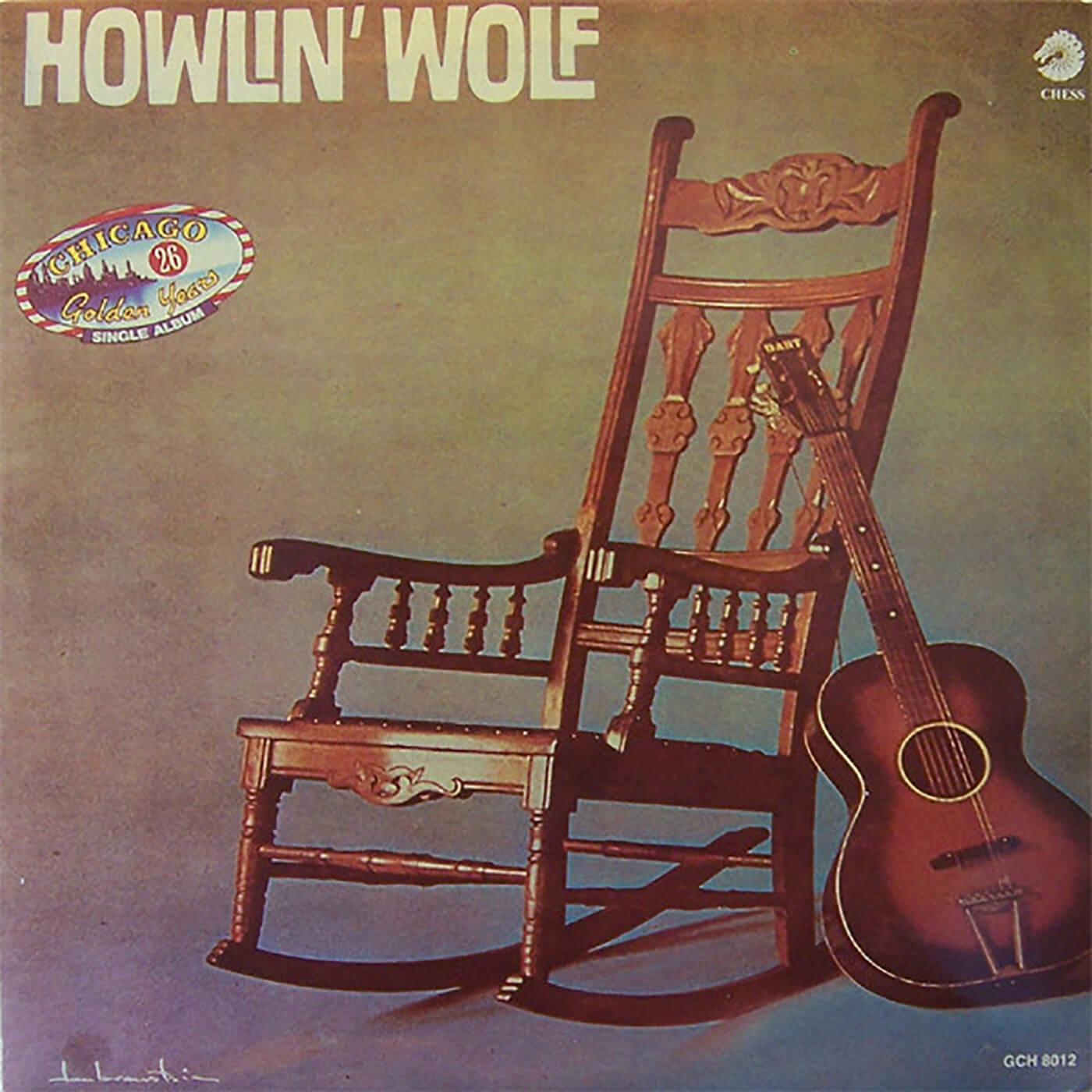
Not to be confused with The Howlin’ Wolf Album (a psych-blues experiment from 1969 which Wolf himself even handedly evaluated as “dog shit”), Howlin’ Wolf – aka ‘The Rockin’ Chair Album’ after its iconic cover shot from Playboy staff photographer and Chess Records house photographer Don Bronstein – became one of Chester Arthur ‘Howlin’ Wolf’ Burnett’s most famous records. But as per the conventions of the time, it was actually a compilation of six singles and their B sides spanning his late 50s to early 60s output, with the variations in recording and personnel that implies.
As well as providing the bass for the majority of the record, Chess song machine Willie Dixon wrote nine of the 12 tracks. Howlin’ Wolf was unhappy about having to do so much material by Chess’s chief songwriter, believing the Chess brothers were effectively denying him the chance to earn royalties from his own songs and only two tracks here are his own. Despite concurrently writing hits for Muddy Waters and others, there’s no sign of Dixon’s inexhaustible supply of innuendo drying up here – and a rotating cast of backing musicians delivers them behind the core triumvirate of Wolf, Sumlin and Dixon. His given name was Chester Arthur Burnett. Originally from Mississippi, he’d recorded for Memphis’ Sun Records—home of Elvis Presley, Johnny Cash, Jerry Lee Lewis and so many others—before he, too, went over to Chess. His songs would eventually find favour with many rock bands—Cream recorded his “Spoonful,” the Doors cut “Back Door Man” and there were many others—but for now he was still a mystery figure to most of the white audience.
Any record that relegates Buddy Guy to bass has to have a decent six-string line-up, and alongside Sumlin, the tracks include guitarists Jimmy Rogers, Willie Johnson, Freddy Robinson, Otis ‘Big Smokey’ Smothers and possibly others still.
Hubert Sumlin had stepped out of the shadow of Willie Johnson to become Howlin’ Wolf’s trusted sideman, even though their relationship was legendarily fractious and often violent. His jagged, frantic approach to riffs and solos is attention-grabbing throughout the album, and the key to it lies in his use of fingers and thumb instead of a plectrum to vary his attack.
On Shake Me, his largely major-pentatonic flavoured solo erupts from the speakers with string slides, feverish tremolo, descending bends and more tricks besides, which are repeated at a more leisurely pace on Goin’ Down Slow. For You’ll Be Mine, his solo takes a detour no other blues lead player has ever rediscovered since; and on Spoonful, his P-90-loaded Goldtop sings, squeals and chokes in equal measure to deliver one of the blues’ most expressive, vocal solos.
He may be the six-string star of the show, but the guitars on Howlin’ Wolf come from a variety of sources. For Spoonful, Wang Dang Doodle and Back Door Man, Freddy Robinson provided the back-up guitar lines, although bluesmen’s memories weren’t ever too clear: Sumlin himself couldn’t recall with certainty who played what, and Freddie King once claimed to have played on the sessions, too. And on closer Tell Me, the uptempo shuffle parts are a combination of Willie Johnson and Otis Smothers.
With so much flashy lead guitar throughout Howlin’ Wolf, it’s easy to overlook the slide guitar skills of Wolf himself, of course, given how terrifying his vocals were. But Little Red Rooster and Down In The Bottom are two equally atmospheric polar-opposite performances that underline the Delta roots behind the electrified Chicago sound, two guitar parts that mirror the music’s shift from the country to the big city.
Varying where accents fall on the beat is an art that’s learnt through thousands of hours of playing and Howlin’ Wolf’s vocals, with their constant push and pull of the song’s meter, define the rhythmic space for the other musicians. How they use this space is the real trick: on opening track Shake For Me, the rhythm and chord changes are destabilised by Hubert Sumlin’s riff sliding lazily into the one and playing upstrokes on the offbeats, whereas when you listen to the breakdown sections in Little Baby, no one treads on anyone’s toes unless they really mean to and the timing of the band is locked in, to the millisecond.
In contrast to both, Wang Dang Doodle lollops around drunkenly, constantly falling forward, gaining momentum like a party getting dangerously out of hand, as the law-enforcing tambourine struggles to keep time (in the best way possible). Towards the end of the record, the telepathic ensemble playing that makes up the loping rhythm of Back Door Man is humbling listening for anyone who’s ever dismissed the blues as unsophisticated music.
Guitar tones and recording levels in the mix also play their part in creating further separation: hence the minor-key Latin-tinged swing of Who’s Been Talking? has woolly rolled-off tone for Otis Smothers’ guitar riff to steer clear of the harmonica, piano and tenor sax, but the smoky atmosphere decisively clears when Wang Dang Doodle’s stinging icepick-treble guitar accents cut through from the two entwined guitar parts of Hubert Sumlin and Freddy Robinson.
After Sam Cooke had released a soulful interpretation in the US in 1963, The Rolling Stones 1964 cover of Little Red Rooster became the first (and still only) blues song to reach No. 1 on the UK singles chart and set in motion the album’s profound influence on rock. Eric Clapton and Cream transferred it into the psychedelic realm with their version of Spoonful; Led Zeppelin famously quoted the lyrics of two of its songs in Whole Lotta Love, and a cover of Wang Dang Doodle was Koko Taylor’s biggest hit. The roll call of other artists to have attempted to cover the songs in the ensuing decades has some unexpected entries, too, including Bryan Adams, The Jesus And Mary Chain, PJ Harvey and many more.
But as ever with Chicago blues, you need to return to the source for the real story, and in this case, it’s time well spent. Howlin’ Wolf is among the greatest and most influential blues albums ever made and a must-listen for guitarists everywhere.
Howlin’ Wolf, “Howlin’ Wolf” (Chess, 1962)
the Band:
Howlin’ Wolf, vocals, guitar, harmonica
William Johnson, guitar
Freddy Robinson, guitar
Jimmy Rogers, guitar
Otis ‘Big Smokey’ Smothers, guitar
Hubert Sumlin, guitar
Howlin’ Wolf, born Chester Burnett on June 10th, 1910, died at age 65 on January 10th, 1976.
The Axis tilts again. Feedback loops, patterns begetting patterns…fracturing, splintering, diverging, convalescing…these are fractals on which we build. With trademark molten guitar licks and some of the most sweetly delicate Axis vocals yet, “Fractal” is pure dialled-in, zoned-outery, from altered beast to blasted jam via dub-fried space lullabying in Denudes puree. Evolution is inevitable, reinvention the key!.
This sister sits with other misters recorded at various moments before/during/after the recent time blip – “Fractal USA” following the Shampoo You tour year; “Caramel” and “(Don’t Wanna Have That) Dream” secreted secretly, under masked-and-distanced lock-down; and “Dying To Meet You,” a long-form full band jam from the vault edited, spliced, and dubbed to meet this EP’s needs. The through-line of the batch is hypnosis:
With BrettSova smelting trademark molten guitar licks and fusing several of his most irresistibly delicate vocals to date to the finely-rendered compounds, the “Fractal” EP makes gains from losses, from the repetition, the patterns, the fractals. Evolution is inevitable, reinvention the key – unlock it in you with Axis: Sova’s “Fractal”.
A short shot here from Axis: Sova pushes a more motorik pulse, with the machine march of drums underscoring that scorch that we’ve come to love from Brett Sova over the years. The EP’s opener is feedback huffin’ howler, but over the course of this EP Sova takes a few new tacks as well, ingesting some dub-slung haze on “(Don’t Wanna Have That) Dream,” a more laconic outing than he’s usually known for. Throw in an unexpected Cluster cover and a seven-minute percolated capper and its a fun grab-bag of an EP that keeps the band fresh between albums. The record is out now from God? Records.
Brett Sova: gtr, vox, organ, drums Jeremy Freeze: bass, gtr, organ, drums, vox Tim Kaiser: gtr, vox
Almost exactly five years to the day after tons of indie musicians came together for a five-hour-long Grateful Dead tribute album, UK indie pop lifers Bombay Bicycle Club have released a cover of the Dead’s 16-minute prog-pop opus “Terrapin Station” with help from their friends in the band Flyte. The original is one of the most unique songs in the Dead’s huge catalogue and among some of their finest studio work, and Bombay Bicycle Club tap into the charm of the original while modernizing it and making it their own.
Happy World Turtle Day to everyone. As our most hardcore fans know, we go way back with the turtles starting with our Tour for Lulu. This year we decided that quietly celebrating this day just the 4 of us wasn’t enough.
It comes with a music video that takes place under the sea, which is a great fit for the aquatic reverb used on this one. It’s a great cover version. Our cover of Grateful Dead’s epic song with our friends Flyte.
On that 2016 indie Dead tribute album, this same song was expertly done by members of Grizzly Bear, The national and Bonny light Horsemen.
Lord Huron recently released their first new song since 2018’s “Vide Noir”, which was their best album yet. Like that album, the new song is a slightly psychedelic peice of indie heartland rock, and there’s maybe just a little Bowie/T. Rex glam in the mix too. It’s the kind of song that reminds you what you loved about the previous album.
Stepping out of the woods and into a vaster landscape of space and time, Lord Huron’s newest release “Long Lost” is a celebratory cabaret of genres, stories and characters. Beloved for their harmony-heavy hits, including the haunting ‘The Night We Met’, their fourth album levels up all their previous work, placing the act of making music right at the centre of focus.
Lord Huron have found tales in familiarity. Turning their studio into a main character and exploring the subject through months of livestream shows unveiling the world of Whispering Pines, “Long Lost” is a kind of imagined variety show. Conjuring up all the ghosts of sessions past, the band imagine who might have been there before them, and in turn have created a kind of homage to music.
Changing genres and tones as they move through characters, Long Lost is a clever take on a concept album, showing the depth and breadth of the band’s skill as they move seamlessly from traditional country on tracks like ‘Love Me Like You Used To’, to through-and-through indie on ‘Not Dead Yet’, even into Beach Boys-Esque surfer corners on ‘At Sea’. Hitting really key musical references and touching base at the heart of several genres, Long Lost has the feeling of a perfectly-curated playlist, walking you through the range of inspiration that’s always been behind Lord Huron’s music, but now letting it speak for itself. From it’s rockabilly hip-swayers to heartbreaking ballads, this record has the same perfect composition that’s a given for Lord Huron release, full of recurring imagery.
Throughout, you get the sense that the band are emulating the work of icons that have inspired them forever, getting to briefly step outside of their own lives and into the shoes of a character. This feeling of play is seen clearly in the creativity of the Live From Whispering Pines videos; a real must-watch for the album. Seemingly letting their imagination run wild, Long Lost comes along with a whole narrative back story, a ghost narrator in the form of Tubbs Tarbell and a cast of characters each with their own literature. Having been given the time free from the distraction of tours, Long Lost is a complete story and vision, a fully realised world that allows you to decide how deeply you interact with it.
At its essence, this album deals with reflection and the way memories morph with distance. Interested in approaching situations and emotions from a side view, frontman and songwriter Ben Schneider has a real skill for writing songs that are both packed with emotion and minimal in style. A real stand-out moment comes on ‘I Lied’, a track shared with the beautiful, classically country voice of Alison Ponthier. Flipping the ballad on its head and writing a bittersweet track guiltily celebrating the end of love, the song is a perfect summary of the wonder of this album; combining traditional instrumentals with genre-defying twists. Using what Ben calls “musical shorthand”, the record tricks you into bringing forth all the emotions and memories you have tied up in a particular genre or era, sometimes shredding up what you know and sometimes just letting you sit in the nostalgia, reflecting on your own experience with music and memory.
Perfectly suited to the vintage tones of the album, flowing between gentle acoustic tracks into full lung crooning, his voice and the vocal symphony built from his harmonies has an indescribable quality to it, able to make you get into your feels at a moment’s notice. So full yet so gentle, the timelessness of his country-tinged vocal ties Long Lost together, staying firmly in control of the world he’s created.
Studying the characters and diving into the narrative isn’t a requirement here, even without all that, Long Lost remains a beautiful record.