


Portuguese experimental trio 10 000 Russos are gearing up for the release of their fifth album ‘Superinertia’, which is due out September 10th on Fuzz Club Records. Following on from 2019’s ‘Kompromat’ LP and tour dates around the UK, Europe and Mexico in support, the Porto-based band describe ‘Superinertia’ as a record addressing the “state of inertia that humans live in the West nowadays. It isn’t a record about the past or future. It’s about now.” For all that ‘Superinertia’ might take aim at a world without motion, however, the same cannot be said of 10 000 Russos themselves.
On the one hand, since their 2013 debut LP and the three that have followed on Fuzz Club since (2015’s self-titled, 2017’s ‘Distress Distress’ and ‘Kompromat’), 10 000 Russos’ music has always been about as kinetic as it gets: a truly unrelenting and motorik sonic force. On the other hand, ‘Superinertia’ also sees the band itself move into whole new musical territories – aided especially by the recent addition of synth player Nils Meisel to the line-up (who replaces former bassist André Couto.)
“The synths really opened up the sound of the band and gave more routes for the music to journey down. The most important thing on this album was to not repeat ourselves. A new arc in our sound is coming to life”, drummer and vocalist João Pimenta explains. On said arc, the Russos sound is expanded to include moments that invoke Ry Cooder’s ‘Paris, Texas’ soundtrack (‘Mexicali/Calexico’), dancey outbursts that transport you to the 90s Summer of Love (‘Super Inertia’), the closest thing Russos have ever done to a pop song (‘A House Full of Garbage’) and even a touch of banjo (albeit one that sounds like a country band on amphetamines playing over a feedback-blasted Stooges beat.)
Releases September 10th, 2021


WEEED is an American biocosmic rock n roll band from Portland, Oregon, formed in 2009. The band consists of Gabriel Seaver (guitar, bass, vocals, keyboards), Mitchy Fosnaugh (guitar, vocals, flute), John Goodhue (drums), Evan Franz (drums), and Ian Hartley (percussion).
They are known for their cathartic, rhythm heavy live shows and for blending progressive compositions with improvisation and trance.
“Do You Fall?” will be their seventh full length release.
Do You Fall? doesn’t fit just one genre. Supported by the band’s history of complex time signatures, vocal harmonies, and raw heaviness, the theme of falling is deeply tied to the context in which the songs on this album came to be. The band sets aside bass for the first time, relying on twin electric guitars, with hints of folk passing through hypnotic and energetic jams inspired by North and West African songs and rhythms.
Music trance, letting go, relinquishment, releasing, catharsis… these themes are represented in the title. Falling can be seen as a foundational experience of being human and learning to walk on this Earth. It is associated with grief and loss, as well as new love. This theme of falling is deeply tied to the context in which this music came to be. Sometimes songs may serve as the catalyst and the medicine for emotional transformation.
Gabriel Seaver – Acoustic & electric guitar, Qraqeb, Vocals
Mitch Fosnaugh – Electric Guitar, Slide, Flute, Vocals
John Goodhue – Left handed drum set, Tambourine
Evan Franz– Right handed drumset, Big drum, Tambourine
Ian Hartley – Congas, Shaker, Clave, Cabasa
Lyrics by, Gabriel Seaver
Do You Fall ? Co-released with love with HALFSHELL RECORDS (US)
Released July 2nd, 2021
CAPTAIN BEEFHEART and his MAGIC BAND – ” Safe As Milk ” Classic Albums
Posted: July 2, 2021 in CLASSIC ALBUMS, MUSICTags: Captain Beefheart, Ry Cooder, Safe As Milk
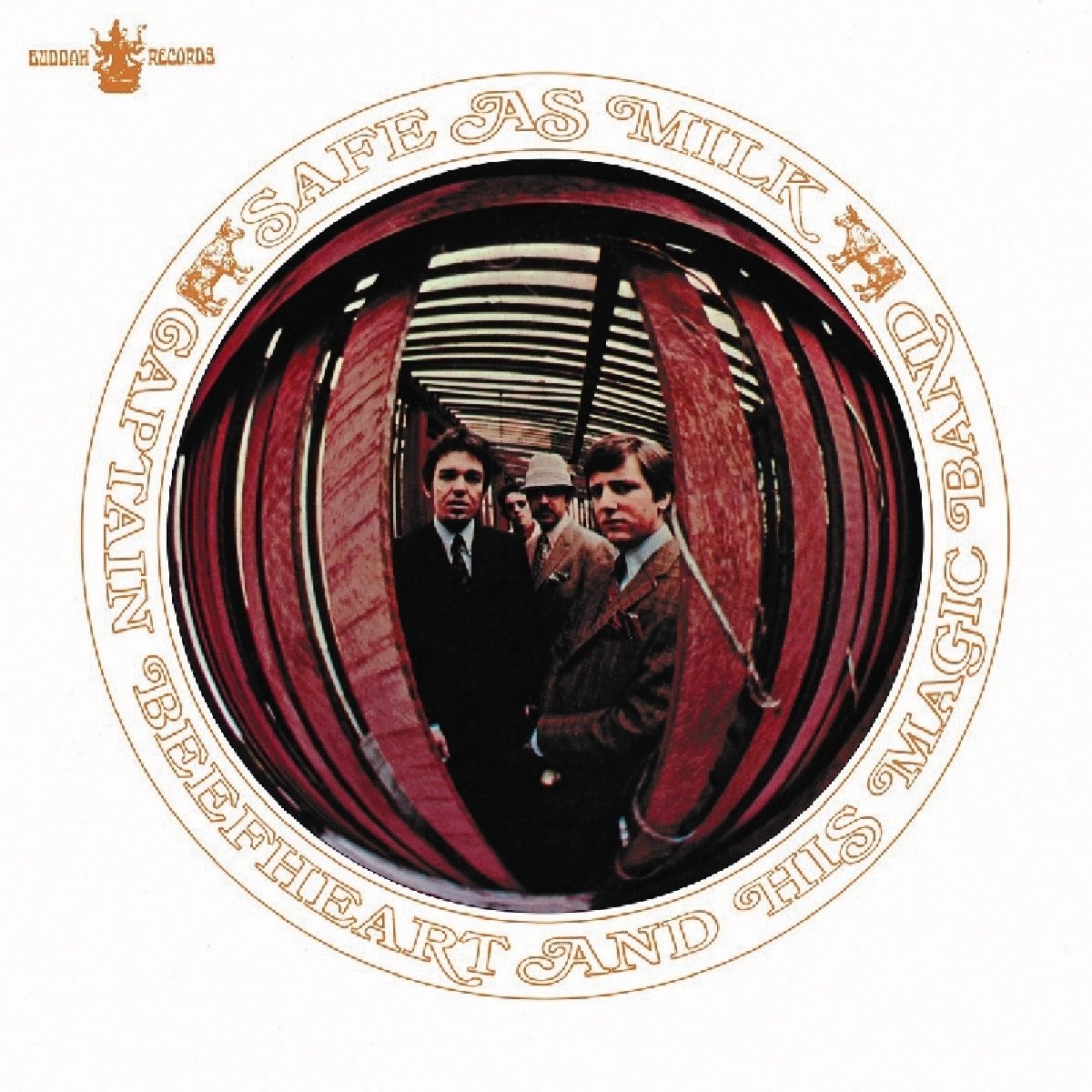
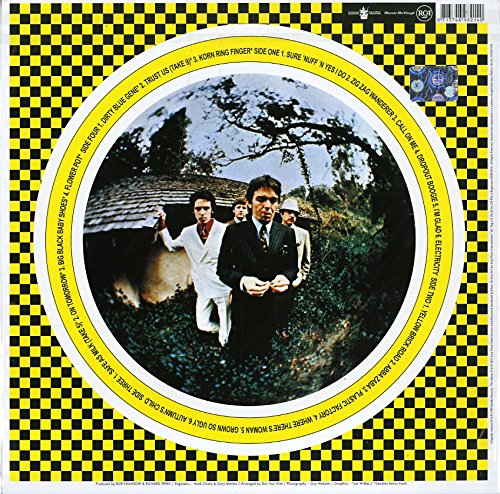
Beefheart’s debut album, originally released in 1967 on Buddah Records, was the most accessible and pop inflected of all the releases from his catalogue. Still ‘Safe As Milk’ is a very strong and heavily blues-influenced work but it also hints on many of the features that would later become the trademarks of Captain Beefheart. Not only did a 20-year old Ry Cooder play bass and guitar on ‘Abba Zaba’ and ‘Grown So Ugly’, he also arranged the latter as well as ‘Sure ‘Nuff ‘N Yes I Do’. Also, Cooder’s role in the recording process was ‘to translate the Captain’s wilder ideas to the rest of the band and generally acts as musical director’. With him as a supervisor the sessions proceeded more or less smoothly and ‘Safe As Milk’ was recorded within a month.
I can’t praise this album enough I loved it when it was first released, having not heard it since the early 70,s, Originally released in 1967, I was taken aback by just how good this record is. It makes you wish that the Captain Van Vliet had done a few more R&B albums before veering off into avant garde territory. The stereo mix on this cd whilst typical polarised sixties style does open up the sound a lot more than the old mono version that was originally released ,The mastering too is great.
I played this 3 times in a row when i opened the package, it’s just flawless as an album Even tracks i was less keen on as a kid such as “I’m Glad” have grown on me. Opener “Sure ‘Nuff ‘N Yes I Do’ bursts out of the speakers compressed to death by the engineers it pulls along with the fabulous meaty Jerry Handley bass that dominates all early Beefheart tracks. “Electricity” still my fav track, shows the direction the band were headed with it’s jagged rhythms and tempo changes.
A brilliant track that, astoundingly, never made it onto any of Beefheart’s albums proper; Korn ring Finger was made around the same time as the ‘Mirror Man’ album, and fits in perfectly with that sound. This is The Sentinel’s favourite era of the tCaptains music, and this piece is just as good as ’25th Century Quaker’,‘Tarotplane’ etc. The sound, like ‘Mirror Man’ is bouncy, expansive, and effortlessly psychedelic.
MATTHEW E. WHITE & LONNIE HOLLEY – ” Broken Mirror A Selfie Reflection “
Posted: July 2, 2021 in MUSIC“Broken Mirror: A Selfie Reflection” is a timely callout to the power of collaboration, of kindred spirits connecting in crowded rooms. More important, though, is this collision of two profoundly Southern artists, meeting to shed expectations of generation and genre, scene and situation and exchange truth, wisdom, and energy. The real world is more complicated than a pretty digital picture, bowdlerized of blemishes. As Broken Mirror: A Selfie Reflection reminds us, it can be more revelatory and transformative, too.
These racks are balls of energized contemplation, Holley crooning grievances and observations above surrealist grooves so irrepressible and heavy that the words strike with the force of gospel. Holley strolls into “I Cried Space Dust” as if he’s wandered into the On the Corner sessions and offered unsolicited insights on true transcendence. “I’m Not Tripping” is an anthem of self-worth and self-enjoyment for a society mired in self-doubt, the words breaking like light beams through clouds of atomized drums and synths. And Holley begins the title track as a character mindlessly staring into a cell phone, captivated by his own image like Narcissus at water’s edge. Holley ponders the egotism of projection over dizzying keyboards and guitars so jagged they conjure fractured glass. By song’s end, he’s mocking this infrastructure of pandering for likes, jeering us all above a savage bassline that dares you to differ.
Holley and White may seem like unlikely collaborators, divided as they are by decades and disciplines. Holley, 70, first earned attention as a sculptor far removed from the fiefdom of fine art, using society’s detritus to create curious bricolages that ferried deep narratives of ancestral pride, enduring pain, and eternal hope. His music—privately stowed on stacks of cassettes before he released his staggering 2012 debut, Just Before Music, at the age of 62—aired those ideas over extemporaneous pieces for prismatic keyboards. But on Big Inner and Fresh Blood, White, now 38, came into acclaim as one of his generation’s most meticulous songwriters and arrangers. Stretching his assuredly soulful voice like a smile across little symphonies of strings, horns, choirs, and percussive cavalcades, White commanded sounds where Holley seemed to glide inside them.
The Band:
Lonnie Holley – vocals
Devonne Harris – synth, piano, additional keyboards
Daniel Clarke – synth, piano, additional keyboards
Alan Parker – guitars, Arp sequencer
Cameron Ralston – bass, percussion
Giustino Riccio – congas, percussion, DSI Tempest
Brian Jones – percussion. Mica Sonic
Pinson Chanselle – drums, percussion
Written by Lonnie Holley and Matthew E. White
Published by Domino Publishing Co. Ltd
Released April 9th, 2021

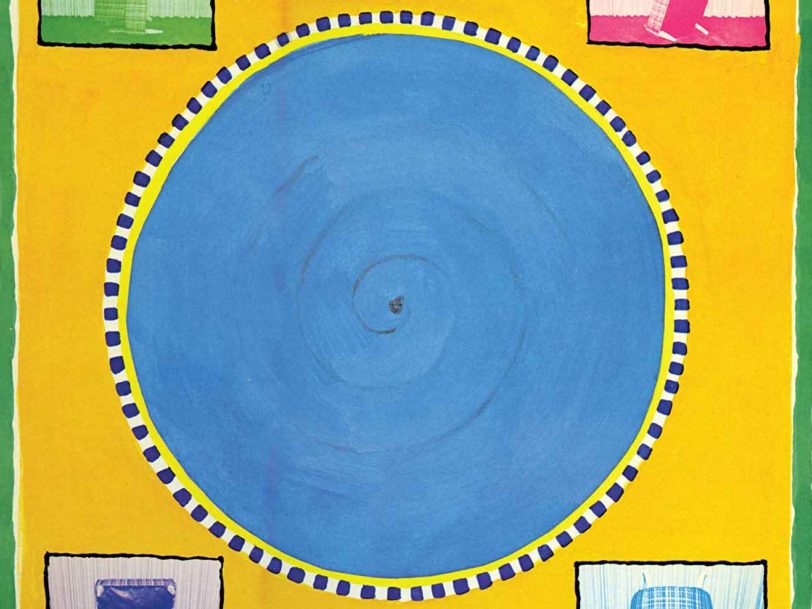
Following the culture hops of ‘Remain in Light’ and ‘Speaking in Tongues,’ Talking Heads’ sixth album was their stab at Americana roots music. Coming from a bunch of New York City art-school MTV stars, the results were slightly skewed, so their idea of country music was more tilted than authentic. No mater, ‘Little Creatures’ is the group’s most playful and fun album, with accordion, steel guitar and even washboard pushing it along.
After putting out their masterpiece and after creating music at a furious pace (four boundary-challenging albums in as many years), Talking Heads took a three-year break. By the time Talking Heads reconvened to begin work on their fifth album, “Speaking In Tongues”, changes were afoot in the camp. In a remarkable burst of industry and creativity, their first four records – from 1977’s “Talking Heads: 77″ to 1980’s boundary-pushing “Remain In Light” had come in just as many years. After wrapping up their live commitments with a short tour of Japan in February 1981, however, the four members took a short hiatus. When the members reconvened, they seemed to be more open to pop melodies again, albeit in a very Head-y way.
As with Remain In Light, work for “Speaking In Tongues” began, in July 1982, with jam sessions in Frantz and Weymouth’s Long Island loft. Frantz remembered it as a time of experimentation: “We would sometimes switch instruments… This is how “This Must Be The Place (Naïve Melody)” came about. Tina played rhythm guitar, Jerry played keyboard bass and David played some freaky little sounds on the Prophet-5 [synthesiser] using the modulation wheel. I played the drums because no one else knew how.”
Despite the rampant creativity of these early sessions, all was not well. Jerry Harrison’s mother had been diagnosed with cancer, and the guitarist was in bad shape. He straightened out and began participating in the sessions again, but more upheaval was to come. Deciding their relationship with Brian Eno had run its course, the group lost a producer who had been an integral part of their sound since their second album, 1978’s More Songs About Buildings And Food. They sought a replacement in Bowie’s producer Tony Visconti, but the man who had helmed such masterpieces as “Low” and “Heroes” He told them, “You don’t need a producer. All you need is a great engineer.”
That became Butch Jones, who oversaw the recording of Speaking In Tongues’ basic tracks at Bob Blank’s Blank Tapes Studios in Manhattan. The sessions went well, with the band enlisting outside help in the shape of, among others, Parliament keyboardist Bernie Worrell (playing synth on Girlfriend Is Better), guitarist Alex Weir of 70s funk combo The Brothers Johnson, French synth whizz Wally Badarou and Nona Hendryx of Labelle.
“Burning Down The House” made a hell of a start to the album – and remains one of the best Talking Heads songs of all time. Receiving its title when Chris Frantz shouted, “Burn down the house!” over an early jam on the song.
And there was barely any let-up for the remainder of “Speaking In Tongues’ first half. “Making Flippy Floppy” and “Girlfriend Is Better” delivered more pulsing low-end shenanigans with insistent hooks and sci-fi sound effects galore.
“Speaking In Tongues” saw Talking Heads let a little light back in after the dense and tetchy soundscapes of Fear Of MusicandRemain In Light, with the spry sci-fi funk of “Girlfriend Is Better” standing as one of Talking Heads’ best songs to edge into pop territory. While Byrne contemplates romantic temptation, the band kick up a storm behind him, with synth wizard Bernie Worrell (a founding member of Parliament-Funkadelic) contributing witty and weird musical embellishments that add a cartoonish dimension to proceedings.
While “Slippery People” is a masterpiece of strung-out, apprehensive funk lifted by a gospel-like call-and-response chorus and I Get Wild/Wild Gravity even finds Talking Heads dabbling in dub.
For a group as in thrall to R&B as Talking Heads, having a song covered by The Staple Singers would have been the ultimate seal of approval – and that’s exactly what happened when “Slippery People” was given the Staples’ treatment in 1984, reaching No.22 on the US R&B chart. While it might have seemed an unlikely cover, the song was the most obvious manifestation of David Byrne’s interest in gospel – a spirited call-and-response with powerhouse guest vocalist Nona Hendryx over a pulsing minimal funk backing with deft synth flourishes. But the lyrics take a left turn from traditional gospel, with a critical look at religion (the slippery people of the title can be interpreted as those in positions of power). The song remains a barnstorming highlight of Mavis Staples’ live shows, and has only gained in soulful intensity through the years.
“Making Flippy Floppy” nearly six minutes’ worth of robo-funk, with Tina Wemouth’s endlessly inventive bass to the fore, Making Flippy Floppy shows that Talking Heads were paying attention to the fresh sounds emerging from hip-hop, borrowing them to make something as danceable as it was idiosyncratic. Lyrically, it weighs up the ways in which individuals compromise to fit into society and ponders the consequences of stepping out of line: “Snap into position, bounce till you ache/You step out of line and, you end up in jail.” Hardly typical fodder for a funked-up dancefloor filler, but by this point, the best of Talking Heads songs made up their own rules.
And so we were given ‘Speaking in Tongues’ (a reference to the gibberish David Byrne would sing as placeholders on working tracks), an album brought the funk … along with the band’s strongest set of pure songs. “Girlfriend Is Better” dragged an R&B workout into the New Wave era (and coined the name of the band’s 1984 concert movie, ‘Stop Making Sense’). “Swamp” mixed John Lee Hooker-esque growling blues with synth-rock (and might be responsible for Byrne’s creepiest vocal – which is saying something). “Burning Down the House” transformed a P-Funk jam into a slicing, dicing shout-along classic (and a Top 10 hit!). Then there’s “This Must Be the Place (Naïve Melody),” a rare love song from Byrne that’s as sweet as it is slippery.
The album’s second half begins with what sounds like David Byrne quite literally speaking in tongues through the introduction to “Swamp”, a bizarre stomper with an irresistible wordless chorus that finds Byrne growling a pantomime villain. “Moon Rocks” lightens things with its choppy guitar and nimble bass before the high-energy Pull Up The Roots stampedes towards the album’s closer and emotional pay-off.
“This Must Be The Palace (Naïve Melody)” had come a long way from that jam back in Long Island. Here, it’s one of the most flat-out gorgeous moments in Talking Heads’ catalogue. Layers of synth softly hit the listener like warm and welcome sunlight, offset by the understated simplicity of the rhythm section. And here Byrne sounds like a man transformed – content and giving himself up to love like never before. Given that Talking Heads fans had become accustomed to David Byrne’s oblique lyrics and detached delivery, “This Must Be The Place (Naïve Melody)” was a genuine shock that. Here Byrne appeared to be singing a simple and direct love song – granted, he sounded like a newly sentient robot exploring these strange things called feelings, but that makes it all the more affecting addition to the best Talking Heads songs. To begin with, Byrne’s neuroses linger (“I feel numb, born with a weak heart/I guess I must be having fun”) but as the song progresses with a bittersweet and flat-out gorgeous electro-pop backing, he accepts the comfort that love can bring (“Home is where I want to be/But I guess I’m already there”.)
There’s a vulnerability and tenderness to the vocal that was wholly new for the group, but that only made it all the more affecting.

Here is Flossing showing that you don’t have to follow the rules to create something that’ll raise eyebrows around the world. With the announcement of debut EP ‘Queen of the Mall’, to follow in September on Brace Yourself Records.
In a stark, subversively submissive metropolis where the deviance of human nature is a characterised point of reference, it’s to no disillusion that with Flossing, Heather Elle would manifest a moniker as industrially illusive as the claustrophobic high-rise of Elle’s native NYC itself.
The newly appointed master of psychological provocative, in ‘Switch’, Flossing creates a handsomely twisted deconstruction of hedonistic-psyche, and subconscious minimalism; a freeing-feat which results in a uniquely visceral combination of carnal creativity, and “perverse mental excavation.”
This is the solo project of Heather Elle of Bodega and The Wants fame, with her bass playing a key role in setting the unnerving mood of this new release. It’s a sparse output, helping to keep the focus on the words as you contemplate whether or not you too could easily be making the switch from bottom to top on a regular basis. It’s all murky and mysterious out here, like a street with questionable lighting, and yet there’s something so alluring about the risk of heading into the darkness.
Slow and steady wins the race, but slow and mischievous has far more fun along the way. Song written recorded and produced by Heather Elle ft. Daniel Peskin of Grim Streaker.

Brooklyn based band, Sister comprised of the duo Hannah Pruzinsky and Ceci Sturman, alongside a newly recruited guitarist James Chrisman. Ceci and Hannah met while they were college roommates at St. John’s University in Queens, and bonded over a shared love poetry, M83 and the band Beach House. They’re still living together seven years later, it wasn’t until their final year of college that they, almost by accident, started making music together, when Ceci asked Hannah to sing on a song she was composing for a course assignment. At the start of the year, Sister descended on Greenpoint Recording Collective studio, and put down the tracks that would become their upcoming EP, “Something / Nothing”, which they previewed this week with a new single “Hideaway”.
From minimal beginnings Hideaway is the place where you can truly escape, where those moments of uncertainty are swapped out for a soft, flowing and steady motion where everything feels easy. It’s a track that seems to slowly swell, the ethereal vocals becoming engulfed by an ever building base of expansive guitars and distant percussion, the track start’s and begins gently with acoustic guitar before spinning into a more immediate feeling, the tempo rises and as more elements chime in they create something that becomes truly shimmering.
Discussing the inspiration behind the track Hannah has spoken of Hideaway as, “that secret place where you can be without a guise, without fear, you can never reveal too much“.
A song that seems to search for intimacy and the accompanying sense of safety that brings, Hideaway is Sister’s finest musical statement to date and one that hints that their upcoming EP is a record you won’t want to miss.
“Something / Nothing” is out September 10th via AWAL Recordings.

Liverpool four-piece Courting are set to follow up breakthrough singles ‘Football’, ‘David Byrne’s Badside’ and ‘Not Yr Man’ with a new EP via renowned indie label Nice Swan Records. With their releases now becoming more substantial and their live reputation catching on through word of mouth, the future is looking even brighter for Liverpool’s most exciting new band. Courting, like Sports Team before them, are well on their way to the forefront of this new wave of Britpop and set to gatecrash the charts.
Courting have today released ‘Grand National’, which is the title track from their upcoming debut EP. The full EP was released last April to coincide with the Grand National itself.
The Liverpool four-piece’s new single is an anti-anthem for a generation nobly stirred by the cruelty of horse racing and the gambling industry propping it up. “I don’t care if he dies, it’s entertainment,” sings frontman Sean Murphy–O’Neill in the verse as a rambunctious indie guitar-led sound builds.
In what would have been the ultimate prank, Courting booked a high street chain betting shop as the location for a music video. But, the shop pulled the plug after closer examination revealed the band were throwing shade on them.
Instead the video finds the band performing in a drab pub chaotically flitting between imagery of televised horse racing, betting, drinking and arguing whilst building towards a mocking climax.
Horse racing, which is one of several lyrical images in the song, became a bucket list topic after Courting heard 100Gecs’ similarly darkly-comedic song, ‘Stupid Horse’. Asked to define ‘Grand National’, Murphy-O’Neill says:
“‘Grand National’ is our best and last look at Middle England. Parents evenings, horse racing, and watching the chemtrails from lawns lined with astroturf. Cowbell-tinged. 100gecs referencing. Feedbacking. Huge.”
‘Grand National’ is on the EP alongside their late-2020 release, ‘Popshop!’, and two previously unheard songs that are held back until the EP is out: ‘Crass’ and ‘Slow Burner’.
‘Popshop!’ was greeted brilliantly by industry. It landed on the BBC 6Music playlist, and top publications included the band in their tips for 2021 lists soon after its release. NME 100, DIY Hype List 2021, Daily Star Ones To Watch 2021 & DIY Hello 2021. The four-piece only formed in 2018 so they’re hitting these milestones really early on.
The band’s first ever singles (‘Not Yr Man’ and ‘Football’) were self-released and caused a stir on the vibrant Liverpool indie scene. Nice Swan Records responded to the buzz by signing them for their third single (‘David Byrne’s Badside’), and for the upcoming EP.
Our EP, Grand National, is out April 9th.
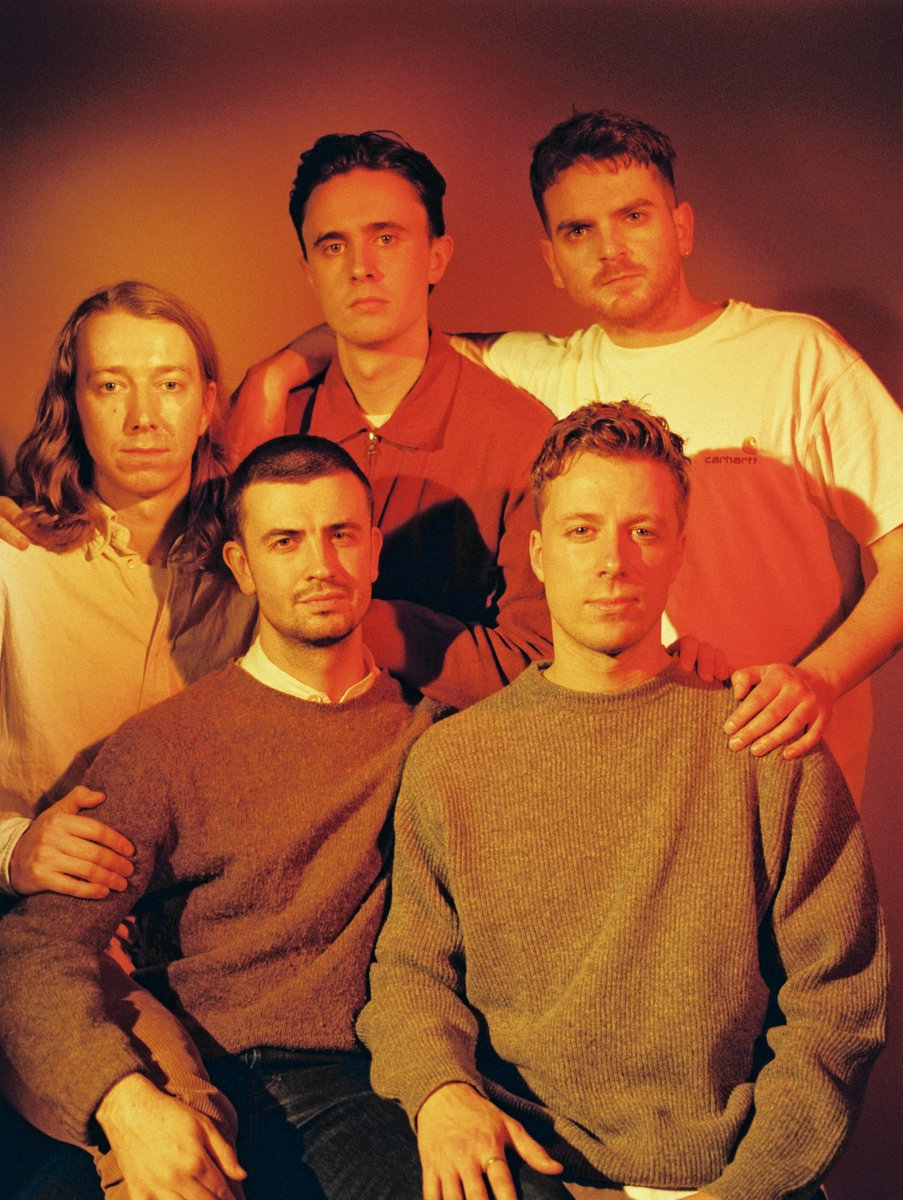
Having all lived in London for most of their lives, the band are now just a ‘stone’s throw’ from each other, with daily walks to maintain contact and the occasional shout from a balcony. The friendships dating back to college led to open conversations about playing together, and when the drummer leaving Alex’s previous band timed well with the group moving nearer to each other, Margot was formed. ‘We kind of talked about playing together. Rob and I had done some stuff together so it kinda made sense’, explained Alex. ‘I especially admired Alex’s songwriting, the way he was writing lyrics and singing in his band… so I thought that would have been fun to work with him’, Ben added. The quiet respect that they have for each other and their craft was evident throughout our conversation as they gently jibed each other with affectionate, dry humour and sarcasm.
Pulling influence for their name from the Basque word, Margotzeko, meaning paint, I wondered if any of the band were painters, but apparently not – this question provoked an ‘oh god’ from Alex. ‘Basicially [the rest of the band] wanted to call us ‘Paint’, which is like the worst fucking name ever in the world’ he laughed. ‘So I was quickly like, god we’ve gotta find something else. I was looking up paint in lots of different languages and came across Basque’. Following the suggestion of Rob’s twin brother, Nick, the band later shortened it to Margot, instead saving Margotzeko for their debut EP, released in February 2020 on Full Time Hobby. They laughed at the fact that Margot Robbie now features heavily in any google search for the band.
With all of the band members taking influence from various genres of music, the ‘music that [they] bonded around was American indie bands, like Real Estate, and Gear Hunter.
“Fame” started a while ago when I (Alex) used to work in TV, and it’s gone through quite a few iterations. It’s about the culture that surrounds reality TV. The focus is on the superficial and illusion. It’s pretty horrid. It portrays a misleading representation of reality that appears to have both adverse effects on the reality tv stars and those who follow them. It’s fickle, enticing and dangerous for young people, and I personally don’t think it’s something to aspire to, so I wrote Fame.
Released June 22nd, 2021
Written by Rob Fenner, Albi Cleghorn, Alex Hannaway, Michael Webb and Ben Andrewes

