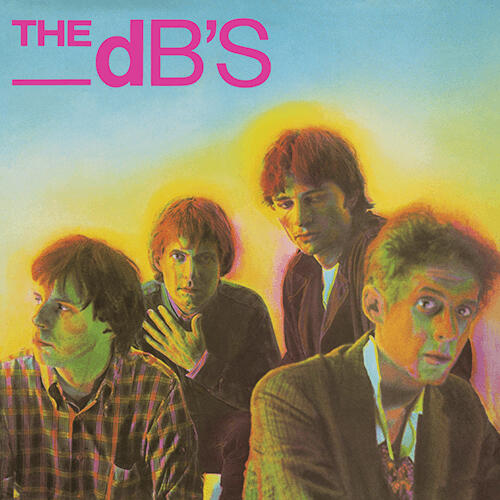
The dB's - I Thought You Wanted to Know: 1978-1981

What we have here are home and field recordings of The dB’s. Most of these tracks predate the release of Stands For deciBels by two to three years and were the basis of the signing of the band to Albion Records (UK) in 1980. Some songs are being released to the public for the first time in this package. Now, almost thirty years after a number of these tracks first saw the light of day on Rhino Records, we find ourselves in the position of releasing the earliest of these selections from our archives to a whole new audience. It’s the first time most have been on vinyl. The live recordings were found after months of Chris sifting through a trove of ancient cassettes, and we are glad to be able to include these key songs from those early years. – Peter Holsapple, The dB’s – Durham, NC – 2021.

In the halcyon days of New York punk club CBGBs, there was a pinball machine located in the furthest corner away from the stage. In his memoir Spy In The House Of Loud: New York Songs And Stories, dB’s co-leader Chris Stamey remembers being drawn to that part of the room on the (frequent) occasions when the band on stage wasn’t quite as thrilling as legend would have you believe.

He wrote: “When a skilled player like Dee Dee Ramone nudged it just the right way, making all the lights go off at once, I would see that old pinball machine as a metaphor for what great rock records should do: trigger some kind of instant deep-brain response, bypassing the critical facilities, beyond analysis. Just neurons flashing all over the place…
We wanted to shove the machinery. To make the lights flash off and on.”

In their initial burst of creativity, The dB’s managed to do that spectacularly well, two indie singles and a pair of UK-released 1981 LPs – “Stands For deciBels” and “Repercussion” – representing a dizzying synthesis of Television, fellow Southerners Big Star and their British Invasion heroes The Move. However, beyond the most fanatical outposts of the worldwide record shop archipelago, the guitar-and-vocals duo of Stamey and Peter Holsapple, bassist Gene Holder and drummer Will Rigby never gained much purchase, their lasting influence confined to fingerprints faintly discernible on the next generation of jangly US underground bands – REM, The Replacements, et al.

This new collection of low-budget recordings and rediscovered live material (parts of which were previously available on 1993’s Ride The Wild Tom-Tom set) captures The dB’s’ sketchy formative years, with their first low-budget A-sides – 1978’s (I Thought) You Wanted To Know, recorded with wayward Television guitarist Richard Lloyd, and the 1980 version of Holsapple’s breakneck Black And White steered by future REM co-producer Don Dixon – receiving their first official reissue. It captures a fleeting moment when The dB’s should have become power-pop contenders, and highlights the cubist twists and baroque underpinning that would condemn them to become one of the archetypal cult bands.

While they made their name in New York, all four dB’s came from Winston-Salem, South Carolina, where they had been playing in bands since the turn of the 1970s. Still teenagers, Stamey and Holsapple played alongside future Let’s Active kingpin Mitch Easter on a $1,000-valued home-released LP as Rittenhouse Square in 1972. An impatient jumble of The Kinks, Yes and Mountain, it’s not a record Holsapple plans to reissue. “It’s considered a collector’s item by people who have obviously never heard it,” he tells Uncut with a sigh. “Save yourself several hundred dollars and listen to it on YouTube.” Informed by Television, The Flamin’ Groovies and the (very local) success of Alex Chilton’s Big Star, Stamey and Rigby then came together to form Sneakers, who put out a quirky 1976 EP on Stamey’s own Carnivorous label (later renamed Car, and perhaps most famous for releasing Chris Bell’s I Am The Cosmos – the only solo record the ill-starred Big Star man put out in his lifetime).

All those years of gigging on the margins ensured that, by the time they started to rematerialise in New York in 1977, The dB’s had a command of musical dynamics that few of their DIY contemporaries could match. Their live version of The Beatles’ Tomorrow Never Knows on this new collection is a case in point, the foursome taking perverse delight in delivering a perfectly hand-whittled take of a song that owed its existence to tape manipulation and studio trickery.

Such old-school skills helped Stamey link up with Lloyd, who went uncredited on the glorious (I Thought) You Wanted To Know – recorded with Stamey, Holder and Rigby – because he was still under contract with Elektra. However, The dB’s were not quite a functioning outfit until Holsapple arrived – fresh from an unhappy spell in Memphis. Taking courage from the taut sound of Elvis Costello & The Attractions’ This Year’s Model, the four-piece dB’s came on like a Ramones-paced ? And The Mysterians with occasional Van Der Graaf Generator time signatures.

(I Thought) You Wanted To Know shows that they cannibalised the odd song from members’ past lives (The Sneakers’ Let’s Live For The Day, and Death Garage”– the B-side of a solo Holsapple single, Big Black Truck, released on Car in 1978), but generally started afresh. Adopted by Alan Betrock, founder of New York Rocker, they recorded on four-track after hours in the magazine’s offices, but despite an abundance of killer choruses, never had much faith that the straight record industry would give them their due.

Stamey’s sardonic My Sire Wristwatch – never recorded in a studio but salvaged from a live tape – mocks a ‘new wave’ promotional item supposedly given away at a time when Seymour Stein’s label were trying to scrub the word “punk” from the musical lexicon, pointedly quoting their “new wave” slogan: “You better get behind it before it gets past you.”

However, their disdain for the dumbed-down music business conformity was married to a profound faith in what pop music could do. The dB’s were unashamed of their pre-revolutionary influences, performing loving covers of The Chambers Brothers’ Time Has Come Today and a Byrds-y take on Bob Dylan’s My Back Pages here, but they arguably had better songs of their own. The rough early versions of Holsapple’s Bad Reputation and the Sister Lovers-style Nothing Is Wrong are glorious, while Stamey’s mastery of lopsided writing is underscored by the fact that he had enough A-material to abandon Everytime Anytime and Tell Me Two Times before The dB’s got to record a proper album.

With Betrock as nominal producer, The dB’s started recording Stands For deciBels in 1980, but were unable to find the funds to finish it off, management company-turned-UK label Albion ultimately picking the band up and making a quixotic attempt to break them in Britain. The label resorted to spectacular gimmicks to try and draw attention to Stands For deciBels (cassette copies came in a ludicrous tin can) and Repercussion (each copy came with a cassette sellotaped to the front), but good reviews never translated into sales.

Stamey quit, leaving Holsapple to lead the band through two further albums (Like This and The Sound Of Music) before he became better known as the unofficial fifth member of REM on Green and Out Of Time. The dB’s continue to kind of exist; the original lineup made Falling Off The Sky in 2012, while Goin’ To The Club from this record comes with a new Stamey vocal, and he says he would have prodded his bandmates into re-recording a few more of the tracks here were it not for the pandemic.

However, if that would have been interesting, the joy of the eavesdropped recordings on (I Thought) You Wanted To Know comes in the unvarnished edges. Listen carefully and you can hear the shape of the back rooms and half-empty venues where The dB’s spun gold. Both Holsapple and Stamey have mixed feelings about their singing on these recordings, but if the high harmonies on this version of Dynamite and the glorious What’s The Matter With Me? are not perfect, they encapsulate The dB’s’ delight in creating this spectacular music for the pure joy of it; all those flippers flapping, bumpers bumping, everything flashing at once.

The dB’s – “I Thought You Wanted to Know: 1978-1981” 23 Tracks of Remastered Early Singles, Demos, and Live Recordings
DUMMY – ” Atonal Poem “

Posted: October 15, 2021 in MUSIC
Tags:
Dummy atonal poem

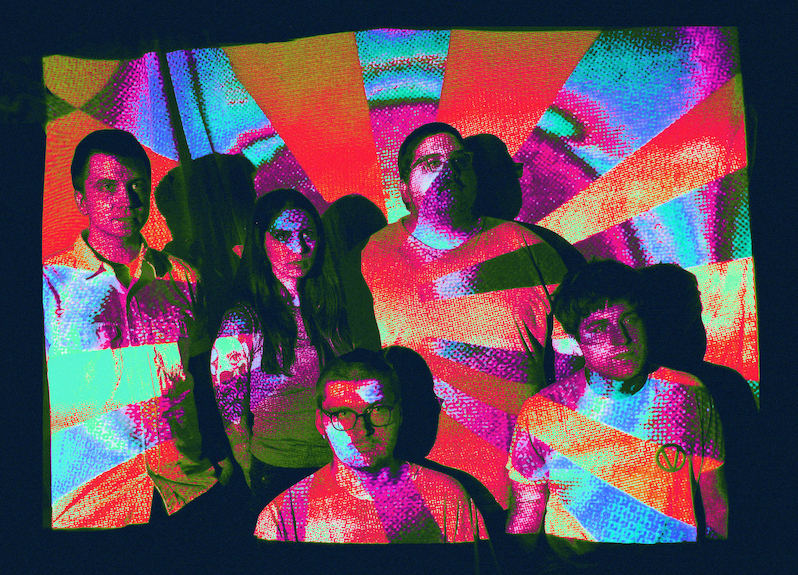
Dummy will release their new album “Mandatory Enjoyment” via Trouble in Mind Records. The group has shared a new video for the hypnotic album highlight “Atonal Poem.” Where much of the album finds the group turning up the fuzz or creating a more layered shoegaze and noise pop sound, “Atonal Poem” is more serene and soothing, which the group attributes to being “obsessed with new age music.”

In a statement, Alex from Dummy says, “We were listening to a lot of very peaceful music played on malleted instruments. It’s kind of like, wouldn’t it be funny to try to write a song like this? Why not break the rules? Why not challenge the expectations, especially within yourself? We wanted to create something uninhibited and untethered to convention. We had no idea where it would take us, but this track was the result. In the mythology of the record, this song represents the visitor’s journey home, far away from the atrophy and decay of life on Earth.”

The band has also shared an influences playlist on Spotify, featuring songs from Silver Apples, Mariah, Antena, Sun Ra, Stereolab and more. It’s an eclectic blend of music, with some influences that might not be so obvious on first listen.

The group said in a statement, “Here’s a playlist to accompany our new album, “Mandatory Enjoyment.” We tried to make it as honest as possible; some of these tracks are directly referenced on our album. Others inspired production or aesthetic choices.”

Taken from the band’s debut album “Mandatory Enjoyment”, out October 22nd, 2021 via Trouble In Mind Records (www.troubleinmindrecs.com)

71CuxcVoApL._SL1500_

Hall and Oates for over a decade (1974-1988) Daryl Hall and John Oates were a hit-making machine that eclipsed the Everly Brothers as the #1 charting duo of the Rock era. In 14 years, they placed 16 hits in the Top 10 nationally, including six number 1’s. The duo debuted with “She’s Gone” in 1974, fighting it out with the Soul group Tavares for the highest chart position. It was a middling hit climbing to #60. But on their second outing, they struck gold with “Sara Smile,” a song written for Hall’s girlfriend, which landed at number 4 spot.

With the reissue of “She’s Gone,” in 1976, it became a smash hit at #7, and Hall and Oates had arrived. “Rich Girl,” went to #1 in 1977, but they owned the charts in the 1980s beginning with “Kiss on My List,” “You Make My Dreams,” “Private Eyes,” and “I Can’t Go For That (No Can Do) all from 1981, and all topping the national charts.

More hits followed; “Maneater,” Family Man,’ Say It Isn’t So,” “Adult Education,” “Out of Touch,” and “Method of Modern Love.” These guys had the Midas Touch, though not everyone was enthralled with them. The hits stopped in 1991, but Hall and Oates continue to tour.

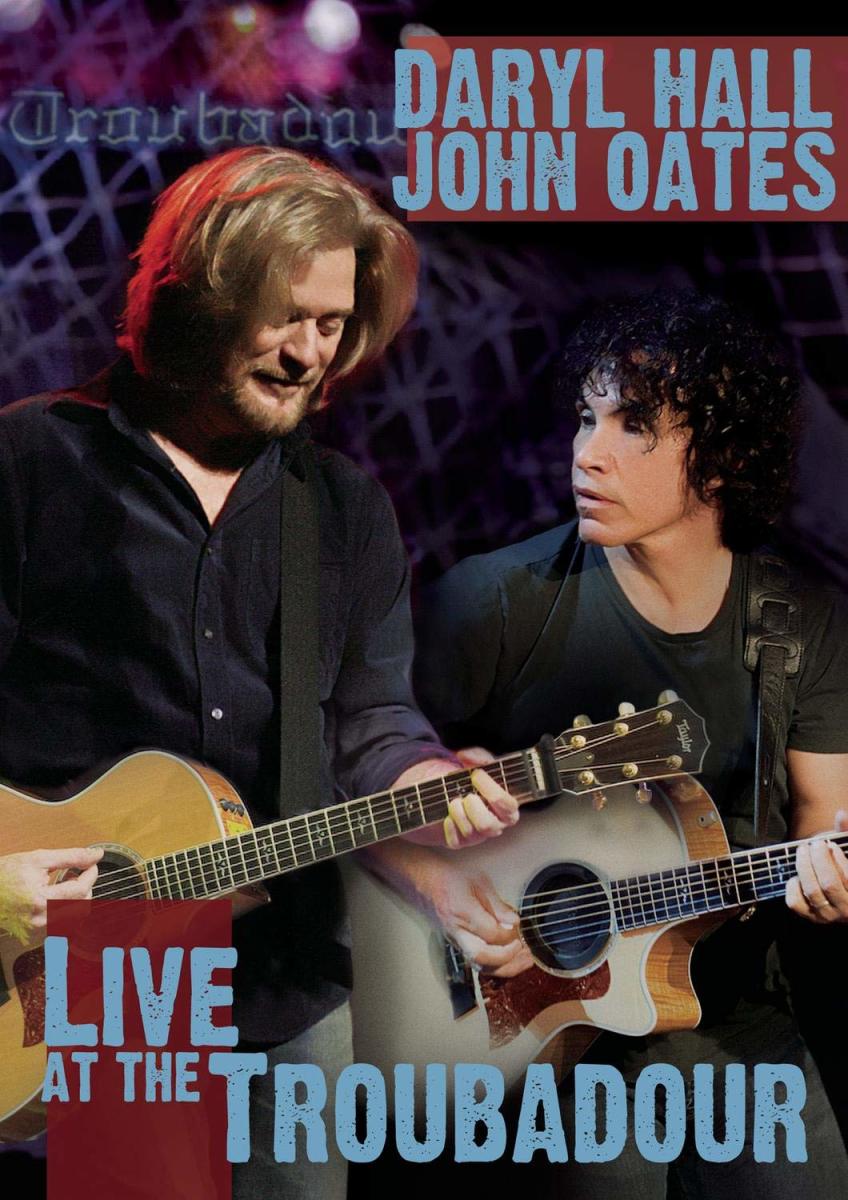
John Oates explains; “Playing the Troubadour in LA has been a “rite of passage” for live musicians for 64 years and Daryl and I played our first show there opening for the late great Harry Chapin in 1973. Over the years I always loved seeing shows and hanging out there with musicians and friends…returning to play again in 2008 was a full circle moment for me and the vibe was amazing.”

They were inducted into the Rock and Roll Hall of Fame in April 2014. Daryl Hall & John Oates “Live At The Troubadour” will be released in a 2-CD and 3-LP set (the first time ever on vinyl) on November 26th, 2021.

May be an image of 2 people and text that says 'DARYL HALL JOHN OATES LIVE AT THE TROUBADOUR 3LP 2CD DARYL HALL JOHN OATES OUT NOVEMBER 26 LIVE AT ATTHE TROUBADOUR'

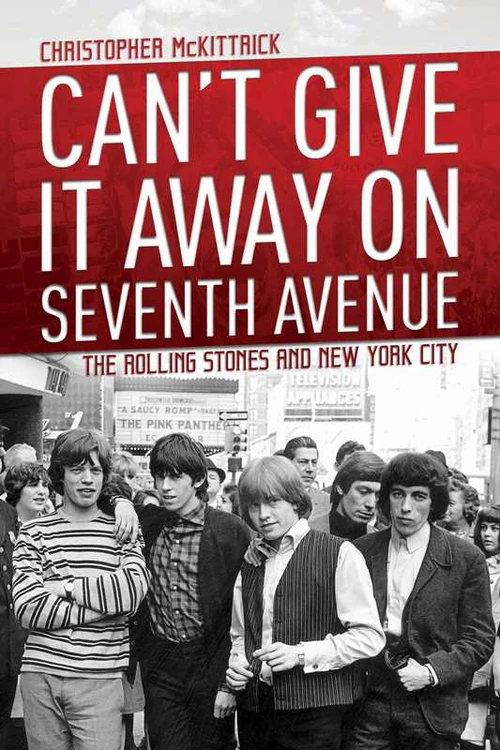
When the Rolling Stones first arrived at JFK Airport in June 1964, they hadn’t even had a hit record in America. By the end of the decade, they were mobbed by packed audiences at Madison Square Garden and were the toast of New York City’s media and celebrity scene.

More than fifty years later, the history of New York City and the Rolling Stones have entwined and paralleled, with the group playing in nearly all of the Big Apple’s legendary venues. Along the way Mick Jagger, Keith Richards, and the rest of the Stones have left an impact on the culture of the city, from the turbulent “Fun City” of the 1960s and ’70s through the twenty-first century. The evolving career of the Stones has often reflected the cultural changes of the city, as the Stones and their music were the centre of social and political controversies during the same era that New York faced similar challenges.

Can’t Give It Away on Seventh Avenue: The Rolling Stones and New York City explores the history of the group through the prism of New York. It is a highly detailed document of the dynamic and reciprocal relationship between the world’s most famous band and America’s most famous city as well as an absorbing chronicle of the remarkable impact the city has had on the band’s music and career.

No photo description available.

Good news today, Seems that faves Modern Nature (feat members of Ultimate Painting, Sunwatchers) has a new project on the way. Previewing a few tracks in an excellent set at The Woods Stage at the End Of the Road Festival. The new album is unlike any other in the Modern Nature catalogue. While Jack Cooper still blends folk, jazz, psychedelia, and kosmiche touchstones, this is less a pop album and more of a compositional approach to world building.

The record spans two versions – “Island of Noise” and “Island of Silence”, the latter an instrumental version of the record. The album pushes out the edges of Cooper’s world while also drawing the conceptual edge tight — with the record set to inhabit an imaginary island seen from an outsider’s perspective. The album will feature kindred spirits both audio and visual from Cooper’s world, drawing in saxophonist Evan Parker, pianist Alexander Hawkins, bassist John Edwards and violinist Alison Cotton, as well as long term collaborators Jeff Tobias and Jim Wallis. An accompanying book will feature Booker-nominated poet Robin Robertson, mycologist Merlin Sheldrake, illustrator Sophy Hollington, and writer Richard King and there will be a film as well (excerpts of which are above, created by Jack and his former Mazes bandmate Conan Roberts. The new record arrives November 19th from Bella Union.

There is an Event Bundle includes one free entry to the launch event at The Social on November 15th featuring an exclusive film screening and Q&A, presented by Caught by the River. Collect your album on the night, days before official release! More info about the event here.

Island of Noise – 180g Recycled Vinyl
Island of Silence (Expanded Instrumental Version) – 180g Recycled Vinyl
36pg Perfect Bound Booklet with 10 contributions from artists & writers in conjunction with, and inspired by, a song on the album. Contributors include Sophy Hollington, Evan Parker, Merlin Sheldrake and Robin Robertson. Limited to 1000 copies.

Since the demise of his previous band Ultimate Painting, Jack Cooper – under his Modern Nature guise – has never stopped looking ahead, exploring and reaching for something further. Since 2019, he’s released an EP, last year’s mini album “Annual“, one full length LP, one 7” and three live cassettes – in the process mapping out astonishing new terrain. Island Of Noise presents an obvious new peak in his discography.

Available only as a limited edition boxset. Made from sustainable material. JACK COOPER — Guitar JOHN EDWARDS — Double Bass ALEXANDER HAWKINS – Piano EVAN PARKER — Soprano Saxophone JEFF TOBIAS — Bass Clarinet JIM WALLIS – Percussion

No photo description available.

We love Vanishing Twin oh yes we do. The UK outfit prove once more that they’re one of the most ambitious and engaging acts in modern psychedelia with ‘Ookii Gekkou’, as they add shades of colour with funk, jazz, MPB, Afrobeat, and touches of left-field, crate-digger’s psych.

Their previous album was one of Rough Trade’s Albums Of The Year, so we are totally stoked (and honoured) to have a beautiful package of this amazing new album. Vanishing Twin explore new ground on “Ookii Gekkou” incorporating elements of afrofunk, outer jazz and avant-garde, all while referencing Sun Ra to Alice Coltrane, Martin Denny to Morricone, Can’s Holger Czukay to meditative Gamelan, or The Free Design, to library music of the late ‘60s and early ‘70s. Locked into their strangely-accessible groove is a history of ‘other’ sound, a crafted hauntology that evinces something completely new. Hurricanes, organisms, vibes, bells, and percussive rallies purvey throughout Ookii Gekkou, each infiltrated with influences as diverse as Piero Umiliani, Art Ensemble of Chicago and ELO among others.

Indeed, even a cursory earful adds to an ever-expanding palette of sound, no mean feat for the newly-trimmed quartet of songwriter, singer and multi-instrumentalist Cathy Lucas, drummer Valentina Magaletti, bassist Susumu Mukai, and synth/guitar player Phil MFU, this reduction resulting in no fewer ideas and even bigger steps. Vanishing Twin is a conundrum in these fragmenting times; familiar, yet different; appealing to this world, but from another, parallel one.

First track ‘Big Moonlight (Ookii Gekkou)’ tells the chaotic story of rock torn away from the earth’s outer layer and its gradual falling into the patterns that give us moon phases. All this over a cohesive groove that nods to space-age music. The new track is released alongside a new clay animated music video by London based video artist Daisy Dickinson (Flaming Lips, Toy, Snapped Ankles). “We asked Daisy to take the being from the cover of our album and make it move, grow, stretch, multiply and merge with other objects. Hypnotised by the moon, the being plays in a strange landscape populated by other mysterious objects and characters.” Hurricanes, organisms, vibes, bells, and percussive rallies purvey throughout ‘Ookii Gekkou’, each infiltrated with influences as diverse as Piero Umiliani, Art Ensemble of Chicago and ELO among others.

‘Big Moonlight (Ookii Gekkou)’ is the first single from Vanishing Twin’s new album ‘Ookii Gekkou’ out October 15th.

DUCKS LTD – ” Modern Fiction “

Posted: October 14, 2021 in MUSIC
Tags:
DUCKS-EX

The perfect gold afternoon fix for anyone missing the sunset sound of the Go-Betweens or the Church. Together, this duo stitches together layers of intricate melody to craft moving, nostalgic, irresistible songs that radiate energy & provoke introspection – pure jangle pop bliss.

Toronto’s Ducks Ltd (formerly Ducks Unlimited), the bright jangle-pop duo of Tom Mcgreevy (lead vocal, guitar, bass, keyboards) and Evan Lewis (guitar, bass, drum programming), accomplish the impossible. The pair craft songs that play to very specific inspirations without drowning underneath them—immediately evidenced on their critically acclaimed ep, get bleak, and sharpened on “Modern Fiction“, their debut lp. “The Servants, The Clean, The Chills, The Bats, Television Personalities, Felt,” Evan rattles off. “Look Blue Go Purple is one I reference a lot with our production.” echoes of ‘80s Indiepop abound, but they never overwhelm. this is not a nostalgic record, after all, nor is it a derivative one. instead, across 10 cheery-sounding songs, Ducks Ltd. explore contemporary society in decline, examining large scale human disaster through personal turmoil (hence the title, taken from a university course called gnosticism and nihilism in modern fiction, influenced by Graham Greene novels. bookish indie fans, look no further.)

Writing the album was intimate. Tom drafted the nucleus of a song on an unplugged electric guitar and brought it over to Evan’s apartment, where the pair sat in his bedroom, placing percussive beats from a drum machine under nascent melodies, passing a bass back and forth, adding organs and bridges where necessary. “It’s computer music trying extremely hard not to sound like computer music,” Tom jokes. fearful that limited and expensive studio time would kneecap the project creatively, eroding their charming naivete, the pair re-recorded the album in a storage space owned by Evan’s boss. Ornamentation through collaboration followed: there’s Aaron Goldstein on pedal steel in the Go-Betweens’ “Cattle and Cane”-channeling interlude “patience wearing thin,” Eliza Niemi on cello (“18 cigarettes,” a song loosely inspired by a 1997 Oasis performance of “Don’t Go Away”), and backing harmonies from Carpark labelmates The Beths (on an ode to friendship at a distance, “How Lonely Are You?,” “always there,” and on the sped-up Syd Barrett stylings of “Under The Rolling Moon.”) while in his native Australia due to covid-19, Evan worked closely with producer James Cecil (the goon sax, architecture in helsinki) on Modern Fiction’s finishing touches—at one point, in the mountains of the macedon ranges in Victoria, recorded a string quartet (featured on “Fit To Burst,” “Always There,” “Sullen Leering Hope,” “Were Ever Thus,” “Grand Final Day.”)

It’s danceable, depressive fun, with some relief: in “Always There” and “Sullen Leering Hope,” Modern Fiction’s faithful heart. “there’s a tendency in my writing, because of my world view, to be very bleak.” Tom explains. “a quality I don’t always see in myself and really appreciate in others is the courage to go on.” and yet, the record manages resiliency—enough for pop fans to fall in love with.

Ducks Ltd.
Tom Mcgreevy
Evan Lewis

Released October 1st, 2021

May be an image of text that says 'DUCKS LTD 2022 20.02.22 19.02.22 BRIGHTON @ THE GREEN DOOR STORE 22.02.22 BRISTOL @ THE CROFTERS RIGHTS 24.02.22 LONDON @ WINDMILL BRIXTON CARDIFF @ CLWB IFOR BACH 25.02.22 BIRMINGHAM @ THE VICTORIA 26.02.22 MANCHESTER @ YES (MOOD SWINGS NIGHTS) 27.02.22 UK TOUR EDINBURGH @ SNEAKY PETE'S 28.02.22 GLASGOW @ BROADCAST 02.03.22 LEEDS @ HEADROW HOUSE MODERN FICTION'

This year marks the 20th Anniversary of our first release, B.R.M.C. We wanted to celebrate this milestone with you, so we’ve put together a special 20th Anniversary Vinyl Box Set that includes a double gatefold of the original album with bonus songs plus a 3rd Vinyl disc of songs from that period that we’ve never released before, all newly mixed & mastered. We’re also including a special hard-bound book of photos taken by Ken Schles, who did the cover image for the album. This is available for immediate pre-order at the link above. This 20th Anniversary Deluxe Box will be very limited. If you’re feeling nostalgic and like us, grown out, worn out, thrown out or straight lost it. We’ve done our best to make some of the original B.R.M.C. t-shirts, to swat the moths messing with your other favourite bands shirts.

Black Rebel Motorcycle Club, formed in San Francisco in 1998, were originally called The Elements. After discovering that another band had the same name, the members changed the name to Black Rebel Motorcycle Club, after Marlon Brando’s motorcycle club in the 1953 film The Wild One. Bass player and vocalist Robert Been’s father, Michael Been, had formed The Call in Santa Cruz in 1980. Michael Been died on August 19th, 2010, after suffering a heart attack backstage at the Pukkelpop music festival in Hasselt, Belgium, where he was working as sound engineer for his son’s band BRMC. To honour his father, Robert sang a song recorded by The Call, “Let The Day Begin”. A back story of The Call’s version, released in 1989, climbed the charts, but, because MCA elected to switch pressing plants, there were no singles in stores. According to Michael Been: “There wasn’t any foul play, though. It was just that MCA was switching over pressing plants, and they hadn’t printed up enough copies of the single — only 100,000, I think. And the record went to number one, and all of a sudden, there weren’t any in the stores — they’d all been sold. It took five weeks for the company to be able to get back to the point where they could start printing copies again, and in those five weeks, well — you live or die in this business.”…..

2001’s inimitable B.R.M.C. is most definitely a nasty bag of tricks, generous in its quantities of punky defiance, gritty alt and garage rock hybrid sensibilities, and just enough style and sheen to tip the indie scales in their favour—but what more could be expected of a disheveled trio of leather jacketed twentysomethings,

Founded by high school friends Peter Hayes and Robert Levon Been in 1998, Black Rebel Motorcycle Club set out to accomplish what so few bands are able to do—create a sound indebted to those of the past while remaining relevant in the present. Both students of prominent Northern Californian musicians, Hayes cut his teeth as a member of infamous San Francisco neo-psychedelic outfit The Brian Jonestown Massacre during the group’s Give It Back! era and Been made his bones playing bass for his father, the late Michael Been, formerly of Santa Cruz-based alt rock group The Call, as a teenager in the mid-’90s. While their combined formative experience was not necessarily predictive of what was to come, it was fertile ground in the development of Black Rebel Motorcycle Club’s soulful, swaying guitar-oriented indie rock sound, a stream laced with various influences of half a century’s worth of popular music.

Despite the eclectic nature of their sound, B.R.M.C.’s music owes a great deal to their geographic origins. Very Californian, the grit and the grime coupled with the bliss and boundless space all visited by the spirits of the greats who came and went before B.R.M.C.’s opportunity revealed itself can be fathomed on every track of their debut album. What emerged from those early days as a group was a solid rock sound, educated yet unpretentious, inspired yet rarely derivative, something entirely unique to the group.

Released on April 3rd, 2001, the eponymous B.R.M.C. kicked the door down, bringing to the table the elements of experimental neo-psychedelia and homegrown indie experimentalism Hayes had gleaned during his time with The Brian Jonestown Massacre, while eschewing Anton Newcombe’s predisposition for hippiesh lo-fi madness for a rougher, more aggressive snarl of punk rock rebellion which, in the end, makes a final stand for classic, uncut rock and roll.

Opener “Love Burns” comes on strong, with Hayes introducing his upcoming band with the line, “Never thought I’d see her go away/She learned I loved her today.” The sting of the group’s guitars drills deeply into the listener’s skull, planting a fuzzed-out wall of sound behind Hayes’ smooth yet spacey vocals. The repetitious “Red Eyes and Tears” shows strong influences of The Velvet Underground and The Jesus and Mary Chain, offering a tighter, darker feel, more at home on an early Cure album than on anything released in the early ’00s, while turbulent favourite “Whatever Happened to My Rock and Roll (Punk Song)” rocks the hardest of the album’s 11 tracks, and the subsequent “Awake” touches upon the heavy psychedelia which became a staple of the group’s sound.

The Abrahamic imagery and pleas for salvation in “White Palms” would eventually become a motif in Black Rebel Motorcycle Club’s lyrics, although the question of faith begged by Hayes is belied by his recognition that, if he were Jesus, he wouldn’t return, confessing, “I’m the kind of guy who leaves the scene of the crime.” Standout “As Sure as the Sun” and the Radiohead-esque “Take My Time/Rifles” cast additional shadows across B.R.M.C.’s stage, the latter serving as one of the most realized, intricately crafted compositions of the group’s career. The funerary fuzz of “Too Real” may be understood as a blueprint for the divergent sounds of groups advertently or inadvertently indebted to Black Rebel Motorcycle Club, such as their younger, lesser known Canadian cousins The Pink Mountaintops. The penultimate “Head Up High” and closing “Salvation” chart the course of an innovative band, rounding the album out and declaring a challenge to the innovations of popular contemporaries.

Indeed, the sound found on B.R.M.C. has been instrumental in the development of strains of retro-inspired millennial indie rock, developed 20 years later. More so, Hayes and Been find themselves at the forefront of an ever more revolutionary movement, as purveyors of the kind of pure, undiluted rock and roll music developed by their own idols, as well as by their idols’ idols. Everything done by Led Zeppelin and The Rolling Stones, by The Velvet Underground, The Clash, and The Stooges is alive and well on all subsequent Black Rebel Motorcycle Club releases. The group, along with a handful of like-minded fellow rockers, continue to maintain the honesty of the genre, even while their bite has mellowed with age. This observation is by no means disparaging, as even their most recent release, 2018’s Wrong Creatures, stands as one the finest rock releases of the 2010s.

Two decades on, B.R.M.C. remains a key deity in the pantheon of modern indie rock, having borrowed its influences from well-established, worthy acts of yore and used them as way markers in forging their own authentic voice. Even in 2021, “Love Burns” and “Whatever Happened to My Rock and Roll (Punk Song)” retain their teeth, which they bare at the softening throat of their beloved genre, celebrating the grit and shadow of a bygone era in rock.

Deluxe direct-to-consumer box set combines the newly expanded and released self-titled debut album (now a double LP in a gatefold sleeve), with the “Screaming Gun” album of demos and alt mixes from the same era, and a unique full colour photo book compiled from photos from the same era.

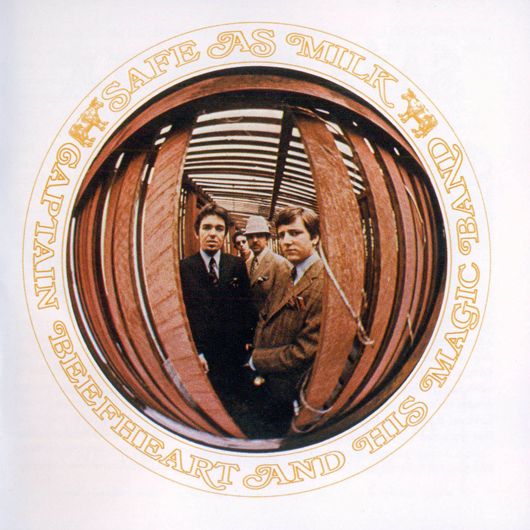
Safe As Milk, 1967

There were no straight lines in Captain Beefheart’s career. (Particularly those albums released on the Straight imprint… but that’s another story altogether.) Even his “accessible” earliest outing, “Safe As Milk”, is shot through with unexpected detours; a collision of influences, from Delta blues to popular candy bars; and a torrent of esoteric lyrics that more than earn themselves song titles the likes of ‘Zig Zag Wanderer’ (“You can dance/You can prance/Freeze these old timbers/Drop some beams,” indeed).

Despite having released a couple of singles for A&M in 1966, the label found Beefheart’s subsequent demos too perplexing to release as an album, so the good Captain took them to Bob Krasnow, vice president of Kama Sutra Records. Krasnow agreed to issue Beefheart and The Magic Band’s debut on his nascent Buddah Records subsidiary, in September 1967. Recruiting fledgling guitarist Ry Cooder on an array of guitars and percussion instruments was another masterstroke decision, as Cooder ensured that “Safe As Milk” kept one foot in the authentic Americana camp, while allowing Beefheart to digress on his flights of fancy.

Perhaps both the album’s authentic blues influences and Beefheart’s early attempts at deconstructing them hit perfection on the likes of opener ‘Sure ’Nuff ‘N’ Yes, I Do’ and the epochal ‘Electricity’. The former cops a lick from blues classic ‘Rollin’ And Tumblin’’, with Beefheart introducing himself: “I was born in the desert, came up in New Orleans,” the first of many myth-making proclamations from the man born Don Van Vliet. The latter, however, is where the Beefheart legend really begins. With a tortured Theramin line, a maelstrom of slide guitars and Beefheart’s own vocals approximating the very sound of electricity itself (it’s said that his voice was so powerful that it destroyed the microphone during the recording sessions), the song fairly approximates the sound of Tesla coils mating.

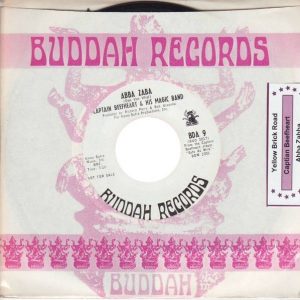
Abba Zaba Jukebox Single

Not that “Safe As Milk” leaps from one overwhelming barrage to another. ‘I’m Glad’ is a comparatively straightforward doo-wop outing, while ‘Abba Zaba’, named after Beefheart’s favourite peanut butter-infused sweet, hides a relatively delicate arrangement underneath layers of inscrutable lyrics.

Even in the anything-goes atmosphere of 1967, a year that saw The Beatles release Sgt Pepper’s Lonely Hearts Club Band, The Doors issue their self-titled debut, the Stones accept Their Satanic Majesties Request, Hendrix ask Are You Experienced? and The Velvet Underground emerge with their nihilistic debut, “Safe As Milk” was considered too weird to stick. Naturally, it went nowhere in the charts. It did, however, establish Beefheart as a compelling songwriter whose disregard for conventional song structures would pay dividends on albums to come, earning him no small notoriety and dedicated fans in the likes of latter-day iconoclasts Tom Waits and PJ Harvey.

Even in the anything-goes atmosphere of 1967, ‘Safe As Milk’ was considered too weird to stick. Naturally, it went nowhere in the charts. It did, however, establish Beefheart as a compelling songwriter whose disregard for conventional song structures would pay dividends on albums to come.

Assorted demos and acetate versions of “Safe as Milk” songs. The songs from the acetate disc were recorded along with the rest of the Safe as Milk album in April/May 1967 at Sunset Sound Studios, Hollywood, California. The first two songs were recorded in March 1967 at Original Sound Studios in Los Angeles, California. This was roughly the time when the Magic Band was dropped from A&M and signed to Buddah. The other demos were recorded throughout 1965-1967 at various locations. Pictures are of the band before and during the Safe as Milk era.

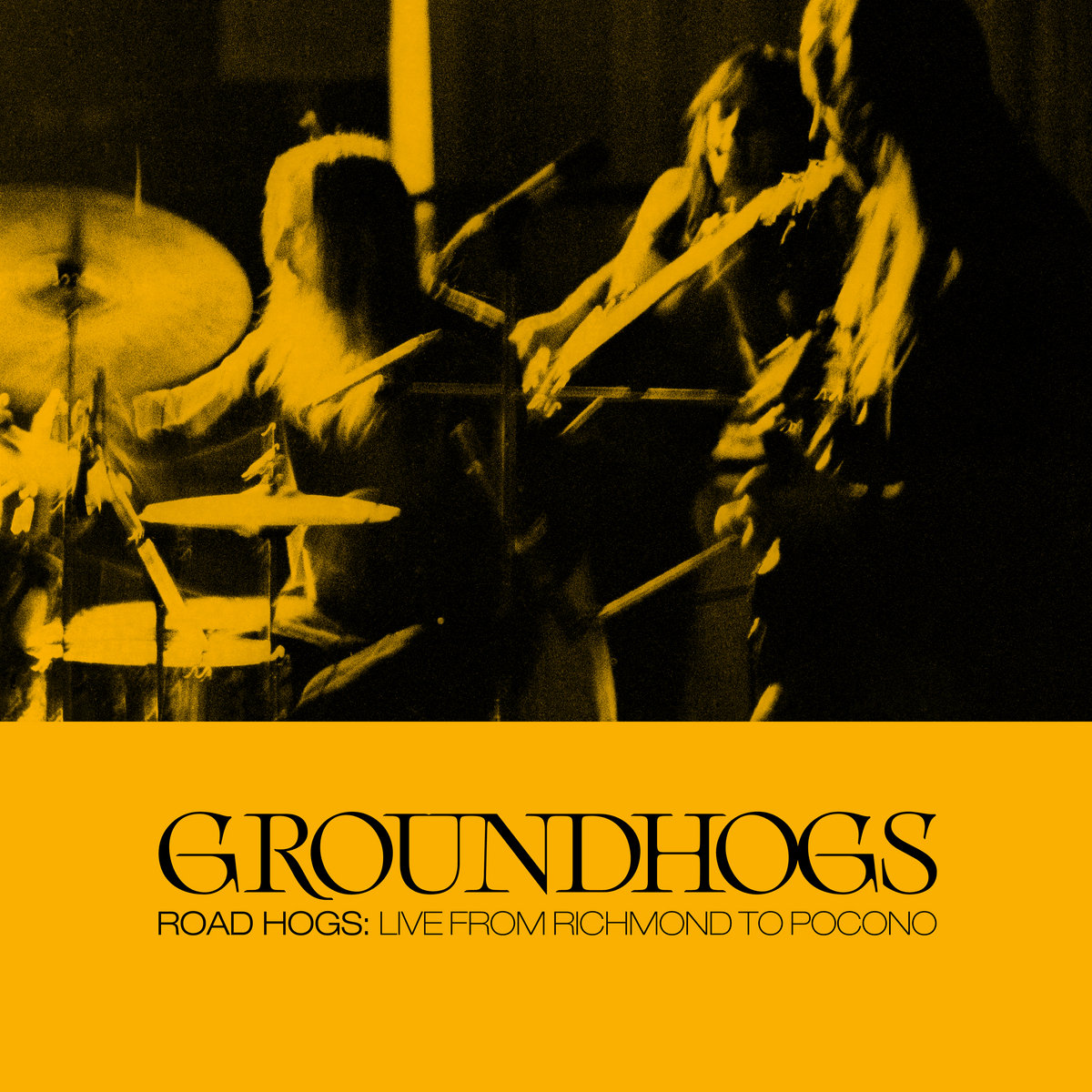
An essential rock artefact tracing The Groundhogs from their pre – “Thank Christ For The Bomb” blues roots to the final live show for the classic line up of Tony McPhee (guitar and vocals), Pete Cruikshank (bass) and Ken Pustelnik (drums).

Never before heard recordings from the Warner Brothers’ vaults including a vintage 1969 set from their show at the Richmond Athletic Ground (AKA The Crawdaddy Club) and their final explosive set at the Pocono Raceway track. Includes the live debut of what would become the anthemic ‘Cherry Red’ and McPhee’s seismic destruction of ‘Amazing Grace’. A career-spanning gem from the ultimate heavy rock power trio book-ending 976 days and 250-plus live shows.

Like some lost treasure that Indiana Jones’ cooler roommate just happened upon, this triple vinyl release tracks the mighty Groundhogs on a 3941-mile journey from Richmond Athletic Ground to the Pocono Raceway track in the mountains of Pennsylvania.

It takes them from blues revivalists to head-friendly prog icons and power rock innovators; bridging the gap between their first two bluesy albums and the nirvana and nadir of the band’s most lauded line up of Tony McPhee (guitar and vocals), Pete Cruikshank (bass) and Ken Pustelnik (drums) at their final show on that big American tour that broke up the original trio.

Along the way they were heralded by Mick Jagger and Robert Plant, became embroiled in student riots in Germany and were acclaimed in the weeklies as the hardest working band around, while guitarist Tony McPhee guffawed at comparisons to Hendrix, Clapton and Peter Green.

Sitting in the Warner Brothers’ vault for 50 years, four reels of tape lay wedged between the masters of the groundbreaking albums ‘Thank Christ For The Bomb’, ‘Split’ and ‘Who Will Save The World… The Mighty Groundhogs’.

The first two boxes had a handwritten scrawl acclaiming them as ‘Groundhogs live at Richmond Athletic Ground, November 7, 1969’. Originally it had been thought that they were recorded at the Ninth National Jazz And Blues Festival– a nomadic event that had previously rocked up in Richmond.

In fact, they turned out to be a one-off support slot to Free, a break from their Marquee residency; the mood is intimate, jokey between songs rhetoric punctuates a monumental set that debuts ‘Cherry Red’ at the time an un-named “new song”.

The second two boxes – ‘marked Pocono’ were recorded at what would turn out to be the final show for this seminal line up when their truncated hurricane-threatened US tour ended abruptly as Tony broke his arm in a freak horse riding accident.

Groundhogs   roadhogs live from richmond to pocon lp render

Over 976 days and with 250-plus live shows under their belt, The Groundhogs had sealed their legendary status.

“In their stage act they concentrate on being as heavy and as hard-hitting as possible.” The Scene magazine reported, “Live they have a tremendous presence, try and go and see them, you won’t be disappointed.”

Released on limited edition triple vinyl and housed in a deluxe roll out gatefold sleeve.

Features never heard before live performances from Richmond Athletic Ground, London (1969) and Pocono Raceway in Pennsylvania (1972).

Includes liner notes with unearthed new photos from The Groundhogs archive, bumper sticker and poster.