When Cursive/The Good Life frontman Tim Kasher announced his new solo album “Middling Age”, he revealed that one song, “Forever of the Living Dead” features guest vocals from Against Me!’s Laura Jane Grace and sax by Jeff Rosenstock, and that song is out now.
It’s a six-minute, melancholic slow-burner and it gets pretty explosive when Laura and Jeff come in. It also comes with a delightfully creepy music video. Here’s what Tim says about all that: “Forever of the Living Dead” is the closing track, and so, attempts to sum up the various tangents of mortality and existentialism the album explores. It’s closer to stream-of-consciousness than most writing I do, using absurdist imagery to express, well, my abstract thoughts on aging, I suppose. As stream-of-consciousness goes, I’m not entirely sure just what it’s about at times. But it maintains a tone, and I’d like to think that tone reflects the album and the weight of our passage of time. I recruited both Laura Jane Grace and JeffRosenstock to help out on this song, with Laura singing the second verse and Jeff playing a sax solo for an extended outro. It’s a Phenomenal sound.
Eric Stafford made the brilliant video, leaning hard into the absurdist imagery by creating a narrative of two zombies seeking one another out. I love what he’s done, and now I picture the video when I play the song, which is how a great video should work, in my opinion.
Tim, Laura, and Circa Survive’s Anthony Green are also teaming up for “The Carousel Tour” which is “more collaborative than your usual show” and will find the three artists “[joining] in on each other’s songs and [bringing] other players onto the stage with [them] each night,
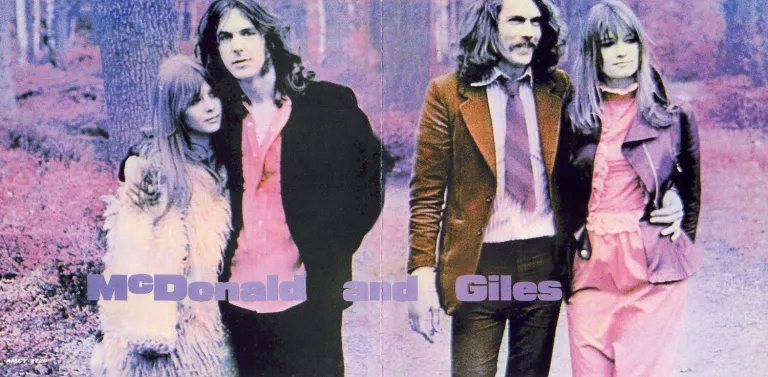
Playing in memory of the legendary Ian McDonald who passed away on 9th of this month. This album called “McDonald And Giles” was damn underrated Prog masterpiece released in 1970 featuring Michael Giles, Peter Giles, Steve Winwood, Michael Blakesley and the one and only Ian McDonald.
McDonald, who had served for five years in the British army as a bandsman, co-founded King Crimson in 1968 alongside Robert Fripp, Greg Lake, Michael Giles and Pete Sinfield, and went on to record the band’s classic 1969 debut album “In The Court Of The Crimson King“, before quitting the band, along with drummer Michael Giles, to release a lone “McDonald And Giles” album in 1970.
RIP Ian McDonald, multi-instrumentalist and a founding member of King Crimson. If he had stopped his musical career after the first album he appeared on, he would still belong in the pantheon of progressive music. That album was The Court Of The Crimson King. McDonald played saxophone, flute, clarinet, bass clarinet, mellotron, harpsichord, piano, organ, vibraphone, composed the tracks I Talk to the Wind and the classic title track The Court of the Crimson King and participated in composing the rest of the tracks on that album. The title track originally had a different melody set to Pete Sinfield’s lyrics, and McDonald recalled, “I thought that his lyrics deserved a more majestic environment. Pete was very happy to let me run with it and write completely new music for the song.” His mellotron work on that track is considered one of the best showcases of that instrument.
Multi-instrumentalist Ian McDonald and drummer Michael Giles left King Crimson after the band’s US tour in late 1969 to promote their milestone debut album In the Court of the Crimson King. They found road life and the newly found success too overwhelming and wanted to continue on their own. Robert Fripp’s journal, 3 January 1970, reads: “The American tour was such a total experience of plasticity that Ian and Mike now feel that getting their feelings across on records is more important than performing to audiences.”
While Giles remained as a studio entity for KC’s second album In the Wake of Poseidon, McDonald focused on preparing material for the duo’s album, recorded in 1970. The album, simply titled McDonald and Giles, was released in January 1971 and consisted of music pieces that existed since the early stages of King Crimson. These included Flight of the Ibis, the original melody of Cadence and Cascade, and the side-long epic Birdman, written in 1968.
A favorite track from the album is Tomorrow’s People, written by Giles in 1967 and dedicated to his children Tina and Mandy. Giles talked about this track: “This song is one of my favourites, and like Ian I was influenced by the Beatles at the time, especially John Lennon – hence the exposed voice and solo drums on the first verse. I played a slightly South-American influenced rock beat. The solo section is full of sound percussion objects to add texture and complexity.”
Ian McDonald: “I think it’s a great sounding track and one of the better produced songs on the album. It’s nice when all the instruments come in after the drum solo. Another one of my favourite moments comes just before the trombone section, where the repeat echo on the flute cascades like a waterfall.”
McDonald left the band after their first US tour and returned as a guest musician, playing alto saxophone on One More Red Nightmare and another King Crimson classic, Starless. In between these albums he released the album McDonald and Giles with drummer Michael Giles. In the early 1970s he appeared as guest musician on albums by Linda Lewis, Keith Tippett’s Centipede, T. Rex, Phil Manzanera. Later in the 1970s he found fame with Foreigner, a band he co-founded with Mick Jones and Lou Gramm.
McDonald’s son Max wrote on Facebook: “I’m deeply saddened to tell you that my father passed away yesterday from cancer. He was incredibly brave, and never lost his kindness or his sense of humour even when the going was rough.
“My father was a brilliant, intuitive musician, a gentle soul, and a wonderful dad. He will live on forever through his beautiful music and the love of his fans. Thank you all”.
In a post on the King Crimson website, Robert Fripp noted: “Ian brought musicality, an exceptional sense of the short and telling melodic line, and the ability to express that on a variety of instruments.”
McDonald also had a career as a session musician, notably playing on T-Rex’s 1971 hit Get It On (Bang A Gong) and also producing albums for Irish prog rockers Fruupp and Darryl Way’s Wolf.
He helped co-found Anglo-American melodic rockers Foreigner along with guitarist Mick Jones in 1976, appearing on the bands first three albums Foreigner (1977), Double Vision (1978) and Head Games (1979). He released a lone solo album, Driver’s Eyes, in 1999.
In 1996 he featured alongside Steve Hackett (with whom he guested on several occasions) at two Tokyo concerts that also featured the late John Wetton and drummer Chester Thompson, where they played a series of classic Genesis, Crimson, Asia and Hackett material, which was released as The Tokyo Tapes in 1998.
Hackett tweeted: “I’m really sad to hear the news of Ian McDonald’s passing. He was a great friend and an incredible musician/songwriter. He will be very much missed.”
In 2002 he was a member of the 21st Century Schizoid Band alongside former King Crimson members Michael and Peter Giles, Mel Collins and current Crimson singer Jakko Jakszyk, performing a repertoire of classic Crimson. He also appeared, alongside Fripp, on the late Judy Dyble’s 2009 album Talking With Strangers.
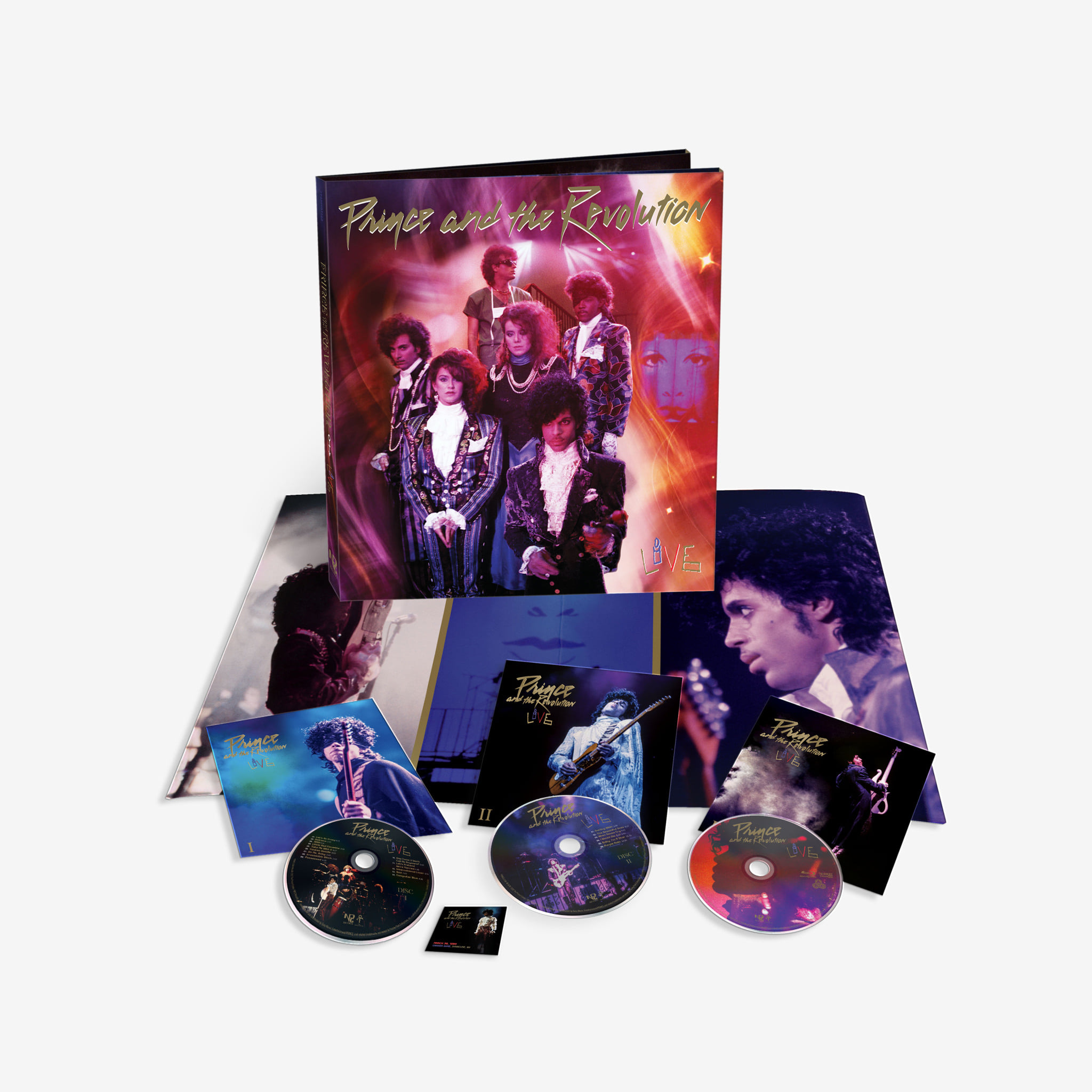
Prince & The Revolution – “Live” will be released June 3rd. Pre-order this set featuring the legendary “Purple Rain” tour stop in Syracuse, NY will be released on 3 LPs
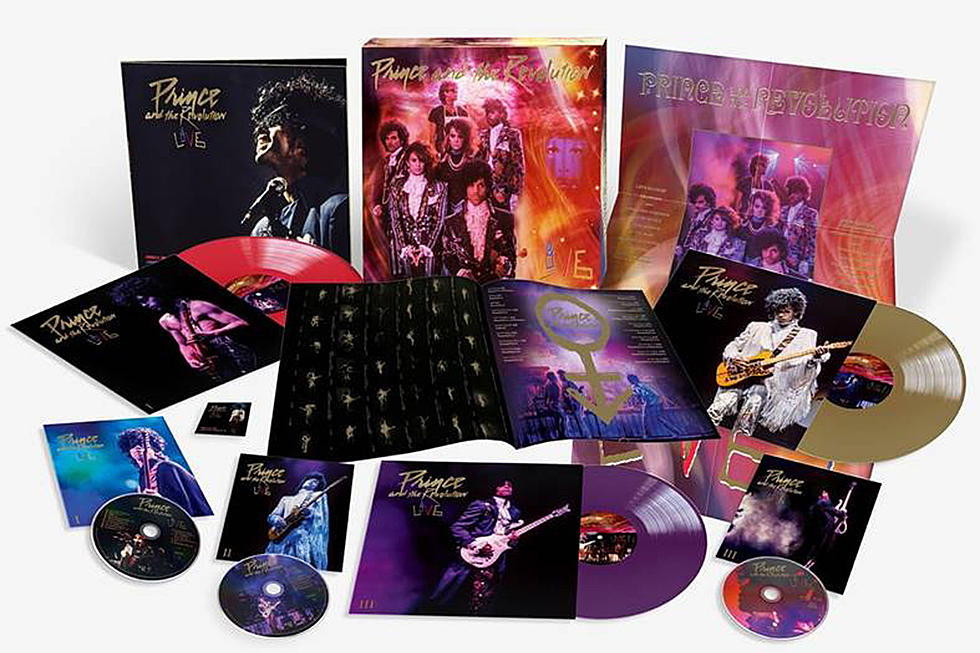
Prince and the Revolution’s “Live” concert film will receive a vinyl, CD and Blu-ray release for the first time. It’s available for preorder on the late artist’s website in the aforementioned formats, as well as a collector’s edition that includes three 150-gram LPs (purple, red and gold vinyl), two CDs, a Blu-ray video, a 44-page photo book, new liner notes and a poster.
The “Live” film was recorded during Prince’s March 30th, 1985, concert at the Carrier Dome in Syracuse,N.Y., while he was on tour in support of his chart-topping 1984 album “Purple Rain“. The set list appropriately included the “Purple Rain” album in its entirety, as well as six songs off its predecessor, “1999“.
Prince originally released “Live” on VHS; the album received a posthumous DVD release in 2017, and the audio became available digitally in 2020. The concert includes extended versions of many songs, including an 18-minute rendition of “Purple Rain” to end the show. The set also had various interludes and song snippets, including the aptly titled “Purple House,” an ode to Jimi Hendrix’s “Red House.” The members of the Revolution reflected on the simultaneous tightness and spontaneity of the PurpleRain tour in a 2017 Rolling Stone oral history, revealing that Prince would fine band members who made mistakes.
The Prince Estate is previewing the “Live” release with a video of the show opener “Let’s Go Crazy.”
“If you missed a cue or played an extra horn punch or something, that was $500,” keyboardist Lisa Coleman said. “He would withhold your money. It never happened to me. I’m lucky. Actually, I’m good at faking it. He never knew when I made a mistake.” “It was literally the Olympics,” guitarist Wendy Melvoin added. “We were like synchronized swimmers. If someone screwed up that thing, there’s not even a bronze medal. You’re just off the team. This was high stakes.”
Prince once said of the March 30th, 1985, Syracuse show, “There’s nothing I would change. It was one of the most powerful concerts I’ve ever attended.”
“Listening back to that Syracuse show, I’m like, ‘Wow, we sound like a freight train just coming out of nowhere,’” the Revolution’s BrownMark added of the concert in a statement. “That was powerful. I’ve been to a lot of concerts, and I’ve never seen anything like that.”
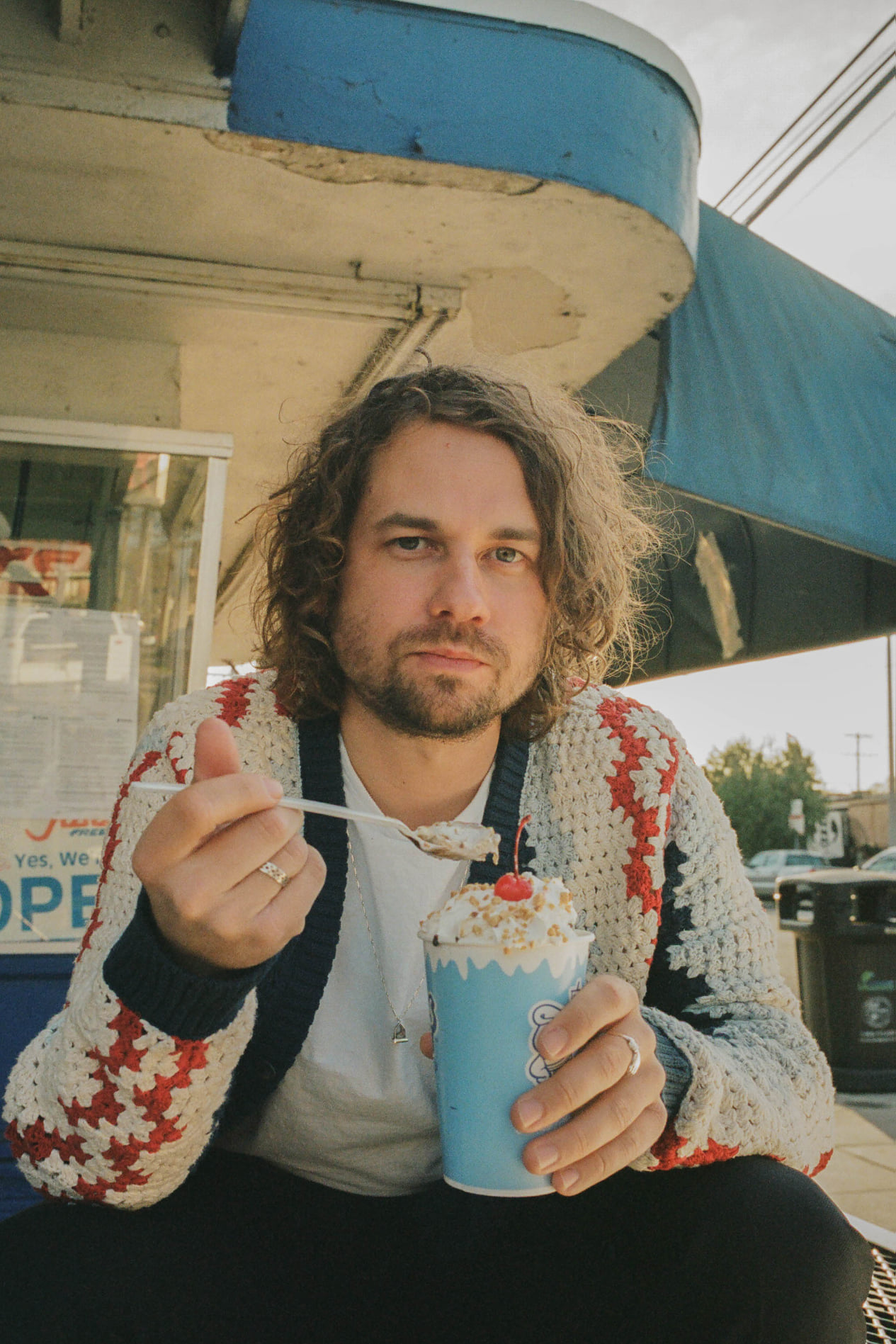
Today I am happy to announce the second single off of “This Is A Photograph” called “Rock Bottom“. I wrote this song loosely based on the late James Lee Lindsey Jr. after passing a mural of him in downtown Memphis during a writing session and falling into a rabbit hole and revisiting his incredible body of work. “Rock Bottom” could be about him or it could be about any of the countless influential souls who were before their time and rose from up from the bottom to the top too quickly, fading away young and never quite getting their due. I was however listening to a lot of Blood Visions and Grown Up, Fucked up while writing and recording this song and had read in an old interview that Lindseys stage name, Jay Reatard, was worn as a badge of honour after being made fun of in grade school which may or may not be why his seminal album Blood Visions features him on the cover, covered in blood, an obvious nod to Sissy Spacek’s charecter in Carrie. I also happened to watch Carrie for the first time around this time period (it was late October after all) and found myself repeating the iconic line—they’re all gonna laugh at you—over and over again.
The recording of Rock Bottom features a laugh track by friends Tim Heidecker and Alia Shawkat as well as Sam Cohen on bass, Nick Kinsey on drums, Cassandra Jenkins and AleciaChakour on backing vocals and that’s me singing and playing guitar.
Kevin Morby wrote this his seventh album in Memphis and reflects the impermanence of life, as the ghosts of Jeff Buckley, Jay Reatard and others flow through these songs. He once again worked with SamCohen, recording at Sam’s Upstate NY studio and at Memphis’s Sam Phillips Recording Co. and special guests this time include Eric Johnson (Fruit Bats), Makaya McCraven and Cassandra Jenkins. “It’s about the battle every family faces,” Kevin says of “This Is A Photograph’s” title track, “that of chasing the clock, to live our lives and hold onto one another for as long as possible.”
The video is a whole lot of fun and will be detailed in a seperate post. Thanks and enjoy xo km
from the forthcoming album ‘This Is A Photograph’, out May 13th on Dead Oceans.
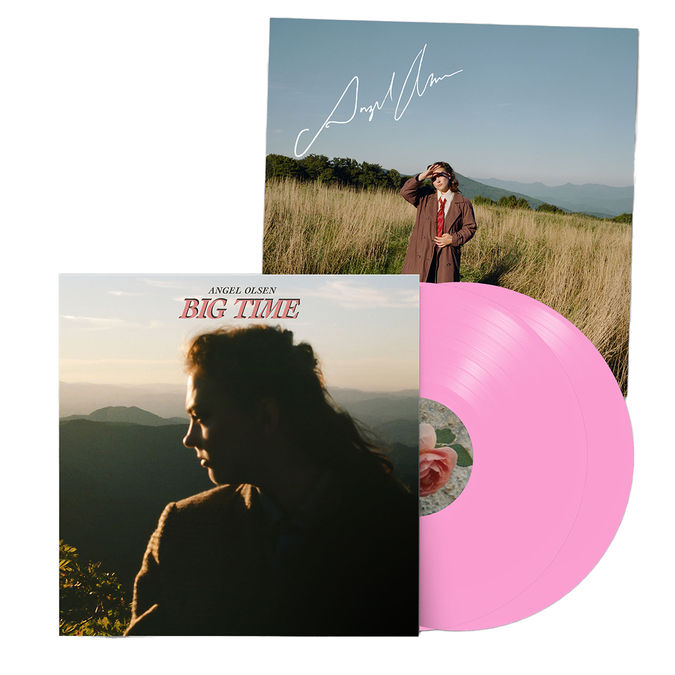
Angel Olsen has announced her new album “Big Time“. It’s out June 3rdx via Jagjaguwar and features the new single “All the Good Times.” Watch the video for the album’s opening song below.
According to the album’s announcement, “Big Time” was written during a period of time when Olsen was coming out . “Some experiences just make you feel as though you’re 5 years old, no matter how wise or adult you think you are,” Olsen said in a statement about coming out to her parents around that time. “Finally, at the ripe age of 34, I was free to be me.” Both of her parents died just before she began recording the album.
Kimberly Stuckwisch directed the new “All the Good Times” music video, which stars Olsen and her partner. “Angel’s story is a gift,” Stuckwisch said in a statement. “It allowed me to visually explore the universal themes of love, loss, and most importantly what holds us back from realizing our true selves.”
“Big Time” was recorded and mixed with co-producer Jonathan Wilson. It also features pianist and organist Drew Erickson and bassist Emily Elhaj. The new album is the follow-up to Olsen’s 2021 covers EP “Aisles” and the 2020 album “Whole New Mess“—a counterpart to 2019’s “All Mirrors“. She’ll soon tour with Sharon Van Etten and Julien Baker.
On “Big Time“, the grand, burgeoning, symphonic gestures of Angel Olsen’s last three studio LPs are gone, substituted with “Phases”-era, minimalistic, pedal steel-tinged sobcore and dreamy twang. It’s a one-woman show, a prize fight where the challenger no-showed. “Big Time” isn’t a bummer opera; it’s a last-call, honky-tonk bar encore—and it rules. On opener “All The Good Times,” Olsen surrenders the album’s thesis, declaring that she’s done making excuses for everyone else. “I can’t say that I’m sorry when I don’t feel so wrong anymore,” she sings. The horn arrangements here are subtle, and Drew Erickson’s organ trembles slightly beneath Olsen’s vocals. It’s an announcement, a warning, that this is a new era of her songwriting.
“All The Good Times” by Angel Olsen from the forthcoming album ‘Big Time’, out June 3rd on Jagjaguwar.
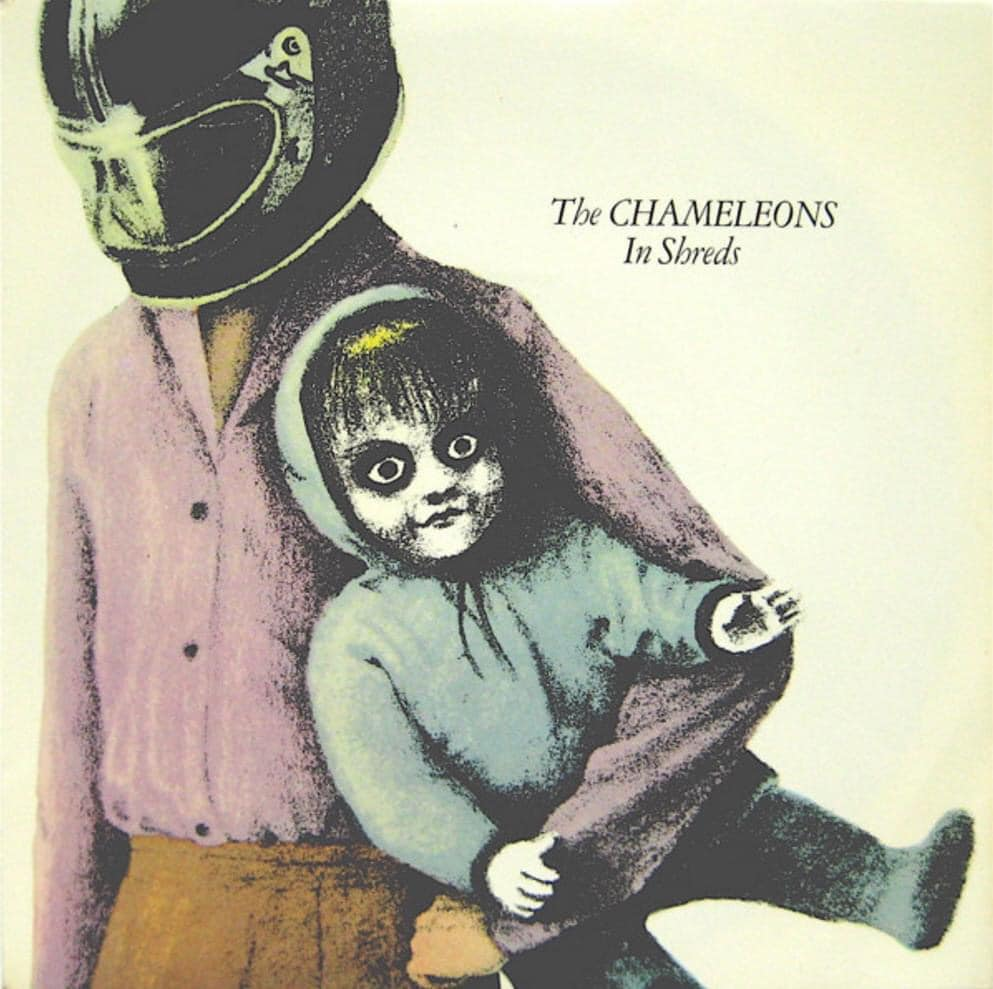
The Chameleons are an English post-punk band formed in Middleton, Greater Manchester in 1981. The band consisted of singer and bassist Mark Burgess, guitarists Reg Smithies and Dave Fielding, and drummer John Lever. Their debut single “In Shreds” released in March 1982, was produced by Steve Lillywhite. The single’s cover – a harrowing painting by Smithies, who created the artwork for all of their releases – mirrored the band’s tense, atmospheric sound. During this time, the Chameleons’ independent style clashed with their label’s visions for the band. The Chameleons were protective of their image and consequently were dropped by the label soon after the release of “In Shreds”.
The band released their debut album, “Script of the Bridge“, in 1983. They followed it with “What DoesAnything Mean? Basically” and “Strange Times” in 1985 and 1986, respectively, before abruptly disbanding in 1987 due to the sudden death of the band’s manager. After the split, Burgess and Lever formed The Sun And The Moon, while Fielding and Smithies formed the Reegs. Burgess also had a short solo career with backing band the Sons of God. The band were then inspired by U2’s early recordings : “U2’s first record was a big album for us. Edge’s guitar opened it up in terms of how you could build an ambient atmosphere”
Known for their atmospheric, guitar-based sound, the Chameleons are regarded as one of the most underrated Manchester bands of the 1980s. They did not attain the commercial success of other groups from the Manchester scene but developed a cult following.
Marking their tenth anniversary, Carpark Records bundles up the first two self-released EPs from Speedy Ortiz, dating from a time when it was still Sadie Dupuis’s solo vehicle rather than a full-time band. Both originally released in 2011, ‘Cop Kicker’ and ‘The Death Of Speedy Ortiz’ laid the groundwork for one of 2010s American indie’s most compelling artists.
Speedy Ortiz haven’t released an album since 2018’s lively “Twerp Verse“, an unabashedly pop-leaning turn from a band that established itself at the beginning of that decade with a considerably less polished grunge sound providing a solid foundation for the project. Instead, the group’s mastermind Sadie Dupuis has set out on a solo venture as Sad13 to explore various facets of this pop-star persona hinted at on “Twerp“, fully chasing the experimental highs achieved on the synth-infused choruses of “Lean in When I Suffer” and “Lucky 88.”
Yet this technically isn’t Dupuis’ debut as a solo artist—the earliest Speedy recordings were captured before the band expanded into a four piece, with the EP “Cop Kicker“ and LP “The Death of Speedy Ortiz”celebrating 10 years of life in 2021, as commemorated by the package-deal compilation “The Death of Speedy Ortiz & Cop Kicker ...Forever”, a fused-together collection of tidied up versions of those projects released digitally back in November. In place of the band’s familiar deadpan wisecracks and bulky riffs was the lone Dupuis kicking out demo-quality noise-rock jams documenting a period of extreme uncertainty in the song writer’s life, documenting everything from heartbreak, to more impactful personal tragedies, to an obsession with late-’00s feminist horror.
1. “Hexxy Sadie”
I wrote this on my 23rd birthday, about being a “twinless twin” and the random luck of being alive. Sometimes fighting to stay alive makes you do gross, weird, ruthless things. I was really into horror manga then (and now), and imagined myself as a bug, eating all the other hatching insects around me, final-girl-style. I was really into early Rob Crow bands—my then-bandmate Chuck was constantly singing the Thingy song “Rope Swing” that summer—and I can hear those bands’ influence in some of the arpeggios.
2. “Cutco”
The most passive-aggressive way of letting your friends know you’re pissed is through an elaborate cannibalism metaphor. The real Cutco is an O.G. MLM scheme, and an ex-boyfriend had worked for them right out of high school and lost money. A losing effort of putting on a brave face for diminishing returns—that’s how it feels trying to be honest about your hurt feelings against defensiveness. There’s a very specific kind of half-step-up, universe-shifting Deerhoof does in its chord changes, and this bridge is the first time I can remember trying to incorporate that move into my own writing.
3. “Phish Phood”
A scary story about breaking and entering laid over pitched-down audio of me reading a long confessional letter from the serial killer Albert Fish—but make it cute by giving it an ice cream name? I loved the Earl Sweatshirt mixtape and basically all horrorcore; I tried to make this creepy with swelling dark tones on the guitars. The serial killer stuff scared me so much to listen to in mixing I had to reverse most of the speech vocals, one of the only substantial edits I made in 2021. Timpani booms for extra fright factor! I kinda called myself out for over-milking the slasher tropes with a line that still has my number: “You’re no ghost / You’re just some kid / So why are all your songs so mean?”
4. “Kinda Blew”
Chris Lord-Alge, am I the only person to sing your full name in a song? A reference that cracks me up—I definitely used some of his plugins on this. This is about a specific brand of late-’00s/early-’10s feminist horror protagonist—I was obsessed with Jennifer’s Bodyand Scream 4 around this time, and still. I wanted some of that debauchery-adjacent, whip-smart nihilism for myself. Lots of late night lake swims and putting out matches in my mouth that summer. This is skinny-dipping and fire-swallowing but translated into a whole lot of guitars. I really loved Telephonoby Spoon, and slid a little reference to “Don’t Buy the Realistic” in.
5. “Ken-Ohki”
Ken-Ohki is the half-cat, half-rabbit from the anime Tenchi Muyo, who transforms into a spaceship for the bounty hunter Nagi. Now that you’re caught up on my super-cool reference…the character singing this song is some kind of ruthless bandit, acting shitty, but half-apologetic, and at least they didn’t traffic organs? The aforementioned Cutco boyfriend really had gone on a drunk rampage after scratching his truck, and then became a Marine; I brought that in as a contrast to the coldness I saw in myself while moving on from my life in New York and the friends I’d left behind (both in moving and in living past them). It’s a bitter rubberneck away from grief, perfect for several layers of banjo—all of which I recorded from my tiny single bed, feeling like a townie. The Chipmunk-y, pitch-shifted backing vocals felt like an alien and left-field texture to me at the time; now it’s Bandcamp de rigueur!
6. “Speedy Ortiz”
The cutest part of this song is how I can hear Ellen Kempner singing and laughing and trying to get me to laugh in the back of the drum tracks. This song is super literally about the character Speedy Ortiz from Love & Rockets, and pulls plotlines from a few different issues surrounding that character’s death. Jaime Hernandez’s stories were lifesaving escapism for me, even when they dealt with issues that closely resembled my own. Despite the dark subject matter, this song sounds palpably joyful because it’s a tribute to comics I love so much. Thanks, Jaime!
On a musical level, this is one of the simpler songs I’ve written, and acted as sort of a mission statement for what I wanted my new project Speedy Ortiz to sound like. My old band Quilty had veered toward proggy and space-rock-y, with a big pedalboard and weird open tunings. I initially called this new solo project my “no pedals, standard tuning band,” a chance to get a literally clean break with a diminished arsenal of effects. So “Speedy Ortiz” is a simple punk song, not too many sections, and the only real treatments are distortion times twenty.
7. “Hurricane Speedy”
All of these songs came out of songwriting prompts from the kids I taught (or my co-teachers), and this one was ”Spirited Away.” The lyric “I know there’s a No-Face waiting for me” sounds so menacing, removed from the Miyazaki context! I can’t remember this song’s original title, but when I was finishing mixing these to first release on Bandcamp, it was the middle of a pretty intense hurricane season. The structure of the song—a quiet, acoustic intro building to a psychedelic clash of sliding guitar riffs and pummelling drum layers—echoed the ominousness of an impending storm. And maybe there was a parallel to the inner turmoil of uprooting myself to a new state—the hurricane is coming from inside the house. I think I was trying to sound like Trail of Dead, but one of the riffs is a pretty direct homage to The Craters, whose frontperson Wes Kaplan is the brother of Speedy bassist Darl Ferm’s high school bandmate Cas Kaplan—six degrees of Massachusetts, etc., etc., etc.
8. “Thank You”
“Keep It Like a Secret” is the single biggest influence on my guitar playing, so here’s my big blatant Built to Spill moment! I remembered this one as harsh, but when I went back to re-mix it, I wound up pretty impressed…maddened by the 40,000 guitar tones and three layers of drums competing with the vocals, but still, impressed. I think I made most of these parts up on the spot, something I don’t do much anymore. Lyrically, just a classic kiss-off to somebody who wasn’t good for shit! Thanks for nothing, jerk!
9. “Frankenweenie”
This song still fucks me up. It’s about putting down my childhood dog, but I used that as a metaphor for my first big breakup—euthanizing your first love after five years of codependency. Yeesh! I’m a sucker for slow-build, mid-tempo ballads with pianos and twisting guitars, a formula Elliott Smith pretty well perfected and I keep trying to inhabit, never more directly than here. The snare sound is one of my favourite things on this record—I tracked it in a tent with the laptop mic right on the drum as a way to dampen it. It sounds like the wildest re-amped sample ever, but it’s all natural clipping, baby.
10. “Blondie”
Written a few weeks after the rest, my song writing friend group remotely worked on the prompt “blown away”—during one of those aforementioned late-summer hurricanes. During re-mixing, JustinPizzoferrato and I both had a head-scratching session trying to figure out how my guitar and vocal doubles were so close to the original, and how to make them more distinct from each other. Then we realized some of the dripping faucet and tapping sounds are only in the “original”—I guess I tracked guitar and vocals separately, then played them both back through a speaker in the bathroom, which (we guess) I recorded to create an echo chamber effect, with some weird auto-gating kicking in, too. Sneaky move, past me!.
11. “Ka-Prow!”
My covers band Babement has been written about way more times than we actually practiced or gigged—two whole shows. But I made this song shortly after those, and I actually hear the Pavement influence, especially in whatever Malkmus-patented tuning I used. The prompt for this song was “explosions”; Porches, my friend from another band’s brand new solo project, had just put out a song “Tan Lines,” and I think my “tans” here are a reference to that. I loved including easter eggs to my friends’ bands’ songs back then, since that was basically the entire demographic of folks who’d hear mine. This was one of the first songs I tracked for this project, and it had a lot less layers of guitars than the ones that came later. So I dove really deep into automating delays and tremolos to make the one lead line as colorful and dynamic as possible. It was first called “Ka-Pow!,” like the comic book onomatopoeia, then a friend misread it as “Ka-Prow,” an Austin strip mall restaurant where I’d once tried to get a dishwashing job, and then that was its name.
12. “Necronomicon”
The original mixes of these songs had a lot of ambient sounds in them—other people whispering or shouting in adjacent rooms, laptop spacebar clicks, some intentional noises, some not. I had a good time shaping the rustles into new textures, especially in this intro and outro. “Necronomicon” vaguely touches on the plot of Evil Dead, duh, and there were some definitively evil sounds I did battle with in trying to re-mix. Bringing out the piano and kick and climbing guitars also brought up some cursed hissing. At some point, I had to let the evil noise prevail—just as the woods would’ve wanted.
13. “Teething”
This melody kicked around in my head for at least a year before I recorded (unlike most of the rest of them, written in an hour and recorded later that day). Around the corner from my apartment, I witnessed a man on a motorcycle hit by a truck. He was thrown about 20 feet from his bike, landed in a scarily contorted position, and I never knew if he survived. The shock and brutality and sadness of it stuck with me then and still does. I was re-diagnosed with OCD in 2019 after dealing with complicated grief—similar to the circumstances I was in before writing this album—and “Teething” feels like a recognition of my need to verbalize my fears about death and dying, rather than ruminating cyclically. (“A word should come from my head before it grows in size / But what breaks through me instead are all the spiders inside” equals talk about your fears, maybe, before they overtake you?). I was really into the Scout Niblett album Kidnapped by Neptune, where her drumming feels like it’s bending time, and I can hear her influence.
14. “Doomsday”
Another one I’d written a few months before recording. It came to me while I was biking over the Williamsburg bridge into Manhattan, shortly after my roommate James McDowell died. Someone in my family had a TBI from an accident while biking, which scared me off it for a while, but James loved biking all around the city, and I got braver because of him. He was an amazing photographer, writer, and friend, who championed the music and art of those he cared about. Life felt doomed without him, to put it plainly. He’d died suddenly and unexpectedly from an undiagnosed heart condition, and it just didn’t make sense that I wouldn’t see him again. There are no silver linings to losing a friend, but knowing him and losing him inspired me to seek out art and community and adventure, because that’s what he did every day. I even got a tattoo of one of his photos to remind me to stay engaged. My old band Quilty tried to do “Doomsday,” but it wasn’t coming out right, and I knew this song was too important to get wrong. Speedy re-recorded it as a full band a few years later, but this early solo one still feels definitive to me. I can hear my love for James in every layer of the recording.
15. “All Red”
This was recorded along with the “Death of Speedy Ortiz” and “Cop Kicker” stuff, a re-telling of the Grey Selkie folk song, but I wasn’t brave enough to mix it right so it’s stayed unreleased ’til now. Its layers feel unwieldy, lots of raw sounds whirling around and turned up. I love noisy home-taped recording projects and was especially enamoured with Sparklehorse, which I can hear on this one. The ending cracks me up
I remember recording this in a practice shed the camp would use for strings and woodwinds lessons. A friend is clearly waiting for me to finish up recording so we can go eat dinner or something, and I’m stalling for time. “Should we do it? Right on, do it! Wait—what the fuck? Let me make sure…”
16. “Let’s Get Evicted”
If there are cellos and violins and upright basses in a closet you have the keys to, you are obligated to record with them, even if you don’t know how to play them. That’s the philosophy of “Let’s Get Evicted.” Some brutal breakup lyrics on this co-dependency jam—”Let’s kiss off a cliff / Take a nap in the grave / Let’s get evicted and torture our enemies.” True love, right? Puddles of irony dripping off those ending “la-las.”
17. “Open Sesame”
Tracked in my mom’s basement, a nylon string guitar layered over some unhinged drums and a whole lot of layers of spoken and screamed vocals. A friend was dealing with a shitty parole situation, and I think that’s where the lyrics came from—as well as the title “Cop Kicker,” even though this song didn’t make it to that EP. I love all the delay squiggles that sound like a radio being tuned, and the Casio-y drum loop that comes in for only four measures.
18. “Bill Sauce”
Get in and out quick! Inspired by and sounds like the cheap beer–saturated punk and hardcore shows I was hiding in the corner at when I first moved to Western Massachusetts. All of the boy-band drummers wanted to sound like GOAT Brian Chippendale, I didn’t stand a chance of that, so I looped some ridiculous fill named “Chugger” from a sample pack I stole from an old bandmate and sped it way up, adding irregular MIDI hi hat accents to it. I had to work hard to track down “Chugger” in 2021—the file probably lurking on a hard drive two or three past—it involved looking up the names of owners of a drum samples company that was seemingly many years defunct, who very nicely emailed me the file so I could do my re-mix.
19. “Summon It”
There was some bumper music on MTV(U?) around 2011 that was a soundalike for a section of YYY’s “Maps,” and some of the triumphant rhythm guitar/noodle interplay is way in that vein. The verse is probably the surfiest part I ever plucked—definitely a then-hot trend among the Brooklyn DIY crew I gigged around with, but which I mostly avoided (along with all reverb). I got diagnosed with a rare blood clotting disorder that’s tested for by mixing blood with snake venom, the gothest medical procedure I’ve ever been party to. How could I not write a song about that? I clearly wanted “Summon It” to sequence into “Deady,” since the former’s outro anticipates the latter’s chorus. And now that these songs are seeing release for the first time, I’m happy I get to honour that old idea.
20. “Deady”
“Deady” is the name on a prominent tombstone in a notable cemetery at an unskippable stoplight in Amherst, MA. Tracked in 2011, this first came out on a Post-Trash compilation in 2015 under “SadieDupuis.” But, let’s be real, this was Speedy. There are 10 guitars on this one, all tuned down lowwww. No bass! I remember my neighbour coming over to knock on my door, like, “Hey, can you turn down the bass you’re playing?” I was like, “I’m not playing bass! No bass here at all.” A medieval jam about working through depression, every wart out. Acknowledge your worst thought, sing it in a song, then let it go, something like that. I was absolutely in a regular D&D session with other students in my MFA program. Will I ever be this cool again?
21. “Meat of Contract”
Another “no bass” jam, but you sure wouldn’t know it after all the octave and re-amping effects on the guitar. The prompt was “critter,” and I wrote it after the Angela Carter short story “The Tiger’s Bride,” a warped re-telling of Beauty and the Beast. “White meat of contract” is her line, and I chant it in demonic, wall-of-sound harmonies over the outro. It’s kind of shadowed and spooky—“Critter, c’mere, lick the blood out my bullet hole” is one of my favourite lyrics from this whole collection. But a lot of the critter-y language that seems like a metaphor was just from happily hanging out with my sweet dog Buster, who loved to curl up at my feet all day long.
22. “Son Of”
This kind of sounds like Sugar Ray to me now, and don’t let anyone tell you that’s not a good thing! Legally, my name is “Sarah”; “Sadie” is a nickname for Sarah, and one of my great-grandparents went by it. I started going by Sadie for all music-related endeavours when I was 20 and didn’t want people to connect me at my day job to me in my bands on MySpace. Around 2011, as playing in bands had become the most important part of my life, I stopped wanting to go by Sarah at all. This song was about forming an intense new bond with someone, and wanting them to know the real me, not just the “Sadie” they knew through music. In hindsight it’s very funny that I had these concerns over my own authenticity when I was regularly playing to, like, eight to 10 people. But, for whatever reason, needing to carve out a private, honest space for myself through lyrics has been a concern for me since I started making songs around age 13. Please don’t call me Sarah, by the way. Unless you’re my mom.
“Speedy Ortiz” is taken from Speedy Ortiz’s album, ‘The Death of Speedy Ortiz & Cop Kicker… Forever,’ out now on Carpark Records.
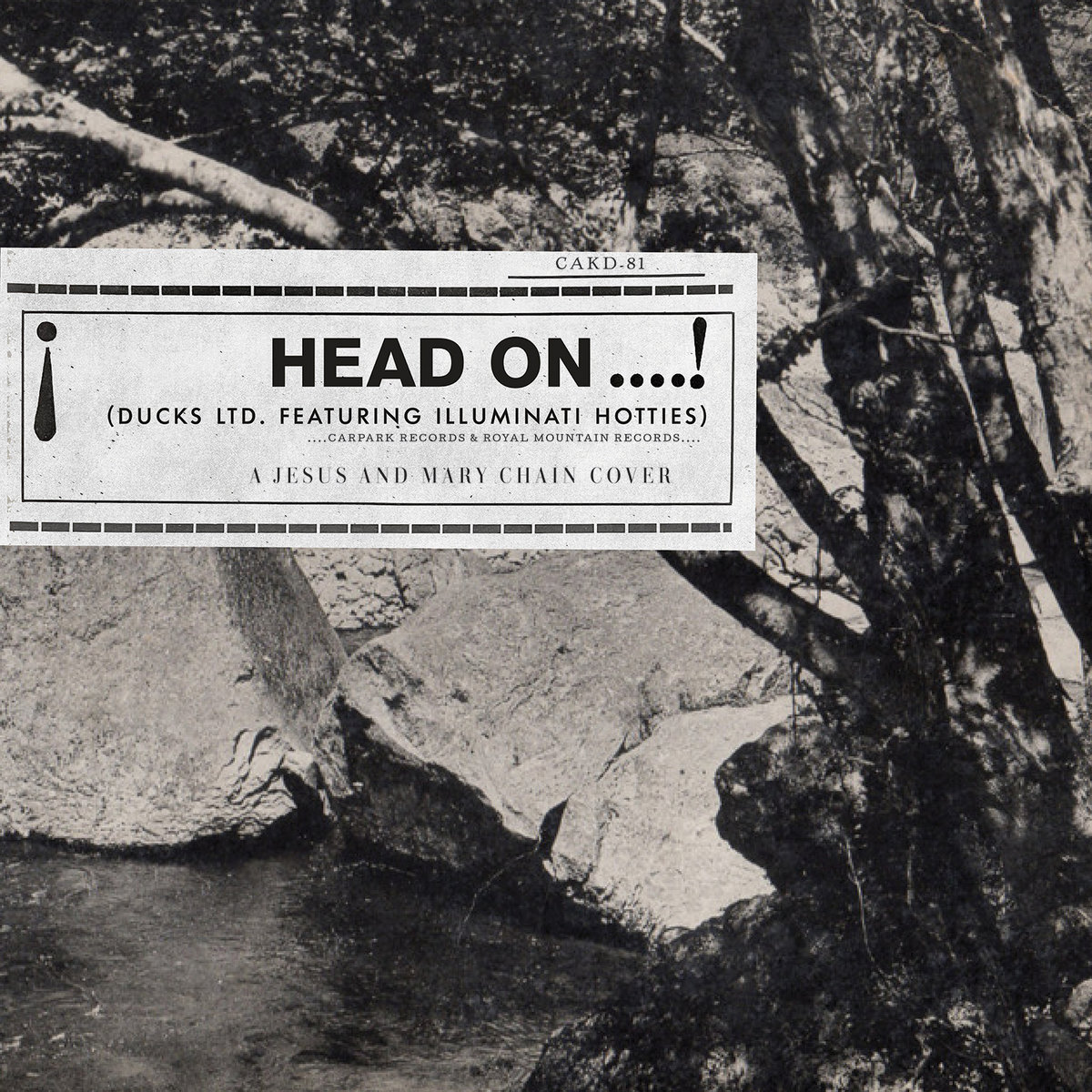
Regardless of which niche corner of rock music you most frequently inhabit, it’s been an exciting week for collaborative singles. the New Weird Australia EP from leaders of the movement Tropical Fuck Storm and King Gizzard, and a worthy contribution to the power pop group chat courtesy of Dazy and Militarie Gun, Ducks Ltd. are now pushing forward with their jangle-pop renaissance agenda by covering renowned not-jangle-pop outfit The Jesus and Mary Chain’s “Head On” with the help of illuminati hotties.
Re-contextualizing the track from its very-’80s noise-pop origins to another movement from that decade, The Ducks replace the original track’s massive weight with the tight, breezy sounds of last year’s debut “Modern Fiction“, with Sarah Tudzin’s vocals underlining those of Tom McGreevy. “Every time we do [a cover] we feel like we learn something about song writing and arranging that makes us better at making our own music,” he shared in a press statement. “This project is kind of an extension of that exercise, and as a band who obviously wear our influences on our sleeve a bit, it’s a fun way to share some stuff we’re into.”
After continuing on to make the bold claim that “Trompe le Monde” is the best Pixies album (obviously incorrect—it’s “Bossanova“), McGreevy says of the collaboration: “Sarah Tudzin has an immense and powerful production/mixing mind and one of my favourite singing voices of anyone doing stuff right now, so we asked her if she’d be down to work on it with us and she helped us figure out how to make all the pieces fit together. Truly a high honour! She also persuaded us to record our guitars through actual amplifiers for the first time ever, rather than going straight into the box like we normally do which feels momentous! Amplifiers! Who knew!”
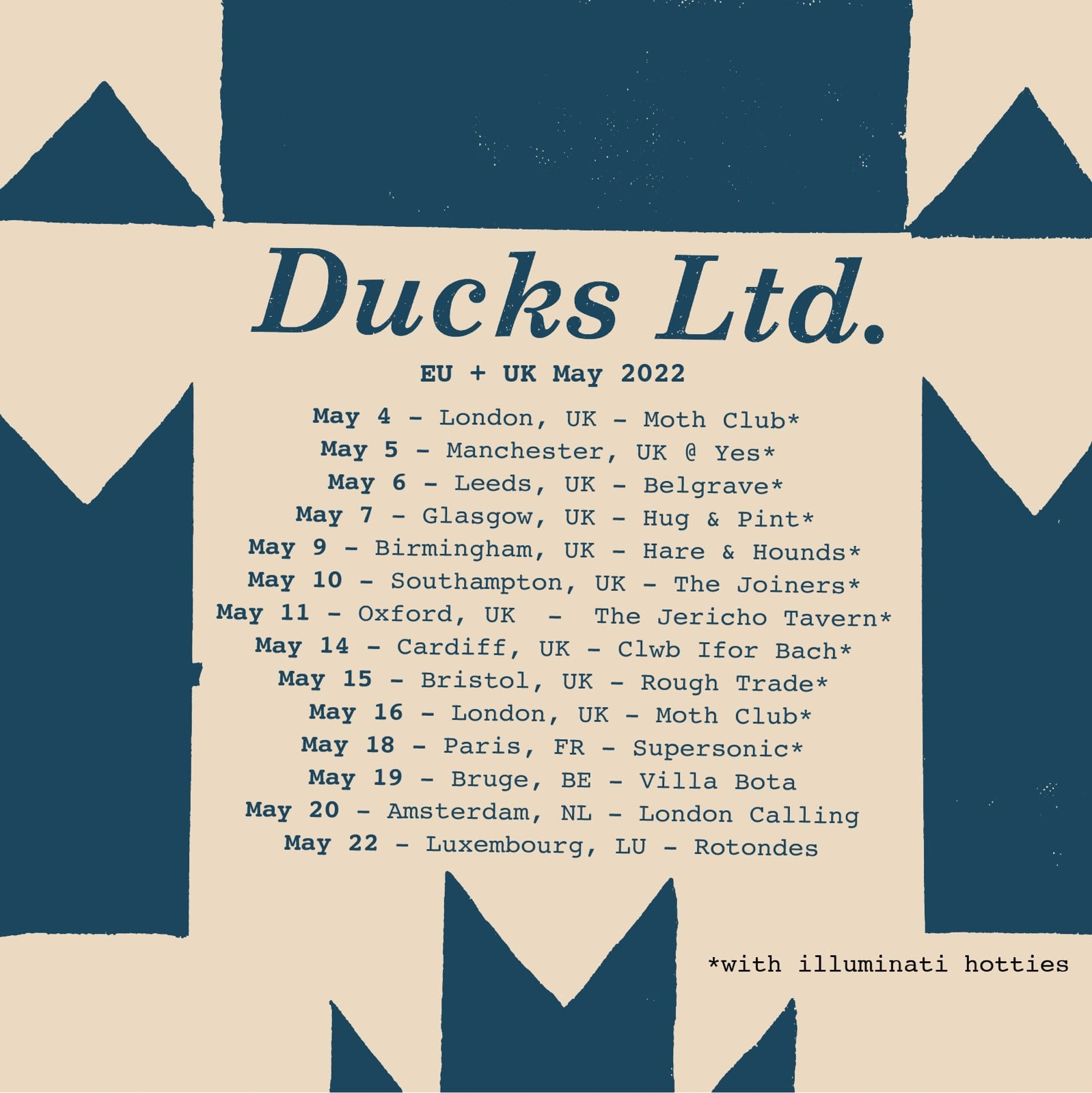
The collaborative single arrives ahead of Ducks’ imminent U.S. tour. “Head On (feat. Illuminati Hotties)” is the first cover of a series by Ducks Ltd. called The Sincerest Form Of Flattery, out on Carpark Records. More to come hopefully.