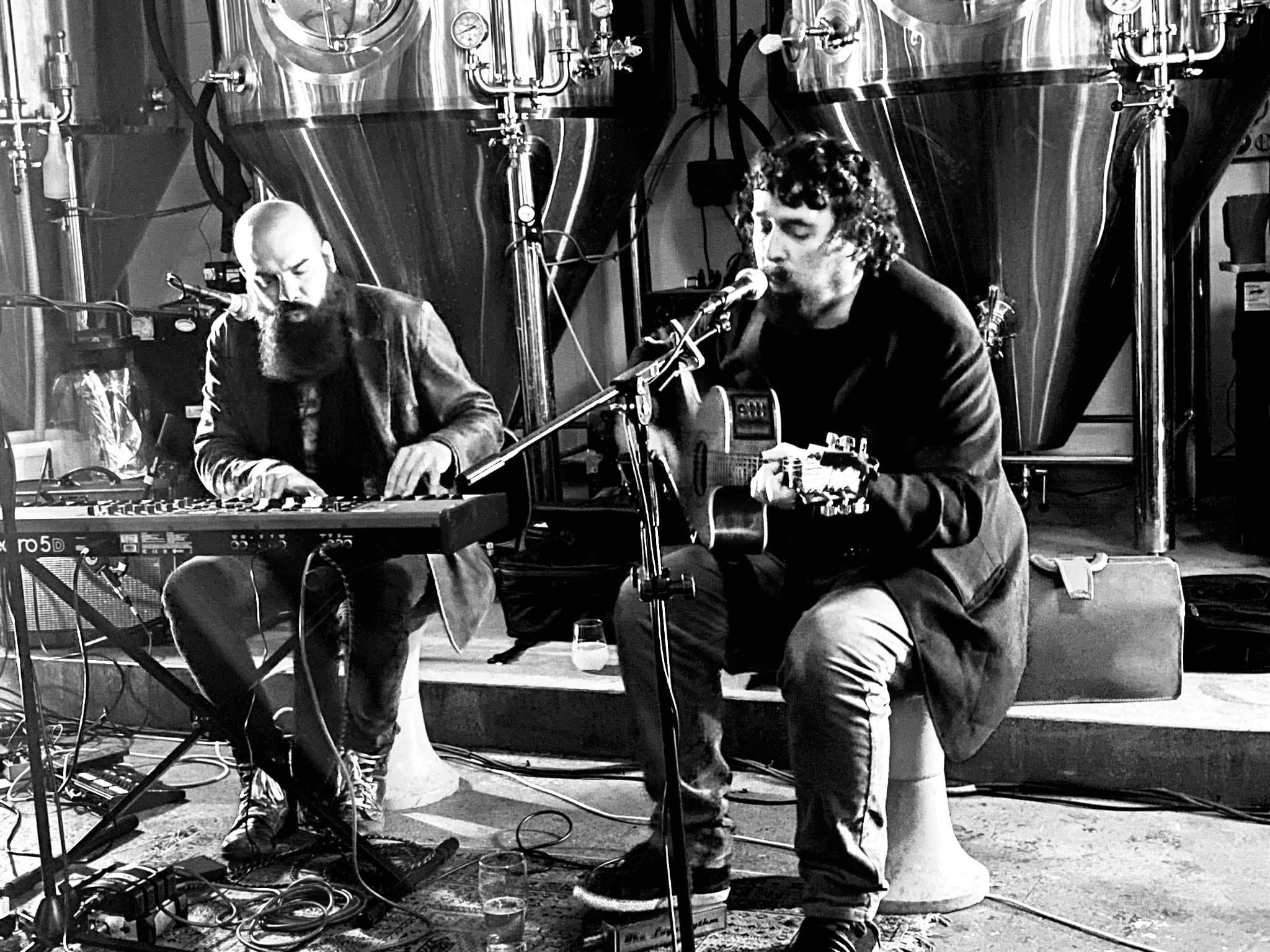
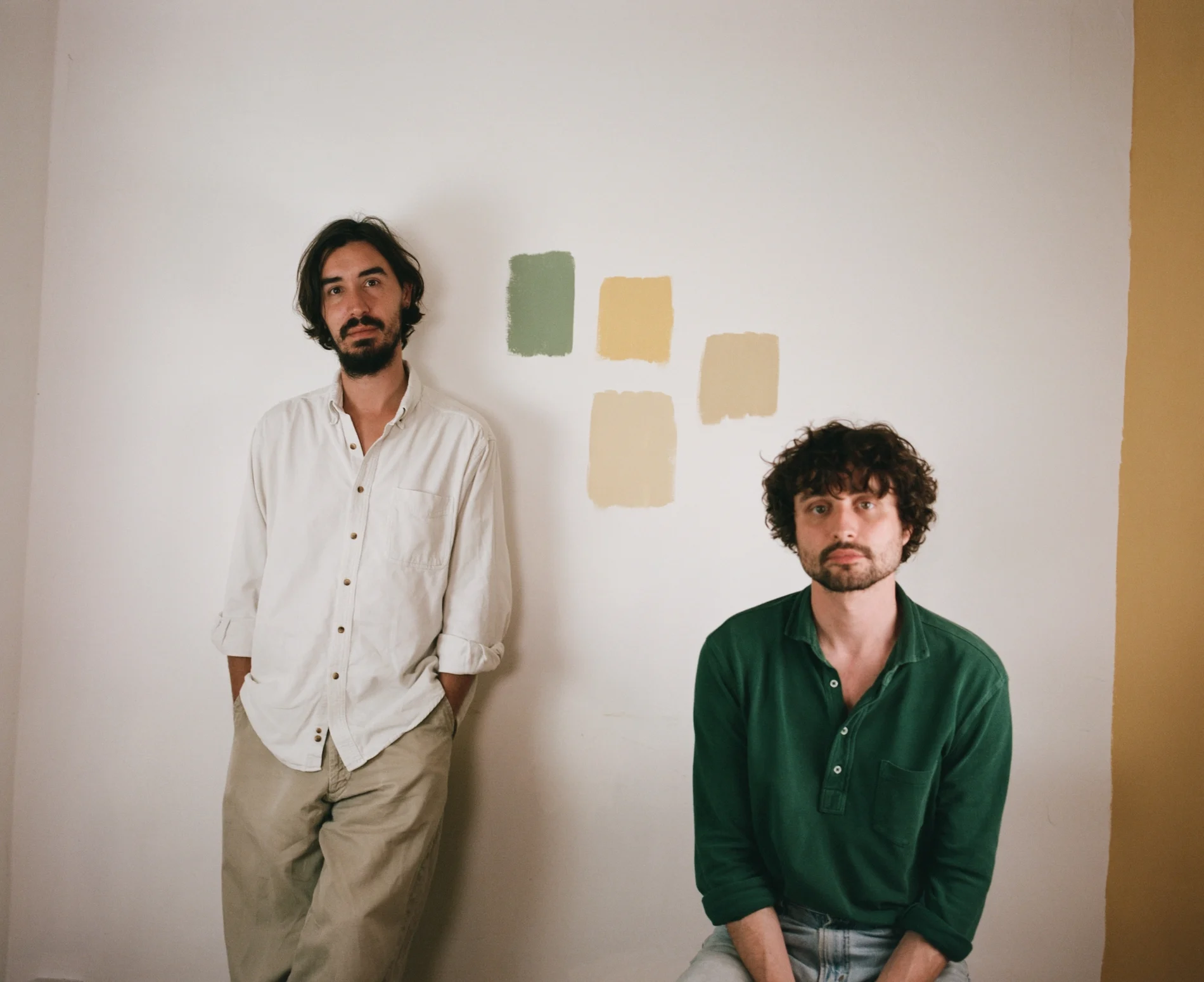
Dusty 4 Track A side project that has quickly become their favourite way to waste time. Will Jeffery and Ben James, Dusty 4 Track hail from Nottingham. In 2022 a side project was born from Will Jeffery and Ben James and has quickly turned into their favourite way to waste time. Their last hurrah as it might be. In a world where likes and follows mean more than the music itself wouldn’t it be great if these musical misfits could make it work. Recent additions of Tom Dempsey on drums and Russ Clark on Bass have made them a force to be reckoned with.
Signing up to local independent label “I’m not from London” will surely help get their foot in many doors.
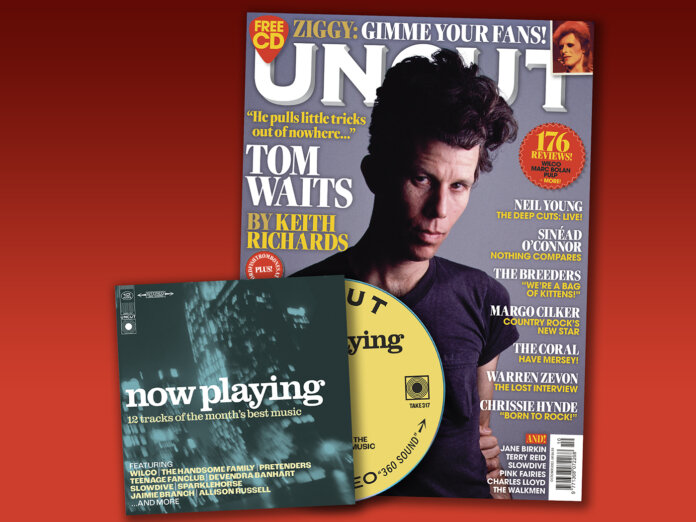
The stories of Tom Waits’ unusual studio antics are legendary, but I don’t think I’ve heard this one before. “I was impressed by the amount of weirdo instruments he had hanging around. It’s an amazing collection. I thought, ‘Hello!’ He had a Mellotron, like an early version of the synthesiser, which was loaded entirely with train noises.”
This revelation, incidentally, is shared with us by none other than Keith Richards, who tells Uncut about his long, predictably colourful friendship with Waits as part of our cover story – from one old devil to another. Besides Richards’ warm and insightful recollections, there’s a deep dive into “Swordfishtrombones“, “Rain Dogs” and “Franks Wild Years” an extraordinary trio of albums that recast Waits as a master of creative daring. “I asked Tom if there was anything he was looking for,” one collaborator tells Graeme Thomson. “He put his hands up to his mouth and stretched them out in front of himself, and said, ‘I need more…’ and made a long whooshing sound.”
There are, I hope, a lot of other creatively daring artists to be found in this issue of Uncut – but I’d quickly like to draw your attention to Tom Pinnock’s Album By Album interview with the great saxophonist Charles Lloyd. It’s no bad thing when an interviewee starts off quoting advice he was given by Duke Ellington… Among other jewels, there’s Peter Watts’ piece on David Bowie’s final Ziggy gig – an oral history from the fans’ perspective that reads more like social history than a music magazine feature.
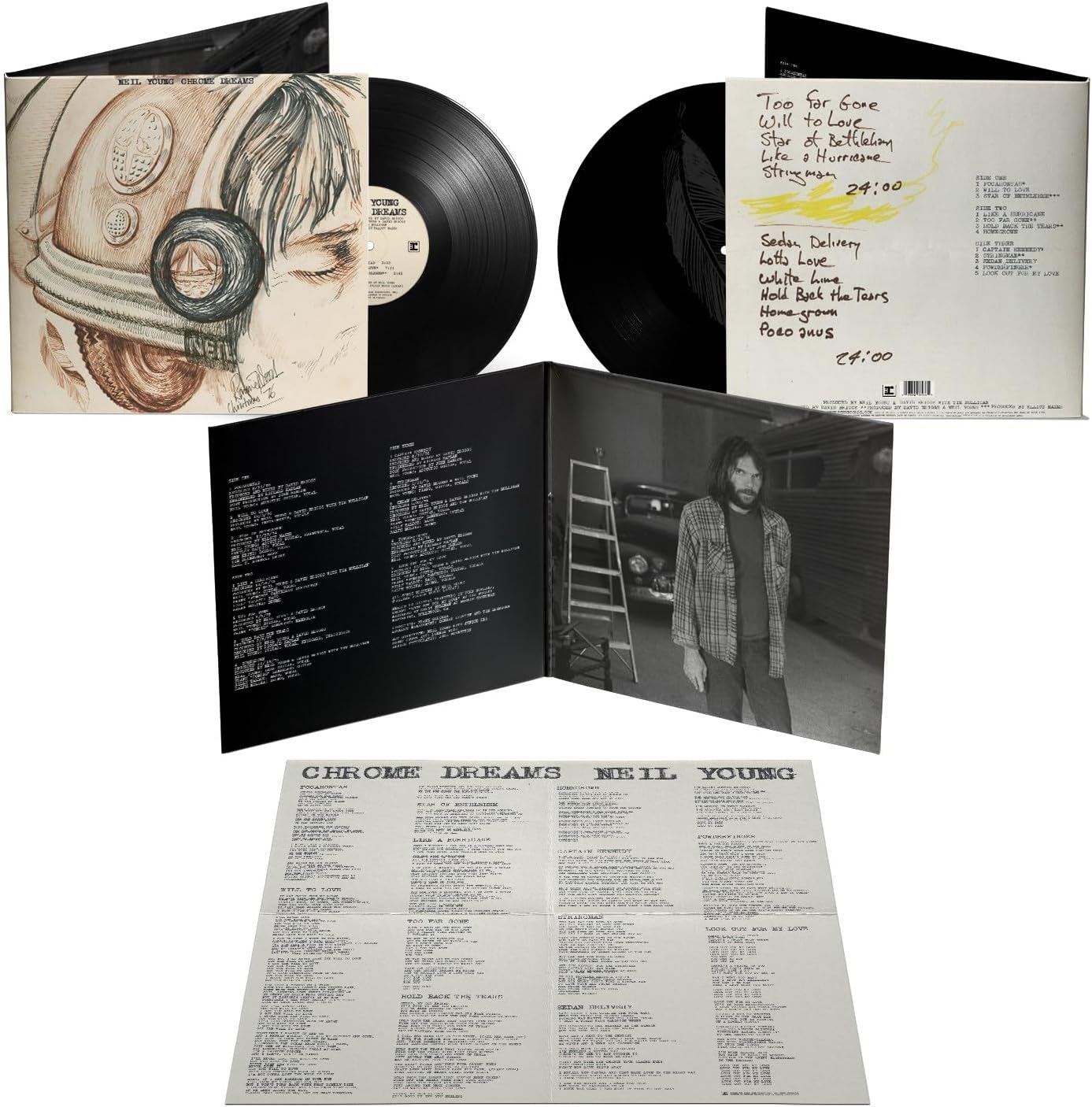
As we know by now, Neil Young kinda just does his own thing. ‘Chrome Dreams’ was originally supposed to be released in 1977 but Young changed his mind. Although it has been heard on bootlegs and, weirdly, Neil Young has subsequently released the sequel ‘Chrome Dreams II’, this is the first time the complete album has been released how Young intended it.
For decades, an acetate copy of Neil Young’s lost 1977 album—“Chrome Dreams” was heavily circulated in fan circles, but it never went any further than that. Initially, the project was meant to be a proper follow-up to his 1975 Crazy Horse record “Zuma”. It was Young, who’d put out “Everybody Knows This is Nowhere”, “After the Gold Rush”, “Harvest”, “On the Beach”, “Tonight’s the Night” and “Zuma” all in a six-year period, that was still on fresh legs and at the pinnacle of his game.
1977 was meant to be a banner year for Young. He’d just released “Long May You Run” with former CSNY bandmate Stephen Stills the previous autumn, but he’d also compiled numerous songs between 1974 and 1976 and had nowhere to put them under his own name. From what we know now, because of Young’s vault of bootlegs and “lost” projects, he also recorded “Homegrown” and “Hitchhiker” around that time, too—but both albums went unreleased for decades. “Chrome Dreams“, despite being banished to a similar fate, feels like the most fully-formed of the three.
Recorded everywhere from Indigo Ranch Studio in Malibu, California to Quadrafonic Sound Studios in Nashville, Tennessee to Hammersmith Apollo in London, “Chrome Dreams” is not just a living, breathing full moon; it’s a document of a prolific, all-time era in Young’s career that never truly was. In 1977, he released the middle-of-the-road “American Stars ‘n Bars” which was heavily shouldered by “Like a Hurricane”—and then, in 1978, he put out his country-focused “Comes a Time” which was headlined by “Four Strong Winds,” a song Young didn’t even write. To make full sense of this recent run of the unvaullted “lost” album releases. We got “Hitchhiker” in 2017 and then “Homegrown” in 2020, two projects that feature much of the same content as “Chrome Dreams” and have also been deemed as “lost records.”
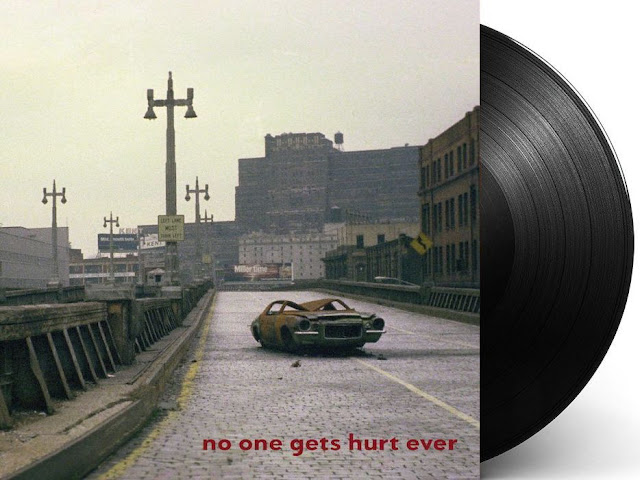
Madder Rose belongs to the forgotten cult bands of the 90s, but just like on the comeback album from 2019, the American band also shows on No One Gets Hurt Ever that it is capable of great deeds The American band Madder Rose delivers its sixth album with No One Gets Hurt Ever and it is their sixth excellent album with very melodic songs and the great guitar work of Billy Coté and by the beautiful voice of singer Mary Lorson, who would make two great albums after Madder Rose as SaintLow.. After the four unsung masterpieces from the 90s, the band surprisingly returned in 2019 and four years later there is fortunately another new album by Madder Rose.
Billy Coté and Mary Lorson still manage to inspire each other in which 90s indie rock and a touch of psychedelics merge beautifully. The band will probably never rise above cult status.
The band’s new album also revolves around the guitar work, production and songs of Billy Coté and the still beautiful voice of Mary Lorson. Madder Rose also quotes from the music it made in the 90s on her sixth album, but this time the band sounds just a bit less gritty, although the guitar work is certainly there and there is room for modest guitar walls here and there.
Especially when the guitars sound a bit more psychedelic and Mary Lorson sings full of incantation, the comparison with Mazzy Star is again obvious, but Cowboy Junkies also provides absolutely relevant comparison material. With this I have two of my favorite bands of all time, but No One Gets Hurt Ever ultimately sounds like Madder Rose,
When I think of the name Madder Rose, I first think of the four great albums that the American band released in the 90s. With 1993’s Bring It Down, 1994’s Panic On, 1997’s Tragic Magic and 1999’s Hello June Fool, the New York-based band delivered four classics.
Stolen Jars is a band from Brooklyn, New York, that impresses on its new album “I Won’t Let Me Down” with an inventive mix of indie rock and indie pop cast in catchy but also inventive pop songs, the fourth album of the band, The beautiful combination of the voices of Cody Fitzgerald and Sarah Coffey, but then the songs of Stolen Jars. They are songs that are particularly easy to hear and occasionally come eerily close to the perfect pop song, but the songs of the Brooklyn band are also full of pleasant surprises.
Exuberant in its melancholy, kinetic in its longing, “I Won’t Let Me Down” is a record of self-discovery, the open space between losing love and finding it again. Lead vocalists Cody Fitzgerald and Sarah Coffey sing to each other across the gap — on “Reality TV,” they align for each chorus, on “In The Bad Times,” they’re literally split in the stereo field. In melody and harmony, their perspectives intertwine — as the band put together the record, Fitzgerald was beginning a new relationship while Coffey was exiting an old one. There are no contradictions here: every moment of acceptance erupts with energy, every moment of tension passes with peace.
Stolen Jars was originally a solo project by American singer-songwriter and multi-instrumentalist Cody Fitzgerald, but the band has flourished since working with singer-songwriter Sarah Coffey, guitarist and songwriter Elias Spector-Zabusky, drummer Isaiah Hazzard and keyboardist Grant Meyer.
The guitar work is often combined with electronics, which results in a nice full sound. It’s a sound further enriched by inventive drum parts, which also show that Stolen Jars digs deeper than most other bands in the genre. You can hear that the band now has three songwriters in its ranks, because the quality of the songs on “I Won’t Let Me Down” is an excellent listen. It will be even more fun when Greta Kline, known as Frankie Cosmos, contributes, but even without this contribution,
Stolen Jars is Cody Fitzgerald, Sarah Coffey, Elias Spector-Zabusky, Grant Meyer, and Isaiah Hazzard
Cody Fitzgerald – Vocals, Guitar, Bass, Keys, Drums, Banjo, etc. Sarah Coffey – Vocals Elias Spector-Zabusky – Guitar, Bass, Keys Grant Meyer – Keys Isaiah Hazzard – Drums Greta Kline – Vocals on “Run It Wild” Joe Reinhart – Guitar, Bass Sumner Becker – Saxophone Dorothy Carlos – Cello
Does a song need a chorus? This new tune of ours that came out today, it’s really not appropriate big single material, but somehow we felt compelled to give it its own stand out moment. “Speech Bubble” is a series of verses, rolling round the same repeated melody. It feels like one of the weightier tracks on this record despite its small stature.
The lyric initially started as a narrative to a successful romantic endeavour, each line stating “I’ll be your this” and “I am your that”, but thankfully it morphed into a yearning plea, beckoning hopefully, into the future. We were stuck writing this for some time until the full twist of the lyric revealed itself in the “let me” that starts off every line.
This is a love song that asks for permission. And once permission is asked, almost any declaration comes across in the right tone of voice, nothing feels cheesy. I quickly jotted down the bulk of the final lyrics whilst stashed in a basement flat with a rather bad bout of covid. The bed in that flat was absolutely too short to stop my feet from sticking out the end. London and indeed that basement flat is very much a central character.
I don’t know how much of a secret this is as I believe places like Apple Music have the full track list already visible, but “Speech Bubble” is the album opener. As track one, it starts by asking questions before the rest of the record then moves chronologically through single life into not so single life. Much like our previous record, we’ve tried to make it a linear story. Anyway, yet again I’ve waffled.
Oh but also, I’ve recently realised that you as the email receiver, can reply to these emails. So here I am now, encouraging you to reply to this – anecdotes, covers, photographs, gentle thoughts, not so gentle thoughts, anything really, and I could include a few the next time I write.
Hope you’re all safe and sound wherever you’re reading this
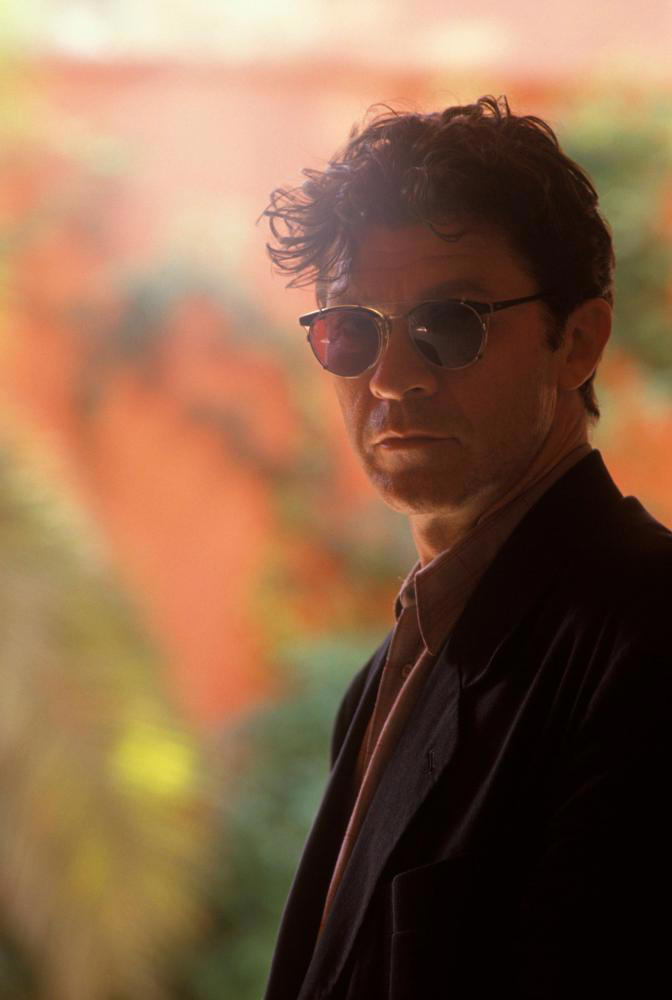
Robertson’s music reflected the journey of his life, from his ancestral roots in the Six Nations of the Grand River, on to the seedy Yonge Street strip of his teenage years, continuing down the Mississippi River, all the while picking up influences and sounds, including country, folk and the blues. When combined with the musicianship of the Band (Robertson, Rick Danka, Levon Helm, Richard Manuel and Garth Hudson, the latter the only surviving member), the resulting sound became what we now know as Americana.
Robbie Robertson’s early career is distinguished by his tenure in the Hawks, the group of musicians that would later evolve into the Band. In the early 1960s, the Hawks backed the Arkansas-born frontman Ronnie Hawkins, touring the US and Canada and cutting a few studio singles.
As a songwriter, Robertson was among the best, pulling inspiration from the road, troubles with addiction and, in many cases, history books. He rarely sang himself, and only released solo music after the Band had disbanded, but when his bandmates sang the words he wrote, they never sounded better.
‘The Night They Drove Ol Dixie Down’
If there’s a greater song about the Civil War written by a Canadian, we haven’t heard it.
Robertson had the tune for this song in his head, but wasn’t sure what it was going to be about. He decided he was going to write about the dying days of the Civil War, told from the point of view of a working-class Southerner. Robertson didn’t write the song with any political undertones, instead focusing deeply on the personal narrative. In many ways, it was an ode to his friend Levon Helm, originally from Arkansas, and was intended as a way to showcase Helm’s powerful voice.
“Robbie and I worked on ‘The Night They Drove Old Dixie Down’ up in Woodstock. I remember taking him to the library so he could research the history and geography of the era,” Helm wrote in his book, This Wheel’s on Fire. From the stream-of-consciousness lyrics worthy of Faulkner, which take you into the head of Virgil Caine, to that climactic rhythm section and the way it offsets, to the drums, to Helm’s inimitable voice, it’s one of the finest songs the Band ever wrote. It’s also worth noting that Helm never performed the song after the Last Waltz concert in 1976.
‘The Weight’
There are few things guaranteed in life, but one of those guarantees is this: if any band, not even just theBand, closes out a concert with “The Weight,” everyone in the audience will be belting out “take a load off Annie” by the time the chorus hits. With Robertson’s textured lyrics and biblical allusions, as well as its mix of folk, country and gospel, it’s become a standard of the American songbook, one of Robertson’s finest compositions that has been covered by everyone from Aretha Franklin to the Black Keys. It’s the Band’s best-known song for a reason.
The live version of “The Weight” from The Last Waltz might be more famous, thanks to vocal contributions from the Staple Singers. But the original studio version of Robertson’s mischievous signature song was a blueprint for much of the Band’s best work. Inspired by Robertson’s viewing of Luis Buñuel movies, the soulful roots-rock tune feels more like a short story: the song muses about life’s vicissitudes through the lens of vibrant characters and the use of biblical imagery. With its swinging grooves, bar-band piano and keening vocals from Levon Helm and Rick Danko, “The Weight” is wistfully nostalgic but spiritually uplifting.
‘It Makes no Difference’
The Band had three of the greatest voices in rock ‘n’ roll in its time, and “It Makes no Difference” may be one of the best displays from Danko. Danko’s tremulous voice perfectly captures the heartache and pain in Robertson’s lyrics, which are about a former love. “I thought about the song in terms of saying that time heals all wounds,” Robertson told Rolling Stone . “Except in some cases, and this was one of those cases.” Also, the way Hudson comes out of nowhere at the end on sax? Doesn’t get any better.
‘Ophelia’
As their career progressed, the Band fell prey to the same foibles that other groups experienced, mainly creative dissension and substance use issues. That didn’t always diminish their creative powers, going by a jaunty Robertson tune like “Ophelia”. Garnished with warm orchestration like horns and woodwinds, the strutting song has a sunny vibe despite downtrodden lyrics: it laments the disappearance of a woman named Ophelia, who seems to have left town for reasons unknown (“Was it something that somebody said? / Mama, I know we broke the rules / Was somebody up against the law?”). Although “Ophelia’s” character is never fleshed out, Robertson’s pleading tone and enigmatic hints make listeners care about her whereabouts – and want to learn more about who she is.
The best song from the Band’s 1975 album, “Northern Lights – Southern Cross”, was inspired by Hamlet’s ill-fated lover, Ophelia. Helm’s vocals on this are so perfect, so essential, that the song will always be associated with him. He continued to perform this song well after the Band’s breakup, right up to the end of his life. Even throat cancer couldn’t keep him from belting this one out.
Gives you chills watching him strain his remaining voice to nail this.
‘The Shape I’m In’
A tragic song in the tragic history of the Band. Robertson wrote “The Shape I’m In” based on what he saw as Manuel’s losing battle with depression, drugs and alcohol. Manual, the lead singer on this song, would eventually take his own life, giving the lines “Out of nine lives I spent seven. Now how in the world do you get to heaven?” an extra sense of poignancy.
‘Up on Cripple Creek’
A song about a trucker, with a tempo and groove perfect to listen to during long, overnight hauls. Robertson, in his continuing attempts to capture the everyday goings on of the everyman, wrote this country-funk romper about a driver who’s headed to see his girl, “Bessie,” in order to drink, gamble and God knows what else. Of note: it’s one of the earliest songs to use the clavinet, which was made a funk standard by Stevie Wonder a few years later.
‘This Wheel’s on Fire’
A highlight of 1975’s The Basement Tapes, “This Wheel’s on Fire” actually surfaced first as a Band song. Freckled with psychedelic flourishes, Danko’s slightly alarmed vocals, and Garth Hudson’s mad-scientist-in-a-lab keyboard effects, “This Wheel’s on Fire” demonstrated the forward-thinking approach of the Band at this stage of their career. Fittingly, “This Wheel’s on Fire” has remained a pop culture staple for decades; Brian Auger and the Trinity with Julie Driscoll, Siouxsie and the Banshees, and Kylie Minogue have all covered the song.
‘Acadian Driftwood’
One Robertson’s historical classics, this one about the expulsion of the Acadians during the North American conflict of the Seven Years’ War. It’s the northern version of Robertson’s Civil War ballad “The Night They Drove Old Dixie Down,” and even if it has been criticized for taking some creative liberty with the facts, it’s earned its place in the Canadian songbook along the likes of Gordon Lightfoot’s “The Wreck of the Edmund Fitzgerald.” One of Robertson’s most evocative compositions.
‘Stage Fright’
One of the greatest songs ever written about the act of performing, full of anxiety, cynicism and a sort of Sisyphean angst. But after going through all that, including some major key changes and an impressive organ solo, “Stage Fright” ends back where it begins — but with a narrator who is ultimately triumphant.
‘King Harvest (Has Surely Come)’
With their 1969 self-titled album, the Band not only avoided a sophomore slump – they perhaps even eclipsed their debut. Robertson certainly exhibited sharp songwriting on the LP, with one highlight being the album-closing “King Harvest (Has Surely Come)”.
Robertson was always obsessed with tales of the working man, and nowhere is this captured so well as on “King Harvest,” which is told from the point of view of a poverty-stricken farmer who is desperately depending on his crop coming in. “There’s a lot of people who think, come autumn, come fall, that’s when life begins, it’s not the springtime, where we think it begins, it’s the fall, because the harvests come in,” Robertson said of the song to author Craig Harris for the book The Band: Pioneers of Americana Music.
‘Fallen Angel’
Robertson didn’t rush into making a solo record after parting ways with the Band. But when he did emerge more than a decade later, he went all-out, teaming up with producer Daniel Lanois and collaborating with artists such as U2, Maria McKee, and Ivan Neville. The resulting self-titled album is ambitious and cinematic, distinguished by the gauzy highlight “Fallen Angel”. Co-written with Martin Page and featuring guest vocals from Peter Gabriel, the single is a heartfelt, aching tribute to Robertson’s one-time bandmate Richard Manuel, who died by suicide in 1986. The lyrics brim with grief, anger and resignation, but maintain a moving emotional tenderness.
‘Breakin’ the Rules’
For his second solo album, Robertson worked with dozens of musicians, including the Rebirth Brass Band and multiple horn sections, to craft a collection of songs indebted to jazz and the music of New Orleans. “Breakin’ the Rules” skews minimalist, for good reason: it’s a gorgeous, crestfallen collaboration with TheBlue Nile – Paul Buchanan contributes vocals and guitar, while Robert Bell chimes in with bass and drum programming – that meditates on an unhealthy relationship which needs to end. “Breakin’ the Rules” also appeared in the 1991 Wim Wenders movie Until the End of the World.
Ghost Dance
Robertson weaved references to his Mohawk and Cayuga heritage into his art on his 1994 solo album, which he recorded with a collective of musicians called the Red Road Ensemble for a TV documentary the Native Americans. “Ghost Dance” is particularly stunning. Although sonically an echo of his gorgeous, glacial solo work with Daniel Lanois, thematically the song is a powerful statement on reclaiming – and preserving – identity, tradition and heritage in the face of violent oppression: “They outlawed the Ghost Dance / But we shall live again, we shall live again.
‘Somewhere Down the Crazy River’
Robertson’s primary role in the Band was as a songwriter, not a singer, so after the group broke up, he had something to prove on his self-titled solo album. “Somewhere Down the Crazy River” is the best of that output. In this beautiful, hypnotic and largely spoken-word piece produced by Daniel Lanois, Robertson conjures the image of the river and recounts his days living in Arkansas with Helm, back when “time stood still.” And on the chorus, he proved that he could not only still write a catchy hook, but that he could sing. Martin Scorsese also directed the music video, continuing the director and songwriter’s work together from “The Last Waltz” and kicking off a lifelong collaboration between the two.
“RIP Robbie Robertson. A good friend and a genius. The Band’s music shocked the excess out of the Renaissance and were an essential part of the final back-to-the-roots trend of ‘60s. He was an underrated brilliant guitar player adding greatly to Bob Dylan’s best tour and best album.” – Steve Van Zandt
Robbie Robertson was a titanic figure in my life. The Band was a huge and soulful influence in my world from eleventh grade on, and his songwriting resonated so strongly and will forever. I feel that The Band collectively invented an entire style of music that continues to flower to this day.
Fairport Convention always thought long and hard about the musical style – but we were stopped in our tracks by a new record from Bob Dylan’s backing group. “Music From Big Pink” by The Band had an immediate influence on Fairport when it appeared in July 1968, as well as on the rest of the London underground scene. After a couple of years of acid-fuelled, occasionally pretentious and increasingly predictable output from San Francisco, New York and London, here was something completely refreshing. The Band had short haircuts and dressed like funeral directors. They played a synthesis of American roots styles very unpretentiously. There was rock and roll, country, gospel, Apalachian, soul, jazz, folk and blues in there – and they mastered all of it. Not bad for Canadians. Many British bands started writing in the slow 4/4 time of The Band’s signature tune “The Weight” – but never quite captured the elusive swing and looseness» – Richard Thompson
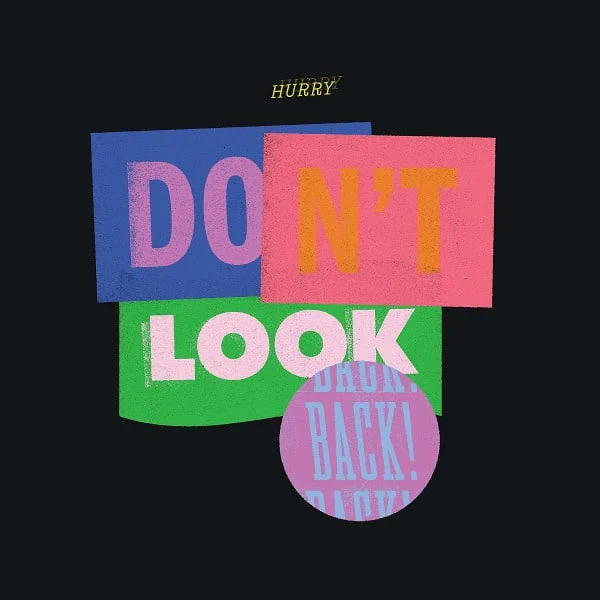
‘Don’t Look Back’ is the fifth studio album from Philadelphia-based indie poppers Hurry, which was formed as a splinter group from emo band Everyone Everywhere by its bassist Matt Scottoline in the mid-2010s. Hurry’s aesthetic of melodic, Nineties-influenced power pop is polished to perfection on these ten tracks.
August is the month of power-pop, and no band is doing it better than Hurry. Their upcoming LP “Don’t Look Back” is an immaculate stretch of rock ‘n’ roll, as it arrives like a collage of ripping Byrds melodies and late-‘90s chart-topping sensibilities. Singles “Beggin’ For You” and “Parallel Haunting” are all-timers we’ve had on repeat for weeks, and we can’t wait for everyone to see what vocalist Matt Scottoline and co. have brought to the table on the rest of the album. Delicious horns, glossy guitars and poised singing comes aplenty on “Don’t Look Back”, making it a standout project in a sea of many, many great rock records hitting our libraries this summer.
“Beggin’ For You” by Hurry from the album ‘Don’t Look Back’, out August 11th 2023 on Lame-O Records.
Oakland singer/songwriter and experimentalist SPELLLING is following up her 2021 masterpiece “The Turning Wheel” this August with “Spelling & The Mystery School“, a collection of tracks that surf between minimalism, glitchy percussive rhythm and hypnotic pianistic patterns.
Spellling, the moniker of the Bay Area experimental pop mastermind Chrystia Cabral, returns with “Spellling and the Mystery School,” a collection of richly envisioned new versions of songs from throughout her critically-acclaimed discography, via Sacred Bones. Recorded with her touring band (est. 2021), these reimagined studio tracks follow Cabral’s spellbinding career — from her 2017 breakthrough debut “Pantheon Of Me”, to 2018’s multidimensional synth-based project Mazy Fly, and her expansive third album, 2021’s “The Turning Wheel”, breathing new life into the extravagant orchestrations she’s written and produced entirely herself.
“With this album, I wanted to capture the ways that these songs have morphed; Cabral says of Spellling er the Mystery School. “They’re like my children all grown up in a different stage of their lives, and I wanted to celebrate that:’
Full of mysticism and drama and haunting, evocative exploration, The gravity of SPELLLING’s song writing is immense and, in turn, she makes left-field pop music that is both alien and ambitious. Cabral’s hypnotizing voice is enveloped in a newly fleshed-out sonic universe of dreamy strings (Del Sol Quartet and Divya Farias), haunting piano Jaren Feeley, driving trip-hop percussion Patrick Shelley and bass Giulio Xavier Cetto, shredding electric guitar Wyatt Overson, and drama-intensifying background vocals Toya Wil-lock and Dharma Moon-Hunter. Overall, the album encapsulates the transportative Spellling live experience through which Cabral, with her idiosyncratic stage presence, conjures up a spiritual sense of communion and vulnerability among her audience. “I want people to feel like there’s alchemy happening and to be aware of the magical parts of sound,” she explains. “Like, this really did come out of thin air:’
“SPELLING & The Mystery School” is on our radar because, after teaser singles “Cherry” and “Under the Sun,” it’s shaping up to be one of the best things she’s made—which says a great deal, given that “The Turning Wheel” was one of the very best records of 2021.
Cabral plans to bring her otherworldly live set through a special performance with Atlas Obscura this summer, held at Children’s Fairyland, a historical children’s amusement park in Oakland that her own mother used to frequent as a child. There, she will unravel her mythical songs that inter-rogate ideas of self-concept and political history, aided by the backdrop that will no doubt bring out her music’s other dimensions of playfulness, innocence, curiosity, and joy.
“SPELLLING & The Mystery School” out August 25th on Sacred Bones Records
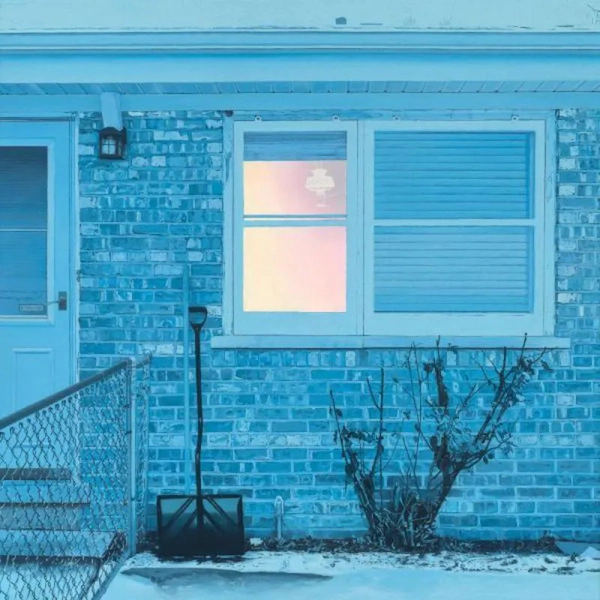
Chicago rockers, Ratboys, have announced their sixth studio album, “The Window”, and the band have shared a music video of its new single, “It’s Alive!” The Windowis due out August 25th via TopshelfRecords. The music video was directed by John TerEick.
This album from quartet Ratboys is by far their best to date. “The Window” is not just an ambitious, poised masterwork; it’s the product of a decade-old band being so far in their own bag that they can’t do anything but sock certified dingers. Early singles like the title track, “It’s Alive!” and “Black Earth, Wi” are some of the best rock tracks of the year already, but album cuts like “Morning Zoo” and “I Want You (Fall 2010)” are so gorgeous and layered that you’d think a 10-piece band made them. Orchestral in attitude and precise in execution, “The Window” is a record that demands your attention and excitement. It’s vocalist Julia Steiner’s strongest outing to date, and the rest of the band—Dave Sagan, Marcus Nuccio and Sean Neumann—have never felt more in-sync with each other.
“We didn’t get bogged down in technical terms, and he never placed pressure on us in that way. With Chris steering the ship, we were free to go off on little creative expeditions and come up with parts and ideas we’d never imagined,” Nuccio says in a press release.
The spontaneity of the instrumentals are matched with the songwriting and lyricism of the band. “The album is sonically diverse, shifting wildly from track to track and flexing everything from fuzzy power pop choruses to warm country twang to mournful folk,” according to the press release.
Ratboys—composed of members Julia Steiner (guitar, vocals), Dave Sagan (guitar), Marcus Nuccio (drums), and Sean Neumann (bass)—ventured to Seattle to work with producer Chris Walla (Death Cab for Cutie, Tegan and Sara, Foxing) when making “The Window”.The album was almost fully crafted before heading into the studio, but Walla pushed the band to expand their vision, adding unexpected instruments such as rototoms, talkboxes, and fiddles.
“The Window’s” opening track, “It’s Alive” is an ode to “the overarching feeling of the world spinning on beneath you while you’re stuck in one place,” according to Steiner.
The album includes “Black Earth, WI,” a new song the band shared in March




 The Fat Angel Sings