Acclaimed NY-based singer-songwriter Jordan Lee aka Mutual Benefit announces ‘Growing At The Edges’ out October 6th on Transgressive Records, his first record since 2019 with ‘Little Ways’ single on Thursday 13th of July 2023.
“Growing at the Edges” is sonically expansive, artfully blending genres from country to classical with the help of multifaceted co-producer Gabriel Birnbaum (Wilder Maker) and critically acclaimed string arranger Concetta Abbate. The band, alongside Lee and Birnbaum, was made up of Wilder Maker members Sean Mullins (Andy Shauf) and Nick Jost (Baroness) and features help from Jonnie Baker of Florist and Eva Goodman of Nighttime among others.
“I approached “Growing at the Edges” as an act of world-building. It was a place we visited often over the past 5 years collaging and sonically redecorating until it reflected the joy and the pain of being human in a universe that will always be changing. I wanted to make music that could simultaneously mourn versions of the past but still find hope in the seedlings which could, perhaps, bloom into better futures”
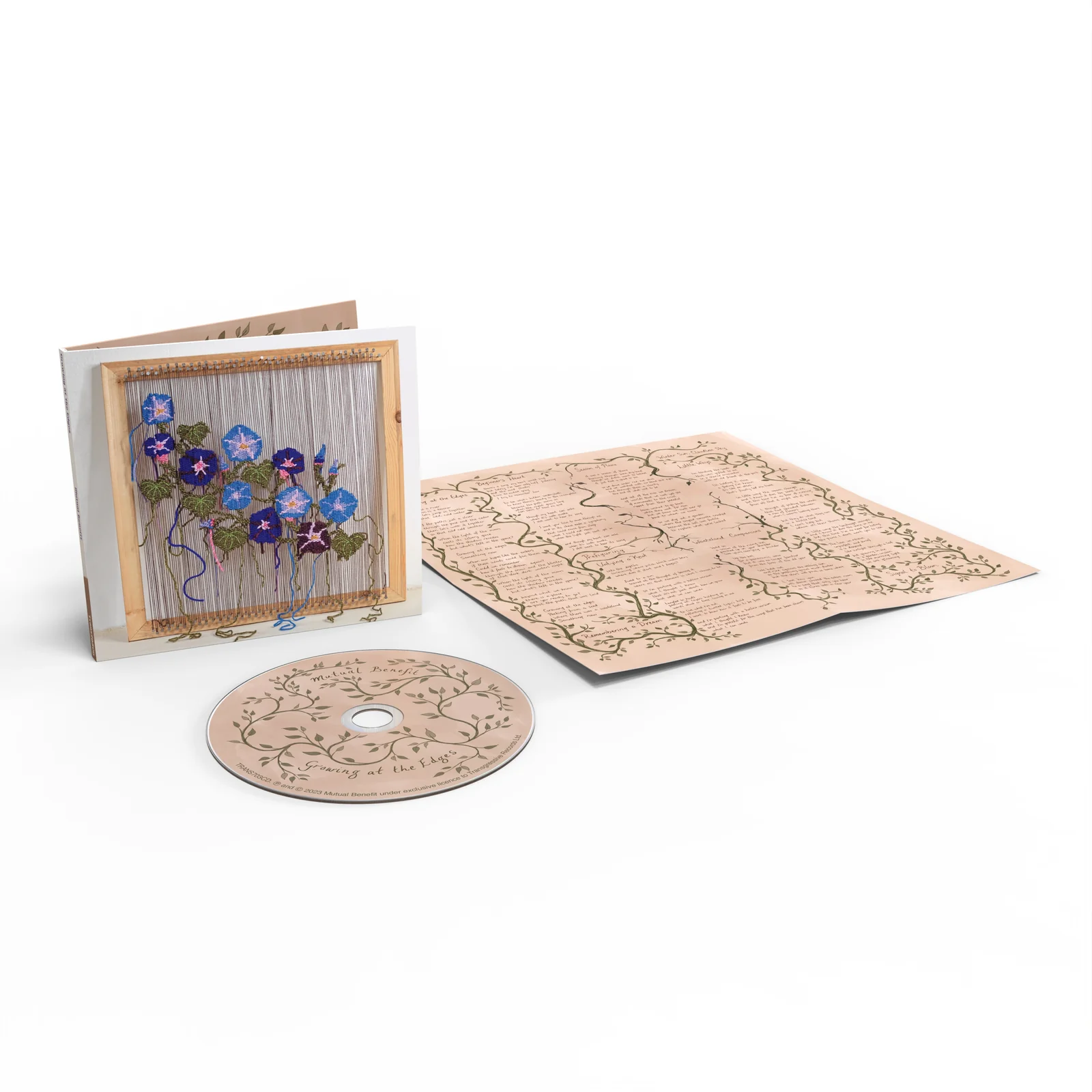
The album cover is a purposefully “unfinished” weaving by fiber artist Natalie Phillips.
“I had this theme for “Growing at the Edges” where I was thinking about the first little life forms that pop up after something natural like winter or less natural like a disaster and kind of channeling their spirit for the art and music. That got me imagining one of Natalie’s beautiful weavings but in-process with stray yarn and loom still visible. Incomplete yet still beautiful. I couldn’t be happier with how it turned out.”
“No Fixed Point In Space”, the third full-length album by Jack Cooper’s Modern Nature, takes the palette of sound and themes that were honed on 2021’s “Island Of Noise” and launches them into an expansive world of openness and vivid technicolour. It’s a music that hasn’t been heard before; as melodic as anything Cooper has produced but framed by rhythms and instrumentation that reflect the chaos, unpredictability and colour of the natural world.
“With this record,” Cooper explains, “I wanted the music to reflect nature: beginnings and endings, arrivals and departures, process and chance. I wanted the music and the words to feel like roots, branches, mycelium, the intricacies of a dawn chorus, neurons firing, the unknown.”
“The way you see or hear music in your head is abstract and magic… far more beautiful than what eventually appears on tape. When you sit down with an instrument and begin translating an idea, it quickly conforms. I’ve tried to develop this music without thinking in terms of set rhythms, time signatures, folk or pop structures, syntax; the devices you associate with the music world which I come from. I wanted to make music that was abstract, free and honest, whilst still being predominantly tonal and recognisably song based. New music! It feels like time to make something that no one has heard before.”
Certain moorings – woodwind, percussion, strings and Cooper’s lambent voice – are still present and recognisable from “No Fixed Point In Space’s” predecessor, “Island Of Noise” but the new record marks a shift to utilising musical notation as a point of departure, from which the group explore the space around suggested notes and rhythms to create a semi-improvised, semi-composed ensemble performance. These explorations of partly organised chance were recorded live and directly to tape.
“Part of it is a reaction to what I hear out in the world,” continues Cooper. “Modern Nature’s music has certain threads that run through it. Music is increasingly sterile and informed by the grids and convenience of digital recording. Music needs the swing of humans for it to resonate on any level below the surface.
“I think the most important aspect of that idea is collectivism; the rhythm, melody, timbre, dynamics, all the aspects of music are not the responsibility of one instrument, they are the responsibilities of all the instruments. The vocals are no more important than the bass. That makes the music move in an organically unpredictable way. Like a flock of birds or school of fish, notes breaking the surface and then disappearing. A football crowd singing a melody swells and pulses with a microtonal monophony. That’s how I want this music to feel.”
This approach gives the music a remarkably fresh feel; songs pulse and evolve. The changes between movements, verse and choruses are almost all ambiguous. During the album’s opener “Tonic”, a verse of hushed brevity washes away into a passage of overwhelmingly vibrant orchestration.
Cooper devised musical notation for the players to follow in every song. Within this set of loose parameters or signifiers, they were able to explore the pieces on their own terms.
“Most of the arrangement and orchestration is notated, but the musicians are all imaginative interpreters’” he says – and for the record, they include: Anton Lukoszevieze, Mira Benjamin and Heather Roche of Apartment House, Alex Ward (This Is Not This Heat/Spiritualized), Dominic Lash, Chris Abrahams of The Necks, Julie Tippetts (FKA Julie Driscoll) as well as long-term collaborators Jeff Tobias (Sunwatchers) and Jim Wallis.
There is a perceptible but graceful tension audible in the record. This approach is remarkably effective on “Orange”, where voices merge together in the refrain ‘turning again we go round and recover’, a phrase that provides the piece with a sense of momentum, even as the instrumentation resists being confined to an equally circular repetition and pulls in contraflow against the vocal lines. The melodies and words move in a similar way to the music, partly improvised, dissonant poetry.
The swing of one particular human present on “No Fixed Point In Space” is especially noteworthy. The legendary Julie Tippetts (Driscoll) adds her distinctive voice to the record, on what is her first appearance on a recording for several years. Tippetts’ ability to evoke a landscape, whether physical or interior, has always been a feature of her vocal performances. Throughout this record her voice does the same to great, purposeful effect, not least on the closing track “Ensō“, where she takes the lead.
“Ultimately,” concludes Cooper. “This is music I’ve always wanted to hear. I read a quote of Einstein’s via Merce Cunningham that said there are “no fixed points in space” and that felt right. It felt like what I was trying to achieve here.”
All songs were written by Jack Cooper
“Murmuration” is taken from the forthcoming new album by Modern Nature
It’s been four years since Cherry Glazerr released their resplendent third album “Stuffed and Ready”, but Clementine Creevy has been in no rush. “I’ve spent these years taking a hard look at myself, at my relationships, and writing about it,” she says. “I guess I’m coming to terms with a lot of my bullshit.” Cherry Glazerr has been on the road more often than not since Creevy was still in high school, and when the pandemic hit, she immersed herself in a static existence she’d been deprived of. “When you’re always leaving, you don’t have a great sense of where your relationships stand, romantic or otherwise. You’re not thinking about the work that goes into maintaining them,” she says.
Creevy describes Cherry Glazerr’s ambitious new album, “I Don’t Want You Anymore”, as some of her most personal, raw music to date, a collection of songs that elaborate on this period of self-reckoning. It’s the first she’s produced since Cherry Glazerr’s garage rock debut, “Haxel Princess”, released nearly a decade ago when Creevy was a teenager. That album made Cherry Glazerr a Los Angeles mainstay act, and its follow up, 2017’s “Apocalipstick”, put the band on the national map. Cherry Glazerr’s rough and tumble sound coupled with Creevy’s witty, sarcastic, occasionally self-deprecating lyricism made the band a joy to watch live, their energy unmatched by the coolly detached bent of indie rock at the time.
Creevy describes “I Don’t Want You Anymore” as a “mature” album, more so in reference to her personal growth than a reflection of the record, which in true Cherry Glazerr fashion is best described as Extremely Fun. To make it, Creevy linked up with producer Yves Rothman, who’s best known for his work with Yves Tumor. “I knew I had to work with him,” she says. The collaboration began with a cover of Metallica’s “My Friend of Misery” and grew into this new record, which Creevy considers to be Cherry Glazerr, fully-actualized. “The songs on this one are songs I’ve dreamed of making,” she says.
Lead single “Soft Like a Flower” exemplifies that growth. A murky guitar riff inaugurates the track, before Creevy’s unguarded vocals enter the mix. She sings of a consuming obsession and is joined on the chorus by longtime bandmate Sami Perez. “I’m high on your something,” they wail. “I like you killing me/ I like you killing me/ I like you killing me.” It’s proudly emotive, what Creevy calls an “Evanescence moment.” “It’s a real ‘losing your fucking shit’ kind’ve vibe,” she says. “I wanted this album to be just heart and soul. Completely exposed.”
“I Don’t Want You Anymore” uses the element of surprise to its advantage; each track is a radical reimagination of what Cherry Glazerr is and can be. “Bad Habit” opens with a spiraling vocal loop that Creevy began recording at home and it expands into a delirious downtempo dance track without ever invoking a guitar. “I can’t wait to play that one live. Whenever I’m free of a guitar and I can just sing… I love having those moments on tour,” she says. The subsequent track, “Ready for You” is sung in funky staccato and the initially spare bassline on the opening verse is eventually overtaken by a massive, staticky guitar riff that reminds you this is, at its heart, a rock album. “At the start of the pandemic, I was writing a lot in the box, what I call ‘computer music’ since I’m technologically challenged,” Creevy says. “It was fun to experiment, but after a while, I just really missed rock. I love rock music – I love how it’s cathartic and brash and sometimes a little dumb.”
Though Cherry Glazerr’s latest offers some insight into Creevy’s private moments, it’s also a humorous album, one she hopes people don’t take too seriously. “This was a really therapeutic record to make, but it’s also self-aware, and I hope, funny,” she says. On “Touched You With My Chaos,” the album’s outright loudest song that begs for a scream-along, Creevy becomes a wildly dramatic narrator, one who slashes the tires of her own car, accompanied by strings and the unexpected squawk of a trumpet. She wrote it after watching Gregg Araki’s Mysterious Skin, and wanted to mimic the sense of desperation the film inspires. “I said that I loved you!” she howls over and over again on the chorus.
Movies have always played a role in Creevy’s songwriting, and many of the songs on “I Don’t Want You Anymore” can be described visually. When she wrote “Sugar,” Creevy pictured playing it in a dark, seedy club, her deadpan vocal delivery mirroring the grim atmosphere. “That song tickles the part of my brain that loves driving really late at night,” she says. These are songs to soundtrack the listener’s life, a score to suit any occasion. The titular track makes a promise to an unnamed other, but the repeating lyrics on the bridge could just as easily serve as a love letter to listeners: “In the end, you’re always holding me.”
“Crying, Laughing, Waving, Smiling” is the latest addition to the Slaughter Beach, Dog cannon, following four full-length releases and a handful of singles, EPs and live albums. Since his days as one of the frontmen of the much loved and critically adored band Modern Baseball, Ewald has been a prolific songwriter and road dog, with an ever-expanding fanbase across the globe.
At the beginning of the pandemic, Ewald moved from Philadelphia, his home of a decade, to a house in the Poconos. With less distractions and a calmer mind, he filled his time taking long walks and listening to the likes of Neil Young, Randy Newman and Tom Waits. These classic songwriters inspired Ewald to take a quintessential approach to writing “Crying, Laughing, Waving, Smiling” and in July 2022, he gathered his bandmates at The Metal Shop, their longtime studio in Philadelphia. Ewald showed them songs he had written over the past two years on an acoustic guitar and the band played what they were hearing for each – emphasizing the instinctual, listening to each other, and above all adding parts to serve the song.
Craig Finn, of The Hold Steady, and also an acclaimed songwriter in his own right, says that on the record, “There’s beautiful space in everything. It’s patient and aware. I’ve always admired Jake’s eye for detail and it’s on full display here. It’s an album filled with gorgeous imagery and vivid worlds are built within each song. I see it all. Most impressively to me, he consistently finds the divine and sacred in the everyday,
It’s my opinion that every record is about growing up- we all have to get a little older before we make the next one. “Crying, Laughing, Waving, Smiling” examines a particular weightlessness that is part of spreading wings, putting down roots, trying to grab ahold of something. This is how it feels when you’re making the moves that you make while becoming the person that you’re going to be.”
“Strange Weather” is out releases September 22nd on Lame-O Records.
New album ‘At The Moonbase’ available now on Lame-O Records.
Four years after they went all the way to “Antarctica”, Flat Worms are back in gen pop with the rest of us— but, as intoned on the album opener “Sigalert,” “back again like I never was.” Is this a nod to the way time passes over our sorely vexed synapses? Or are we to believe that there’s hope to be found in this broken world? Kick back with “Witness Marks” and see what other traces Flat Worms have left us in the dust.
The album title alone leaves a foreboding impression. But look closer—“witness marks” aren’t something out of a forensic analysis—they’re actually practical; scratches placed in old clocks designed to aid continued maintenance further in time.
Hitting flat and hard with their bass-drums-guitar and vocals alignment, Flat Worms use a buzzing combo of blunt force and surreal lyrics to hammer the absurdity of the status quo, as it deserves. Our social experiment continues to implode before our eyes; “Witness Marks” offers both critique and compassion, with songs that corkscrew through shades of exhilarating, dizzying and ambiguous spaces in between times of crisis and complacency.
Working once again with Ty Segall, Flat Worms continue to find new answers by digging into themselves and playing their kind of rock: hard and flat, bass and drums thrusting stalwartly forward with conviction, guitar twisting and spinning in outrage, deadpan vocals decrying a dire set of circumstances.
The democracy of working together, so often messy and frustrating, was found to be a powerful release for Justin, Tim and Will. Acting as one, Flat Worms navigated challenging times by coming together, finding release in the clockwork repetitions of practice and the shared creative space they occupied together against the encroaching world.
Recorded at Harmonizer Studios in Topanga Canyon Mixed by Ty Segall and Flat Worms
from the LP/CS/CD “Witness Marks,” out September 22nd, 2023 on God? Records.
Woods are in bloom again, inviting you to disappear into a new spectrum of colours and sounds and dreams on new album “Perennial”.
Formed in Brooklyn in 2004, Woods have matured into a true independent institution, above and below the root, reliably emerging every few years with new music that grows towards the latest sky. Operating the Woodsist label since 2006 and curating the beloved homespun Woodsist Festival for the musical universe they’ve built, “Perennial”is the sound of a band on the edge of their 20th anniversary and still finding bold new ways to sound like (and challenge) themselves.
“Perennial” grew from a bed of guitar/keyboard/drum loops by Woods head-in-chief Jeremy Earl, a form of winter night meditation that evolved into an unexplored mode of collaborative songwriting. With Earl’s starting points, he and bandmates Jarvis Taveniere and John Andrews convened, first at Earl’s house in New York, then at Panoramic House studio in Stinson Beach, California, site of sessions for 2020’s “Strange To Explain“. With a view of the sparkling Pacific and tape rolling, they began to build, jamming over the loops, switching instruments, and developing a few dozen building blocks.
The album’s resulting 11 songs, 4 of them instrumental, are in the classic Woods mode–shimmering, familiar, fractionally unsettling–but with the half-invisible infinity boxes of Earl’s loops burbling beneath each like a mysterious underground source. From source to seed to bloom, each loop unfolds into something unpredictable, from the jeweled pop of the aching “Little Black Flowers” to the ecstatic starlit freak-beat of “Another Side.” They are blossomings both far-out and comforting, like the Mellotronic cloud-hopping of “Between the Past,” or sometimes just plain comforting, like the widescreen snowglobe fantasia of the instrumental “White Winter Melody,” touched by Connor Gallaher’s pedal steel.
Woods have long used the studio as a place of song writing, naming 2007’s “At Rear House”after their shared dwelling and recording space. But “Perennial” also carries with it an even longer view of Woods. Emerging from the process alongside the music was Earl’s reflection that “perennial plants and flowers are nature’s loops,” an idea rolling under the album’s lyrics like the loops themselves. It certainly applies to the band, too, who have quietly tended to a long, committed project of being a band in the weird-ass 21st century, both individually and communally. Though separated by coasts, the communal sprit carries through Earl, Taveniere, and Andrews’ collaboration, a living embodiment of the freedoms rediscovered every time a new collectively created piece of music emerges.
For nearly two decades, Woods have survived subgenres, anchored in the fertile soil below hashtags like lo-fi and freak-folk and psychedelic and indie, and built a shared history that’s something to marvel at. As the flagship band for Woodsist, they’ve accumulated a striking extended family of collaborators (and Woods alum) that have made the label one of the most dependable imprints in the kaleidoscopic low-key underground. It’s a glow that’s transferred whole to the blissed-out Woodsist Fests held in Accord, New York in recent years, which have folded in a wide range of diverse sounds, from the the jazz cosmoverse of the Sun Ra Arkestra and adventurous legends Yo La Tengo, to a hard-to-even-count family tree of contemporaries, like Kevin Morby (who served a few tours of duty as Woods bassist) and Kurt Vile (who released his 2009 debut on Woodsist), a living community in sound.
“Perennial” carries all of this, shaped by decades, but made in the moment, and here right now.
the album “Perennial” out September 15th, 2023 on Woodsist.
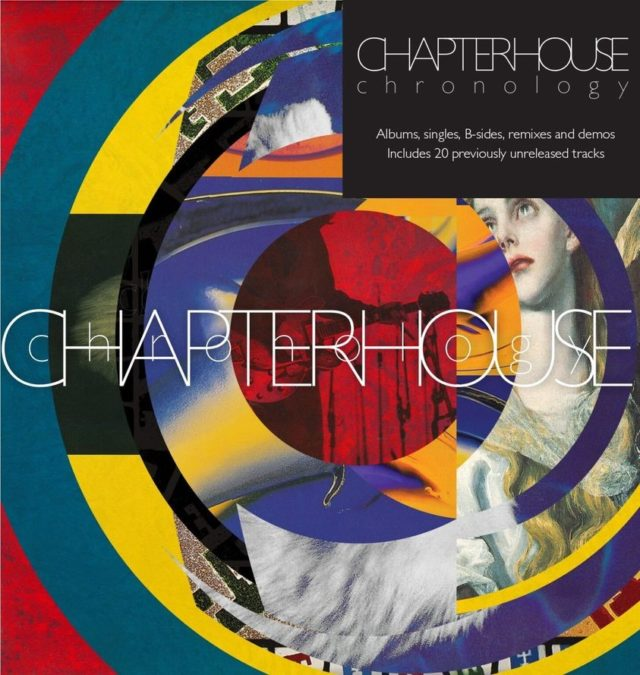
Get ready for the next special release of Chapterhouse, one that could embezzle you out of your pockets for a while but that will surely be worth it, because we are talking about a box with all your long albums, EPs, singles, remixes, B-sides and six CDs.
The title of the boxset is “Chapterhouse: Chronology” and if everything goes according to plan, it will be next May 26th when it goes on sale with the Sonic Cathedral label. In addition, for their fans shoegazers more nailed, we have more good news, translated into 20 surprises of recordings never before shared, notes of notes, unpublished images and new interviews with the members of the group.
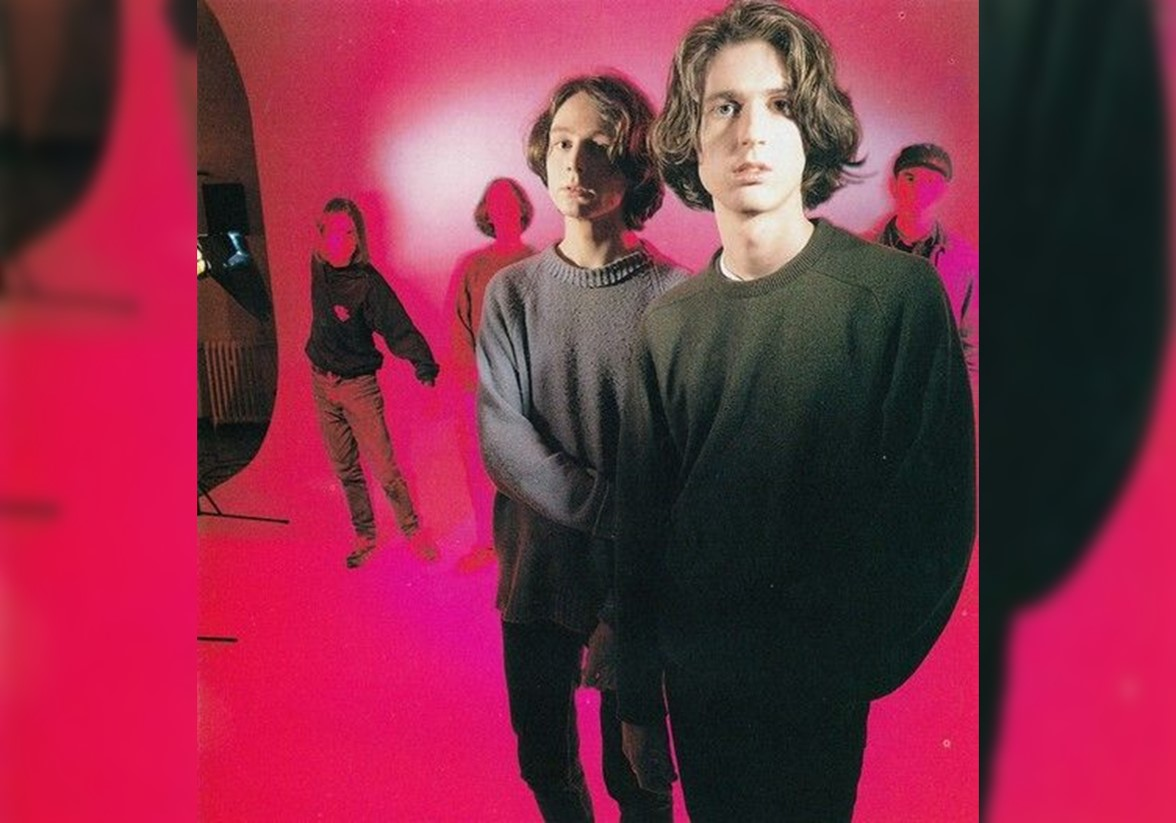
The band formed in 1987, a young band from Reading were in the process of taking their first tentative steps onto the music scene. One where a sea of distorted guitars, wah-wah pedals and subsequently amp stacks, created this sea of sound that would be termed shoegazing. This band rehearsed for well over a year, before finally committing these sounds to a demo tape so that it would find its way to the newly formed Dedicated record label. Dedicated was to release the band’s first EP, “Freefall”, which was soon to be followed by the “Sunburst” EP. Released in 1990, “Freefall’s” cover was to feature Andrew Sherriff, Gibson 335 guitar in hand, his long hair something that came to identify early shoe gazers, crowning this frontman.
The band were Chapterhouse and would record two studio albums, “Whirlpool” in 1991 and “BloodMusic” two years later. Listening to the band again, it’s like slipping on that favourite pair of denims, and discovering they still fit as comfortably as they did in 1991 . Following their split in 1994, in 1996 label Dedicated released “Roundabout”, a double album compilation, which featured 38 tracks highlighting the band’s career. Sony was to release a 15-track best-of compilation in 2007. But in May 2023 Cherry Red provides this band with the compilation they deserve, giving fans a 79-track, 6-CD collection, which has been curated by the band themselves and includes 20 previously unreleased recordings, including written interviews with the band, along with memorabilia and imagery from the group’s own archive.
For Chapterhouse fans, this is The Holy Grail, but we should note this is not just for fans of the band that this release may find listeners.
As previously mentioned the band’s two released albums find a place here, along with B-sides, remixes and demos, 20 of these being previously unreleased. Otherwise, these could be numbers of a later Chapterhouse, rather than their raucous beginnings, although the much-lauded track ‘Die Die Die’, where nearly 12 minutes of hard noise were played with a simple, if not grinding riff, is also included on disc 5. The same goes for the once-withdrawn (for copyright reasons) “Blood Music: Pentamerous Metamorphosis”, which has now been remastered to clear these issues. Having bought “Bloodmusic” in 1993, where the original “Pentamerous Metamorphosis” was included, this original recording is a prize in my record collection, albeit now slightly shorter than the remastered version. If you were about in the early to mid-90s or perhaps wished you were, this very reasonably priced collection of tunes is a must. These recordings document a band’s history during these burgeoning times in indie music, and I would hope that once a shoegazer, then always a shoegazer.
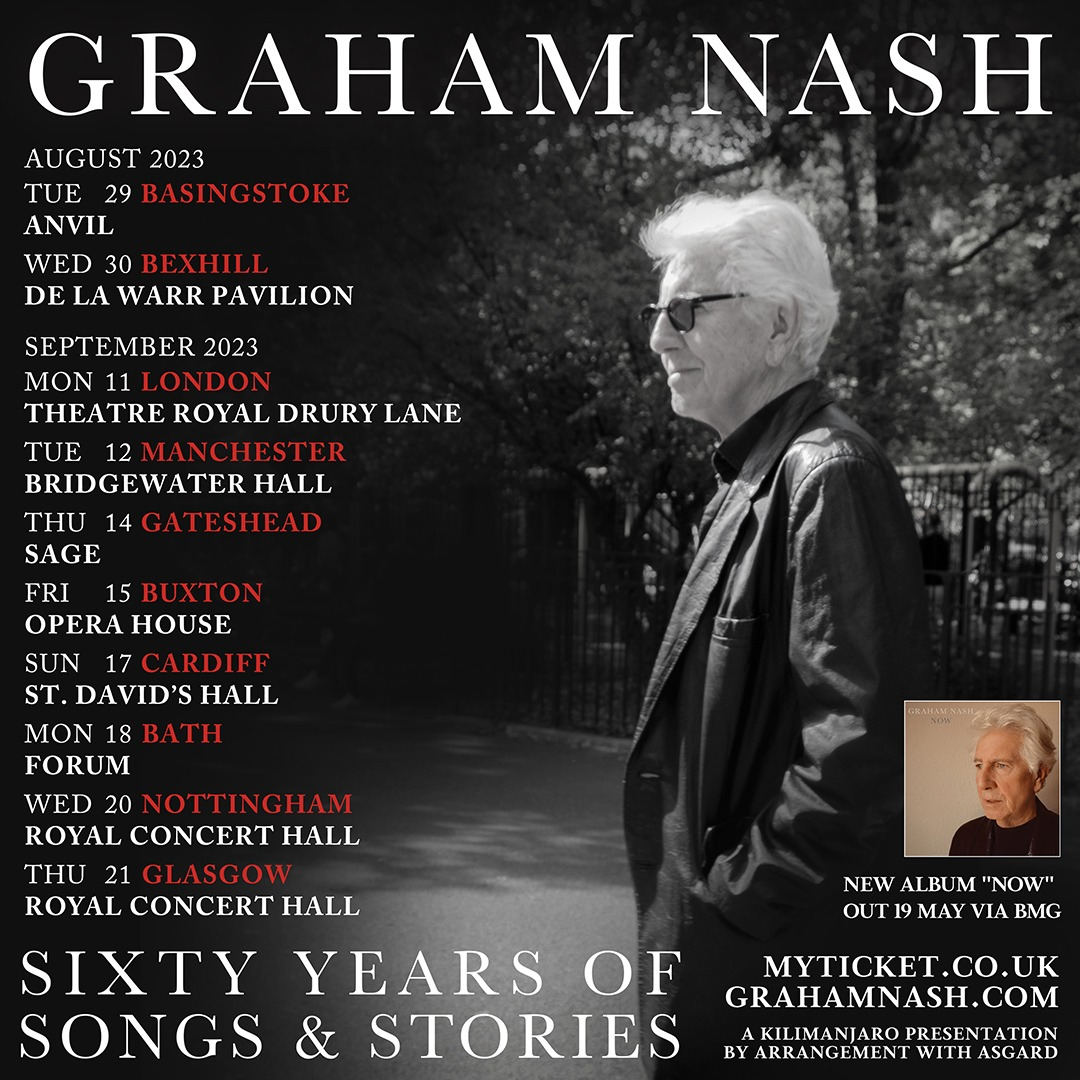
Graham Nash said he often wonders what he did right to achieve his level of success, while others didn’t make it. At 81 he’s set to release a new album, “Now”, which explores a series of reflections about his life, his regrets, his doubts about the present and his optimism for the future.
Asked in a interview if he thought about how he achieved so much success, Nash laughed, “Yeah, because there are so many people that are much better musicians than I am that are nowhere. And I particularly feel it when I go back to Manchester in England. I still see my old friends in there still digging graves, and they still hate their boss and they still hate work. And I go, ‘Why me? Why was it me that left and got rewarded by all this success?’”
He admitted he never came up with an answer, although he kept asking himself. However, he reflected that what he learned over the years was that “life is short.” He argued that “your time goes insanely fast, and we must make the correct choices for our lives. Do I go left? Do I talk to him? Do I do this? That’s all life is: choices that you make. And you have to make the correct choices to get to be 81 and still rocking.”
Remaining hopeful was important, Nash added. “I am, because what else can you do?” he said. “You’ve got to hope it’s going to be better. You’ve got to. You’ve got to reflect the times in which you live. You’ve got to talk about what’s going on politically and environmentally.” He said that’s why he faced some personal demons on “Now”, including the death of former bandmate David Crosby. “I have to be courageous. I have to open up my heart. I have to be courageous enough to put my heart on my sleeve and hope people don’t knock it up with a billy club. … Sometimes you can just hope for the very, very best of what life throws at you. You better deal with it or else you are hopelessly out of tune.”
Graham Nash has released a video for the song “A Better Life.”
The track comes from his latest album “Now”, his first studio release in seven years. He previously revealed the album’s opening track, “Right Now.”
Speaking when the LP was announced, Nash said, “I believe that my new album “Now” is the most personal one I have ever made. At this point in my life, that’s something to say.” “it is the duty of all artists to reflect the times in which they live, which is why there is MAGA stuff on “Now“, and songs such as ‘Stars and Stripes’ that discuss what Trump has done to the truth.”
He recalled that when he “first came to America, I’d already learned to write melodies that you could sing back to me if I played it a couple of times. … [Soon] I knew I had to make an effort to write better lyrics for the melodies I was creating. Thank God that I do live in America – a very beautiful country with many faults, and so much more going for it. I know that here that I have the right to speak my mind, even if people don’t agree with me.”
Legendary artist Graham Nash, as a founding member of both the Hollies and Crosby, Stills and Nash, is a two-time Rock and Roll Hall of Fame inductee. He has seen rock history unfold at some of its seminal moments – from the launch of the British Invasion to the birth of the Laurel Canyon movement a year later. An extraordinary Grammy Award winning renaissance artist – and self-described “simple man” – Nash was inducted twice into the Songwriters Hall of Fame, for his work with CSN and his work as a solo artist. His latest effort, “Now”, was just released worldwide on May 19th.
Towering above virtually everything that Graham Nash has accomplished in his long and multi-faceted career, stands the litany of songs that he has written and introduced to the soundtrack of our lives for nearly six decades.
Graham Nash will be joined on stage by his long time musical partners, Shane Fontayne (guitar and vocals) and Todd Caldwell (keyboards and vocals), performing favourites from across his sixty-year career.
Dusty 4 Track A side project that has quickly become their favourite way to waste time. Will Jeffery and Ben James, Dusty 4 Track hail from Nottingham. In 2022 a side project was born from Will Jeffery and Ben James and has quickly turned into their favourite way to waste time. Their last hurrah as it might be. In a world where likes and follows mean more than the music itself wouldn’t it be great if these musical misfits could make it work. Recent additions of Tom Dempsey on drums and Russ Clark on Bass have made them a force to be reckoned with.
Signing up to local independent label “I’m not from London” will surely help get their foot in many doors.
The stories of Tom Waits’ unusual studio antics are legendary, but I don’t think I’ve heard this one before. “I was impressed by the amount of weirdo instruments he had hanging around. It’s an amazing collection. I thought, ‘Hello!’ He had a Mellotron, like an early version of the synthesiser, which was loaded entirely with train noises.”
This revelation, incidentally, is shared with us by none other than Keith Richards, who tells Uncut about his long, predictably colourful friendship with Waits as part of our cover story – from one old devil to another. Besides Richards’ warm and insightful recollections, there’s a deep dive into “Swordfishtrombones“, “Rain Dogs” and “Franks Wild Years” an extraordinary trio of albums that recast Waits as a master of creative daring. “I asked Tom if there was anything he was looking for,” one collaborator tells Graeme Thomson. “He put his hands up to his mouth and stretched them out in front of himself, and said, ‘I need more…’ and made a long whooshing sound.”
There are, I hope, a lot of other creatively daring artists to be found in this issue of Uncut – but I’d quickly like to draw your attention to Tom Pinnock’s Album By Album interview with the great saxophonist Charles Lloyd. It’s no bad thing when an interviewee starts off quoting advice he was given by Duke Ellington… Among other jewels, there’s Peter Watts’ piece on David Bowie’s final Ziggy gig – an oral history from the fans’ perspective that reads more like social history than a music magazine feature.




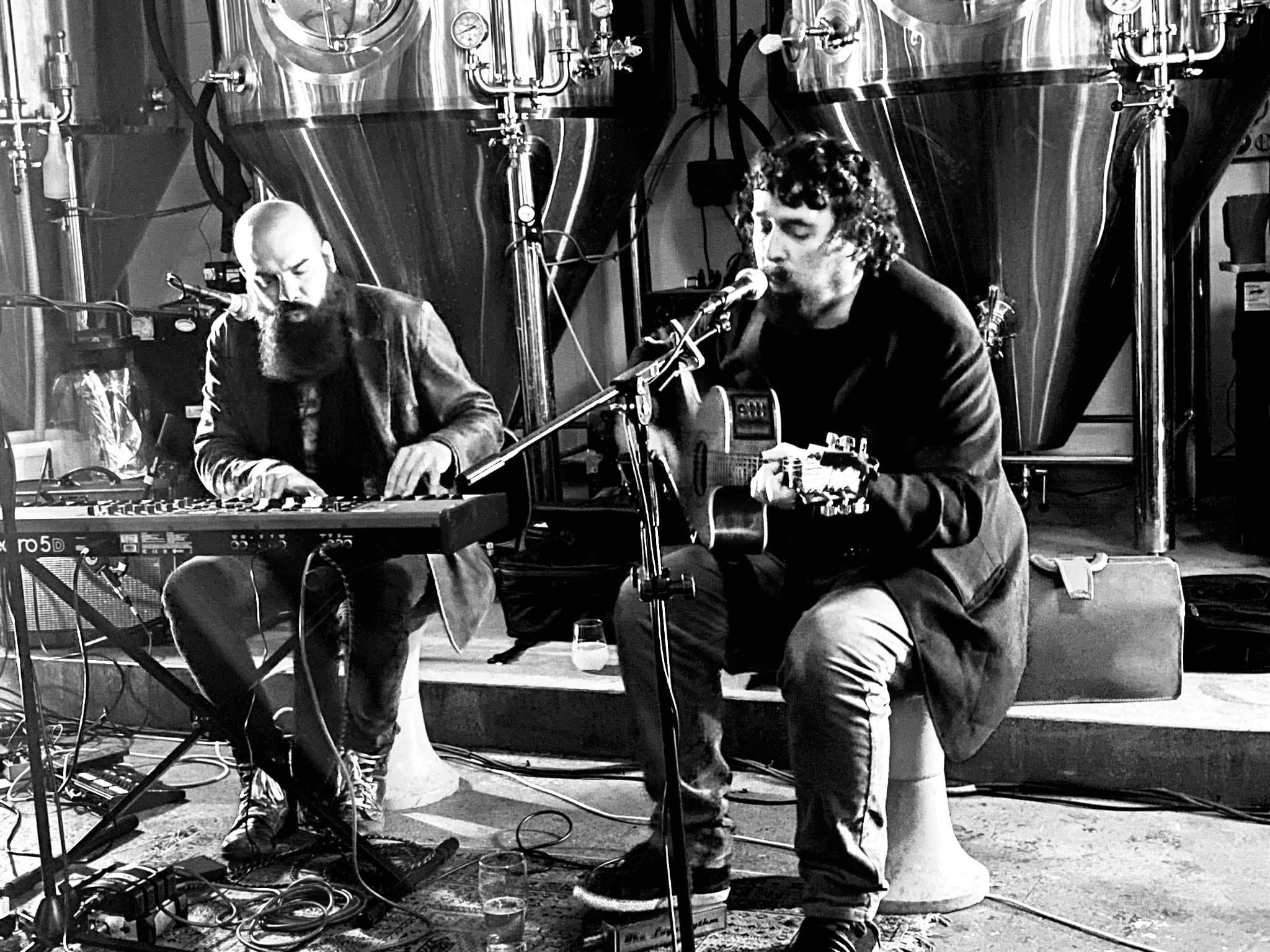

 The Fat Angel Sings