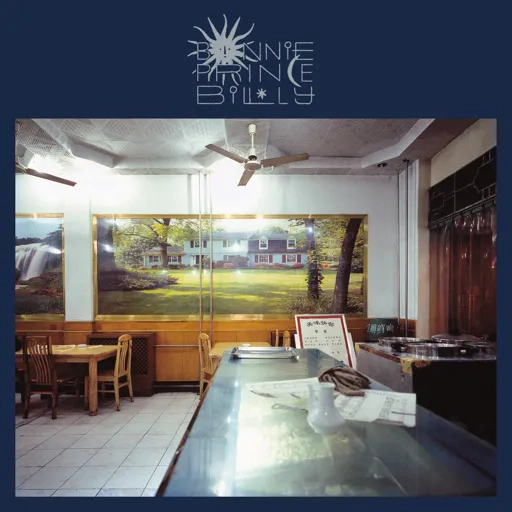
The secret is out Bonnie ‘Prince’ Billy’s new album is bold enough to roll in the fearsome waves of Makapu’u! Through moments of joy and terror, KSWDY guides the listener with a strong sense of community and the triumph of intention, of which is the marrow and life blood of this music.
“Rise and Rule (She Was Born in Honolulu)” is a song of tribute and celebration, and about the way living takes and takes without compromise – then gives back in ultimately generous fashion. It captures the essence of maternal love and the indomitable spirit of mothers who exemplify courage and resilience in the face of adversity. Over a serene guitar line flowing forth from the silence (and back again), the ‘Prince Billy’ sings it with circumspect reserve and draws from a profound personal experience, letting the words sink in slowly and deeply.
“Rise and Rule (She Was Born in Honolulu)” is from “Keeping Secrets Will Destroy You,” available on LP/CS/CD/Digital from Drag City on August 11th, 2023.
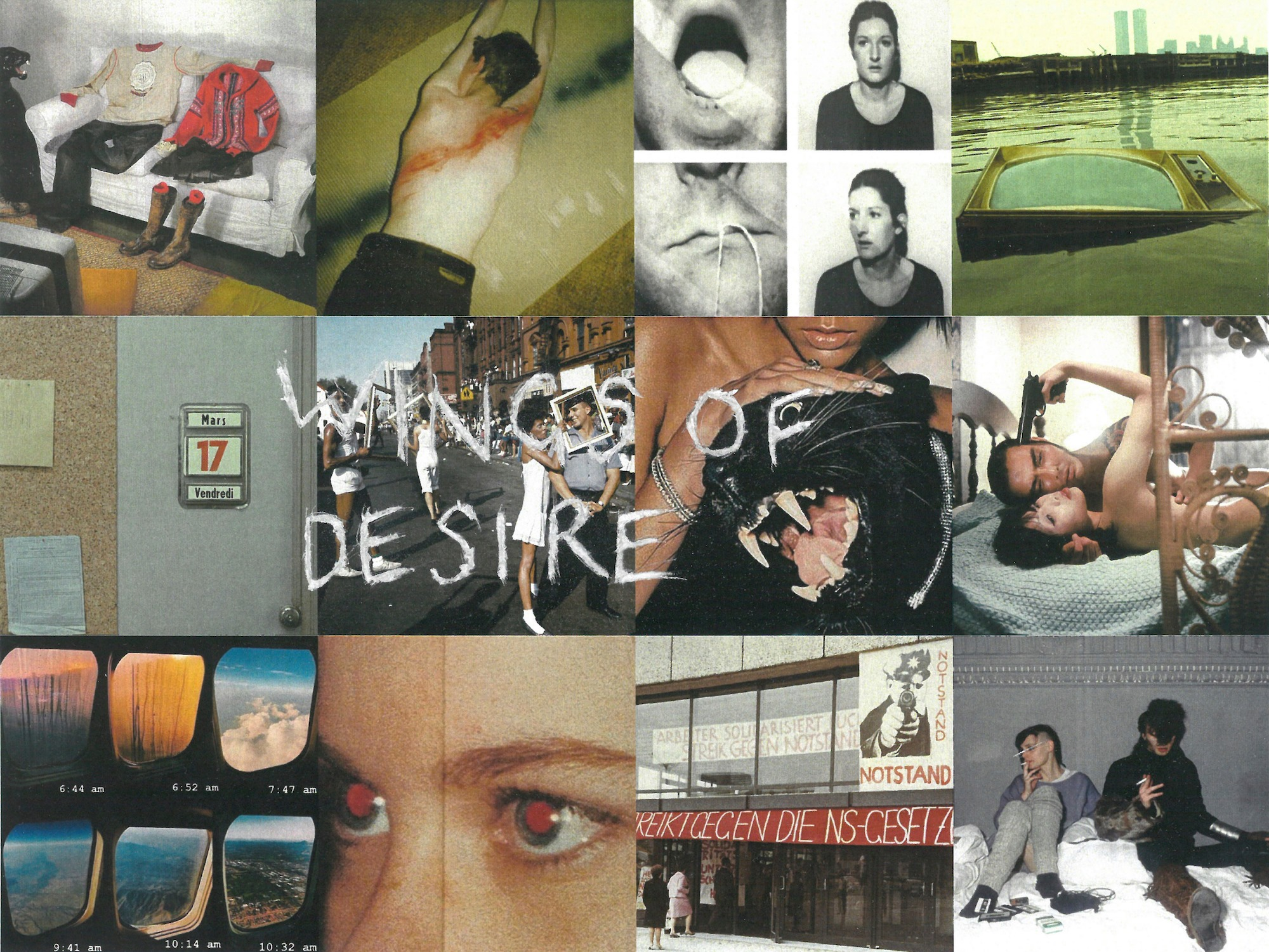
Frequent collaborator and director of “Rise and Rule”, Sai Selvarajan, spoke on the creation of the video: “It was an incredible honor to work on the music video to “Rise and Rule.” The song is very raw, honest, defiant and ultimately triumphant. Being that the song was about Will’s mother, I knew I had to honour her memory and her legacy and this beautiful song. Will asked me if I wanted to see these collages that his mother had made and if I thought we could incorporate them into the video. The emotions they triggered in me were so strong. I felt like I could build the music video with these collages and tell the story of the song with them. I tapped my long time collaborator Matthew Wohlrab to do the hand painted animations of Will. Since the collages were made by hand, I wanted every image in this video to be made by hand.”
“Keeping Secrets Will Destroy You” – an album made as it was meant to be heard, in a room. The sound of people together – a sound we’d so recently feared that we’d lost – playing, communing, strings and wood and keys and voices singing. “Keeping Secrets Will Destroy You” presents simply, and is sung along easily and happily with in time BUT – is it family portrait or fairy tale? How does it think the world was made, and will end?
“Keeping Secrets Will Destroy You” was recorded in Louisville by Nick Roeder, featuring Sara LouiseCallaway on violin, Kendall Carter on keys, Elisabeth Fuchsia on viola and violin, Dave Howard on Mandolin, Drew Miller on saxophone and Dane Waters’ voice. The presence of so many local players and music educators in the band lends not only to a flow of moments so fluidly encompassing of a wide range of musics from classical to Japanese acid folk and elsewhere, but perhaps even more importantly, to the sense of community, heredity and the triumph of inheritance that is the marrow and life blood of this music.
Any bands who share a name with a Wim Wenders masterpiece have got my vote—it doesn’t hurt when they drop a song as magnetic and irresistible as “A Gun In Every Home,” either. The track is one-half of a brand new double-single (along with “001 [Tame The War, Feed The Fire]”) from James Taylor and Chloe Little two UK musicians who parade around under the name Wings Of Desire. “A Gun In Every Home” is anthemic and beautiful and catchy; exactly what I imagine U2 would sound like in 2023 if they could just remember how to write a good record.
I have to tip my cap to Wings Of Desire here, as I was not familiar with their game prior to hearing this song—and boy, do I regret that. “Beautiful angel, I’ll pull you out the rubble in the city when it’s tumbling down,” Taylor sings. “You got your reasons and they’ll never love you. Baby, can’t you see how they build you up to pull you down.” With rushing, noisy guitars and Little’s angelic harmonies, “A Gun In Every Home” is bright and undeniable and definitive.
“A Gun in Every Home” explores the idea of reflecting on one’s shadow in order to break through to the other side. A dark night of the soul, although painful, is a necessary storm we have to go through in order to experience growth and expansion in this incarnation.”
“001” was a song written before this incarnation of the band. The last few lines giving us the final piece of the puzzle…our name: ‘Tame the war, feed the fire, can’t deny the wings of desire’.
Our desires often take over us and have wings of their own. We must eliminate/burn through our desires in order to reach higher states of consciousness. Our attachments can lead us down destructive paths.
Wings Of Desire, the duo made up of James Taylor and Chloe Little, have been around for a couple years now, and they’re collecting all of the songs they’ve released so far into an anthology collection called “Life Is Infinite“, out in December.
Brooklyn-by-way-of-Texas band Why Bonnie’s Audiotree Live performance crashes into existence with a squeal of feedback and a burst of distorted guitar. Performing songs off their debut LP, ’90 in November’, the band’s session is a dynamic introduction to a more raw-edged indie sound from a band who have matured from bedroom dream pop into a sophisticated rock act. Their evolving sound reflects the journey undertaken by songwriter Blair Howerton to create a vividly rendered collection of songs.
Check out Why Bonnie on Audiotree Live!
released September 22nd, 2023
Band MembersBlair Howerton – Vocals and Guitar, Kendal Powell – Keys, Sam Houdek – Guitar, ChanceWilliams – Bass, Josh Malett – Drums
Blurring the limits between speed and slowness, Meg Duffy (guitar) and Greg Uhlmann (guitar) communicate in velocities, underwriting each other’s peaks and flurries as they ache toward a mutual horizon. These one-take improvisations, recorded in Uhlmann’s brothers’ house on a borrowed tape recorder, unfold like a game of truth or dare. Their constant motif is an unceasing return, a steady heartbeat they mutually commit to, knowing when one wanders off, the other will either follow or call them home. Here, flushness overrides order, each note saunters by like initials etched into tree bark: a devotion both passing and eternal.
After playing in Perfume Genius and Hand Habits, Duffy and Uhlmann embarked on their first record together, “Doubles”. A testament to the wordlessness of their musical intimacy, Duffy and Uhlmann take up the guitar in order to make an imprint of the slowness and presence of their improvisational practice. They weave together a sonic meditation, embracing intuition and relying on trust.
Side A of “Doubles” consists of two guitars in conversation: looping feelings, braiding sound, blowing kisses, and finishing each other’s sentences. Less of an echo and more of nod, the songs unfold in radical, mutual witnessing. Refraining from any over dubs or edits on the final tracks, the immediacy of the compositions makes it feel like we are in the room with them.
Where Side A establishes a glistening intimacy, Side B takes on the tone of sonic scavenging, incorporating sounds from their past year of touring together. Taking the self as source material, the second half of the album dismantles the presence of Side A in order to incorporate the tactility of memory. Using samples from the road and from the world, these compositions are a scrap book of glued and chopped up sound.
When I listen, I feel the crunchiness and static of being-in-the-world as it is mediated by time. Without us knowing, our devices capture sounds we may have missed the first time around. And they land like a sucker punch, snapping us back to the present, tuning our attention to what surrounds us.
True presence in any given moment is one of the most difficult things to cultivate and sustain. When it is offered, I treasure it like a rare gift. Listening to Doubles, I sink into the generosity of Duffy and Uhlmann’s offerings. In songs like “Glacial Fanfare,” I whisper to myself: it hurts now and it’s gonna hurt more, but then it’s gonna stop hurting. In “Euphoric Recall,” I understand how even the worst storms can offer gentleness. In “Braid,” I know trust is about bodies in contact, feet hitting the ground day after day. I return to the urgent question posed in the title of the track: “Which One Is You?” The answer is a low steady bass marked by chaotic and bright fluctuations of sound. The sonic response leaves me knowing: Both. All.
The intimacy in these songs dances like shadows – providing relief even as they slip away. I want to put this music in my pocket and hold it in my palm like a worn down stone. Duffy and Uhlmann give us a sweet rawness that reverberates even once the song is over, hitting the body the very moment words fall away. – Rosie Stockton
Kim Deal, Kelley Deal, Josephine Wiggs and Jim Macpherson played their first show together on Friday 19th June, 1992, in a snooker hall behind Warrington Rugby Club in the north of England. Two days later, they supported Nirvana in Dublin and Belfast, and then played at Glastonbury. Back in the US, after playing 27 sold-out shows, they made their way to San Francisco to record “Last Splash”.
Released on August 30th 1993, reviewers described “Last Splash” as, “effervescent,” “blistering,” and “incoherent.” At its centre is the infectiously appealing, instantly recognisable ‘Cannonball’. Propelled in part by the video directed by Kim Gordon and Spike Jonze, the song was voted Single Of The Year by NME. “An alt-rock classic” (Pitchfork’s Top 100 Records of 1990s) upon release, the album quickly attained Platinum status in the UK and the US.
Throughout “Last Splash”, The Breeders demonstrate their versatility and panache, seamlessly transitioning from the dreamy, melancholic melodies of “Do You Love Me Now” through the grungy, frenetic energy of “SOS,” to the downright creepy weirdness of “Mad Lucas.” Kim’s song-writing—with its authentic rebelliousness, atmospheric instrumentation, and playfully ironic lyrics—has the extraordinary ability to express the intangible, which, together with the undeniable talent and electric presence of Kelley, Josephine and Jim, created a powerful force of a band. It was also, in part, a family affair; as described by Kim, “here I was in Dayton, my sister in the band, my dad driving the RV on our first tour. My friend Jo. Jim from Dayton too. That’s what this album reminds me of — time spent with my family and friends.”
“Last Splash” was mixed at the legendary Record Plant in Sausalito, a labyrinth of dark carpeted hallways hung with the gold and platinum records of Sly and the Family Stone, Stevie Wonder, Fleetwood Mac, and Jefferson Airplane. One morning, setting up a mix, the engineer accidentally erased the first 45 seconds of ‘Do You Love Me Now.’ Miraculously, a copy of the 2” tape had been made—mailed to Dinosaur Jr’s J Mascis with an invitation to overdub guitar on ‘Divine Hammer’—and the engineer was able to rebuild the missing part, a painstaking process (before digital recording) that took seven days.
The album’s artwork—as memorable as its sound—was devised by Vaughan Oliver, the creative force behind the distinctive visual aesthetic at 4AD Records. His sleeve for ‘Cannonball’ perfectly embodies the playfulness, irreverence, and idiosyncrasy of the Breeders. Josephine recalls Vaughan’s initial brainstorming, sent via fax – a drawing of “a man’s testicle, alone—pushed through a piece of card to ensure its loneliness.” “He said he had tried it out that morning and ‘thought it looked super’ and he thinks it’s never been done before—I can’t imagine why not (?!)”
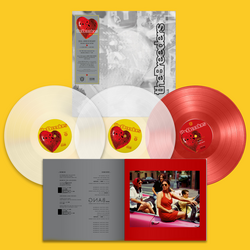
A defining album of the 90s, “Last Splash” has its 30th Anniversary this year. To celebrate, the record has been remastered for the first time, using the original ½ inch analog tape, lovingly worked on by Kim, Benjamin Mumphrey, and Miles Showell at Abbey Road. The tape, consisting of final mixes, but un-sequenced and unmastered, was only recently rediscovered in the Warner Bros. archive, a discovery that has made possible this ultimate audiophile vinyl pressing, and also brought to light two unreleased tracks from the 1993 “Last Splash” recording sessions, a bonus which will delight fans.
The album has never sounded so good. Titled “Last Splash (the 30th Anniversary Original Analog Edition), cut at half speed at Abbey Road, it now spans two 12” discs running at 45rpm. Also included is an exclusive one-sided etched 12” disc featuring the two “new” tracks: a song that Kim co-wrote with Black Francis titled ‘Go Man Go,’ and a different version of ‘Divine Hammer’ with lead vocals by J Mascis and titled, naturally enough, ‘Divine Mascis.’
For this special release, the late Vaughan Oliver’s iconic sleeve art has been gloriously reimagined by his long-time design partner Chris Bigg. A Japanese CD release will also be available.
The ‘classic’ Breeders line-up of Kim Deal (vocals, guitar), Kelley Deal (guitar, vocals), Josephine Wiggs (bass, vocals) and Jim Macpherson (drums, vocals),
To celebrate 30 years of the album, the band are currently on the road for a special run of shows performing “Last Splash” in its entirety, appearing with Belly (formed by original Breeder Tanya Donelly), Screaming Females and Horsegirl in select markets. They will also be supporting Olivia Rodrigo in Los Angeles and New York shows in 2024
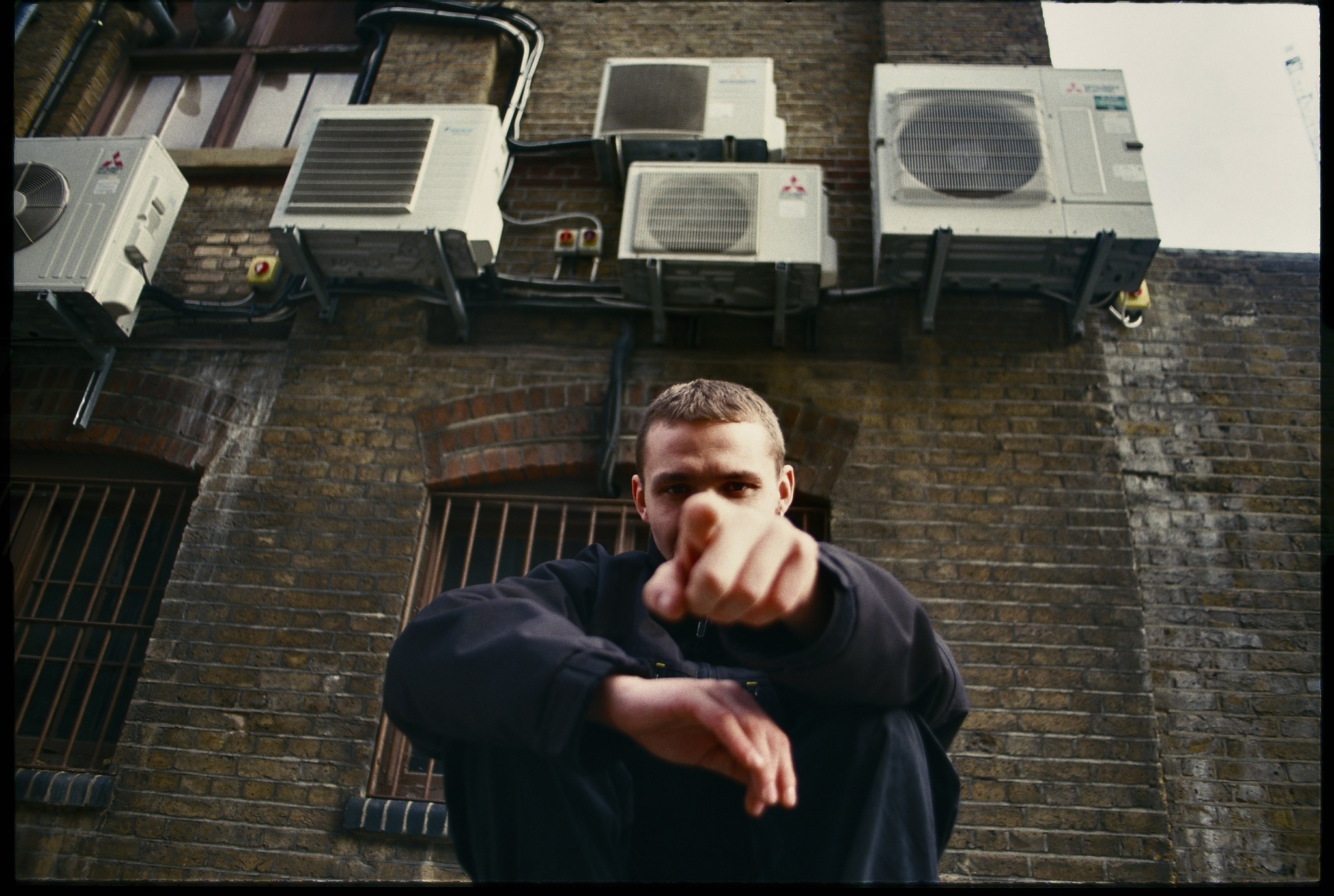
Westerman – the London-born, Athens-based pop maverick – has returned with a digital-only deluxe edition of his latest album, ‘An Inbuilt Fault’.
‘An Inbuilt Fault’ (Deluxe) features stripped-down live versions of five album tracks that were recorded this past February as part of an intimate performance at Will Westerman’s flat in Athens, Greece. That performance was filmed and will be released via YouTube under the title ‘Silk Milk’ alongside ‘An Inbuilt Fault’ (Deluxe) on 22nd September.
‘An Inbuilt Fault’ took shape throughout the depths of the pandemic, and soundtracks Westerman’s reckoning with two years of intense isolation, loneliness, heartbreak, and dread. Co-produced with producer and percussionist James Krivchenia (Big Thief), and featuring an extended crew of Los Angeles associates, ‘An Inbuilt Fault’ exhibits music that is heavier and more sonically daring than Westerman’s previous releases, and it is the most adventurous and unselfconscious songwriting of Will Westerman’s career.
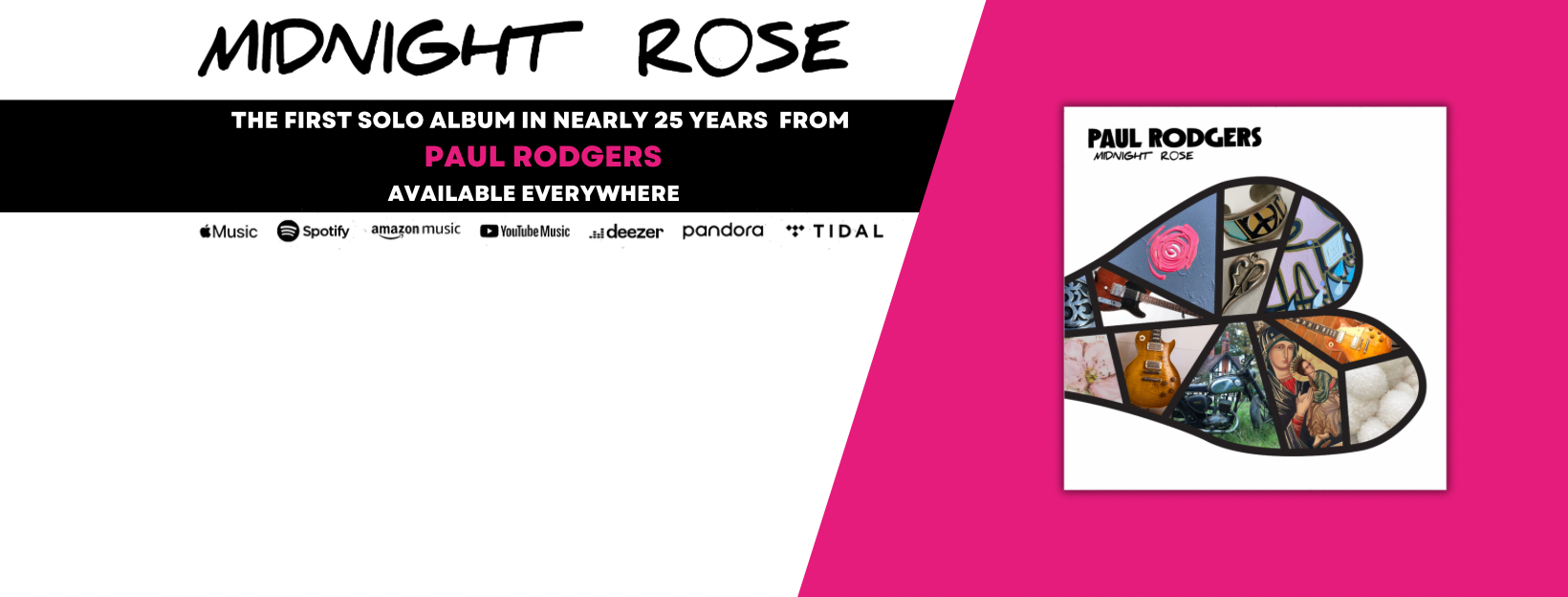
“The Voice” is back. to be released September 22nd, Paul Rodgers releases “Midnight Rose”, the very first solo album release from the legendary rock and roll icon in nearly 25 years.
Rodgers, known the world over for that powerhouse voice that was brought to life with the bands Free, Bad Company and, more recently, Queen + Paul Rodgers, lets loose throughout “Midnight Rose”, which kicks off with a bang with “Coming Home”.
“Take Love,” a song Rodgers has performed over the years dating back to his time touring with Queen, was given a studio recording for the first time for this release:
“This was a collaborative album in its true sense, — from the musicians to the producers and engineers to all at Sun Records,” Rodgers said in a statement. “Everyone tapped into their own unique creative gifts and stood behind ‘Midnight Rose,’ we can all celebrate this release as one.”
The singer continued: “‘Midnight Rose’ is deep, revealing and very personal to me. Raw, real, emotionally charged and sent from my heart to the fans. At times, life challenges you but if you believe, miracles do exist … this will make more sense in the weeks to come.”
The eight songs on “Midnight Rose” were produced by Paul’s wife, Cynthia Rodgers, and Bob Rock, with recording taking place at Roper Recording and The Warehouse in British Columbia, while its album artwork came from both Paul and Cynthia.
“Midnight Rose” is being released on the legendary Sun Records.
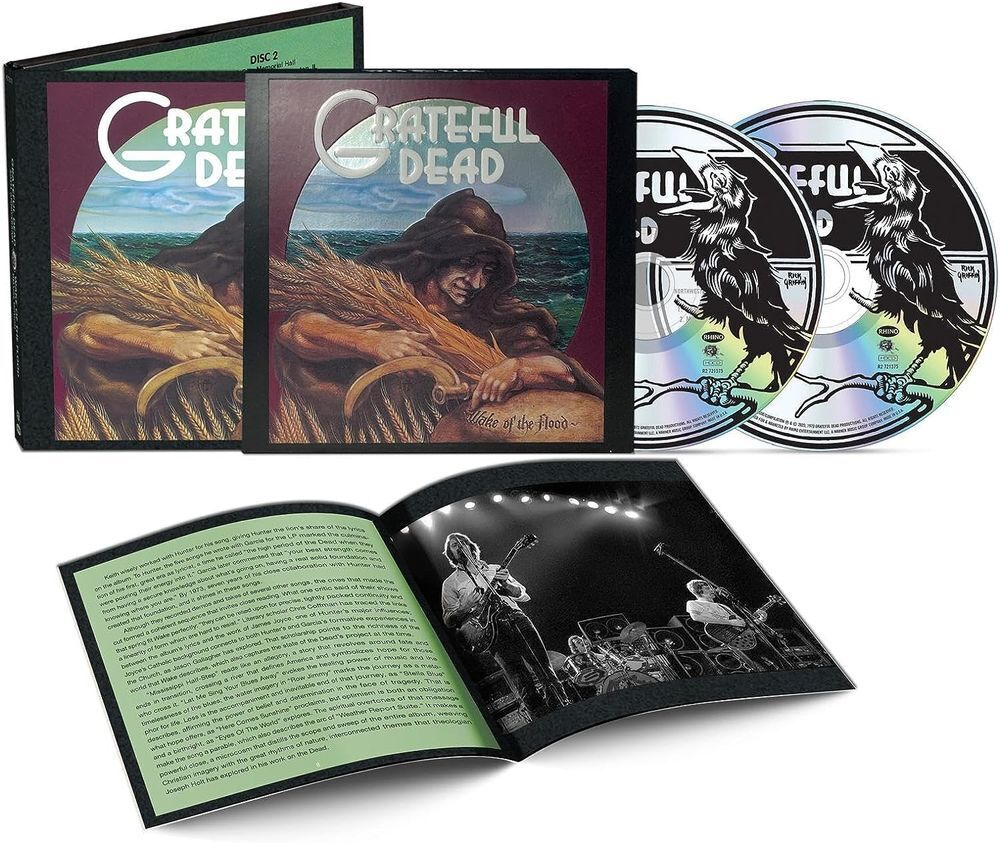
“Wake Of The Flood” (50th Anniversary Deluxe Edition) features the album’s seven original songs and previously unreleased demo recordings of “Eyes Of The World” and “Here Comes Sunshine.”
“Here Comes Sunshine (Demo)”In early 1973, just before the Grateful Dead performed on February 9th , Jerry Garcia had recorded demos of the new songs he and Robert Hunter had been creating. These demos featured Jerry doing the singing and playing, and he presumably shared them with the band members so they could start learning the new songs.
Amongst these demos was this beautiful “Here Comes Sunshine,” which would almost immediately become a major jam vehicle upon joining the live repertoire on 2/9/73, usually clocking in at over 10 minutes. It would stick around the live sets for about a year, before being dropped for almost 20 years, and making its triumphant return in December 1992.
Following the recent passing of founding member Ron “Pigpen” McKernan and the temporary exit of drummer Mickey Hart, Grateful Dead released “Wake Of The Flood”. As the debut album from their own record label, Grateful Dead Records, the studio LP marked a period of transition, growth, endurance and optimism for the band, introducing a fresh lineup that included new members Keith and Donna Godchaux on keys and vocals. While songs like “Eyes Of The World,” “Stella Blue,” and “Mississippi Half-Step Uptown Toodeloo” were largely road-tested for more than half a year beforehand, and have remained staples of live sets by any number of Dead-related bands ever since, the album and record label delivered both a profound artistic statement and proof of concept for the community, ideals and future the band were building.
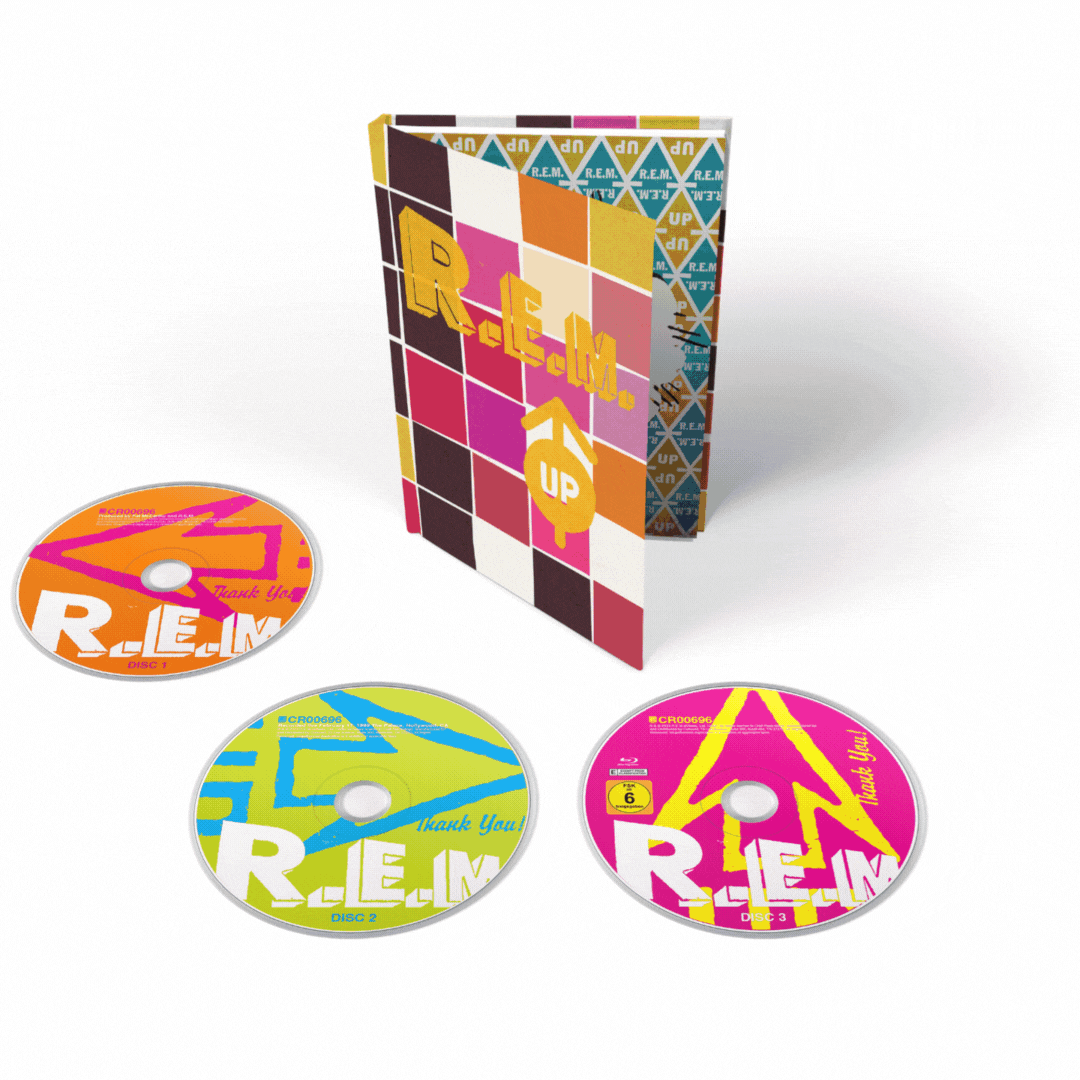
R.E.M.’s album “Up” turns 25 years of age this year, and Craft Records are celebrating with a series of expanded and remastered reissues, out November 10th. The R.E.M. reissue its 1998 album the first following the departure of original drummer Bill Berry, for its 25th anniversary.
“Up” found R.E.M. struggling to overcome the loss of Berry, who left the band in 1997 after suffering a brain aneurysmtwo years earlier on stage in Switzerland. “Bill said that if he was going to be the guy who made R.E.M. break up he would stay and be miserable, but it was clear that wasn’t what he wanted,” frontman Michael Stipe said “We’ve always said R.E.M. was the four of us; now there’s three, so what the hell do we do? We had this intense chemistry that we had to find as a three-piece. It took us the better part of one and a half records. And we fucked it up a lot. With “Up”, I couldn’t even sing because my chest was so tight. I was really in a complete freak-out mode.”
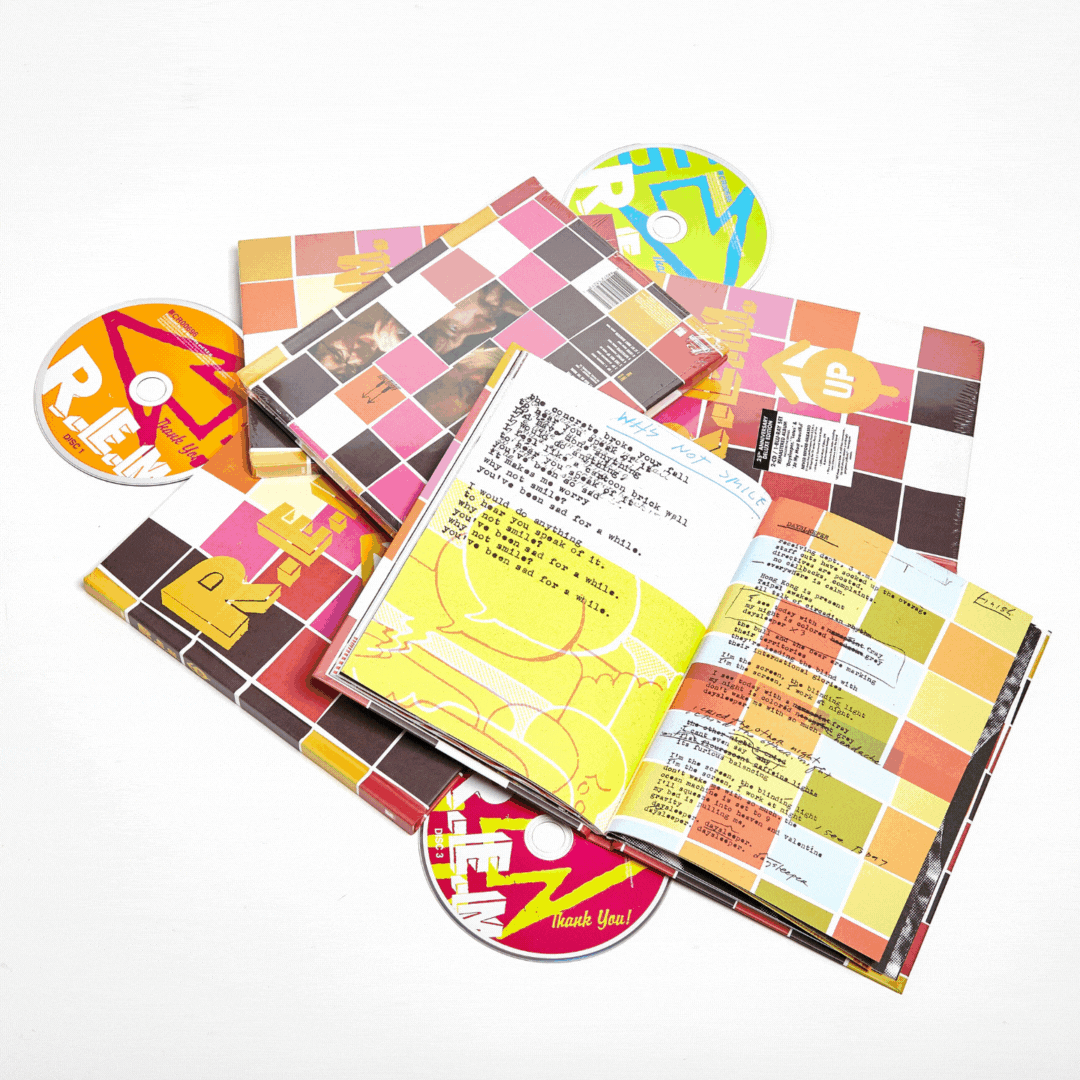
There is a deluxe 2-CD/1 Blu-ray edition is housed in a32-page hardcover book, which includes new linernotesfrom journalist and Talkhouse Executive Editor Josh Modell plus new interviews with the bandmembers. The set features the newly-remastered original album, plus apreviously unreleased 11-song live set from their 1999 appearance on the hit TV series, “Party of Five“.
The accompanying Blu-ray features HD music videos “Daysleeper,” “Lotus,” “At My Most Beautiful”, a six-song performance from the era (titled Uptake), plus the album’s original EPK, all in stunning hi-resolution with 5.1 surround sound audio.
R.E.M.’s appearance on “Party of Five” (which launched the careers of Matthew Fox and Neve Campbell, among others) remains a fond memory. “The intersection of visual and musical art is always interesting, so it was cool to be a part of TV,” recalls Mills.
The intimate concert, recorded at Los Angeles’ Palace Theatre, was populated by R.E.M. fan club members and served as an opportunity for the band to rehearse their latest material—plus beloved hits—ahead of touring. “There are dozens of great R.E.M. live sets out there, but nothing quite like this up-close oddity,” writes Josh Modell. “Loose and happy, the band runs through a good chunk of “Up” in front of a small crowd…Stipe is chatty, telling stories about accidentally ripping off Billy Corgan (and telling Corgan about it), playing with the Human League on a funny stage at that very venue, and more.”
The 25th Anniversary Edition of Up, the band’s 11th studio album, is OUT NOW! The newly-remastered album, featuring favorites “Daysleeper,” “Lotus,” and “At My Most Beautiful,” is available on 2-CD + Blu-ray, 2-LP, 2-CD, digital, and hi-res audio formats.
Additionally, the expanded reissue will be available in 2-CD, digital, and hi-res. The 2-CD includes an exclusive 24” x 24” poster and four collectible postcards, as well as a booklet featuring new liner notes. The 14-track, 2-LP album will be reissued on 180-gram vinyl.
The remastered version of “Daysleeper” and the band’s never-before-released performance of the song from the “Party of Five” can be downloaded now.
The Deluxe 2-CD + Blu-ray set features the remastered original album, plus a previously-unreleased 11-song live performance from the band’s 1999 appearance on Party of Five, while the Blu-ray features HD music videos, a 6-song performance recorded in London, and a 60-minute EPK film (This Way Up), alongside hi-resolution and 5.1 surround-sound audio. It’s all housed in a 32-page hardcover book which includes liner notes from writer Josh Modell and new interviews with Peter, Mike, and Michael.
The remastered original 14-track album is also available on 2-LP vinyl
When a band skillfully covers another artist; ultimately, it comes down to fabricating the illusion that the song was theirs all along, while always paying direct homage to the original by giving it new life.
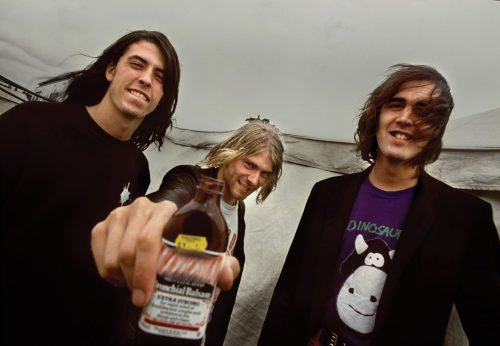
As good as Kurt Cobain was at song writing, he was also a master of interpreting the work of others. His covers were rarely straightforward renditions — they almost always brought something new to the song and were sometimes even better than the originals. Their choice in cover songs were also always as crucial as the performances themselves. Save for a few Zeppelin covers, Nirvana rarely covered songs that were already very popular, and in the rare cases that they did (like one Beatles cover included below), they would change it up significantly.
David Bowie, the Vaselines, Shocking Blue, Devo, and the Velvet Underground are among the many artists Nirvana borrowed from during their short yet prolific career—these names alone showcase a surprisingly eclectic taste that was anything but the norm in most of their punk circles. With the band’s impeccable swan song “In Utero” celebrating its 30th anniversary, let’s look at 10 songs they made their own, and whose influence is evident within the extraordinary patchwork of Nirvana’s musical legacy.
Shocking Blue – “Love Buzz”
And what was that very first Nirvana single? Whaddya know, it was a cover! The band launched their recording careers with “Love Buzz,” originally by Dutch psychedelic-rockers Shocking Blue. Not the most obvious start for the most iconic band of the ’90s (apparently it was Krist’s idea). Already a staple of their raucous live show, “Love Buzz” did represent, according to Sub Pop founder Bruce Pavitt, “an indicator of some of their direction in songwriting.”
The importance of Nirvana’s debut single, “Love Buzz,” has over the years revealed itself to be manifold: While the 1988 release date was subsequently used to justify the band’s 2014 Rock Hall induction, “Love Buzz‘s” obsessive romanticism and in-your-face punkness offer a distinct blueprint for what became the Nirvana sound. Cobain keeps the Arabic scale employed by Dutch psych-rockers Shocking Blue in their 1969 original, but replaces the sitar-heavy riff with a wah-wah pedal and a Boss delay.
The Velvet Underground – “Here She Comes Now”
Part of a 1990 Velvet Underground tribute album and a 1991 split single with the Melvins, Nirvana’s take on the “White Light/White Heat” classic remains exceptionally faithful to the original. (The chord variation at the end of the chorus made it sound like a Cobain composition from the get-go.) Despite the band rarely playing it live, the primitive rawness of “Here She Comes Now” fits like a glove in Nirvana’s grunge repertoire—further confirmation of VU’s indisputable place in the proto-punk pantheon.
In 1990, towards the end of the era with Chad Channing on drums, Nirvana teamed up with their pals the Melvins for a split single of Velvet Underground covers. Melvins did a noisy take on “Venus In Furs” from VU’s 1967 debut “The Velvet Underground & Nico”, and Nirvana took on “Here She Comes Now” from their 1968 LP “White Light/White Heat”. (Nirvana’s cover also appeared on the compilation “Heaven & Hell – A Tribute To The Velvet Underground – Volume One“.) Their version is over twice as long as the original, and though it starts off as one of Nirvana’s more straightforward covers, they eventually turn it into something that sounds like no band in the world besides Nirvana. They apply their trademark loud-quiet-loud formula to the song, with the first more faithful half being “quiet” and the second half very much being “loud.” As the volume increases, Kurt goes off script and starts busting out throat-shredding, off-key screams and dissonant guitar solos, before the whole band just locks into a jam, with some sharp improvised basslines from Krist Novoselic. Considering VU were basically the inventors of atonal, unstructured noise rock, this was a fitting tribute.
Thunder and Roses – “White Lace and Strange”
Philly’s Thunder and Roses released just one album in 1969, “King Of The Black Sunrise”, before calling it quits. Singer/guitarist Chris Bond went on to play with Hall & Oates, but Thunder and Roses remained in obscurity, and they’re still there today. But even if they aren’t a household name, their heavy, psychedelic sound was a clear precedent to a lot of metal, stoner rock, garage rock, etc, and their album’s opening track “White Lace and Strange” found its way into the hands of Nirvana, who covered it during their first radio session for Olympia’s KAOS-FM in 1987, along with some of their own obscure early originals.
The original is more psychedelic and Cream-like, but Nirvana turned it into something that sounded much more like what we now know of as grunge. Even this early on, Kurt’s guitar playing had that swampy, flannel-wearing sound that Nirvana became known for, and it gives the song a much dirtier, heavier vibe than the original. And Kurt’s vocals only slightly hint at the ’60s-style singing of the original. He sings it like he wrote it, with all the angst his own much darker songs had. You could hear the psych-rock influence of songs like this coming through on early Nirvana originals like “Blew” and “Blandest,” and if you didn’t know any better, you might think they wrote “White Lace and Strange” too.
The Vaselines – “Son of a Gun”/”Molly’s Lips”
The Vaselines were one of Kurt Cobain’s favourite bands, and he even wound up naming his own daughter after vocalist Frances McKee. Initially included in the 1992 “Hormoaning” EP and later added to the compilation “Incesticide”, Nirvana’s sunny, slightly pop-punk-ish (description) versions of “Son Of A Gun” and “Molly’s Lips” were an integral part of a BBC Radio 1 Peel Session recorded at Maida Vale Studios in October 1990.
Nirvana’s best Vaselines cover is the one they did of “Molly’s Lips” in a 1990 Peel Session (which was later released on 1992’s “Hormoaning” EP. When Nirvana mixed their trademark sound with their twee-ish indie pop influence, the result kinda sounded like pop punk, and that couldn’t have been more true than when they covered the indie pop song “Molly’s Lips” The original is about as lighthearted and twee as indie pop gets, but Nirvana cranked up the distortion, sped it up, and gave it an angst-ridden vocal performance in place of the more cooing original. It totally worked, and it tricked so many kids into listening to The Vaselines’ songwriting. Frances McKee and Eugene Kelly’s melodic brilliance and effective lyrical simplicity is all there
They later covered the Scottish band once more for their 1993 MTV Unplugged performance “Jesus Doesn’t Want Me For a Sunbeam”.
The Vaselines – “Jesus Doesn’t Want Me For A Sunbeam”
As much as Kurt loved punk, he was possibly the biggest cheerleader for Scottish indie pop band The Vaselines, who broke up before Nirvana hit it big but have been reunited for a while and probably have Nirvana to thank for tons of their fans. Nirvana covered The Vaselines a few times, and one of their most moving covers was the version of “Jesus Wants Me For A Sunbeam” (retitled “Jesus Doesn’t Want Me For A Sunbeam”) that they performed on “MTV Unplugged In New York” in 1993. As the story has been told time and time again, most artists used MTV Unplugged as an opportunity to play stripped-down versions of their biggest hits, but Nirvana turned the corporate television show into a piece of art, constructing a setlist of only the songs that they thought would sound best acoustic (no “Teen Spirit”) and playing covers that were mostly obscure to much of MTV’s audience. The first cover in the set was this gorgeous rendition of this Vaselines classic. The original is among The Vaselines’ slower songs, but Nirvana really leaned into treating this one as a ballad, and the results continue to be stunning today.
As with all of the covers Nirvana did on unplugged, Kurt sang it like he wrote it, filling his voice with as much genuine emotion as possible. It’s just different enough from the original that you need both versions in your life, but it’s similar enough that it would have been immediately obvious to Nirvana fans how much they would also love The Vaselines. It’s the perfect mix of doing a song justice while also rivaling the original.
David Bowie – “The Man Who Sold The World”
Kurt Cobain would frequently rank his favourite albums, shifting some of them around as he came in contact with new things—even if, as Charles R. Cross explains in his bookHeavier Than Heaven, Cobain’s customary infatuations with a particularly niche group often meant that some of the classic artists passed him by unnoticed. This also happened with records, since “The Man Who Sold The World” isn’t David Bowie’s most well-known LP at all; The 1970 album of the same name is one of his most underrated. It’s the closest to hard rock that Bowie ever came, so it makes sense that Nirvana took a liking to this one, yet it would be precisely Nirvana’s magnificent, faithfully nocturnal cover of the title track for “MTV Unplugged” contributing to its retrospective praise almost 25 years after Bowie’s original release.
Led Zeppelin – “Immigrant Song”
Of the many bootlegs circulating among fans, this one has a particularly heartwarming quality, having been recorded during an early Nirvana rehearsal at the home of Krist Novoselic’s mom in Aberdeen. While Cobain’s punk devotion (as seen through this raw, proto-grunge version of the 1970’s classic) would later make him repudiate his hard rock roots, telling Interview in 1991 that he had “sold his Aerosmith and Led Zeppelin collection for twelve dollars,” this wasn’t the only time Nirvana covered the British quartet: A live version of “Heartbreaker” recorded during one of their first shows in March 1987 was later included in the 2004 “With the Lights Out” box set.
Wipers – “D-7”
“D-7” is a song originally performed by The Wipers appearing on their 1980 album “Is This Real?” and is most popularly known for the Nirvana version appearing on their 1992 EP “Hormoaning” and also on the box set “With The Lights Outs”. The song Return of the Rat off the same album (Is This Real?) has also been covered by Nirvana also appearing on the box set “With The Lights Outs”.
Also featured as a B-side on the “Lithium” U.K. CD single, “D-7” was originally recorded during the same John Peel session integrated the “Hormoaning” EP—though the“Live at Reading” rendition arguably reigns as the supreme version. Portland punk act Wipers, whom Michael Hann called “the missing link between the Sonics and Nirvana,” are often recognized for their major influence on the overall grunge sound; Nirvana covered them again for the 1992 tribute compilation “Eight Songs for Greg Sage and the Wipers”, contributing “Return of the Rat.”
Wipers – “Return of the Rat”
Portland punk band Wipers were one of Kurt’s favourite bands he included their first three albums on his top 50 albums of all time list, and it’s not hard to hear how much of an impact they had on Nirvana and grunge in general. In addition to singing their praises, Nirvana covered a couple of Wipers songs back in the day, including “Return of the Rat” for the 1992 Wipers tribute album. The original might pass as “proto-grunge,” but Nirvana’s version is about as grunge as it gets. In place of the revved-up punk guitar strums of the original, Kurt gives a thicker, fuzzier, more muscular performance, and in place of Greg Sage’s nervy vocal delivery, Kurt gives the song his usual, grittier twist. Nothing but love for the original, but Nirvana’s version really rips in a way that Wipers’ doesn’t. It’s as good a representation of Nirvana’s fast punk side as anything.
Meat Puppets – “Lake Of Fire”
Of all the daring moves that Nirvana made during their “MTV Unplugged” performance, bringing on the Meat Puppets was perhaps the most daring. It’s said that MTV were really hoping Nirvana would bring out Pearl Jam or another more famous guest, but Nirvana insisted on bringing out Cris and Curt Kirkwood from the Meat Puppets,
It’s tough to choose from the delightful mini-session with the Kirkwood brothers that had the MTV Unplugged producers pulling their hair out—after all, the performance was supposed to include a selection of Nirvana’s greatest hits, not serve as a platform for other musicians. Though “Plateau” and “Oh Me” are equally fantastic, “Lake Of Fire” gets the final prize for the poetically macabre lyrics filled with religious references that could have easily come from Cobain himself.
Devo – “Turnaround”
It’s pretty well-known now within indie circles that Devo were more than “the band with the silly red hats who wrote ‘Whip it,’” but that wasn’t always obvious, “Turnaround”, a song by Devo, originally released as a B-Side of their single “Whip It Whip It “Whip It” is the title of a 1980 single by the United States Synthpop band Devo. It appears on the album “Freedom ofChoice”. There were two 7″ single releases of “Whip It”, one backed with a remix of the track “Snowball” and one backed with “Turn Around” …. “, later rerecorded by Nirvana.
Nirvana’s 1992 compilation “Incesticide” remains a fan favourite for many reasons for one, it allowed the public to finally own official recordings of songs that had been circulating for ages as low-quality bootlegs or rare B-sides. But the album also provides valuable clues to better understand the extent of Nirvana’s sonic infatuations, notably through this cover of Devo’s “Turnaround.” The new wave synths and overall more plastic atmosphere may have been replaced by Cobain’s trademark fuzz, but the main skeleton was preserved in its entirety.
Lead Belly – “Where Did You Sleep Last Night?”
Nirvana’s take on “In The Pines”—specifically Lead Belly’s version of the traditional folk song—proved the perfect closer for their “MTV Unplugged”performance, with Cobain’s visceral vocal delivery leaving no chance of an encore (though production initially tried to persuade him otherwise). Cobain’s ghostly gaze, confronting the audience with widened eyes just before howling the final words, has often been described as soul-baring and filled with epiphanic clarity and in hindsight, it almost seems to prophesy his premature disappearance less than six months later.
The Beatles – “And I Love Her”
Despite technically being a solo Cobain cover, this stripped-down rendition of the Beatles’ 1964 ballad “And I Love Her” was too stunning to be left off this list. The recording, made famous by Brett Morgan’s 2015 documentary Kurt Cobain: Montage of Heck(and subsequently released on the soundtrack album), celebrates Cobain’s formative years through its pop-doom duality, and it’s also a captivating sneak peek into his intimate universe and creative process.
Their covers were often a way Nirvana used their status as a huge mainstream band to shine a light on the punk and indie bands who influenced them, who hadn’t fully gotten the attention they deserved, like The Vaselines, Meat Puppets, and Wipers. They also covered lesser known deep cuts by David Bowie and Devo, unsung blues legend Lead Belly, obscure proto-metal like Thunder and Roses, and more. A lot of these songs and/or artists got significant boosts after Nirvana covered them, and — with all due respect to the original songwriters — some of these songs are now inseparable from Nirvana. Nirvana’s covers were as crucial to the overall Nirvana story and discography as the band’s best original songs, and it’d be impossible to discuss their legacy without mentioning these songs. The Nirvana recordings of them are truly iconic.


 The Fat Angel Sings