We love Vanishing Twin oh yes we do. The UK outfit prove once more that they’re one of the most ambitious and engaging acts in modern psychedelia with ‘Ookii Gekkou’, as they add shades of colour with funk, jazz, MPB, Afrobeat, and touches of left-field, crate-digger’s psych.
Their previous album was one of Rough Trade’s Albums Of The Year, so we are totally stoked (and honoured) to have a beautiful package of this amazing new album. Vanishing Twin explore new ground on “Ookii Gekkou” incorporating elements of afrofunk, outer jazz and avant-garde, all while referencing Sun Ra to Alice Coltrane, Martin Denny to Morricone, Can’s Holger Czukay to meditative Gamelan, or The Free Design, to library music of the late ‘60s and early ‘70s. Locked into their strangely-accessible groove is a history of ‘other’ sound, a crafted hauntology that evinces something completely new. Hurricanes, organisms, vibes, bells, and percussive rallies purvey throughout Ookii Gekkou, each infiltrated with influences as diverse as Piero Umiliani, Art Ensemble of Chicago and ELO among others.
Indeed, even a cursory earful adds to an ever-expanding palette of sound, no mean feat for the newly-trimmed quartet of songwriter, singer and multi-instrumentalist Cathy Lucas, drummer Valentina Magaletti, bassist Susumu Mukai, and synth/guitar player Phil MFU, this reduction resulting in no fewer ideas and even bigger steps. Vanishing Twin is a conundrum in these fragmenting times; familiar, yet different; appealing to this world, but from another, parallel one.
First track ‘Big Moonlight (Ookii Gekkou)’ tells the chaotic story of rock torn away from the earth’s outer layer and its gradual falling into the patterns that give us moon phases. All this over a cohesive groove that nods to space-age music. The new track is released alongside a new clay animated music video by London based video artist Daisy Dickinson (Flaming Lips, Toy, Snapped Ankles). “We asked Daisy to take the being from the cover of our album and make it move, grow, stretch, multiply and merge with other objects. Hypnotised by the moon, the being plays in a strange landscape populated by other mysterious objects and characters.” Hurricanes, organisms, vibes, bells, and percussive rallies purvey throughout ‘Ookii Gekkou’, each infiltrated with influences as diverse as Piero Umiliani, Art Ensemble of Chicago and ELO among others.
‘Big Moonlight (Ookii Gekkou)’ is the first single from Vanishing Twin’s new album ‘Ookii Gekkou’ out October 15th.
The perfect gold afternoon fix for anyone missing the sunset sound of the Go-Betweens or the Church. Together, this duo stitches together layers of intricate melody to craft moving, nostalgic, irresistible songs that radiate energy & provoke introspection – pure jangle pop bliss.
Toronto’s Ducks Ltd (formerly Ducks Unlimited), the bright jangle-pop duo of Tom Mcgreevy (lead vocal, guitar, bass, keyboards) and Evan Lewis (guitar, bass, drum programming), accomplish the impossible. The pair craft songs that play to very specific inspirations without drowning underneath them—immediately evidenced on their critically acclaimed ep, get bleak, and sharpened on “Modern Fiction“, their debut lp. “The Servants, The Clean, The Chills, The Bats,Television Personalities, Felt,”Evan rattles off. “Look Blue Go Purple is one I reference a lot with our production.” echoes of ‘80s Indiepop abound, but they never overwhelm. this is not a nostalgic record, after all, nor is it a derivative one. instead, across 10 cheery-sounding songs, Ducks Ltd. explore contemporary society in decline, examining large scale human disaster through personal turmoil (hence the title, taken from a university course called gnosticism and nihilism in modern fiction, influenced by Graham Greene novels. bookish indie fans, look no further.)
Writing the album was intimate. Tom drafted the nucleus of a song on an unplugged electric guitar and brought it over to Evan’s apartment, where the pair sat in his bedroom, placing percussive beats from a drum machine under nascent melodies, passing a bass back and forth, adding organs and bridges where necessary. “It’s computer music trying extremely hard not to sound like computer music,” Tom jokes. fearful that limited and expensive studio time would kneecap the project creatively, eroding their charming naivete, the pair re-recorded the album in a storage space owned by Evan’s boss. Ornamentation through collaboration followed: there’s Aaron Goldstein on pedal steel in the Go-Betweens’ “Cattle and Cane”-channeling interlude “patience wearing thin,” Eliza Niemi on cello (“18 cigarettes,” a song loosely inspired by a 1997 Oasis performance of “Don’t Go Away”), and backing harmonies from Carpark labelmates The Beths (on an ode to friendship at a distance, “How Lonely Are You?,” “always there,” and on the sped-up Syd Barrett stylings of “Under The Rolling Moon.”) while in his native Australia due to covid-19, Evan worked closely with producer James Cecil (the goon sax, architecture in helsinki) on Modern Fiction’s finishing touches—at one point, in the mountains of the macedon ranges in Victoria, recorded a string quartet (featured on “Fit To Burst,”“Always There,”“Sullen Leering Hope,” “Were Ever Thus,” “Grand Final Day.”)
It’s danceable, depressive fun, with some relief: in “Always There” and “Sullen Leering Hope,” Modern Fiction’s faithful heart. “there’s a tendency in my writing, because of my world view, to be very bleak.” Tom explains. “a quality I don’t always see in myself and really appreciate in others is the courage to go on.” and yet, the record manages resiliency—enough for pop fans to fall in love with.
This year marks the 20th Anniversary of our first release, B.R.M.C. We wanted to celebrate this milestone with you, so we’ve put together a special 20th Anniversary Vinyl Box Set that includes a double gatefold of the original album with bonus songs plus a 3rd Vinyl disc of songs from that period that we’ve never released before, all newly mixed & mastered. We’re also including a special hard-bound book of photos taken by Ken Schles, who did the cover image for the album. This is available for immediate pre-order at the link above. This 20th Anniversary Deluxe Box will be very limited. If you’re feeling nostalgic and like us, grown out, worn out, thrown out or straight lost it. We’ve done our best to make some of the original B.R.M.C. t-shirts, to swat the moths messing with your other favourite bands shirts.
Black Rebel Motorcycle Club, formed in San Francisco in 1998, were originally called The Elements. After discovering that another band had the same name, themembers changed the name to Black Rebel Motorcycle Club, after Marlon Brando’s motorcycle club in the 1953 film The Wild One. Bass player and vocalist Robert Been’s father, Michael Been, had formed The Call in Santa Cruz in 1980. Michael Been died on August 19th, 2010, after suffering a heart attack backstage at the Pukkelpop music festival in Hasselt, Belgium, where he was working as sound engineer for his son’s band BRMC. To honour his father, Robert sang a song recorded by The Call, “Let The Day Begin”. A back story of The Call’s version, released in 1989, climbed the charts, but, because MCA elected to switch pressing plants, there were no singles in stores. According to Michael Been: “There wasn’t any foul play, though. It was just that MCA was switching over pressing plants, and they hadn’t printed up enough copies of the single — only 100,000, I think. And the record went to number one, and all of a sudden, there weren’t any in the stores — they’d all been sold. It took five weeks for the company to be able to get back to the point where they could start printing copies again, and in those five weeks, well — you live or die in this business.”…..
2001’s inimitable B.R.M.C.is most definitely a nasty bag of tricks, generous in its quantities of punky defiance, gritty alt and garage rock hybrid sensibilities, and just enough style and sheen to tip the indie scales in their favour—but what more could be expected of a disheveled trio of leather jacketed twentysomethings,
Founded by high school friends Peter Hayes and Robert LevonBeen in 1998, Black Rebel Motorcycle Club set out to accomplish what so few bands are able to do—create a sound indebted to those of the past while remaining relevant in the present. Both students of prominent Northern Californian musicians, Hayes cut his teeth as a member of infamous San Francisco neo-psychedelic outfit The Brian Jonestown Massacre during the group’s Give It Back!era and Been made his bones playing bass for his father, the late Michael Been, formerly of Santa Cruz-based alt rock group The Call, as a teenager in the mid-’90s. While their combined formative experience was not necessarily predictive of what was to come, it was fertile ground in the development of Black Rebel Motorcycle Club’s soulful, swaying guitar-oriented indie rock sound, a stream laced with various influences of half a century’s worth of popular music.
Despite the eclectic nature of their sound, B.R.M.C.’s music owes a great deal to their geographic origins. Very Californian, the grit and the grime coupled with the bliss and boundless space all visited by the spirits of the greats who came and went before B.R.M.C.’s opportunity revealed itself can be fathomed on every track of their debut album. What emerged from those early days as a group was a solid rock sound, educated yet unpretentious, inspired yet rarely derivative, something entirely unique to the group.
Released on April 3rd, 2001, the eponymous B.R.M.C.kicked the door down, bringing to the table the elements of experimental neo-psychedelia and homegrown indie experimentalism Hayes had gleaned during his time with The Brian Jonestown Massacre, while eschewing Anton Newcombe’s predisposition for hippiesh lo-fi madness for a rougher, more aggressive snarl of punk rock rebellion which, in the end, makes a final stand for classic, uncut rock and roll.
Opener “Love Burns” comes on strong, with Hayes introducing his upcoming band with the line, “Never thought I’d see her go away/She learned I loved her today.” The sting of the group’s guitars drills deeply into the listener’s skull, planting a fuzzed-out wall of sound behind Hayes’ smooth yet spacey vocals. The repetitious “Red Eyes and Tears” shows strong influences of The Velvet Underground and The Jesus and Mary Chain, offering a tighter, darker feel, more at home on an early Cure album than on anything released in the early ’00s, while turbulent favourite “Whatever Happened to My Rock and Roll (Punk Song)” rocks the hardest of the album’s 11 tracks, and the subsequent “Awake” touches upon the heavy psychedelia which became a staple of the group’s sound.
The Abrahamic imagery and pleas for salvation in “White Palms” would eventually become a motif in Black Rebel Motorcycle Club’s lyrics, although the question of faith begged by Hayes is belied by his recognition that, if he were Jesus, he wouldn’t return, confessing, “I’m the kind of guy who leaves the scene of the crime.” Standout “As Sure as the Sun” and the Radiohead-esque “Take My Time/Rifles” cast additional shadows across B.R.M.C.’s stage, the latter serving as one of the most realized, intricately crafted compositions of the group’s career. The funerary fuzz of “Too Real” may be understood as a blueprint for the divergent sounds of groups advertently or inadvertently indebted to Black Rebel Motorcycle Club, such as their younger, lesser known Canadian cousins The Pink Mountaintops. The penultimate “Head Up High” and closing “Salvation” chart the course of an innovative band, rounding the album out and declaring a challenge to the innovations of popular contemporaries.
Indeed, the sound found on B.R.M.C.has been instrumental in the development of strains of retro-inspired millennial indie rock, developed 20 years later. More so, Hayes and Been find themselves at the forefront of an ever more revolutionary movement, as purveyors of the kind of pure, undiluted rock and roll music developed by their own idols, as well as by their idols’ idols. Everything done by Led Zeppelin and The Rolling Stones, by The Velvet Underground, The Clash, and The Stooges is alive and well on all subsequent Black Rebel Motorcycle Club releases. The group, along with a handful of like-minded fellow rockers, continue to maintain the honesty of the genre, even while their bite has mellowed with age. This observation is by no means disparaging, as even their most recent release, 2018’s Wrong Creatures, stands as one the finest rock releases of the 2010s.
Two decades on, B.R.M.C. remains a key deity in the pantheon of modern indie rock, having borrowed its influences from well-established, worthy acts of yore and used them as way markers in forging their own authentic voice. Even in 2021, “Love Burns” and “Whatever Happened to My Rock and Roll (Punk Song)” retain their teeth, which they bare at the softening throat of their beloved genre, celebrating the grit and shadow of a bygone era in rock.
Deluxe direct-to-consumer box set combines the newly expanded and released self-titled debut album (now a double LP in a gatefold sleeve), with the “Screaming Gun” album of demos and alt mixes from the same era, and a unique full colour photo book compiled from photos from the same era.
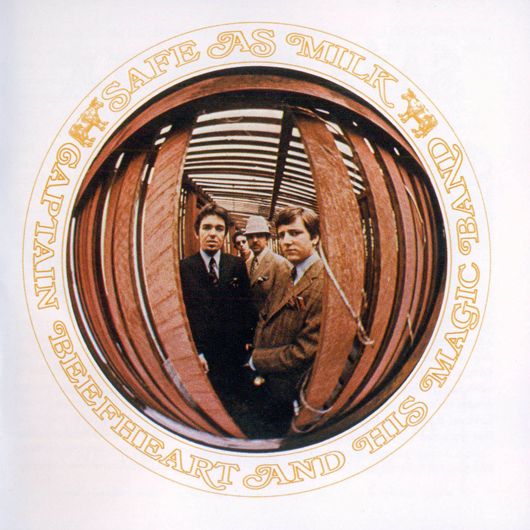
There were no straight lines in Captain Beefheart’s career. (Particularly those albums released on the Straight imprint… but that’s another story altogether.) Even his “accessible” earliest outing, “Safe As Milk”, is shot through with unexpected detours; a collision of influences, from Delta blues to popular candy bars; and a torrent of esoteric lyrics that more than earn themselves song titles the likes of ‘Zig Zag Wanderer’ (“You can dance/You can prance/Freeze these old timbers/Drop some beams,” indeed).
Despite having released a couple of singles for A&M in 1966, the label found Beefheart’s subsequent demos too perplexing to release as an album, so the good Captain took them to Bob Krasnow, vice president of Kama Sutra Records. Krasnow agreed to issue Beefheart and The Magic Band’s debut on his nascent BuddahRecords subsidiary, in September 1967. Recruiting fledgling guitarist Ry Cooder on an array of guitars and percussion instruments was another masterstroke decision, as Cooder ensured that “Safe As Milk” kept one foot in the authentic Americana camp, while allowing Beefheart to digress on his flights of fancy.
Perhaps both the album’s authentic blues influences and Beefheart’s early attempts at deconstructing them hit perfection on the likes of opener ‘Sure ’Nuff ‘N’ Yes, I Do’ and the epochal ‘Electricity’. The former cops a lick from blues classic ‘Rollin’ And Tumblin’’, with Beefheart introducing himself: “I was born in the desert, came up in New Orleans,” the first of many myth-making proclamations from the man born Don Van Vliet. The latter, however, is where the Beefheart legend really begins. With a tortured Theramin line, a maelstrom of slide guitars and Beefheart’s own vocals approximating the very sound of electricity itself (it’s said that his voice was so powerful that it destroyed the microphone during the recording sessions), the song fairly approximates the sound of Tesla coils mating.
Not that “Safe As Milk” leaps from one overwhelming barrage to another. ‘I’m Glad’ is a comparatively straightforward doo-wop outing, while ‘Abba Zaba’, named after Beefheart’s favourite peanut butter-infused sweet, hides a relatively delicate arrangement underneath layers of inscrutable lyrics.
Even in the anything-goes atmosphere of 1967, a year that saw The Beatles release Sgt Pepper’s Lonely Hearts Club Band, The Doors issue their self-titled debut, the Stones accept Their Satanic Majesties Request, Hendrix ask Are You Experienced? and The Velvet Underground emerge with their nihilistic debut, “Safe As Milk” was considered too weird to stick. Naturally, it went nowhere in the charts. It did, however, establish Beefheart as a compelling songwriter whose disregard for conventional song structures would pay dividends on albums to come, earning him no small notoriety and dedicated fans in the likes of latter-day iconoclasts Tom Waits and PJ Harvey.
Even in the anything-goes atmosphere of 1967, ‘Safe As Milk’ was considered too weird to stick. Naturally, it went nowhere in the charts. It did, however, establish Beefheart as a compelling songwriter whose disregard for conventional song structures would pay dividends on albums to come.
Assorted demos and acetate versions of “Safe as Milk” songs. The songs from the acetate disc were recorded along with the rest of the Safe as Milk album in April/May 1967 at Sunset Sound Studios, Hollywood, California. The first two songs were recorded in March 1967 at Original Sound Studios in Los Angeles, California. This was roughly the time when the Magic Band was dropped from A&M and signed to Buddah. The other demos were recorded throughout 1965-1967 at various locations. Pictures are of the band before and during the Safe as Milk era.
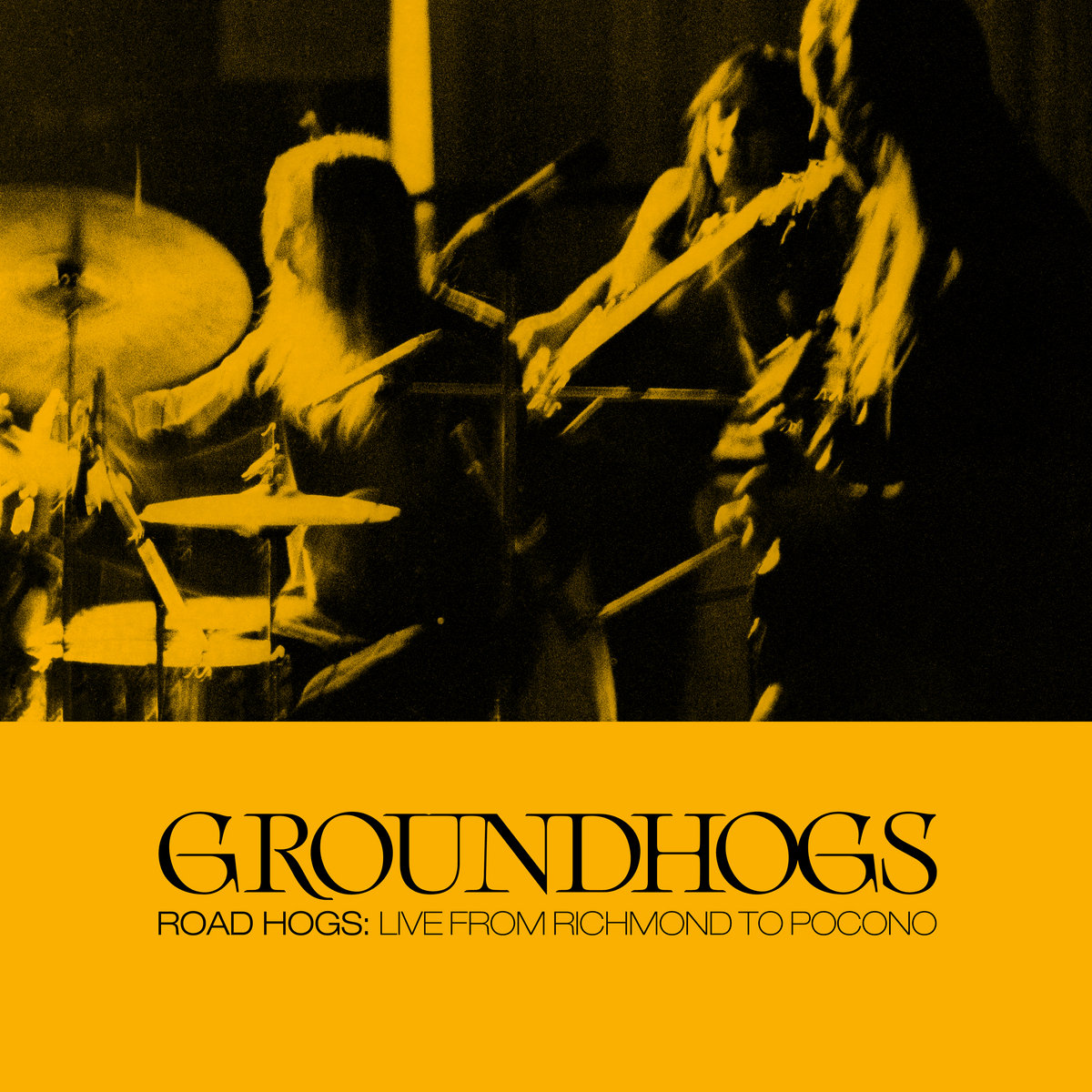
An essential rock artefact tracing The Groundhogs from their pre – “Thank Christ For The Bomb” blues roots to the final live show for the classic line up of Tony McPhee (guitar and vocals), Pete Cruikshank (bass) and Ken Pustelnik (drums).
Never before heard recordings from the Warner Brothers’ vaults including a vintage 1969 set from their show at the Richmond Athletic Ground (AKA The Crawdaddy Club) and their final explosive set at the Pocono Raceway track. Includes the live debut of what would become the anthemic ‘Cherry Red’ and McPhee’s seismic destruction of ‘Amazing Grace’. A career-spanning gem from the ultimate heavy rock power trio book-ending 976 days and 250-plus live shows.
Like some lost treasure that Indiana Jones’ cooler roommate just happened upon, this triple vinyl release tracks the mighty Groundhogs on a 3941-mile journey from Richmond Athletic Ground to the Pocono Raceway track in the mountains of Pennsylvania.
It takes them from blues revivalists to head-friendly prog icons and power rock innovators; bridging the gap between their first two bluesy albums and the nirvana and nadir of the band’s most lauded line up of Tony McPhee (guitar and vocals), Pete Cruikshank (bass) and Ken Pustelnik (drums) at their final show on that big American tour that broke up the original trio.
Along the way they were heralded by Mick Jagger and Robert Plant, became embroiled in student riots in Germany and were acclaimed in the weeklies as the hardest working band around, while guitarist Tony McPhee guffawed at comparisons to Hendrix, Clapton and Peter Green.
Sitting in the Warner Brothers’ vault for 50 years, four reels of tape lay wedged between the masters of the groundbreaking albums ‘Thank Christ For The Bomb’, ‘Split’ and ‘Who Will Save The World… The Mighty Groundhogs’.
The first two boxes had a handwritten scrawl acclaiming them as‘Groundhogs live at Richmond Athletic Ground, November 7, 1969’. Originally it had been thought that they were recorded at the Ninth National Jazz And Blues Festival– a nomadic event that had previously rocked up in Richmond.
In fact, they turned out to be a one-off support slot to Free, a break from their Marquee residency; the mood is intimate, jokey between songs rhetoric punctuates a monumental set that debuts‘Cherry Red’ at the time an un-named “new song”.
The second two boxes – ‘marked Pocono’ were recorded at what would turn out to be the final show for this seminal line up when their truncated hurricane-threatened US tour ended abruptly as Tony broke his arm in a freak horse riding accident.
Over 976 days and with 250-plus live shows under their belt, The Groundhogs had sealed their legendary status.
“In their stage act they concentrate on being as heavy and as hard-hitting as possible.” The Scene magazine reported, “Live they have a tremendous presence, try and go and see them, you won’t be disappointed.”
Released on limited edition triple vinyl and housed in a deluxe roll out gatefold sleeve.
Features never heard before live performances from Richmond Athletic Ground, London (1969) and Pocono Raceway in Pennsylvania (1972).
Includes liner notes with unearthed new photos from The Groundhogs archive, bumper sticker and poster.
In honour of the label’s 10th anniversary, Double Double Whammy has announced a compilation with 14 DDW artists covering their labelmates. The Brooklyn indie label Double Double Whammy celebrates its 10th anniversary this year, and in honour of that, the label is releasing a compilation with 14 current and former DDW artists covering their labelmates. It’s called 10 Years of Double Double Whammy and it comes out on November 19th. The first two singles are Frankie Cosmos and Lomelda covering each other. Both sound great, as you can hear for yourself below.
The comp also features Mirah, Great Grandpa, Told Slant (ft. Florist), The Goodbye Party, Long Beard, Hovvdy, Gemma, 2nd Grade, label founder Mike Caridi’s project The Glow, and more.
Double Double Whammy was launched in 2011 by LVL UP members Mike Caridi and Dave Benton, the latter of whom parted ways with the label in 2016. Not long after that, DDW entered into a partnership with Polyvinyl Records, who “[offer] the resources of a well-respected and established label, while DoubleDouble Whammy retained complete control of the label.” In 2018, Mallory Hawkins joined the label’s staff.
From the Double Double Whammy 10th Anniversary Cover Compilation, available everywhere November 12th, 2021.
Bambara have announced “Love On My Mind”, a six-song mini-LP that will be out February 25th via Wharf Cat. If the start of the breakthrough for Bambara was the radically reimagined sound of 2018’s “Shadow On Everything” (dubbed by NPR a “western gothic opus”), then the moment it truly arrived was on the cinematically riotous noir-punk of 2020’s “Stray”. In the UK, buoyed by the enthusiasm of 6Music DJ Steve Lamacq (who called the band, “one of his favourite discoveries of the year”), the band rose sharply, immediately selling out shows across the country. Meanwhile, back in their native US, KEXP’s John Richards echoed the same sentiment. Things were set. In fact, tickets had just gone on sale for their biggest show to date, a 1500 cap headliner at London’s Electric Ballroom. Then…well, then same as for everyone. Shutdown, lockdown, hibernation, nothing. It was a hammer blow. But rather than rue their misfortune, the band desperately tried to turn it into a positive, immediately moving to try to make more, and they were determined better, music.
The result is the career-high ‘Love On My Mind’ – a six song mini-album, mixed by Claudius Mittendorfer that condenses all the energy and darkness that has made Bambara so compelling but rearranges them into something defiantly new. Not that getting there was easy. With the band’s core (twin brothers Reid and Blaze Bateh, the singer and drummer, and childhood friend William Brookshire, bass) scattered across the US, they remotely pieced together an EP but as soon as it was finished, they scrapped it. In their words, it felt “dishonest”. They were striving for something new and they hadn’t hit the mark.
Here’s the storming, smoky first single.
They realized they needed to change approach so at that point they decided to reconvene in New York. Finally, things started to take shape. By now, they had a better idea of where they wanted to head. They knew they wanted to include a couple of duets and enlisted the vocals of Bria Salmena (Orville Peck/Frigs) and Drew Citron (Public Practice). They also wanted to expand their sound palette so turned to Jason Disu and Jeff Tobias (Sunwatchers) to add trombone and saxophone respectively. They recorded again, utilizing all these new elements, sampling their recordings as they went along, in the process manipulating the sounds across the EP.
The final result is something astonishing. Opening track, “Slither in the Rain,” all hissing high-hat and spectral synthlines, is a true statement of intent. It’s minimal and atmospheric, foregrounding Bateh’s raw vocals as he introduces one of ‘Love On My Mind’s main characters, years after the events of the album are over, a lonely man who throws bottles at airplanes and dances a two-step in the pattern of a figure-8. While Bateh has always been adept at character sketches, here we are introduced to a newfound vulnerability that runs true through the entire album and causes the songs to hit on a more human level. It’s a change he readily acknowledges. It all just contributes to the picture of something truly special. ‘Love on My Mind’ is another massive step forward for Bambara. This time though, absolutely nothing’s going to stop them following through on it.
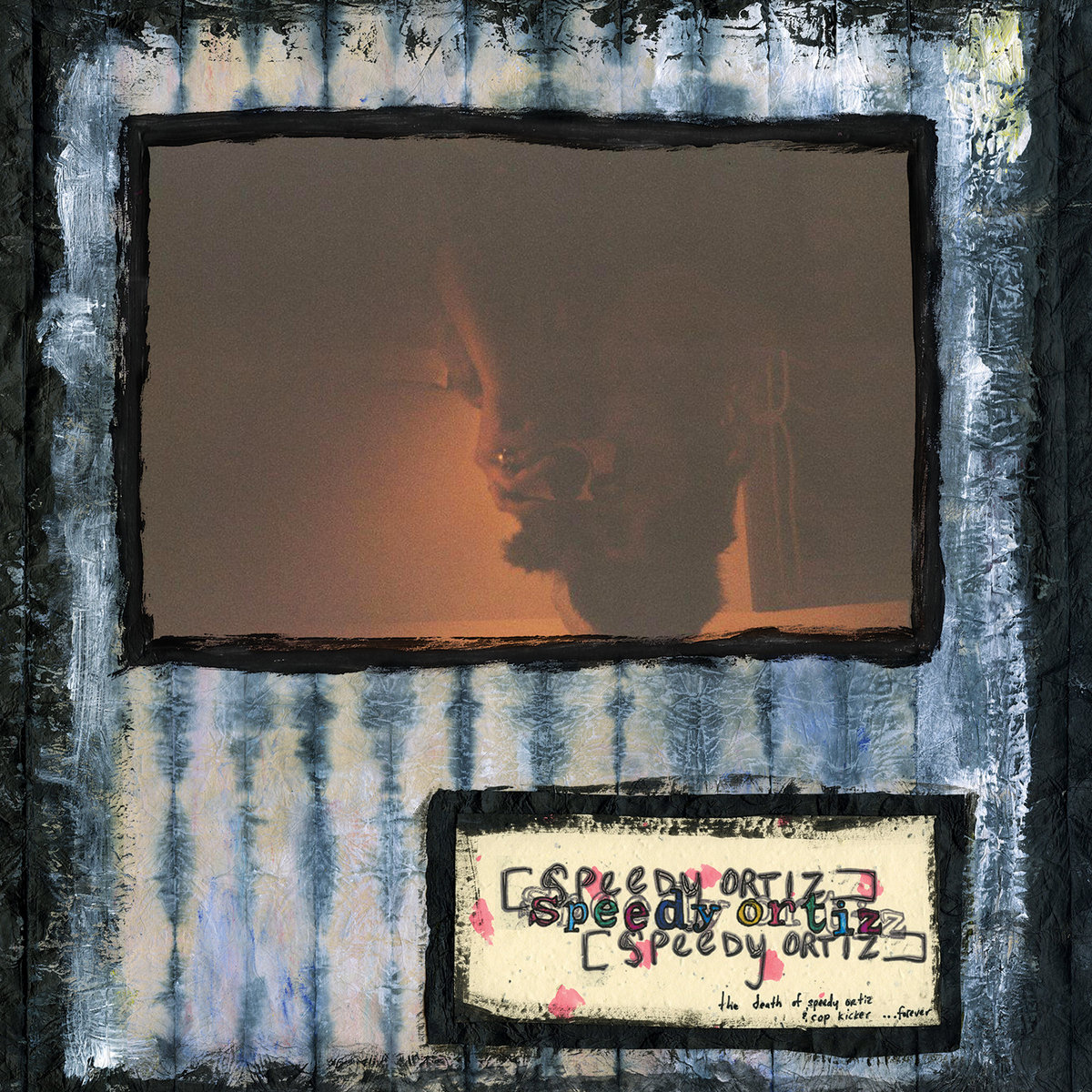
Now that Speedy Ortiz are in the double digits, Sadie Dupuis decided it was time for the band to drop a special double LP, too. In honour of its 10th birthday, the Massachusetts-born band will release a compilation of early and previously unreleased tracks later this fall, re-sharing Dupuis’ early solo work from when Speedy Ortiz was still a fledgling solo project. Titled “The Death of Speedy Ortiz & Cop Kicker…Forever”, the digital collection drops November 12th, followed by the album’s physical release via Carpark Records on January 28th, 2022.
The 22-track album will include the entirety of Cop Kicker and The Death of Speedy Ortiz are both now a decade old as well as previously unheard songs, liner notes from Dupuis, and photos and journal scans from the earliest days of the project.
“I can’t claim Speedy as a solo project anymore I love working with the friends and bandmates who have played and recorded with me over the years and I’m glad I now have Sad13 as an outlet for my home-produced concoctions,” Dupuis says. “But I’m so proud of these 22 solo songs, which I put a lot of heart and time and sweat into in both 2011 and 2021, and it feels right to honour them by finally re-releasing them with Carpark (who I’ve worked with for pretty darn close to a decade, too) in a more widely listenable way.”
The album rollout begins (October 13th) with an updated version of “Cutco” and an accompanyingBlairWitch Project-inspired music video directed by Dupuis herself.
“Rewatching Blair Witch Project, I found the characters’ treatment of one another exemplary of the early 20s heedlessness I was venting about on ‘Cutco,’” Dupuis explains. “So with some help from my Speedy bandmates Andy Molholt and Audrey Zee Whitesides, we made a shot-for-shot homage to a ’90s horror classic with one delicious change to the formula.”
Here’s a second taste of Casper Skulls’ new album “Knows No Kindness”, and it’s another lovely sounding indie song, with some folk/country flourishes.
This is our second favourite song and third single from “Knows No Kindness” is out today! We love playing this one live so we made a performance video for it by Colin Medley with overlaid fall animations to celebrate its life! .If you missed yesterday’s story time post(scroll down), “The Mouth” is where the Sables and Spanish rivers meet. It’s a park that has a lot of legacy in my family and almost became a nuclear waste runoff due to some big dumb company trying to get in there before my relatives and friends of the family protested to stop it from happening.
I wanted to take a second to talk about the cover artwork for “Knows No Kindness” because the next two singles are more or less a diptych together and they both revolve around this photograph taken circa 1960 by Hal Cummings. In Massey, Ontario my grandmother Velma (she’s the one holding the “Massey No Nuke Country” sign), aunts, uncles and townsfolk there held a protest to stop A.E.C.L (a now defunct nuclear waste company) from creating a runoff into the Spanish and Sables Rivers there.
The group protested outside A.E.C.L’s temporary HQ and eventually ran them out of town and the run off never ended up happening. The Sables and Spanish Rivers meet at a point that is located in the heart of Massey also known as The Mouth Park. It’s a local favourite swimming hole that my grandmother used to take my aunts and uncles then years later my mother took me and my sister. We’re releasing the song “The Mouth” accompanied by a performance music video because it is our favourite song to play live with some appropriate fall inspired animations by Gaia Alari .
Music video by Casper Skulls performing “The Mouth”. Next Door Records
Joni Mitchell will make you yearn for people you’ve never met and places you’ve never been. “Archives Vol. 2: The Reprise Years (1968-1971)“, the latest in her series of recordings from the vaults, will be out on October 29th. Brimming with unreleased content, it features a disc of home demos from 1967 and 1968, a live album from Le Hibou Coffee House in 1968 that was recorded by Jimi Hendrix, as well as recordings of two different BBC sessions from 1970, a recording of her 1969 appearance on The Dick Cavett Show, a live album from Carnegie Hall in 1969, and a few other various live recordings.
Mitchell shared the first song from the box, “The Dawntreader” from the 1968 concert that Hendrix recorded. Despite being almost five decades old, the set was just recently rediscovered. According to his diary entries, Hendrix was in attendance at her March 19th, 1968 show and decided to bring his tape recorder to capture the set. The result is a stripped-down performance of the track that tugs at your heartstrings. A gentle fuzz adds a half-remembered quality to the song as she plucks the guitar and her voice lingers over dreamy lyrics.
Listen to the previously unreleased live version of Joni Mitchell’s “The Dawntreader” recorded by Jimi Hendrix in 1968.
“The Dawntreader” will be released as part of ‘Joni Mitchell Archives Vol. 2: The Reprise Years (1968-1971)’ available October 29th. Pre-order the 5-CD or 10-LP set from JoniMitchell.com to receive an exclusive, limited edition 7” x 7” art print featuring a never-before-seen illustration by Mitchell from the era:
In a diary entry, Hendrix reportedly wrote, “went down to the little club to see Joni-fantastic girl with heaven words.” Even 50 years later, his description rings true, her angelic nature evident in the recording.
The second volume of Mitchell’s “Archives” series documents one of her most formative and productive eras: the three-year span between the release of her debut album, 1968’s “Song to a Seagull”, and 1971’s career milestone “Blue“. The five discs here chart her evolution through previously unreleased live recordings, demos, radio and TV broadcasts and studio outtakes. The result is an intimate portrait of a pioneering singer-songwriter finding her voice.








 The Fat Angel Sings