Lemonheads’ seminal album ‘It’s A Shame About Ray’, lovingly reissued for it’s 30th Anniversary. The long overdue reissue includes a slew of extra material, including an unreleased ‘My Drug Buddy’ KCRW session track from 1992 featuring Juliana Hatfield, B-sides from singles ‘It’s A Shame About Ray’ and ‘Confetti’, a track from the ‘Mrs. Robinson/Being Round’ EP, alongside demos that will be released for the first time on vinyl. This reissue celebrates their prestigious fifth album, the deluxe book back editions feature new liner notes and unseen photos.
Described By Music Journalist’s As “A 30-Minute Insight Into What It’s Like To Live Hard And Fast And Loose And Happy With Like-Minded Buddies, Fuelled By A Shared Love For Similar Bands And Drugs And Booze And Freedom.”. ‘It’s A Shame About Ray’ Had A Considerable Impact Back In Those Heady, Carefree Days Of ’92, The Record Perfectly Captures Evan Dando’s Ability To Effortlessly Encapsulate Teenage Longing And Lust Over The Course Of A Two-Minute Pop Song.
Singles Such As ‘My Drug Buddy’ And The Breezy Perfect Pop Of The Title Track Might Stand Out (Plus The Add-On Of ‘Mrs. Robinson’ Which Later Copies Included), But The Album’s Real Strength Lies In The Tracks In-Between; The Truly Fantastic ‘Confetti’ (Written About Evan’s Parents’ Divorce), And The Eye-Wateringly Casual Acoustic Cover Of ‘Frank Mills’ (From The “Hippie” Musical Hair), A Version That Seems To Resonate With Every Ounce Of Pathos And Emotion Felt For The Lost 1960s Generation.
To Hear EvanDando Sing Lines Like ‘I Love Him/But It Embarrasses Me/To Walk Down The Street With Him/He Lives In Brooklyn Somewhere/And He Wears His White Crash Helmet’ Is To Truly Appreciate How Wonderful And Tantalising Pop Music Can Be. Then, There’s The Rush Of Insurgency And Brattishness On The Wonderfully Truncated ‘Bit Part’; The Topsy-Turvy ‘Ceiling Fan In My Spoon’... This Was Male Teenage Skinny-Tie Pop Music On A Level Of Brilliance With The Kinks, Early Undertones, Wipers.
Ray still sounds revelatory in its restlessness, mixing college pop with country flair and relocating Gus Van Sant’s Portland atmosphere to New England.”
The long-simmering promise of Evan Dando finally boiled over into something close to stardom back in 1992 with the release of Lemonheads’ fifth album “It’s A Shame About Ray”. On it, the movie star handsome singer/songwriter crystallized a folk-pop sound with a little help from longtime compatriot Juliana Hatfield and bared his lustful and goofy self in his lyrics of dopesick hunger (“My Drug Buddy”), stoned reverie (“Ceiling Fan in My Spoon”), romantic longing and the wide-eyed delight of a toddler out for a ride in a stroller. For the album’s 30th anniversary, Fire Records followed the trail that Dando took before and after its release, gathering demo versions and equally great B-sides like a version of “Shakey Ground,” a song by Australian alt-rock group Smudge, and an acoustic rendition of ABBA’s “Knowing Me, Knowing You” that left this writer weak in the knees when he heard it at the tender age of 17. And, of course, the bonus disc kicks off with the Lemonheads’ massively successful cover of “Mrs. Robinson,” a song originally recorded for another archival release (the 25th anniversary of The Graduate) that became Dando’s biggest selling single.
The Lemonheads – “It’s A Shame About Ray” :30th Anniversary (Vinyl 2LP) £28.99 (March 4th)
Leif Vollebekk is a Canadian indie folk singer-songwriter, whose 2017 album “Twin Solitude” was a shortlisted finalist for the 2017 Polaris Music Prize.
“I’m Not Your Lover” is out today. But it’s not the version on the record. It’s a recording of the band and I playing it live, for the first time, at the Troubadour in LA. It was one of our last shows of 2020. When I first heard it, I thought it sounded better than the album version. It felt freer. Freer is good. And so it is now out there for you to imbibe. I hope it resonates for you, too. The video was directed by Kaveh Nabatian. We endeavoured to find footage of that night (to the many of you who sent material to us : thank you) but we couldn’t piece it together.
So we reshot the whole thing in the polar opposite location of that sweaty packed club in West Hollywood, the wilderness of Quebec. I like to think that’s where all tours eventually end and also begin. Speaking of, all tour dates for 2022 are now announced.
Thanks for the music, Olivier Fairfield (drums) Michael Felber (bass), Parker Shper (keys), Scotty Crowe (everything) Harris Shper (recording/mix)
Frazey Obadiah Ford is a Canadian singer-songwriter and actress. She was a founding member of The BeGood Tanyas. Her third album U kin B the Sun, Ford inhabits an entire world of shapeshifting rhythm, elevating every beat and groove with the subtle magnetism of her mesmerizing voice.
Recorded during the sessions for 2020’s “U Kin B The Sun” album but unheard until now, the song is “simply about the devastating amount of love you have for a child,” explains Ford. She began writing the song not long after the birth of her son Saul, who’s now a teenager, but only completed it recently.
“Saul” also features in Ford’s recent video for “U Kin B The Sun”:
While many other rock artists during the last part of the ’60s dismissed and pushed aside the mores and ideals of their parents and earlier generations, The Kinksembraced them, finding peace and a sense of harmony in the aftermath of the Summer of Love. Frontman Ray Davies invests too much heart and perspective for this song cycle about lost British traditions to be mere satire of the nostalgia and sentiment found in its words and music.
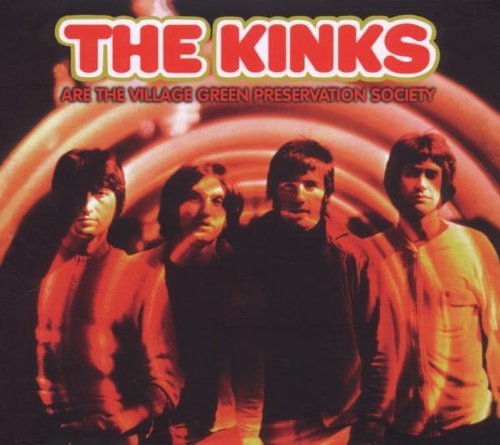
“The Kinks Are the Village Green Preservation Society”, a masterpiece that was completely out of step with Swinging London, while at the same time being utterly timeless. “These were rock/folk tunes,” Ray Davies says now. “But it was unlike anything the Kinks had done before. We were known for ‘You Really Got Me,’ after all.”
Devoid of any obvious singles, or any fancy production techniques, the album is a true pleasure from beginning to end, arguably running circles around the competition in both song writing and cohesiveness, and 45 years later is more influential than ever.
Often cited as one of the most quintessentially English albums of its era, “The Kinks Are The Village Green Preservation Society” was venerated by critics though largely overlooked itself by the buying public at the tme. Released in the same year as The Beatles’ “The White Album“, Pink Floyd’s “A Saucerful of Secrets“, and The Band’s “Music from Big Pink, Ray Davies’ concept LP had little in common with the rest of his contemporaries, many of whom were either looking to America for musical stimulation, or tripping themselves into outer space. Instead, Davies turned to his beloved England for inspiration, writing a collection of tunes full of intriguing characters.
Released (November. 22nd) in 1968: after nearly two months of delays, The Kinks released in the UK one of rock’s most enduring concept albums ‘on Pye Records (in the US three months later on Reprise Records); It was the group’s 6th studio LP was the last by the original quartet (with bassist Pete Quaife leaving in early-’69); a collection of vignettes of English life, the album served as a virtual thematic template for the ‘Britpop‘ movement of the ’90s; although arguably the band’s most important & influential long-form work, it failed to chart upon release, selling about 100,000 copies.
The title track is a tender ode to an England that was ever rapidly changing, especially throughout the 1960’s, where Davies and Co. are determined to conserve what remains of their country’s traditionally conservative culture, preserving “the old ways from being abused/Protecting the new ways for me and for you/What more can we do”.
“It was obscure the week it came out,” Dave Davies jokes of the album. “Something Else” is probably my favourite Kinks album, but “Village Green” was just so good. We put those songs together in our front room, and we drew really heavily on our environment and our family, who had supported us, and I think that’s why it has such a distinctive English flavour and why the songs are so intimate in a way. Ray has such a great way of drawing characters. The song ‘Picture Book’ is like sitting in the front room looking at old photographs with your mum.”
The sentimentalism continues with “Do You Remember Walter” (a far more cynical take on aging than McCartney’s “When I’m Sixty-four”), “Picture Book”, and the deliciously languid “Sitting by the Riverside”. Davies laments the demise of old British Rail on “The Last of the Steam Powered Trains”, while yearning for pastoral sanity on “Animal Farm”.
“Village Green” was made at a time when we were banned from touring in America and we didn’t have much airplay,” Ray Davies says. “But I think the reason it’s become so beloved in retrospect is that it reaches people like folk music. Not many people have the “Village Green” record, but many people know it. I think it’s more to do with the sensibility, because it’s very different to typical rock music. I wasn’t worried about airplay and, whether I designed it that way or not, I reached people rather than record companies and little by little it broke through.”
Davies is right about the folky nature of the music. But it’s that very simplicity that gives the album its distinctive, if utterly straightforward, sound. While other records of the time can sound dated or perhaps too precious, Village Green has always sounded fresh and accessible, a work of an immensely in-sync group at the height of its powers, while still retaining a bit of that garage edge that makes rock ‘n’ roll so exciting.
“Everything about it was a low-achieving record, in every sense,” Ray Davies jokes. “But I intended that. We used a lot of ambient sound in recording the drums and things like that. Some people would say that made it sound like it wasn’t well-produced, but that’s the sound I wanted and it added to the poetic value of the record. It was designed to be that way.”
“That was a sound I was really into at the time,” Dave Davies remembers. “Pete [Quaife, The Kinks‘ bass player] and I were trying to get the excitement of our performances on record and that’s just the way it came out. On songs like ‘Big Sky,’ I’d think of a bass part and give it to him and he’d change it around — play off the melody, like Paul McCartney was starting to do at the time, because they both started as guitar players — and it would create something completely different and also really new-sounding.”
Ray was finding inspiration in unusual places.
“I was at a music industry schmooze fest and I couldn’t cope with all the business talk,” he says of the origin of “Big Sky.” “I conceived and wrote it on the balcony of the Carlton Hotel in Cannes [France]. I know it sounds very grand. But I had to share a room with my publisher, and so out of frustration I knocked over the geranium from our fourth floor balcony and the first line of the song, ‘Big sky looks down on all the people looking up at the big sky,’ came to me while I was looking out from the balcony of the hotel. I was in a situation I was not happy in, so I went into this world of irony and pathos and used my imagination that one day we’ll be free from all this. Because I’m sure there are lots of people like me who feel confused in a world that’s going mad and you try to find a spiritual way through it. It’s quite a spiritual record.”
The neo-psychedelic “Phenomenal Cat”, “All My Friends Were There” (which could have been penned by Syd Barrett), and “Wicked Annabella” (I can imagine a pre-T-Rex Marc Bolan grooving to this one), are all cleverly written and arranged, and slowly etch their way into the memory upon repeat listens.
As Ray Davies says in the liner notes contained within the mammoth 3-disc deluxe edition, “It’s the most successful failure of all time.”. However over the decades appreciation for the album has multiplied, whose whimsical tales of English rural life and quaint eccentrics never seems to date. Many of these tunes have a delicacy as well as poignancy to them, not to mention a sturdy nod to American blues, Psychedelia, and folk-rock, along with a nostalgic measure of old-fashioned Music-Hall.
This is one of those classic LPs that must be absorbed and enjoyed from beginning to end, where throughout Davies paints a picture of a society that was as imaginary as it was genuine. A world invented as much on fact as it was on fiction. That it lacked a “Waterloo Sunset” or “You Really Got Me” was likely the real reason why it failed to reach a wider audience, and due not to any musical deficiency on the part of The Kinks themselves.
Originally issued in mono, “Village Green” can now be enjoyed in stereo (remastered from first generation tapes no less), making for a far superior listen (the mono version has been preserved on disc two for all the purists). However it’s the third disc that will have many a Kinks archivist’s pulse quicken, and is a Kinks fanatic’s dream come true. 55 minutes of outtakes, alternate mixes and other assorted rarities, the majority of which were previously unavailable. Only Ray Davies could have written lines such as “We are the Office Block Persecution Affinity/Gave save little shops, china cups and virginity” .
Tracklist:
01 The village green preservation society 02 Do you remember Walter 02:53 03 Picture book 05:21 04 Johnny Thunder 07:58 05 Last of the steam – powered trains 10:28 06 Big sky 14:40 07 Sitting by the riverside 17:32 08 Animal farm 23:00 09 Village green 25:13 10 Starstruck 27:42 11 Phenomenal cat 30:23 12 All of my friends were there 32:49 13 Wicked Annabella 35:33 14 Monica 37:53 15 People take picture of each other
While the British rock scene was littered with all sorts of underrated bands in the ’70s, the same was true across the pond in the United States. While bands such as Aerosmith and the Eagles were tearing up the charts, other acts were trying to scrape together a living by hitting the road and selling themselves on their live act. One such band was Little Feat, a group out of Los Angeles formed in 1969 that never made a hit single, but still managed to catch the attention of much bigger acts, to the point where Led Zeppelin guitarist Jimmy Page told Rolling Stone magazine in a 1975 interview that Little Feat was his favourite American band.
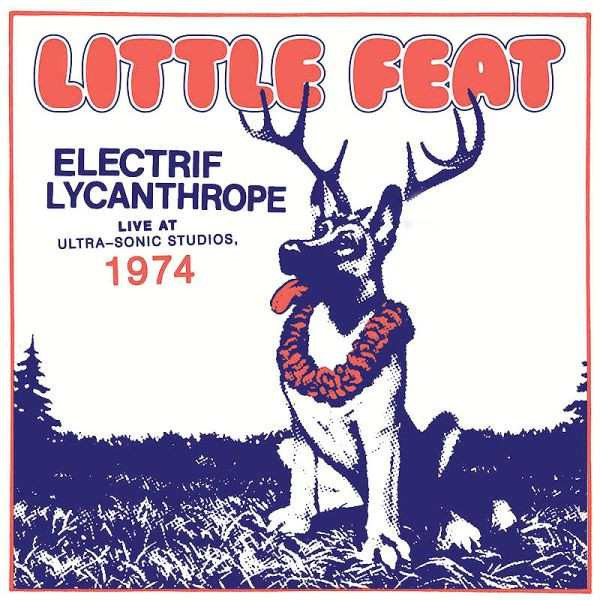
Nestled between the classic LP releases Dixie Chicken and Feats Don’t Fail Me Now and playing for a small and intimate assembled studio audience, this recording finds Little Feat in their prime live from Ultrasonic Studios in Hempstead, NY on September 9th, 1974. Often discussed as their ‘best’ line up, this recording features the 1974 version of Little Feat containing Lowell George (Guitar, Vocals), Paul Barrere (Guitar, Vocals), Kenny Gradney (Bass), Richie Hayward (Drums,Vocals) Sam Clayton (Percussion, Vocals), and Bill Payne (Keyboards). With excerpts of this performance only available previously as a legendary 70’s bootleg, this would be the first time the full-length performance would be available directly from the original pre-FM broadcast master tapes.
This release serves as an excellent introduction to one of rock ‘n’ roll’s best – yet criminally unsung – outfits. The recording captures the band cranking out songs from what are arguably two of their three best studio albums, at the pinnacle of their chemistry.
The late Lowell George didn’t get enough flowers during his lifetime, and has still missed out on any wealth of bouquets for being an innovator when it came to melodic, funky jazz-rock songcraft or for his Little Feat band (who still make magnificent new albums and tour) being early jam band VIPs. If you want to check out Lowell and Little Feat’s entire catalogue , find Rad Gumbo: The Complete Warner Bros. Years1971-1990, or start with the punchy, never-before-released rough house of “Electrif Lycanthrope”. Wolfen and Zappa-esque (George was once a Mother of Invention), the live, rugged funk of Little Feat is a necessity for any blue-eyed soul adventurers.
On the back of former Frank Zappa guitarist Lowell George, Little Feat produced a catchy catalogue of rock blending elements of folk, funk, blues, and country up until the group disbanded in 1979 shortly before Lowell’s death. If you’ve somehow made it this long without discovering Little Feat, you owe it to yourself to give them a listen (their live album “Waiting For Columbus” is great place to start).
Little Feat “Live At Ultrasonic Studios” [WLIR] Hempstead, NY September 19, 1974 Pre-FM (tracks 1 to 9) FM broadcast (tracks 10 to 12) Finally time to have Little Feat aboard, and they arrive with a classic recording at the Ultrasonic Studios on September 1974. This one is not rare at all, it is more as a way of recognising and remembering the fine music that the band played and still plays.
Lowell George – guitar, vocals Paul Barrére – guitar, vocals Bill Payne – keyboards, vocals Kenny Gradney – bass, vocals Richie Hayward – drums, vocals Sam Clayton – percussion, vocals This is ridiculously great! This recording presents them at their peak. Little Feat has one of the greatest rhythm sections ever. The sound quality is great and the performance is outstanding! Check out “The Fan, Fat Man In The Bath Tub” or “Spanish Moon” at least.
“Fever Dreams Pts 1-4”; explores a multitude of concepts and themes. Because the wider world effectively shut down during its creation, Marr’s focus was pushed into both his interior life, and evoking the emotional and psychological states of others. “It’s an inspired record, and I couldn’t wait to get in and record every day,” he says. “But I had to go inwards.” As well as evoking the past and present, the album looks to the future, the idea that even in the most trying times, hope endures.
“There’s a set of influences and a very broad sound that I’ve been developing – really since getting out of The Smiths until now, and I hear it in this record,” Marr said in a statement about his new album.
“There are so many strands of music in it. We didn’t do that consciously, but I think I’ve got a vocabulary of sound. And I feel very satisfied that I’ve been able to harness it.”
Written and recorded at the Crazy Face Factory over the last year, ‘Fever Dreams Pts 1-4’ was created with Marr’s long-standing band: co-producer Doviak, bassist Iwan Gronow, drummer Jack Mitchell, and features backing vocals throughout the album from the Massachusetts-based singer-songwriter Meredith Sheldon, with three songs featuring bass from Primal Scream’s Simone Marie.
The record will follow on from his third solo album “Call The Comet”, which was released in June 2018. “Fever Dreams Pts 1-4” will be released on February 25th, 2022 via BMG and includes Marr‘s recent single “Spirit, Power and Soul”. The first quarter of the album will be released as the “Fever Dreams Pt1” EP on Friday (October 15th).
Marr has also announced details of a new livestream, Live At The Crazy Face Factory, which will premiere online on November 10th and be available on-demand until November 14th. Curated by Marr, the livestream will offer his fans “the chance to step inside [Marr‘s] custom-built Crazy Face Factory studio where “Fever Dreams Pts 1-4″ was created”.
One-fourth of a bold new double album from the famed Smiths guitarist, solo artist, and occasional Modest Mouse bandmate, the Fever Dreams Pt. 2 EP looks to continue Johnny Marr’s impressive run of solo releases that began in 2011 (if you don’t count his one release with The Healers from 2003) with TheMessenger. Marr is refining his sonic palette, as well: single “Sensory Street” has a throbbing ‘80s electro-soul vibe, while “Tenement Time” is a classic rocker straight from his past.
Marr will also “discuss his creative process and life in song writing, alongside a set of full-band live performances from across his career”.
Marr will tour with Blondie as a special guest on the latter’s Against The Odds tour in the UK next April.
Boston 1971: An historic early recording of Aerosmith in their rehearsal room – just the band, crew and friends captured on Joe Perry’s tape recorder. This never-before-heard performance showcases the early, raw talent of this future Hall Of Fame band, one year before signing to Columbia Records, and two years before their eponymous debut, which featured many of these songs, including their enduring anthem ”Dream On”.
Before Steven Tyler and Joe Perry became the “Toxic Twins,” they were merely intoxicated. On a newly unearthed demo tape, which is coming out with the regrettably punny title “The Road Starts Hear”, that Aerosmith cut in 1971 two years before releasing their self-titled debut the band sounds loose and lubricated on embryonic versions of “Dream On,” “Mama Kin,” and other ditties they would be performing live for the next 50 years. It’s at once both a sonogram of the band as journeymen and a testament to the vision they had early on, the dogged determination to dream until the dream comes true — even if it sounds anything but dreamy in the moment.
The band members were all in their late teens or early twenties when they first came together in 1970. Originally, Tyler had corralled Perry, bassist Tom Hamilton, and drummer Joey Kramer into backing him on an audition tape for the Jeff Beck Group, which had recently parted ways with Rod Stewart. They ultimately figured they made a pretty good racket of their own together, nicked a moniker from Sinclair Lewis’ novel, Arrowsmith, and embarked upon becoming Boston’s greatest bar band. It’s that Aerosmith that plays on “1971: The Road Starts Hear“, a recording that reveals their roots better than their debut LP.
Although Tyler’s pouty lips would earn the band Stones comparisons for most of its career, this record suggests the band was more obsessed with Beck, the Yardbirds, and Led Zeppelin, artists who came to prominence in the wake of the Stones’ blues-rock renaissance, making Aerosmith third-wave contributors (and giving them the latitude to create their own iconic sound eventually). On this tape, you can hear the carefree spirit in Aerosmith that would later influence bands like Mötley Crüe and Guns N’ Roses but none of the glossy, powerhouse pop sheen that would define “Kiss my sassafras”/”Love in an Elevator”-era Aerosmith in their comeback years. This is crude Aerosmith, the unrefined essence of what they would become.
After years in storage, the ancient tape’s sound is murky and blurry, which actually adds to the songs’ smoky, bluesy appeal. From the beginning, when the band members sound like they’re having a Marvin Gaye “What’s Going On”–style party as Perry noodles on Fleetwood Mac’s “Albatross,” before they all align on Aerosmith’s “Somebody,” they sound more casual than they ever did on any studio recording. This tape is most likely a rehearsal tape, so they sound off their guard. In the release’s liner notes, penned by Rolling Stonecontributing editor David Fricke, the band members say they can’t even remember making this recording; it was just in a stack of tapes Tyler had asked a friend to store. But it shows the chemistry they had at the time, for better and worse.
Most of the material here would become middling deep cuts on the band’s early records, and the album versions almost always sound better, thanks to recording-studio sound which allows you to hear both Perry and rhythm guitarist Brad Whitford’s parts clearly in stereo. On every song here, Tyler sings in the kind of strange Kermit the Frog voice he used on the first album, before he embraced his James Browny rasp. And some of the songs, which were likely recorded only for the band, sound downright sloppy. On “Dream On,” the piano sounds out of tune, Perry flubs a few notes, and Tyler sounds like he’s gasping for oxygen on the high notes. But on the upside, the song features a long-forgotten outro for the song; where the studio single ends like the Twilight Zonetheme, Perry and Whitford play an almost cheerful guitar line, giving it some historical importance. It just doesn’t live up to their later legend.
The best stuff here, though, comes when the musicians just kick into bar-rock mode. Their cover of Rufus Thomas’ blues number “Walkin’ the Dog,” sounds rowdy and dangerous here; even with Tyler’s flute solo, it sounds more like the party anthem it probably was before they professionalized it in the studio for Aerosmith. “Movin’ Out” (the first song with a Tyler/Perry songwriting credit to make it on an album) reeks of Led Zeppelin IIIpatchouli with its psychedelic guitars and Kramer’s thumping drumbeat; the album version is boring by comparison with its weird phaser effect on Tyler’s voice and tighter playing.
Both “Somebody” and “Mama Kin” (two songs that sound almost exactly alike, except in that “Mama Kin” is better) show how Aerosmith were born with their signature groove intact. They likely learned that groove from messing around on blues songs like the release’s two blues rarities, “Reefer Headed Woman” and “Major Barbra.” It’s a feeling they’d later lose their grasp on. By the time they recorded “Reefer” for “Night in the Ruts”, they sounded more jaded and like they were going through the motions (this time with heavy-metal guitar distortion.) As for “Major Barbra,” they quickly abandoned it, sticking versions of it on their “Classics Live” and “Pandora’s Box” comps; it’s a shame that the version here doesn’t sound better because it’s a better performance than either of the official releases.
But because you can practically hear the dust infecting the tape heads, “The Road Starts Here” feels more like a curious fossil, worthy of study, rather than a lost gem. This is not Aerosmith; this is the promise of Aerosmith. It’s rude awakenings, not the dream come true.
The San Fransico-based trio of Adam Abildgaard, Nick Duffy, and Ted Davis have built a loyal following and constant buzz over the last several years, with the 2019 EP ‘Mood Ring’ standing as their most kaleidoscopic work to date. Merging the quintessential melodies of pop’s past with contemporary touches to forge something truly unique, HFHW is just starting to create their own sonic world.
Californian indie trio Hot Flash Heat Wave draw on dream pop, surfer rock and post punk, finding an international audience with their albums “Neapolitan” and “Soaked”.
With a new full-length record on the way, the crucial announce a promotional tour, “Now that we’ve finally finished the record, we’re shifting the focus to preparing these songs for the stage with a new line-up and bringing them to life. From its concept, this album was meant to exist as both a record and a live experience, so nailing the sound and performance is really important to us and we have some ideas to sort out.”
Highschool friends Adam Abildgaard (vocals, guitar), Ted David (vocals, bass), and Nick Duffy (drums) and named their band after an intense summer in their home of San Francisco.
In 2015, they dropped their debut album “Neapolitan“. Featuring the hit single “Gutter Girl”, the record has rocketed up to 500,000 streams and continues to rise and was followed by second album “Soaked” two years later. More recently, they returned with their adventurous “Mood Ring” EP just last year which saw the boy adapt R&B on lead single “Go Ride” plus “Sky So Blue” which saw them embark on more psychedelic avenues.
“It’s the first record where we felt fully in charge of our sound and direction. We were writing more personal music, letting go of ideas about what we should sound like and exploring vulnerable, exciting places.”
This month has seen the release of brand new single “m o t I o n s”, a song which sees them explore an electro edge.
“m o t I o n s” will feature on their as yet untitled album which is expected to be released next year. Hot Flash Heat Wave will be showcasing their new material when they kick off their tour in February
“It’s a simple boy-meets-girl story, complicated somewhat by the presence of a motorcycle.”
That’s the humble introduction given by Richard Thompson in a YouTube clip of a performance of “1952 Vincent Black Lightning,” his unforgettable folk ballad found on 1991’s “Rumour And Sigh“. It may indeed be an uncomplicated story, but it is brought to life in thrilling and moving fashion by this perpetually underrated singer-songwriter.
When Thompson’s name is mentioned, it is often in the context of his guitar work, which is indeed magnificent on this track. Finger picking his acoustic at lightning speed, he takes listeners on a ride every bit as breath taking in its way as one the James and Red Molly take aboard the titular bike. Yet his lyrics deserve just as much credit for the song’s success.
For those not up on their motorcycle history, the Vincent Black Lightning was only in production in Great Britain for a four-year span, but in that time it was the favoured weapon of choice for those daredevils looking to break land speed records. Still, it’s not necessary to know any of this to understand the allure of the bike for the two main characters in the song.
Red Molly is attracted to both speed and danger, making the sight of James on his Vincent simply irresistible. The feeling is likewise, as James lets her know: “Red hair and black leather, my favourite colour scheme.” As anyone who has heard a folk ballad or two can probably guess, their time together is bound to be fleeting. James, an outlaw with a heart of gold, acknowledges this: “Now I’m 21 years, I might make 22/And I don’t mind dying, but for the love of you.”
Their hopes to ride their rapid motorbike into the sunset together quickly fade when an armed robbery gone awry leads to mortal wounds for James, giving him just enough time to confess his undying love to Red Molly. Yes, it’s a cliché, but Thompson imbues their last goodbye with such genuine emotion that it transcends all the times this story has been told before.
James knows he’s had it good in his brief time on Earth, considering he was able to partake in his two deepest desires: “Says James, ‘In my opinion, there’s nothing in this world/Beats a 52 Vincent and a red-headed girl.’” As his time runs out, his version of the afterlife appears before his dying eyes, “I see angels on Ariels in leather and chrome/Swooping down from heaven to carry me home.”
He gives Red Molly one last kiss, but not before he hands her over the keys to the motorcycle, allowing her to take all the rides that are now denied to him. It’s a misty-eyed moment. “1952 Vincent Black Lightning” may be, at face value, just a simple tale about a girl, a guy, and a motorcycle, but, thanks to the inimitable talent of Richard Thompson, it’s nothing short of epic.






 The Fat Angel Sings