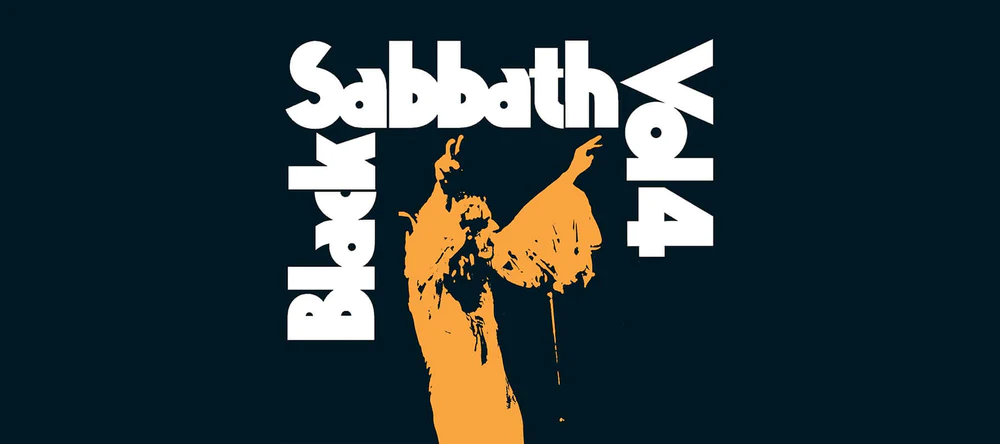
The sessions for Black Sabbath’s fourth album were notoriously characterized by the boxes of cocaine consumed during the making of the record. In a way it’s the band’s first transitional LP – they produced themselves, steered from expectations and got heavier. This four-disc set tags on studio leftovers – outtakes, alternates, aborted takes – as well as a March 1973 concert that loads up on songs from the 1972 album. Even with all the drugs, the band has never sounded so assured.
Black Sabbath made their name with their self-titled debut, “Black Sabbath”, released on 13th February 1970 but the Brummy lords of Heavy Metal really hit their groove with their fourth album, “Vol. 4”, released on 25th September 1972.
The classic Black Sabbath line-up of Tony Iommi on guitar, Geezer Butler on bass, Bill Ward on drums and Ozzy Osbourne on vocals produced a classic album – but not without significant input from Iommi. When rehearsals began in Birmingham, the rest of the band spent the majority of their time at a local pub while the band’s guitarist was left to come up with the creative goods. So when the decision was made to relocate to LA (mainly for cost reasons), he could have been forgiven for thinking things would improve.
But drugs – cocaine in particular – had a strong grip on the band at this point, as not so subtly demonstrated in the credits of “Vol.4″ ( “We wish to thank the great COKE-Cola Company of Los Angeles”) and track “Snowblind”, in which Ozzy whispers the refrain, “cocaine!”. In fact, it’s rumoured that the band spent more money on coke during the “Vol. 4” sessions than they spent making the album itself!
“We were all fucked-up bad,” said Ozzy in an interview . “Dealers coming round every day with cocaine, Demerol, morphine, everything round the fucking house.”
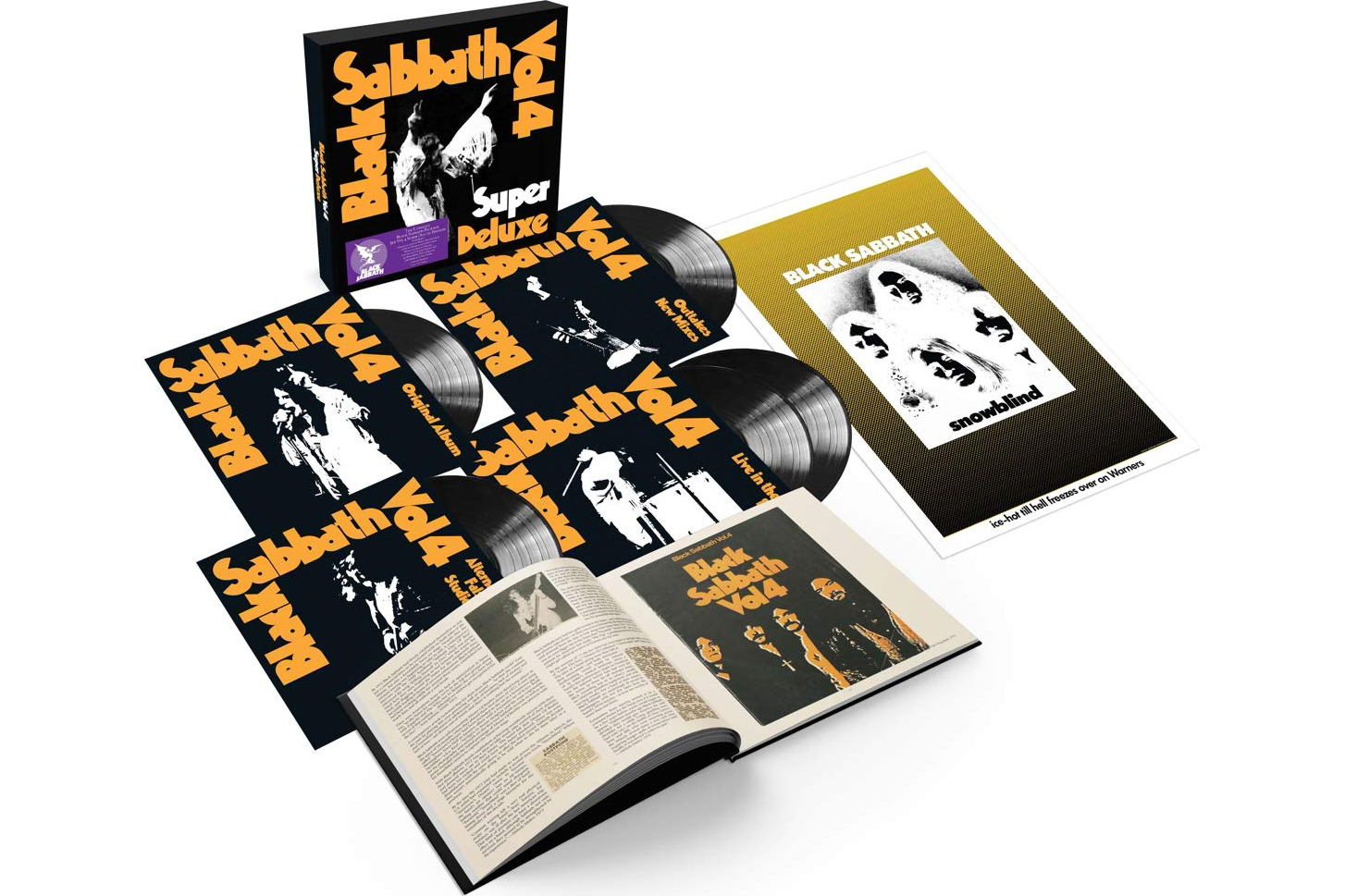
Super Deluxe Edition Of The Band’s 1972 Classic Includes Newly Remastered Original Album Plus 20 Previously Unreleased Studio And Live Recordings.
Black Sabbath unleashed the group’s fourth album in two years in 1972 with “Vol 4”. Stacked with classic tracks like “Supernaut,” “Changes,” and “Snowblind,” the record harnessed the group’s surging popularity to reach the Top 10 on the Albums Chart in the U.K. and the Top 20 on the Billboard 200 in the U.S., on its path to being certified platinum by the RIAA.
The innovators of heavy metal revisit “Vol 4” on a new collection that includes a newly remastered version of the original album along with a trove of 20 unreleased studio and live recordings and comes with extensive booklets featuring liner notes with quotes from the era from all four band members, rare photos, and a poster with previously unpublished early artwork of the album using the working title “Snowblind“.
Bolstered by a fresh remastering, “Vol 4’s” ambitious arrangements and complex grooves have never sounded more inspired and menacing. Originally released in September 1972, the album marked two major changes for the members of Sabbath: Ozzy Osbourne, Tony Iommi, Geezer Butler, and Bill Ward. While their previous albums – “Black Sabbath”, “Paranoid”, and “Master of Reality”– were produced by Rodger Bain and recorded in England, they instead chose to produce “Vol 4″ themselves and record it at the Record Plant in Los Angeles.
The generous addition of bonus material on “VOL 4: SUPER DELUXE EDITION” begins with six previously unreleased studio outtakes from the original sessions for the album. Each one has been newly mixed by Steven Wilson using the analog multi-tracks. Highlights include outtakes for “Supernaut” and “Changes,” as well an instrumental version of “Under The Sun.”
The set also features 11 additional studio recordings (also newly mixed by Wilson from the analogue multi-tracks) that spotlight alternative takes, false starts and snippets of studio dialogue. These tracks transport listeners into the studio with the band and offer some insight into the making of the album. Along with several alternative takes for “Wheels Of Confusion,” these recordings also include outtakes for “The Straightener” and “Snowblind.”
The collection concludes with a searing collection of live performances that re-create a typical setlist from Black Sabbath’s tour for “Vol 4″. Recorded in March 1973 at various stops along the band’s U.K. tour. The recordings were originally slated for a live album that was ultimately shelved. Although some of these performances have been previously available in various states, the release marks the first time that a full 1973 live Sabbath show has been recreated. The live audio has been newly mixed by Richard Digby Smith using the original 16-track analogue tapes to achieve a level of fidelity not heard on any previous incarnations.
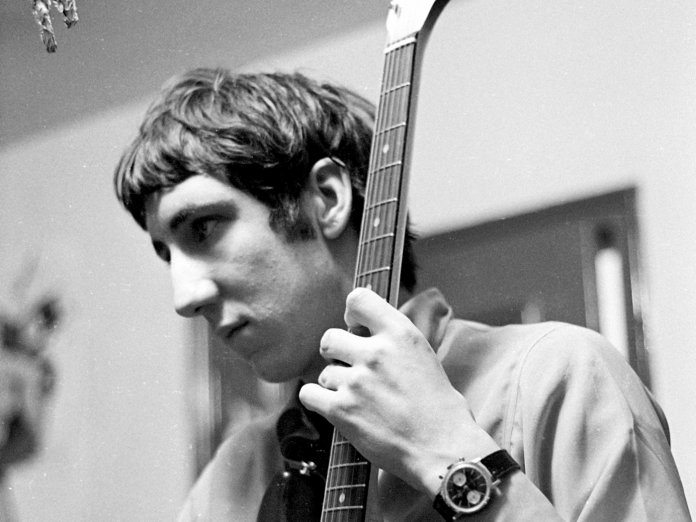
The Super Deluxe Edition of The Who’s 1967 classic The Who Sell Out is now on sale, featuring a whole batch of out-takes and previously unreleased Pete Townshend home demos. In the April 2021 issue of Uncut (Take 287), Pete was asked to talk about 10 of his favourite deep cuts from the box, providing a fascinating insight as to where his head was at in the lead-up to the recording of The Who’s first truly great album.
The Who released their third LP “The Who Sell Out” on December 15th, 1967. It was a concept album, formatted as a collection of unrelated songs interspersed with faux commercials and public service announcements. The album purports to be a broadcast by pirate radio station Radio London. Part of the intended irony of the title was that the Who were making commercials during that period of their career. The album’s release was reportedly followed by lawsuits due to the mention of real-world commercial interests in the faux commercials and on the album covers, and by the makers of the real jingles (Radio London jingles), who claimed the Who used them without permission. (The jingles were produced by PAMS Productions of Dallas, Texas, which created thousands of station ID jingles in the 1960s and ’70s). It was the deodorant company, Odorono, who took offense that Chris Stamp (bands manager) made a request for endorsement dollars.
JAGUAR (demo mix) “I was starting to work on quite ambitious stuff by this time and had a really good little studio, where I’d begun doing tape phasing to get that swirling sound. ‘Jaguar’ was originally just meant to be one of the jingles for The Who Sell Out, but it became something else entirely. It was done very late in the process, properly in the last couple of weeks before the album came out.”
GLOW GIRL (demo mix) “This was written in Las Vegas while on tour with Herman’s Hermits in the summer of 1967. It’s about reincarnation. That would’ve been in the early days of my interest in Meher Baba and realising, ‘Oh fuck, the whole basis for an interest in esoteric, metaphysical Eastern religion is rooted in the idea that the soul never dies.’ And of course the refrain later became part of
MELANCHOLIA “This was one of my first attempts to write about depression and anxiety. Interestingly, in light of Covid, the working title was ‘The Virus’. Once depression sets in, it’s so difficult to escape it. It’s like drowning, in a sense. It was the end of a period just before I properly got to trust that my girlfriend Karen [Astley] really loved me. I thought she was only with me because we’d been on Ready Steady Go!”
CALL ME LIGHTNING “I was still living in Ealing and going to art school when I first demoed this. The Jan & Dean-style backing vocals were probably to get Keith Moon onside. He was a huge fan of theirs. I was really surprised when [co-manager] Kit Lambert popped up one day and said, ‘That song “Call Me Lightning” – let’s do it now!’ It was maybe two years after I’d done the demo.”
FAITH IN SOMETHING BIGGER “I had this period where I was on a bit of a high. Karen and I had this flat in Ebury Street, I’d got my studio sorted and life seemed to be good. And I had a sense that sooner or later we’d get married, which we did. I was also very interested in the early writings of Meher Baba, just getting to grips with it. This song just came from all that.”
DOGS “This was definitely inspired by Small Faces – it was my version of ‘Lazy Sunday’. I loved what the Faces did in the studio, I loved their process. They had so much fun. I must admit I was interested in dog racing at the time, but the song is really about the craft, trying to create that studio sound.”
I CAN SEE FOR MILES (demo mix) “I recorded this when I had a flat in Chelsea in 1966, but kept it quiet for a while. A couple of times, when I came back from touring, there would be these really cool-looking guys around the flat, who were all very interested in Karen. And I became paranoid. So I wrote the song. Quite shallow, unfortunately.”
THINKING OF YOU ALL THE WHILE “This is the third version of this song [better known as “Sunrise”]. It was an attempt to evoke the music I grew up with, show tunes and musicals. The chords are a bit jazzy and it’s a celebration of love being like a sunrise. I recorded it on one of those Philips tape recorders and played it to my mum. She didn’t say it was rubbish, it was more like: ‘That’s very nice, dear. Would you like a cup of tea?’”
RELAX (demo mix) “I was starting to explore other areas of my songwriting at this point in time, starting to become more ambitious. I’d already recorded a version of this song at the Gorham Hotel [New York], but I felt I needed to make it sound harder-edged and a bit more psychedelic, so The Who could record it.”
RAEL (IBC Remake) “Initially, this song had nothing to do with The Who. I was studying opera, learning to write music. KitLambert came in one day and said [adopting a very posh, demanding voice], ‘It’s time for a new Who single, Pete.’ I told him I was working on my opera, but he just went, ‘Jolly good. Let’s have it.’ So I took the four or five strands that I’d managed to deal with and condensed them down into a five-minute pop single.”
The song “I Can See for Miles” was released as a single and peaked at #10 in the UK and #9 in the US.” The Who Sell Out” received widespread acclaim from critics, some of whom viewed it as The Who’s best record and one of the greatest albums of all time.
The Who’s first real album statement from 1967 receives a Super Deluxe Edition that includes five CDs, two 7″ vinyl singles, a hardback book and various memorabilia. In addition to the remastered original album, in mono and stereo mixes, the box features nearly four dozen previously unreleased tracks, including outtakes, alternate versions and Pete Townshend demos. Super Deluxe Editions can often be bloated affairs; “The Who Sell Out” deservedly merits the attention.
This podcast is unpaid & survives on donations. You can donate via paypal https://www.stephenmbland.com/olas-kool-kitchen or buy merch https://bit.ly/3ePRH6n I’m a DJ on KCLA 99.3FM In LA, 107.5 Andhow.FM in New Zealand, Maximum Threshold Radio, Rock Radio UK, Sword Radio UK, Jammerstream One, Kor Radio, Bombshell Radio, Pop Radio UK, Radio Wigwam, Rock XS Radio. Radio Candy Radio and Radio Lantau you can hear more shows here https://hearthis.at/olaskoolkitchen/
Show 457 1. Wet Leg – Chaise Longue 2. BEACH RIOT-Wraith 3. Crush-So Strange 4. Knifeplay-Hurt Someone 5. Wah Together-Sayonara 6. After London-Operator 7. Sleepyhead-Still Friends 8. Dean Wareham-The Corridors of Power 9. Chvrches Feat Robert Smith-How Not to Drown- 10. Cold Beat- See You Again 11. Pussy Cat – Mais Pourquoi (You’re No Good) 12. chet poison ivey – mata hari 13. Pierre HENRY -Psyché Rock 14. Magnolian – The Bride & the Bachelor (feat. Tselmuun)-Famous Men-self release Mongolian
Ahead of the December 17th release of Frank Zappa’s 200 Motels50th Anniversary Edition, the Zappa Trust and UMe are giving another glimpse into some of the extraordinary unreleased and rare material unearthed from FZ’s vault that will be available on the monstrous new six-disc box set that boasts a new remaster of the original soundtrack, demos, studio outtakes, work mixes, interviews and movie ads, along with newly discovered dialog reels, revealing an early audio edit of the film. Also included in the collection is a wealth of never-before-heard audio documentary material surrounding the project.
Available today is an exciting, previously unreleased alternate version of “Magic Fingers (Version B, Mix Outtake),” from the demo sessions, recorded in August 1970 at Whitney Studios, and featured on Disc 2 alongside a handful of outtakes and alternate takes of other soundtrack standouts like “Tell Me You Love Me,” “Road Ladies,” “What Will This Morning Bring Me This Evening,” and “What Will This Evening Bring Me This Morning.” “Magic Fingers (Version B, Mix Outtake)” starts off like the original but then takes a wild detour halfway through, trading Zappa’s extended guitar workout for a rollicking mix of rock and roll motifs crammed into an exhilarating three minutes.
This latest outtake comes on the heels of the recently released non-music track, “What Is 200 Motels,” culled from the 200 Motels commercial and trailer recording session, recorded in November 1971, and featuring Frank Zappa, Howard Kaylan, Mark Volman and Jim Pons parodying a news interview about the surrealistic documentary film. This track, available on Disc 5: 200 Motels – Alternates and Outtakes,
Followed the October release of “Mystery Roach” (Dialog Protection Reel) taken from Disc 3, which houses the “Dialog Protection Reels.” Found in the Vault, these work in progress tracks reveal an early version of the movie. The music mixes are in mono and were created before Zappa went into Whitney Studios for over-dubbing and sweetening.
Fully authorized by the Zappa Trust and produced by Ahmet Zappa and Zappa Vaultmeister Joe Travers, the expansive 200 Motels 50th Anniversary Editionis a definitive super deluxe six-disc box set of the beloved, yet hard to find, soundtrack that has been lovingly assembled in celebration of the film and soundtrack’s golden anniversary. The six-disc set will be housed in a 64-page hardcover book in a handsome 12” x 12” slipcase. The packaging replicates the original booklet updated with revealing new liner notes from Pamela Des Barres, Ruth Underwood and Joe Travers, as well as Patrick Pending’s essay from the 1997 reissue, and is chock full of motion picture artwork, stills and images, from the film and its making, many which have never been seen before. This must-have collector’s release will also include a custom “200 Motels” keychain and Do-No-Disturb motel door hanger and a full-size replica of the original movie poster. Years in the making, all the audio was meticulously identified and transferred over several years as Travers dug through the Vault to create a new high resolution 96K/24B digital patchwork stereo master from the original analogue tapes. The Vault material was mastered by John Polito in 2021.
Discs 1 and 2 feature the remastered soundtrack with the second half of the second disc consisting of demos and demo outtakes; two of the many highlights from these sessions include unreleased alt mixes and alt takes of the “Chunga’s Revenge” tunes, “Road Ladies” and “Tell Me You Love Me.” Discs 3 and 4 contain the “Dialog Protection Reels,” which reveal an early version of the movie, while Disc 5 and 6 present unreleased outtakes, alternates and historical nuggets sequenced in the order of the original shooting script, the way Zappa originally envisioned before he ran into time and budget constraints. These illuminating discs reveal Zappa’s original intent for the film for the first time.
Theremastered“200 Motels”soundtrack, by Bernie Grundman at Bernie Grundman Mastering, will also be reissued on vinyl as a 2LP pressed on 180-gram black vinyl and also as a limited edition red vinyl pressing on 180-gram vinyl, which will only be available exclusively through Zappa.com, uDiscoverMusic.com or SoundofVinyl.com. Both will be pressed by Optimal Media in Germany and be the first time the album has been available on vinyl in decades. The soundtrack will also be released on 2CD and all formats will include a smaller version of the movie poster. Additionally, the entire Super Deluxe Edition box set will be available digitally for streaming and download, marking the soundtrack’s digital debut, in both standard and hi-res audio. Pre-order for all configurations is available now.
Released in October 1971, Frank Zappa’s “200 Motels” was a miraculous feat, a cinematic collision of the venerated musician and composer’s kaleidoscopic musical and visual worlds that brought together Zappa and his band, TheMothers, Ringo Starr asZappa – as “a large dwarf” – Keith Moon as a perverted nun, Pamela Des Barres in her acting debut, noted thespian Theodore Bikel, the Royal Philharmonic Orchestra, and an incredible assortment of characters (both on screen and off) for a “surrealistic documentary” about the bizarre life of a touring musician. A heady, psychedelic stew of low and high brow art forms, the film, written by Zappa and co-directed by him and Tony Palmer, mixed together irreverent comedic skits, madcap satire, eye-popping animation and virtuosic on-screen musical performances from both The Mothers and the RPO for a fascinating and free-wheeling multimedia extravaganza. Shot in just 10 days with a budget of around $650,000 from distributor United Artists, “200 Motels” was one of the first movies to be filmed entirely on videotape and Zappa and crew pushed the envelope of the burgeoning new medium’s possibilities, mostly notably through its use of spectacular – and at the time – state-of-the-art visual effects. Described by Zappa as “at once a reportage of real events and an extrapolation of them… other elements include ‘conceptual by-products’ of the extrapolated ‘real event’ … In some ways the contents of the film are autobiographical,” “200 Motels” was hailed by the Los Angeles Times as a “a stunning achievement” with “just the right touch of insanity,” and the “Zaniest piece of filmusical fantasy-comedy since The Beatles’ ‘A Hard Day’s Night’” by Daily Variety.
The music, and its corresponding soundtrack, was equally diverse, a wild pastiche of avant garde rock and orchestral compositions interspersed with dialog from the film. Up until that time, compositions like the finale piece, “Strictly Genteel,” were some of the most ambitious material ever written and recorded by Zappa. The band in the film and on the soundtrack consisted of Frank Zappa (guitar & bass), Mark Volman (vocals & special material), Howard Kaylan (vocals & special material), Ian Underwood (keyboards & winds), Aynsley Dunbar (drums), George Duke (keyboards & trombone), Martin Lickert (bass), Jimmy Carl Black (vocals), and Ruth Underwood (orchestra drum set), not to mention the aforementioned Royal Philharmonic Orchestra. In true Zappa fashion as he wrote in the album’s original liner notes, “This music is not in the same order as in the movie. Some of this music is in the movie. Some of this music is not in the movie. Some of the music that’s in the movie is not in the album. Some of the music that was written for the movie is not in the movie or the album. All of this music was written for the movie, over a period of 4 years. Most of it (60%) was written in motels while touring.”
Putting together this 50th anniversary edition was a labour intensive process that bore fruit at nearly every turn as Travers dug through Zappa’s expansive archives to put together this exhaustive edition. As Travers writes in the liners, “During this search and seizure mission, I was able to unearth a multitude of audio treasures from a very large number of tapes. Original demos, session outtakes, alternate mixes and versions, and even dialogue reels that captured an edit of the film that predates the final assembly which eventually made it to theaters everywhere in 1971.” Amongst the gems discovered include a number of ¼-inch reel-to-reel tapes that were made at Trident Studios during February of ’71, which contain rough mixes of nearly everything that was recorded on multi-track. As Travers explains, “they reflect raw performances, as they happened before FZ would get a hold of the multi-track masters and bring them to Whitney Studios in Glendale for over-dubs and sweetening. The Trident tapes allow us to hear music that did not make the film, or the final soundtrack album. They also helped us to reconstruct pieces of music like ‘The Pleated Gazelle’ or ‘What’s The Name Of Your Group?’ into their full sequences per the score. Over the years, even Frank himself forgot the sheer amount of music that actually did get recorded. All of the archiving for this 50th Anniversary set has produced incredible amounts of content that we would never had known existed otherwise.”
MONSTROUS COLLECTION BRINGS TOGETHER NEWLY REMASTERED SOUNDTRACK WITH STAGGERING AMOUNT OF UNRELEASED AND RARE MATERIAL UNEARTHED FROM THE VAULT, INCLUDING ORIGINAL DEMOS, STUDIO OUTTAKES, WORK MIXES, INTERVIEWS AND EARLY AUDIO EDIT OF THE FILM.
200 MOTELS 50TH ANNIVERSARY EDITION AVAILABLE DECEMBER 17th VIA ZAPPA RECORDS/UMe
Arguably the best and most influential rhythm guitarist in the history of rock & roll, Keith Richards was the principle architect of the sound that would make The Rolling Stones one of rock’s most iconic bands. Blessed with excellent timing and a minimalist style that cut deep without wasted moves, Richards borrowed from the playbooks of Rock n Roller Chuck Berry and a number of classic blues players to formulate a sound that was decisively his own, and would in turn be borrowed by countless guitarists who aped his moved but rarely with the same impact.
If the Stones were widely perceived as rock’s ultimate bad boys in their heyday, Richards was the man who led their charge, and his swaggering style, outlaw attitude, brushes with the law, and outsized consumption of drugs and alcohol created a legend that could fill a book (and did when Richards published his memoirs, “Life”, in 2010).
“Talk Is Cheap” (1988)
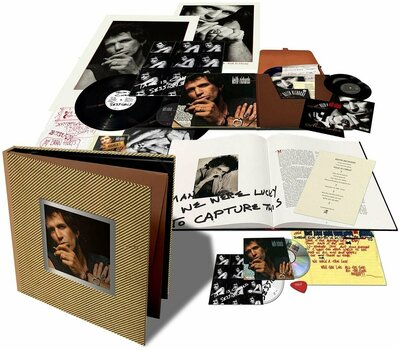
Keith Richards never wanted to go solo. Then Jagger started making his own records, refusing even to tour behind the Stones’ lightly regarded “Dirty Work“. So, Richards finally relented, cutting this debut in about 10 days. It became the best Rolling Stones-related album in forever and a catalyst for their reunion. But the gold-selling “Talk Is Cheap” was far more than comfy Stones-isms. Richards kicked things off with the nasty funk of “Big Enough” then continued through a cool menagerie of personal influences from rockabilly to Memphis soul, from reggae-fied rock to Louisiana-inspired roots music. These sessions also provided a first draft for “Almost Hear You Sigh,” which became a Top 40 U.K. hit in 1990 for the quickly reformed Rolling Stones. Richards not only established himself as a standalone performer, he saved his old band.
1988’s “Talk Is Cheap” is Passionate, elemental, and founded in vintage blues, R&B, and rock & roll, The album was a near-definitive statement of what Keith brought to the table in The Rolling Stones, and while he and Jagger would reconcile and continue working together in the band, Richards would occasionally cut solo sets that allowed him to put his musical vision front and centre.
“Talk Is Cheap” often resembles a Rolling Stones album (“Take It So Hard” could pass for the best Stones single since “Start Me Up”), but part of its charm is that even when it strays far from the band’s template — such as the churning funk of “Big Enough” or the Chuck Berry tribute/rip-off “I Could Have Stood You Up” — it still beautifully captures what Richards brought to the band as a guitarist and songwriter, only in different surroundings and fresh contexts. It always sounds like Keith, even when it doesn’t sound like The Stones, and he’s passionate, engaged, and effortlessly cool on every track, with his trademark rhythm-as-lead guitar front and centre throughout.
The stellar band that accompanies Richards including Waddy Wachtel, Steve Jordan Mick Taylor BernieWorral Johnnie Johnston and Ivan Neville has a mind and an approach of its own, but they understand that the root of what Richards does is about the groove, and they don’t let him down for a moment. “Talk Is Cheap” was good, raucous, high-attitude fun in a way a Stones album hadn’t been since 1981’s “TattooYou”.
Richards‘ long-awaited solo debut opened with “Big Enough,” a nasty funk number that reset the entire known Stones universe. He’d never wanted to step out on his own but felt boxed in by Jagger – who chose to refocus on his solo career rather than tour in support of 1986′ Dirty Work. The resulting “Talk Is Cheap” was a laconic, utterly charming stroll through a string of personal influences. Richards remained conflicted: “In the back of my mind, doing a solo record meant a slight sense of failure,” he said at the time.
“The only reason I would do a solo album was because I couldn’t keep the Stones together.” Ironically, this one had the opposite result: Jagger, no doubt noting that his erstwhile collaborator now had a gold-selling Top 40 hit of his own in both the U.K. and U.S., promptly made his way back into Richards‘ life.
Reviews were generally quite complimentary, calling it a solid rock & roll record; and, buoyed by the minor hit single and MTV favourite “Take It So Hard,” “Talk Is Cheap” went gold. Richards embarked on a supporting tour that produced the concert album “Live At The Hollywood Palladium” released three years later,
“Live At The Hollywood Palladium” December 15th 1988
Recorded on December 15th, 1988, during the tour for “Talk Is Cheap”, “Live At The Hollywood Palladium” is a loose, groove-laden affair, featuring the best from Keith Richards‘ first solo album as well as some Stones classics — mostly tunes he took lead vocals on. Opening with “Take It So Hard,” the first thing that hits the listener is the lack of the gloss that was probably the only drawback to “Talk Is Cheap”, which is a very good thing, because while the album was still leaps and bounds more real than, say, Dirty Work this live collection is loose without ever getting away from the band, and has an organic feel not present in The Stones’ work since the early ’70s. Rockers like “Whip It Up” and “Struggle” swagger, while Sarah Dash shines on “Make No Mistake” and “Time Is On My Side.” Richards even manages to get into the reggae groove without sounding too clichéd on “Too Rude”.
“Live At The Hollywood Palladium” is a solid live album that stands head and shoulders above most of The Stones’ live records, and is easily a must-have for any serious Rolling Stones or Keith Richards fan.
“Main Offender” (1992)
Richards second solo album is even more delightfully focused than his first. Highlights include “Wicked as It Seems,” and “Eileen,” and the searing “999”.
The Stones are often, and not incorrectly, linked to the city-blues tradition of Chess Records, but Richards‘ riffy slant on the guitar had just as much to do with more groove-focused figures like Otis Redding and Solomon Burke. “Main Offender” proves the point, as Richards lets all of the coiled danger and flinty emotions of “Talk Is Cheap” unravel into a series of almost trance-like moments.
That can give the album a sense of dulled edges on initial listens, but “Main Offender” is meant to be lived with. Jagger obviously did, as Richards’ work away from the Rolling Stones again seemed to provide an inspiration to return: “Wicked as It Seems” set a dark template for their next single, 1994’s “Love Is Strong.”
Richards’ second pass felt more comfy, less focused. He dove more determinedly into groove-centered songs, rather than the Chess Records-style city blues that the Rolling Stones have so long been associated with. On first listens, that seems to soften the edges of “Main Offender£, but riffy songs like “Hate It When You Leave” are meant to be lived with. The coiled danger and flinty emotions of his debut unravel into an almost trance-like vibe.
Jagger was still listening, too, as Richards’ solo turns again provided the framework for terrific Stones songs that followed: “Almost Hear You Sigh” emerged from the “Talk Is Cheap” sessions, while “Wicked as It Seems” from this album set a dark template for their next single, 1994’s “Love Is Strong.”
Keith gets solid guitar help from Waddy Wachtel throughout and has a first-rate band.
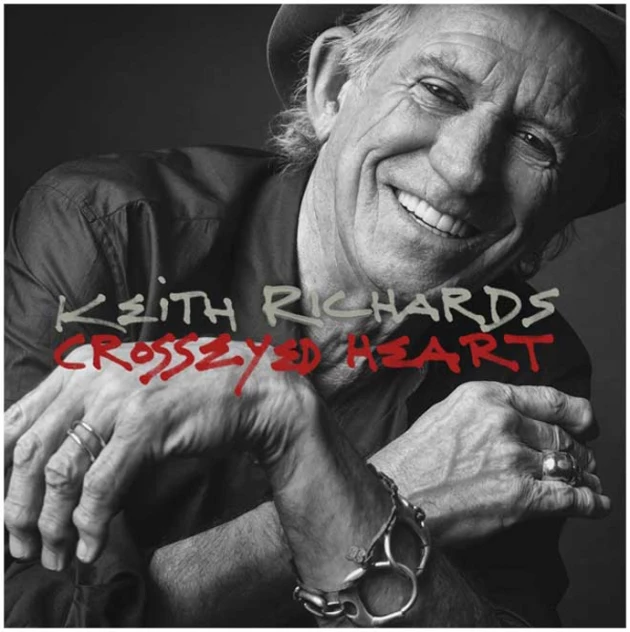
“Crosseyed Heart” (2015)
It sounds like it was knocked out in a week, which is about the highest compliment that can be paid to a record as casual as this. “Main Offender” felt like the result of endless hours of expensive studio jams, but “Crosseyed Heart” feels like it fell into place, with its songs arising out of jams with a drummer instead of being excuses for jams. Bookended by acoustic numbers — the first is the charmingly tossed-off title track, a song that feels clipped in its conclusion, the last a version of Lead Belly’s “Goodnight Irene,” with the lyrics slightly modified — the album does indeed bear the suggestion of a construction, a record that slides from obsession to obsession without calling attention to transitions. Nothing here is surprising, not the overdriven Chess boogie of “Blues in the Morning” or the ska shuffle of “Love Overdue,” but that familiarity is an asset, because Keith luxuriates in his detours so much he winds up synthesizing his affections into a signature, a move highlighted by the soulful crawl of the Norah Jones duet “Illusion,” a song where both singers seem seduced by the slow groove. “Illusion” mildly recalls “Make No Mistake,” but where that “Talk Is Cheap” number underlined its Stax connections, Crosseyed Heart isn’t so edgy: Keith no longer has to prove what he has to contribute to either The Stones or the culture at large, so he settles into his favourite sounds, loving to play the blues, rock & roll, country, and folk he’s always savoured, then sliding into the open-chord boogie that’s unmistakably his. He may not forcibly claim this ground here but that’s the appeal of “Crosseyed Heart” it’s a winningly low-key record, where the atmosphere matters more than the songs
Richards belatedly returned to his solo career after a 23 years hiatus, his third album, once again playing with his band The X-Pensive Winos. Entitled “Crosseyed Heart”, the record saw release on September 18th, 2015, accompanied by the release of a documentary called Under the Influence.
yet it was striking how little had changed. In fact, that’s the only consistent criticism of his sporadic efforts away from the Rolling Stones: His career is defined by diminishing returns, because every successive album followed the same exact template – from their ramshackle rootsy ambiance to the presence of many of the same collaborators. So, no, this seemingly tossed-off groover can’t hold a candle to his astonishing first album or even its more jammy follow up. Yet somehow you can’t deny its pirate-smiled charms.
As with the best of his Rolling Stones-rejuvenating solo work in late ’80s, “Nothing on Me” comes off like a loose, late-night confession. (Maybe he’s talking to Jagger, maybe to one of the women who followed him into ruin, maybe to the very drugs that should have ended him long ago.) No, it’s most certainly not new ground, as every successive Richards album followed a now-familiar template – from their ramshackle rootsy ambiance to the presence of many of the same collaborators.
At the same time, however, songs like “Nothing on Me” were also never so calculated as Jagger became, never so commercial. Instead, there’s a kind of comfort-food ease to this track. Richards’ could-give-a-shit demeanor is still all over the map – kinda rock, kinda R&B, kinda Americana – but the result is another small but completely identifiable triumph from this pirate-smiling rock savant who somehow remained standing,
A bit more than 30 years after its release, Richards brought out an expanded edition of “Talk Is Cheap” that included six unreleased bonus tracks from the original recording sessions.
Happy 78th birthday to Keith Richards, born 18th December 1943, ‘The Human Riff’, guitarist, singer, songwriter and founding member of The Rolling Stones who have had over 35 Top 40 singles and albums. Rolling Stone magazine said Richards had created ‘rock’s greatest single body of riffs’.
Jack Antonoff is a very busy man. In between working on Taylor Swift’s “folklore”, “evermore, and Fearless” (Taylor’s Version), Lorde’s forthcoming Solar Power, Lana Del Rey’s “Chemtrails over the Country Club”, and many more, he’s also managed to write, record, and produce the new Bleachers album “Take the Sadness Out of Saturday Night“
Bleachers released their highly anticipated 3rd album “Take The Sadness Out Of Saturday Night” via RCA Records. In late 2020 they offered up the first taste of new music to preview the album with the release of “Chinatown” feat. Bruce Springsteen and “45”. This music is the follow up to their critically acclaimed second album, “Gone Now”, which came out on June 2nd, 2017. The first single “Don’t Take The Money” hit #3 at Alternative Radio. Ahead of the album release, The New York Times put out a piece that called Bleachers’ new music “anthemic life-affirming pop-rock”. Five-time Grammy® Award-winning singer, songwriter, musician, and producer, Jack Antonoff, is the creative force behind Bleachers.
When “Take the Sadness Out of Saturday Night” appeared, Jack Antonoff was a pop production powerhouse. While he was making Bleachers’ third full-length, he also shaped the sound of albums by hugely popular artists including Taylor Swift, Lana Del Rey, the Chicks, and Lorde. Though he was at the top of his game professionally, Antonoff was just beginning to emerge from a deep post-breakup depression, and “Take the Sadness” captures that tipping point when joy finally shoves desperation out of the way. Perhaps for the first time, Antonoff’s music sounds as vulnerable as his lyrics always have; tender strings grace “91”‘s feelings of being stuck, while gentle acoustic guitars cradle the closing ballad “What’d I Do with All This Faith?” Of course, he still excels at turning emotional emergencies into exuberantly widescreen pop songs.
Saturdays always fascinated Jack Antonoff more. “Sunday night blues are for people who love the weekend and are sad it’s over,” says the Bleachers singer, songwriter, and producer. “Saturday night blues are for people who can’t find their way in the weekend.”In the midst of working with others–co-writing and co-producing Taylor Swift’s folklore and evermore, and co-producing Lorde’s Solar Power, and St.Vincent’s Daddy’s Home, Atonoff has returned to Bleachers with “Take the Sadness Out of Saturday Night“, a follow up to 2017 release “Gone Now“.
The 10 tracks of “Saturday Night” move from depression to hope and everything in-between with “91,” co-written and sung with the author Zadie Smith and rousing duet with Bruce Springsteen on “Chinatown,” Antonoff’s take on The Boss’s “Jersey Girl”—set on the other side of the Hudson.
“Stop Making This Hurt” is classic Bleachers, as are “Big Life” and “How Dare You Want More,” all of which boast the shout-along choruses that have been Antonoff’s trademark since the Fun. days. Looking back to move forward has also always been at the heart of Bleachers’ music, and Antonoff uncovers something new each time he does it. Though the therapeutic openness of his song writing has a lot in common with his collaborators and clients, his knack for penning anthemic yet down-to-earth songs goes back to his New Jersey roots and another of that state’s favourite sons, Bruce Springsteen.
The way Antonoff bridges pristine synth pop and gritty rock on songs like “Don’t Go Dark” evokes Born in the U.S.A., and when the Boss himself appears on “Chinatown,” it’s almost too perfect. In keeping with the album’s feeling of change, Take the Sadness offers a warmer and more organic take on Bleachers’ music that’s as evident in details like the lo-fi vocals on “Strange Behavior” as it is in the album’s entire vibe. More mature than either Strange Desire or Gone Now but just as life-affirming, “Take the Sadness Out of Saturday Night” is a refreshingly different perspective on Bleachers and a heartfelt soundtrack to millennial midlife crises.
In August, The Joy Formidable released their album “Into The Blue“. The band present “Back To Nothing“, the second pre-release single. The song reflects on where you’ve been and how grief can heal and illuminate the future. Singer-guitarist Ritzy Bryan says, “Back To Nothing takes a stance on self-compassion, realizing your worth and your boundaries and deciding not to give your love to an undeserving other.”
Gazing upon love, new beginnings, and unexpected magic, “Into the Blue”was initially written in Wales, and later fleshed out once the band returned to Utah, the perfect setting to release the emotional baggage of their fifth album. Without addressing political or social commentary, The Joy Formidable digs into the effects of manipulation and regaining control. You see me for what I am / I don’t have to guessany more sings Rhiannon “Ritzy” Bryan, splitting vocals with Rhydian Dafydd building around the unexpected of the title track, and picks up on growling “Chimes” and the siren-charged crunch of “Sevier.” “Into the Blue” rides the dramatic waves of pain, regret, and those magical sweet hereafters of life.
After releasing “Into The Blue,”The Joy Formidable have now announced their new album (also called Into The Blue and due August 20 via Enci Records) and shared its second single, “Back To Nothing.” It’s a catchy indie rock song that’s as ethereal as it is anthemic.
On December 17th at 2pm EST, we’re releasing prints for the most influential hard rock band ever; The Who Both prints are illustrated by the prolific @amesbros.
After the release of “Tommy” and their triumphant performance at Woodstock, one had to wonder what The Who would do next for an encore. That encore was “Who’s Next“, which is regarded by many as the best album in their catalogue. Sandwiched in between opener “Baba O’Riley” and closing track “Won’t Get Fooled Again” are songs of exquisite beauty that touch a place that very few songwriters can reach. iconic.collectionzz.com!
Gold Foil Edition – $75.00 Artist: Barry Ament, Ames Bros Size: 18″ x 24″ Edition Size: 225 Signed and Numbered Screenprinted on Gold Foil Holographic sticker on back of print
Rainbow Foil Edition – $150.00 Artist: Barry Ament, Ames Bros Size: 18″ x 24″ Edition Size: 75 Signed and Numbered Screenprinted on Rainbow Foil Holographic sticker on back of print
Joni Mitchell has marked the 50th anniversary of her masterpiece, “Blue“, with a new digital EP, Blue 50 (Demos & Outtakes), featuring early demos of Bluetracks “A Case Of You” and “California“; a previously unreleased track from the sessions, Hunter; and alternate versions of “River” (featuring French Horn) and “Urge For Going” (recorded for Blue, but left off at the last minute and released as a B-side in 1972) with a string section. The striking cover of the “Blue 50” EP features the original Blue colour treatment with a previously unseen alternate photo of Joni by Tim Considine from the same show as the original.
And there’s more good news for Joni fans. All five of these tracks will also be included in Joni Mitchell Archives Vol 2: The Reprise Years (1968-1971), released on 29th October as a 5CD set as well as digitally. The music will be available the same day exclusively at www.JoniMitchell.com as a 10LP set on 180-gram vinyl, limited to 4,000 copies. All orders on the official Joni Mitchell store come with an exclusive 7”x7” art print featuring a never-before-seen illustration by Mitchell from the era.
The tracks on “Archives Vol 2” have been sequenced chronologically to follow Mitchell in real time through one of the most creative periods of her career. The collection uncovers several unreleased Mitchell originals, including “Jesus”, recorded in 1969 at her friend Jane Lurie’s New York apartment in Chelsea, which also served as the setting for the song “Chelsea Morning“.
Other highlights include Mitchell’s performance at Le Hibou Coffee House in Ottawa on 19th March 1968 that was recorded by Jimi Hendrix and a concert at the Paris Theatre in London on 29th October 1970 that was broadcast on the BBC. The latter includes several songs destined to appear on “Blue” the following year: “Carey”, “River” and “My Old Man“. In addition, singer-songwriter James Taylor joined Mitchell to perform with her during the second half of the show.
With “Volume 2”, it’s time to buckle up because we’re now at the really exciting stage of the series. “Volume 1″ was an illuminating journey through Mitchell’s early, pre-record-contract years. It documented a period in the 1960s when Mitchell was just starting to find her feet as a songwriter but hadn’t yet carved out her own identity as a singer. Her performances were marred by a heavy-handed, artificial vibrato and her act, especially as revealed on the first couple of discs, was folk-singer boilerplate. On that volume’s vast array of home tapes, demos, and live recordings, she sounded like someone mimicking Joan Baez. Lucky us, it didn’t take her long to start becoming herself.
Volume 2 covers the “Seagull-to-Blue” era, 1968 to 1971, during which Mitchell exploded into the national consciousness of several countries. It includes a Carnegie Hall concert, an appearance at Ottawa’s Le Hibou coffee house, over 30 BBC recordings, and – most excitingly – studio outtakes from all four albums. Finally, we get to hear “Hunter” (in terms of its musical character, it’s a bit of a sister song to “All I Want”) as it would have sounded had it been included on “Blue”. “Volume 2” also provides an intriguing insight into the way Mitchell’s albums were planned and structured; songs that ended up on “Clouds” (1969) and “Ladies of the Canyon” (1970) were first recorded for consideration for Mitchell’s debut and these early studio versions of “Both Sides Now” and “Conversation” appear on disc one.
Praise should go to this series’ design and clarity of concept, photography and the engaging Cameron Crowe interviews printed in the perfect-bound, glossy, square-shaped booklet. Everything – right down to the Joni Mitchell Archives logo – shows that a disciplined aesthetic is at play. In an effort to distinguish themselves visually from conventional studio releases, the archives series of some of Mitchell’s contemporaries have ended up with bootleg-style artwork. Mitchell’s archives boxes, on the other hand, are things of beauty.
Among the other treasures on “Archives Vol 2” is Mitchell’s complete Carnegie Hall debut, recorded on 1st February 1969, a few months before the release of her second album, Clouds. In addition to its inclusion on “Archives Vol 2″, the concert will also be released separately on 29th October as a 3LP set on 180-gram vinyl for, with an exclusive 180-gram, white vinyl version, limited to 3,000 copies,
There’s a multitude of configurations of the 50th-anniversary edition of John Lennon‘s Plastic OnoBand album to choose from. It just depends on how committed you are to the singer’s first and best post-Beatles solo work, famously made under the influence of Dr. Arthur Janov’s primal scream therapy . The main prize, in any case, is the six-CD Ultimate Collection box set, which allows for the deepest dive imaginable into the iconic LP by way of 159 tracks (87 of which are previously unheard) and a revealing hardback book with lyrics and rare photos. It seems crazy that such a raw album of 11 songs should carry so much baggage. But it quickly becomes clear that Lennon and bandmates Ringo Starr and Klaus Voormann put a huge amount of effort into getting these songs, variously about abandonment, disillusionment, and love, exactly right.
Of huge value on the boxset, particularly with the “evolution mixes”, is the insight it provides into just how incredible and incendiary the three major players were as musicians and the chemistry between them in evolving these tracks. The many versions of the angry “I Found Out” showcase Voormann perfecting his distinctive brand of rumbling bassline, Lennon entering a whole new realm of abrasive guitar noise, and Ringo at his explosive and inventive best, never repeating himself on those fills.
It’s also fascinating to hear them try to nail “Remember”, with its complex tempo changes, as well as to hear “Love” turn from a guitar ballad into a tender piano ballad. Then there’s the hugely enjoyable studio banter, with Lennon expletive heavy, self-deprecating, and entertainingly frank about what he thinks of each take. All this while he proves, again and again, that he’s the greatest rock singer who ever lived.
Released 11th December in 1970 John Lennon’s first solo album after the breakup of the Beatles was released. Released on Apple Records, Yoko Ono’s similarly titled album was issued on the same day. Backed by the Plastic Ono Band, which included the artist and musician Klaus Voormann and Beatles bandmate Ringo Starr, the record was co-produced by Lennon, Ono and Phil Spector and is widely regarded as one of Lennon’s best solo albums.
Speaking recently about the anniversary of the album, Klaus Voormann remembered recording process:
‘To me, this album is the best of all albums I’ve ever heard. It’s so personal, [John] came into the studio with no songs, just sat down together with Yoko – always together with Yoko – and as quick as possible got what he just wrote onto tape. That was his aim and that’s what he did. We all understood.
Ringo was great and so we just played. Two takes mostly, and the thing was done. It’s brilliant. There’s mistakes in it and it doesn’t matter. The mistakes are OK, you know? Intimacy, that was the key. It’s so personal and so open to life – and you can hear it! Most of the records, it’s all covered by strings and big choirs and guitars, and he just did it really, really simple. It was such a great statement.’
SUPER DELUXE BOX SET CONTAINS: 6 CDs – 102 new Stereo Mixes – over 6 hours of audio. 2 Blu-Ray Audio Discs – 159 new Stereo Mixes – Over 11 hours of audio in Hi-Res 192/24 Stereo, 5.1 Surround and Dolby Atmos Mixes. 132 Page Hardback Book With Rare Photos, Memorabilia and Extensive Notes. WAR IS OVER! Poster and 2 Postcards.







 The Fat Angel Sings