Since the demise of his previous band Ultimate Painting, Jack Cooper – under his Modern Nature guise – has never stopped looking ahead, exploring and reaching for something further. Since 2019, he’s released an EP, last year’s mini album “Annual“, one full length LP, one 7” and three live cassettes – in the process mapping out astonishing new terrain. “Island Of Noise” presents an obvious new peak in his discography.
Over the last 12 months, Cooper has constructed a beautiful, free-flowing box set’s worth of material featuring a new album, a separate and equally engaging instrumental interpretation of the album and an accompanying book featuring the work of wide-ranging, non-musical artists (including Booker-nominated poet Robin Robertson, mycologist Merlin Sheldrake, illustrator Sophy Hollington, and writer Richard King) that reinterpret, deconstruct or take inspiration from the 10 tracks on the record.
“Island Of Noise” represents an absolute career highlight, combining Cooper’s celebrated song writing and compositional skills with a free flowing expansiveness coloured by British free music luminaries such as saxophonist Evan Parker, pianist Alexander Hawkins, bassist John Edwards and violinist Alison Cotton, as well as long term collaborators Jeff Tobias and Jim Wallis.
“Be not afeard, the isle is full of noises”
On re-reading The Tempest in 2019, Cooper was moved to write this quote on the wall of his workshop and doing so sparked the initial ideas and activity that culminated in this record. The short quote, part of a longer passage spoken by Caliban, “summed up what I was thinking about at the time, from the nature of music, noise and silence, to the chaos and confusion that seemed impossible to navigate.” says Cooper.
The rich imagery and themes of The Tempest have long been a springboard for artists, from Derek Jarman’s unnerving adaptation and Sibelius’ Stormen to Jackson Pollock’s Full Fathom Five, but it was the setting of an island and the insular framework it represented that appealed as a way of elaborating on the musical and lyrical themes Modern Nature has been exploring since their first record in 2019.
“I imagined the island’s landscape and how it would change and shift through the record. My guitar, Jim Wallis’ drums and John Edwards’ bass would represent a slowly evolving landscape that would provide the bedrock for the other instruments to colour. The forests, the valleys and the life would be represented by an orchestra of improvisers and classical musicians, working around certain modes and composed melodies.”
Standing in the edgelands, where the concrete meets the forest; the island’s story is told through the eyes of an outsider, arriving and trying to make sense of the mystery and chaos. What do they make of the island’s systems, its customs, the inhabitants and their beliefs. How would an outsider interpret the inequality and divide? Where would they find solace, compassion and friendship?
The album was completed during a relaxation of the pandemic restrictions and for Cooper and his fellow musicians, its recording came to represent a sanctuary in itself. The feeling of freedom with which they made the record allowed for hours of improvisation and experimentation, resulting in a companion record called “Island Of Silence”; a more impressionistic instrumental picture of the island and its music.
Elaborating one step further, Cooper approached ten artists he felt an affinity towards (including Booker-nominated poet Robin Robertson, mycologist Merlin Sheldrake, illustrator Sophy Hollington, polymath Eugene Chadbourne and The Lark Ascending author Richard King) and asked them to reinterpret, deconstruct or take inspiration from one of the ten pieces of music for an accompanying book. Island Of Noise and Island Of Silence were both recorded on 2” tape with long-term collaborator and co-producer Ed Deegan and then cut directly to vinyl. Similar attention has been paid to the production of the book and box-set, with all of the material, including the vinyl, sourced from recycled and sustainable materials.
Cooper once said: “With every song we record or musician we gain, another door seems to open on a route that’s worth pursuing.” More than ever, this rings true on “Island Of Noise” and “Island Of Silence“, with the musicians sharing a collective vision that builds the most cohesive and exploratory version of Modern Nature yet. “Island Of Noise” fits beautifully between genres sitting alongside (modern) classics like Mark Hollis’ Mark Hollis, David Sylvian’s Blemish and Bert Jansch’s Birthday Blues.
Like those, this is an album that may confound or challenge some, but will stand the test of time to those that open themselves up to Modern Nature.
Directed by Jack Cooper & Conan Roberts Filmed by Jack Cooper, Conan Roberts & Phoebe Cooper Music by Modern Nature
Good Morning from Melbourne Australia Stefan Blair and Liam Parsons are rulebreakers. Not in a sexy, flamboyant way — more in a casual, resigned kind of way. Accidental and incidental rulebreakers. They are friends first, band second, business third, often in spite of function, and often at their own expense. Every time the machinations of the industry have zigged, Good Morning have zagged. In late 2019, after the release of The Option and Basketball Breakups, with a lengthy American tour looming, Good Morning decided to go back to basics — to record as a duo again, as they had on 2014’s “Shawcross” and 2016’s “Glory“. Over the course of the year, they demoed any number of songs in their Collingwood studio space, meeting up every Tuesday to write and record together as they always had. In November, as their American tour wrapped up, the pair decamped in Chicago, to properly record the demos they had amassed at Wilco’s famed studio, The Loft, with Tom Schick, the studio’s in-house engineer.
Despite how quietly epochal “Barnyard” is — a milestone in the history of Good Morning — it’s also the band’s most meditative record, thoughtful and careful in its evocations. “Barnyard” is world-weary, concerned with the state of things in a loose, unfocussed sort of way. In spite of the appropriately bleak vibe, these songs feature some of Good Morning’s catchiest and most distinctive productions. The spritely groove and easygoing harmonies of “Depends On What I Know” belies its frustration-ridden lyrics; the gripping, awesome propulsion of “Country” persists in spite of its appeal to return to a simpler, easier way of being. Thoughtful, melodic, and idiosyncratic,” Barnyard” is all the things one might love about Good Morning, this time around presented with the fat trimmed and the edges sharpened, loose ends tied and ducks all in a row.
Barnyard was made at The Loft, Chicago, IL, USA, from November 18 til November 22 in 2019 It was produced by us, Good Morning, with help from Tom Schick, who also mixed and engineered it.
Everything got played and sung by us except for… Vibraslap on ‘Burning’ slapped by Joe Alexander Saxophone on ‘Big Wig // Small Dog’ saxed by Glenn Blair
In 1973 Bob Marley and The Wailers found themselves stranded on the West Coast of the United States after being asked to leave the Sly & The Family Stone tour for outperforming them every night. To make the best of the situation the band made their way to Los Angeles. The scene is Hollywood. Bob Marley and The Wailers were filmed in a closed door session at “The Capitol RecordsTower” on October 24th by famed producer Denny Cordell, who received the blessing from Marley to capture the band recording 12 songs. Shooting with four cameras and mixing “on the fly” to a colorized tape, this footage, has been painstakingly restored, resulting in an incredible presentation of this unseen live session.
International reggae pioneers Bob Marley and the Wailers are being filmed in a closed-door session at the Capitol Records Tower, by famed record producer Denny Cordell, who has captured the band recording 12 songs. Shot with four cameras and mixed “on the fly,” this footage, now colourized, has been painstakingly restored, resulting in an incredible presentation of this unseen live session.
On September 3rd, 2021, Tuff Gong and Mercury Studios released this concert to the public officially for the first time as “Bob Marley and the Wailers: The Capitol Session ’73″. Long-missing, the newly unearthed film captures a never-before-seen studio session with 12 performances by the legendary band, filmed and recorded live at Capitol Studios in Hollywood.
The session’s at Capitol Studios represented a unique moment in the band’s career. Ten years after their formation, the Wailers had already logged several hits in Jamaica during the ska and rocksteady eras. Gaining recognition stateside, including a few shows with a still-unknown Bruce Springsteen at Max’s Kansas City in New York City, they then went on to tour with Sly and the Family Stone, before being unceremoniously dumped from the tour. This led to the band (Bob Marley, Peter Tosh, Joe Higgs, AstonBarrett, Carlton Barrett, Earl “Wya” Lindo) making its way to Hollywood to do this session.
The footage from that day was considered lost until a freelance researcher uncovered a few frames. For more than 20 years, archives and storage units from New York and London to San Diego were tracked down and searched to retrieve fragments of the film, until it was fully unearthed, restored and remastered.
Evolving into a politically and socially charged unit after being inspired by the U.S. Civil Rights movement, various African liberation efforts and Rastafarianism, which Bob Marley and the Wailers studied from Rasta elders, their music reflected the soul and struggles of the era. Making poignant statements about life, liberty and social justice, the band imbued its sentiments into the songs, which are beautifully brought to life during this session.
Even in 1973, reggae music still had very little presence in the U.S. That had started to change with the December 1972 premiere of the movie “The Harder They Come“, starring singer Jimmy Cliff, as well as the soundtrack album from Chris Blackwell’s Island Records.
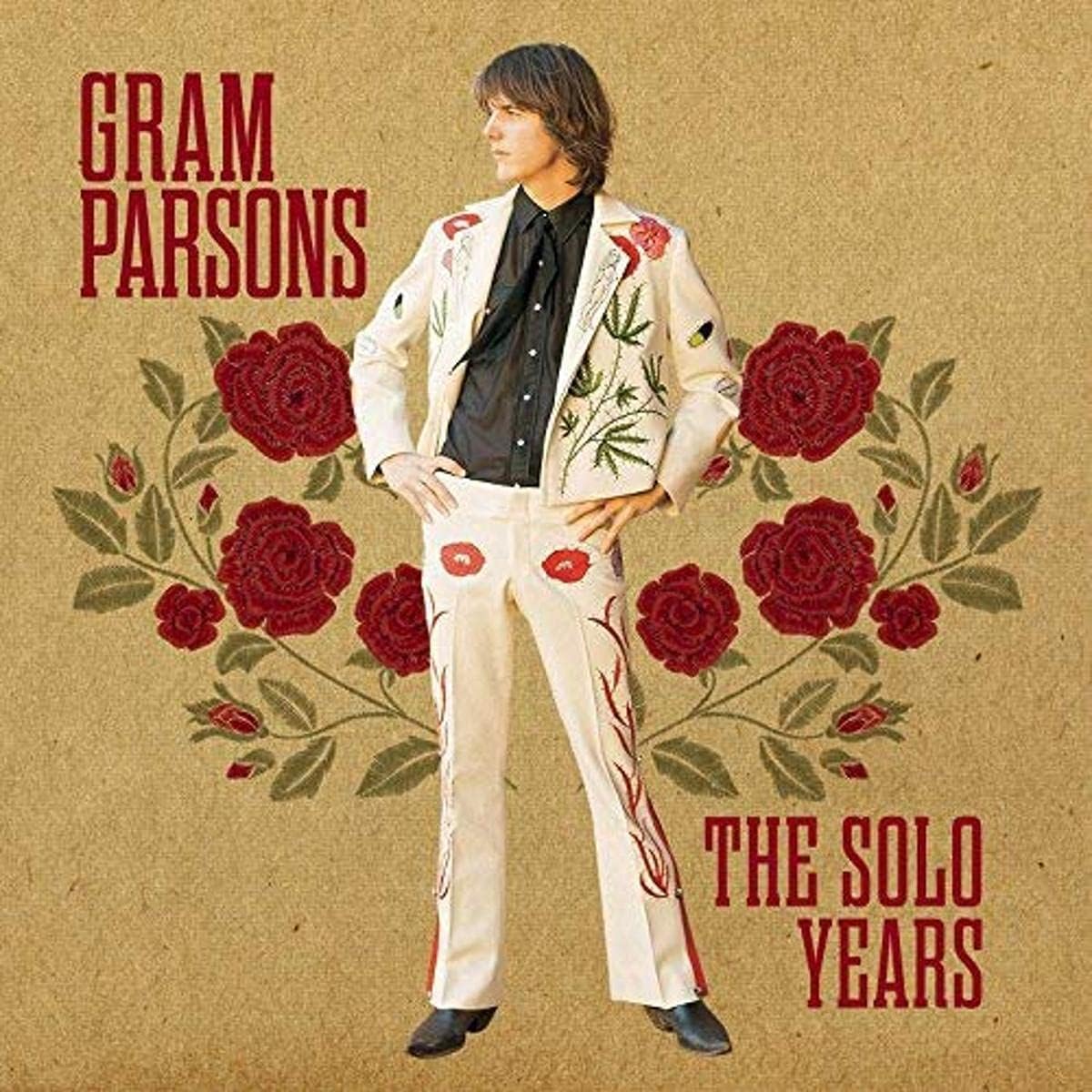
Gram Parsons, (November 5th, 1946 – September 19th, 1973) American singer, songwriter, guitarist, and pianist. Parsons recorded as a solo artist and with the International Submarine Band, the Byrds, and the Flying Burrito Brothers. He popularized what he called “Cosmic American Music”, a hybrid of country, rhythm and blues, soul, folk, and rock.
Parsons was born in Winter Haven, Florida, and developed an interest in country music while attending Harvard University. He founded the International Submarine Band in 1966, but the group disbanded prior to the 1968 release of its debut album, “Safe at Home”. Parsons joined the Byrds in early 1968 and played a pivotal role in the making of the seminal “Sweetheart of the Rodeo” album. After leaving the group in late 1968, Parsons and fellow Byrd Chris Hillman formed The Flying Burrito Brothers in 1969; the band released its debut, “The Gilded Palace of Sin“, the same year. The album was well received but failed commercially. After a sloppy cross-country tour, the band hastily recorded a second album “Burrito Deluxe”. Parsons was fired from the band before the album’s release in early 1970.
Parsons had signed a solo deal with A&M Records and moved in with producer Terry Melcher in early 1970. Melcher, who had worked with the Byrds and the Beach Boys, was a member of the successful duo Bruce & Terry, also known as The Rip Chords. The two shared a mutual penchant for cocaine and heroin, and as a result, the sessions were largely unproductive, with Parsons eventually losing interest in the project. “Terry loved Gram and wanted to produce him … But neither of them could get anything done,”
He returned for a one-off concert with the Burritos, and at Hillman’s request went to hear Emmylou Harris sing in a small club in Washington, D.C. They befriended each other and, within a year, he asked her to join him in Los Angeles for another attempt to record his first solo album.
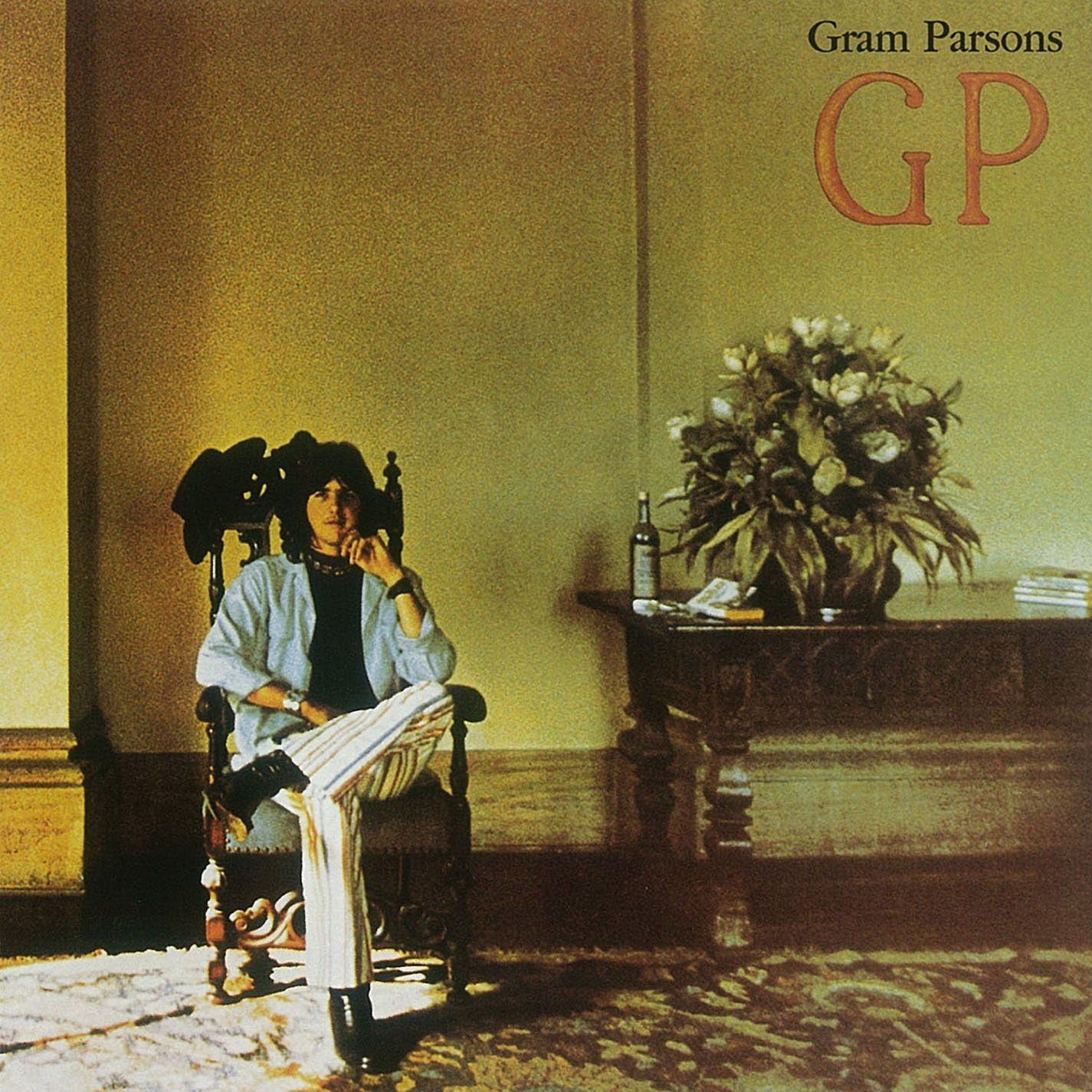
It came as a surprise to many when Parsons was enthusiastically signed to Reprise Records by Mo Ostin in mid-1972. The ensuing “GP” (1973) featured several members of Elvis Presley’s TCB Band, led by lead guitarist James Burton. It included six new songs from a creatively revitalized Parsons alongside several country covers, including Tompall Glaser’s “Streets of Baltimore” and George Jones’ “That’s All It Took”. At its onset, Gram had approached Merle Haggard to produce what would become the GP album. But Merle thought Gram a “hippie” lacking the salt-of-the-earth mentality. So Gram hired Merle’s recording engineer and mixer, Hugh Davies. He recorded both at country music’s favoured West Coast studio, Capital Records, and at rock’s palace of hits, the Wally Heider Studio in Hollywood. He instructed his manager to hire Elvis’ band to play on the sessions. “Gram had a real vivid impression of certain people like Elvis, Merle and others and he tried to follow in their footsteps, right down to the musicians,” commented Al Perkins. Eventually Gram was introduced to Emmylou Harris, someone he could sing harmony with in the best traditions of George Jones and Tammy Wynette.
Emmylou Harris assisted him on vocals for his first solo record, “GP”, released in 1973. Although it received enthusiastic reviews, the release failed to chart. The musicians were guided by pianist and music director Glen D. Hardin. Al Perkins recalls Glen suggesting various parts to play on each song, with Gram seeing to it that Hardin and the band had plenty of time in the studio to construct, confer and create. “A lot of natural flow,” Perkins claimed.
Coordinating the spectacle as road manager was Phil Kaufman, who had served time with Charles Manson on Terminal Island in the mid-sixties and first met Parsons while working for the Stones in 1968. Kaufman ensured that the performer stayed away from substance abuse, limiting his alcohol intake during shows and throwing out any drugs smuggled into hotel rooms. At first, the band was under-rehearsed and played poorly; however, they improved markedly with steady gigging and received rapturous responses at several leading countercultural venues. According to a number of sources, it was Harris who forced the band to practice and work up an actual set list. Nevertheless, the tour failed to galvanize sales of “GP”.
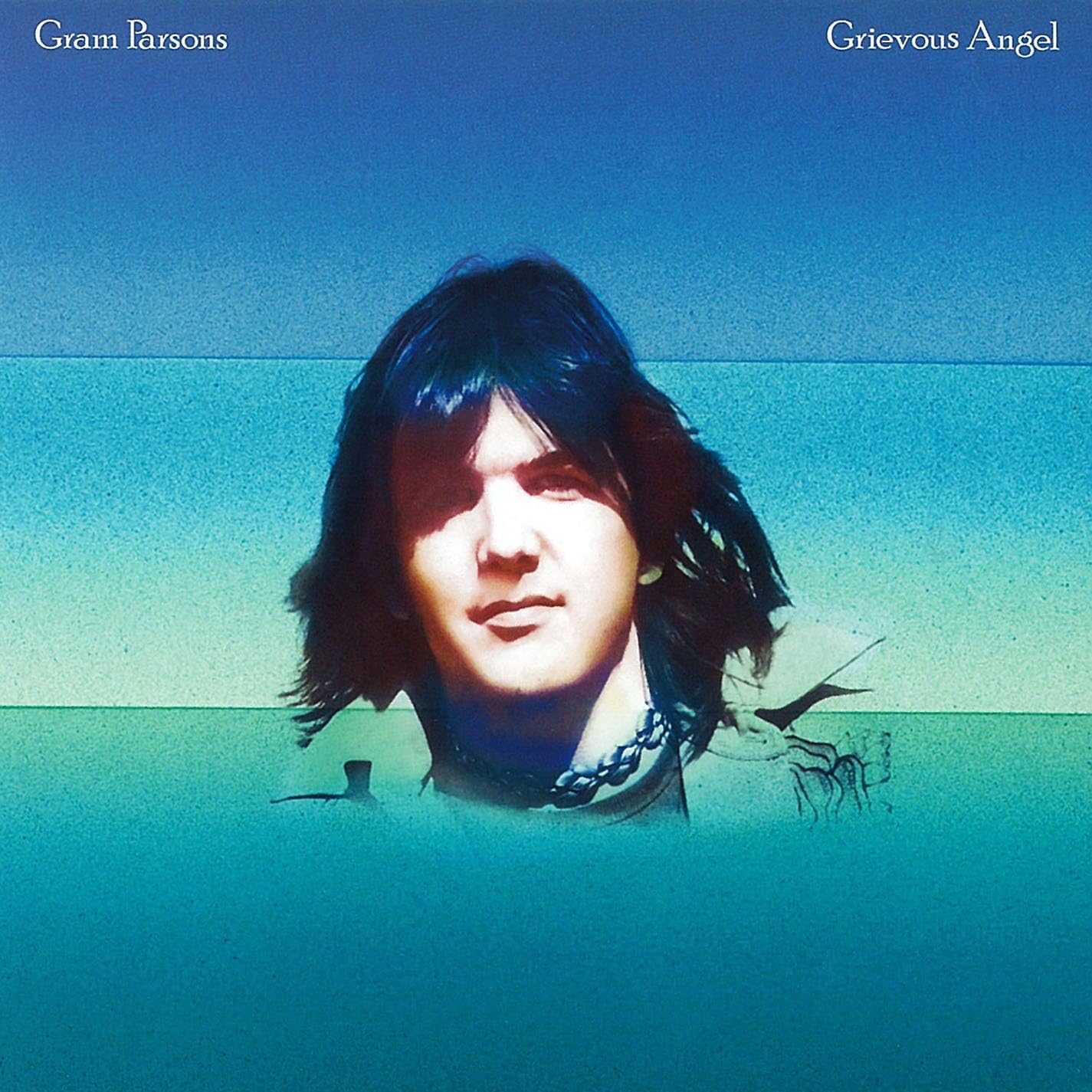
His next solo recording album, “Grievous Angel”. His health deteriorated due to several years of drug abuse culminating in his death from a toxic combination of morphine and alcohol in 1973 at the age of 26. For his next and final album, 1974’s posthumously released “Grievous Angel“, he again used Harris and members of the TCB Band for the sessions. The record generally received more enthusiastic reviews than its predecessor, “GP“. Although Parsons only contributed two new songs to the album (“In My Hour ofDarkness” and “Return of the Grievous Angel”), he was reportedly enthused with his new sound and seemed to have finally adopted a diligent mindset to his musical career, limiting his intake of alcohol and opiates during most of the sessions.
“GP” was something of a triumph. Its follow-up, 1974’s “Grievous Angel”, was even better. No matter what his lifestyle was like, Parsons’ writing was at its very best, and his voice seemed fuller, more controlled and more heartfelt than ever. “Brass Buttons” could easily seem trite and sentimental – “The sun comes up without her / It just doesn’t know she’s gone” – but instead, it comes across as a truthful reflection on heartbreak. Parsons is alone, left only with “warm evenings, pale mornings, bottled blues” and he can’t help but reflect on the details of the life he has now lost, of “the tiny golden pins that she wore up in her hair”. And all along he knew, “it was a dream much too real to be leaned against too long”. All of which would count for nothing were it not to set an indelible melody: when Evan Dando – one of the best natural melodicists of the past 30 years – decided the Lemonheads were going to cover Gram Parsons on their “Lovey” album, this was the song he turned to.
Before recording, Parsons and Harris played a preliminary four-show mini-tour as the headline act in a June 1973 Warner Brothers country rock package with the New Kentucky Colonels and Country Gazette. A shared backing band included former Byrds lead guitarist and Kentucky ColonelClarence White, PeteKleinow, and Chris Ethridge. On July 14th, 1973, White was killed by a drunk driver in Palmdale, California, while loading equipment in his car for a concert with the New Kentucky Colonels.
Parsons, by now featuring Harris as his duet partner, toured across the United States as Gram Parsons and the Fallen Angels through February–March 1973. Unable to afford the services of the TCB Band for a month, the group featured the talents of Colorado-based rock guitarist Jock Bartley (soon to climb to fame with the band Firefall), veteran Nashville session musician Neil Flanz on pedal steel, eclectic bassist Kyle Tullis (best known for his work with Dolly Parton and Larry Coryell) and former Mountain drummer N.D. Smart. One of the outstanding performances of that tour can be heard on Gram Parsons and the Fallen Angels, Live, 1973, which was recorded before a live audience at radio station WLIR – FM in Hempstead, New York. The day after that show, Gram suggested to a friend that the previous night’s performance “might make one hell of a record.” This was the seed for the so called “Medley Live From Northern Quebec” that appears on Grievous Angel. “They wanted to record a live session with an audience but it could not be worked out” said Al Perkins. “So after we laid down the music tracks and some vocals in the studio, Hugh dug up some audience tapes, added additional sounds provided by Gram and friends.” To this day, people still think there are more ‘live’ tracks from “Northern Quebec!” In addition to music, Gram attempted to break other stereotypes. On stage for every show date of the tour, a Confederate flag was prominently displayed behind the drummer.
The touring party also included Gretchen Parsons—by this point extremely envious of Harris—and Harris’ young daughter.
In the summer of 1973, Parsons’ Topanga Canyon home burned to the ground, the result of a stray cigarette. Nearly all of his possessions were destroyed with the exception of a guitar and a prized Jaguar automobile.
He then accompanied the Rolling Stones on their 1971 U.K. tour in the hope of being signed to the newly formed Rolling Stones Records; by this juncture, Parsons and Richards had mulled the possibility of recording a duo album. Moving into Villa Nellcôte with the guitarist during the sessions for “Exile on Main Street that commenced thereafter, Parsons remained in a consistently incapacitated state and frequently quarrelled with his girlfriend, aspiring actress Gretchen Burrell. Eventually, Parsons was asked to leave by Anita Pallenberg, Richards’ long time domestic partner.
Decades later, Richards suggested in his memoir that Jagger may have been the impetus for Parsons’ departure because Richards was spending so much time playing music with Parsons. Rumors have persisted that he appears somewhere on the legendary album, and while Richards concedes that it is very likely he is among the chorus of singers on the Stones“Sweet Virginia”, this has never been substantiated.
Gram sought to marry his love of traditional country music and his generation’s devotion to rock & roll. He felt that by affording each devoted audience the opportunity to share their love of music, maybe a move would be made toward the harmony that he believed possible. Gram Parsons’s relatively short career was described as “enormously influential” for country and rock, “blending the two genres to the point that they became indistinguishable from each other. He has been credited with helping to found the country rock and alt-country genres.
Parsons often retreated to the desert, Parsons consumed large amounts of alcohol and barbiturates. On September 18th, That night, after challenging Fisher and McElroy to drink with him (Fisher didn’t like alcohol and McElroy was recovering from a bout of hepatitis), he said, “I’ll drink for the three of us,” and proceeded to drink six double tequilas. They then returned to the Joshua Tree Inn, where Parsons purchased morphine from an unknown young woman. After being injected by her in room #1, he overdosed. Instead of moving Parsons around the room, she put him to bed in room #8 and went out to buy coffee in the hope of reviving him, leaving McElroy to stand watch. As his respirations became irregular and later ceased, McElroy attempted resuscitation. Her efforts failed and Fisher, watching from outside, was visibly alarmed. After further failed attempts, they decided to call an ambulance. Parsons was declared dead on arrival at Yucca Valley Hospital at 12:15 a.m. on September 19th, 1973, in Yucca Valley. The official cause of death was an overdose of morphine and alcohol.
Live 1973 (Gram Parsons and the Fallen Angels) Recorded live at radio station WLIR-FM, New York with Emmylou Harris, Jock Bartley, N.D.Smart II, Neil Flanz and Kyle Tullis. Includes the Grammy-nominated duet “Love Hurts.”
Sierra
—
—
1987
Dim Lights, Thick Smoke and Loud Loud Music (Flying Burrito Brothers)
Edsel
—
—
1995
Cosmic American Music: The Rehearsal Tapes 1972
Magnum America
—
—
2001
Another Side of This Life: The Lost Recordings of Gram Parsons
Gram Parsons Live In New York 1973 (Gram Parsons with Emmylou Harris)
Also check out: Gram Parsons – A Music Biography – A book by Sid Griffin Contains articles and interviews with some of Gram’s closest friends and associates including Emmylou Harris, Peter Fonda, Jim Stafford and Chris Hillman plus recently unearthed oral history from Gram himself. Over 150 photographs are featured, many previously unpublished, including Gram’s childhood, his days with Rolling Stone Keith Richards and his final tour in 1973.
The Buzzy London-based band Black Country, New Road wasted no time in following up their debut album For the first time, one of the favourite records of 2021. They announced their second effort “AntsFrom Up There” in October, and have since shared four acclaimed singles, “Chaos Space Marine,” “BreadSong,” “Concorde” and “Snow Globes.” As we wrote upon that third track’s release, “Black Country, NewRoad’s new songs find them maturing in a hurry, leavening their crashing, jazzy post-punk with a newfound restraint.” The album’s release is bittersweet, coming immediately on the heels of vocalist Isaac Wood’s departure from the band, which makes the music itself all the more precious.
Available as deluxe 4xLP box set, limited signed blue marbled vinyl 2xLP, limited blue marbled vinyl 2xLP, or standard black vinyl 2xLP. Black Country, New Road return today with the news that their second album, “Ants From Up There”, will land on February 4th on Ninja TuneRecords. Following on almost exactly a year to the day from the release of their acclaimed debut “For the first time”, the band have harnessed the momentum from that record and run full pelt into their second, with “Ants From Up There” managing to strike a skilful balance between feeling like a bold stylistic overhaul of what came before, as well as a natural progression.
Released alongside the announcement the band (Lewis Evans, May Kershaw, Charlie Wayne, Luke Mark,Isaac Wood, Tyler Hyde and Georgia Ellery) have also today shared the first single from the album, ‘Chaos Space Marine’, a track that has already become a live favourite with fans since its first public airings earlier this year – combining sprightly violin, rhythmic piano, and stabs of saxophone to create something infectiously fluid that builds to a rousing crescendo. It’s a track that frontman Isaac Wood calls “the best song we’ve ever written.” It’s a chaotic yet coherent creation that ricochets around unpredictably but also seamlessly. “We threw in every idea anyone had with that song,” says Wood. “So the making of it was a really fast, whimsical approach – like throwing all the shit at the wall and just letting everything stick.”
Their debut “For the first time” was a certain 2021 Album of the Year, having received ecstatic reviews from critics and fans alike as well as being shortlisted for the prestigious Mercury Music Prize. Released in February to extensive, global, critical support – perhaps best summed up by The Times who wrote in their 5/5 review that they were “the most exciting band of 2021” and The Observer who called their record “one of the best albums of the year” – the album made a significant dent on the UK Albums Chart where it landed at No#4 in its first week, a remarkable achievement for a largely experimental debut record. The album also reached #1 on Any Decent Music, #2 at Album Of The Year and sat at #1 on Rate Your Music for several weeks, remaining the record to generate the most fan reviews and site discussion there this year. Black Country, New Road were also declared Artist Of The Week and Album Of The Week by The Observer, The Line Of Best Fit and Stereogum, and saw features, including covers and reviews, from the likes of Mojo, NPR, CRACK, Uncut, The Quietus, Pitchfork, The FADER, Loud & Quiet, The Face, Paste, The Needle Drop, DIY, NME, CLASH, So Young, Dork and more.
With “For the first time” the band melded klezmer, post-rock, indie and an often intense spoken word delivery. On “Ants From Up There” they have expanded on this unique concoction to create a singular sonic middle ground that traverses classical minimalism, indie-folk, pop, alt rock and a distinct tone that is already unique to the band.
Recorded at Chale Abbey Studios, Isle Of Wight, across the summer with the band’s long-term live engineer Sergio Maschetzko, it’s also an album that comes loaded with a deep-rooted conviction in the end result. “We were just so hyped the whole time,” says Hyde. “It was such a pleasure to make. I’ve kind of accepted that this might be the best thing that I’m ever part of for the rest of my life. And that’s fine.”
Black Country, New Road’s live performances have already gained legendary status from fans and has seen them labelled “one of the UK’s best live bands” by The Guardian. After the success of their livestream direct from London’s Queen Elizabeth Hall, Southbank Centre, stand-out performances at SXSW and the BBC 6 Music Festival, and following a sold-out UK tour this summer, high-profile festival appearances, and a 43 date UK & EU tour to follow in the Autumn with sold out US dates next year, the London-based seven-piece today announce further UK & IE dates in support of the album for April 2022, preceded by their biggest London headliner to date at The Roundhouse in February.
Standard 2LP
Double black 140g vinyl, housed in an art worked gatefold sleeve with black paper inner sleeves and 20 page lyric booklet and sticker.
Limited Colour Edition 2LP
Double blue marbled 140g vinyl, negative effect art worked gatefold sleeve, white paper inner sleeves and 20 page lyric booklet and sticker
Limited Colour Edition 2LP
Double blue marbled 140g vinyl, signed negative effect art worked gatefold sleeve, white paper inner sleeves and 20 page lyric booklet and sticker
Deluxe 4LP
4 LP 140G deluxe vinyl box set, black paper inner sleeves with 4 art prints and 22 page lyric booklet and sticker
Here is a hard rock memoir you should read essentially an authorized bio on the endearing British rock band Humble Pie – as told from the drum throne and backstage hallways during the emerging days of the Seventies classic rock era. In 1969, Jerry Shirley was chosen to drum in a new band led by Steve Marriott and Peter Frampton. He had just turned 17. Along with bassist Greg Ridley, and manager Dee Anthony, the Pie started a 6-year journey that stormed the US and defined Arena Rock – bigger sound, bigger contracts, and bigger parties.
Along the way Jerry meets with future legends that make for a star-studded bio and rare glimpse into the rock music industry. Written in his own voice and with a wicked musician sense of humour, Jerry details the vibrant scene that created the explosive sound of heavy rock. He explains how sessions were conducted by iconic engineers like Glyn Johns and Eddie Kramer, describes his session work with Syd Barrett and George Harrison and tells amusing tales like drum shopping with the Who’s Keith Moon. What was it like to perform a sold-out show at Shea Stadium, play for 250 000 in Hyde Park, charter a private jet for tour, record the trend-setting live record at the Fillmore East (that spawned the FM radio staple “I Don’t Need No Doctor”), get hyped for the stage by Dee Anthony, and deal with the drugs and excesses of this inhibitive era of rock?
This book definitely answers those question as well as “What was it like to meet, play, record, tour, party, and fight with cult hero Steve Marriott?” No other book can cover it like this.
Author: Jerry Shirley (London) was Humble Pie’s drummer throughout the group’s entire career. From 1969 to 1975, the band had 3 gold records and played hundreds of tour dates. From 1986 to 1999 Shirley fronted a reformed Humble Pie in the US and also worked as a radio DJ in Cleveland, Ohio. Jerry stills plays out and currently performs with the Deborah Bonham Band. In 1970 he worked on Syd Barrett’s two solo albums. On the debut LP The Madcap Laughs he played with David Gilmour and Roger Waters, as well as Soft Machine members Mike Ratledge, Hugh Hopper and Robert Wyatt. On this first record, Jerry shared drums with Wyatt and drummer Willie Wilson. On Barrett, he worked with David Gilmour and Richard Wright.
Twin sisters Phoenix and Mercedes Arn-Horn have released a new EP as Softcult, “Year of the Snake“.
After more than a decade of making music together, Softcult are exploring a new sound. “Year of theSnake” is all about shaking things up, made up of socially and politically driven anthems.
“Mercedes and I had been considering launching a new project, but when these songs started coming to life, we instantly felt an excitement and passion that had been unknowingly missing for such a long time,” Phoenix explains. “You don’t get too many chances to start over,” Mercedes adds. “I’d say the biggest difference with Softcult was the fact that it was something that grew in the studio, as opposed to the road. Previously, the studio was the vehicle to get back on the road where this time around, we allowed the studio to become an extension of what it was we were looking to do. It was rewarding in a whole different way.” “Antagonistic and tender in equal measure, Softcult’s “Year Of The Snake” is a melodic reckoning, urging listeners to peel away the remnants of self-doubt, trust their instincts and to allow themselves the time and space to heal.”
“Year of the Snake” was inspired by the upheaval of 2020, including the mobilization of the Black Lives Matter Movement, and the inequality that was highlighted by the pandemic. The EP captures that sense of disillusionment beneath a perfect balance of grunge, shoegaze, dreampop, and punk.
“Softcult is very socially and politically driven. A lot of others seem to talk the talk but then never match actions with their words,” Phoenix continues. “We did our best to not overthink the songs and just see where thy led us. There was no question that there are dark undertones to the material, but we are also infinitely more confident that these are the right songs for the right time.”
Meet the artier half of legendary Cleveland protopunks Rocket From The Tombs. The “fuck art, let’s rock” components became the Dead Boys. Pere Ubu introduced themselves with one of the earliest independent American punk singles, though it isn’t modern textbook punk. “30 Seconds Over Tokyo” is over six minutes of a rumbling reggae rhythm, a serpentine lead guitar line courtesy of founder Peter Laughner. On top, singer David Thomas mumbles an intense psychodrama from the viewpoint of a WWII fighter pilot in the Doolittle Raid, about to drop molten revenge on Japan for Pearl Harbor: “No place to run/No place to hide/No turning back on a suicide ride.”
This highlights brilliant guitar work by Peter Laughner. If someone told me that early Wire by way of Black Sabbath with the tempo slowed down to a dirge. Alternatively: if someone told me that early the Fall by way of Black Sabbath with the tempo slowed down to a dirge was going to outdo the Fall before I heard this song, but here we are. Like early Roxy Music and Brian Eno, Pere Ubu base their music on abrupt contrasts, alternating between comparatively subdued and intense passages, and their debut single is Exhibit A (for more than the obvious reasons). “Heart of Darkness” definitely goes down easier between the two, a relatively conventional krautrock track with a more militant tone than most Ubu; ‘I don’t see anything that I want’ is surely a line for the times, and the attempts at a more triumphant upward surge in the chorus sections is sort of invigorating.
Such graphic depictions of what it would feel like to command an aircraft in WW2 too: “A metal dragon lost in time”; “Dark flak spiders bursting in the sky”; “Toy city streets crawling through my sights”; “No turning back on a suicide ride.” (That being said, I never liked “Sprouting clumps of mushrooms like a world surreal”: too on the nose.)
“This dream won’t ever, ever end / And time seems like it’ll never begin” = death incarnate.
It feels dirty to say that one of the best post-punk songs came out in 1975,
Former Weaves frontperson Jasmyn is back with another new solo single, “Crystal Ball.” “Crystal Ball” is a unique, texturally lush anthem. The accompanying video is full of animations of two statues floating in the water, kissing to the driven tune. “I was writing about being afraid of moving into the future but also getting excited by it,” Jasmyn explains of “Crystal Ball.” “I knew that I had to change my life and follow my heart in order to evolve and be happy. I think I leaned on nature to do that. Staring at the sun go down, watching birds just float. Nature seems to move without regret or worry. I wanted to write about leaning on my intuition and charging forward into the future with what felt right. I was hit with fresh love and fresh air and a new beginning — it was exciting. The song was co-written with Los Angeles-based producer John Congleton, Burke has teamed with synth player Zac Rae and the amazingly impeccable drummer Joey Waronker on the track.
I think this song is about the concept of having a personal renaissance. Looking inward and finding that consistency for yourself even if it means letting go sometimes. Happiness is on the other side.”
Jasmyn is the new solo project created by Jasmyn Burke, former singer-songwriter and frontwoman of the critically acclaimed Canadian band Weaves. Having received two Polaris Music Prize shortlists, two JUNO nominations for Alternative Album of the Year and two SOCAN Song writing Prize nominations, Burke has established herself as one of Canada’s most exciting and fresh voices.
Lucy Elizabeth Dacus is an American singer-songwriter and producer. Originally from Richmond, Virginia, Dacus attracted attention with her debut album “No Burden”, which led to a deal with Matador Records.
Singer Songwriter Lucy Dacus is back with a video for her new single, “Kissing Lessons.” The release was recorded at the same time as her beloved 2021 album, “Home Video“. The song is about a childhood crush in her hometown of Richmond, Virginia. Lyrically, Dacus delivers lines like, “Rachel’s family moved out of town/ I don’t remember when we stopped hanging out/ But I still wear a letter R charm on my bracelet/ And wonder if she still thinks of me as her first kiss.”
Lucy Dacus gave new meaning to the term “couch tour” when she performed an entire concert lying on a couch. The singer-songwriter previously suffered two herniated discs and opted to play through the pain at Detroit’s Majestic Theatre. Due to “an unexpected medical issue (not COVID related).” It became apparent the next day what that injury was, as Dacus wrote on Twitter ahead of the show “sup, I have two herniated discs and the only way I’m not in pain is laying down SO tonight’s show I will be singing from a couch, I am both sorry and also pleased to offer this most humiliating and hilarious moment to you good people of Detroit.”
“Kissing Lessons,” the new single from Lucy Dacus, out now on Matador Records.







 The Fat Angel Sings