
Archive for the ‘MUSIC’ Category
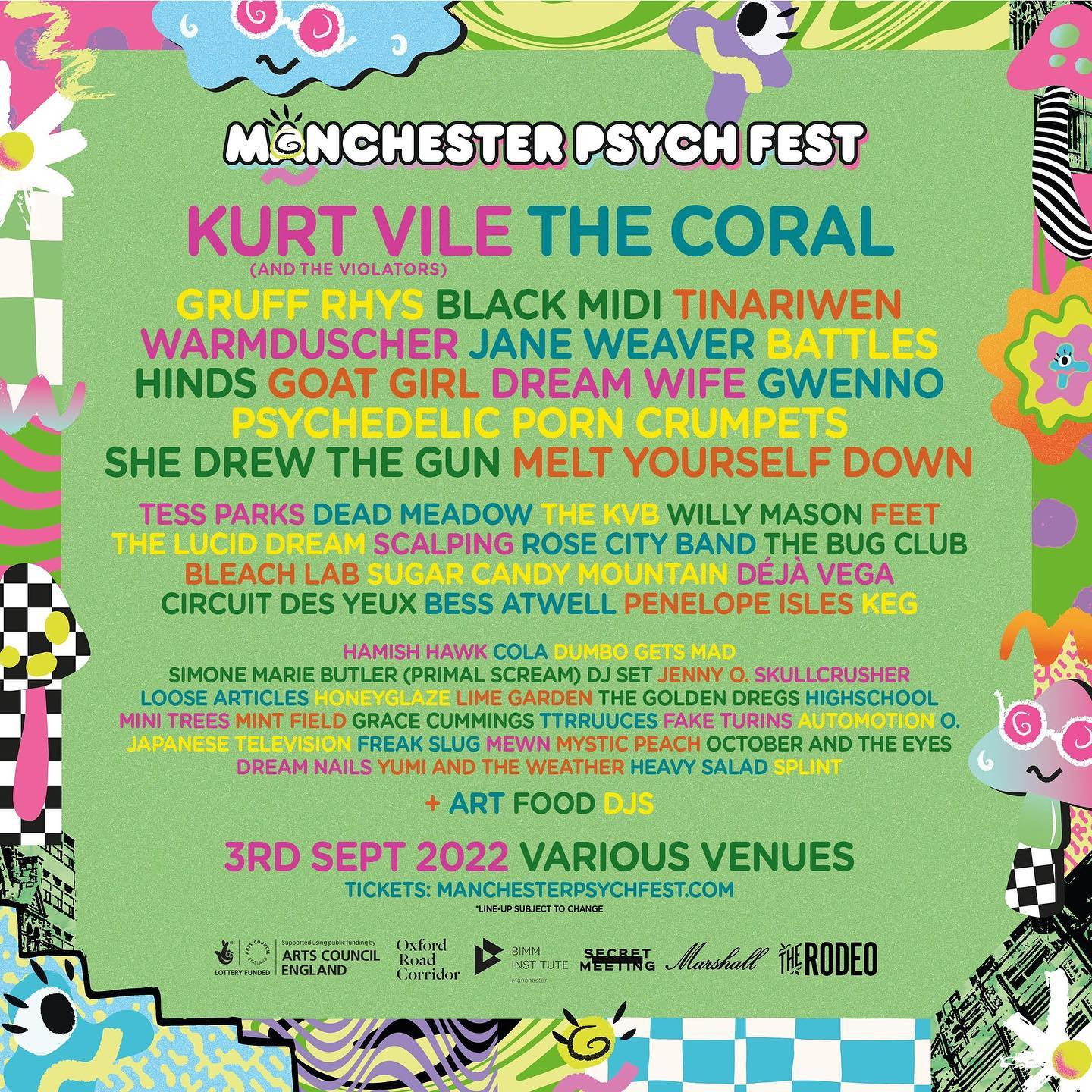
MANCHESTER PSYCH FEST 2022 – Various Venues Manchester 3rd September 2022
Posted: February 15, 2022 in MUSIC0

The Mysterines have enjoyed some incredible success to date. this includes a sold-out tour just before lockdown in February 2020 a 2nd sold out tour coming in autumn, playlists at BBC radio 1 and BBC 6 music. A note from Lia on the first single off the album: “In My Head” appears to be a love song but that was not the original intention. I did want it to superficially be seen as that but in reality, it’s a song about people who struggle with their mental health. partly autobiographical it is about how sometimes life can feel like you’re being haunted by something out of your control.” the song was produced and mixed by Catherine Marks.
The Liverpool based three-piece are proof that rock and roll is very much still alive, with a sound that blurs the genre lines of grunge, pysch and blues. For fans of Wolf Alice, Nothing But Thieves, The Big Moon and Frank Carter & The Rattlesnakes. The Mysterines are ones to watch.
‘Reeling’ Out March 11th:
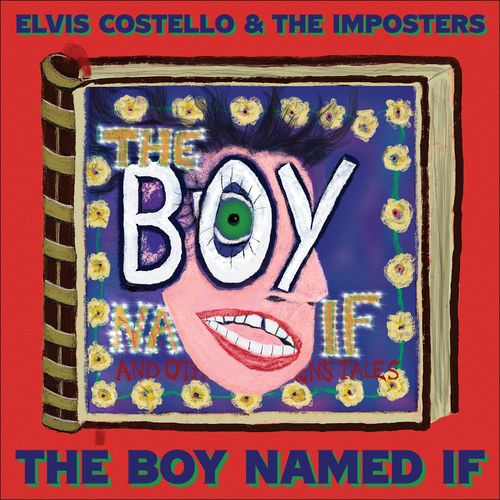
Elvis Costello’s most uproariously raucous album in many a year explores the tumultuous transition between adolescence and adulthood. “The Boy Named If,” certainly bears a strong resemblance to the angsty-yet-articulate 22-year-old permanently etched in the grooves of his 1977 debut, “My Aim Is True”. But this, his 32nd album, is far from a nostalgia trip. Rather, it’s a return to the scene of the crime, the moment when one receives those grievous emotional injuries we spend the rest of our lives trying to reconcile. According to Costello, the 13 tracks “take us from the last days of a bewildered boyhood to that mortifying moment when you are told to stop acting like a child which for most men (and perhaps a few gals too) can be any time in the next 50 years.”
It takes a certain amount of bravery to revisit a time in the lifecycle that most would probably rather forget. But then again, bravery is Costello’s stock-in-trade as a musician. Who else would take artistic leaps as frequent and fruitful, seemingly limited only by his imagination and good taste. He’s played with everyone from the Roots to the Brodsky Quartet, Allen Toussaint to Chet Baker, not to mention Marcus Mumford, Roy Orbison, Anne Sofie Von Otter, Paul McCartney, Burt Bacharach and Iggy Pop.
To call Costello an artistic chameleon is putting it too simply. He’s more akin to a Cheshire Cat, appearing and disappearing across the popular music spectrum at will, identifiable only by the sly grin that permeates his work.
“The Boy Named If” pairs him once again with the Imposters, his crack band consisting of two members of his long time backing group the Attractions drummer Pete Thomas, keyboardist Steve Nieve plus bassist Davey Faragher. As with most “quarantine albums,” it was recorded remotely, with the bandmates spread across Canada, France and the United States, and assembled in a piecemeal process by co-producer Sebastian Krys. But unlike most quarantine albums, it’s vibrant, unified and as un-claustrophobic as a cool breeze. The tone is set with “Farewell, OK,” a gleeful kiss-off bolstered by an onslaught of slashing guitar, organ stabs and thundering four-on-the-floor rhythms. The album’s lead single, “Magnificent Hurt,” could be a long-lost addition to the Nuggets garage rock compilation.
A distant cousin of “Pump It Up,” it’s an obvious future classic in Costello’s canon. The searing lead guitar of “What If I Can’t Give You Anything But Love” is tempered with the glimmers of vulnerability found in lines like “Don’t fix me with that deadly gaze/It’s a little close to pity.” Another highlight is the title track, an ode to a puckish invisible friend who takes the heat for our childhood misdeeds. The older we get, the less he’s seen, leaving us to accept the blame alone.
It’s hard to resist the urge to psychoanalyze Costello’s decision to take this decidedly unsentimental look back. After all, it’s common during times of mass geopolitical turmoil to derive comfort from our past and solace from the things we once loved. This current crisis finds many of us spending more time in our rooms than we have since adolescence, which no doubt provides ample time for self-reflection. In Costello’s case, so did upheavals in his private life. A cross-continent move from Vancouver to New York City with his wife Diana Krall and their twin 15-year-old sons marked a major transition. A more tragic milestone was the loss of his mother last January at the age of 93. In light of such shifts, it seems only natural to retrace one’s steps.
Perhaps there are clues in his two most recent projects. In September he released Spanish Model, a reimagined version of his 1978 album This Year’s Model, which featured a host of Latin artists singing Spanish-language lyrics over the original backing tracks he’d recorded all those years ago. That same month, he issued the Audible Original How to Play the Guitar and Y, a joyous and hilariously idiosyncratic spoken-word treatise on the nature of music-making and creativity. Steeping himself in his early rock-centric recordings, while simultaneously rediscovering the uncomplicated joy of bashing out an elementary three-chord wonder, may well have paved the path for “The Boy Named If”.
Or not. Speaking about Costello in anything approaching absolutes is a mistake. Nuance is quite possibly the hallmark of his work, if one had to choose. Nothing is ever a simple declarative, be it the genre of his music or the meaning of his words. The energy of youth mixed with the wisdom accrued through Costello’s 67 years of hard-won experience makes “The Boy Named If” a deeply thoughtful blast of rock ‘n’ roll, and one of the most enjoyable records he’s ever produced. The album’s themes contrast the most frightening elements of adolescence with the equally terrifying moments of adulthood, leaving you to figure out exactly which side of the grass is greener.
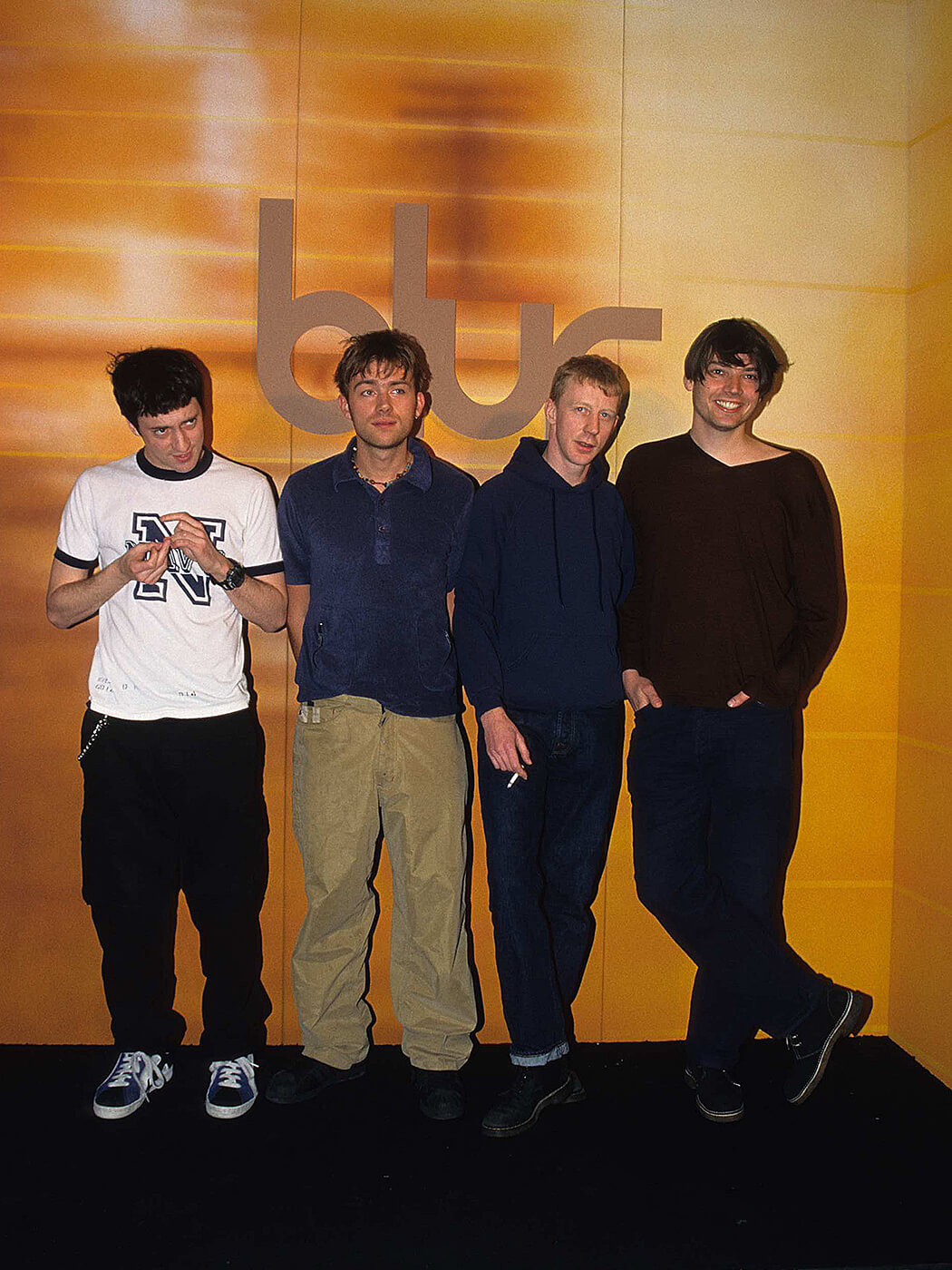
Released two years after “Country House” that helped them claim victory in the “Battle Of Britpop”, Blur’s self-titled album expanded the group’s scope beyond the UK, as they decamped to Iceland for recording sessions and took in a transatlantic influence which would earn them significant success in the US. With it came a complete rethinking of what Blur could be at the end of the 90s, propelling them far beyond English whimsy and social commentary to ensure their continued relevance as the 20th century came to a close.
With their fame-building trio of mid-90s albums, “Modern Life Is Rubbish”, “Parklife” and “The Great Escape”, Blur had cemented themselves as heroes of homegrown pop, pin-up cover stars for magazines from NME to Smash Hits, and purveyors of subversive chart hits which took a sardonic look at social mores while also placing the group right at the centre of contemporary British culture. By the time they came to record their fifth album, however, throughout the second half of 1996, they were exhausted by the media attention, bored with their tabloids-fuelled rivalry with Oasis and weighed down by the expectation of having to outdo themselves all over again. The solution: rebuild Blur from the ground up and challenge all assumptions of what the band were capable of.
Before their self-titled album, Blur were brilliant in a way that was also a little hard to look at—for American audiences, anyway, who preferred a slouch or an untucked shirt corner somewhere. But that all changed when Blur hit American shores in 1997, pulling its hair over its eyes and frowning theatrically. It was an audacious bid to reinvent the band as across-the-pond visitors to the then-exploding American indie rock scene, and it is also a gloriously confusing, fractured jumble, more a major-label mixtape than an album.
After the relatively conventional “Beetlebum,” Blur proceeds through a series of cartoon trapdoors, reeling from faux-grunge (“Song 2”) to faux-glam (“M.O.R.”) to ersatz Sebadoh tributes (“You’re So Great”) to high Noel Coward camp (“Death of a Party”). For Americans and Brits alike, the album was both perplexing and fascinating, like watching a movie through a Vaseline-smeared lens and being unable to tell if the actors are laughing or screaming. Blur’s relationship to American alt-rock—mocking it with “Song 2” while simultaneously scoring a bona fide hit—was also their relationship to success, as they scoffed at it and held it at arm’s length while zealously pursuing it. If you are truly going to be the smartest kids in the classroom, it’s not enough to scorn the test—you still have to ace it.
A ‘mid pop life crisis’ and an abrupt change of style gave Graham Coxon free reign to soundscape on one of the most enduring and experimental guitar records of the 90s.
With interband tensions on the rise and the fabled ‘musical differences’ threatening to come to a head, Blur responded by tearing up their deep-rooted Anglo-centric approach for their self-titled 1997 album. Coxon urged Albarn to make music to “scare people again”, urging the band to embrace the looser, ‘lo-fi’ aesthetic of US alt-rockers such as Pavement, Tortoise, Slint and Beck.
Chief songwriter Albarn had gradually submitted to the idea and songs written on the band’s early 1996 US tour, “Song 2” and “Chinese Bombs“, paved the way. Once in the studio, Blur jammed together for the first time in years: “We’ve never really jammed before,” Coxon recalled. “We’ve been quite white-coaty, overall, about recording, like in a laboratory.”
After initial recording in London in June 1996, the band continued sessions in a small studio in Iceland and in January 1997, a fortnight before the album’s release, Blur unveiled lead single “Beetlebum”. With its descending backing vocals in its chorus, dissonant Come Together-esque ‘solo’ and McCartney-esque bassline, it had more in common with The Beatles than Blur, even down to its accidentally punsome title and rather than being mediated through a character, its lyrics even seemed vaguely confessional. It shot to No.1 in the UK – blowing away any record-company fears over its commercial suitability – and set the scene for a radically different Blur album.
Although the band – along with erstwhile producer Stephen Street – had clearly committed to the experimentation as a collective, Blur is often singled out as ‘Graham’s album’. “Maybe I just had strong ideas this time,” Coxon shrugged. “I had an awful lot of sounds and styles in mind, so I collected them together, put them through my sieve and then applied it to Damon’s songs.” Or maybe it’s something to do with the inclusion of “You’re So Great” – the first Blur song the guitarist wrote lyrics for and sang lead on – which is pure Coxon, down to its excellent manic slide solo and its self-effacing Dictaphone-demo production.
The guitarist has said he thought of Albarn as a good ‘enabler’ for him to ‘become noisy’: “He used to write these short, fast things especially for me to go berserk as a reward,” he said, somewhat self-effacingly. Yet while the fuzz fest that is “Song 2” – with its two fuzzy basslines and Shin-ei and Pro Co RAT-drenched chorus – springs instantly to mind, Blur is about much more than that song’s all-out attack.
The album’s opening riff alone is an insight into how Coxon sees guitars and effects as integral to his sound. “Beetlebum’s” massive, chugging offbeat Tele riff with its tight delay (from a Boss unit) couldn’t have been added later: it’s Coxon playing the effect as part of the performance.
“Really, my guitar playing is effects playing,” he’s said, and Blur is full of moments that illustrate what he means. Death Of A Party’s two-chord verses are smeared with rumbling, delayed fuzz and a chorus of unison bends and twin-guitar dissonance; twisted travelogue “On Your Own” sees Coxon mercilessly eradicate any sense of predictability thanks to slanted and enchanted squalls of fuzz, feedback and swipes of the strings with a delay set to superfast. On “M.O.R.”, the opening riff’s frantic harmonics with added tremolo builds up the intensity before the band disintegrates in beautiful chaos, and “Theme From Retro” is a demented waltz bathed in noise that collapses into a black hole of space echo.
Coxon is just as compelling when he resorts to route one, as on the breakneck powerchord workout of “Chinese Bombs“. You almost feel sorry for “Country Sad Ballad Man“, which starts off as an innocent, gently wonky acoustic song until Coxon bends it out of shape with squawking shards of stoner Tele, then promptly smashes it to pieces with his effects.
There are also moments where the band’s orbit is genuinely perturbed and they’re no longer writing anything approaching a pop song: Strange News From Another Star’s soundscape is bleakly dystopian and “Essex Dogs” is a chopped-up, varisped industrial meditation of looped delays and broken-glass guitar fragments, over which Albarn darkly intones free verses about panic attacks in the terminal pubs of his hometown.
Ironically – given that it appeared on an album with a song about the trials of ‘breaking’ America as a centrepiece, of sorts – “Song 2’s” “Woo-hoo”s were eventually licensed for US TV ads, an episode of The Simpsons, films and games and could even be heard accompanying touchdowns in sports arenas (though notably, not to accompany the launch of the US military’s new stealth bomber). The album itself reached No 61 on the Billboard charts, but finally Blur had arrived and embarked on a world tour with a major US stint.
Given that it’s a hybrid of Blur’s essential British eccentricity and the sensibilities absorbed from a steady diet of experimental US indie, more than two decades on, Blur doesn’t really sound identifiably of a time or place. It’s insular, eclectic and uncompromising and proves that if you give a great guitar player free reign, you end up with a great guitar record – and this is up there with the best of its era.
Blur, Blur (Food Records, February 1997)
- Damon Albarn, vocals, piano, keys, guitar
- Graham Coxon, guitar, vocals, drums, theremin
- Alex James, bass
- Dave Rowntree, drums, percussion

London-based band Black Doldrums are today sharing ‘Into Blue’, the second single to be lifted from their newly announced debut album ‘Dead Awake’ due out March 11th on Fuzz Club Records. Produced by Jared Artaud (The Vacant Lots, Alan Vega), the album arrives following two sold-out EPs (most recently 2019’s ‘She Divine’) and tour-dates around the UK, EU and US. Originally a duo founded by Sophie Landers (drums) and Kevin Gibbard (guitar/vocals) but now recently fleshed out to a trio with Matt Holt joining on bass, Black Doldrums deal in a dark, shoegazing psych that melds gothic post-punk with a leather-clad rock’n’roll spirit.
‘Into Blue’ is a euphoric and slow-burning cut written for all of the all-of-sound-loving romantics out there. Acting as a follow-up to an unreleased song he wrote when he was younger, Kevin says of ‘Into Blue’: “It’s an honest retrospective look at a certain period of time for me that’s brought right into the now with lyrics such as ‘And all the while as if to make me smile she was there’. That line refers to a twist of fate as it’s about a chance meeting between myself and Sophie after living and growing up right down the road from each other the whole time. The imagery of ‘Into Blue’ I think means to follow someone and be with someone into an afterlife or eternity.”
Having cultivated a die-hard following in the UK psych underground, Kevin and Sophie set to work on their long-awaited debut album in 2020. Their original plans were to travel to New York to record the album with Jared Artaud of fellow label-mates The Vacant Lots however the pandemic and ensuing lockdowns and travel restrictions inevitably put a stop to that. Instead, they recorded the album in London with Artaud producing and mixing the album remotely from Brooklyn. “It made for an interesting collaboration as the distance could have been an obstacle”, Sophie recalls, “but it actually helped creativity as we were more inclined to stay in touch and have really decent phone calls at length discussing the songs in a lot of detail. We really enjoyed those conversations with Jared about music and all of our influences. I think you can hear on the record that it is a full collaboration.”
The more collaborative effort of ‘Dead Awake’ finds Black Doldrums switching gears and adopting a cleaner, more precise creative approach than that of their earlier material. “The idea was to be absolutely brutal with our songs and cut them down to what we only felt was necessary”, Sophie remembers: “Up until this point we had been experimenting and were happy with what we had created but we no longer felt the need to hide behind too much reverb and an excessive amount of guitars. It still sounds like us but it has all the elements needed to stand the test of time.” The result is an album that feels colder and more stripped back – the effects are still there but stripped down to their fundamentals so that the songs themselves take precedence over any wall-of-sound deliria.
‘Into Blue’ is lifted from Black Doldrums’ forthcoming debut album ‘Dead Awake’, due out March 11th 2022 on Fuzz Club Records.
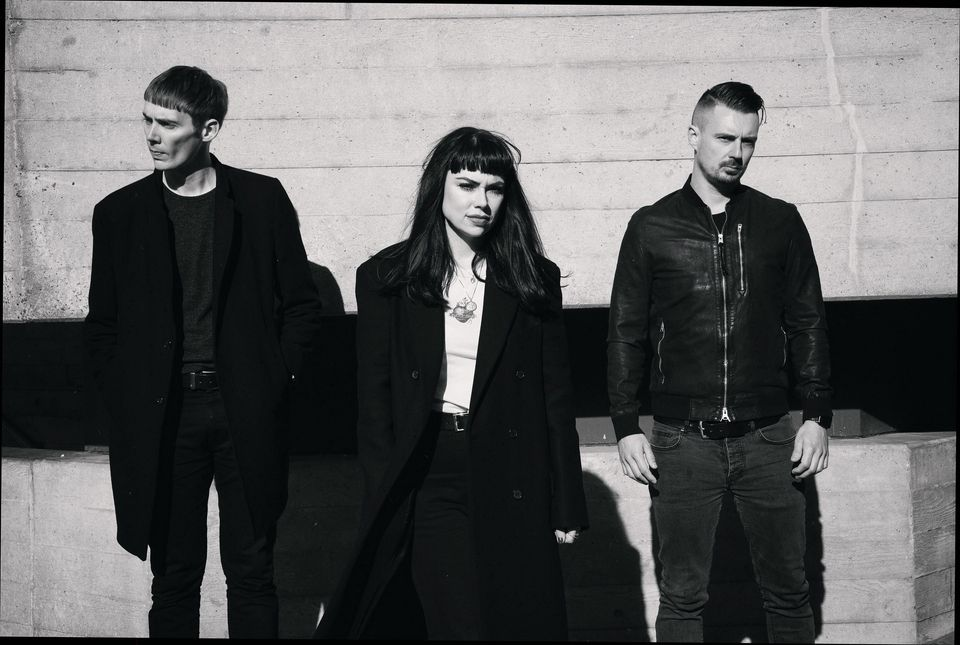
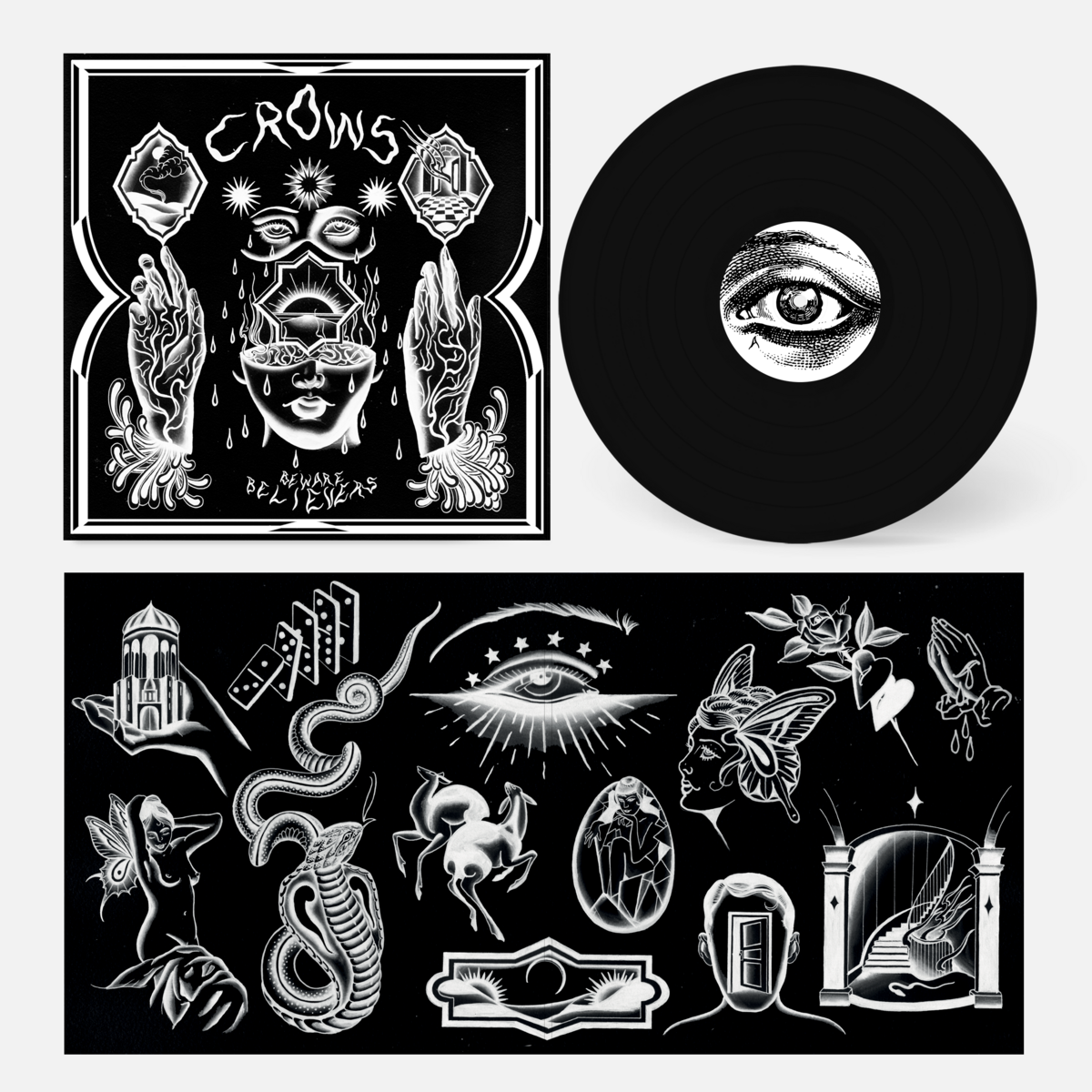
London four-piece Crows will release their highly anticipated second album, ‘Beware Believers’, on April 1st 2022 via Bad Vibrations Records. Conjuring a dark and visceral post-punk that’s been hardened by years of notoriously rowdy live shows, Crows have amassed a legion of die-hard fans since they formed back in 2015 and cultivated a singular, much-adored presence in the British alternative music scene. Equal parts ferocious and hedonistic, the incoming ‘Beware Believers’ LP arrives off the back of their critically acclaimed 2019 debut ‘Silver Tongues’, international touring and festival appearances, and shared stages with the likes of IDLES, Wolf Alice, Girl Band, Metz, Slaves and Protomartyr.
Following the release of their long-awaited debut album on the IDLES-run Balley Records back in 2019, Crows immediately set to work on its follow-up and by January 2020 they were already back in the studio tracking what would become the ‘Beware Believers’ LP – and then Covid hit. “Once we knew Covid was here to stay, we took the first break we’ve taken since we released our first single ‘Pray’ in 2015. Being locked down for three months unable to finish the last bits of the record was very frustrating but it did mean we could come back to the album with fresh ears and make sure it sounded like it should: a true representation of Crows.”
London post-punk/noise-rock group Crows are back with the huge ‘Room 156’! The single is the second to be lifted from their forthcoming ‘Beware Believers’ LP that’s due out April 1 on Fuzz Club imprint Bad Vibrations Records!
On ‘Room 156’, frontman James Cox says: “I used to be quite obsessed with true crime, and this song was kind of born out of researching H.H Holmes and the World Trades Hotel in the 1860’s where he would murder people staying at his hotel (informally called ‘The Murder Castle’). I also got quite obsessed with a faith healer from the early 1900’s called Reverend Major Jealous Divine and reading transcripts of his old sermons, so ‘Room 156’ is basically just a weird amalgamation of mad shit I read about.”
Loud, cathartic and abrasive – a quintessential Crows record it certainly is. “Beware Believers has felt like a marathon, a real endurance test that’s been a long, winding road filled with highs and lows and plenty of twists and turns”, frontman James Cox says: “The majority of the themes on the album came from what was going on in the world around Summer 2019 when we started writing the album. Covid wasn’t in our lives and the biggest impact was Brexit and the madness our government were putting us through. I was reading a lot of J.G. Ballard and Kurt Vonnegut, mad dystopian novels, whilst all this craziness was going on around us and it was a weird headspace to get into.”
Bad Vibrations Records | Fuzz Club Records

True creatives find their own path, and no-one sounds quite like Pictish Trail. His genre blending sound and esoteric lyrics transform traditional Scottish sounds and adapt them with DIY electronica modified with a chiptune feel. Huge popular in indie circles, he has previous won a Scottish Album of the Year Award for his acclaimed album “Future Echos”.
The understated verses of ‘It Came Back’, with their tense, foreboding bass-driven electro hip-hop accompaniment, bursts to life with an arms-aloft falsetto chorus, and a brain-shattering industrial metal meltdown.
“I don’t have a TV at home, and so – while away recording on the mainland – was completely hooked to the flat-screen hung up on my hotel-room wall, constantly scrolling through the Freeview channels to avoid writing lyrics. There were protests happening in Bristol, loads of footage of helicopters flying about, heavy police presence. Having largely avoided the news for a year, obliviously floating about in the Hebridean wilderness, I was suddenly submerged in this dystopian hellscape. Except it was real. Well, it was real on the telly.
“A real hero of the Scottish underground scene” – Huw Stephens
Originally working under the moniker The Pictish Trail; pioneering songwriter and producer Johnny Lynch wrote and recorded his first record on a home computer in 2003 via Fence Records. But it wasn’t until a further three years that his true debut album “Secret Soundz Vol. 1” came out, revealing a new creative force whose unique fusion of folk and electronica with indie sentiments would mark him out as a true fan favourite and rapidly gain cult status. Over three years, he would follow up with his In Room mini album plus “Secret Soundz Vol. 2″.
In 2016, Lynch would lose ‘The’ from his stage name and release Future Echos as simply Pictish Trail. His most celebrated record to date, it includes the singles “Far Gone” and “Dead Connection” which made a huge impact of his growing fans whose votes saw him receive the Scottish Album of the Year Award. But despite the colossal success, it would be four long years till fans were once again treated to a new Pictish Trail album.
Thankfully, Lynch returned with stunning fourth album “Thumb World” last year; his wonderfully bizarre analysis of a realm which has ceased to grow externally and now connects us to each other digitally in a new cybernetic dimension accessed by our stubbiest digit; “Our opposable thumbs are the things that separate us from most other animals on Earth, they are also the things that we use to swipe on screens, to separate ourselves from our normal lives, but which in turn trap us within an artificial reality.”
Aided by drummer Alex Thomas (Air, Anna Calvi, Sqaurepusher), produced by Rob Jones and string arrangements curtesy of Kim Moore, his wonderfully eclectic record is yet another creative triumph for the innovative songwriter. Next year sees Pictish Trail showcase Thumb World with a promotional tour,
Pictish Trail reveals epic new single ‘It Came Back’ taken from his new album ‘Island Family’ set for release on March 18th 2022. The album’s release coincides with a headline tour across the UK this Spring.

50 Foot Wave are led by Kirsten Hirsch of Throwing Muses. The band are a power trio, whose music is heavier, more experimental and, on the whole, a bit weirder than Throwing Muses – an outlet for Hirch’s more esoteric material. ‘Black Pearl’ is the band’s second album and sees gigantic distorted guitars, heavy bass and drums and menacing dark melodies. Like passing comets, releases by 50 Foot Wave are few and far between; their hypnotic mixture of ice-cold uneasy listening carefully warmed into its own unique sound by the sun.
50 Foot Wave (Kristin Hersh’s ‘other’ band with fellow Throwing Muses’ members Bernard Georges and Rob Ahlers) announce new album ‘Black Pearl’ out 15th April. Listen to the first single ‘Staring Into The Sun’ a sonic trip from grunge melancholy to drone-core menace
Last sighted with 2016’s ‘Bath White’ EP and before that in 2011 on the ‘With Love From The Men’s Room’, 50 Foot Wave return with ‘Black Pearl’, as its title might suggest; an anomaly, a rarity, a gem. The title refers to the neighbourhood in New Orleans where the record was written.
Starting with the dark and light of it all (they are specialists at fusing unlikely bedfellows), there’s the heavy, echoey riff of ‘Staring Into The Sun’ with all of its grunge melancholy and dronecore menace – it’s them at their fuzzy best with time changes, key changes and a sliver of melody introducing a false state of calm, a suggestion that’s further examined on the following ‘Hog Child’, a teasingly mellow moment that sounds perfectly baroque by comparison, with Kristin’s vocal and her spidery guitar slowly dissolving into itself as bass and drums become motorik.
Fire Records To be released on: 2022-04-15
The ASSOCIATES – ” The Albums ” A Buyers Guide
Posted: February 14, 2022 in CLASSIC ALBUMS, MUSICTags: Alan Rankine, Billy MacKenzie, Fourth Drawer Down, Sulk, The Affectionate Punch, The Associates

A band that literally sounded like no other, the Associates shifted from wiry, idiosyncratic post-punk to the sumptuous art-pop of 1982’s peerless “Sulk“, their disparate sound bound together by the late Billy Mackenzie’s astonishing vocals: everyone knows their hit single “Party Fears Two“, but a whole world of remarkable music bears their name
Any appreciation of Scotland’s The Associates is coloured by the knowledge that Billy MacKenzie took his own life at age 39 in January 1997. More than his band’s voice, he personified their unique approach to music. Between 1979 and 1982, with collaborator Alan Rankine, he created a string of vital records which defy genre pigeonholing and define their vehicle The Associates as one of Britain’s most wilful pop acts. Rankine split from MacKenzie in 1982 at the point when they had broken into the charts. MacKenzie, despite continuing to record as The Associates, solo and in collaboration, never regained momentum. His death was a tragic full stop which no one could have predicted.
The original MacKenzie/Rankine Associates recorded just two albums proper: “The Affectionate Punch” (1980) and “Sulk” (1982). The compilation “Fourth Drawer Down” (1981) was issued between the two. Each has just been reissued. With respect to their name, they are called The Associates here, but were also known as Associates.

This is not a catalogue which has been repeatedly strip-mined and there has only been one previous single-disc CD reissue of each of the albums which featured bonus tracks. Each new edition is a double with the original album heard in its entirety on disc one, and all the bonuses collected on a second disc so as not the compromise the integrity of what is being supplemented. Most of the bonuses are B-sides, 12-inch versions and alternate takes. Overall, there are six unreleased tracks (it’s hard to imagine anyone buying just one of these: any fan would buy all three). Frustratingly, a separate double set, “The Very Best of“, includes more previously unheard tracks and a 1993 reunion of MacKenzie and Rankin, despite much of the set’s content also being heard on the individual album reissues. As a way of luring buyers, these exclusives seem a rather misguided piece of marketing.
Quibble aside, these are nice packages, with brisk liner notes treading the fine line between balancing a fondness for The Associates and the journalistic need to tell the story. All the releases are approved by Rankine, and band member Michael Dempsey has had hands-on input. The new remasters are attentive to the music itself and reveal more angles than ever: first pressings of “Sulk” sounded mushy, perhaps a result of compression being added during mastering to emphasis a sonic gloss. The new rendering is strikingly clear and immediate, and as such does not rewrite the band’s aural history.

Knowing the story is unnecessary. The music itself is enough. Heard now, their chart peak “Party Fears Two” is still arresting. Vocally, MacKenzie sounds like the unfettered cousin of a-ha’s Morten Harket, with his even more elastic voice swooping and ascending across one word of a line. A voice with no comfort zone. Where “Party Fears Two” was passionate, album tracks “Nude Spoons” (Sulk) and “Paper House” “(The Affectionate Punch)” were claustrophbically intense. The Associates were defined by jitteriness.
MacKenzie and Rankine’s inspiration was no secret. Their first single (included on “The Affectionate Punch” package) was a version of David Bowie’s then-recent “Boys Keep Swinging” which landed them a contract with Fiction Records. In effect, the duo married Lodger-era and “Wild is the Wind” Bowie, inserted a punk-like urgency and then ran with it. By proxy, the Bowie influence brought Scott Walker on board too, as well as nods to glam-era oddballs like Jobriath and Sparks.
Rankine provided settings which were often as equally in extremis: “The Affectionate Punch’s” “Would I…Bounce Back” is the musical equivalent of a panic attack. Pop pickers picking up “Sulk” after “Party Fears Two” had hit the charts must have wondered what the hell they had brought into their homes. the duo of Mackenzie and Rankine had been joined by bassist Michael Dempsey and drummer John Murphy, though in most promotional material the group were still marketed as a duo.

While “The Affectionate Punch” was instrumentally sparse, “Sulk” was lush and drew inspiration from John Barry and Ennio Morricone. A string of 1981 non-album singles on the label Situation Two were compiled together as “Fourth Drawer Down“, These releases saw the band develop an interest in experimenting with unorthodox instrumentation and recording techniques, including sounds being amplified through the tube of a vacuum cleaner on the track “Kitchen Person”.
Also in 1981, Rankine and Mackenzie released a version of “Kites” under the name 39 Lyon Street, with Christine Beveridge on lead vocals. The B-side, “A Girl Named Property” (a remake of “Mona Property Girl” from the “Boys Keep Swinging” single). “Fourth Drawer Down” charts the evolution from one phase to the other. But where these reissues really demonstrate how fast The Associates were moving and that the right choices were made in this prolific period is a duo of previously unreleased tracks produced by John Leckie on the “Sulk” package (their usual producer was Mike Hedges). The sound here is distant with an ill-fitting rock edge akin to the Echo & the Bunnymen of “A Promise”. As they hurtled forward, The Associates needed their music to breath.
Needless to say, the reissues of “The Affectionate Punch”, “Fourth Drawer Down” and “Sulk” are essential and are probably the last word on these albums. If “The Very Best of” can be found at a decent price it is worth having, although forking out may smart a little.
Vinyl pressings of the three albums are also released, but in the light of the diligent CD editions these seem more about addressing today’s commercial needs than adding to the story of The Associates. Go for the CD versions of each album.


 The Fat Angel Sings