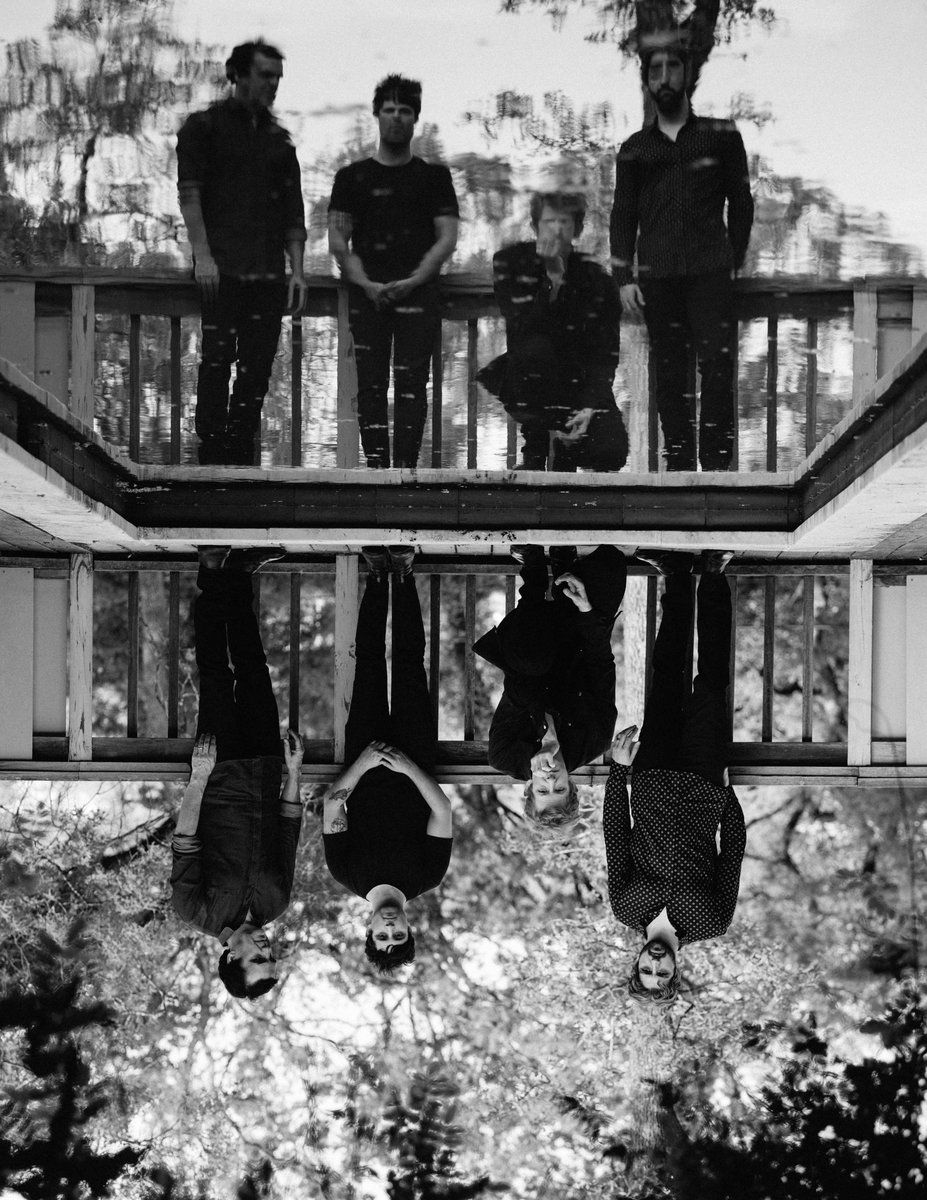
Spoon! The celebrated indie-rockers would have had the follow-up to 2017’s ‘Hot Thoughts’ with us a lot sooner than now, but that pesky pandemic interrupted the recording sessions for the intriguingly-titled ‘Lucifer On The Sofa’. Fortunately the album is finally with us now, and it’s a doozy. More seasoned Spoonites than I have heralded this as possibly the group’s best ever LP. This isn’t something one often hears about a band ten albums deep, but after giving it a quick spin I’ve got to say that they might be on to something. Spoon sound invigorated here, playing with panache and wit, and the grooves on cuts like ‘Wild’ and ‘Feels Alright’ are so righteously rollicking that they bring Eels and the more Rolling Stones-facing bits of Beck to mind.
Its Spoon’s tenth album, “Lucifer on the Sofa”, is the band’s purest rock ’n roll record to date. Texas-made, it is the first set of songs that the quintet has put to tape in its hometown of Austin in more than a decade. Written and recorded over the last two years – both in and out of lockdown – these songs mark a shift toward something louder, wilder, and more full-colour.
This is not a return to the Spoon of “Girls Can Tell” or “Kill the Moonlight“, records that were so spare you could pick out every instrument on every song. Spoon sound huge here — it’s a modern studio album but these 10 songs crackle with electricity. “The Hardest Cut,” a snarling number with clear roots in ZZ Top, is pure Texas boogie but also pure Spoon. You can hear the curl on Daniel’s lip in his delivery. “The Devil & Mr Jones” is another track that plays with traditional rock tropes — Stonesy riff, Santana-y leads, deals with Satan — but does so with such style and palpable energy (and nicely subtle sax), that they make it their own.
From the detuned guitars anchoring “The Hardest Cut,” to the urgency of “Wild,” to the band’s blown-out cover of the Smog classic “Held,” Lucifer on the Sofa bottles the physical thrill of a band tearing up a packed room. It’s an album of intensity and intimacy, where the music’s harshest edges feel as vivid as the directions quietly murmured into the mic on the first-take. According to frontman Britt Daniel, “It’s the sound of classic rock as written by a guy who never did get Eric Clapton.”
Spoon is one of the few bands where you can expect that their next album is going to be yet another masterwork. “Lucifer on the Sofa” is no exception and that is an understatement. This is one of Spoon’s best albums. It is definitely stripped down from their last album “Hot Thoughts“, with more emphasis on guitar and hooks. Spoon is still at the top of their game 26 years into their career.
New MOJO (British music monthly) issue out now With…
GEORGE HARRISON: New documentary Get Back reminded us of his frustrations, and also his genius. Cue: his creative journey, his 30 Greatest Songs, and a never printed Paul McCartneyinterview about his quiet pal: “He was a very loyal guy.”
RONNIE SPECTOR A singer like no other. A story to make your hair curl. Tribute is paid to The Ronettes’ sadly departed siren by Brian Wilson, Steven Van Zandt and more.
EVAN DANDOThe Lemonheads’ dashing tunesmith reveals how life seems to keep evading his control: “I just recently got off heroin again. Man, that was a bad one.”
YARD ACT How DIY beats and worm’s-eye street poetry lifted Leeds indie hopefuls out of a rut and into theNext Big Thing bracket: “We’re thinking ‘Beastie Boys’.”
KAREN DALTON Nearly 30 years since her death, her unique and magical music is finally being recognised. Friends and peers remember “a person who said, ‘Take it or leave it.’”
TEARS FOR FEARS Synths’n’psychiatry to world domination: how Songs From The Big Chair cracked America and did their heads in. “We felt this incredible, intoxicating whoosh.”
NEUTRAL MILK HOTEL Chaotic shows, singing saws, beautiful records, fervid fan love. Inside the ’90s’ most mysterious band, and their singer’s inexplicable retirement.
LA PUNK The Damned, The Cramps and more: killer shots of the LA punk scene, 1977-1980, from a new book by Slash magazine house photographer, Melanie Nissen.
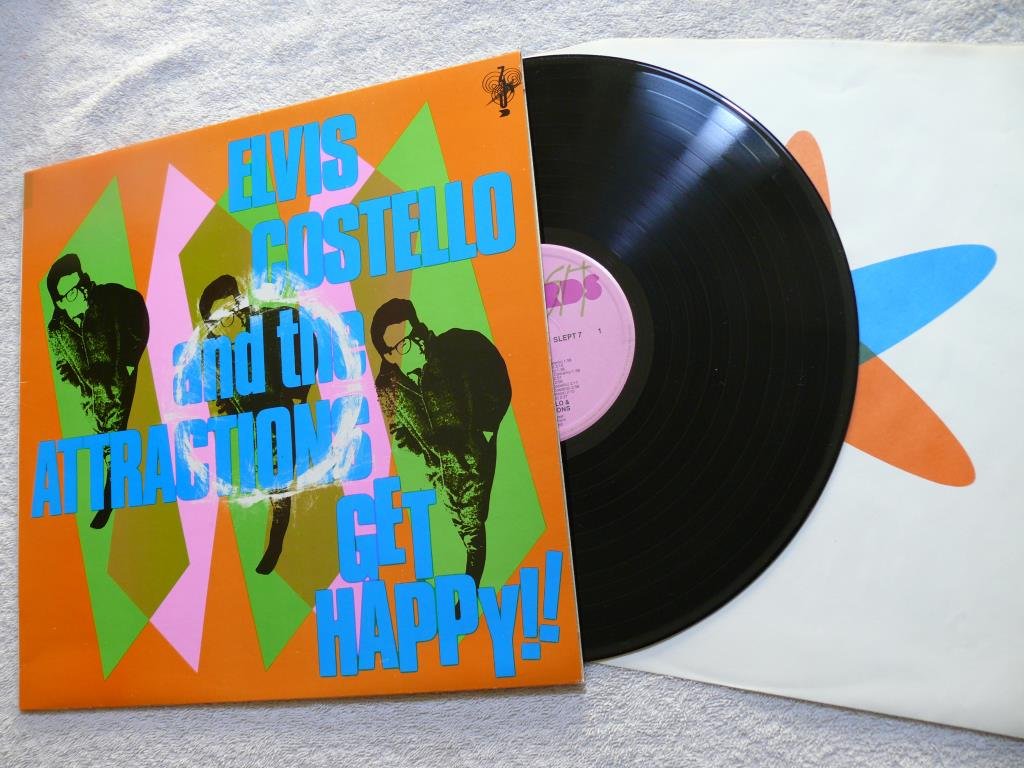
Released this day February 15th in 1980: Elvis Costello released his 4th studio album (his third with The Attractions), ‘Get Happy!!’, on F-Beat Records (UK)/Columbia Records (US); heavily influenced by R&B & soul music, it was a dramatic break in tone from his previous trilogy of commercially successful albums; the sleeve came already looking like it had been worn by years of use; produced by Nick Lowe, it reached UK #2 Rolling Stone ranked it No11 on their list of ‘The 100 Greatest Albums of the 1980s’…
“Get Happy!!“, earns its double exclamation points beginning with the sleeve design, which approximates the look of a well-worn vinyl LP produced on a tight art budget. Designer Barney Bubbles (born Colin Fulcher), noticing the projected album would contain a groove-busting 20 tracks, was no doubt thinking of budget-priced K-Tel and Pickwick compilations, which gave consumers music in bulk, promoted with pushy TV and print advertisements, and garish front covers.
Those budget albums did not always contain “the original hits by the original artists”; Costello must have chuckled more than once as they donned a series of musical disguises while recording the original songs on “Get Happy!!“, striving to approximate the sound of their favourite Motown, Stax and Atlantic soul records. “King Horse” nicks the guitar from the Four Tops’ “Reach Out I’ll Be There,” “Love For Tender” employs the rhythm from the Supremes’ “You Can’t Hurry Love,” and “Temptation” steals wholesale from “Time is Tight” by Booker T. and The M.G.’s.
All pretense is dropped for a version of Sam and Dave’s “I Can’t Stand Up For Falling Down,” but theAttractions radically alter the tempo. The U.K. R&B scene is represented by a version of Tony Colton and the Big Boss Band’s 1965 single “I Stand Accused,” which Costello actually lifts from the same year’s more popular version by the Merseybeats. “Get Happy!!” is both an expert homage to the sound of ’60s R&B and a collection of some of the most intense, gut-wrenching, clever and joyfully sad songs Costello ever wrote. As is typical of him, the lyrics are continually surprising, full of puns and reversals of viewpoint: “high fidelity” can refer to the clarity of sound and sexual faithfulness simultaneously. Even the album title is strangely ambiguous, with the overemphatic punctuation.
“Get Happy!!” was mostly recorded in October 1979 at Wisseloord Studios in Hilversum, The Netherlands, where the group, engineer Roger Bechirian and producer Nick Lowe thought there’d be fewer distractions for musicians known for partying. Still, Costello says “a tray of cold Heineken, vodka, and orange juice was delivered to the control room each afternoon.” Alcohol had been a problem for Costello earlier in the year during the highly successful U.S. “Armed Funk Tour”: in April during a stop in Columbus, Ohio, he reportedly went on a drunken, racist rant in a bar that made national headlines. He later wrote that for a time, “I hated just about everything in my world, reserving the greatest disdain for myself.”
Some of the new tunes Costello had in hand for the Hilversum sessions had been tried out on stage and studio before, but were rejected as being too “new wave” sounding (a term never willingly embraced by Costello). Listening to vintage American R&B records by the likes of Al Green, Garnet Mimms and Curtis Mayfield during the tour finally provided the band with a sonic direction, and it rode the concept into an album considered one of Costello’s artistic peaks. Only three of 20 songs are over three minutes long, another reason the album sounds like a stack of rapidly cycling 45s on AM radio of the ’60s. No guitar solos, no bass solos, no drum solos, just great songs with razor-sharp instrumental arrangements.
The peppy Motown-inspired “Love For Tender” kicks it all off, 1:57 of pure power, with a sneering Costello vocal, Steve Nieve’s Farfisa and Bruce Thomas (bass) and Pete Thomas (drums) locked in. The lyrics are an elaborate string of metaphors for love-as-currency: “Are you ready for correction?/’Cause the wages of sin are an expensive infection/I’ll make you bankrupt/Better pay up now, don’t interrupt.” Bruce Thomas’ bouncing bass line is an early highlight of “Opportunity,” along with Nieve’s wandering keyboard lines and the Hi Rhythm Section-style minimal guitar. The melody rises and falls with Costello’s snide observations: “The chairman of this boredom is a compliment collector/I’d like to be his funeral director.”
“Secondary Modern” (a type of trade school for the British lower classes) is a smouldering ballad in a Stax mode that remains lyrically opaque to most Americans but has a great, swampy mood: “This must be the place/Second place in the human race.”
Pete Thomas’ furious snare begins “King Horse,” which has an intriguing arrangement, with eerily placed background vocal echoes, a galloping bass line and majestic grand piano combined with organ. Pete Thomas is in control of the proceedings throughout, showing why he’s widely considered one of the greatest drummers in rock. Especially during the bridge section, it’s like the E Street Band has been crossed with ABBA, harkening back to the group’s previous album Armed Forces. “Possession” varies the opening lyric of Lennon-McCartney’s “From Me to You” (“If there’s anything that you want/ If there’s anything that you need”), and has one of Costello’s best and most spontaneous vocals (at one point his voice cracks) set to a propulsive beat. Once again, the wordplay is stellar: “So I see us lying back to back/My case is closed, my case is packed.”
“Now there’s newsprint all over your face/Well, maybe that’s why I can read you like a book” is the opening couplet from “Man Called Uncle,” a spritely, runaway 2:17 with Nieve’s outstanding piano/organ combo. Costello recorded “Clowntime is Over” in different tempos, and while the glacially slow version released later has more power, “Get Happy!!” has the fast one, which isn’t bad either. (At least a few times during live gigs in subsequent years, Costello used the slow version.
The waltz “New Amsterdam,” one of three songs released as singles from “Get Happy!!”, is the only track on the album actually recorded in London as a demo by EC before decamping to The Netherlands, where it couldn’t be improved upon. One of the greatest of all Costello compositions, “High Fidelity,” ends the first LP side. Released as a single, it continued a run of hits in his native Great Britain but didn’t chart in America. This is where Costello’s pop and soul chops merge seamlessly into the kind of stomper favoured by Britain’s Northern Soul scene. A concert favourite in Costello sets for 40 years now, the opening lyrics, “Some things you never get used to/Even though you’re feeling like another man,” have a direct power matched by the flawless work of the band.
Penned by Homer Banks and Allen Jones, “I Can’t Stand Up For Falling Down” was originally relegated to the B-side of Sam and Dave’s single “Soothe Me,” but the Attractions saw the potential of matching the low-key, heartbreak-soaked lyrics to a faster dance groove. The album has several outliers. “5ive Gears In Reverse” is downright funky. “Motel Matches” is an excellent country song (it even references George Jones’ “Who Shot Sam”) with a series of tricky rhythm changes, but it sticks out like a sore thumb. Vocally, Costello is on fire, spraying out the puns (“In your eyes there is a vacancy/And you know what I’ll do/When the light outside changes from red to blue.” The ska “Human Touch” betrays EC’s recent work with the Specials, rather unsuccessfully.
The album ends with the triple-whammy of “Temptation,” “I Stand Accused” and “Riot Act,” with three different moods, from Booker T. to Merseybeat to nothing-but-net Attractions on the only song Costello says even obliquely refers to his drunken moment of shame in April: “I got your letter, now they say I don’t care for the colour that it paints me…/You can read me the riot act/You can make me a matter of fact/Or a villain in a million/A slip of the tongue is gonna keep me civilian.” “Riot Act” makes for a particularly impassioned ending to the set, with Costello lacerating himself and his critics both.
Prolific as hell in The Netherlands and back home, Costello quickly released various outtakes and alternate versions on singles and EPs that clustered around “Get Happy!!” and its follow-up, “Trust”.
Anyone exploring further should start with the 2003 Rhino double-CD reissue of “Get Happy!!”, which contains 30 bonus tracks, including “Girls Talk,” “Just a Memory,” “Watch Your Step” and other worthies that didn’t make the final LP line-up.
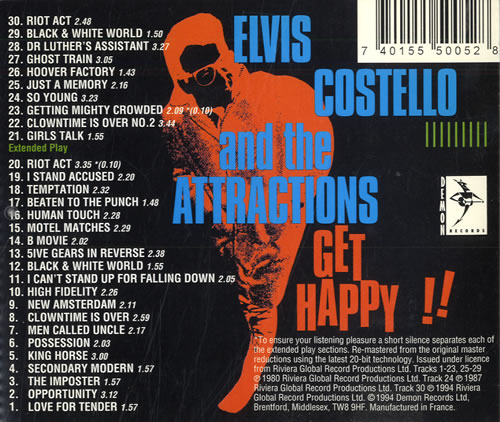
Track Listing Side one “Love for Tender” — “Opportunity” — 1:56 “The Imposter” — 5:08 “Secondary Modern” — 7:08 “King Horse” — 9:07 “Possession” — 12:08 “Men Called Uncle” — 14:12 “Clowntime Is Over” — 16:30 “New Amsterdam” — 19:30 “High Fidelity” — 21:42
Side two “I Can’t Stand Up For Falling Down” (Homer Banks, Allen Jones) — 24:11 “Black & White World” — 26:18 “5ive Gears in Reverse” — 28:14 “B Movie” — 30:52 “Motel Matches” — 32:56 “Human Touch” — 35:28 “Beaten to the Punch” — 37:58 “Temptation” — 39:48 “I Stand Accused” (Tony Colton, Ray Smith) — 42:21 “Riot Act” — 44:42
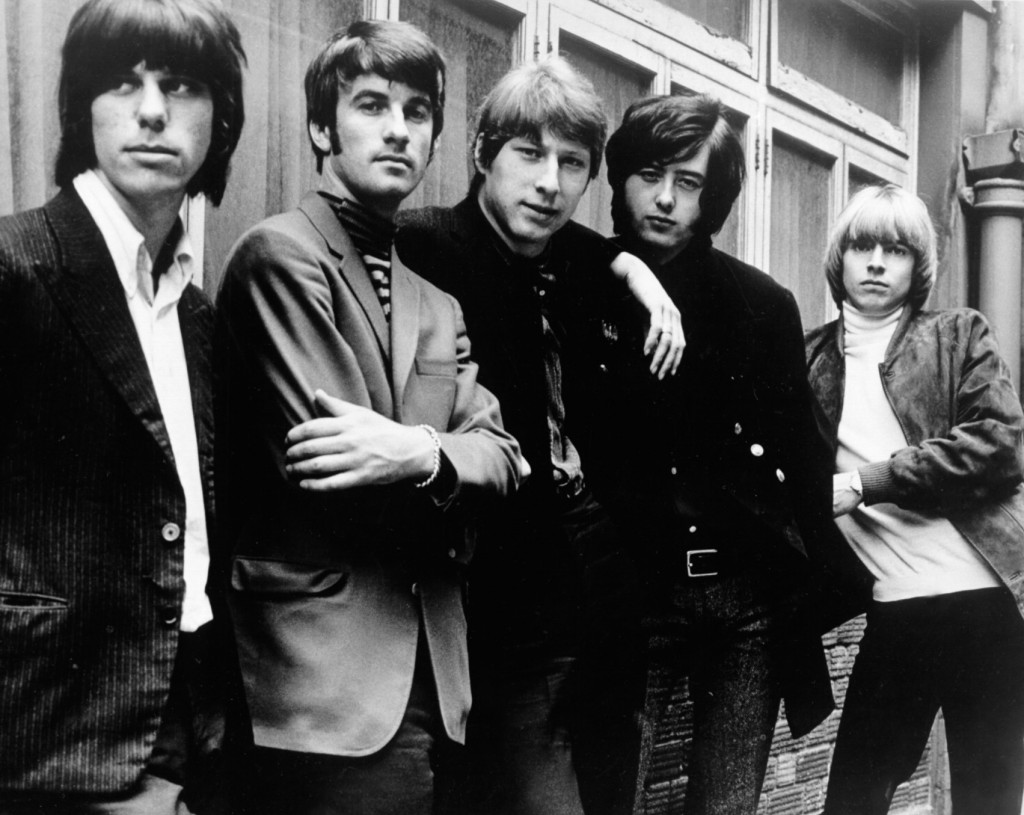
If asked to sum up The Yardbirds in one sentence, most rock fans would probably say something like this: They introduced the world to Eric Clapton, Jeff Beck and Jimmy Page. That is true, they did. Each of the three renowned guitarists first achieved international recognition while a member of the blues-rooted band, which existed for a mere five years, 1963-68, but exerted an outsized impact on rock.
I remember reading one quote in some music book I’ve never been able to find again that said “There are exactly four rock bands that matter, and The Yardbirds are one of them.” Hmmm. The Beatles and the Stones must have been two of them; I didn’t know who the third was – Kinks? Beach Boys? The Who? but The Yardbirds. They were another British band, they were too out there . Not sufficiently poppy. The Stones weren’t all that poppy, but they made for a good contrast with the Beatles, and everyone could say the Beatles are angelic and kind while the Stones were salacious and dirty. What you mostly read about the Yardbirds was this blather about how they served as a preparatory school, of sorts, for three guitar gods: Eric Clapton, Jeff Beck and Jimmy Page. The prep school angle suggested, of course, that the Yardbirds weren’t the end-all-be-all, but rather something skilled players passed through, on their way to that eventual end-all-be-all.
The band is known for starting the careers of three of rock’s most famous guitarists, Eric Clapton, JimmyPage and Jeff Beck, all of whom ranked in the top five of Rolling Stone magazine’s list of 100 greatest guitarists. The band had a string of hits throughout the mid-1960s, including “For Your Love”, “Heart Full of Soul”, “Shapes of Things” and “Over Under Sideways Down”. Originally a blues-based band noted for their signature “rave-up” instrumental breaks, the Yardbirds broadened their range into pop, pioneering psychedelic rock and early hard rock; and contributed to many electric guitar innovations of the mid-1960s. Some rock critics and historians also cite their influence on the later punk rock, progressive rock, and heavy metal trends. Following the band’s split in 1968, Relf and McCarty formed Renaissance and guitarist Jimmy Page formed Led Zeppelin, one of the greatest bands of all time. The band was inducted into the Rock and Roll Hall of Fame in 1992. They were included at number 89 in Rolling Stone’s list of the “100 Greatest Artists of All Time”,
The rest of the band could bring it, too: Jim McCarty was a fine blues-rock drummer, Paul Samwell-Smith had a melodic touch on the bass, and rhythm guitarist Chris Dreja freed-up space for the band’s various guitar titans to do what they did. Clapton had replaced the band’s original and still basically unknown guitarist, Top Topham, shortly after its birth, in October 1963. But classic rock fans who are into Clapton tend to gravitate to Cream or his solo work. Page admirers nearly all fall in with the hordes who worship Led Zeppelin. Beck followers tend to be more open to variations from following his wide-ranging musical path through a host of stylistic realm. But it seems most people treasure what all three did after The Yardbirds. Yet The Yardbirds are what captivated me, and where the three esteemed English rock guitar heroes did much of their most exciting and innovative work.
I could tell how messed up their discography was. It was like no one in the band or managing them had ever thought to record proper albums, like everyone else was doing by then, or put the Yardbirds in a studio helping them get their sound down on tape. So there were a lot of gappy greatest hits tapes.
Putting aside their U.K. and U.S. singles releases, the band’s album releases were relatively straightforward for a few years, if ill-reasoned. In December 1964, the line-up with Clapton on guitar (and Paul Samwell–Smith on bass) released “Five Live Yardbirds“, their debut LP, in the U.K., on Columbia Records.
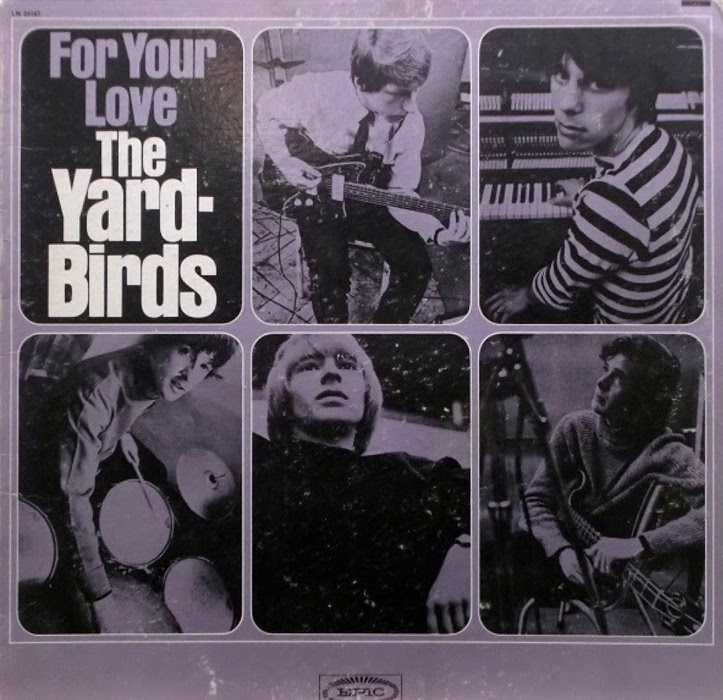
“The Marquee was always a great night for us,” remembers Dreja. “We did over 50 shows there. And there was this back room where we could put all the recording equipment. But it was all very primitive and we caught it by accident rather than design.” You’ve probably heard a song like “For Your Love” on the radio. Clapton, hated it, and absconded, slagging the band off as a bunch of pop merchants who didn’t want to make blues music so much as climb. There were equally superb not-so-hit singles (“Happenings Ten Years Time Ago,” “Little Games”) and a handful of very different but mostly slapped-together albums.
Eric Clapton, whose Yardbirds tenure went from 1963 into the early spring of 1965, would go on to blues purism with John Mayall’s Bluesbreakers and then form Cream with Jack Bruce and Ginger Baker a juggernaut of a supergroup if there ever was one (and a band, ironically, that fostered the same kind of long term fan base as the Yardbirds; i.e., a legion made up of loads of musicians). Enter Jeff Beck, who was more of a renegade, a drifter, a hired gun who frequently was not for sale, save when he wanted to follow his own idiosyncratic career path. Page, who came on board and played bass for a while with Beck in the band, would of course later launch Led Zeppelin, and there was even a brief period where Beck and Page co-teamed on lead guitar for the Yardbirds until Beck dropped out in 1966 and Page saw the band through to their end in 1968.
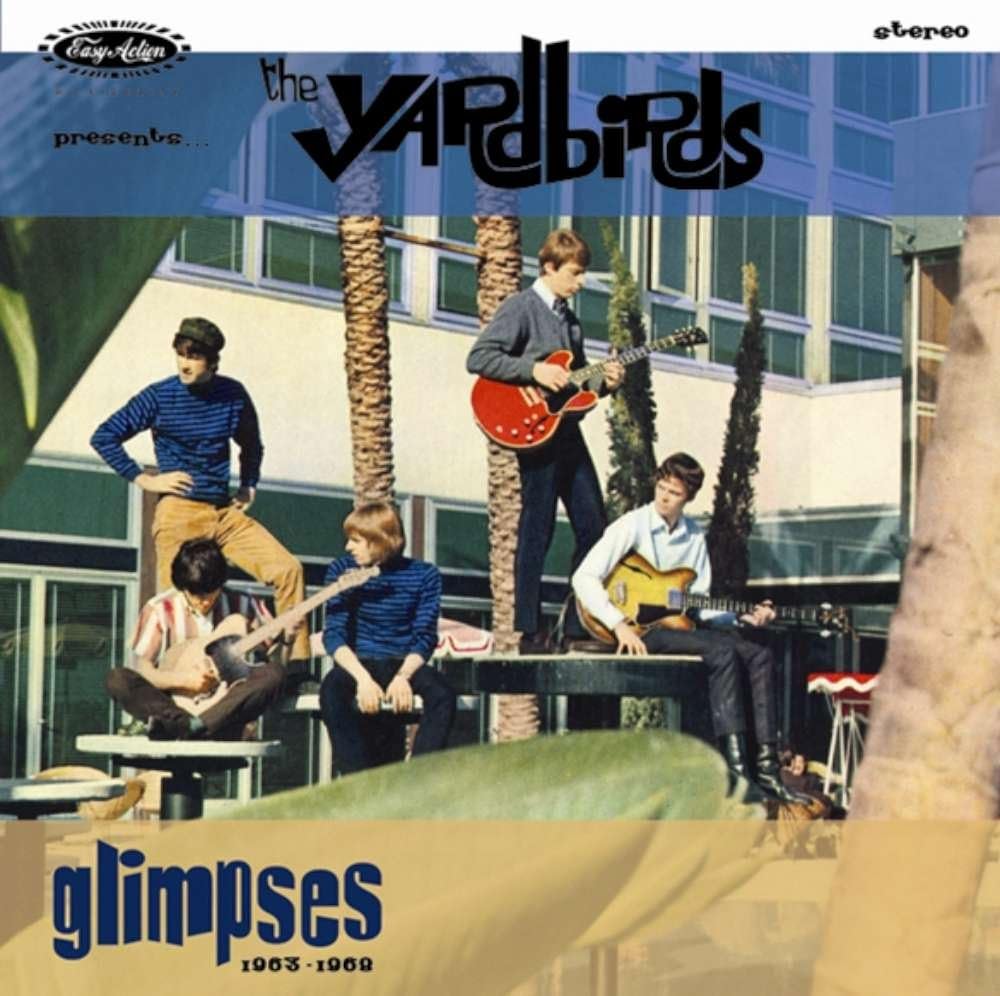
The band then asked Jimmy Page to join. He turned them down, given how much success he was having as a session guitar player. But he was kind enough to recommend his buddy, Jeff Beck, and it is the Jeff Beck incarnation of the Yardbirds that we can hear as we’ve never heard it before on a 2011 boxed set called “Glimpses: 1963-1968″.
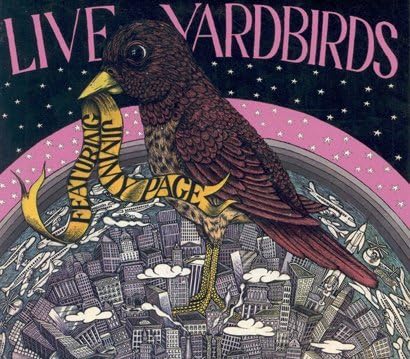
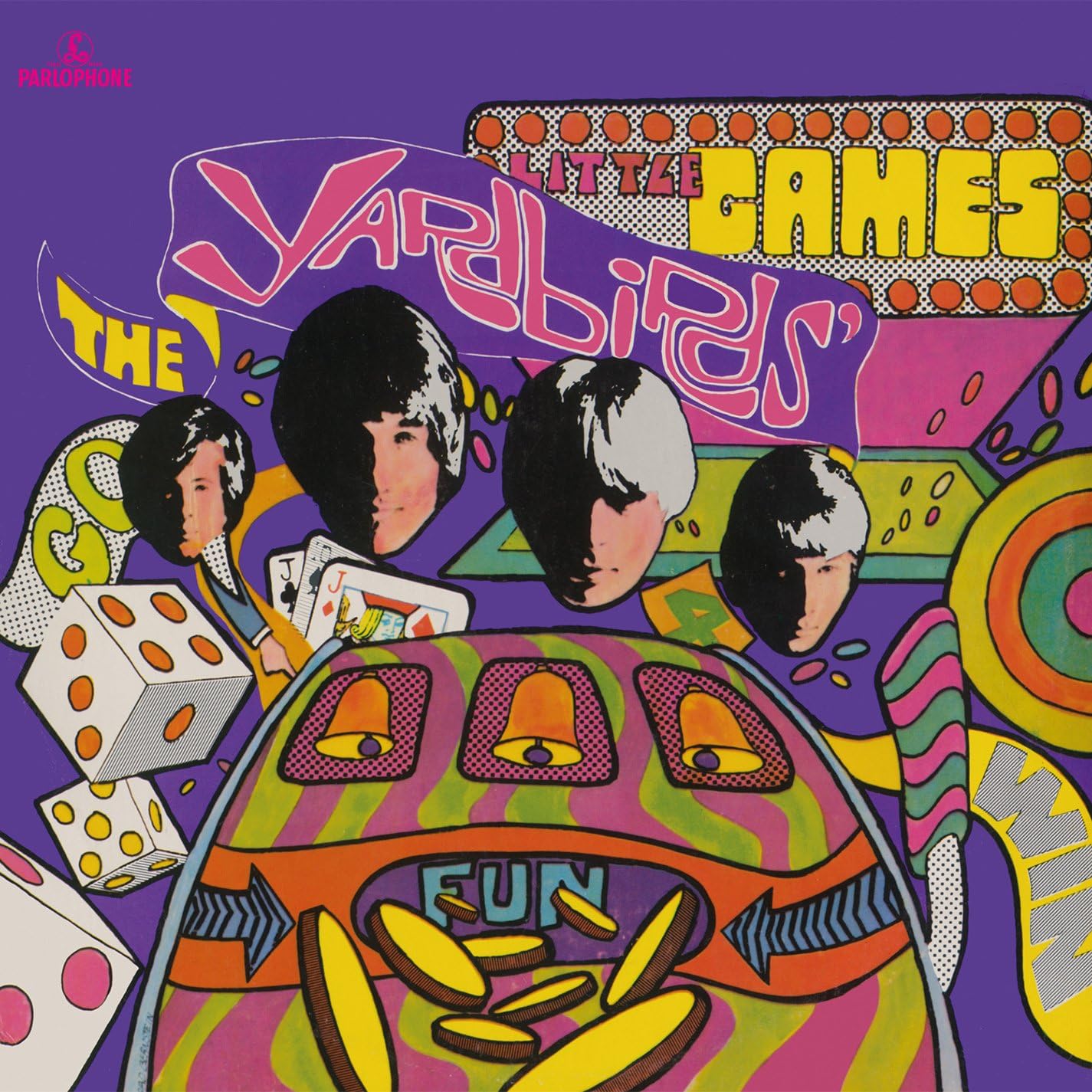
Basically, here’s what we had, pre-Glimpses: a live set recorded at London’s Marquee Club in 1964, additional live cuts from ’63 (all with Clapton); a number of studio tracks from ’64 and ’65 (the latter featuring Beck) that were shoe-horned into a couple of spotty albums with the earlier live material thrown in; some Vanguard singles from ’66 plus the band’s one proper studio album with Beck, “Roger The Engineer“, from the same year. A second studio album, “Little Games”, with Page, from ’67, plus some more live material as the band became more and more Zeppelin-like, culminating “Live Yardbirds” Featuring Jimmy Page, one of the rarest LPs of the 1960s – because Page had it suppressed, basically – waxed at NYC’s Anderson Theatre, with canned applause.
There were also a number of cuts recorded live on BBC radio. Most of these feature Beck, and, as they are live recordings, after a fashion, Yardbirds zealots have regarded them as manna over the years. You ain’t a Yardbirds buff unless you delight in the BBC material.
You hear the band before you see it. The scene—one of the most fondly remembered and often discussed in Michelangelo Antonioni’s 1966 British Mod classic “Blow-Up” is roughly five minutes in length. It begins when lead actor David Hemmings, thinking he’s seen someone he is searching for (Vanessa Redgrave, actually), parks his car, gets out and sprints in her direction. She’s disappeared, if she was ever there at all—a common occurrence at the core of the film’s underlying message—but something commands him to make his way in another direction, turning down an alleyway, still moving at a clip.
The muffled fuzz guitar and driving boogie-blues beat, progressively louder, draws Hemmings’ character, a photographer named Thomas, into a rock music club, the Ricky-Tick. (Quick-eyed observers will notice a flyer on the club’s door that says, “Here lies Bob Dylan, Passed Away Royal Albert Hall 27th May, 1966 R.I.P.”) We see the audience, from the side at first—bored out of their minds, all of them, standing stock still, expressionless, the music having no noticeable impact on the lot of them. Don’t they know that this is The Yardbirds, one of the greatest bands to emerge from the incredibly fertile British Invasion?!.
The band members, when we first view them, are so young and “now.” Up front, in striking purple and red, his head topped with your basic blond mid-’60s bangs, is singer Keith Relf. To his right we see drummer Jim McCarty for a moment and, sporting a stylish black jacket and white shirt, the one and only Jeff Beck. To Relf’s left are two more guitar players, Chris Dreja and the former session man named Jimmy Page. (Rock historians have noted that this particular line up, featuring both Beck and Page, who joined when bassist Paul Samwell-Smith left, was a short-lived one indeed.)
Jeff Beck and JimmyPage were both in The Yardbirds at the same time, briefly, for a few months in 1966. And that is when the Italian master filmmaker Michelangelo Antonioni captured them in this scene from his surreal drama of alienation, high fashion and groupies, “Blow-Up”, doing a version of the band’s U.K. hit tune on a set that resembled the popular venue in Windsor called The Ricky Tick Club. Watch photographer David Hemmings and what he does with Jeff Beck’s destroyed and abandoned guitar neck.
In recent years, the discovery of another ‘64 live tape from the Marquee (which is included on the Glimpses box) has bolstered the discography, but back when I got into the Yardbirds, it was pretty easy to be confused as to what all the fuss was about. The Yardbirds brought it on the singles that Beck lashed along. Tracks like “Heart Full of Soul,” with its riff that sounded like someone had plugged in a sitar and uncorked the most serpentine ostinato figure that anyone had ever heard. “Shapes of Things” and “I’m a Man” were so out there as to be off the musical grid.
“Shapes of Things” had a solo that defied you to identify how anyone could even play it, let alone play it yourself. Singer Keith Relf might as well have been some Yeatsian sage, the herald of the future of sound itself, or maybe some prophet who’d lately been hanging out in the Book of Revelation. There was prescience in his voice, something supernal. “I’m a Man” was the old Bo Diddley number, but the latter’s machismo had been replaced by what you might think of as something out of H.G. Wells, a kind of rock ‘n’ roll sci-fi. We get to the end of the song, and then it’s s rave-up time, a Yardbirds speciality. You can hear the band’s patented rave-up technique on the early Clapton material. Normally, the so-called rave-up is instigated in the middle of the song. The verse checks out, and each musician starts playing louder, faster, and on and on and on, until you think the music itself is going to explode, at which point, the rave-up cuts off and the song proper resumes. “I’m a Man” on the studio version we get a two man rave-up, almost a rave-up duet with Relf blowing hot harmonica lick, and then Beck responding with a faster guitar solo, which Relf answers, and so on, until Beck starts smashing strings, like he had become hell bent to turn his guitar into a percussion instrument.
This vintage ’60s clip has a Top of the Pops feel, what with the audience members clapping as they attempt to dance to this Muddy Waters blues. Once Keith Relf an able vocalist lacking in the harmonica department puts his harp down and lets J.P. wail on his oddly-reflectively-stickered Telecaster, the Yardbirds train gets a-rollin’. Page even brings out his violin bow on the Tele at 4:13. Well, Zep was the New Yardbirds, right?.
The rave-ups would continue into the Page era. Well, they weren’t so much in evidence on “Little Games“, a slice of pop fluff helmed by Mickie Most, who had helped make Herman’s Hermits into stars.
Discounting the BBC material, there was one bona fide, full-length masterpiece in the entire Yardbirds discography: 1966’s “Roger the Engineer“.
The LP featured a generous helping of rave-ups, but as people would say to me in used record stores – where the Yardbirds have always been kings and such matters are discussed fervently – if you wanted to experience the true genius of the band, you needed to hear them live. And they didn’t mean on the early Clapton material, or even the BBC tracks, where Beck did things on the guitar that Hendrix couldn’t better, on those same airwaves, a year later. You needed to have heard them in some sweaty beat club, or a now long gone auditorium, where the Yardbirds, simply, shredded, like no one ever had before.
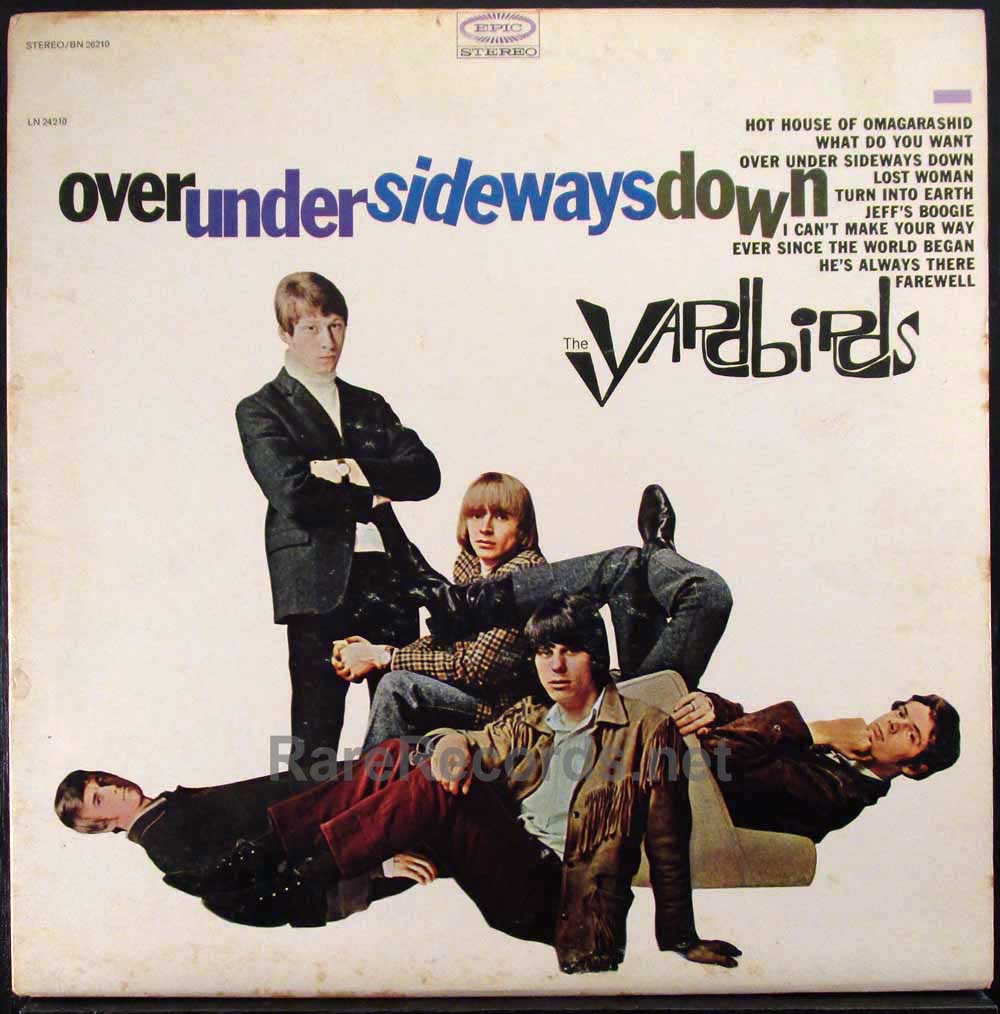
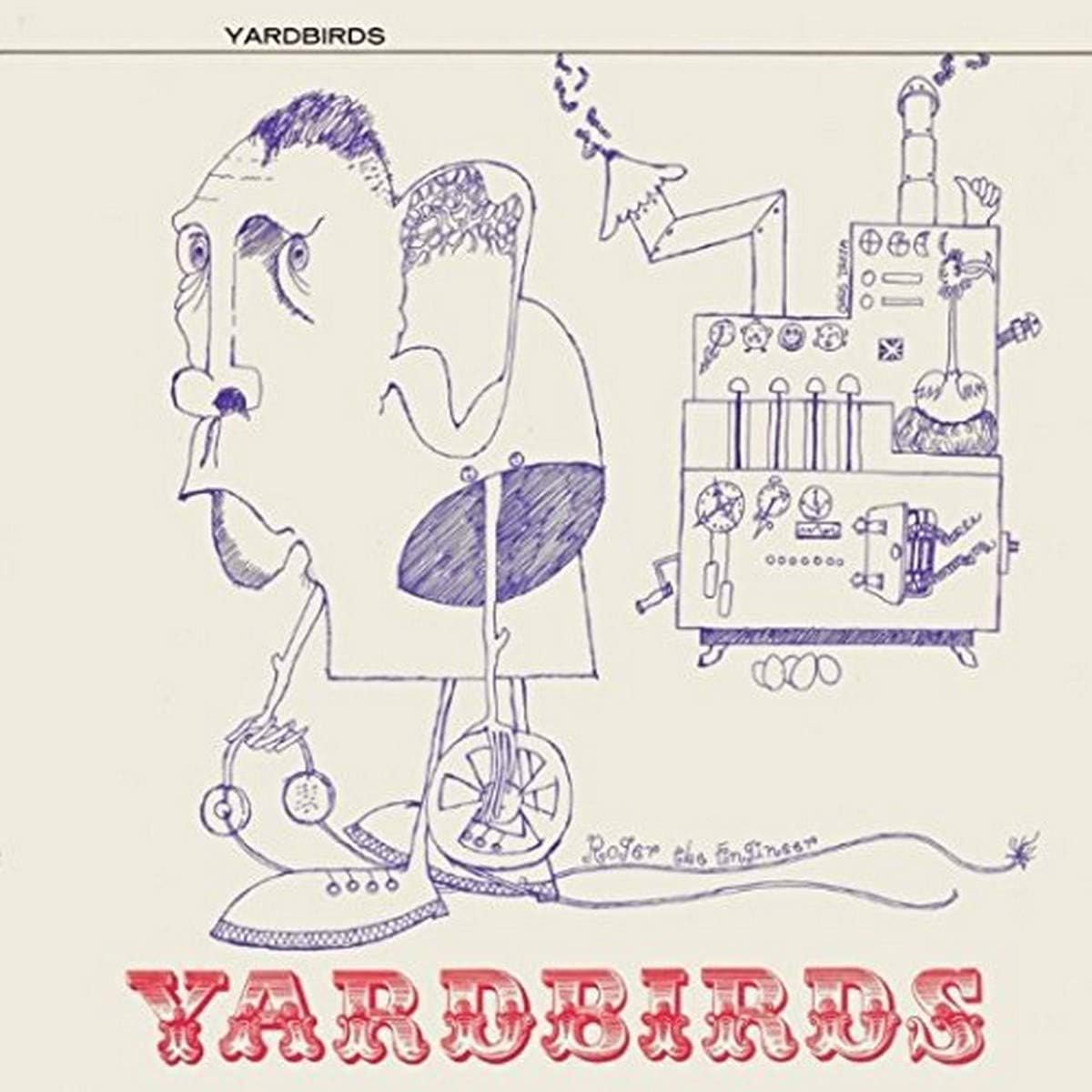
Rated by many critics and collectors as one of the greatest recordings of all time,the all-original Yardbirds album, released in July 1966, was a Top 20 UK hit and became known as “Roger The Engineer” due to guitarist Chris Dreja’s quirky cover design. Listening to The Yardbirds’ sole UK LP (aka “Roger The Engineer“) it’s easy to see why. With one foot in their blues past and the other in the psychedelic present, this is an erratic album that’s held together by Beck’s frequently dazzling displays. “What Do You Want” finds Beck letting rip in fine style. Alas, “Hot House Of Omagarashid’s” throwaway psych and the lightweight “Turn Into Earth” are too slight to convince.
The album yielded the smash hit single Over, Under, Sideways, Down and other exciting performances such as “The Nazz Are Blue” and “Jeff’s Boogie”, spotlighting ace guitar legend Jeff Beck, whose experimental and pioneering use of Fuzz and Sustain effects brought a new dimension to the sound of rock. The original and highly sought after Mono version is one of the essential 1960s collectors LPs to own.
“Glimpses” provides plenty of examples of such shredding across a range of settings. There are numerous takes on “I’m a Man,” with one of the rawest coming from the fifth English National Jazz & Blues Festival in summer 1965. This was an English gig, and I remember watching the video back in my mid-teens. Relf was all nose in his vocals; that is, he might as well been singing through it, such was the twang of his voice, which was oddly and pleasingly, sinister but beckoning at the same time.
I loved how he didn’t give a damn that he didn’t sing in a traditional manner, and one can imagine all of the eventual punk rockers who heard Relf and heard fresh possibilities open up to them. His life was cut short on May 14th, 1976, at just 33 years of age.
“I Wish You Would” – which had been the band’s first single back in the Clapton days starts in medias res that’s Latin for “in the middle of everything,” kids – on the National Jazz & Blues Festival tape, making it sound all the more interplanetary. Clapton riffed hard on the song, both in the studio and on a 1963 Crawdaddy Club date. But whereas Clapton’s playing was measured, like he was trying to work himself into a tradition of electric bluesman like Elmore James, Buddy Guy and Freddie King, Beck has no interest in a tradition save the one he might be starting in that very moment. The riff is made up of serrated lines, and you start to wonder if this music is somehow about to become physical and capable of scoring flesh.
Another version of “I Wish You Would” dates to a June 1965 gig in Paris, when the Yardbirds opened for the Beatles. They must have sensed a battle of the bands element at play, and while I’ve never been able to find anything but this one song from their set, it’s louder and punchier on “Glimpses” than it’s ever been on any bootleg I have heard. The rapidity of Beck’s playing is almost disorienting, and Relf riffs right along with him, on harmonica punctuating the intervals with those beguiling vocals of his.
The Yardbirds were the kind of band who had cause to record for the BBC on occasions throughout their career, and for that reason this is arguably more interesting than, say, The Beatles’ sets, as it charts the progress of the band’s evolution almost song by song, from early hit “I Ain’t Got You” and “For Your Love” to the curious, misdirected pop of “Goodnight Sweet Josephine” and “Little Games”.
Along the way there are covers (Hang On Sloopy), routines (the age of the rehearsed interview in full swing) and the always-present excitement of going to America. However, the real meat of the collection is in its guitar workouts: a five-minute “Smokestack Lightning“, a whirling “Drinking Muddy Water”.
The BBC cuts have always been in good fidelity, but they’ve been burnished some more for this package, and while they’re not often as intense as the material that was cut in front of an audience even though they are, strictly speaking, live – it’s rather remarkable that the clutch of “lost” Beeb cuts presented on “Glimpses” possess something more endemically Yardbirdsian than any other material on the set. The fidelity is rougher, scrappier, like they been recorded by a schoolboy with a tape recorder pressed up to the radio, which may be what happened. There is a remarkable rendition of “Jeff’s Boogie,” which I’d number as one of the premier guitar cuts ever recorded, however unprofessionally. One might think of it as a guitar epic in miniature, akin to a condensed version of something like Hendrix’s Woodstock take on “The Star-Spangled Banner” or the famous Fillmore East rendition of “Machine Gun.”
The Beck material leads into a number of sessions with Jimmy Page on lead guitar. If you’re a Led Zeppelin buff, this is the stuff for you, with songs and arrangements that would feature in the early phase of the Zep’s career. Personally, I’ve always thought of Zeppelin as a much more lumbering version of the Yardbirds,. The Yardbirds were liquid-y and pliable; Zeppelin, brittle and metallic. A/B-ing any of the live Yardbirds versions of “Dazed and Confused” with one by Zeppelin will give you some idea.
There’s more mystery to be had with any of the Yardbirds cuts, while Zeppelin is all out in the open, bashing away, throttling you with the riff. The Yardbirds, meanwhile, seem to be trying to haunt you with it, and, in large part, they succeed, even if this iteration of the band had no intention of innovating like the Jeff Beck one did.
You wonder what must have been going through Jimmy Page’s head when he first joined the group, on bass, and Jeff Beck was already deep in what I’d argue was the most significant phase – in terms of influence for any guitarist since Robert Johnson and before Jimi Hendrix. One performance from Paris, but in the summer of 1966 this time. “The Train Kept A-Rollin’” was always one of the most exciting Yardbirds numbers, which is saying something. Beck kicks off the song by imitating a train whistle with his guitar, and then serves up the crunchiest, filthiest riff. The distortion thrilled me as a kid, as I thought, “wait – can you do that? Is that allowed?” Just dead brilliant. This particular version is faster than its studio counterpart, and because of the guitar, the lyric which is putatively about lighting out on the rails is transformed, in the best Yardbirds style, to suggest that here is a force beyond this world, hell bent upon altering it at the same time. “Train kept a’rollin” all night long,” Relf declares, as Beck riffs, and you realize that, to the band, anyway, the Yardbirds are the train, and the night is limitless.
Eric Clapton couldn’t have known what would happen when he quit the Yardbirds on March 13th, 1965. All he knew at the time was that, after two years with the fledgling blues band, he wasn’t happy – and neither were they.
He’d already gained the nickname “Slowhand” after an unhappy audience offered a slow hand clap while he was forced to stop playing to change a string. But he’d go on to gain so much more after his decision to bow out at the age of 20, with the initial plan of giving up music altogether.
“I played with two amateur groups before [the Yardbirds] in my spare time,” Clapton said in 1968. “I didn’t stay with either of those bands for more than two weeks. It was more like jamming. Then I got offered a professional job with the Yardbirds. … I was with them a year and a half. They weren’t too keen to have it known that I’d left. People leaving groups in those days was dirty.”
In his relatively short time with the band, he’d made a name for himself after the Yardbirds took over the Rolling Stones’ spot at London’s iconic Crawdaddy Club. Both Clapton and the group were gaining buzz by the time their third single, “For Your Love” was released. But that song proved to be Clapton’s tripping point. He left before its release and didn’t take any part in its promotional campaign.
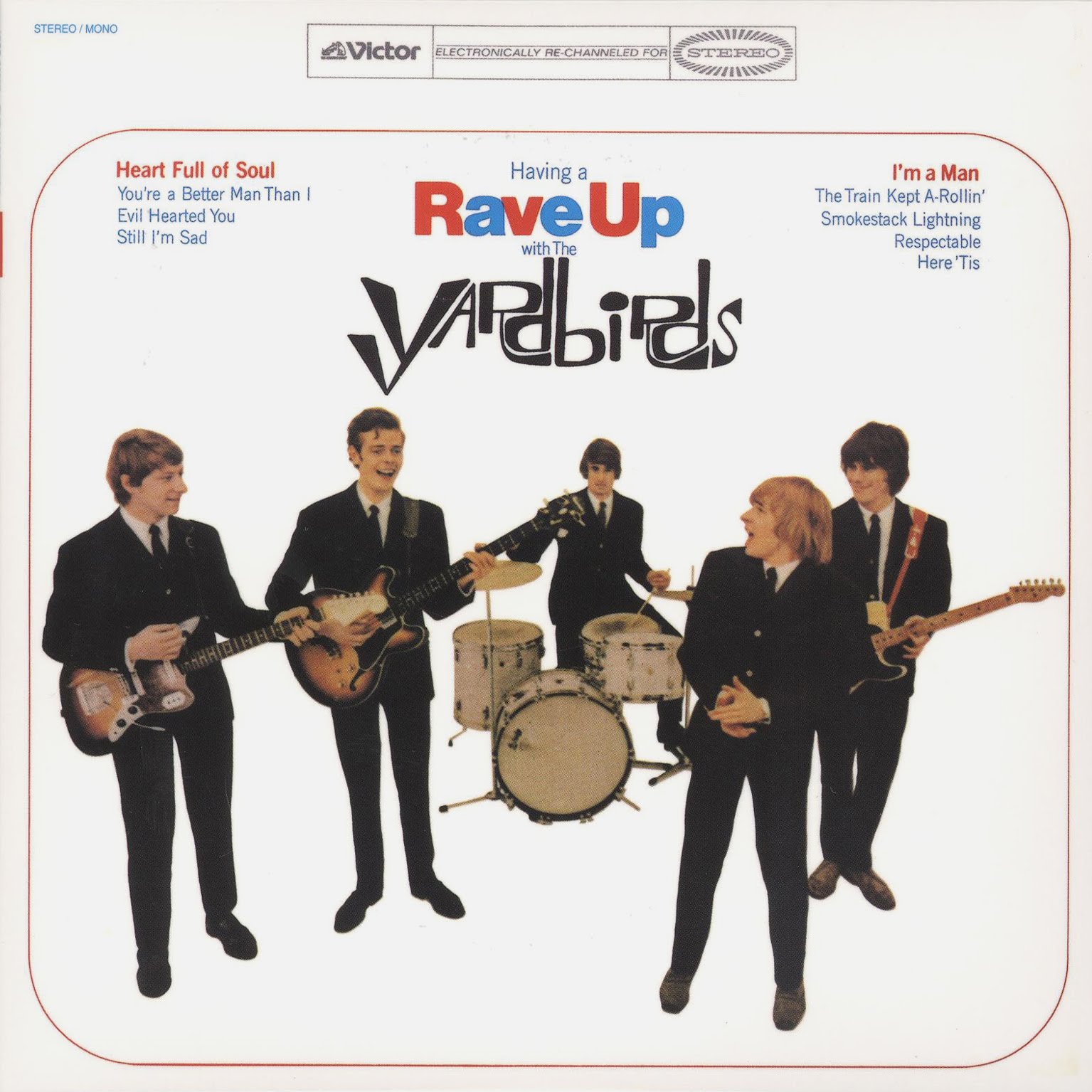
In America, four songs from the Yardbirds’ debut album, recorded live when Eric Clapton was still their lead guitarist, made up the second side of ‘Having a Rave Up’. Those tracks, cut at the Marquee in March ’64, were old news by the time ‘Rave Up’ came out (November ’65), but not to U.S. fans, who’d never heard that kind of frenetic, exploratory sound before, the sound of a band that was pulling material out of the typical pool (lots of Chess Records—Chuck Berry, Bo Diddley, Howlin’ Wolf—rock and blues), but stretching the songs out, experimenting with tempo changes, building to frenzied climaxes.
The live songs on ‘Rave Up’ that were lifted from “Five Live Yardbirds”, two by Diddley “I’m A Man” and Howlin Wolf’s “Smokestack lighting”, and the Isley Brothers’ “Respectable” felt like something adventurous, and it was fascinating to compare the more succinct version of “I’m A Man” on side one of the album to the expanded take on the flip. The complete 10-track ‘Five Live Yardbirds’, including a hopped-up and five Long Years , with Keith Relf wailing on harmonica and Clapton playing one of his earliest-recorded stinging blues solos, is now embedded into the compilation “The Yardbirds Story”.
The Yardbirds remained gone but not forgotten. And in 1992 they were inducted into the US Rock & Roll Hall Of Fame. Keith Relf and Jim McCarty had left Renaissance after two albums but they were planning a new group together in 1976, when Relf was electrocuted in a tragic accident. The closest they came to a Yardbirds reunion was the Box Of Frogs project in the mid-80s when Dreja, McCarty and Samwell-Smith hooked up with ex-Medicine Head singer/guitarist John Fiddler for two albums that featured Beck on the first and Page on the second.
1971 was very successful for the Faces, and this LP is our first selection of high quality broadcast material recorded that year. Five songs from a John Peel live radio concert are combined with a brace of appearances on the Top Of The Pops TV programme. You can hear the variety in the band’s live set, ranging from a stomping cover of “(I Know) I’m Losing You” through to Ronnie Lane’s solo acoustic version of “Richmond“. Comes with full sleeve notes and recording details.
Track Listing: SIDE ONE 1. (I Don’t Want To Discuss It) You’re My Girl 2. Bad ‘n’ Ruin 3. It’s All Over Now. SIDE TWO 1. Had Me A Real Good Time 2. (I Know) I’m Losing You 3. Richmond 4. Bad ‘n’ Ruin
The Heartbreakers – L.A.M.F. – The Found ’77 Masters RSD Essential 025, Neon Pink & White Vinyl
A recently-found copy master of the original 1977 Track Records tape, without mud!
This classic punk album, recorded in London by the NYC band featuring two New York Dolls, was always controversial – and not just for the acronym. On release in 1977 on Track Records, it was widely condemned in the press for having a ‘muddy mix’ – later discovered to be a mastering fault. When Track went bust the following year, manager Lee Black Childers burgled the office and liberated the tapes – he found everything except the master-tape.
In 2020 a chance meeting led to Danny Secunda’s archives. Danny was an old-school music biz pioneer who understood punk. He became a Track Records director and the Heartbreakers ‘L.A.M.F.’ co-producer. Among his tape box archives were two with no artist name, marked ‘Copy Master 12.7.77’. They turned out to be a crystal-clear ‘L.A.M.F.’, just as the band and producers intended it.
First released as a much in-demand RSD release in 2021, it now returns for its 45th Anniversary as a ‘Record Store Day Essentials’ release.
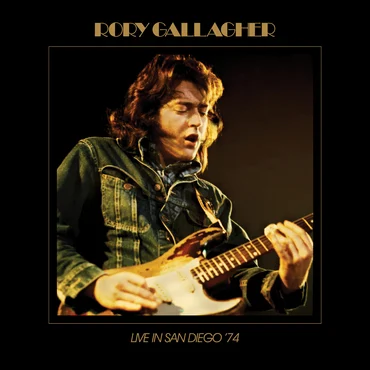
We’re excited to announce a special release of Rory Gallagher ‘Live In San Diego ’74’. This 2LP features Rory and his band playing a 7 song live set at the San Diego Sports Arena in 1974.
A previously unreleased concert recording of Rory Gallagher performing at the San Diego Sports Arena in the USA. This 1974 period is regarded as one of Rory’s peak live eras, most notably his album ‘Irish Tour ’74’ which is his biggest selling record.For Record Store Day 2022, Live In San Diego ‘74 is an unreleased live radio concert recovered from the depths of the Rory Gallagher archives. This recording features Rory and his band playing a 7 song live set at the San Diego Sports Arena on February 8th 1974.
SIDE A: 1. Messin’ With The Kid 6:06, 2. Cradle Rock 11:12
SIDE B: 3. I Wonder Who 09:31, 4. Hands Off 09:35
SIDE C: 5. A Million Miles Away 09:35, 6. Bullfrog Blues 09:16
SIDE D: 7. In Your Town 19:54
Released through UMC Recordings on Record Store Day 2022
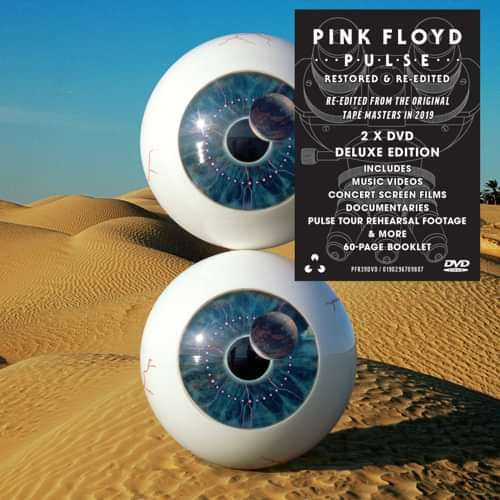
The “P.U.L.S.E.” concert film (helmed by esteemed director David Mallet) will be available as 2x Blu-ray and 2x DVD deluxe box sets, with the video footage having been expertly re-edited by Aubrey Powell/Hipgnosis from the original tape masters especially for The Later Years release in 2019. The cover design, originally created by Storm Thorgerson and Peter Curzon for the 2006 DVD release, has also been updated with photography by Aubrey Powell/Hipgnosis and Rupert Truman/StormStudios. The packaging artwork is designed by Peter Curzon from StormStudios, under the direction of Aubrey Powell/Hignosis.
This release also sees the reintroduction of the iconic pulsating light as per the original 1995 CD release, this time operated by 2 replaceable AA batteries. The deluxe packages include music videos, concert screen films, documentaries, Pulse Tour rehearsal footage & more, alongside a 60-page booklet. P.U.L.S.E., originally released as an album in 1995, was recorded on the European leg of the Division Bell tour and the DVD and Blu-Ray packages include the whole live performance of ‘The Dark Side Of The Moon’ – the only full live filmed recording of this seminal album.
The concert, filmed on 20th October 1994 at Earls Court in London, saw Pink Floyd play some of their classic tracks as well as highlights from the recently released album ‘The Division Bell’. Standout tracks include ‘High Hopes’, ‘Keep Talking’, ‘Sorrow’, ‘Wish You Were Here’, ‘Comfortably Numb’ and ‘The Great Gig In The Sky’.
Pink Floyd’s ‘P.U.L.S.E. Restored & Re-edited’ Released for the first time on Blu-ray on 18th February 2022.
Tomberlin is Sarah Beth Tomberlin, a pastor’s kid born in Florida, raised in rural Illinois. She wrote the majority of her debut, “At Weddings” (2018), while living at home. For a while after leaving home and church, she lived in Louisville, Kentucky. She worked a day job and kept writing songs. She posted some of these songs to Bandcamp, which led to her signing a record deal with Saddle Creek Records. It all happened fast: Less than a year after her first live show, she performed on Jimmy Kimmel and she ended up moving to L.A. which is where she wrote “Projections” (2020), her EP follow-up to “At Weddings”.
During the pandemic, Sarah Beth was all over the place, physically and mentally. Louisville. Los Angeles. Back home in Illinois for a bit. Brooklyn, where she’s now settled, she says. Brooklyn is also where her new album “i don’t know who needs to hear this…” was recorded, at Figure 8 studios over the course of two weeks, with producer and engineer Phil Weinrobe (who played a variety of instruments on the collection), and later mastered by Josh Bonati, also in Brooklyn.
“The theme of the record,” she explains, “is to examine, hold space, make an altar for the feelings.” Hold space: Tomberlin’s songs do it literally, making it heard space. Her full-length debut, “At Weddings”, was widely praised for the sparsity and delicacy of its instrumentation, especially in contrast with the emotional heft of her lyrics.
Here, the space feels larger and holier, built to echo. Pedal steel. Old acoustic guitars, freshly plucked. A drifting synthesizer. Chill, brushy percussion. Ambient, expansive clarinet and saxophone. Aleatory piano trills, a lot of piddling with the occasional splash. The looseness and wideness of the arrangements conveys a tender regard for their parts, as though each arpeggio, loop, scratch is a found shell or feather in the hand. Then there is the instrument of her voice, which has the endearing quality of being perfectly tuned but reluctantly played. “I’m not a singer,” she sings on “idkwntht.” “I’m just someone who’s guilty.”
my second full length record, “i don’t know who needs to hear this…” , comes out april 29th 2022 on Saddle Creek Records
Hailing from Los Angeles and the beach cities of Southern California, Velvet Starlings was founded by guitarist and organ player Christian Gisborne. And while known for his concert attendance record and impressive Lego collection, it is his musical prowess as a performer, writer, recording artist and producer that is putting him on the map. Gisborne not only tracked all of the instruments, but also engineered, mixed and produced “TechnicolourShakedown”which was originally released in August 2021 and is finally available on vinyl. While it reflects influences that range from early Jack White, to Thee Oh Sees and Arctic Monkeys, the album showcases Velvet Starlings own take on neo-60’s-garage – best described as “beach-fuzz-psych” with a big cheeky nod to the UK Invasion.
Velvet Starlings brand new single “Can’t Control” The youthful music video was shot in Dunfermline Scotland, featuring the artistic dynamo Martin Hughes and was Directed by his bother singer songwriter Angelica Mode ( Brian Hughes), who we’ve shared the stage with on the Edinburgh indie scene.
“in the doom and gloom of Covid I found myself reminiscing all the time about the days when we would wait in line for hours to see our favourite bands. The songs on the first album reflect everything I felt I was missing out on. I think a Rock n Roll renaissance is coming after this crazy year of lock down. We’re hoping that a full front-to-back of “Technicolour Shakedown” will evoke the feeling you get at a rock n roll house party – wherever the listener may find themselves.” (Christian Gisborne)
Technicolour Shakedown is now available on vinyl via Kitten Robot Records







 The Fat Angel Sings