
Archive for the ‘MUSIC’ Category

Following years of international touring and a lengthy list of critically-acclaimed collaborations with Brian Jonestown Massacre’s Anton Newcombe in recent years (most recently the duo’s self-titled 2018 LP), the new album will be Parks’ first full-length solo offering since her much-loved debut album, ‘Blood Hot’, was released back in 2013 on Alan McGee’s 359 Music label.
I am very excited to announce that my new album ‘And Those Who Were Seen Dancing’ will be released May 20th 2022 on Fuzz Club and Hand Drawn Dracula!. This album was pieced together over time in London, Toronto and Los Angeles with friends and family between August 2019 and March 2021 but some of these songs date back over a decade in some form or another. I can’t wait to finally share them with you.
As well as black and coloured vinyl, CD and cassette, there is a beautiful Dinked Edition available to pre-order from select UK indie stores that comes on clear vinyl with red, blue and yellow splatter in a hand-numbered gatefold sleeve with a bonus track flexi-disc and 60 x 60cm poster. Levitation also have an exclusive US edition on transparent red vinyl with blue and yellow splatter.
Thank you from the bottom of my heart to my family; to the band: Rian O’Grady, Ruari Meehan, Francesco Perini, Michael Sutton; to Andrew McGill, Josh Korody, Luz Gallardo, Raissa Pardini, Manny Nieto and Pete Maher; to Casper and Jack at Fuzz Club and James at Hand Drawn Dracula for making this project possible, and all of the friends and family who provided emotional strength and support along the way – you know who you are and I would be nothing and nowhere without you.
KEVIN MORBY – ” This Is A Photograph “
Posted: March 4, 2022 in MUSICTags: Dead Oceans Records, Kevin Morby, This Is A Photograph
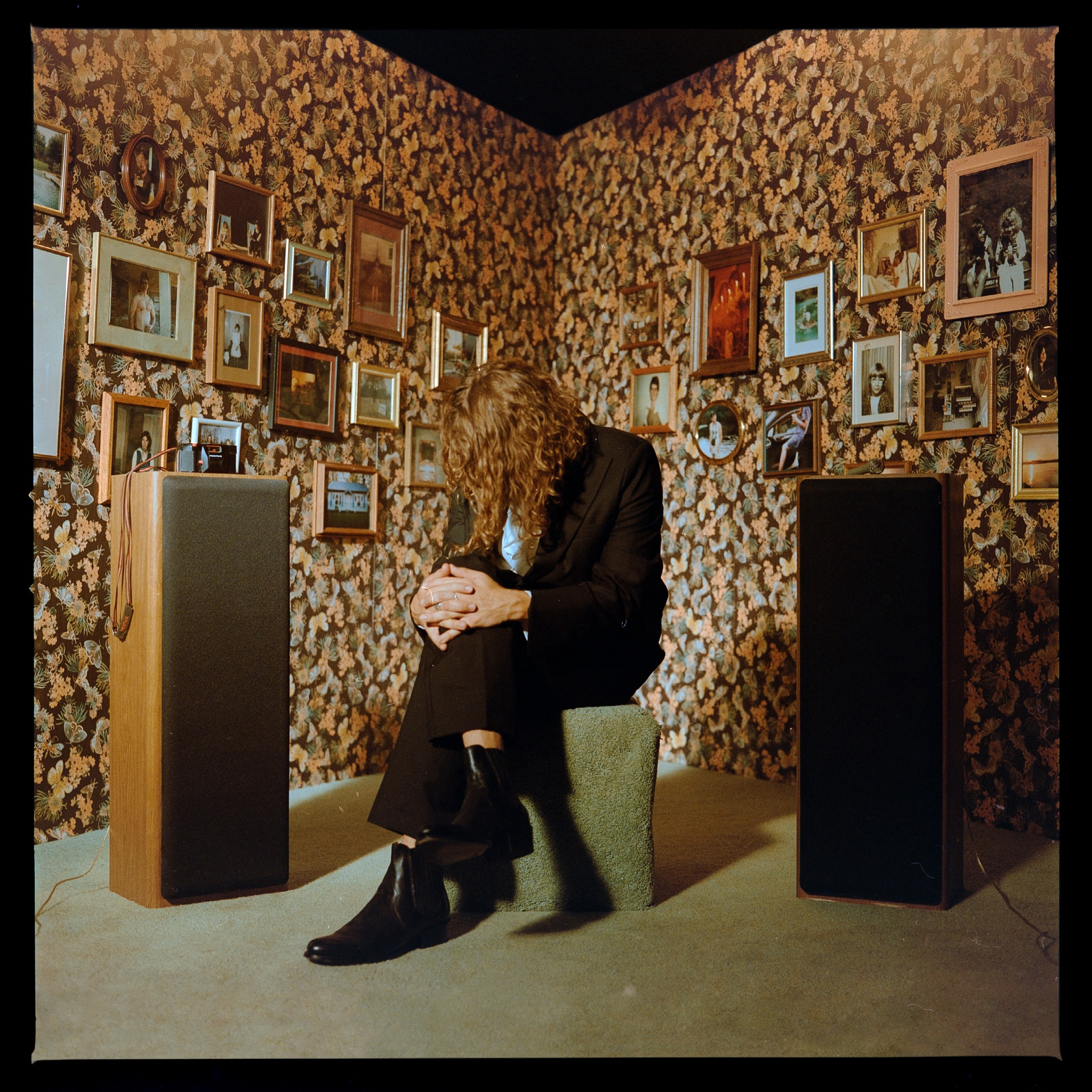
The story begins with Kevin Morby absentmindedly flipping through a box of old family photos in the basement of his childhood home in Kansas City. Just hours before, at a family dinner, his father had collapsed in front of him and had to be rushed to the hospital. That night Morby still felt the shock and fear lodged in his bones. So he gazed at the images until one of the pictures jumped out at him: his father as a young man, proud and strong and filled with confidence, posing on a lawn with his shirt off. This was in January of 2020. As the months went on and the world dramatically changed around him, Morby felt an eerie similarity between his feelings of that night and the atmosphere of those spring days. Fear, anxiety, hope and resilience all churning together. The themes began twisting in his mind. History, trauma and the grand fight against time. Having the courage to dream, even while knowing the tragedy that often awaits those who dare to dream.
While his father regained his strength, Morby meditated on these ideas. And then, he headed to Memphis. He moved into the Peabody Hotel and spent his days paying tribute and genuflecting to the dreamers he admired. In the evening, he would return to his room and document his ideas on a makeshift recording set-up, with just his guitar and a microphone. The songs, elegiac in nature, befitting all he had seen, poured out of him.
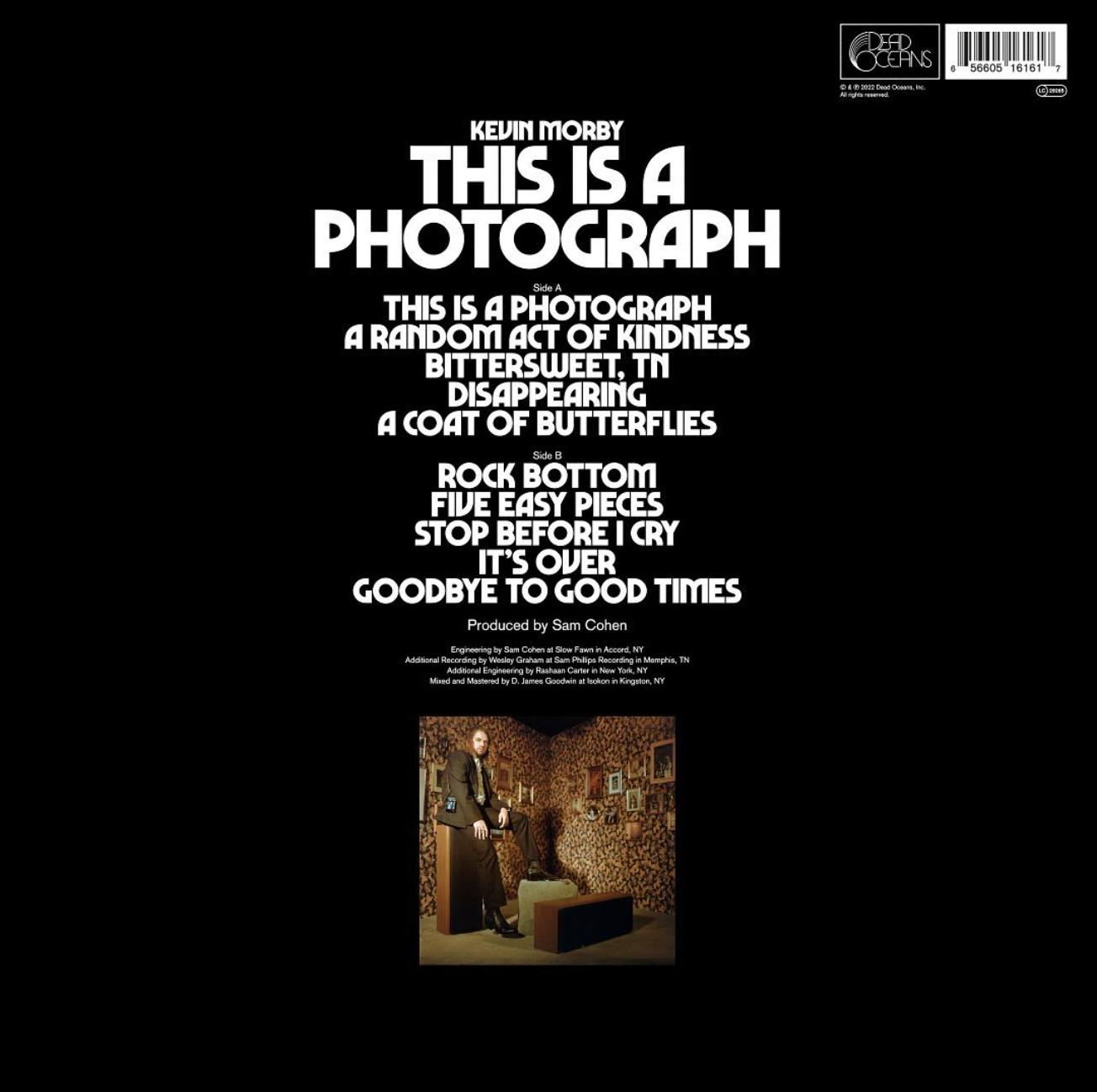
Produced by Sam Cohen (who also worked on Morby’s “Singing Saw” and “Oh My God“), “This Is A Photograph” features musical contributions from long time staples of Morby’s live band, as well as old friends and new collaborators alike. If “Oh My God” saw Morby getting celestial and in constant motion and Sundowner was a study in localized intent, “This Is A Photograph” finds Morby making an Americana paean, a visceral life and death, blood on the canvas outpouring. As Morby reminds us early on, time is undefeated. So what do we do while we’re still here? “This is a Photograph” of that sense of yearning.
“This Is A Photograph” out May 13th via Dead Oceans.
The CURE – ” The Albums ” A Buyers Guide
Posted: March 3, 2022 in CLASSIC ALBUMS, MUSICTags: 4:13 Dream, Bloodflowers, Disintegration, Faith, Kiss Me Kiss Me Kiss Me, Pornography, Robert Smith, Seventeen Seconds, The Cure, The Head On The Door, The Top, Three Imaginary Boys, Wild Mood Swings, Wish

Being a fan of The Cure requires a little bit of patience and a willingness for devotion. With 13 studio albums, five live albums, ten compilations and singles collections, and nearly 40 singles and EPs, the band has built a daunting discography for newcomers. And that was all achieved before 2009. Though The Cure has continually teased new music since the release of 2008’s “4:13 Dream”, unless they surprise-release something, it’ll have been a full decade without new music from the band. Yet in that time, they’ve still flexed their muscles, headlining major music festivals like Lollapalooza, Coachella, and Riot Fest, as well as playing several nights on their own at Madison Square Garden and Wembley Arena.
A hidden challenge when getting into The Cure is denouncing the stereotypes that have long followed the band. On the surface, a Cure record may come across like a wall-to-wall mope fest, and while there’s truth in that, it’s not the totality of the band’s being. Though it should be obvious from the existence of songs like “Friday I’m in Love,” “The Lovecats,” or “Doing the Unstuck,” there’s a joyful giddiness undercutting much of frontman Robert Smith’s work. Though his art may skew toward the self-serious there’s more to The Cure than what a cursory glance would reveal.
So how does one get into The Cure, a band who has a catalogue that’s not just vast, but full of worthwhile material? And how does one make sense of a discography that includes everything from goth to pop and post-punk to psych? The only way to understand The Cure is to embrace the twists and turns of their discography, knowing that if one part of their sound doesn’t appeal to you, there’s another half-dozen that may.
While it’s important to dispel the myth that The Cure works in a mopey mode, it’s just as imperative to approach that material head-on. As early as 1980, the band was already crafting desolate, despairing songs—and composing the nearly half-hour-long drone piece, “Carnage Visors”, to accompany 1981’s “Faith” but they would perfect it on 1989’s “Disintegration”. Though not constructed as complimentary pieces, the one-two punch of “Plainsong” into “Pictures of You” makes for one of the most evocative introductions ever committed to tape. The two songs lean on one another, with the wintry introduction of “Plainsong” allowing the pop-laced epic that follows it to be graced with an even bigger impact.
No song in the band’s arsenal highlights their ability to marry sprawling ambiance with gentle pop hooks better than “Pictures of You.” Built on Simon Gallup’s shimmering bassline and a simple drum groove, the song pushes forward slowly, allowing swells of synth to add to the song’s desolate aura. Hell, it even uses wind chimes effectively. Like much of “Disintegration”, “Pictures of You” could just as easily have been an instrumental, and for the first two minutes, it’s exactly that. But it’s in that space that The Cure showcases their power, taking a bleak colour palette and imbuing it with soft flashes of light. And when Smith’s vocals enter the fold, with the iconic opening line “I’ve been looking so long at these pictures of you / That I almost believe that they’re real,” it speaks to the band’s ability to work in an esoteric mode and unleash a memorable hook when you least expect it.
You can see the band first playing with this form in the early 80s, with “Seventeen Seconds” and “Faith” offering more compact, post-punk versions of the band’s all-consuming sound. With songs like “A Forest” and “The Drowning Man” in tow, the band was able to position themselves as a leader in the quickly evolving goth scene while still retaining a post-punk snarl. By the time of “Disintegration”, they’d have perfected this sound and have made it a commercially viable pursuit. It’s why, on 1992’s “Wish”, they’d spend half the record working in this mode, turning in glacially slow epics like “Trust” and “To Wish Impossible Things,” only to buck expectations by releasing their bubbliest concoctions to date.
Though 1996’s “Wild Mood Swings” is often seen as the first failure after a decade of highs, it still has songs that are worth digging for. “Treasure” offers perhaps the shortest version of The Cure’s esotericism, and it’s a sound the band would return to fully with 2000’s “Bloodflowers”. Considered the final act in “The Trilogy,” alongside “Disintegration” and 1982’s “Pornography”, the record may not fully measure up to those staggering heights but when it works, it shows that Smith is still capable of making good on his ambition. “The Last Day of Summer” and the closing title track both warrant their length, and even if the 11-minute “Watching Me Fall” sees Smith’s affection for My Bloody Valentine’s “Loveless” taking root in his own music.
While the pair of albums that followed are often seen as minor, they have moments that keep them from being totally disposable. “Lost” opens the band’s self-titled 2004 album, and though it’s got more of a driving chug than anything that came before it, the track builds to a cathartic release that’s as off-putting and powerful as anything the band did in the 80s. While both “The Cure” and “4:13 Dream” suffer from subpar production, songs like “Underneath the Stars” prove the band’s later period still warrants exploration.

For a band that made its name on brooding compositions, The Cure has dashed off their fair share of gooey pop gems, too. While picking up a copy of 2001’s “Greatest Hits” could easily satiate a newbie, it’s the way these songs are injected into albums to dip and dart across genre lines that makes them most effective.
“Boys Don’t Cry” is an obvious starting point, culled from the album of the same name, it showcases the band in its embryonic stage, still sounding like a lean, mechanical post-punk band. As iconic as it is, it’s not the only treasure to be found in those early years, as “Jumping Someone Else’s Train” and “10:15 Saturday Night” prove that The Cure can be peppy without losing their bite.
1985’s “The Head on the Door” would be the band’s breakout moment, featuring the now radio staples “In Between Days” and “Close to Me,” alongside such should-be hits as “Six Different Ways” and “Push.” The latter would be the kind of riff-forward song that showcased Smith’s proficiency as a guitarist—something he’s long been underrated for and would be brought to the forefront on the band’s sprawling album from 1987, “Kiss Me, Kiss Me, Kiss Me”. It’s easy to see how “Kiss Me” would get the band tagged as alt-rock at the time, with songs like “The Kiss,” “Torture,” and “All I Want” being sinewy, rage-filled tracks that could be seen as an inspiration on acts like the Smashing Pumpkins. But here, also, were the band’s giddiest numbers, from the pitch-perfect “Just Like Heaven” to the horn-laced “Why Can’t I be You?” and “Hey You!!!” all the way down to softly lilting “Catch.”
Even those mope-fuelled records still have their bright spots, with “Disintegration’s” “Lovesong” being one of the band’s most iconic tracks, and “Wish” pulling itself out of the pit of despair with “High” and “Doing the Unstuck” . Even with “Wild Mood Swings‘ near universal derision, “Mint Car” is as tightly constructed as any of the songs from the band’s golden era. The same can even be said of “The End of the World” and “The Only One” from the band’s records in the 2000s, which are just as ebullient and infectious as their more renowned hits.
Though The Cure’s first forays into full-on goth music came by way of “Seventeen Seconds” and “Faith”, they were the building blocks upon which the band would create their first full masterpiece, 1982’s “Pornography”. Though the preceding pair of records was increasingly stark and devoid of pop hallmarks, “Pornography” was the sound of human beings bottoming out. “One Hundred Years” opens the record with the cacophonous boom of a drum machine and is paired with guitars that sound like they are warping off the record itself. The LSD-fuelled recording session, paired with Smith’s depressive streak and desire to make the “ultimate ‘fuck off’ record” results in the clearest inspiration on acts like Nine Inch Nails. There is no trace of hope to be found on “Pornography”, and it makes songs like “The Hanging Garden” and the aptly titled “Cold” capable of sucking the joy right out of a room.
Part of Smith’s grand plan was to have “Pornography” be the end of The Cure. And for a brief spell, it was. Simon Gallup left the band at the end of the record’s support tour, and Smith was spending more time playing guitar for Siouxsie and the Banshees. After doing a one-off project called The Glove alongside the Banshees’ Steven Severin, he returned to The Cure and made “The Top”, a record that is as close to a solo album as Smith ever produced. Though not as overwhelming as “Pornography” the inclusion of “The Caterpillar” keeps it from being totally murky—the record remains indebted to its predecessor while also shifting toward psychedelic influences that had previously gone untapped.
“The Top” is far from the band’s best, but songs like “Shake Dog Shake,” “Give Me It,” and the closing title track are feral, unhinged freak-outs that demand attention, and show Smith’s capability for expressing pure, unvarnished anger.
The same can be said of deeper cuts from “Kiss Me”, with “If Only Tonight We Could Sleep,” “The Snakepit,” and “Like Cockatoos” sounding inspired by hallucinogens even if Smith had long kicked the habit (though he’d return to it for “Disintegration”). But it also showcases “The Kiss,” as heavy and pounding of a track as The Cure ever committed to tape in their heyday. These songs aren’t always easy listens, as they rarely adhere to a single sonic touchstone, but that’s also what makes them so essential.
As noted above, The Cure has a lot of singles and EPs, and while those kinds of releases can often be havens for half-baked throwaways, that’s not the case here. Not only that, The Cure is a completists nightmare, as singles were often released on multiple formats, each with their own unique add-ons, and sometimes those even differed by which region—be it US or UK—that they were released in. As a result, The Cure’s catalogue of deep cuts can dwarf most band’s proper releases. And while there are things that are inessential—most of the remixes, along with the remix album “Mixed Up”, can be tossed aside there’s plenty of tracks that rank among the band’s best.
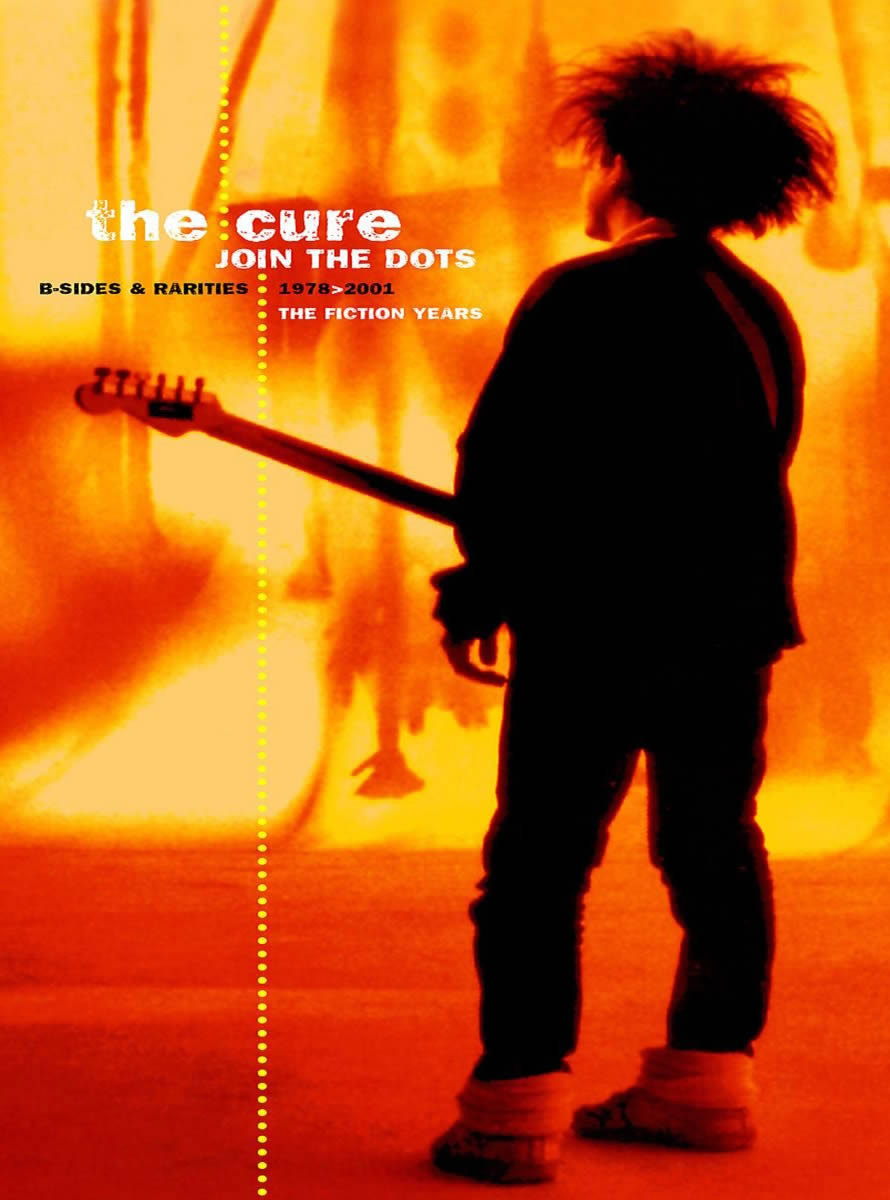
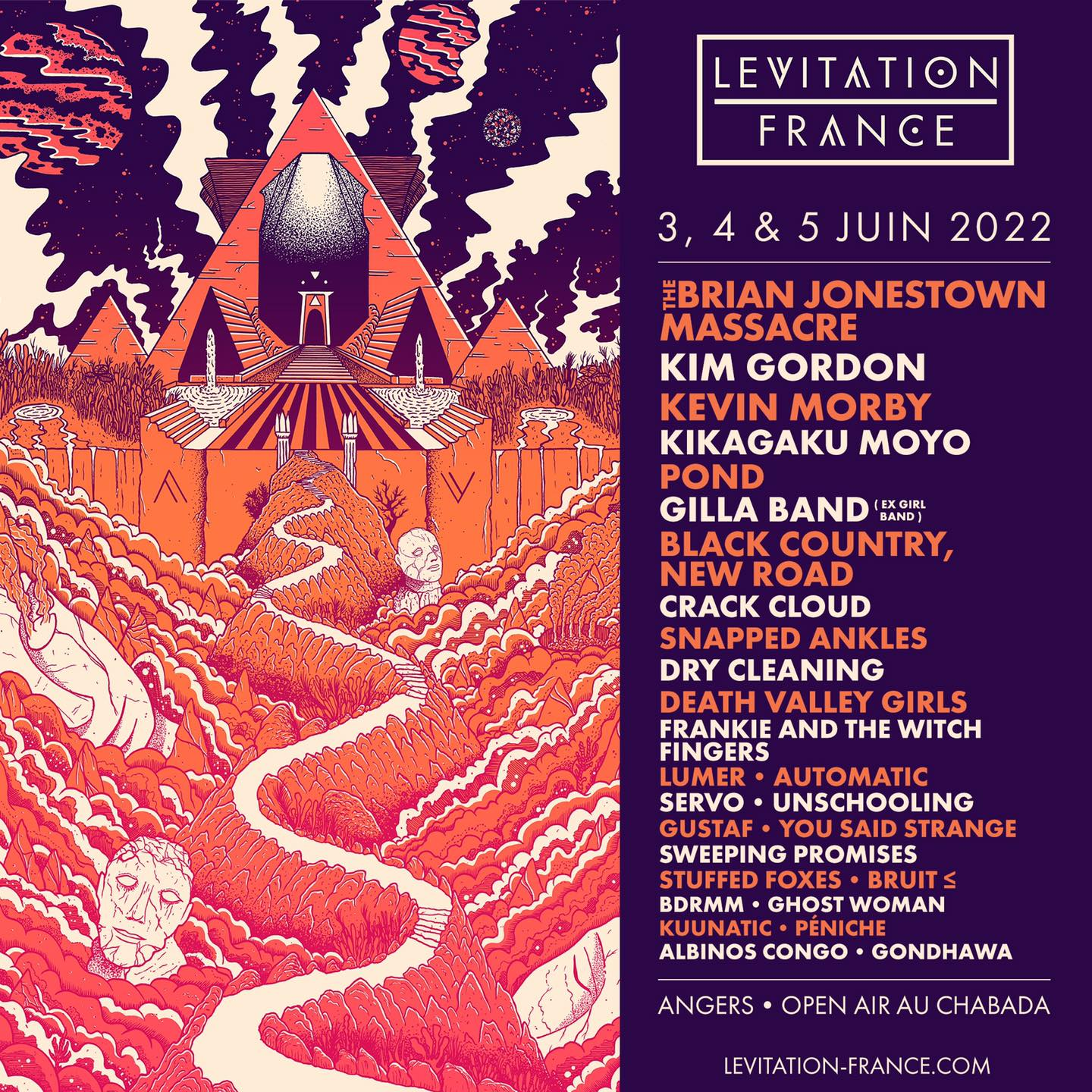
Thankfully, “Join the Dots: B-Sides & Rarities 1978–2001 (The Fiction Years)” does a great job of collecting a bulk of essentials. Though it omits “Cut Here,” a bonus track from 2001’s “Greatest Hits” compilation, as well as the limited edition Acoustic Hits companion piece, which saw the band tackling their most known in a stripped-down format, “Join the Dots” gives you most of what you need. It works through the band’s history chronologically, allowing you to see the band evolve almost in real time. Granted, “Join the Dots” is nearly five hours long, and even if you were just to cherry-pick the very best material, you’d still have a couple album’s worth of songs. From post-punk ragers like “Pillbox Tales,” to the anthemic chorus in “The Exploding Boy,” all the way to the Wild Mood Swings cut “A Pink Dream,” The Cure proves they’re a band worth getting lost in.
The Cure’s catalogue of music that helped shape an era.
‘Wild Mood Swings’ (1996)
The Cure’s 10th album sounds like kind of a mess because it was made under stormy conditions. Various members were in and out of the group at the time, and, after scoring the highest-charting album of its career with 1992’s ‘Wish,’ Robert Smith took a four-year break – the longest hiatus between Cure albums at the time – that ended with an overlong, and underdeveloped, set of songs.
The song that effectively closed the book on The Cure as a contemporary commercial force, “The 13th” was a disastrous choice of lead single, never catching a foothold anywhere on radio. It’s not exactly tough to pinpoint . It had nothing to offer ’90s rock audiences in the era of Beck and Oasis, but for Cure fans, its stylistic inscrutability and unpredictability makes it an enduring gem also featuring some of Robert Smith’s most enjoyable schizophrenic vocals, and the group’s best use of horns since “Close to Me” a decade earlier.
If you picked up one of the many copies of Wild Mood Swings available in used racks across the country in the late ’90s, you might be pretty confused from the first track as to why the album was such a clearance regular: “Want” is a perfect opener, a slow-building epic of desperation, its synths dancing around the stereo span like an itch at the back of your subconscious. Truth told, Wild Mood Swings is pretty underrated on the whole just sabotaged by a terrible album cover and an inexplicable choice of lead single.
The glory days were over.

‘The Top’ (1984)
If it wasn’t for the slinky “The Caterpillar,” the Cure’s fifth album could be their worst. It’s certainly the most forgettable of all the early records. It’s sludgy, murky, confusing and all over the place musically. Plus, Robert Smith seems scattered and unfocused for most of its 40 long minutes.
Another brilliant title-track closer, best remembered for its steadily quaking bass line, like a bell ringing for an impending doomsday. It’s the ideal note of queasiness to finish one of the band’s most muddled albums, The Top is hardly the full-scale misstep it’s often portrayed as, but it was certainly a transition set, ending the first half of The Cure’s ’80s with the band a little adrift between frolicking pop oddities like single “The Caterpillar” and uninviting gloom marches like “Wailing Wall.” “The Top” seems to almost be addressing the band’s unease with the mainstream breakthrough that lay ahead of them: “This top is the place/ Where nobody goes/ You just imagine…” Wouldn’t have to imagine much longer.
A jewel buried deep in the B-side of the underappreciated album it lends part of its name to. “To Wish Impossible Things” is among the most heart breaking songs in the group’s catalogue, a lyric of merciless nostalgic melancholy summed up in the already-ruined naivete of its title. But for all the song’s vocal yearning and weeping strings, its most indelible melody is provided by the ghostly tapping of its drums faint, gentle and impossibly sad. It’s just one of the many examples in the Cure’s discography of long time group percussionist Boris Williams improbably stealing the show from his bandmates.
They managed to return with one of their all-time best albums, ‘The Head on the Door,’ a year later.

‘Japanese Whispers’ (1983)
All cats are grey? Hardly. It never got friskier or more colourful for The Cure than 1983’s “The Love Cats,” an absurdly theatrical prance through jazzy new wave. Along with the group’s other ’83 singles, eventually collected on the “Japanese Whispers” mini-compilation, “Love Cats” effectively turned the corner on the band’s darkest period and positioned them as a pop act with blockbuster potential; in the U.K. it was the band’s first top ten hit.
More importantly, it showcased Smith’s versatility as a frontman, preening and pawing with an elastic elan hardly audible on Pornography.
‘4:13 Dream’ (2008)
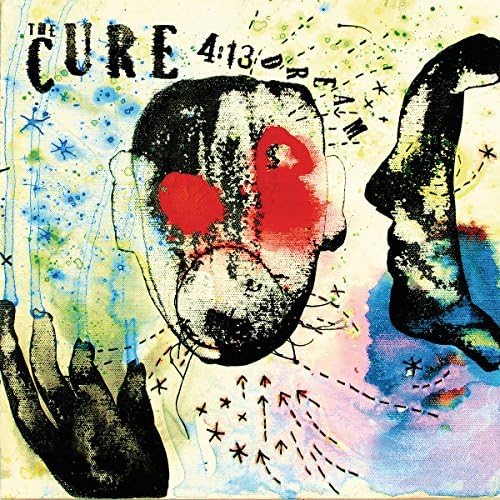
Some of the songs on the band’s 13th album dated back to the mid-’80s, and Robert Smith had so much material that he considered making it a double record at one point. Instead, he replaced the gloomier songs with more polished and upbeat ones. Not a good move. Like other Cure albums from the period, ‘4:13 Dream’ tries too hard to replicate the band’s best era, but the songs – besides a couple singles – just aren’t there.

‘The Cure’ (2004)
The group’s self-titled album from 2004 was co-produced by Ross Robinson, who’s worked with Korn, Limp Bizkit and Slipknot. So, it’s a heavier album than fans probably expected (or even wanted) from the Cure. It’s overlong, and it’s kind of hard to get through, but ‘The Cure’ offers a somewhat new perspective on a band that had recently passed the quarter-century mark of their career.
More influential than all but a handful of bands in modern rock history, The Cure didn’t often let the younger generation return the favour while on his own, Robert Smith would collaborate with acolytes like Crystal Castles or Blink-182, as a collective entity The Cure remained largely monolithic. A fascinating exception was “Lost,” opener to their self-titled 2004 album, which let producer Ross Robinson (Deftones, Slipknot) tap into a discordant rawness that had largely eluded the band in their third decade. Its full-band chug approaches Taking Back Sunday levels as the song crescendos in intensity, Smith howling “IIIII CAN’T FIND MYSELF!” That Smith & Co. never let themselves get pushed further in this direction remains both a missed opportunity and one of the more compelling What-Ifs in the band’s story.
‘Bloodflowers’ (2000)
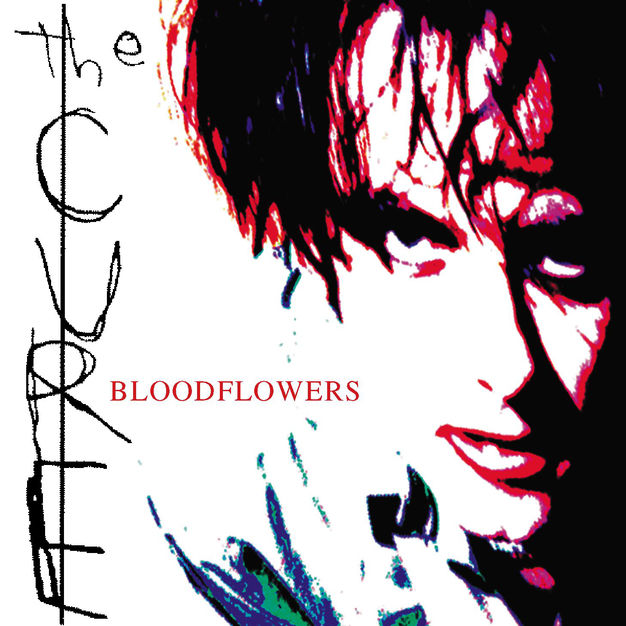
The Cure’s 11th LP was called a return to form following 1996’s messy and disappointing ‘Wild Mood Swings.’ It’s certainly mood-building – one track clocks in at more than 11 minutes, and the average song length is a taxing six minutes – but ‘Bloodflowers’ often comes off like it’s trying a little too hard to sound like a Cure album.
The Cure’s first album of the 21st century aimed to recreate the majesty of the group’s largely unquestioned 1989 masterpiece “Disintegration” but seemed to forget how vivacious that album was in its dreamy sprawl; by contrast “Bloodflowers” was fairly flat in its production and dynamics.
On lead single “Maybe Someday,” that evenness worked to its advantage, allowing the gentle ache of the song’s lyric to gradually deepen over the chorus of its five minutes.
Not necessarily a bad thing, but there’s not much originality here either.

‘Wish’ (1992)
Wish actually started out much differently. The songs, Smith admitted, “were moody and slow and I thought it would be pretty dull, really, to bring out a Cure album that was going to reinforce the myth of us being doom and gloom.”
Like 1989’s thunderously melancholy “Disintegration”, the more bittersweet Wish delved into common Cure themes of regret and loss – but this time, Robert Smith made room for glimmers of optimism. It paid off: Powered along by the goofy pop sunburst that was “Friday I’m in Love,” which became their second-highest charting U.K. single ever, the Cure became famous beyond their wildest dreams.
Of course, Wish boasts its elegies (“Apart,” “End”) and its paranoid ruminations on love (“From the Edge of the Deep Green Sea”) – but also its determined affirmations (“High,” “Trust”) and a song that could genuinely be described as jaunty (“Doing the Unstuck”). This blend of alienation and offbeat joy helped the album open at a startling No. 2 on the album charts.
‘Disintegration’ made them worldwide stars three years earlier, the Cure returned with a similar-sounding LP that downplayed the earlier album’s gloomier elements. The result was the band’s highest-charting album, reaching No. 2 in the U.S. “Friday I’m in Love” was the big single, but there’s more to ‘Wish’ than that. Probably the most consistently joyful album the group has ever made.
Three years after their U.S. breakthrough, the Cure had returned with Wish which reached No. 2 – their highest-charting LP. The album’s first single, “High,” is kinda blah. It’s the second single that anchors the album with its wonderfully poppy hook and Smith’s giddy performance – basically, it’s a song that’s as happy as it lets on. It’s the band’s second-highest-charting single in the U.S.

‘Faith’ (1981)
Like the albums before (‘Seventeen Seconds’) and after (‘Pornography’) it, ‘Faith’ forms a trilogy of records that helped seal the Cure’s reputation as gloomy, black-clad artsy post-punks. The songs are mood-building set pieces, so radio airplay was pretty much non-existent. But as doomy, artsy goth, the Cure’s third album is a cornerstone work by a band that excelled at it.
The finest of the band’s early album closers, “Faith” sounds utterly defeated in its slow-rolling saunter, stretching out to seven minutes almost out of a lack of inertia. “Nothing left but faith” shouts an unconvinced Robert Smith into the void, as the song dissolves underneath him — as bleak an illustration of bottomless despair as the ’80s produced.
About as phantasmal as early Cure got, all endless drum reverb and lightly moaning synths and tensely plodding bass — you can practically see the shadows being projected against the back-alley wall. Robert Smith sounds strangely like Brian Eno on this one, letting the soundscape do most of the emotional storytelling as he coos from behind the thick fog, “The columns are all men/ Begging to crush me/ No shapes sail on the dark deep lakes.”

‘Kiss Me Kiss Me Kiss Me’ (1987)
Following the 1985 rebound ‘The Head on the Door,’ Robert Smith led the band through a double-LP extravaganza that included some of his most joyous songs. The excellent “Just Like Heaven” is here and helped drive the album into the Top 40 (a first in the U.S. for the Cure). There’s some filler here – Side Four is a big come-down – but ‘Kiss Me Kiss Me Kiss Me’ set up the group for its masterpiece two years later.
“Why Can’t I Be You?” The first single from the band’s first album to get much notice in the U.S. is also one of its all-time brightest songs – all blasting synth-horns and frontman Robert Smith’s playful vocals just skimming the surface of the springy melody. There’s not much to the song (it’s in and out of there in a little more than three minutes), but it’s a whole lotta fun, dispelling the myth that the Cure are a bunch of moody sad sacks.
While the rest of the singles on The Cure’s U.S. breakthrough album “Kiss Me, Kiss Me, Kiss Me” seemed to be actively fighting their way out of your speakers, the lovely ballad “Catch” takes one of the lightest touches in the group’s catalogue. Smith in particular comes off so low key, it almost sounds like he’s singing through a vocal filter on this love-that-never-was story.
Its fragile strings and shuffling drums give it a delicacy rare to singles of its period, and allow for unforgettable moments like Smith unexpectedly echoing his “Just rolling about on the floor!”sigh, taken aback by the memory’s power.
Remarkably, “Just Like Heaven” wasn’t the first single released from “Kiss Me, Kiss Me, Kiss Me”. It wasn’t the second single, either. When it finally started picking up airplay six months after the album came out, the track became the Cure’s first Top 40 hit (it actually didn’t get any higher than No. 40, but little victories, right?) and one of the defining songs of the burgeoning alternative nation. From the rolling, almost tripping-over-themselves drums that start the song to the glorious synths that just sorta drift into space at the fade-out, “Just Like Heaven” indeed sounds like it comes from a most heavenly place.
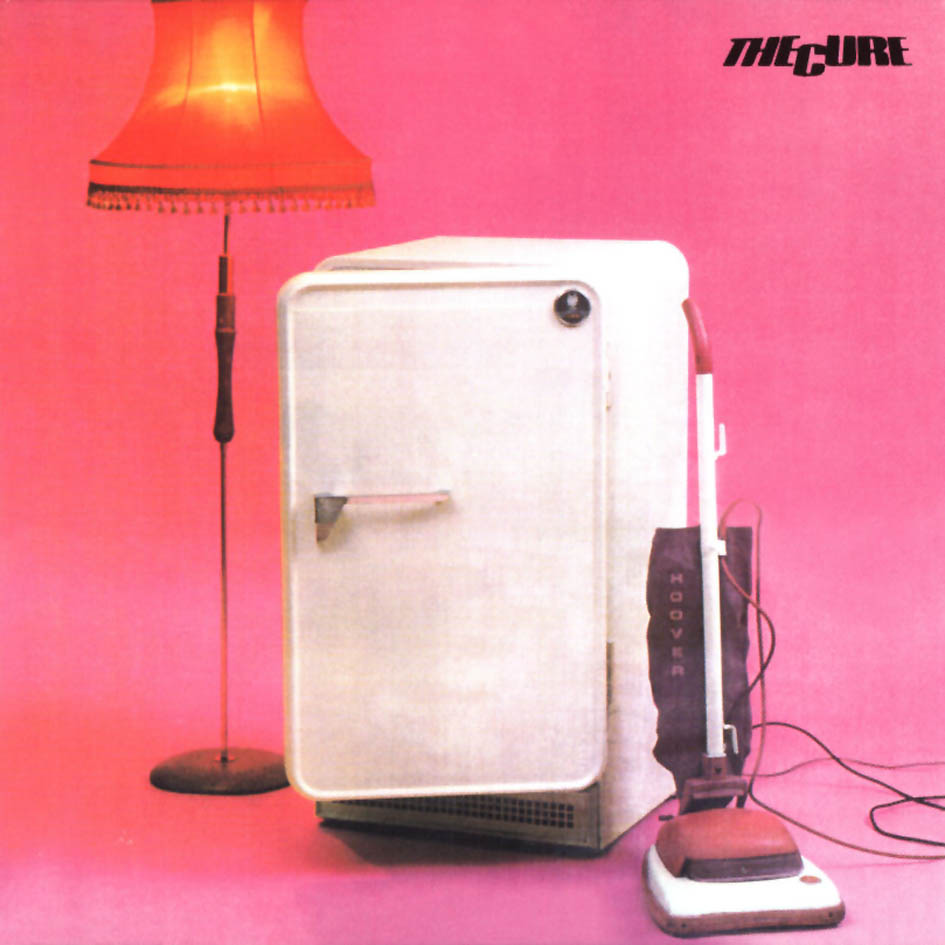
‘Three Imaginary Boys’ (1979)
The band’s debut album is sketchy at times (Robert Smith practically disowned the LP after the record company released it without his approval), but the post-punk moodiness that elevated later records starts here. There’s a conceptual tightness here, too, which carried over to some of their best albums.
After releasing their kinda-dismal debut single “Killing an Arab” in 1978, the Cure followed up a year later with this deceptively cheery breakup song. It sets the template – uptempo rhythm track, bummer words – for some of the band’s best cuts. And how about that spare but striking guitar line that runs throughout the chorus?.
Every post-punk group worth its salt needed its own “Frankie Teardrop,” an eerily understated one-act that ends in absolute horror. The two-minute “Subway Song” escapes novelty primarily on the strength of its bare-bones groove — particularly then-bassist Michael Dempsey’s looping hook, which sticks in your head far longer than Smith’s unexpected shriek to close the song.
Even better: the reworked U.S. version – called ‘Boys Don’t Cry’ and released a year later – which includes some great early singles.
:format(jpeg):mode_rgb():quality(90)/discogs-images/R-751772-1155144458.jpeg.jpg)
‘Seventeen Seconds’ (1980)
A year after their debut, the Cure returned darker, more focused and moving closer to the sound that would help define their reputation. ‘Seventeen Seconds’ comes together as Robert Smith leads the expanded lineup through a group of songs that set the stage for the goth movement right around the corner. The first in a trilogy of landmark records that formed a genre.
Particularly in their early run, The Cure excelled at title tracks, most often using them as closing statements. These titular cappers never went too big with their summations, though: The emblematic “Seventeen Seconds” reads its bitter dénouement matter-of-factly over greyscale guitars and a mercilessly ticking drum machine: “The picture disappears / Everything is cold now / The dream had to end/ The wish never came true.” The song ends with an ambiguous repetition of its title, terrifying in all its unsuggested possibilities.
:format(jpeg):mode_rgb():quality(90)/discogs-images/R-1499680-1224315996.jpeg.jpg)
‘The Head on the Door’ (1985)
Robert Smith wrote every single song for the first time, and his singular vision helped get the Cure back on track after 1984’s dismal ‘The Top.’ They try on a few different styles here, with the pop songs – especially the bouncy “In Between Days” – finding new radio-ready textures to cling to. Modern-rock radio was starting up around this time, and ‘The Head on the Door’ turned out to be a perfect fit.

‘Pornography’ (1982)
The Cure at their gloomiest and doomiest. And no wonder: Everyone was fighting and taking drugs, while Robert Smith was fighting back some major bouts of depression. It all amounts to the pinnacle of the band’s darkest period. ‘Pornography‘ was the final album in the Cure’s trilogy of landmark goth records. Next up was their first real stumble, then a period of renewed creativity and a golden era of hits and music.
:format(jpeg):mode_rgb():quality(90)/discogs-images/R-9275086-1477775020-4065.jpeg.jpg)
‘Disintegration’ (1989)
Everything the Cure had learned over the past decade was summed up on their milestone eighth album. ‘Disintegration’ has it all: goth dirges, endless psychedelic jams, super-catchy pop songs. And it made them massive stars, setting up a commercial groundswell for the next few years. Some of their best songs are here – “Pictures of You,” “Lovesong,” “Fascination Street” – but more importantly, ‘Disintegration’ sounds like an album made by a band at the peak of its creative powers.
It spawned four hit singles including this slinking mid-tempo number with nightmare-inducing imagery (“quietly he laughs and shaking his head, creeps closer now, closer to the foot of the bed”). Sweet dreams!.
“Disintegration’s” first single takes a while before it really goes anywhere, rumbling bass pretty much dominates the first couple minutes of the song. But once it kicks in, there’s a ton of things going on in the busy mix. “Fascination Street” is one of the Cure’s biggest modern rock hits and a staple at concerts, where it’s occasionally dragged out for 10-plus minutes.
The Cure had hit a creative and commercial peak in 1989 with “Disintegration”. It’s their biggest-selling album and the first to crack the Top 20 in the U.S. It spawned four hit singles (all of which make our list of the Top 10 Cure Songs), including this slinking mid-tempo number with nightmare-inducing imagery (“quietly he laughs and shaking his head, creeps closer now, closer to the foot of the bed”). Sweet dreams!
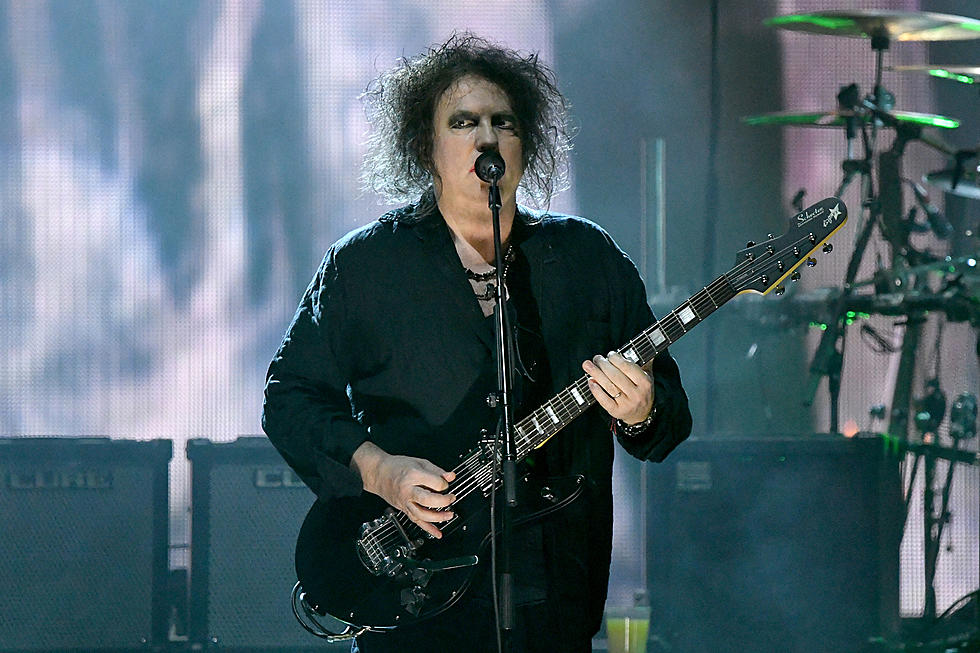
Taking one leap closer to the new Cure album being a physical reality, Robert Smith finally unveiled the title of the long-awaited, “doom and gloom” LP in a video interview filmed at the BandLab NME Awards, where he performed with CHVRCHES. (Smith recently collaborated with the band with the song “How Not To Drown“.)
“I know what it’s called – it’s called “Songs Of the Lost World” Smith revealed. “It’s got artwork, it’s got a running order, it’s almost done! They’re so slow because of vinyl, but it might come out as early as September, probably. I’d rather it just came out. I can’t stand the anticipation.”
Smith said one of the two Cure albums is finished…the second one. He’s still got about a month to wrap up vocals for four of the ten tracks on the first. Previously, Smith’s labourious song writing perfectionism was cited as being the biggest obstacle to release, but he’s nearly there. According to the group’s guitarist, Reeves Gabrels, there are multiple albums worth of material on deck, much of which has been conceived throughout the pandemic.
It has been over thirteen years for The Cure to follow up on their last album, “4:13 Dream”. in 2008. Since then, The Cure have released several live albums, compilations, and concert films, and were inducted into the Rock and Roll Hall of Fame. Smith’s decision to finally release a follow-up to “4:13 Dream”, was “primarily because of the Meltdown thing,” referring to 2019’s Meltdown Festival in London. For the event, Smith had personally enlisted 60 artists across his 10-night “Curation.”
“Seeing all these new bands—I’ve listened to some of these bands and met so many of them that it’s kind of inspired me to do something new,” Smith said to Sirus XM Radio hosts Mark Goodman and Alan Light during an interview.
“We were over-productive,” Gabrels, who’s previously played with David Bowie and joined the Cure in 2012. “Which is great, except it means you really can’t judge the songs until you get them close to finished. You kind of have to bring all that material up to the point where you can hear what they are.”
Though no official date has been set for the new music’s release, Gabrels says the band is now “finishing up” the albums, which were started in 2019. The guitarist has been recording his parts remotely in upstate New York while the rest of the band records in England.
In 2021, frontman Robert Smith noted that the new material is “very emotional” and that completing the lyrics has been a challenge. “I’ve struggled more with finishing the words to these new Cure recordings than at any other point,” Smith said. “We recorded 20-odd songs, and I wrote nothing. I mean, I wrote a lot, but at the end, I looked at it and thought, ‘This is rubbish.’”
However, forced lockdown during the global pandemic allowed Smith to sit with the material and work through obstacles in penning new lyrics, promising the return of the kind of “doom and gloom”, as found in such albums as “Seventeen Seconds“, “Faith”, and “Pornography“.
The Cure have spoken about progress on their long-awaited new album ‘Songs Of A Lost World’, as well as what to expect from their upcoming tour. Having long teased the band’s long-awaited “merciless” new record – after first stating that two new albums were on the way back at the last NME Awards back in 2020 – frontman ROBERT SMITH revealed earlier this year that one of them would be “real very soon” & would be called ‘Songs Of A Lost World’.
Then (Thurs. May 19), after he & bandmate & songwriting partner Simon Gallup picked up the Icon Award at the Ivor Novellos, Robert again gave reassurance that the album was on the way and would be out before their upcoming winter tour: “We will be releasing a new album. I get fed up of saying this now! We will be playing from October & the new album will be out before then. We walked on [stage at the Ivors today] to a bit of new music, actually…”
The Cure are scheduled to resume touring in Europe later this year.
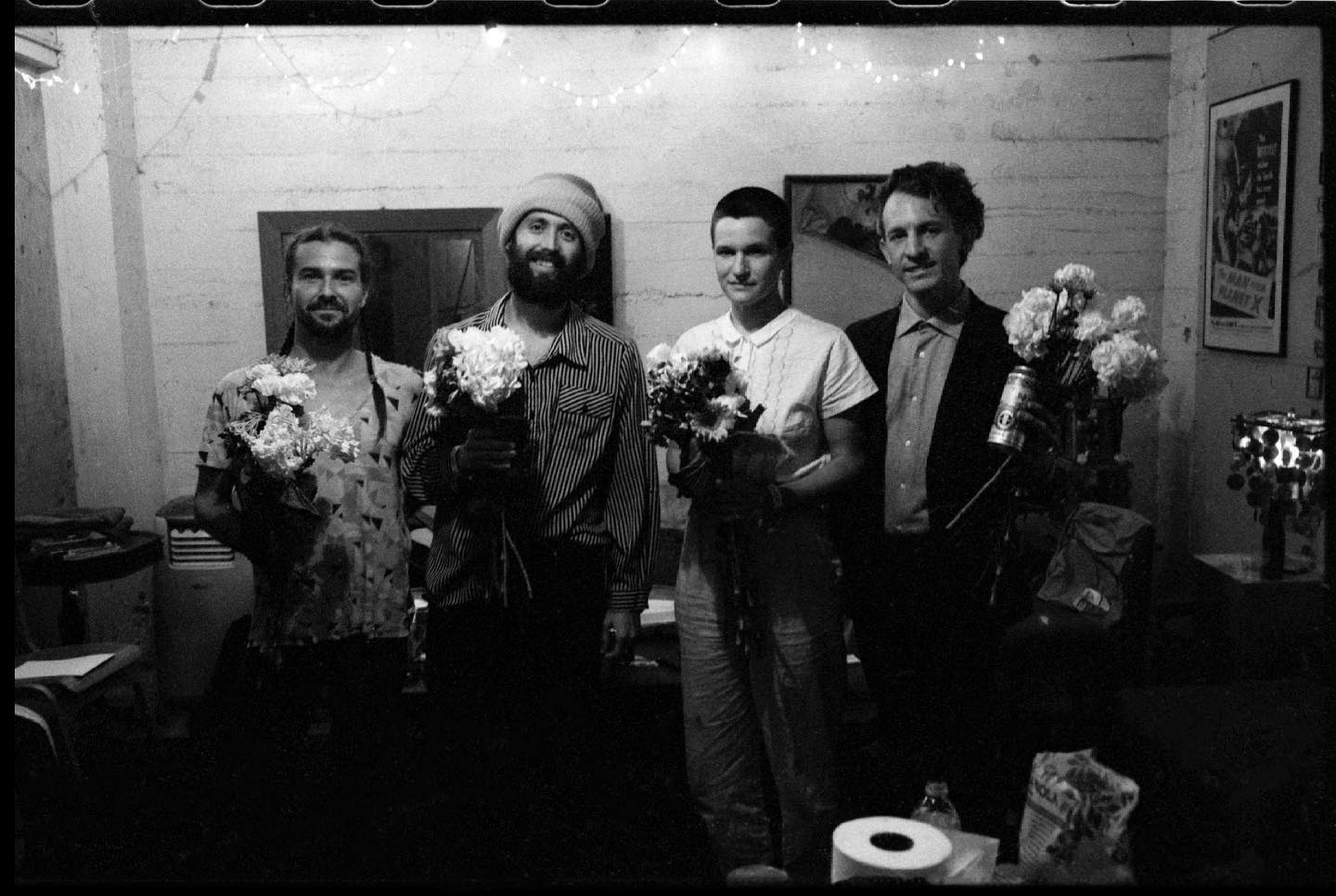
Big Thief were the musical guests on last night’s episode of The Late Show With Stephen Colbert. The band performed “Simulation Swarm” from their new album Dragon New Warm Mountain I Believe in You. Watch it happen below. We’re thrilled to welcome back Big Thief, whose members are Adrianne Lenker, James Krivchenia, Buck Meek, and Max Oleartchik, for this performance of a song from their latest album, “Dragon New Warm Mountain I Believe In You,” which is available everywhere now.
Before the album’s release, Big Thief shared “Simulation Swarm,” “Little Things,” “Change,” “Certainty,” “No Reason,” and “Spud Infinity.” The band is on tour in the United Kingdom and will soon be heading across North America.
Coming up, on March 17th, the band will broadcast a livestream with Driift. It showcases Adrianne Lenker, Buck Meek, James Krivchenia, and Max Oleartchik performing from a snowy house in the Northeast. The stream will broadcast at four different times.
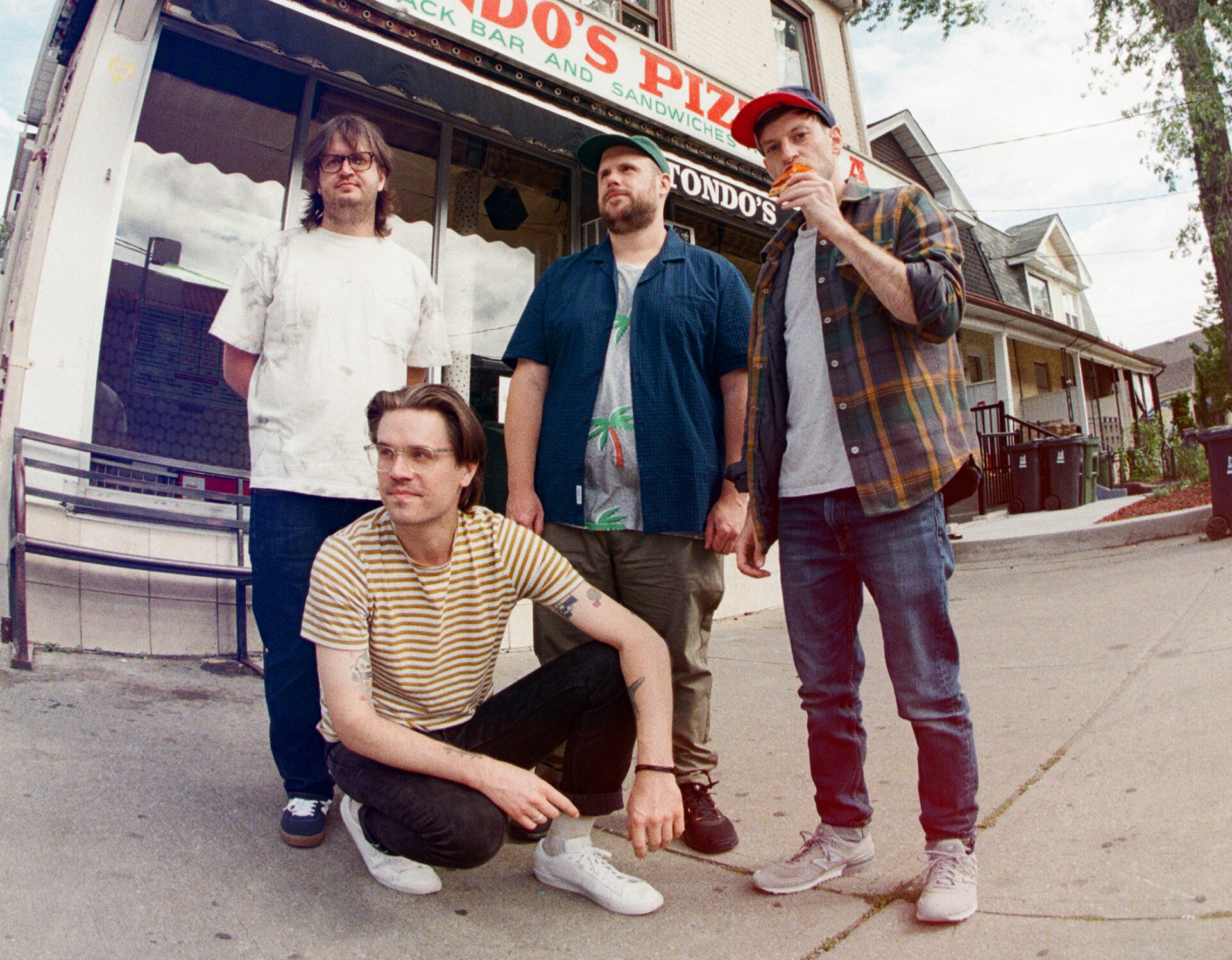
It’s one thing to believe in souls, but it’s another thing completely to think that objects have them. Regardless of where you stand on that metaphysical topic, it’s kind of gnarly to think about the lives objects have lived. What was it like to be in the same room as some of the most creative figures, prominent people, or even your own ancestors—to literally have an objective perspective. This is the sentiment at the core of punk group PUP‘s latest single “Matilda,” which arrives ahead of their album “The Unraveling Of Puptheband”.
“Matilda is the name of my favourite guitar,” Stefan Babcock revealed, setting up the story behind the band’s second heartfelt ode to an animate object. “She was a gift from my friend Ryan, after watching me accidentally break the only guitar I owned in the middle of a long tour. I had no money to buy a replacement, and Ryan’s act of kindness is up there on my list of ‘nicest things anyone’s ever done for me.’ I played Matilda nonstop for seven years at every PUP show, even when my bandmates started complaining that she sounded like shit.”
The accompanying music video, which was directed by Jefferson Dutton, follows the bittersweet lifespan of objects of importance in our life that we end up parting with. Babcock continued: “As the band got bigger, the pressure to sound better was building and so I bought a ‘good’ guitar and played “Matilda” less and less. Before I knew it I hadn’t played her in over a year. I wrote this song based on this intense feeling of guilt and sadness and shame and nostalgia and regret, watching her rot away in a corner. I love this guitar and I love Ryan and wanted to do right by them, and I felt like I’d failed them both. I convinced the band that “Matilda” deserved one last rip on a PUP record, and I played her during the bridge of this song. It sounds so shitty. But good shitty. Great shitty. For me, it was the most joyful and cathartic moment in the entire making of this record.”
Watch the charming video for “Matilda” and pre-order PUP’s forthcoming album “The Unraveling Of Puptheband” due out April 1st
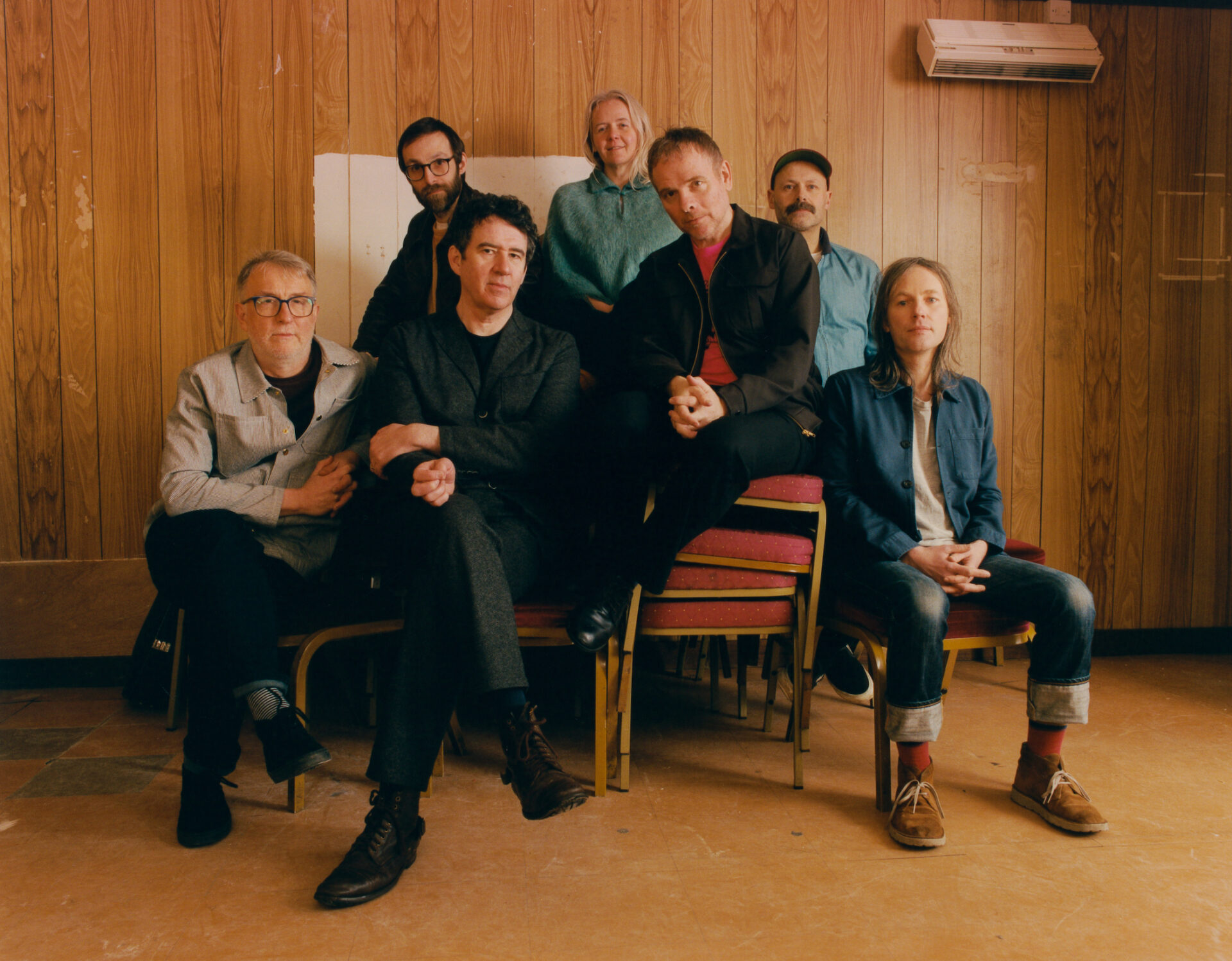
Belle and Sebastian have announced their first proper studio album in seven years. The follow-up to 2015’s “Girls in Peacetime Want to Dance” is called “A Bit of Previous” and it’s out May 6th on Matador Records. They’ve also shared the first single, “Unnecessary Drama,” with a video that finds the band, well, trying to be a band again—lots of team-building exercises!
“The song is about a young person experimenting in being a human again after a forced hiatus,” vocalist Stuart Murdoch explained. “The person is weighing up whether or not it’s worth the mess! Still, you dip your toe in and it becomes delicious, and you get too much of it. Between trouble and nothing, we still choose the trouble.”
“A Bit of Previous” was recorded in their hometown of Glasgow after the pandemic disrupted their plans to travel to Los Angeles in 2020. “We did it together, us and the city,” Murdoch said. “This record was the first ‘full’ LP recording for B&S in Glasgow since “Fold Your Hands Child“, [recorded in] 1999. We clocked in every morning, we played our songs, we wrote together, we tried new things, we took the proverbial lump of clay, and we threw it every day.”

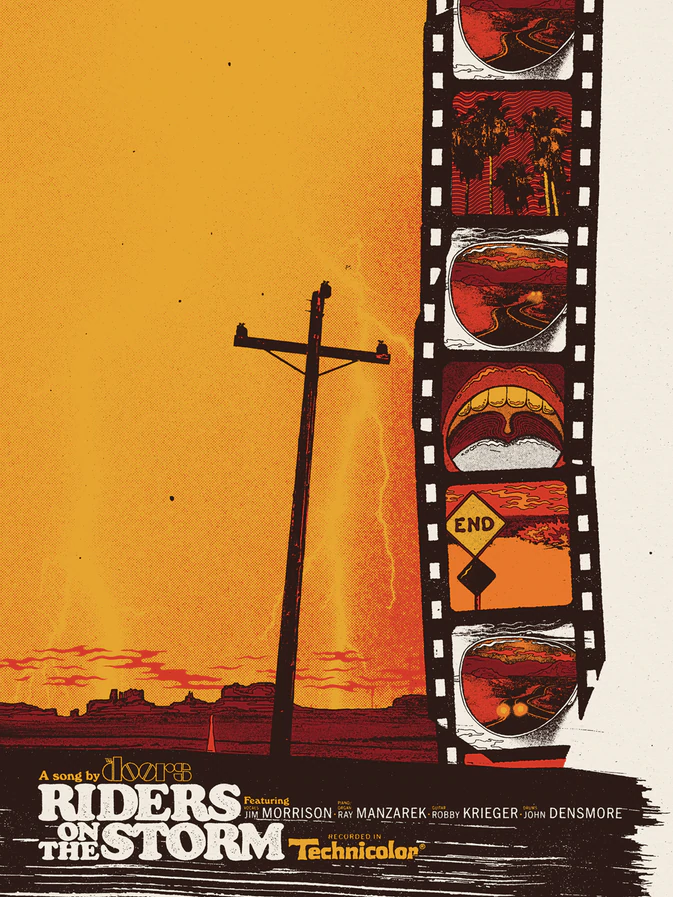
“Riders on the Storm” is classic Doors…For this poster I knew I really wanted to try and capture the cinematic scope of the track, as well as the ominous western desert vibe that it has right from the jump.” – Artist Ryan Besch (Your Cinema)
Available in a very limited quantity of just 200 prints, The Doors have teamed up with Collectionzz once again to present this incredible ode to “Riders on the Storm.” Includes a holographic sticker on the back of the print for authenticity, these five screen prints won’t last long.
 The Fat Angel Sings