Archive for the ‘MUSIC’ Category

Left us on this day (April 23rd) in 1991: American rock’n’roll/punk rock guitarist, singer & songwriter Johnny Thunders (believed to be drug-related causes, age 38), who came to prominence as a founding guitar player of influential, proto-punk band, The New York Dolls (1971-75); born John Anthony Genzale, Jr., he renamed himself after a comic book of the same name; the Dolls released the seminal albums ‘New York Dolls’ (1973) & ‘Too Much Too Soon’ (1974); Johnny left & formed The Heartbreakers in 1975, recording on & off until 1984 (including the essential 1977 album ‘L.A.M.F.’); he also recorded solo, including the 1978 considered classic LP ‘So Alone’, featuring a rock & punk celebrity cast & arguably his greatest composition, “You Can’t Put Your Arms Around A Memory”; he also formed Gang of War with MC5’s Wayne Kramer for one album in 1990; his final recording was a version of “Born To Lose”, with German punk rock band Die Toten Hosen less than two days before his passing in New Orleans; in 1999, veteran documentary filmmaker Lech Kowalski released ‘Born To Lose: The Last Rock ‘N’ Roll Movie’; Danny Garcia’s featured documentary, ‘Looking for Johnny’, was released in 2014…

My admiration of Johnny Thunders stems from my huge love of his tenure with the New York Dolls and The Heartbreakers. I’ve just started listening to his solo catalogue again. And I started off with what are identified as his three true studio albums, “So Alone”, “Que Sera Sera”, and “Copy Cats”. Does anyone recommend listening to specific other releases of his that are floating around out there? There are so many titles live albums, compilations, bootlegs, Love to get your recommendations please.

“DTK live at the Speakeasy” often included in some LAMF reissues. “Live at the Village Gate” is good. If you can get your hands on one, “LAMF Heartbreakers definitive edition” box CD set. It includes 4 CD’s (and badges!), LAMF lost ’77 mixes, LAMF the restored Track LP, LAMF demo sessions ’76, ’77, LAMF alternative mixes (21 in total for that disc), deluxe booklet by Nina Antonia including a comprehensive interview with Walter Lure. You should still be able to find one on EBay probably. “Belfast nights” has pretty good sound quality. “The Yonkers demos” often included in some comps. “Madrid memory”, “The Heartbreakers live at Max’s” great sound quality. Walter Lure’s Waldos have a couple CD’s “Rent Party” and the still pretty new “Wacka Lacka Loom Bop A Loom Bam Boo” on Cleopatra Records.

‘Johnny Thunder lives on water, feeds on lightning.
Johnny Thunder don’t need no one, don’t want money.
And all the people of the town, They can’t get through to Johnny, they will never, ever break him down.
Johnny Thunder speaks for no one, goes on fighting.
And sweet Helena in bed prays for Johnny.’
“Johnny Thunder”—R. Davies

In the late summer of 1980, the remains of what was Giant Sandworms went in an exhaustive road trip to find our place in NYC’s post-punk rock whirlpool of unsigned bands. We were unprepared for this mythic belly flop into the catacombs of both the Lower East Side and the herculean task of day-to-day advancement of spinning our wheels just to play CBGB for 16 people, 15 of them being our friends.

New York City was a harsh, smelly, tinderbox of sorts. The Hell’s Angels block on First Avenue and Third Street held an obit on the west side of the street, sprayed on the brick wall in memory of Big Vinny “When in doubt, knock ’em out.” .The building was like any other building in 1981, serving as Alphabet City’s 24/7 narcotics market and shooting galleries. It wasn’t always a pleasant interaction and even Johnny Thunders was just another mark.

Back then, everybody had a story about Johnny Thunders, everybody. Way back in the early ’70s, rock had become listless. With a few exceptions, groups made the same record again and again, then a live album, with audience applause engineered to sound like panzer divisions. But the onset of change would begin in small camps, garages, and basements, by like-minded kids that didn’t fit. New York City had become dangerous, abandoned and for the taking. Beneath the Brill building, Warhol’s Factory, Manny’s Music (“try it, you buy it”), record companies furnished with mahogany and leather and maybe a faint trace of Birdland and, more recently, The Fillmore, offered up stagnation. The industry and its product were stamped in Billboard Magazine, in self-congratulatory pages, while raw, young talent went unfostered. It became near impossible to break into the machinations of this music machine.

In 1973, one band The New York Dolls almost got through. They were representing their city with driving blues rock, and hard-luck tales of youth punching back at the disorder of war, technology, urban renewal and the luckless stars of a time where nothing was forbidden. It was unapologetic, dirty, loud, and fast. The cover of their debut album found the quintet in full drag and unwashed long hair with more swagger than the Rolling Stones could muster on their best night.

Todd Rundgren produced it and it sounded as they did—no whiteout on this term paper. David Johansen was a lead singer with the goods. Lead guitarist, Johnny Thunders’ sound was driven, mangy, loud, and original. “Trash,” “Vietnamese Baby,” and “Subway Train” were unforgettable titles. There would’ve been no Sex Pistols without them and that’s just for starters. It was pure from-the-streets commentary on the times.

CREEM magazine awarded the Dolls the No. 1 best new band and No. 1 worst band in their yearly poll in 1973. Love ’em or hate ’em, they made a huge impression. The record peaked at paltry No. 119 on the Billboard album chart , and they toured in the U.S. supporting Mott The Hoople and went back to London for a short tour as well. They could inspire from an audience a chorus of boos, or offer truly compelling performances that left people gasping, saying it was the best rock show of their lives.

The band was schizophrenic and the media found them authentic if nothing else. Bowie had referenced Billy Murcia in song (“Time” from Aladin Sane), the original Dolls drummer who OD’d in a London bathtub in ’72 just before the band signed to Mercury. By ’74 the quintet made Too Much Too Soon with Shangri-Las’ producer Shadow Morton. It held “Babylon,” “Human Being,” and Thunders’ first lead vocal on “Chatterbox.” It was camp but cool, choosing mostly great covers like Philadelphia’s “Gamble and Huff” and Sonny Boy Williamson’s “Don’t Start Me Talking.” Record sales were even worse than the first outing, and the tours were hampered by bassist Arthur ‘Killer’ Kane’s alcoholism and the heroin habits of Thunders’ and drummer Jerry Nolan. Infighting and a lack of new material found them waning, they dropped by Mercury.

In ’75, Thunders and Nolan quit the band. But along with the MC5, The Stooges, and The Dictators, the Dolls were the American precursor to a punk-rock movement that found its place in every city young, reckless, and hungry.

Johnny Thunders forms The Heartbreakers, Thunders might have been without a band or a steady gig for a week before he formed The Heartbreakers, which, for a downtown minute, included Richard Hell. But the group would be ex-Doll Jerry Nolan, guitarist Walter Lure, and Billy Rath on bass. They worked and developed a devil-may-care harder rock sound and, planned or not, they were synonymous with heroin. You wouldn’t find The Heartbreakers pictured with Nancy Reagan’s “Just Say No to Drugs” slogan above their heads. What I did see on every other pole and telephone booth after moving to New York City with a post-Heartbreakers pic of Johnny sideways in a hat, syringe sticking out of the brim, pimping his next show, trading street cred for self-parody by 1982.

The Heartbreakers played around New York and then overseas as be part of the historic Sex Pistols’ Anarchy Tour. Four dates in and things imploded. London was not used to a group like this, unafraid to play a guitar solo, yanks dressed big-city junkie cool with enough ego and stage presence to be long remembered. They stayed and recorded the record L.A.M.F. , a very good journal of a rock & roll band with antisocial bravado and American conceit and big dirt-sugar pop hooks. But the record was muddy and poorly mixed and has by now a remixed version or two, but you don’t get them when you need them and Nolan left the band because of it.

They became an apparition of sorts, who would through the years get back together for a payday, but in their time, they were the house band at Max’s Kansas City and took on all contenders. (Their swagger-y ’79 live album, Live at Max’s Kansas City, smokes).

Thunders stayed in London and the next year put out his debut record “So Alone”, one of ’78’s best by anyone. He had Paul Cook and Steve Jones hot to play from The Pistols’ demise and Thin Lizzy’s Phil Lynott on bass, some Peter Perrett (Only Ones) on guitar, and it opens on a cover of The Chantays’ “Pipeline” and it don’t quit. The ultimate in blood-on-the-page ballads is “You Can’t Put Your Arms Around a Memory” and covers Otis Blackwell II’s “Daddy Rolling Stone” with Thunders on the first verse, Lynott emotive second, and Steve Marriott, the white blues-boogie screamer, who turns the final verse into sulfur, striking fire, holding nothing back.

The studio is said to have been an all-day and all-night den of vice and electricity, where all involved saw a success in its making and a fortune cookie that read “Your Time is Nigh.” So Alone was helmed by a young (pre-U2) Steve Lillywhite. It earned some good press on both continents, sold better than expected and is a rock ‘n’ roller’s album. Johnny’s vocals were as good as they got and his playing was tough, sincere and even tender. It has aged well. But and he never hit that high again. In fact, all three of the voices heard in “Daddy Rolling Stone,” would be dead within a decade.

After returning to the States, Thunders became more difficult, more undisciplined, and toured to survive and make his bones with mostly sub-par bands, or worse. Thunders and Wayne Kramer were in that storied, short-lived combo Gang War. The few songs I’d heard were reggae influenced, but with no real direction. The band was more like a ghetto timeshare for two very talented men. It was a project that brought no record deal and no new respect for the future rock ‘n’ roll legends. Lots of time-wasting though.

Fighting with his band, fighting with his roadies, and with the audience. Trolling the faces to call down: “hey douchebag, pussy, come suck me off!” as if he was waiting on something or someone to take the weight off, to just be John again, or someone else completely. The shows might have been sloppy the first week, but you end up floating downstream letting a last power chord float when he didn’t know the bridge or when the band did one out of thin air he didn’t know. Thunders would look back, frown, turn up a notch before doing standards like “Can’t Kick,” “Chinese Rocks” or a cover he still found a friend in.

May be an image of 4 people, people standing, people playing musical instruments and guitar

Cool Ghouls – a band fledged in San Francisco on house shows, minimum wage jobs, BBQ’s in Golden Gate Park and the romance of a city’s psychedelic history turns 10 this year. What better a decennial celebration than the release of their fourth album, “At George’s Zoo!” How did the San Francisco’s fab four arrive at George’s Zoo? The teenage friendship of complimentary spirits Pat McDonald (Guitar/Vox) and Pat Thomas (Bass/Vox) serves as square one.

The Patricks were munching on Eggo-waffle-sandwiches and downing warm Taaka in suburban Benicia years before McDonald would hear George Clinton address his fans as “Cool Ghouls”. The boys played their debut gig as Cool Ghouls at San Francisco’s legendary The Stud in 2011, but there’s no doubt the musical moment cementing the band’s trajectory was much earlier at the 18th birthday party for boy-wonder Ryan Wong (Guitar/Vox) – at the Wong household. You might remember the Ghouls’ earliest days… McDonald’s hair hung luxuriously past his waist, Thomas dreamt of no longer having to crash on friends’ couches to call SF home and Wong looked forward to turning 21. Cool Ghouls’ Pete Best, Cody Voorhees, thrashed wildly – but briefly – on the drums and Alex Fleshman (Drums), who still claims he’s not really “a drummer”, turned out to be a really good drummer. Thomas would sleep pee on tour. Those were golden days!.

It’s been 2 years since the last time Cool Ghouls have even played. Fortunately for us, the ghouls got an album in before it all went to shit, and they made it count. “At George’s Zoo” includes 15 of the 27 tunes they managed to eke out while simultaneously working through major life moves. It was a 5-month, all out, final sprint down the homestretch (to Ryan’s moving day) with affable engineer Robby Joseph, at his makeshift garage studio in the Outer Sunset . Instead of recording the entire album over a few consecutive days – like they’d done with Tim Cohen, Sonny Smith and Kelley Stoltz for the first three LPs – the band took it slow by working through a few songs each weekend after rehearsing them the week before. These guys have a real commitment to elevating as songwriters, musicians and ensemble players. It’s always been for the music with Cool Ghouls and this long-awaited self-produced outing is a track by track display of the ground they’ve covered and heights they can achieve. Their vocals and trademark harmonies are front and centre and out-of-control-good.

Ryan’s guitar solos are incredible. The horns by Danny Brown (sax) and Andrew Stephens (trumpet) hit in all the right places. Henry Baker (Pat Thomas Band / Tino Drima), plays keys throughout. There’s even a mesmerizing string section (“Land Song”) by sonic polyglot, Dylan Edrich. None of this growth is to the detriment of the fun, natural, feeling that fans have come to expect from the band. This is a fully realized Cool Ghouls album.

It paints a remarkable portrait of SF’s homegrown heroes and the many corners they’ve explored over the last decade. The song writing, harmony and playing are nothing if not solid. The lyrics are keen. Robby’s recording and mixing sound great start to finish . It’s a triumphant addition to their catalogue.

Recommended for Stooges and Beach Boys fans alike. Listen and see! Yes, many things have changed since 2011. Who knows what the 20’s will have in store for life on Earth, let alone the Cool Ghouls? We at least know that 2021 has “At George’s Zoo”

Available now on LP / CD / Digital via Empty Cellar Records and Melodic Records worldwide.

ART MOORE – ” Snowy “

Posted: April 24, 2022 in MUSIC

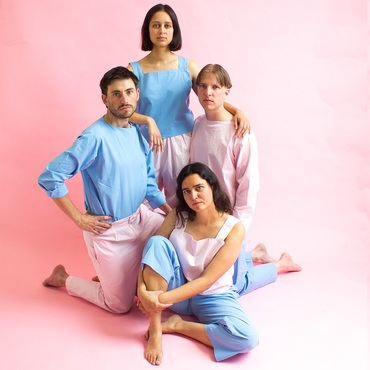
Sam Durkes, Trevor Brooks and Taylor Vick first set out to collaborate with the intended goal of pitching their music for film and television projects. Durkes, a member of Ezra Furman’s band, had just completed work on Furman’s soundtrack for the Netflix series Sex Education and knew Brooks through his own work with Furman. The pair were already familiar with Vick, who had established herself as a prolific cult solo artist with Boy Scouts, and asked if she would be interested in assisting for their gestational soundtrack project. The idea of Art Moore, as a band, or Art Moore was still a ways away.

Art Moore they are made up of our drummer Sam Durkes, our live sound engineer Trevor Brooks and the brilliant songwriter Taylor Vick of the band Boy Scouts

released April 20th, 2022 through Anti-Records

As lockdown approached in 2020, Chicago-based singer Lili Trifilio was wrapping up a tour in support of Beach Bunny’s debut album, “Honeymoon“. Suddenly, she found herself back at her parents’ house, coping with her new reality. To deal, she retreated into sci-fi stories and her always-active imagination. She envisioned new places to travel in her mind, thus dreaming up big, bombastic pop sounds to construct Beach Bunny’s highly anticipated sophomore album, “Emotional Creature“. Simultaneously about personal growth, “Emotional Creature” is a collection of highly relatable songs that capture the highs and lows of new relationships, the joys and vulnerabilities of letting someone in, the gut-wrenching realities of experiencing anxiety, leaving toxic relationships, and seeing yourself through the eyes of the one you love. These complex feelings are expertly contrasted with ultra-poppy melodies, anthemic choruses, and a slight punk edge.

“The songs have grown with me over time,” Trifilio explains. “Some of them were written in various stages of life, and I think as we go through different experiences and hardships, you come out stronger. I’ve grown as a person, so the song writing reflects that.”

With its openhearted, vulnerable themes and progressive, hook-filled take on pop rock and pop punk, “Emotional Creature” only further cements Beach Bunny and Trifilio’s well-earned reputation as a leading voice of their generation.

Beach Bunny announce their highly anticipated sophomore album “Emotional Creature” out July 22nd on Mom+Pop Music.

On “Their Invisible HandsClara Engel draws for the songs, the vocals and the instruments and also for recording and producing the album at home. The songs on Clara Engel’s new album were partly improvised and as we are used to by now, a very special set of instruments is also used this time.

In addition to Clara Engel’s now well-known sigaardoos guitar, special instruments such as the talharpa, the shruti box, the tank drum, the melodica and the chromonica can be heard on “Their Invisible Hands“, after which the musician from Toronto used various objects as percussion instruments. It delivers an album that is as beautiful as it is special, which will sound familiar to anyone who knows the music of Clara Engel, although the musician from Toronto always breaks new ground.

On “Their Invisible Hands“, a fairly subtle instrumentation has been chosen, which is combined here and there with multiple layers of vocals, but these vocals are also omitted in a number of songs. As so often, Clara Engel’s music, thanks to the special soundscapes, has an enchanting or even hypnotic character and just like the previous albums you also have to hear “Their Invisible Hands” a few times before everything falls into place.

On “Their Invisible HandsClara Engel keeps the tempo low and several layers of music are stacked on top of each other. It gives the music a particularly spacious and also visual character. The instrumentation consists partly of repetitive elements, often guitar lines, after which the somewhat exotic instruments fill the open space.

Because of the special instruments, “Their Invisible Hands” also sounds completely different from all other albums that have recently been released. Clara Engel makes music that fits into the folk box with some imagination, but because of the special sounds it is not a moment folk that you know from other musicians, although Clara Engel does have a voice that can work well in more traditional folk.

It is amazing how Clara Engel also manages to combine many exotic and also different instruments in songs that ultimately sound fairly conventional. Because the Canadian musician made the new album alone, “Their Invisible Hands” sounds a bit more subdued than some of the predecessors, but this time it is also a colourful and special sound carpet that comes out of the speakers.

Clara Engel had no complaints about inspiration this time, because “Their Invisible Hands” contains thirteen songs and has a playing time of more than seventy minutes. The album contains mainly long tracks (the majority of the tracks last at least five minutes), which further enhances the mesmerizing nature of the Toronto musician’s music. “Their Invisible Hands” is an album on which you keep discovering new things and is another valuable addition to a completely unique oeuvre.

Released April 15th, 2022

Recorded and mixed at home in 2021 by Clara Engel.

All songs and instrumentals written and improvised by Clara Engel
Words to O’ Human Child are taken from W.B. Yeats’ “The Stolen Child”
Instruments: voice, cigar box guitar, talharpa, shruti box, melodica, found percussion, tongue drum, chromonica.

Bands inspired by Californian psychedelics from the late 60s are plentiful, bands that make music of the beauty of Papercuts’ Past Life Regression are extremely rarePast
Life Regression, the seventh album by the American band Papercuts, only needs a few notes to drag you back decades in time. Let the album of the band from San Francisco come out of the speakers, close your eyes, and you imagine yourself in the California of the ‘summer of love’. The great thing about Papercuts’ music is that on the one hand it sounds wonderfully authentic and nostalgic, but on the other hand the band around Jason Quever subtly incorporates influences from a much later date. Past Life Regression is an album to dream away from, but in the meantime you don’t want to miss a note of all the musical splendor on this album. World record.

The American band Papercuts exists twenty years this year and releases its seventh album this month. None of the previous six seem even remotely familiar to me, but I am very charmed by the Past Life Regression, which was published this month, which caught me off guard immediately on the first listen.

Papercuts are from San Francisco and in the opening track of her new album takes you to the California of the late 60s and early 70s with intoxicating analogue synths, irresistibly sunny guitar runs and extraordinarily dreamy vocals. The opening track of “Past Life Regression” could be 50 years or 60 years old, until the guitars at the end might be a bit too much derailed. “Past Life Regression” by Papercuts often derails this, but the music of Papercuts remains music from times gone by, with a contemporary touch here and there.

Papercuts is a project by American musician Jason Quever, who also holds all the strings on the band’s seventh album and draws outside of the drums and women’s vocals for everything the album has to offer. And “Past Life Regression” has a lot to offer.

In the songs in which the authentic sounding synths and organs dominate and the layers of The Mamas & The Papas like men’s and women’s vocals sound especially dreamy, I hear some echoes of a band like The Zombies, when the cello is used the Fab Four immediately appear, but when the guitars dominate and sound wonderfully elementary, you can hear that Jason Quever is especially indebted to the oeuvre of The Velvet Underground.

I mentioned the music of Papercuts above music from a bygone era with a contemporary touch and that is not as simple as it seems. There are a number of light years between The Velvet Underground and The Jesus & Mary Chain and between The Zombies and Echo & The Bunnymen, but Papercuts bridges these distances in a few chords.

In general, however, it is good to stay in the musical landscape of the San Francisco of the late 60s, in which Papercuts can work in a wide field. “Past Life Regression” occasionally sounds like a collector full of obscure psychedelics from this decade, although Papercuts is almost immediately a band that in that case should immediately exchange obscurity for eternal fame.

However, Papercuts is a band of today and will have to compete with a lot of other bands that get the mustard in the California of the late 60s. It’s stiff competition, but Papercuts can handle it. “Past Life Regression” is an album that can only make you very happy and it is also an album that is a lot more interesting and versatile musically and vocally than all bands that can be caught with the broad label neo-psychedelics.

It is a label that also fits Jason Quever’s band, although Papercuts is much more than neo-psychedelics as far as I’m concerned, if only because the American musician also subtly incorporates influences from slowcore, lo-fi, jangle pop and shoegaze into his music and signs for a production for which Phil Spector would not have been ashamed. As I said, I was immediately over on first listen, but now I cherish this album as one of the highlights of the still fairly young music year 2022.

released April 1st, 2022

All songs written and recorded by Jason Quever.
3, 4, 5, 9 lyrics written by Jason Quever and Donovan Quinn.
Amy Marco – backing vocals on 1, 4, 6, 7.
Will Halsey – drums on 3, 4.

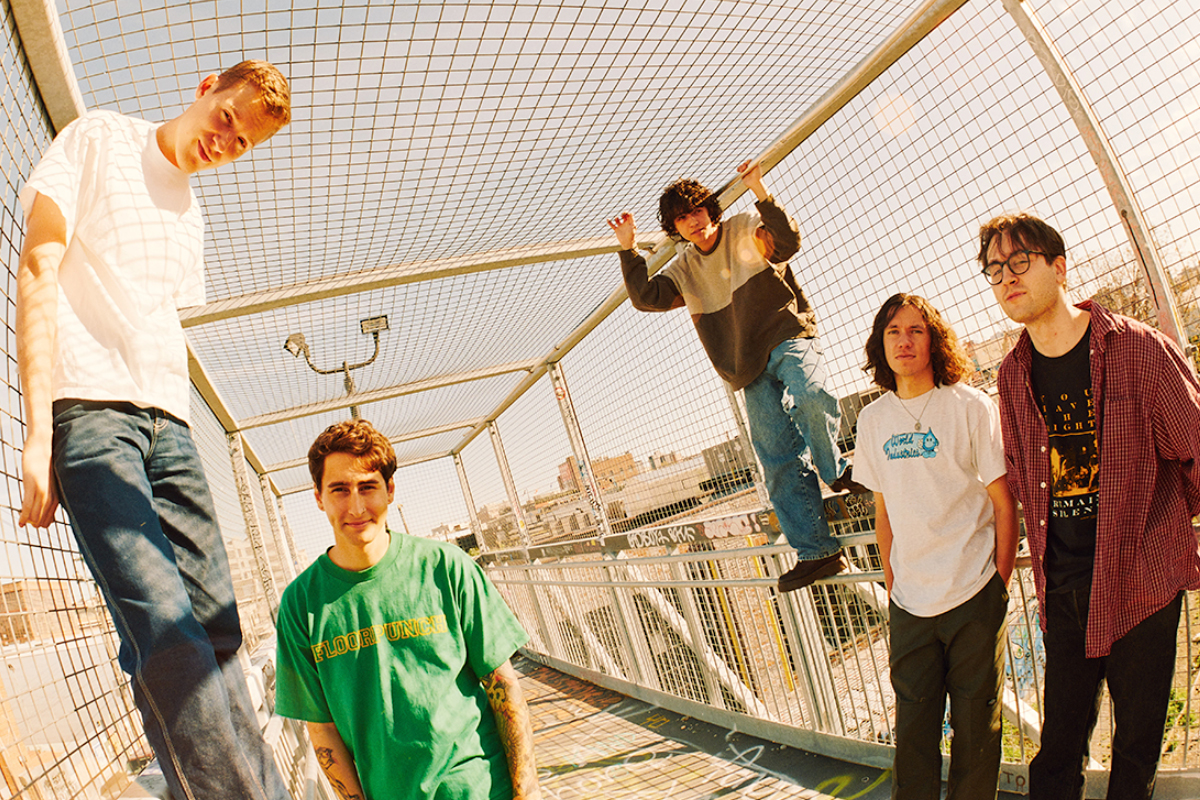
Today Guppy’s new album ‘Big Man Says Slappydoo’ is out! Give it a stream, and if you enjoy it pick it up on translucent lime vinyl!. Guppy is the brainchild of four mostly-self-taught musicians (J Lebow, Marc Babcock, Ian Cohen, and Kabir Kumar), birthed in a sweltering Glendale garage circa 2017. Writer and guitarist/vocalist Lebow pairs laugh-out-loud absurdity with tender sentimentality, building upon bouncy, infectious rhythms by drummer Cohen and bassist Babcock, all creating Guppy’s signature sound. Kumar is the newest member and provides lead guitar and backing vocals.

The band’s lush, sunny vocal harmonies led them to expand their musicality, moving beyond their garage punk origins into the realms of power pop, disco, country, and surf rock, as can be heard on their newest album “Big Man Says Slappydoo!” produced by LA tenderpunk hero Sarah Tudzin (Illuminati Hotties). Tudzin brings Guppy to a new level sonically, building out whimsical bangers by weaving in sounds of theremin, autoharp, microwaves beeping, and band members belching. This all adds to the lush landscape of Power Pop, Surf, Rock, Country, and Indie that makes up the Guppyverse. When asked what genre they play, the band responds candidly – Secular Guitar Music.

Guppy has carved a deep niche for themselves in the LA punk scene with their energetic and joyous live shows, playing with the likes of Cheekface, Rosie Tucker and Sports Team. You don’t even need to keep your ear out for this band because they are actually right behind you. Haha got you.

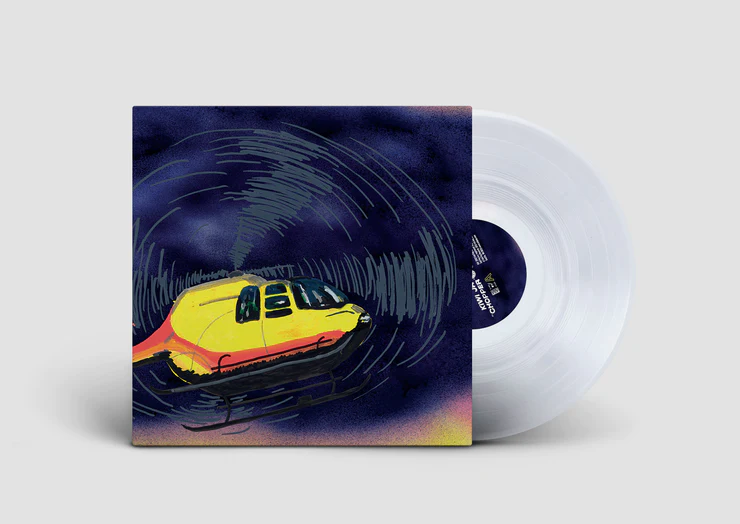
Recorded in Berlin and remotely between 2020 and 2021, the opening track “The Real” is from the forthcoming album “Fire Doesn’t Grow On Trees” the second track “Where Do We Go From Here?” is exclusive to this release. With Anton Newcombe (Vocals/ Guitars), Ryan Carlson Van Kriedt (keyboards), Hakon Adalsteinsson (guitar), Hallberg Daði Hallbergsson (bass) and Uri Rennert (drums) playing on this offering.

BJM new single released today digitally. To coincide with the Brian Jonestown Massacre’s start of their North American tour with special guests Mercury Rev this is a digital release of two new tracks by the band.

It is 30 years since the release of their first single She Made Me / Evergreen. Released in 1992, the band continue to deliver the sound of the Brian Jonestown Massacre. Cover artwork by Anthony Ausgang.

NYC indiepop duo Jeanines are releasing their second album, “Don’t Wait for a Sign“, on April 22nd. The title track is another jangly gem.

Jeanines’ 2019 self-titled debut was an indie-pop tour-de-force that drew from a deep set of DIY pop influences, garnering attention from well beyond the international pop underground. Now they’re back with “Don’t Wait For A Sign” and it’s a real gem. With the band now divided geographically and touched by the isolation and uncertainty of the pandemic, Jeanines’ new album is deeper and a bit darker than their debut. The folk influences feel more pronounced, at times recalling early Fairport Convention or Vashti Bunyan as much as indie-pop touchstones like Dear Nora, The Aislers Set, and the many bands of Pam Berry.

The thirteen songs on “Don’t Wait For A Sign” show a band in total mastery of their idiom—a brilliantly compelling blend of timeless influences illuminated by distinctive song writing and sharp lyrics. The arrangements are always on point, full of interesting transitions and modulations but never fussy or in the way of the songs themselves. Alicia Jeanine’s vocals really take flight here, richer and more confident, and often layered in harmony. Second albums can be tricky, but but with “Don’t Wait For A Sign” Jeanines ably manage to build on their terrific debut with well-honed song writing, singular melodies, and unerringly sympathetic production.

Releases April 22nd, 2022

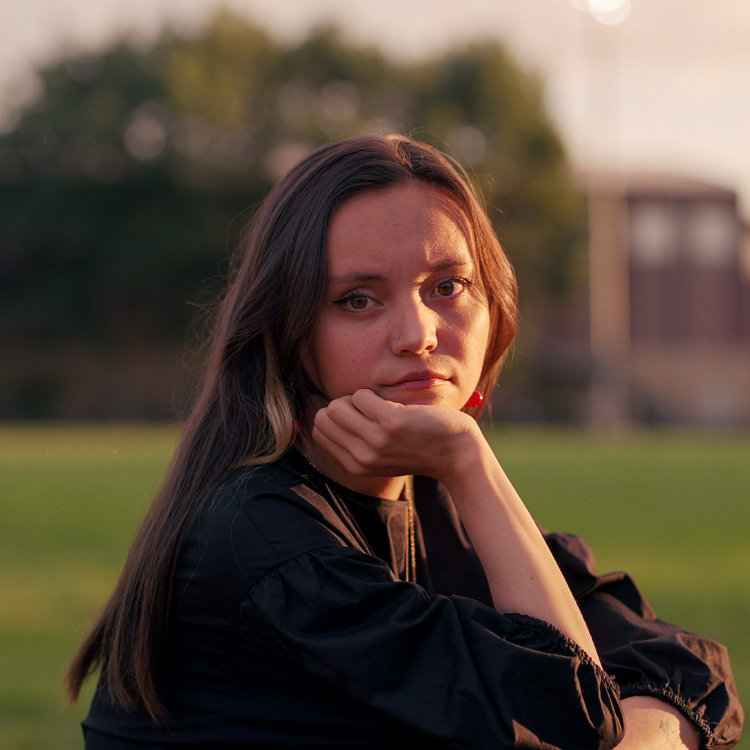
Across her stunning debut album, “Stay in Touch”, Georgia Harmer captures ineffable moments with expressive detail: the euphoric memory of a summer’s day so perfect you want to live inside it forever, the dusty heat of a Texas afternoon, a tingle of melancholy on a solo walk home after a party. With a wisdom and poise that belies her twenty-two years, the Toronto-based singer-songwriter has penned an emotionally resonant collection of songs that articulate the ways in which even the most fleeting experiences can forge bonds between strangers, create families out of friends, and one by one form the joys and sorrows that make up a life.

“Stay in Touch” spans everything from intimate folk and strummy country to sophisticated jazz and pop-kissed rock. Crammed into the corner of a West Toronto garage, Harmer and her band created musical landscapes that live up to the lyrical richness of the songs. The record sparkles with the lightning in a bottle feel of a band in thrall to their musical chemistry, adding more depth to the record’s themes.

“Stay in Touch” is inspired both by the relationships of past and the joy of finding your people in the here and now. It’s an unforgettable statement from a new artist with a heartbreakingly simple message: when you stay in touch with the experiences that have shaped you, you stay in touch with yourself.